•  
Erotic Roman Mosaic Stolen By Wehrmacht Officer Returns to Pompeii - Italy

Erotic Roman Mosaic Stolen By Wehrmacht Officer Returns to Pompeii - Italy

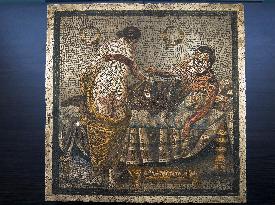
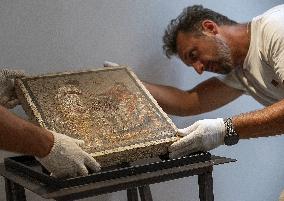
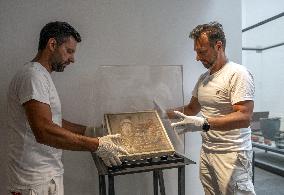
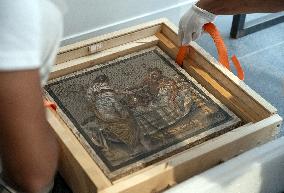
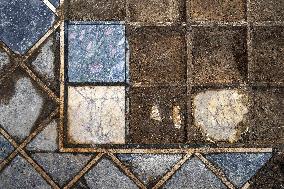
An erotic Ancient Roman mosaic stolen by a Wehrmacht officer in 1944 and given to a German citizen was returned to its rightful home at Pompeii, Italy in a ceremony by Italy's crack art cops on July 15, 2025. The German army captain, responsible for the military supply chain in Italy during World War II, handed over the mosaic of a pair of lovers in an erotic scene to a German citizen whose family have now returned it thanks to the Carabinieri of the Cultural Heritage Protection Unit (TPC) of Rome. The work of great cultural interest dates between the mid-last century BC and the 1st century AD. Repatriated from Germany through a diplomatic expedition, the mosaic most likely decorated the floor of a private room reserved for the master of the house. The work is likely from the Vesuvian area, perhaps from a villa in the Pompeian suburbs. The paramilitary personnel of the Cultural Heritage Protection Command in Rome, realizing they were dealing with a work of extraordinary cultural interest and, among other thin

  •  
Erotic Roman Mosaic Stolen By Wehrmacht Officer Returns to Pompeii - Italy

Erotic Roman Mosaic Stolen By Wehrmacht Officer Returns to Pompeii - Italy

An erotic Ancient Roman mosaic stolen by a Wehrmacht officer in 1944 and given to a German citizen was returned to its rightful home at Pompeii, Italy in a ceremony by Italy's crack art cops on July 15, 2025. The German army captain, responsible for the military supply chain in Italy during World War II, handed over the mosaic of a pair of lovers in an erotic scene to a German citizen whose family have now returned it thanks to the Carabinieri of the Cultural Heritage Protection Unit (TPC) of Rome. The work of great cultural interest dates between the mid-last century BC and the 1st century AD. Repatriated from Germany through a diplomatic expedition, the mosaic most likely decorated the floor of a private room reserved for the master of the house. The work is likely from the Vesuvian area, perhaps from a villa in the Pompeian suburbs. The paramilitary personnel of the Cultural Heritage Protection Command in Rome, realizing they were dealing with a work of extraordinary cultural interest and, among other thin

  •  
Erotic Roman Mosaic Stolen By Wehrmacht Officer Returns to Pompeii - Italy

Erotic Roman Mosaic Stolen By Wehrmacht Officer Returns to Pompeii - Italy

An erotic Ancient Roman mosaic stolen by a Wehrmacht officer in 1944 and given to a German citizen was returned to its rightful home at Pompeii, Italy in a ceremony by Italy's crack art cops on July 15, 2025. The German army captain, responsible for the military supply chain in Italy during World War II, handed over the mosaic of a pair of lovers in an erotic scene to a German citizen whose family have now returned it thanks to the Carabinieri of the Cultural Heritage Protection Unit (TPC) of Rome. The work of great cultural interest dates between the mid-last century BC and the 1st century AD. Repatriated from Germany through a diplomatic expedition, the mosaic most likely decorated the floor of a private room reserved for the master of the house. The work is likely from the Vesuvian area, perhaps from a villa in the Pompeian suburbs. The paramilitary personnel of the Cultural Heritage Protection Command in Rome, realizing they were dealing with a work of extraordinary cultural interest and, among other thin

  •  
Erotic Roman Mosaic Stolen By Wehrmacht Officer Returns to Pompeii - Italy

Erotic Roman Mosaic Stolen By Wehrmacht Officer Returns to Pompeii - Italy

An erotic Ancient Roman mosaic stolen by a Wehrmacht officer in 1944 and given to a German citizen was returned to its rightful home at Pompeii, Italy in a ceremony by Italy's crack art cops on July 15, 2025. The German army captain, responsible for the military supply chain in Italy during World War II, handed over the mosaic of a pair of lovers in an erotic scene to a German citizen whose family have now returned it thanks to the Carabinieri of the Cultural Heritage Protection Unit (TPC) of Rome. The work of great cultural interest dates between the mid-last century BC and the 1st century AD. Repatriated from Germany through a diplomatic expedition, the mosaic most likely decorated the floor of a private room reserved for the master of the house. The work is likely from the Vesuvian area, perhaps from a villa in the Pompeian suburbs. The paramilitary personnel of the Cultural Heritage Protection Command in Rome, realizing they were dealing with a work of extraordinary cultural interest and, among other thin

  •  
Spectacular Frescoed Villa Uncovered in Pompeii - Italy

Spectacular Frescoed Villa Uncovered in Pompeii - Italy

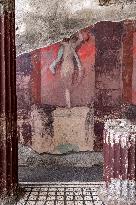
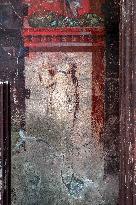
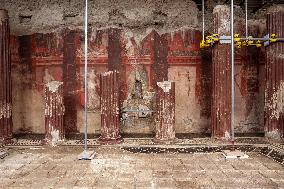
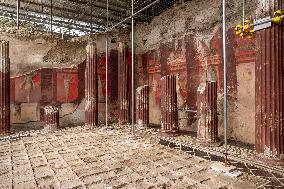
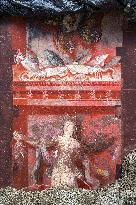
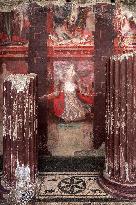
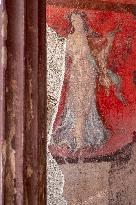
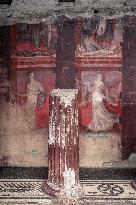
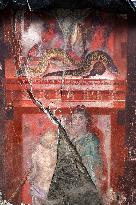
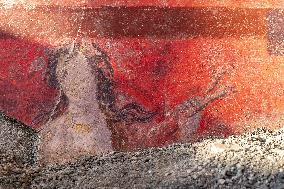
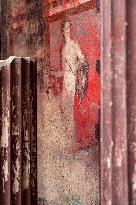
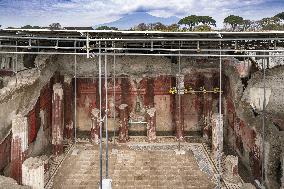
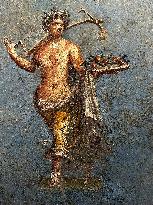
A spectacular frescoed Villa resembling the famous 'Villa of the Mysteries' was uncovered at Pompeii archaeological site, Italy on February 2025. The newly found residence has a large banquet hall frescoed with a cycle of paintings depicting initiation into the Dionysian Mysteries. The fresco, dating to 40-30 BC, presents vivid imagery of Dionysian followers in states of ritualistic ecstasy, dancing and hunting, resembling the frescoes of the nearby famous Villa of the Mysteries which were uncovered 100 years ago. The frescoed walls have still vibrant colors: on a Pompeian red background, full figures emerge, very similar to those of the famous Villa of the Mysteries, albeit in a different style. It was a sumptuous environment where it is not difficult to imagine lavish receptions where guests, reclining on triclinia, ate, drank, and watched small performances. Excavated in recent weeks in the central area of Pompeii, the new room shows this frieze at almost life size, or a 'megalography', just as in the Vill

  •  
Spectacular Frescoed Villa Uncovered in Pompeii - Italy

Spectacular Frescoed Villa Uncovered in Pompeii - Italy

A spectacular frescoed Villa resembling the famous 'Villa of the Mysteries' was uncovered at Pompeii archaeological site, Italy on February 2025. The newly found residence has a large banquet hall frescoed with a cycle of paintings depicting initiation into the Dionysian Mysteries. The fresco, dating to 40-30 BC, presents vivid imagery of Dionysian followers in states of ritualistic ecstasy, dancing and hunting, resembling the frescoes of the nearby famous Villa of the Mysteries which were uncovered 100 years ago. The frescoed walls have still vibrant colors: on a Pompeian red background, full figures emerge, very similar to those of the famous Villa of the Mysteries, albeit in a different style. It was a sumptuous environment where it is not difficult to imagine lavish receptions where guests, reclining on triclinia, ate, drank, and watched small performances. Excavated in recent weeks in the central area of Pompeii, the new room shows this frieze at almost life size, or a 'megalography', just as in the Vill

  •  
Spectacular Frescoed Villa Uncovered in Pompeii - Italy

Spectacular Frescoed Villa Uncovered in Pompeii - Italy

A spectacular frescoed Villa resembling the famous 'Villa of the Mysteries' was uncovered at Pompeii archaeological site, Italy on February 2025. The newly found residence has a large banquet hall frescoed with a cycle of paintings depicting initiation into the Dionysian Mysteries. The fresco, dating to 40-30 BC, presents vivid imagery of Dionysian followers in states of ritualistic ecstasy, dancing and hunting, resembling the frescoes of the nearby famous Villa of the Mysteries which were uncovered 100 years ago. The frescoed walls have still vibrant colors: on a Pompeian red background, full figures emerge, very similar to those of the famous Villa of the Mysteries, albeit in a different style. It was a sumptuous environment where it is not difficult to imagine lavish receptions where guests, reclining on triclinia, ate, drank, and watched small performances. Excavated in recent weeks in the central area of Pompeii, the new room shows this frieze at almost life size, or a 'megalography', just as in the Vill

  •  
Spectacular Frescoed Villa Uncovered in Pompeii - Italy

Spectacular Frescoed Villa Uncovered in Pompeii - Italy

A spectacular frescoed Villa resembling the famous 'Villa of the Mysteries' was uncovered at Pompeii archaeological site, Italy on February 2025. The newly found residence has a large banquet hall frescoed with a cycle of paintings depicting initiation into the Dionysian Mysteries. The fresco, dating to 40-30 BC, presents vivid imagery of Dionysian followers in states of ritualistic ecstasy, dancing and hunting, resembling the frescoes of the nearby famous Villa of the Mysteries which were uncovered 100 years ago. The frescoed walls have still vibrant colors: on a Pompeian red background, full figures emerge, very similar to those of the famous Villa of the Mysteries, albeit in a different style. It was a sumptuous environment where it is not difficult to imagine lavish receptions where guests, reclining on triclinia, ate, drank, and watched small performances. Excavated in recent weeks in the central area of Pompeii, the new room shows this frieze at almost life size, or a 'megalography', just as in the Vill

  •  
Spectacular Frescoed Villa Uncovered in Pompeii - Italy

Spectacular Frescoed Villa Uncovered in Pompeii - Italy

A spectacular frescoed Villa resembling the famous 'Villa of the Mysteries' was uncovered at Pompeii archaeological site, Italy on February 2025. The newly found residence has a large banquet hall frescoed with a cycle of paintings depicting initiation into the Dionysian Mysteries. The fresco, dating to 40-30 BC, presents vivid imagery of Dionysian followers in states of ritualistic ecstasy, dancing and hunting, resembling the frescoes of the nearby famous Villa of the Mysteries which were uncovered 100 years ago. The frescoed walls have still vibrant colors: on a Pompeian red background, full figures emerge, very similar to those of the famous Villa of the Mysteries, albeit in a different style. It was a sumptuous environment where it is not difficult to imagine lavish receptions where guests, reclining on triclinia, ate, drank, and watched small performances. Excavated in recent weeks in the central area of Pompeii, the new room shows this frieze at almost life size, or a 'megalography', just as in the Vill

  •  
Spectacular Frescoed Villa Uncovered in Pompeii - Italy

Spectacular Frescoed Villa Uncovered in Pompeii - Italy

A spectacular frescoed Villa resembling the famous 'Villa of the Mysteries' was uncovered at Pompeii archaeological site, Italy on February 2025. The newly found residence has a large banquet hall frescoed with a cycle of paintings depicting initiation into the Dionysian Mysteries. The fresco, dating to 40-30 BC, presents vivid imagery of Dionysian followers in states of ritualistic ecstasy, dancing and hunting, resembling the frescoes of the nearby famous Villa of the Mysteries which were uncovered 100 years ago. The frescoed walls have still vibrant colors: on a Pompeian red background, full figures emerge, very similar to those of the famous Villa of the Mysteries, albeit in a different style. It was a sumptuous environment where it is not difficult to imagine lavish receptions where guests, reclining on triclinia, ate, drank, and watched small performances. Excavated in recent weeks in the central area of Pompeii, the new room shows this frieze at almost life size, or a 'megalography', just as in the Vill

  •  
Spectacular Frescoed Villa Uncovered in Pompeii - Italy

Spectacular Frescoed Villa Uncovered in Pompeii - Italy

A spectacular frescoed Villa resembling the famous 'Villa of the Mysteries' was uncovered at Pompeii archaeological site, Italy on February 2025. The newly found residence has a large banquet hall frescoed with a cycle of paintings depicting initiation into the Dionysian Mysteries. The fresco, dating to 40-30 BC, presents vivid imagery of Dionysian followers in states of ritualistic ecstasy, dancing and hunting, resembling the frescoes of the nearby famous Villa of the Mysteries which were uncovered 100 years ago. The frescoed walls have still vibrant colors: on a Pompeian red background, full figures emerge, very similar to those of the famous Villa of the Mysteries, albeit in a different style. It was a sumptuous environment where it is not difficult to imagine lavish receptions where guests, reclining on triclinia, ate, drank, and watched small performances. Excavated in recent weeks in the central area of Pompeii, the new room shows this frieze at almost life size, or a 'megalography', just as in the Vill

  •  
Spectacular Frescoed Villa Uncovered in Pompeii - Italy

Spectacular Frescoed Villa Uncovered in Pompeii - Italy

A spectacular frescoed Villa resembling the famous 'Villa of the Mysteries' was uncovered at Pompeii archaeological site, Italy on February 2025. The newly found residence has a large banquet hall frescoed with a cycle of paintings depicting initiation into the Dionysian Mysteries. The fresco, dating to 40-30 BC, presents vivid imagery of Dionysian followers in states of ritualistic ecstasy, dancing and hunting, resembling the frescoes of the nearby famous Villa of the Mysteries which were uncovered 100 years ago. The frescoed walls have still vibrant colors: on a Pompeian red background, full figures emerge, very similar to those of the famous Villa of the Mysteries, albeit in a different style. It was a sumptuous environment where it is not difficult to imagine lavish receptions where guests, reclining on triclinia, ate, drank, and watched small performances. Excavated in recent weeks in the central area of Pompeii, the new room shows this frieze at almost life size, or a 'megalography', just as in the Vill

  •  
Spectacular Frescoed Villa Uncovered in Pompeii - Italy

Spectacular Frescoed Villa Uncovered in Pompeii - Italy

A spectacular frescoed Villa resembling the famous 'Villa of the Mysteries' was uncovered at Pompeii archaeological site, Italy on February 2025. The newly found residence has a large banquet hall frescoed with a cycle of paintings depicting initiation into the Dionysian Mysteries. The fresco, dating to 40-30 BC, presents vivid imagery of Dionysian followers in states of ritualistic ecstasy, dancing and hunting, resembling the frescoes of the nearby famous Villa of the Mysteries which were uncovered 100 years ago. The frescoed walls have still vibrant colors: on a Pompeian red background, full figures emerge, very similar to those of the famous Villa of the Mysteries, albeit in a different style. It was a sumptuous environment where it is not difficult to imagine lavish receptions where guests, reclining on triclinia, ate, drank, and watched small performances. Excavated in recent weeks in the central area of Pompeii, the new room shows this frieze at almost life size, or a 'megalography', just as in the Vill

  •  
Spectacular Frescoed Villa Uncovered in Pompeii - Italy

Spectacular Frescoed Villa Uncovered in Pompeii - Italy

A spectacular frescoed Villa resembling the famous 'Villa of the Mysteries' was uncovered at Pompeii archaeological site, Italy on February 2025. The newly found residence has a large banquet hall frescoed with a cycle of paintings depicting initiation into the Dionysian Mysteries. The fresco, dating to 40-30 BC, presents vivid imagery of Dionysian followers in states of ritualistic ecstasy, dancing and hunting, resembling the frescoes of the nearby famous Villa of the Mysteries which were uncovered 100 years ago. The frescoed walls have still vibrant colors: on a Pompeian red background, full figures emerge, very similar to those of the famous Villa of the Mysteries, albeit in a different style. It was a sumptuous environment where it is not difficult to imagine lavish receptions where guests, reclining on triclinia, ate, drank, and watched small performances. Excavated in recent weeks in the central area of Pompeii, the new room shows this frieze at almost life size, or a 'megalography', just as in the Vill

  •  
Spectacular Frescoed Villa Uncovered in Pompeii - Italy

Spectacular Frescoed Villa Uncovered in Pompeii - Italy

A spectacular frescoed Villa resembling the famous 'Villa of the Mysteries' was uncovered at Pompeii archaeological site, Italy on February 2025. The newly found residence has a large banquet hall frescoed with a cycle of paintings depicting initiation into the Dionysian Mysteries. The fresco, dating to 40-30 BC, presents vivid imagery of Dionysian followers in states of ritualistic ecstasy, dancing and hunting, resembling the frescoes of the nearby famous Villa of the Mysteries which were uncovered 100 years ago. The frescoed walls have still vibrant colors: on a Pompeian red background, full figures emerge, very similar to those of the famous Villa of the Mysteries, albeit in a different style. It was a sumptuous environment where it is not difficult to imagine lavish receptions where guests, reclining on triclinia, ate, drank, and watched small performances. Excavated in recent weeks in the central area of Pompeii, the new room shows this frieze at almost life size, or a 'megalography', just as in the Vill

  •  
Spectacular Frescoed Villa Uncovered in Pompeii - Italy

Spectacular Frescoed Villa Uncovered in Pompeii - Italy

A spectacular frescoed Villa resembling the famous 'Villa of the Mysteries' was uncovered at Pompeii archaeological site, Italy on February 2025. The newly found residence has a large banquet hall frescoed with a cycle of paintings depicting initiation into the Dionysian Mysteries. The fresco, dating to 40-30 BC, presents vivid imagery of Dionysian followers in states of ritualistic ecstasy, dancing and hunting, resembling the frescoes of the nearby famous Villa of the Mysteries which were uncovered 100 years ago. The frescoed walls have still vibrant colors: on a Pompeian red background, full figures emerge, very similar to those of the famous Villa of the Mysteries, albeit in a different style. It was a sumptuous environment where it is not difficult to imagine lavish receptions where guests, reclining on triclinia, ate, drank, and watched small performances. Excavated in recent weeks in the central area of Pompeii, the new room shows this frieze at almost life size, or a 'megalography', just as in the Vill

  •  
Spectacular Frescoed Villa Uncovered in Pompeii - Italy

Spectacular Frescoed Villa Uncovered in Pompeii - Italy

A spectacular frescoed Villa resembling the famous 'Villa of the Mysteries' was uncovered at Pompeii archaeological site, Italy on February 2025. The newly found residence has a large banquet hall frescoed with a cycle of paintings depicting initiation into the Dionysian Mysteries. The fresco, dating to 40-30 BC, presents vivid imagery of Dionysian followers in states of ritualistic ecstasy, dancing and hunting, resembling the frescoes of the nearby famous Villa of the Mysteries which were uncovered 100 years ago. The frescoed walls have still vibrant colors: on a Pompeian red background, full figures emerge, very similar to those of the famous Villa of the Mysteries, albeit in a different style. It was a sumptuous environment where it is not difficult to imagine lavish receptions where guests, reclining on triclinia, ate, drank, and watched small performances. Excavated in recent weeks in the central area of Pompeii, the new room shows this frieze at almost life size, or a 'megalography', just as in the Vill

  •  
Spectacular Frescoed Villa Uncovered in Pompeii - Italy

Spectacular Frescoed Villa Uncovered in Pompeii - Italy

A spectacular frescoed Villa resembling the famous 'Villa of the Mysteries' was uncovered at Pompeii archaeological site, Italy on February 2025. The newly found residence has a large banquet hall frescoed with a cycle of paintings depicting initiation into the Dionysian Mysteries. The fresco, dating to 40-30 BC, presents vivid imagery of Dionysian followers in states of ritualistic ecstasy, dancing and hunting, resembling the frescoes of the nearby famous Villa of the Mysteries which were uncovered 100 years ago. The frescoed walls have still vibrant colors: on a Pompeian red background, full figures emerge, very similar to those of the famous Villa of the Mysteries, albeit in a different style. It was a sumptuous environment where it is not difficult to imagine lavish receptions where guests, reclining on triclinia, ate, drank, and watched small performances. Excavated in recent weeks in the central area of Pompeii, the new room shows this frieze at almost life size, or a 'megalography', just as in the Vill

  •  
Spectacular Frescoed Villa Uncovered in Pompeii - Italy

Spectacular Frescoed Villa Uncovered in Pompeii - Italy

A spectacular frescoed Villa resembling the famous 'Villa of the Mysteries' was uncovered at Pompeii archaeological site, Italy on February 2025. The newly found residence has a large banquet hall frescoed with a cycle of paintings depicting initiation into the Dionysian Mysteries. The fresco, dating to 40-30 BC, presents vivid imagery of Dionysian followers in states of ritualistic ecstasy, dancing and hunting, resembling the frescoes of the nearby famous Villa of the Mysteries which were uncovered 100 years ago. The frescoed walls have still vibrant colors: on a Pompeian red background, full figures emerge, very similar to those of the famous Villa of the Mysteries, albeit in a different style. It was a sumptuous environment where it is not difficult to imagine lavish receptions where guests, reclining on triclinia, ate, drank, and watched small performances. Excavated in recent weeks in the central area of Pompeii, the new room shows this frieze at almost life size, or a 'megalography', just as in the Vill

  •  
Spectacular Frescoed Villa Uncovered in Pompeii - Italy

Spectacular Frescoed Villa Uncovered in Pompeii - Italy

A spectacular frescoed Villa resembling the famous 'Villa of the Mysteries' was uncovered at Pompeii archaeological site, Italy on February 2025. The newly found residence has a large banquet hall frescoed with a cycle of paintings depicting initiation into the Dionysian Mysteries. The fresco, dating to 40-30 BC, presents vivid imagery of Dionysian followers in states of ritualistic ecstasy, dancing and hunting, resembling the frescoes of the nearby famous Villa of the Mysteries which were uncovered 100 years ago. The frescoed walls have still vibrant colors: on a Pompeian red background, full figures emerge, very similar to those of the famous Villa of the Mysteries, albeit in a different style. It was a sumptuous environment where it is not difficult to imagine lavish receptions where guests, reclining on triclinia, ate, drank, and watched small performances. Excavated in recent weeks in the central area of Pompeii, the new room shows this frieze at almost life size, or a 'megalography', just as in the Vill

  •  
Spectacular Frescoed Villa Uncovered in Pompeii - Italy

Spectacular Frescoed Villa Uncovered in Pompeii - Italy

A spectacular frescoed Villa resembling the famous 'Villa of the Mysteries' was uncovered at Pompeii archaeological site, Italy on February 2025. The newly found residence has a large banquet hall frescoed with a cycle of paintings depicting initiation into the Dionysian Mysteries. The fresco, dating to 40-30 BC, presents vivid imagery of Dionysian followers in states of ritualistic ecstasy, dancing and hunting, resembling the frescoes of the nearby famous Villa of the Mysteries which were uncovered 100 years ago. The frescoed walls have still vibrant colors: on a Pompeian red background, full figures emerge, very similar to those of the famous Villa of the Mysteries, albeit in a different style. It was a sumptuous environment where it is not difficult to imagine lavish receptions where guests, reclining on triclinia, ate, drank, and watched small performances. Excavated in recent weeks in the central area of Pompeii, the new room shows this frieze at almost life size, or a 'megalography', just as in the Vill

  •  
Biggest Ever Private Bathhouse Found - Pompeii

Biggest Ever Private Bathhouse Found - Pompeii

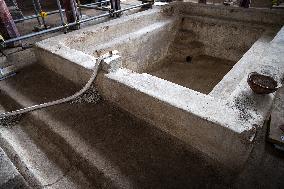
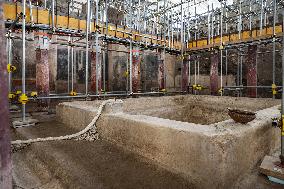
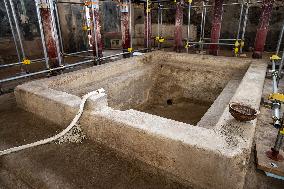
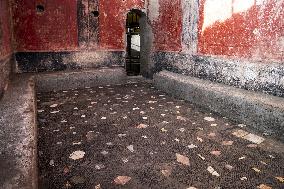
A large thermal bath complex has been uncovered on January 2025 at the ancient Roman city of Pompeii, Italy, buried by 79 AD eruption of Mount Vesuvius. Pictured: The frigidarium (cold). The private bathhouse built 2,000 years ago, is decorated with sumptuous mosaics and equipped with a series of hot, warm and cold rooms in the manner of a spa.The find was made during excavations of a domus, a private town house, in block (insula) 10 of the Regio IX area of Pompeii. The complex, which is connected to a banquet hall, is one of the largest and most sophisticated thermal baths found at a Pompeian domus. The baths, composed of a calidarium, tepidarium, frigidarium (hot, warm and cold room) and changing room (apodyterium), could accommodate up to thirty people judging by the benches present in the latter room. The archaeologists said the cold room is very impressive, composed of a peristyle, or a porticoed courtyard measuring 10 x 10 meters, at the center of which is a large pool. The members of the ruling class o

  •  
Biggest Ever Private Bathhouse Found - Pompeii

Biggest Ever Private Bathhouse Found - Pompeii

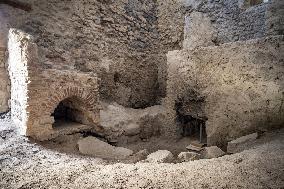
A large thermal bath complex has been uncovered on January 2025 at the ancient Roman city of Pompeii, Italy, buried by 79 AD eruption of Mount Vesuvius. Pictured: The praefurnium (the room and the furnace that ensured the heating of the hot or warm premises of the thermae). The private bathhouse built 2,000 years ago, is decorated with sumptuous mosaics and equipped with a series of hot, warm and cold rooms in the manner of a spa. The find was made during excavations of a domus, a private town house, in block (insula) 10 of the Regio IX area of Pompeii. The complex, which is connected to a banquet hall, is one of the largest and most sophisticated thermal baths found at a Pompeian domus. The baths, composed of a calidarium, tepidarium, frigidarium (hot, warm and cold room) and changing room (apodyterium), could accommodate up to thirty people judging by the benches present in the latter room. The archaeologists said the cold room is very impressive, composed of a peristyle, or a porticoed courtyard measuring

  •  
Biggest Ever Private Bathhouse Found - Pompeii

Biggest Ever Private Bathhouse Found - Pompeii

A large thermal bath complex has been uncovered on January 2025 at the ancient Roman city of Pompeii, Italy, buried by 79 AD eruption of Mount Vesuvius. Pictured: The frigidarium (cold). The private bathhouse built 2,000 years ago, is decorated with sumptuous mosaics and equipped with a series of hot, warm and cold rooms in the manner of a spa.The find was made during excavations of a domus, a private town house, in block (insula) 10 of the Regio IX area of Pompeii. The complex, which is connected to a banquet hall, is one of the largest and most sophisticated thermal baths found at a Pompeian domus. The baths, composed of a calidarium, tepidarium, frigidarium (hot, warm and cold room) and changing room (apodyterium), could accommodate up to thirty people judging by the benches present in the latter room. The archaeologists said the cold room is very impressive, composed of a peristyle, or a porticoed courtyard measuring 10 x 10 meters, at the center of which is a large pool. The members of the ruling class o

  •  
Biggest Ever Private Bathhouse Found - Pompeii

Biggest Ever Private Bathhouse Found - Pompeii

A large thermal bath complex has been uncovered on January 2025 at the ancient Roman city of Pompeii, Italy, buried by 79 AD eruption of Mount Vesuvius. Pictured: The frigidarium (cold). The private bathhouse built 2,000 years ago, is decorated with sumptuous mosaics and equipped with a series of hot, warm and cold rooms in the manner of a spa.The find was made during excavations of a domus, a private town house, in block (insula) 10 of the Regio IX area of Pompeii. The complex, which is connected to a banquet hall, is one of the largest and most sophisticated thermal baths found at a Pompeian domus. The baths, composed of a calidarium, tepidarium, frigidarium (hot, warm and cold room) and changing room (apodyterium), could accommodate up to thirty people judging by the benches present in the latter room. The archaeologists said the cold room is very impressive, composed of a peristyle, or a porticoed courtyard measuring 10 x 10 meters, at the center of which is a large pool. The members of the ruling class o

  •  
Biggest Ever Private Bathhouse Found - Pompeii

Biggest Ever Private Bathhouse Found - Pompeii

A large thermal bath complex has been uncovered on January 2025 at the ancient Roman city of Pompeii, Italy, buried by 79 AD eruption of Mount Vesuvius. Pictured: The frigidarium (cold). The private bathhouse built 2,000 years ago, is decorated with sumptuous mosaics and equipped with a series of hot, warm and cold rooms in the manner of a spa.The find was made during excavations of a domus, a private town house, in block (insula) 10 of the Regio IX area of Pompeii. The complex, which is connected to a banquet hall, is one of the largest and most sophisticated thermal baths found at a Pompeian domus. The baths, composed of a calidarium, tepidarium, frigidarium (hot, warm and cold room) and changing room (apodyterium), could accommodate up to thirty people judging by the benches present in the latter room. The archaeologists said the cold room is very impressive, composed of a peristyle, or a porticoed courtyard measuring 10 x 10 meters, at the center of which is a large pool. The members of the ruling class o

  •  
Biggest Ever Private Bathhouse Found - Pompeii

Biggest Ever Private Bathhouse Found - Pompeii

A large thermal bath complex has been uncovered on January 2025 at the ancient Roman city of Pompeii, Italy, buried by 79 AD eruption of Mount Vesuvius. Pictured: The frigidarium (cold). The private bathhouse built 2,000 years ago, is decorated with sumptuous mosaics and equipped with a series of hot, warm and cold rooms in the manner of a spa.The find was made during excavations of a domus, a private town house, in block (insula) 10 of the Regio IX area of Pompeii. The complex, which is connected to a banquet hall, is one of the largest and most sophisticated thermal baths found at a Pompeian domus. The baths, composed of a calidarium, tepidarium, frigidarium (hot, warm and cold room) and changing room (apodyterium), could accommodate up to thirty people judging by the benches present in the latter room. The archaeologists said the cold room is very impressive, composed of a peristyle, or a porticoed courtyard measuring 10 x 10 meters, at the center of which is a large pool. The members of the ruling class o

  •  
Biggest Ever Private Bathhouse Found - Pompeii

Biggest Ever Private Bathhouse Found - Pompeii

A large thermal bath complex has been uncovered on January 2025 at the ancient Roman city of Pompeii, Italy, buried by 79 AD eruption of Mount Vesuvius. Pictured: The frigidarium (cold). The private bathhouse built 2,000 years ago, is decorated with sumptuous mosaics and equipped with a series of hot, warm and cold rooms in the manner of a spa.The find was made during excavations of a domus, a private town house, in block (insula) 10 of the Regio IX area of Pompeii. The complex, which is connected to a banquet hall, is one of the largest and most sophisticated thermal baths found at a Pompeian domus. The baths, composed of a calidarium, tepidarium, frigidarium (hot, warm and cold room) and changing room (apodyterium), could accommodate up to thirty people judging by the benches present in the latter room. The archaeologists said the cold room is very impressive, composed of a peristyle, or a porticoed courtyard measuring 10 x 10 meters, at the center of which is a large pool. The members of the ruling class o

  •  
Biggest Ever Private Bathhouse Found - Pompeii

Biggest Ever Private Bathhouse Found - Pompeii

A large thermal bath complex has been uncovered on January 2025 at the ancient Roman city of Pompeii, Italy, buried by 79 AD eruption of Mount Vesuvius. Pictured: The frigidarium (cold). The private bathhouse built 2,000 years ago, is decorated with sumptuous mosaics and equipped with a series of hot, warm and cold rooms in the manner of a spa.The find was made during excavations of a domus, a private town house, in block (insula) 10 of the Regio IX area of Pompeii. The complex, which is connected to a banquet hall, is one of the largest and most sophisticated thermal baths found at a Pompeian domus. The baths, composed of a calidarium, tepidarium, frigidarium (hot, warm and cold room) and changing room (apodyterium), could accommodate up to thirty people judging by the benches present in the latter room. The archaeologists said the cold room is very impressive, composed of a peristyle, or a porticoed courtyard measuring 10 x 10 meters, at the center of which is a large pool. The members of the ruling class o

  •  
Biggest Ever Private Bathhouse Found - Pompeii

Biggest Ever Private Bathhouse Found - Pompeii

A large thermal bath complex has been uncovered on January 2025 at the ancient Roman city of Pompeii, Italy, buried by 79 AD eruption of Mount Vesuvius. Pictured: The apodyterium (the changing room). The private bathhouse built 2,000 years ago, is decorated with sumptuous mosaics and equipped with a series of hot, warm and cold rooms in the manner of a spa.The find was made during excavations of a domus, a private town house, in block (insula) 10 of the Regio IX area of Pompeii. The complex, which is connected to a banquet hall, is one of the largest and most sophisticated thermal baths found at a Pompeian domus. The baths, composed of a calidarium, tepidarium, frigidarium (hot, warm and cold room) and changing room (apodyterium), could accommodate up to thirty people judging by the benches present in the latter room. The archaeologists said the cold room is very impressive, composed of a peristyle, or a porticoed courtyard measuring 10 x 10 meters, at the center of which is a large pool. The members of the r

  •  
Rare Blue Room Discovered In Pompeii - Italy

Rare Blue Room Discovered In Pompeii - Italy

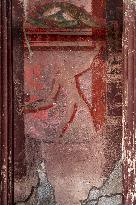
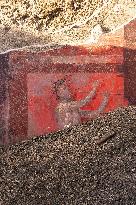
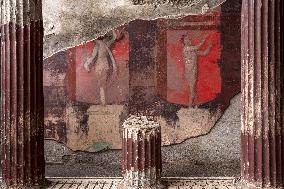
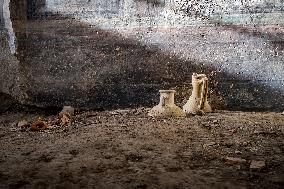
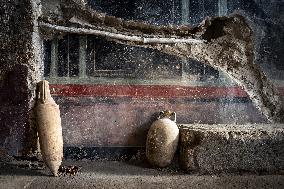
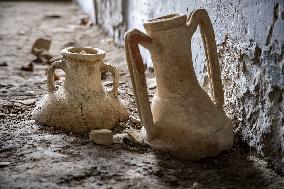
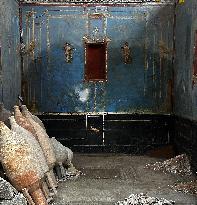
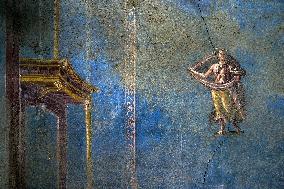
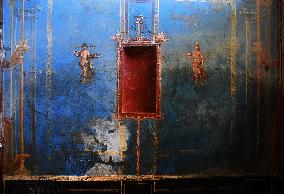
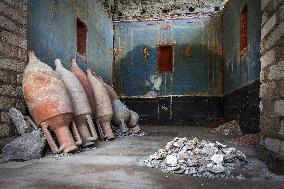
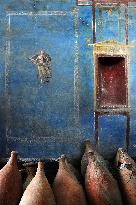
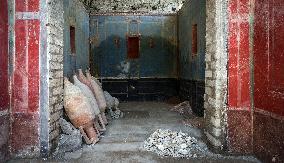
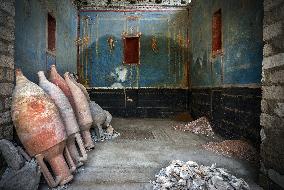
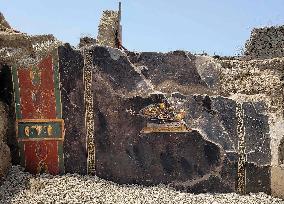
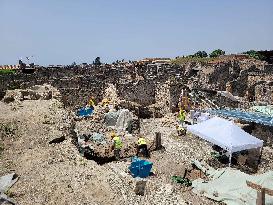
A new room in the central area of the ancient city of Pompeii, Italy emerged during excavations on May 2024. The room, which measures about 8 square meters, is painted blue and interpretable as a sacrarium, or a space dedicated to ritual activities and the storage of sacred objects. The light blue color found here was rarely witnessed in Pompeian frescoes and was generally found in highly decorative settings. Fifteen transport amphorae and a bronze set consisting of two jugs and two oil lamps were found in the room. Also present were accumulations of building materials, ready to be used in the renovations. A pile of already worn oyster shells was found on the threshold of the entrance, which were probably added to plaster and mortar mixes once they had been ground up. The figures found in the Blue Room flank niches in the center and depict the four seasons in the side niches. On the central wall are allegories of Agriculture and cattle breeding, as indicated by the attributes of a plow and a short stick used

  •  
Rare Blue Room Discovered In Pompeii - Italy

Rare Blue Room Discovered In Pompeii - Italy

A new room in the central area of the ancient city of Pompeii, Italy emerged during excavations on May 2024. The room, which measures about 8 square meters, is painted blue and interpretable as a sacrarium, or a space dedicated to ritual activities and the storage of sacred objects. The light blue color found here was rarely witnessed in Pompeian frescoes and was generally found in highly decorative settings. Fifteen transport amphorae and a bronze set consisting of two jugs and two oil lamps were found in the room. Also present were accumulations of building materials, ready to be used in the renovations. A pile of already worn oyster shells was found on the threshold of the entrance, which were probably added to plaster and mortar mixes once they had been ground up. The figures found in the Blue Room flank niches in the center and depict the four seasons in the side niches. On the central wall are allegories of Agriculture and cattle breeding, as indicated by the attributes of a plow and a short stick used

  •  
Rare Blue Room Discovered In Pompeii - Italy

Rare Blue Room Discovered In Pompeii - Italy

A new room in the central area of the ancient city of Pompeii, Italy emerged during excavations on May 2024. The room, which measures about 8 square meters, is painted blue and interpretable as a sacrarium, or a space dedicated to ritual activities and the storage of sacred objects. The light blue color found here was rarely witnessed in Pompeian frescoes and was generally found in highly decorative settings. Fifteen transport amphorae and a bronze set consisting of two jugs and two oil lamps were found in the room. Also present were accumulations of building materials, ready to be used in the renovations. A pile of already worn oyster shells was found on the threshold of the entrance, which were probably added to plaster and mortar mixes once they had been ground up. The figures found in the Blue Room flank niches in the center and depict the four seasons in the side niches. On the central wall are allegories of Agriculture and cattle breeding, as indicated by the attributes of a plow and a short stick used

  •  
Rare Blue Room Discovered In Pompeii - Italy

Rare Blue Room Discovered In Pompeii - Italy

A new room in the central area of the ancient city of Pompeii, Italy emerged during excavations on May 2024. The room, which measures about 8 square meters, is painted blue and interpretable as a sacrarium, or a space dedicated to ritual activities and the storage of sacred objects. The light blue color found here was rarely witnessed in Pompeian frescoes and was generally found in highly decorative settings. Fifteen transport amphorae and a bronze set consisting of two jugs and two oil lamps were found in the room. Also present were accumulations of building materials, ready to be used in the renovations. A pile of already worn oyster shells was found on the threshold of the entrance, which were probably added to plaster and mortar mixes once they had been ground up. The figures found in the Blue Room flank niches in the center and depict the four seasons in the side niches. On the central wall are allegories of Agriculture and cattle breeding, as indicated by the attributes of a plow and a short stick used

  •  
Rare Blue Room Discovered In Pompeii - Italy

Rare Blue Room Discovered In Pompeii - Italy

A new room in the central area of the ancient city of Pompeii, Italy emerged during excavations on May 2024. The room, which measures about 8 square meters, is painted blue and interpretable as a sacrarium, or a space dedicated to ritual activities and the storage of sacred objects. The light blue color found here was rarely witnessed in Pompeian frescoes and was generally found in highly decorative settings. Fifteen transport amphorae and a bronze set consisting of two jugs and two oil lamps were found in the room. Also present were accumulations of building materials, ready to be used in the renovations. A pile of already worn oyster shells was found on the threshold of the entrance, which were probably added to plaster and mortar mixes once they had been ground up. The figures found in the Blue Room flank niches in the center and depict the four seasons in the side niches. On the central wall are allegories of Agriculture and cattle breeding, as indicated by the attributes of a plow and a short stick used

  •  
Rare Blue Room Discovered In Pompeii - Italy

Rare Blue Room Discovered In Pompeii - Italy

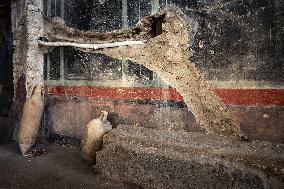
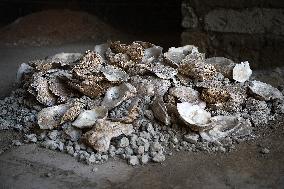
A pile of already worn oyster shells was found in the new room in the central area of the ancient city of Pompeii, Italy which emerged during excavations on May 2024. The room, which measures about 8 square meters, is painted blue and interpretable as a sacrarium, or a space dedicated to ritual activities and the storage of sacred objects. The light blue color found here was rarely witnessed in Pompeian frescoes and was generally found in highly decorative settings. Fifteen transport amphorae and a bronze set consisting of two jugs and two oil lamps were found in the room. Also present were accumulations of building materials, ready to be used in the renovations. A pile of already worn oyster shells was found on the threshold of the entrance, which were probably added to plaster and mortar mixes once they had been ground up. The figures found in the Blue Room flank niches in the center and depict the four seasons in the side niches. On the central wall are allegories of Agriculture and cattle breeding, as ind

  •  
Rare Blue Room Discovered In Pompeii - Italy

Rare Blue Room Discovered In Pompeii - Italy

A new room in the central area of the ancient city of Pompeii, Italy emerged during excavations on May 2024. The room, which measures about 8 square meters, is painted blue and interpretable as a sacrarium, or a space dedicated to ritual activities and the storage of sacred objects. The light blue color found here was rarely witnessed in Pompeian frescoes and was generally found in highly decorative settings. Fifteen transport amphorae and a bronze set consisting of two jugs and two oil lamps were found in the room. Also present were accumulations of building materials, ready to be used in the renovations. A pile of already worn oyster shells was found on the threshold of the entrance, which were probably added to plaster and mortar mixes once they had been ground up. The figures found in the Blue Room flank niches in the center and depict the four seasons in the side niches. On the central wall are allegories of Agriculture and cattle breeding, as indicated by the attributes of a plow and a short stick used

  •  
Rare Blue Room Discovered In Pompeii - Italy

Rare Blue Room Discovered In Pompeii - Italy

A new room in the central area of the ancient city of Pompeii, Italy emerged during excavations on May 2024. The room, which measures about 8 square meters, is painted blue and interpretable as a sacrarium, or a space dedicated to ritual activities and the storage of sacred objects. The light blue color found here was rarely witnessed in Pompeian frescoes and was generally found in highly decorative settings. Fifteen transport amphorae and a bronze set consisting of two jugs and two oil lamps were found in the room. Also present were accumulations of building materials, ready to be used in the renovations. A pile of already worn oyster shells was found on the threshold of the entrance, which were probably added to plaster and mortar mixes once they had been ground up. The figures found in the Blue Room flank niches in the center and depict the four seasons in the side niches. On the central wall are allegories of Agriculture and cattle breeding, as indicated by the attributes of a plow and a short stick used

  •  
Rare Blue Room Discovered In Pompeii - Italy

Rare Blue Room Discovered In Pompeii - Italy

A new room in the central area of the ancient city of Pompeii, Italy emerged during excavations on May 2024. The room, which measures about 8 square meters, is painted blue and interpretable as a sacrarium, or a space dedicated to ritual activities and the storage of sacred objects. The light blue color found here was rarely witnessed in Pompeian frescoes and was generally found in highly decorative settings. Fifteen transport amphorae and a bronze set consisting of two jugs and two oil lamps were found in the room. Also present were accumulations of building materials, ready to be used in the renovations. A pile of already worn oyster shells was found on the threshold of the entrance, which were probably added to plaster and mortar mixes once they had been ground up. The figures found in the Blue Room flank niches in the center and depict the four seasons in the side niches. On the central wall are allegories of Agriculture and cattle breeding, as indicated by the attributes of a plow and a short stick used

  •  
Rare Blue Room Discovered In Pompeii - Italy

Rare Blue Room Discovered In Pompeii - Italy

A new room in the central area of the ancient city of Pompeii, Italy emerged during excavations on May 2024. The room, which measures about 8 square meters, is painted blue and interpretable as a sacrarium, or a space dedicated to ritual activities and the storage of sacred objects. The light blue color found here was rarely witnessed in Pompeian frescoes and was generally found in highly decorative settings. Fifteen transport amphorae and a bronze set consisting of two jugs and two oil lamps were found in the room. Also present were accumulations of building materials, ready to be used in the renovations. A pile of already worn oyster shells was found on the threshold of the entrance, which were probably added to plaster and mortar mixes once they had been ground up. The figures found in the Blue Room flank niches in the center and depict the four seasons in the side niches. On the central wall are allegories of Agriculture and cattle breeding, as indicated by the attributes of a plow and a short stick used

  •  
Pompeii  - Discovery Of A Still Life Painting With Pizza Ancestor

Pompeii - Discovery Of A Still Life Painting With Pizza Ancestor

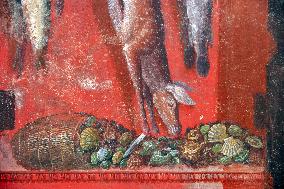
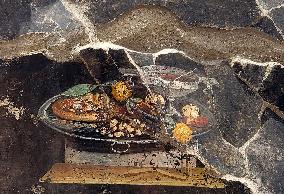
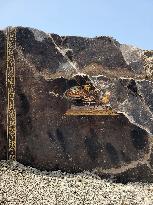
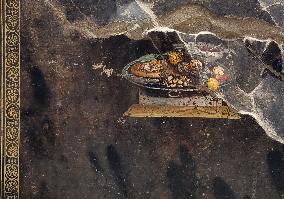
Discovery of a still life from the new excavations in Pompeii, Italy on June 2023. It looks like a pizza, on this Pompeian painting from 2000 years ago, but obviously it can't be, strictly speaking, given that some of the most characteristic ingredients were missing, namely tomatoes and mozzarella. However, as shown by an initial iconographic analysis of a fresco with still life, which has recently emerged as part of the new excavations in insula 10 of Regio IX in Pompeii, what was represented on the wall of an ancient Pompeian house could be a distant ancestor of the modern dish elevated to a World Heritage Site in 2017 as the ‘traditional art of the Neapolitan pizza maker. As the archaeologists of the Archaeological Park of Pompeii explain, it is assumed that next to a goblet of wine, placed on a silver tray, a flat focaccia is depicted which serves as a support for various fruits (identifiable a pomegranate and perhaps a date) , seasoned with spices or perhaps rather with a type of pesto (moretum in Latin)

  •  
Pompeii  - Discovery Of A Still Life Painting With Pizza Ancestor

Pompeii - Discovery Of A Still Life Painting With Pizza Ancestor

Discovery of a still life from the new excavations in Pompeii, Italy on June 2023. It looks like a pizza, on this Pompeian painting from 2000 years ago, but obviously it can't be, strictly speaking, given that some of the most characteristic ingredients were missing, namely tomatoes and mozzarella. However, as shown by an initial iconographic analysis of a fresco with still life, which has recently emerged as part of the new excavations in insula 10 of Regio IX in Pompeii, what was represented on the wall of an ancient Pompeian house could be a distant ancestor of the modern dish elevated to a World Heritage Site in 2017 as the ‘traditional art of the Neapolitan pizza maker. As the archaeologists of the Archaeological Park of Pompeii explain, it is assumed that next to a goblet of wine, placed on a silver tray, a flat focaccia is depicted which serves as a support for various fruits (identifiable a pomegranate and perhaps a date) , seasoned with spices or perhaps rather with a type of pesto (moretum in Latin)

  •  
Pompeii  - Discovery Of A Still Life Painting With Pizza Ancestor

Pompeii - Discovery Of A Still Life Painting With Pizza Ancestor

Discovery of a still life from the new excavations in Pompeii, Italy on June 2023. It looks like a pizza, on this Pompeian painting from 2000 years ago, but obviously it can't be, strictly speaking, given that some of the most characteristic ingredients were missing, namely tomatoes and mozzarella. However, as shown by an initial iconographic analysis of a fresco with still life, which has recently emerged as part of the new excavations in insula 10 of Regio IX in Pompeii, what was represented on the wall of an ancient Pompeian house could be a distant ancestor of the modern dish elevated to a World Heritage Site in 2017 as the ‘traditional art of the Neapolitan pizza maker. As the archaeologists of the Archaeological Park of Pompeii explain, it is assumed that next to a goblet of wine, placed on a silver tray, a flat focaccia is depicted which serves as a support for various fruits (identifiable a pomegranate and perhaps a date) , seasoned with spices or perhaps rather with a type of pesto (moretum in Latin)

  •  
Pompeii  - Discovery Of A Still Life Painting With Pizza Ancestor

Pompeii - Discovery Of A Still Life Painting With Pizza Ancestor

Discovery of a still life from the new excavations in Pompeii, Italy on June 2023. It looks like a pizza, on this Pompeian painting from 2000 years ago, but obviously it can't be, strictly speaking, given that some of the most characteristic ingredients were missing, namely tomatoes and mozzarella. However, as shown by an initial iconographic analysis of a fresco with still life, which has recently emerged as part of the new excavations in insula 10 of Regio IX in Pompeii, what was represented on the wall of an ancient Pompeian house could be a distant ancestor of the modern dish elevated to a World Heritage Site in 2017 as the ‘traditional art of the Neapolitan pizza maker. As the archaeologists of the Archaeological Park of Pompeii explain, it is assumed that next to a goblet of wine, placed on a silver tray, a flat focaccia is depicted which serves as a support for various fruits (identifiable a pomegranate and perhaps a date) , seasoned with spices or perhaps rather with a type of pesto (moretum in Latin)

  •  
Pompeii  - Discovery Of A Still Life Painting With Pizza Ancestor

Pompeii - Discovery Of A Still Life Painting With Pizza Ancestor

Discovery of a still life from the new excavations in Pompeii, Italy on June 2023. It looks like a pizza, on this Pompeian painting from 2000 years ago, but obviously it can't be, strictly speaking, given that some of the most characteristic ingredients were missing, namely tomatoes and mozzarella. However, as shown by an initial iconographic analysis of a fresco with still life, which has recently emerged as part of the new excavations in insula 10 of Regio IX in Pompeii, what was represented on the wall of an ancient Pompeian house could be a distant ancestor of the modern dish elevated to a World Heritage Site in 2017 as the ‘traditional art of the Neapolitan pizza maker. As the archaeologists of the Archaeological Park of Pompeii explain, it is assumed that next to a goblet of wine, placed on a silver tray, a flat focaccia is depicted which serves as a support for various fruits (identifiable a pomegranate and perhaps a date) , seasoned with spices or perhaps rather with a type of pesto (moretum in Latin)

  • Main
  • Top
  • Editorial
  • Creative
  • About Us
  • About ILG
  • Terms of use
  • Company
  • BEHIND
  • Price List
  • Single Plan
  • Monthly Plan
  • Services
  • Shooting
  • Rights Clearance
  • Support
  • FAQ
  • How To Buy
  • Contact Us
  • Become a Partner

© KYODO NEWS IMAGES INC

All Rights Reserved.

  • Editorial
  • Olympics
  • News
  • Sports
  • Japan
  • Tech
  • Royal
  • Disaster
  • NorthKorea
  • Old Japan
  • SNS
  • Creative
  • Food
  • Japan
  • Landscape
  • Animal
  • Popular
  • #Ukraine
  • #Russia
  • #coronavirus
  • #N. Korea
  • #China
  • #Thailand
  • #Ukraine
  • #Russia
  • #coronavirus
  • #N. Korea
  • #China
  • #Thailand
  • Food
  • Japan
  • Landscape
  • Animal
  • Olympics
  • News
  • Sports
  • Japan
  • Tech
  • Royal
  • Disaster
  • NorthKorea
  • Old Japan
  • SNS