•  

China's Chang'e-6 lands on moon's far side to collect samples

STORY: China's Chang'e-6 lands on moon's far side to collect samples SHOOTING TIME: June 2, 2024 DATELINE: June 2, 2024 LENGTH: 00:01:02 LOCATION: Beijing CATEGORY: TECHNOLOGY/SCIENCE SHOTLIST: 1. footage of Chang'e-6 touching down on the far side of the moon 2. launching of Chang'e-6 on May 3 STORYLINE: China's Chang'e-6 touched down on the far side of the moon on Sunday morning, and will collect samples from this rarely explored terrain for the first time in human history, the China National Space Administration (CNSA) announced. Supported by the Queqiao-2 relay satellite, the lander-ascender combination of the Chang'e-6 probe successfully landed at the designated landing area at 6:23 a.m. (Beijing Time) in the South Pole-Aitken (SPA) Basin. Chang'e-6 consists of an orbiter, a returner, a lander and an ascender. Since its launch on May 3 this year, it has gone through various stages such as Earth-moon transfer, near-moon braking, lunar orbiting and landing descent. The CNSA said the lander-asce

  •  
(EyesonSci)CHINA-CHANG'E-6-MOON-FAR SIDE-LANDING (CN)

(EyesonSci)CHINA-CHANG'E-6-MOON-FAR SIDE-LANDING (CN)

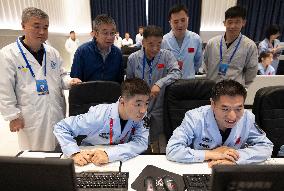
(240602) -- BEIJING, June 2, 2024 Photo by Xinhua/ABACAPRESS.COM) -- Technical personnel work at the Beijing Aerospace Control Center (BACC) in Beijing, capital of China, June 2, 2024. China's Chang'e-6 touched down on the far side of the moon on Sunday morning, and will collect samples from this rarely explored terrain for the first time in human history, the China National Space Administration (CNSA) announced. Supported by the Queqiao-2 relay satellite, the lander-ascender combination of the Chang'e-6 probe successfully landed at the designated landing area at 6:23 a.m. (Beijing Time) in the South Pole-Aitken (SPA) Basin. Photo by Xinhua/ABACAPRESS.COM/Jin Liwang)

  •  
XINHUA PHOTOS OF THE DAY

XINHUA PHOTOS OF THE DAY

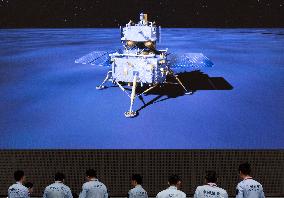
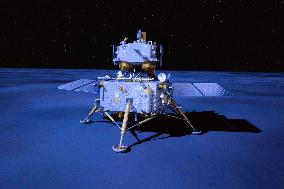
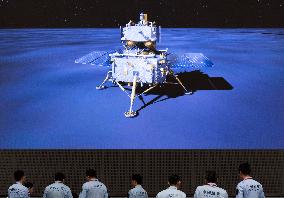
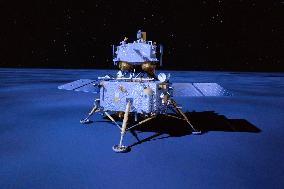
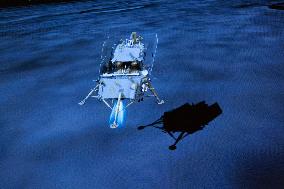
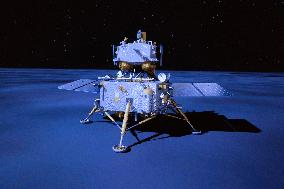
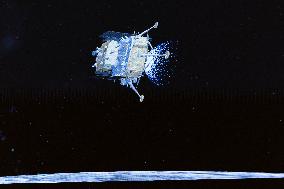
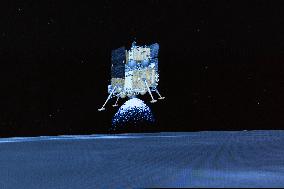
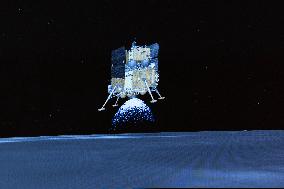
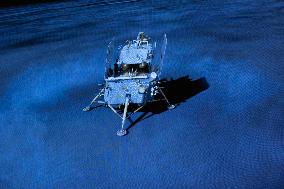
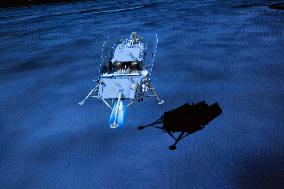
(240602) -- BEIJING, June 2, 2024 Photo by Xinhua/ABACAPRESS.COM) -- This image taken from video animation at Beijing Aerospace Control Center (BACC) on June 2, 2024 shows the lander-ascender combination of Chang'e-6 probe landing on the far side of the moon. China's Chang'e-6 touched down on the far side of the moon on Sunday morning, and will collect samples from this rarely explored terrain for the first time in human history, the China National Space Administration (CNSA) announced. Supported by the Queqiao-2 relay satellite, the lander-ascender combination of the Chang'e-6 probe successfully landed at the designated landing area at 6:23 a.m. (Beijing Time) in the South Pole-Aitken (SPA) Basin. Photo by Xinhua/ABACAPRESS.COM/Jin Liwang)

  •  
(EyesonSci)CHINA-CHANG'E-6-MOON-FAR SIDE-LANDING (CN)

(EyesonSci)CHINA-CHANG'E-6-MOON-FAR SIDE-LANDING (CN)

(240602) -- BEIJING, June 2, 2024 (Xinhua) -- Technical personnel work at the Beijing Aerospace Control Center (BACC) in Beijing, capital of China, June 2, 2024. China's Chang'e-6 touched down on the far side of the moon on Sunday morning, and will collect samples from this rarely explored terrain for the first time in human history, the China National Space Administration (CNSA) announced. Supported by the Queqiao-2 relay satellite, the lander-ascender combination of the Chang'e-6 probe successfully landed at the designated landing area at 6:23 a.m. (Beijing Time) in the South Pole-Aitken (SPA) Basin. (Xinhua/Jin Liwang)

  •  
XINHUA PHOTOS OF THE DAY

XINHUA PHOTOS OF THE DAY

(240602) -- BEIJING, June 2, 2024 (Xinhua) -- This image taken from video animation at Beijing Aerospace Control Center (BACC) on June 2, 2024 shows the lander-ascender combination of Chang'e-6 probe landing on the far side of the moon. China's Chang'e-6 touched down on the far side of the moon on Sunday morning, and will collect samples from this rarely explored terrain for the first time in human history, the China National Space Administration (CNSA) announced. Supported by the Queqiao-2 relay satellite, the lander-ascender combination of the Chang'e-6 probe successfully landed at the designated landing area at 6:23 a.m. (Beijing Time) in the South Pole-Aitken (SPA) Basin. (Xinhua/Jin Liwang)

  •  
(EyesonSci)CHINA-CHANG'E-6-MOON-FAR SIDE-LANDING (CN)

(EyesonSci)CHINA-CHANG'E-6-MOON-FAR SIDE-LANDING (CN)

(240602) -- BEIJING, June 2, 2024 Photo by Xinhua/ABACAPRESS.COM) -- Technical personnel view data sent back by the lander-ascender combination of Chang'e-6 probe at the Beijing Aerospace Control Center (BACC) in Beijing, capital of China, June 2, 2024. China's Chang'e-6 touched down on the far side of the moon on Sunday morning, and will collect samples from this rarely explored terrain for the first time in human history, the China National Space Administration (CNSA) announced. Supported by the Queqiao-2 relay satellite, the lander-ascender combination of the Chang'e-6 probe successfully landed at the designated landing area at 6:23 a.m. (Beijing Time) in the South Pole-Aitken (SPA) Basin. Photo by Xinhua/ABACAPRESS.COM/Jin Liwang)

  •  
(EyesonSci)CHINA-CHANG'E-6-MOON-FAR SIDE-LANDING (CN)

(EyesonSci)CHINA-CHANG'E-6-MOON-FAR SIDE-LANDING (CN)

(240602) -- BEIJING, June 2, 2024 (Xinhua) -- Technical personnel view data sent back by the lander-ascender combination of Chang'e-6 probe at the Beijing Aerospace Control Center (BACC) in Beijing, capital of China, June 2, 2024. China's Chang'e-6 touched down on the far side of the moon on Sunday morning, and will collect samples from this rarely explored terrain for the first time in human history, the China National Space Administration (CNSA) announced. Supported by the Queqiao-2 relay satellite, the lander-ascender combination of the Chang'e-6 probe successfully landed at the designated landing area at 6:23 a.m. (Beijing Time) in the South Pole-Aitken (SPA) Basin. (Xinhua/Jin Liwang)

  •  
(EyesonSci)CHINA-CHANG'E-6-MOON-FAR SIDE-LANDING (CN)

(EyesonSci)CHINA-CHANG'E-6-MOON-FAR SIDE-LANDING (CN)

(240602) -- BEIJING, June 2, 2024 Photo by Xinhua/ABACAPRESS.COM) -- This image taken from video animation at Beijing Aerospace Control Center (BACC) on June 2, 2024 shows the lander-ascender combination of Chang'e-6 probe landing on the far side of the moon. China's Chang'e-6 touched down on the far side of the moon on Sunday morning, and will collect samples from this rarely explored terrain for the first time in human history, the China National Space Administration (CNSA) announced. Supported by the Queqiao-2 relay satellite, the lander-ascender combination of the Chang'e-6 probe successfully landed at the designated landing area at 6:23 a.m. (Beijing Time) in the South Pole-Aitken (SPA) Basin. Photo by Xinhua/ABACAPRESS.COM/Jin Liwang)

  •  
(EyesonSci)CHINA-CHANG'E-6-MOON-FAR SIDE-LANDING (CN)

(EyesonSci)CHINA-CHANG'E-6-MOON-FAR SIDE-LANDING (CN)

(240602) -- BEIJING, June 2, 2024 Photo by Xinhua/ABACAPRESS.COM) -- This image taken from video animation at Beijing Aerospace Control Center (BACC) on June 2, 2024 shows the lander-ascender combination of Chang'e-6 probe landing on the far side of the moon. China's Chang'e-6 touched down on the far side of the moon on Sunday morning, and will collect samples from this rarely explored terrain for the first time in human history, the China National Space Administration (CNSA) announced. Supported by the Queqiao-2 relay satellite, the lander-ascender combination of the Chang'e-6 probe successfully landed at the designated landing area at 6:23 a.m. (Beijing Time) in the South Pole-Aitken (SPA) Basin. Photo by Xinhua/ABACAPRESS.COM/Jin Liwang)

  •  
(EyesonSci)CHINA-CHANG'E-6-MOON-FAR SIDE-LANDING (CN)

(EyesonSci)CHINA-CHANG'E-6-MOON-FAR SIDE-LANDING (CN)

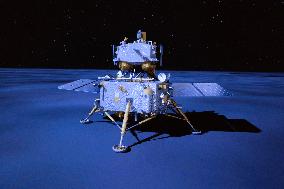
(240602) -- BEIJING, June 2, 2024 Photo by Xinhua/ABACAPRESS.COM) -- This image taken from video animation at Beijing Aerospace Control Center (BACC) on June 2, 2024 shows the lander-ascender combination of Chang'e-6 probe landing on the far side of the moon. China's Chang'e-6 touched down on the far side of the moon on Sunday morning, and will collect samples from this rarely explored terrain for the first time in human history, the China National Space Administration (CNSA) announced. Supported by the Queqiao-2 relay satellite, the lander-ascender combination of the Chang'e-6 probe successfully landed at the designated landing area at 6:23 a.m. (Beijing Time) in the South Pole-Aitken (SPA) Basin. Photo by Xinhua/ABACAPRESS.COM/Jin Liwang)

  •  
(EyesonSci)CHINA-CHANG'E-6-MOON-FAR SIDE-LANDING (CN)

(EyesonSci)CHINA-CHANG'E-6-MOON-FAR SIDE-LANDING (CN)

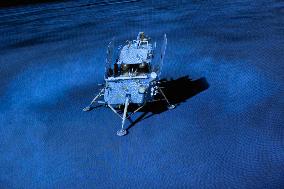
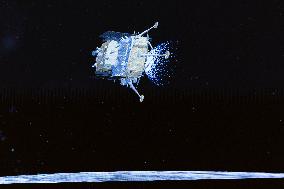
(240602) -- BEIJING, June 2, 2024 Photo by Xinhua/ABACAPRESS.COM) -- This image taken from video animation at Beijing Aerospace Control Center (BACC) on June 2, 2024 shows the lander-ascender combination of Chang'e-6 probe before landing on the far side of the moon. China's Chang'e-6 touched down on the far side of the moon on Sunday morning, and will collect samples from this rarely explored terrain for the first time in human history, the China National Space Administration (CNSA) announced. Supported by the Queqiao-2 relay satellite, the lander-ascender combination of the Chang'e-6 probe successfully landed at the designated landing area at 6:23 a.m. (Beijing Time) in the South Pole-Aitken (SPA) Basin. Photo by Xinhua/ABACAPRESS.COM/Jin Liwang)

  •  
(EyesonSci)CHINA-CHANG'E-6-MOON-FAR SIDE-LANDING (CN)

(EyesonSci)CHINA-CHANG'E-6-MOON-FAR SIDE-LANDING (CN)

(240602) -- BEIJING, June 2, 2024 Photo by Xinhua/ABACAPRESS.COM) -- Technical personnel work at the Beijing Aerospace Control Center (BACC) in Beijing, capital of China, June 2, 2024. China's Chang'e-6 touched down on the far side of the moon on Sunday morning, and will collect samples from this rarely explored terrain for the first time in human history, the China National Space Administration (CNSA) announced. Supported by the Queqiao-2 relay satellite, the lander-ascender combination of the Chang'e-6 probe successfully landed at the designated landing area at 6:23 a.m. (Beijing Time) in the South Pole-Aitken (SPA) Basin. Photo by Xinhua/ABACAPRESS.COM/Jin Liwang)

  •  
(EyesonSci)CHINA-CHANG'E-6-MOON-FAR SIDE-LANDING (CN)

(EyesonSci)CHINA-CHANG'E-6-MOON-FAR SIDE-LANDING (CN)

(240602) -- BEIJING, June 2, 2024 Photo by Xinhua/ABACAPRESS.COM) -- Technical personnel work at the Beijing Aerospace Control Center (BACC) in Beijing, capital of China, June 2, 2024. China's Chang'e-6 touched down on the far side of the moon on Sunday morning, and will collect samples from this rarely explored terrain for the first time in human history, the China National Space Administration (CNSA) announced. Supported by the Queqiao-2 relay satellite, the lander-ascender combination of the Chang'e-6 probe successfully landed at the designated landing area at 6:23 a.m. (Beijing Time) in the South Pole-Aitken (SPA) Basin. Photo by Xinhua/ABACAPRESS.COM/Jin Liwang)

  •  
(EyesonSci)CHINA-CHANG'E-6-MOON-FAR SIDE-LANDING (CN)

(EyesonSci)CHINA-CHANG'E-6-MOON-FAR SIDE-LANDING (CN)

(240602) -- BEIJING, June 2, 2024 Photo by Xinhua/ABACAPRESS.COM) -- This image taken from video animation at Beijing Aerospace Control Center (BACC) on June 2, 2024 shows the lander-ascender combination of Chang'e-6 probe before landing on the far side of the moon. China's Chang'e-6 touched down on the far side of the moon on Sunday morning, and will collect samples from this rarely explored terrain for the first time in human history, the China National Space Administration (CNSA) announced. Supported by the Queqiao-2 relay satellite, the lander-ascender combination of the Chang'e-6 probe successfully landed at the designated landing area at 6:23 a.m. (Beijing Time) in the South Pole-Aitken (SPA) Basin. Photo by Xinhua/ABACAPRESS.COM/Jin Liwang)

  •  
(EyesonSci)CHINA-CHANG'E-6-MOON-FAR SIDE-LANDING (CN)

(EyesonSci)CHINA-CHANG'E-6-MOON-FAR SIDE-LANDING (CN)

(240602) -- BEIJING, June 2, 2024 Photo by Xinhua/ABACAPRESS.COM) -- Technical personnel work at the Beijing Aerospace Control Center (BACC) in Beijing, capital of China, June 2, 2024. China's Chang'e-6 touched down on the far side of the moon on Sunday morning, and will collect samples from this rarely explored terrain for the first time in human history, the China National Space Administration (CNSA) announced. Supported by the Queqiao-2 relay satellite, the lander-ascender combination of the Chang'e-6 probe successfully landed at the designated landing area at 6:23 a.m. (Beijing Time) in the South Pole-Aitken (SPA) Basin. Photo by Xinhua/ABACAPRESS.COM/Jin Liwang)

  •  
(EyesonSci)CHINA-CHANG'E-6-MOON-FAR SIDE-LANDING (CN)

(EyesonSci)CHINA-CHANG'E-6-MOON-FAR SIDE-LANDING (CN)

(240602) -- BEIJING, June 2, 2024 (Xinhua) -- Technical personnel work at the Beijing Aerospace Control Center (BACC) in Beijing, capital of China, June 2, 2024. China's Chang'e-6 touched down on the far side of the moon on Sunday morning, and will collect samples from this rarely explored terrain for the first time in human history, the China National Space Administration (CNSA) announced. Supported by the Queqiao-2 relay satellite, the lander-ascender combination of the Chang'e-6 probe successfully landed at the designated landing area at 6:23 a.m. (Beijing Time) in the South Pole-Aitken (SPA) Basin. (Xinhua/Jin Liwang)

  •  
(EyesonSci)CHINA-CHANG'E-6-MOON-FAR SIDE-LANDING (CN)

(EyesonSci)CHINA-CHANG'E-6-MOON-FAR SIDE-LANDING (CN)

(240602) -- BEIJING, June 2, 2024 (Xinhua) -- This image taken from video animation at Beijing Aerospace Control Center (BACC) on June 2, 2024 shows the lander-ascender combination of Chang'e-6 probe before landing on the far side of the moon. China's Chang'e-6 touched down on the far side of the moon on Sunday morning, and will collect samples from this rarely explored terrain for the first time in human history, the China National Space Administration (CNSA) announced. Supported by the Queqiao-2 relay satellite, the lander-ascender combination of the Chang'e-6 probe successfully landed at the designated landing area at 6:23 a.m. (Beijing Time) in the South Pole-Aitken (SPA) Basin. (Xinhua/Jin Liwang)

  •  
(EyesonSci)CHINA-CHANG'E-6-MOON-FAR SIDE-LANDING (CN)

(EyesonSci)CHINA-CHANG'E-6-MOON-FAR SIDE-LANDING (CN)

(240602) -- BEIJING, June 2, 2024 (Xinhua) -- This image taken from video animation at Beijing Aerospace Control Center (BACC) on June 2, 2024 shows the lander-ascender combination of Chang'e-6 probe landing on the far side of the moon. China's Chang'e-6 touched down on the far side of the moon on Sunday morning, and will collect samples from this rarely explored terrain for the first time in human history, the China National Space Administration (CNSA) announced. Supported by the Queqiao-2 relay satellite, the lander-ascender combination of the Chang'e-6 probe successfully landed at the designated landing area at 6:23 a.m. (Beijing Time) in the South Pole-Aitken (SPA) Basin. (Xinhua/Jin Liwang)

  •  
(EyesonSci)CHINA-CHANG'E-6-MOON-FAR SIDE-LANDING (CN)

(EyesonSci)CHINA-CHANG'E-6-MOON-FAR SIDE-LANDING (CN)

(240602) -- BEIJING, June 2, 2024 (Xinhua) -- This image taken from video animation at Beijing Aerospace Control Center (BACC) on June 2, 2024 shows the lander-ascender combination of Chang'e-6 probe before landing on the far side of the moon. China's Chang'e-6 touched down on the far side of the moon on Sunday morning, and will collect samples from this rarely explored terrain for the first time in human history, the China National Space Administration (CNSA) announced. Supported by the Queqiao-2 relay satellite, the lander-ascender combination of the Chang'e-6 probe successfully landed at the designated landing area at 6:23 a.m. (Beijing Time) in the South Pole-Aitken (SPA) Basin. (Xinhua/Jin Liwang)

  •  
(EyesonSci)CHINA-CHANG'E-6-MOON-FAR SIDE-LANDING (CN)

(EyesonSci)CHINA-CHANG'E-6-MOON-FAR SIDE-LANDING (CN)

(240602) -- BEIJING, June 2, 2024 (Xinhua) -- This image taken from video animation at Beijing Aerospace Control Center (BACC) on June 2, 2024 shows the lander-ascender combination of Chang'e-6 probe landing on the far side of the moon. China's Chang'e-6 touched down on the far side of the moon on Sunday morning, and will collect samples from this rarely explored terrain for the first time in human history, the China National Space Administration (CNSA) announced. Supported by the Queqiao-2 relay satellite, the lander-ascender combination of the Chang'e-6 probe successfully landed at the designated landing area at 6:23 a.m. (Beijing Time) in the South Pole-Aitken (SPA) Basin. (Xinhua/Jin Liwang)

  •  
(EyesonSci)CHINA-CHANG'E-6-MOON-FAR SIDE-LANDING (CN)

(EyesonSci)CHINA-CHANG'E-6-MOON-FAR SIDE-LANDING (CN)

(240602) -- BEIJING, June 2, 2024 (Xinhua) -- This image taken from video animation at Beijing Aerospace Control Center (BACC) on June 2, 2024 shows the lander-ascender combination of Chang'e-6 probe landing on the far side of the moon. China's Chang'e-6 touched down on the far side of the moon on Sunday morning, and will collect samples from this rarely explored terrain for the first time in human history, the China National Space Administration (CNSA) announced. Supported by the Queqiao-2 relay satellite, the lander-ascender combination of the Chang'e-6 probe successfully landed at the designated landing area at 6:23 a.m. (Beijing Time) in the South Pole-Aitken (SPA) Basin. (Xinhua/Jin Liwang)

  •  
(EyesonSci)CHINA-CHANG'E-6-MOON-FAR SIDE-LANDING (CN)

(EyesonSci)CHINA-CHANG'E-6-MOON-FAR SIDE-LANDING (CN)

(240602) -- BEIJING, June 2, 2024 (Xinhua) -- Technical personnel work at the Beijing Aerospace Control Center (BACC) in Beijing, capital of China, June 2, 2024. China's Chang'e-6 touched down on the far side of the moon on Sunday morning, and will collect samples from this rarely explored terrain for the first time in human history, the China National Space Administration (CNSA) announced. Supported by the Queqiao-2 relay satellite, the lander-ascender combination of the Chang'e-6 probe successfully landed at the designated landing area at 6:23 a.m. (Beijing Time) in the South Pole-Aitken (SPA) Basin. (Xinhua/Jin Liwang)

  •  
(EyesonSci)CHINA-CHANG'E-6-MOON-FAR SIDE-LANDING (CN)

(EyesonSci)CHINA-CHANG'E-6-MOON-FAR SIDE-LANDING (CN)

(240602) -- BEIJING, June 2, 2024 (Xinhua) -- Technical personnel work at the Beijing Aerospace Control Center (BACC) in Beijing, capital of China, June 2, 2024. China's Chang'e-6 touched down on the far side of the moon on Sunday morning, and will collect samples from this rarely explored terrain for the first time in human history, the China National Space Administration (CNSA) announced. Supported by the Queqiao-2 relay satellite, the lander-ascender combination of the Chang'e-6 probe successfully landed at the designated landing area at 6:23 a.m. (Beijing Time) in the South Pole-Aitken (SPA) Basin. (Xinhua/Jin Liwang)

  •  
National Science and Technology Week

National Science and Technology Week

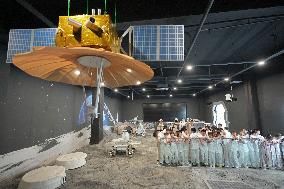
YANTAI, CHINA - MAY 25, 2024 - Elementary school students learn about the Queqiao 2 relay communication satellite at the Space Science Science Center of the Comprehensive Practice base for primary and middle school students in Huangbohai New Area of Yantai, East China's Shandong province, May 25, 2024.

  •  
Xinhua Headlines: "Bridge" in place, China ready to sample on moon's far side

Xinhua Headlines: "Bridge" in place, China ready to sample on moon's far side

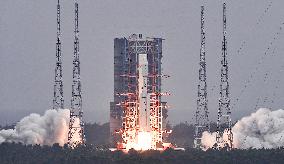
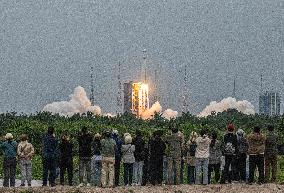
(240419) -- BEIJING, April 19, 2024 (Xinhua) -- A Long March-8 rocket, carrying the relay satellite Queqiao-2 for Earth-Moon communications, blasts off at the Wenchang Space Launch Center in south China's Hainan Province, March 20, 2024. (Xinhua/Yang Guanyu)

  •  
Xinhua Headlines: "Bridge" in place, China ready to sample on moon's far side

Xinhua Headlines: "Bridge" in place, China ready to sample on moon's far side

(240419) -- BEIJING, April 19, 2024 (Xinhua) -- A Long March-8 rocket, carrying the relay satellite Queqiao-2 for Earth-Moon communications, blasts off at the Wenchang Space Launch Center in south China's Hainan Province, March 20, 2024. (Xinhua/Pu Xiaoxu)

  •  
XINHUA PHOTOS OF THE DAY

XINHUA PHOTOS OF THE DAY

(240321) -- BEIJING, March 21, 2024 (Xinhua) -- A Long March-8 rocket, carrying the relay satellite Queqiao-2 for Earth-Moon communications, blasts off at the Wenchang Space Launch Center in south China's Hainan Province, March 20, 2024. (Xinhua/Pu Xiaoxu)

  •  

China launches new relay satellite for Earth-Moon communications

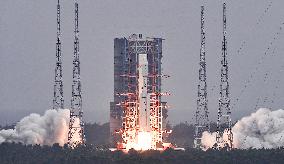
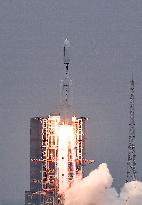
STORY: China launches new relay satellite for Earth-Moon communications SHOOTING TIME: March 20, 2024 DATELINE: March 20, 2024 LENGTH: 0:00:44 LOCATION: WENCHANG, China CATEGORY: SCIENCE SHOTLIST: 1. various of the launch of a new relay satellite STORYLINE: China launched a new relay satellite on Wednesday to provide Earth-Moon communications services. This marks a key step for the country's future lunar exploration missions such as retrieving samples from the far side of the moon. A Long March-8 rocket, carrying the satellite dubbed Queqiao-2, or magpie bridge-2, soared into the sky at 8:31 a.m. from the Wenchang Space Launch Site in south China's Hainan Province. After 24 minutes of flight, the satellite separated from the rocket, and entered the planned Earth-Moon transfer orbit with the perigee at 200 kilometers and the apogee at 420,000 kilometers. The satellite's solar panels and communications antennae were unfolded, according to the China National Space Administration. Xinhua News Agency

  •  
(EyesOnSci)CHINA-HAINAN-RELAY SATELLITE QUEQIAO-2-LAUNCH (CN)

(EyesOnSci)CHINA-HAINAN-RELAY SATELLITE QUEQIAO-2-LAUNCH (CN)

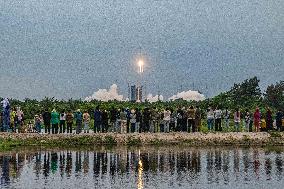
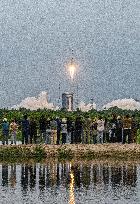
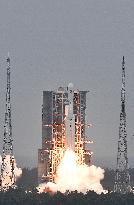
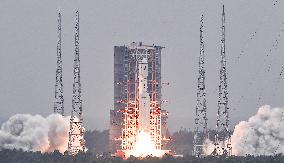
(240320) -- WENCHANG, March 20, 2024 (Xinhua) -- A Long March-8 rocket, carrying the relay satellite Queqiao-2 for Earth-Moon communications, blasts off at the Wenchang Space Launch Center in south China's Hainan Province, March 20, 2024. After 24 minutes of flight, the satellite separated from the rocket, and entered the planned Earth-Moon transfer orbit with the perigee at 200 kilometers and the apogee at 420,000 kilometers. The satellite's solar panels and communications antennae were unfolded, according to the China National Space Administration. (Xinhua/Pu Xiaoxu)

  •  
(EyesOnSci)CHINA-HAINAN-RELAY SATELLITE QUEQIAO-2-LAUNCH (CN)

(EyesOnSci)CHINA-HAINAN-RELAY SATELLITE QUEQIAO-2-LAUNCH (CN)

(240320) -- WENCHANG, March 20, 2024 (Xinhua) -- A Long March-8 rocket, carrying the relay satellite Queqiao-2 for Earth-Moon communications, blasts off at the Wenchang Space Launch Center in south China's Hainan Province, March 20, 2024. After 24 minutes of flight, the satellite separated from the rocket, and entered the planned Earth-Moon transfer orbit with the perigee at 200 kilometers and the apogee at 420,000 kilometers. The satellite's solar panels and communications antennae were unfolded, according to the China National Space Administration. (Xinhua/Yang Guanyu)

  •  
(EyesOnSci)CHINA-HAINAN-RELAY SATELLITE QUEQIAO-2-LAUNCH (CN)

(EyesOnSci)CHINA-HAINAN-RELAY SATELLITE QUEQIAO-2-LAUNCH (CN)

(240320) -- WENCHANG, March 20, 2024 (Xinhua) -- A Long March-8 rocket, carrying the relay satellite Queqiao-2 for Earth-Moon communications, blasts off at the Wenchang Space Launch Center in south China's Hainan Province, March 20, 2024. After 24 minutes of flight, the satellite separated from the rocket, and entered the planned Earth-Moon transfer orbit with the perigee at 200 kilometers and the apogee at 420,000 kilometers. The satellite's solar panels and communications antennae were unfolded, according to the China National Space Administration. (Xinhua/Yang Guanyu)

  •  
(EyesOnSci)CHINA-HAINAN-RELAY SATELLITE QUEQIAO-2-LAUNCH (CN)

(EyesOnSci)CHINA-HAINAN-RELAY SATELLITE QUEQIAO-2-LAUNCH (CN)

(240320) -- WENCHANG, March 20, 2024 (Xinhua) -- A Long March-8 rocket, carrying the relay satellite Queqiao-2 for Earth-Moon communications, blasts off at the Wenchang Space Launch Center in south China's Hainan Province, March 20, 2024. After 24 minutes of flight, the satellite separated from the rocket, and entered the planned Earth-Moon transfer orbit with the perigee at 200 kilometers and the apogee at 420,000 kilometers. The satellite's solar panels and communications antennae were unfolded, according to the China National Space Administration. (Xinhua/Pu Xiaoxu)

  •  
(EyesOnSci)CHINA-HAINAN-RELAY SATELLITE QUEQIAO-2-LAUNCH (CN)

(EyesOnSci)CHINA-HAINAN-RELAY SATELLITE QUEQIAO-2-LAUNCH (CN)

(240320) -- WENCHANG, March 20, 2024 (Xinhua) -- A Long March-8 rocket, carrying the relay satellite Queqiao-2 for Earth-Moon communications, blasts off at the Wenchang Space Launch Center in south China's Hainan Province, March 20, 2024. After 24 minutes of flight, the satellite separated from the rocket, and entered the planned Earth-Moon transfer orbit with the perigee at 200 kilometers and the apogee at 420,000 kilometers. The satellite's solar panels and communications antennae were unfolded, according to the China National Space Administration. (Xinhua/Pu Xiaoxu)

  •  
(EyesOnSci)CHINA-HAINAN-RELAY SATELLITE QUEQIAO-2-LAUNCH (CN)

(EyesOnSci)CHINA-HAINAN-RELAY SATELLITE QUEQIAO-2-LAUNCH (CN)

(240320) -- WENCHANG, March 20, 2024 (Xinhua) -- A Long March-8 rocket, carrying the relay satellite Queqiao-2 for Earth-Moon communications, blasts off at the Wenchang Space Launch Center in south China's Hainan Province, March 20, 2024. After 24 minutes of flight, the satellite separated from the rocket, and entered the planned Earth-Moon transfer orbit with the perigee at 200 kilometers and the apogee at 420,000 kilometers. The satellite's solar panels and communications antennae were unfolded, according to the China National Space Administration. (Xinhua/Pu Xiaoxu)

  •  
(EyesOnSci)CHINA-HAINAN-RELAY SATELLITE QUEQIAO-2-LAUNCH (CN)

(EyesOnSci)CHINA-HAINAN-RELAY SATELLITE QUEQIAO-2-LAUNCH (CN)

(240320) -- WENCHANG, March 20, 2024 (Xinhua) -- A Long March-8 rocket, carrying the relay satellite Queqiao-2 for Earth-Moon communications, blasts off at the Wenchang Space Launch Center in south China's Hainan Province, March 20, 2024. After 24 minutes of flight, the satellite separated from the rocket, and entered the planned Earth-Moon transfer orbit with the perigee at 200 kilometers and the apogee at 420,000 kilometers. The satellite's solar panels and communications antennae were unfolded, according to the China National Space Administration. (Xinhua/Yang Guanyu)

  •  
(EyesOnSci)CHINA-HAINAN-RELAY SATELLITE QUEQIAO-2-LAUNCH (CN)

(EyesOnSci)CHINA-HAINAN-RELAY SATELLITE QUEQIAO-2-LAUNCH (CN)

(240320) -- WENCHANG, March 20, 2024 (Xinhua) -- A Long March-8 rocket, carrying the relay satellite Queqiao-2 for Earth-Moon communications blasts off at the Wenchang Space Launch Center in south China's Hainan Province, March 20, 2024. (Xinhua/Yang Guanyu)

  •  
(EyesOnSci)CHINA-HAINAN-RELAY SATELLITE QUEQIAO-2-LAUNCH (CN)

(EyesOnSci)CHINA-HAINAN-RELAY SATELLITE QUEQIAO-2-LAUNCH (CN)

(240320) -- WENCHANG, March 20, 2024 (Xinhua) -- A Long March-8 rocket, carrying the relay satellite Queqiao-2 for Earth-Moon communications blasts off at the Wenchang Space Launch Center in south China's Hainan Province, March 20, 2024. (Xinhua/Yang Guanyu)

  •  
XINHUA PHOTOS OF THE DAY

XINHUA PHOTOS OF THE DAY

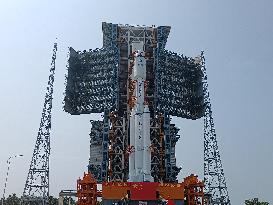
(240318) -- BEIJING, March 18, 2024 (Xinhua) -- The combination of the relay satellite Queqiao-2 and the Long March-8 Y3 carrier rocket is vertically transferred to the launching area at the Wenchang Space Launch Center in south China's Hainan Province, March 17, 2024. The satellite is projected to be launched at an appropriate time within the next few days, according to the China National Space Administration (CNSA). (Photo by Huang Guochang/Xinhua)

  •  
(EyesOnSci) CHINA-RELAY SATELLITE QUEQIAO-2-LAUNCH PREPARATION (CN)

(EyesOnSci) CHINA-RELAY SATELLITE QUEQIAO-2-LAUNCH PREPARATION (CN)

(240317) -- WENCHANG, March 17, 2024 (Xinhua) -- The combination of the relay satellite Queqiao-2 and the Long March-8 Y3 carrier rocket is vertically transferred to the launching area at the Wenchang Space Launch Center in south China's Hainan Province, March 17, 2024. The satellite is projected to be launched at an appropriate time within the next few days, according to the China National Space Administration (CNSA). (Photo by Huang Guochang/Xinhua)

  •  
(EyesOnSci) CHINA-RELAY SATELLITE QUEQIAO-2-LAUNCH PREPARATION (CN)

(EyesOnSci) CHINA-RELAY SATELLITE QUEQIAO-2-LAUNCH PREPARATION (CN)

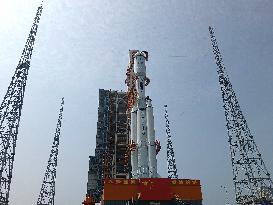
(240317) -- WENCHANG, March 17, 2024 (Xinhua) -- The combination of the relay satellite Queqiao-2 and the Long March-8 Y3 carrier rocket is seen when being transferred to the launching area at the Wenchang Space Launch Center in south China's Hainan Province, March 17, 2024. The satellite is projected to be launched at an appropriate time within the next few days, according to the China National Space Administration (CNSA). (Photo by Huang Guochang/Xinhua)

  •  
(EyesOnSci) CHINA-RELAY SATELLITE QUEQIAO-2-LAUNCH PREPARATION (CN)

(EyesOnSci) CHINA-RELAY SATELLITE QUEQIAO-2-LAUNCH PREPARATION (CN)

(240317) -- WENCHANG, March 17, 2024 (Xinhua) -- The combination of the relay satellite Queqiao-2 and the Long March-8 Y3 carrier rocket is seen when being transferred to the launching area at the Wenchang Space Launch Center in south China's Hainan Province, March 17, 2024. The satellite is projected to be launched at an appropriate time within the next few days, according to the China National Space Administration (CNSA). (Photo by Huang Guochang/Xinhua)

  • Main
  • Top
  • Editorial
  • Creative
  • About Us
  • About ILG
  • Terms of use
  • Company
  • BEHIND
  • Price List
  • Single Plan
  • Monthly Plan
  • Services
  • Shooting
  • Rights Clearance
  • Support
  • FAQ
  • How To Buy
  • Contact Us
  • Become a Partner

© KYODO NEWS IMAGES INC

All Rights Reserved.

  • Editorial
  • Olympics
  • News
  • Sports
  • Japan
  • Tech
  • Royal
  • Disaster
  • NorthKorea
  • Old Japan
  • SNS
  • Creative
  • Food
  • Japan
  • Landscape
  • Animal
  • Popular
  • #Ukraine
  • #Russia
  • #coronavirus
  • #N. Korea
  • #China
  • #Thailand
  • #Ukraine
  • #Russia
  • #coronavirus
  • #N. Korea
  • #China
  • #Thailand
  • Food
  • Japan
  • Landscape
  • Animal
  • Olympics
  • News
  • Sports
  • Japan
  • Tech
  • Royal
  • Disaster
  • NorthKorea
  • Old Japan
  • SNS