•  
Preserving Tradition And Innovating Duck Culture - Bejing

Preserving Tradition And Innovating Duck Culture - Bejing

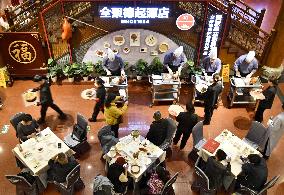
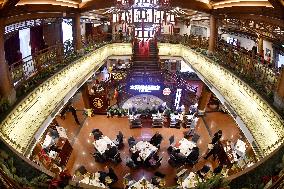
B Customers have meals at the first-ever store of Quanjude on the Qianmen Street in Beijing, capital of China, March 25, 2025. Peking Duck, a representative cuisine of Beijing, has won popularity across the world for its golden, crispy skin and juicy, flavorful meat. Set up by Yang Quanren in 1864 in Beijing, "Quanjude", a time-honored brand for Peking duck, has become a must-go for visitors from both home and abroad. In 2008, Quanjude's craft of making Peking Duck was listed in the second batch of national intangible cultural heritages. The cooking craft of Peking Duck, which has been passed down for seven generations in Quanjude, is mainly used in two steps, preparation and roasting. To ensure the quality of its duck, Quanjude only chooses a type of local ducks which are fed and raised in a special way so that the proportion of the fat in the duck meat is strictly under control. During the roasting procedure, Quanjude uses wood from hard fruit trees and open fire to get a better taste. Meanwhile, the chef w

  •  
Preserving Tradition And Innovating Duck Culture - Bejing

Preserving Tradition And Innovating Duck Culture - Bejing

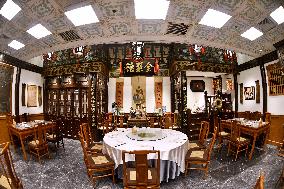
B This photo taken on March 25, 2025 shows the replica of an old Quanjude store at its first-ever store on the Qianmen Street in Beijing, capital of China, March 25, 2025. Peking Duck, a representative cuisine of Beijing, has won popularity across the world for its golden, crispy skin and juicy, flavorful meat. Set up by Yang Quanren in 1864 in Beijing, "Quanjude", a time-honored brand for Peking duck, has become a must-go for visitors from both home and abroad. In 2008, Quanjude's craft of making Peking Duck was listed in the second batch of national intangible cultural heritages. The cooking craft of Peking Duck, which has been passed down for seven generations in Quanjude, is mainly used in two steps, preparation and roasting. To ensure the quality of its duck, Quanjude only chooses a type of local ducks which are fed and raised in a special way so that the proportion of the fat in the duck meat is strictly under control. During the roasting procedure, Quanjude uses wood from hard fruit trees and open fire

  •  
Preserving Tradition And Innovating Duck Culture - Bejing

Preserving Tradition And Innovating Duck Culture - Bejing

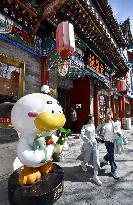
B A mascot of Quanjude is displayed at the entrance of an experience store of Quanjude on the Qianmen Street in Beijing, capital of China, March 25, 2025. Peking Duck, a representative cuisine of Beijing, has won popularity across the world for its golden, crispy skin and juicy, flavorful meat. Set up by Yang Quanren in 1864 in Beijing, "Quanjude", a time-honored brand for Peking duck, has become a must-go for visitors from both home and abroad. In 2008, Quanjude's craft of making Peking Duck was listed in the second batch of national intangible cultural heritages. The cooking craft of Peking Duck, which has been passed down for seven generations in Quanjude, is mainly used in two steps, preparation and roasting. To ensure the quality of its duck, Quanjude only chooses a type of local ducks which are fed and raised in a special way so that the proportion of the fat in the duck meat is strictly under control. During the roasting procedure, Quanjude uses wood from hard fruit trees and open fire to get a better

  •  
Preserving Tradition And Innovating Duck Culture - Bejing

Preserving Tradition And Innovating Duck Culture - Bejing

B People walk to the first-ever store of Quanjude on the Qianmen Street in Beijing, capital of China, March 14, 2025. Peking Duck, a representative cuisine of Beijing, has won popularity across the world for its golden, crispy skin and juicy, flavorful meat. Set up by Yang Quanren in 1864 in Beijing, "Quanjude", a time-honored brand for Peking duck, has become a must-go for visitors from both home and abroad. In 2008, Quanjude's craft of making Peking Duck was listed in the second batch of national intangible cultural heritages. The cooking craft of Peking Duck, which has been passed down for seven generations in Quanjude, is mainly used in two steps, preparation and roasting. To ensure the quality of its duck, Quanjude only chooses a type of local ducks which are fed and raised in a special way so that the proportion of the fat in the duck meat is strictly under control. During the roasting procedure, Quanjude uses wood from hard fruit trees and open fire to get a better taste. Meanwhile, the chef will also

  •  
Preserving Tradition And Innovating Duck Culture - Bejing

Preserving Tradition And Innovating Duck Culture - Bejing

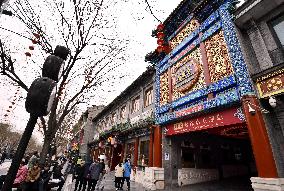
B The first-ever store of Quanjude is seen on the Qianmen Street in Beijing, capital of China, March 14, 2025. Peking Duck, a representative cuisine of Beijing, has won popularity across the world for its golden, crispy skin and juicy, flavorful meat. Set up by Yang Quanren in 1864 in Beijing, "Quanjude", a time-honored brand for Peking duck, has become a must-go for visitors from both home and abroad. In 2008, Quanjude's craft of making Peking Duck was listed in the second batch of national intangible cultural heritages. The cooking craft of Peking Duck, which has been passed down for seven generations in Quanjude, is mainly used in two steps, preparation and roasting. To ensure the quality of its duck, Quanjude only chooses a type of local ducks which are fed and raised in a special way so that the proportion of the fat in the duck meat is strictly under control. During the roasting procedure, Quanjude uses wood from hard fruit trees and open fire to get a better taste. Meanwhile, the chef will also use a l

  •  
Preserving Tradition And Innovating Duck Culture - Bejing

Preserving Tradition And Innovating Duck Culture - Bejing

B A foreign guest eats Peking Duck at the first-ever store of Quanjude on the Qianmen Street in Beijing, capital of China, March 25, 2025. Peking Duck, a representative cuisine of Beijing, has won popularity across the world for its golden, crispy skin and juicy, flavorful meat. Set up by Yang Quanren in 1864 in Beijing, "Quanjude", a time-honored brand for Peking duck, has become a must-go for visitors from both home and abroad. In 2008, Quanjude's craft of making Peking Duck was listed in the second batch of national intangible cultural heritages. The cooking craft of Peking Duck, which has been passed down for seven generations in Quanjude, is mainly used in two steps, preparation and roasting. To ensure the quality of its duck, Quanjude only chooses a type of local ducks which are fed and raised in a special way so that the proportion of the fat in the duck meat is strictly under control. During the roasting procedure, Quanjude uses wood from hard fruit trees and open fire to get a better taste. Meanwhile

  •  
Preserving Tradition And Innovating Duck Culture - Bejing

Preserving Tradition And Innovating Duck Culture - Bejing

B Customers taste Peking Ducks at the first-ever store of Quanjude on the Qianmen Street in Beijing, capital of China, March 25, 2025. Peking Duck, a representative cuisine of Beijing, has won popularity across the world for its golden, crispy skin and juicy, flavorful meat. Set up by Yang Quanren in 1864 in Beijing, "Quanjude", a time-honored brand for Peking duck, has become a must-go for visitors from both home and abroad. In 2008, Quanjude's craft of making Peking Duck was listed in the second batch of national intangible cultural heritages. The cooking craft of Peking Duck, which has been passed down for seven generations in Quanjude, is mainly used in two steps, preparation and roasting. To ensure the quality of its duck, Quanjude only chooses a type of local ducks which are fed and raised in a special way so that the proportion of the fat in the duck meat is strictly under control. During the roasting procedure, Quanjude uses wood from hard fruit trees and open fire to get a better taste. Meanwhile, th

  •  
Preserving Tradition And Innovating Duck Culture - Bejing

Preserving Tradition And Innovating Duck Culture - Bejing

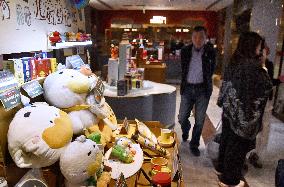
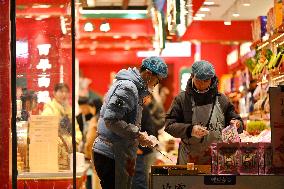
B Customers look at cultural creative products of Quanjude at one of its experience stores on the Qianmen Street in Beijing, capital of China, March 25, 2025. Peking Duck, a representative cuisine of Beijing, has won popularity across the world for its golden, crispy skin and juicy, flavorful meat. Set up by Yang Quanren in 1864 in Beijing, "Quanjude", a time-honored brand for Peking duck, has become a must-go for visitors from both home and abroad. In 2008, Quanjude's craft of making Peking Duck was listed in the second batch of national intangible cultural heritages. The cooking craft of Peking Duck, which has been passed down for seven generations in Quanjude, is mainly used in two steps, preparation and roasting. To ensure the quality of its duck, Quanjude only chooses a type of local ducks which are fed and raised in a special way so that the proportion of the fat in the duck meat is strictly under control. During the roasting procedure, Quanjude uses wood from hard fruit trees and open fire to get a bet

  •  
Preserving Tradition And Innovating Duck Culture - Bejing

Preserving Tradition And Innovating Duck Culture - Bejing

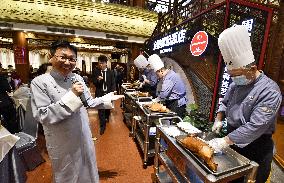
B A staff member introduces the history of Quanjude to customers at its first-ever store on the Qianmen Street in Beijing, capital of China, March 25, 2025. Peking Duck, a representative cuisine of Beijing, has won popularity across the world for its golden, crispy skin and juicy, flavorful meat. Set up by Yang Quanren in 1864 in Beijing, "Quanjude", a time-honored brand for Peking duck, has become a must-go for visitors from both home and abroad. In 2008, Quanjude's craft of making Peking Duck was listed in the second batch of national intangible cultural heritages. The cooking craft of Peking Duck, which has been passed down for seven generations in Quanjude, is mainly used in two steps, preparation and roasting. To ensure the quality of its duck, Quanjude only chooses a type of local ducks which are fed and raised in a special way so that the proportion of the fat in the duck meat is strictly under control. During the roasting procedure, Quanjude uses wood from hard fruit trees and open fire to get a bette

  •  
Preserving Tradition And Innovating Duck Culture - Bejing

Preserving Tradition And Innovating Duck Culture - Bejing

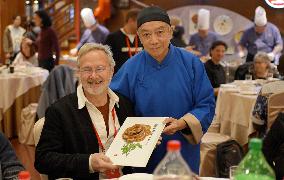
B This undated file photo shows a foreign tourist posing for photos with a waiter in traditional costumes at the first-ever store of Quanjude on the Qianmen Street in Beijing, capital of China. Peking Duck, a representative cuisine of Beijing, has won popularity across the world for its golden, crispy skin and juicy, flavorful meat. Set up by Yang Quanren in 1864 in Beijing, "Quanjude", a time-honored brand for Peking duck, has become a must-go for visitors from both home and abroad. In 2008, Quanjude's craft of making Peking Duck was listed in the second batch of national intangible cultural heritages. The cooking craft of Peking Duck, which has been passed down for seven generations in Quanjude, is mainly used in two steps, preparation and roasting. To ensure the quality of its duck, Quanjude only chooses a type of local ducks which are fed and raised in a special way so that the proportion of the fat in the duck meat is strictly under control. During the roasting procedure, Quanjude uses wood from hard fru

  •  
Qianmen Street Tour in Beijing

Qianmen Street Tour in Beijing

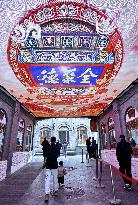
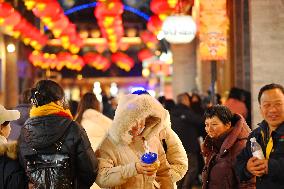
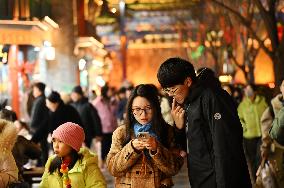
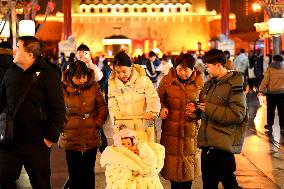
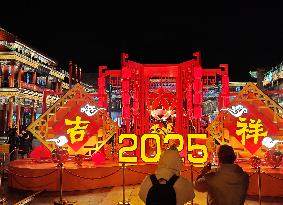
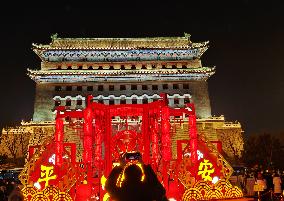
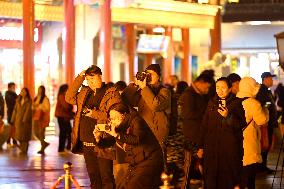
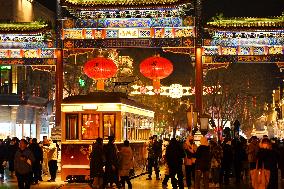
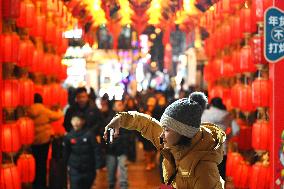
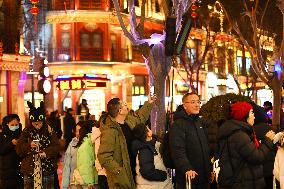
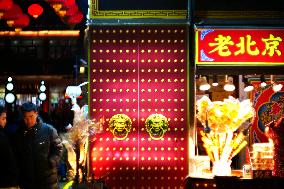
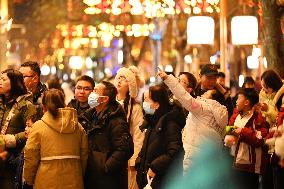
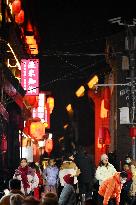
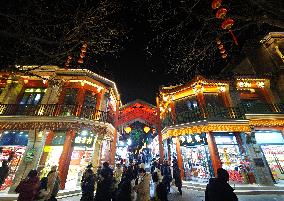
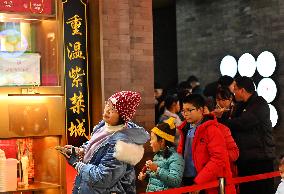
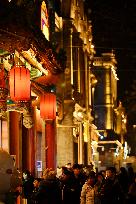
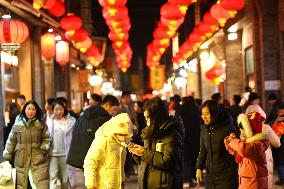
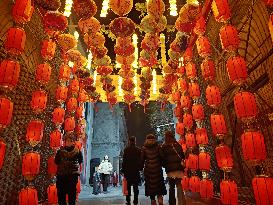
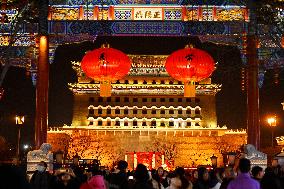
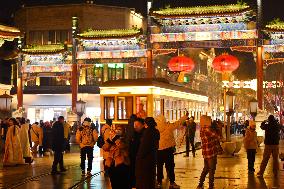
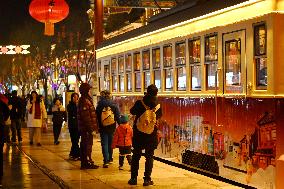
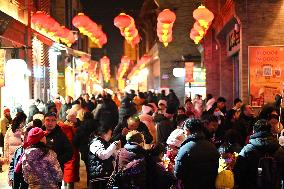
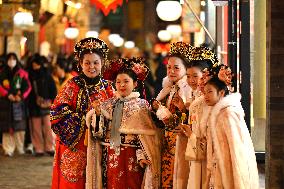
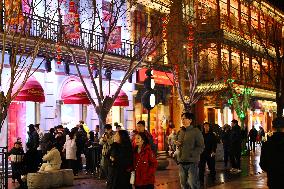
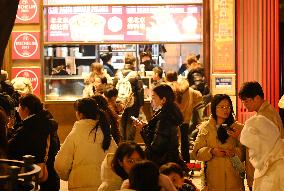
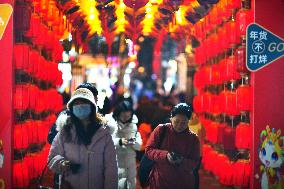
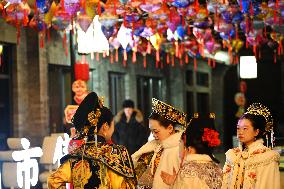
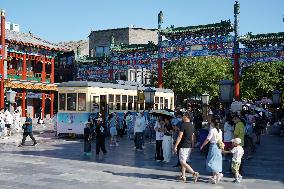
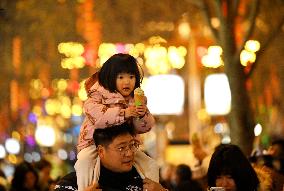
BEIJING, CHINA - JANUARY 23, 2025 - Tourists play in the newly decorated Qianmen Street to celebrate the upcoming Chinese Lunar New Year in Beijing, China, Jan. 23, 2025.

  •  
Qianmen Street Tour in Beijing

Qianmen Street Tour in Beijing

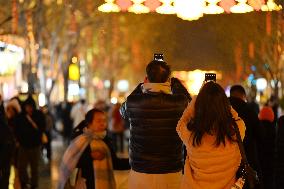
BEIJING, CHINA - JANUARY 23, 2025 - Tourists play in the newly decorated Qianmen Street to celebrate the upcoming Chinese Lunar New Year in Beijing, China, Jan. 23, 2025.

  •  
Qianmen Street Tour in Beijing

Qianmen Street Tour in Beijing

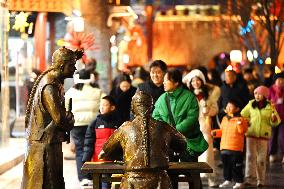
BEIJING, CHINA - JANUARY 23, 2025 - Tourists play in the newly decorated Qianmen Street to celebrate the upcoming Chinese Lunar New Year in Beijing, China, Jan. 23, 2025.

  •  
Qianmen Street Tour in Beijing

Qianmen Street Tour in Beijing

BEIJING, CHINA - JANUARY 23, 2025 - Tourists play in the newly decorated Qianmen Street to celebrate the upcoming Chinese Lunar New Year in Beijing, China, Jan. 23, 2025.

  •  
Qianmen Street Tour in Beijing

Qianmen Street Tour in Beijing

BEIJING, CHINA - JANUARY 23, 2025 - Tourists play in the newly decorated Qianmen Street to celebrate the upcoming Chinese Lunar New Year in Beijing, China, Jan. 23, 2025.

  •  
Qianmen Street Tour in Beijing

Qianmen Street Tour in Beijing

BEIJING, CHINA - JANUARY 23, 2025 - Tourists play in the newly decorated Qianmen Street to celebrate the upcoming Chinese Lunar New Year in Beijing, China, Jan. 23, 2025.

  •  
Qianmen Street Tour in Beijing

Qianmen Street Tour in Beijing

BEIJING, CHINA - JANUARY 23, 2025 - Tourists play in the newly decorated Qianmen Street to celebrate the upcoming Chinese Lunar New Year in Beijing, China, Jan. 23, 2025.

  •  
Qianmen Street Tour in Beijing

Qianmen Street Tour in Beijing

BEIJING, CHINA - JANUARY 23, 2025 - Tourists play in the newly decorated Qianmen Street to celebrate the upcoming Chinese Lunar New Year in Beijing, China, Jan. 23, 2025.

  •  
Qianmen Street Tour in Beijing

Qianmen Street Tour in Beijing

BEIJING, CHINA - JANUARY 23, 2025 - Tourists play in the newly decorated Qianmen Street to celebrate the upcoming Chinese Lunar New Year in Beijing, China, Jan. 23, 2025.

  •  
Qianmen Street Tour in Beijing

Qianmen Street Tour in Beijing

BEIJING, CHINA - JANUARY 23, 2025 - Tourists play in the newly decorated Qianmen Street to celebrate the upcoming Chinese Lunar New Year in Beijing, China, Jan. 23, 2025.

  •  
Qianmen Street Tour in Beijing

Qianmen Street Tour in Beijing

BEIJING, CHINA - JANUARY 23, 2025 - Tourists play in the newly decorated Qianmen Street to celebrate the upcoming Chinese Lunar New Year in Beijing, China, Jan. 23, 2025.

  •  
Qianmen Street Tour in Beijing

Qianmen Street Tour in Beijing

BEIJING, CHINA - JANUARY 23, 2025 - Tourists play in the newly decorated Qianmen Street to celebrate the upcoming Chinese Lunar New Year in Beijing, China, Jan. 23, 2025.

  •  
Qianmen Street Tour in Beijing

Qianmen Street Tour in Beijing

BEIJING, CHINA - JANUARY 23, 2025 - Tourists play in the newly decorated Qianmen Street to celebrate the upcoming Chinese Lunar New Year in Beijing, China, Jan. 23, 2025.

  •  
Qianmen Street Tour in Beijing

Qianmen Street Tour in Beijing

BEIJING, CHINA - JANUARY 23, 2025 - Tourists play in the newly decorated Qianmen Street to celebrate the upcoming Chinese Lunar New Year in Beijing, China, Jan. 23, 2025.

  •  
Qianmen Street Tour in Beijing

Qianmen Street Tour in Beijing

BEIJING, CHINA - JANUARY 23, 2025 - Tourists play in the newly decorated Qianmen Street to celebrate the upcoming Chinese Lunar New Year in Beijing, China, Jan. 23, 2025.

  •  
Qianmen Street Tour in Beijing

Qianmen Street Tour in Beijing

BEIJING, CHINA - JANUARY 23, 2025 - Tourists play in the newly decorated Qianmen Street to celebrate the upcoming Chinese Lunar New Year in Beijing, China, Jan. 23, 2025.

  •  
Qianmen Street Tour in Beijing

Qianmen Street Tour in Beijing

BEIJING, CHINA - JANUARY 23, 2025 - Tourists play in the newly decorated Qianmen Street to celebrate the upcoming Chinese Lunar New Year in Beijing, China, Jan. 23, 2025.

  •  
Qianmen Street Tour in Beijing

Qianmen Street Tour in Beijing

BEIJING, CHINA - JANUARY 23, 2025 - Tourists play in the newly decorated Qianmen Street to celebrate the upcoming Chinese Lunar New Year in Beijing, China, Jan. 23, 2025.

  •  
Qianmen Street Tour in Beijing

Qianmen Street Tour in Beijing

BEIJING, CHINA - JANUARY 23, 2025 - Tourists play in the newly decorated Qianmen Street to celebrate the upcoming Chinese Lunar New Year in Beijing, China, Jan. 23, 2025.

  •  
Qianmen Street Tour in Beijing

Qianmen Street Tour in Beijing

BEIJING, CHINA - JANUARY 23, 2025 - Tourists play in the newly decorated Qianmen Street to celebrate the upcoming Chinese Lunar New Year in Beijing, China, Jan. 23, 2025.

  •  
Qianmen Street Tour in Beijing

Qianmen Street Tour in Beijing

BEIJING, CHINA - JANUARY 23, 2025 - Tourists play in the newly decorated Qianmen Street to celebrate the upcoming Chinese Lunar New Year in Beijing, China, Jan. 23, 2025.

  •  
Qianmen Street Tour in Beijing

Qianmen Street Tour in Beijing

BEIJING, CHINA - JANUARY 23, 2025 - Tourists play in the newly decorated Qianmen Street to celebrate the upcoming Chinese Lunar New Year in Beijing, China, Jan. 23, 2025.

  •  
Qianmen Street Tour in Beijing

Qianmen Street Tour in Beijing

BEIJING, CHINA - JANUARY 23, 2025 - Tourists play in the newly decorated Qianmen Street to celebrate the upcoming Chinese Lunar New Year in Beijing, China, Jan. 23, 2025.

  •  
Qianmen Street Tour in Beijing

Qianmen Street Tour in Beijing

BEIJING, CHINA - JANUARY 23, 2025 - Tourists play in the newly decorated Qianmen Street to celebrate the upcoming Chinese Lunar New Year in Beijing, China, Jan. 23, 2025.

  •  
Qianmen Street Tour in Beijing

Qianmen Street Tour in Beijing

BEIJING, CHINA - JANUARY 23, 2025 - Tourists play in the newly decorated Qianmen Street to celebrate the upcoming Chinese Lunar New Year in Beijing, China, Jan. 23, 2025.

  •  
Qianmen Street Tour in Beijing

Qianmen Street Tour in Beijing

BEIJING, CHINA - JANUARY 23, 2025 - Tourists play in the newly decorated Qianmen Street to celebrate the upcoming Chinese Lunar New Year in Beijing, China, Jan. 23, 2025.

  •  
Qianmen Street Tour in Beijing

Qianmen Street Tour in Beijing

BEIJING, CHINA - JANUARY 23, 2025 - Tourists play in the newly decorated Qianmen Street to celebrate the upcoming Chinese Lunar New Year in Beijing, China, Jan. 23, 2025.

  •  
Qianmen Street Tour in Beijing

Qianmen Street Tour in Beijing

BEIJING, CHINA - JANUARY 23, 2025 - Tourists play in the newly decorated Qianmen Street to celebrate the upcoming Chinese Lunar New Year in Beijing, China, Jan. 23, 2025.

  •  
Qianmen Street Tour in Beijing

Qianmen Street Tour in Beijing

BEIJING, CHINA - JANUARY 23, 2025 - Tourists play in the newly decorated Qianmen Street to celebrate the upcoming Chinese Lunar New Year in Beijing, China, Jan. 23, 2025.

  •  
Qianmen Street Tour in Beijing

Qianmen Street Tour in Beijing

BEIJING, CHINA - JANUARY 23, 2025 - Tourists play in the newly decorated Qianmen Street to celebrate the upcoming Chinese Lunar New Year in Beijing, China, Jan. 23, 2025.

  •  
Xinhua Headlines: Relaxed visa rules boost China-Europe travel industry in summer

Xinhua Headlines: Relaxed visa rules boost China-Europe travel industry in summer

(240803) -- BEIJING, Aug. 3, 2024 Photo by Xinhua/ABACAPRESS.COM) -- A Swiss tourist poses for a photo on Qianmen Street in Beijing, capital of China, July 10, 2024. Photo by Xinhua/ABACAPRESS.COM/Ju Huanzong)

  •  
CHINA-BEIJING-CENTRAL AXIS-LISTED UNESCO WORLD HERITAGE (CN)

CHINA-BEIJING-CENTRAL AXIS-LISTED UNESCO WORLD HERITAGE (CN)

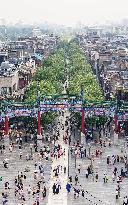
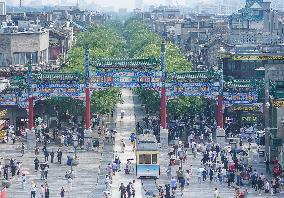
(240727) -- BEIJING, July 27, 2024 Photo by Xinhua/ABACAPRESS.COM) -- This photo taken on July 21, 2024 shows Qianmen Street and Yongdingmen Gate in the distance seen from the Zhengyangmen Gate arrow tower in Beijing, capital of China. The United Nations Educational, Scientific and Cultural Organization (UNESCO) on Saturday announced the inclusion of the Beijing Central Axis: A Building Ensemble Exhibiting the Ideal Order of the Chinese Capital, into its world heritage list. So far, China has a total of 59 World Heritage Sites. Beijing Central Axis, initially established in the 13th century and formed in the 16th century, runs through the old city of Beijing from north to south. It has become the longest urban axis in the world today, spanning 7.8 kilometers. The heritage area of the Beijing Central Axis covers 589 hectares, with a buffer zone of 4,542 hectares. Its location, layout, urban form, and design reflect the ancient Chinese tradition of urban planning, serving as an important emblem that highlights

  •  
CHINA-BEIJING-CENTRAL AXIS-LISTED UNESCO WORLD HERITAGE (CN)

CHINA-BEIJING-CENTRAL AXIS-LISTED UNESCO WORLD HERITAGE (CN)

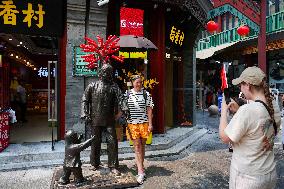
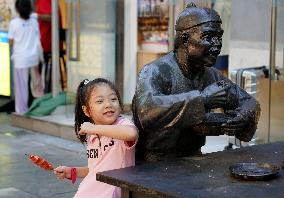
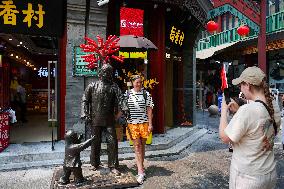
(240727) -- BEIJING, July 27, 2024 Photo by Xinhua/ABACAPRESS.COM) -- A girl is pictured near an urban sculpture at Qianmen Street in Beijing, capital of China, July 17, 2024. The United Nations Educational, Scientific and Cultural Organization (UNESCO) on Saturday announced the inclusion of the Beijing Central Axis: A Building Ensemble Exhibiting the Ideal Order of the Chinese Capital, into its world heritage list. So far, China has a total of 59 World Heritage Sites. Beijing Central Axis, initially established in the 13th century and formed in the 16th century, runs through the old city of Beijing from north to south. It has become the longest urban axis in the world today, spanning 7.8 kilometers. The heritage area of the Beijing Central Axis covers 589 hectares, with a buffer zone of 4,542 hectares. Its location, layout, urban form, and design reflect the ancient Chinese tradition of urban planning, serving as an important emblem that highlights the distinctive characteristics of Chinese civilization. Pho

  •  
CHINA-BEIJING-CENTRAL AXIS-LISTED UNESCO WORLD HERITAGE (CN)

CHINA-BEIJING-CENTRAL AXIS-LISTED UNESCO WORLD HERITAGE (CN)

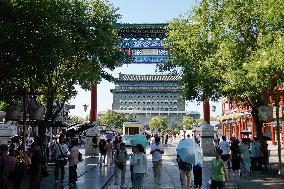
(240727) -- BEIJING, July 27, 2024 Photo by Xinhua/ABACAPRESS.COM) -- Tourists visit Qianmen Street in Beijing, capital of China, July 17, 2024. The United Nations Educational, Scientific and Cultural Organization (UNESCO) on Saturday announced the inclusion of the Beijing Central Axis: A Building Ensemble Exhibiting the Ideal Order of the Chinese Capital, into its world heritage list. So far, China has a total of 59 World Heritage Sites. Beijing Central Axis, initially established in the 13th century and formed in the 16th century, runs through the old city of Beijing from north to south. It has become the longest urban axis in the world today, spanning 7.8 kilometers. The heritage area of the Beijing Central Axis covers 589 hectares, with a buffer zone of 4,542 hectares. Its location, layout, urban form, and design reflect the ancient Chinese tradition of urban planning, serving as an important emblem that highlights the distinctive characteristics of Chinese civilization. Photo by Xinhua/ABACAPRESS.COM/Zha

  •  
CHINA-BEIJING-CENTRAL AXIS-LISTED UNESCO WORLD HERITAGE (CN)

CHINA-BEIJING-CENTRAL AXIS-LISTED UNESCO WORLD HERITAGE (CN)

(240727) -- BEIJING, July 27, 2024 Photo by Xinhua/ABACAPRESS.COM) -- Tourists visit Qianmen Street in Beijing, capital of China, July 17, 2024. The United Nations Educational, Scientific and Cultural Organization (UNESCO) on Saturday announced the inclusion of the Beijing Central Axis: A Building Ensemble Exhibiting the Ideal Order of the Chinese Capital, into its world heritage list. So far, China has a total of 59 World Heritage Sites. Beijing Central Axis, initially established in the 13th century and formed in the 16th century, runs through the old city of Beijing from north to south. It has become the longest urban axis in the world today, spanning 7.8 kilometers. The heritage area of the Beijing Central Axis covers 589 hectares, with a buffer zone of 4,542 hectares. Its location, layout, urban form, and design reflect the ancient Chinese tradition of urban planning, serving as an important emblem that highlights the distinctive characteristics of Chinese civilization. Photo by Xinhua/ABACAPRESS.COM/Zha

  •  
CHINA-BEIJING-CENTRAL AXIS-LISTED UNESCO WORLD HERITAGE (CN)

CHINA-BEIJING-CENTRAL AXIS-LISTED UNESCO WORLD HERITAGE (CN)

(240727) -- BEIJING, July 27, 2024 Photo by Xinhua/ABACAPRESS.COM) -- This photo taken on July 21, 2024 shows Qianmen Street and Yongdingmen Gate in the distance seen from the Zhengyangmen Gate arrow tower in Beijing, capital of China. The United Nations Educational, Scientific and Cultural Organization (UNESCO) on Saturday announced the inclusion of the Beijing Central Axis: A Building Ensemble Exhibiting the Ideal Order of the Chinese Capital, into its world heritage list. So far, China has a total of 59 World Heritage Sites. Beijing Central Axis, initially established in the 13th century and formed in the 16th century, runs through the old city of Beijing from north to south. It has become the longest urban axis in the world today, spanning 7.8 kilometers. The heritage area of the Beijing Central Axis covers 589 hectares, with a buffer zone of 4,542 hectares. Its location, layout, urban form, and design reflect the ancient Chinese tradition of urban planning, serving as an important emblem that highlights

  •  
Xinhua Headlines: Behind China's growing appeal to international travelers

Xinhua Headlines: Behind China's growing appeal to international travelers

(240716) -- CHANGSHA/SHANGHAI, July 16, 2024 Photo by Xinhua/ABACAPRESS.COM) -- Foreign tourists pose for a photo on Qianmen Street in Beijing, capital of China, July 10, 2024. Photo by Xinhua/ABACAPRESS.COM/Ju Huanzong)

  •  
"Laowai" in China | China sees surge of foreign travelers following transit visa-free policies

"Laowai" in China | China sees surge of foreign travelers following transit visa-free policies

(240710) -- BEIJING, July 10, 2024 Photo by Xinhua/ABACAPRESS.COM) -- Foreign tourists pose for a photo on Qianmen Street in Beijing, capital of China, July 10, 2024. Currently, foreign nationals from 54 countries are eligible for the 72/144-hour transit visa-free policies that are effective at 38 ports in 18 provincial-level regions across China. China recorded 14.64 million inbound trips made by foreigners in the first half of this year, up 152.7 percent year on year, following measures introduced since January, the National Immigration Administration (NIA) announced on July 5. According to NIA, the number of visa-free entries made by foreigners exceeded 8.54 million from January to June, accounting for 52 percent of the inbound trips and representing a year-on-year surge of 190.1 percent. Photo by Xinhua/ABACAPRESS.COM/Ju Huanzong)

  •  
"Laowai" in China | China sees surge of foreign travelers following transit visa-free policies

"Laowai" in China | China sees surge of foreign travelers following transit visa-free policies

(240710) -- BEIJING, July 10, 2024 Photo by Xinhua/ABACAPRESS.COM) -- A tourist from Switzerland poses for a photo on Qianmen Street in Beijing, capital of China, July 10, 2024. Currently, foreign nationals from 54 countries are eligible for the 72/144-hour transit visa-free policies that are effective at 38 ports in 18 provincial-level regions across China. China recorded 14.64 million inbound trips made by foreigners in the first half of this year, up 152.7 percent year on year, following measures introduced since January, the National Immigration Administration (NIA) announced on July 5. According to NIA, the number of visa-free entries made by foreigners exceeded 8.54 million from January to June, accounting for 52 percent of the inbound trips and representing a year-on-year surge of 190.1 percent. Photo by Xinhua/ABACAPRESS.COM/Ju Huanzong)

  •  
CHINA-BEIJING-CITY VIEW (CN)

CHINA-BEIJING-CITY VIEW (CN)

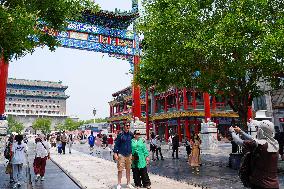
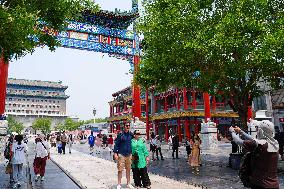
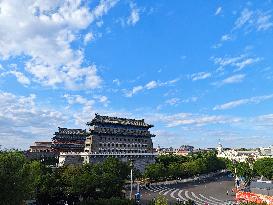
(240531) -- BEIJING, May 31, 2024 Photo by Xinhua/ABACAPRESS.COM) -- This photo taken on May 31, 2024 shows a view around Qianmen Gate in Beijing, capital of China. Photo by Xinhua/ABACAPRESS.COM/Chen Yehua)

  • Main
  • Top
  • Editorial
  • Creative
  • About Us
  • About ILG
  • Terms of use
  • Company
  • BEHIND
  • Price List
  • Single Plan
  • Monthly Plan
  • Services
  • Shooting
  • Rights Clearance
  • Support
  • FAQ
  • How To Buy
  • Contact Us
  • Become a Partner

© KYODO NEWS IMAGES INC

All Rights Reserved.

  • Editorial
  • Olympics
  • News
  • Sports
  • Japan
  • Tech
  • Royal
  • Disaster
  • NorthKorea
  • Old Japan
  • SNS
  • Creative
  • Food
  • Japan
  • Landscape
  • Animal
  • Popular
  • #Ukraine
  • #Thailand
  • #coronavirus
  • #N. Korea
  • #Russia
  • #China
  • #Ukraine
  • #Thailand
  • #coronavirus
  • #N. Korea
  • #Russia
  • #China
  • Food
  • Japan
  • Landscape
  • Animal
  • Olympics
  • News
  • Sports
  • Japan
  • Tech
  • Royal
  • Disaster
  • NorthKorea
  • Old Japan
  • SNS