•  
Tourists Visit the Palace Museum - Beijing

Tourists Visit the Palace Museum - Beijing

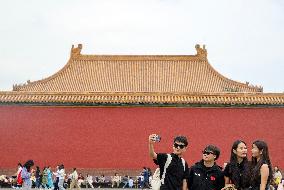
Tourists visit the Palace Museum in Beijing, capital of China, October 3, 2025. This year marks the 100th anniversary of the founding of China's Palace Museum, also known as the Forbidden City. The Forbidden City, which was constructed between 1406 and 1420, was once the imperial palaces of the Ming (1368-1644) and Qing (1644-1912) dynasties. It is a UNESCO inscribed World Cultural Heritage and has one of the world's largest and most intact ancient wooden structures. The Palace Museum was established in 1925 on the base of the former imperial compound. Historically off-limits as an imperial residence, the Forbidden City now is one of the most-visited museums in China. Photo by Xinhua/Jin Liangkuai/ABACAPRESS.COM

  •  
Tourists Visit the Palace Museum - Beijing

Tourists Visit the Palace Museum - Beijing

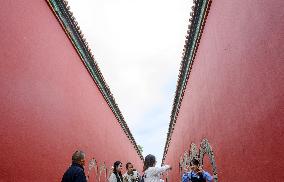
Tourists visit the Palace Museum in Beijing, capital of China, October 3, 2025. This year marks the 100th anniversary of the founding of China's Palace Museum, also known as the Forbidden City. The Forbidden City, which was constructed between 1406 and 1420, was once the imperial palaces of the Ming (1368-1644) and Qing (1644-1912) dynasties. It is a UNESCO inscribed World Cultural Heritage and has one of the world's largest and most intact ancient wooden structures. The Palace Museum was established in 1925 on the base of the former imperial compound. Historically off-limits as an imperial residence, the Forbidden City now is one of the most-visited museums in China. Photo by Xinhua/Jin Liangkuai/ABACAPRESS.COM

  •  
Tourists Visit the Palace Museum - Beijing

Tourists Visit the Palace Museum - Beijing

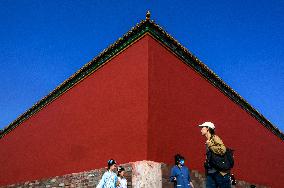
Tourists visit the Palace Museum in Beijing, capital of China, October 2, 2025. This year marks the 100th anniversary of the founding of China's Palace Museum, also known as the Forbidden City. The Forbidden City, which was constructed between 1406 and 1420, was once the imperial palaces of the Ming (1368-1644) and Qing (1644-1912) dynasties. It is a UNESCO inscribed World Cultural Heritage and has one of the world's largest and most intact ancient wooden structures. The Palace Museum was established in 1925 on the base of the former imperial compound. Historically off-limits as an imperial residence, the Forbidden City now is one of the most-visited museums in China. Photo by Xinhua/Jin Liangkuai/ABACAPRESS.COM

  •  
Tourists Visit the Palace Museum - Beijing

Tourists Visit the Palace Museum - Beijing

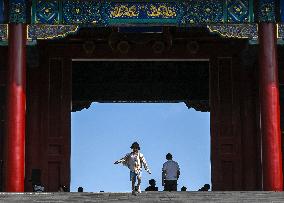
Tourists visit the Palace Museum in Beijing, capital of China, October 2, 2025. This year marks the 100th anniversary of the founding of China's Palace Museum, also known as the Forbidden City. The Forbidden City, which was constructed between 1406 and 1420, was once the imperial palaces of the Ming (1368-1644) and Qing (1644-1912) dynasties. It is a UNESCO inscribed World Cultural Heritage and has one of the world's largest and most intact ancient wooden structures. The Palace Museum was established in 1925 on the base of the former imperial compound. Historically off-limits as an imperial residence, the Forbidden City now is one of the most-visited museums in China. Photo by Xinhua/Jin Liangkuai/ABACAPRESS.COM

  •  
Tourists Visit the Palace Museum - Beijing

Tourists Visit the Palace Museum - Beijing

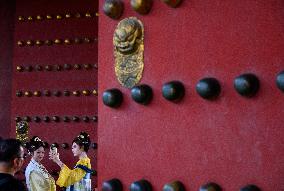
Tourists in traditional costumes take pictures at the Palace Museum in Beijing, capital of China, October 2, 2025. This year marks the 100th anniversary of the founding of China's Palace Museum, also known as the Forbidden City. The Forbidden City, which was constructed between 1406 and 1420, was once the imperial palaces of the Ming (1368-1644) and Qing (1644-1912) dynasties. It is a UNESCO inscribed World Cultural Heritage and has one of the world's largest and most intact ancient wooden structures. The Palace Museum was established in 1925 on the base of the former imperial compound. Historically off-limits as an imperial residence, the Forbidden City now is one of the most-visited museums in China. Photo by Xinhua/Jin Liangkuai/ABACAPRESS.COM

  •  
Tourists Visit the Palace Museum - Beijing

Tourists Visit the Palace Museum - Beijing

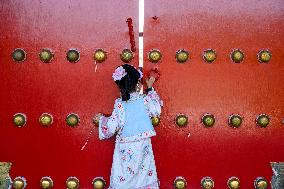
A little girl in traditional costumes is pictured at the Palace Museum in Beijing, capital of China, October 2, 2025. This year marks the 100th anniversary of the founding of China's Palace Museum, also known as the Forbidden City. The Forbidden City, which was constructed between 1406 and 1420, was once the imperial palaces of the Ming (1368-1644) and Qing (1644-1912) dynasties. It is a UNESCO inscribed World Cultural Heritage and has one of the world's largest and most intact ancient wooden structures. The Palace Museum was established in 1925 on the base of the former imperial compound. Historically off-limits as an imperial residence, the Forbidden City now is one of the most-visited museums in China. Photo by Xinhua/Jin Liangkuai/ABACAPRESS.COM

  •  
Remains Of 30 Chinese Martyrs From Korean War Buried In Homeland - Shenyang

Remains Of 30 Chinese Martyrs From Korean War Buried In Homeland - Shenyang

Guard of honor fire a gun salute during a burial ceremony for the remains of Chinese People's Volunteers (CPV) martyrs at the CPV martyrs' cemetery in Shenyang, northeast China's Liaoning Province, on September 13, 2025. The remains of 30 Chinese People's Volunteers (CPV) soldiers who lost their lives during the War to Resist U.S. Aggression and Aid Korea (1950-1953) were laid to rest on Saturday in Shenyang, capital of northeast China's Liaoning Province. The remains of the fallen soldiers were brought back to China from the Republic of Korea (ROK) on Friday. Photo by Yang Qing /Xinhua/ABACAPRESS.COM

  •  
Remains Of 30 Chinese Martyrs From Korean War Buried In Homeland - Shenyang

Remains Of 30 Chinese Martyrs From Korean War Buried In Homeland - Shenyang

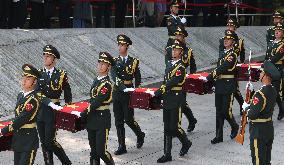
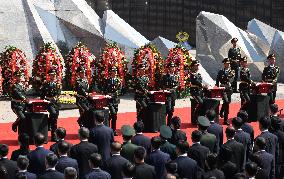
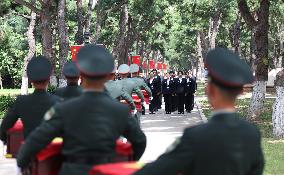
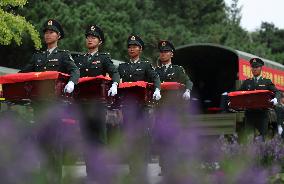
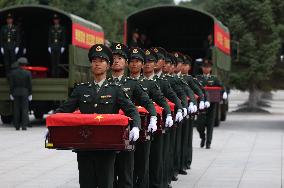
Guard of honor escort the caskets containing the remains of Chinese People's Volunteers (CPV) martyrs during a burial ceremony at the CPV martyrs' cemetery in Shenyang, northeast China's Liaoning Province, on September 13, 2025. The remains of 30 Chinese People's Volunteers (CPV) soldiers who lost their lives during the War to Resist U.S. Aggression and Aid Korea (1950-1953) were laid to rest on Saturday in Shenyang, capital of northeast China's Liaoning Province. The remains of the fallen soldiers were brought back to China from the Republic of Korea (ROK) on Friday. Photo by Yang Qing /Xinhua/ABACAPRESS.COM

  •  
Remains Of 30 Chinese Martyrs From Korean War Buried In Homeland - Shenyang

Remains Of 30 Chinese Martyrs From Korean War Buried In Homeland - Shenyang

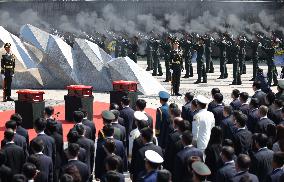
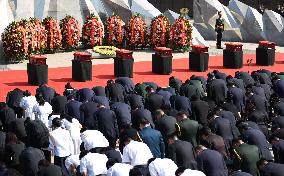
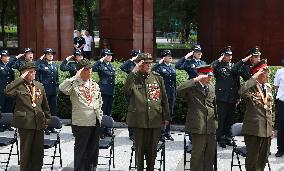
People bow to the remains of Chinese People's Volunteers (CPV) martyrs during a burial ceremony at the CPV martyrs' cemetery in Shenyang, northeast China's Liaoning Province, on September 13, 2025. The remains of 30 Chinese People's Volunteers (CPV) soldiers who lost their lives during the War to Resist U.S. Aggression and Aid Korea (1950-1953) were laid to rest on Saturday in Shenyang, capital of northeast China's Liaoning Province. The remains of the fallen soldiers were brought back to China from the Republic of Korea (ROK) on Friday. Photo by Yang Qing /Xinhua/ABACAPRESS.COM

  •  
Remains Of 30 Chinese Martyrs From Korean War Buried In Homeland - Shenyang

Remains Of 30 Chinese Martyrs From Korean War Buried In Homeland - Shenyang

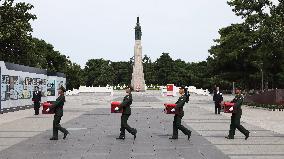
Guard of honor escort the caskets containing the remains of Chinese People's Volunteers (CPV) martyrs during a burial ceremony at the CPV martyrs' cemetery in Shenyang, northeast China's Liaoning Province, on September 13, 2025. The remains of 30 Chinese People's Volunteers (CPV) soldiers who lost their lives during the War to Resist U.S. Aggression and Aid Korea (1950-1953) were laid to rest on Saturday in Shenyang, capital of northeast China's Liaoning Province. The remains of the fallen soldiers were brought back to China from the Republic of Korea (ROK) on Friday. Photo by Yang Qing /Xinhua/ABACAPRESS.COM

  •  
Remains Of 30 Chinese Korean War Martyrs Returned To Homeland From ROK - China

Remains Of 30 Chinese Korean War Martyrs Returned To Homeland From ROK - China

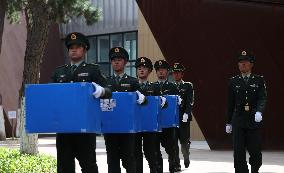
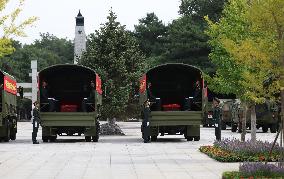
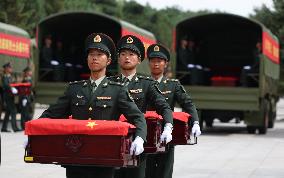
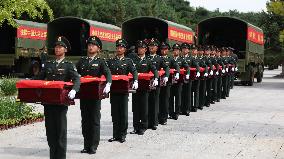
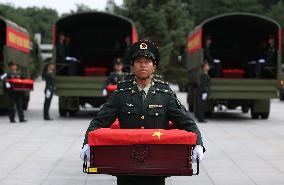
Coffins containing the remains of the Chinese People's Volunteers (CPV) martyrs are escorted to the CPV martyrs' cemetery in Shenyang, northeast China's Liaoning Province on September 12, 2025. The remains of 30 Chinese People's Volunteers (CPV) soldiers who lost their lives during the War to Resist U.S. Aggression and Aid Korea (1950-1953) were returned to China on Friday from the Republic of Korea (ROK). Photo by Yang Qing/Xinhua/ABACAPRESS.COM

  •  
Remains Of 30 Chinese Korean War Martyrs Returned To Homeland From ROK - China

Remains Of 30 Chinese Korean War Martyrs Returned To Homeland From ROK - China

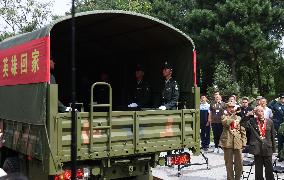
Belongings left behind by Chinese People's Volunteers (CPV) martyrs are escorted to the CPV martyrs' cemetery in Shenyang, northeast China's Liaoning Province on September 12, 2025. Coffins containing the remains of Chinese People's Volunteers (CPV) martyrs are escorted to the CPV martyrs' cemetery in Shenyang, northeast China's Liaoning Province Photo by Yang Qing/Xinhua/ABACAPRESS.COM

  •  
Remains Of 30 Chinese Korean War Martyrs Returned To Homeland From ROK - China

Remains Of 30 Chinese Korean War Martyrs Returned To Homeland From ROK - China

Coffins containing the remains of Chinese People's Volunteers (CPV) martyrs are escorted to the CPV martyrs' cemetery in Shenyang, northeast China's Liaoning Province on September 12, 2025. Coffins containing the remains of Chinese People's Volunteers (CPV) martyrs are escorted to the CPV martyrs' cemetery in Shenyang, northeast China's Liaoning Province Photo by Yang Qing/Xinhua/ABACAPRESS.COM

  •  
Remains Of 30 Chinese Korean War Martyrs Returned To Homeland From ROK - China

Remains Of 30 Chinese Korean War Martyrs Returned To Homeland From ROK - China

Chinese People's Volunteers (CPV) veterans receive the motorcade delivering coffins containing the remains of CPV martyrs at the entrance to the CPV martyrs' cemetery in Shenyang, northeast China's Liaoning Province on September 12, 2025. Coffins containing the remains of Chinese People's Volunteers (CPV) martyrs are escorted to the CPV martyrs' cemetery in Shenyang, northeast China's Liaoning Province Photo by Yang Qing/Xinhua/ABACAPRESS.COM

  •  
Remains Of 30 Chinese Korean War Martyrs Returned To Homeland From ROK - China

Remains Of 30 Chinese Korean War Martyrs Returned To Homeland From ROK - China

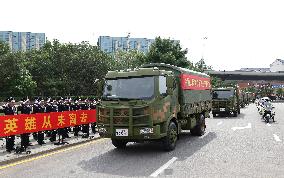
A motorcade delivering coffins containing the remains of the Chinese People's Volunteers (CPV) martyrs is seen in Shenyang, northeast China's Liaoning Province on September 12, 2025. The remains of 30 Chinese People's Volunteers (CPV) soldiers who lost their lives during the War to Resist U.S. Aggression and Aid Korea (1950-1953) were returned to China on Friday from the Republic of Korea (ROK). Photo by Yang Qing/Xinhua/ABACAPRESS.COM

  •  
Remains Of 30 Chinese Korean War Martyrs Returned To Homeland From ROK - China

Remains Of 30 Chinese Korean War Martyrs Returned To Homeland From ROK - China

Chinese People's Volunteers (CPV) veterans receive the motorcade delivering coffins containing the remains of CPV martyrs at the entrance to the CPV martyrs' cemetery in Shenyang, northeast China's Liaoning Province on September 12, 2025. The remains of 30 Chinese People's Volunteers (CPV) soldiers who lost their lives during the War to Resist U.S. Aggression and Aid Korea (1950-1953) were returned to China on Friday from the Republic of Korea (ROK). Photo by Yang Qing/Xinhua/ABACAPRESS.COM

  •  
Remains Of 30 Chinese Korean War Martyrs Returned To Homeland From ROK - China

Remains Of 30 Chinese Korean War Martyrs Returned To Homeland From ROK - China

Staff members (rear) of the Chinese People's Volunteers (CPV) martyrs' cemetery receive coffins containing the remains of CPV martyrs at the cemetery in Shenyang, northeast China's Liaoning Province on September 12, 2025. Coffins containing the remains of Chinese People's Volunteers (CPV) martyrs are escorted to the CPV martyrs' cemetery in Shenyang, northeast China's Liaoning Province Photo by Yang Qing/Xinhua/ABACAPRESS.COM

  •  
Remains Of 30 Chinese Korean War Martyrs Returned To Homeland From ROK - China

Remains Of 30 Chinese Korean War Martyrs Returned To Homeland From ROK - China

Coffins containing the remains of the Chinese People's Volunteers (CPV) martyrs are escorted to the CPV martyrs' cemetery in Shenyang, northeast China's Liaoning Province on September 12, 2025. The remains of 30 Chinese People's Volunteers (CPV) soldiers who lost their lives during the War to Resist U.S. Aggression and Aid Korea (1950-1953) were returned to China on Friday from the Republic of Korea (ROK). Photo by Yang Qing/Xinhua/ABACAPRESS.COM

  •  
Remains Of 30 Chinese Korean War Martyrs Returned To Homeland From ROK - China

Remains Of 30 Chinese Korean War Martyrs Returned To Homeland From ROK - China

Coffins containing the remains of Chinese People's Volunteers (CPV) martyrs are escorted to the CPV martyrs' cemetery in Shenyang, northeast China's Liaoning Province on September 12, 2025. Coffins containing the remains of Chinese People's Volunteers (CPV) martyrs are escorted to the CPV martyrs' cemetery in Shenyang, northeast China's Liaoning Province Photo by Yang Qing/Xinhua/ABACAPRESS.COM

  •  
Remains Of 30 Chinese Korean War Martyrs Returned To Homeland From ROK - China

Remains Of 30 Chinese Korean War Martyrs Returned To Homeland From ROK - China

Coffins containing the remains of Chinese People's Volunteers (CPV) martyrs are escorted to the CPV martyrs' cemetery in Shenyang, northeast China's Liaoning Province on September 12, 2025. Coffins containing the remains of Chinese People's Volunteers (CPV) martyrs are escorted to the CPV martyrs' cemetery in Shenyang, northeast China's Liaoning Province Photo by Yang Qing/Xinhua/ABACAPRESS.COM

  •  
Remains Of 30 Chinese Korean War Martyrs Returned To Homeland From ROK - China

Remains Of 30 Chinese Korean War Martyrs Returned To Homeland From ROK - China

Coffins containing the remains of Chinese People's Volunteers (CPV) martyrs are escorted to the CPV martyrs' cemetery in Shenyang, northeast China's Liaoning Province on September 12, 2025. Coffins containing the remains of Chinese People's Volunteers (CPV) martyrs are escorted to the CPV martyrs' cemetery in Shenyang, northeast China's Liaoning Province Photo by Yang Qing/Xinhua/ABACAPRESS.COM

  •  
Remains Of 30 Chinese Korean War Martyrs Returned To Homeland From ROK - China

Remains Of 30 Chinese Korean War Martyrs Returned To Homeland From ROK - China

Coffins containing the remains of the Chinese People's Volunteers (CPV) martyrs are escorted to the CPV martyrs' cemetery in Shenyang, northeast China's Liaoning Province on September 12, 2025. The remains of 30 Chinese People's Volunteers (CPV) soldiers who lost their lives during the War to Resist U.S. Aggression and Aid Korea (1950-1953) were returned to China on Friday from the Republic of Korea (ROK). Photo by Yang Qing/Xinhua/ABACAPRESS.COM

  •  
Global Industrial Internet Conference - China

Global Industrial Internet Conference - China

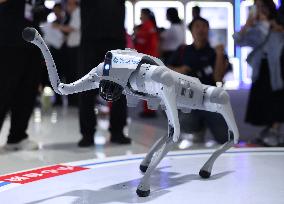
A robot dog is displayed at the exhibition area of the 2025 Global Industrial Internet Conference in Shenyang, northeast China's Liaoning Province, September 6, 2025. Themed "Digital New Chapter, Intelligent New Quality," the 2025 Global Industrial Internet Conference kicked off here on Saturday and will last till September 8. Photo by Yang Qing/Xinhua/ABACAPRESS.COM

  •  
Global Industrial Internet Conference - China

Global Industrial Internet Conference - China

Guests attend the opening ceremony of the 2025 Global Industrial Internet Conference in Shenyang, northeast China's Liaoning Province, September 6, 2025. Themed "Digital New Chapter, Intelligent New Quality," the 2025 Global Industrial Internet Conference kicked off here on Saturday and will last till September 8. Photo by Yang Qing/Xinhua/ABACAPRESS.COM

  •  
Global Industrial Internet Conference - China

Global Industrial Internet Conference - China

This photo taken on September 6, 2025 shows the opening ceremony of the 2025 Global Industrial Internet Conference in Shenyang, northeast China's Liaoning Province. Themed "Digital New Chapter, Intelligent New Quality," the 2025 Global Industrial Internet Conference kicked off here on Saturday and will last till September 8. Photo by Yang Qing/Xinhua/ABACAPRESS.COM

  •  
Global Industrial Internet Conference - China

Global Industrial Internet Conference - China

A visitor interacts with a robot at the exhibition area of the 2025 Global Industrial Internet Conference in Shenyang, northeast China's Liaoning Province, September 6, 2025. Themed "Digital New Chapter, Intelligent New Quality," the 2025 Global Industrial Internet Conference kicked off here on Saturday and will last till September 8. Photo by Yang Qing/Xinhua/ABACAPRESS.COM

  •  
Shanghai Cooperation Organization (SCO) Summit 2025 - Tianji

Shanghai Cooperation Organization (SCO) Summit 2025 - Tianji

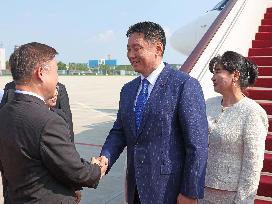
Mongolian President Ukhnaa Khurelsukh arrives for the Shanghai Cooperation Organization (SCO) Summit 2025 in Tianjin, north China, Aug. 31, 2025. Photo by Yang Qing /Xinhua/ABACAPRESS.COM

  •  
Shanghai Cooperation Organization Meeting- Tianjin

Shanghai Cooperation Organization Meeting- Tianjin

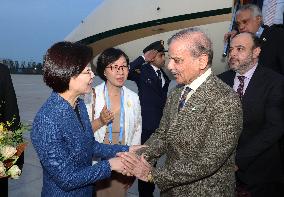
Pakistani Prime Minister Shehbaz Sharif arrives for the Shanghai Cooperation Organization (SCO) Summit 2025 in Tianjin, north China, August 30, 2025. Photo by Yang Qing /Xinhua/ABACAPRESS.COM

  •  
Shanghai Cooperation Organization Meeting- Tianjin

Shanghai Cooperation Organization Meeting- Tianjin

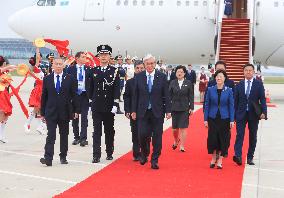
Kazakh President Kassym-Jomart Tokayev arrives for the Shanghai Cooperation Organization (SCO) Summit 2025 in Tianjin, north China, August 30, 2025. Photo by Yang Qing /Xinhua/ABACAPRESS.COM

  •  
World Aquatics Championships Swimming Men 50M Breaststroke - Singapore

World Aquatics Championships Swimming Men 50M Breaststroke - Singapore

Qing Haiyang of China is seen before the men's 50m breaststroke semifinal of swimming at the World Aquatics Championships in Singapore, July 29, 2025. Photo by Xue Yuge/Xinhua/ABACAPRESS.COM

  •  
Fujian Fortified Manors - China

Fujian Fortified Manors - China

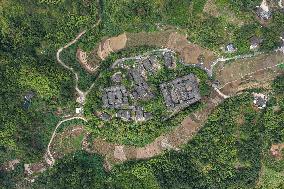
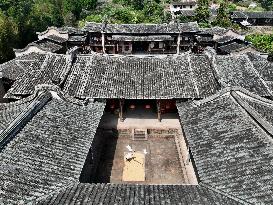
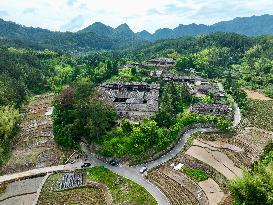
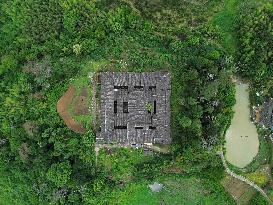
An aerial drone photo taken on May 20, 2025 shows Zhutou Manor in Yongtai County, southeast China's Fujian Province. Nestled in the Daiyun Mountain like scattered pearls, over 2,000 fortified manors in Yongtai County trace their origins to the Tang Dynasty 618-907 AD), flourishing later during the Ming 1368-1644) and Qing 1644-1911) eras. Today, increasing numbers of ancient manors and villages are being protected and revitalized. As historical heritage integrates with contemporary life and cultural landscapes merge with humanistic values, these age-old structures are radiating renewed vitality. Photo by Zhang Keren/Xinhua/ABACAPRESS.COM

  •  
Fujian Fortified Manors - China

Fujian Fortified Manors - China

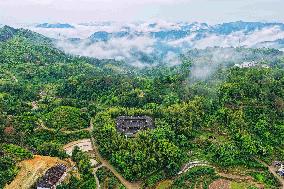
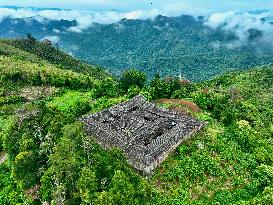
An aerial drone photo taken on May 20, 2025 shows Beishan Manor in Yongtai County, southeast China's Fujian Province. Nestled in the Daiyun Mountain like scattered pearls, over 2,000 fortified manors in Yongtai County trace their origins to the Tang Dynasty 618-907 AD), flourishing later during the Ming 1368-1644) and Qing 1644-1911) eras. Today, increasing numbers of ancient manors and villages are being protected and revitalized. As historical heritage integrates with contemporary life and cultural landscapes merge with humanistic values, these age-old structures are radiating renewed vitality. Photo by Zhang Keren/Xinhua/ABACAPRESS.COM

  •  
Fujian Fortified Manors - China

Fujian Fortified Manors - China

A resident spreads out unhusked rice to dry in Zhutou Manor in Yongtai County, southeast China's Fujian Province, on Octobre 2, 2023. Nestled in the Daiyun Mountain like scattered pearls, over 2,000 fortified manors in Yongtai County trace their origins to the Tang Dynasty 618-907 AD), flourishing later during the Ming 1368-1644) and Qing 1644-1911) eras. Today, increasing numbers of ancient manors and villages are being protected and revitalized. As historical heritage integrates with contemporary life and cultural landscapes merge with humanistic values, these age-old structures are radiating renewed vitality. Photo by Jiang Kehong/Xinhua/ABACAPRESS.COM

  •  
Fujian Fortified Manors - China

Fujian Fortified Manors - China

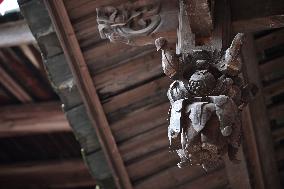
This photo taken on May 20, 2025 shows timber structural elements of a fortified manor in Yongtai County, southeast China's Fujian Province. Nestled in the Daiyun Mountain like scattered pearls, over 2,000 fortified manors in Yongtai County trace their origins to the Tang Dynasty 618-907 AD), flourishing later during the Ming 1368-1644) and Qing 1644-1911) eras. Today, increasing numbers of ancient manors and villages are being protected and revitalized. As historical heritage integrates with contemporary life and cultural landscapes merge with humanistic values, these age-old structures are radiating renewed vitality. Photo by Wang Zecong/Xinhua/ABACAPRESS.COM

  •  
Fujian Fortified Manors - China

Fujian Fortified Manors - China

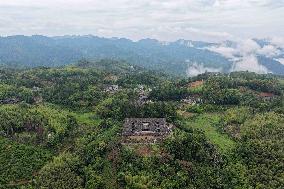
An aerial drone photo taken on May 20, 2025 shows Hecheng Manor in Yongtai County, southeast China's Fujian Province. Nestled in the Daiyun Mountain like scattered pearls, over 2,000 fortified manors in Yongtai County trace their origins to the Tang Dynasty 618-907 AD), flourishing later during the Ming 1368-1644) and Qing 1644-1911) eras. Today, increasing numbers of ancient manors and villages are being protected and revitalized. As historical heritage integrates with contemporary life and cultural landscapes merge with humanistic values, these age-old structures are radiating renewed vitality. Photo by Zhang Keren/Xinhua/ABACAPRESS.COM

  •  
Fujian Fortified Manors - China

Fujian Fortified Manors - China

An aerial drone photo taken on May 20, 2025 shows Hecheng Manor in Yongtai County, southeast China's Fujian Province. Nestled in the Daiyun Mountain like scattered pearls, over 2,000 fortified manors in Yongtai County trace their origins to the Tang Dynasty 618-907 AD), flourishing later during the Ming 1368-1644) and Qing 1644-1911) eras. Today, increasing numbers of ancient manors and villages are being protected and revitalized. As historical heritage integrates with contemporary life and cultural landscapes merge with humanistic values, these age-old structures are radiating renewed vitality. Photo by Wang Zecong/Xinhua/ABACAPRESS.COM

  •  
Fujian Fortified Manors - China

Fujian Fortified Manors - China

An aerial photo taken on May 20, 2025 shows Hecheng Manor in Yongtai County, southeast China's Fujian Province. Nestled in the Daiyun Mountain like scattered pearls, over 2,000 fortified manors in Yongtai County trace their origins to the Tang Dynasty 618-907 AD), flourishing later during the Ming 1368-1644) and Qing 1644-1911) eras. Today, increasing numbers of ancient manors and villages are being protected and revitalized. As historical heritage integrates with contemporary life and cultural landscapes merge with humanistic values, these age-old structures are radiating renewed vitality. Photo by Jiang Kehong/Xinhua/ABACAPRESS.COM

  •  
Fujian Fortified Manors - China

Fujian Fortified Manors - China

An aerial photo taken on May 20, 2025 shows Zhutou Manor in Yongtai County, southeast China's Fujian Province. Nestled in the Daiyun Mountain like scattered pearls, over 2,000 fortified manors in Yongtai County trace their origins to the Tang Dynasty 618-907 AD), flourishing later during the Ming 1368-1644) and Qing 1644-1911) eras. Today, increasing numbers of ancient manors and villages are being protected and revitalized. As historical heritage integrates with contemporary life and cultural landscapes merge with humanistic values, these age-old structures are radiating renewed vitality. Photo by Jiang Kehong/Xinhua/ABACAPRESS.COM

  •  
Chongqing Zoo Giant Pandas

Chongqing Zoo Giant Pandas

Giant pandas Chongchong, Xi Xi and Qing Qing gathered around a table for a meal at Chongqing Zoo in China on June 7, 2025.

  •  
Chongqing Zoo Giant Panda

Chongqing Zoo Giant Panda

CHONGQING, CHINA - MARCH 8, 2025 - Giant pandas Chong Chong, Xi Xi and Qing Qing play at Chongqing Zoo in Chongqing, China on March 9, 2025.

  •  
Shadow Play Inheritor Of Langzhong - China

Shadow Play Inheritor Of Langzhong - China

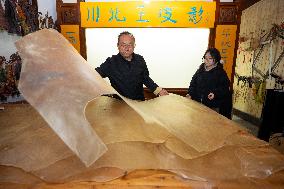
Wang Biao (L) and one of his apprentices select cowhide, a raw material for shadow play puppets, at a museum for Wang's Shadow Play art in Langzhong City, southwest China's Sichuan Province, on February 19, 2025. Shadow play, also known as shadow puppetry, is a traditional Chinese folk art inscribed in UNESCO's list of intangible cultural heritage of humanity in 2011. Wang's Shadow Play is a representative genre of Langzhong Shadow Play popular in northern Sichuan in southwest China, originated with artist Wang Yuansheng during the Qing Dynasty (1644-1911), and has been passed on between generations since then. Wang Biao, 60, a seventh-generation inheritor of Wang's Shadow Play, takes preserving and promoting the art as his life-time course. Wang Biao started to learn the art from his grandfather in his early childhood, and he followed him to stage performances all over the country in the 1980s. He restarted his shadow play troupe in Chengdu despite a shrinking audience for this art in 2000, and started to gi

  •  
Shadow Play Inheritor Of Langzhong - China

Shadow Play Inheritor Of Langzhong - China

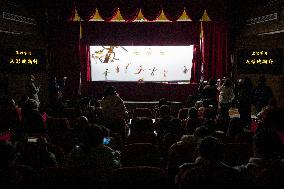
People watch a shadow play at a museum for Wang's Shadow Play art in Langzhong City, southwest China's Sichuan Province, on February 19, 2025. Shadow play, also known as shadow puppetry, is a traditional Chinese folk art inscribed in UNESCO's list of intangible cultural heritage of humanity in 2011. Wang's Shadow Play is a representative genre of Langzhong Shadow Play popular in northern Sichuan in southwest China, originated with artist Wang Yuansheng during the Qing Dynasty (1644-1911), and has been passed on between generations since then. Wang Biao, 60, a seventh-generation inheritor of Wang's Shadow Play, takes preserving and promoting the art as his life-time course. Wang Biao started to learn the art from his grandfather in his early childhood, and he followed him to stage performances all over the country in the 1980s. He restarted his shadow play troupe in Chengdu despite a shrinking audience for this art in 2000, and started to give performances at local parks and schools. In 2004, he led his troupe

  •  
Shadow Play Inheritor Of Langzhong - China

Shadow Play Inheritor Of Langzhong - China

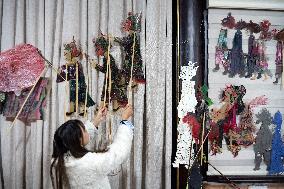
An apprentice of Wang Biao arranges shadow play puppets at a museum for Wang's Shadow Play art in Langzhong City, southwest China's Sichuan Province, on February 19, 2025. Shadow play, also known as shadow puppetry, is a traditional Chinese folk art inscribed in UNESCO's list of intangible cultural heritage of humanity in 2011. Wang's Shadow Play is a representative genre of Langzhong Shadow Play popular in northern Sichuan in southwest China, originated with artist Wang Yuansheng during the Qing Dynasty (1644-1911), and has been passed on between generations since then. Wang Biao, 60, a seventh-generation inheritor of Wang's Shadow Play, takes preserving and promoting the art as his life-time course. Wang Biao started to learn the art from his grandfather in his early childhood, and he followed him to stage performances all over the country in the 1980s. He restarted his shadow play troupe in Chengdu despite a shrinking audience for this art in 2000, and started to give performances at local parks and school

  •  
Shadow Play Inheritor Of Langzhong - China

Shadow Play Inheritor Of Langzhong - China

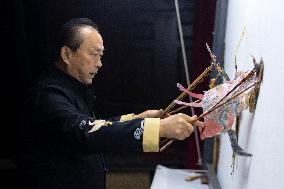
Wang Biao performs a shadow play at a museum for Wang's Shadow Play art in Langzhong City, southwest China's Sichuan Province, on February 19, 2025. Shadow play, also known as shadow puppetry, is a traditional Chinese folk art inscribed in UNESCO's list of intangible cultural heritage of humanity in 2011. Wang's Shadow Play is a representative genre of Langzhong Shadow Play popular in northern Sichuan in southwest China, originated with artist Wang Yuansheng during the Qing Dynasty (1644-1911), and has been passed on between generations since then. Wang Biao, 60, a seventh-generation inheritor of Wang's Shadow Play, takes preserving and promoting the art as his life-time course. Wang Biao started to learn the art from his grandfather in his early childhood, and he followed him to stage performances all over the country in the 1980s. He restarted his shadow play troupe in Chengdu despite a shrinking audience for this art in 2000, and started to give performances at local parks and schools. In 2004, he led his

  •  
Shadow Play Inheritor Of Langzhong - China

Shadow Play Inheritor Of Langzhong - China

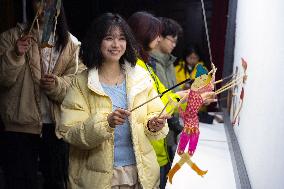
Young audiences try their hands on shadow play performance at a museum for Wang's Shadow Play art in Langzhong City, southwest China's Sichuan Province, on February 19, 2025. Shadow play, also known as shadow puppetry, is a traditional Chinese folk art inscribed in UNESCO's list of intangible cultural heritage of humanity in 2011. Wang's Shadow Play is a representative genre of Langzhong Shadow Play popular in northern Sichuan in southwest China, originated with artist Wang Yuansheng during the Qing Dynasty (1644-1911), and has been passed on between generations since then. Wang Biao, 60, a seventh-generation inheritor of Wang's Shadow Play, takes preserving and promoting the art as his life-time course. Wang Biao started to learn the art from his grandfather in his early childhood, and he followed him to stage performances all over the country in the 1980s. He restarted his shadow play troupe in Chengdu despite a shrinking audience for this art in 2000, and started to give performances at local parks and sch

  •  
Shadow Play Inheritor Of Langzhong - China

Shadow Play Inheritor Of Langzhong - China

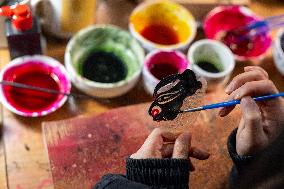
Wang Biao colors a shadow play puppet at a museum for Wang's Shadow Play art in Langzhong City, southwest China's Sichuan Province, on February 19, 2025. Shadow play, also known as shadow puppetry, is a traditional Chinese folk art inscribed in UNESCO's list of intangible cultural heritage of humanity in 2011. Wang's Shadow Play is a representative genre of Langzhong Shadow Play popular in northern Sichuan in southwest China, originated with artist Wang Yuansheng during the Qing Dynasty (1644-1911), and has been passed on between generations since then. Wang Biao, 60, a seventh-generation inheritor of Wang's Shadow Play, takes preserving and promoting the art as his life-time course. Wang Biao started to learn the art from his grandfather in his early childhood, and he followed him to stage performances all over the country in the 1980s. He restarted his shadow play troupe in Chengdu despite a shrinking audience for this art in 2000, and started to give performances at local parks and schools. In 2004, he led

  •  
Shadow Play Inheritor Of Langzhong - China

Shadow Play Inheritor Of Langzhong - China

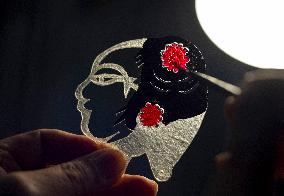
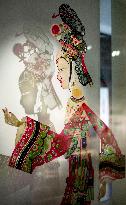
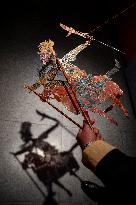
This photo taken on on February 19, 2025 shows a shadow play puppet displayed at a museum for Wang's Shadow Play art in Langzhong City, southwest China's Sichuan Province. Shadow play, also known as shadow puppetry, is a traditional Chinese folk art inscribed in UNESCO's list of intangible cultural heritage of humanity in 2011. Wang's Shadow Play is a representative genre of Langzhong Shadow Play popular in northern Sichuan in southwest China, originated with artist Wang Yuansheng during the Qing Dynasty (1644-1911), and has been passed on between generations since then. Wang Biao, 60, a seventh-generation inheritor of Wang's Shadow Play, takes preserving and promoting the art as his life-time course. Wang Biao started to learn the art from his grandfather in his early childhood, and he followed him to stage performances all over the country in the 1980s. He restarted his shadow play troupe in Chengdu despite a shrinking audience for this art in 2000, and started to give performances at local parks and school

  •  
Shadow Play Inheritor Of Langzhong - China

Shadow Play Inheritor Of Langzhong - China

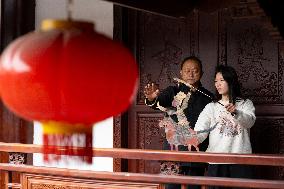
Wang Biao demonstrates shadow play puppet manipulating skills at a museum for Wang's Shadow Play art in Langzhong City, southwest China's Sichuan Province, on February 19, 2025. Shadow play, also known as shadow puppetry, is a traditional Chinese folk art inscribed in UNESCO's list of intangible cultural heritage of humanity in 2011. Wang's Shadow Play is a representative genre of Langzhong Shadow Play popular in northern Sichuan in southwest China, originated with artist Wang Yuansheng during the Qing Dynasty (1644-1911), and has been passed on between generations since then. Wang Biao, 60, a seventh-generation inheritor of Wang's Shadow Play, takes preserving and promoting the art as his life-time course. Wang Biao started to learn the art from his grandfather in his early childhood, and he followed him to stage performances all over the country in the 1980s. He restarted his shadow play troupe in Chengdu despite a shrinking audience for this art in 2000, and started to give performances at local parks and

  •  
Shadow Play Inheritor Of Langzhong - China

Shadow Play Inheritor Of Langzhong - China

Wang Biao (L) instructs one of his apprentices during a shadow play practice session at a museum for Wang's Shadow Play art in Langzhong City, southwest China's Sichuan Province, on February 19, 2025. Shadow play, also known as shadow puppetry, is a traditional Chinese folk art inscribed in UNESCO's list of intangible cultural heritage of humanity in 2011. Wang's Shadow Play is a representative genre of Langzhong Shadow Play popular in northern Sichuan in southwest China, originated with artist Wang Yuansheng during the Qing Dynasty (1644-1911), and has been passed on between generations since then. Wang Biao, 60, a seventh-generation inheritor of Wang's Shadow Play, takes preserving and promoting the art as his life-time course. Wang Biao started to learn the art from his grandfather in his early childhood, and he followed him to stage performances all over the country in the 1980s. He restarted his shadow play troupe in Chengdu despite a shrinking audience for this art in 2000, and started to give performan

  •  
Shadow Play Inheritor Of Langzhong - China

Shadow Play Inheritor Of Langzhong - China

An apprentice of Wang Biao colors a shadow play puppet at a museum for Wang's Shadow Play art in Langzhong City, southwest China's Sichuan Province, on February 19, 2025. Shadow play, also known as shadow puppetry, is a traditional Chinese folk art inscribed in UNESCO's list of intangible cultural heritage of humanity in 2011. Wang's Shadow Play is a representative genre of Langzhong Shadow Play popular in northern Sichuan in southwest China, originated with artist Wang Yuansheng during the Qing Dynasty (1644-1911), and has been passed on between generations since then. Wang Biao, 60, a seventh-generation inheritor of Wang's Shadow Play, takes preserving and promoting the art as his life-time course. Wang Biao started to learn the art from his grandfather in his early childhood, and he followed him to stage performances all over the country in the 1980s. He restarted his shadow play troupe in Chengdu despite a shrinking audience for this art in 2000, and started to give performances at local parks and schools

  • Main
  • Top
  • Editorial
  • Creative
  • About Us
  • About ILG
  • Terms of use
  • Company
  • BEHIND
  • Price List
  • Single Plan
  • Monthly Plan
  • Services
  • Shooting
  • Rights Clearance
  • Support
  • FAQ
  • How To Buy
  • Contact Us
  • Become a Partner

© KYODO NEWS IMAGES INC

All Rights Reserved.

  • Editorial
  • Olympics
  • News
  • Sports
  • Japan
  • Tech
  • Royal
  • Disaster
  • NorthKorea
  • Old Japan
  • SNS
  • Creative
  • Food
  • Japan
  • Landscape
  • Animal
  • Popular
  • #Ukraine
  • #China
  • #coronavirus
  • #N. Korea
  • #Thailand
  • #Russia
  • #Ukraine
  • #China
  • #coronavirus
  • #N. Korea
  • #Thailand
  • #Russia
  • Food
  • Japan
  • Landscape
  • Animal
  • Olympics
  • News
  • Sports
  • Japan
  • Tech
  • Royal
  • Disaster
  • NorthKorea
  • Old Japan
  • SNS