•  
Fujian Fortified Manors - China

Fujian Fortified Manors - China

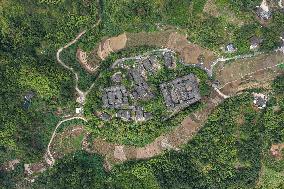
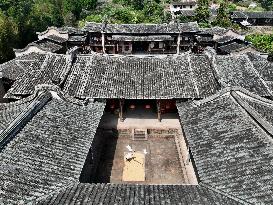
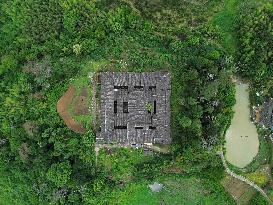
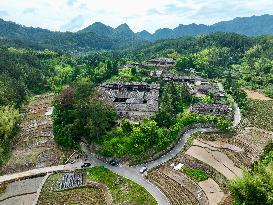
An aerial drone photo taken on May 20, 2025 shows Zhutou Manor in Yongtai County, southeast China's Fujian Province. Nestled in the Daiyun Mountain like scattered pearls, over 2,000 fortified manors in Yongtai County trace their origins to the Tang Dynasty 618-907 AD), flourishing later during the Ming 1368-1644) and Qing 1644-1911) eras. Today, increasing numbers of ancient manors and villages are being protected and revitalized. As historical heritage integrates with contemporary life and cultural landscapes merge with humanistic values, these age-old structures are radiating renewed vitality. Photo by Zhang Keren/Xinhua/ABACAPRESS.COM

  •  
Fujian Fortified Manors - China

Fujian Fortified Manors - China

An aerial drone photo taken on May 20, 2025 shows Beishan Manor in Yongtai County, southeast China's Fujian Province. Nestled in the Daiyun Mountain like scattered pearls, over 2,000 fortified manors in Yongtai County trace their origins to the Tang Dynasty 618-907 AD), flourishing later during the Ming 1368-1644) and Qing 1644-1911) eras. Today, increasing numbers of ancient manors and villages are being protected and revitalized. As historical heritage integrates with contemporary life and cultural landscapes merge with humanistic values, these age-old structures are radiating renewed vitality. Photo by Zhang Keren/Xinhua/ABACAPRESS.COM

  •  
Fujian Fortified Manors - China

Fujian Fortified Manors - China

A resident spreads out unhusked rice to dry in Zhutou Manor in Yongtai County, southeast China's Fujian Province, on Octobre 2, 2023. Nestled in the Daiyun Mountain like scattered pearls, over 2,000 fortified manors in Yongtai County trace their origins to the Tang Dynasty 618-907 AD), flourishing later during the Ming 1368-1644) and Qing 1644-1911) eras. Today, increasing numbers of ancient manors and villages are being protected and revitalized. As historical heritage integrates with contemporary life and cultural landscapes merge with humanistic values, these age-old structures are radiating renewed vitality. Photo by Jiang Kehong/Xinhua/ABACAPRESS.COM

  •  
Fujian Fortified Manors - China

Fujian Fortified Manors - China

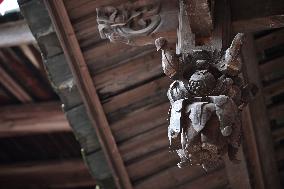
This photo taken on May 20, 2025 shows timber structural elements of a fortified manor in Yongtai County, southeast China's Fujian Province. Nestled in the Daiyun Mountain like scattered pearls, over 2,000 fortified manors in Yongtai County trace their origins to the Tang Dynasty 618-907 AD), flourishing later during the Ming 1368-1644) and Qing 1644-1911) eras. Today, increasing numbers of ancient manors and villages are being protected and revitalized. As historical heritage integrates with contemporary life and cultural landscapes merge with humanistic values, these age-old structures are radiating renewed vitality. Photo by Wang Zecong/Xinhua/ABACAPRESS.COM

  •  
Fujian Fortified Manors - China

Fujian Fortified Manors - China

An aerial drone photo taken on May 20, 2025 shows Hecheng Manor in Yongtai County, southeast China's Fujian Province. Nestled in the Daiyun Mountain like scattered pearls, over 2,000 fortified manors in Yongtai County trace their origins to the Tang Dynasty 618-907 AD), flourishing later during the Ming 1368-1644) and Qing 1644-1911) eras. Today, increasing numbers of ancient manors and villages are being protected and revitalized. As historical heritage integrates with contemporary life and cultural landscapes merge with humanistic values, these age-old structures are radiating renewed vitality. Photo by Zhang Keren/Xinhua/ABACAPRESS.COM

  •  
Fujian Fortified Manors - China

Fujian Fortified Manors - China

An aerial drone photo taken on May 20, 2025 shows Hecheng Manor in Yongtai County, southeast China's Fujian Province. Nestled in the Daiyun Mountain like scattered pearls, over 2,000 fortified manors in Yongtai County trace their origins to the Tang Dynasty 618-907 AD), flourishing later during the Ming 1368-1644) and Qing 1644-1911) eras. Today, increasing numbers of ancient manors and villages are being protected and revitalized. As historical heritage integrates with contemporary life and cultural landscapes merge with humanistic values, these age-old structures are radiating renewed vitality. Photo by Wang Zecong/Xinhua/ABACAPRESS.COM

  •  
Fujian Fortified Manors - China

Fujian Fortified Manors - China

An aerial photo taken on May 20, 2025 shows Hecheng Manor in Yongtai County, southeast China's Fujian Province. Nestled in the Daiyun Mountain like scattered pearls, over 2,000 fortified manors in Yongtai County trace their origins to the Tang Dynasty 618-907 AD), flourishing later during the Ming 1368-1644) and Qing 1644-1911) eras. Today, increasing numbers of ancient manors and villages are being protected and revitalized. As historical heritage integrates with contemporary life and cultural landscapes merge with humanistic values, these age-old structures are radiating renewed vitality. Photo by Jiang Kehong/Xinhua/ABACAPRESS.COM

  •  
Fujian Fortified Manors - China

Fujian Fortified Manors - China

An aerial photo taken on May 20, 2025 shows Zhutou Manor in Yongtai County, southeast China's Fujian Province. Nestled in the Daiyun Mountain like scattered pearls, over 2,000 fortified manors in Yongtai County trace their origins to the Tang Dynasty 618-907 AD), flourishing later during the Ming 1368-1644) and Qing 1644-1911) eras. Today, increasing numbers of ancient manors and villages are being protected and revitalized. As historical heritage integrates with contemporary life and cultural landscapes merge with humanistic values, these age-old structures are radiating renewed vitality. Photo by Jiang Kehong/Xinhua/ABACAPRESS.COM

  •  
Shadow Play Inheritor Of Langzhong - China

Shadow Play Inheritor Of Langzhong - China

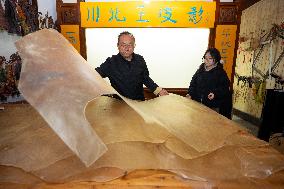
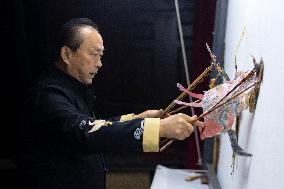
Wang Biao (L) and one of his apprentices select cowhide, a raw material for shadow play puppets, at a museum for Wang's Shadow Play art in Langzhong City, southwest China's Sichuan Province, on February 19, 2025. Shadow play, also known as shadow puppetry, is a traditional Chinese folk art inscribed in UNESCO's list of intangible cultural heritage of humanity in 2011. Wang's Shadow Play is a representative genre of Langzhong Shadow Play popular in northern Sichuan in southwest China, originated with artist Wang Yuansheng during the Qing Dynasty (1644-1911), and has been passed on between generations since then. Wang Biao, 60, a seventh-generation inheritor of Wang's Shadow Play, takes preserving and promoting the art as his life-time course. Wang Biao started to learn the art from his grandfather in his early childhood, and he followed him to stage performances all over the country in the 1980s. He restarted his shadow play troupe in Chengdu despite a shrinking audience for this art in 2000, and started to gi

  •  
Shadow Play Inheritor Of Langzhong - China

Shadow Play Inheritor Of Langzhong - China

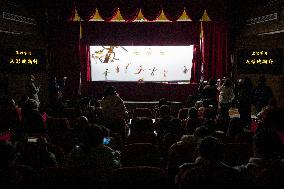
People watch a shadow play at a museum for Wang's Shadow Play art in Langzhong City, southwest China's Sichuan Province, on February 19, 2025. Shadow play, also known as shadow puppetry, is a traditional Chinese folk art inscribed in UNESCO's list of intangible cultural heritage of humanity in 2011. Wang's Shadow Play is a representative genre of Langzhong Shadow Play popular in northern Sichuan in southwest China, originated with artist Wang Yuansheng during the Qing Dynasty (1644-1911), and has been passed on between generations since then. Wang Biao, 60, a seventh-generation inheritor of Wang's Shadow Play, takes preserving and promoting the art as his life-time course. Wang Biao started to learn the art from his grandfather in his early childhood, and he followed him to stage performances all over the country in the 1980s. He restarted his shadow play troupe in Chengdu despite a shrinking audience for this art in 2000, and started to give performances at local parks and schools. In 2004, he led his troupe

  •  
Shadow Play Inheritor Of Langzhong - China

Shadow Play Inheritor Of Langzhong - China

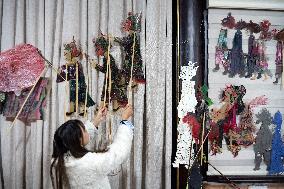
An apprentice of Wang Biao arranges shadow play puppets at a museum for Wang's Shadow Play art in Langzhong City, southwest China's Sichuan Province, on February 19, 2025. Shadow play, also known as shadow puppetry, is a traditional Chinese folk art inscribed in UNESCO's list of intangible cultural heritage of humanity in 2011. Wang's Shadow Play is a representative genre of Langzhong Shadow Play popular in northern Sichuan in southwest China, originated with artist Wang Yuansheng during the Qing Dynasty (1644-1911), and has been passed on between generations since then. Wang Biao, 60, a seventh-generation inheritor of Wang's Shadow Play, takes preserving and promoting the art as his life-time course. Wang Biao started to learn the art from his grandfather in his early childhood, and he followed him to stage performances all over the country in the 1980s. He restarted his shadow play troupe in Chengdu despite a shrinking audience for this art in 2000, and started to give performances at local parks and school

  •  
Shadow Play Inheritor Of Langzhong - China

Shadow Play Inheritor Of Langzhong - China

Wang Biao performs a shadow play at a museum for Wang's Shadow Play art in Langzhong City, southwest China's Sichuan Province, on February 19, 2025. Shadow play, also known as shadow puppetry, is a traditional Chinese folk art inscribed in UNESCO's list of intangible cultural heritage of humanity in 2011. Wang's Shadow Play is a representative genre of Langzhong Shadow Play popular in northern Sichuan in southwest China, originated with artist Wang Yuansheng during the Qing Dynasty (1644-1911), and has been passed on between generations since then. Wang Biao, 60, a seventh-generation inheritor of Wang's Shadow Play, takes preserving and promoting the art as his life-time course. Wang Biao started to learn the art from his grandfather in his early childhood, and he followed him to stage performances all over the country in the 1980s. He restarted his shadow play troupe in Chengdu despite a shrinking audience for this art in 2000, and started to give performances at local parks and schools. In 2004, he led his

  •  
Shadow Play Inheritor Of Langzhong - China

Shadow Play Inheritor Of Langzhong - China

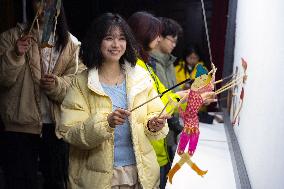
Young audiences try their hands on shadow play performance at a museum for Wang's Shadow Play art in Langzhong City, southwest China's Sichuan Province, on February 19, 2025. Shadow play, also known as shadow puppetry, is a traditional Chinese folk art inscribed in UNESCO's list of intangible cultural heritage of humanity in 2011. Wang's Shadow Play is a representative genre of Langzhong Shadow Play popular in northern Sichuan in southwest China, originated with artist Wang Yuansheng during the Qing Dynasty (1644-1911), and has been passed on between generations since then. Wang Biao, 60, a seventh-generation inheritor of Wang's Shadow Play, takes preserving and promoting the art as his life-time course. Wang Biao started to learn the art from his grandfather in his early childhood, and he followed him to stage performances all over the country in the 1980s. He restarted his shadow play troupe in Chengdu despite a shrinking audience for this art in 2000, and started to give performances at local parks and sch

  •  
Shadow Play Inheritor Of Langzhong - China

Shadow Play Inheritor Of Langzhong - China

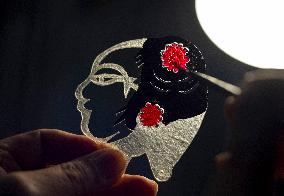
Wang Biao colors a shadow play puppet at a museum for Wang's Shadow Play art in Langzhong City, southwest China's Sichuan Province, on February 19, 2025. Shadow play, also known as shadow puppetry, is a traditional Chinese folk art inscribed in UNESCO's list of intangible cultural heritage of humanity in 2011. Wang's Shadow Play is a representative genre of Langzhong Shadow Play popular in northern Sichuan in southwest China, originated with artist Wang Yuansheng during the Qing Dynasty (1644-1911), and has been passed on between generations since then. Wang Biao, 60, a seventh-generation inheritor of Wang's Shadow Play, takes preserving and promoting the art as his life-time course. Wang Biao started to learn the art from his grandfather in his early childhood, and he followed him to stage performances all over the country in the 1980s. He restarted his shadow play troupe in Chengdu despite a shrinking audience for this art in 2000, and started to give performances at local parks and schools. In 2004, he led

  •  
Shadow Play Inheritor Of Langzhong - China

Shadow Play Inheritor Of Langzhong - China

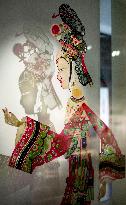
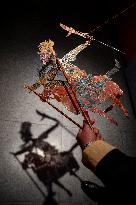
This photo taken on on February 19, 2025 shows a shadow play puppet displayed at a museum for Wang's Shadow Play art in Langzhong City, southwest China's Sichuan Province. Shadow play, also known as shadow puppetry, is a traditional Chinese folk art inscribed in UNESCO's list of intangible cultural heritage of humanity in 2011. Wang's Shadow Play is a representative genre of Langzhong Shadow Play popular in northern Sichuan in southwest China, originated with artist Wang Yuansheng during the Qing Dynasty (1644-1911), and has been passed on between generations since then. Wang Biao, 60, a seventh-generation inheritor of Wang's Shadow Play, takes preserving and promoting the art as his life-time course. Wang Biao started to learn the art from his grandfather in his early childhood, and he followed him to stage performances all over the country in the 1980s. He restarted his shadow play troupe in Chengdu despite a shrinking audience for this art in 2000, and started to give performances at local parks and school

  •  
Shadow Play Inheritor Of Langzhong - China

Shadow Play Inheritor Of Langzhong - China

Wang Biao demonstrates shadow play puppet manipulating skills at a museum for Wang's Shadow Play art in Langzhong City, southwest China's Sichuan Province, on February 19, 2025. Shadow play, also known as shadow puppetry, is a traditional Chinese folk art inscribed in UNESCO's list of intangible cultural heritage of humanity in 2011. Wang's Shadow Play is a representative genre of Langzhong Shadow Play popular in northern Sichuan in southwest China, originated with artist Wang Yuansheng during the Qing Dynasty (1644-1911), and has been passed on between generations since then. Wang Biao, 60, a seventh-generation inheritor of Wang's Shadow Play, takes preserving and promoting the art as his life-time course. Wang Biao started to learn the art from his grandfather in his early childhood, and he followed him to stage performances all over the country in the 1980s. He restarted his shadow play troupe in Chengdu despite a shrinking audience for this art in 2000, and started to give performances at local parks and

  •  
Shadow Play Inheritor Of Langzhong - China

Shadow Play Inheritor Of Langzhong - China

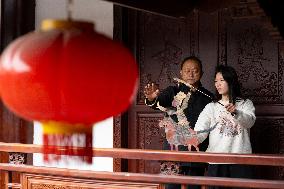
Wang Biao (L) instructs one of his apprentices during a shadow play practice session at a museum for Wang's Shadow Play art in Langzhong City, southwest China's Sichuan Province, on February 19, 2025. Shadow play, also known as shadow puppetry, is a traditional Chinese folk art inscribed in UNESCO's list of intangible cultural heritage of humanity in 2011. Wang's Shadow Play is a representative genre of Langzhong Shadow Play popular in northern Sichuan in southwest China, originated with artist Wang Yuansheng during the Qing Dynasty (1644-1911), and has been passed on between generations since then. Wang Biao, 60, a seventh-generation inheritor of Wang's Shadow Play, takes preserving and promoting the art as his life-time course. Wang Biao started to learn the art from his grandfather in his early childhood, and he followed him to stage performances all over the country in the 1980s. He restarted his shadow play troupe in Chengdu despite a shrinking audience for this art in 2000, and started to give performan

  •  
Shadow Play Inheritor Of Langzhong - China

Shadow Play Inheritor Of Langzhong - China

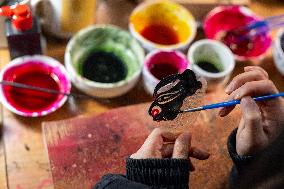
An apprentice of Wang Biao colors a shadow play puppet at a museum for Wang's Shadow Play art in Langzhong City, southwest China's Sichuan Province, on February 19, 2025. Shadow play, also known as shadow puppetry, is a traditional Chinese folk art inscribed in UNESCO's list of intangible cultural heritage of humanity in 2011. Wang's Shadow Play is a representative genre of Langzhong Shadow Play popular in northern Sichuan in southwest China, originated with artist Wang Yuansheng during the Qing Dynasty (1644-1911), and has been passed on between generations since then. Wang Biao, 60, a seventh-generation inheritor of Wang's Shadow Play, takes preserving and promoting the art as his life-time course. Wang Biao started to learn the art from his grandfather in his early childhood, and he followed him to stage performances all over the country in the 1980s. He restarted his shadow play troupe in Chengdu despite a shrinking audience for this art in 2000, and started to give performances at local parks and schools

  •  
Shadow Play Inheritor Of Langzhong - China

Shadow Play Inheritor Of Langzhong - China

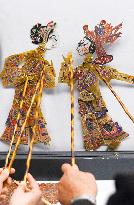
Wang Biao (R) and one of his apprentices perform a shadow play at a museum for Wang's Shadow Play art in Langzhong City, southwest China's Sichuan Province, on February 19, 2025. Shadow play, also known as shadow puppetry, is a traditional Chinese folk art inscribed in UNESCO's list of intangible cultural heritage of humanity in 2011. Wang's Shadow Play is a representative genre of Langzhong Shadow Play popular in northern Sichuan in southwest China, originated with artist Wang Yuansheng during the Qing Dynasty (1644-1911), and has been passed on between generations since then. Wang Biao, 60, a seventh-generation inheritor of Wang's Shadow Play, takes preserving and promoting the art as his life-time course. Wang Biao started to learn the art from his grandfather in his early childhood, and he followed him to stage performances all over the country in the 1980s. He restarted his shadow play troupe in Chengdu despite a shrinking audience for this art in 2000, and started to give performances at local parks and

  •  
Xinhua Headlines: Historical archives bear witness to China's exercise of sovereignty over Xizang

Xinhua Headlines: Historical archives bear witness to China's exercise of sovereignty over Xizang

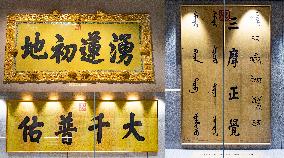
(240714) -- LHASA, July 14, 2024 Photo by Xinhua/ABACAPRESS.COM) -- This combo photo taken on June 13, 2024 shows three inscribed boards, all written and bestowed by emperors of the Qing Dynasty (1644-1911), to the Potala Palace (upper L) and two monasteries in southwest China's Xizang Autonomous Region. Photo by Xinhua/ABACAPRESS.COM/Tenzin Nyida)

  •  
(MASTER OF CRAFTS)CHINA-CARVED LACQUER-INHERITOR-STUDIO (CN)

(MASTER OF CRAFTS)CHINA-CARVED LACQUER-INHERITOR-STUDIO (CN)

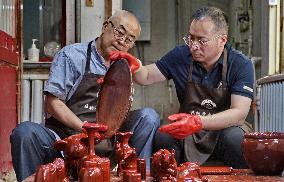
(240607) -- BEIJING, June 7, 2024 Photo by Xinhua/ABACAPRESS.COM) -- Zhu Jiang (L) and his father carry semi-finished carved lacquer wares for drying at his studio in Gu'an, north China's Hebei Province, May 30, 2024. Carved lacquer, dating back to the Tang Dynasty (618-907), greeted its peak time in Ming and Qing dynasties (1368-1911). Since the founding of the People's Republic of China in 1949, Beijing and Yangzhou have become the two centers for the craft of carved lacquer, which was listed as a national-level intangible cultural heritage in 2006. Carved lacquer differs in its colors, namely red, black or multiple colors. Its making procedures include designing, body shaping, lacquer making, coating, drawing, carving and grinding. The craftsman needs to smoothly use various kinds of knives to carve patterns on the ware, and even a little miss can destroy the whole artwork. The craft can only be grasped through three to five years of practice. Therefore, it is also called "the art of time." Born in 1976, Z

  •  
(MASTER OF CRAFTS)CHINA-CARVED LACQUER-INHERITOR-STUDIO (CN)

(MASTER OF CRAFTS)CHINA-CARVED LACQUER-INHERITOR-STUDIO (CN)

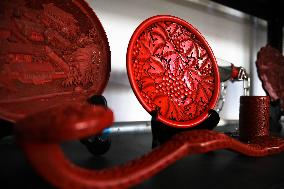
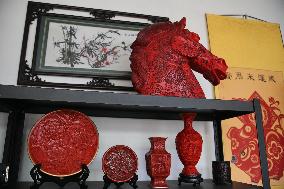
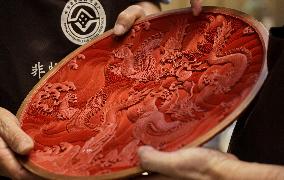
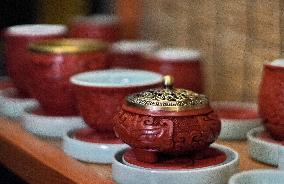
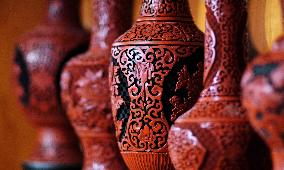
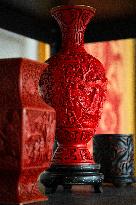
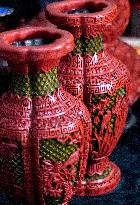
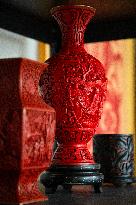
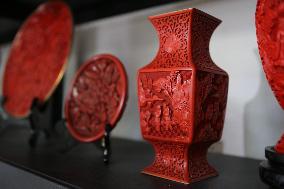
(240607) -- BEIJING, June 7, 2024 Photo by Xinhua/ABACAPRESS.COM) -- Carved lacquer artworks are displayed at Zhu Jiang's studio in Gu'an, north China's Hebei Province, May 30, 2024. Carved lacquer, dating back to the Tang Dynasty (618-907), greeted its peak time in Ming and Qing dynasties (1368-1911). Since the founding of the People's Republic of China in 1949, Beijing and Yangzhou have become the two centers for the craft of carved lacquer, which was listed as a national-level intangible cultural heritage in 2006. Carved lacquer differs in its colors, namely red, black or multiple colors. Its making procedures include designing, body shaping, lacquer making, coating, drawing, carving and grinding. The craftsman needs to smoothly use various kinds of knives to carve patterns on the ware, and even a little miss can destroy the whole artwork. The craft can only be grasped through three to five years of practice. Therefore, it is also called "the art of time." Born in 1976, Zhu Jiang, an inheritor of the craft

  •  
(MASTER OF CRAFTS)CHINA-CARVED LACQUER-INHERITOR-STUDIO (CN)

(MASTER OF CRAFTS)CHINA-CARVED LACQUER-INHERITOR-STUDIO (CN)

(240607) -- BEIJING, June 7, 2024 Photo by Xinhua/ABACAPRESS.COM) -- Carved lacquer artworks are displayed at Zhu Jiang's studio in Gu'an, north China's Hebei Province, May 30, 2024. Carved lacquer, dating back to the Tang Dynasty (618-907), greeted its peak time in Ming and Qing dynasties (1368-1911). Since the founding of the People's Republic of China in 1949, Beijing and Yangzhou have become the two centers for the craft of carved lacquer, which was listed as a national-level intangible cultural heritage in 2006. Carved lacquer differs in its colors, namely red, black or multiple colors. Its making procedures include designing, body shaping, lacquer making, coating, drawing, carving and grinding. The craftsman needs to smoothly use various kinds of knives to carve patterns on the ware, and even a little miss can destroy the whole artwork. The craft can only be grasped through three to five years of practice. Therefore, it is also called "the art of time." Born in 1976, Zhu Jiang, an inheritor of the craft

  •  
(MASTER OF CRAFTS)CHINA-CARVED LACQUER-INHERITOR-STUDIO (CN)

(MASTER OF CRAFTS)CHINA-CARVED LACQUER-INHERITOR-STUDIO (CN)

(240607) -- BEIJING, June 7, 2024 Photo by Xinhua/ABACAPRESS.COM) -- Carved lacquer artworks are displayed at Zhu Jiang's studio in Gu'an, north China's Hebei Province, May 30, 2024. Carved lacquer, dating back to the Tang Dynasty (618-907), greeted its peak time in Ming and Qing dynasties (1368-1911). Since the founding of the People's Republic of China in 1949, Beijing and Yangzhou have become the two centers for the craft of carved lacquer, which was listed as a national-level intangible cultural heritage in 2006. Carved lacquer differs in its colors, namely red, black or multiple colors. Its making procedures include designing, body shaping, lacquer making, coating, drawing, carving and grinding. The craftsman needs to smoothly use various kinds of knives to carve patterns on the ware, and even a little miss can destroy the whole artwork. The craft can only be grasped through three to five years of practice. Therefore, it is also called "the art of time." Born in 1976, Zhu Jiang, an inheritor of the craft

  •  
(MASTER OF CRAFTS)CHINA-CARVED LACQUER-INHERITOR-STUDIO (CN)

(MASTER OF CRAFTS)CHINA-CARVED LACQUER-INHERITOR-STUDIO (CN)

(240607) -- BEIJING, June 7, 2024 Photo by Xinhua/ABACAPRESS.COM) -- A piece of carved lacquer artwork on drying is displayed at Zhu Jiang's studio in Gu'an, north China's Hebei Province, May 30, 2024. Carved lacquer, dating back to the Tang Dynasty (618-907), greeted its peak time in Ming and Qing dynasties (1368-1911). Since the founding of the People's Republic of China in 1949, Beijing and Yangzhou have become the two centers for the craft of carved lacquer, which was listed as a national-level intangible cultural heritage in 2006. Carved lacquer differs in its colors, namely red, black or multiple colors. Its making procedures include designing, body shaping, lacquer making, coating, drawing, carving and grinding. The craftsman needs to smoothly use various kinds of knives to carve patterns on the ware, and even a little miss can destroy the whole artwork. The craft can only be grasped through three to five years of practice. Therefore, it is also called "the art of time." Born in 1976, Zhu Jiang, an inh

  •  
(MASTER OF CRAFTS)CHINA-CARVED LACQUER-INHERITOR-STUDIO (CN)

(MASTER OF CRAFTS)CHINA-CARVED LACQUER-INHERITOR-STUDIO (CN)

(240607) -- BEIJING, June 7, 2024 Photo by Xinhua/ABACAPRESS.COM) -- Carved lacquer artworks are displayed at Zhu Jiang's studio in Gu'an, north China's Hebei Province, May 30, 2024. Carved lacquer, dating back to the Tang Dynasty (618-907), greeted its peak time in Ming and Qing dynasties (1368-1911). Since the founding of the People's Republic of China in 1949, Beijing and Yangzhou have become the two centers for the craft of carved lacquer, which was listed as a national-level intangible cultural heritage in 2006. Carved lacquer differs in its colors, namely red, black or multiple colors. Its making procedures include designing, body shaping, lacquer making, coating, drawing, carving and grinding. The craftsman needs to smoothly use various kinds of knives to carve patterns on the ware, and even a little miss can destroy the whole artwork. The craft can only be grasped through three to five years of practice. Therefore, it is also called "the art of time." Born in 1976, Zhu Jiang, an inheritor of the craft

  •  
(MASTER OF CRAFTS)CHINA-CARVED LACQUER-INHERITOR-STUDIO (CN)

(MASTER OF CRAFTS)CHINA-CARVED LACQUER-INHERITOR-STUDIO (CN)

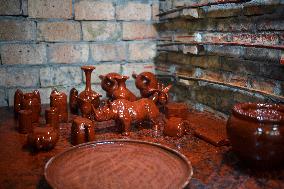
(240607) -- BEIJING, June 7, 2024 Photo by Xinhua/ABACAPRESS.COM) -- Semi-finished carved lacquer artworks are seen on drying at Zhu Jiang's studio in Gu'an, north China's Hebei Province, May 30, 2024. Carved lacquer, dating back to the Tang Dynasty (618-907), greeted its peak time in Ming and Qing dynasties (1368-1911). Since the founding of the People's Republic of China in 1949, Beijing and Yangzhou have become the two centers for the craft of carved lacquer, which was listed as a national-level intangible cultural heritage in 2006. Carved lacquer differs in its colors, namely red, black or multiple colors. Its making procedures include designing, body shaping, lacquer making, coating, drawing, carving and grinding. The craftsman needs to smoothly use various kinds of knives to carve patterns on the ware, and even a little miss can destroy the whole artwork. The craft can only be grasped through three to five years of practice. Therefore, it is also called "the art of time." Born in 1976, Zhu Jiang, an inh

  •  
(MASTER OF CRAFTS)CHINA-CARVED LACQUER-INHERITOR-STUDIO (CN)

(MASTER OF CRAFTS)CHINA-CARVED LACQUER-INHERITOR-STUDIO (CN)

(240607) -- BEIJING, June 7, 2024 Photo by Xinhua/ABACAPRESS.COM) -- Carved lacquer artworks are displayed at Zhu Jiang's studio in Beijing, capital of China, June 5, 2024. Carved lacquer, dating back to the Tang Dynasty (618-907), greeted its peak time in Ming and Qing dynasties (1368-1911). Since the founding of the People's Republic of China in 1949, Beijing and Yangzhou have become the two centers for the craft of carved lacquer, which was listed as a national-level intangible cultural heritage in 2006. Carved lacquer differs in its colors, namely red, black or multiple colors. Its making procedures include designing, body shaping, lacquer making, coating, drawing, carving and grinding. The craftsman needs to smoothly use various kinds of knives to carve patterns on the ware, and even a little miss can destroy the whole artwork. The craft can only be grasped through three to five years of practice. Therefore, it is also called "the art of time." Born in 1976, Zhu Jiang, an inheritor of the craft of carved

  •  
(MASTER OF CRAFTS)CHINA-CARVED LACQUER-INHERITOR-STUDIO (CN)

(MASTER OF CRAFTS)CHINA-CARVED LACQUER-INHERITOR-STUDIO (CN)

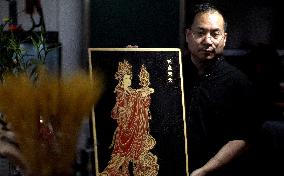
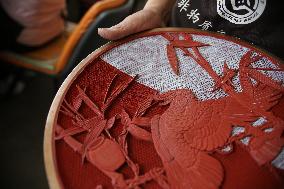
(240607) -- BEIJING, June 7, 2024 Photo by Xinhua/ABACAPRESS.COM) -- Zhu Jiang shows a piece of colorful carved lacquer artwork at his studio in Beijing, capital of China, June 5, 2024. Carved lacquer, dating back to the Tang Dynasty (618-907), greeted its peak time in Ming and Qing dynasties (1368-1911). Since the founding of the People's Republic of China in 1949, Beijing and Yangzhou have become the two centers for the craft of carved lacquer, which was listed as a national-level intangible cultural heritage in 2006. Carved lacquer differs in its colors, namely red, black or multiple colors. Its making procedures include designing, body shaping, lacquer making, coating, drawing, carving and grinding. The craftsman needs to smoothly use various kinds of knives to carve patterns on the ware, and even a little miss can destroy the whole artwork. The craft can only be grasped through three to five years of practice. Therefore, it is also called "the art of time." Born in 1976, Zhu Jiang, an inheritor of the cr

  •  
(MASTER OF CRAFTS)CHINA-CARVED LACQUER-INHERITOR-STUDIO (CN)

(MASTER OF CRAFTS)CHINA-CARVED LACQUER-INHERITOR-STUDIO (CN)

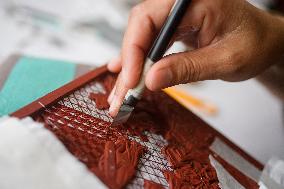
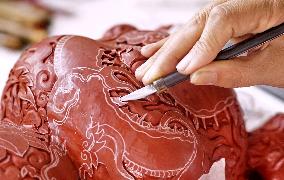
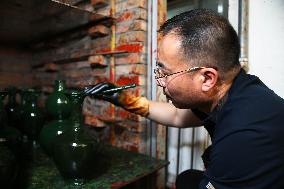
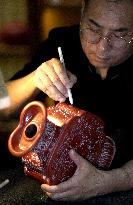
(240607) -- BEIJING, June 7, 2024 Photo by Xinhua/ABACAPRESS.COM) -- Zhu Jiang makes carved lacquer at his studio in Gu'an, north China's Hebei Province, May 30, 2024. Carved lacquer, dating back to the Tang Dynasty (618-907), greeted its peak time in Ming and Qing dynasties (1368-1911). Since the founding of the People's Republic of China in 1949, Beijing and Yangzhou have become the two centers for the craft of carved lacquer, which was listed as a national-level intangible cultural heritage in 2006. Carved lacquer differs in its colors, namely red, black or multiple colors. Its making procedures include designing, body shaping, lacquer making, coating, drawing, carving and grinding. The craftsman needs to smoothly use various kinds of knives to carve patterns on the ware, and even a little miss can destroy the whole artwork. The craft can only be grasped through three to five years of practice. Therefore, it is also called "the art of time." Born in 1976, Zhu Jiang, an inheritor of the craft of carved lacq

  •  
(MASTER OF CRAFTS)CHINA-CARVED LACQUER-INHERITOR-STUDIO (CN)

(MASTER OF CRAFTS)CHINA-CARVED LACQUER-INHERITOR-STUDIO (CN)

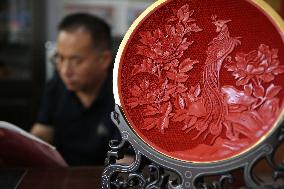
(240607) -- BEIJING, June 7, 2024 Photo by Xinhua/ABACAPRESS.COM) -- Zhu Jiang reads a book on carved lacquer at his studio in Gu'an, north China's Hebei Province, May 30, 2024. Carved lacquer, dating back to the Tang Dynasty (618-907), greeted its peak time in Ming and Qing dynasties (1368-1911). Since the founding of the People's Republic of China in 1949, Beijing and Yangzhou have become the two centers for the craft of carved lacquer, which was listed as a national-level intangible cultural heritage in 2006. Carved lacquer differs in its colors, namely red, black or multiple colors. Its making procedures include designing, body shaping, lacquer making, coating, drawing, carving and grinding. The craftsman needs to smoothly use various kinds of knives to carve patterns on the ware, and even a little miss can destroy the whole artwork. The craft can only be grasped through three to five years of practice. Therefore, it is also called "the art of time." Born in 1976, Zhu Jiang, an inheritor of the craft of c

  •  
(MASTER OF CRAFTS)CHINA-CARVED LACQUER-INHERITOR-STUDIO (CN)

(MASTER OF CRAFTS)CHINA-CARVED LACQUER-INHERITOR-STUDIO (CN)

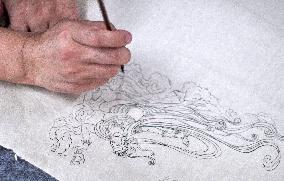
(240607) -- BEIJING, June 7, 2024 Photo by Xinhua/ABACAPRESS.COM) -- Zhu Jiang designs a piece of carved lacquer artwork at his studio in Beijing, capital of China, June 5, 2024. Carved lacquer, dating back to the Tang Dynasty (618-907), greeted its peak time in Ming and Qing dynasties (1368-1911). Since the founding of the People's Republic of China in 1949, Beijing and Yangzhou have become the two centers for the craft of carved lacquer, which was listed as a national-level intangible cultural heritage in 2006. Carved lacquer differs in its colors, namely red, black or multiple colors. Its making procedures include designing, body shaping, lacquer making, coating, drawing, carving and grinding. The craftsman needs to smoothly use various kinds of knives to carve patterns on the ware, and even a little miss can destroy the whole artwork. The craft can only be grasped through three to five years of practice. Therefore, it is also called "the art of time." Born in 1976, Zhu Jiang, an inheritor of the craft of

  •  
(MASTER OF CRAFTS)CHINA-CARVED LACQUER-INHERITOR-STUDIO (CN)

(MASTER OF CRAFTS)CHINA-CARVED LACQUER-INHERITOR-STUDIO (CN)

(240607) -- BEIJING, June 7, 2024 Photo by Xinhua/ABACAPRESS.COM) -- Zhu Jiang makes carved lacquer at his studio in Gu'an, north China's Hebei Province, May 30, 2024. Carved lacquer, dating back to the Tang Dynasty (618-907), greeted its peak time in Ming and Qing dynasties (1368-1911). Since the founding of the People's Republic of China in 1949, Beijing and Yangzhou have become the two centers for the craft of carved lacquer, which was listed as a national-level intangible cultural heritage in 2006. Carved lacquer differs in its colors, namely red, black or multiple colors. Its making procedures include designing, body shaping, lacquer making, coating, drawing, carving and grinding. The craftsman needs to smoothly use various kinds of knives to carve patterns on the ware, and even a little miss can destroy the whole artwork. The craft can only be grasped through three to five years of practice. Therefore, it is also called "the art of time." Born in 1976, Zhu Jiang, an inheritor of the craft of carved lacq

  •  
(MASTER OF CRAFTS)CHINA-CARVED LACQUER-INHERITOR-STUDIO (CN)

(MASTER OF CRAFTS)CHINA-CARVED LACQUER-INHERITOR-STUDIO (CN)

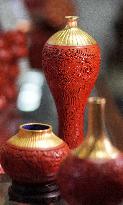
(240607) -- BEIJING, June 7, 2024 Photo by Xinhua/ABACAPRESS.COM) -- Carved lacquer artworks are displayed at Zhu Jiang's studio in Beijing, capital of China, June 5, 2024. Carved lacquer, dating back to the Tang Dynasty (618-907), greeted its peak time in Ming and Qing dynasties (1368-1911). Since the founding of the People's Republic of China in 1949, Beijing and Yangzhou have become the two centers for the craft of carved lacquer, which was listed as a national-level intangible cultural heritage in 2006. Carved lacquer differs in its colors, namely red, black or multiple colors. Its making procedures include designing, body shaping, lacquer making, coating, drawing, carving and grinding. The craftsman needs to smoothly use various kinds of knives to carve patterns on the ware, and even a little miss can destroy the whole artwork. The craft can only be grasped through three to five years of practice. Therefore, it is also called "the art of time." Born in 1976, Zhu Jiang, an inheritor of the craft of carved

  •  
(MASTER OF CRAFTS)CHINA-CARVED LACQUER-INHERITOR-STUDIO (CN)

(MASTER OF CRAFTS)CHINA-CARVED LACQUER-INHERITOR-STUDIO (CN)

(240607) -- BEIJING, June 7, 2024 Photo by Xinhua/ABACAPRESS.COM) -- Carved lacquer artworks are displayed at Zhu Jiang's studio in Beijing, capital of China, June 5, 2024. Carved lacquer, dating back to the Tang Dynasty (618-907), greeted its peak time in Ming and Qing dynasties (1368-1911). Since the founding of the People's Republic of China in 1949, Beijing and Yangzhou have become the two centers for the craft of carved lacquer, which was listed as a national-level intangible cultural heritage in 2006. Carved lacquer differs in its colors, namely red, black or multiple colors. Its making procedures include designing, body shaping, lacquer making, coating, drawing, carving and grinding. The craftsman needs to smoothly use various kinds of knives to carve patterns on the ware, and even a little miss can destroy the whole artwork. The craft can only be grasped through three to five years of practice. Therefore, it is also called "the art of time." Born in 1976, Zhu Jiang, an inheritor of the craft of carved

  •  
(MASTER OF CRAFTS)CHINA-CARVED LACQUER-INHERITOR-STUDIO (CN)

(MASTER OF CRAFTS)CHINA-CARVED LACQUER-INHERITOR-STUDIO (CN)

(240607) -- BEIJING, June 7, 2024 Photo by Xinhua/ABACAPRESS.COM) -- Carved lacquer artworks are displayed at Zhu Jiang's studio in Gu'an, north China's Hebei Province, May 30, 2024. Carved lacquer, dating back to the Tang Dynasty (618-907), greeted its peak time in Ming and Qing dynasties (1368-1911). Since the founding of the People's Republic of China in 1949, Beijing and Yangzhou have become the two centers for the craft of carved lacquer, which was listed as a national-level intangible cultural heritage in 2006. Carved lacquer differs in its colors, namely red, black or multiple colors. Its making procedures include designing, body shaping, lacquer making, coating, drawing, carving and grinding. The craftsman needs to smoothly use various kinds of knives to carve patterns on the ware, and even a little miss can destroy the whole artwork. The craft can only be grasped through three to five years of practice. Therefore, it is also called "the art of time." Born in 1976, Zhu Jiang, an inheritor of the craft

  •  
(MASTER OF CRAFTS)CHINA-CARVED LACQUER-INHERITOR-STUDIO (CN)

(MASTER OF CRAFTS)CHINA-CARVED LACQUER-INHERITOR-STUDIO (CN)

(240607) -- BEIJING, June 7, 2024 Photo by Xinhua/ABACAPRESS.COM) -- Zhu Jiang makes carved lacquer at his studio in Gu'an, north China's Hebei Province, May 30, 2024. Carved lacquer, dating back to the Tang Dynasty (618-907), greeted its peak time in Ming and Qing dynasties (1368-1911). Since the founding of the People's Republic of China in 1949, Beijing and Yangzhou have become the two centers for the craft of carved lacquer, which was listed as a national-level intangible cultural heritage in 2006. Carved lacquer differs in its colors, namely red, black or multiple colors. Its making procedures include designing, body shaping, lacquer making, coating, drawing, carving and grinding. The craftsman needs to smoothly use various kinds of knives to carve patterns on the ware, and even a little miss can destroy the whole artwork. The craft can only be grasped through three to five years of practice. Therefore, it is also called "the art of time." Born in 1976, Zhu Jiang, an inheritor of the craft of carved lacq

  •  
(MASTER OF CRAFTS)CHINA-CARVED LACQUER-INHERITOR-STUDIO (CN)

(MASTER OF CRAFTS)CHINA-CARVED LACQUER-INHERITOR-STUDIO (CN)

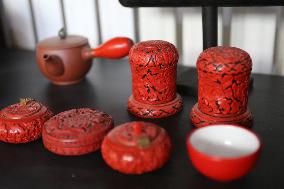
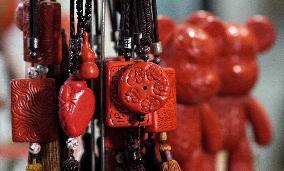
(240607) -- BEIJING, June 7, 2024 Photo by Xinhua/ABACAPRESS.COM) -- Accessories with carved lacquer are displayed at Zhu Jiang's studio in Beijing, capital of China, June 5, 2024. Carved lacquer, dating back to the Tang Dynasty (618-907), greeted its peak time in Ming and Qing dynasties (1368-1911). Since the founding of the People's Republic of China in 1949, Beijing and Yangzhou have become the two centers for the craft of carved lacquer, which was listed as a national-level intangible cultural heritage in 2006. Carved lacquer differs in its colors, namely red, black or multiple colors. Its making procedures include designing, body shaping, lacquer making, coating, drawing, carving and grinding. The craftsman needs to smoothly use various kinds of knives to carve patterns on the ware, and even a little miss can destroy the whole artwork. The craft can only be grasped through three to five years of practice. Therefore, it is also called "the art of time." Born in 1976, Zhu Jiang, an inheritor of the craft o

  •  
(MASTER OF CRAFTS)CHINA-CARVED LACQUER-INHERITOR-STUDIO (CN)

(MASTER OF CRAFTS)CHINA-CARVED LACQUER-INHERITOR-STUDIO (CN)

(240607) -- BEIJING, June 7, 2024 Photo by Xinhua/ABACAPRESS.COM) -- Carved lacquer artworks are displayed at Zhu Jiang's studio in Gu'an, north China's Hebei Province, May 30, 2024. Carved lacquer, dating back to the Tang Dynasty (618-907), greeted its peak time in Ming and Qing dynasties (1368-1911). Since the founding of the People's Republic of China in 1949, Beijing and Yangzhou have become the two centers for the craft of carved lacquer, which was listed as a national-level intangible cultural heritage in 2006. Carved lacquer differs in its colors, namely red, black or multiple colors. Its making procedures include designing, body shaping, lacquer making, coating, drawing, carving and grinding. The craftsman needs to smoothly use various kinds of knives to carve patterns on the ware, and even a little miss can destroy the whole artwork. The craft can only be grasped through three to five years of practice. Therefore, it is also called "the art of time." Born in 1976, Zhu Jiang, an inheritor of the craft

  •  
(MASTER OF CRAFTS)CHINA-CARVED LACQUER-INHERITOR-STUDIO (CN)

(MASTER OF CRAFTS)CHINA-CARVED LACQUER-INHERITOR-STUDIO (CN)

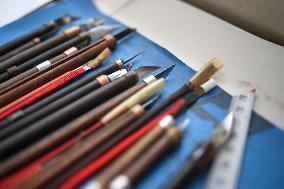
(240607) -- BEIJING, June 7, 2024 Photo by Xinhua/ABACAPRESS.COM) -- Knives for making carved lacquer are seen at Zhu Jiang's studio in Gu'an, north China's Hebei Province, May 30, 2024. Carved lacquer, dating back to the Tang Dynasty (618-907), greeted its peak time in Ming and Qing dynasties (1368-1911). Since the founding of the People's Republic of China in 1949, Beijing and Yangzhou have become the two centers for the craft of carved lacquer, which was listed as a national-level intangible cultural heritage in 2006. Carved lacquer differs in its colors, namely red, black or multiple colors. Its making procedures include designing, body shaping, lacquer making, coating, drawing, carving and grinding. The craftsman needs to smoothly use various kinds of knives to carve patterns on the ware, and even a little miss can destroy the whole artwork. The craft can only be grasped through three to five years of practice. Therefore, it is also called "the art of time." Born in 1976, Zhu Jiang, an inheritor of the c

  •  
(MASTER OF CRAFTS)CHINA-CARVED LACQUER-INHERITOR-STUDIO (CN)

(MASTER OF CRAFTS)CHINA-CARVED LACQUER-INHERITOR-STUDIO (CN)

(240607) -- BEIJING, June 7, 2024 Photo by Xinhua/ABACAPRESS.COM) -- Zhu Qingyuan, father of Zhujiang, shows a piece of semi-finished carved lacquer artwork at Zhu Jiang's studio in Gu'an, north China's Hebei Province, May 30, 2024. Carved lacquer, dating back to the Tang Dynasty (618-907), greeted its peak time in Ming and Qing dynasties (1368-1911). Since the founding of the People's Republic of China in 1949, Beijing and Yangzhou have become the two centers for the craft of carved lacquer, which was listed as a national-level intangible cultural heritage in 2006. Carved lacquer differs in its colors, namely red, black or multiple colors. Its making procedures include designing, body shaping, lacquer making, coating, drawing, carving and grinding. The craftsman needs to smoothly use various kinds of knives to carve patterns on the ware, and even a little miss can destroy the whole artwork. The craft can only be grasped through three to five years of practice. Therefore, it is also called "the art of time."

  •  
(MASTER OF CRAFTS)CHINA-CARVED LACQUER-INHERITOR-STUDIO (CN)

(MASTER OF CRAFTS)CHINA-CARVED LACQUER-INHERITOR-STUDIO (CN)

(240607) -- BEIJING, June 7, 2024 Photo by Xinhua/ABACAPRESS.COM) -- Zhu Jiang checks semi-finished carved lacquer wares at his studio in Gu'an, north China's Hebei Province, May 30, 2024. Carved lacquer, dating back to the Tang Dynasty (618-907), greeted its peak time in Ming and Qing dynasties (1368-1911). Since the founding of the People's Republic of China in 1949, Beijing and Yangzhou have become the two centers for the craft of carved lacquer, which was listed as a national-level intangible cultural heritage in 2006. Carved lacquer differs in its colors, namely red, black or multiple colors. Its making procedures include designing, body shaping, lacquer making, coating, drawing, carving and grinding. The craftsman needs to smoothly use various kinds of knives to carve patterns on the ware, and even a little miss can destroy the whole artwork. The craft can only be grasped through three to five years of practice. Therefore, it is also called "the art of time." Born in 1976, Zhu Jiang, an inheritor of the

  •  
(MASTER OF CRAFTS)CHINA-CARVED LACQUER-INHERITOR-STUDIO (CN)

(MASTER OF CRAFTS)CHINA-CARVED LACQUER-INHERITOR-STUDIO (CN)

(240607) -- BEIJING, June 7, 2024 Photo by Xinhua/ABACAPRESS.COM) -- Carved lacquer artworks are displayed at Zhu Jiang's studio in Beijing, capital of China, June 5, 2024. Carved lacquer, dating back to the Tang Dynasty (618-907), greeted its peak time in Ming and Qing dynasties (1368-1911). Since the founding of the People's Republic of China in 1949, Beijing and Yangzhou have become the two centers for the craft of carved lacquer, which was listed as a national-level intangible cultural heritage in 2006. Carved lacquer differs in its colors, namely red, black or multiple colors. Its making procedures include designing, body shaping, lacquer making, coating, drawing, carving and grinding. The craftsman needs to smoothly use various kinds of knives to carve patterns on the ware, and even a little miss can destroy the whole artwork. The craft can only be grasped through three to five years of practice. Therefore, it is also called "the art of time." Born in 1976, Zhu Jiang, an inheritor of the craft of carved

  •  
(MASTER OF CRAFTS)CHINA-CARVED LACQUER-INHERITOR-STUDIO (CN)

(MASTER OF CRAFTS)CHINA-CARVED LACQUER-INHERITOR-STUDIO (CN)

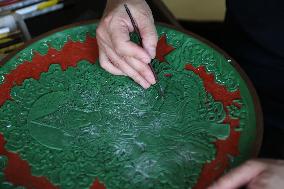
(240607) -- BEIJING, June 7, 2024 Photo by Xinhua/ABACAPRESS.COM) -- Zhu Jiang draws lines on a semi-finished carved lacquer ware at his studio in Beijing, capital of China, June 5, 2024. Carved lacquer, dating back to the Tang Dynasty (618-907), greeted its peak time in Ming and Qing dynasties (1368-1911). Since the founding of the People's Republic of China in 1949, Beijing and Yangzhou have become the two centers for the craft of carved lacquer, which was listed as a national-level intangible cultural heritage in 2006. Carved lacquer differs in its colors, namely red, black or multiple colors. Its making procedures include designing, body shaping, lacquer making, coating, drawing, carving and grinding. The craftsman needs to smoothly use various kinds of knives to carve patterns on the ware, and even a little miss can destroy the whole artwork. The craft can only be grasped through three to five years of practice. Therefore, it is also called "the art of time." Born in 1976, Zhu Jiang, an inheritor of the

  •  
(MASTER OF CRAFTS)CHINA-CARVED LACQUER-INHERITOR-STUDIO (CN)

(MASTER OF CRAFTS)CHINA-CARVED LACQUER-INHERITOR-STUDIO (CN)

(240607) -- BEIJING, June 7, 2024 Photo by Xinhua/ABACAPRESS.COM) -- Carved lacquer artworks are displayed at Zhu Jiang's studio in Beijing, capital of China, June 5, 2024. Carved lacquer, dating back to the Tang Dynasty (618-907), greeted its peak time in Ming and Qing dynasties (1368-1911). Since the founding of the People's Republic of China in 1949, Beijing and Yangzhou have become the two centers for the craft of carved lacquer, which was listed as a national-level intangible cultural heritage in 2006. Carved lacquer differs in its colors, namely red, black or multiple colors. Its making procedures include designing, body shaping, lacquer making, coating, drawing, carving and grinding. The craftsman needs to smoothly use various kinds of knives to carve patterns on the ware, and even a little miss can destroy the whole artwork. The craft can only be grasped through three to five years of practice. Therefore, it is also called "the art of time." Born in 1976, Zhu Jiang, an inheritor of the craft of carved

  •  
(MASTER OF CRAFTS)CHINA-CARVED LACQUER-INHERITOR-STUDIO (CN)

(MASTER OF CRAFTS)CHINA-CARVED LACQUER-INHERITOR-STUDIO (CN)

(240607) -- BEIJING, June 7, 2024 Photo by Xinhua/ABACAPRESS.COM) -- Zhu Jiang makes carved lacquer at his studio in Gu'an, north China's Hebei Province, May 30, 2024. Carved lacquer, dating back to the Tang Dynasty (618-907), greeted its peak time in Ming and Qing dynasties (1368-1911). Since the founding of the People's Republic of China in 1949, Beijing and Yangzhou have become the two centers for the craft of carved lacquer, which was listed as a national-level intangible cultural heritage in 2006. Carved lacquer differs in its colors, namely red, black or multiple colors. Its making procedures include designing, body shaping, lacquer making, coating, drawing, carving and grinding. The craftsman needs to smoothly use various kinds of knives to carve patterns on the ware, and even a little miss can destroy the whole artwork. The craft can only be grasped through three to five years of practice. Therefore, it is also called "the art of time." Born in 1976, Zhu Jiang, an inheritor of the craft of carved lacq

  •  
(MASTER OF CRAFTS)CHINA-CARVED LACQUER-INHERITOR-STUDIO (CN)

(MASTER OF CRAFTS)CHINA-CARVED LACQUER-INHERITOR-STUDIO (CN)

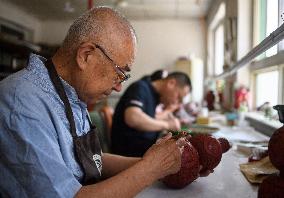
(240607) -- BEIJING, June 7, 2024 Photo by Xinhua/ABACAPRESS.COM) -- Zhu Qingyuan, father of Zhu Jiang, makes carved lacquer at Zhu Jiang's studio in Gu'an, north China's Hebei Province, May 30, 2024. Carved lacquer, dating back to the Tang Dynasty (618-907), greeted its peak time in Ming and Qing dynasties (1368-1911). Since the founding of the People's Republic of China in 1949, Beijing and Yangzhou have become the two centers for the craft of carved lacquer, which was listed as a national-level intangible cultural heritage in 2006. Carved lacquer differs in its colors, namely red, black or multiple colors. Its making procedures include designing, body shaping, lacquer making, coating, drawing, carving and grinding. The craftsman needs to smoothly use various kinds of knives to carve patterns on the ware, and even a little miss can destroy the whole artwork. The craft can only be grasped through three to five years of practice. Therefore, it is also called "the art of time." Born in 1976, Zhu Jiang, an inhe

  •  
(MASTER OF CRAFTS)CHINA-CARVED LACQUER-INHERITOR-STUDIO (CN)

(MASTER OF CRAFTS)CHINA-CARVED LACQUER-INHERITOR-STUDIO (CN)

(240607) -- BEIJING, June 7, 2024 Photo by Xinhua/ABACAPRESS.COM) -- Zhu Jiang (R) and his father Zhu Qingyuan discuss lacquer coating at Zhu Jiang's studio in Gu'an, north China's Hebei Province, May 30, 2024. Carved lacquer, dating back to the Tang Dynasty (618-907), greeted its peak time in Ming and Qing dynasties (1368-1911). Since the founding of the People's Republic of China in 1949, Beijing and Yangzhou have become the two centers for the craft of carved lacquer, which was listed as a national-level intangible cultural heritage in 2006. Carved lacquer differs in its colors, namely red, black or multiple colors. Its making procedures include designing, body shaping, lacquer making, coating, drawing, carving and grinding. The craftsman needs to smoothly use various kinds of knives to carve patterns on the ware, and even a little miss can destroy the whole artwork. The craft can only be grasped through three to five years of practice. Therefore, it is also called "the art of time." Born in 1976, Zhu Jian

  •  
(MASTER OF CRAFTS)CHINA-CARVED LACQUER-INHERITOR-STUDIO (CN)

(MASTER OF CRAFTS)CHINA-CARVED LACQUER-INHERITOR-STUDIO (CN)

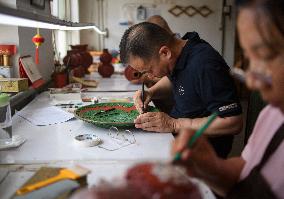
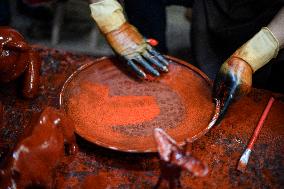
(240607) -- BEIJING, June 7, 2024 Photo by Xinhua/ABACAPRESS.COM) -- Zhu Jiang coats lacquer onto a plate at his studio in Gu'an, north China's Hebei Province, May 30, 2024. Carved lacquer, dating back to the Tang Dynasty (618-907), greeted its peak time in Ming and Qing dynasties (1368-1911). Since the founding of the People's Republic of China in 1949, Beijing and Yangzhou have become the two centers for the craft of carved lacquer, which was listed as a national-level intangible cultural heritage in 2006. Carved lacquer differs in its colors, namely red, black or multiple colors. Its making procedures include designing, body shaping, lacquer making, coating, drawing, carving and grinding. The craftsman needs to smoothly use various kinds of knives to carve patterns on the ware, and even a little miss can destroy the whole artwork. The craft can only be grasped through three to five years of practice. Therefore, it is also called "the art of time." Born in 1976, Zhu Jiang, an inheritor of the craft of carve

  •  
(MASTER OF CRAFTS)CHINA-CARVED LACQUER-INHERITOR-STUDIO (CN)

(MASTER OF CRAFTS)CHINA-CARVED LACQUER-INHERITOR-STUDIO (CN)

(240607) -- BEIJING, June 7, 2024 (Xinhua) -- Carved lacquer artworks are displayed at Zhu Jiang's studio in Gu'an, north China's Hebei Province, May 30, 2024. Carved lacquer, dating back to the Tang Dynasty (618-907), greeted its peak time in Ming and Qing dynasties (1368-1911). Since the founding of the People's Republic of China in 1949, Beijing and Yangzhou have become the two centers for the craft of carved lacquer, which was listed as a national-level intangible cultural heritage in 2006. Carved lacquer differs in its colors, namely red, black or multiple colors. Its making procedures include designing, body shaping, lacquer making, coating, drawing, carving and grinding. The craftsman needs to smoothly use various kinds of knives to carve patterns on the ware, and even a little miss can destroy the whole artwork. The craft can only be grasped through three to five years of practice. Therefore, it is also called "the art of time." Born in 1976, Zhu Jiang, an inheritor of the craft of carved lacque

  • Main
  • Top
  • Editorial
  • Creative
  • About Us
  • About ILG
  • Terms of use
  • Company
  • BEHIND
  • Price List
  • Single Plan
  • Monthly Plan
  • Services
  • Shooting
  • Rights Clearance
  • Support
  • FAQ
  • How To Buy
  • Contact Us
  • Become a Partner

© KYODO NEWS IMAGES INC

All Rights Reserved.

  • Editorial
  • Olympics
  • News
  • Sports
  • Japan
  • Tech
  • Royal
  • Disaster
  • NorthKorea
  • Old Japan
  • SNS
  • Creative
  • Food
  • Japan
  • Landscape
  • Animal
  • Popular
  • #Ukraine
  • #Russia
  • #coronavirus
  • #N. Korea
  • #Thailand
  • #China
  • #Ukraine
  • #Russia
  • #coronavirus
  • #N. Korea
  • #Thailand
  • #China
  • Food
  • Japan
  • Landscape
  • Animal
  • Olympics
  • News
  • Sports
  • Japan
  • Tech
  • Royal
  • Disaster
  • NorthKorea
  • Old Japan
  • SNS