•  
CHINA-HUBEI-JINGMEN-QUJIALING RELICS SITE (CN)

CHINA-HUBEI-JINGMEN-QUJIALING RELICS SITE (CN)

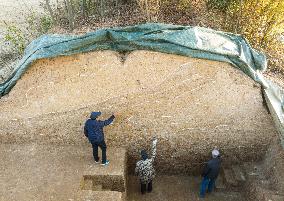
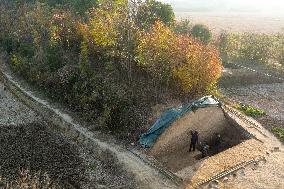
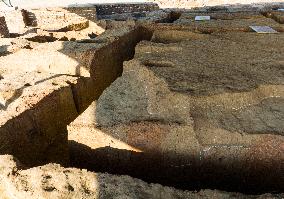
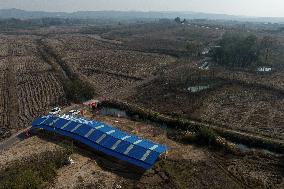
(240325) -- WUHAN, March 25, 2024 (Xinhua) -- A drone photo taken on Dec. 4, 2023 shows archaeologists working at the relics site of the Zhengfan Dam, part of the Qujialing relics site, in Jingmen, central China's Hubei Province. China released a list of the top 10 archaeological findings of 2023 on March 22, with the Qujialing relics site in central China's Hubei Province listed as one of them. The Qujialing relics site dates back between 5,900 and 4,200 years and is a major Neolithic relics site. In recent years, farmland irrigation and water conservancy structural ruins at the Qujialing relics site have been discovered. It is believed that the structures were used to combat drought, store water, dispense water for daily use and irrigate farmlands. That would mean that prehistoric humans shifted their relationship with water resources from passive defense to proactive control and utilization. (Xinhua/Xiao Yijiu)

  •  
CHINA-HUBEI-JINGMEN-QUJIALING RELICS SITE (CN)

CHINA-HUBEI-JINGMEN-QUJIALING RELICS SITE (CN)

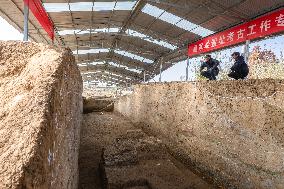
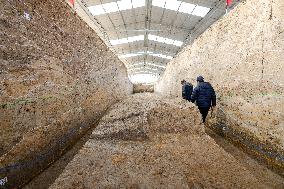
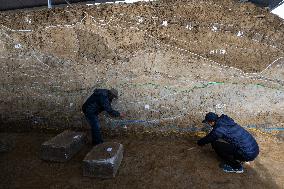
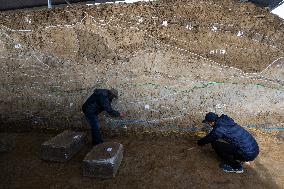
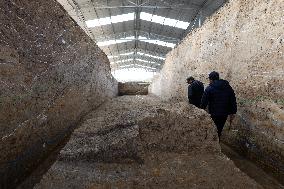
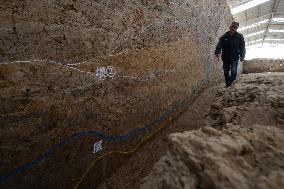
(240325) -- WUHAN, March 25, 2024 (Xinhua) -- This photo taken on Dec. 4, 2023 shows archaeologists working at the relics site of the Xiongjialing Dam, part of the Qujialing relics site, in Jingmen, central China's Hubei Province. China released a list of the top 10 archaeological findings of 2023 on March 22, with the Qujialing relics site in central China's Hubei Province listed as one of them. The Qujialing relics site dates back between 5,900 and 4,200 years and is a major Neolithic relics site. In recent years, farmland irrigation and water conservancy structural ruins at the Qujialing relics site have been discovered. It is believed that the structures were used to combat drought, store water, dispense water for daily use and irrigate farmlands. That would mean that prehistoric humans shifted their relationship with water resources from passive defense to proactive control and utilization. (Xinhua/Xiao Yijiu)

  •  
CHINA-HUBEI-JINGMEN-QUJIALING RELICS SITE (CN)

CHINA-HUBEI-JINGMEN-QUJIALING RELICS SITE (CN)

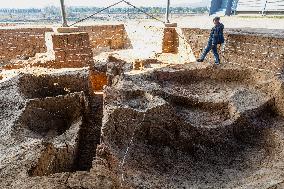
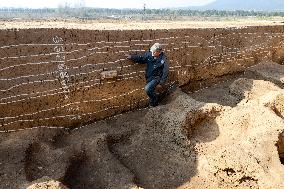
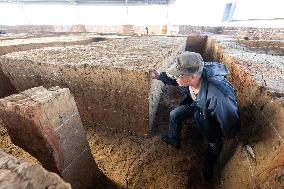
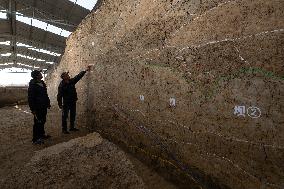
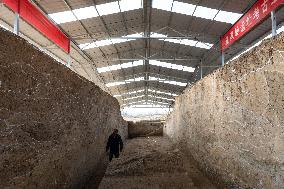
(240325) -- WUHAN, March 25, 2024 (Xinhua) -- This photo taken on Dec. 4, 2023 shows an archaeologist working at the F38 relics site of the Qujialing relics site in Jingmen, central China's Hubei Province. China released a list of the top 10 archaeological findings of 2023 on March 22, with the Qujialing relics site in central China's Hubei Province listed as one of them. The Qujialing relics site dates back between 5,900 and 4,200 years and is a major Neolithic relics site. In recent years, farmland irrigation and water conservancy structural ruins at the Qujialing relics site have been discovered. It is believed that the structures were used to combat drought, store water, dispense water for daily use and irrigate farmlands. That would mean that prehistoric humans shifted their relationship with water resources from passive defense to proactive control and utilization. (Xinhua/Xiao Yijiu)

  •  
CHINA-HUBEI-JINGMEN-QUJIALING RELICS SITE (CN)

CHINA-HUBEI-JINGMEN-QUJIALING RELICS SITE (CN)

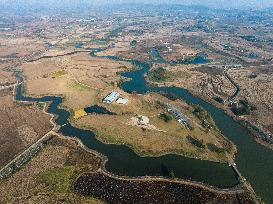
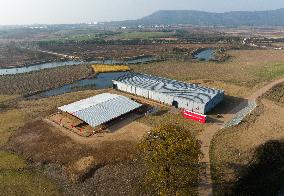
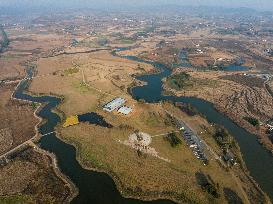
(240325) -- WUHAN, March 25, 2024 (Xinhua) -- An aerial drone photo taken on Dec. 4, 2023 shows a view of the Qujialing relics site in Jingmen, central China's Hubei Province. China released a list of the top 10 archaeological findings of 2023 on March 22, with the Qujialing relics site in central China's Hubei Province listed as one of them. The Qujialing relics site dates back between 5,900 and 4,200 years and is a major Neolithic relics site. In recent years, farmland irrigation and water conservancy structural ruins at the Qujialing relics site have been discovered. It is believed that the structures were used to combat drought, store water, dispense water for daily use and irrigate farmlands. That would mean that prehistoric humans shifted their relationship with water resources from passive defense to proactive control and utilization. (Xinhua/Xiao Yijiu)

  •  
CHINA-HUBEI-JINGMEN-QUJIALING RELICS SITE (CN)

CHINA-HUBEI-JINGMEN-QUJIALING RELICS SITE (CN)

(240325) -- WUHAN, March 25, 2024 (Xinhua) -- This photo taken on Dec. 4, 2023 shows archaeologists working at the relics site of the Xiongjialing Dam, part of the Qujialing relics site, in Jingmen, central China's Hubei Province. China released a list of the top 10 archaeological findings of 2023 on March 22, with the Qujialing relics site in central China's Hubei Province listed as one of them. The Qujialing relics site dates back between 5,900 and 4,200 years and is a major Neolithic relics site. In recent years, farmland irrigation and water conservancy structural ruins at the Qujialing relics site have been discovered. It is believed that the structures were used to combat drought, store water, dispense water for daily use and irrigate farmlands. That would mean that prehistoric humans shifted their relationship with water resources from passive defense to proactive control and utilization. (Xinhua/Xiao Yijiu)

  •  
CHINA-HUBEI-JINGMEN-QUJIALING RELICS SITE (CN)

CHINA-HUBEI-JINGMEN-QUJIALING RELICS SITE (CN)

(240325) -- WUHAN, March 25, 2024 (Xinhua) -- This photo taken on Dec. 4, 2023 shows an archaeologist working at the F38 relics site of the Qujialing relics site in Jingmen, central China's Hubei Province. China released a list of the top 10 archaeological findings of 2023 on March 22, with the Qujialing relics site in central China's Hubei Province listed as one of them. The Qujialing relics site dates back between 5,900 and 4,200 years and is a major Neolithic relics site. In recent years, farmland irrigation and water conservancy structural ruins at the Qujialing relics site have been discovered. It is believed that the structures were used to combat drought, store water, dispense water for daily use and irrigate farmlands. That would mean that prehistoric humans shifted their relationship with water resources from passive defense to proactive control and utilization. (Xinhua/Xiao Yijiu)

  •  
CHINA-HUBEI-JINGMEN-QUJIALING RELICS SITE (CN)

CHINA-HUBEI-JINGMEN-QUJIALING RELICS SITE (CN)

(240325) -- WUHAN, March 25, 2024 (Xinhua) -- An aerial drone photo taken on Dec. 4, 2023 shows archaeologists working at the relics site of the Zhengfan Dam, part of the Qujialing relics site, in Jingmen, central China's Hubei Province. China released a list of the top 10 archaeological findings of 2023 on March 22, with the Qujialing relics site in central China's Hubei Province listed as one of them. The Qujialing relics site dates back between 5,900 and 4,200 years and is a major Neolithic relics site. In recent years, farmland irrigation and water conservancy structural ruins at the Qujialing relics site have been discovered. It is believed that the structures were used to combat drought, store water, dispense water for daily use and irrigate farmlands. That would mean that prehistoric humans shifted their relationship with water resources from passive defense to proactive control and utilization. (Xinhua/Xiao Yijiu)

  •  
CHINA-HUBEI-JINGMEN-QUJIALING RELICS SITE (CN)

CHINA-HUBEI-JINGMEN-QUJIALING RELICS SITE (CN)

(240325) -- WUHAN, March 25, 2024 (Xinhua) -- A drone photo taken on Dec. 4, 2023 shows archaeologists working at the relics site of the Zhengfan Dam, part of the Qujialing relics site, in Jingmen, central China's Hubei Province. China released a list of the top 10 archaeological findings of 2023 on March 22, with the Qujialing relics site in central China's Hubei Province listed as one of them. The Qujialing relics site dates back between 5,900 and 4,200 years and is a major Neolithic relics site. In recent years, farmland irrigation and water conservancy structural ruins at the Qujialing relics site have been discovered. It is believed that the structures were used to combat drought, store water, dispense water for daily use and irrigate farmlands. That would mean that prehistoric humans shifted their relationship with water resources from passive defense to proactive control and utilization. (Xinhua/Xiao Yijiu)

  •  
CHINA-HUBEI-JINGMEN-QUJIALING RELICS SITE (CN)

CHINA-HUBEI-JINGMEN-QUJIALING RELICS SITE (CN)

(240325) -- WUHAN, March 25, 2024 (Xinhua) -- This photo taken on Dec. 4, 2023 shows archaeologists working at the relics site of the Xiongjialing Dam, part of the Qujialing relics site, in Jingmen, central China's Hubei Province. China released a list of the top 10 archaeological findings of 2023 on March 22, with the Qujialing relics site in central China's Hubei Province listed as one of them. The Qujialing relics site dates back between 5,900 and 4,200 years and is a major Neolithic relics site. In recent years, farmland irrigation and water conservancy structural ruins at the Qujialing relics site have been discovered. It is believed that the structures were used to combat drought, store water, dispense water for daily use and irrigate farmlands. That would mean that prehistoric humans shifted their relationship with water resources from passive defense to proactive control and utilization. (Xinhua/Xiao Yijiu)

  •  
CHINA-HUBEI-JINGMEN-QUJIALING RELICS SITE (CN)

CHINA-HUBEI-JINGMEN-QUJIALING RELICS SITE (CN)

(240325) -- WUHAN, March 25, 2024 (Xinhua) -- A drone photo taken on Dec. 4, 2023 shows a view of the F38 relics site of the Qujialing relics site in Jingmen, central China's Hubei Province. China released a list of the top 10 archaeological findings of 2023 on March 22, with the Qujialing relics site in central China's Hubei Province listed as one of them. The Qujialing relics site dates back between 5,900 and 4,200 years and is a major Neolithic relics site. In recent years, farmland irrigation and water conservancy structural ruins at the Qujialing relics site have been discovered. It is believed that the structures were used to combat drought, store water, dispense water for daily use and irrigate farmlands. That would mean that prehistoric humans shifted their relationship with water resources from passive defense to proactive control and utilization. (Xinhua/Xiao Yijiu)

  •  
CHINA-HUBEI-JINGMEN-QUJIALING RELICS SITE (CN)

CHINA-HUBEI-JINGMEN-QUJIALING RELICS SITE (CN)

(240325) -- WUHAN, March 25, 2024 (Xinhua) -- This photo taken on Dec. 4, 2023 shows an archaeologist working at the F38 relics site of the Qujialing relics site in Jingmen, central China's Hubei Province. China released a list of the top 10 archaeological findings of 2023 on March 22, with the Qujialing relics site in central China's Hubei Province listed as one of them. The Qujialing relics site dates back between 5,900 and 4,200 years and is a major Neolithic relics site. In recent years, farmland irrigation and water conservancy structural ruins at the Qujialing relics site have been discovered. It is believed that the structures were used to combat drought, store water, dispense water for daily use and irrigate farmlands. That would mean that prehistoric humans shifted their relationship with water resources from passive defense to proactive control and utilization. (Xinhua/Xiao Yijiu)

  •  
XINHUA PHOTOS OF THE DAY

XINHUA PHOTOS OF THE DAY

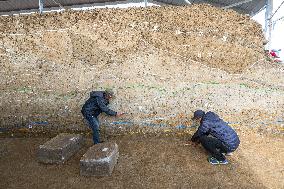
(231206) -- BEIJING, Dec. 6, 2023 (Xinhua) -- Archeologists work at the relics site of the Xiongjialing Dam in Jingmen, central China's Hubei Province, Dec. 4, 2023. The Xiongjialing Dam, which was initially built around 5,100 years ago, is part of the Qujialing relics site in the city of Jingmen, central China's Hubei Province. The dam, complete with a reservoir and spillway, has been identified as China's earliest known water conservancy project. The design of the dam suggests that ancient people in the area had learned to harness water based on the landform rather than simply implementing measures to defend themselves against floods, said He Nu, a researcher with the Institute of Archaeology, Chinese Academy of Social Sciences. (Xinhua/Xiao Yijiu)

  •  
CHINA-HUBEI-JINGMEN-QUJIALING RELICS SITE-ANCIENT DAM (CN)

CHINA-HUBEI-JINGMEN-QUJIALING RELICS SITE-ANCIENT DAM (CN)

(231205) -- JINGMEN, Dec. 5, 2023 (Xinhua) -- Archeologists work at the relics site of the Xiongjialing Dam in Jingmen, central China's Hubei Province, Dec. 4, 2023. The Xiongjialing Dam, which was initially built around 5,100 years ago, is part of the Qujialing relics site in the city of Jingmen, central China's Hubei Province. The dam, complete with a reservoir and spillway, has been identified as China's earliest known water conservancy project. The design of the dam suggests that ancient people in the area had learned to harness water based on the landform rather than simply implementing measures to defend themselves against floods, said He Nu, a researcher with the Institute of Archaeology, Chinese Academy of Social Sciences. (Xinhua/Xiao Yijiu)

  •  
CHINA-HUBEI-JINGMEN-QUJIALING RELICS SITE-ANCIENT DAM (CN)

CHINA-HUBEI-JINGMEN-QUJIALING RELICS SITE-ANCIENT DAM (CN)

(231205) -- JINGMEN, Dec. 5, 2023 (Xinhua) -- Archeologists work at the relics site of the Xiongjialing Dam in Jingmen, central China's Hubei Province, Dec. 4, 2023. The Xiongjialing Dam, which was initially built around 5,100 years ago, is part of the Qujialing relics site in the city of Jingmen, central China's Hubei Province. The dam, complete with a reservoir and spillway, has been identified as China's earliest known water conservancy project. The design of the dam suggests that ancient people in the area had learned to harness water based on the landform rather than simply implementing measures to defend themselves against floods, said He Nu, a researcher with the Institute of Archaeology, Chinese Academy of Social Sciences. (Xinhua/Xiao Yijiu)

  •  
CHINA-HUBEI-JINGMEN-QUJIALING RELICS SITE-ANCIENT DAM (CN)

CHINA-HUBEI-JINGMEN-QUJIALING RELICS SITE-ANCIENT DAM (CN)

(231205) -- JINGMEN, Dec. 5, 2023 (Xinhua) -- This photo taken on Dec. 5, 2023 shows a view of the Qujialing relics site in Jingmen, central China's Hubei Province. The Xiongjialing Dam, which was initially built around 5,100 years ago, is part of the Qujialing relics site in the city of Jingmen, central China's Hubei Province. The dam, complete with a reservoir and spillway, has been identified as China's earliest known water conservancy project. The design of the dam suggests that ancient people in the area had learned to harness water based on the landform rather than simply implementing measures to defend themselves against floods, said He Nu, a researcher with the Institute of Archaeology, Chinese Academy of Social Sciences. (Xinhua/Xiao Yijiu)

  •  
CHINA-HUBEI-JINGMEN-QUJIALING RELICS SITE-ANCIENT DAM (CN)

CHINA-HUBEI-JINGMEN-QUJIALING RELICS SITE-ANCIENT DAM (CN)

(231205) -- JINGMEN, Dec. 5, 2023 (Xinhua) -- This aerial photo taken on Dec. 4, 2023 shows the relics site of the Xiongjialing Dam in Jingmen, central China's Hubei Province. The Xiongjialing Dam, which was initially built around 5,100 years ago, is part of the Qujialing relics site in the city of Jingmen, central China's Hubei Province. The dam, complete with a reservoir and spillway, has been identified as China's earliest known water conservancy project. The design of the dam suggests that ancient people in the area had learned to harness water based on the landform rather than simply implementing measures to defend themselves against floods, said He Nu, a researcher with the Institute of Archaeology, Chinese Academy of Social Sciences. (Xinhua/Xiao Yijiu)

  •  
CHINA-HUBEI-JINGMEN-QUJIALING RELICS SITE-ANCIENT DAM (CN)

CHINA-HUBEI-JINGMEN-QUJIALING RELICS SITE-ANCIENT DAM (CN)

(231205) -- JINGMEN, Dec. 5, 2023 (Xinhua) -- Archeologists work at the relics site of the Xiongjialing Dam in Jingmen, central China's Hubei Province, Dec. 4, 2023. The Xiongjialing Dam, which was initially built around 5,100 years ago, is part of the Qujialing relics site in the city of Jingmen, central China's Hubei Province. The dam, complete with a reservoir and spillway, has been identified as China's earliest known water conservancy project. The design of the dam suggests that ancient people in the area had learned to harness water based on the landform rather than simply implementing measures to defend themselves against floods, said He Nu, a researcher with the Institute of Archaeology, Chinese Academy of Social Sciences. (Xinhua/Xiao Yijiu)

  •  
CHINA-HUBEI-JINGMEN-QUJIALING RELICS SITE-ANCIENT DAM (CN)

CHINA-HUBEI-JINGMEN-QUJIALING RELICS SITE-ANCIENT DAM (CN)

(231205) -- JINGMEN, Dec. 5, 2023 (Xinhua) -- An archeologist works at the relics site of the Xiongjialing Dam in Jingmen, central China's Hubei Province, Dec. 4, 2023. The Xiongjialing Dam, which was initially built around 5,100 years ago, is part of the Qujialing relics site in the city of Jingmen, central China's Hubei Province. The dam, complete with a reservoir and spillway, has been identified as China's earliest known water conservancy project. The design of the dam suggests that ancient people in the area had learned to harness water based on the landform rather than simply implementing measures to defend themselves against floods, said He Nu, a researcher with the Institute of Archaeology, Chinese Academy of Social Sciences. (Xinhua/Xiao Yijiu)

  •  
CHINA-HUBEI-JINGMEN-QUJIALING RELICS SITE-ANCIENT DAM (CN)

CHINA-HUBEI-JINGMEN-QUJIALING RELICS SITE-ANCIENT DAM (CN)

(231205) -- JINGMEN, Dec. 5, 2023 (Xinhua) -- An archeologist works at the relics site of the Xiongjialing Dam in Jingmen, central China's Hubei Province, Dec. 4, 2023. The Xiongjialing Dam, which was initially built around 5,100 years ago, is part of the Qujialing relics site in the city of Jingmen, central China's Hubei Province. The dam, complete with a reservoir and spillway, has been identified as China's earliest known water conservancy project. The design of the dam suggests that ancient people in the area had learned to harness water based on the landform rather than simply implementing measures to defend themselves against floods, said He Nu, a researcher with the Institute of Archaeology, Chinese Academy of Social Sciences. (Xinhua/Xiao Yijiu)

  •  
CHINA-HUBEI-JINGMEN-QUJIALING RELICS SITE-ANCIENT DAM (CN)

CHINA-HUBEI-JINGMEN-QUJIALING RELICS SITE-ANCIENT DAM (CN)

(231205) -- JINGMEN, Dec. 5, 2023 (Xinhua) -- This aerial photo taken on Dec. 4, 2023 shows a view of the Qujialing relics site in Jingmen, central China's Hubei Province. The Xiongjialing Dam, which was initially built around 5,100 years ago, is part of the Qujialing relics site in the city of Jingmen, central China's Hubei Province. The dam, complete with a reservoir and spillway, has been identified as China's earliest known water conservancy project. The design of the dam suggests that ancient people in the area had learned to harness water based on the landform rather than simply implementing measures to defend themselves against floods, said He Nu, a researcher with the Institute of Archaeology, Chinese Academy of Social Sciences. (Xinhua/Xiao Yijiu)

  •  
CHINA-HUBEI-JINGMEN-QUJIALING RELICS SITE-ANCIENT DAM (CN)

CHINA-HUBEI-JINGMEN-QUJIALING RELICS SITE-ANCIENT DAM (CN)

(231205) -- JINGMEN, Dec. 5, 2023 (Xinhua) -- This aerial photo taken on Dec. 4, 2023 shows a view of the Qujialing relics site in Jingmen, central China's Hubei Province. The Xiongjialing Dam, which was initially built around 5,100 years ago, is part of the Qujialing relics site in the city of Jingmen, central China's Hubei Province. The dam, complete with a reservoir and spillway, has been identified as China's earliest known water conservancy project. The design of the dam suggests that ancient people in the area had learned to harness water based on the landform rather than simply implementing measures to defend themselves against floods, said He Nu, a researcher with the Institute of Archaeology, Chinese Academy of Social Sciences. (Xinhua/Xiao Yijiu)

  • Main
  • Top
  • Editorial
  • Creative
  • About Us
  • About ILG
  • Terms of use
  • Company
  • BEHIND
  • Price List
  • Single Plan
  • Monthly Plan
  • Services
  • Shooting
  • Rights Clearance
  • Support
  • FAQ
  • How To Buy
  • Contact Us
  • Become a Partner

© KYODO NEWS IMAGES INC

All Rights Reserved.

  • Editorial
  • Olympics
  • News
  • Sports
  • Japan
  • Tech
  • Royal
  • Disaster
  • NorthKorea
  • Old Japan
  • SNS
  • Creative
  • Food
  • Japan
  • Landscape
  • Animal
  • Popular
  • #Ukraine
  • #Russia
  • #coronavirus
  • #N. Korea
  • #China
  • #Thailand
  • #Ukraine
  • #Russia
  • #coronavirus
  • #N. Korea
  • #China
  • #Thailand
  • Food
  • Japan
  • Landscape
  • Animal
  • Olympics
  • News
  • Sports
  • Japan
  • Tech
  • Royal
  • Disaster
  • NorthKorea
  • Old Japan
  • SNS