•  
Illustration - Art Deco - Paris

Illustration - Art Deco - Paris

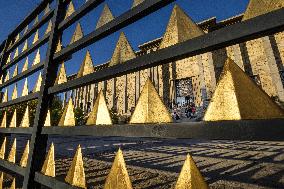
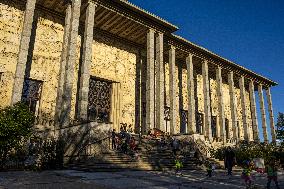
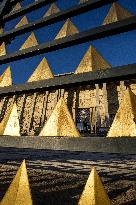
FRANCE. PARIS (75) (12TH DISTRICT). PORTE DOREE: THE PALAIS DE LA PORTE DOREE, DESIGNED BETWEEN 1928 AND 1931 BY THE ARCHITECT ALBERT LAPRADE. (BAS-RELIEFS OF THE FACADE BY THE SCULPTOR ALFRED JANNIOT). IN ART DECO STYLE, THE FORMER COLONIAL MUSEUM, BUILT FOR THE COLONIAL EXHIBITION OF 1931, NOW HOUSES THE NATIONAL MUSEUM OF THE HISTORY OF IMMIGRATION Photo by Jean-Francois Rollinger/Only Paris/ABACAPRESS.COM

  •  
Illustration - Art Deco - Paris

Illustration - Art Deco - Paris

FRANCE. PARIS (75) (12TH DISTRICT). PORTE DOREE: THE PALAIS DE LA PORTE DOREE, DESIGNED BETWEEN 1928 AND 1931 BY THE ARCHITECT ALBERT LAPRADE. (BAS-RELIEFS OF THE FACADE BY THE SCULPTOR ALFRED JANNIOT). IN ART DECO STYLE, THE FORMER COLONIAL MUSEUM, BUILT FOR THE COLONIAL EXHIBITION OF 1931, NOW HOUSES THE NATIONAL MUSEUM OF THE HISTORY OF IMMIGRATION Photo by Jean-Francois Rollinger/Only Paris/ABACAPRESS.COM

  •  
Illustration - Art Deco - Paris

Illustration - Art Deco - Paris

FRANCE. PARIS (75) (12TH DISTRICT). PORTE DOREE: THE PALAIS DE LA PORTE DOREE, DESIGNED BETWEEN 1928 AND 1931 BY THE ARCHITECT ALBERT LAPRADE. (BAS-RELIEFS OF THE FACADE BY THE SCULPTOR ALFRED JANNIOT). IN ART DECO STYLE, THE FORMER COLONIAL MUSEUM, BUILT FOR THE COLONIAL EXHIBITION OF 1931, NOW HOUSES THE NATIONAL MUSEUM OF THE HISTORY OF IMMIGRATION Photo by Jean-Francois Rollinger/Only Paris/ABACAPRESS.COM

  •  
Illustration - Reims

Illustration - Reims

FRANCE. MARNE (51) REIMS. ART DECO BUILDING LOCATED 2-6 PLACE D'ERLON ET 26-30 RUE CONDORCET. BAS-RELIEFS BY BERTON Photo by Pascal Stritt/Only France/ABACAPRESS.COM

  •  
Illustration Cinema Theatre

Illustration Cinema Theatre

FRANCE. PARIS (75) (8TH DISTRICT). THE THEATRE DES CHAMPS-ELYSEES (ART DECO STYLE), MONTAIGNE AVENUE. THE BAS-RELIEFS ON THE FACADE ARE THE WORK OF ANTOINE BOURDELLE Photo by Jean-Francois Rollinger/Only Paris/ABACAPRESS.COM

  •  
Illustration Cinema Theatre

Illustration Cinema Theatre

FRANCE. PARIS (75) (8TH DISTRICT). THE THEATRE DES CHAMPS-ELYSEES (ART DECO STYLE), MONTAIGNE AVENUE. THE BAS-RELIEFS ON THE FACADE ARE THE WORK OF ANTOINE BOURDELLE Photo by Jean-Francois Rollinger/Only Paris/ABACAPRESS.COM

  •  
Illustration Cinema Theatre

Illustration Cinema Theatre

FRANCE. PARIS (75) (8TH DISTRICT). THE THEATRE DES CHAMPS-ELYSEES (ART DECO STYLE), MONTAIGNE AVENUE. THE BAS-RELIEFS ON THE FACADE ARE THE WORK OF ANTOINE BOURDELLE Photo by Jean-Francois Rollinger/Only Paris/ABACAPRESS.COM

  •  
Illustration - Toulouse

Illustration - Toulouse

FRANCE . OCCITANIE. TOULOUSE. SAINT SERNIN BASILICA. BUILT FROM THE MIDDLE OF THE 11TH CENTURY TO HOUSE NUMEROUS RELICS, INCLUDING THAT OF SAINT SATURNIN, THE CURRENT CHURCH WAS CONSECRATED IN 1096 BY POPE URBAN II. ELEVATED TO THE RANK OF BASILICA IN 1878, IT WAS ONE OF THE MOST IMPORTANT CENTRES OF PILGRIMAGE IN THE MEDIEVAL WEST AND REMAINS THE LARGEST SURVIVING ROMANESQUE CHURCH IN EUROPE. HERE, THE CHOIR AISLE, WITH ITS FAMOUS BAS-RELIEFS. Photo by Stephane Compoint/Only France/ABACAPRESS.COM

  •  
Festival of Ukrainian winter folklore held in downtown Lviv

Festival of Ukrainian winter folklore held in downtown Lviv

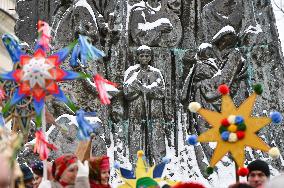
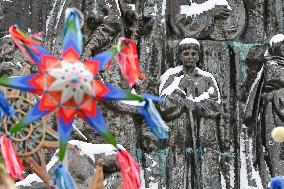
LVIV, UKRAINE - JANUARY 12, 2025 - Caroling stars are seen against the background of the 12-meter symbolic stele with bas-reliefs Wave of National Revival located to the left of the monument to Taras Shevchenko, where the regional festival of Ukrainian winter folklore New Joy Has Come. Rozkoliada takes place, Lviv, western Ukraine

  •  
Festival of Ukrainian winter folklore held in downtown Lviv

Festival of Ukrainian winter folklore held in downtown Lviv

LVIV, UKRAINE - JANUARY 12, 2025 - Caroling stars are seen against the background of the 12-meter symbolic stele with bas-reliefs Wave of National Revival located to the left of the monument to Taras Shevchenko, where the regional festival of Ukrainian winter folklore New Joy Has Come. Rozkoliada takes place, Lviv, western Ukraine

  •  
Historical Site Persepolis Takht-e Jamshid - Iran

Historical Site Persepolis Takht-e Jamshid - Iran

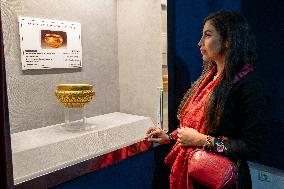
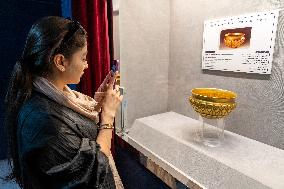
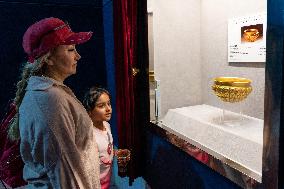
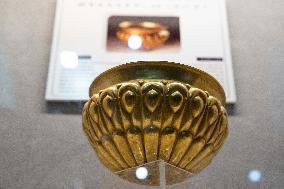
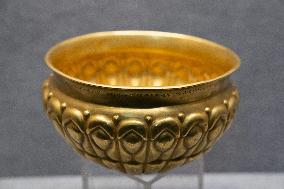
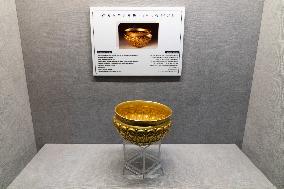
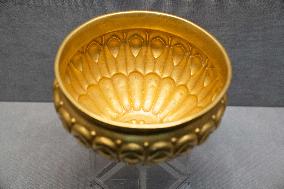
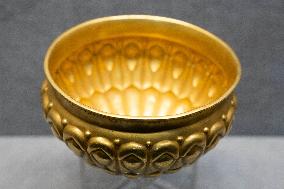
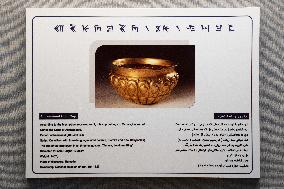
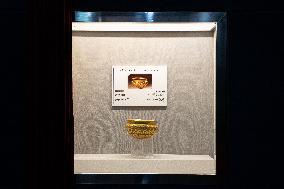
A woman takes a selfie next to the Golden Cup of  Xerxes, the king of the Persian Achaemenid Empire, put on display in the museum in the ruins of Persepolis or Takht-e Jamshid, a UNESCO World Heritage site near Shiraz, Iran, on May 18, 2024. Founded by Darius I in 518 B.C., Persepolis was the capital of the Achaemenid Empire. It was built on an immense half-artificial, half-natural terrace, where the king of kings created an impressive palace complex inspired by Mesopotamian models. Takht-e Jamshid in Persian and 'Persepolis' in Greek, this site has earned global recognition. The columns, column heads, inscriptions, reliefs, palaces, and gates in the Persepolis area are among the world's most celebrated works of civilization. As the Persepolis area is known, the' Land of Persia' draws tourists worldwide to Shiraz every year. a Photo by Moe/Middle East Images/ABACAPRESS.COM

  •  
Historical Site Persepolis Takht-e Jamshid - Iran

Historical Site Persepolis Takht-e Jamshid - Iran

A woman looks at the Golden Cup of  Xerxes, the king of the Persian Achaemenid Empire, put on display in the museum in the ruins of Persepolis or Takht-e Jamshid, a UNESCO World Heritage site near Shiraz, Iran, on May 18, 2024. Founded by Darius I in 518 B.C., Persepolis was the capital of the Achaemenid Empire. It was built on an immense half-artificial, half-natural terrace, where the king of kings created an impressive palace complex inspired by Mesopotamian models. Takht-e Jamshid in Persian and 'Persepolis' in Greek, this site has earned global recognition. The columns, column heads, inscriptions, reliefs, palaces, and gates in the Persepolis area are among the world's most celebrated works of civilization. As the Persepolis area is known, the' Land of Persia' draws tourists worldwide to Shiraz every year. Photo by Moe/Middle East Images/ABACAPRESS.COM

  •  
Historical Site Persepolis Takht-e Jamshid - Iran

Historical Site Persepolis Takht-e Jamshid - Iran

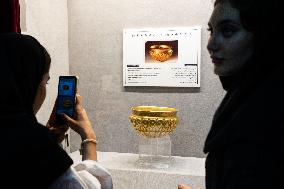
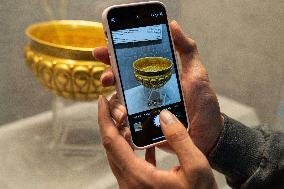
A visitor takes a photo of the Golden Cup of  Xerxes, the king of the Persian Achaemenid Empire, put on display in the museum in the ruins of Persepolis or Takht-e Jamshid, a UNESCO World Heritage site near Shiraz, Iran, on May 18, 2024. Founded by Darius I in 518 B.C., Persepolis was the capital of the Achaemenid Empire. It was built on an immense half-artificial, half-natural terrace, where the king of kings created an impressive palace complex inspired by Mesopotamian models. Takht-e Jamshid in Persian and 'Persepolis' in Greek, this site has earned global recognition. The columns, column heads, inscriptions, reliefs, palaces, and gates in the Persepolis area are among the world's most celebrated works of civilization. As the Persepolis area is known, the' Land of Persia' draws tourists worldwide to Shiraz every year. Photo by Moe/Middle East Images/ABACAPRESS.COM

  •  
Historical Site Persepolis Takht-e Jamshid - Iran

Historical Site Persepolis Takht-e Jamshid - Iran

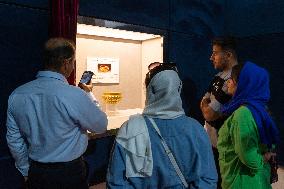
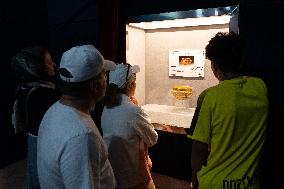
Visitors look at the Golden Cup of  Xerxes, the king of the Persian Achaemenid Empire, put on display in the museum in the ruins of Persepolis or Takht-e Jamshid, a UNESCO World Heritage site near Shiraz, Iran, on May 18, 2024. Founded by Darius I in 518 B.C., Persepolis was the capital of the Achaemenid Empire. It was built on an immense half-artificial, half-natural terrace, where the king of kings created an impressive palace complex inspired by Mesopotamian models. Takht-e Jamshid in Persian and 'Persepolis' in Greek, this site has earned global recognition. The columns, column heads, inscriptions, reliefs, palaces, and gates in the Persepolis area are among the world's most celebrated works of civilization. As the Persepolis area is known, the' Land of Persia' draws tourists worldwide to Shiraz every year. Photo by Moe/Middle East Images/ABACAPRESS.COM

  •  
Historical Site Persepolis Takht-e Jamshid - Iran

Historical Site Persepolis Takht-e Jamshid - Iran

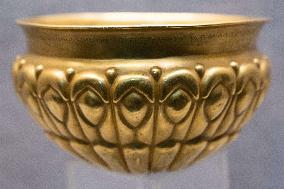
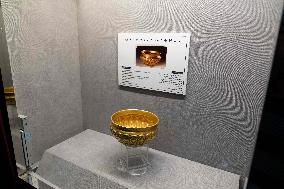
View of the Golden Cup of  Xerxes, the king of the Persian Achaemenid Empire, put on display in the museum in the ruins of Persepolis or Takht-e Jamshid, a UNESCO World Heritage site near Shiraz, Iran, on May 18, 2024. Founded by Darius I in 518 B.C., Persepolis was the capital of the Achaemenid Empire. It was built on an immense half-artificial, half-natural terrace, where the king of kings created an impressive palace complex inspired by Mesopotamian models. Takht-e Jamshid in Persian and 'Persepolis' in Greek, this site has earned global recognition. The columns, column heads, inscriptions, reliefs, palaces, and gates in the Persepolis area are among the world's most celebrated works of civilization. As the Persepolis area is known, the' Land of Persia' draws tourists worldwide to Shiraz every year. Photo by Moe/Middle East Images/ABACAPRESS.COM

  •  
Historical Site Persepolis Takht-e Jamshid - Iran

Historical Site Persepolis Takht-e Jamshid - Iran

A visitor takes a photo of the Golden Cup of  Xerxes, the king of the Persian Achaemenid Empire, put on display in the museum in the ruins of Persepolis or Takht-e Jamshid, a UNESCO World Heritage site near Shiraz, Iran, on May 18, 2024. Founded by Darius I in 518 B.C., Persepolis was the capital of the Achaemenid Empire. It was built on an immense half-artificial, half-natural terrace, where the king of kings created an impressive palace complex inspired by Mesopotamian models. Takht-e Jamshid in Persian and 'Persepolis' in Greek, this site has earned global recognition. The columns, column heads, inscriptions, reliefs, palaces, and gates in the Persepolis area are among the world's most celebrated works of civilization. As the Persepolis area is known, the' Land of Persia' draws tourists worldwide to Shiraz every year. Photo by Moe/Middle East Images/ABACAPRESS.COM

  •  
Historical Site Persepolis Takht-e Jamshid - Iran

Historical Site Persepolis Takht-e Jamshid - Iran

Visitors take a photo of the Golden Cup of  Xerxes, the king of the Persian Achaemenid Empire, put on display in the museum in the ruins of Persepolis or Takht-e Jamshid, a UNESCO World Heritage site near Shiraz, Iran, on May 18, 2024. Founded by Darius I in 518 B.C., Persepolis was the capital of the Achaemenid Empire. It was built on an immense half-artificial, half-natural terrace, where the king of kings created an impressive palace complex inspired by Mesopotamian models. Takht-e Jamshid in Persian and 'Persepolis' in Greek, this site has earned global recognition. The columns, column heads, inscriptions, reliefs, palaces, and gates in the Persepolis area are among the world's most celebrated works of civilization. As the Persepolis area is known, the' Land of Persia' draws tourists worldwide to Shiraz every year. Photo by Moe/Middle East Images/ABACAPRESS.COM

  •  
Historical Site Persepolis Takht-e Jamshid - Iran

Historical Site Persepolis Takht-e Jamshid - Iran

A woman takes a photo of the Golden Cup of  Xerxes, the king of the Persian Achaemenid Empire, put on display in the museum in the ruins of Persepolis or Takht-e Jamshid, a UNESCO World Heritage site near Shiraz, Iran, on May 18, 2024. Founded by Darius I in 518 B.C., Persepolis was the capital of the Achaemenid Empire. It was built on an immense half-artificial, half-natural terrace, where the king of kings created an impressive palace complex inspired by Mesopotamian models. Takht-e Jamshid in Persian and 'Persepolis' in Greek, this site has earned global recognition. The columns, column heads, inscriptions, reliefs, palaces, and gates in the Persepolis area are among the world's most celebrated works of civilization. As the Persepolis area is known, the' Land of Persia' draws tourists worldwide to Shiraz every year. Photo by Moe/Middle East Images/ABACAPRESS.COM

  •  
Historical Site Persepolis Takht-e Jamshid - Iran

Historical Site Persepolis Takht-e Jamshid - Iran

Visitors look at the Golden Cup of  Xerxes, the king of the Persian Achaemenid Empire, put on display in the museum in the ruins of Persepolis or Takht-e Jamshid, a UNESCO World Heritage site near Shiraz, Iran, on May 18, 2024. Founded by Darius I in 518 B.C., Persepolis was the capital of the Achaemenid Empire. It was built on an immense half-artificial, half-natural terrace, where the king of kings created an impressive palace complex inspired by Mesopotamian models. Takht-e Jamshid in Persian and 'Persepolis' in Greek, this site has earned global recognition. The columns, column heads, inscriptions, reliefs, palaces, and gates in the Persepolis area are among the world's most celebrated works of civilization. As the Persepolis area is known, the' Land of Persia' draws tourists worldwide to Shiraz every year. Photo by Moe/Middle East Images/ABACAPRESS.COM

  •  
Historical Site Persepolis Takht-e Jamshid - Iran

Historical Site Persepolis Takht-e Jamshid - Iran

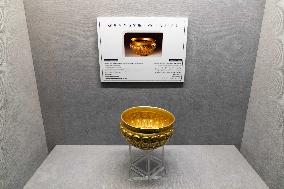
View of the Golden Cup of  Xerxes, the king of the Persian Achaemenid Empire, put on display in the museum in the ruins of Persepolis or Takht-e Jamshid, a UNESCO World Heritage site near Shiraz, Iran, on May 18, 2024. Founded by Darius I in 518 B.C., Persepolis was the capital of the Achaemenid Empire. It was built on an immense half-artificial, half-natural terrace, where the king of kings created an impressive palace complex inspired by Mesopotamian models. Takht-e Jamshid in Persian and 'Persepolis' in Greek, this site has earned global recognition. The columns, column heads, inscriptions, reliefs, palaces, and gates in the Persepolis area are among the world's most celebrated works of civilization. As the Persepolis area is known, the' Land of Persia' draws tourists worldwide to Shiraz every year. Photo by Moe/Middle East Images/ABACAPRESS.COM

  •  
Historical Site Persepolis Takht-e Jamshid - Iran

Historical Site Persepolis Takht-e Jamshid - Iran

Visitors look at the Golden Cup of  Xerxes, the king of the Persian Achaemenid Empire, put on display in the museum in the ruins of Persepolis or Takht-e Jamshid, a UNESCO World Heritage site near Shiraz, Iran, on May 18, 2024. Founded by Darius I in 518 B.C., Persepolis was the capital of the Achaemenid Empire. It was built on an immense half-artificial, half-natural terrace, where the king of kings created an impressive palace complex inspired by Mesopotamian models. Takht-e Jamshid in Persian and 'Persepolis' in Greek, this site has earned global recognition. The columns, column heads, inscriptions, reliefs, palaces, and gates in the Persepolis area are among the world's most celebrated works of civilization. As the Persepolis area is known, the' Land of Persia' draws tourists worldwide to Shiraz every year. Photo by Moe/Middle East Images/ABACAPRESS.COM

  •  
Historical Site Persepolis Takht-e Jamshid - Iran

Historical Site Persepolis Takht-e Jamshid - Iran

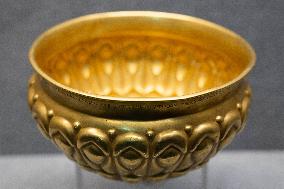
View of the Golden Cup of  Xerxes, the king of the Persian Achaemenid Empire, put on display in the museum in the ruins of Persepolis or Takht-e Jamshid, a UNESCO World Heritage site near Shiraz, Iran, on May 18, 2024. Founded by Darius I in 518 B.C., Persepolis was the capital of the Achaemenid Empire. It was built on an immense half-artificial, half-natural terrace, where the king of kings created an impressive palace complex inspired by Mesopotamian models. Takht-e Jamshid in Persian and 'Persepolis' in Greek, this site has earned global recognition. The columns, column heads, inscriptions, reliefs, palaces, and gates in the Persepolis area are among the world's most celebrated works of civilization. As the Persepolis area is known, the' Land of Persia' draws tourists worldwide to Shiraz every year. Photo by Moe/Middle East Images/ABACAPRESS.COM

  •  
Historical Site Persepolis Takht-e Jamshid - Iran

Historical Site Persepolis Takht-e Jamshid - Iran

View of the Golden Cup of  Xerxes, the king of the Persian Achaemenid Empire, put on display in the museum in the ruins of Persepolis or Takht-e Jamshid, a UNESCO World Heritage site near Shiraz, Iran, on May 18, 2024. Founded by Darius I in 518 B.C., Persepolis was the capital of the Achaemenid Empire. It was built on an immense half-artificial, half-natural terrace, where the king of kings created an impressive palace complex inspired by Mesopotamian models. Takht-e Jamshid in Persian and 'Persepolis' in Greek, this site has earned global recognition. The columns, column heads, inscriptions, reliefs, palaces, and gates in the Persepolis area are among the world's most celebrated works of civilization. As the Persepolis area is known, the' Land of Persia' draws tourists worldwide to Shiraz every year. Photo by Moe/Middle East Images/ABACAPRESS.COM

  •  
Historical Site Persepolis Takht-e Jamshid - Iran

Historical Site Persepolis Takht-e Jamshid - Iran

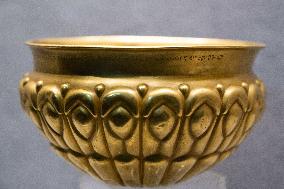
View of the Golden Cup of  Xerxes, the king of the Persian Achaemenid Empire, put on display in the museum in the ruins of Persepolis or Takht-e Jamshid, a UNESCO World Heritage site near Shiraz, Iran, on May 18, 2024. Founded by Darius I in 518 B.C., Persepolis was the capital of the Achaemenid Empire. It was built on an immense half-artificial, half-natural terrace, where the king of kings created an impressive palace complex inspired by Mesopotamian models. Takht-e Jamshid in Persian and 'Persepolis' in Greek, this site has earned global recognition. The columns, column heads, inscriptions, reliefs, palaces, and gates in the Persepolis area are among the world's most celebrated works of civilization. As the Persepolis area is known, the' Land of Persia' draws tourists worldwide to Shiraz every year. Photo by Moe/Middle East Images/ABACAPRESS.COM

  •  
Historical Site Persepolis Takht-e Jamshid - Iran

Historical Site Persepolis Takht-e Jamshid - Iran

View of the Golden Cup of  Xerxes, the king of the Persian Achaemenid Empire, put on display in the museum in the ruins of Persepolis or Takht-e Jamshid, a UNESCO World Heritage site near Shiraz, Iran, on May 18, 2024. Founded by Darius I in 518 B.C., Persepolis was the capital of the Achaemenid Empire. It was built on an immense half-artificial, half-natural terrace, where the king of kings created an impressive palace complex inspired by Mesopotamian models. Takht-e Jamshid in Persian and 'Persepolis' in Greek, this site has earned global recognition. The columns, column heads, inscriptions, reliefs, palaces, and gates in the Persepolis area are among the world's most celebrated works of civilization. As the Persepolis area is known, the' Land of Persia' draws tourists worldwide to Shiraz every year. Photo by Moe/Middle East Images/ABACAPRESS.COM

  •  
Historical Site Persepolis Takht-e Jamshid - Iran

Historical Site Persepolis Takht-e Jamshid - Iran

View of the Golden Cup of  Xerxes, the king of the Persian Achaemenid Empire, put on display in the museum in the ruins of Persepolis or Takht-e Jamshid, a UNESCO World Heritage site near Shiraz, Iran, on May 18, 2024. Founded by Darius I in 518 B.C., Persepolis was the capital of the Achaemenid Empire. It was built on an immense half-artificial, half-natural terrace, where the king of kings created an impressive palace complex inspired by Mesopotamian models. Takht-e Jamshid in Persian and 'Persepolis' in Greek, this site has earned global recognition. The columns, column heads, inscriptions, reliefs, palaces, and gates in the Persepolis area are among the world's most celebrated works of civilization. As the Persepolis area is known, the' Land of Persia' draws tourists worldwide to Shiraz every year. Photo by Moe/Middle East Images/ABACAPRESS.COM

  •  
Historical Site Persepolis Takht-e Jamshid - Iran

Historical Site Persepolis Takht-e Jamshid - Iran

View of the Golden Cup of  Xerxes, the king of the Persian Achaemenid Empire, put on display in the museum in the ruins of Persepolis or Takht-e Jamshid, a UNESCO World Heritage site near Shiraz, Iran, on May 18, 2024. Founded by Darius I in 518 B.C., Persepolis was the capital of the Achaemenid Empire. It was built on an immense half-artificial, half-natural terrace, where the king of kings created an impressive palace complex inspired by Mesopotamian models. Takht-e Jamshid in Persian and 'Persepolis' in Greek, this site has earned global recognition. The columns, column heads, inscriptions, reliefs, palaces, and gates in the Persepolis area are among the world's most celebrated works of civilization. As the Persepolis area is known, the' Land of Persia' draws tourists worldwide to Shiraz every year. Photo by Moe/Middle East Images/ABACAPRESS.COM

  •  
Historical Site Persepolis Takht-e Jamshid - Iran

Historical Site Persepolis Takht-e Jamshid - Iran

View of the Golden Cup of  Xerxes, the king of the Persian Achaemenid Empire, put on display in the museum in the ruins of Persepolis or Takht-e Jamshid, a UNESCO World Heritage site near Shiraz, Iran, on May 18, 2024. Founded by Darius I in 518 B.C., Persepolis was the capital of the Achaemenid Empire. It was built on an immense half-artificial, half-natural terrace, where the king of kings created an impressive palace complex inspired by Mesopotamian models. Takht-e Jamshid in Persian and 'Persepolis' in Greek, this site has earned global recognition. The columns, column heads, inscriptions, reliefs, palaces, and gates in the Persepolis area are among the world's most celebrated works of civilization. As the Persepolis area is known, the' Land of Persia' draws tourists worldwide to Shiraz every year. Photo by Moe/Middle East Images/ABACAPRESS.COM

  •  
Historical Site Persepolis Takht-e Jamshid - Iran

Historical Site Persepolis Takht-e Jamshid - Iran

View of the Golden Cup of  Xerxes, the king of the Persian Achaemenid Empire, put on display in the museum in the ruins of Persepolis or Takht-e Jamshid, a UNESCO World Heritage site near Shiraz, Iran, on May 18, 2024. Founded by Darius I in 518 B.C., Persepolis was the capital of the Achaemenid Empire. It was built on an immense half-artificial, half-natural terrace, where the king of kings created an impressive palace complex inspired by Mesopotamian models. Takht-e Jamshid in Persian and 'Persepolis' in Greek, this site has earned global recognition. The columns, column heads, inscriptions, reliefs, palaces, and gates in the Persepolis area are among the world's most celebrated works of civilization. As the Persepolis area is known, the' Land of Persia' draws tourists worldwide to Shiraz every year. Photo by Moe/Middle East Images/ABACAPRESS.COM

  •  
Historical Site Persepolis Takht-e Jamshid - Iran

Historical Site Persepolis Takht-e Jamshid - Iran

View of the Golden Cup of  Xerxes, the king of the Persian Achaemenid Empire, put on display in the museum in the ruins of Persepolis or Takht-e Jamshid, a UNESCO World Heritage site near Shiraz, Iran, on May 18, 2024. Founded by Darius I in 518 B.C., Persepolis was the capital of the Achaemenid Empire. It was built on an immense half-artificial, half-natural terrace, where the king of kings created an impressive palace complex inspired by Mesopotamian models. Takht-e Jamshid in Persian and 'Persepolis' in Greek, this site has earned global recognition. The columns, column heads, inscriptions, reliefs, palaces, and gates in the Persepolis area are among the world's most celebrated works of civilization. As the Persepolis area is known, the' Land of Persia' draws tourists worldwide to Shiraz every year. Photo by Moe/Middle East Images/ABACAPRESS.COM

  •  
Historical Site Persepolis Takht-e Jamshid - Iran

Historical Site Persepolis Takht-e Jamshid - Iran

View of the Golden Cup of  Xerxes, the king of the Persian Achaemenid Empire, put on display in the museum in the ruins of Persepolis or Takht-e Jamshid, a UNESCO World Heritage site near Shiraz, Iran, on May 18, 2024. Founded by Darius I in 518 B.C., Persepolis was the capital of the Achaemenid Empire. It was built on an immense half-artificial, half-natural terrace, where the king of kings created an impressive palace complex inspired by Mesopotamian models. Takht-e Jamshid in Persian and 'Persepolis' in Greek, this site has earned global recognition. The columns, column heads, inscriptions, reliefs, palaces, and gates in the Persepolis area are among the world's most celebrated works of civilization. As the Persepolis area is known, the' Land of Persia' draws tourists worldwide to Shiraz every year. Photo by Moe/Middle East Images/ABACAPRESS.COM

  •  
Historical Site Persepolis Takht-e Jamshid - Iran

Historical Site Persepolis Takht-e Jamshid - Iran

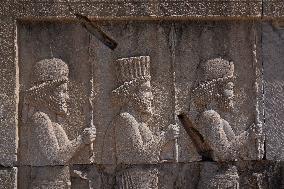
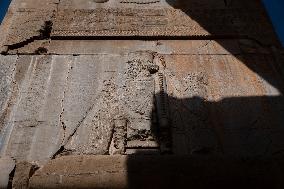
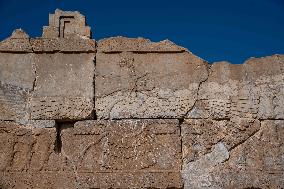
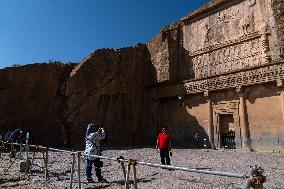
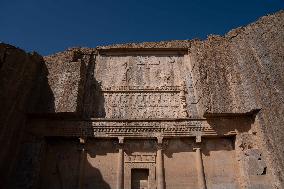
View of Bas-relief depicting Persian guards in the ruins of Persepolis or Takht-e Jamshid, a UNESCO World Heritage site near Shiraz, Iran, on May 18, 2024. Founded by Darius I in 518 B.C., Persepolis was the capital of the Achaemenid Empire. It was built on an immense half-artificial, half-natural terrace, where the king of kings created an impressive palace complex inspired by Mesopotamian models. Takht-e Jamshid in Persian and 'Persepolis' in Greek, this site has earned global recognition. The columns, column heads, inscriptions, reliefs, palaces, and gates that remain in the Persepolis area are among the world's most celebrated works of civilization. As the Persepolis area is known, the' Land of Persia' draws tourists worldwide to Shiraz every year. Photo by Moe/Middle East Images/ABACAPRESS.COM

  •  
Historical Site Persepolis Takht-e Jamshid - Iran

Historical Site Persepolis Takht-e Jamshid - Iran

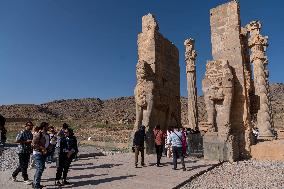
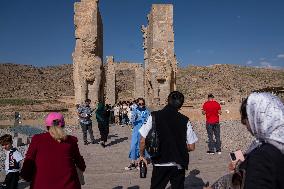
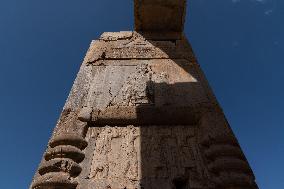
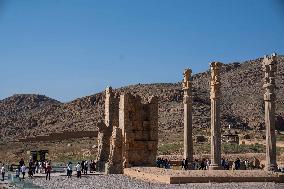
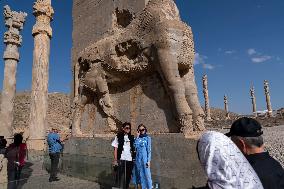
Visitors walk by the Gate of All Nations in the ruins of Persepolis or Takht-e Jamshid, a UNESCO World Heritage site near Shiraz, Iran, on May 18, 2024. Founded by Darius I in 518 B.C., Persepolis was the capital of the Achaemenid Empire. It was built on an immense half-artificial, half-natural terrace, where the king of kings created an impressive palace complex inspired by Mesopotamian models. Takht-e Jamshid in Persian and 'Persepolis' in Greek, this site has earned global recognition. The columns, column heads, inscriptions, reliefs, palaces, and gates that remain in the Persepolis area are among the world's most celebrated works of civilization. As the Persepolis area is known, the' Land of Persia' draws tourists worldwide to Shiraz every year. Photo by Moe/Middle East Images/ABACAPRESS.COM

  •  
Historical Site Persepolis Takht-e Jamshid - Iran

Historical Site Persepolis Takht-e Jamshid - Iran

Visitors walk by the Gate of All Nations in the ruins of Persepolis or Takht-e Jamshid, a UNESCO World Heritage site near Shiraz, Iran, on May 18, 2024. Founded by Darius I in 518 B.C., Persepolis was the capital of the Achaemenid Empire. It was built on an immense half-artificial, half-natural terrace, where the king of kings created an impressive palace complex inspired by Mesopotamian models. Takht-e Jamshid in Persian and 'Persepolis' in Greek, this site has earned global recognition. The columns, column heads, inscriptions, reliefs, palaces, and gates that remain in the Persepolis area are among the world's most celebrated works of civilization. As the Persepolis area is known, the' Land of Persia' draws tourists worldwide to Shiraz every year. Photo by Moe/Middle East Images/ABACAPRESS.COM

  •  
Historical Site Persepolis Takht-e Jamshid - Iran

Historical Site Persepolis Takht-e Jamshid - Iran

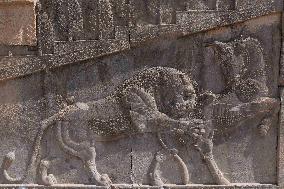
View of Bas-relief in the ruins of Persepolis or Takht-e Jamshid, a UNESCO World Heritage site near Shiraz, Iran, on May 18, 2024. Founded by Darius I in 518 B.C., Persepolis was the capital of the Achaemenid Empire. It was built on an immense half-artificial, half-natural terrace, where the king of kings created an impressive palace complex inspired by Mesopotamian models. Takht-e Jamshid in Persian and 'Persepolis' in Greek, this site has earned global recognition. The columns, column heads, inscriptions, reliefs, palaces, and gates that remain in the Persepolis area are among the world's most celebrated works of civilization. As the Persepolis area is known, the' Land of Persia' draws tourists worldwide to Shiraz every year. Photo by Moe/Middle East Images/ABACAPRESS.COM

  •  
Historical Site Persepolis Takht-e Jamshid - Iran

Historical Site Persepolis Takht-e Jamshid - Iran

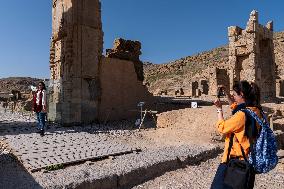
Visitors stand for a photo by the Gate of All Nations in the ruins of Persepolis or Takht-e Jamshid, a UNESCO World Heritage site near Shiraz, Iran, on May 18, 2024. Founded by Darius I in 518 B.C., Persepolis was the capital of the Achaemenid Empire. It was built on an immense half-artificial, half-natural terrace, where the king of kings created an impressive palace complex inspired by Mesopotamian models. Takht-e Jamshid in Persian and 'Persepolis' in Greek, this site has earned global recognition. The columns, column heads, inscriptions, reliefs, palaces, and gates that remain in the Persepolis area are among the world's most celebrated works of civilization. As the Persepolis area is known, the' Land of Persia' draws tourists worldwide to Shiraz every year. Photo by Moe/Middle East Images/ABACAPRESS.COM

  •  
Historical Site Persepolis Takht-e Jamshid - Iran

Historical Site Persepolis Takht-e Jamshid - Iran

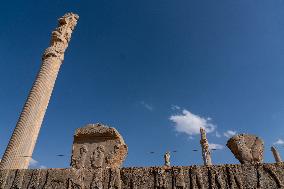
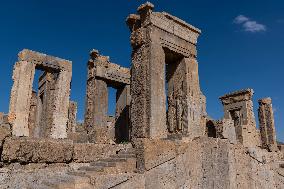
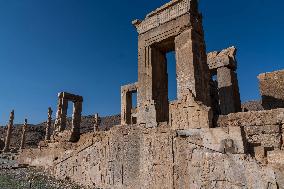
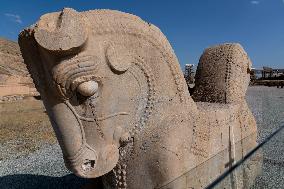
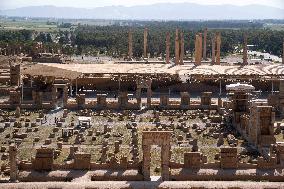
View of the Persepolis or Takht-e Jamshid ruins, a UNESCO World Heritage site near Shiraz, Iran, on May 18, 2024. Founded by Darius I in 518 B.C., Persepolis was the capital of the Achaemenid Empire. It was built on an immense half-artificial, half-natural terrace, where the king of kings created an impressive palace complex inspired by Mesopotamian models. Takht-e Jamshid in Persian and 'Persepolis' in Greek, this site has earned global recognition. The columns, column heads, inscriptions, reliefs, palaces, and gates in the Persepolis area are among the world's most celebrated works of civilization. As the Persepolis area is known, the' Land of Persia' draws tourists worldwide to Shiraz every year. Photo by Moe/Middle East Images/ABACAPRESS.COM

  •  
Historical Site Persepolis Takht-e Jamshid - Iran

Historical Site Persepolis Takht-e Jamshid - Iran

View of the Persepolis or Takht-e Jamshid ruins, a UNESCO World Heritage site near Shiraz, Iran, on May 18, 2024. Founded by Darius I in 518 B.C., Persepolis was the capital of the Achaemenid Empire. It was built on an immense half-artificial, half-natural terrace, where the king of kings created an impressive palace complex inspired by Mesopotamian models. Takht-e Jamshid in Persian and 'Persepolis' in Greek, this site has earned global recognition. The columns, column heads, inscriptions, reliefs, palaces, and gates in the Persepolis area are among the world's most celebrated works of civilization. As the Persepolis area is known, the' Land of Persia' draws tourists worldwide to Shiraz every year. Photo by Moe/Middle East Images/ABACAPRESS.COM

  •  
Historical Site Persepolis Takht-e Jamshid - Iran

Historical Site Persepolis Takht-e Jamshid - Iran

View of the Persepolis or Takht-e Jamshid ruins, a UNESCO World Heritage site near Shiraz, Iran, on May 18, 2024. Founded by Darius I in 518 B.C., Persepolis was the capital of the Achaemenid Empire. It was built on an immense half-artificial, half-natural terrace, where the king of kings created an impressive palace complex inspired by Mesopotamian models. Takht-e Jamshid in Persian and 'Persepolis' in Greek, this site has earned global recognition. The columns, column heads, inscriptions, reliefs, palaces, and gates in the Persepolis area are among the world's most celebrated works of civilization. As the Persepolis area is known, the' Land of Persia' draws tourists worldwide to Shiraz every year. Photo by Moe/Middle East Images/ABACAPRESS.COM

  •  
Historical Site Persepolis Takht-e Jamshid - Iran

Historical Site Persepolis Takht-e Jamshid - Iran

View of the Persepolis or Takht-e Jamshid ruins, a UNESCO World Heritage site near Shiraz, Iran, on May 18, 2024. Founded by Darius I in 518 B.C., Persepolis was the capital of the Achaemenid Empire. It was built on an immense half-artificial, half-natural terrace, where the king of kings created an impressive palace complex inspired by Mesopotamian models. Takht-e Jamshid in Persian and 'Persepolis' in Greek, this site has earned global recognition. The columns, column heads, inscriptions, reliefs, palaces, and gates in the Persepolis area are among the world's most celebrated works of civilization. As the Persepolis area is known, the' Land of Persia' draws tourists worldwide to Shiraz every year. Photo by Moe/Middle East Images/ABACAPRESS.COM

  •  
Historical Site Persepolis Takht-e Jamshid - Iran

Historical Site Persepolis Takht-e Jamshid - Iran

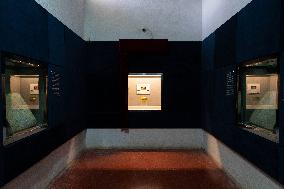
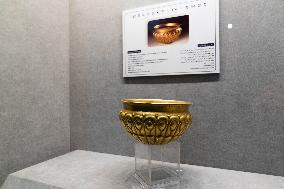
View of the description of the Golden Cup of  Xerxes, the king of the Persian Achaemenid Empire, put on display in the museum in the ruins of Persepolis or Takht-e Jamshid, a UNESCO World Heritage site near Shiraz, Iran, on May 18, 2024. Founded by Darius I in 518 B.C., Persepolis was the capital of the Achaemenid Empire. It was built on an immense half-artificial, half-natural terrace, where the king of kings created an impressive palace complex inspired by Mesopotamian models. Takht-e Jamshid in Persian and 'Persepolis' in Greek, this site has earned global recognition. The columns, column heads, inscriptions, reliefs, palaces, and gates in the Persepolis area are among the world's most celebrated works of civilization. As the Persepolis area is known, the' Land of Persia' draws tourists worldwide to Shiraz every year. Photo by Moe/Middle East Images/ABACAPRESS.COM

  •  
Historical Site Persepolis Takht-e Jamshid - Iran

Historical Site Persepolis Takht-e Jamshid - Iran

View of the Persepolis or Takht-e Jamshid ruins, a UNESCO World Heritage site near Shiraz, Iran, on May 18, 2024. Founded by Darius I in 518 B.C., Persepolis was the capital of the Achaemenid Empire. It was built on an immense half-artificial, half-natural terrace, where the king of kings created an impressive palace complex inspired by Mesopotamian models. Takht-e Jamshid in Persian and 'Persepolis' in Greek, this site has earned global recognition. The columns, column heads, inscriptions, reliefs, palaces, and gates in the Persepolis area are among the world's most celebrated works of civilization. As the Persepolis area is known, the' Land of Persia' draws tourists worldwide to Shiraz every year. Photo by Moe/Middle East Images/ABACAPRESS.COM

  •  
Historical Site Persepolis Takht-e Jamshid - Iran

Historical Site Persepolis Takht-e Jamshid - Iran

View of the Persepolis or Takht-e Jamshid ruins, a UNESCO World Heritage site near Shiraz, Iran, on May 18, 2024. Founded by Darius I in 518 B.C., Persepolis was the capital of the Achaemenid Empire. It was built on an immense half-artificial, half-natural terrace, where the king of kings created an impressive palace complex inspired by Mesopotamian models. Takht-e Jamshid in Persian and 'Persepolis' in Greek, this site has earned global recognition. The columns, column heads, inscriptions, reliefs, palaces, and gates in the Persepolis area are among the world's most celebrated works of civilization. As the Persepolis area is known, the' Land of Persia' draws tourists worldwide to Shiraz every year. Photo by Moe/Middle East Images/ABACAPRESS.COM

  •  
Historical Site Persepolis Takht-e Jamshid - Iran

Historical Site Persepolis Takht-e Jamshid - Iran

View of the Persepolis or Takht-e Jamshid ruins, a UNESCO World Heritage site near Shiraz, Iran, on May 18, 2024. Founded by Darius I in 518 B.C., Persepolis was the capital of the Achaemenid Empire. It was built on an immense half-artificial, half-natural terrace, where the king of kings created an impressive palace complex inspired by Mesopotamian models. Takht-e Jamshid in Persian and 'Persepolis' in Greek, this site has earned global recognition. The columns, column heads, inscriptions, reliefs, palaces, and gates in the Persepolis area are among the world's most celebrated works of civilization. As the Persepolis area is known, the' Land of Persia' draws tourists worldwide to Shiraz every year. Photo by Moe/Middle East Images/ABACAPRESS.COM

  •  
Historical Site Persepolis Takht-e Jamshid - Iran

Historical Site Persepolis Takht-e Jamshid - Iran

View of the Golden Cup of  Xerxes, the king of the Persian Achaemenid Empire, put on display in the museum in the ruins of Persepolis or Takht-e Jamshid, a UNESCO World Heritage site near Shiraz, Iran, on May 18, 2024. Founded by Darius I in 518 B.C., Persepolis was the capital of the Achaemenid Empire. It was built on an immense half-artificial, half-natural terrace, where the king of kings created an impressive palace complex inspired by Mesopotamian models. Takht-e Jamshid in Persian and 'Persepolis' in Greek, this site has earned global recognition. The columns, column heads, inscriptions, reliefs, palaces, and gates in the Persepolis area are among the world's most celebrated works of civilization. As the Persepolis area is known, the' Land of Persia' draws tourists worldwide to Shiraz every year. Photo by Moe/Middle East Images/ABACAPRESS.COM

  •  
Historical Site Persepolis Takht-e Jamshid - Iran

Historical Site Persepolis Takht-e Jamshid - Iran

Visitors walk by the Gate of All Nations in the ruins of Persepolis or Takht-e Jamshid, a UNESCO World Heritage site near Shiraz, Iran, on May 18, 2024. Founded by Darius I in 518 B.C., Persepolis was the capital of the Achaemenid Empire. It was built on an immense half-artificial, half-natural terrace, where the king of kings created an impressive palace complex inspired by Mesopotamian models. Takht-e Jamshid in Persian and 'Persepolis' in Greek, this site has earned global recognition. The columns, column heads, inscriptions, reliefs, palaces, and gates that remain in the Persepolis area are among the world's most celebrated works of civilization. As the Persepolis area is known, the' Land of Persia' draws tourists worldwide to Shiraz every year. Photo by Moe/Middle East Images/ABACAPRESS.COM

  •  
Historical Site Persepolis Takht-e Jamshid - Iran

Historical Site Persepolis Takht-e Jamshid - Iran

Visitors take a photo in the Persepolis or Takht-e Jamshid ruins, a UNESCO World Heritage site near Shiraz, Iran, on May 18, 2024. Founded by Darius I in 518 B.C., Persepolis was the capital of the Achaemenid Empire. It was built on an immense half-artificial, half-natural terrace, where the king of kings created an impressive palace complex inspired by Mesopotamian models. Takht-e Jamshid in Persian and 'Persepolis' in Greek, this site has earned global recognition. The columns, column heads, inscriptions, reliefs, palaces, and gates in the Persepolis area are among the world's most celebrated works of civilization. As the Persepolis area is known, the' Land of Persia' draws tourists worldwide to Shiraz every year. Photo by Moe/Middle East Images/ABACAPRESS.COM

  •  
Historical Site Persepolis Takht-e Jamshid - Iran

Historical Site Persepolis Takht-e Jamshid - Iran

Visitors take a photo in the Persepolis or Takht-e Jamshid ruins, a UNESCO World Heritage site near Shiraz, Iran, on May 18, 2024. Founded by Darius I in 518 B.C., Persepolis was the capital of the Achaemenid Empire. It was built on an immense half-artificial, half-natural terrace, where the king of kings created an impressive palace complex inspired by Mesopotamian models. Takht-e Jamshid in Persian and 'Persepolis' in Greek, this site has earned global recognition. The columns, column heads, inscriptions, reliefs, palaces, and gates in the Persepolis area are among the world's most celebrated works of civilization. As the Persepolis area is known, the' Land of Persia' draws tourists worldwide to Shiraz every year. Photo by Moe/Middle East Images/ABACAPRESS.COM

  •  
Historical Site Persepolis Takht-e Jamshid - Iran

Historical Site Persepolis Takht-e Jamshid - Iran

View of the Persepolis or Takht-e Jamshid ruins, a UNESCO World Heritage site near Shiraz, Iran, on May 18, 2024. Founded by Darius I in 518 B.C., Persepolis was the capital of the Achaemenid Empire. It was built on an immense half-artificial, half-natural terrace, where the king of kings created an impressive palace complex inspired by Mesopotamian models. Takht-e Jamshid in Persian and 'Persepolis' in Greek, this site has earned global recognition. The columns, column heads, inscriptions, reliefs, palaces, and gates in the Persepolis area are among the world's most celebrated works of civilization. As the Persepolis area is known, the' Land of Persia' draws tourists worldwide to Shiraz every year. Photo by Moe/Middle East Images/ABACAPRESS.COM

  •  
Historical Site Persepolis Takht-e Jamshid - Iran

Historical Site Persepolis Takht-e Jamshid - Iran

View of the Persepolis or Takht-e Jamshid ruins, a UNESCO World Heritage site near Shiraz, Iran, on May 18, 2024. Founded by Darius I in 518 B.C., Persepolis was the capital of the Achaemenid Empire. It was built on an immense half-artificial, half-natural terrace, where the king of kings created an impressive palace complex inspired by Mesopotamian models. Takht-e Jamshid in Persian and 'Persepolis' in Greek, this site has earned global recognition. The columns, column heads, inscriptions, reliefs, palaces, and gates in the Persepolis area are among the world's most celebrated works of civilization. As the Persepolis area is known, the' Land of Persia' draws tourists worldwide to Shiraz every year. Photo by Moe/Middle East Images/ABACAPRESS.COM

  • Main
  • Top
  • Editorial
  • Creative
  • About Us
  • About ILG
  • Terms of use
  • Company
  • BEHIND
  • Price List
  • Single Plan
  • Monthly Plan
  • Services
  • Shooting
  • Rights Clearance
  • Support
  • FAQ
  • How To Buy
  • Contact Us
  • Become a Partner

© KYODO NEWS IMAGES INC

All Rights Reserved.

  • Editorial
  • Olympics
  • News
  • Sports
  • Japan
  • Tech
  • Royal
  • Disaster
  • NorthKorea
  • Old Japan
  • SNS
  • Creative
  • Food
  • Japan
  • Landscape
  • Animal
  • Popular
  • #Ukraine
  • #China
  • #coronavirus
  • #N. Korea
  • #Russia
  • #Thailand
  • #Ukraine
  • #China
  • #coronavirus
  • #N. Korea
  • #Russia
  • #Thailand
  • Food
  • Japan
  • Landscape
  • Animal
  • Olympics
  • News
  • Sports
  • Japan
  • Tech
  • Royal
  • Disaster
  • NorthKorea
  • Old Japan
  • SNS