•  

Egypt permits construction of nuclear power plant's final unit

STORY: Egypt permits construction of nuclear power plant's final unit DATELINE: Aug. 31, 2023 LENGTH: 00:01:00 LOCATION: Cairo CATEGORY: TECHNOLOGY SHOTLIST: 1. various of Egypt's nuclear power plant El-Dabaa 2. various of Egyptian and Russian presidents witnessing ministers of both sides signing documents of the power plant 3. various of a signing ceremony STORYLINE: Egypt's nuclear regulatory authority granted on Wednesday permission to establish the fourth and final unit at the El-Dabaa nuclear power plant, with a generating capacity equivalent to 1,200 megawatts. In a statement, the Egyptian Nuclear and Radiological Regulatory Authority (ENRRA) said it approved the construction process after a comprehensive inspection from July 30 to Aug. 2. According to the results of the review, evaluation and inspection, the safety of the fourth unit was verified, and it was not proven that there were any risks threatening humans, the environment and property, said the statement. In July 2022, Egypt beg

  •  

China donates 2 emergency rescue robots to Lebanon

STORY: China donates 2 emergency rescue robots to Lebanon DATELINE: May 19, 2023 LENGTH: 00:03:49 LOCATION: Beirut CATEGORY: SOCIETY SHOTLIST: 1. various of the donating ceremony 2. SOUNDBITE 1 (Arabic): RAYMOND KHATTAR, Director General of the Civil Defense of Lebanon 3. various of the donating ceremony 4. SOUNDBITE 2 (Arabic): QIAN MINJIAN, Chinese Ambassador to Lebanon 5. various of the donating ceremony STORYLINE: The Lebanese Civil Defense on Thursday received two emergency rescue robots donated by China, the Chinese embassy in Lebanon said in a statement. The robots, donated by the Shenyang Institute of Automation of the Chinese Academy of Sciences (SIACAS), were handed over to the Lebanese Civil Defense at a ceremony held at the American University of Beirut (AUB). "Putting these two robots into service will enhance the capabilities of civil defense, especially in reconnaissance in dangerous places and sampling and disposal of chemical, biological, radiological, and nuclear (CBRN) materials," said

  •  
(FOCUS)JAPAN-FUKUSHIMA-NUCLEAR-CONTAMINATED WASTEWATER

(FOCUS)JAPAN-FUKUSHIMA-NUCLEAR-CONTAMINATED WASTEWATER

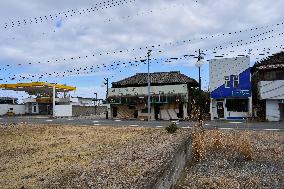
(230313) -- FUKUSHIMA, March 13, 2023 (Xinhua) -- This photo taken on March 6, 2023 shows abandoned houses in Futabacho, Futabagun of Fukushima Prefecture in Japan. Struck by a magnitude-9.0 earthquake and ensuing tsunami that hit Japan's northeast on March 11, 2011, the power plant suffered core meltdowns, resulting in a level-7 nuclear accident, the highest on the International Nuclear and Radiological Event Scale. Twelve years after the 2011 accident traumatized Fukushima's fishing industry, local fishermen are still struggling for recovery. As Japan pushes ahead with dumping tons of contaminated nuclear wastewater from the wrecked Fukushima Daiichi nuclear power plant into the Pacific Ocean in spring or summer, local residents, especially those in the fishing industry, believe their livelihoods would again be devastated. (Xinhua/Zhang Xiaoyu)

  •  
(FOCUS)JAPAN-FUKUSHIMA-NUCLEAR-CONTAMINATED WASTEWATER

(FOCUS)JAPAN-FUKUSHIMA-NUCLEAR-CONTAMINATED WASTEWATER

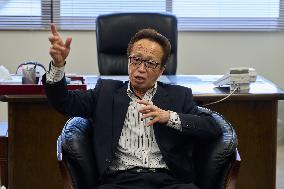
(230313) -- FUKUSHIMA, March 13, 2023 (Xinhua) -- Toshimitsu Konno, head of Fukushima prefecture's Soma Futaba Fisheries Cooperative Association, gives an interview in Soma City, Fukushima Prefecture, Japan, March 8, 2023. Struck by a magnitude-9.0 earthquake and ensuing tsunami that hit Japan's northeast on March 11, 2011, the power plant suffered core meltdowns, resulting in a level-7 nuclear accident, the highest on the International Nuclear and Radiological Event Scale. Twelve years after the 2011 accident traumatized Fukushima's fishing industry, local fishermen are still struggling for recovery. As Japan pushes ahead with dumping tons of contaminated nuclear wastewater from the wrecked Fukushima Daiichi nuclear power plant into the Pacific Ocean in spring or summer, local residents, especially those in the fishing industry, believe their livelihoods would again be devastated. (Xinhua/Zhang Xiaoyu)

  •  
(FOCUS)JAPAN-FUKUSHIMA-NUCLEAR-CONTAMINATED WASTEWATER

(FOCUS)JAPAN-FUKUSHIMA-NUCLEAR-CONTAMINATED WASTEWATER

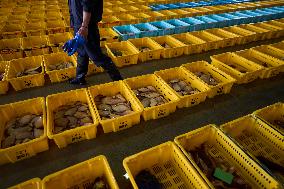
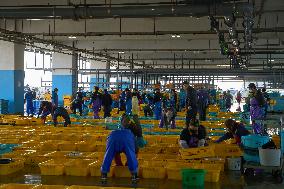
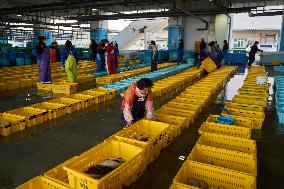
(230313) -- FUKUSHIMA, March 13, 2023 (Xinhua) -- This photo taken on March 8, 2023 shows freshly caught fish at a fish market in Soma City, Fukushima Prefecture, Japan. Struck by a magnitude-9.0 earthquake and ensuing tsunami that hit Japan's northeast on March 11, 2011, the power plant suffered core meltdowns, resulting in a level-7 nuclear accident, the highest on the International Nuclear and Radiological Event Scale. Twelve years after the 2011 accident traumatized Fukushima's fishing industry, local fishermen are still struggling for recovery. As Japan pushes ahead with dumping tons of contaminated nuclear wastewater from the wrecked Fukushima Daiichi nuclear power plant into the Pacific Ocean in spring or summer, local residents, especially those in the fishing industry, believe their livelihoods would again be devastated. (Xinhua/Zhang Xiaoyu)

  •  
(FOCUS)JAPAN-FUKUSHIMA-NUCLEAR-CONTAMINATED WASTEWATER

(FOCUS)JAPAN-FUKUSHIMA-NUCLEAR-CONTAMINATED WASTEWATER

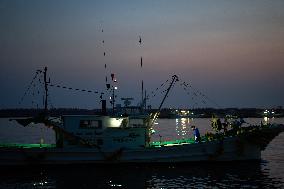
(230313) -- FUKUSHIMA, March 13, 2023 (Xinhua) -- Fishing boats are pictured approaching the shore in Soma City, Fukushima Prefecture, Japan, March 8, 2023. Struck by a magnitude-9.0 earthquake and ensuing tsunami that hit Japan's northeast on March 11, 2011, the power plant suffered core meltdowns, resulting in a level-7 nuclear accident, the highest on the International Nuclear and Radiological Event Scale. Twelve years after the 2011 accident traumatized Fukushima's fishing industry, local fishermen are still struggling for recovery. As Japan pushes ahead with dumping tons of contaminated nuclear wastewater from the wrecked Fukushima Daiichi nuclear power plant into the Pacific Ocean in spring or summer, local residents, especially those in the fishing industry, believe their livelihoods would again be devastated. (Xinhua/Zhang Xiaoyu)

  •  
(FOCUS)JAPAN-FUKUSHIMA-NUCLEAR-CONTAMINATED WASTEWATER

(FOCUS)JAPAN-FUKUSHIMA-NUCLEAR-CONTAMINATED WASTEWATER

(230313) -- FUKUSHIMA, March 13, 2023 (Xinhua) -- This photo taken on March 8, 2023 shows a fish market in Soma City, Fukushima Prefecture, Japan. Struck by a magnitude-9.0 earthquake and ensuing tsunami that hit Japan's northeast on March 11, 2011, the power plant suffered core meltdowns, resulting in a level-7 nuclear accident, the highest on the International Nuclear and Radiological Event Scale. Twelve years after the 2011 accident traumatized Fukushima's fishing industry, local fishermen are still struggling for recovery. As Japan pushes ahead with dumping tons of contaminated nuclear wastewater from the wrecked Fukushima Daiichi nuclear power plant into the Pacific Ocean in spring or summer, local residents, especially those in the fishing industry, believe their livelihoods would again be devastated. (Xinhua/Zhang Xiaoyu)

  •  
(FOCUS)JAPAN-FUKUSHIMA-NUCLEAR-CONTAMINATED WASTEWATER

(FOCUS)JAPAN-FUKUSHIMA-NUCLEAR-CONTAMINATED WASTEWATER

(230313) -- FUKUSHIMA, March 13, 2023 (Xinhua) -- This photo taken on March 8, 2023 shows a fish market in Soma City, Fukushima Prefecture, Japan. Struck by a magnitude-9.0 earthquake and ensuing tsunami that hit Japan's northeast on March 11, 2011, the power plant suffered core meltdowns, resulting in a level-7 nuclear accident, the highest on the International Nuclear and Radiological Event Scale. Twelve years after the 2011 accident traumatized Fukushima's fishing industry, local fishermen are still struggling for recovery. As Japan pushes ahead with dumping tons of contaminated nuclear wastewater from the wrecked Fukushima Daiichi nuclear power plant into the Pacific Ocean in spring or summer, local residents, especially those in the fishing industry, believe their livelihoods would again be devastated. (Xinhua/Zhang Xiaoyu)

  •  
(FOCUS)JAPAN-FUKUSHIMA-NUCLEAR-CONTAMINATED WASTEWATER

(FOCUS)JAPAN-FUKUSHIMA-NUCLEAR-CONTAMINATED WASTEWATER

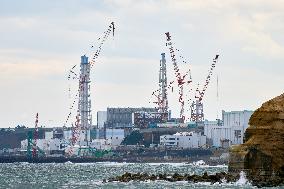
(230313) -- FUKUSHIMA, March 13, 2023 (Xinhua) -- This photo taken on March 6, 2023 shows the Fukushima Daiichi nuclear power plant in Futabacho, Futabagun of Fukushima Prefecture, Japan. Struck by a magnitude-9.0 earthquake and ensuing tsunami that hit Japan's northeast on March 11, 2011, the power plant suffered core meltdowns, resulting in a level-7 nuclear accident, the highest on the International Nuclear and Radiological Event Scale. Twelve years after the 2011 accident traumatized Fukushima's fishing industry, local fishermen are still struggling for recovery. As Japan pushes ahead with dumping tons of contaminated nuclear wastewater from the wrecked Fukushima Daiichi nuclear power plant into the Pacific Ocean in spring or summer, local residents, especially those in the fishing industry, believe their livelihoods would again be devastated. (Xinhua/Zhang Xiaoyu)

  •  
(FOCUS)JAPAN-FUKUSHIMA-NUCLEAR-CONTAMINATED WASTEWATER

(FOCUS)JAPAN-FUKUSHIMA-NUCLEAR-CONTAMINATED WASTEWATER

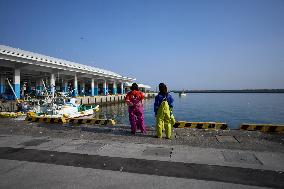
(230313) -- FUKUSHIMA, March 13, 2023 (Xinhua) -- Fishermen wait for fishing boats on a bank in Soma City, Fukushima Prefecture, Japan, March 8, 2023. Struck by a magnitude-9.0 earthquake and ensuing tsunami that hit Japan's northeast on March 11, 2011, the power plant suffered core meltdowns, resulting in a level-7 nuclear accident, the highest on the International Nuclear and Radiological Event Scale. Twelve years after the 2011 accident traumatized Fukushima's fishing industry, local fishermen are still struggling for recovery. As Japan pushes ahead with dumping tons of contaminated nuclear wastewater from the wrecked Fukushima Daiichi nuclear power plant into the Pacific Ocean in spring or summer, local residents, especially those in the fishing industry, believe their livelihoods would again be devastated. (Xinhua/Zhang Xiaoyu)

  •  
ICRP official in Japan

ICRP official in Japan

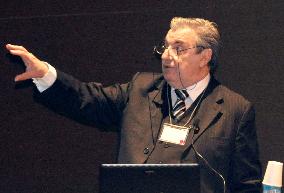
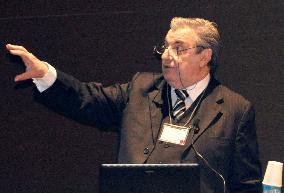
AOMORI, Japan - Abel Gonzalez, vice chairman of the International Commission on Radiological Protection, speaks during a symposium in Hirosaki, Aomori Prefecture, on March 1, 2012.

  •  
Nuclear accident probe panel meets with int'l experts

Nuclear accident probe panel meets with int'l experts

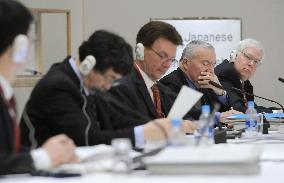
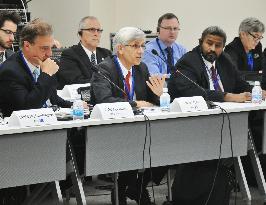
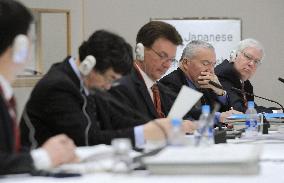
TOKYO, Japan - (From R) Richard Meserve, former chairman of the U.S. Nuclear Regulatory Commission, Andre-Claude Lacoste, chairman of the French nuclear safety authority, Lars-Erik Holm, head of Sweden's National Board of Health and Welfare and formerly chairman of the International Commission on Radiological Protection, and Chang Soon Heung, professor at the Korea Advanced Institute of Science and Technology, attend a meeting in Tokyo on Feb. 24, 2012. A government-appointed panel looking into the cause of the accident at the Fukushima Daiichi nuclear power plant started the two-day meeting the same day to seek advice from international experts about its ongoing investigation.

  •  
Health checks on Fukushima residents

Health checks on Fukushima residents

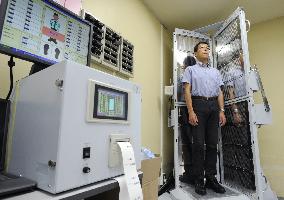
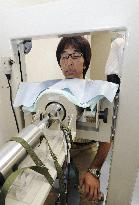
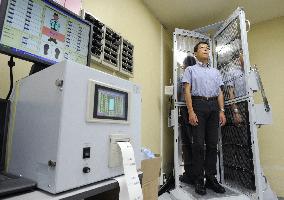
CHIBA, Japan - An employee of the National Institute of Radiological Sciences goes under a body surface pollution monitor to check radioactive exposure during a demonstration for reporters at a facility of the institute in the city of Chiba on June 27, 2011. The demonstration is to show how health examinations including radioactive exposure measurement using whole-body counters are being conducted on residents of Fukushima Prefecture. The health checks began the same day for all of the prefecture's about 2 million residents following the accident at the Fukushima Daiichi Nuclear Power Station.

  •  
2 workers may have exceeded radiation exposure limit

2 workers may have exceeded radiation exposure limit

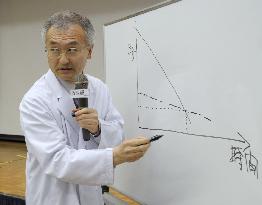
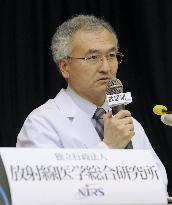
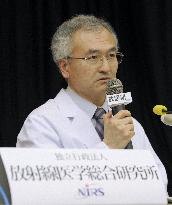
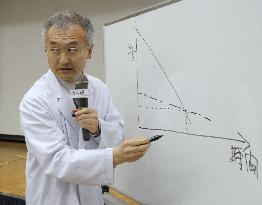
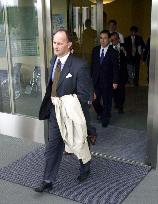
CHIBA, Japan - Makoto Akashi, executive director of the National Institute of Radiological Sciences, speaks in a press conference at the institute in the city of Chiba on May 30, 2011. Two Tokyo Electric Power Co. employees working at the crisis-hit Fukushima Daiichi nuclear power plant underwent health checks at the institute after it was found that they may have been exposed to radiation exceeding the maximum limit of 250 millisieverts.

  •  
2 workers may have exceeded radiation exposure limit

2 workers may have exceeded radiation exposure limit

CHIBA, Japan - Makoto Akashi, executive director of the National Institute of Radiological Sciences, speaks in a press conference at the institute in the city of Chiba on May 30, 2011. Two Tokyo Electric Power Co. employees working at the crisis-hit Fukushima Daiichi nuclear power plant underwent health checks at the institute after it was found that they may have been exposed to radiation exceeding the maximum limit of 250 millisieverts.

  •  
Oriki, Willard meet over nuke plant crisis

Oriki, Willard meet over nuke plant crisis

TOKYO, Japan - Adm. Robert Willard, commander of U.S. Pacific Command, talks to reporters at the Defense Ministry in Tokyo on March 21, 2011, after holding talks with Gen. Ryoichi Oriki, chief of staff of the Self-Defense Forces Joint Staff, over the situation at a quake-hit nuclear plant in northeastern Japan. Willard said a radiological management team is standing by in the United States and would be deployed at the request of the Japanese side.

  •  
U.S. commander seeks stronger alliance over nuke, bio terror

U.S. commander seeks stronger alliance over nuke, bio terror

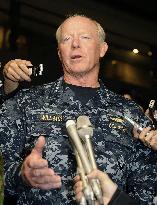
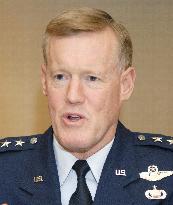
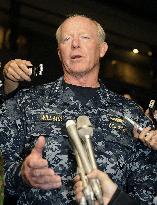
TOKYO, Japan - Lt. Gen. Bruce Wright, commander of U.S. forces in Japan, speaks in an interview with Kyodo News in Tokyo on April 25, where he called for enhanced cooperation with Japan's Self-Defense Forces in fighting the potential threat of terrorism using chemical, biological, radiological and nuclear weapons.

  •  
IAEA team visits Japanese radioactive institute

IAEA team visits Japanese radioactive institute

CHIBA, Japan - A team of experts from the International Atomic Energy Agency (IAEA) visits Oct. 16 the National Institute of Radiological Sciences in Chiba, east of Tokyo, where three Japanese workers are admitted after being heavily exposed to radiation at the country's worst nuclear accident Sept. 30 at Tokaimura, Ibaraki Prefecture.

  •  
Victim in critical condition to receive blood transfusion

Victim in critical condition to receive blood transfusion

TOKYO, Japan - Hisashi Ouchi, 35, one of the two in critical condition after being exposed to high levels of radiation at the Sept. 28 nuclear accident, is transported Oct. 2 to the University of Tokyo Hospital in Tokyo from the National Institute of Radiological Sciences in the city of Chiba, east of Tokyo, to receive a transfusion of blood taken from a newborn's umbilical cord and the mother's placenta. Such blood is used for patients with deteriorating blood production capabilities.

  •  
U.S. commander seeks stronger alliance over nuke, bio terror

U.S. commander seeks stronger alliance over nuke, bio terror

TOKYO, Japan - Lt. Gen. Bruce Wright, commander of U.S. forces in Japan, speaks in an interview with Kyodo News in Tokyo on April 25, where he called for enhanced cooperation with Japan's Self-Defense Forces in fighting the potential threat of terrorism using chemical, biological, radiological and nuclear weapons. (Kyodo)

  •  
IAEA's team of experts meets with Japan's nuclear regulators

IAEA's team of experts meets with Japan's nuclear regulators

Philippe Jamet (C front), who heads the International Atomic Energy Agency's team of experts, addresses a meeting with Japan's Nuclear Regulation Authority in Tokyo on Jan. 11, 2016. The IAEA team is visiting Japan to examine the country's measures over nuclear safety and radiological protection. (Kyodo) ==Kyodo

  •  
Pacific Ocean contamination rekindles memories of Sellafield leak

Pacific Ocean contamination rekindles memories of Sellafield leak

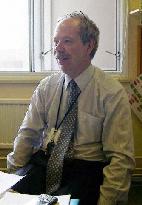
LONDON, Britain - Bill Camplin, group manager, radiological and chemical risk, at the Centre for Environment, Fisheries and Aquaculture Science, speaks during an interview with Kyodo News in Lowestoft, England, on April 12, 2011. Camplin, who has investigated radioactive leaks at the Sellafield nuclear facility in Cumbria in the 1970s, suggested there are some parallels with the crisis at the Fukushima Daiichi nuclear plant. (Kyodo)

  •  
Health checks on Fukushima residents

Health checks on Fukushima residents

CHIBA, Japan - An employee of the National Institute of Radiological Sciences goes under a thyroid gland monitor to check internal radioactive exposure during a demonstration for reporters at a facility of the institute in the city of Chiba on June 27, 2011. The demonstration is to show how health examinations including radioactive exposure measurement using whole-body counters are being conducted on residents of Fukushima Prefecture. The health checks began the same day for all of the prefecture's about 2 million residents following the accident at the Fukushima Daiichi Nuclear Power Station. (Kyodo)

  •  
Health checks on Fukushima residents

Health checks on Fukushima residents

CHIBA, Japan - An employee of the National Institute of Radiological Sciences goes under a body surface pollution monitor to check radioactive exposure during a demonstration for reporters at a facility of the institute in the city of Chiba on June 27, 2011. The demonstration is to show how health examinations including radioactive exposure measurement using whole-body counters are being conducted on residents of Fukushima Prefecture. The health checks began the same day for all of the prefecture's about 2 million residents following the accident at the Fukushima Daiichi Nuclear Power Station. (Kyodo)

  •  
Health checks on Fukushima residents

Health checks on Fukushima residents

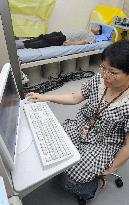
CHIBA, Japan - A demonstration is held for reporters at a facility of the National Institute of Radiological Sciences in the city of Chiba on June 27, 2011, to show how health examinations including radioactive exposure measurement using whole-body counters are being conducted on residents of Fukushima Prefecture. The health checks began the same day for all of the prefecture's about 2 million residents following the accident at the Fukushima Daiichi Nuclear Power Station. A man acting the part of an examinee in the demonstration, pictured in the background, is an employee of the institute. (Kyodo)

  •  
2 workers may have exceeded radiation exposure limit

2 workers may have exceeded radiation exposure limit

CHIBA, Japan - Makoto Akashi, executive director of the National Institute of Radiological Sciences, speaks in a press conference at the institute in the city of Chiba on May 30, 2011. Two Tokyo Electric Power Co. employees working at the crisis-hit Fukushima Daiichi nuclear power plant underwent health checks at the institute after it was found that they may have been exposed to radiation exceeding the maximum limit of 250 millisieverts. (Kyodo)

  •  
2 workers may have exceeded radiation exposure limit

2 workers may have exceeded radiation exposure limit

CHIBA, Japan - Makoto Akashi, executive director of the National Institute of Radiological Sciences, speaks in a press conference at the institute in the city of Chiba on May 30, 2011. Two Tokyo Electric Power Co. employees working at the crisis-hit Fukushima Daiichi nuclear power plant underwent health checks at the institute after it was found that they may have been exposed to radiation exceeding the maximum limit of 250 millisieverts. (Kyodo)

  •  
Oriki, Willard meet over nuke plant crisis

Oriki, Willard meet over nuke plant crisis

TOKYO, Japan - Adm. Robert Willard, commander of U.S. Pacific Command, talks to reporters at the Defense Ministry in Tokyo on March 21, 2011, after holding talks with Gen. Ryoichi Oriki, chief of staff of the Self-Defense Forces Joint Staff, over the situation at a quake-hit nuclear plant in northeastern Japan. Willard said a radiological management team is standing by in the United States and would be deployed at the request of the Japanese side. (Kyodo)

  •  
ICRP official in Japan

ICRP official in Japan

AOMORI, Japan - Abel Gonzalez, vice chairman of the International Commission on Radiological Protection, speaks during a symposium in Hirosaki, Aomori Prefecture, on March 1, 2012. (Kyodo)

  •  
Nuclear accident probe panel meets with int'l experts

Nuclear accident probe panel meets with int'l experts

TOKYO, Japan - (From R) Richard Meserve, former chairman of the U.S. Nuclear Regulatory Commission, Andre-Claude Lacoste, chairman of the French nuclear safety authority, Lars-Erik Holm, head of Sweden's National Board of Health and Welfare and formerly chairman of the International Commission on Radiological Protection, and Chang Soon Heung, professor at the Korea Advanced Institute of Science and Technology, attend a meeting in Tokyo on Feb. 24, 2012. A government-appointed panel looking into the cause of the accident at the Fukushima Daiichi nuclear power plant started the two-day meeting the same day to seek advice from international experts about its ongoing investigation. (Kyodo)

  •  
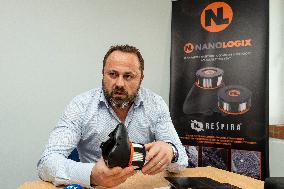
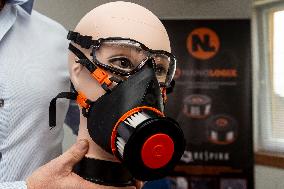
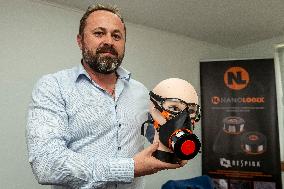
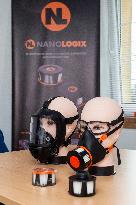
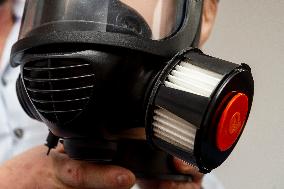
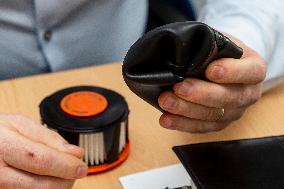
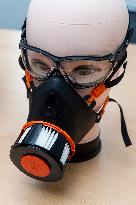
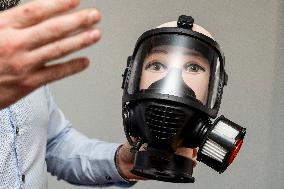
Half mask Respira Compact, Filter Respira Perfection P3, Company Nanologix

Half mask Respira Compact, Filter Respira Perfection P3, Company Nanologix

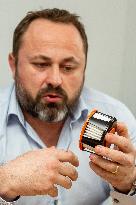
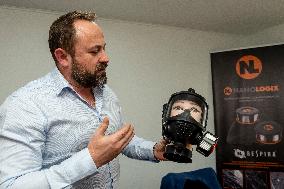
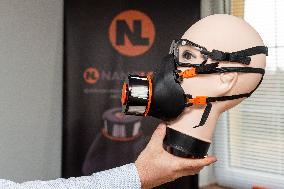
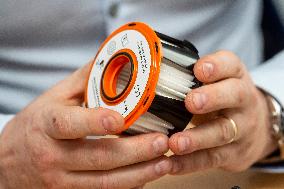
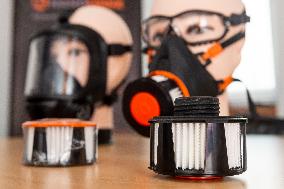
Company Nanologix produces protective mask together with a suitable filter or breathing apparatus protects userエs face, eyes and breathing organs against chemical, biological, radiological and nuclear (CBRN) agents in form of gases, vapours and solid or liquid aerosols. CEO of Nanologix Frantisek Bauer presents products in Cesky Jiretin, Czech Republic, March 11, 2020. (CTK Photo/Ondrej Hajek)

  •  
Half mask Respira Compact, Filter Respira Perfection P3, Company Nanologix

Half mask Respira Compact, Filter Respira Perfection P3, Company Nanologix

Company Nanologix produces protective mask together with a suitable filter or breathing apparatus protects userエs face, eyes and breathing organs against chemical, biological, radiological and nuclear (CBRN) agents in form of gases, vapours and solid or liquid aerosols. CEO of Nanologix presents products in Cesky Jiretin, Czech Republic, March 11, 2020. (CTK Photo/Ondrej Hajek)

  •  
Half mask Respira Compact, Filter Respira Perfection P3, Company Nanologix

Half mask Respira Compact, Filter Respira Perfection P3, Company Nanologix

Company Nanologix produces protective mask together with a suitable filter or breathing apparatus protects userエs face, eyes and breathing organs against chemical, biological, radiological and nuclear (CBRN) agents in form of gases, vapours and solid or liquid aerosols. CEO of Nanologix Frantisek Bauer presents products in Cesky Jiretin, Czech Republic, March 11, 2020. (CTK Photo/Ondrej Hajek)

  •  
Half mask Respira Compact, Filter Respira Perfection P3, Company Nanologix

Half mask Respira Compact, Filter Respira Perfection P3, Company Nanologix

Company Nanologix produces protective mask together with a suitable filter or breathing apparatus protects userエs face, eyes and breathing organs against chemical, biological, radiological and nuclear (CBRN) agents in form of gases, vapours and solid or liquid aerosols. CEO of Nanologix presents products in Cesky Jiretin, Czech Republic, March 11, 2020. (CTK Photo/Ondrej Hajek)

  •  
Half mask Respira Compact, Filter Respira Perfection P3, Company Nanologix

Half mask Respira Compact, Filter Respira Perfection P3, Company Nanologix

Company Nanologix produces protective mask together with a suitable filter or breathing apparatus protects userエs face, eyes and breathing organs against chemical, biological, radiological and nuclear (CBRN) agents in form of gases, vapours and solid or liquid aerosols. CEO of Nanologix Frantisek Bauer presents products in Cesky Jiretin, Czech Republic, March 11, 2020. (CTK Photo/Ondrej Hajek)

  •  
Half mask Respira Compact, Filter Respira Perfection P3, Company Nanologix

Half mask Respira Compact, Filter Respira Perfection P3, Company Nanologix

Company Nanologix produces protective mask together with a suitable filter or breathing apparatus protects userエs face, eyes and breathing organs against chemical, biological, radiological and nuclear (CBRN) agents in form of gases, vapours and solid or liquid aerosols. CEO of Nanologix Frantisek Bauer presents products in Cesky Jiretin, Czech Republic, March 11, 2020. (CTK Photo/Ondrej Hajek)

  •  
Half mask Respira Compact, Filter Respira Perfection P3, Company Nanologix

Half mask Respira Compact, Filter Respira Perfection P3, Company Nanologix

Company Nanologix produces protective mask together with a suitable filter or breathing apparatus protects userエs face, eyes and breathing organs against chemical, biological, radiological and nuclear (CBRN) agents in form of gases, vapours and solid or liquid aerosols. CEO of Nanologix presents products in Cesky Jiretin, Czech Republic, March 11, 2020. (CTK Photo/Ondrej Hajek)

  •  
Half mask Respira Compact, Filter Respira Perfection P3, Company Nanologix

Half mask Respira Compact, Filter Respira Perfection P3, Company Nanologix

Company Nanologix produces protective mask together with a suitable filter or breathing apparatus protects userエs face, eyes and breathing organs against chemical, biological, radiological and nuclear (CBRN) agents in form of gases, vapours and solid or liquid aerosols. CEO of Nanologix presents products in Cesky Jiretin, Czech Republic, March 11, 2020. (CTK Photo/Ondrej Hajek)

  •  
Half mask Respira Compact, Filter Respira Perfection P3, Company Nanologix

Half mask Respira Compact, Filter Respira Perfection P3, Company Nanologix

Company Nanologix produces protective mask together with a suitable filter or breathing apparatus protects userエs face, eyes and breathing organs against chemical, biological, radiological and nuclear (CBRN) agents in form of gases, vapours and solid or liquid aerosols. CEO of Nanologix presents products in Cesky Jiretin, Czech Republic, March 11, 2020. (CTK Photo/Ondrej Hajek)

  •  
Half mask Respira Compact, Filter Respira Perfection P3, Company Nanologix

Half mask Respira Compact, Filter Respira Perfection P3, Company Nanologix

Company Nanologix produces protective mask together with a suitable filter or breathing apparatus protects userエs face, eyes and breathing organs against chemical, biological, radiological and nuclear (CBRN) agents in form of gases, vapours and solid or liquid aerosols. CEO of Nanologix presents products in Cesky Jiretin, Czech Republic, March 11, 2020. (CTK Photo/Ondrej Hajek)

  •  
Half mask Respira Compact, Filter Respira Perfection P3, Company Nanologix

Half mask Respira Compact, Filter Respira Perfection P3, Company Nanologix

Company Nanologix produces protective mask together with a suitable filter or breathing apparatus protects userエs face, eyes and breathing organs against chemical, biological, radiological and nuclear (CBRN) agents in form of gases, vapours and solid or liquid aerosols. CEO of Nanologix presents products in Cesky Jiretin, Czech Republic, March 11, 2020. (CTK Photo/Ondrej Hajek)

  •  
Half mask Respira Compact, Filter Respira Perfection P3, Company Nanologix

Half mask Respira Compact, Filter Respira Perfection P3, Company Nanologix

Company Nanologix produces protective mask together with a suitable filter or breathing apparatus protects userエs face, eyes and breathing organs against chemical, biological, radiological and nuclear (CBRN) agents in form of gases, vapours and solid or liquid aerosols. CEO of Nanologix presents products in Cesky Jiretin, Czech Republic, March 11, 2020. (CTK Photo/Ondrej Hajek)

  •  
Half mask Respira Compact, Filter Respira Perfection P3, Company Nanologix

Half mask Respira Compact, Filter Respira Perfection P3, Company Nanologix

Company Nanologix produces protective mask together with a suitable filter or breathing apparatus protects userエs face, eyes and breathing organs against chemical, biological, radiological and nuclear (CBRN) agents in form of gases, vapours and solid or liquid aerosols. CEO of Nanologix presents products in Cesky Jiretin, Czech Republic, March 11, 2020. (CTK Photo/Ondrej Hajek)

  •  
Nuclear disaster response training for doctors, nurses

Nuclear disaster response training for doctors, nurses

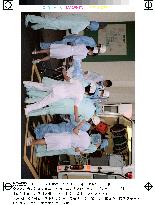
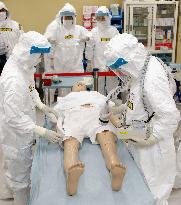
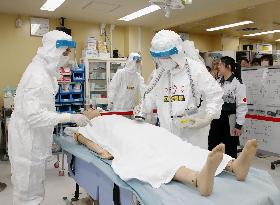
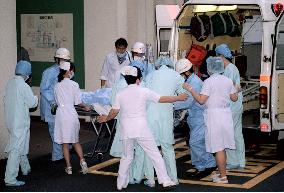
Doctors and nurses wearing hazmat suits take part in training for the treatment of radiation exposure in the event of a nuclear accident, at the National Institutes for Quantum and Radiological Science and Technology in Chiba, near Tokyo, on May 10, 2019. (Kyodo) ==Kyodo

  •  
Nuclear disaster response training for doctors, nurses

Nuclear disaster response training for doctors, nurses

Doctors and nurses wearing hazmat suits take part in training for the treatment of radiation exposure in the event of a nuclear accident, at the National Institutes for Quantum and Radiological Science and Technology in Chiba, near Tokyo, on May 10, 2019. (Kyodo) ==Kyodo

  •  
Japan makers agree to co-develop new cancer radiotherapy device

Japan makers agree to co-develop new cancer radiotherapy device

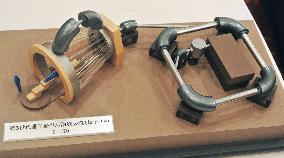
Photo taken Dec. 13, 2016, shows a small model of a new heavy ion cancer treatment device to be developed by four major Japanese manufacturers and a research institute. Hitachi Ltd., Mitsubishi Electric Corp., Toshiba Corp. and Sumitomo Heavy Industries Ltd. as well as the National Institutes for Quantum and Radiological Science and Technology agreed that day to share research costs to develop the device in 10 years. (Kyodo) ==Kyodo

  •  
Japan makers agree to co-develop new cancer radiotherapy device

Japan makers agree to co-develop new cancer radiotherapy device

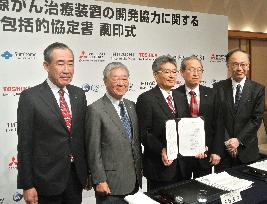
Hitachi Ltd., Mitsubishi Electric Corp., Toshiba Corp. and Sumitomo Heavy Industries Ltd. as well as the National Institutes for Quantum and Radiological Science and Technology agree in Tokyo on Dec. 13, 2016 to share research costs to develop a new heavy ion cancer treatment device in about 10 years. (Kyodo) ==Kyodo

  •  
IAEA team visits Japanese radioactive institute

IAEA team visits Japanese radioactive institute

CHIBA, Japan - A team of experts from the International Atomic Energy Agency (IAEA) visits Oct. 16 the National Institute of Radiological Sciences in Chiba, east of Tokyo, where three Japanese workers are admitted after being heavily exposed to radiation at the country's worst nuclear accident Sept. 30 at Tokaimura, Ibaraki Prefecture.

  •  
Victim in critical condition to receive blood transfusion

Victim in critical condition to receive blood transfusion

TOKYO, Japan - Hisashi Ouchi, 35, one of the two in critical condition after being exposed to high levels of radiation at the Sept. 28 nuclear accident, is transported Oct. 2 to the University of Tokyo Hospital in Tokyo from the National Institute of Radiological Sciences in the city of Chiba, east of Tokyo, to receive a transfusion of blood taken from a newborn's umbilical cord and the mother's placenta. Such blood is used for patients with deteriorating blood production capabilities.

  • Main
  • Top
  • Editorial
  • Creative
  • About Us
  • About ILG
  • Terms of use
  • Company
  • BEHIND
  • Price List
  • Single Plan
  • Monthly Plan
  • Services
  • Shooting
  • Rights Clearance
  • Support
  • FAQ
  • How To Buy
  • Contact Us
  • Become a Partner

© KYODO NEWS IMAGES INC

All Rights Reserved.

  • Editorial
  • Olympics
  • News
  • Sports
  • Japan
  • Tech
  • Royal
  • Disaster
  • NorthKorea
  • Old Japan
  • SNS
  • Creative
  • Food
  • Japan
  • Landscape
  • Animal
  • Popular
  • #Ukraine
  • #Russia
  • #coronavirus
  • #N. Korea
  • #Thailand
  • #China
  • #Ukraine
  • #Russia
  • #coronavirus
  • #N. Korea
  • #Thailand
  • #China
  • Food
  • Japan
  • Landscape
  • Animal
  • Olympics
  • News
  • Sports
  • Japan
  • Tech
  • Royal
  • Disaster
  • NorthKorea
  • Old Japan
  • SNS