•  

US: King Tide and Supermoon Swell Flood Coastal Streets in South Florida

A king tide combined with a supermoon swell flooded streets in South Florida’s coastal areas on Tuesday night. The high tide was expected to peak Wednesday morning between 9:30 a.m. and 11:00 a.m., bringing saltwater intrusion to low-lying roads and properties

  •  

US: Explosion at Saltwater Disposal Facility in Sidney, Montana

An explosion occurred at a saltwater disposal facility in southeastern Sidney, Montana, on the evening of Wednesday, June 25. The cause and extent of the damage remain unknown at this time.

  •  
(FOCUS) CHINA-XIZANG-NAM CO-MULTINATIONAL RESEARCHERS-CORE DRILLING PROJECT (CN)

(FOCUS) CHINA-XIZANG-NAM CO-MULTINATIONAL RESEARCHERS-CORE DRILLING PROJECT (CN)

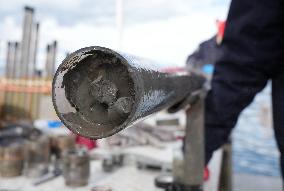
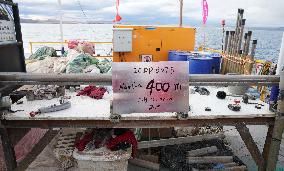
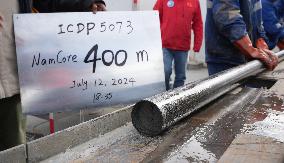
(240712) -- LHASA, July 12, 2024 Photo by Xinhua/ABACAPRESS.COM) -- This photo taken on July 12, 2024 shows the samples collected from the lake core of 402.2 meters on Nam Co, in southwest China's Xizang Autonomous Region. Multinational researchers have successfully drilled 402.2 meters of lake core in Nam Co, the world's highest saltwater lake in southwest China's Xizang Autonomous Region on Friday. The team have been carrying out a core drilling project in Nam Co since early June, providing data on climate and environmental changes on the Qinghai-Xizang Plateau over the past million years. The joint scientific expedition team comprises a lake and environmental change research team from the Institute of Tibetan Plateau Research, Chinese Academy of Sciences, and scientists and drilling technicians from countries including Germany, Switzerland, the United Kingdom and the United States. Nam Co, located in the Qinghai-Xizang Plateau, with a lake-surface elevation of 4,718 meters, is the second largest lake in th

  •  
(FOCUS) CHINA-XIZANG-NAM CO-MULTINATIONAL RESEARCHERS-CORE DRILLING PROJECT (CN)

(FOCUS) CHINA-XIZANG-NAM CO-MULTINATIONAL RESEARCHERS-CORE DRILLING PROJECT (CN)

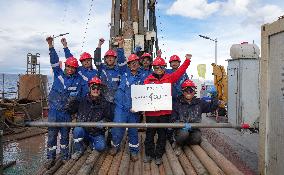
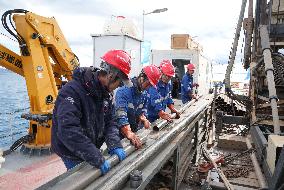
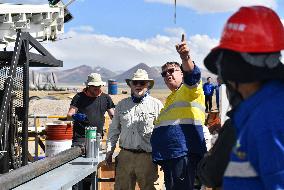
(240712) -- LHASA, July 12, 2024 Photo by Xinhua/ABACAPRESS.COM) -- Researchers and technicians pose for a photo celebrating the collecting of samples from the lake core of 402.2 meters on Nam Co, in southwest China's Xizang Autonomous Region, July 12, 2024. Multinational researchers have successfully drilled 402.2 meters of lake core in Nam Co, the world's highest saltwater lake in southwest China's Xizang Autonomous Region on Friday. The team have been carrying out a core drilling project in Nam Co since early June, providing data on climate and environmental changes on the Qinghai-Xizang Plateau over the past million years. The joint scientific expedition team comprises a lake and environmental change research team from the Institute of Tibetan Plateau Research, Chinese Academy of Sciences, and scientists and drilling technicians from countries including Germany, Switzerland, the United Kingdom and the United States. Nam Co, located in the Qinghai-Xizang Plateau, with a lake-surface elevation of 4,718 mete

  •  
(FOCUS) CHINA-XIZANG-NAM CO-MULTINATIONAL RESEARCHERS-CORE DRILLING PROJECT (CN)

(FOCUS) CHINA-XIZANG-NAM CO-MULTINATIONAL RESEARCHERS-CORE DRILLING PROJECT (CN)

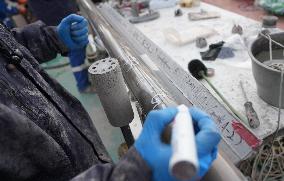
(240712) -- LHASA, July 12, 2024 Photo by Xinhua/ABACAPRESS.COM) -- A researcher registers the samples collected from the lake core of 402.2 meters on Nam Co, in southwest China's Xizang Autonomous Region, July 12, 2024. Multinational researchers have successfully drilled 402.2 meters of lake core in Nam Co, the world's highest saltwater lake in southwest China's Xizang Autonomous Region on Friday. The team have been carrying out a core drilling project in Nam Co since early June, providing data on climate and environmental changes on the Qinghai-Xizang Plateau over the past million years. The joint scientific expedition team comprises a lake and environmental change research team from the Institute of Tibetan Plateau Research, Chinese Academy of Sciences, and scientists and drilling technicians from countries including Germany, Switzerland, the United Kingdom and the United States. Nam Co, located in the Qinghai-Xizang Plateau, with a lake-surface elevation of 4,718 meters, is the second largest lake in the

  •  
(FOCUS) CHINA-XIZANG-NAM CO-MULTINATIONAL RESEARCHERS-CORE DRILLING PROJECT (CN)

(FOCUS) CHINA-XIZANG-NAM CO-MULTINATIONAL RESEARCHERS-CORE DRILLING PROJECT (CN)

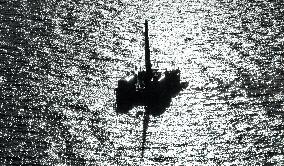
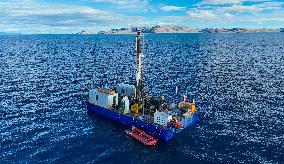
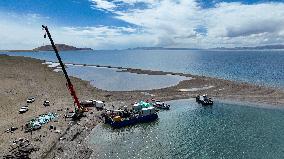
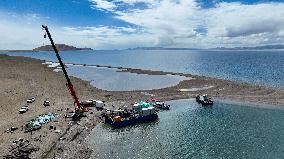
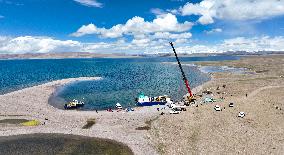
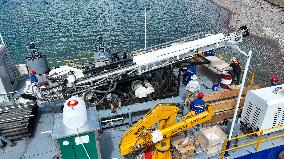
(240712) -- LHASA, July 12, 2024 Photo by Xinhua/ABACAPRESS.COM) -- An aerial drone photo taken on July 12, 2024 shows a drilling platform on Nam Co, in southwest China's Xizang Autonomous Region. Multinational researchers have successfully drilled 402.2 meters of lake core in Nam Co, the world's highest saltwater lake in southwest China's Xizang Autonomous Region on Friday. The team have been carrying out a core drilling project in Nam Co since early June, providing data on climate and environmental changes on the Qinghai-Xizang Plateau over the past million years. The joint scientific expedition team comprises a lake and environmental change research team from the Institute of Tibetan Plateau Research, Chinese Academy of Sciences, and scientists and drilling technicians from countries including Germany, Switzerland, the United Kingdom and the United States. Nam Co, located in the Qinghai-Xizang Plateau, with a lake-surface elevation of 4,718 meters, is the second largest lake in the region and an important

  •  
(FOCUS) CHINA-XIZANG-NAM CO-MULTINATIONAL RESEARCHERS-CORE DRILLING PROJECT (CN)

(FOCUS) CHINA-XIZANG-NAM CO-MULTINATIONAL RESEARCHERS-CORE DRILLING PROJECT (CN)

(240712) -- LHASA, July 12, 2024 Photo by Xinhua/ABACAPRESS.COM) -- This photo taken on July 12, 2024 shows the samples collected from the lake core of 402.2 meters on Nam Co, in southwest China's Xizang Autonomous Region. Multinational researchers have successfully drilled 402.2 meters of lake core in Nam Co, the world's highest saltwater lake in southwest China's Xizang Autonomous Region on Friday. The team have been carrying out a core drilling project in Nam Co since early June, providing data on climate and environmental changes on the Qinghai-Xizang Plateau over the past million years. The joint scientific expedition team comprises a lake and environmental change research team from the Institute of Tibetan Plateau Research, Chinese Academy of Sciences, and scientists and drilling technicians from countries including Germany, Switzerland, the United Kingdom and the United States. Nam Co, located in the Qinghai-Xizang Plateau, with a lake-surface elevation of 4,718 meters, is the second largest lake in th

  •  
(FOCUS) CHINA-XIZANG-NAM CO-MULTINATIONAL RESEARCHERS-CORE DRILLING PROJECT (CN)

(FOCUS) CHINA-XIZANG-NAM CO-MULTINATIONAL RESEARCHERS-CORE DRILLING PROJECT (CN)

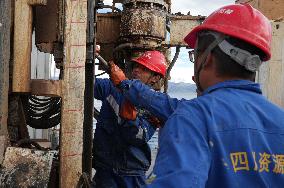
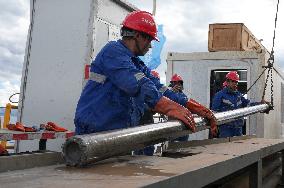
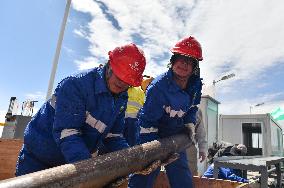
(240712) -- LHASA, July 12, 2024 Photo by Xinhua/ABACAPRESS.COM) -- Technicians collect samples from the lake core of 402.2 meters on Nam Co, in southwest China's Xizang Autonomous Region, July 12, 2024. Multinational researchers have successfully drilled 402.2 meters of lake core in Nam Co, the world's highest saltwater lake in southwest China's Xizang Autonomous Region on Friday. The team have been carrying out a core drilling project in Nam Co since early June, providing data on climate and environmental changes on the Qinghai-Xizang Plateau over the past million years. The joint scientific expedition team comprises a lake and environmental change research team from the Institute of Tibetan Plateau Research, Chinese Academy of Sciences, and scientists and drilling technicians from countries including Germany, Switzerland, the United Kingdom and the United States. Nam Co, located in the Qinghai-Xizang Plateau, with a lake-surface elevation of 4,718 meters, is the second largest lake in the region and an imp

  •  
(FOCUS) CHINA-XIZANG-NAM CO-MULTINATIONAL RESEARCHERS-CORE DRILLING PROJECT (CN)

(FOCUS) CHINA-XIZANG-NAM CO-MULTINATIONAL RESEARCHERS-CORE DRILLING PROJECT (CN)

(240712) -- LHASA, July 12, 2024 Photo by Xinhua/ABACAPRESS.COM) -- A researcher registers the samples collected from the lake core of 402.2 meters on Nam Co, in southwest China's Xizang Autonomous Region, July 12, 2024. Multinational researchers have successfully drilled 402.2 meters of lake core in Nam Co, the world's highest saltwater lake in southwest China's Xizang Autonomous Region on Friday. The team have been carrying out a core drilling project in Nam Co since early June, providing data on climate and environmental changes on the Qinghai-Xizang Plateau over the past million years. The joint scientific expedition team comprises a lake and environmental change research team from the Institute of Tibetan Plateau Research, Chinese Academy of Sciences, and scientists and drilling technicians from countries including Germany, Switzerland, the United Kingdom and the United States. Nam Co, located in the Qinghai-Xizang Plateau, with a lake-surface elevation of 4,718 meters, is the second largest lake in the

  •  
(FOCUS) CHINA-XIZANG-NAM CO-MULTINATIONAL RESEARCHERS-CORE DRILLING PROJECT (CN)

(FOCUS) CHINA-XIZANG-NAM CO-MULTINATIONAL RESEARCHERS-CORE DRILLING PROJECT (CN)

(240712) -- LHASA, July 12, 2024 Photo by Xinhua/ABACAPRESS.COM) -- An aerial drone photo taken on July 12, 2024 shows a drilling platform on Nam Co, in southwest China's Xizang Autonomous Region. Multinational researchers have successfully drilled 402.2 meters of lake core in Nam Co, the world's highest saltwater lake in southwest China's Xizang Autonomous Region on Friday. The team have been carrying out a core drilling project in Nam Co since early June, providing data on climate and environmental changes on the Qinghai-Xizang Plateau over the past million years. The joint scientific expedition team comprises a lake and environmental change research team from the Institute of Tibetan Plateau Research, Chinese Academy of Sciences, and scientists and drilling technicians from countries including Germany, Switzerland, the United Kingdom and the United States. Nam Co, located in the Qinghai-Xizang Plateau, with a lake-surface elevation of 4,718 meters, is the second largest lake in the region and an important

  •  
(FOCUS) CHINA-XIZANG-NAM CO-MULTINATIONAL RESEARCHERS-CORE DRILLING PROJECT (CN)

(FOCUS) CHINA-XIZANG-NAM CO-MULTINATIONAL RESEARCHERS-CORE DRILLING PROJECT (CN)

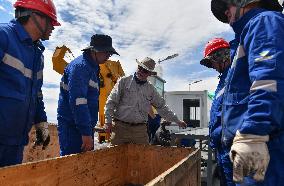
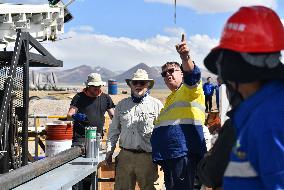
(240712) -- LHASA, July 12, 2024 Photo by Xinhua/ABACAPRESS.COM) -- Researchers and technicians collect samples from the lake core of 402.2 meters on Nam Co, in southwest China's Xizang Autonomous Region, July 12, 2024. Multinational researchers have successfully drilled 402.2 meters of lake core in Nam Co, the world's highest saltwater lake in southwest China's Xizang Autonomous Region on Friday. The team have been carrying out a core drilling project in Nam Co since early June, providing data on climate and environmental changes on the Qinghai-Xizang Plateau over the past million years. The joint scientific expedition team comprises a lake and environmental change research team from the Institute of Tibetan Plateau Research, Chinese Academy of Sciences, and scientists and drilling technicians from countries including Germany, Switzerland, the United Kingdom and the United States. Nam Co, located in the Qinghai-Xizang Plateau, with a lake-surface elevation of 4,718 meters, is the second largest lake in the r

  •  
(FOCUS) CHINA-XIZANG-NAM CO-MULTINATIONAL RESEARCHERS-CORE DRILLING PROJECT (CN)

(FOCUS) CHINA-XIZANG-NAM CO-MULTINATIONAL RESEARCHERS-CORE DRILLING PROJECT (CN)

(240712) -- LHASA, July 12, 2024 Photo by Xinhua/ABACAPRESS.COM) -- This photo taken on July 12, 2024 shows the samples collected from the lake core of 402.2 meters on Nam Co, in southwest China's Xizang Autonomous Region. Multinational researchers have successfully drilled 402.2 meters of lake core in Nam Co, the world's highest saltwater lake in southwest China's Xizang Autonomous Region on Friday. The team have been carrying out a core drilling project in Nam Co since early June, providing data on climate and environmental changes on the Qinghai-Xizang Plateau over the past million years. The joint scientific expedition team comprises a lake and environmental change research team from the Institute of Tibetan Plateau Research, Chinese Academy of Sciences, and scientists and drilling technicians from countries including Germany, Switzerland, the United Kingdom and the United States. Nam Co, located in the Qinghai-Xizang Plateau, with a lake-surface elevation of 4,718 meters, is the second largest lake in th

  •  
(FOCUS) CHINA-XIZANG-NAM CO-MULTINATIONAL RESEARCHERS-CORE DRILLING PROJECT (CN)

(FOCUS) CHINA-XIZANG-NAM CO-MULTINATIONAL RESEARCHERS-CORE DRILLING PROJECT (CN)

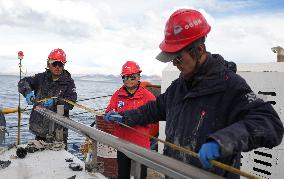
(240712) -- LHASA, July 12, 2024 Photo by Xinhua/ABACAPRESS.COM) -- A researcher measures the samples collected from the lake core of 402.2 meters on Nam Co, in southwest China's Xizang Autonomous Region, July 12, 2024. Multinational researchers have successfully drilled 402.2 meters of lake core in Nam Co, the world's highest saltwater lake in southwest China's Xizang Autonomous Region on Friday. The team have been carrying out a core drilling project in Nam Co since early June, providing data on climate and environmental changes on the Qinghai-Xizang Plateau over the past million years. The joint scientific expedition team comprises a lake and environmental change research team from the Institute of Tibetan Plateau Research, Chinese Academy of Sciences, and scientists and drilling technicians from countries including Germany, Switzerland, the United Kingdom and the United States. Nam Co, located in the Qinghai-Xizang Plateau, with a lake-surface elevation of 4,718 meters, is the second largest lake in the r

  •  
(FOCUS) CHINA-XIZANG-NAM CO-MULTINATIONAL RESEARCHERS-CORE DRILLING PROJECT (CN)

(FOCUS) CHINA-XIZANG-NAM CO-MULTINATIONAL RESEARCHERS-CORE DRILLING PROJECT (CN)

(240712) -- LHASA, July 12, 2024 Photo by Xinhua/ABACAPRESS.COM) -- Technicians collect samples from the lake core of 402.2 meters on Nam Co, in southwest China's Xizang Autonomous Region, July 12, 2024. Multinational researchers have successfully drilled 402.2 meters of lake core in Nam Co, the world's highest saltwater lake in southwest China's Xizang Autonomous Region on Friday. The team have been carrying out a core drilling project in Nam Co since early June, providing data on climate and environmental changes on the Qinghai-Xizang Plateau over the past million years. The joint scientific expedition team comprises a lake and environmental change research team from the Institute of Tibetan Plateau Research, Chinese Academy of Sciences, and scientists and drilling technicians from countries including Germany, Switzerland, the United Kingdom and the United States. Nam Co, located in the Qinghai-Xizang Plateau, with a lake-surface elevation of 4,718 meters, is the second largest lake in the region and an imp

  •  

China's largest lake sees rebound of rare fish species

STORY: China's largest lake sees rebound of rare fish species SHOOTING TIME: File DATELINE: June 26, 2024 LENGTH: 00:01:24 LOCATION: XINING, China CATEGORY: ENVIRONMENT SHOTLIST: 1. various of the Qinghai Lake 2. various of the naked carp 3. various of the Qinghai Lake 4. various of birds at the Qinghai Lake STORYLINE: Qinghai Lake, China's largest inland saltwater lake, has seen a positive growth of a rare fish species thanks to ecological protection. The naked carp, known as "Huangyu" in China, is endemic to Qinghai Lake. The fish is not only critical to the existence of local bird species, but also to the ecological balance of the highland lake. Due to overfishing and environmental deterioration, the population of naked carp declined sharply in the 1960s and 1970s. In 2002, Qinghai Lake only had 2,592 tonnes of naked carp. In order to protect the species and restore the environment, the province banned naked carp fishing in Qinghai Lake and nearby rivers in 2003. Qinghai has also closed the lake six

  •  
CHINA-XIZANG-NAM CO-MULTINATIONAL RESEARCHERS-CORE DRILLING PROJECT (CN)

CHINA-XIZANG-NAM CO-MULTINATIONAL RESEARCHERS-CORE DRILLING PROJECT (CN)

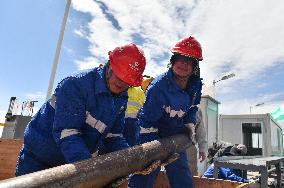
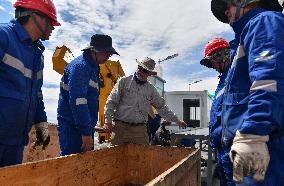
(240609) -- LHASA, June 9, 2024 Photo by Xinhua/ABACAPRESS.COM) -- Technicians set up a drilling platform on Nam Co Lake in southwest China's Xizang Autonomous Region, June 1, 2024. Multinational researchers have been carrying out a core drilling project in Nam Co, the world's highest saltwater lake in southwest China's Xizang Autonomous Region, since early June, providing data on climate and environmental changes on the Qinghai-Xizang Plateau over the past million years. Photo by Xinhua/ABACAPRESS.COM/Jigme Dorje)

  •  
CHINA-XIZANG-NAM CO-MULTINATIONAL RESEARCHERS-CORE DRILLING PROJECT (CN)

CHINA-XIZANG-NAM CO-MULTINATIONAL RESEARCHERS-CORE DRILLING PROJECT (CN)

(240609) -- LHASA, June 9, 2024 Photo by Xinhua/ABACAPRESS.COM) -- Technicians set up a drilling platform on Nam Co Lake in southwest China's Xizang Autonomous Region, June 1, 2024. Multinational researchers have been carrying out a core drilling project in Nam Co, the world's highest saltwater lake in southwest China's Xizang Autonomous Region, since early June, providing data on climate and environmental changes on the Qinghai-Xizang Plateau over the past million years. Photo by Xinhua/ABACAPRESS.COM/Jigme Dorje)

  •  
CHINA-XIZANG-NAM CO-MULTINATIONAL RESEARCHERS-CORE DRILLING PROJECT (CN)

CHINA-XIZANG-NAM CO-MULTINATIONAL RESEARCHERS-CORE DRILLING PROJECT (CN)

(240609) -- LHASA, June 9, 2024 Photo by Xinhua/ABACAPRESS.COM) -- Technicians set up a drilling platform on Nam Co Lake in southwest China's Xizang Autonomous Region, June 1, 2024. Multinational researchers have been carrying out a core drilling project in Nam Co, the world's highest saltwater lake in southwest China's Xizang Autonomous Region, since early June, providing data on climate and environmental changes on the Qinghai-Xizang Plateau over the past million years. Photo by Xinhua/ABACAPRESS.COM/Jigme Dorje)

  •  
CHINA-XIZANG-NAM CO-MULTINATIONAL RESEARCHERS-CORE DRILLING PROJECT (CN)

CHINA-XIZANG-NAM CO-MULTINATIONAL RESEARCHERS-CORE DRILLING PROJECT (CN)

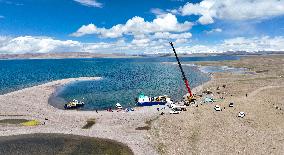
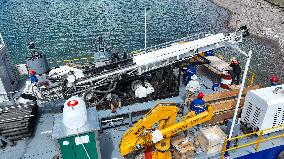
(240609) -- LHASA, June 9, 2024 Photo by Xinhua/ABACAPRESS.COM) -- A drone photo taken on June 1, 2024 shows researchers preparing for a drilling project on Nam Co Lake in southwest China's Xizang Autonomous Region. Multinational researchers have been carrying out a core drilling project in Nam Co, the world's highest saltwater lake in southwest China's Xizang Autonomous Region, since early June, providing data on climate and environmental changes on the Qinghai-Xizang Plateau over the past million years. Photo by Xinhua/ABACAPRESS.COM/Jigme Dorje)

  •  
CHINA-XIZANG-NAM CO-MULTINATIONAL RESEARCHERS-CORE DRILLING PROJECT (CN)

CHINA-XIZANG-NAM CO-MULTINATIONAL RESEARCHERS-CORE DRILLING PROJECT (CN)

(240609) -- LHASA, June 9, 2024 Photo by Xinhua/ABACAPRESS.COM) -- A drone photo taken on June 1, 2024 shows researchers preparing for a drilling project on Nam Co Lake in southwest China's Xizang Autonomous Region. Multinational researchers have been carrying out a core drilling project in Nam Co, the world's highest saltwater lake in southwest China's Xizang Autonomous Region, since early June, providing data on climate and environmental changes on the Qinghai-Xizang Plateau over the past million years. Photo by Xinhua/ABACAPRESS.COM/Jigme Dorje)

  •  
CHINA-XIZANG-NAM CO-MULTINATIONAL RESEARCHERS-CORE DRILLING PROJECT (CN)

CHINA-XIZANG-NAM CO-MULTINATIONAL RESEARCHERS-CORE DRILLING PROJECT (CN)

(240609) -- LHASA, June 9, 2024 Photo by Xinhua/ABACAPRESS.COM) -- A drone photo taken on June 1, 2024 shows researchers preparing for a drilling project on Nam Co Lake in southwest China's Xizang Autonomous Region. Multinational researchers have been carrying out a core drilling project in Nam Co, the world's highest saltwater lake in southwest China's Xizang Autonomous Region, since early June, providing data on climate and environmental changes on the Qinghai-Xizang Plateau over the past million years. Photo by Xinhua/ABACAPRESS.COM/Jigme Dorje)

  •  
CHINA-XIZANG-NAM CO-MULTINATIONAL RESEARCHERS-CORE DRILLING PROJECT (CN)

CHINA-XIZANG-NAM CO-MULTINATIONAL RESEARCHERS-CORE DRILLING PROJECT (CN)

(240609) -- LHASA, June 9, 2024 (Xinhua) -- Technicians set up a drilling platform on Nam Co Lake in southwest China's Xizang Autonomous Region, June 1, 2024. Multinational researchers have been carrying out a core drilling project in Nam Co, the world's highest saltwater lake in southwest China's Xizang Autonomous Region, since early June, providing data on climate and environmental changes on the Qinghai-Xizang Plateau over the past million years. (Xinhua/Jigme Dorje)

  •  
CHINA-XIZANG-NAM CO-MULTINATIONAL RESEARCHERS-CORE DRILLING PROJECT (CN)

CHINA-XIZANG-NAM CO-MULTINATIONAL RESEARCHERS-CORE DRILLING PROJECT (CN)

(240609) -- LHASA, June 9, 2024 (Xinhua) -- Technicians set up a drilling platform on Nam Co Lake in southwest China's Xizang Autonomous Region, June 1, 2024. Multinational researchers have been carrying out a core drilling project in Nam Co, the world's highest saltwater lake in southwest China's Xizang Autonomous Region, since early June, providing data on climate and environmental changes on the Qinghai-Xizang Plateau over the past million years. (Xinhua/Jigme Dorje)

  •  
CHINA-XIZANG-NAM CO-MULTINATIONAL RESEARCHERS-CORE DRILLING PROJECT (CN)

CHINA-XIZANG-NAM CO-MULTINATIONAL RESEARCHERS-CORE DRILLING PROJECT (CN)

(240609) -- LHASA, June 9, 2024 (Xinhua) -- A drone photo taken on June 1, 2024 shows researchers preparing for a drilling project on Nam Co Lake in southwest China's Xizang Autonomous Region. Multinational researchers have been carrying out a core drilling project in Nam Co, the world's highest saltwater lake in southwest China's Xizang Autonomous Region, since early June, providing data on climate and environmental changes on the Qinghai-Xizang Plateau over the past million years. (Xinhua/Jigme Dorje)

  •  
CHINA-XIZANG-NAM CO-MULTINATIONAL RESEARCHERS-CORE DRILLING PROJECT (CN)

CHINA-XIZANG-NAM CO-MULTINATIONAL RESEARCHERS-CORE DRILLING PROJECT (CN)

(240609) -- LHASA, June 9, 2024 (Xinhua) -- Technicians set up a drilling platform on Nam Co Lake in southwest China's Xizang Autonomous Region, June 1, 2024. Multinational researchers have been carrying out a core drilling project in Nam Co, the world's highest saltwater lake in southwest China's Xizang Autonomous Region, since early June, providing data on climate and environmental changes on the Qinghai-Xizang Plateau over the past million years. (Xinhua/Jigme Dorje)

  •  
CHINA-XIZANG-NAM CO-MULTINATIONAL RESEARCHERS-CORE DRILLING PROJECT (CN)

CHINA-XIZANG-NAM CO-MULTINATIONAL RESEARCHERS-CORE DRILLING PROJECT (CN)

(240609) -- LHASA, June 9, 2024 (Xinhua) -- A drone photo taken on June 1, 2024 shows researchers preparing for a drilling project on Nam Co Lake in southwest China's Xizang Autonomous Region. Multinational researchers have been carrying out a core drilling project in Nam Co, the world's highest saltwater lake in southwest China's Xizang Autonomous Region, since early June, providing data on climate and environmental changes on the Qinghai-Xizang Plateau over the past million years. (Xinhua/Jigme Dorje)

  •  
CHINA-XIZANG-NAM CO-MULTINATIONAL RESEARCHERS-CORE DRILLING PROJECT (CN)

CHINA-XIZANG-NAM CO-MULTINATIONAL RESEARCHERS-CORE DRILLING PROJECT (CN)

(240609) -- LHASA, June 9, 2024 (Xinhua) -- A drone photo taken on June 1, 2024 shows researchers preparing for a drilling project on Nam Co Lake in southwest China's Xizang Autonomous Region. Multinational researchers have been carrying out a core drilling project in Nam Co, the world's highest saltwater lake in southwest China's Xizang Autonomous Region, since early June, providing data on climate and environmental changes on the Qinghai-Xizang Plateau over the past million years. (Xinhua/Jigme Dorje)

  •  

Saltwater seafood production brings prosperity to farmers in China's inland Gansu Province

STORY: Saltwater seafood production brings prosperity to farmers in China's inland Gansu Province SHOOTING TIME: April 28, 2024 DATELINE: April 29, 2024 LENGTH: 00:02:00 LOCATION: LANZHOU, China CATEGORY: ECONOMY SHOTLIST: 1. various of aquaculture area in Jingtai County 2. SOUNDBITE 1 (Chinese): ZHOU JINCHENG, General manager of Jingtai Jincheng Agricultural Science and Technology Development Co., LTD. 3. various of aquaculture area in Jingtai County 4. SOUNDBITE 2 (Chinese): SUN PENG, Technician of Jingtai Jincheng Agricultural Science and Technology Development Co., LTD. 5. various of aquaculture area in Jingtai County STORYLINE: Farmers in Jingtai County of northwest China's Gansu Province have been busy working in their fishponds as saltwater seafood production gets prosperous in this inland area over the recent years. Six towns in Jingtai County began to develop aquaculture in 2016 as an alternative to traditional farming as the salinization had made soil not arable anymore. SOUNDBITE 1 (Chinese):

  •  
Lake Urmia Going Dry After 12,000 Years - Iran

Lake Urmia Going Dry After 12,000 Years - Iran

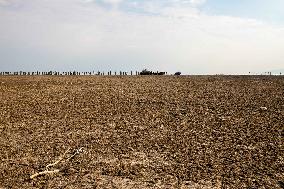
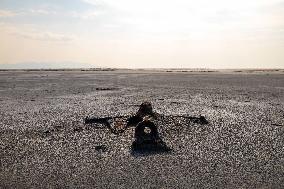
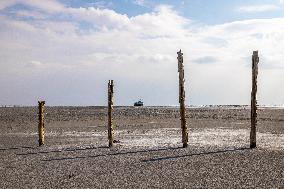
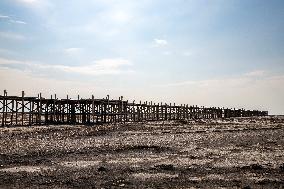
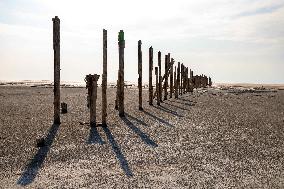
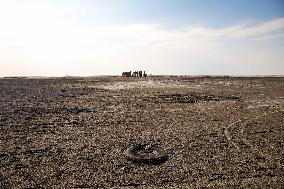
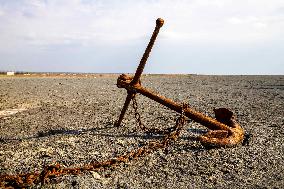
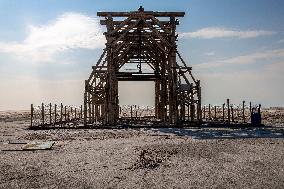
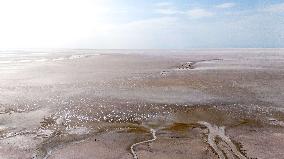
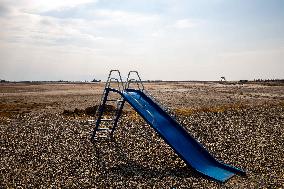
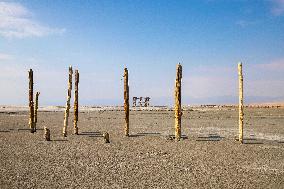
Abadoned ships due to the climate change effected to the lake. The 2023-2024 water year, which started on October 1, was hardly four weeks old when Iran’s Lake Urmia, once the Middle East’s largest lake and the sixth-largest saltwater lake on Earth, was reported to have gone dry. Studies show such an occurrence had not happened in 12,000 years. On October 9, as secretary of the Headquarters to Revive Lake Urmia, Mohammad Sadegh Motamediyan, governor of West Azerbaijan province, where part of the late sits, went on the Tehran TV network to claim that the lake still contained a certain volume of water. But satellite images and aerial footage later captured at the lake, on October 16, belie those claims. Urmia, Iran, November 4, 2023. Photo by Hamid/Middle East Images/ABACAPRESS.COM

  •  
Lake Urmia Going Dry After 12,000 Years - Iran

Lake Urmia Going Dry After 12,000 Years - Iran

Two Iranian-Azerbaijani man cleans each other in the steambath near village. The 2023-2024 water year, which started on October 1, was hardly four weeks old when Iran’s Lake Urmia, once the Middle East’s largest lake and the sixth-largest saltwater lake on Earth, was reported to have gone dry. Studies show such an occurrence had not happened in 12,000 years. On October 9, as secretary of the Headquarters to Revive Lake Urmia, Mohammad Sadegh Motamediyan, governor of West Azerbaijan province, where part of the late sits, went on the Tehran TV network to claim that the lake still contained a certain volume of water. But satellite images and aerial footage later captured at the lake, on October 16, belie those claims. Urmia, Iran, November 2, 2023. Photo by Hamid/Middle East Images/ABACAPRESS.COM

  •  
Lake Urmia Going Dry After 12,000 Years - Iran

Lake Urmia Going Dry After 12,000 Years - Iran

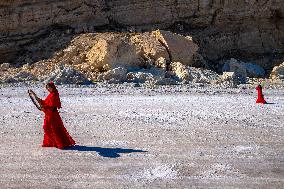
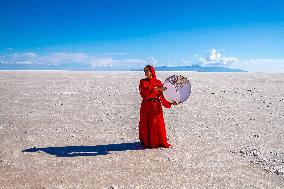
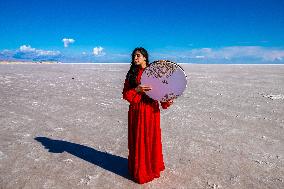
A group of Iranian women stage a performance on the dry bed of Urmia Lake to draw attention to climate change crises. The 2023-2024 water year, which started on October 1, was hardly four weeks old when Iran’s Lake Urmia, once the Middle East’s largest lake and the sixth-largest saltwater lake on Earth, was reported to have gone dry. Studies show such an occurrence had not happened in 12,000 years. On October 9, as secretary of the Headquarters to Revive Lake Urmia, Mohammad Sadegh Motamediyan, governor of West Azerbaijan province, where part of the late sits, went on the Tehran TV network to claim that the lake still contained a certain volume of water. But satellite images and aerial footage later captured at the lake, on October 16, belie those claims. Urmia, Iran, November 4, 2023. Photo by Hamid/Middle East Images/ABACAPRESS.COM

  •  
Lake Urmia Going Dry After 12,000 Years - Iran

Lake Urmia Going Dry After 12,000 Years - Iran

A group of Iranian women stage a performance on the dry bed of Urmia Lake to draw attention to climate change crises. The 2023-2024 water year, which started on October 1, was hardly four weeks old when Iran’s Lake Urmia, once the Middle East’s largest lake and the sixth-largest saltwater lake on Earth, was reported to have gone dry. Studies show such an occurrence had not happened in 12,000 years. On October 9, as secretary of the Headquarters to Revive Lake Urmia, Mohammad Sadegh Motamediyan, governor of West Azerbaijan province, where part of the late sits, went on the Tehran TV network to claim that the lake still contained a certain volume of water. But satellite images and aerial footage later captured at the lake, on October 16, belie those claims. Urmia, Iran, November 4, 2023. Photo by Hamid/Middle East Images/ABACAPRESS.COM

  •  
Lake Urmia Going Dry After 12,000 Years - Iran

Lake Urmia Going Dry After 12,000 Years - Iran

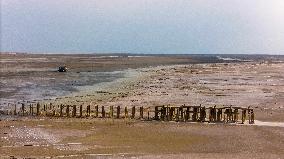
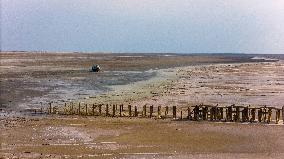
A view of Lake Urmia, one of the largest saltwater lakes in the world, which is located in the northwest of Iran, while the drought has affected the entire country and put the lake in danger of drying up again in Urmia, Iran. The 2023-2024 water year, which started on October 1, was hardly four weeks old when Iran’s Lake Urmia, once the Middle East’s largest lake and the sixth-largest saltwater lake on Earth, was reported to have gone dry. Studies show such an occurrence had not happened in 12,000 years. On October 9, as secretary of the Headquarters to Revive Lake Urmia, Mohammad Sadegh Motamediyan, governor of West Azerbaijan province, where part of the late sits, went on the Tehran TV network to claim that the lake still contained a certain volume of water. But satellite images and aerial footage later captured at the lake, on October 16, belie those claims. Urmia, Iran, November 1, 2023. Photo by Hamid/Middle East Images/ABACAPRESS.COM

  •  
Lake Urmia Going Dry After 12,000 Years - Iran

Lake Urmia Going Dry After 12,000 Years - Iran

A view of Lake Urmia, one of the largest saltwater lakes in the world, which is located in the northwest of Iran, while the drought has affected the entire country and put the lake in danger of drying up again in Urmia, Iran. The 2023-2024 water year, which started on October 1, was hardly four weeks old when Iran’s Lake Urmia, once the Middle East’s largest lake and the sixth-largest saltwater lake on Earth, was reported to have gone dry. Studies show such an occurrence had not happened in 12,000 years. On October 9, as secretary of the Headquarters to Revive Lake Urmia, Mohammad Sadegh Motamediyan, governor of West Azerbaijan province, where part of the late sits, went on the Tehran TV network to claim that the lake still contained a certain volume of water. But satellite images and aerial footage later captured at the lake, on October 16, belie those claims. Urmia, Iran, November 1, 2023. Photo by Hamid/Middle East Images/ABACAPRESS.COM

  •  
Lake Urmia Going Dry After 12,000 Years - Iran

Lake Urmia Going Dry After 12,000 Years - Iran

A view of Lake Urmia, one of the largest saltwater lakes in the world, which is located in the northwest of Iran, while the drought has affected the entire country and put the lake in danger of drying up again in Urmia, Iran. The 2023-2024 water year, which started on October 1, was hardly four weeks old when Iran’s Lake Urmia, once the Middle East’s largest lake and the sixth-largest saltwater lake on Earth, was reported to have gone dry. Studies show such an occurrence had not happened in 12,000 years. On October 9, as secretary of the Headquarters to Revive Lake Urmia, Mohammad Sadegh Motamediyan, governor of West Azerbaijan province, where part of the late sits, went on the Tehran TV network to claim that the lake still contained a certain volume of water. But satellite images and aerial footage later captured at the lake, on October 16, belie those claims. Urmia, Iran, November 1, 2023. Photo by Hamid/Middle East Images/ABACAPRESS.COM

  •  
Lake Urmia Going Dry After 12,000 Years - Iran

Lake Urmia Going Dry After 12,000 Years - Iran

A view of Lake Urmia, one of the largest saltwater lakes in the world, which is located in the northwest of Iran, while the drought has affected the entire country and put the lake in danger of drying up again in Urmia, Iran. The 2023-2024 water year, which started on October 1, was hardly four weeks old when Iran’s Lake Urmia, once the Middle East’s largest lake and the sixth-largest saltwater lake on Earth, was reported to have gone dry. Studies show such an occurrence had not happened in 12,000 years. On October 9, as secretary of the Headquarters to Revive Lake Urmia, Mohammad Sadegh Motamediyan, governor of West Azerbaijan province, where part of the late sits, went on the Tehran TV network to claim that the lake still contained a certain volume of water. But satellite images and aerial footage later captured at the lake, on October 16, belie those claims. Urmia, Iran, November 1, 2023. Photo by Hamid/Middle East Images/ABACAPRESS.COM

  •  
Lake Urmia Going Dry After 12,000 Years - Iran

Lake Urmia Going Dry After 12,000 Years - Iran

A group of Iranian women stage a performance on the dry bed of Urmia Lake to draw attention to climate change crises. The 2023-2024 water year, which started on October 1, was hardly four weeks old when Iran’s Lake Urmia, once the Middle East’s largest lake and the sixth-largest saltwater lake on Earth, was reported to have gone dry. Studies show such an occurrence had not happened in 12,000 years. On October 9, as secretary of the Headquarters to Revive Lake Urmia, Mohammad Sadegh Motamediyan, governor of West Azerbaijan province, where part of the late sits, went on the Tehran TV network to claim that the lake still contained a certain volume of water. But satellite images and aerial footage later captured at the lake, on October 16, belie those claims. Urmia, Iran, November 4, 2023. Photo by Hamid/Middle East Images/ABACAPRESS.COM

  •  
Lake Urmia Going Dry After 12,000 Years - Iran

Lake Urmia Going Dry After 12,000 Years - Iran

A group of Iranian women stage a performance on the dry bed of Urmia Lake to draw attention to climate change crises. The 2023-2024 water year, which started on October 1, was hardly four weeks old when Iran’s Lake Urmia, once the Middle East’s largest lake and the sixth-largest saltwater lake on Earth, was reported to have gone dry. Studies show such an occurrence had not happened in 12,000 years. On October 9, as secretary of the Headquarters to Revive Lake Urmia, Mohammad Sadegh Motamediyan, governor of West Azerbaijan province, where part of the late sits, went on the Tehran TV network to claim that the lake still contained a certain volume of water. But satellite images and aerial footage later captured at the lake, on October 16, belie those claims. Urmia, Iran, November 4, 2023. Photo by Hamid/Middle East Images/ABACAPRESS.COM

  •  
Lake Urmia Going Dry After 12,000 Years - Iran

Lake Urmia Going Dry After 12,000 Years - Iran

A view of Lake Urmia, one of the largest saltwater lakes in the world, which is located in the northwest of Iran, while the drought has affected the entire country and put the lake in danger of drying up again in Urmia, Iran. The 2023-2024 water year, which started on October 1, was hardly four weeks old when Iran’s Lake Urmia, once the Middle East’s largest lake and the sixth-largest saltwater lake on Earth, was reported to have gone dry. Studies show such an occurrence had not happened in 12,000 years. On October 9, as secretary of the Headquarters to Revive Lake Urmia, Mohammad Sadegh Motamediyan, governor of West Azerbaijan province, where part of the late sits, went on the Tehran TV network to claim that the lake still contained a certain volume of water. But satellite images and aerial footage later captured at the lake, on October 16, belie those claims. Urmia, Iran, November 1, 2023. Photo by Hamid/Middle East Images/ABACAPRESS.COM

  •  
Lake Urmia Going Dry After 12,000 Years - Iran

Lake Urmia Going Dry After 12,000 Years - Iran

A view of Lake Urmia, one of the largest saltwater lakes in the world, which is located in the northwest of Iran, while the drought has affected the entire country and put the lake in danger of drying up again in Urmia, Iran. The 2023-2024 water year, which started on October 1, was hardly four weeks old when Iran’s Lake Urmia, once the Middle East’s largest lake and the sixth-largest saltwater lake on Earth, was reported to have gone dry. Studies show such an occurrence had not happened in 12,000 years. On October 9, as secretary of the Headquarters to Revive Lake Urmia, Mohammad Sadegh Motamediyan, governor of West Azerbaijan province, where part of the late sits, went on the Tehran TV network to claim that the lake still contained a certain volume of water. But satellite images and aerial footage later captured at the lake, on October 16, belie those claims. Urmia, Iran, November 1, 2023. Photo by Hamid/Middle East Images/ABACAPRESS.COM

  •  
Lake Urmia Going Dry After 12,000 Years - Iran

Lake Urmia Going Dry After 12,000 Years - Iran

A view of Lake Urmia, one of the largest saltwater lakes in the world, which is located in the northwest of Iran, while the drought has affected the entire country and put the lake in danger of drying up again in Urmia, Iran. The 2023-2024 water year, which started on October 1, was hardly four weeks old when Iran’s Lake Urmia, once the Middle East’s largest lake and the sixth-largest saltwater lake on Earth, was reported to have gone dry. Studies show such an occurrence had not happened in 12,000 years. On October 9, as secretary of the Headquarters to Revive Lake Urmia, Mohammad Sadegh Motamediyan, governor of West Azerbaijan province, where part of the late sits, went on the Tehran TV network to claim that the lake still contained a certain volume of water. But satellite images and aerial footage later captured at the lake, on October 16, belie those claims. Urmia, Iran, November 1, 2023. Photo by Hamid/Middle East Images/ABACAPRESS.COM

  •  
Lake Urmia Going Dry After 12,000 Years - Iran

Lake Urmia Going Dry After 12,000 Years - Iran

Residents of the countryside villages gathered to spend time in a cafe. The 2023-2024 water year, which started on October 1, was hardly four weeks old when Iran’s Lake Urmia, once the Middle East’s largest lake and the sixth-largest saltwater lake on Earth, was reported to have gone dry. Studies show such an occurrence had not happened in 12,000 years. On October 9, as secretary of the Headquarters to Revive Lake Urmia, Mohammad Sadegh Motamediyan, governor of West Azerbaijan province, where part of the late sits, went on the Tehran TV network to claim that the lake still contained a certain volume of water. But satellite images and aerial footage later captured at the lake, on October 16, belie those claims. Urmia, Iran, November 2, 2023. Photo by Hamid/Middle East Images/ABACAPRESS.COM

  •  
Lake Urmia Going Dry After 12,000 Years - Iran

Lake Urmia Going Dry After 12,000 Years - Iran

A view of Lake Urmia, one of the largest saltwater lakes in the world, which is located in the northwest of Iran, while the drought has affected the entire country and put the lake in danger of drying up again in Urmia, Iran. The 2023-2024 water year, which started on October 1, was hardly four weeks old when Iran’s Lake Urmia, once the Middle East’s largest lake and the sixth-largest saltwater lake on Earth, was reported to have gone dry. Studies show such an occurrence had not happened in 12,000 years. On October 9, as secretary of the Headquarters to Revive Lake Urmia, Mohammad Sadegh Motamediyan, governor of West Azerbaijan province, where part of the late sits, went on the Tehran TV network to claim that the lake still contained a certain volume of water. But satellite images and aerial footage later captured at the lake, on October 16, belie those claims. Urmia, Iran, November 1, 2023. Photo by Hamid/Middle East Images/ABACAPRESS.COM

  •  
Lake Urmia Going Dry After 12,000 Years - Iran

Lake Urmia Going Dry After 12,000 Years - Iran

A view of Lake Urmia, one of the largest saltwater lakes in the world, which is located in the northwest of Iran, while the drought has affected the entire country and put the lake in danger of drying up again in Urmia, Iran. The 2023-2024 water year, which started on October 1, was hardly four weeks old when Iran’s Lake Urmia, once the Middle East’s largest lake and the sixth-largest saltwater lake on Earth, was reported to have gone dry. Studies show such an occurrence had not happened in 12,000 years. On October 9, as secretary of the Headquarters to Revive Lake Urmia, Mohammad Sadegh Motamediyan, governor of West Azerbaijan province, where part of the late sits, went on the Tehran TV network to claim that the lake still contained a certain volume of water. But satellite images and aerial footage later captured at the lake, on October 16, belie those claims. Urmia, Iran, November 1, 2023. Photo by Hamid/Middle East Images/ABACAPRESS.COM

  •  
Lake Urmia Going Dry After 12,000 Years - Iran

Lake Urmia Going Dry After 12,000 Years - Iran

A view of Lake Urmia, one of the largest saltwater lakes in the world, which is located in the northwest of Iran, while the drought has affected the entire country and put the lake in danger of drying up again in Urmia, Iran. The 2023-2024 water year, which started on October 1, was hardly four weeks old when Iran’s Lake Urmia, once the Middle East’s largest lake and the sixth-largest saltwater lake on Earth, was reported to have gone dry. Studies show such an occurrence had not happened in 12,000 years. On October 9, as secretary of the Headquarters to Revive Lake Urmia, Mohammad Sadegh Motamediyan, governor of West Azerbaijan province, where part of the late sits, went on the Tehran TV network to claim that the lake still contained a certain volume of water. But satellite images and aerial footage later captured at the lake, on October 16, belie those claims. Urmia, Iran, November 1, 2023. Photo by Hamid/Middle East Images/ABACAPRESS.COM

  •  
Lake Urmia Going Dry After 12,000 Years - Iran

Lake Urmia Going Dry After 12,000 Years - Iran

A group of Iranian women stage a performance on the dry bed of Urmia Lake to draw attention to climate change crises. The 2023-2024 water year, which started on October 1, was hardly four weeks old when Iran’s Lake Urmia, once the Middle East’s largest lake and the sixth-largest saltwater lake on Earth, was reported to have gone dry. Studies show such an occurrence had not happened in 12,000 years. On October 9, as secretary of the Headquarters to Revive Lake Urmia, Mohammad Sadegh Motamediyan, governor of West Azerbaijan province, where part of the late sits, went on the Tehran TV network to claim that the lake still contained a certain volume of water. But satellite images and aerial footage later captured at the lake, on October 16, belie those claims. Urmia, Iran, November 4, 2023. Photo by Hamid/Middle East Images/ABACAPRESS.COM

  •  
Lake Urmia Going Dry After 12,000 Years - Iran

Lake Urmia Going Dry After 12,000 Years - Iran

A group of Iranian women stage a performance on the dry bed of Urmia Lake to draw attention to climate change crises. The 2023-2024 water year, which started on October 1, was hardly four weeks old when Iran’s Lake Urmia, once the Middle East’s largest lake and the sixth-largest saltwater lake on Earth, was reported to have gone dry. Studies show such an occurrence had not happened in 12,000 years. On October 9, as secretary of the Headquarters to Revive Lake Urmia, Mohammad Sadegh Motamediyan, governor of West Azerbaijan province, where part of the late sits, went on the Tehran TV network to claim that the lake still contained a certain volume of water. But satellite images and aerial footage later captured at the lake, on October 16, belie those claims. Urmia, Iran, November 4, 2023. Photo by Hamid/Middle East Images/ABACAPRESS.COM

  •  
Lake Urmia Going Dry After 12,000 Years - Iran

Lake Urmia Going Dry After 12,000 Years - Iran

A view of Lake Urmia, one of the largest saltwater lakes in the world, which is located in the northwest of Iran, while the drought has affected the entire country and put the lake in danger of drying up again in Urmia, Iran. The 2023-2024 water year, which started on October 1, was hardly four weeks old when Iran’s Lake Urmia, once the Middle East’s largest lake and the sixth-largest saltwater lake on Earth, was reported to have gone dry. Studies show such an occurrence had not happened in 12,000 years. On October 9, as secretary of the Headquarters to Revive Lake Urmia, Mohammad Sadegh Motamediyan, governor of West Azerbaijan province, where part of the late sits, went on the Tehran TV network to claim that the lake still contained a certain volume of water. But satellite images and aerial footage later captured at the lake, on October 16, belie those claims. Urmia, Iran, November 1, 2023. Photo by Hamid/Middle East Images/ABACAPRESS.COM

  •  
Lake Urmia Going Dry After 12,000 Years - Iran

Lake Urmia Going Dry After 12,000 Years - Iran

A view of Lake Urmia, one of the largest saltwater lakes in the world, which is located in the northwest of Iran, while the drought has affected the entire country and put the lake in danger of drying up again in Urmia, Iran. The 2023-2024 water year, which started on October 1, was hardly four weeks old when Iran’s Lake Urmia, once the Middle East’s largest lake and the sixth-largest saltwater lake on Earth, was reported to have gone dry. Studies show such an occurrence had not happened in 12,000 years. On October 9, as secretary of the Headquarters to Revive Lake Urmia, Mohammad Sadegh Motamediyan, governor of West Azerbaijan province, where part of the late sits, went on the Tehran TV network to claim that the lake still contained a certain volume of water. But satellite images and aerial footage later captured at the lake, on October 16, belie those claims. Urmia, Iran, November 1, 2023. Photo by Hamid/Middle East Images/ABACAPRESS.COM

  •  
Lake Urmia Going Dry After 12,000 Years - Iran

Lake Urmia Going Dry After 12,000 Years - Iran

A view of Lake Urmia, one of the largest saltwater lakes in the world, which is located in the northwest of Iran, while the drought has affected the entire country and put the lake in danger of drying up again in Urmia, Iran. The 2023-2024 water year, which started on October 1, was hardly four weeks old when Iran’s Lake Urmia, once the Middle East’s largest lake and the sixth-largest saltwater lake on Earth, was reported to have gone dry. Studies show such an occurrence had not happened in 12,000 years. On October 9, as secretary of the Headquarters to Revive Lake Urmia, Mohammad Sadegh Motamediyan, governor of West Azerbaijan province, where part of the late sits, went on the Tehran TV network to claim that the lake still contained a certain volume of water. But satellite images and aerial footage later captured at the lake, on October 16, belie those claims. Urmia, Iran, November 1, 2023. Photo by Hamid/Middle East Images/ABACAPRESS.COM

  • Main
  • Top
  • Editorial
  • Creative
  • About Us
  • About ILG
  • Terms of use
  • Company
  • BEHIND
  • Price List
  • Single Plan
  • Monthly Plan
  • Services
  • Shooting
  • Rights Clearance
  • Support
  • FAQ
  • How To Buy
  • Contact Us
  • Become a Partner

© KYODO NEWS IMAGES INC

All Rights Reserved.

  • Editorial
  • Olympics
  • News
  • Sports
  • Japan
  • Tech
  • Royal
  • Disaster
  • NorthKorea
  • Old Japan
  • SNS
  • Creative
  • Food
  • Japan
  • Landscape
  • Animal
  • Popular
  • #Ukraine
  • #Russia
  • #coronavirus
  • #N. Korea
  • #China
  • #Thailand
  • #Ukraine
  • #Russia
  • #coronavirus
  • #N. Korea
  • #China
  • #Thailand
  • Food
  • Japan
  • Landscape
  • Animal
  • Olympics
  • News
  • Sports
  • Japan
  • Tech
  • Royal
  • Disaster
  • NorthKorea
  • Old Japan
  • SNS