•  
Seven 5,000-Tonne Heavy-Haul Freight Trains After an Inaugural Trial - China

Seven 5,000-Tonne Heavy-Haul Freight Trains After an Inaugural Trial - China

An aerial drone photo taken on Dec. 8, 2025 shows the 35,000-tonne heavy-haul group train during an inaugural trial along the Baotou-Shenmu Railway in north China's Inner Mongolia Autonomous Region. TO GO WITH "China Focus: Record-breaking smart train convoy transforms heavy freight transport" Photo by CHN ENERGY Baoshen Railway Co., Ltd./Handout via Xinhua/ABACAPRESS.COM

  •  
CHINA-SHAANXI-HONGJIANNAO-RELICT GULLS (CN)

CHINA-SHAANXI-HONGJIANNAO-RELICT GULLS (CN)

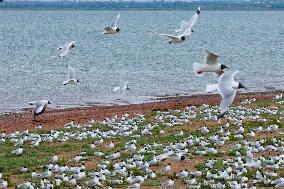
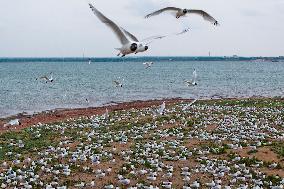
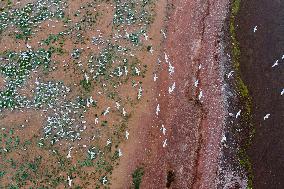
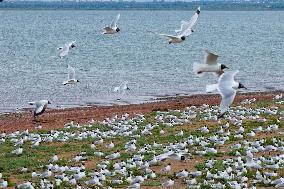
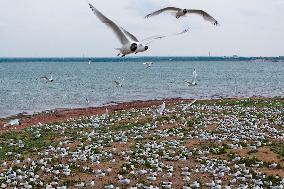
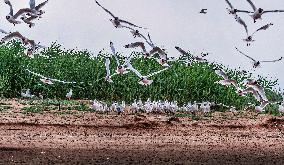
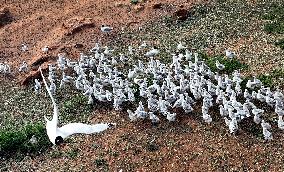
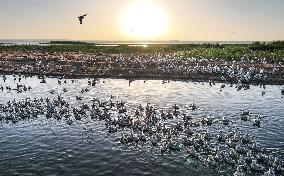
(240605) -- XI'AN, June 5, 2024 Photo by Xinhua/ABACAPRESS.COM) -- A drone photo taken on June 4, 2024 shows relict gulls at Hongjiannao National Nature Reserve in Shenmu, northwest China's Shaanxi Province. At present, nearly 5,000 nests of relict gulls have entered the incubation and brooding period in the Hongjiannao Lake, China's largest desert freshwater lake. After years of treatment, the lake has regained vitality and has become an important habitat and breeding place for relict gull, which is under first-class national protection in China. Photo by Xinhua/ABACAPRESS.COM/Shao Rui)

  •  
CHINA-SHAANXI-HONGJIANNAO-RELICT GULLS (CN)

CHINA-SHAANXI-HONGJIANNAO-RELICT GULLS (CN)

(240605) -- XI'AN, June 5, 2024 Photo by Xinhua/ABACAPRESS.COM) -- A drone photo taken on June 4, 2024 shows relict gulls at Hongjiannao National Nature Reserve in Shenmu, northwest China's Shaanxi Province. At present, nearly 5,000 nests of relict gulls have entered the incubation and brooding period in the Hongjiannao Lake, China's largest desert freshwater lake. After years of treatment, the lake has regained vitality and has become an important habitat and breeding place for relict gull, which is under first-class national protection in China. Photo by Xinhua/ABACAPRESS.COM/Shao Rui)

  •  
CHINA-SHAANXI-HONGJIANNAO-RELICT GULLS (CN)

CHINA-SHAANXI-HONGJIANNAO-RELICT GULLS (CN)

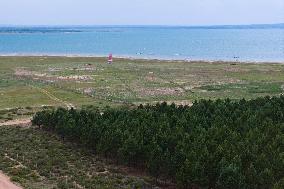
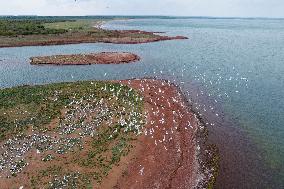
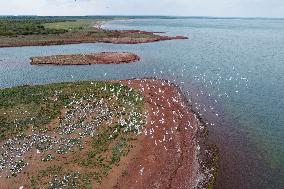
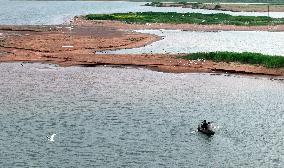
(240605) -- XI'AN, June 5, 2024 Photo by Xinhua/ABACAPRESS.COM) -- An aerial drone photo taken on June 4, 2024 shows a view in Hongjiannao National Nature Reserve in Shenmu, northwest China's Shaanxi Province. At present, nearly 5,000 nests of relict gulls have entered the incubation and brooding period in the Hongjiannao Lake, China's largest desert freshwater lake. After years of treatment, the lake has regained vitality and has become an important habitat and breeding place for relict gull, which is under first-class national protection in China. Photo by Xinhua/ABACAPRESS.COM/Shao Rui)

  •  
CHINA-SHAANXI-HONGJIANNAO-RELICT GULLS (CN)

CHINA-SHAANXI-HONGJIANNAO-RELICT GULLS (CN)

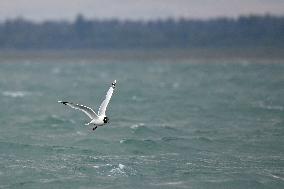
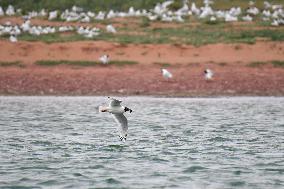
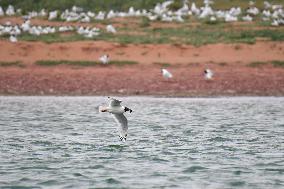
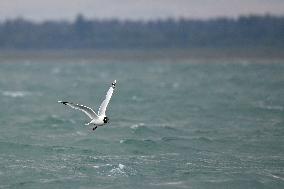
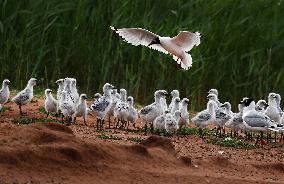
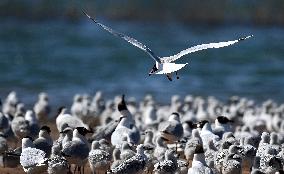
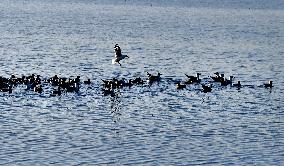
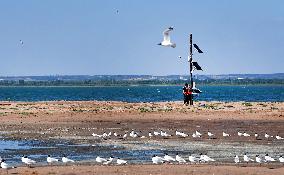
(240605) -- XI'AN, June 5, 2024 Photo by Xinhua/ABACAPRESS.COM) -- This photo taken on June 4, 2024 shows a relict gull flying at Hongjiannao National Nature Reserve in Shenmu, northwest China's Shaanxi Province. At present, nearly 5,000 nests of relict gulls have entered the incubation and brooding period in the Hongjiannao Lake, China's largest desert freshwater lake. After years of treatment, the lake has regained vitality and has become an important habitat and breeding place for relict gull, which is under first-class national protection in China. Photo by Xinhua/ABACAPRESS.COM/Shao Rui)

  •  
CHINA-SHAANXI-HONGJIANNAO-RELICT GULLS (CN)

CHINA-SHAANXI-HONGJIANNAO-RELICT GULLS (CN)

(240605) -- XI'AN, June 5, 2024 Photo by Xinhua/ABACAPRESS.COM) -- This photo taken on June 4, 2024 shows a relict gull flying at Hongjiannao National Nature Reserve in Shenmu, northwest China's Shaanxi Province. At present, nearly 5,000 nests of relict gulls have entered the incubation and brooding period in the Hongjiannao Lake, China's largest desert freshwater lake. After years of treatment, the lake has regained vitality and has become an important habitat and breeding place for relict gull, which is under first-class national protection in China. Photo by Xinhua/ABACAPRESS.COM/Shao Rui)

  •  
CHINA-SHAANXI-HONGJIANNAO-RELICT GULLS (CN)

CHINA-SHAANXI-HONGJIANNAO-RELICT GULLS (CN)

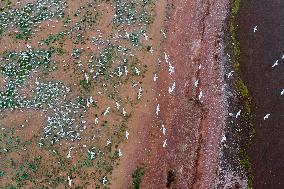
(240605) -- XI'AN, June 5, 2024 Photo by Xinhua/ABACAPRESS.COM) -- An aerial drone photo taken on June 4, 2024 shows relict gulls at Hongjiannao National Nature Reserve in Shenmu, northwest China's Shaanxi Province. At present, nearly 5,000 nests of relict gulls have entered the incubation and brooding period in the Hongjiannao Lake, China's largest desert freshwater lake. After years of treatment, the lake has regained vitality and has become an important habitat and breeding place for relict gull, which is under first-class national protection in China. Photo by Xinhua/ABACAPRESS.COM/Shao Rui)

  •  
CHINA-SHAANXI-HONGJIANNAO-RELICT GULLS (CN)

CHINA-SHAANXI-HONGJIANNAO-RELICT GULLS (CN)

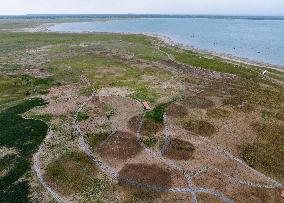
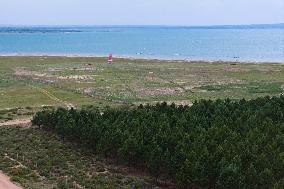
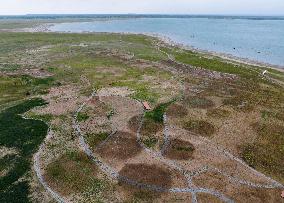
(240605) -- XI'AN, June 5, 2024 Photo by Xinhua/ABACAPRESS.COM) -- An aerial drone photo taken on June 4, 2024 shows a restoration program for degraded grassland in Hongjiannao National Nature Reserve in Shenmu, northwest China's Shaanxi Province. At present, nearly 5,000 nests of relict gulls have entered the incubation and brooding period in the Hongjiannao Lake, China's largest desert freshwater lake. After years of treatment, the lake has regained vitality and has become an important habitat and breeding place for relict gull, which is under first-class national protection in China. Photo by Xinhua/ABACAPRESS.COM/Shao Rui)

  •  
CHINA-SHAANXI-HONGJIANNAO-RELICT GULLS (CN)

CHINA-SHAANXI-HONGJIANNAO-RELICT GULLS (CN)

(240605) -- XI'AN, June 5, 2024 Photo by Xinhua/ABACAPRESS.COM) -- An aerial drone photo taken on June 4, 2024 shows relict gulls at Hongjiannao National Nature Reserve in Shenmu, northwest China's Shaanxi Province. At present, nearly 5,000 nests of relict gulls have entered the incubation and brooding period in the Hongjiannao Lake, China's largest desert freshwater lake. After years of treatment, the lake has regained vitality and has become an important habitat and breeding place for relict gull, which is under first-class national protection in China. Photo by Xinhua/ABACAPRESS.COM/Shao Rui)

  •  
CHINA-SHAANXI-HONGJIANNAO-RELICT GULLS (CN)

CHINA-SHAANXI-HONGJIANNAO-RELICT GULLS (CN)

(240605) -- XI'AN, June 5, 2024 Photo by Xinhua/ABACAPRESS.COM) -- An aerial drone photo taken on June 4, 2024 shows a view of the Hongjiannao Lake in Shenmu, northwest China's Shaanxi Province. At present, nearly 5,000 nests of relict gulls have entered the incubation and brooding period in the Hongjiannao Lake, China's largest desert freshwater lake. After years of treatment, the lake has regained vitality and has become an important habitat and breeding place for relict gull, which is under first-class national protection in China. Photo by Xinhua/ABACAPRESS.COM/Shao Rui)

  •  
CHINA-SHAANXI-HONGJIANNAO-RELICT GULLS (CN)

CHINA-SHAANXI-HONGJIANNAO-RELICT GULLS (CN)

(240605) -- XI'AN, June 5, 2024 (Xinhua) -- This photo taken on June 4, 2024 shows a relict gull flying at Hongjiannao National Nature Reserve in Shenmu, northwest China's Shaanxi Province. At present, nearly 5,000 nests of relict gulls have entered the incubation and brooding period in the Hongjiannao Lake, China's largest desert freshwater lake. After years of treatment, the lake has regained vitality and has become an important habitat and breeding place for relict gull, which is under first-class national protection in China. (Xinhua/Shao Rui)

  •  
CHINA-SHAANXI-HONGJIANNAO-RELICT GULLS (CN)

CHINA-SHAANXI-HONGJIANNAO-RELICT GULLS (CN)

(240605) -- XI'AN, June 5, 2024 (Xinhua) -- An aerial drone photo taken on June 4, 2024 shows relict gulls at Hongjiannao National Nature Reserve in Shenmu, northwest China's Shaanxi Province. At present, nearly 5,000 nests of relict gulls have entered the incubation and brooding period in the Hongjiannao Lake, China's largest desert freshwater lake. After years of treatment, the lake has regained vitality and has become an important habitat and breeding place for relict gull, which is under first-class national protection in China. (Xinhua/Shao Rui)

  •  
CHINA-SHAANXI-HONGJIANNAO-RELICT GULLS (CN)

CHINA-SHAANXI-HONGJIANNAO-RELICT GULLS (CN)

(240605) -- XI'AN, June 5, 2024 (Xinhua) -- A drone photo taken on June 4, 2024 shows relict gulls at Hongjiannao National Nature Reserve in Shenmu, northwest China's Shaanxi Province. At present, nearly 5,000 nests of relict gulls have entered the incubation and brooding period in the Hongjiannao Lake, China's largest desert freshwater lake. After years of treatment, the lake has regained vitality and has become an important habitat and breeding place for relict gull, which is under first-class national protection in China. (Xinhua/Shao Rui)

  •  
CHINA-SHAANXI-HONGJIANNAO-RELICT GULLS (CN)

CHINA-SHAANXI-HONGJIANNAO-RELICT GULLS (CN)

(240605) -- XI'AN, June 5, 2024 (Xinhua) -- An aerial drone photo taken on June 4, 2024 shows relict gulls at Hongjiannao National Nature Reserve in Shenmu, northwest China's Shaanxi Province. At present, nearly 5,000 nests of relict gulls have entered the incubation and brooding period in the Hongjiannao Lake, China's largest desert freshwater lake. After years of treatment, the lake has regained vitality and has become an important habitat and breeding place for relict gull, which is under first-class national protection in China. (Xinhua/Shao Rui)

  •  
CHINA-SHAANXI-HONGJIANNAO-RELICT GULLS (CN)

CHINA-SHAANXI-HONGJIANNAO-RELICT GULLS (CN)

(240605) -- XI'AN, June 5, 2024 (Xinhua) -- An aerial drone photo taken on June 4, 2024 shows a view in Hongjiannao National Nature Reserve in Shenmu, northwest China's Shaanxi Province. At present, nearly 5,000 nests of relict gulls have entered the incubation and brooding period in the Hongjiannao Lake, China's largest desert freshwater lake. After years of treatment, the lake has regained vitality and has become an important habitat and breeding place for relict gull, which is under first-class national protection in China. (Xinhua/Shao Rui)

  •  
CHINA-SHAANXI-HONGJIANNAO-RELICT GULLS (CN)

CHINA-SHAANXI-HONGJIANNAO-RELICT GULLS (CN)

(240605) -- XI'AN, June 5, 2024 (Xinhua) -- An aerial drone photo taken on June 4, 2024 shows a restoration program for degraded grassland in Hongjiannao National Nature Reserve in Shenmu, northwest China's Shaanxi Province. At present, nearly 5,000 nests of relict gulls have entered the incubation and brooding period in the Hongjiannao Lake, China's largest desert freshwater lake. After years of treatment, the lake has regained vitality and has become an important habitat and breeding place for relict gull, which is under first-class national protection in China. (Xinhua/Shao Rui)

  •  
CHINA-SHAANXI-HONGJIANNAO-RELICT GULLS (CN)

CHINA-SHAANXI-HONGJIANNAO-RELICT GULLS (CN)

(240605) -- XI'AN, June 5, 2024 (Xinhua) -- An aerial drone photo taken on June 4, 2024 shows a view of the Hongjiannao Lake in Shenmu, northwest China's Shaanxi Province. At present, nearly 5,000 nests of relict gulls have entered the incubation and brooding period in the Hongjiannao Lake, China's largest desert freshwater lake. After years of treatment, the lake has regained vitality and has become an important habitat and breeding place for relict gull, which is under first-class national protection in China. (Xinhua/Shao Rui)

  •  
CHINA-SHAANXI-HONGJIANNAO-RELICT GULLS (CN)

CHINA-SHAANXI-HONGJIANNAO-RELICT GULLS (CN)

(240605) -- XI'AN, June 5, 2024 (Xinhua) -- A drone photo taken on June 4, 2024 shows relict gulls at Hongjiannao National Nature Reserve in Shenmu, northwest China's Shaanxi Province. At present, nearly 5,000 nests of relict gulls have entered the incubation and brooding period in the Hongjiannao Lake, China's largest desert freshwater lake. After years of treatment, the lake has regained vitality and has become an important habitat and breeding place for relict gull, which is under first-class national protection in China. (Xinhua/Shao Rui)

  •  
CHINA-SHAANXI-HONGJIANNAO-RELICT GULLS (CN)

CHINA-SHAANXI-HONGJIANNAO-RELICT GULLS (CN)

(240605) -- XI'AN, June 5, 2024 (Xinhua) -- This photo taken on June 4, 2024 shows a relict gull flying at Hongjiannao National Nature Reserve in Shenmu, northwest China's Shaanxi Province. At present, nearly 5,000 nests of relict gulls have entered the incubation and brooding period in the Hongjiannao Lake, China's largest desert freshwater lake. After years of treatment, the lake has regained vitality and has become an important habitat and breeding place for relict gull, which is under first-class national protection in China. (Xinhua/Shao Rui)

  •  
CHINA-SHAANXI-SHIMAO RUINS (CN)

CHINA-SHAANXI-SHIMAO RUINS (CN)

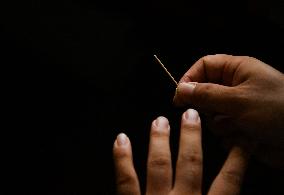
(220806) -- SHENMU, Aug. 6, 2022 (Xinhua) -- An archeologist shows a needle made of bone excavated from the Shimao ruins, an important prehistoric site in Shenmu City, northwest China's Shaanxi Province, Aug. 6, 2022. Shimao ruins, located in Shenmu of northwest China's Shaanxi Province, were a neolithic city built about 4,300 years ago and abandoned roughly 300 years later during the Xia Dynasty (2070-1600 B.C.), the first dynasty in China described in historical chronicles. Over the past 10 years, excavators have uncovered a stone city with immense fortifications and sophisticated infrastructure, thousands of luxurious artifacts and a 230-foot-high stepped pyramid. "The site's early date and peripheral location were surprising since Chinese civilization was thought to have first developed in the Central Plains around 500 years after Shimao's founding," read an article in the Archaeology journal. (Xinhua/Zhang Bowen)

  •  
CHINA-SHAANXI-SHIMAO RUINS (CN)

CHINA-SHAANXI-SHIMAO RUINS (CN)

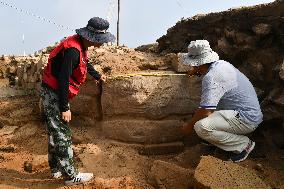
(220806) -- SHENMU, Aug. 6, 2022 (Xinhua) -- An archeologist works at the Shimao ruins, an important prehistoric site in Shenmu City, northwest China's Shaanxi Province, Aug. 6, 2022. Shimao ruins, located in Shenmu of northwest China's Shaanxi Province, were a neolithic city built about 4,300 years ago and abandoned roughly 300 years later during the Xia Dynasty (2070-1600 B.C.), the first dynasty in China described in historical chronicles. Over the past 10 years, excavators have uncovered a stone city with immense fortifications and sophisticated infrastructure, thousands of luxurious artifacts and a 230-foot-high stepped pyramid. "The site's early date and peripheral location were surprising since Chinese civilization was thought to have first developed in the Central Plains around 500 years after Shimao's founding," read an article in the Archaeology journal. (Xinhua/Zhang Bowen)

  •  
CHINA-SHAANXI-SHIMAO RUINS (CN)

CHINA-SHAANXI-SHIMAO RUINS (CN)

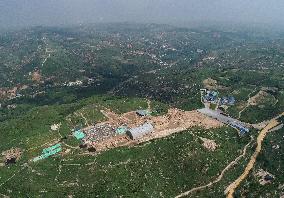
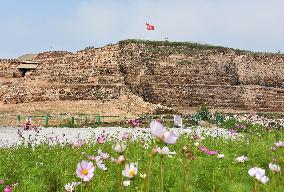
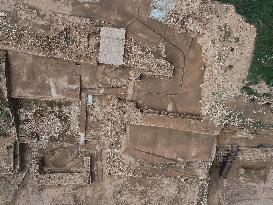
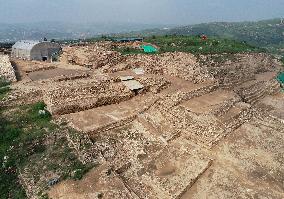
(220806) -- SHENMU, Aug. 6, 2022 (Xinhua) -- Aerial photo taken on Aug. 6, 2022 shows a view of the Shimao ruins, an important prehistoric site in Shenmu City, northwest China's Shaanxi Province. Shimao ruins, located in Shenmu of northwest China's Shaanxi Province, were a neolithic city built about 4,300 years ago and abandoned roughly 300 years later during the Xia Dynasty (2070-1600 B.C.), the first dynasty in China described in historical chronicles. Over the past 10 years, excavators have uncovered a stone city with immense fortifications and sophisticated infrastructure, thousands of luxurious artifacts and a 230-foot-high stepped pyramid. "The site's early date and peripheral location were surprising since Chinese civilization was thought to have first developed in the Central Plains around 500 years after Shimao's founding," read an article in the Archaeology journal. (Xinhua/Zhang Bowen)

  •  
CHINA-SHAANXI-SHIMAO RUINS (CN)

CHINA-SHAANXI-SHIMAO RUINS (CN)

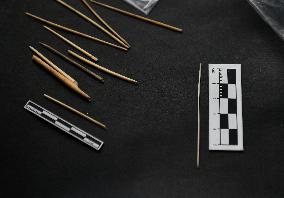
(220806) -- SHENMU, Aug. 6, 2022 (Xinhua) -- Photo taken on Aug. 6, 2022 shows needles made of bone excavated from the Shimao ruins, an important prehistoric site in Shenmu City, northwest China's Shaanxi Province. Shimao ruins, located in Shenmu of northwest China's Shaanxi Province, were a neolithic city built about 4,300 years ago and abandoned roughly 300 years later during the Xia Dynasty (2070-1600 B.C.), the first dynasty in China described in historical chronicles. Over the past 10 years, excavators have uncovered a stone city with immense fortifications and sophisticated infrastructure, thousands of luxurious artifacts and a 230-foot-high stepped pyramid. "The site's early date and peripheral location were surprising since Chinese civilization was thought to have first developed in the Central Plains around 500 years after Shimao's founding," read an article in the Archaeology journal. (Xinhua/Zhang Bowen)

  •  
CHINA-SHAANXI-SHIMAO RUINS (CN)

CHINA-SHAANXI-SHIMAO RUINS (CN)

(220806) -- SHENMU, Aug. 6, 2022 (Xinhua) -- Photo taken on Aug. 6, 2022 shows a view of the Shimao ruins, an important prehistoric site in Shenmu City, northwest China's Shaanxi Province. Shimao ruins, located in Shenmu of northwest China's Shaanxi Province, were a neolithic city built about 4,300 years ago and abandoned roughly 300 years later during the Xia Dynasty (2070-1600 B.C.), the first dynasty in China described in historical chronicles. Over the past 10 years, excavators have uncovered a stone city with immense fortifications and sophisticated infrastructure, thousands of luxurious artifacts and a 230-foot-high stepped pyramid. "The site's early date and peripheral location were surprising since Chinese civilization was thought to have first developed in the Central Plains around 500 years after Shimao's founding," read an article in the Archaeology journal. (Xinhua/Yang Yimiao)

  •  
CHINA-SHAANXI-SHIMAO RUINS (CN)

CHINA-SHAANXI-SHIMAO RUINS (CN)

(220806) -- SHENMU, Aug. 6, 2022 (Xinhua) -- Aerial photo taken on Aug. 6, 2022 shows a view of the Shimao ruins, an important prehistoric site in Shenmu City, northwest China's Shaanxi Province. Shimao ruins, located in Shenmu of northwest China's Shaanxi Province, were a neolithic city built about 4,300 years ago and abandoned roughly 300 years later during the Xia Dynasty (2070-1600 B.C.), the first dynasty in China described in historical chronicles. Over the past 10 years, excavators have uncovered a stone city with immense fortifications and sophisticated infrastructure, thousands of luxurious artifacts and a 230-foot-high stepped pyramid. "The site's early date and peripheral location were surprising since Chinese civilization was thought to have first developed in the Central Plains around 500 years after Shimao's founding," read an article in the Archaeology journal. (Xinhua/Zhang Bowen)

  •  
CHINA-SHAANXI-SHIMAO RUINS (CN)

CHINA-SHAANXI-SHIMAO RUINS (CN)

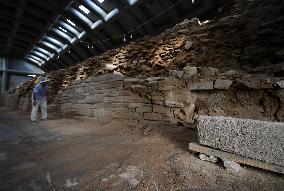
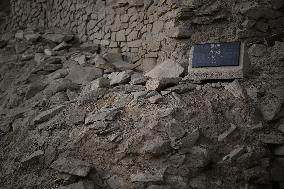
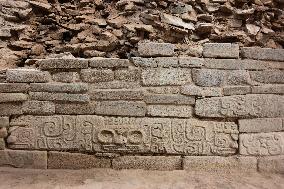
(220806) -- SHENMU, Aug. 6, 2022 (Xinhua) -- Photo taken on Aug. 6, 2022 shows the reinforcing wall at the Shimao ruins, an important prehistoric site in Shenmu City, northwest China's Shaanxi Province. Shimao ruins, located in Shenmu of northwest China's Shaanxi Province, were a neolithic city built about 4,300 years ago and abandoned roughly 300 years later during the Xia Dynasty (2070-1600 B.C.), the first dynasty in China described in historical chronicles. Over the past 10 years, excavators have uncovered a stone city with immense fortifications and sophisticated infrastructure, thousands of luxurious artifacts and a 230-foot-high stepped pyramid. "The site's early date and peripheral location were surprising since Chinese civilization was thought to have first developed in the Central Plains around 500 years after Shimao's founding," read an article in the Archaeology journal. (Xinhua/Zhang Bowen)

  •  
CHINA-SHAANXI-SHIMAO RUINS (CN)

CHINA-SHAANXI-SHIMAO RUINS (CN)

(220806) -- SHENMU, Aug. 6, 2022 (Xinhua) -- Aerial photo taken on Aug. 6, 2022 shows a view of the Shimao ruins, an important prehistoric site in Shenmu City, northwest China's Shaanxi Province. Shimao ruins, located in Shenmu of northwest China's Shaanxi Province, were a neolithic city built about 4,300 years ago and abandoned roughly 300 years later during the Xia Dynasty (2070-1600 B.C.), the first dynasty in China described in historical chronicles. Over the past 10 years, excavators have uncovered a stone city with immense fortifications and sophisticated infrastructure, thousands of luxurious artifacts and a 230-foot-high stepped pyramid. "The site's early date and peripheral location were surprising since Chinese civilization was thought to have first developed in the Central Plains around 500 years after Shimao's founding," read an article in the Archaeology journal. (Xinhua/Zhang Bowen)

  •  
CHINA-SHAANXI-SHIMAO RUINS (CN)

CHINA-SHAANXI-SHIMAO RUINS (CN)

(220806) -- SHENMU, Aug. 6, 2022 (Xinhua) -- Archeologists measure a recently-excavated stone carvings at the Shimao ruins, an important prehistoric site in Shenmu City, northwest China's Shaanxi Province, Aug. 6, 2022. Shimao ruins, located in Shenmu of northwest China's Shaanxi Province, were a neolithic city built about 4,300 years ago and abandoned roughly 300 years later during the Xia Dynasty (2070-1600 B.C.), the first dynasty in China described in historical chronicles. Over the past 10 years, excavators have uncovered a stone city with immense fortifications and sophisticated infrastructure, thousands of luxurious artifacts and a 230-foot-high stepped pyramid. "The site's early date and peripheral location were surprising since Chinese civilization was thought to have first developed in the Central Plains around 500 years after Shimao's founding," read an article in the Archaeology journal. (Xinhua/Zhang Bowen)

  •  
CHINA-SHAANXI-SHIMAO RUINS (CN)

CHINA-SHAANXI-SHIMAO RUINS (CN)

(220806) -- SHENMU, Aug. 6, 2022 (Xinhua) -- Photo taken on Aug. 6, 2022 shows stone carvings excavated from the Shimao ruins, an important prehistoric site in Shenmu City, northwest China's Shaanxi Province. Shimao ruins, located in Shenmu of northwest China's Shaanxi Province, were a neolithic city built about 4,300 years ago and abandoned roughly 300 years later during the Xia Dynasty (2070-1600 B.C.), the first dynasty in China described in historical chronicles. Over the past 10 years, excavators have uncovered a stone city with immense fortifications and sophisticated infrastructure, thousands of luxurious artifacts and a 230-foot-high stepped pyramid. "The site's early date and peripheral location were surprising since Chinese civilization was thought to have first developed in the Central Plains around 500 years after Shimao's founding," read an article in the Archaeology journal. (Xinhua/Yang Yimiao)

  •  
CHINA-SHAANXI-SHIMAO RUINS (CN)

CHINA-SHAANXI-SHIMAO RUINS (CN)

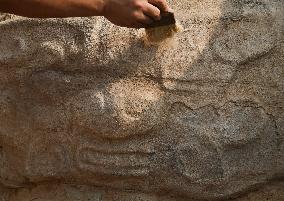
(220806) -- SHENMU, Aug. 6, 2022 (Xinhua) -- An archeologist cleans recently-excavated stone carvings at the Shimao ruins, an important prehistoric site in Shenmu City, northwest China's Shaanxi Province, Aug. 6, 2022. Shimao ruins, located in Shenmu of northwest China's Shaanxi Province, were a neolithic city built about 4,300 years ago and abandoned roughly 300 years later during the Xia Dynasty (2070-1600 B.C.), the first dynasty in China described in historical chronicles. Over the past 10 years, excavators have uncovered a stone city with immense fortifications and sophisticated infrastructure, thousands of luxurious artifacts and a 230-foot-high stepped pyramid. "The site's early date and peripheral location were surprising since Chinese civilization was thought to have first developed in the Central Plains around 500 years after Shimao's founding," read an article in the Archaeology journal. (Xinhua/Zhang Bowen)

  •  
CHINA-SHAANXI-SHIMAO RUINS (CN)

CHINA-SHAANXI-SHIMAO RUINS (CN)

(220806) -- SHENMU, Aug. 6, 2022 (Xinhua) -- Photo taken on Aug. 6, 2022 shows part of the Shimao ruins, an important prehistoric site in Shenmu City, northwest China's Shaanxi Province. Shimao ruins, located in Shenmu of northwest China's Shaanxi Province, were a neolithic city built about 4,300 years ago and abandoned roughly 300 years later during the Xia Dynasty (2070-1600 B.C.), the first dynasty in China described in historical chronicles. Over the past 10 years, excavators have uncovered a stone city with immense fortifications and sophisticated infrastructure, thousands of luxurious artifacts and a 230-foot-high stepped pyramid. "The site's early date and peripheral location were surprising since Chinese civilization was thought to have first developed in the Central Plains around 500 years after Shimao's founding," read an article in the Archaeology journal. (Xinhua/Zhang Bowen)

  •  
CHINA-SHAANXI-SHENMU-HONGJIANNAO WETLAND-RELICT GULLS-BREEDING (CN)

CHINA-SHAANXI-SHENMU-HONGJIANNAO WETLAND-RELICT GULLS-BREEDING (CN)

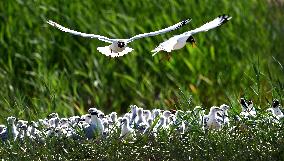
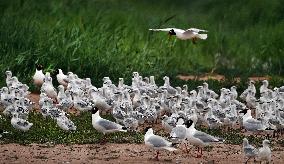
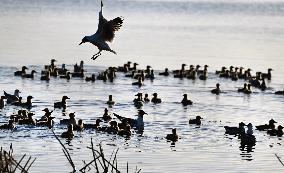
(220623) -- SHENMU, June 23, 2022 (Xinhua) -- Adult relict gulls (larus relictus) and relict gull chicks are seen in Hongjiannao National Nature Reserve in Shenmu, northwest China's Shaanxi Province, June 22, 2022. More than 10,000 relict gull chicks are learning survival skills such as swimming, foraging and flying in Hongjiannao National Nature Reserve. The relict gull is under first-class national protection in China. (Xinhua/Tao Ming)

  •  
CHINA-SHAANXI-SHENMU-HONGJIANNAO WETLAND-RELICT GULLS-BREEDING (CN)

CHINA-SHAANXI-SHENMU-HONGJIANNAO WETLAND-RELICT GULLS-BREEDING (CN)

(220623) -- SHENMU, June 23, 2022 (Xinhua) -- An adult relict gull (larus relictus) flies back after predation in Hongjiannao National Nature Reserve in Shenmu, northwest China's Shaanxi Province, June 20, 2022. More than 10,000 relict gull chicks are learning survival skills such as swimming, foraging and flying in Hongjiannao National Nature Reserve. The relict gull is under first-class national protection in China. (Xinhua/Tao Ming)

  •  
CHINA-SHAANXI-SHENMU-HONGJIANNAO WETLAND-RELICT GULLS-BREEDING (CN)

CHINA-SHAANXI-SHENMU-HONGJIANNAO WETLAND-RELICT GULLS-BREEDING (CN)

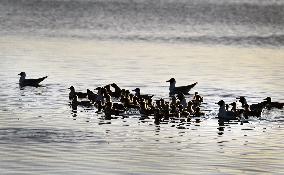
(220623) -- SHENMU, June 23, 2022 (Xinhua) -- Baby relict gulls (larus relictus) swim in the lake of Hongjiannao National Nature Reserve in Shenmu, northwest China's Shaanxi Province, June 20, 2022. More than 10,000 relict gull chicks are learning survival skills such as swimming, foraging and flying in Hongjiannao National Nature Reserve. The relict gull is under first-class national protection in China. (Xinhua/Tao Ming)

  •  
CHINA-SHAANXI-SHENMU-HONGJIANNAO WETLAND-RELICT GULLS-BREEDING (CN)

CHINA-SHAANXI-SHENMU-HONGJIANNAO WETLAND-RELICT GULLS-BREEDING (CN)

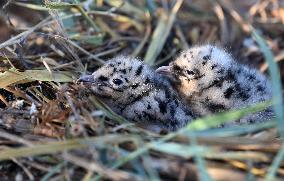
(220623) -- SHENMU, June 23, 2022 (Xinhua) -- Newly-born relict gull (larus relictus) nestlings are seen in Hongjiannao National Nature Reserve in Shenmu, northwest China's Shaanxi Province, June 23, 2022. More than 10,000 relict gull chicks are learning survival skills such as swimming, foraging and flying in Hongjiannao National Nature Reserve. The relict gull is under first-class national protection in China. (Xinhua/Tao Ming)

  •  
CHINA-SHAANXI-SHENMU-HONGJIANNAO WETLAND-RELICT GULLS-BREEDING (CN)

CHINA-SHAANXI-SHENMU-HONGJIANNAO WETLAND-RELICT GULLS-BREEDING (CN)

(220623) -- SHENMU, June 23, 2022 (Xinhua) -- Relict gull (larus relictus) chicks are trained to swim in the lake of Hongjiannao National Nature Reserve in Shenmu, northwest China's Shaanxi Province, June 23, 2022. More than 10,000 relict gull chicks are learning survival skills such as swimming, foraging and flying in Hongjiannao National Nature Reserve. The relict gull is under first-class national protection in China. (Xinhua/Tao Ming)

  •  
CHINA-SHAANXI-SHENMU-HONGJIANNAO WETLAND-RELICT GULLS-BREEDING (CN)

CHINA-SHAANXI-SHENMU-HONGJIANNAO WETLAND-RELICT GULLS-BREEDING (CN)

(220623) -- SHENMU, June 23, 2022 (Xinhua) -- An adult relict gull (larus relictus) flies back after predation in Hongjiannao National Nature Reserve in Shenmu, northwest China's Shaanxi Province, June 21, 2022 More than 10,000 relict gull chicks are learning survival skills such as swimming, foraging and flying in Hongjiannao National Nature Reserve. The relict gull is under first-class national protection in China. (Xinhua/Tao Ming)

  •  
CHINA-SHAANXI-SHENMU-HONGJIANNAO WETLAND-RELICT GULLS-BREEDING (CN)

CHINA-SHAANXI-SHENMU-HONGJIANNAO WETLAND-RELICT GULLS-BREEDING (CN)

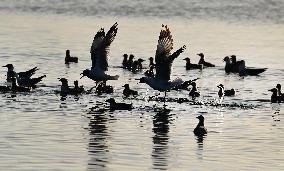
(220623) -- SHENMU, June 23, 2022 (Xinhua) -- An adult relict gull (larus relictus) flies in Hongjiannao National Nature Reserve in Shenmu, northwest China's Shaanxi Province, June 22, 2022. More than 10,000 relict gull chicks are learning survival skills such as swimming, foraging and flying in Hongjiannao National Nature Reserve. The relict gull is under first-class national protection in China. (Xinhua/Tao Ming)

  •  
CHINA-SHAANXI-SHENMU-HONGJIANNAO WETLAND-RELICT GULLS-BREEDING (CN)

CHINA-SHAANXI-SHENMU-HONGJIANNAO WETLAND-RELICT GULLS-BREEDING (CN)

(220623) -- SHENMU, June 23, 2022 (Xinhua) -- Adult relict gulls (larus relictus) and relict gull chicks are seen in Hongjiannao National Nature Reserve in Shenmu, northwest China's Shaanxi Province, June 21, 2022. More than 10,000 relict gull chicks are learning survival skills such as swimming, foraging and flying in Hongjiannao National Nature Reserve. The relict gull is under first-class national protection in China. (Xinhua/Tao Ming)

  •  
CHINA-SHAANXI-SHENMU-HONGJIANNAO WETLAND-RELICT GULLS-BREEDING (CN)

CHINA-SHAANXI-SHENMU-HONGJIANNAO WETLAND-RELICT GULLS-BREEDING (CN)

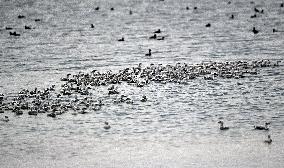
(220623) -- SHENMU, June 23, 2022 (Xinhua) -- Aerial photo taken on June 21, 2022 shows relict gulls (larus relictus) inhabiting in Hongjiannao National Nature Reserve in Shenmu, northwest China's Shaanxi Province. More than 10,000 relict gull chicks are learning survival skills such as swimming, foraging and flying in Hongjiannao National Nature Reserve. The relict gull is under first-class national protection in China. (Xinhua/Tao Ming)

  •  
CHINA-SHAANXI-SHENMU-HONGJIANNAO WETLAND-RELICT GULLS-BREEDING (CN)

CHINA-SHAANXI-SHENMU-HONGJIANNAO WETLAND-RELICT GULLS-BREEDING (CN)

(220623) -- SHENMU, June 23, 2022 (Xinhua) -- Aerial photo taken on June 21, 2022 shows staff members canoeing to patrol the bird island of Hongjiannao National Nature Reserve in Shenmu, northwest China's Shaanxi Province. More than 10,000 relict gull chicks are learning survival skills such as swimming, foraging and flying in Hongjiannao National Nature Reserve. The relict gull is under first-class national protection in China. (Xinhua/Tao Ming)

  •  
CHINA-SHAANXI-SHENMU-HONGJIANNAO WETLAND-RELICT GULLS-BREEDING (CN)

CHINA-SHAANXI-SHENMU-HONGJIANNAO WETLAND-RELICT GULLS-BREEDING (CN)

(220623) -- SHENMU, June 23, 2022 (Xinhua) -- Relict gull (larus relictus) chicks are trained to swim in the lake of Hongjiannao National Nature Reserve in Shenmu, northwest China's Shaanxi Province, June 23, 2022. More than 10,000 relict gull chicks are learning survival skills such as swimming, foraging and flying in Hongjiannao National Nature Reserve. The relict gull is under first-class national protection in China. (Xinhua/Tao Ming)

  •  
CHINA-SHAANXI-SHENMU-HONGJIANNAO WETLAND-RELICT GULLS-BREEDING (CN)

CHINA-SHAANXI-SHENMU-HONGJIANNAO WETLAND-RELICT GULLS-BREEDING (CN)

(220623) -- SHENMU, June 23, 2022 (Xinhua) -- Relict gull (larus relictus) chicks are trained to swim in the lake of Hongjiannao National Nature Reserve in Shenmu, northwest China's Shaanxi Province, June 23, 2022. More than 10,000 relict gull chicks are learning survival skills such as swimming, foraging and flying in Hongjiannao National Nature Reserve. The relict gull is under first-class national protection in China. (Xinhua/Tao Ming)

  •  
CHINA-SHAANXI-SHENMU-HONGJIANNAO WETLAND-RELICT GULLS-BREEDING (CN)

CHINA-SHAANXI-SHENMU-HONGJIANNAO WETLAND-RELICT GULLS-BREEDING (CN)

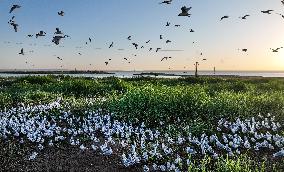
(220623) -- SHENMU, June 23, 2022 (Xinhua) -- Aerial photo taken on June 23, 2022 shows the bird island at dawn in Hongjiannao National Nature Reserve in Shenmu, northwest China's Shaanxi Province. More than 10,000 relict gull chicks are learning survival skills such as swimming, foraging and flying in Hongjiannao National Nature Reserve. The relict gull is under first-class national protection in China. (Xinhua/Tao Ming)

  •  
CHINA-SHAANXI-SHENMU-HONGJIANNAO WETLAND-RELICT GULLS-BREEDING (CN)

CHINA-SHAANXI-SHENMU-HONGJIANNAO WETLAND-RELICT GULLS-BREEDING (CN)

(220623) -- SHENMU, June 23, 2022 (Xinhua) -- Aerial photo taken on June 23, 2022 shows the bird island at dawn in Hongjiannao National Nature Reserve in Shenmu, northwest China's Shaanxi Province. More than 10,000 relict gull chicks are learning survival skills such as swimming, foraging and flying in Hongjiannao National Nature Reserve. The relict gull is under first-class national protection in China. (Xinhua/Tao Ming)

  •  
CHINA-SHAANXI-SHENMU-HONGJIANNAO WETLAND-RELICT GULLS-BREEDING (CN)

CHINA-SHAANXI-SHENMU-HONGJIANNAO WETLAND-RELICT GULLS-BREEDING (CN)

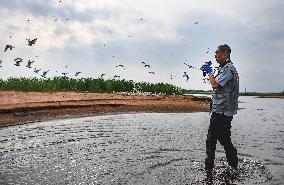
(220623) -- SHENMU, June 23, 2022 (Xinhua) -- Xiao Hong, a researcher with the Shaanxi Institute of Zoology, observes chicks in Hongjiannao National Nature Reserve in Shenmu, northwest China's Shaanxi Province, June 21, 2022. More than 10,000 relict gull chicks are learning survival skills such as swimming, foraging and flying in Hongjiannao National Nature Reserve. The relict gull is under first-class national protection in China. (Xinhua/Tao Ming)

  •  
CHINA-SHAANXI-SHENMU-HONGJIANNAO WETLAND-RELICT GULLS-BREEDING (CN)

CHINA-SHAANXI-SHENMU-HONGJIANNAO WETLAND-RELICT GULLS-BREEDING (CN)

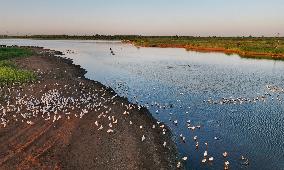
(220623) -- SHENMU, June 23, 2022 (Xinhua) -- Aerial photo taken on June 23, 2022 shows a colony of relict gulls (larus relictus) in Hongjiannao National Nature Reserve in Shenmu, northwest China's Shaanxi Province. More than 10,000 relict gull chicks are learning survival skills such as swimming, foraging and flying in Hongjiannao National Nature Reserve. The relict gull is under first-class national protection in China. (Xinhua/Tao Ming)

  •  
CHINA-SHAANXI-SHENMU-HONGJIANNAO WETLAND-RELICT GULLS-BREEDING (CN)

CHINA-SHAANXI-SHENMU-HONGJIANNAO WETLAND-RELICT GULLS-BREEDING (CN)

(220623) -- SHENMU, June 23, 2022 (Xinhua) -- Photo taken on June 23, 2022 shows the bird island at dawn in Hongjiannao National Nature Reserve in Shenmu, northwest China's Shaanxi Province. More than 10,000 relict gull chicks are learning survival skills such as swimming, foraging and flying in Hongjiannao National Nature Reserve. The relict gull is under first-class national protection in China. (Xinhua/Tao Ming)

  •  
CHINA-SHAANXI-SHENMU-HONGJIANNAO WETLAND-RELICT GULLS-BREEDING (CN)

CHINA-SHAANXI-SHENMU-HONGJIANNAO WETLAND-RELICT GULLS-BREEDING (CN)

(220623) -- SHENMU, June 23, 2022 (Xinhua) -- An adult relict gull (larus relictus) prepares to land on water in Hongjiannao National Nature Reserve in Shenmu, northwest China's Shaanxi Province, June 23, 2022. More than 10,000 relict gull chicks are learning survival skills such as swimming, foraging and flying in Hongjiannao National Nature Reserve. The relict gull is under first-class national protection in China. (Xinhua/Tao Ming)

  •  
CHINA-SHAANXI-SHENMU-HONGJIANNAO WETLAND-RELICT GULLS-BREEDING (CN)

CHINA-SHAANXI-SHENMU-HONGJIANNAO WETLAND-RELICT GULLS-BREEDING (CN)

(220623) -- SHENMU, June 23, 2022 (Xinhua) -- Staff members check the monitoring equipment while patrolling the bird island of Hongjiannao National Nature Reserve in Shenmu, northwest China's Shaanxi Province, June 22, 2022. More than 10,000 relict gull chicks are learning survival skills such as swimming, foraging and flying in Hongjiannao National Nature Reserve. The relict gull is under first-class national protection in China. (Xinhua/Tao Ming)

  • Main
  • Top
  • Editorial
  • Creative
  • About Us
  • About ILG
  • Terms of use
  • Company
  • BEHIND
  • Price List
  • Single Plan
  • Monthly Plan
  • Services
  • Shooting
  • Rights Clearance
  • Support
  • FAQ
  • How To Buy
  • Contact Us
  • Become a Partner

© KYODO NEWS IMAGES INC

All Rights Reserved.

  • Editorial
  • Olympics
  • News
  • Sports
  • Japan
  • Tech
  • Royal
  • Disaster
  • NorthKorea
  • Old Japan
  • SNS
  • Creative
  • Food
  • Japan
  • Landscape
  • Animal
  • Popular
  • #Ukraine
  • #Russia
  • #coronavirus
  • #N. Korea
  • #Thailand
  • #China
  • #Ukraine
  • #Russia
  • #coronavirus
  • #N. Korea
  • #Thailand
  • #China
  • Food
  • Japan
  • Landscape
  • Animal
  • Olympics
  • News
  • Sports
  • Japan
  • Tech
  • Royal
  • Disaster
  • NorthKorea
  • Old Japan
  • SNS