•  
Exclusive - Illustration - The Cathedral of Notre Dame - Paris

Exclusive - Illustration - The Cathedral of Notre Dame - Paris

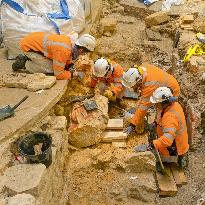
FRANCE. PARIS (75) NOTRE DAME DE PARIS WORKSITE: PREVENTIVE EXCAVATIONS, LED BY INRAP FROM 2 FEBRUARY TO 8 APRIL 2022, AT THE TRANSEPT CROSSING. THE ARCHAEOLOGISTS UNCOVERED POLYCHROME SCULPTURAL ELEMENTS OF THE MEDIEVAL JUBE (BUILT AROUND 1230 AND DESTROYED UNDER THE REIGN OF LOUIS XIV) IN AN EXCEPTIONAL STATE OF PRESERVATION. ONCE THEY HAD BEEN CLEARED AND CLEANED, THE BLOCKS WERE LIFTED VIA THE REMOVABLE ROOF BY THE SITE'S LARGE TOWER CRANE. Photo by Stephane Compoint/Only Paris/ABACAPRESS.COM

  •  
In The Wake Of The Fall Of Assad's Regime - Syria

In The Wake Of The Fall Of Assad's Regime - Syria

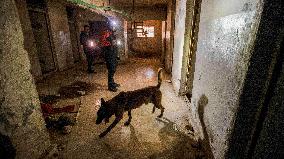
Rescue workers search the prison with the aid of a dog in Damascus, Syria, on December 17, 2024. The investigation continues to uncover the remnants of the site’s past. Photo by Osama Al Maqdoni/Middle East Images/ABACAPRESS.COM

  •  
Harry And Meghan Relaunch Their Official Website

Harry And Meghan Relaunch Their Official Website

Screen grab of Sussex.com web site’s home page. Meghan Markle and Prince Harry just got an online makeover. The Duke and Duchess of Sussex quietly launched a new website, Sussex.com, on Monday. The site encompasses the latest news about the couple, bios for Harry, 39, and Meghan, 42, as well as links to their Archewell Foundation organization and Archewell Productions hub. The homepage features a photo of Prince Harry and Meghan in Germany at the 2023 Invictus Games closing ceremony in September. The image of the duo smiling and clapping is a favorite of the pair, as they also chose it as the picture for their holiday card last year. Photo via ABACAPRESS.COM

  •  

Africa's performing art festival delivers beauty of cultural diversity

STORY: Africa's performing art festival delivers beauty of cultural diversity DATELINE: July 20, 2023 LENGTH: 00:03:29 LOCATION: Kigali CATEGORY: CULTURE/ENTERTAINMENT SHOTLIST: 1. various of Ubumuntu Arts Festival 2. SOUNDBITE 1 (English): EFRANCE, Reveler from Tanzania 3. SOUNDBITE 2 (English): ANDERSON CARVALHO, Choreographer 4. SOUNDBITE 3 (English): HOPE AZEDA, Artistic director STORYLINE: Ubumuntu Arts Festival, Africa's performing event, concluded Sunday with artists from about a dozen countries in Kigali, the capital of Rwanda. The three-day event at the Kigali Genocide Memorial site's amphitheater showcased rich cultural heritage. The event drew artists and emerging talent from across the continent and beyond to showcase the power of art in fostering social change. The festival, the ninth edition with the theme "Believe: Faith Over Fear," featured curated theater, music, and contemporary dance performances, uniting people from diverse backgrounds. Among the highlights was the Ballet de Barcel

  •  
Coal mine train in southwestern Japan

Coal mine train in southwestern Japan

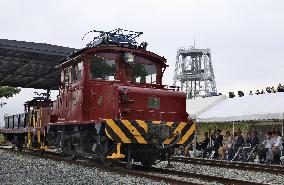
An electric locomotive, which was used at the now-defunct Miike Coal Mine straddling Fukuoka and Kumamoto prefectures in southwestern Japan, runs at a pit in Arao in Kumamoto Prefecture on July 8, 2023, during an event marking the site's eighth anniversary of its addition to the UNESCO World Cultural Heritage list.

  •  
Coal mine trains in southwestern Japan

Coal mine trains in southwestern Japan

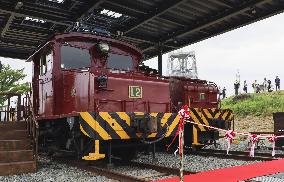
Two electric locomotives, which were used at the now-defunct Miike Coal Mine straddling Fukuoka and Kumamoto prefectures in southwestern Japan, are pictured on July 8, 2023, as they go on public display at a pit in Arao in Kumamoto Prefecture to mark the site's eighth anniversary of its addition to the UNESCO World Cultural Heritage list.

  •  
Coal mine trains in southwestern Japan

Coal mine trains in southwestern Japan

People pose for photos in front of two electric locomotives, which were used at the now-defunct Miike Coal Mine straddling Fukuoka and Kumamoto prefectures in southwestern Japan, on July 8, 2023, at a pit in Arao in Kumamoto Prefecture. The trains went on public display to mark the site's eighth anniversary of its addition to the UNESCO World Cultural Heritage list.

  •  
Abe, Facebook COO

Abe, Facebook COO

TOKYO, Japan - Japanese Prime Minister Shinzo Abe (R) and Sheryl Sandberg, chief operating officer of Facebook Inc., pose for photos at the prime minister's office in Tokyo on July 2, 2013, with their thumbs up mimicking the U.S. social networking site's "like" sign.

  •  
CHINA-SHAANXI-SHIMAO RUINS (CN)

CHINA-SHAANXI-SHIMAO RUINS (CN)

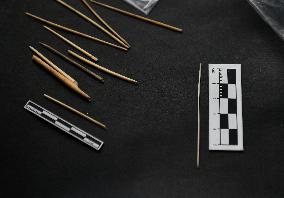
(220806) -- SHENMU, Aug. 6, 2022 (Xinhua) -- An archeologist shows a needle made of bone excavated from the Shimao ruins, an important prehistoric site in Shenmu City, northwest China's Shaanxi Province, Aug. 6, 2022. Shimao ruins, located in Shenmu of northwest China's Shaanxi Province, were a neolithic city built about 4,300 years ago and abandoned roughly 300 years later during the Xia Dynasty (2070-1600 B.C.), the first dynasty in China described in historical chronicles. Over the past 10 years, excavators have uncovered a stone city with immense fortifications and sophisticated infrastructure, thousands of luxurious artifacts and a 230-foot-high stepped pyramid. "The site's early date and peripheral location were surprising since Chinese civilization was thought to have first developed in the Central Plains around 500 years after Shimao's founding," read an article in the Archaeology journal. (Xinhua/Zhang Bowen)

  •  
CHINA-SHAANXI-SHIMAO RUINS (CN)

CHINA-SHAANXI-SHIMAO RUINS (CN)

(220806) -- SHENMU, Aug. 6, 2022 (Xinhua) -- An archeologist works at the Shimao ruins, an important prehistoric site in Shenmu City, northwest China's Shaanxi Province, Aug. 6, 2022. Shimao ruins, located in Shenmu of northwest China's Shaanxi Province, were a neolithic city built about 4,300 years ago and abandoned roughly 300 years later during the Xia Dynasty (2070-1600 B.C.), the first dynasty in China described in historical chronicles. Over the past 10 years, excavators have uncovered a stone city with immense fortifications and sophisticated infrastructure, thousands of luxurious artifacts and a 230-foot-high stepped pyramid. "The site's early date and peripheral location were surprising since Chinese civilization was thought to have first developed in the Central Plains around 500 years after Shimao's founding," read an article in the Archaeology journal. (Xinhua/Zhang Bowen)

  •  
CHINA-SHAANXI-SHIMAO RUINS (CN)

CHINA-SHAANXI-SHIMAO RUINS (CN)

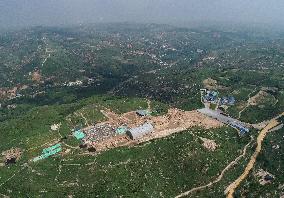
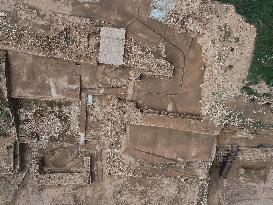
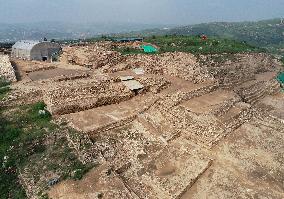
(220806) -- SHENMU, Aug. 6, 2022 (Xinhua) -- Aerial photo taken on Aug. 6, 2022 shows a view of the Shimao ruins, an important prehistoric site in Shenmu City, northwest China's Shaanxi Province. Shimao ruins, located in Shenmu of northwest China's Shaanxi Province, were a neolithic city built about 4,300 years ago and abandoned roughly 300 years later during the Xia Dynasty (2070-1600 B.C.), the first dynasty in China described in historical chronicles. Over the past 10 years, excavators have uncovered a stone city with immense fortifications and sophisticated infrastructure, thousands of luxurious artifacts and a 230-foot-high stepped pyramid. "The site's early date and peripheral location were surprising since Chinese civilization was thought to have first developed in the Central Plains around 500 years after Shimao's founding," read an article in the Archaeology journal. (Xinhua/Zhang Bowen)

  •  
CHINA-SHAANXI-SHIMAO RUINS (CN)

CHINA-SHAANXI-SHIMAO RUINS (CN)

(220806) -- SHENMU, Aug. 6, 2022 (Xinhua) -- Photo taken on Aug. 6, 2022 shows needles made of bone excavated from the Shimao ruins, an important prehistoric site in Shenmu City, northwest China's Shaanxi Province. Shimao ruins, located in Shenmu of northwest China's Shaanxi Province, were a neolithic city built about 4,300 years ago and abandoned roughly 300 years later during the Xia Dynasty (2070-1600 B.C.), the first dynasty in China described in historical chronicles. Over the past 10 years, excavators have uncovered a stone city with immense fortifications and sophisticated infrastructure, thousands of luxurious artifacts and a 230-foot-high stepped pyramid. "The site's early date and peripheral location were surprising since Chinese civilization was thought to have first developed in the Central Plains around 500 years after Shimao's founding," read an article in the Archaeology journal. (Xinhua/Zhang Bowen)

  •  
CHINA-SHAANXI-SHIMAO RUINS (CN)

CHINA-SHAANXI-SHIMAO RUINS (CN)

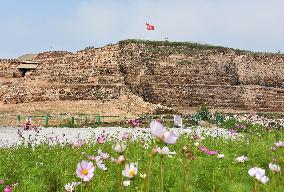
(220806) -- SHENMU, Aug. 6, 2022 (Xinhua) -- Photo taken on Aug. 6, 2022 shows a view of the Shimao ruins, an important prehistoric site in Shenmu City, northwest China's Shaanxi Province. Shimao ruins, located in Shenmu of northwest China's Shaanxi Province, were a neolithic city built about 4,300 years ago and abandoned roughly 300 years later during the Xia Dynasty (2070-1600 B.C.), the first dynasty in China described in historical chronicles. Over the past 10 years, excavators have uncovered a stone city with immense fortifications and sophisticated infrastructure, thousands of luxurious artifacts and a 230-foot-high stepped pyramid. "The site's early date and peripheral location were surprising since Chinese civilization was thought to have first developed in the Central Plains around 500 years after Shimao's founding," read an article in the Archaeology journal. (Xinhua/Yang Yimiao)

  •  
CHINA-SHAANXI-SHIMAO RUINS (CN)

CHINA-SHAANXI-SHIMAO RUINS (CN)

(220806) -- SHENMU, Aug. 6, 2022 (Xinhua) -- Aerial photo taken on Aug. 6, 2022 shows a view of the Shimao ruins, an important prehistoric site in Shenmu City, northwest China's Shaanxi Province. Shimao ruins, located in Shenmu of northwest China's Shaanxi Province, were a neolithic city built about 4,300 years ago and abandoned roughly 300 years later during the Xia Dynasty (2070-1600 B.C.), the first dynasty in China described in historical chronicles. Over the past 10 years, excavators have uncovered a stone city with immense fortifications and sophisticated infrastructure, thousands of luxurious artifacts and a 230-foot-high stepped pyramid. "The site's early date and peripheral location were surprising since Chinese civilization was thought to have first developed in the Central Plains around 500 years after Shimao's founding," read an article in the Archaeology journal. (Xinhua/Zhang Bowen)

  •  
CHINA-SHAANXI-SHIMAO RUINS (CN)

CHINA-SHAANXI-SHIMAO RUINS (CN)

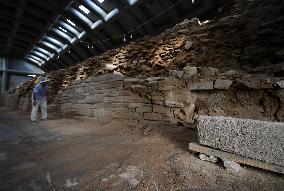
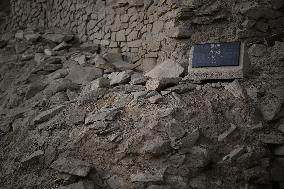
(220806) -- SHENMU, Aug. 6, 2022 (Xinhua) -- Photo taken on Aug. 6, 2022 shows the reinforcing wall at the Shimao ruins, an important prehistoric site in Shenmu City, northwest China's Shaanxi Province. Shimao ruins, located in Shenmu of northwest China's Shaanxi Province, were a neolithic city built about 4,300 years ago and abandoned roughly 300 years later during the Xia Dynasty (2070-1600 B.C.), the first dynasty in China described in historical chronicles. Over the past 10 years, excavators have uncovered a stone city with immense fortifications and sophisticated infrastructure, thousands of luxurious artifacts and a 230-foot-high stepped pyramid. "The site's early date and peripheral location were surprising since Chinese civilization was thought to have first developed in the Central Plains around 500 years after Shimao's founding," read an article in the Archaeology journal. (Xinhua/Zhang Bowen)

  •  
CHINA-SHAANXI-SHIMAO RUINS (CN)

CHINA-SHAANXI-SHIMAO RUINS (CN)

(220806) -- SHENMU, Aug. 6, 2022 (Xinhua) -- Aerial photo taken on Aug. 6, 2022 shows a view of the Shimao ruins, an important prehistoric site in Shenmu City, northwest China's Shaanxi Province. Shimao ruins, located in Shenmu of northwest China's Shaanxi Province, were a neolithic city built about 4,300 years ago and abandoned roughly 300 years later during the Xia Dynasty (2070-1600 B.C.), the first dynasty in China described in historical chronicles. Over the past 10 years, excavators have uncovered a stone city with immense fortifications and sophisticated infrastructure, thousands of luxurious artifacts and a 230-foot-high stepped pyramid. "The site's early date and peripheral location were surprising since Chinese civilization was thought to have first developed in the Central Plains around 500 years after Shimao's founding," read an article in the Archaeology journal. (Xinhua/Zhang Bowen)

  •  
CHINA-SHAANXI-SHIMAO RUINS (CN)

CHINA-SHAANXI-SHIMAO RUINS (CN)

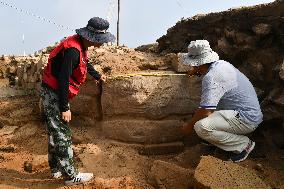
(220806) -- SHENMU, Aug. 6, 2022 (Xinhua) -- Archeologists measure a recently-excavated stone carvings at the Shimao ruins, an important prehistoric site in Shenmu City, northwest China's Shaanxi Province, Aug. 6, 2022. Shimao ruins, located in Shenmu of northwest China's Shaanxi Province, were a neolithic city built about 4,300 years ago and abandoned roughly 300 years later during the Xia Dynasty (2070-1600 B.C.), the first dynasty in China described in historical chronicles. Over the past 10 years, excavators have uncovered a stone city with immense fortifications and sophisticated infrastructure, thousands of luxurious artifacts and a 230-foot-high stepped pyramid. "The site's early date and peripheral location were surprising since Chinese civilization was thought to have first developed in the Central Plains around 500 years after Shimao's founding," read an article in the Archaeology journal. (Xinhua/Zhang Bowen)

  •  
CHINA-SHAANXI-SHIMAO RUINS (CN)

CHINA-SHAANXI-SHIMAO RUINS (CN)

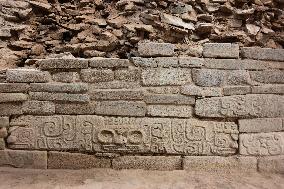
(220806) -- SHENMU, Aug. 6, 2022 (Xinhua) -- Photo taken on Aug. 6, 2022 shows stone carvings excavated from the Shimao ruins, an important prehistoric site in Shenmu City, northwest China's Shaanxi Province. Shimao ruins, located in Shenmu of northwest China's Shaanxi Province, were a neolithic city built about 4,300 years ago and abandoned roughly 300 years later during the Xia Dynasty (2070-1600 B.C.), the first dynasty in China described in historical chronicles. Over the past 10 years, excavators have uncovered a stone city with immense fortifications and sophisticated infrastructure, thousands of luxurious artifacts and a 230-foot-high stepped pyramid. "The site's early date and peripheral location were surprising since Chinese civilization was thought to have first developed in the Central Plains around 500 years after Shimao's founding," read an article in the Archaeology journal. (Xinhua/Yang Yimiao)

  •  
CHINA-SHAANXI-SHIMAO RUINS (CN)

CHINA-SHAANXI-SHIMAO RUINS (CN)

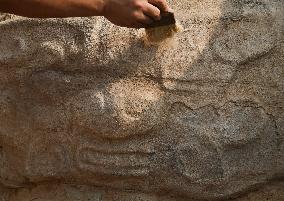
(220806) -- SHENMU, Aug. 6, 2022 (Xinhua) -- An archeologist cleans recently-excavated stone carvings at the Shimao ruins, an important prehistoric site in Shenmu City, northwest China's Shaanxi Province, Aug. 6, 2022. Shimao ruins, located in Shenmu of northwest China's Shaanxi Province, were a neolithic city built about 4,300 years ago and abandoned roughly 300 years later during the Xia Dynasty (2070-1600 B.C.), the first dynasty in China described in historical chronicles. Over the past 10 years, excavators have uncovered a stone city with immense fortifications and sophisticated infrastructure, thousands of luxurious artifacts and a 230-foot-high stepped pyramid. "The site's early date and peripheral location were surprising since Chinese civilization was thought to have first developed in the Central Plains around 500 years after Shimao's founding," read an article in the Archaeology journal. (Xinhua/Zhang Bowen)

  •  
CHINA-SHAANXI-SHIMAO RUINS (CN)

CHINA-SHAANXI-SHIMAO RUINS (CN)

(220806) -- SHENMU, Aug. 6, 2022 (Xinhua) -- Photo taken on Aug. 6, 2022 shows part of the Shimao ruins, an important prehistoric site in Shenmu City, northwest China's Shaanxi Province. Shimao ruins, located in Shenmu of northwest China's Shaanxi Province, were a neolithic city built about 4,300 years ago and abandoned roughly 300 years later during the Xia Dynasty (2070-1600 B.C.), the first dynasty in China described in historical chronicles. Over the past 10 years, excavators have uncovered a stone city with immense fortifications and sophisticated infrastructure, thousands of luxurious artifacts and a 230-foot-high stepped pyramid. "The site's early date and peripheral location were surprising since Chinese civilization was thought to have first developed in the Central Plains around 500 years after Shimao's founding," read an article in the Archaeology journal. (Xinhua/Zhang Bowen)

  •  
S. Korean man tells of hard labor at WWII steel works

S. Korean man tells of hard labor at WWII steel works

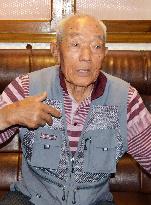
Chu Sok Bong, a 91-year old civilian who was brought in 1943 from the Korean Peninsula to Japan and forced to work at the Yawata Steel Works in Kitakyushu, southwestern Japan, under harsh conditions, tells his story in this photo taken in May 2015, in Seongnam, Gyeonggi Province, South Korea. He said the past cannot be erased but showed understanding of the site's addition to the World Cultural Heritage list. (Kyodo) ==Kyodo

  •  
Google set to expand options for non-English news readers

Google set to expand options for non-English news readers

NEW YORK, United States - Krishna Bharat, who is distinguished research scientist at Google Inc. and founder of Google News, speaks to Kyodo News of his plan to make the site's personalization options more widely available to non-English readers during an interview at the company's New York office on Jan. 20, 2011. (Kyodo)

  • Main
  • Top
  • Editorial
  • Creative
  • About Us
  • About ILG
  • Terms of use
  • Company
  • BEHIND
  • Price List
  • Single Plan
  • Monthly Plan
  • Services
  • Shooting
  • Rights Clearance
  • Support
  • FAQ
  • How To Buy
  • Contact Us
  • Become a Partner

© KYODO NEWS IMAGES INC

All Rights Reserved.

  • Editorial
  • Olympics
  • News
  • Sports
  • Japan
  • Tech
  • Royal
  • Disaster
  • NorthKorea
  • Old Japan
  • SNS
  • Creative
  • Food
  • Japan
  • Landscape
  • Animal
  • Popular
  • #Ukraine
  • #Russia
  • #coronavirus
  • #N. Korea
  • #Thailand
  • #China
  • #Ukraine
  • #Russia
  • #coronavirus
  • #N. Korea
  • #Thailand
  • #China
  • Food
  • Japan
  • Landscape
  • Animal
  • Olympics
  • News
  • Sports
  • Japan
  • Tech
  • Royal
  • Disaster
  • NorthKorea
  • Old Japan
  • SNS