•  
(FOCUS)CHINA-SICHUAN-SANXINGDUI RUINS-DISCOVERIES-WORKSHOP-JADE-STONE (CN)

(FOCUS)CHINA-SICHUAN-SANXINGDUI RUINS-DISCOVERIES-WORKSHOP-JADE-STONE (CN)

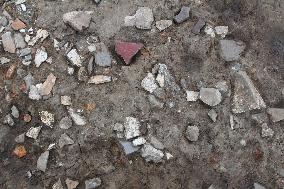
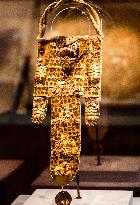
(240723) -- CHENGDU, July 23, 2024 Photo by Xinhua/ABACAPRESS.COM) -- This file photo taken on Dec. 1, 2023 shows a collection of jadeware and stoneware discovered at the Sanxingdui Ruins site in Guanghan City, southwest China's Sichuan Province. Archaeological authorities have recently unveiled groundbreaking discoveries, including a jade and stone artifact "workshop" dating back over 3,400 years, at the legendary Sanxingdui Ruins site. The new finds offer vital insights into the origins of various precious cultural relics and highlight the remarkable achievements of ancient Chinese civilization. (Sichuan cultural relics and archaeology research institute/Handout via Xinhua/ABACAPRESS.COM

  •  
XINHUA PHOTOS OF THE DAY

XINHUA PHOTOS OF THE DAY

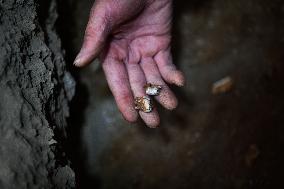
(240126) -- BEIJING, Jan. 26, 2024 (Xinhua) -- This photo taken on Jan. 24, 2024 shows archaeological samples unearthed from Chuandong Site in Puding County, southwest China's Guizhou Province. Large quantities of artifacts made of stone, bone and horn have been unearthed at Chuandong Site in Puding County, southwest China's Guizhou Province, indicating prehistoric human activity dating back more than 55,000 years. Chuandong Site, first discovered in 1978, is believed to have existed across the end of the middle Paleolithic Period, the late Paleolithic Period and the Neolithic Age. Over two years of excavation work, the third one since 1978, researchers discovered a new soil layer at the site, where they found more than 100,000 animal bones, over 10,000 pieces of earthenware and stoneware, and more than 2,500 items made of bone or horn. (Xinhua/Yang Wenbin)

  •  
CHINA-GUIZHOU-PUDING-CHUANDONG SITE-NEW FINDING (CN)

CHINA-GUIZHOU-PUDING-CHUANDONG SITE-NEW FINDING (CN)

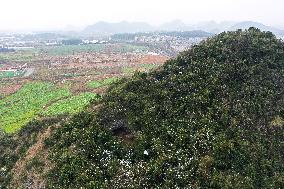
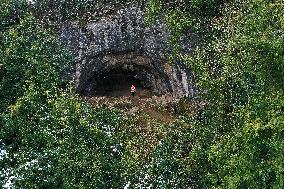
(240125) -- PUDING, Jan. 25, 2024 (Xinhua) -- An aerial drone photo taken on Jan. 24, 2024 shows a view of Chuandong Site in Puding County, southwest China's Guizhou Province. Large quantities of artifacts made of stone, bone and horn have been unearthed at Chuandong Site in Puding County, southwest China's Guizhou Province, indicating prehistoric human activity dating back more than 55,000 years. Chuandong Site, first discovered in 1978, is believed to have existed across the end of the middle Paleolithic Period, the late Paleolithic Period and the Neolithic Age. Over two years of excavation work, the third one since 1978, researchers discovered a new soil layer at the site, where they found more than 100,000 animal bones, over 10,000 pieces of earthenware and stoneware, and more than 2,500 items made of bone or horn. (Xinhua/Yang Wenbin)

  •  
CHINA-GUIZHOU-PUDING-CHUANDONG SITE-NEW FINDING (CN)

CHINA-GUIZHOU-PUDING-CHUANDONG SITE-NEW FINDING (CN)

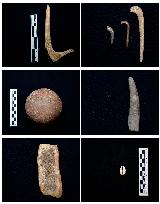
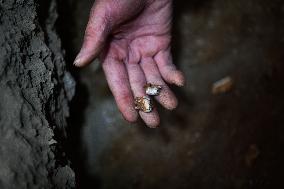
(240125) -- PUDING, Jan. 25, 2024 (Xinhua) -- This combo photo taken on Jan. 24, 2024 shows archaeological samples unearthed from Chuandong Site in Puding County, southwest China's Guizhou Province. Large quantities of artifacts made of stone, bone and horn have been unearthed at Chuandong Site in Puding County, southwest China's Guizhou Province, indicating prehistoric human activity dating back more than 55,000 years. Chuandong Site, first discovered in 1978, is believed to have existed across the end of the middle Paleolithic Period, the late Paleolithic Period and the Neolithic Age. Over two years of excavation work, the third one since 1978, researchers discovered a new soil layer at the site, where they found more than 100,000 animal bones, over 10,000 pieces of earthenware and stoneware, and more than 2,500 items made of bone or horn. (Xinhua/Yang Wenbin)

  •  
CHINA-GUIZHOU-PUDING-CHUANDONG SITE-NEW FINDING (CN)

CHINA-GUIZHOU-PUDING-CHUANDONG SITE-NEW FINDING (CN)

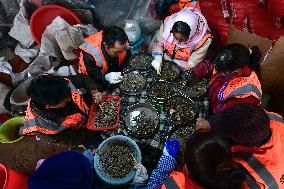
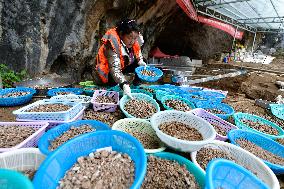
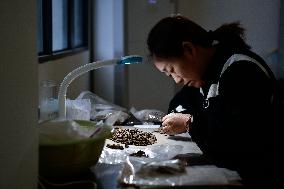
(240125) -- PUDING, Jan. 25, 2024 (Xinhua) -- Workers sort findings unearthed from Chuandong Site in Puding County, southwest China's Guizhou Province, Jan. 24, 2024. Large quantities of artifacts made of stone, bone and horn have been unearthed at Chuandong Site in Puding County, southwest China's Guizhou Province, indicating prehistoric human activity dating back more than 55,000 years. Chuandong Site, first discovered in 1978, is believed to have existed across the end of the middle Paleolithic Period, the late Paleolithic Period and the Neolithic Age. Over two years of excavation work, the third one since 1978, researchers discovered a new soil layer at the site, where they found more than 100,000 animal bones, over 10,000 pieces of earthenware and stoneware, and more than 2,500 items made of bone or horn. (Xinhua/Yang Wenbin)

  •  
CHINA-GUIZHOU-PUDING-CHUANDONG SITE-NEW FINDING (CN)

CHINA-GUIZHOU-PUDING-CHUANDONG SITE-NEW FINDING (CN)

(240125) -- PUDING, Jan. 25, 2024 (Xinhua) -- This photo taken on Jan. 24, 2024 shows archaeological samples unearthed from Chuandong Site in Puding County, southwest China's Guizhou Province. Large quantities of artifacts made of stone, bone and horn have been unearthed at Chuandong Site in Puding County, southwest China's Guizhou Province, indicating prehistoric human activity dating back more than 55,000 years. Chuandong Site, first discovered in 1978, is believed to have existed across the end of the middle Paleolithic Period, the late Paleolithic Period and the Neolithic Age. Over two years of excavation work, the third one since 1978, researchers discovered a new soil layer at the site, where they found more than 100,000 animal bones, over 10,000 pieces of earthenware and stoneware, and more than 2,500 items made of bone or horn. (Xinhua/Yang Wenbin)

  •  
CHINA-GUIZHOU-PUDING-CHUANDONG SITE-NEW FINDING (CN)

CHINA-GUIZHOU-PUDING-CHUANDONG SITE-NEW FINDING (CN)

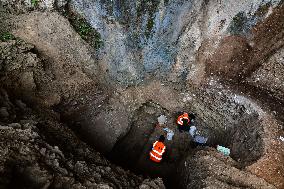
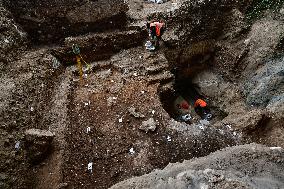
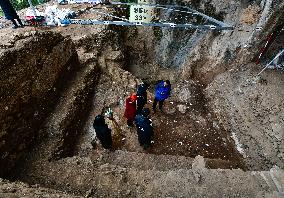
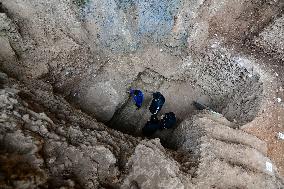
(240125) -- PUDING, Jan. 25, 2024 (Xinhua) -- Staff members conduct work at Chuandong Site in Puding County, southwest China's Guizhou Province, Jan. 24, 2024. Large quantities of artifacts made of stone, bone and horn have been unearthed at Chuandong Site in Puding County, southwest China's Guizhou Province, indicating prehistoric human activity dating back more than 55,000 years. Chuandong Site, first discovered in 1978, is believed to have existed across the end of the middle Paleolithic Period, the late Paleolithic Period and the Neolithic Age. Over two years of excavation work, the third one since 1978, researchers discovered a new soil layer at the site, where they found more than 100,000 animal bones, over 10,000 pieces of earthenware and stoneware, and more than 2,500 items made of bone or horn. (Xinhua/Yang Wenbin)

  •  
CHINA-GUIZHOU-PUDING-CHUANDONG SITE-NEW FINDING (CN)

CHINA-GUIZHOU-PUDING-CHUANDONG SITE-NEW FINDING (CN)

(240125) -- PUDING, Jan. 25, 2024 (Xinhua) -- An aerial drone photo taken on Jan. 24, 2024 shows a view of Chuandong Site in Puding County, southwest China's Guizhou Province. Large quantities of artifacts made of stone, bone and horn have been unearthed at Chuandong Site in Puding County, southwest China's Guizhou Province, indicating prehistoric human activity dating back more than 55,000 years. Chuandong Site, first discovered in 1978, is believed to have existed across the end of the middle Paleolithic Period, the late Paleolithic Period and the Neolithic Age. Over two years of excavation work, the third one since 1978, researchers discovered a new soil layer at the site, where they found more than 100,000 animal bones, over 10,000 pieces of earthenware and stoneware, and more than 2,500 items made of bone or horn. (Xinhua/Yang Wenbin)

  •  
CHINA-GUIZHOU-PUDING-CHUANDONG SITE-NEW FINDING (CN)

CHINA-GUIZHOU-PUDING-CHUANDONG SITE-NEW FINDING (CN)

(240125) -- PUDING, Jan. 25, 2024 (Xinhua) -- Staff members conduct work at Chuandong Site in Puding County, southwest China's Guizhou Province, Jan. 24, 2024. Large quantities of artifacts made of stone, bone and horn have been unearthed at Chuandong Site in Puding County, southwest China's Guizhou Province, indicating prehistoric human activity dating back more than 55,000 years. Chuandong Site, first discovered in 1978, is believed to have existed across the end of the middle Paleolithic Period, the late Paleolithic Period and the Neolithic Age. Over two years of excavation work, the third one since 1978, researchers discovered a new soil layer at the site, where they found more than 100,000 animal bones, over 10,000 pieces of earthenware and stoneware, and more than 2,500 items made of bone or horn. (Xinhua/Yang Wenbin)

  •  
CHINA-GUIZHOU-PUDING-CHUANDONG SITE-NEW FINDING (CN)

CHINA-GUIZHOU-PUDING-CHUANDONG SITE-NEW FINDING (CN)

(240125) -- PUDING, Jan. 25, 2024 (Xinhua) -- Archaeological expert and students discuss at Chuandong Site in Puding County, southwest China's Guizhou Province, Jan. 24, 2024. Large quantities of artifacts made of stone, bone and horn have been unearthed at Chuandong Site in Puding County, southwest China's Guizhou Province, indicating prehistoric human activity dating back more than 55,000 years. Chuandong Site, first discovered in 1978, is believed to have existed across the end of the middle Paleolithic Period, the late Paleolithic Period and the Neolithic Age. Over two years of excavation work, the third one since 1978, researchers discovered a new soil layer at the site, where they found more than 100,000 animal bones, over 10,000 pieces of earthenware and stoneware, and more than 2,500 items made of bone or horn. (Xinhua/Yang Wenbin)

  •  
CHINA-GUIZHOU-PUDING-CHUANDONG SITE-NEW FINDING (CN)

CHINA-GUIZHOU-PUDING-CHUANDONG SITE-NEW FINDING (CN)

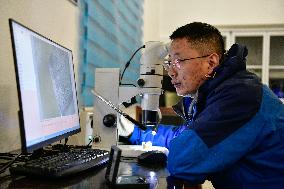
(240125) -- PUDING, Jan. 25, 2024 (Xinhua) -- Zhang Xinglong, an expert with the Guizhou provincial cultural relics and archaeology institute, examines archaeological samples unearthed from Chuandong Site under a microscope in Puding County, southwest China's Guizhou Province, Jan. 24, 2024. Large quantities of artifacts made of stone, bone and horn have been unearthed at Chuandong Site in Puding County, southwest China's Guizhou Province, indicating prehistoric human activity dating back more than 55,000 years. Chuandong Site, first discovered in 1978, is believed to have existed across the end of the middle Paleolithic Period, the late Paleolithic Period and the Neolithic Age. Over two years of excavation work, the third one since 1978, researchers discovered a new soil layer at the site, where they found more than 100,000 animal bones, over 10,000 pieces of earthenware and stoneware, and more than 2,500 items made of bone or horn. (Xinhua/Yang Wenbin)

  •  
CHINA-GUIZHOU-PUDING-CHUANDONG SITE-NEW FINDING (CN)

CHINA-GUIZHOU-PUDING-CHUANDONG SITE-NEW FINDING (CN)

(240125) -- PUDING, Jan. 25, 2024 (Xinhua) -- A worker arranges findings unearthed from Chuandong Site in Puding County, southwest China's Guizhou Province, Jan. 24, 2024. Large quantities of artifacts made of stone, bone and horn have been unearthed at Chuandong Site in Puding County, southwest China's Guizhou Province, indicating prehistoric human activity dating back more than 55,000 years. Chuandong Site, first discovered in 1978, is believed to have existed across the end of the middle Paleolithic Period, the late Paleolithic Period and the Neolithic Age. Over two years of excavation work, the third one since 1978, researchers discovered a new soil layer at the site, where they found more than 100,000 animal bones, over 10,000 pieces of earthenware and stoneware, and more than 2,500 items made of bone or horn. (Xinhua/Yang Wenbin)

  •  
CHINA-GUIZHOU-PUDING-CHUANDONG SITE-NEW FINDING (CN)

CHINA-GUIZHOU-PUDING-CHUANDONG SITE-NEW FINDING (CN)

(240125) -- PUDING, Jan. 25, 2024 (Xinhua) -- A staff member sorts findings unearthed from Chuandong Site at a work site of the Guizhou provincial cultural relics and archaeology institute in Puding County, southwest China's Guizhou Province, Jan. 24, 2024. Large quantities of artifacts made of stone, bone and horn have been unearthed at Chuandong Site in Puding County, southwest China's Guizhou Province, indicating prehistoric human activity dating back more than 55,000 years. Chuandong Site, first discovered in 1978, is believed to have existed across the end of the middle Paleolithic Period, the late Paleolithic Period and the Neolithic Age. Over two years of excavation work, the third one since 1978, researchers discovered a new soil layer at the site, where they found more than 100,000 animal bones, over 10,000 pieces of earthenware and stoneware, and more than 2,500 items made of bone or horn. (Xinhua/Yang Wenbin)

  •  
CHINA-GUIZHOU-PUDING-CHUANDONG SITE-NEW FINDING (CN)

CHINA-GUIZHOU-PUDING-CHUANDONG SITE-NEW FINDING (CN)

(240125) -- PUDING, Jan. 25, 2024 (Xinhua) -- Archaeological expert and students discuss at Chuandong Site in Puding County, southwest China's Guizhou Province, Jan. 24, 2024. Large quantities of artifacts made of stone, bone and horn have been unearthed at Chuandong Site in Puding County, southwest China's Guizhou Province, indicating prehistoric human activity dating back more than 55,000 years. Chuandong Site, first discovered in 1978, is believed to have existed across the end of the middle Paleolithic Period, the late Paleolithic Period and the Neolithic Age. Over two years of excavation work, the third one since 1978, researchers discovered a new soil layer at the site, where they found more than 100,000 animal bones, over 10,000 pieces of earthenware and stoneware, and more than 2,500 items made of bone or horn. (Xinhua/Yang Wenbin)

  •  

Exhibition on Inca civilization opens in China

STORY: Exhibition on Inca civilization opens in China SHOOTING TIME: Jan. 10, 2024 DATELINE: Jan. 11, 2024 LENGTH: 00:00:51 LOCATION: CHENGDU, China CATEGORY: CULTURE SHOTLIST: 1. various of the exhibition STORYLINE: An exhibition on the Inca civilization opened Tuesday at the Jinsha Site Museum in the southwestern Chinese city of Chengdu. This exhibition showcases 168 pieces or sets of exhibits from 14 museums in Peru, including boneware, ceramics, metals, stoneware, woodware, textiles, paintings, and mummies. The exhibition opened to the public on Wednesday and will last until April 10. It also offers online 360-degree panoramic tours and live broadcasts. The Inca civilization, one of the three major civilizations in the Americas, originated in the Peruvian Andes. It prospered between the 15th and 16th centuries AD, leaving behind world-famous historical and cultural relics. The exhibition is divided into four parts, including a section dedicated to the ancient civilization of the Andes and

  •  
CHINA-SICHUAN-CHENGDU-INCA CIVILIZATION-EXHIBITION (CN)

CHINA-SICHUAN-CHENGDU-INCA CIVILIZATION-EXHIBITION (CN)

(240110) -- CHENGDU, Jan. 10, 2024 (Xinhua) -- This photo taken on Jan. 9, 2024 shows a human-shaped jar displayed at an exhibition on the Inca civilization at the Jinsha Site Museum in Chengdu, southwest China's Sichuan Province. The exhibition opened to the public on Wednesday and will last until April 10. It showcases 168 pieces or sets of exhibits from 14 museums in Peru, including boneware, ceramics, metals, stoneware, woodware, textiles, paintings, and mummies. (Photo by Zhang Yan/Xinhua)

  •  
CHINA-SICHUAN-CHENGDU-INCA CIVILIZATION-EXHIBITION (CN)

CHINA-SICHUAN-CHENGDU-INCA CIVILIZATION-EXHIBITION (CN)

(240110) -- CHENGDU, Jan. 10, 2024 (Xinhua) -- This photo taken on Jan. 9, 2024 shows a cloak displayed at an exhibition on the Inca civilization at the Jinsha Site Museum in Chengdu, southwest China's Sichuan Province. The exhibition opened to the public on Wednesday and will last until April 10. It showcases 168 pieces or sets of exhibits from 14 museums in Peru, including boneware, ceramics, metals, stoneware, woodware, textiles, paintings, and mummies. (Photo by Zhang Yan/Xinhua)

  •  
CHINA-SICHUAN-CHENGDU-INCA CIVILIZATION-EXHIBITION (CN)

CHINA-SICHUAN-CHENGDU-INCA CIVILIZATION-EXHIBITION (CN)

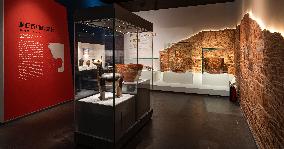
(240110) -- CHENGDU, Jan. 10, 2024 (Xinhua) -- This photo taken on Jan. 9, 2024 shows an exhibition on the Inca civilization at the Jinsha Site Museum in Chengdu, southwest China's Sichuan Province. The exhibition opened to the public on Wednesday and will last until April 10. It showcases 168 pieces or sets of exhibits from 14 museums in Peru, including boneware, ceramics, metals, stoneware, woodware, textiles, paintings, and mummies. (Photo by Zhang Yan/Xinhua)

  •  
CHINA-CHONGQING-ANCIENT STONEWARE (CN)

CHINA-CHONGQING-ANCIENT STONEWARE (CN)

(231108) -- CHONGQING, Nov. 8, 2023 (Xinhua) -- Archaeologists work at the site of the fifth phase of the excavation work of Longgupo Site in Miaoyu Township in Wushan County, southwest China's Chongqing Municipality, Nov. 2, 2023. TO GO WITH "Ancient stoneware unearthed from China's Three Gorges area" (Photo by Wang Zhonghu/Xinhua)

  •  
CHINA-CHONGQING-ANCIENT STONEWARE (CN)

CHINA-CHONGQING-ANCIENT STONEWARE (CN)

(231108) -- CHONGQING, Nov. 8, 2023 (Xinhua) -- This photo taken on Nov. 2, 2023 shows a collection of ancient stoneware unearthed from the Longgupo Site in Miaoyu Township in Wushan County, southwest China's Chongqing Municipality. TO GO WITH "Ancient stoneware unearthed from China's Three Gorges area" (Photo by Wang Zhonghu/Xinhua)

  •  
CHINA-CHONGQING-ANCIENT STONEWARE (CN)

CHINA-CHONGQING-ANCIENT STONEWARE (CN)

(231108) -- CHONGQING, Nov. 8, 2023 (Xinhua) -- An expert checks a piece of ancient stoneware unearthed from the Longgupo Site in Miaoyu Township in Wushan County, southwest China's Chongqing Municipality, Nov. 2, 2023. TO GO WITH "Ancient stoneware unearthed from China's Three Gorges area" (Photo by Wang Zhonghu/Xinhua)

  •  

Prehistoric ruins discovered in E China

STORY: Prehistoric ruins discovered in E China DATELINE: Jan. 13, 2023 LENGTH: 00:00:50 LOCATION: JINAN, China CATEGORY: CULTURE SHOTLIST: 1. various of the ancient hominid site 2. SOUNDBITE (Chinese): ZHAO YICHAO, Shandong provincial cultural relics and archaeology research institute 3. various of unearthed pieces STORYLINE: An ancient hominid site dating back some 13,200 years has been discovered in east China's Shandong Province. Its core area covers about 400 square meters. More than 1,000 relics were unearthed at the site, including animal bones, pottery shreds and sculptures, stoneware and clamshell products. SOUNDBITE (Chinese): ZHAO YICHAO, Shandong provincial cultural relics and archaeology research institute "The most valuable pieces are the pottery shreds and sculptures. We have found more than 200 of them. We believe they are among the oldest pottery pieces found in northern China so far." According to Zhao, the discovery shows that pottery-making techniques were relatively developed at tha

  •  
CHINA-INNER MONGOLIA-PALEOLITHIC STONEWARE-DISCOVERY (CN)

CHINA-INNER MONGOLIA-PALEOLITHIC STONEWARE-DISCOVERY (CN)

(230104) -- HOHHOT, Jan. 4, 2023 (Xinhua) -- This photo taken on Dec. 28, 2022 shows stoneware items discoverd in the city of Ordos, north China's Inner Mongolia Autonomous Region. TO GO WITH "Paleolithic stoneware items unearthed in north China's Inner Mongolia" (Xinhua)

  •  
CHINA-INNER MONGOLIA-PALEOLITHIC STONEWARE-DISCOVERY (CN)

CHINA-INNER MONGOLIA-PALEOLITHIC STONEWARE-DISCOVERY (CN)

(230104) -- HOHHOT, Jan. 4, 2023 (Xinhua) -- This photo taken on Dec. 28, 2022 shows stoneware items discoverd in the city of Ordos, north China's Inner Mongolia Autonomous Region. TO GO WITH "Paleolithic stoneware items unearthed in north China's Inner Mongolia" (Xinhua)

  •  
Leading ceramic artist Yu Fujiwara dies at 69

Leading ceramic artist Yu Fujiwara dies at 69

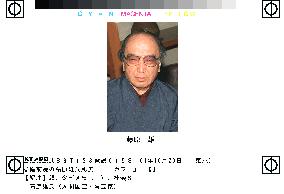
OKAYAMA, Japan - Yu Fujiwara (file photo), a ceramic artist specializing in Bizen ware who was named a Living National Treasure by the government, died of multiple organ failure on Oct. 29 at an Okayama Prefecture hospital. He was 69. Bizen ware is unglazed stoneware made in the western Japan prefecture. In 1963, Fujiwara won the grand prize at an international ceramics exhibition in Barcelona. He later held one-man shows in countries such as the United States.

  •  
6 publishers mull changes after archaeology fraud

6 publishers mull changes after archaeology fraud

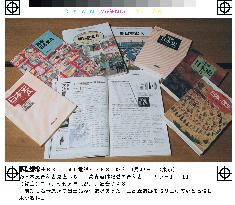
TOKYO, Japan - The six publishers of these high school history textbooks said Nov. 7 they are considering whether to revise passages covering Japan's earliest stoneware, following a disclosure on Nov. 5 that a leading archaeologist had fabricated his discovery of artifacts at the Kamitakamori ruins in Miyagi Prefecture. Shinichi Fujimura, 50, who served as deputy director of the Tohoku Paleolithic Institute, admitted that in late October he fabricated the finds by burying stoneware.

  •  
Archaeologist admits burying 'oldest' stoneware pieces

Archaeologist admits burying 'oldest' stoneware pieces

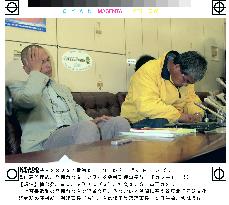
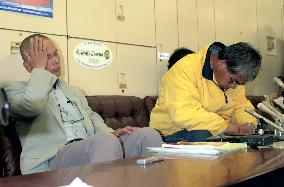
SENDAI, Japan - Shinichi Fujimura (R), 50, a senior director at the Tohoku Paleolithic Institute, admits at a news conference held at the Miyagi prefetural government building in Sendai on Nov. 5 that he fabricated the discovery in the prefecture of stoneware at first believed to be more than 600,000 years old by burying the objects himself.

  •  

Exploring Lushanmao site of Neolithic Age in Yan'an, China

STORY: Exploring Lushanmao site of Neolithic Age in Yan'an, China DATELINE: July 30, 2022 LENGTH: 00:00:46 LOCATION: XI'AN, China CATEGORY: CULTURE SHOTLIST: 1. various of Lushanmao Site STORYLINE: Lushanmao Site, in Baota District of Yan'an City in northeast China's Shaanxi Province, was discovered in 2018. Archaeological findings show that the history of Yan'an can be traced back 4,500 years, 2,300 years earlier than the previous estimate. Archaeologists have discovered housing and cooking sites and city walls at the site. A large number of cultural items including pottery, stoneware, boneware and jadeware have been unearthed. The site, covering an area of two million square meters, is one of the largest prehistoric settlement sites in China. Xinhua News Agency correspondents reporting from Xi'an, China. (XHTV)

  •  
CHINA-SHAANXI-XI'AN-PALEOLITHIC STONEWARE-UNEARTHING (CN)

CHINA-SHAANXI-XI'AN-PALEOLITHIC STONEWARE-UNEARTHING (CN)

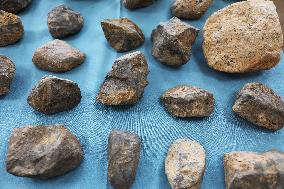
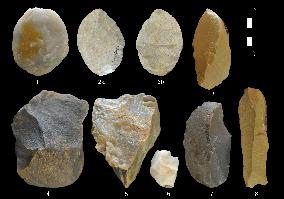
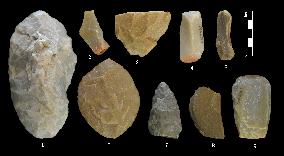
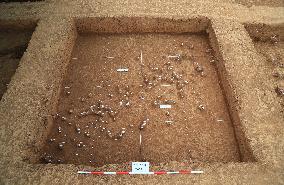
(220316) -- XI'AN, March 16, 2022 (Xinhua) -- Undated file photo shows Paleolithic stoneware items found at the Yeyuan relics site in Luonan County of northwest China's Shaanxi Province. TO GO WITH "Over 12,000 Paleolithic stoneware items unearthed in NW China" (Shaanxi Academy of Archaeology/Handout via Xinhua)

  •  
CHINA-SHAANXI-XI'AN-PALEOLITHIC STONEWARE-UNEARTHING (CN)

CHINA-SHAANXI-XI'AN-PALEOLITHIC STONEWARE-UNEARTHING (CN)

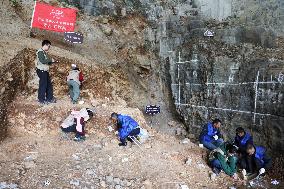
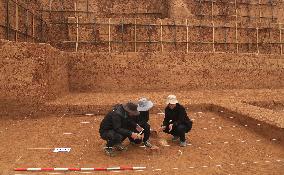
(220316) -- XI'AN, March 16, 2022 (Xinhua) -- Undated file photo shows archaeologists working at the Yeyuan relics site in Luonan County of northwest China's Shaanxi Province. TO GO WITH "Over 12,000 Paleolithic stoneware items unearthed in NW China" (Shaanxi Academy of Archaeology/Handout via Xinhua)

  •  
CHINA-SHAANXI-XI'AN-PALEOLITHIC STONEWARE-UNEARTHING (CN)

CHINA-SHAANXI-XI'AN-PALEOLITHIC STONEWARE-UNEARTHING (CN)

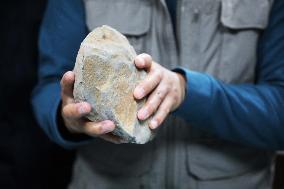
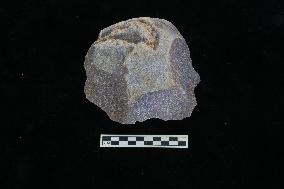
(220316) -- XI'AN, March 16, 2022 (Xinhua) -- Undated file photo shows a Paleolithic stoneware item found at the Yeyuan relics site in Luonan County of northwest China's Shaanxi Province. TO GO WITH "Over 12,000 Paleolithic stoneware items unearthed in NW China" (Shaanxi Academy of Archaeology/Handout via Xinhua)

  •  
Leading ceramic artist Yu Fujiwara dies at 69

Leading ceramic artist Yu Fujiwara dies at 69

OKAYAMA, Japan - Yu Fujiwara (file photo), a ceramic artist specializing in Bizen ware who was named a Living National Treasure by the government, died of multiple organ failure on Oct. 29 at an Okayama Prefecture hospital. He was 69. Bizen ware is unglazed stoneware made in the western Japan prefecture. In 1963, Fujiwara won the grand prize at an international ceramics exhibition in Barcelona. He later held one-man shows in countries such as the United States.

  •  
6 publishers mull changes after archaeology fraud

6 publishers mull changes after archaeology fraud

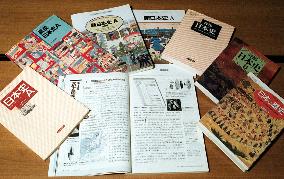
TOKYO, Japan - The six publishers of these high school history textbooks said Nov. 7 they are considering whether to revise passages covering Japan's earliest stoneware, following a disclosure on Nov. 5 that a leading archaeologist had fabricated his discovery of artifacts at the Kamitakamori ruins in Miyagi Prefecture. Shinichi Fujimura, 50, who served as deputy director of the Tohoku Paleolithic Institute, admitted that in late October he fabricated the finds by burying stoneware.

  •  
Archaeologist admits burying 'oldest' stoneware pieces

Archaeologist admits burying 'oldest' stoneware pieces

SENDAI, Japan - Shinichi Fujimura (R), 50, a senior director at the Tohoku Paleolithic Institute, admits at a news conference held at the Miyagi prefetural government building in Sendai on Nov. 5 that he fabricated the discovery in the prefecture of stoneware at first believed to be more than 600,000 years old by burying the objects himself.

  • Main
  • Top
  • Editorial
  • Creative
  • About Us
  • About ILG
  • Terms of use
  • Company
  • BEHIND
  • Price List
  • Single Plan
  • Monthly Plan
  • Services
  • Shooting
  • Rights Clearance
  • Support
  • FAQ
  • How To Buy
  • Contact Us
  • Become a Partner

© KYODO NEWS IMAGES INC

All Rights Reserved.

  • Editorial
  • Olympics
  • News
  • Sports
  • Japan
  • Tech
  • Royal
  • Disaster
  • NorthKorea
  • Old Japan
  • SNS
  • Creative
  • Food
  • Japan
  • Landscape
  • Animal
  • Popular
  • #Ukraine
  • #China
  • #coronavirus
  • #N. Korea
  • #Russia
  • #Thailand
  • #Ukraine
  • #China
  • #coronavirus
  • #N. Korea
  • #Russia
  • #Thailand
  • Food
  • Japan
  • Landscape
  • Animal
  • Olympics
  • News
  • Sports
  • Japan
  • Tech
  • Royal
  • Disaster
  • NorthKorea
  • Old Japan
  • SNS