•  
Jiuquan Satellite Launch - China

Jiuquan Satellite Launch - China

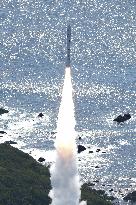
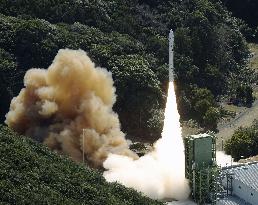
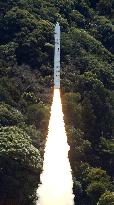
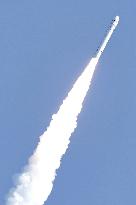
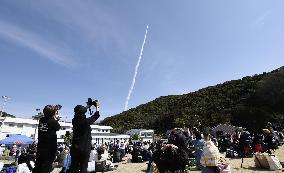
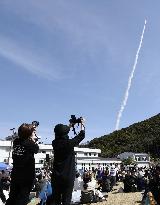
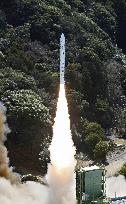
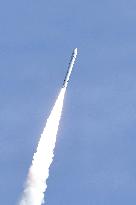
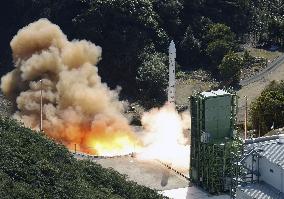
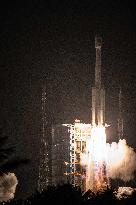
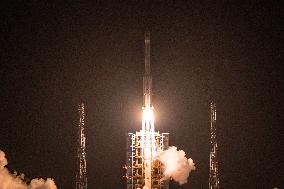
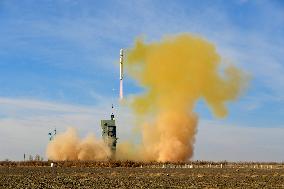
A Kuaizhou-11 Y8 carrier rocket carrying one space experimental spacecraft blasts off from the Jiuquan Satellite Launch Center in northwest China, on December 13, 2025. The rocket blasted off at 9:08 a.m. (Beijing Time). It successfully sent the payloads into the planned orbit. Photo by Wang Jiangbo/Xinhua/ABACAPRESS.COM

  •  
Jiuquan Satellite Launch - China

Jiuquan Satellite Launch - China

A Kuaizhou-11 Y8 carrier rocket carrying one space experimental spacecraft blasts off from the Jiuquan Satellite Launch Center in northwest China, on December 13, 2025. The rocket blasted off at 9:08 a.m. (Beijing Time). It successfully sent the payloads into the planned orbit. Photo by Wang Jiangbo/Xinhua/ABACAPRESS.COM

  •  
Jiuquan Satellite Launch - China

Jiuquan Satellite Launch - China

A Kuaizhou-11 Y8 carrier rocket carrying one space experimental spacecraft blasts off from the Jiuquan Satellite Launch Center in northwest China, on December 13, 2025. The rocket blasted off at 9:08 a.m. (Beijing Time). It successfully sent the payloads into the planned orbit. Photo by Wang Jiangbo/Xinhua/ABACAPRESS.COM

  •  
Jiuquan Satellite Launch - China

Jiuquan Satellite Launch - China

A Kuaizhou-11 Y8 carrier rocket carrying one space experimental spacecraft blasts off from the Jiuquan Satellite Launch Center in northwest China, on December 13, 2025. The rocket blasted off at 9:08 a.m. (Beijing Time). It successfully sent the payloads into the planned orbit. Photo by Wang Jiangbo/Xinhua/ABACAPRESS.COM

  •  
Jiuquan Satellite Launch - China

Jiuquan Satellite Launch - China

A Kuaizhou-11 Y8 carrier rocket carrying one space experimental spacecraft blasts off from the Jiuquan Satellite Launch Center in northwest China, on December 13, 2025. The rocket blasted off at 9:08 a.m. (Beijing Time). It successfully sent the payloads into the planned orbit. Photo by Wang Haixia/Xinhua/ABACAPRESS.COM

  •  
Satellite Launched Successfully - China

Satellite Launched Successfully - China

A Long March-12 carrier rocket carrying a group of internet satellites blasts off from the Hainan commercial spacecraft launch site in south China's Hainan Province, Dec. 12, 2025. The rocket lifted off at 7:00 a.m. on Friday. The payloads, the 16th group of low-orbit internet satellites, entered into preset orbit successfully. Photo by Pu Xiaoxu/Xinhua/ABACAPRESS.COM

  •  
Satellite Launched Successfully - China

Satellite Launched Successfully - China

This long-exposure photo taken on Dec. 12, 2025 shows a Long March-12 carrier rocket carrying a group of internet satellites blasting off from the Hainan commercial spacecraft launch site in south China's Hainan Province. The rocket lifted off at 7:00 a.m. on Friday. The payloads, the 16th group of low-orbit internet satellites, entered into preset orbit successfully. Photo by Pu Xiaoxu/Xinhua/ABACAPRESS.COM

  •  
Satellite Launched Successfully - China

Satellite Launched Successfully - China

A Long March-12 carrier rocket carrying a group of internet satellites blasts off from the Hainan commercial spacecraft launch site in south China's Hainan Province, Dec. 12, 2025. The rocket lifted off at 7:00 a.m. on Friday. The payloads, the 16th group of low-orbit internet satellites, entered into preset orbit successfully. Photo by Pu Xiaoxu/Xinhua/ABACAPRESS.COM

  •  
Satellites Launch - China

Satellites Launch - China

The Lijian-1, also known as Kinetica-1 Y11, carrier rocket carrying 9 satellites, including one from the United Arab Emirates, blasts off from the Dongfeng commercial space innovation pilot zone near the Jiuquan Satellite Launch Center in northwest China, December 10, 2025. The rocket blasted off at 12:03 p.m. (Beijing Time) and successfully sent the satellites into their planned orbits. Photo by Wang Jiangbo/Xinhua/ABACAPRESS.COM

  •  
Satellites Launch - China

Satellites Launch - China

A Long March-3B carrier rocket carrying the Shiyan-22 satellite blasts off from the Xichang Satellite Launch Center in southwest China's Sichuan Province, December 9, 2025. The satellite was launched on Tuesday at 11:08 p.m. (Beijing Time) and entered its planned orbit as scheduled. The satellite will primarily support services including satellite communication, data transmission, and radio and television broadcasting, as well as conducting relevant technical tests and validations. Photo by Li Zhiyong/Xinhua/ABACAPRESS.COM

  •  
Satellites Launch - China

Satellites Launch - China

The Lijian-1, also known as Kinetica-1 Y11, carrier rocket carrying 9 satellites, including one from the United Arab Emirates, blasts off from the Dongfeng commercial space innovation pilot zone near the Jiuquan Satellite Launch Center in northwest China, December 10, 2025. The rocket blasted off at 12:03 p.m. (Beijing Time) and successfully sent the satellites into their planned orbits. Photo by Li Yunxi/Xinhua/ABACAPRESS.COM

  •  
Satellites Launch - China

Satellites Launch - China

The Lijian-1, also known as Kinetica-1 Y11, carrier rocket carrying 9 satellites, including one from the United Arab Emirates, blasts off from the Dongfeng commercial space innovation pilot zone near the Jiuquan Satellite Launch Center in northwest China, December 10, 2025. The rocket blasted off at 12:03 p.m. (Beijing Time) and successfully sent the satellites into their planned orbits. Photo by Wang Jiangbo/Xinhua/ABACAPRESS.COM

  •  
Satellites Launch - China

Satellites Launch - China

The Lijian-1, also known as Kinetica-1 Y11, carrier rocket carrying 9 satellites, including one from the United Arab Emirates, blasts off from the Dongfeng commercial space innovation pilot zone near the Jiuquan Satellite Launch Center in northwest China, December 10, 2025. The rocket blasted off at 12:03 p.m. (Beijing Time) and successfully sent the satellites into their planned orbits. Photo by Wang Jiangbo/Xinhua/ABACAPRESS.COM

  •  
Satellites Launch - China

Satellites Launch - China

A Long March-3B carrier rocket carrying the Shiyan-22 satellite blasts off from the Xichang Satellite Launch Center in southwest China's Sichuan Province, December 9, 2025. The satellite was launched on Tuesday at 11:08 p.m. (Beijing Time) and entered its planned orbit as scheduled. The satellite will primarily support services including satellite communication, data transmission, and radio and television broadcasting, as well as conducting relevant technical tests and validations. Photo by Li Zhiyong/Xinhua/ABACAPRESS.COM

  •  
Satellites Launch - China

Satellites Launch - China

A Long March-3B carrier rocket carrying the Shiyan-22 satellite blasts off from the Xichang Satellite Launch Center in southwest China's Sichuan Province, December 9, 2025. The satellite was launched on Tuesday at 11:08 p.m. (Beijing Time) and entered its planned orbit as scheduled. The satellite will primarily support services including satellite communication, data transmission, and radio and television broadcasting, as well as conducting relevant technical tests and validations. Photo by Li Zhiyong/Xinhua/ABACAPRESS.COM

  •  
Satellites Launch - China

Satellites Launch - China

A Long March-3B carrier rocket carrying the Shiyan-22 satellite blasts off from the Xichang Satellite Launch Center in southwest China's Sichuan Province, December 9, 2025. The satellite was launched on Tuesday at 11:08 p.m. (Beijing Time) and entered its planned orbit as scheduled. The satellite will primarily support services including satellite communication, data transmission, and radio and television broadcasting, as well as conducting relevant technical tests and validations. Photo by Li Zhiyong/Xinhua/ABACAPRESS.COM

  •  
Satellites Launch - China

Satellites Launch - China

The Lijian-1, also known as Kinetica-1 Y11, carrier rocket carrying 9 satellites, including one from the United Arab Emirates, blasts off from the Dongfeng commercial space innovation pilot zone near the Jiuquan Satellite Launch Center in northwest China, December 10, 2025. The rocket blasted off at 12:03 p.m. (Beijing Time) and successfully sent the satellites into their planned orbits. Photo by Li Yunxi/Xinhua/ABACAPRESS.COM

  •  
Satellites Launch - China

Satellites Launch - China

A Long March-3B carrier rocket carrying the Shiyan-22 satellite blasts off from the Xichang Satellite Launch Center in southwest China's Sichuan Province, December 9, 2025. The satellite was launched on Tuesday at 11:08 p.m. (Beijing Time) and entered its planned orbit as scheduled. The satellite will primarily support services including satellite communication, data transmission, and radio and television broadcasting, as well as conducting relevant technical tests and validations. Photo by Li Zhiyong/Xinhua/ABACAPRESS.COM

  •  
Satellites Launch - China

Satellites Launch - China

The Lijian-1, also known as Kinetica-1 Y11, carrier rocket carrying 9 satellites, including one from the United Arab Emirates, blasts off from the Dongfeng commercial space innovation pilot zone near the Jiuquan Satellite Launch Center in northwest China, December 10, 2025. The rocket blasted off at 12:03 p.m. (Beijing Time) and successfully sent the satellites into their planned orbits. Photo by Li Yunxi/Xinhua/ABACAPRESS.COM

  •  
Satellite View of Gulf of Morbihan - France

Satellite View of Gulf of Morbihan - France

Handout Satellite View, dated October 17, 2025, shows the Gulf of Morbihan in France. The Gulf of Morbihan, part of the Natura 2000 network, forms one of France’s most distinctive coastal landscapes. This inland sea is dotted with dozens of small islands and peninsulas, creating a labyrinth of sheltered bays, narrow channels, and shifting tidal flats. Its highly indented shape supports a mosaic of coastal habitats, from eelgrass meadows to mudflats, which provide vital feeding and breeding grounds for migratory birds and numerous marine species. Located in Brittany, near towns such as Vannes, Arradon, and Arzon, the gulf’s intricate contours are clearly visible in this Copernicus Sentinel-2 image acquired on 17 October 2025. The deep blues highlight the flooded channels at high tide, while surrounding vegetation appears in bright green. Photo by European Union, Copernicus Sentinel-2 imagery via ABACAPRESS.COM

  •  
Satellite View of Shark Bay UNESCO World Heritage Site - Australia

Satellite View of Shark Bay UNESCO World Heritage Site - Australia

Handout satellite view, dated on November 26, 2025, shows the Shark Bay UNESCO World Heritage Site. Shark Bay, located on the western coast of Australia, is a UNESCO World Heritage Site renowned for its exceptional natural beauty, including unique marine biodiversity and one of the world's most extensive seagrass beds. The site is globally significant for its ecological processes, geological formations, and as a habitat for threatened species such as dugongs and green turtles. These fragile ecosystems are highly sensitive to changes in water quality, sea temperature, and coastal development. This Copernicus Sentinel-2 image, acquired on 26 November 2025, shows the striking coastal and marine features of Shark Bay in high resolution. The contrasting colours reveal shallow sandbanks, seagrass meadows, and hypersaline basins, as well as the arid terrestrial surroundings near Denham. Photo by European Union, Copernicus Sentinel-2 imagery via ABACAPRESS.COM

  •  
Satellite View of Graham Land - Antarctica

Satellite View of Graham Land - Antarctica

Handout Satellite views dated on November 21, 2025, shows Graham Land. Graham Land, the northernmost stretch of the Antarctic Peninsula, is one of the most rapidly warming regions on Earth. Its mountainous spine and outlet glaciers drain into the Weddell Sea, forming an important transition zone between grounded ice, floating shelves, and open water. This dynamic landscape supports rich marine ecosystems, including krill-dependent species such as seals, penguins, and seabirds, and plays an important role in global ocean circulation and climate regulation. This Copernicus Sentinel-1 image, acquired on 21 November 2025, shows the contrasting textures of grounded ice, fragmented sea ice, and dark, open ocean, revealing key glaciological features in radar backscatter. Copernicus data is essential to climate science. A recent study published in Nature used Copernicus Sentinel-1 and Sentinel-2 data to analyse glacier dynamics in Graham Land, Antarctica. Photo by European Union, Copernicus Sentinel-1 imagery via ABA

  •  
Wenchang Satellite Launch - Hainan

Wenchang Satellite Launch - Hainan

A Long March-8A carrier rocket carrying the 14th group of low-orbit internet satellites blasts off from the Hainan commercial spacecraft launch site in south China's Hainan Province, Dec. 6, 2025. The rocket lifted off at 3:53 p.m. on Saturday. It successfully placed the payloads into preset orbit. Photo by Guo Cheng /Xinhua/ABACAPRESS.COM

  •  
Wenchang Satellite Launch - Hainan

Wenchang Satellite Launch - Hainan

A Long March-8A carrier rocket carrying the 14th group of low-orbit internet satellites blasts off from the Hainan commercial spacecraft launch site in south China's Hainan Province, Dec. 6, 2025. The rocket lifted off at 3:53 p.m. on Saturday. It successfully placed the payloads into preset orbit. Photo by Guo Cheng /Xinhua/ABACAPRESS.COM

  •  
Wenchang Satellite Launch - Hainan

Wenchang Satellite Launch - Hainan

A Long March-8A carrier rocket carrying the 14th group of low-orbit internet satellites blasts off from the Hainan commercial spacecraft launch site in south China's Hainan Province, Dec. 6, 2025. The rocket lifted off at 3:53 p.m. on Saturday. It successfully placed the payloads into preset orbit. Photo by Guo Cheng /Xinhua/ABACAPRESS.COM

  •  
Wenchang Satellite Launch - Hainan

Wenchang Satellite Launch - Hainan

A Long March-8A carrier rocket carrying the 14th group of low-orbit internet satellites blasts off from the Hainan commercial spacecraft launch site in south China's Hainan Province, Dec. 6, 2025. The rocket lifted off at 3:53 p.m. on Saturday. It successfully placed the payloads into preset orbit. Photo by Guo Cheng /Xinhua/ABACAPRESS.COM

  •  
Wenchang Satellite Launch - Hainan

Wenchang Satellite Launch - Hainan

A Long March-8A carrier rocket carrying the 14th group of low-orbit internet satellites blasts off from the Hainan commercial spacecraft launch site in south China's Hainan Province, Dec. 6, 2025. The rocket lifted off at 3:53 p.m. on Saturday. It successfully placed the payloads into preset orbit. Photo by Guo Cheng /Xinhua/ABACAPRESS.COM

  •  
New Satellite Launch - China

New Satellite Launch - China

A Kuaizhou-1A (KZ-1A) carrier rocket carrying the VHF Data Exchange System (VDES) satellites blasts off from the Jiuquan Satellite Launch Center in northwest China, December 5, 2025. The satellites entered their planned orbit successfully. Photo by Li Yunxi/Xinhua/ABACAPRESS.COM

  •  
Supermoon Over Normandy

Supermoon Over Normandy

Nighttime image of the super moon appearing larger in the sky as the natural satellite is closer to Earth, seen above Caen in Puy de Dome, France on December 4, 2025. This is the last super moon of the year, with the next expected in 2026. Photo by Franck Castel/ABACAPRESS.COM

  •  
Supermoon Over Normandy

Supermoon Over Normandy

Nighttime image of the super moon appearing larger in the sky as the natural satellite is closer to Earth, seen above Caen in Puy de Dome, France on December 4, 2025. This is the last super moon of the year, with the next expected in 2026. Photo by Franck Castel/ABACAPRESS.COM

  •  
Supermoon Over Normandy

Supermoon Over Normandy

Nighttime image of the super moon appearing larger in the sky as the natural satellite is closer to Earth, seen above Caen in Puy de Dome, France on December 4, 2025. This is the last super moon of the year, with the next expected in 2026. Photo by Franck Castel/ABACAPRESS.COM

  •  
Supermoon Over Normandy

Supermoon Over Normandy

Nighttime image of the super moon appearing larger in the sky as the natural satellite is closer to Earth, seen above Caen in Puy de Dome, France on December 4, 2025. This is the last super moon of the year, with the next expected in 2026. Photo by Franck Castel/ABACAPRESS.COM

  •  
Settlement Growth in the Nile Delta - Egypt

Settlement Growth in the Nile Delta - Egypt

Handout Photomontage shows Settlement Growth in the Nile Delta. The United Nations’ World Urbanisation Prospects 2025 was published on 17 November 2025. Drawing on data from the Joint Research Centre’s Global Human Settlement Layer (GHSL), developed under the Copernicus Emergency Management Service (CEMS), the report tracks changes in population distribution across more than 12,000 urban settlements. It highlights a global shift in settlement patterns, with the majority of the world’s population now living in urban areas. This image, created with GHSL data, focuses on the Nile Delta in Egypt, one of the world’s most densely populated regions. By comparing estimates of built-up surface at three points in time, it shows how the extent of urban development has changed between 1975 and 2025, along with projections for 2075. Using satellite data and national census inputs, GHSL provides a broad range of data on human settlements worldwide, including estimates of built-up surfaces per square kilometre and, at even

  •  
Satellite View of flooding in northern Sumatra, Indonesia

Satellite View of flooding in northern Sumatra, Indonesia

Handout photo datetd on November 29, 2025 shows satellite view of Flooding in northern Sumatra. Cyclone Senyar formed during the night of 25-26 November 2025 in the Strait of Malacca, an area in which tropical cyclones had not been recorded for decades. The day after its formation, Senyar hit Indonesia, where it made landfall, causing flooding, landslides and more than 400 casualties in the north of the island of Sumatra. This image, acquired by one of the Copernicus Sentinel-2 satellites on 29 November 2025, shows extensive inundation across Aceh province, with towns such as Lhoksukon and Panton Labu surrounded by floodwaters. Sediment-laden plumes discharged into the sea along the northern coast indicate substantial river outflow, caused by the heavy upstream rainfall. Photo by European Union, Copernicus Sentinel-2 imagery via ABACAPRESS.COM

  •  
Huelva Estuary in Spain

Huelva Estuary in Spain

Handout photo dated on November 16, 2025 shows Huelva Estuary in Spain. On 16 November 2025, one of the Copernicus Sentinel-2 satellites acquired this image of the Huelva estuary in south-western Spain, where the Tinto and Odiel rivers converge before flowing into the Atlantic Ocean. Recent rainfall has increased surface runoff and sediment transport, strengthening the contrasting outflow from the two rivers. The image shows distinct colour variations produced by differences in water chemistry and suspended materials. As these waters mix with tidal currents, they create gradual transitions and clearly defined plumes, highlighting the estuary’s dynamic behaviour. Copernicus Sentinel satellite data enables continuous monitoring of river plumes, estuarine dynamics, and land-sea interactions. This information is important for assessing the environmental impact of sediment transport, supporting water quality monitoring, and informing coastal zone management in fragile ecosystems. Photo by European Union, Copernicu

  •  
Cluj-Napoca in Romania

Cluj-Napoca in Romania

Handout photo dated on October 17, 2025 shows Cluj-Napoca in Romania. On 17 October 2025, one of the Copernicus Sentinel-2 satellites acquired this image of Cluj-Napoca, a major urban centre in north-western Romania. Surrounded by rolling hills and agricultural land, the city is noted for its dynamic growth and strategic role in regional development. Cluj-Napoca also received the label of the EU Mission for Climate-Neutral and Smart Cities in 2023. Cluj-Napoca is currently one of ten pilot cities selected for the Horizon Europe CLMS-Cities project, which combines satellite-based products from the Copernicus Land Monitoring Service (CLMS) with additional environmental and urban data to improve modelling of urban-scale CO₂ emissions. These integrated datasets help local authorities in tracking changes and designing more effective climate strategies, thereby supporting the development of data-driven urban policies aligned with the European Green Deal. Photo by European Union, Copernicus Sentinel-2 imagery via AB

  •  
Snow Blanketed North East Scotland - UK

Snow Blanketed North East Scotland - UK

Handout photo dated on November 18, 2025 shows on 18 November 2025, the first major winter weather event of the 2025-26 season took place across parts of the United Kingdom, including north-east Scotland. Heavy snowfall blanketed large areas of the region, leading to travel disruption, the isolation of several rural communities, and the closure of numerous schools. Emergency services were deployed to assist residents affected by road blockages and power outages, while local authorities issued weather warnings and urged the public to avoid non-essential travel. This false-colour image, acquired by one of the Copernicus Sentinel-2 satellites, shows widespread snow-cover across Aberdeenshire and the surrounding upland areas, with the city of Aberdeen visible along the coast. Data from Copernicus Sentinel-2, which provides high spatial resolution and multispectral observations, supports continuous monitoring of snow extent and surface conditions. North East Scotland, UK on November 18, 2025. Photo by European Uni

  •  
First images From Copernicus Sentinel-5A

First images From Copernicus Sentinel-5A

Handout photo dated October 13, 2025 shows Copernicus Sentinel-5A has delivered its first images after its launch on 13 August 2025, marking a significant milestone in the monitoring of air quality from space. The Sentinel-5 mission provides observations of key air pollutants, essential climate variables, and stratospheric ozone, which is the protective layer shielding life on Earth from harmful ultraviolet radiation. This visualisation, created with Sentinel-5A data acquired on 13 October 2025, shows atmospheric concentrations of two trace gases: ozone (O₃) and formaldehyde (HCHO). The image on the left presents the formaldehyde vertical column density. Elevated concentrations along the northwestern coast of Angola are linked to emissions from wildfires, while increased levels over the Central African Republic stem from a combination of fire activity and biogenic emissions. The image on the right shows a global map of ozone. The hole in stratospheric ozone above Antarctica is clearly visible, with column den

  •  
First Images acquired by Sentinel-1D

First Images acquired by Sentinel-1D

Handout photo dated on November 7, 2025 shows following its launch on 4 November 2025, Copernicus Sentinel-1D has delivered its first images. Among these is this radar image acquired on 7 November 2025, showing northern Germany. The false colour visualisation of the image highlights different types of land cover such as cultivated fields, water bodies, and urban areas, including the cities of Bremen, Bremerhaven, Oldenburg, and Meldorf. The Elbe and Weser rivers flowing into the North Sea are visible in deep blue tones, along with the Wadden Sea. Bremen, Germany on November 7, 2025. Photo by European Union, Copernicus Sentinel-1 imagery via ABACAPRESS.COM

  •  
China Sends Shenzhou-22 To Orbit - Jiuquan

China Sends Shenzhou-22 To Orbit - Jiuquan

A Long March-2F Y22 rocket carrying the Shenzhou-22 spaceship blasts off from the Jiuquan Satellite Launch Center in northwest China, November 25, 2025. China launched the Shenzhou-22 spaceship from the Jiuquan Satellite Launch Center in northwest China at 12:11 p.m. (Beijing Time) on Tuesday, successfully accomplishing the first emergency launch mission in the country's manned space program. About 10 minutes after the launch, the spaceship separated from the rocket and entered its designated orbit. The China Manned Space Agency declared the launch mission a complete success. (Photo by Ge Lixin/Xinhua /Xinhua/ABACAPRESS.COM

  •  
China Sends Shenzhou-22 To Orbit - Jiuquan

China Sends Shenzhou-22 To Orbit - Jiuquan

A Long March-2F Y22 rocket carrying the Shenzhou-22 spaceship blasts off from the Jiuquan Satellite Launch Center in northwest China, November 25, 2025. China launched the Shenzhou-22 spaceship from the Jiuquan Satellite Launch Center in northwest China at 12:11 p.m. (Beijing Time) on Tuesday, successfully accomplishing the first emergency launch mission in the country's manned space program. About 10 minutes after the launch, the spaceship separated from the rocket and entered its designated orbit. The China Manned Space Agency declared the launch mission a complete success. (Photo by Bai Long/Xinhua /Xinhua/ABACAPRESS.COM

  •  
Satellite Views of Hayli Gubbi Volcano Eruption

Satellite Views of Hayli Gubbi Volcano Eruption

Handout photo dated on November 23, 2025 shows The Day Atmosphere Air Pollution Dust & Haze Volcanoes. On 23 November 2025, the Hayli Gubbi volcano in Ethiopia, located approximately 800 kilometres north-east of Addis Ababa, erupted for the first time in nearly 12,000 years. As a result of the eruption, a large sulfur dioxide (SO₂) plume was emitted into the atmosphere. This image, derived from data acquired by the Copernicus Sentinel-5P satellite on 24 November, shows the plume extending for approximately 3,700 kilometres from Ethiopia to the Arabian Sea. The atmospheric monitoring capabilities of Copernicus Sentinel-5P support the detection and tracking of volcanic gas emissions, which are important for aviation safety, air quality assessments, and climate monitoring. Photo by European Union, Copernicus Sentinel-5P imagery via ABACAPRESS.COM

  •  
Closing Ceremony of China's 15th National Games - China

Closing Ceremony of China's 15th National Games - China

(251121) -- XICHANG, November 21, 2025 (Xinhua) -- A Long March-3B carrier rocket carrying the Shiyan-21 satellite blasts off from the Xichang Satellite Launch Center in southwest China's Sichuan Province, November 21, 2025. The Shiyan-21 satellite was launched at 6:55 p.m. (Beijing Time) aboard a Long March-3B carrier rocket and entered the preset orbit successfully. (Photo by Li Zhiyong/Xinhua/ABACAPRESS.COM

  •  
Shijian-30A, Shijian-30B, and Shijian-30C Satellite Launch - China

Shijian-30A, Shijian-30B, and Shijian-30C Satellite Launch - China

A Long March-2C carrier rocket carrying three new satellites blasts off from the Jiuquan Satellite Launch Center in northwest China, on Nov. 19, 2025. The rocket blasted off at 12:01 p.m. (Beijing Time) and sent the Shijian-30A, Shijian-30B, and Shijian-30C into the preset orbits. These satellites will be mainly used for space environment exploration and related technology verification. (Photo by Wang Jiangbo/Xinhua/ABACAPRESS.COM)

  •  
Shijian-30A, Shijian-30B, and Shijian-30C Satellite Launch - China

Shijian-30A, Shijian-30B, and Shijian-30C Satellite Launch - China

A Long March-2C carrier rocket carrying three new satellites blasts off from the Jiuquan Satellite Launch Center in northwest China, on Nov. 19, 2025. The rocket blasted off at 12:01 p.m. (Beijing Time) and sent the Shijian-30A, Shijian-30B, and Shijian-30C into the preset orbits. These satellites will be mainly used for space environment exploration and related technology verification. (Photo by Sun Haiying/Xinhua/ABACAPRESS.COM)

  •  
Shijian-30A, Shijian-30B, and Shijian-30C Satellite Launch - China

Shijian-30A, Shijian-30B, and Shijian-30C Satellite Launch - China

A Long March-2C carrier rocket carrying three new satellites blasts off from the Jiuquan Satellite Launch Center in northwest China, on Nov. 19, 2025. The rocket blasted off at 12:01 p.m. (Beijing Time) and sent the Shijian-30A, Shijian-30B, and Shijian-30C into the preset orbits. These satellites will be mainly used for space environment exploration and related technology verification. (Photo by Wang Jiangbo/Xinhua/ABACAPRESS.COM)

  •  
Shijian-30A, Shijian-30B, and Shijian-30C Satellite Launch - China

Shijian-30A, Shijian-30B, and Shijian-30C Satellite Launch - China

A Long March-2C carrier rocket carrying three new satellites blasts off from the Jiuquan Satellite Launch Center in northwest China, on Nov. 19, 2025. The rocket blasted off at 12:01 p.m. (Beijing Time) and sent the Shijian-30A, Shijian-30B, and Shijian-30C into the preset orbits. These satellites will be mainly used for space environment exploration and related technology verification. (Photo by Wang Jiangbo/Xinhua/ABACAPRESS.COM)

  •  
Shijian-30A, Shijian-30B, and Shijian-30C Satellite Launch - China

Shijian-30A, Shijian-30B, and Shijian-30C Satellite Launch - China

A Long March-2C carrier rocket carrying three new satellites blasts off from the Jiuquan Satellite Launch Center in northwest China, on Nov. 19, 2025. The rocket blasted off at 12:01 p.m. (Beijing Time) and sent the Shijian-30A, Shijian-30B, and Shijian-30C into the preset orbits. These satellites will be mainly used for space environment exploration and related technology verification. (Photo by Wang Jiangbo/Xinhua/ABACAPRESS.COM)

  •  
Shijian-30A, Shijian-30B, and Shijian-30C Satellite Launch - China

Shijian-30A, Shijian-30B, and Shijian-30C Satellite Launch - China

A Long March-2C carrier rocket carrying three new satellites blasts off from the Jiuquan Satellite Launch Center in northwest China, on Nov. 19, 2025. The rocket blasted off at 12:01 p.m. (Beijing Time) and sent the Shijian-30A, Shijian-30B, and Shijian-30C into the preset orbits. These satellites will be mainly used for space environment exploration and related technology verification. (Photo by Wang Heng/Xinhua/ABACAPRESS.COM)

  •  
Satellite Views of Disastrous Flooding in The Philippines

Satellite Views of Disastrous Flooding in The Philippines

Handout photo dated on November 12, 2025 shows Following the landfall of Typhoon Fung-wong on 9 November 2025, northern regions of the Philippines were affected by extensive flooding, with the Cagayan Valley among the worst hit areas. The typhoon brought intense rainfall, causing the Cagayan River to overflow its banks, submerging agricultural land, infrastructure, and urban areas, including the city of Tuguegarao. Several communities in the province of Cagayan were displaced, and damage to crops and transport infrastructure was reported across the region. This false colour image, acquired by one of the Copernicus Sentinel-2 satellites on 12 November 2025, shows the flooded areas along the Cagayan River. In this composite, vegetation appears in red, while water bodies and flooded areas are shown in shades of light blue and green. Additionally, sediment plumes can be seen at the river’s mouth near Aparri, where the river enters the Pacific Ocean. Photo by European Union, Copernicus Sentinel-2 imagery via ABACA

  • Main
  • Top
  • Editorial
  • Creative
  • About Us
  • About ILG
  • Terms of use
  • Company
  • BEHIND
  • Price List
  • Single Plan
  • Monthly Plan
  • Services
  • Shooting
  • Rights Clearance
  • Support
  • FAQ
  • How To Buy
  • Contact Us
  • Become a Partner

© KYODO NEWS IMAGES INC

All Rights Reserved.

  • Editorial
  • Olympics
  • News
  • Sports
  • Japan
  • Tech
  • Royal
  • Disaster
  • NorthKorea
  • Old Japan
  • SNS

  • Creative
  • Food
  • Japan
  • Landscape
  • Animal
  • Popular
  • #Ukraine
  • #Thailand
  • #coronavirus
  • #N. Korea
  • #China
  • #Russia
  • #Ukraine
  • #Thailand
  • #coronavirus
  • #N. Korea
  • #China
  • #Russia
  • Food
  • Japan
  • Landscape
  • Animal
  • Olympics
  • News
  • Sports
  • Japan
  • Tech
  • Royal
  • Disaster
  • NorthKorea
  • Old Japan
  • SNS