•  
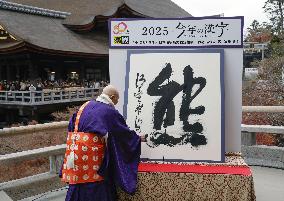
Kanji for "bear" chosen as best to characterize 2025

Kanji for "bear" chosen as best to characterize 2025

Seihan Mori, chief Buddhist priest of Kiyomizu temple in Kyoto, writes the kanji character "kuma," meaning bear, with a calligraphy brush during the annual kanji-of-the-year event on Dec. 12, 2025. The character was chosen to symbolize the national mood for the year due to frequent bear sightings and related incidents across Japan, as well as attention to the return of pandas - written with characters meaning "bear" and "cat" - to China.

  •  
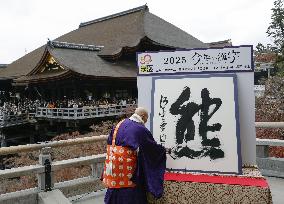
Kanji for "bear" chosen as best to characterize 2025

Kanji for "bear" chosen as best to characterize 2025

Seihan Mori, chief Buddhist priest of Kiyomizu temple in Kyoto, writes the kanji character "kuma," meaning bear, with a calligraphy brush during the annual kanji-of-the-year event on Dec. 12, 2025. The character was chosen to symbolize the national mood for the year due to frequent bear sightings and related incidents across Japan, as well as attention to the return of pandas - written with characters meaning "bear" and "cat" - to China.

  •  
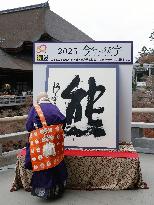
Kanji for "bear" chosen as best to characterize 2025

Kanji for "bear" chosen as best to characterize 2025

Seihan Mori, chief Buddhist priest of Kiyomizu temple in Kyoto, writes the kanji character "kuma," meaning bear, with a calligraphy brush during the annual kanji-of-the-year event on Dec. 12, 2025. The character was chosen to symbolize the national mood for the year due to frequent bear sightings and related incidents across Japan, as well as attention to the return of pandas - written with characters meaning "bear" and "cat" - to China.

  •  

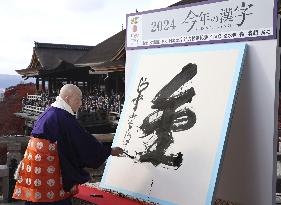
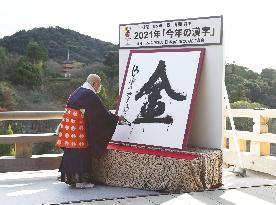
Kanji for "kin," meaning gold or money, chosen as best to characterize 2024

KYOTO, Japan, Dec. 12 Kyodo - Seihan Mori, chief Buddhist priest of Kiyomizu temple in Kyoto, writes the kanji character "kin," meaning gold or money, with a calligraphy brush on Dec. 12, 2024. The character was selected as the best single kanji to symbolize the national mood for the year as Japanese athletes had their second-best ever performance at the Olympics with 20 gold medals in Paris, while a money scandal rocked the ruling Liberal Democratic Party. (Kyodo)

  •  
Kanji for "kin," meaning gold or money, chosen as best to characterize 2024

Kanji for "kin," meaning gold or money, chosen as best to characterize 2024

Seihan Mori, chief Buddhist priest of Kiyomizu temple in Kyoto, writes the kanji character "kin," meaning gold or money, with a calligraphy brush on Dec. 12, 2024. The character was selected as the best single kanji to symbolize the national mood for the year as Japanese athletes had their second-best ever performance at the Olympics with 20 gold medals in Paris, while a money scandal rocked the ruling Liberal Democratic Party.

  •  

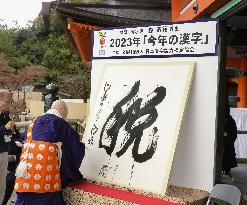
Kanji for "tax" chosen to symbolize Japan's social mood in 2023

KYOTO, Japan Kyodo - Seihan Mori, chief Buddhist priest of Kiyomizu temple in Kyoto, writes the kanji character "zei," meaning tax, with a calligraphy brush on Dec. 12, 2023. The character was selected as the best single kanji to symbolize the national mood for the year as tax-related issues hit headlines, including the government's temporary income tax cut of 40,000 yen per person planned next fiscal year. (Kyodo)

  •  
Kanji for "tax" chosen to symbolize Japan's social mood in 2023

Kanji for "tax" chosen to symbolize Japan's social mood in 2023

Seihan Mori, chief Buddhist priest of Kiyomizu temple in Kyoto, writes the kanji character "zei," meaning tax, with a calligraphy brush on Dec. 12, 2023. The character was selected as the best single kanji to symbolize the national mood for the year as tax-related issues hit headlines, including the government's temporary income tax cut of 40,000 yen per person planned next fiscal year.

  •  
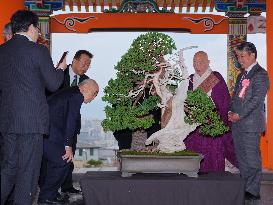
JAPAN-KYOTO-CHINA-BONSAI AND SUISEKI EXHIBITION

JAPAN-KYOTO-CHINA-BONSAI AND SUISEKI EXHIBITION

(231125) -- KYOTO, Nov. 25, 2023 (Xinhua) -- Chinese Consul General in Osaka Xue Jian (1st R), Mori Seihan (2nd R), abbot of Kiyomizu-dera Temple and other guests look at an 800-year-old bonsai during a bonsai and suiseki exhibition at Kiyomizu-dera Temple in Kyoto, Japan, Nov. 24, 2023. A four-day bonsai and suiseki exhibition commemorating the 45th anniversary of the signing of the China-Japan Treaty of Peace and Friendship kicked off here on Friday. (Xinhua/Zhang Xiaoyu)

  •  
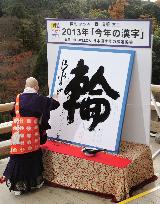
Kanji characterizing 2013

Kanji characterizing 2013

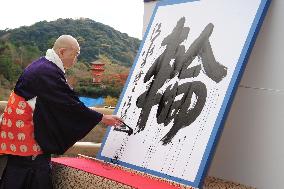
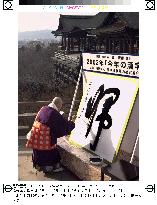
KYOTO, Japan - Photo shows the kanji "wa," meaning ring, which chief Buddhist priest Seihan Mori has written at Kiyomizu Temple in Kyoto on Dec. 12, 2013. "Wa" was chosen as the Chinese character best symbolizing 2013's national ethos in Japan.

  •  
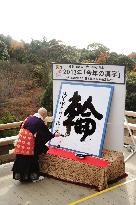
Kanji characterizing 2013

Kanji characterizing 2013

KYOTO, Japan - Photo shows chief Buddhist priest Seihan Mori and the kanji "wa," meaning ring, he has written at Kiyomizu Temple in Kyoto on Dec. 12, 2013. "Wa" was chosen as the Chinese character best symbolizing 2013's national ethos in Japan.

  •  
Kanji characterizing 2013

Kanji characterizing 2013

KYOTO, Japan - Photo shows chief Buddhist priest Seihan Mori and the kanji "wa," meaning ring, he has written at Kiyomizu Temple in Kyoto on Dec. 12, 2013. "Wa" was chosen as the Chinese character best symbolizing 2013's national ethos in Japan.

  •  
'Kanji' meaning tax picked as best characterizing 2014

'Kanji' meaning tax picked as best characterizing 2014

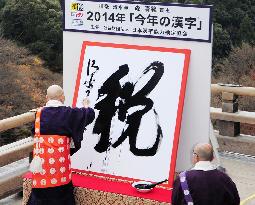
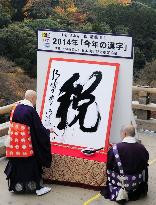
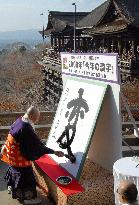
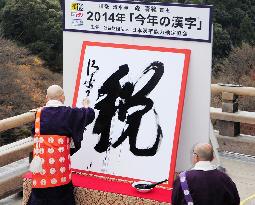
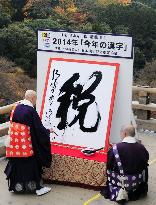
KYOTO, Japan - Seihan Mori (L), the chief priest of Kiyomizu Temple in Kyoto, writes the "kanji" character "zei" meaning tax on a large sheet of "washi" paper on Dec. 12, 2014, at the announcement by the Japan Kanji Aptitude Testing Foundation of the single best kanji symbolizing the year 2014 in Japan.

  •  
'Kanji' meaning tax picked as best characterizing 2014

'Kanji' meaning tax picked as best characterizing 2014

KYOTO, Japan - Seihan Mori (L), the chief priest of Kiyomizu Temple in Kyoto, writes the "kanji" character "zei" meaning tax on a large sheet of "washi" paper on Dec. 12, 2014, at the announcement by the Japan Kanji Aptitude Testing Foundation of the single best kanji symbolizing the year 2014 in Japan.

  •  
'Kizuna' (bond) selected as kanji of 2011 in Japan

'Kizuna' (bond) selected as kanji of 2011 in Japan

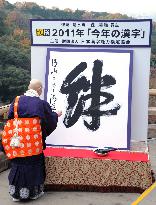
KYOTO, Japan - Seihan Mori, chief priest at Kiyomizu Temple, writes the kanji that can be read ''kizuna,'' meaning bond, at the Buddhist temple in Kyoto on Dec. 12, 2011. ''Kizuna'' has been chosen by a kanji promotion organization as the kanji that best characterizes the year 2011.

  •  
Calligraphy expressing hope for reconstruction

Calligraphy expressing hope for reconstruction

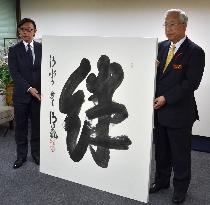
TOKYO, Japan - Hisaki Miyadate (R), vice governor of Iwate Prefecture, which was hit by the March 11 quake-tsunami disaster, holds a calligraphy work of Seihan Mori, chief priest of Kiyomizudera temple in Kyoto, at the Iwate prefectural government office in Morioka on Nov. 8, 2011. The Japanese kanji character for ''kizuna'' (bond) represented in the work was chosen by the Buddhist priest as an expression of hope for reconstruction from the disaster.

  •  
'Hot' chosen as kanji of the year

'Hot' chosen as kanji of the year

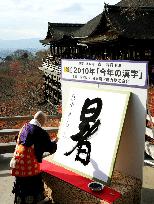
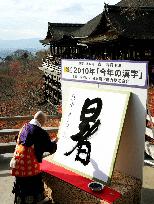
KYOTO, Japan - Seihan Mori, chief priest of Kiyomizu temple, writes the kanji character ''sho,'' meaning hot, during an annual calligraphy ceremony to unveil the Chinese character of the year at the temple in Kyoto on Dec. 10, 2010. The kanji character was voted as best characterizing Japan, which experienced a record-hot summer.

  •  
Kanji meaning 'new' picked to best characterize year 2009

Kanji meaning 'new' picked to best characterize year 2009

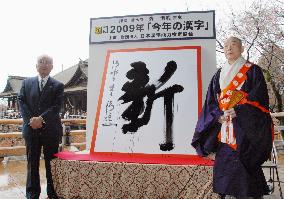
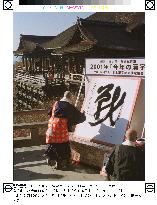
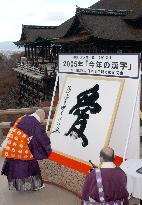
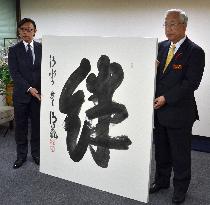
KYOTO, Japan - Seihan Mori (R), chief priest of Kiyomizu temple in Kyoto, and Akio Kioi, head of the Japan Kanji Aptitude Testing Foundation, pose for photos after Mori wrote the character ''shin'' on a large piece of ''washi'' Japanese paper on Dec. 11, 2009. The character, which means ''new'' in English, has been chosen as the single best kanji to symbolize the year 2009.

  •  
Kanji meaning 'new' picked to best characterize year 2009

Kanji meaning 'new' picked to best characterize year 2009

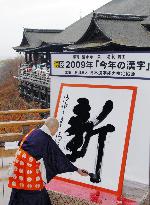
KYOTO, Japan - Seihan Mori, chief priest of Kiyomizu temple in Kyoto, writes the character ''shin,'' which means ''new'' in English, with a dash of a calligraphy brush on a large piece of ''washi'' Japanese paper on Dec. 11, 2009. The character has been chosen as the single best kanji to symbolize the year 2009.

  •  
Obama-inspired kanji chosen as best characterizing 2008

Obama-inspired kanji chosen as best characterizing 2008

KYOTO, Japan - Seihan Mori, head of Kiyomizu-dera temple in Kyoto, writes the character ''hen,'' which means ''change'' in English, on Dec. 12 as the character has been chosen as the single best kanji to characterize the year 2008.

  •  
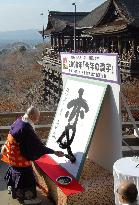
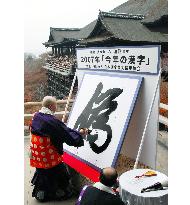
'Nise' (fake) chosen as kanji character of 2007

'Nise' (fake) chosen as kanji character of 2007

KYOTO, Japan - Seihan Mori, chief priest at Kiyomizu Temple in Kyoto, writes the Chinese character, or kanji, for ''nise'' (fake) on a board at the temple on Dec. 12. The character was chosen as the kanji symbol of 2007, reflecting a series of false food labeling scandals as well as problems over political funds and faulty pension records, the Japan Kanji Aptitude Testing Foundation said.

  •  
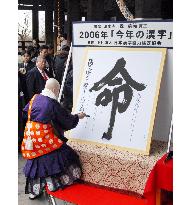
'Inochi (life)' chosen for character of the year

'Inochi (life)' chosen for character of the year

KYOTO, Japan - Seihan Mori, chief priest at Kiyomizu Temple in Kyoto, writes the Chinese character, or kanji, for ''Inochi (life)'' on a board at the temple on Dec. 12. The character was chosen as the kanji symbol of this year marked by the birth of the first grandson for the emperor, a series of reported student suicides after being bullied, and a number of child abuses, the Japan Kanji Aptitude Testing Foundation said.

  •  
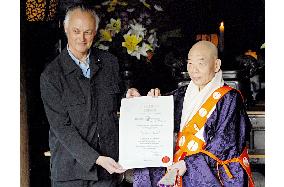
Kiyomizu Temple final candidate as one of world's new seven wonders

Kiyomizu Temple final candidate as one of world's new seven wonders

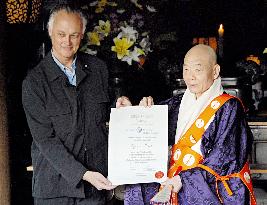
KYOTO, Japan - Bernard Weber (L), director general of the ''New7Wonders Foundation,'' presents Seihan Mori, chief priest of Kiyomizu Temple, with a certificate proving that the Buddhist temple in Kyoto is one of final candidates eligible for selection as one of ''New 7 Wonders of the World'' on Nov. 14.

  •  
'Love' chosen as term best representing 2005

'Love' chosen as term best representing 2005

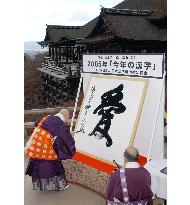
KYOTO, Japan - Seihan Mori, chief priest at Kiyomizu Temple in Kyoto, writes the Chinese character, or kanji, for ''love'' on a board at the temple on Dec. 12. The character was chosen as the kanji symbol of this year in an annual poll conducted by a Kyoto-based association.

  •  
'Tiger' chosen as kanji character of yr

'Tiger' chosen as kanji character of yr

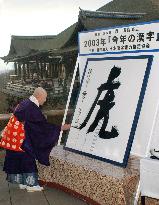
KYOTO, Japan - Seihan Mori, chief priest of Kiyomizudera Temple in Kyoto, paints the Chinese character, or kanji, for ''tiger,'' at the temple on Dec. 12. The character was chosen as the kanji symbol of the year in an annual poll conducted by a Kyoto-based association. It was chosen because the Central League baseball club Hanshin Tigers has bolstered public sentiment by winning the league pennant for the first time in 18 years.

  •  
'Return' chosen as kanji character of year

'Return' chosen as kanji character of year

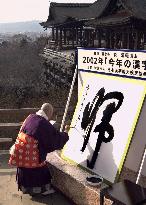
KYOTO, Japan - Chief priest Seihan Mori of the Kiyomizudera Temple in Kyoto brush-paints the Chinese character, or kanji, for ''return,'' at the temple Dec. 12. The character was chosen as the kanji symbolic of the past year in an annual popular poll promoted by a Kyoto-based association. It was chosen partly because the year saw the Japanese economy returning to its level prior to the bubble economy and five Japanese abducted to North Korea in the late 1970s returning to Japan.

  •  
'Sen' chosen as kanji of the year

'Sen' chosen as kanji of the year

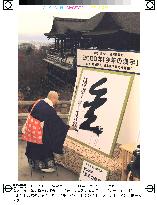
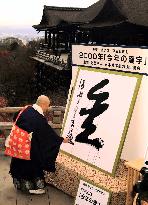
KYOTO, Japan - Seihan Mori, head priest of Kiyomizudera Temple in Kyoto, writes the Chinese character 'sen' (meaning fight or war), which was chosen Dec. 12 as the 'Kanji of the Year' in an annual poll sponsored by the Japan Kanji Competence Examination Association. The calligraphy is dedicated to the temple, pictured in the background, to be kept there for a year.

  •  
'Kin' chosen as kanji of the year

'Kin' chosen as kanji of the year

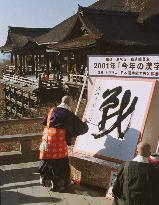
KYOTO, Japan - Seihan Mori, head priest of Kiyomizudera Temple in Kyoto, writes the Chinese character 'kin' (meaning gold or money), which was chosen Dec. 12 as the 'Kanji of the Year' in an annual poll sponsored by the Japan Kanji Competence Examination Association. The calligraphy is dedicated to the temple, pictured in the background, to be kept there for a year.

  •  
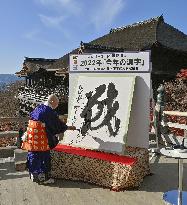
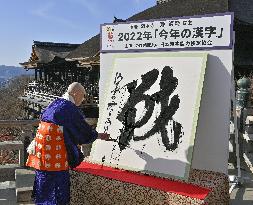
Kanji for "war" chosen as best to characterize 2022

Kanji for "war" chosen as best to characterize 2022

Seihan Mori, chief Buddhist priest of Kiyomizu temple in Kyoto, writes the kanji character "sen," meaning war or battle, with a calligraphy brush on Dec. 12, 2022. The character was selected as the best single kanji to symbolize the national mood for the year, referencing the Russia-Ukraine war.

  •  
Kanji for "war" chosen as best to characterize 2022

Kanji for "war" chosen as best to characterize 2022

Seihan Mori, chief Buddhist priest of Kiyomizu temple in Kyoto, writes the kanji character "sen," meaning war or battle, with a calligraphy brush on Dec. 12, 2022. The character was selected as the best single kanji to symbolize the national mood for the year, referencing the Russia-Ukraine war.

  •  
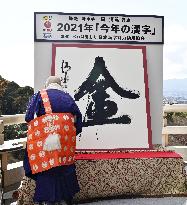
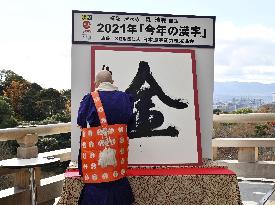
Kanji meaning "gold" picked to symbolize Japan's social mood in 2021

Kanji meaning "gold" picked to symbolize Japan's social mood in 2021

Seihan Mori, chief Buddhist priest of Kiyomizu temple, writes the kanji character "kin" meaning gold on Dec. 13, 2021, at the temple in Kyoto after it was picked as the single most representative Chinese character corresponding to the social mood of the Olympic year in Japan. (Pool photo)

  •  
Kanji meaning "gold" picked to symbolize Japan's social mood in 2021

Kanji meaning "gold" picked to symbolize Japan's social mood in 2021

Seihan Mori, chief Buddhist priest of Kiyomizu temple, writes the kanji character "kin" meaning gold on Dec. 13, 2021, at the temple in Kyoto after it was picked as the single most representative Chinese character corresponding to the social mood of the Olympic year in Japan. (Pool photo)

  •  
Kanji meaning "gold" picked to symbolize Japan's social mood in 2021

Kanji meaning "gold" picked to symbolize Japan's social mood in 2021

Seihan Mori, chief Buddhist priest of Kiyomizu temple, writes the kanji character "kin" meaning gold on Dec. 13, 2021, at the temple in Kyoto after it was picked as the single most representative Chinese character corresponding to the social mood of the Olympic year in Japan. (Pool photo)

  •  
'Tiger' chosen as kanji character of yr

'Tiger' chosen as kanji character of yr

KYOTO, Japan - Seihan Mori, chief priest of Kiyomizudera Temple in Kyoto, paints the Chinese character, or kanji, for ''tiger,'' at the temple on Dec. 12. The character was chosen as the kanji symbol of the year in an annual poll conducted by a Kyoto-based association. It was chosen because the Central League baseball club Hanshin Tigers has bolstered public sentiment by winning the league pennant for the first time in 18 years. (Kyodo)

  •  
'Return' chosen as kanji character of year

'Return' chosen as kanji character of year

KYOTO, Japan - Chief priest Seihan Mori of the Kiyomizudera Temple in Kyoto brush-paints the Chinese character, or kanji, for ''return,'' at the temple Dec. 12. The character was chosen as the kanji symbolic of the past year in an annual popular poll promoted by a Kyoto-based association. It was chosen partly because the year saw the Japanese economy returning to its level prior to the bubble economy and five Japanese abducted to North Korea in the late 1970s returning to Japan. (Kyodo)

  •  
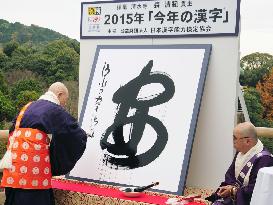
Kanji meaning safety, peace chosen as best characterizing 2015

Kanji meaning safety, peace chosen as best characterizing 2015

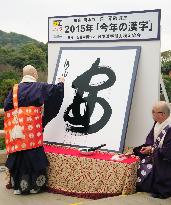
Seihan Mori (L), the chief Buddhist priest of Kiyomizu Temple in Kyoto, western Japan, writes the Chinese character "an" meaning safety or peace on a large sheet of "washi" paper using a giant Japanese calligraphy brush on Dec. 15, 2015, as the character was selected as the single best kanji symbolizing the year's national mood in Japan. (Kyodo) ==Kyodo

  •  
Kanji meaning safety, peace chosen as best characterizing 2015

Kanji meaning safety, peace chosen as best characterizing 2015

Seihan Mori (L), the chief Buddhist priest of Kiyomizu Temple in Kyoto, western Japan, writes the Chinese character "an" meaning safety or peace on a large sheet of "washi" paper using a giant Japanese calligraphy brush on Dec. 15, 2015, as the character was selected as the single best kanji symbolizing the year's national mood in Japan. (Kyodo) ==Kyodo

  •  
Obama-inspired kanji chosen as best characterizing 2008

Obama-inspired kanji chosen as best characterizing 2008

KYOTO, Japan - Seihan Mori, head of Kiyomizu-dera temple in Kyoto, writes the character ''hen,'' which means ''change'' in English, on Dec. 12 as the character has been chosen as the single best kanji to characterize the year 2008. (Kyodo)

  •  
'Nise' (fake) chosen as kanji character of 2007

'Nise' (fake) chosen as kanji character of 2007

KYOTO, Japan - Seihan Mori, chief priest at Kiyomizu Temple in Kyoto, writes the Chinese character, or kanji, for ''nise'' (fake) on a board at the temple on Dec. 12. The character was chosen as the kanji symbol of 2007, reflecting a series of false food labeling scandals as well as problems over political funds and faulty pension records, the Japan Kanji Aptitude Testing Foundation said. (Kyodo)

  •  
'Inochi (life)' chosen for character of the year

'Inochi (life)' chosen for character of the year

KYOTO, Japan - Seihan Mori, chief priest at Kiyomizu Temple in Kyoto, writes the Chinese character, or kanji, for ''Inochi (life)'' on a board at the temple on Dec. 12. The character was chosen as the kanji symbol of this year marked by the birth of the first grandson for the emperor, a series of reported student suicides after being bullied, and a number of child abuses, the Japan Kanji Aptitude Testing Foundation said. (Kyodo)

  •  
'Love' chosen as term best representing 2005

'Love' chosen as term best representing 2005

KYOTO, Japan - Seihan Mori, chief priest at Kiyomizu Temple in Kyoto, writes the Chinese character, or kanji, for ''love'' on a board at the temple on Dec. 12. The character was chosen as the kanji symbol of this year in an annual poll conducted by a Kyoto-based association. (Kyodo)

  •  
Kiyomizu Temple final candidate as one of world's new seven wond

Kiyomizu Temple final candidate as one of world's new seven wond

KYOTO, Japan - Bernard Weber (L), director general of the ''New7Wonders Foundation,'' presents Seihan Mori, chief priest of Kiyomizu Temple, with a certificate proving that the Buddhist temple in Kyoto is one of final candidates eligible for selection as one of ''New 7 Wonders of the World'' on Nov. 14. (Kyodo)

  •  
'Kanji' meaning tax picked as best characterizing 2014

'Kanji' meaning tax picked as best characterizing 2014

KYOTO, Japan - Seihan Mori (L), the chief priest of Kiyomizu Temple in Kyoto, writes the "kanji" character "zei" meaning tax on a large sheet of "washi" paper on Dec. 12, 2014, at the announcement by the Japan Kanji Aptitude Testing Foundation of the single best kanji symbolizing the year 2014 in Japan. (Kyodo)

  •  
'Kanji' meaning tax picked as best characterizing 2014

'Kanji' meaning tax picked as best characterizing 2014

KYOTO, Japan - Seihan Mori (L), the chief priest of Kiyomizu Temple in Kyoto, writes the "kanji" character "zei" meaning tax on a large sheet of "washi" paper on Dec. 12, 2014, at the announcement by the Japan Kanji Aptitude Testing Foundation of the single best kanji symbolizing the year 2014 in Japan. (Kyodo)

  •  
'Kizuna' (bond) selected as kanji of 2011 in Japan

'Kizuna' (bond) selected as kanji of 2011 in Japan

KYOTO, Japan - Seihan Mori, chief priest at Kiyomizu Temple, writes the kanji that can be read ''kizuna,'' meaning bond, at the Buddhist temple in Kyoto on Dec. 12, 2011. ''Kizuna'' has been chosen by a kanji promotion organization as the kanji that best characterizes the year 2011. (Kyodo)

  •  
'Hot' chosen as kanji of the year

'Hot' chosen as kanji of the year

KYOTO, Japan - Seihan Mori, chief priest of Kiyomizu temple, writes the kanji character ''sho,'' meaning hot, during an annual calligraphy ceremony to unveil the Chinese character of the year at the temple in Kyoto on Dec. 10, 2010. The kanji character was voted as best characterizing Japan, which experienced a record-hot summer. (Kyodo)

  •  
Calligraphy expressing hope for reconstruction

Calligraphy expressing hope for reconstruction

TOKYO, Japan - Hisaki Miyadate (R), vice governor of Iwate Prefecture, which was hit by the March 11 quake-tsunami disaster, holds a calligraphy work of Seihan Mori, chief priest of Kiyomizudera temple in Kyoto, at the Iwate prefectural government office in Morioka on Nov. 8, 2011. The Japanese kanji character for ''kizuna'' (bond) represented in the work was chosen by the Buddhist priest as an expression of hope for reconstruction from the disaster. (Kyodo)

  •  
'Sen' chosen as kanji of the year

'Sen' chosen as kanji of the year

KYOTO, Japan - Seihan Mori, head priest of Kiyomizudera Temple in Kyoto, writes the Chinese character 'sen' (meaning fight or war), which was chosen Dec. 12 as the 'Kanji of the Year' in an annual poll sponsored by the Japan Kanji Competence Examination Association. The calligraphy is dedicated to the temple, pictured in the background, to be kept there for a year.

  •  
'Kin' chosen as kanji of the year

'Kin' chosen as kanji of the year

KYOTO, Japan - Seihan Mori, head priest of Kiyomizudera Temple in Kyoto, writes the Chinese character 'kin' (meaning gold or money), which was chosen Dec. 12 as the 'Kanji of the Year' in an annual poll sponsored by the Japan Kanji Competence Examination Association. The calligraphy is dedicated to the temple, pictured in the background, to be kept there for a year.

  •  
Kanji used in "3Cs" slogan picked to symbolize 2020 amid pandemic

Kanji used in "3Cs" slogan picked to symbolize 2020 amid pandemic

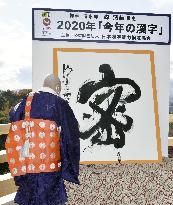
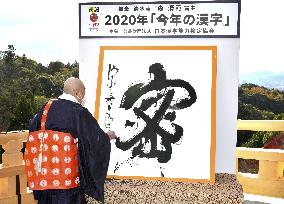
Seihan Mori, chief Buddhist priest of Kiyomizu temple in Kyoto, writes the kanji character "mitsu" meaning "close" or "dense" with a calligraphy brush in the Japanese city on Dec. 14, 2020. The character was selected as the best kanji to symbolize the national mood for the year, referencing calls to contain the spread of the novel coronavirus. (Pool photo)

  •  
Kanji used in "3Cs" slogan picked to symbolize 2020 amid pandemic

Kanji used in "3Cs" slogan picked to symbolize 2020 amid pandemic

Seihan Mori, chief Buddhist priest of Kiyomizu temple in Kyoto, writes the kanji character "mitsu" meaning "close" or "dense" with a calligraphy brush in the Japanese city on Dec. 14, 2020. The character was selected as the best kanji to symbolize the national mood for the year, referencing calls to contain the spread of the novel coronavirus. (Pool photo)

  • Main
  • Top
  • Editorial
  • Creative
  • About Us
  • About ILG
  • Terms of use
  • Company
  • BEHIND
  • Price List
  • Single Plan
  • Monthly Plan
  • Services
  • Shooting
  • Rights Clearance
  • Support
  • FAQ
  • How To Buy
  • Contact Us
  • Become a Partner

© KYODO NEWS IMAGES INC

All Rights Reserved.

  • Editorial
  • Olympics
  • News
  • Sports
  • Japan
  • Tech
  • Royal
  • Disaster
  • NorthKorea
  • Old Japan
  • SNS
  • Creative
  • Food
  • Japan
  • Landscape
  • Animal
  • Popular
  • #Ukraine
  • #China
  • #coronavirus
  • #N. Korea
  • #Russia
  • #Thailand
  • #Ukraine
  • #China
  • #coronavirus
  • #N. Korea
  • #Russia
  • #Thailand
  • Food
  • Japan
  • Landscape
  • Animal
  • Olympics
  • News
  • Sports
  • Japan
  • Tech
  • Royal
  • Disaster
  • NorthKorea
  • Old Japan
  • SNS