•  
Nishimatsu agrees on redress fund with former forced laborers

Nishimatsu agrees on redress fund with former forced laborers

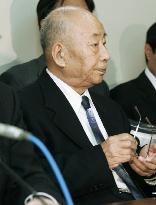
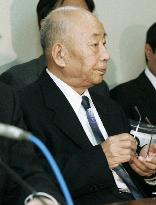
TOKYO, Japan - Shao Yicheng, one of five Chinese victims of forced labor during World War II, speaks to reporters in Tokyo on Oct. 23, 2009, after Nishimatsu Construction Co. agreed to set up a 250 million yen trust fund to compensate the five and 360 former co-workers.

  •  
Nishimatsu agrees on redress fund with former forced laborers

Nishimatsu agrees on redress fund with former forced laborers

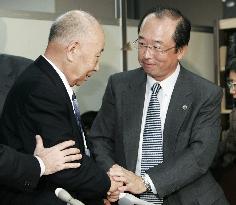
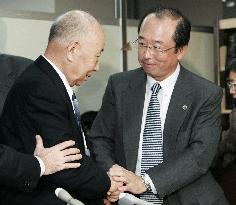
TOKYO, Japan - Shao Yicheng (L), one of five Chinese victims of forced labor during World War II, shakes hands with a lawyer representing Nishimatsu Construction Co. during a press conference in Tokyo on Oct. 23, 2009, after Nishimatsu agreed to set up a 250 million yen trust fund to compensate the five and 360 former co-workers.

  •  
Chinese forced workers call for rights before top court ruling

Chinese forced workers call for rights before top court ruling

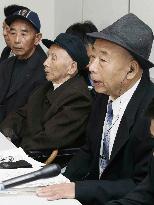
TOKYO, Japan - Shao Yicheng (R), 81, a former forced laborer from China, and other Chinese plaintiffs speak at a news conference in Tokyo on April 25, calling for a ''fair'' judgment two days before the Supreme Court rules on whether Chinese individuals, including people who were forced to undertake forced labor in Japan during World War II, have the right to demand war reparations from Japan. The court will make a judgment on April 27 on whether China has given up individuals' rights to seek reparation under postwar agreements such as the 1972 Japan-China Joint Communique in which the Chinese government abandoned its right to do so.

  •  
(3)Japanese court awards damages to Chinese forced laborers

(3)Japanese court awards damages to Chinese forced laborers

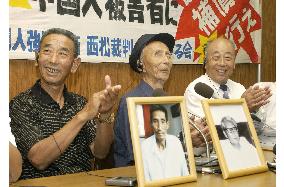
HIROSHIMA, Japan - Shao Yicheng (R) and Song Jiyao (C) smile at a press conference on July 9 after the Hiroshima High Court awarded damages in full to them and three other plaintiffs who said they were forced to work in severe conditions at a construction site in Hiroshima Prefecture during World War II.

  •  
(1)Court awards damages to Chinese in wartime forced-labor case

(1)Court awards damages to Chinese in wartime forced-labor case

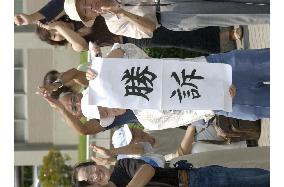
HIROSHIMA, Japan - A supporter of a group of Chinese plaintiffs holds a banner reading ''suit won'' after the Hiroshima High Court awarded damages in full on July 9 to the group who said they were forced to work in severe conditions at a construction site in Hiroshima Prefecture during World War II. The high court overturned a July 2002 lower court ruling that rejected the lawsuit brought by Shao Yicheng, 78, and four other plaintiffs four years earlier against Nishimatsu Construction Co., a construction firm based in Tokyo.

  •  
(2)Court awards damages to Chinese in wartime forced-labor case

(2)Court awards damages to Chinese in wartime forced-labor case

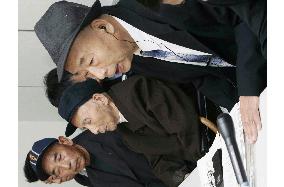
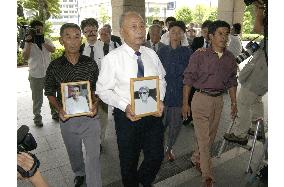
HIROSHIMA, Japan - Plaintiffs, accompanied by their lawyers and supporters, walk into the Hiroshima High Court on July 9 to hear a ruling on their damages suit. The high court awarded damages in full by overturning a July 2002 lower court ruling that rejected the lawsuit brought by Shao Yicheng, 78, and four other plaintiffs four years earlier against Nishimatsu Construction Co., a construction firm based in Tokyo.

  •  
(3)Japanese court awards damages to Chinese forced laborers

(3)Japanese court awards damages to Chinese forced laborers

HIROSHIMA, Japan - Shao Yicheng (R) and Song Jiyao (C) smile at a press conference on July 9 after the Hiroshima High Court awarded damages in full to them and three other plaintiffs who said they were forced to work in severe conditions at a construction site in Hiroshima Prefecture during World War II. (Kyodo)

  •  
Chinese forced workers call for rights before top court ruling

Chinese forced workers call for rights before top court ruling

TOKYO, Japan - Shao Yicheng (R), 81, a former forced laborer from China, and other Chinese plaintiffs speak at a news conference in Tokyo on April 25, calling for a ''fair'' judgment two days before the Supreme Court rules on whether Chinese individuals, including people who were forced to undertake forced labor in Japan during World War II, have the right to demand war reparations from Japan. The court will make a judgment on April 27 on whether China has given up individuals' rights to seek reparation under postwar agreements such as the 1972 Japan-China Joint Communique in which the Chinese government abandoned its right to do so. (Kyodo)

  •  
Nishimatsu agrees on redress fund with former forced laborers

Nishimatsu agrees on redress fund with former forced laborers

TOKYO, Japan - Shao Yicheng, one of five Chinese victims of forced labor during World War II, speaks to reporters in Tokyo on Oct. 23, 2009, after Nishimatsu Construction Co. agreed to set up a 250 million yen trust fund to compensate the five and 360 former co-workers. (Kyodo)

  •  
Nishimatsu agrees on redress fund with former forced laborers

Nishimatsu agrees on redress fund with former forced laborers

TOKYO, Japan - Shao Yicheng (L), one of five Chinese victims of forced labor during World War II, shakes hands with a lawyer representing Nishimatsu Construction Co. during a press conference in Tokyo on Oct. 23, 2009, after Nishimatsu agreed to set up a 250 million yen trust fund to compensate the five and 360 former co-workers. (Kyodo)

  •  
(2)Court awards damages to Chinese in wartime forced-labor case

(2)Court awards damages to Chinese in wartime forced-labor case

HIROSHIMA, Japan - Plaintiffs, accompanied by their lawyers and supporters, walk into the Hiroshima High Court on July 9 to hear a ruling on their damages suit. The high court awarded damages in full by overturning a July 2002 lower court ruling that rejected the lawsuit brought by Shao Yicheng, 78, and four other plaintiffs four years earlier against Nishimatsu Construction Co., a construction firm based in Tokyo. (Kyodo)

  •  
(1)Court awards damages to Chinese in wartime forced-labor case

(1)Court awards damages to Chinese in wartime forced-labor case

HIROSHIMA, Japan - A supporter of a group of Chinese plaintiffs holds a banner reading ''suit won'' after the Hiroshima High Court awarded damages in full on July 9 to the group who said they were forced to work in severe conditions at a construction site in Hiroshima Prefecture during World War II. The high court overturned a July 2002 lower court ruling that rejected the lawsuit brought by Shao Yicheng, 78, and four other plaintiffs four years earlier against Nishimatsu Construction Co., a construction firm based in Tokyo. (Kyodo)

  • Main
  • Top
  • Editorial
  • Creative
  • About Us
  • About ILG
  • Terms of use
  • Company
  • BEHIND
  • Price List
  • Single Plan
  • Monthly Plan
  • Services
  • Shooting
  • Rights Clearance
  • Support
  • FAQ
  • How To Buy
  • Contact Us
  • Become a Partner

© KYODO NEWS IMAGES INC

All Rights Reserved.

  • Editorial
  • Olympics
  • News
  • Sports
  • Japan
  • Tech
  • Royal
  • Disaster
  • NorthKorea
  • Old Japan
  • SNS
  • Creative
  • Food
  • Japan
  • Landscape
  • Animal
  • Popular
  • #Ukraine
  • #China
  • #coronavirus
  • #N. Korea
  • #Thailand
  • #Russia
  • #Ukraine
  • #China
  • #coronavirus
  • #N. Korea
  • #Thailand
  • #Russia
  • Food
  • Japan
  • Landscape
  • Animal
  • Olympics
  • News
  • Sports
  • Japan
  • Tech
  • Royal
  • Disaster
  • NorthKorea
  • Old Japan
  • SNS