•  
XINHUA-PICTURES OF THE YEAR 2023-WORLD NEWS

XINHUA-PICTURES OF THE YEAR 2023-WORLD NEWS

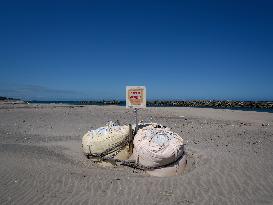
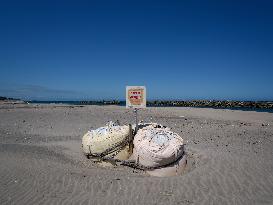
(240105) -- BEIJING, Jan. 5, 2024 (Xinhua) -- This photo taken on Aug. 22, 2023 shows a "No Swimming" warning sign at Tsurishihama beach in Shinchi town, Fukushima prefecture, Japan. Japan started releasing nuclear-contaminated wastewater from the crippled Fukushima Daiichi Nuclear Power Plant into the Pacific Ocean on Aug. 24, disregarding public concerns and strong opposition from both home and abroad. (Xinhua/Zhang Xiaoyu)

  •  
Asian Games: Golf

Asian Games: Golf

Mamika Shinchi of Japan hits a putt on the 11th hole during the opening round of the Asian Games women's individual golf competition at the West Lake International Golf Course in Hangzhou, China, on Sept. 28, 2023.

  •  
JAPAN-FUKUSHIMA-NUCLEAR WASTEWATER-TOURISM-DECLINE

JAPAN-FUKUSHIMA-NUCLEAR WASTEWATER-TOURISM-DECLINE

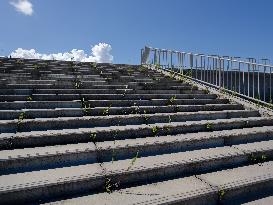
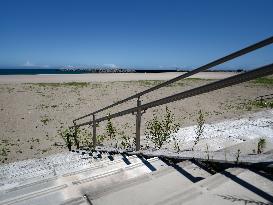
(230825) -- FUKUSHIMA, Aug. 25, 2023 (Xinhua) -- This photo taken on Aug. 22, 2023 shows a view of Tsurishihama beach covered with weeds in Shinchi Town, Fukushima Prefecture, Japan. Japan started releasing nuclear-contaminated wastewater from the crippled Fukushima Daiichi Nuclear Power Plant into the Pacific Ocean on Thursday, disregarding public concerns and strong opposition from both home and abroad. The Japanese government's reckless move to release the radioactive wastewater sparked waves of anger among local people in Fukushima, especially the fishermen and business owners. They are worried that the release would lead to a further decline in tourist visits. (Xinhua/Zhang Xiaoyu)

  •  
JAPAN-FUKUSHIMA-NUCLEAR WASTEWATER-TOURISM-DECLINE

JAPAN-FUKUSHIMA-NUCLEAR WASTEWATER-TOURISM-DECLINE

(230825) -- FUKUSHIMA, Aug. 25, 2023 (Xinhua) -- This photo taken on Aug. 22, 2023 shows a view of Tsurishihama beach covered with weeds in Shinchi Town, Fukushima Prefecture, Japan. Japan started releasing nuclear-contaminated wastewater from the crippled Fukushima Daiichi Nuclear Power Plant into the Pacific Ocean on Thursday, disregarding public concerns and strong opposition from both home and abroad. The Japanese government's reckless move to release the radioactive wastewater sparked waves of anger among local people in Fukushima, especially the fishermen and business owners. They are worried that the release would lead to a further decline in tourist visits. (Xinhua/Zhang Xiaoyu)

  •  
JAPAN-FUKUSHIMA-NUCLEAR WASTEWATER-TOURISM-DECLINE

JAPAN-FUKUSHIMA-NUCLEAR WASTEWATER-TOURISM-DECLINE

(230825) -- FUKUSHIMA, Aug. 25, 2023 (Xinhua) -- This photo taken on Aug. 22, 2023 shows a warning board at Tsurishihama beach in Shinchi Town, Fukushima Prefecture, Japan. Japan started releasing nuclear-contaminated wastewater from the crippled Fukushima Daiichi Nuclear Power Plant into the Pacific Ocean on Thursday, disregarding public concerns and strong opposition from both home and abroad. The Japanese government's reckless move to release the radioactive wastewater sparked waves of anger among local people in Fukushima, especially the fishermen and business owners. They are worried that the release would lead to a further decline in tourist visits. (Xinhua/Zhang Xiaoyu)

  •  

Japan's discharge of radioactive wastewater is a matter of survival: Fukushima fisherman

STORY: Japan's discharge of radioactive wastewater is a matter of survival: Fukushima fisherman DATELINE: Aug. 24, 2023 LENGTH: 00:02:06 LOCATION: SHINCHI, Japan CATEGORY: ENVIRONMENT SHOTLIST: 1. various of the crippled Fukushima Daiichi Nuclear Power Plant 2. various of the fisherman fishing 3. SOUNDBITE (Japanese): ONO HARUO, Fisherman in Shinchi town, Fukushima County STORYLINE: Japan started releasing the first batch of nuclear-contaminated wastewater from the crippled Fukushima Daiichi Nuclear Power Plant into the Pacific Ocean on Thursday. This extremely selfish and irresponsible disposal of the radioactive water has aroused strong opposition from neighboring countries, Pacific island countries and local fishermen. The 71-year-old fisherman Ono Haruo lives in Shinchi town, Fukushima Prefecture. He started fishing since he was 15 years old. He has expressed deep concern over his livelihood in the future. SOUNDBITE (Japanese): ONO HARUO, Fisherman in Shinchi town, Fukushima Prefecture "The fishery

  •  
JAPAN-FUKUSHIMA-NUKE WASTEWATER DISCHARGE-FISHERY

JAPAN-FUKUSHIMA-NUKE WASTEWATER DISCHARGE-FISHERY

(230824) -- FUKUSHIMA, Aug. 24, 2023 (Xinhua) -- Fisherman Ono Haruo arranges fishes at Tsurishihama Fishing Port in Shinchi Town, Fukushima Prefecture, Japan, Aug. 23, 2023. Japan started releasing nuclear-contaminated wastewater from the crippled Fukushima Daiichi Nuclear Power Plant into the Pacific Ocean on Thursday, despite raging opposition from both at home and abroad. Japan's Fisheries Agency said it will monitor concentration levels of radioactive materials in fish caught within a 10-km radius of the power plant. The first results are expected to be released on the agency's website no sooner than Saturday. (Xinhua/Zhang Xiaoyu)

  •  
JAPAN-FUKUSHIMA-NUKE WASTEWATER DISCHARGE-FISHERY

JAPAN-FUKUSHIMA-NUKE WASTEWATER DISCHARGE-FISHERY

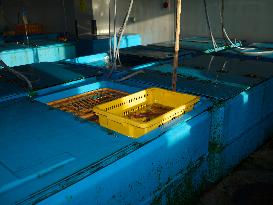
(230824) -- FUKUSHIMA, Aug. 24, 2023 (Xinhua) -- Fishes are seen at Tsurishihama Fishing Port in Shinchi Town, Fukushima Prefecture, Japan, Aug. 23, 2023. Japan started releasing nuclear-contaminated wastewater from the crippled Fukushima Daiichi Nuclear Power Plant into the Pacific Ocean on Thursday, despite raging opposition from both at home and abroad. Japan's Fisheries Agency said it will monitor concentration levels of radioactive materials in fish caught within a 10-km radius of the power plant. The first results are expected to be released on the agency's website no sooner than Saturday. (Xinhua/Zhang Xiaoyu)

  •  
JAPAN-FUKUSHIMA-NUKE WASTEWATER DISCHARGE-FISHERY

JAPAN-FUKUSHIMA-NUKE WASTEWATER DISCHARGE-FISHERY

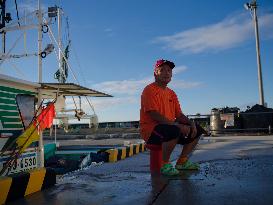
(230824) -- FUKUSHIMA, Aug. 24, 2023 (Xinhua) -- Fisherman Ono Haruo sits at Tsurishihama Fishing Port after fishing in Shinchi Town, Fukushima Prefecture, Japan, Aug. 23, 2023. Japan started releasing nuclear-contaminated wastewater from the crippled Fukushima Daiichi Nuclear Power Plant into the Pacific Ocean on Thursday, despite raging opposition from both at home and abroad. Japan's Fisheries Agency said it will monitor concentration levels of radioactive materials in fish caught within a 10-km radius of the power plant. The first results are expected to be released on the agency's website no sooner than Saturday. (Xinhua/Zhang Xiaoyu)

  •  
JAPAN-FUKUSHIMA-NUKE WASTEWATER DISCHARGE-FISHERY

JAPAN-FUKUSHIMA-NUKE WASTEWATER DISCHARGE-FISHERY

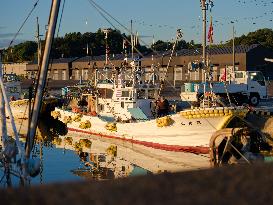
(230824) -- FUKUSHIMA, Aug. 24, 2023 (Xinhua) -- Fishermen return to Tsurishihama Fishing Port after fishing in Shinchi Town, Fukushima Prefecture, Japan, Aug. 23, 2023. Japan started releasing nuclear-contaminated wastewater from the crippled Fukushima Daiichi Nuclear Power Plant into the Pacific Ocean on Thursday, despite raging opposition from both at home and abroad. Japan's Fisheries Agency said it will monitor concentration levels of radioactive materials in fish caught within a 10-km radius of the power plant. The first results are expected to be released on the agency's website no sooner than Saturday. (Xinhua/Zhang Xiaoyu)

  •  
JAPAN-FUKUSHIMA-NUKE WASTEWATER DISCHARGE-FISHERY

JAPAN-FUKUSHIMA-NUKE WASTEWATER DISCHARGE-FISHERY

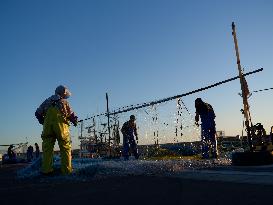
(230824) -- FUKUSHIMA, Aug. 24, 2023 (Xinhua) -- Fishermen dry fishing nets at Tsurishihama Fishing Port in Shinchi Town, Fukushima Prefecture, Japan, Aug. 23, 2023. Japan started releasing nuclear-contaminated wastewater from the crippled Fukushima Daiichi Nuclear Power Plant into the Pacific Ocean on Thursday, despite raging opposition from both at home and abroad. Japan's Fisheries Agency said it will monitor concentration levels of radioactive materials in fish caught within a 10-km radius of the power plant. The first results are expected to be released on the agency's website no sooner than Saturday. (Xinhua/Zhang Xiaoyu)

  •  
JAPAN-FUKUSHIMA-NUKE WASTEWATER DISCHARGE-FISHERY

JAPAN-FUKUSHIMA-NUKE WASTEWATER DISCHARGE-FISHERY

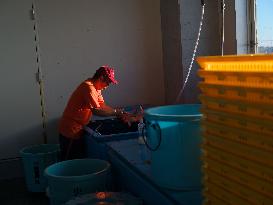
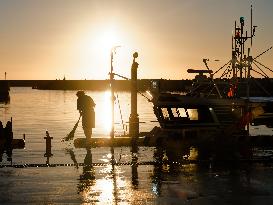
(230824) -- FUKUSHIMA, Aug. 24, 2023 (Xinhua) -- A fisherman cleans at Tsurishihama Fishing Port after fishing in Shinchi Town, Fukushima Prefecture, Japan, Aug. 23, 2023. Japan started releasing nuclear-contaminated wastewater from the crippled Fukushima Daiichi Nuclear Power Plant into the Pacific Ocean on Thursday, despite raging opposition from both at home and abroad. Japan's Fisheries Agency said it will monitor concentration levels of radioactive materials in fish caught within a 10-km radius of the power plant. The first results are expected to be released on the agency's website no sooner than Saturday. (Xinhua/Zhang Xiaoyu)

  •  
People in feudal costumes at festival in Osaka

People in feudal costumes at festival in Osaka

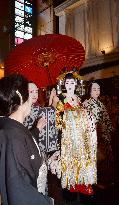
OSAKA, Japan - Men and women wearing feudal costumes walk during the traditional "Setsubun Omizukumi" festival featuring a water-drawing ritual at the end of winter in the Kita-Shinchi entertainment district in Osaka on Feb. 3, 2014.

  •  
1 and a half years after quake

1 and a half years after quake

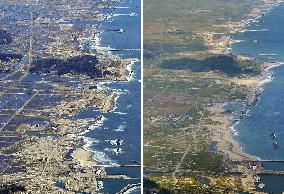
SENDAI, Japan - Combination photos from a Kyodo News helicopter show a coastal area stretching from the town of Shinchi, Fukushima Prefecture (front), to the town of Yamamoto, Miyagi Prefecture (back), on March 28, 2011 (L), shortly after the March 11, 2011, Great East Japan Earthquake and subsequent tsunami, and about one and a half years later on Sept. 4, 2012 (R).

  •  
Railway station soon after quake, now

Railway station soon after quake, now

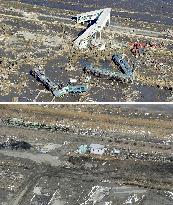
TOKYO, Japan - Photos taken from a Kyodo News helicopter show JR Shinchi railway station in the town of Shinchi, Fukushima Prefecture on March 12, 2011 (top), shortly after the area was devastated by the March 11 earthquake and tsunami, and the same location on March 2, 2012 (bottom). The station is to be rebuilt in an inland area.

  •  
6 months after Japan quake, tsunami

6 months after Japan quake, tsunami

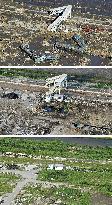
SHINCHI, Japan - Photos from a Kyodo News helicopter of Shinchi, Fukushima Prefecture, (from top) on March 12, June 3 and Sept. 6, 2011, show that a railway station and trains damaged by the March 11 tsunami have been removed and grass has grown.

  •  
Disaster-hit Shinchi in March and June

Disaster-hit Shinchi in March and June

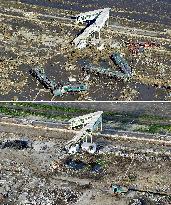
SENDAI, Japan - Combined photo taken from a Kyodo News helicopter shows JR Shinchi Station destroyed by the March 11 earthquake and tsunami in the town of Shinchi, Fukushima Prefecture, on March 12, 2011 (top frame), a day after the disaster, and the same railway station on June 3, 2011 (bottom frame). A rolled-over train has been removed from the scene but the railway track and the station building have not been repaired.

  •  
1 month since disaster

1 month since disaster

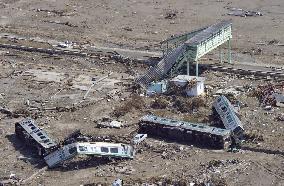
SENDAI, Japan - Train cars remain overturned near where JR Shinchi Station used to stand in Shinchi, Fukushima Prefecture, on April 10, 2011, about a month after the station was swept away by a massive tsunami March 11.

  •  
Search for missing in disaster

Search for missing in disaster

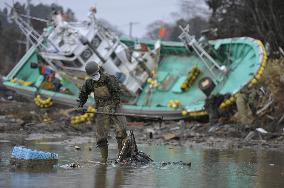
FUKUSHIMA, Japan - A member of the Self-Defense Forces searches for missing people in the town of Shinchi, Fukushima Prefecture, on April 9, 2011, after the March 11 quake and tsunami.

  •  
2nd day of 3-day intensive search

2nd day of 3-day intensive search

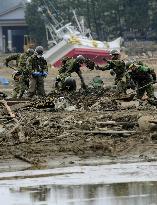
SOMA, Japan - Members of the Japan Self-Defense Forces search through the rubble for missing people in the town of Shinchi in Fukushima Prefecture, on April 2, 2011, the second day of the three-day intensive search operation by the SDF, U.S. military and other rescue workers.

  •  
Killer tsunami in Japan

Killer tsunami in Japan

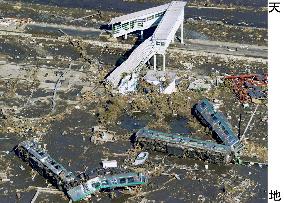
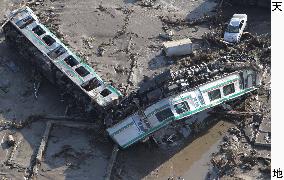
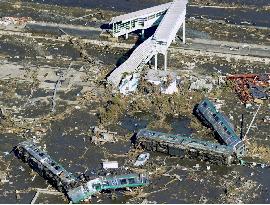
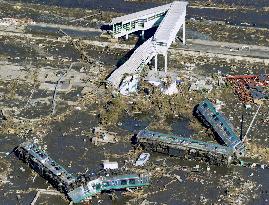
KITAKAMI, Japan - Train cars of the JR Joban Line are seen overturned on the ground on March 12, 2011, after being swept by tsunami in the town of Shinchi in Fukushima Prefecture after Japan's strongest recorded earthquake with a magnitude of 8.8 hit the country the previous day.

  •  
Megaquake aftermath in Japan

Megaquake aftermath in Japan

FUKUSHIMA, Japan - Train cars of the JR Joban Line are seen overturned and scattered in the town of Shinchi in Fukushima Prefecture, northeastern Japan, on March 12, 2011, a day after a massive earthquake and tsunami devastated the area.

  •  
Killer tsunami in Japan

Killer tsunami in Japan

KITAKAMI, Japan - Train cars of the JR Joban Line are seen overturned on the ground on March 12, 2011, after being swept by tsunami in the town of Shinchi in Fukushima Prefecture after Japan's strongest recorded earthquake with a magnitude of 8.8 hit the country the previous day.

  •  
Manufacturing process of hydraulic equipment at Konno Manufacturing

Manufacturing process of hydraulic equipment at Konno Manufacturing

Konno Seisakusho (Adachi-ku, Tokyo) will automate the inspection of three types of hydraulic equipment using an automatic inspection machine developed by the company. The company expects to be able to automate most of the inspection work that is currently done manually by one employee at the Fukushima Plant (Shinchi-machi, Fukushima Prefecture), and improve production efficiency by 5-10% compared to the current system at the plant. Konno Seisakusho has been actively promoting the linkage of information management systems and data both internally and externally, and has linked its PSI (production, sales, and inventory) management system with the ordering system for its Taiwan plant. By linking the inspection data to be acquired this time to the same system, it will also contribute to the sharing and efficiency of production schedule management. Photo taken on July 26, 2019, location unknown, credit: Nikkan Kogyo Shimbun / Kyodo News Images

  •  
Tsunami in Japan: 5 years on

Tsunami in Japan: 5 years on

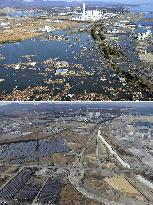
Combined photos taken from a Kyodo News helicopter show an area of Shinchi, Fukushima Prefecture, in northeastern Japan near a thermal power plant (rear) on March 12, 2011 (top), shortly after the area was devastated by massive tsunami; and the same area nearly five years later on March 2, 2016. Inundated rice fields turned into a site of large-scale solar power plants. (Kyodo) ==Kyodo

  •  
Aftermath of strong earthquake in northeastern Japan

Aftermath of strong earthquake in northeastern Japan

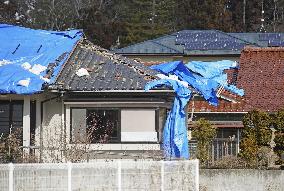
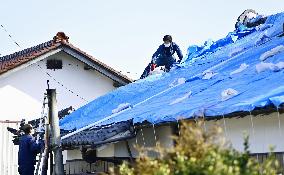
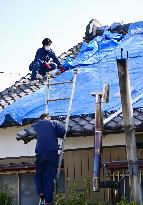
Blue sheets cover part of the roofs of houses in Shinchi, Fukushima Prefecture, on Feb. 16, 2021, after their tiles fell off following a magnitude 7.3 earthquake that hit northeastern Japan on Feb. 13.

  •  
Strong earthquake in northeastern Japan

Strong earthquake in northeastern Japan

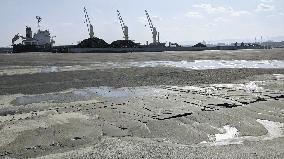
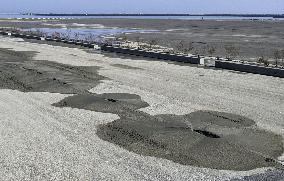
Photo taken Feb. 14, 2021, shows soil liquefaction at the port of Soma in the Fukushima Prefecture town of Shinchi. A magnitude 7.3 earthquake struck northeastern Japan the previous night.

  •  
Strong earthquake in northeastern Japan

Strong earthquake in northeastern Japan

Men cover the damaged roof of a house with a blue sheet in Shinchi, Fukushima Prefecture, on Feb. 14, 2021, after an earthquake with a magnitude of 7.3 struck northeastern Japan late on Feb. 13.

  •  
Strong earthquake in northeastern Japan

Strong earthquake in northeastern Japan

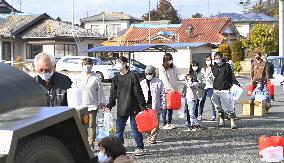
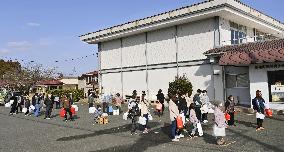
People wearing face masks to protect against the novel coronavirus wait in line to get water from Self-Defense Forces personnel in Shinchi, Fukushima Prefecture, on Feb. 14, 2021, after an earthquake with a magnitude of 7.3 struck northeastern Japan late on Feb. 13.

  •  
Strong earthquake in northeastern Japan

Strong earthquake in northeastern Japan

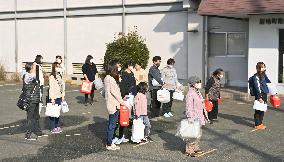
People wearing face masks to protect against the novel coronavirus wait in line to get water from Self-Defense Forces personnel in Shinchi, Fukushima Prefecture, on Feb. 14, 2021, after an earthquake with a magnitude of 7.3 struck northeastern Japan late on Feb. 13.

  •  
Strong earthquake in northeastern Japan

Strong earthquake in northeastern Japan

People wearing face masks to protect against the novel coronavirus wait in line to get water from Self-Defense Forces personnel in Shinchi, Fukushima Prefecture, on Feb. 14, 2021, after an earthquake with a magnitude of 7.3 struck northeastern Japan late on Feb. 13.

  •  
Strong earthquake in northeastern Japan

Strong earthquake in northeastern Japan

Photo taken Feb. 14, 2021, shows soil liquefaction at the port of Soma in the Fukushima Prefecture town of Shinchi. A magnitude 7.3 earthquake struck northeastern Japan the previous night.

  •  
Strong earthquake in northeastern Japan

Strong earthquake in northeastern Japan

Men cover the damaged roof of a house with a blue sheet in Shinchi, Fukushima Prefecture, on Feb. 14, 2021, after an earthquake with a magnitude of 7.3 struck northeastern Japan late on Feb. 13.

  •  
Photos from March 2011 tsunami

Photos from March 2011 tsunami

File photo taken March 12, 2011, from a Kyodo News helicopter shows devastation in Shinchi, Fukushima Prefecture in northeastern Japan, the day after the area was hit by a massive tsunami following a magnitude 9.0 earthquake. Train carriages are seen overturned. (Kyodo) ==Kyodo

  •  
Nagasaki Habour seen from Mt. Hoshitori

Nagasaki Habour seen from Mt. Hoshitori

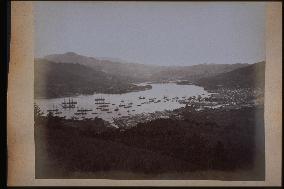
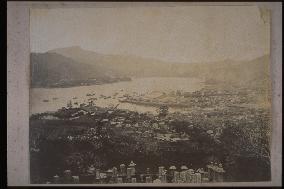
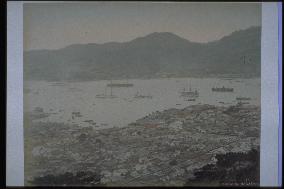
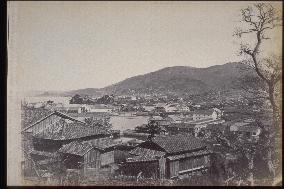
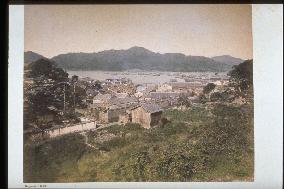
Nagasaki Port viewed from Mt. Hoshitori (Mt. Ohira at the time of the photo) overlooking the Oura foreign settlement. The promenade by Dejima built in 1867 and a corral for horses can be seen. Shinchi is to its right and the British Consulate is behind the foreign settlement. At the mouth of Urakami River in the back of the bay lies Urakami-Shinden (present-day Mori-machi). Since Dejima-Shinbashi Bridge built in 1869 is not visible, this photo must have been taken around 1868.==Date:about 1868, Place:Nagasaki, Photo: F. Beato, (Credit:Nagasaki University Library/Kyodo News Images)

  •  
Dejima and Nagasaki harbour seen from Don-no-Yama

Dejima and Nagasaki harbour seen from Don-no-Yama

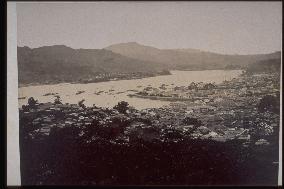
Junin-machi, the Shinchi warehouses, Dejima, Edo-machi, and the Nagasaki Harbour area seen from the hillside behind the foreign settlement of Higashiyamate. The presence of the Dejima-Shinbashi Bridge linking Dejima and Tsuki-machi indicates that the photograph was taken in the beginning of the Meiji Period.==Date:unknown, Place:Nagasaki, Photo:R. Stillfried, (Credit:Nagasaki University Library/Kyodo News Images) [Cabinet Number96‐38‐0]

  •  
The city of Nagasaki and Nagasaki Harbour

The city of Nagasaki and Nagasaki Harbour

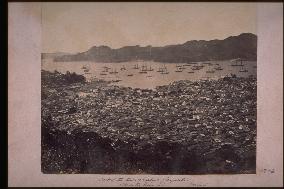
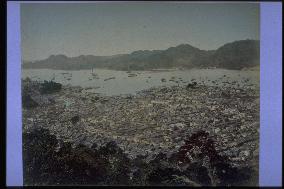
Many buildings were built on the Umegasaki landfill area on the left. The Nagasaki Custom House is also visible dockside. Western-style buildings have been built by the Shinchi sea side and an embankment is in the process of being built behind the buildings. Shin-Ohashi Bridge, constructed in 1869 at the mouth of Nakashima River before redirection work, is visible. A new western-style building is constructed on Dejima across from Tsukimachi. However, neither Mii Church built in 1876 nor the bell tower of Seikokai Theology School built in 1878 is visible. Therefore, this photo must have been taken around 1872. This is a bird's-eye view from Mt. Kazagashira of a typical view of Nagasaki around the beginning of the Meiji period.==Date:1873, Place:Nagasaki, Photo:Uchida Kuichi, (Credit:Nagasaki University Library/Kyodo News Images)

  •  
The central district of Nagasaki and Nagasaki Harbour

The central district of Nagasaki and Nagasaki Harbour

This photo was taken from the southern tip of Mt. Kazagashira around 1893 after the first Nagasaki port improvement project. Nakashima River had been redirected behind Dejima and Shin-Kawaguchi Bridge was constructed at the mouth of the river in 1890. Dozan river was redirected to flow north of Shinchi. There are big trading company buildings along the Shinchi coast. This photo shows the center of Nagasaki city around mid-Meiji when the city was growing rapidly.==Date:Middle Meiji (1883-1897), Place:Nagasaki, Photo:unknown, (Credit:Nagasaki University Library/Kyodo News Images) [Cabinet Number75‐9‐0]

  •  
Five-story pagoda at Hokanji Temple

Five-story pagoda at Hokanji Temple

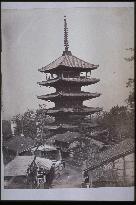
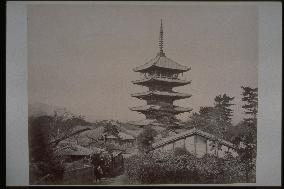
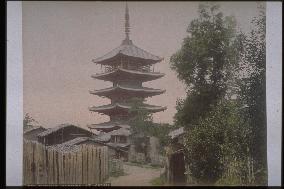
The five-story pagoda of Hokanji Temple is viewed from a path stretching southeast, facing northwest. The pagoda, also called Yasaka Tower, was built in 1440 by Ashikaga Yoshinori and underwent major repair work in 1618. Featuring a tiled roof, it is 40m tall and 5.5m wide. The photograph must have been taken before 1908, when the fence on the fifth story was removed during major repair work. The houses around the pagoda are brothels, and the area is currently called Tatsumi-Shinchi.==Date:unknown, Place:Kyoto, Photo:R. Stillfried, (Credit:Nagasaki University Library/Kyodo News Images) [Cabinet Number63‐13‐0]

  •  
Five-story pagoda at Hokanji Temple

Five-story pagoda at Hokanji Temple

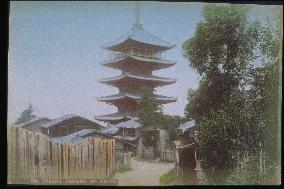
The five-story pagoda of Hokanji Temple is viewed from a path stretching southeast, facing northwest. The pagoda, also called Yasaka Tower, was built in 1440 by Ashikaga Yoshinori and underwent major repair work in 1618. Featuring a tiled roof, it is 40m tall and 5.5m wide. The photograph must have been taken before 1908, when the fence on the fifth story was removed during major repair work. The houses around the pagoda are brothels, and the area is currently called Tatsumi-Shinchi. Taken by F. Beato.==Date:unknown, Place:Kyoto, Photo:F. Beato, (Credit:Nagasaki University Library/Kyodo News Images) [Cabinet Number62‐14‐0]

  •  
Rows of houses seen from Higashiyama,Kyoto

Rows of houses seen from Higashiyama,Kyoto

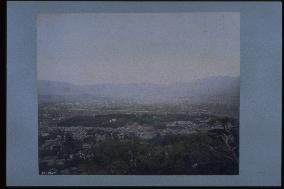
The city of Kyoto, facing west from the Higashiyama Shogun Mound. The Yasaka Pagoda at Horinji Temple is visible in the left foreground and, in the centre, the precincts of Yasaka Shinto Shrine. The Kamogawa River and Rakuchu area of the city are visible in background with the Nishiyama Mountains behind. Gion Shinchi is on the east side of Kamogawa River. There is significant greenery around the precincts of Ken'ninji Temple, showing that the area had not yet been developed.==Date:unknown, Place:Kyoto, Photo:unknown, (Credit:Nagasaki University Library/Kyodo News Images) [Cabinet Number52‐39‐0]

  •  
Five-story pagoda at Hokanji Temple

Five-story pagoda at Hokanji Temple

The five-story pagoda of Hokanji Temple is viewed from a path stretching southeast, facing northwest. The pagoda, also called Yasaka Tower, was built in 1440 by Ashikaga Yoshinori and underwent major repair work in 1618. Featuring a tiled roof, it is 40m tall and 5.5m wide. The photograph must have been taken before 1908, when the fence on the fifth story was removed during major repair work. The houses around the pagoda are brothels, and the area is currently called Tatsumi-Shinchi. Taken by Tamamura Kozaburo.==Date:unknown, Place:Kyoto, Photo:unknown, (Credit:Nagasaki University Library/Kyodo News Images) [Cabinet Number52‐1‐0]

  •  
Five-story pagoda at Hokanji Temple

Five-story pagoda at Hokanji Temple

The five-story pagoda of Hokanji Temple is viewed from a path stretching southeast, facing northwest. The pagoda, also called Yasaka Tower, was built in 1440 by Ashikaga Yoshinori and underwent major repair work in 1618. Featuring a tiled roof, it is 40m tall and 5.5m wide. The photograph must have been taken before 1908, when the fence on the fifth story was removed during major repair work. The houses around the pagoda are brothels, and the area is currently called Tatsumi-Shinchi. Taken by Tamamura Kozaburo.==Date:unknown, Place:Kyoto, Photo:Tamamura Kozaburo, (Credit:Nagasaki University Library/Kyodo News Images) [Cabinet Number48‐110‐0]

  •  
Shinchi in kita,the north

Shinchi in kita,the north

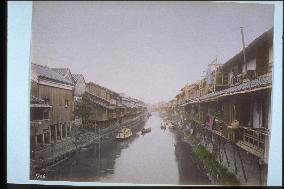
The so-called Kita Shinchi originated from the restoration of Dojimagawa in the Genroku years. After the present grounds were formed when the Sonezaki River was reclaimed in 1912, it was divided in two areas, the commercial Dojima area and the red-light district of Sonezakishinchi.==Date:unknown, Place:Osaka, Photo:unknown, (Credit:Nagasaki University Library/Kyodo News Images) [Cabinet Number23‐18‐0]

  •  
Shinchigura storehouse and Dejima

Shinchigura storehouse and Dejima

A photo of Shinchi and Nagasaki Harbor taken from the hillside above Umegasaki. The three bridges built here in 1869, Dejima Shinbashi, Shinohashi and Umegasakibashi, are seen. The Shinchi Warehouses and Dejima are clearly depicted in the photo.==Date:About 1872, Place:Nagasaki, Photo:THE FAR EAST, (Credit:Nagasaki University Library/Kyodo News Images) [Cabinet Number21‐28‐0]

  •  
Dejima and Nagasaki harbour seen from Don-no-Yama

Dejima and Nagasaki harbour seen from Don-no-Yama

In the centre is Dejima, and to the fore are the Shinchi warehouses and the settlements of Umegasaki. The shore line of Dejima can be seen clearly. A wooden bridge (Umegasaki Bridge) can be seen connecting Shinchi and the settlements.==Date:unknown, Place:Nagasaki, Photo:Ueno Hikoma, (Credit:Nagasaki University Library/Kyodo News Images) [Cabinet Number21‐2‐0]

  •  
NAGASAKI DEJIMA and the settlement for RUSSIANS

NAGASAKI DEJIMA and the settlement for RUSSIANS

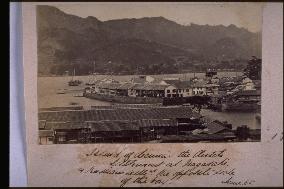
Taken by Beato. Written Island of Decima. the Dutch Settlement at Nagasaki.& Russian Settle nt. the opposite Side of the bay. June 65. A rare photo with the original shape of the Dejima still remaining, taken in 1865. In the foreground are the Shinchi ware houses, and the other bank is the Russian settlement in Inasa.==Date:1865, Place:Nagasaki, Photo:F. Beato, (Credit:Nagasaki University Library/Kyodo News Images) [Cabinet Number17‐34‐0]

  •  
Center of NAGASAKI downtown and umegasaki settlement

Center of NAGASAKI downtown and umegasaki settlement

Written March 1866 by Beato. A wide view of the central part of Nagasaki and Dejima, Shinchi and Umegasaki from Mt.Kazagashira. There is no bridge at the mouth of Nakashima river, and the building of the Nishiyakusho is seen to the upper right. Shinchi is still skirtde on the rea by sea. There are many foreign ships in the harbour.==Date:1866, Place:Nagasaki, Photo:F. Beato, (Credit:Nagasaki University Library/Kyodo News Images) [Cabinet Number17‐2‐0]

  •  
View of dejima,fan-shaped artificial island,from kannai

View of dejima,fan-shaped artificial island,from kannai

View of Dejima and Nagasaki Harbour from the Chinese Quarter in Kannai near the Shinchi warehouses. The bridge in the centre is Umegasaki Bridge. The inlet is the present Minato Park. At the seaside of Dejima is a protruding Umamawashi built in 1867.==Date:unknown, Place:Nagasaki, Photo:Kusakabe Kinbei, (Credit:Nagasaki University Library/Kyodo News Images) [Cabinet Number2‐1‐0]

  •  
Killer tsunami in Japan

Killer tsunami in Japan

KITAKAMI, Japan - Train cars of the JR Joban Line are seen overturned on the ground on March 12, 2011, after being swept by tsunami in the town of Shinchi in Fukushima Prefecture after Japan's strongest recorded earthquake with a magnitude of 8.8 hit the country the previous day. (Kyodo)

  • Main
  • Top
  • Editorial
  • Creative
  • About Us
  • About ILG
  • Terms of use
  • Company
  • BEHIND
  • Price List
  • Single Plan
  • Monthly Plan
  • Services
  • Shooting
  • Rights Clearance
  • Support
  • FAQ
  • How To Buy
  • Contact Us
  • Become a Partner

© KYODO NEWS IMAGES INC

All Rights Reserved.

  • Editorial
  • Olympics
  • News
  • Sports
  • Japan
  • Tech
  • Royal
  • Disaster
  • NorthKorea
  • Old Japan
  • SNS
  • Creative
  • Food
  • Japan
  • Landscape
  • Animal
  • Popular
  • #Ukraine
  • #Thailand
  • #coronavirus
  • #N. Korea
  • #China
  • #Russia
  • #Ukraine
  • #Thailand
  • #coronavirus
  • #N. Korea
  • #China
  • #Russia
  • Food
  • Japan
  • Landscape
  • Animal
  • Olympics
  • News
  • Sports
  • Japan
  • Tech
  • Royal
  • Disaster
  • NorthKorea
  • Old Japan
  • SNS