•  
Pope Francis Visits Mongolia

Pope Francis Visits Mongolia

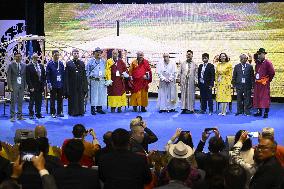
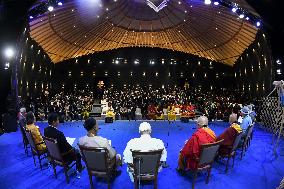
Pope Francis presided over an ecumenical and interreligious event in the Hun Theatre in Ulaanbataar, Mongolia on September 3, 2023, in which representatives of Shintoism, Buddhism, Islam, Judaism, Hinduism, Shamanism, and other Christian confessions took part, on the third day of Pope 4-day visit to Mongolia. Photo by (EV) Vatican Media/ABACAPRESS.COM

  •  
Pope Francis Visits Mongolia

Pope Francis Visits Mongolia

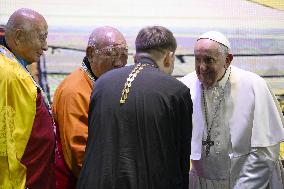
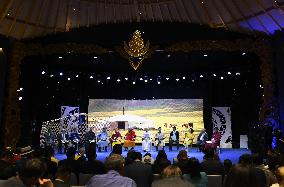
Pope Francis presided over an ecumenical and interreligious event in the Hun Theatre in Ulaanbataar, Mongolia on September 3, 2023, in which representatives of Shintoism, Buddhism, Islam, Judaism, Hinduism, Shamanism, and other Christian confessions took part, on the third day of Pope 4-day visit to Mongolia. Photo by (EV) Vatican Media/ABACAPRESS.COM

  •  
Pope Francis Visits Mongolia

Pope Francis Visits Mongolia

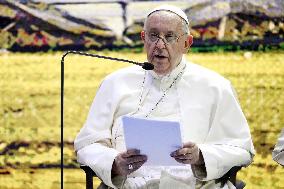
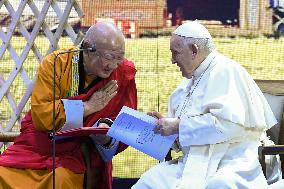
Pope Francis presided over an ecumenical and interreligious event in the Hun Theatre in Ulaanbataar, Mongolia on September 3, 2023, in which representatives of Shintoism, Buddhism, Islam, Judaism, Hinduism, Shamanism, and other Christian confessions took part, on the third day of Pope 4-day visit to Mongolia. Photo by (EV) Vatican Media/ABACAPRESS.COM

  •  
Pope Francis Visits Mongolia

Pope Francis Visits Mongolia

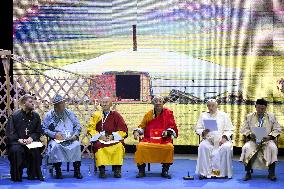
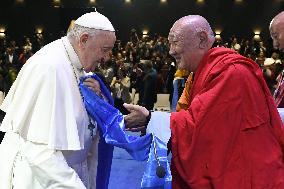
Pope Francis presided over an ecumenical and interreligious event in the Hun Theatre in Ulaanbataar, Mongolia on September 3, 2023, in which representatives of Shintoism, Buddhism, Islam, Judaism, Hinduism, Shamanism, and other Christian confessions took part, on the third day of Pope 4-day visit to Mongolia. Photo by (EV) Vatican Media/ABACAPRESS.COM

  •  
Pope Francis Visits Mongolia

Pope Francis Visits Mongolia

Pope Francis presided over an ecumenical and interreligious event in the Hun Theatre in Ulaanbataar, Mongolia on September 3, 2023, in which representatives of Shintoism, Buddhism, Islam, Judaism, Hinduism, Shamanism, and other Christian confessions took part, on the third day of Pope 4-day visit to Mongolia. Photo by (EV) Vatican Media/ABACAPRESS.COM

  •  
Pope Francis Visits Mongolia

Pope Francis Visits Mongolia

Pope Francis presided over an ecumenical and interreligious event in the Hun Theatre in Ulaanbataar, Mongolia on September 3, 2023, in which representatives of Shintoism, Buddhism, Islam, Judaism, Hinduism, Shamanism, and other Christian confessions took part, on the third day of Pope 4-day visit to Mongolia. Photo by (EV) Vatican Media/ABACAPRESS.COM

  •  
Pope Francis Visits Mongolia

Pope Francis Visits Mongolia

Pope Francis presided over an ecumenical and interreligious event in the Hun Theatre in Ulaanbataar, Mongolia on September 3, 2023, in which representatives of Shintoism, Buddhism, Islam, Judaism, Hinduism, Shamanism, and other Christian confessions took part, on the third day of Pope 4-day visit to Mongolia. Photo by (EV) Vatican Media/ABACAPRESS.COM

  •  
Pope Francis Visits Mongolia

Pope Francis Visits Mongolia

Pope Francis presided over an ecumenical and interreligious event in the Hun Theatre in Ulaanbataar, Mongolia on September 3, 2023, in which representatives of Shintoism, Buddhism, Islam, Judaism, Hinduism, Shamanism, and other Christian confessions took part, on the third day of Pope 4-day visit to Mongolia. Photo by (EV) Vatican Media/ABACAPRESS.COM

  •  
Grassroots Shinto group chief seeks more public awareness

Grassroots Shinto group chief seeks more public awareness

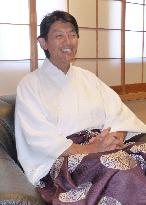
TOKYO, Japan - Masanori Yoshimura, head of the Kyoha Shinto Federation comprising sects separated from Japan's traditional Shinto religion dedicated to "kami" (god) worship, expresses his wish during an interview in August 2014 that people will learn more about grassroots Shintoism.

  •  
Shinto adapting to era of globalization

Shinto adapting to era of globalization

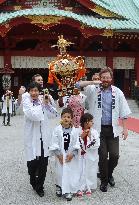
TOKYO, Japan - Ambassadors to Japan and their family members carry a "mikoshi" portable shrine at Kanda Myojin, a Shinto shrine in Tokyo's Chiyoda Ward, on Oct. 27, 2012 during a seminar about Shintoism co-hosted by the Association of Shinto Shrines.

  •  
Interfaith memorial event in N.Y.

Interfaith memorial event in N.Y.

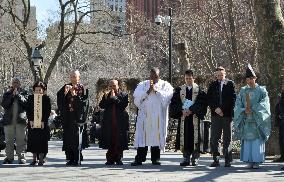
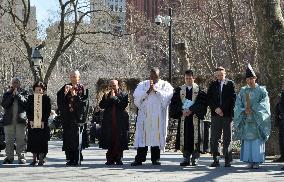
NEW YORK, United States - Rev. T. Kenjitsu Nakagaki (3rd from L), a Japanese Buddhist priest based in New York, and other leaders from major religions including Shintoism, Christianity, Judaism and Islam, offer silent prayers on March 11, 2012, at a park in New York, at 2:46 p.m., the local time in Japan when the magnitude-9.0 quake hit the northeastern part of the country a year earlier, at a memorial event for the first anniversary of the devastating earthquake and tsunami disaster.

  •  
Interfaith memorial event in N.Y.

Interfaith memorial event in N.Y.

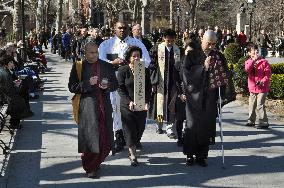
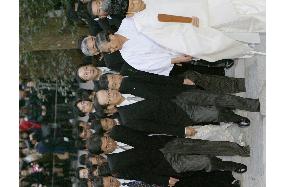
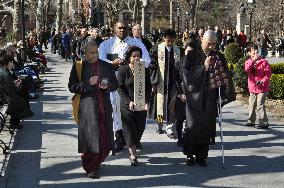
NEW YORK, United States - Rev. T. Kenjitsu Nakagaki (R front), a Japanese Buddhist priest based in New York, and other leaders from major religions including Shintoism, Christianity, Judaism and Islam, walk in a procession with Japanese residents and New Yorkers from a park to a church in New York at a memorial event on March 11, 2012, the first anniversary of the devastating earthquake and tsunami disaster in northeastern Japan.

  •  
Fukuda visits Ise Jingu shrine

Fukuda visits Ise Jingu shrine

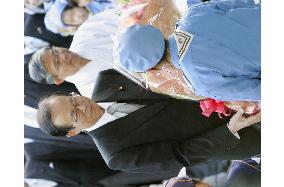
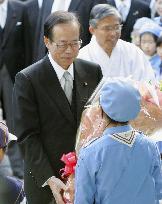
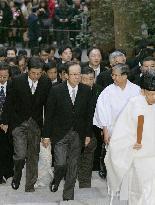
ISE, Japan - Prime Minister Yasuo Fukuda (L) receives a bouquet from a Girl Scout after visiting the Ise Jingu shrine in Ise, Mie Prefecture on Jan. 4. It is common for top Japanese politicians to visit the shrine, one of the major symbols of Shintoism in Japan, at New Year.

  •  
Fukuda visits Ise Jingu shrine

Fukuda visits Ise Jingu shrine

ISE, Japan - Prime Minister Yasuo Fukuda (C), accompanied by a Shinto priest, visits the Ise Jingu shrine in Ise, Mie Prefecture on Jan. 4, maintaining the tradition of New Year's pilgrimages by politicians to one of the major symbols of Shintoism in Japan.

  •  
7 cabinet members visit Yasukuni Shrine

7 cabinet members visit Yasukuni Shrine

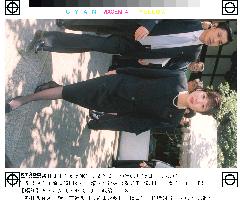
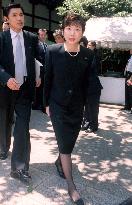
TOKYO, Japan - Seven cabinet members visit Tokyo's Yasukuni Shrine, dedicated to Japan's war dead, on Aug. 15, on the 54th anniversary of Japan's surrender in World War II. Posts and Telecommunications Minister Seiko Noda (R) is among the seven ministers. Before and during World War II the shrine was a bastion of government-sponsored Shintoism and a symbol of Japanese militarism.

  •  
Fukuda visits Ise Jingu shrine

Fukuda visits Ise Jingu shrine

ISE, Japan - Prime Minister Yasuo Fukuda (L) receives a bouquet from a Girl Scout after visiting the Ise Jingu shrine in Ise, Mie Prefecture on Jan. 4. It is common for top Japanese politicians to visit the shrine, one of the major symbols of Shintoism in Japan, at New Year. (Kyodo)

  •  
Fukuda visits Ise Jingu shrine

Fukuda visits Ise Jingu shrine

ISE, Japan - Prime Minister Yasuo Fukuda (C), accompanied by a Shinto priest, visits the Ise Jingu shrine in Ise, Mie Prefecture on Jan. 4, maintaining the tradition of New Year's pilgrimages by politicians to one of the major symbols of Shintoism in Japan. (Kyodo)

  •  
Manganji Temple,Nikko

Manganji Temple,Nikko

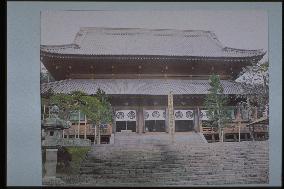
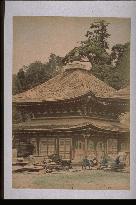
Sanbutsu-do, the main hall of Rinoji Temple, was formerly part of Nikko Futarasan Shinto Shrine. In response to the official separation of Buddhism and Shintoism in 1871, it was dissembled and rebuilt on its present site in 1881. It enshrines three Buddhist deities: Senju-kannon (1,000-hand deity of mercy), Amida-nyorai and Bato-kannon.==Date:unknown, Place:Nikko, Photo:unknown, (Credit:Nagasaki University Library/Kyodo News Images) [Cabinet Number96‐40‐0]

  •  
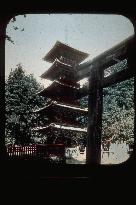
A five-story pagoda at Tennoji Temple,Ueno

A five-story pagoda at Tennoji Temple,Ueno

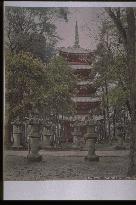
This five-story pagoda was built by Doi Toshikatsu, feudal lord of Furukawa Castle, in 1639. The stone lanterns in the foreground line the approach of Toshogu Shrine. The main hall is to the left. The pagoda originally belonged to the shrine, but after the separation of Shintoism and Buddhism in the Meiji Period, it transferred to Kaneiji Temple. At present, it belongs to the Tokyo Metropolitan Government and is located within the Ueno Zoo grounds.==Date:unknown, Place:Ueno, Photo:Tamamura Kozaburo, (Credit:Nagasaki University Library/Kyodo News Images) [Cabinet Number80‐28‐0]

  •  
The Sorinto and Sanbutsudo, Rinnoji Temple, Nikko

The Sorinto and Sanbutsudo, Rinnoji Temple, Nikko

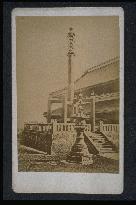
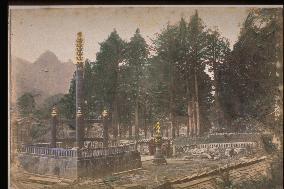
Sorinto is a bronze tower built by Tenkai Daisojo (the highest ranking priest) in the Toshogu inner shrine in 1643. It was later moved to the area of Futarasan Shinto Shrine and then to its present-day location in 1875 after the official separation of Buddhism and Shintoism. The Sanbutsudo of Rinnoji Temple was also removed from Futarasan Shinto Shrine and rebuilt in 1881 at the site shown here.==Date:unknown, Place:Nikko, Photo:unknown, (Credit:Nagasaki University Library/Kyodo News Images) [Cabinet Number71‐15‐0]

  •  
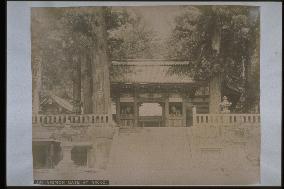
The front entrance to Toshogu Shrine,Nikko

The front entrance to Toshogu Shrine,Nikko

This gate was called Niomon after the statues of Nio guardians placed here until 1871, when Shintoism and Buddhism were separated. After the statues were transferred to Taiyuin, the gate came to be called Omotemon (Front Gate). Before 1897, when the Nio statues were re-installed, the komainu (guardian dogs), formerly at the back, were placed in front as shown here.==Date:unknown, Place:Nikko, Photo:unknown, (Credit:Nagasaki University Library/Kyodo News Images) [Cabinet Number54‐22‐0]

  •  
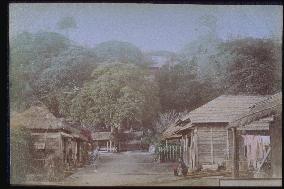
Stone steps to Shirataki Fudoson Temple and a teahouse

Stone steps to Shirataki Fudoson Temple and a teahouse

The road leading to Shiraito Fudoson at the bottom of Negishi Fudo Slope. The roof of the main hall is visible at the top of the steps. The Shiraito Fudoson was a place of worship for the villagers of Negishi from ancient times. But when the Japanese government enacted legislation separating Buddhism and Shintoism at the time of the Meiji Restoration in 1868, the facility was renamed Shirataki-san Fudoin Temple, and it remains today as a Buddha hall affiliated with Hoshakuji Temple.==Date:unknown, Place:Yokohama, Photo:Tamamura Kozaburo, (Credit:Nagasaki University Library/Kyodo News Images) [Cabinet Number48‐87‐0]

  •  
The five-story pagoda,Toshogu Shrine,Nikko

The five-story pagoda,Toshogu Shrine,Nikko

The stone torii at the front of the approach to Toshogu was donated by Kuroda Nagamasa. To its left is the five-story pagoda. The Gochinyorai Buddha painted red is placed in the five-story pagoda built in a mixture of Chinese and Japanese styles. The mingling of Shintoism and Buddhism, such as the torii and five-story pagoda, was seen in various places within the Toshogu.==Date:unknown, Place:Nikko, Photo:unknown, (Credit:Nagasaki University Library/Kyodo News Images) [Cabinet Number31‐14‐0]

  •  
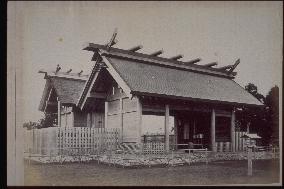
Tenshogu shrine at noge

Tenshogu shrine at noge

The Amaterasu omikaminomiya in Noge. The picture was printed in the August 18, 1871 edition of The Far East . The Meiji government built a shrine in Noge along the lines of recovered Shintoism, and the first ritual was conducted in 1870.==Date:unknown, Place:Yokohama, Photo:unknown, (Credit:Nagasaki University Library/Kyodo News Images) [Cabinet Number24‐36‐0]

  •  
The Sorinto, Rinnoji Temple, Nikko

The Sorinto, Rinnoji Temple, Nikko

The Sorin tower of Rinnoji Temple in Nikko was located at Futarasan Shrine together with the Sanbutsudo, but it was moved in 1875, and the Sanbutsudo in 1881, to Rinnoji in accordance with the Buddhism and Shintoism separation order. The Sorin tower is a memorial tower with many scriptures stored in it, construction initiated by Shogun Iemitsu. This is a picture taken from the side of Gohotendo. To the left is a scaffold, and in front lumber is piled up, showing that restoration is taking place.==Date:unknown, Place:Nikko, Photo:unknown, (Credit:Nagasaki University Library/Kyodo News Images) [Cabinet Number14‐11‐0]

  •  
A block of a temple

A block of a temple

This may be the Rinzo of Tsurugaoka Hachimangu which was removed as a result of the separation of Shintoism and Buddhism. The Rinzo was located to the left of the Kagura hall, and scriptures were stored there. The dismantling has begun, and lumber is piled up nearby.==Date:unknown, Place:unknown, Photo:unknown, (Credit:Nagasaki University Library/Kyodo News Images) [Cabinet Number13‐28‐0]

  •  
The front entrance to Toshogu Shrine,Nikko

The front entrance to Toshogu Shrine,Nikko

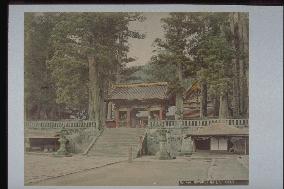
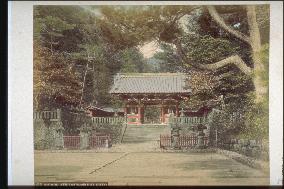
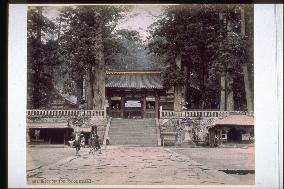
Past the Ichino torii from the front approach, the red-painted Toshogu front gate is seen at the top of the steps. At present, statues of Nio stand to the left and right, and Korean dogs are placed to the right and left of the back. The front is in the style of a Buddhist temple and the back is in the style of a Shinto Shrine. In accordance with the Shintoism and Buddhism separation order of 1872, there was a time when the Nio statues in the front were moved to the back of the Daiyuin Nio Gate and the Korean dogs were moved to the front. This is a photo of that period. The caption reads Nio Gate .==Date:4th - 30th year of Meiji, Place:Nikko, Photo:Tamamura Kozaburo, (Credit:Nagasaki University Library/Kyodo News Images) [Cabinet Number11‐9‐0]

  •  
The Sorinto and Sanbutsudo, Rinnoji Temple, Nikko

The Sorinto and Sanbutsudo, Rinnoji Temple, Nikko

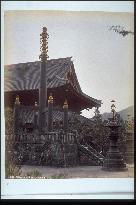
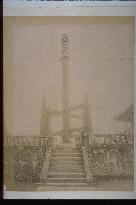
The Sorin tower of Rinnoji Temple in Nikko used to stand with the Sanbutsudo in Futarasan Shrine, but due to the order for separation of Buddhism and Shintoism, the Sorin tower was moved in 1875, and the Sanbutsudo in 1881, to Rinnoji Temple. The Sorin tower is a memorial tower built by order of Shogun Iemitsu where many scriptures were stored. The Sanbutsudo is seen in the back of the Sorin tower. The two lanterns in front of the Sorin tower were donated by the thread tally union (itowappu nakama).==Date:After 14th year of Meiji, Place:Nikko, Photo:Ogawa Kazumasa, (Credit:Nagasaki University Library/Kyodo News Images) [Cabinet Number9‐14‐0]

  •  
The Niomon Gate,Taiyuin Shrine,Nikko

The Niomon Gate,Taiyuin Shrine,Nikko

The front gate of the Daiyuin which enshrines the tomb of the Shogun Tokugawa Iemitsu has a pair of Kongorikishi statues, and is called Niomon. It is very similar to the front gate of Toshogu and is painted red with 8 legs, but it is done in Buddhist style, contrary to the Toshogu which is done in a mixed style of Shintoism and Buddhism. Daiyuin has a solemn appearance with red, black and gold used.==Date:unknown, Place:Nikko, Photo:Ogawa Kazumasa, (Credit:Nagasaki University Library/Kyodo News Images) [Cabinet Number7‐5‐0]

  •  
The front entrance to Toshogu Shrine,Nikko

The front entrance to Toshogu Shrine,Nikko

Going through the Ichino Torii from the Omote Sando (front approach), visitors see the red painted Toshogu front gate above the stone steps. At present, the Nio statue is placed to the left and right of the front, and Komainu (Korean dog) to the right and left of the rear. The front is done in the style of a temple, and the back in the style of a shrine. Under the Shintoism Buddhism division order issued in 1871, the front statue of Nio was moved to the back of Niomon of Daiyuin, and for a time the Komainu were placed in the front. The caption says Ichinomon instead of Niomon.==Date:4th - 30th year of Meiji, Place:Nikko, Photo:Ogawa Kazumasa, (Credit:Nagasaki University Library/Kyodo News Images) [Cabinet Number6‐26‐0]

  •  
The Sorinto, Rinnoji Temple, Nikko

The Sorinto, Rinnoji Temple, Nikko

The Sorin tower at Rinnoji Temple in Nikko was built with the Sanbutsudo at Nikosan Shinto Shrine, but in accordance with the Buddhism and Shintoism Separation Order, the Sorin tower was removed in 1875 and the Sanbutsudo was moved to Rinnoji in of 1881. The Sorin tower is a monument erected to play for the repose of souls, housing many scriptures and built upon orders from Shogun Iemitsu. The roof of the Sanbutsudo is seen at the right of the photo.==Date:After 14th year of Meiji, Place:Nikko, Photo:Kusakabe Kinbei, (Credit:Nagasaki University Library/Kyodo News Images) [Cabinet Number1‐31‐0]

  •  
Interfaith memorial event in N.Y.

Interfaith memorial event in N.Y.

NEW YORK, United States - Rev. T. Kenjitsu Nakagaki (3rd from L), a Japanese Buddhist priest based in New York, and other leaders from major religions including Shintoism, Christianity, Judaism and Islam, offer silent prayers on March 11, 2012, at a park in New York, at 2:46 p.m., the local time in Japan when the magnitude-9.0 quake hit the northeastern part of the country a year earlier, at a memorial event for the first anniversary of the devastating earthquake and tsunami disaster. (Kyodo)

  •  
Interfaith memorial event in N.Y.

Interfaith memorial event in N.Y.

NEW YORK, United States - Rev. T. Kenjitsu Nakagaki (R front), a Japanese Buddhist priest based in New York, and other leaders from major religions including Shintoism, Christianity, Judaism and Islam, walk in a procession with Japanese residents and New Yorkers from a park to a church in New York at a memorial event on March 11, 2012, the first anniversary of the devastating earthquake and tsunami disaster in northeastern Japan. (Kyodo)

  •  
7 cabinet members visit Yasukuni Shrine

7 cabinet members visit Yasukuni Shrine

TOKYO, Japan - Seven cabinet members visit Tokyo's Yasukuni Shrine, dedicated to Japan's war dead, on Aug. 15, on the 54th anniversary of Japan's surrender in World War II. Posts and Telecommunications Minister Seiko Noda (R) is among the seven ministers. Before and during World War II the shrine was a bastion of government-sponsored Shintoism and a symbol of Japanese militarism.

  • Main
  • Top
  • Editorial
  • Creative
  • About Us
  • About ILG
  • Terms of use
  • Company
  • BEHIND
  • Price List
  • Single Plan
  • Monthly Plan
  • Services
  • Shooting
  • Rights Clearance
  • Support
  • FAQ
  • How To Buy
  • Contact Us
  • Become a Partner

© KYODO NEWS IMAGES INC

All Rights Reserved.

  • Editorial
  • Olympics
  • News
  • Sports
  • Japan
  • Tech
  • Royal
  • Disaster
  • NorthKorea
  • Old Japan
  • SNS
  • Creative
  • Food
  • Japan
  • Landscape
  • Animal
  • Popular
  • #Ukraine
  • #Thailand
  • #coronavirus
  • #N. Korea
  • #Russia
  • #China
  • #Ukraine
  • #Thailand
  • #coronavirus
  • #N. Korea
  • #Russia
  • #China
  • Food
  • Japan
  • Landscape
  • Animal
  • Olympics
  • News
  • Sports
  • Japan
  • Tech
  • Royal
  • Disaster
  • NorthKorea
  • Old Japan
  • SNS