•  
Ceremony marking centennial since start of Showa era

Ceremony marking centennial since start of Showa era

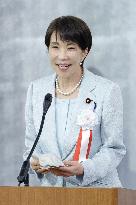
Japanese Prime Minister Sanae Takaichi speaks during a government-sponsored ceremony marking the centennial of the start of the Showa era (1926-1989) at the Nippon Budokan hall in Tokyo on April 29, 2026, a national holiday marking the birthday of the late Emperor Showa.

  •  
Ceremony marking centennial since start of Showa era

Ceremony marking centennial since start of Showa era

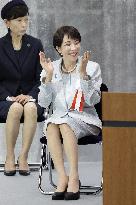
Japanese Prime Minister Sanae Takaichi attends a government-sponsored ceremony marking the centennial of the start of the Showa era (1926-1989) at the Nippon Budokan hall in Tokyo on April 29, 2026, a national holiday marking the birthday of the late Emperor Showa.

  •  
Ceremony marking centennial since start of Showa era

Ceremony marking centennial since start of Showa era

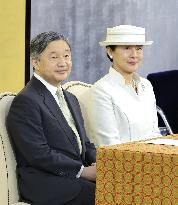
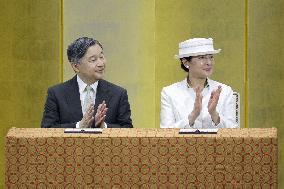
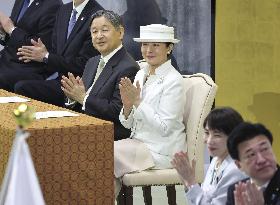
Japanese Emperor Naruhito and Empress Masako attend a government-sponsored ceremony marking the centennial of the start of the Showa era (1926-1989) at the Nippon Budokan hall in Tokyo on April 29, 2026, a national holiday marking the birthday of the late Emperor Showa.

  •  
Ceremony marking centennial since start of Showa era

Ceremony marking centennial since start of Showa era

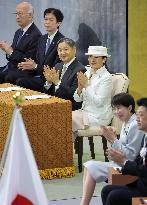
Japanese Emperor Naruhito (C, L) and Empress Masako (C, R) attend a government-sponsored ceremony marking the centennial of the start of the Showa era (1926-1989) at the Nippon Budokan hall in Tokyo on April 29, 2026, a national holiday marking the birthday of the late Emperor Showa. (Pool photo)

  •  
Ceremony marking centennial since start of Showa era

Ceremony marking centennial since start of Showa era

Japanese Emperor Naruhito and Empress Masako attend a government-sponsored ceremony marking the centennial of the start of the Showa era (1926-1989) at the Nippon Budokan hall in Tokyo on April 29, 2026, a national holiday marking the birthday of the late Emperor Showa.

  •  
Ceremony marking centennial since start of Showa era

Ceremony marking centennial since start of Showa era

Japanese Emperor Naruhito and Empress Masako attend a government-sponsored ceremony marking the centennial of the start of the Showa era (1926-1989) at the Nippon Budokan hall in Tokyo on April 29, 2026, a national holiday marking the birthday of the late Emperor Showa. (Pool photo)

  •  
Ceremony marking centennial since start of Showa era

Ceremony marking centennial since start of Showa era

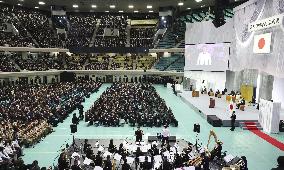
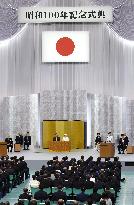
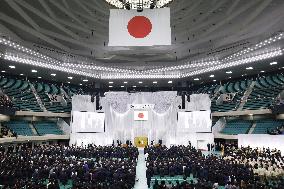
A government-sponsored ceremony marking the centennial of the start of the Showa era (1926-1989) is held at the Nippon Budokan hall in Tokyo on April 29, 2026, a national holiday marking the birthday of the late Emperor Showa.

  •  
Ceremony marking centennial since start of Showa era

Ceremony marking centennial since start of Showa era

A government-sponsored ceremony marking the centennial of the start of the Showa era (1926-1989) is held at the Nippon Budokan hall in Tokyo on April 29, 2026, a national holiday marking the birthday of the late Emperor Showa.

  •  
Ceremony marking centennial since start of Showa era

Ceremony marking centennial since start of Showa era

A government-sponsored ceremony marking the centennial of the start of the Showa era (1926-1989) is held at the Nippon Budokan hall in Tokyo on April 29, 2026, a national holiday marking the birthday of the late Emperor Showa.

  •  
150th Naoki Prize winners Himeno and Asai

150th Naoki Prize winners Himeno and Asai

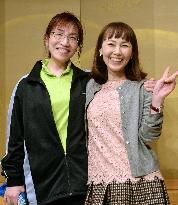
TOKYO, Japan - Photo taken on Jan. 16, 2014, shows Kaoruko Himeno (L) and Makate Asai, winners of the 150th Naoki Prize for popular literature, in Tokyo. Himeno and Asai received the award for their novels "Showa no Inu" (Dog in the Era of Showa) and "Renka" (Love Poem), respectively.

  •  
Naoki award winner Himeno

Naoki award winner Himeno

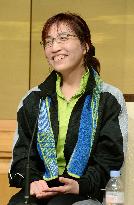
TOKYO, Japan - Kaoruko Himeno, 55, speaks with reporters at a hotel in Tokyo on Jan. 16, 2014, after winning the Naoki Prize for popular literature for her story "Showa no Inu" (Dog in the Era of Showa).

  •  
New sumo rankings for autumn basho

New sumo rankings for autumn basho

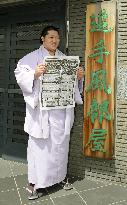
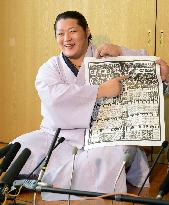
TOKYO, Japan - Sumo wrestler Endo holds a list of new sumo rankings at Oitekaze stable in Soka, Saitama Prefecture, on Sept. 2, 2013, as the Japan Sumo Association announced the rankings for the upcoming Autumn Grand Sumo Tournament. Endo, amateur champion in 2012, entered the makuuchi division after just three tournaments since making his debut, the fastest rise to the top flight since the start of the Showa Era.

  •  
New sumo rankings for autumn basho

New sumo rankings for autumn basho

TOKYO, Japan - Sumo wrestler Endo points to his name on a new sumo rankings list at Oitekaze stable in Soka, Saitama Prefecture, on Sept. 2, 2013, as the Japan Sumo Association the announced the rankings for the upcoming Autumn Grand Sumo Tournament. Endo, amateur champion in 2012, entered the makuuchi division after just three tournaments since making his debut, the fastest rise to the top flight since the start of the Showa Era.

  •  
Japanese coin found at burial site in N. Korea

Japanese coin found at burial site in N. Korea

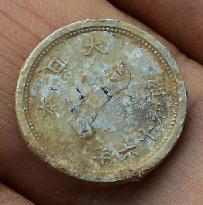
HAMHUNG, North Korea - Photo taken Sept. 2, 2012, shows what appears to be a Japanese coin that North Korea said was discovered in a survey in March 2011 of a site in Bupyong, believed to contain the remains of Japanese nationals who died around the end of World War II, outside Hamhung in the south of Hamgyong Province in eastern North Korea. A bag containing the coin was excavated there on Sept. 2, 2012. Characters such as "Dai-Nippon," loosely translated as great Japan, "Showa 16 nen," referring to a Japanese era and year equivalent to the year 1941, and "Issen," a small currency unit, are inscribed on the coin.

  •  
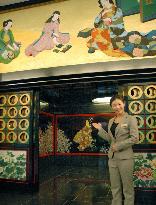
Fashionable restroom in Tokyo

Fashionable restroom in Tokyo

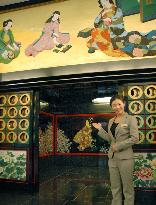
TOKYO, Japan - A woman introduces a luxurious restroom at Meguro Gajoen, a multipurpose event facility in Tokyo on Aug. 12, 2010. The restroom, dubbed the ''100 million yen toilet,'' boasts a gorgeous anteroom as well as murals on the ceiling that were transferred from the old facility building built in the early Showa era.

  •  
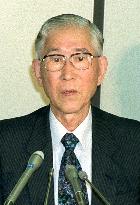
Professor of Chinese philosophy Seiichi Uno dies at 97

Professor of Chinese philosophy Seiichi Uno dies at 97

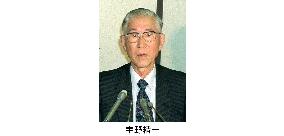
TOKYO, Japan - Seiichi Uno (file photo), a professor emeritus at the University of Tokyo and a leading scholar in Chinese philosophy, died Jan. 7 of old age at his home in Tokyo, his family said Jan. 8. He was 97. Uno, a Tokyo native, was a member of the National Language Council and one of the scholars delegated by the government to name the current imperial era (Heisei) following the end of the Showa era after the death in January 1989 of Emperor Hirohito, who is posthumously known as Emperor Showa.

  •  
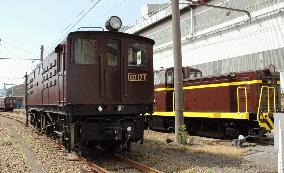
British-made steam locomotive, made 1923, on display in Saitama

British-made steam locomotive, made 1923, on display in Saitama

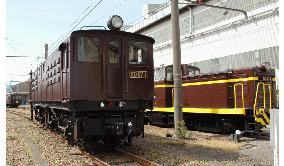
SAITAMA, Japan - The British-made team locomotive ED17 (front) and four other historic railway cars on display at the Railways Fair held at East Japan Railway Co.'s Omiya railroad stock center in Saitama, Saitama Prefecture, on May 26. The locomotive, manufactured in 1923, was used on the Tokaido Line from the Taisho era (1912-1926) to the early Showa era (1926-1989). The ED17 and the other railway equipment will be on permanent display at the new Railways Museum, which will open in Saitama on Oct. 14.

  •  
Teahouses in Yoshiwara

Teahouses in Yoshiwara

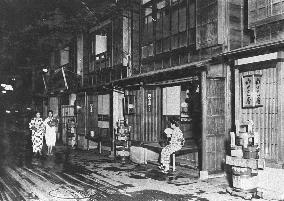
TOKYO, Japan - The file photo shows teahouses in Yoshiwara, which was Japan's largest licensed red-light district until prostitution was banned in 1957, located in Tokyo. The undated photo was taken in the early Showa era (1926-1989).

  •  
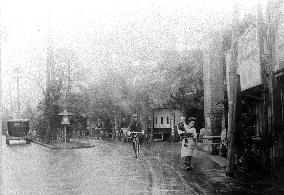
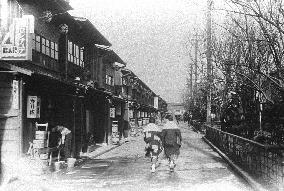
Yoshiwara

Yoshiwara

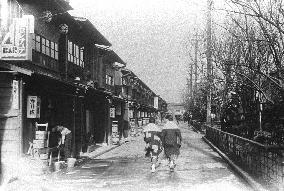
TOKYO, Japan - The file photo shows Yoshiwara, which was Japan's largest licensed red-light district until prostitution was banned in 1957, located in Tokyo. The undated photo was taken in the early Showa era (1926-1989).

  •  
Ageya, Yoshiwara

Ageya, Yoshiwara

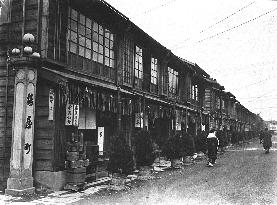
TOKYO, Japan - The file photo shows the Ageya area in Yoshiwara, which was Japan's largest licensed red-light district until prostitution was banned in 1957, located in Tokyo. The undated photo was taken in the early Showa era (1926-1989).

  •  
Yoshiwara Omon

Yoshiwara Omon

TOKYO, Japan - The file photo shows the Yoshiwara Omon (main gate). Yoshiwara was Japan's largest licensed red-light district until prostitution was banned in 1957, located in Tokyo. The undated photo was taken in the early Showa era (1926-1989).

  •  
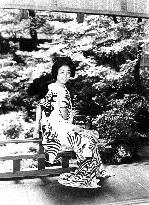
Geisha

Geisha

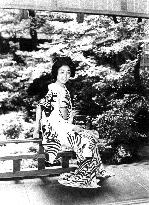
TOKYO, Japan - The file photo shows a geisha in an unknown location. The undated photo was taken in the early Showa era (1926-1989).

  •  
Geisha

Geisha

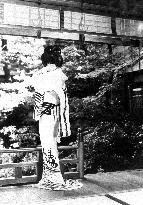
TOKYO, Japan - The file photo shows a geisha in an unknown location. The undated photo was taken in the early Showa era (1926-1989).

  •  
Geisha

Geisha

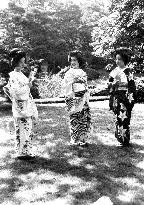
TOKYO, Japan - The file photo shows three geisha in an unknown location. The undated photo was taken in the early Showa era (1926-1989).

  •  
Geisha

Geisha

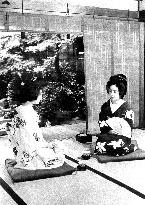
TOKYO, Japan - The file photo shows two geisha in an unknown location. The undated photo was taken in the early Showa era (1926-1989).

  •  
Nostalgic trip to Oita in 1967 Midget begins

Nostalgic trip to Oita in 1967 Midget begins

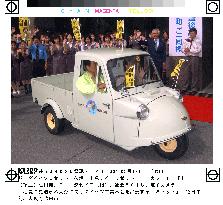
OSAKA, Japan - The ''Midget,'' one of Daihatsu Motor Co.'s once-popular models from 1967, leaves the company's headquarters May 12 in Ikeda, Osaka Prefecture, for Oita Prefecture. The vehicle was restored in an effort to rebuild and promote Showa Era townships there.

  •  
Emperor, empress visit museum

Emperor, empress visit museum

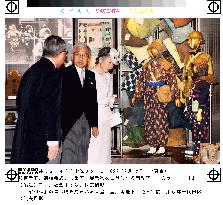
TOKYO, Japan - Emperor Akihito and Empress Michiko are shown around in the Showakan museum featuring the people's living in the Showa era in Tokyo on Sept. 12.

  •  
Kimono for the coming of age ceremony

Kimono for the coming of age ceremony

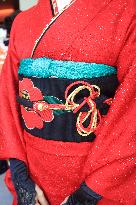
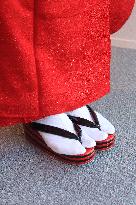
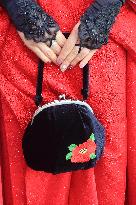
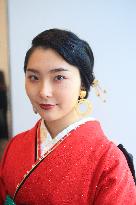
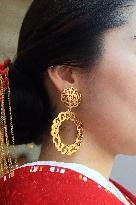
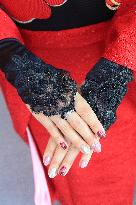
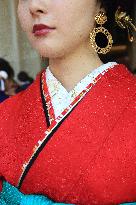
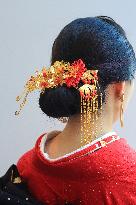
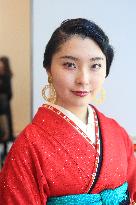
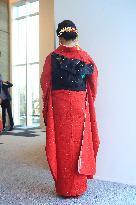
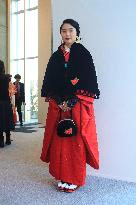
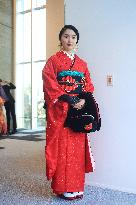
Dressed in kimono for the coming of age ceremony in Shibuya Ward Miyano. Visitors to the ceremony enjoy kimono with their favorite accessories. Many pf them wear kimono with retro styling. For the past few years, it has been popular for kimono and used kimono from the Taisho era to the early Showa era. It seems that this trend is still continuing . January 13, 2020, Tokyo, Japan.(Credit:style-arena.jp/Kyodo News Images)

  •  
Kimono for the coming of age ceremony

Kimono for the coming of age ceremony

Dressed in kimono for the coming of age ceremony in Shibuya Ward Miyano. Visitors to the ceremony enjoy kimono with their favorite accessories. Many pf them wear kimono with retro styling. For the past few years, it has been popular for kimono and used kimono from the Taisho era to the early Showa era. It seems that this trend is still continuing . January 13, 2020, Tokyo, Japan.(Credit:style-arena.jp/Kyodo News Images)

  •  
Kimono for the coming of age ceremony

Kimono for the coming of age ceremony

Dressed in kimono for the coming of age ceremony in Shibuya Ward Miyano. Visitors to the ceremony enjoy kimono with their favorite accessories. Many pf them wear kimono with retro styling. For the past few years, it has been popular for kimono and used kimono from the Taisho era to the early Showa era. It seems that this trend is still continuing . January 13, 2020, Tokyo, Japan.(Credit:style-arena.jp/Kyodo News Images)

  •  
Kimono for the coming of age ceremony

Kimono for the coming of age ceremony

Dressed in kimono for the coming of age ceremony in Shibuya Ward Miyano. Visitors to the ceremony enjoy kimono with their favorite accessories. Many pf them wear kimono with retro styling. For the past few years, it has been popular for kimono and used kimono from the Taisho era to the early Showa era. It seems that this trend is still continuing . January 13, 2020, Tokyo, Japan.(Credit:style-arena.jp/Kyodo News Images)

  •  
Kimono for the coming of age ceremony

Kimono for the coming of age ceremony

Dressed in kimono for the coming of age ceremony in Shibuya Ward Miyano. Visitors to the ceremony enjoy kimono with their favorite accessories. Many pf them wear kimono with retro styling. For the past few years, it has been popular for kimono and used kimono from the Taisho era to the early Showa era. It seems that this trend is still continuing . January 13, 2020, Tokyo, Japan.(Credit:style-arena.jp/Kyodo News Images)

  •  
Kimono for the coming of age ceremony

Kimono for the coming of age ceremony

Dressed in kimono for the coming of age ceremony in Shibuya Ward Miyano. Visitors to the ceremony enjoy kimono with their favorite accessories. Many pf them wear kimono with retro styling. For the past few years, it has been popular for kimono and used kimono from the Taisho era to the early Showa era. It seems that this trend is still continuing . January 13, 2020, Tokyo, Japan.(Credit:style-arena.jp/Kyodo News Images)

  •  
Kimono for the coming of age ceremony

Kimono for the coming of age ceremony

Dressed in kimono for the coming of age ceremony in Shibuya Ward Miyano. Visitors to the ceremony enjoy kimono with their favorite accessories. Many pf them wear kimono with retro styling. For the past few years, it has been popular for kimono and used kimono from the Taisho era to the early Showa era. It seems that this trend is still continuing . January 13, 2020, Tokyo, Japan.(Credit:style-arena.jp/Kyodo News Images)

  •  
Kimono for the coming of age ceremony

Kimono for the coming of age ceremony

Dressed in kimono for the coming of age ceremony in Shibuya Ward Miyano. Visitors to the ceremony enjoy kimono with their favorite accessories. Many pf them wear kimono with retro styling. For the past few years, it has been popular for kimono and used kimono from the Taisho era to the early Showa era. It seems that this trend is still continuing . January 13, 2020, Tokyo, Japan.(Credit:style-arena.jp/Kyodo News Images)

  •  
Kimono for the coming of age ceremony

Kimono for the coming of age ceremony

Dressed in kimono for the coming of age ceremony in Shibuya Ward Miyano. Visitors to the ceremony enjoy kimono with their favorite accessories. Many pf them wear kimono with retro styling. For the past few years, it has been popular for kimono and used kimono from the Taisho era to the early Showa era. It seems that this trend is still continuing . January 13, 2020, Tokyo, Japan.(Credit:style-arena.jp/Kyodo News Images)

  •  
Kimono for the coming of age ceremony

Kimono for the coming of age ceremony

Dressed in kimono for the coming of age ceremony in Shibuya Ward Miyano. Visitors to the ceremony enjoy kimono with their favorite accessories. Many pf them wear kimono with retro styling. For the past few years, it has been popular for kimono and used kimono from the Taisho era to the early Showa era. It seems that this trend is still continuing . January 13, 2020, Tokyo, Japan.(Credit:style-arena.jp/Kyodo News Images)

  •  
Kimono for the coming of age ceremony

Kimono for the coming of age ceremony

Dressed in kimono for the coming of age ceremony in Shibuya Ward Miyano. Visitors to the ceremony enjoy kimono with their favorite accessories. Many pf them wear kimono with retro styling. For the past few years, it has been popular for kimono and used kimono from the Taisho era to the early Showa era. It seems that this trend is still continuing . January 13, 2020, Tokyo, Japan.(Credit:style-arena.jp/Kyodo News Images)

  •  
Kimono for the coming of age ceremony

Kimono for the coming of age ceremony

Dressed in kimono for the coming of age ceremony in Shibuya Ward Miyano. Visitors to the ceremony enjoy kimono with their favorite accessories. Many pf them wear kimono with retro styling. For the past few years, it has been popular for kimono and used kimono from the Taisho era to the early Showa era. It seems that this trend is still continuing . January 13, 2020, Tokyo, Japan.(Credit:style-arena.jp/Kyodo News Images)

  •  
Antique lover exhibits Showa-era household goods, toys

Antique lover exhibits Showa-era household goods, toys

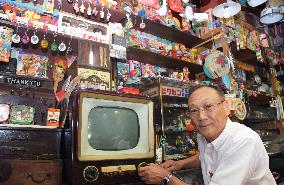
Shunichi Ueda shows on July 31, 2015, his collection of household appliances and toys mainly from the Showa era (1926-1989) at a facility he opened in August 2011 in Toyama, central Japan. (Kyodo) ==Kyodo

  •  
Tokyo's Seijo, location of many movies in Showa era

Tokyo's Seijo, location of many movies in Showa era

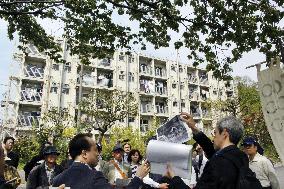
People visit an area known as Seijo in Tokyo's Setagaya Ward, once dubbed "Japan's Hollywood" as a location for many movies during the Showa era, on April 16, 2015. The famous battle scene in the rain in "Seven Samurai" (1954) directed by Akira Kurosawa was filmed there. An apartment building stands beside the site now. (Kyodo) ==Kyodo

  •  
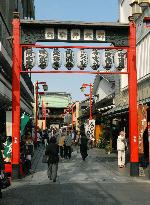
Tokyo snapshot: Approach to Nishiarai Daishi evokes image of Showa

Tokyo snapshot: Approach to Nishiarai Daishi evokes image of Showa

Photo taken on Oct. 21, 2015, shows the approach to Nishiarai Daishi temple in Tokyo, built in 826 by legendary monk Kukai, also known as Kobo Daishi, as a citadel of the Shingon sect of Buddhism. It is lined with various small shops reminiscent of an atmosphere of the Showa era (1926-1989). (Kyodo) ==Kyodo

  •  
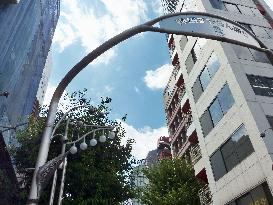
Tokyo snapshot: Gate to Kanda shopping street

Tokyo snapshot: Gate to Kanda shopping street

Photo taken on Sept. 11, 2015, shows a gate to the Kanda Suzuran-dori shopping street in downtown Tokyo near the Jinbocho area famed for the presence of numerous secondhand bookstores. A quiet alley near the street is dotted with long-established coffee shops exuding a nostalgic atmosphere of the Showa era (1926-1989). (Kyodo) ==Kyodo

  •  
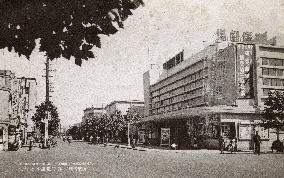
Japan - Yokohama - Bashamichi-Dori Street

Japan - Yokohama - Bashamichi-Dori Street

Japan - Yokohama - Bashamichi-Dori Street Date: circa 1930s

  •  

From the Showa Era to the Heisei Era: The Birth of a New Emperor

Emperor Hirohito passed away from duodenal cancer at 6:33 a.m. on January 7, 1964. Director-General Fujimori of the Imperial Household Agency and Chief Cabinet Secretary Obuchi make simultaneous announcements at the Imperial Household Agency and the Prime Minister's Office. From Showa era to Heisei era. Electric bulletin board announcing the Emperor's demise, scenes of the accession ceremony at the Imperial Palace, people filling out forms at the register at the Sakashita Gate in front of the Imperial Palace, scenes of an extraordinary cabinet meeting at the Prime Minister's Office, Chief Cabinet Secretary Obuchi announcing the new era name Heisei, and scenes of the accession ceremony. Date of release: February 1, 1989.

  •  
Fashionable restroom in Tokyo

Fashionable restroom in Tokyo

TOKYO, Japan - A woman introduces a luxurious restroom at Meguro Gajoen, a multipurpose event facility in Tokyo on Aug. 12, 2010. The restroom, dubbed the ''100 million yen toilet,'' boasts a gorgeous anteroom as well as murals on the ceiling that were transferred from the old facility building built in the early Showa era. (Kyodo)

  •  
British-made steam locomotive, made 1923, on display in Saitama

British-made steam locomotive, made 1923, on display in Saitama

SAITAMA, Japan - The British-made team locomotive ED17 (front) and four other historic railway cars on display at the Railways Fair held at East Japan Railway Co.'s Omiya railroad stock center in Saitama, Saitama Prefecture, on May 26. The locomotive, manufactured in 1923, was used on the Tokaido Line from the Taisho era (1912-1926) to the early Showa era (1926-1989). The ED17 and the other railway equipment will be on permanent display at the new Railways Museum, which will open in Saitama on Oct. 14. (Kyodo)

  •  
Professor of Chinese philosophy Seiichi Uno dies at 97

Professor of Chinese philosophy Seiichi Uno dies at 97

TOKYO, Japan - Seiichi Uno (file photo), a professor emeritus at the University of Tokyo and a leading scholar in Chinese philosophy, died Jan. 7 of old age at his home in Tokyo, his family said Jan. 8. He was 97. Uno, a Tokyo native, was a member of the National Language Council and one of the scholars delegated by the government to name the current imperial era (Heisei) following the end of the Showa era after the death in January 1989 of Emperor Hirohito, who is posthumously known as Emperor Showa. (Kyodo)

  •  
Geisha

Geisha

TOKYO, Japan - The file photo shows a geisha in an unknown location. The undated photo was taken in the early Showa era (1926-1989). (Kyodo)

  •  
Yoshiwara

Yoshiwara

TOKYO, Japan - The file photo shows Yoshiwara, which was Japan's largest licensed red-light district until prostitution was banned in 1957, located in Tokyo. The undated photo was taken in the early Showa era (1926-1989). (Kyodo)

  • Main
  • Top
  • Editorial
  • Creative
  • About Us
  • About ILG
  • Terms of use
  • Company
  • BEHIND
  • Price List
  • Single Plan
  • Monthly Plan
  • Services
  • Shooting
  • Rights Clearance
  • Support
  • FAQ
  • How To Buy
  • Contact Us
  • Become a Partner

© KYODO NEWS IMAGES INC

All Rights Reserved.

  • Editorial
  • Olympics
  • News
  • Sports
  • Japan
  • Tech
  • Royal
  • Disaster
  • NorthKorea
  • Old Japan
  • SNS
  • Creative
  • Food
  • Japan
  • Landscape
  • Animal
  • Popular
  • #Ukraine
  • #Russia
  • #coronavirus
  • #N. Korea
  • #Thailand
  • #China
  • #Ukraine
  • #Russia
  • #coronavirus
  • #N. Korea
  • #Thailand
  • #China
  • Food
  • Japan
  • Landscape
  • Animal
  • Olympics
  • News
  • Sports
  • Japan
  • Tech
  • Royal
  • Disaster
  • NorthKorea
  • Old Japan
  • SNS