•  
T?RKIYE-ANKARA-SILK TRADITION

T?RKIYE-ANKARA-SILK TRADITION

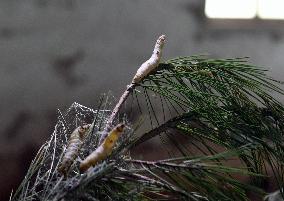
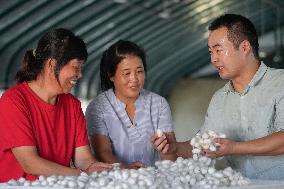
(240702) -- ANKARA, July 2, 2024 Photo by Xinhua/ABACAPRESS.COM) -- Silkworms are seen at a silkworm farm in Ankara, T

  •  
T?RKIYE-ANKARA-SILK TRADITION

T?RKIYE-ANKARA-SILK TRADITION

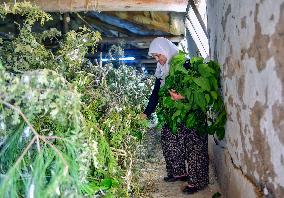
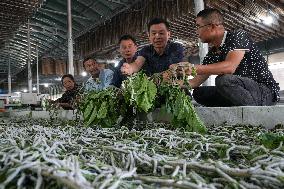
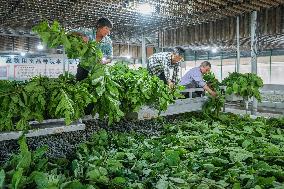
(240702) -- ANKARA, July 2, 2024 Photo by Xinhua/ABACAPRESS.COM) -- A farmer feeds silkworms with mulberry leaves in Ankara, Trkiye, July 1, 2024. TO GO WITH "Feature: Remote Turkish village keeps nation's ancient silk tradition alive" (Photo by Mustafa Kaya/Xinhua/ABACAPRESS.COM

  •  
T?RKIYE-ANKARA-SILK TRADITION

T?RKIYE-ANKARA-SILK TRADITION

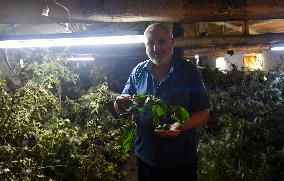
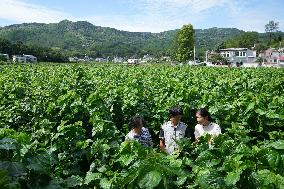
(240702) -- ANKARA, July 2, 2024 Photo by Xinhua/ABACAPRESS.COM) -- A farmer presents a mulberry twig with silkworms feeding on it in Ankara, T

  •  

Bsous Silk Museum keeps Lebanon's history of sericulture

STORY: Bsous Silk Museum keeps Lebanon's history of sericulture DATELINE: May 19, 2023 LENGTH: 00:01:45 LOCATION: Beirut CATEGORY: CULTURE SHOTLIST: 1. various of Bsous Silk Museum and visitors STORYLINE: Located in the village of Bsous of Aley County in Mount Lebanon Governorate, Bsous Silk Museum is the only one of its kind in Lebanon. Its structure was originally built by the Fayad family and operated as a silk factory between 1901 and 1954. It was restored by its owners, George and Alexandra Asseily who bought the property in 1973, and has been serving as a museum since 2001. Part of the silk museum's permanent collection includes live silkworms. The museum also regularly puts on annual exhibitions under different themes, showcasing silk culture from around the world. Past exhibitions have spotlighted the silk industry in China, India, Vietnam, Italy and France. The museum is open from May to October. Silk production was for one period the pillar of the Lebanese economy, accounting for 62 percen

  •  
Emperor at farm institute

Emperor at farm institute

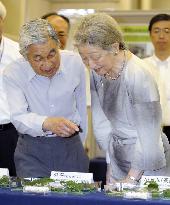
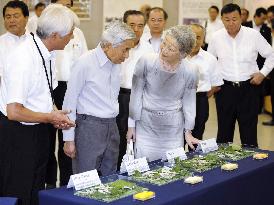
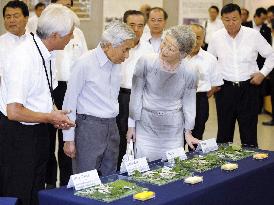
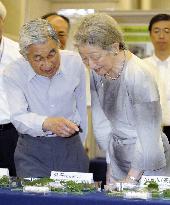
TSUKUBA, Japan - Emperor Akihito and Empress Michiko look at silkworms at the National Institute of Agrobiological Sciences in Tsukuba, Ibaraki Prefecture, on Aug. 2, 2010. (Pool photo by Kyodo News)

  •  
Emperor at farm institute

Emperor at farm institute

TSUKUBA, Japan - Emperor Akihito and Empress Michiko look at silkworms at the National Institute of Agrobiological Sciences in Tsukuba, Ibaraki Prefecture, on Aug. 2, 2010. (Pool photo by Kyodo News)

  •  
Students start project to research space travel on silkworms

Students start project to research space travel on silkworms

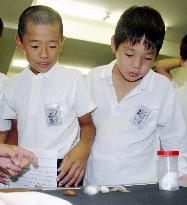
OKAYAMA, Japan - Students at Higashiune Elementary School in Okayama Prefecture launched Oct. 3 a project to research the effects of space travel on the growth of silkworms which had been specimens onboard a Russian space mission last month. Silkworms' space travel was carried out as part of a science education program in which Russian primary school pupils also took part.

  •  
CHINA-ANHUI-YUEXI-SERICULTURE (CN)

CHINA-ANHUI-YUEXI-SERICULTURE (CN)

(220905) -- YUEXI, Sept. 5, 2022 (Xinhua) -- Zhang Yan (R), an assistant researcher from Anhui Academy of Agricultural Sciences, instructs silkworm farmers to select cocoons at a cooperative in Liantang Village of Lianyun Township, Yuexi County, east China's Anhui Province, Sept. 4, 2022. The cultivation of mulberry trees and breeding of silkworms industry is one of the major pillar industries in Yuexi County, east China's Anhui Province. Mulberry trees cover an area of 80,000 mu (about 5,333 hectares) with 16,700 households breeding silkworms in the county. In 2021, silkworm farmers earned 262 million yuan (about 37.79 million U.S. dollars) from selling cocoons. Since 2022, Anhui Academy of Agricultural Sciences has established a research team to provide technical support to local farmers and enterprises. The team has served 10 demonstration villages, covering more than 2,000 farmers to help promote the development of local sericulture industry. (Xinhua/Du Yu)

  •  
CHINA-ANHUI-YUEXI-SERICULTURE (CN)

CHINA-ANHUI-YUEXI-SERICULTURE (CN)

(220905) -- YUEXI, Sept. 5, 2022 (Xinhua) -- Huang Dehui (2nd R), a researcher from Anhui Academy of Agricultural Sciences, provides advice to silkworm farmers at a cooperative in Liantang Village of Lianyun Township, Yuexi County, east China's Anhui Province, Sept. 4, 2022. The cultivation of mulberry trees and breeding of silkworms industry is one of the major pillar industries in Yuexi County, east China's Anhui Province. Mulberry trees cover an area of 80,000 mu (about 5,333 hectares) with 16,700 households breeding silkworms in the county. In 2021, silkworm farmers earned 262 million yuan (about 37.79 million U.S. dollars) from selling cocoons. Since 2022, Anhui Academy of Agricultural Sciences has established a research team to provide technical support to local farmers and enterprises. The team has served 10 demonstration villages, covering more than 2,000 farmers to help promote the development of local sericulture industry. (Xinhua/Du Yu)

  •  
CHINA-ANHUI-YUEXI-SERICULTURE (CN)

CHINA-ANHUI-YUEXI-SERICULTURE (CN)

(220905) -- YUEXI, Sept. 5, 2022 (Xinhua) -- Li Ruixue (R), an expert from Anhui Academy of Agricultural Sciences, provides advice to silkworm farmers at a mulberry tree garden in Liantang Village of Lianyun Township, Yuexi County, east China's Anhui Province, Sept. 4, 2022. The cultivation of mulberry trees and breeding of silkworms industry is one of the major pillar industries in Yuexi County, east China's Anhui Province. Mulberry trees cover an area of 80,000 mu (about 5,333 hectares) with 16,700 households breeding silkworms in the county. In 2021, silkworm farmers earned 262 million yuan (about 37.79 million U.S. dollars) from selling cocoons. Since 2022, Anhui Academy of Agricultural Sciences has established a research team to provide technical support to local farmers and enterprises. The team has served 10 demonstration villages, covering more than 2,000 farmers to help promote the development of local sericulture industry. (Xinhua/Du Yu)

  •  
CHINA-ANHUI-YUEXI-SERICULTURE (CN)

CHINA-ANHUI-YUEXI-SERICULTURE (CN)

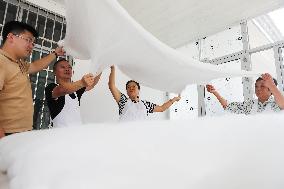
(220905) -- YUEXI, Sept. 5, 2022 (Xinhua) -- Workers make silk quilts at a workshop of a silk company in Yuexi County, east China's Anhui Province, Sept. 4, 2022. The cultivation of mulberry trees and breeding of silkworms industry is one of the major pillar industries in Yuexi County, east China's Anhui Province. Mulberry trees cover an area of 80,000 mu (about 5,333 hectares) with 16,700 households breeding silkworms in the county. In 2021, silkworm farmers earned 262 million yuan (about 37.79 million U.S. dollars) from selling cocoons. Since 2022, Anhui Academy of Agricultural Sciences has established a research team to provide technical support to local farmers and enterprises. The team has served 10 demonstration villages, covering more than 2,000 farmers to help promote the development of local sericulture industry. (Xinhua/Du Yu)

  •  
CHINA-ANHUI-YUEXI-SERICULTURE (CN)

CHINA-ANHUI-YUEXI-SERICULTURE (CN)

(220905) -- YUEXI, Sept. 5, 2022 (Xinhua) -- Farmers feed silkworms with mulberry leaves at a cooperative in Liantang Village of Lianyun Township, Yuexi County, east China's Anhui Province, Sept. 4, 2022. The cultivation of mulberry trees and breeding of silkworms industry is one of the major pillar industries in Yuexi County, east China's Anhui Province. Mulberry trees cover an area of 80,000 mu (about 5,333 hectares) with 16,700 households breeding silkworms in the county. In 2021, silkworm farmers earned 262 million yuan (about 37.79 million U.S. dollars) from selling cocoons. Since 2022, Anhui Academy of Agricultural Sciences has established a research team to provide technical support to local farmers and enterprises. The team has served 10 demonstration villages, covering more than 2,000 farmers to help promote the development of local sericulture industry. (Xinhua/Du Yu)

  •  

Tussah industry helps farmers increase income in north China's Inner Mongolia

STORY: Tussah industry helps farmers increase income in north China's Inner Mongolia DATELINE: Aug. 4, 2022 LENGTH: 00:01:07 LOCATION: HOHHOT, China CATEGORY: SOCIETY SHOTLIST: 1. various of local people raising tussah 2. SOUNDBITE (Chinese): JIANG WEI, Local villager STORYLINE: Tussah industry helps local people increase income in Arong Banner, Hulun Buir City in north China's Inner Mongolia Autonomous Region. Arong Banner is the largest tussah cocoon production base in Inner Mongolia, which has decades of history. SOUNDBITE (Chinese): JIANG WEI, Local villager "With abundant rain this year, we are sure to have a bumper harvest, our income will increase, and we are very happy. In our Songtagou Village, 80% of the farmers raise silkworms, which can increase our income by 50,000 to 60,000 yuan during these two months." [ This year, Arong Banner has raised 4016 tussah, and the comprehensive output value of tussah industry can reach 230 million yuan (about 34 million USD). Xinhua News Agency correspondents

  •  
Empress Michiko helps silkworms produce cocoons

Empress Michiko helps silkworms produce cocoons

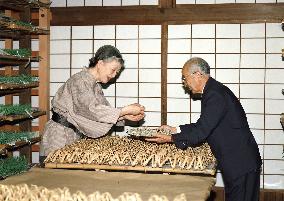
TOKYO, Japan - Empress Michiko (L) puts silkworms into a basket to help them produce cocoons at a cocoonery in the Imperial Palace on June 10. The photo was released by the Imperial Household Agency. (Kyodo)

  •  

Annaka, the City of Pollution

A large amount of cadmium was found in the soil of a zinc smelter, and the Ministry of Health and Welfare conducted a field survey.   An interview with the deputy director of a zinc refinery in Annaka City, Gunma Prefecture. Farmers protesting to the city hall after their harvest has fallen, *Filming date unknown, release date: May 28, 1969.

  •  
Students start project to research space travel on silkworms

Students start project to research space travel on silkworms

OKAYAMA, Japan - Students at Higashiune Elementary School in Okayama Prefecture launched Oct. 3 a project to research the effects of space travel on the growth of silkworms which had been specimens onboard a Russian space mission last month. Silkworms' space travel was carried out as part of a science education program in which Russian primary school pupils also took part. (Kyodo)

  •  
Emperor at farm institute

Emperor at farm institute

TSUKUBA, Japan - Emperor Akihito and Empress Michiko look at silkworms at the National Institute of Agrobiological Sciences in Tsukuba, Ibaraki Prefecture, on Aug. 2, 2010. (Pool photo by Kyodo News)(Kyodo)

  •  
Japan imperial couple visit silkworm farm

Japan imperial couple visit silkworm farm

NAKANOJO, Japan - Japanese Emperor Akihito (L) and Empress Michiko visit a farm for Tensan silkworms in Nakanojo, Gunma Prefecture, on Aug. 29, 2010. The Imperial Palace in Tokyo has kept silkworms since the 19th century and Empress Michiko keeps Tensan silkworms. (Pool photo)(Kyodo)

  •  
Emperor at farm institute

Emperor at farm institute

TSUKUBA, Japan - Emperor Akihito and Empress Michiko look at silkworms at the National Institute of Agrobiological Sciences in Tsukuba, Ibaraki Prefecture, on Aug. 2, 2010. (Pool photo by Kyodo News)(Kyodo)

  •  
Japanese Empress Masako arrives for imperial sericulture

Japanese Empress Masako arrives for imperial sericulture

Japanese Empress Masako arrives at the Imperial Palace in Tokyo to carry out an imperial sericulture ritual on May 6, 2021. Growing silkworms at the Imperial Palace grounds has been a traditional practice carried out by empresses since then Empress Shoken started it in 1871. (Pool photo)

  •  
Japanese emperor

Japanese emperor

Japanese Emperor Naruhito and Empress Masako arrive at the Imperial Palace in Tokyo on June 2, 2020, to feed mulberry leaves to silkworms, in an imperial sericulture tradition dating back to the late 19th century. (Kyodo) ==Kyodo

  •  
Japanese Empress Masako

Japanese Empress Masako

Japanese Empress Masako arrives at the Imperial Palace in Tokyo on May 29, 2020, to feed mulberry leaves to silkworms, in the imperial sericulture tradition which dates back to the late 19th century. (Pool photo)(Kyodo) ==Kyodo

  •  
Japanese Empress Masako

Japanese Empress Masako

Empress Masako arrives at the Imperial Palace by car for an imperial ritual to feed silkworms on May 11, 2020. Growing silkworms at the Imperial Palace is a traditional practice carried out by empresses since Empress Dowager Shoken resumed the practice in 1871. (Kyodo) ==Kyodo

  •  
Japanese Empress Masako

Japanese Empress Masako

Empress Masako arrives at the Imperial Palace by car for an imperial ritual to feed silkworms on May 11, 2020. Growing silkworms at the Imperial Palace is a traditional practice carried out by empresses since Empress Dowager Shoken resumed the practice in 1871. (Kyodo) ==Kyodo

  • Main
  • Top
  • Editorial
  • Creative
  • About Us
  • About ILG
  • Terms of use
  • Company
  • BEHIND
  • Price List
  • Single Plan
  • Monthly Plan
  • Services
  • Shooting
  • Rights Clearance
  • Support
  • FAQ
  • How To Buy
  • Contact Us
  • Become a Partner

© KYODO NEWS IMAGES INC

All Rights Reserved.

  • Editorial
  • Olympics
  • News
  • Sports
  • Japan
  • Tech
  • Royal
  • Disaster
  • NorthKorea
  • Old Japan
  • SNS
  • Creative
  • Food
  • Japan
  • Landscape
  • Animal
  • Popular
  • #Ukraine
  • #China
  • #coronavirus
  • #N. Korea
  • #Thailand
  • #Russia
  • #Ukraine
  • #China
  • #coronavirus
  • #N. Korea
  • #Thailand
  • #Russia
  • Food
  • Japan
  • Landscape
  • Animal
  • Olympics
  • News
  • Sports
  • Japan
  • Tech
  • Royal
  • Disaster
  • NorthKorea
  • Old Japan
  • SNS