•  
POTATO

POTATO

Different types of potatoes at Hörtegården outside Skivarp in September 2025. Photo: Johan Nilsson / TT / Code 50090

  •  
Nanchang - Xiamen Port Bi Directional Train

Nanchang - Xiamen Port Bi Directional Train

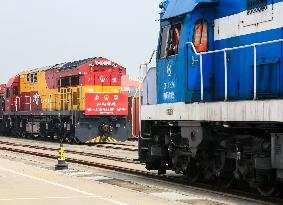
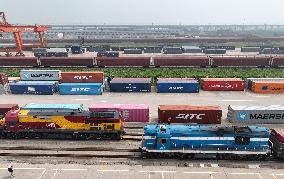
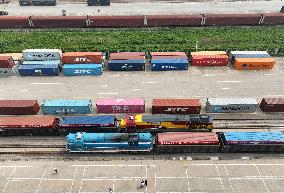
NANCHANG, CHINA - APRIL 29, 2025 - A rail-sea intermodal train fully loaded with goods such as dried cassava, starch, plastic pellets and boards, which arrived from Xiamen Port, docked at Nanchang International Land Port in Nanchang City, Jiangxi Province, China on April 29, 2025. Meanwhile, another train fully loaded with locally manufactured auto parts, tapes, salt and other products in Jiangxi Province set off from Nanchang International Land Port with a whistle and headed for Xiamen Port.

  •  
Nanchang - Xiamen Port Bi Directional Train

Nanchang - Xiamen Port Bi Directional Train

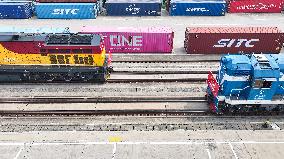
NANCHANG, CHINA - APRIL 29, 2025 - A rail-sea intermodal train fully loaded with goods such as dried cassava, starch, plastic pellets and boards, which arrived from Xiamen Port, docked at Nanchang International Land Port in Nanchang City, Jiangxi Province, China on April 29, 2025. Meanwhile, another train fully loaded with locally manufactured auto parts, tapes, salt and other products in Jiangxi Province set off from Nanchang International Land Port with a whistle and headed for Xiamen Port.

  •  
Nanchang - Xiamen Port Bi Directional Train

Nanchang - Xiamen Port Bi Directional Train

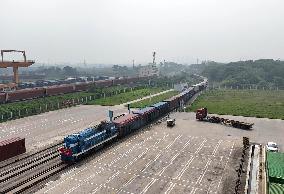
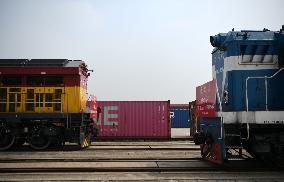
NANCHANG, CHINA - APRIL 29, 2025 - A rail-sea intermodal train fully loaded with goods such as dried cassava, starch, plastic pellets and boards, which arrived from Xiamen Port, docked at Nanchang International Land Port in Nanchang City, Jiangxi Province, China on April 29, 2025.

  •  
Nanchang - Xiamen Port Bi Directional Train

Nanchang - Xiamen Port Bi Directional Train

NANCHANG, CHINA - APRIL 29, 2025 - A rail-sea intermodal train fully loaded with goods such as dried cassava, starch, plastic pellets and boards, which arrived from Xiamen Port, docked at Nanchang International Land Port in Nanchang City, Jiangxi Province, China on April 29, 2025. Meanwhile, another train fully loaded with locally manufactured auto parts, tapes, salt and other products in Jiangxi Province set off from Nanchang International Land Port with a whistle and headed for Xiamen Port.

  •  
Nanchang - Xiamen Port Bi Directional Train

Nanchang - Xiamen Port Bi Directional Train

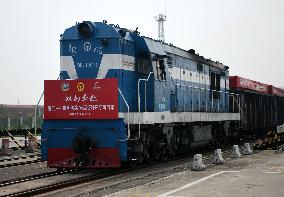
NANCHANG, CHINA - APRIL 29, 2025 - A rail-sea intermodal train fully loaded with goods such as dried cassava, starch, plastic pellets and boards, which arrived from Xiamen Port, docked at Nanchang International Land Port in Nanchang City, Jiangxi Province, China on April 29, 2025.

  •  
Nanchang - Xiamen Port Bi Directional Train

Nanchang - Xiamen Port Bi Directional Train

NANCHANG, CHINA - APRIL 29, 2025 - A rail-sea intermodal train fully loaded with goods such as dried cassava, starch, plastic pellets and boards, which arrived from Xiamen Port, docked at Nanchang International Land Port in Nanchang City, Jiangxi Province, China on April 29, 2025. Meanwhile, another train fully loaded with locally manufactured auto parts, tapes, salt and other products in Jiangxi Province set off from Nanchang International Land Port with a whistle and headed for Xiamen Port.

  •  
Nanchang - Xiamen Port Bi Directional Train

Nanchang - Xiamen Port Bi Directional Train

NANCHANG, CHINA - APRIL 29, 2025 - A rail-sea intermodal train fully loaded with goods such as dried cassava, starch, plastic pellets and boards, which arrived from Xiamen Port, docked at Nanchang International Land Port in Nanchang City, Jiangxi Province, China on April 29, 2025. Meanwhile, another train fully loaded with locally manufactured auto parts, tapes, salt and other products in Jiangxi Province set off from Nanchang International Land Port with a whistle and headed for Xiamen Port.

  •  
Nanchang - Xiamen Port Bi Directional Train

Nanchang - Xiamen Port Bi Directional Train

NANCHANG, CHINA - APRIL 29, 2025 - A rail-sea intermodal train fully loaded with goods such as dried cassava, starch, plastic pellets and boards, which arrived from Xiamen Port, docked at Nanchang International Land Port in Nanchang City, Jiangxi Province, China on April 29, 2025. Meanwhile, another train fully loaded with locally manufactured auto parts, tapes, salt and other products in Jiangxi Province set off from Nanchang International Land Port with a whistle and headed for Xiamen Port.

  •  
Nippon Starch Chemical exterior, logo, and signage

Nippon Starch Chemical exterior, logo, and signage

Nippon Starch Chemical exterior, logo, and signage =January 29,2025,Osaka

  •  
Nippon Starch Chemical exterior, logo, and signage

Nippon Starch Chemical exterior, logo, and signage

Nippon Starch Chemical exterior, logo, and signage =January 29,2025,Osaka

  •  
Nippon Starch Chemical exterior, logo, and signage

Nippon Starch Chemical exterior, logo, and signage

Nippon Starch Chemical exterior, logo, and signage =January 29,2025,Osaka

  •  
Sake Making At Jozan Brewery In Fukui - Japan

Sake Making At Jozan Brewery In Fukui - Japan

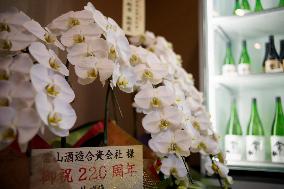
A flower basket marking the 220th anniversary of the establishment at Jozan Brewery in Fukui. Japanese alcoholic beverages, including sake (nihonshu), shochu and awamori, are made from grains and water. Craftspeople use koji mold to convert the starch in the ingredients into sugar, and oversee the process to make sure the mold grows in optimal conditions. Jozan, a brewery located in Fukui Prefecture, a region renowned for its high-quality rice, has upheld traditional sake-making for over 220 years. Led by Shinpei Tokoyama, the brewery exemplifies its ongoing efforts in coping with challenges in modern era while preserving traditional craftsmanship. With modern techniques, Jozan has realized a meticulous control over the brewing process, ensuring the consistency of product quality without compromising the essence of traditional making methods. In 2017, Jozan also renovated its brewing space, combining functionality with modern design to accommodate both production needs and visitors from around the world. The

  •  
Sake Making At Jozan Brewery In Fukui - Japan

Sake Making At Jozan Brewery In Fukui - Japan

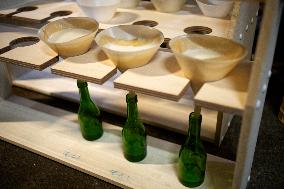
Samples of fresh sake are pictured at Jozan Brewery in Fukui. Japanese alcoholic beverages, including sake (nihonshu), shochu and awamori, are made from grains and water. Craftspeople use koji mold to convert the starch in the ingredients into sugar, and oversee the process to make sure the mold grows in optimal conditions. Jozan, a brewery located in Fukui Prefecture, a region renowned for its high-quality rice, has upheld traditional sake-making for over 220 years. Led by Shinpei Tokoyama, the brewery exemplifies its ongoing efforts in coping with challenges in modern era while preserving traditional craftsmanship. With modern techniques, Jozan has realized a meticulous control over the brewing process, ensuring the consistency of product quality without compromising the essence of traditional making methods. In 2017, Jozan also renovated its brewing space, combining functionality with modern design to accommodate both production needs and visitors from around the world. The United Nations Educational, Scie

  •  
Sake Making At Jozan Brewery In Fukui - Japan

Sake Making At Jozan Brewery In Fukui - Japan

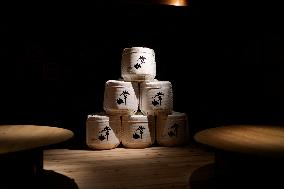
Trademarks of Jozan Brewery are pictured at the reception area of the brewery in Fukui. Japanese alcoholic beverages, including sake (nihonshu), shochu and awamori, are made from grains and water. Craftspeople use koji mold to convert the starch in the ingredients into sugar, and oversee the process to make sure the mold grows in optimal conditions. Jozan, a brewery located in Fukui Prefecture, a region renowned for its high-quality rice, has upheld traditional sake-making for over 220 years. Led by Shinpei Tokoyama, the brewery exemplifies its ongoing efforts in coping with challenges in modern era while preserving traditional craftsmanship. With modern techniques, Jozan has realized a meticulous control over the brewing process, ensuring the consistency of product quality without compromising the essence of traditional making methods. In 2017, Jozan also renovated its brewing space, combining functionality with modern design to accommodate both production needs and visitors from around the world. The United

  •  
Sake Making At Jozan Brewery In Fukui - Japan

Sake Making At Jozan Brewery In Fukui - Japan

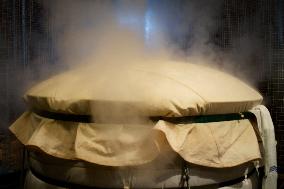
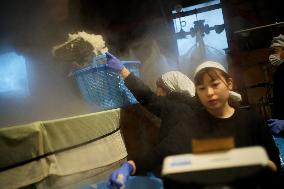
Cleaned rice is steamed at Jozan Brewery in Fukui. Japanese alcoholic beverages, including sake (nihonshu), shochu and awamori, are made from grains and water. Craftspeople use koji mold to convert the starch in the ingredients into sugar, and oversee the process to make sure the mold grows in optimal conditions. Jozan, a brewery located in Fukui Prefecture, a region renowned for its high-quality rice, has upheld traditional sake-making for over 220 years. Led by Shinpei Tokoyama, the brewery exemplifies its ongoing efforts in coping with challenges in modern era while preserving traditional craftsmanship. With modern techniques, Jozan has realized a meticulous control over the brewing process, ensuring the consistency of product quality without compromising the essence of traditional making methods. In 2017, Jozan also renovated its brewing space, combining functionality with modern design to accommodate both production needs and visitors from around the world. The United Nations Educational, Scientific and

  •  
Sake Making At Jozan Brewery In Fukui - Japan

Sake Making At Jozan Brewery In Fukui - Japan

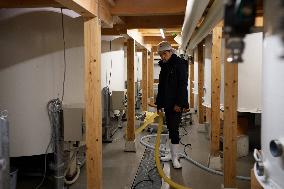
Shinpei Tokoyama waits for moromi to flow into the filter at Jozan Brewery in Fukui. Japanese alcoholic beverages, including sake (nihonshu), shochu and awamori, are made from grains and water. Craftspeople use koji mold to convert the starch in the ingredients into sugar, and oversee the process to make sure the mold grows in optimal conditions. Jozan, a brewery located in Fukui Prefecture, a region renowned for its high-quality rice, has upheld traditional sake-making for over 220 years. Led by Shinpei Tokoyama, the brewery exemplifies its ongoing efforts in coping with challenges in modern era while preserving traditional craftsmanship. With modern techniques, Jozan has realized a meticulous control over the brewing process, ensuring the consistency of product quality without compromising the essence of traditional making methods. In 2017, Jozan also renovated its brewing space, combining functionality with modern design to accommodate both production needs and visitors from around the world. The United Na

  •  
Sake Making At Jozan Brewery In Fukui - Japan

Sake Making At Jozan Brewery In Fukui - Japan

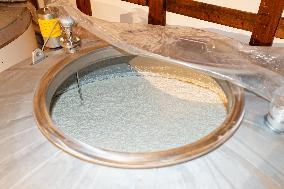
Fermenting moromi is pictured at Jozan Brewery in Fukui. Japanese alcoholic beverages, including sake (nihonshu), shochu and awamori, are made from grains and water. Craftspeople use koji mold to convert the starch in the ingredients into sugar, and oversee the process to make sure the mold grows in optimal conditions. Jozan, a brewery located in Fukui Prefecture, a region renowned for its high-quality rice, has upheld traditional sake-making for over 220 years. Led by Shinpei Tokoyama, the brewery exemplifies its ongoing efforts in coping with challenges in modern era while preserving traditional craftsmanship. With modern techniques, Jozan has realized a meticulous control over the brewing process, ensuring the consistency of product quality without compromising the essence of traditional making methods. In 2017, Jozan also renovated its brewing space, combining functionality with modern design to accommodate both production needs and visitors from around the world. The United Nations Educational, Scientifi

  •  
Sake Making At Jozan Brewery In Fukui - Japan

Sake Making At Jozan Brewery In Fukui - Japan

A worker seals a bottle of sake at Jozan Brewery in Fukui. Japanese alcoholic beverages, including sake (nihonshu), shochu and awamori, are made from grains and water. Craftspeople use koji mold to convert the starch in the ingredients into sugar, and oversee the process to make sure the mold grows in optimal conditions. Jozan, a brewery located in Fukui Prefecture, a region renowned for its high-quality rice, has upheld traditional sake-making for over 220 years. Led by Shinpei Tokoyama, the brewery exemplifies its ongoing efforts in coping with challenges in modern era while preserving traditional craftsmanship. With modern techniques, Jozan has realized a meticulous control over the brewing process, ensuring the consistency of product quality without compromising the essence of traditional making methods. In 2017, Jozan also renovated its brewing space, combining functionality with modern design to accommodate both production needs and visitors from around the world. The United Nations Educational, Scienti

  •  
Sake Making At Jozan Brewery In Fukui - Japan

Sake Making At Jozan Brewery In Fukui - Japan

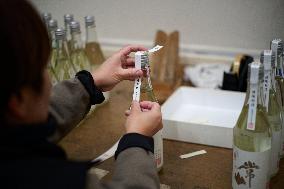
A worker examines samples of fresh sake at Jozan Brewery in Fukui. Japanese alcoholic beverages, including sake (nihonshu), shochu and awamori, are made from grains and water. Craftspeople use koji mold to convert the starch in the ingredients into sugar, and oversee the process to make sure the mold grows in optimal conditions. Jozan, a brewery located in Fukui Prefecture, a region renowned for its high-quality rice, has upheld traditional sake-making for over 220 years. Led by Shinpei Tokoyama, the brewery exemplifies its ongoing efforts in coping with challenges in modern era while preserving traditional craftsmanship. With modern techniques, Jozan has realized a meticulous control over the brewing process, ensuring the consistency of product quality without compromising the essence of traditional making methods. In 2017, Jozan also renovated its brewing space, combining functionality with modern design to accommodate both production needs and visitors from around the world. The United Nations Educational,

  •  
Sake Making At Jozan Brewery In Fukui - Japan

Sake Making At Jozan Brewery In Fukui - Japan

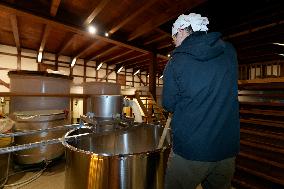
A worker stirs the mixture of steamed rice, koji, water and Shubo at Jozan Brewery in Fukui. Japanese alcoholic beverages, including sake (nihonshu), shochu and awamori, are made from grains and water. Craftspeople use koji mold to convert the starch in the ingredients into sugar, and oversee the process to make sure the mold grows in optimal conditions. Jozan, a brewery located in Fukui Prefecture, a region renowned for its high-quality rice, has upheld traditional sake-making for over 220 years. Led by Shinpei Tokoyama, the brewery exemplifies its ongoing efforts in coping with challenges in modern era while preserving traditional craftsmanship. With modern techniques, Jozan has realized a meticulous control over the brewing process, ensuring the consistency of product quality without compromising the essence of traditional making methods. In 2017, Jozan also renovated its brewing space, combining functionality with modern design to accommodate both production needs and visitors from around the world. The U

  •  
Sake Making At Jozan Brewery In Fukui - Japan

Sake Making At Jozan Brewery In Fukui - Japan

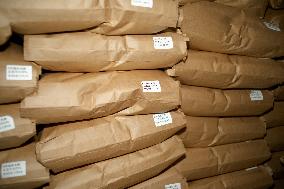
Bags of locally produced rice, a raw material for sake-making, is seen at Jozan Brewery in Fukui. Japanese alcoholic beverages, including sake (nihonshu), shochu and awamori, are made from grains and water. Craftspeople use koji mold to convert the starch in the ingredients into sugar, and oversee the process to make sure the mold grows in optimal conditions. Jozan, a brewery located in Fukui Prefecture, a region renowned for its high-quality rice, has upheld traditional sake-making for over 220 years. Led by Shinpei Tokoyama, the brewery exemplifies its ongoing efforts in coping with challenges in modern era while preserving traditional craftsmanship. With modern techniques, Jozan has realized a meticulous control over the brewing process, ensuring the consistency of product quality without compromising the essence of traditional making methods. In 2017, Jozan also renovated its brewing space, combining functionality with modern design to accommodate both production needs and visitors from around the world.

  •  
Sake Making At Jozan Brewery In Fukui - Japan

Sake Making At Jozan Brewery In Fukui - Japan

Workers weigh steamed rice at Jozan Brewery in Fukui. Japanese alcoholic beverages, including sake (nihonshu), shochu and awamori, are made from grains and water. Craftspeople use koji mold to convert the starch in the ingredients into sugar, and oversee the process to make sure the mold grows in optimal conditions. Jozan, a brewery located in Fukui Prefecture, a region renowned for its high-quality rice, has upheld traditional sake-making for over 220 years. Led by Shinpei Tokoyama, the brewery exemplifies its ongoing efforts in coping with challenges in modern era while preserving traditional craftsmanship. With modern techniques, Jozan has realized a meticulous control over the brewing process, ensuring the consistency of product quality without compromising the essence of traditional making methods. In 2017, Jozan also renovated its brewing space, combining functionality with modern design to accommodate both production needs and visitors from around the world. The United Nations Educational, Scientific a

  •  
Sake Making At Jozan Brewery In Fukui - Japan

Sake Making At Jozan Brewery In Fukui - Japan

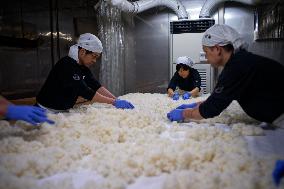
Shinpei Tokoyama (L) and workers spread steamed rice mixed with koji mold at Jozan Brewery in Fukui. Japanese alcoholic beverages, including sake (nihonshu), shochu and awamori, are made from grains and water. Craftspeople use koji mold to convert the starch in the ingredients into sugar, and oversee the process to make sure the mold grows in optimal conditions. Jozan, a brewery located in Fukui Prefecture, a region renowned for its high-quality rice, has upheld traditional sake-making for over 220 years. Led by Shinpei Tokoyama, the brewery exemplifies its ongoing efforts in coping with challenges in modern era while preserving traditional craftsmanship. With modern techniques, Jozan has realized a meticulous control over the brewing process, ensuring the consistency of product quality without compromising the essence of traditional making methods. In 2017, Jozan also renovated its brewing space, combining functionality with modern design to accommodate both production needs and visitors from around the worl

  •  
Sake Making At Jozan Brewery In Fukui - Japan

Sake Making At Jozan Brewery In Fukui - Japan

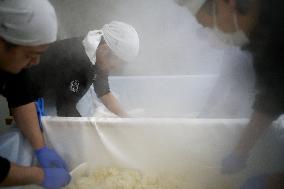
Shinpei Tokoyama (2nd L) and workers spread koji mold over steamed rice at Jozan Brewery in Fukui. Japanese alcoholic beverages, including sake (nihonshu), shochu and awamori, are made from grains and water. Craftspeople use koji mold to convert the starch in the ingredients into sugar, and oversee the process to make sure the mold grows in optimal conditions. Jozan, a brewery located in Fukui Prefecture, a region renowned for its high-quality rice, has upheld traditional sake-making for over 220 years. Led by Shinpei Tokoyama, the brewery exemplifies its ongoing efforts in coping with challenges in modern era while preserving traditional craftsmanship. With modern techniques, Jozan has realized a meticulous control over the brewing process, ensuring the consistency of product quality without compromising the essence of traditional making methods. In 2017, Jozan also renovated its brewing space, combining functionality with modern design to accommodate both production needs and visitors from around the world.

  •  

China's land-sea freight service sees robust growth in 2022

STORY: China's land-sea freight service sees robust growth in 2022 DATELINE: Jan. 2, 2023 LENGTH: 0:01:09 LOCATION: NANNING, China CATEGORY: ECONOMY SHOTLIST: 1. various of the freight train 2. SOUNDBITE 1 (Chinese): DU JUNFENG, Deputy director of Qinzhou Port East Railway Station 3. SOUNDBITE 2 (Chinese): DU JUNFENG, Deputy director of Qinzhou Port East Railway Station STORYLINE: A freight train loaded with 14 cargoes of cassava starch from Thailand departed from Qinzhou Railway Container Center Station in south China's Guangxi Zhuang Autonomous Region on Sunday bound for southwest China's Chongqing. It was the first batch of goods imported via the New International Land-Sea Trade Corridor in 2023. In 2022, a total of 756,000 twenty-foot equivalent units (TEUs) of goods were carried by the freight train service along this trade and logistics passage, up 18.5 percent year on year. SOUNDBITE 1 (Chinese): DU JUNFENG, Deputy director of Qinzhou Port East Railway Station "Thanks to the benefits brought

  •  

RCEP helps more ASEAN agricultural products enter Chinese market

STORY: RCEP helps more ASEAN agricultural products enter Chinese market DATELINE: Jan. 2, 2023 LENGTH: 00:02:59 LOCATION: NANNING, China CATEGORY: ECONOMY SHOTLIST: 1. various of economic activities between China and ASEAN countries 2. various of fruits 3. SOUNDBITE 1 (Chinese): BUI THI HAI, Head of a company based in Vietnam 4. various of transportation of fruits 5. SOUNDBITE 2 (Chinese): WANG JIAFU, General manager, Guangxi Junyi Agricultural Technology Co., Ltd. 6. various of factory production of fruits 7. SOUNDBITE 3 (Chinese): DAI SONGLI, General manager, Guangxi State Farms Mingyang Starch Development Co. Ltd. 8. various of economic activities between China and ASEAN countries 9. SOUNDBITE 4 (Chinese): WANG ZHENGBO, CEO, Guangxi TWT Supply Chain Management Co., Ltd. STORYLINE: Thanks to reduced tariffs under the Regional Comprehensive Economic Partnership (RCEP), fruits and other agricultural products from Southeast Asian countries can now reach China faster and at lower prices. The RCEP, the world

  •  
Victor develops environmentally friendly DVD from corn starch

Victor develops environmentally friendly DVD from corn starch

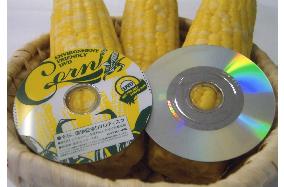
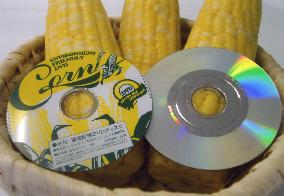
TOKYO, Japan - Victor Co. of Japan said Dec. 6 it has succeeded in manufacturing an environmentally friendly DVD with a special plastic synthesized from corn starch. Unlike conventional DVDs made from oil, the new DVD, made mainly from polylactide resin, will help reduce the consumption of oil and the quantity of carbon dioxide emitted in the process of incinerating used DVDs for disposal, JVC said.

  •  

China's Guangxi beefs up regional integration with ASEAN countries

STORY: China's Guangxi beefs up regional integration with ASEAN countries DATELINE: Sept. 20, 2022 LENGTH: 00:02:52 LOCATION: NANNING, China CATEGORY: ECONOMY SHOTLIST: various of the China-ASEAN Expovarious of NanningSOUNDBITE 1 (Chinese): DAI SONGLI, General manager of Guangxi State Farms Mingyang Starch Development Co. Ltd.various of companiesSOUNDBITE 2 (Chinese): ZHAO HUI, General manager assistant of Guangxi Tus-Innovation Cross Border E-Commerce Co., Ltd.SOUNDBITE 3 (Chinese): HUANG JIANGNAN, Official with Qinzhou Port East Station of Guangxi Yanhai Railway Company Limitedvarious of container ports and trains STORYLINE: The 19th China-ASEAN Expo concluded on Monday in Nanning, the capital of south China's Guangxi Zhuang Autonomous Region, with a record number of deals made. A total of 267 domestic and international deals have been signed, with an investment of over 400 billion yuan (about 57 billion U.S. dollars), up 37 percent compared to last year. Guangxi has become an important window for e

  •  

Cambodia exports agricultural products worth 1.94 bln USD to China in past 3 years: minister

STORY: Cambodia exports agricultural products worth 1.94 bln USD to China in past 3 years: minister DATELINE: July 22, 2022 LENGTH: 00:00:59 LOCATION: Phnom Penh CATEGORY: AGRICULTURE SHOTLIST: 1. various of rice fields, rice paddy and rice processing at a factory 2. various of pepper 3. various of Cambodian Agriculture Minister Veng Sakhon speaking 4. various of potatoes, rubber, bananas, mangoes, and longans 5. various of trucks transporting agricultural products STORYLINE: Cambodia exported more than 2.4 million tons of agricultural products to China from 2019 to June 2022, earning a gross revenue of 1.94 billion U.S. dollars, Minister of Agriculture, Forestry and Fisheries Veng Sakhon said on Thursday. The Southeast Asian nation had shipped 24 kinds of agricultural products to China, he said in a Facebook post, adding that they included fresh bananas, milled rice, dried cassava chips, cassava starch, dried mangoes, fresh mangoes, dried rubber, cashew nuts, and cocoa powder, among others. The mi

  •  

Ramadan dessert in North Africa attracts people during Ramadan

STORY: Ramadan dessert in North Africa attracts people during Ramadan DATELINE: April 7, 2022 LENGTH: 00:01:01 LOCATION: Algiers CATEGORY: CULTURE SHOTLIST: 1. various of Zalabia making 2. various of dessert shop in Boufarik STORYLINE: Zalabia, a traditional dessert, attracted many people during the holy month of Ramadan in Boufarik, a small town in Algeria's Blida province. People from the local and surrounding areas, including the capital Algiers, come to buy the dessert. Zalabia, made of flour and starch as the main raw materials, is fried and soaked in syrup or honey when being served. Xinhua News Agency correspondents reporting from Algiers. (XHTV)

  •  
Victor develops environmentally friendly DVD from corn starch

Victor develops environmentally friendly DVD from corn starch

TOKYO, Japan - Victor Co. of Japan said Dec. 6 it has succeeded in manufacturing an environmentally friendly DVD with a special plastic synthesized from corn starch. Unlike conventional DVDs made from oil, the new DVD, made mainly from polylactide resin, will help reduce the consumption of oil and the quantity of carbon dioxide emitted in the process of incinerating used DVDs for disposal, JVC said. (Kyodo)

  •  
Japanese sweets makers make appeal to youngsters with chic varieties

Japanese sweets makers make appeal to youngsters with chic varieties

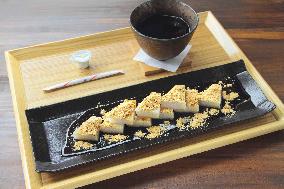
Funabashiya's "kuzumochi," or starch cake, is offered with coffee especially blended to bring out the best of the Japanese confection's flavor. Photo was taken May 30, 2017. (Kyodo) ==Kyodo

  •  
Thick starch syrup retains strong popularity

Thick starch syrup retains strong popularity

KOBE, Japan - Masaru Kubo, the fourth generation head of the family that founded confectionary company Kotonojo Hinode Ame Hompo displays ''mizuame,'' or ''water candy'' at his office in Amagasaki, Hyogo Prefecture, on March 20, 2010. (Kyodo)

  •  
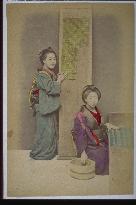
Women washing and stretching cloth

Women washing and stretching cloth

A kimono was not washed in one piece, but the threads were pulled out and the kimono made into plain material to wash. After washing, the material was starched and dried by pasting it on a board, a process called araihari . The pail probably contains starch. The material to be starched is placed inside. Starch was made of liquid from stewed seaweed, and the drying board was a single cedar board, both sides of which could be used.==Date:unknown, Place:unknown, Photo:unknown, (Credit:Nagasaki University Library/Kyodo News Images) [Cabinet Number12‐35‐0]

  • Main
  • Top
  • Editorial
  • Creative
  • About Us
  • About ILG
  • Terms of use
  • Company
  • BEHIND
  • Price List
  • Single Plan
  • Monthly Plan
  • Services
  • Shooting
  • Rights Clearance
  • Support
  • FAQ
  • How To Buy
  • Contact Us
  • Become a Partner

© KYODO NEWS IMAGES INC

All Rights Reserved.

  • Editorial
  • Olympics
  • News
  • Sports
  • Japan
  • Tech
  • Royal
  • Disaster
  • NorthKorea
  • Old Japan
  • SNS
  • Creative
  • Food
  • Japan
  • Landscape
  • Animal
  • Popular
  • #Ukraine
  • #Thailand
  • #coronavirus
  • #N. Korea
  • #China
  • #Russia
  • #Ukraine
  • #Thailand
  • #coronavirus
  • #N. Korea
  • #China
  • #Russia
  • Food
  • Japan
  • Landscape
  • Animal
  • Olympics
  • News
  • Sports
  • Japan
  • Tech
  • Royal
  • Disaster
  • NorthKorea
  • Old Japan
  • SNS