•  
Saqqara Necropolis - Egypt

Saqqara Necropolis - Egypt

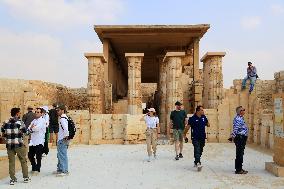
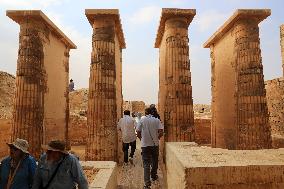
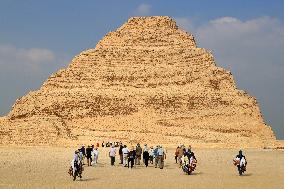
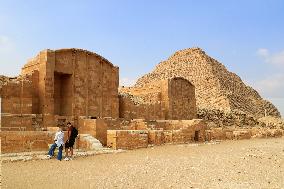
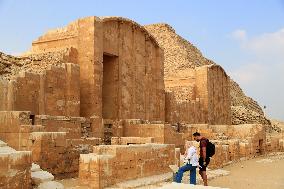
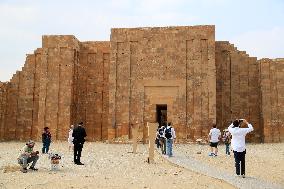
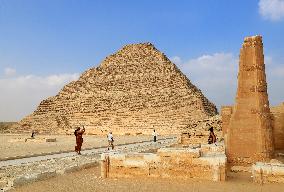
Tourists visit the Step Pyramid complex in the Saqqara necropolis, south of Cairo, Egypt, on November 12, 2024. The Step Pyramid, a UNESCO World Heritage Site, was designed and built by the architect Imhotep in the 27th century BC during the Third Dynasty to hold the mummy of Pharaoh Djoser. Phoyo by Sui Xiankai/Xinhua/ABACAPRESS.COM

  •  
Saqqara Necropolis - Egypt

Saqqara Necropolis - Egypt

Tourists visit the Step Pyramid complex in the Saqqara necropolis, south of Cairo, Egypt, on November 12, 2024. The Step Pyramid, a UNESCO World Heritage Site, was designed and built by the architect Imhotep in the 27th century BC during the Third Dynasty to hold the mummy of Pharaoh Djoser. Phoyo by Sui Xiankai/Xinhua/ABACAPRESS.COM

  •  
Saqqara Necropolis - Egypt

Saqqara Necropolis - Egypt

Tourists visit the Step Pyramid complex in the Saqqara necropolis, south of Cairo, Egypt, on November 12, 2024. The Step Pyramid, a UNESCO World Heritage Site, was designed and built by the architect Imhotep in the 27th century BC during the Third Dynasty to hold the mummy of Pharaoh Djoser. Phoyo by Sui Xiankai/Xinhua/ABACAPRESS.COM

  •  
Saqqara Necropolis - Egypt

Saqqara Necropolis - Egypt

Tourists visit the Step Pyramid complex in the Saqqara necropolis, south of Cairo, Egypt, on November 12, 2024. The Step Pyramid, a UNESCO World Heritage Site, was designed and built by the architect Imhotep in the 27th century BC during the Third Dynasty to hold the mummy of Pharaoh Djoser. Phoyo by Sui Xiankai/Xinhua/ABACAPRESS.COM

  •  
Saqqara Necropolis - Egypt

Saqqara Necropolis - Egypt

Tourists visit the Step Pyramid complex in the Saqqara necropolis, south of Cairo, Egypt, on November 12, 2024. The Step Pyramid, a UNESCO World Heritage Site, was designed and built by the architect Imhotep in the 27th century BC during the Third Dynasty to hold the mummy of Pharaoh Djoser. Phoyo by Sui Xiankai/Xinhua/ABACAPRESS.COM

  •  
Saqqara Necropolis - Egypt

Saqqara Necropolis - Egypt

Tourists visit the Step Pyramid complex in the Saqqara necropolis, south of Cairo, Egypt, on November 12, 2024. The Step Pyramid, a UNESCO World Heritage Site, was designed and built by the architect Imhotep in the 27th century BC during the Third Dynasty to hold the mummy of Pharaoh Djoser. Phoyo by Sui Xiankai/Xinhua/ABACAPRESS.COM

  •  
Saqqara Necropolis - Egypt

Saqqara Necropolis - Egypt

Tourists visit the Step Pyramid complex in the Saqqara necropolis, south of Cairo, Egypt, on November 12, 2024. The Step Pyramid, a UNESCO World Heritage Site, was designed and built by the architect Imhotep in the 27th century BC during the Third Dynasty to hold the mummy of Pharaoh Djoser. Phoyo by Sui Xiankai/Xinhua/ABACAPRESS.COM

  •  
XINHUA PHOTOS OF THE DAY

XINHUA PHOTOS OF THE DAY

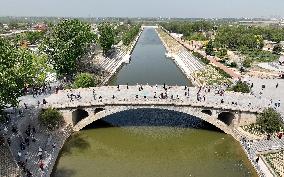
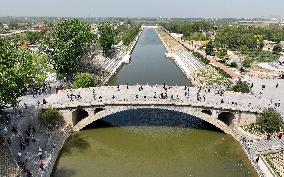
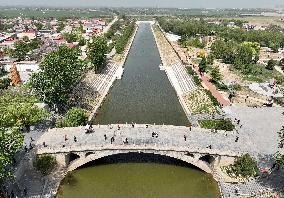
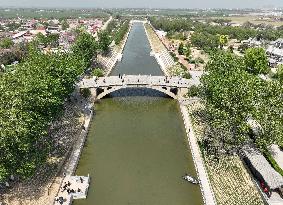
(240509) -- BEIJING, May 9, 2024 (Xinhua) -- An aerial drone photo taken on April 25, 2024 shows tourists on the Zhaozhou Bridge in Zhaoxian County, north China's Hebei Province. Built in the Sui Dynasty (581-618), the 1,400-year-old Zhaozhou Bridge stands over the Xiaohe River in Zhaoxian County, Hebei Province. It is the world's oldest single-arch bridge. A combination of location, design and excellent construction are the main reasons why the bridge has withstood earthquake, flood and war for 1,400 years. Along with such world-famous landmarks as the Forbidden City and the Great Wall, the bridge was listed into China's first group of national cultural heritage protection sites in 1961. Nowadays, the Zhaozhou Bridge scenic area has been open to public for free, bringing numerous tourists into the county. (Xinhua/Wang Yuguo)

  •  
CHINA-HEBEI-SHIJIAZHUANG-ZHAOZHOU BRIDGE (CN)

CHINA-HEBEI-SHIJIAZHUANG-ZHAOZHOU BRIDGE (CN)

(240508) -- BEIJING, May 8, 2024 (Xinhua) -- A child displays a popsicle with a pattern of the Zhaozhou Bridge in Zhaoxian County, north China's Hebei Province, April 25, 2024. Built in the Sui Dynasty (581-618), the 1,400-year-old Zhaozhou Bridge stands over the Xiaohe River in Zhaoxian County, Hebei Province. It is the world's oldest single-arch bridge. A combination of location, design and excellent construction are the main reasons why the bridge has withstood earthquake, flood and war for 1,400 years. Along with such world-famous landmarks as the Forbidden City and the Great Wall, the bridge was listed into China's first group of national cultural heritage protection sites in 1961. Nowadays, the Zhaozhou Bridge scenic area has been open to public for free, bringing numerous tourists into the county. (Xinhua/Wang Yuguo)

  •  
CHINA-HEBEI-SHIJIAZHUANG-ZHAOZHOU BRIDGE (CN)

CHINA-HEBEI-SHIJIAZHUANG-ZHAOZHOU BRIDGE (CN)

(240508) -- BEIJING, May 8, 2024 (Xinhua) -- An aerial drone photo taken on April 25, 2024 shows tourists on the Zhaozhou Bridge in Zhaoxian County, north China's Hebei Province. Built in the Sui Dynasty (581-618), the 1,400-year-old Zhaozhou Bridge stands over the Xiaohe River in Zhaoxian County, Hebei Province. It is the world's oldest single-arch bridge. A combination of location, design and excellent construction are the main reasons why the bridge has withstood earthquake, flood and war for 1,400 years. Along with such world-famous landmarks as the Forbidden City and the Great Wall, the bridge was listed into China's first group of national cultural heritage protection sites in 1961. Nowadays, the Zhaozhou Bridge scenic area has been open to public for free, bringing numerous tourists into the county. (Xinhua/Wang Yuguo)

  •  
CHINA-HEBEI-SHIJIAZHUANG-ZHAOZHOU BRIDGE (CN)

CHINA-HEBEI-SHIJIAZHUANG-ZHAOZHOU BRIDGE (CN)

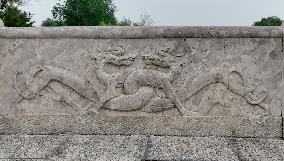
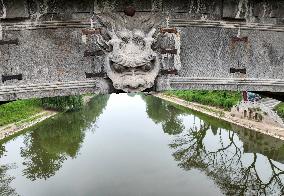
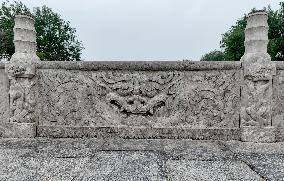
(240508) -- BEIJING, May 8, 2024 (Xinhua) -- This file photo shows the carving patterns on the Zhaozhou Bridge in Zhaoxian County, north China's Hebei Province. Built in the Sui Dynasty (581-618), the 1,400-year-old Zhaozhou Bridge stands over the Xiaohe River in Zhaoxian County, Hebei Province. It is the world's oldest single-arch bridge. A combination of location, design and excellent construction are the main reasons why the bridge has withstood earthquake, flood and war for 1,400 years. Along with such world-famous landmarks as the Forbidden City and the Great Wall, the bridge was listed into China's first group of national cultural heritage protection sites in 1961. Nowadays, the Zhaozhou Bridge scenic area has been open to public for free, bringing numerous tourists into the county. (Photo by Zhu Tao/Xinhua)

  •  
CHINA-HEBEI-SHIJIAZHUANG-ZHAOZHOU BRIDGE (CN)

CHINA-HEBEI-SHIJIAZHUANG-ZHAOZHOU BRIDGE (CN)

(240508) -- BEIJING, May 8, 2024 (Xinhua) -- An aerial drone photo taken on April 25, 2024 shows the Zhaozhou Bridge in Zhaoxian County, north China's Hebei Province. Built in the Sui Dynasty (581-618), the 1,400-year-old Zhaozhou Bridge stands over the Xiaohe River in Zhaoxian County, Hebei Province. It is the world's oldest single-arch bridge. A combination of location, design and excellent construction are the main reasons why the bridge has withstood earthquake, flood and war for 1,400 years. Along with such world-famous landmarks as the Forbidden City and the Great Wall, the bridge was listed into China's first group of national cultural heritage protection sites in 1961. Nowadays, the Zhaozhou Bridge scenic area has been open to public for free, bringing numerous tourists into the county. (Xinhua/Wang Yuguo)

  •  
CHINA-HEBEI-SHIJIAZHUANG-ZHAOZHOU BRIDGE (CN)

CHINA-HEBEI-SHIJIAZHUANG-ZHAOZHOU BRIDGE (CN)

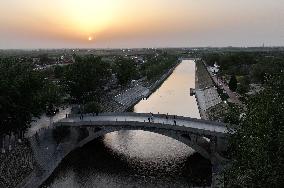
(240508) -- BEIJING, May 8, 2024 (Xinhua) -- An aerial drone photo taken on April 24, 2024 shows the Zhaozhou Bridge at sunset in Zhaoxian County, north China's Hebei Province. Built in the Sui Dynasty (581-618), the 1,400-year-old Zhaozhou Bridge stands over the Xiaohe River in Zhaoxian County, Hebei Province. It is the world's oldest single-arch bridge. A combination of location, design and excellent construction are the main reasons why the bridge has withstood earthquake, flood and war for 1,400 years. Along with such world-famous landmarks as the Forbidden City and the Great Wall, the bridge was listed into China's first group of national cultural heritage protection sites in 1961. Nowadays, the Zhaozhou Bridge scenic area has been open to public for free, bringing numerous tourists into the county. (Xinhua/Mu Yu)

  •  
CHINA-HEBEI-SHIJIAZHUANG-ZHAOZHOU BRIDGE (CN)

CHINA-HEBEI-SHIJIAZHUANG-ZHAOZHOU BRIDGE (CN)

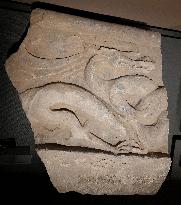
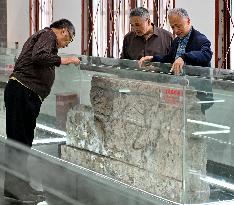
(240508) -- BEIJING, May 8, 2024 (Xinhua) -- This photo taken on April 25, 2024 shows a relic dating back to the Sui Dynasty (581-618) of the Zhaozhou Bridge at Zhaoxian Museum in Zhaoxian County, north China's Hebei Province. Built in the Sui Dynasty (581-618), the 1,400-year-old Zhaozhou Bridge stands over the Xiaohe River in Zhaoxian County, Hebei Province. It is the world's oldest single-arch bridge. A combination of location, design and excellent construction are the main reasons why the bridge has withstood earthquake, flood and war for 1,400 years. Along with such world-famous landmarks as the Forbidden City and the Great Wall, the bridge was listed into China's first group of national cultural heritage protection sites in 1961. Nowadays, the Zhaozhou Bridge scenic area has been open to public for free, bringing numerous tourists into the county. (Xinhua/Wang Yuguo)

  •  
CHINA-HEBEI-SHIJIAZHUANG-ZHAOZHOU BRIDGE (CN)

CHINA-HEBEI-SHIJIAZHUANG-ZHAOZHOU BRIDGE (CN)

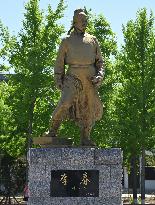
(240508) -- BEIJING, May 8, 2024 (Xinhua) -- This photo taken on April 24, 2024 shows a statue of Li Chun, designer of the Zhaozhou Bridge, in the Zhaozhou Bridge scenic area in Zhaoxian County, north China's Hebei Province. Built in the Sui Dynasty (581-618), the 1,400-year-old Zhaozhou Bridge stands over the Xiaohe River in Zhaoxian County, Hebei Province. It is the world's oldest single-arch bridge. A combination of location, design and excellent construction are the main reasons why the bridge has withstood earthquake, flood and war for 1,400 years. Along with such world-famous landmarks as the Forbidden City and the Great Wall, the bridge was listed into China's first group of national cultural heritage protection sites in 1961. Nowadays, the Zhaozhou Bridge scenic area has been open to public for free, bringing numerous tourists into the county. (Xinhua/Mu Yu)

  •  
CHINA-HEBEI-SHIJIAZHUANG-ZHAOZHOU BRIDGE (CN)

CHINA-HEBEI-SHIJIAZHUANG-ZHAOZHOU BRIDGE (CN)

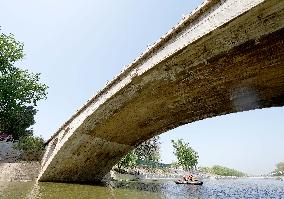
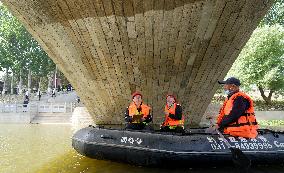
(240508) -- BEIJING, May 8, 2024 (Xinhua) -- This photo taken on April 25, 2024 shows the bottom of the Zhaozhou Bridge in Zhaoxian County, north China's Hebei Province. Built in the Sui Dynasty (581-618), the 1,400-year-old Zhaozhou Bridge stands over the Xiaohe River in Zhaoxian County, Hebei Province. It is the world's oldest single-arch bridge. A combination of location, design and excellent construction are the main reasons why the bridge has withstood earthquake, flood and war for 1,400 years. Along with such world-famous landmarks as the Forbidden City and the Great Wall, the bridge was listed into China's first group of national cultural heritage protection sites in 1961. Nowadays, the Zhaozhou Bridge scenic area has been open to public for free, bringing numerous tourists into the county. (Xinhua/Wang Yuguo)

  •  
CHINA-HEBEI-SHIJIAZHUANG-ZHAOZHOU BRIDGE (CN)

CHINA-HEBEI-SHIJIAZHUANG-ZHAOZHOU BRIDGE (CN)

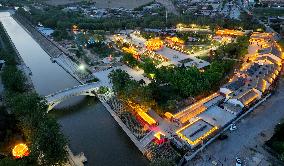
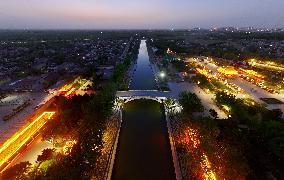
(240508) -- BEIJING, May 8, 2024 (Xinhua) -- An aerial drone photo taken on April 24, 2024 shows the Zhaozhou Bridge scenic area at night in Zhaoxian County, north China's Hebei Province. Built in the Sui Dynasty (581-618), the 1,400-year-old Zhaozhou Bridge stands over the Xiaohe River in Zhaoxian County, Hebei Province. It is the world's oldest single-arch bridge. A combination of location, design and excellent construction are the main reasons why the bridge has withstood earthquake, flood and war for 1,400 years. Along with such world-famous landmarks as the Forbidden City and the Great Wall, the bridge was listed into China's first group of national cultural heritage protection sites in 1961. Nowadays, the Zhaozhou Bridge scenic area has been open to public for free, bringing numerous tourists into the county. (Xinhua/Wang Yuguo)

  •  
CHINA-HEBEI-SHIJIAZHUANG-ZHAOZHOU BRIDGE (CN)

CHINA-HEBEI-SHIJIAZHUANG-ZHAOZHOU BRIDGE (CN)

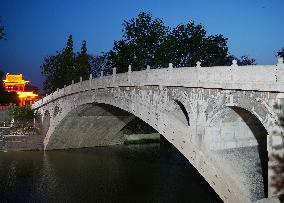
(240508) -- BEIJING, May 8, 2024 (Xinhua) -- This photo taken on April 24, 2024 shows the Zhaozhou Bridge at night in Zhaoxian County, north China's Hebei Province. Built in the Sui Dynasty (581-618), the 1,400-year-old Zhaozhou Bridge stands over the Xiaohe River in Zhaoxian County, Hebei Province. It is the world's oldest single-arch bridge. A combination of location, design and excellent construction are the main reasons why the bridge has withstood earthquake, flood and war for 1,400 years. Along with such world-famous landmarks as the Forbidden City and the Great Wall, the bridge was listed into China's first group of national cultural heritage protection sites in 1961. Nowadays, the Zhaozhou Bridge scenic area has been open to public for free, bringing numerous tourists into the county. (Xinhua/Mu Yu)

  •  
CHINA-HEBEI-SHIJIAZHUANG-ZHAOZHOU BRIDGE (CN)

CHINA-HEBEI-SHIJIAZHUANG-ZHAOZHOU BRIDGE (CN)

(240508) -- BEIJING, May 8, 2024 (Xinhua) -- This file photo shows a stone carving on the Zhaozhou Bridge in Zhaoxian County, north China's Hebei Province. Built in the Sui Dynasty (581-618), the 1,400-year-old Zhaozhou Bridge stands over the Xiaohe River in Zhaoxian County, Hebei Province. It is the world's oldest single-arch bridge. A combination of location, design and excellent construction are the main reasons why the bridge has withstood earthquake, flood and war for 1,400 years. Along with such world-famous landmarks as the Forbidden City and the Great Wall, the bridge was listed into China's first group of national cultural heritage protection sites in 1961. Nowadays, the Zhaozhou Bridge scenic area has been open to public for free, bringing numerous tourists into the county. (Photo by Zhu Tao/Xinhua)

  •  
CHINA-HEBEI-SHIJIAZHUANG-ZHAOZHOU BRIDGE (CN)

CHINA-HEBEI-SHIJIAZHUANG-ZHAOZHOU BRIDGE (CN)

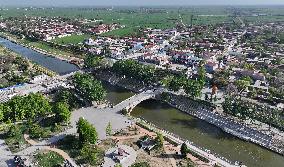
(240508) -- BEIJING, May 8, 2024 (Xinhua) -- An aerial drone photo taken on April 24, 2024 shows the Zhaozhou Bridge and its surrounding village in Zhaoxian County, north China's Hebei Province. Built in the Sui Dynasty (581-618), the 1,400-year-old Zhaozhou Bridge stands over the Xiaohe River in Zhaoxian County, Hebei Province. It is the world's oldest single-arch bridge. A combination of location, design and excellent construction are the main reasons why the bridge has withstood earthquake, flood and war for 1,400 years. Along with such world-famous landmarks as the Forbidden City and the Great Wall, the bridge was listed into China's first group of national cultural heritage protection sites in 1961. Nowadays, the Zhaozhou Bridge scenic area has been open to public for free, bringing numerous tourists into the county. (Xinhua/Mu Yu)

  •  
CHINA-HEBEI-SHIJIAZHUANG-ZHAOZHOU BRIDGE (CN)

CHINA-HEBEI-SHIJIAZHUANG-ZHAOZHOU BRIDGE (CN)

(240508) -- BEIJING, May 8, 2024 (Xinhua) -- Students make models of the Zhaozhou Bridge at a primary school in Zhaoxian County, north China's Hebei Province, April 25, 2024. Built in the Sui Dynasty (581-618), the 1,400-year-old Zhaozhou Bridge stands over the Xiaohe River in Zhaoxian County, Hebei Province. It is the world's oldest single-arch bridge. A combination of location, design and excellent construction are the main reasons why the bridge has withstood earthquake, flood and war for 1,400 years. Along with such world-famous landmarks as the Forbidden City and the Great Wall, the bridge was listed into China's first group of national cultural heritage protection sites in 1961. Nowadays, the Zhaozhou Bridge scenic area has been open to public for free, bringing numerous tourists into the county. (Xinhua/Wang Yuguo)

  •  
CHINA-HEBEI-SHIJIAZHUANG-ZHAOZHOU BRIDGE (CN)

CHINA-HEBEI-SHIJIAZHUANG-ZHAOZHOU BRIDGE (CN)

(240508) -- BEIJING, May 8, 2024 (Xinhua) -- An aerial drone photo taken on April 24, 2024 shows the Zhaozhou Bridge at night in Zhaoxian County, north China's Hebei Province. Built in the Sui Dynasty (581-618), the 1,400-year-old Zhaozhou Bridge stands over the Xiaohe River in Zhaoxian County, Hebei Province. It is the world's oldest single-arch bridge. A combination of location, design and excellent construction are the main reasons why the bridge has withstood earthquake, flood and war for 1,400 years. Along with such world-famous landmarks as the Forbidden City and the Great Wall, the bridge was listed into China's first group of national cultural heritage protection sites in 1961. Nowadays, the Zhaozhou Bridge scenic area has been open to public for free, bringing numerous tourists into the county. (Xinhua/Mu Yu)

  •  
CHINA-HEBEI-SHIJIAZHUANG-ZHAOZHOU BRIDGE (CN)

CHINA-HEBEI-SHIJIAZHUANG-ZHAOZHOU BRIDGE (CN)

(240508) -- BEIJING, May 8, 2024 (Xinhua) -- Children play on the Zhaozhou Bridge in Zhaoxian County, north China's Hebei Province, April 24, 2024. Built in the Sui Dynasty (581-618), the 1,400-year-old Zhaozhou Bridge stands over the Xiaohe River in Zhaoxian County, Hebei Province. It is the world's oldest single-arch bridge. A combination of location, design and excellent construction are the main reasons why the bridge has withstood earthquake, flood and war for 1,400 years. Along with such world-famous landmarks as the Forbidden City and the Great Wall, the bridge was listed into China's first group of national cultural heritage protection sites in 1961. Nowadays, the Zhaozhou Bridge scenic area has been open to public for free, bringing numerous tourists into the county. (Xinhua/Mu Yu)

  •  
CHINA-HEBEI-SHIJIAZHUANG-ZHAOZHOU BRIDGE (CN)

CHINA-HEBEI-SHIJIAZHUANG-ZHAOZHOU BRIDGE (CN)

(240508) -- BEIJING, May 8, 2024 (Xinhua) -- Tourists view a relic dating back to the Sui Dynasty (581-618) of the Zhaozhou Bridge at the Zhaozhou Bridge scenic area in Zhaoxian County, north China's Hebei Province, April 24, 2024. Built in the Sui Dynasty (581-618), the 1,400-year-old Zhaozhou Bridge stands over the Xiaohe River in Zhaoxian County, Hebei Province. It is the world's oldest single-arch bridge. A combination of location, design and excellent construction are the main reasons why the bridge has withstood earthquake, flood and war for 1,400 years. Along with such world-famous landmarks as the Forbidden City and the Great Wall, the bridge was listed into China's first group of national cultural heritage protection sites in 1961. Nowadays, the Zhaozhou Bridge scenic area has been open to public for free, bringing numerous tourists into the county. (Xinhua/Mu Yu)

  •  
CHINA-HEBEI-SHIJIAZHUANG-ZHAOZHOU BRIDGE (CN)

CHINA-HEBEI-SHIJIAZHUANG-ZHAOZHOU BRIDGE (CN)

(240508) -- BEIJING, May 8, 2024 (Xinhua) -- An aerial drone photo taken on April 25, 2024 shows the Zhaozhou Bridge in Zhaoxian County, north China's Hebei Province. Built in the Sui Dynasty (581-618), the 1,400-year-old Zhaozhou Bridge stands over the Xiaohe River in Zhaoxian County, Hebei Province. It is the world's oldest single-arch bridge. A combination of location, design and excellent construction are the main reasons why the bridge has withstood earthquake, flood and war for 1,400 years. Along with such world-famous landmarks as the Forbidden City and the Great Wall, the bridge was listed into China's first group of national cultural heritage protection sites in 1961. Nowadays, the Zhaozhou Bridge scenic area has been open to public for free, bringing numerous tourists into the county. (Xinhua/Wang Yuguo)

  •  
CHINA-HEBEI-SHIJIAZHUANG-ZHAOZHOU BRIDGE (CN)

CHINA-HEBEI-SHIJIAZHUANG-ZHAOZHOU BRIDGE (CN)

(240508) -- BEIJING, May 8, 2024 (Xinhua) -- This file photo shows the carving patterns on the Zhaozhou Bridge in Zhaoxian County, north China's Hebei Province. Built in the Sui Dynasty (581-618), the 1,400-year-old Zhaozhou Bridge stands over the Xiaohe River in Zhaoxian County, Hebei Province. It is the world's oldest single-arch bridge. A combination of location, design and excellent construction are the main reasons why the bridge has withstood earthquake, flood and war for 1,400 years. Along with such world-famous landmarks as the Forbidden City and the Great Wall, the bridge was listed into China's first group of national cultural heritage protection sites in 1961. Nowadays, the Zhaozhou Bridge scenic area has been open to public for free, bringing numerous tourists into the county. (Photo by Zhu Tao/Xinhua)

  •  
CHINA-HEBEI-SHIJIAZHUANG-ZHAOZHOU BRIDGE (CN)

CHINA-HEBEI-SHIJIAZHUANG-ZHAOZHOU BRIDGE (CN)

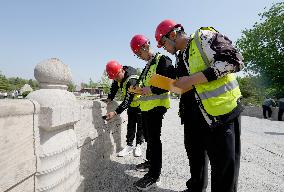
(240508) -- BEIJING, May 8, 2024 (Xinhua) -- Cultural relics protection technicians inspect the bottom of the Zhaozhou Bridge in Zhaoxian County, north China's Hebei Province, April 25, 2024. Built in the Sui Dynasty (581-618), the 1,400-year-old Zhaozhou Bridge stands over the Xiaohe River in Zhaoxian County, Hebei Province. It is the world's oldest single-arch bridge. A combination of location, design and excellent construction are the main reasons why the bridge has withstood earthquake, flood and war for 1,400 years. Along with such world-famous landmarks as the Forbidden City and the Great Wall, the bridge was listed into China's first group of national cultural heritage protection sites in 1961. Nowadays, the Zhaozhou Bridge scenic area has been open to public for free, bringing numerous tourists into the county. (Xinhua/Wang Yuguo)

  •  
CHINA-HEBEI-SHIJIAZHUANG-ZHAOZHOU BRIDGE (CN)

CHINA-HEBEI-SHIJIAZHUANG-ZHAOZHOU BRIDGE (CN)

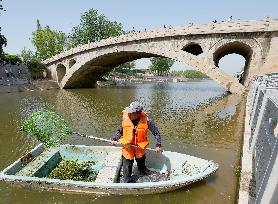
(240508) -- BEIJING, May 8, 2024 (Xinhua) -- A worker removes floating water plants at the Zhaozhou Bridge scenic area in Zhaoxian County, north China's Hebei Province, April 25, 2024. Built in the Sui Dynasty (581-618), the 1,400-year-old Zhaozhou Bridge stands over the Xiaohe River in Zhaoxian County, Hebei Province. It is the world's oldest single-arch bridge. A combination of location, design and excellent construction are the main reasons why the bridge has withstood earthquake, flood and war for 1,400 years. Along with such world-famous landmarks as the Forbidden City and the Great Wall, the bridge was listed into China's first group of national cultural heritage protection sites in 1961. Nowadays, the Zhaozhou Bridge scenic area has been open to public for free, bringing numerous tourists into the county. (Xinhua/Wang Yuguo)

  •  
CHINA-HEBEI-SHIJIAZHUANG-ZHAOZHOU BRIDGE (CN)

CHINA-HEBEI-SHIJIAZHUANG-ZHAOZHOU BRIDGE (CN)

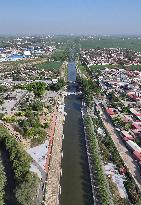
(240508) -- BEIJING, May 8, 2024 (Xinhua) -- An aerial drone photo taken on April 24, 2024 shows the Zhaozhou Bridge in Zhaoxian County, north China's Hebei Province. Built in the Sui Dynasty (581-618), the 1,400-year-old Zhaozhou Bridge stands over the Xiaohe River in Zhaoxian County, Hebei Province. It is the world's oldest single-arch bridge. A combination of location, design and excellent construction are the main reasons why the bridge has withstood earthquake, flood and war for 1,400 years. Along with such world-famous landmarks as the Forbidden City and the Great Wall, the bridge was listed into China's first group of national cultural heritage protection sites in 1961. Nowadays, the Zhaozhou Bridge scenic area has been open to public for free, bringing numerous tourists into the county. (Xinhua/Mu Yu)

  •  
CHINA-HEBEI-SHIJIAZHUANG-ZHAOZHOU BRIDGE (CN)

CHINA-HEBEI-SHIJIAZHUANG-ZHAOZHOU BRIDGE (CN)

(240508) -- BEIJING, May 8, 2024 (Xinhua) -- Cultural relics protection technicians inspect the Zhaozhou Bridge in Zhaoxian County, north China's Hebei Province, April 25, 2024. Built in the Sui Dynasty (581-618), the 1,400-year-old Zhaozhou Bridge stands over the Xiaohe River in Zhaoxian County, Hebei Province. It is the world's oldest single-arch bridge. A combination of location, design and excellent construction are the main reasons why the bridge has withstood earthquake, flood and war for 1,400 years. Along with such world-famous landmarks as the Forbidden City and the Great Wall, the bridge was listed into China's first group of national cultural heritage protection sites in 1961. Nowadays, the Zhaozhou Bridge scenic area has been open to public for free, bringing numerous tourists into the county. (Xinhua/Wang Yuguo)

  •  
CHINA-SICHUAN-CHENGDU-HISTORICAL RELICS PARK (CN)

CHINA-SICHUAN-CHENGDU-HISTORICAL RELICS PARK (CN)

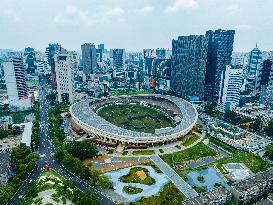
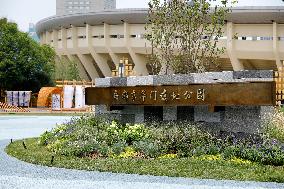
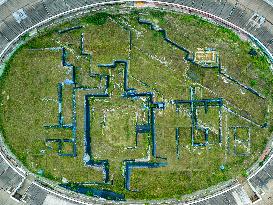
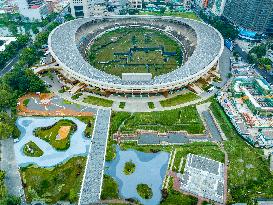
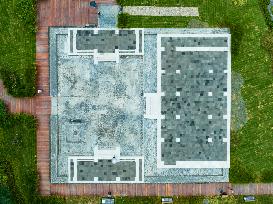
(230720) -- CHENGDU, July 20, 2023 (Xinhua) -- This aerial photo taken on July 20, 2023 shows an outdoor historical relics park in Chengdu, capital of southwest China's Sichuan Province. An outdoor historical relics park opened a new area to public on Thursday in Chengdu. The relics park is located in the core area of the old city of Chengdu. Since 2013, archaeologists have discovered a large area of ancient city remains from Donghuamen Street to Chengdu Sports Center in Qingyang District of Chengdu, with an excavated area of about 49,000 square meters, mainly including relics of Warring States Period (475-221 BC), Qin (221-207 BC) and Han (202 BC-220 AD) dynasties, Sui and Tang Dynasties (581-907), Song Dynasty (960-1279) and Ming Dynasty (1368-1644). (Xinhua/Shen Bohan)

  •  
CHINA-SICHUAN-CHENGDU-HISTORICAL RELICS PARK (CN)

CHINA-SICHUAN-CHENGDU-HISTORICAL RELICS PARK (CN)

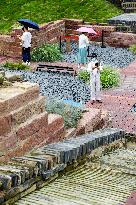
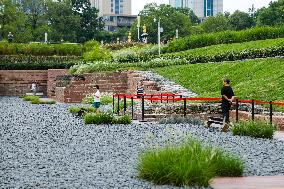
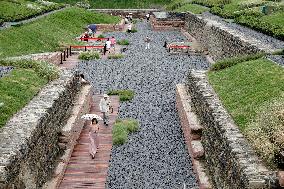
(230720) -- CHENGDU, July 20, 2023 (Xinhua) -- People visit a canal stepped footpath ruins of the Ming Dynasty (1368-1644) in an outdoor historical relics park in Chengdu, capital of southwest China's Sichuan Province, July 20, 2023. An outdoor historical relics park opened a new area to public on Thursday in Chengdu. The relics park is located in the core area of the old city of Chengdu. Since 2013, archaeologists have discovered a large area of ancient city remains from Donghuamen Street to Chengdu Sports Center in Qingyang District of Chengdu, with an excavated area of about 49,000 square meters, mainly including relics of Warring States Period (475-221 BC), Qin (221-207 BC) and Han (202 BC-220 AD) dynasties, Sui and Tang Dynasties (581-907), Song Dynasty (960-1279) and Ming Dynasty (1368-1644). (Xinhua/Shen Bohan)

  •  
CHINA-SICHUAN-CHENGDU-HISTORICAL RELICS PARK (CN)

CHINA-SICHUAN-CHENGDU-HISTORICAL RELICS PARK (CN)

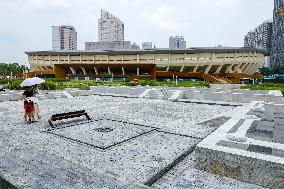
(230720) -- CHENGDU, July 20, 2023 (Xinhua) -- This photo taken on July 20, 2023 shows an outdoor historical relics park in Chengdu, capital of southwest China's Sichuan Province. An outdoor historical relics park opened a new area to public on Thursday in Chengdu. The relics park is located in the core area of the old city of Chengdu. Since 2013, archaeologists have discovered a large area of ancient city remains from Donghuamen Street to Chengdu Sports Center in Qingyang District of Chengdu, with an excavated area of about 49,000 square meters, mainly including relics of Warring States Period (475-221 BC), Qin (221-207 BC) and Han (202 BC-220 AD) dynasties, Sui and Tang Dynasties (581-907), Song Dynasty (960-1279) and Ming Dynasty (1368-1644). (Xinhua/Shen Bohan)

  •  
CHINA-SICHUAN-CHENGDU-HISTORICAL RELICS PARK (CN)

CHINA-SICHUAN-CHENGDU-HISTORICAL RELICS PARK (CN)

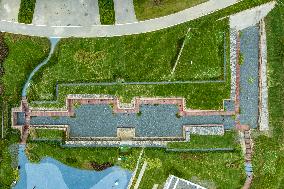
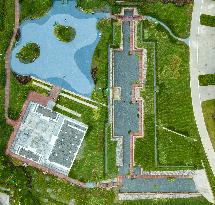
(230720) -- CHENGDU, July 20, 2023 (Xinhua) -- This aerial photo taken on July 20, 2023 shows a canal ruins of the Ming Dynasty (1368-1644) in an outdoor historical relics park in Chengdu, capital of southwest China's Sichuan Province. An outdoor historical relics park opened a new area to public on Thursday in Chengdu. The relics park is located in the core area of the old city of Chengdu. Since 2013, archaeologists have discovered a large area of ancient city remains from Donghuamen Street to Chengdu Sports Center in Qingyang District of Chengdu, with an excavated area of about 49,000 square meters, mainly including relics of Warring States Period (475-221 BC), Qin (221-207 BC) and Han (202 BC-220 AD) dynasties, Sui and Tang Dynasties (581-907), Song Dynasty (960-1279) and Ming Dynasty (1368-1644). (Xinhua/Shen Bohan)

  •  
CHINA-SICHUAN-CHENGDU-HISTORICAL RELICS PARK (CN)

CHINA-SICHUAN-CHENGDU-HISTORICAL RELICS PARK (CN)

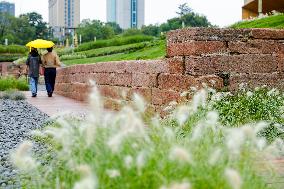
(230720) -- CHENGDU, July 20, 2023 (Xinhua) -- People visit a canal ruins of the Ming Dynasty (1368-1644) in an outdoor historical relics park in Chengdu, capital of southwest China's Sichuan Province, July 20, 2023. An outdoor historical relics park opened a new area to public on Thursday in Chengdu. The relics park is located in the core area of the old city of Chengdu. Since 2013, archaeologists have discovered a large area of ancient city remains from Donghuamen Street to Chengdu Sports Center in Qingyang District of Chengdu, with an excavated area of about 49,000 square meters, mainly including relics of Warring States Period (475-221 BC), Qin (221-207 BC) and Han (202 BC-220 AD) dynasties, Sui and Tang Dynasties (581-907), Song Dynasty (960-1279) and Ming Dynasty (1368-1644). (Xinhua/Shen Bohan)

  •  
CHINA-SICHUAN-CHENGDU-HISTORICAL RELICS PARK (CN)

CHINA-SICHUAN-CHENGDU-HISTORICAL RELICS PARK (CN)

(230720) -- CHENGDU, July 20, 2023 (Xinhua) -- This aerial photo taken on July 20, 2023 shows a simulated yard relic of the Tang Dynasty (618-907) in an outdoor historical relics park in Chengdu, capital of southwest China's Sichuan Province. An outdoor historical relics park opened a new area to public on Thursday in Chengdu. The relics park is located in the core area of the old city of Chengdu. Since 2013, archaeologists have discovered a large area of ancient city remains from Donghuamen Street to Chengdu Sports Center in Qingyang District of Chengdu, with an excavated area of about 49,000 square meters, mainly including relics of Warring States Period (475-221 BC), Qin (221-207 BC) and Han (202 BC-220 AD) dynasties, Sui and Tang Dynasties (581-907), Song Dynasty (960-1279) and Ming Dynasty (1368-1644). (Xinhua/Shen Bohan)

  •  
CHINA-SICHUAN-CHENGDU-HISTORICAL RELICS PARK (CN)

CHINA-SICHUAN-CHENGDU-HISTORICAL RELICS PARK (CN)

(230720) -- CHENGDU, July 20, 2023 (Xinhua) -- This aerial photo taken on July 20, 2023 shows an outdoor historical relics park in Chengdu, capital of southwest China's Sichuan Province. An outdoor historical relics park opened a new area to public on Thursday in Chengdu. The relics park is located in the core area of the old city of Chengdu. Since 2013, archaeologists have discovered a large area of ancient city remains from Donghuamen Street to Chengdu Sports Center in Qingyang District of Chengdu, with an excavated area of about 49,000 square meters, mainly including relics of Warring States Period (475-221 BC), Qin (221-207 BC) and Han (202 BC-220 AD) dynasties, Sui and Tang Dynasties (581-907), Song Dynasty (960-1279) and Ming Dynasty (1368-1644). (Xinhua/Shen Bohan)

  •  
CHINA-SICHUAN-CHENGDU-HISTORICAL RELICS PARK (CN)

CHINA-SICHUAN-CHENGDU-HISTORICAL RELICS PARK (CN)

(230720) -- CHENGDU, July 20, 2023 (Xinhua) -- People visit a canal ruins of the Ming Dynasty (1368-1644) in an outdoor historical relics park in Chengdu, capital of southwest China's Sichuan Province, July 20, 2023. An outdoor historical relics park opened a new area to public on Thursday in Chengdu. The relics park is located in the core area of the old city of Chengdu. Since 2013, archaeologists have discovered a large area of ancient city remains from Donghuamen Street to Chengdu Sports Center in Qingyang District of Chengdu, with an excavated area of about 49,000 square meters, mainly including relics of Warring States Period (475-221 BC), Qin (221-207 BC) and Han (202 BC-220 AD) dynasties, Sui and Tang Dynasties (581-907), Song Dynasty (960-1279) and Ming Dynasty (1368-1644). (Xinhua/Shen Bohan)

  •  
CHINA-SICHUAN-CHENGDU-HISTORICAL RELICS PARK (CN)

CHINA-SICHUAN-CHENGDU-HISTORICAL RELICS PARK (CN)

(230720) -- CHENGDU, July 20, 2023 (Xinhua) -- People visit a simulated yard relic of the Tang Dynasty (618-907) in an outdoor historical relics park in Chengdu, capital of southwest China's Sichuan Province, July 20, 2023. An outdoor historical relics park opened a new area to public on Thursday in Chengdu. The relics park is located in the core area of the old city of Chengdu. Since 2013, archaeologists have discovered a large area of ancient city remains from Donghuamen Street to Chengdu Sports Center in Qingyang District of Chengdu, with an excavated area of about 49,000 square meters, mainly including relics of Warring States Period (475-221 BC), Qin (221-207 BC) and Han (202 BC-220 AD) dynasties, Sui and Tang Dynasties (581-907), Song Dynasty (960-1279) and Ming Dynasty (1368-1644). (Xinhua/Shen Bohan)

  •  
CHINA-SICHUAN-CHENGDU-HISTORICAL RELICS PARK (CN)

CHINA-SICHUAN-CHENGDU-HISTORICAL RELICS PARK (CN)

(230720) -- CHENGDU, July 20, 2023 (Xinhua) -- This aerial photo taken on July 20, 2023 shows a canal ruins of the Ming Dynasty (1368-1644) (R) and simulated relics of the Sui and Tang Dynasties (581-907) (L) in an outdoor historical relics park in Chengdu, capital of southwest China's Sichuan Province. An outdoor historical relics park opened a new area to public on Thursday in Chengdu. The relics park is located in the core area of the old city of Chengdu. Since 2013, archaeologists have discovered a large area of ancient city remains from Donghuamen Street to Chengdu Sports Center in Qingyang District of Chengdu, with an excavated area of about 49,000 square meters, mainly including relics of Warring States Period (475-221 BC), Qin (221-207 BC) and Han (202 BC-220 AD) dynasties, Sui and Tang Dynasties (581-907), Song Dynasty (960-1279) and Ming Dynasty (1368-1644). (Xinhua/Shen Bohan)

  •  
CHINA-SICHUAN-CHENGDU-HISTORICAL RELICS PARK (CN)

CHINA-SICHUAN-CHENGDU-HISTORICAL RELICS PARK (CN)

(230720) -- CHENGDU, July 20, 2023 (Xinhua) -- People visit a canal ruins of the Ming Dynasty (1368-1644) in an outdoor historical relics park in Chengdu, capital of southwest China's Sichuan Province, July 20, 2023. An outdoor historical relics park opened a new area to public on Thursday in Chengdu. The relics park is located in the core area of the old city of Chengdu. Since 2013, archaeologists have discovered a large area of ancient city remains from Donghuamen Street to Chengdu Sports Center in Qingyang District of Chengdu, with an excavated area of about 49,000 square meters, mainly including relics of Warring States Period (475-221 BC), Qin (221-207 BC) and Han (202 BC-220 AD) dynasties, Sui and Tang Dynasties (581-907), Song Dynasty (960-1279) and Ming Dynasty (1368-1644). (Xinhua/Shen Bohan)

  •  
CHINA-SICHUAN-CHENGDU-HISTORICAL RELICS PARK (CN)

CHINA-SICHUAN-CHENGDU-HISTORICAL RELICS PARK (CN)

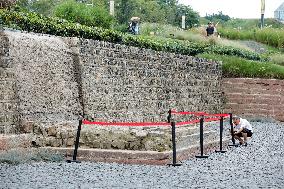
(230720) -- CHENGDU, July 20, 2023 (Xinhua) -- A visitor takes photos of a canal ruins of the Ming Dynasty (1368-1644) in an outdoor historical relics park in Chengdu, capital of southwest China's Sichuan Province, July 20, 2023. An outdoor historical relics park opened a new area to public on Thursday in Chengdu. The relics park is located in the core area of the old city of Chengdu. Since 2013, archaeologists have discovered a large area of ancient city remains from Donghuamen Street to Chengdu Sports Center in Qingyang District of Chengdu, with an excavated area of about 49,000 square meters, mainly including relics of Warring States Period (475-221 BC), Qin (221-207 BC) and Han (202 BC-220 AD) dynasties, Sui and Tang Dynasties (581-907), Song Dynasty (960-1279) and Ming Dynasty (1368-1644). (Xinhua/Shen Bohan)

  •  
CHINA-SICHUAN-CHENGDU-HISTORICAL RELICS PARK (CN)

CHINA-SICHUAN-CHENGDU-HISTORICAL RELICS PARK (CN)

(230720) -- CHENGDU, July 20, 2023 (Xinhua) -- This aerial photo taken on July 20, 2023 shows an outdoor historical relics park in Chengdu, capital of southwest China's Sichuan Province. An outdoor historical relics park opened a new area to public on Thursday in Chengdu. The relics park is located in the core area of the old city of Chengdu. Since 2013, archaeologists have discovered a large area of ancient city remains from Donghuamen Street to Chengdu Sports Center in Qingyang District of Chengdu, with an excavated area of about 49,000 square meters, mainly including relics of Warring States Period (475-221 BC), Qin (221-207 BC) and Han (202 BC-220 AD) dynasties, Sui and Tang Dynasties (581-907), Song Dynasty (960-1279) and Ming Dynasty (1368-1644). (Xinhua/Shen Bohan)

  •  
China tours celebrate Prince Shotoku's dispatch of Ono no Imoko

China tours celebrate Prince Shotoku's dispatch of Ono no Imoko

TOKYO, Japan - Virginia Fumiyo Anami, wife of former Japanese Ambassador to China Koreshige Anami, is arranging tours to China to commemorate the 1,400th anniversary of Prince Shotoku's dispatch of Ono no Imoko as an official Japanese diplomatic delegate to China during the Sui dynasty.

  •  
(3)Main building of Soga no Umako's residence found in Nara Pref.

(3)Main building of Soga no Umako's residence found in Nara Pref.

KASHIHARA, Japan - An aerial photo taken March 11 shows the ruins of a large building believed to be the residence of Soga no Umako, a major political figure in sixth-seventh century Japan. Umako initiated diplomatic relations with China's Sui dynasty (581-618), dispatching envoys to China and promoted Buddhism.

  •  

How ancient Chinese store grains in large granaries over 1,400 years ago

STORY: How ancient Chinese store grains in large granaries over 1,400 years ago DATELINE: July 29, 2022 LENGTH: 00:01:22 LOCATION: HENAN, China CATEGORY: ECONOMY SHOTLIST: 1. various of the Liyang Granary 2. SOUNDBITE (Chinese): DONG YUJIE, Guide of Liyang Granary site STORYLINE: How do ancient Chinese people store grains? Archaeological findings at this site in Xunxian County in Henan Province may offer a glimpse of the grain storage methods 1,400 years ago. Liyang Granary was built from the year 583 in China's Sui Dynasty. It was used as state granary for 600 years. Since 2011, 152 pits have been discovered in the area. The grain storage capacity was estimated at more than 15,000 tonnes, which can feed 80,000 people for a year. The site was added to the UNESCO's World Heritage List in 2014. SOUNDBITE (Chinese): DONG YUJIE, Guide of Liyang Granary site "The biggest granary relic discovered here is up to 13 meters in diameter and 8 meters in depth. It's shaped like a bowl. (In ancient times,) the w

  •  
EGYPT-LUXOR-VALLEY OF THE KINGS-RAMESSES VI-TOMB

EGYPT-LUXOR-VALLEY OF THE KINGS-RAMESSES VI-TOMB

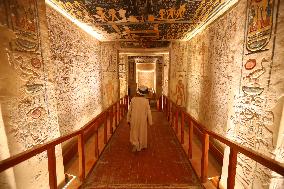
(220427) -- LUXOR (EGYPT), April 27, 2022 (Xinhua) -- An employee patrols inside the tomb of Ramesses VI in the Valley of the Kings in Luxor, Egypt, on April 26, 2022. The tomb of Ramesses VI, a ruler of the 20th Dynasty in ancient Egypt, is one of the most beautiful and well-preserved tombs in the Valley of the Kings. (Xinhua/Sui Xiankai)

  •  
EGYPT-LUXOR-VALLEY OF THE KINGS-RAMESSES VI-TOMB

EGYPT-LUXOR-VALLEY OF THE KINGS-RAMESSES VI-TOMB

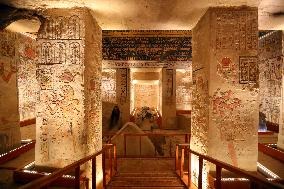
(220427) -- LUXOR (EGYPT), April 27, 2022 (Xinhua) -- People visit the tomb of Ramesses VI in the Valley of the Kings in Luxor, Egypt, on April 26, 2022. The tomb of Ramesses VI, a ruler of the 20th Dynasty in ancient Egypt, is one of the most beautiful and well-preserved tombs in the Valley of the Kings. (Xinhua/Sui Xiankai)

  •  
EGYPT-LUXOR-VALLEY OF THE KINGS-RAMESSES VI-TOMB

EGYPT-LUXOR-VALLEY OF THE KINGS-RAMESSES VI-TOMB

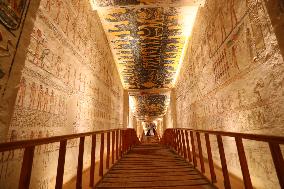
(220427) -- LUXOR (EGYPT), April 27, 2022 (Xinhua) -- Photo taken on April 26, 2022 shows colorful reliefs and murals inside the tomb of Ramesses VI in the Valley of the Kings in Luxor, Egypt. The tomb of Ramesses VI, a ruler of the 20th Dynasty in ancient Egypt, is one of the most beautiful and well-preserved tombs in the Valley of the Kings. (Xinhua/Sui Xiankai)

  •  
EGYPT-LUXOR-VALLEY OF THE KINGS-RAMESSES VI-TOMB

EGYPT-LUXOR-VALLEY OF THE KINGS-RAMESSES VI-TOMB

(220427) -- LUXOR (EGYPT), April 27, 2022 (Xinhua) -- People visit the tomb of Ramesses VI in the Valley of the Kings in Luxor, Egypt, on April 26, 2022. The tomb of Ramesses VI, a ruler of the 20th Dynasty in ancient Egypt, is one of the most beautiful and well-preserved tombs in the Valley of the Kings. (Xinhua/Sui Xiankai)

  • Main
  • Top
  • Editorial
  • Creative
  • About Us
  • About ILG
  • Terms of use
  • Company
  • BEHIND
  • Price List
  • Single Plan
  • Monthly Plan
  • Services
  • Shooting
  • Rights Clearance
  • Support
  • FAQ
  • How To Buy
  • Contact Us
  • Become a Partner

© KYODO NEWS IMAGES INC

All Rights Reserved.

  • Editorial
  • Olympics
  • News
  • Sports
  • Japan
  • Tech
  • Royal
  • Disaster
  • NorthKorea
  • Old Japan
  • SNS
  • Creative
  • Food
  • Japan
  • Landscape
  • Animal
  • Popular
  • #Ukraine
  • #Russia
  • #coronavirus
  • #N. Korea
  • #Thailand
  • #China
  • #Ukraine
  • #Russia
  • #coronavirus
  • #N. Korea
  • #Thailand
  • #China
  • Food
  • Japan
  • Landscape
  • Animal
  • Olympics
  • News
  • Sports
  • Japan
  • Tech
  • Royal
  • Disaster
  • NorthKorea
  • Old Japan
  • SNS