•  

Japan: Blizzard Conditions Reduce Visibility in Sapporo Area 7

Heavy snowfall hit Sapporo and surrounding cities on Tuesday, January 13, significantly reducing visibility. Snow intensified in the afternoon, with 13 centimeters accumulating between noon and 6 p.m., according to local authorities. As of 6 p.m., blizzard conditions forced the closure of multiple expressways across a wide area. The severe weather also disrupted air travel, with 99 flights canceled at New Chitose Airport, along with numerous delays.

  •  

Japan: Blizzard Conditions Reduce Visibility in Sapporo Area 6

Heavy snowfall hit Sapporo and surrounding cities on Tuesday, January 13, significantly reducing visibility. Snow intensified in the afternoon, with 13 centimeters accumulating between noon and 6 p.m., according to local authorities. As of 6 p.m., blizzard conditions forced the closure of multiple expressways across a wide area. The severe weather also disrupted air travel, with 99 flights canceled at New Chitose Airport, along with numerous delays.

  •  

Japan: Blizzard Conditions Reduce Visibility in Sapporo Area 5

Heavy snowfall hit Sapporo and surrounding cities on Tuesday, January 13, significantly reducing visibility. Snow intensified in the afternoon, with 13 centimeters accumulating between noon and 6 p.m., according to local authorities. As of 6 p.m., blizzard conditions forced the closure of multiple expressways across a wide area. The severe weather also disrupted air travel, with 99 flights canceled at New Chitose Airport, along with numerous delays.

  •  

Japan: Blizzard Conditions Reduce Visibility in Sapporo Area 4

Heavy snowfall hit Sapporo and surrounding cities on Tuesday, January 13, significantly reducing visibility. Snow intensified in the afternoon, with 13 centimeters accumulating between noon and 6 p.m., according to local authorities. As of 6 p.m., blizzard conditions forced the closure of multiple expressways across a wide area. The severe weather also disrupted air travel, with 99 flights canceled at New Chitose Airport, along with numerous delays.

  •  
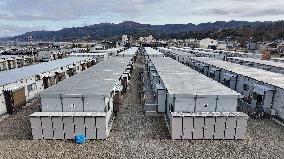
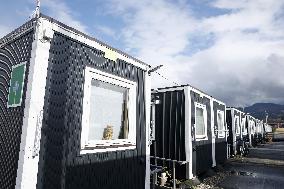
Temporary housing for Noto Peninsula quake victims

Temporary housing for Noto Peninsula quake victims

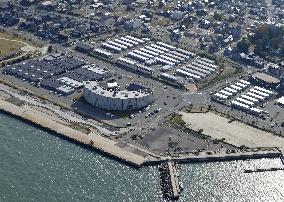
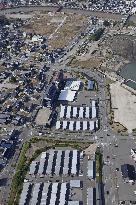
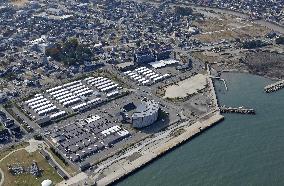
Photo taken from a Kyodo News helicopter shows temporary housing in Wajima in the central Japan prefecture of Ishikawa, on Nov. 7, 2025, for people affected by the massive Jan. 1, 2024, earthquake that struck the Noto Peninsula and surrounding areas.

  •  
Temporary housing for Noto Peninsula quake victims

Temporary housing for Noto Peninsula quake victims

Photo taken from a Kyodo News helicopter shows temporary housing in Wajima in the central Japan prefecture of Ishikawa, on Nov. 7, 2025, for people affected by the massive Jan. 1, 2024, earthquake that struck the Noto Peninsula and surrounding areas.

  •  
Temporary housing for Noto Peninsula quake victims

Temporary housing for Noto Peninsula quake victims

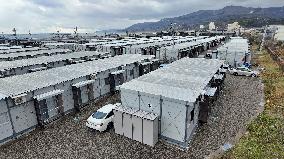
Photo taken from a Kyodo News helicopter shows temporary housing built in Wajima in the central Japan prefecture of Ishikawa, on Nov. 7, 2025, for people affected by the massive Jan. 1, 2024, earthquake that struck the Noto Peninsula and surrounding areas.

  •  
Temporary housing for Noto Peninsula quake victims

Temporary housing for Noto Peninsula quake victims

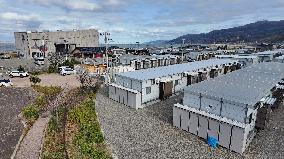
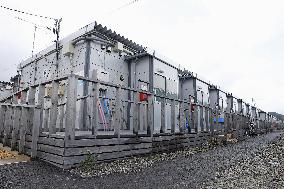
Photo taken on Dec. 13, 2025, shows temporary housing in Wajima in the central Japan prefecture of Ishikawa for people affected by the massive Jan. 1, 2024, earthquake that struck the Noto Peninsula and surrounding areas.

  •  
Temporary housing for Noto Peninsula quake victims

Temporary housing for Noto Peninsula quake victims

Photo taken on Dec. 13, 2025, shows temporary housing in Wajima in the central Japan prefecture of Ishikawa for people affected by the massive Jan. 1, 2024, earthquake that struck the Noto Peninsula and surrounding areas.

  •  
Temporary housing for Noto Peninsula quake victims

Temporary housing for Noto Peninsula quake victims

Photo taken on Dec. 12, 2025, shows temporary housing in Wajima in the central Japan prefecture of Ishikawa for people affected by the massive Jan. 1, 2024, earthquake that struck the Noto Peninsula and surrounding areas.

  •  
Temporary housing for Noto Peninsula quake victims

Temporary housing for Noto Peninsula quake victims

Photo taken on Dec. 12, 2025, shows temporary housing in Wajima in the central Japan prefecture of Ishikawa for people affected by the massive Jan. 1, 2024, earthquake that struck the Noto Peninsula and surrounding areas.

  •  
Temporary housing for Noto Peninsula quake victims

Temporary housing for Noto Peninsula quake victims

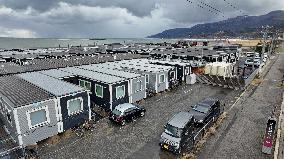
Photo shows temporary housing in Wajima, Ishikawa Prefecture, on Dec. 12, 2025, for people affected by the massive Jan. 1, 2024, earthquake that struck the Noto Peninsula and surrounding areas.

  •  
Temporary housing for Noto Peninsula quake victims

Temporary housing for Noto Peninsula quake victims

Photo shows temporary housing in Wajima, Ishikawa Prefecture, on Dec. 12, 2025, for people affected by the massive Jan. 1, 2024, earthquake that struck the Noto Peninsula and surrounding areas.

  •  

Japan: Blizzard Conditions Reduce Visibility in Sapporo Area 3

Heavy snowfall hit Sapporo and surrounding cities on Tuesday, January 13, significantly reducing visibility. Snow intensified in the afternoon, with 13 centimeters accumulating between noon and 6 p.m., according to local authorities. As of 6 p.m., blizzard conditions forced the closure of multiple expressways across a wide area. The severe weather also disrupted air travel, with 99 flights canceled at New Chitose Airport, along with numerous delays.

  •  

Japan: Blizzard Conditions Reduce Visibility in Sapporo Area 2

Heavy snowfall hit Sapporo and surrounding cities on Tuesday, January 13, significantly reducing visibility. Snow intensified in the afternoon, with 13 centimeters accumulating between noon and 6 p.m., according to local authorities. As of 6 p.m., blizzard conditions forced the closure of multiple expressways across a wide area. The severe weather also disrupted air travel, with 99 flights canceled at New Chitose Airport, along with numerous delays.

  •  
Gas Explosion At Wedding House - Islamabad

Gas Explosion At Wedding House - Islamabad

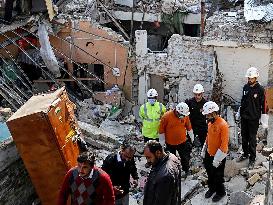
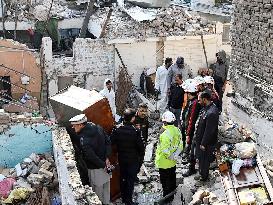
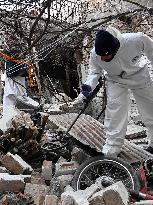
Security personnel examine the site of a gas explosion in Islamabad, capital of Pakistan, on Jan. 11, 2026. The death toll from a gas explosion at a wedding house in Pakistan's federal capital, Islamabad, has risen to eight, including a newlywed couple, while 11 others were injured, local authorities said on Sunday. Rescue officials said at least four houses in the surrounding area were affected by the blast. Authorities said the exact cause of the explosion will be determined following a detailed investigation. Photo by Str/Xinhua/ABACAPRESS.COM

  •  
Gas Explosion At Wedding House - Islamabad

Gas Explosion At Wedding House - Islamabad

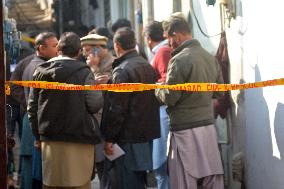
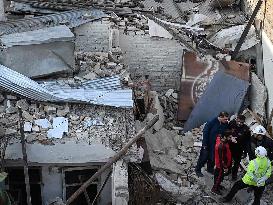
Locals gather near the site of a gas explosion in Islamabad, capital of Pakistan on Jan. 11, 2026. The death toll from a gas explosion at a wedding house in Pakistan's federal capital, Islamabad, has risen to eight, including a newlywed couple, while 11 others were injured, local authorities said on Sunday. Rescue officials said at least four houses in the surrounding area were affected by the blast. Authorities said the exact cause of the explosion will be determined following a detailed investigation. Photo by Str/Xinhua/ABACAPRESS.COM

  •  
Gas Explosion At Wedding House - Islamabad

Gas Explosion At Wedding House - Islamabad

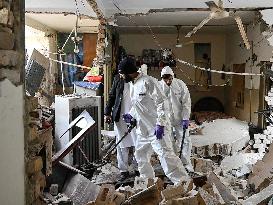
Security personnel examine the site of a gas explosion in Islamabad, capital of Pakistan on Jan. 11, 2026. The death toll from a gas explosion at a wedding house in Pakistan's federal capital, Islamabad, has risen to eight, including a newlywed couple, while 11 others were injured, local authorities said on Sunday. Rescue officials said at least four houses in the surrounding area were affected by the blast. Authorities said the exact cause of the explosion will be determined following a detailed investigation. Photo by Str/Xinhua/ABACAPRESS.COM

  •  
Gas Explosion At Wedding House - Islamabad

Gas Explosion At Wedding House - Islamabad

A security staff member examines the site of a gas explosion in Islamabad, capital of Pakistan on Jan. 11, 2026. The death toll from a gas explosion at a wedding house in Pakistan's federal capital, Islamabad, has risen to eight, including a newlywed couple, while 11 others were injured, local authorities said on Sunday. Rescue officials said at least four houses in the surrounding area were affected by the blast. Authorities said the exact cause of the explosion will be determined following a detailed investigation. Photo by Str/Xinhua/ABACAPRESS.COM

  •  
Gas Explosion At Wedding House - Islamabad

Gas Explosion At Wedding House - Islamabad

Security personnel examine the site of a gas explosion in Islamabad, capital of Pakistan on Jan. 11, 2026. The death toll from a gas explosion at a wedding house in Pakistan's federal capital, Islamabad, has risen to eight, including a newlywed couple, while 11 others were injured, local authorities said on Sunday. Rescue officials said at least four houses in the surrounding area were affected by the blast. Authorities said the exact cause of the explosion will be determined following a detailed investigation. Photo by Str/Xinhua/ABACAPRESS.COM

  •  
Gas Explosion At Wedding House - Islamabad

Gas Explosion At Wedding House - Islamabad

Security personnel examine the site of a gas explosion in Islamabad, capital of Pakistan on Jan. 11, 2026. The death toll from a gas explosion at a wedding house in Pakistan's federal capital, Islamabad, has risen to eight, including a newlywed couple, while 11 others were injured, local authorities said on Sunday. Rescue officials said at least four houses in the surrounding area were affected by the blast. Authorities said the exact cause of the explosion will be determined following a detailed investigation. Photo by Str/Xinhua/ABACAPRESS.COM

  •  
Lake Urmia Environmental Disaster - Iran

Lake Urmia Environmental Disaster - Iran

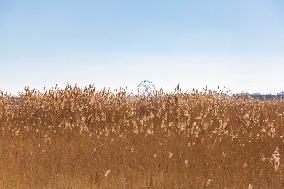
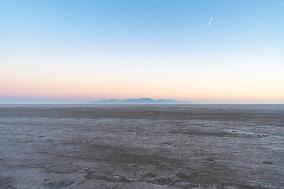
A view shows dry reeds on the dry bed of Lake Urmia in northwestern Iran on December 20, 2025. Lake Urmia, once the largest lake in the Middle East, has dramatically shrunk due to prolonged drought, the damming of rivers feeding the lake, and extensive groundwater extraction in the surrounding area. Although increased rainfall and water diversion briefly helped restore water levels in 2019, renewed drought and administrative mismanagement in the early 2020s reversed the trend, and satellite imagery shows the lake has almost entirely dried up by September 2025. Photo by Morteza Aminoroayayi/Middle East Images/ABACAPRESS.COM

  •  
Lake Urmia Environmental Disaster - Iran

Lake Urmia Environmental Disaster - Iran

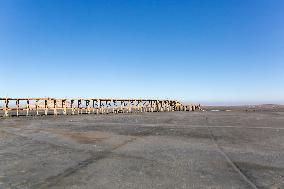
A view shows a wooden pier on the dry bed of Lake Urmia in northwestern Iran on December 20, 2025. Lake Urmia, once the largest lake in the Middle East, has dramatically shrunk due to prolonged drought, the damming of rivers feeding the lake, and extensive groundwater extraction in the surrounding area. Although increased rainfall and water diversion briefly helped restore water levels in 2019, renewed drought and administrative mismanagement in the early 2020s reversed the trend, and satellite imagery shows the lake has almost entirely dried up by September 2025. Photo by Morteza Aminoroayayi/Middle East Images/ABACAPRESS.COM

  •  
Lake Urmia Environmental Disaster - Iran

Lake Urmia Environmental Disaster - Iran

A view shows a wooden pier on the dry bed of Lake Urmia in northwestern Iran on December 20, 2025. Lake Urmia, once the largest lake in the Middle East, has dramatically shrunk due to prolonged drought, the damming of rivers feeding the lake, and extensive groundwater extraction in the surrounding area. Although increased rainfall and water diversion briefly helped restore water levels in 2019, renewed drought and administrative mismanagement in the early 2020s reversed the trend, and satellite imagery shows the lake has almost entirely dried up by September 2025. Photo by Morteza Aminoroayayi/Middle East Images/ABACAPRESS.COM

  •  
Lake Urmia Environmental Disaster - Iran

Lake Urmia Environmental Disaster - Iran

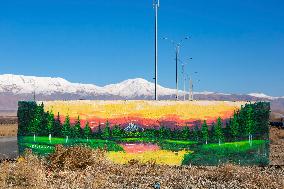
A view shows a mural depicting a landscape painted on a concrete wall near Sharafkhaneh port at Lake Urmia in northwestern Iran on December 19, 2025. Lake Urmia, once the largest lake in the Middle East, has dramatically shrunk due to prolonged drought, the damming of rivers feeding the lake, and extensive groundwater extraction in the surrounding area. Although increased rainfall and water diversion briefly helped restore water levels in 2019, renewed drought and administrative mismanagement in the early 2020s reversed the trend, and satellite imagery shows the lake has almost entirely dried up by September 2025. Photo by Morteza Aminoroayayi/Middle East Images/ABACAPRESS.COM

  •  
Lake Urmia Environmental Disaster - Iran

Lake Urmia Environmental Disaster - Iran

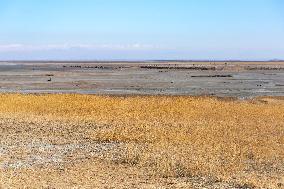
A view shows dry grass and the dry bed of Lake Urmia in northwestern Iran on December 20, 2025. Lake Urmia, once the largest lake in the Middle East, has dramatically shrunk due to prolonged drought, the damming of rivers feeding the lake, and extensive groundwater extraction in the surrounding area. Although increased rainfall and water diversion briefly helped restore water levels in 2019, renewed drought and administrative mismanagement in the early 2020s reversed the trend, and satellite imagery shows the lake has almost entirely dried up by September 2025. Photo by Morteza Aminoroayayi/Middle East Images/ABACAPRESS.COM

  •  
Lake Urmia Environmental Disaster - Iran

Lake Urmia Environmental Disaster - Iran

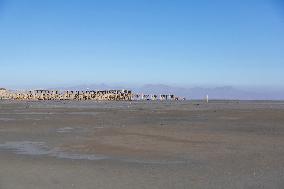
A view shows the dry bed of Lake Urmia in northwestern Iran on December 19, 2025. Lake Urmia, once the largest lake in the Middle East, has dramatically shrunk due to prolonged drought, the damming of rivers feeding the lake, and extensive groundwater extraction in the surrounding area. Although increased rainfall and water diversion briefly helped restore water levels in 2019, renewed drought and administrative mismanagement in the early 2020s reversed the trend, and satellite imagery shows the lake has almost entirely dried up by September 2025. Photo by Morteza Aminoroayayi/Middle East Images/ABACAPRESS.COM

  •  
Lake Urmia Environmental Disaster - Iran

Lake Urmia Environmental Disaster - Iran

A view shows a rusty sign next to a wooden pier on the dry bed of Lake Urmia in northwestern Iran on December 20, 2025. Lake Urmia, once the largest lake in the Middle East, has dramatically shrunk due to prolonged drought, the damming of rivers feeding the lake, and extensive groundwater extraction in the surrounding area. Although increased rainfall and water diversion briefly helped restore water levels in 2019, renewed drought and administrative mismanagement in the early 2020s reversed the trend, and satellite imagery shows the lake has almost entirely dried up by September 2025. Photo by Morteza Aminoroayayi/Middle East Images/ABACAPRESS.COM

  •  
Lake Urmia Environmental Disaster - Iran

Lake Urmia Environmental Disaster - Iran

A view shows a shallow stream near a rocky cliff on the bed of Lake Urmia in northwestern Iran on December 19, 2025. Lake Urmia, once the largest lake in the Middle East, has dramatically shrunk due to prolonged drought, the damming of rivers feeding the lake, and extensive groundwater extraction in the surrounding area. Although increased rainfall and water diversion briefly helped restore water levels in 2019, renewed drought and administrative mismanagement in the early 2020s reversed the trend, and satellite imagery shows the lake has almost entirely dried up by September 2025. Photo by Morteza Aminoroayayi/Middle East Images/ABACAPRESS.COM

  •  
Lake Urmia Environmental Disaster - Iran

Lake Urmia Environmental Disaster - Iran

A view shows a wooden pier on the dry bed of Lake Urmia in northwestern Iran on December 20, 2025. Lake Urmia, once the largest lake in the Middle East, has dramatically shrunk due to prolonged drought, the damming of rivers feeding the lake, and extensive groundwater extraction in the surrounding area. Although increased rainfall and water diversion briefly helped restore water levels in 2019, renewed drought and administrative mismanagement in the early 2020s reversed the trend, and satellite imagery shows the lake has almost entirely dried up by September 2025. Photo by Morteza Aminoroayayi/Middle East Images/ABACAPRESS.COM

  •  
Lake Urmia Environmental Disaster - Iran

Lake Urmia Environmental Disaster - Iran

A view shows tire tracks running alongside a shallow stream on the bed of Lake Urmia in northwestern Iran on December 19, 2025. Lake Urmia, once the largest lake in the Middle East, has dramatically shrunk due to prolonged drought, the damming of rivers feeding the lake, and extensive groundwater extraction in the surrounding area. Although increased rainfall and water diversion briefly helped restore water levels in 2019, renewed drought and administrative mismanagement in the early 2020s reversed the trend, and satellite imagery shows the lake has almost entirely dried up by September 2025. Photo by Morteza Aminoroayayi/Middle East Images/ABACAPRESS.COM

  •  
Lake Urmia Environmental Disaster - Iran

Lake Urmia Environmental Disaster - Iran

Salt formations cover the cracked surface of the dried bed of Lake Urmia in northwestern Iran on December 19, 2025. Lake Urmia, once the largest lake in the Middle East, has dramatically shrunk due to prolonged drought, the damming of rivers feeding the lake and extensive groundwater extraction in the surrounding area. Although increased rainfall and water diversion briefly helped restore water levels in 2019, renewed drought and administrative mismanagement in the early 2020s reversed the trend, and satellite imagery shows the lake has almost entirely dried up by September 2025. Photo by Morteza Aminoroayayi/Middle East Images/ABACAPRESS.COM

  •  
Lake Urmia Environmental Disaster - Iran

Lake Urmia Environmental Disaster - Iran

A discarded tire sits near dry reeds on the dry bed of Lake Urmia in northwestern Iran on December 20, 2025. Lake Urmia, once the largest lake in the Middle East, has dramatically shrunk due to prolonged drought, the damming of rivers feeding the lake, and extensive groundwater extraction in the surrounding area. Although increased rainfall and water diversion briefly helped restore water levels in 2019, renewed drought and administrative mismanagement in the early 2020s reversed the trend, and satellite imagery shows the lake has almost entirely dried up by September 2025. Photo by Morteza Aminoroayayi/Middle East Images/ABACAPRESS.COM

  •  
Lake Urmia Environmental Disaster - Iran

Lake Urmia Environmental Disaster - Iran

Remnants of a boat sit on the dry bed of Lake Urmia in northwestern Iran on December 19, 2025. Lake Urmia, once the largest lake in the Middle East, has dramatically shrunk due to prolonged drought, the damming of rivers feeding the lake, and extensive groundwater extraction in the surrounding area. Although increased rainfall and water diversion briefly helped restore water levels in 2019, renewed drought and administrative mismanagement in the early 2020s reversed the trend, and satellite imagery shows the lake has almost entirely dried up by September 2025. Photo by Morteza Aminoroayayi/Middle East Images/ABACAPRESS.COM

  •  
Lake Urmia Environmental Disaster - Iran

Lake Urmia Environmental Disaster - Iran

A shepherd guides a flock of sheep on the dry bed of Lake Urmia in northwestern Iran on December 20, 2025. Lake Urmia, once the largest lake in the Middle East, has dramatically shrunk due to prolonged drought, the damming of rivers feeding the lake, and extensive groundwater extraction in the surrounding area. Although increased rainfall and water diversion briefly helped restore water levels in 2019, renewed drought and administrative mismanagement in the early 2020s reversed the trend, and satellite imagery shows the lake has almost entirely dried up by September 2025. Photo by Morteza Aminoroayayi/Middle East Images/ABACAPRESS.COM

  •  
Lake Urmia Environmental Disaster - Iran

Lake Urmia Environmental Disaster - Iran

A car drives near a rocky cliff on the dry bed of Lake Urmia in northwestern Iran on December 19, 2025. Lake Urmia, once the largest lake in the Middle East, has dramatically shrunk due to prolonged drought, the damming of rivers feeding the lake, and extensive groundwater extraction in the surrounding area. Although increased rainfall and water diversion briefly helped restore water levels in 2019, renewed drought and administrative mismanagement in the early 2020s reversed the trend, and satellite imagery shows the lake has almost entirely dried up by September 2025. Photo by Morteza Aminoroayayi/Middle East Images/ABACAPRESS.COM

  •  
Lake Urmia Environmental Disaster - Iran

Lake Urmia Environmental Disaster - Iran

A rusty boat sits next to a road near Lake Urmia in northwestern Iran on December 20, 2025. Lake Urmia, once the largest lake in the Middle East, has dramatically shrunk due to prolonged drought, the damming of rivers feeding the lake, and extensive groundwater extraction in the surrounding area. Although increased rainfall and water diversion briefly helped restore water levels in 2019, renewed drought and administrative mismanagement in the early 2020s reversed the trend, and satellite imagery shows the lake has almost entirely dried up by September 2025. Photo by Morteza Aminoroayayi/Middle East Images/ABACAPRESS.COM

  •  
Lake Urmia Environmental Disaster - Iran

Lake Urmia Environmental Disaster - Iran

A view shows a wooden pier on the dry bed of Lake Urmia in northwestern Iran on December 19, 2025. Lake Urmia, once the largest lake in the Middle East, has dramatically shrunk due to prolonged drought, the damming of rivers feeding the lake, and extensive groundwater extraction in the surrounding area. Although increased rainfall and water diversion briefly helped restore water levels in 2019, renewed drought and administrative mismanagement in the early 2020s reversed the trend, and satellite imagery shows the lake has almost entirely dried up by September 2025. Photo by Morteza Aminoroayayi/Middle East Images/ABACAPRESS.COM

  •  
Lake Urmia Environmental Disaster - Iran

Lake Urmia Environmental Disaster - Iran

A man and two children stand near a car and a rocky cliff on the dry bed of Lake Urmia in northwestern Iran on December 19, 2025. Lake Urmia, once the largest lake in the Middle East, has dramatically shrunk due to prolonged drought, the damming of rivers feeding the lake, and extensive groundwater extraction in the surrounding area. Although increased rainfall and water diversion briefly helped restore water levels in 2019, renewed drought and administrative mismanagement in the early 2020s reversed the trend, and satellite imagery shows the lake has almost entirely dried up by September 2025. Photo by Morteza Aminoroayayi/Middle East Images/ABACAPRESS.COM

  •  
Lake Urmia Environmental Disaster - Iran

Lake Urmia Environmental Disaster - Iran

A view shows rows of wooden posts protruding from the dry bed of Lake Urmia in northwestern Iran on December 20, 2025. Lake Urmia, once the largest lake in the Middle East, has dramatically shrunk due to prolonged drought, the damming of rivers feeding the lake, and extensive groundwater extraction in the surrounding area. Although increased rainfall and water diversion briefly helped restore water levels in 2019, renewed drought and administrative mismanagement in the early 2020s reversed the trend, and satellite imagery shows the lake has almost entirely dried up by September 2025. Photo by Morteza Aminoroayayi/Middle East Images/ABACAPRESS.COM

  •  
Lake Urmia Environmental Disaster - Iran

Lake Urmia Environmental Disaster - Iran

A view shows murals depicting nature scenes painted on concrete walls near Sharafkhaneh port at Lake Urmia in northwestern Iran on December 19, 2025. Lake Urmia, once the largest lake in the Middle East, has dramatically shrunk due to prolonged drought, the damming of rivers feeding the lake, and extensive groundwater extraction in the surrounding area. Although increased rainfall and water diversion briefly helped restore water levels in 2019, renewed drought and administrative mismanagement in the early 2020s reversed the trend, and satellite imagery shows the lake has almost entirely dried up by September 2025. Photo by Morteza Aminoroayayi/Middle East Images/ABACAPRESS.COM

  •  
Lake Urmia Environmental Disaster - Iran

Lake Urmia Environmental Disaster - Iran

A view shows the dry bed of Lake Urmia in northwestern Iran on December 19, 2025. Lake Urmia, once the largest lake in the Middle East, has dramatically shrunk due to prolonged drought, the damming of rivers feeding the lake, and extensive groundwater extraction in the surrounding area. Although increased rainfall and water diversion briefly helped restore water levels in 2019, renewed drought and administrative mismanagement in the early 2020s reversed the trend, and satellite imagery shows the lake has almost entirely dried up by September 2025. Photo by Morteza Aminoroayayi/Middle East Images/ABACAPRESS.COM

  •  
Lake Urmia Environmental Disaster - Iran

Lake Urmia Environmental Disaster - Iran

A view shows a wooden pier on the dry bed of Lake Urmia in northwestern Iran on December 20, 2025. Lake Urmia, once the largest lake in the Middle East, has dramatically shrunk due to prolonged drought, the damming of rivers feeding the lake, and extensive groundwater extraction in the surrounding area. Although increased rainfall and water diversion briefly helped restore water levels in 2019, renewed drought and administrative mismanagement in the early 2020s reversed the trend, and satellite imagery shows the lake has almost entirely dried up by September 2025. Photo by Morteza Aminoroayayi/Middle East Images/ABACAPRESS.COM

  •  
Lake Urmia Environmental Disaster - Iran

Lake Urmia Environmental Disaster - Iran

A view shows reflections on the surface of Lake Urmia in northwestern Iran on December 18, 2025. Lake Urmia, once the largest lake in the Middle East, has dramatically shrunk due to prolonged drought, the damming of rivers feeding the lake, and extensive groundwater extraction in the surrounding area. Although increased rainfall and water diversion briefly helped restore water levels in 2019, renewed drought and administrative mismanagement in the early 2020s reversed the trend, and satellite imagery shows the lake has almost entirely dried up by September 2025. Photo by Morteza Aminoroayayi/Middle East Images/ABACAPRESS.COM

  •  
Lake Urmia Environmental Disaster - Iran

Lake Urmia Environmental Disaster - Iran

A car drives on the dry bed of Lake Urmia in northwestern Iran on December 19, 2025. Lake Urmia, once the largest lake in the Middle East, has dramatically shrunk due to prolonged drought, the damming of rivers feeding the lake, and extensive groundwater extraction in the surrounding area. Although increased rainfall and water diversion briefly helped restore water levels in 2019, renewed drought and administrative mismanagement in the early 2020s reversed the trend, and satellite imagery shows the lake has almost entirely dried up by September 2025. Photo by Morteza Aminoroayayi/Middle East Images/ABACAPRESS.COM

  •  
Lake Urmia Environmental Disaster - Iran

Lake Urmia Environmental Disaster - Iran

A view shows a mural depicting a landscape painted on a concrete wall near Sharafkhaneh port at Lake Urmia in northwestern Iran on December 19, 2025. Lake Urmia, once the largest lake in the Middle East, has dramatically shrunk due to prolonged drought, the damming of rivers feeding the lake, and extensive groundwater extraction in the surrounding area. Although increased rainfall and water diversion briefly helped restore water levels in 2019, renewed drought and administrative mismanagement in the early 2020s reversed the trend, and satellite imagery shows the lake has almost entirely dried up by September 2025. Photo by Morteza Aminoroayayi/Middle East Images/ABACAPRESS.COM

  •  
Lake Urmia Environmental Disaster - Iran

Lake Urmia Environmental Disaster - Iran

A view shows rows of wooden posts protruding from the dry bed of Lake Urmia in northwestern Iran on December 20, 2025. Lake Urmia, once the largest lake in the Middle East, has dramatically shrunk due to prolonged drought, the damming of rivers feeding the lake, and extensive groundwater extraction in the surrounding area. Although increased rainfall and water diversion briefly helped restore water levels in 2019, renewed drought and administrative mismanagement in the early 2020s reversed the trend, and satellite imagery shows the lake has almost entirely dried up by September 2025. Photo by Morteza Aminoroayayi/Middle East Images/ABACAPRESS.COM

  •  
Lake Urmia Environmental Disaster - Iran

Lake Urmia Environmental Disaster - Iran

Salt formations cover the cracked surface of the dried bed of Lake Urmia in northwestern Iran on December 19, 2025. Lake Urmia, once the largest lake in the Middle East, has dramatically shrunk due to prolonged drought, the damming of rivers feeding the lake and extensive groundwater extraction in the surrounding area. Although increased rainfall and water diversion briefly helped restore water levels in 2019, renewed drought and administrative mismanagement in the early 2020s reversed the trend, and satellite imagery shows the lake has almost entirely dried up by September 2025. Photo by Morteza Aminoroayayi/Middle East Images/ABACAPRESS.COM

  •  
Lake Urmia Environmental Disaster - Iran

Lake Urmia Environmental Disaster - Iran

Remains of a boat sits near the dry bed of Lake Urmia in northwestern Iran on December 20, 2025. Lake Urmia, once the largest lake in the Middle East, has dramatically shrunk due to prolonged drought, the damming of rivers feeding the lake, and extensive groundwater extraction in the surrounding area. Although increased rainfall and water diversion briefly helped restore water levels in 2019, renewed drought and administrative mismanagement in the early 2020s reversed the trend, and satellite imagery shows the lake has almost entirely dried up by September 2025. Photo by Morteza Aminoroayayi/Middle East Images/ABACAPRESS.COM

  •  
Lake Urmia Environmental Disaster - Iran

Lake Urmia Environmental Disaster - Iran

A car drives on the dry bed of Lake Urmia in northwestern Iran on December 19, 2025. Lake Urmia, once the largest lake in the Middle East, has dramatically shrunk due to prolonged drought, the damming of rivers feeding the lake, and extensive groundwater extraction in the surrounding area. Although increased rainfall and water diversion briefly helped restore water levels in 2019, renewed drought and administrative mismanagement in the early 2020s reversed the trend, and satellite imagery shows the lake has almost entirely dried up by September 2025. Photo by Morteza Aminoroayayi/Middle East Images/ABACAPRESS.COM

  • Main
  • Top
  • Editorial
  • Creative
  • About Us
  • About ILG
  • Terms of use
  • Company
  • BEHIND
  • Price List
  • Single Plan
  • Monthly Plan
  • Services
  • Shooting
  • Rights Clearance
  • Support
  • FAQ
  • How To Buy
  • Contact Us
  • Become a Partner

© KYODO NEWS IMAGES INC

All Rights Reserved.

  • Editorial
  • Olympics
  • News
  • Sports
  • Japan
  • Tech
  • Royal
  • Disaster
  • NorthKorea
  • Old Japan
  • SNS
  • Creative
  • Food
  • Japan
  • Landscape
  • Animal
  • Popular
  • #Ukraine
  • #Russia
  • #coronavirus
  • #N. Korea
  • #Thailand
  • #China
  • #Ukraine
  • #Russia
  • #coronavirus
  • #N. Korea
  • #Thailand
  • #China
  • Food
  • Japan
  • Landscape
  • Animal
  • Olympics
  • News
  • Sports
  • Japan
  • Tech
  • Royal
  • Disaster
  • NorthKorea
  • Old Japan
  • SNS