•  
Tarim Desert Highway - China

Tarim Desert Highway - China

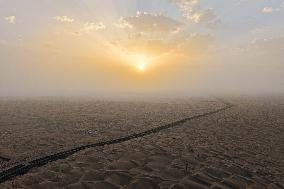
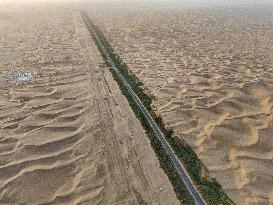
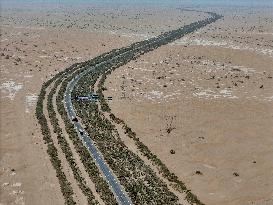
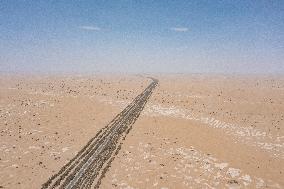
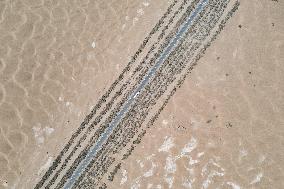
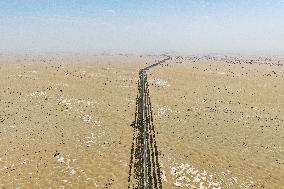
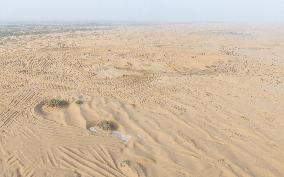
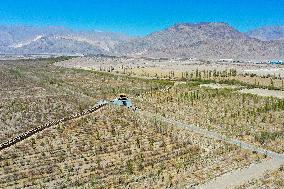
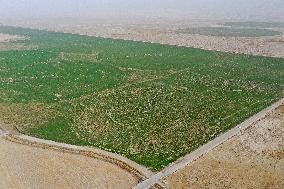
An aerial drone photo taken on July 18, 2025 shows the Tarim Desert Highway traversing through the Taklimakan Desert and the shelterbelt planted along it in northwest China's Xinjiang Uygur Autonomous Region. The 522-km highway runs across the Taklimakan Desert, the world's second-largest shifting sand desert. Photo by Zhang Keren/Xinhua/ABACAPRESS.COM

  •  
Tarim Desert Highway - China

Tarim Desert Highway - China

An aerial drone photo taken on July 18, 2025 shows the Tarim Desert Highway traversing through the Taklimakan Desert and the shelterbelt planted along it in northwest China's Xinjiang Uygur Autonomous Region. The 522-km highway runs across the Taklimakan Desert, the world's second-largest shifting sand desert. Photo by Hu Huhu/Xinhua/ABACAPRESS.COM

  •  
Tarim Desert Highway - China

Tarim Desert Highway - China

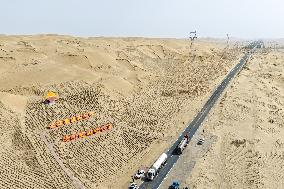
An aerial drone photo taken on July 18, 2025 shows the Tarim Desert Highway traversing through the Taklimakan Desert and the shelterbelt planted along it in northwest China's Xinjiang Uygur Autonomous Region. The 522-km highway runs across the Taklimakan Desert, the world's second-largest shifting sand desert. Photo by Hu Huhu/Xinhua/ABACAPRESS.COM

  •  
Tarim Desert Highway - China

Tarim Desert Highway - China

An aerial drone photo taken on July 18, 2025 shows a section of the Tarim Desert Highway and the shelterbelt planted along it in northwest China's Xinjiang Uygur Autonomous Region. The 522-km highway runs across the Taklimakan Desert, the world's second-largest shifting sand desert. Photo by Meng Tao/Xinhua/ABACAPRESS.COM

  •  
Tarim Desert Highway - China

Tarim Desert Highway - China

An aerial drone photo taken on July 18, 2025 shows a section of the Tarim Desert Highway and the shelterbelt planted along it in northwest China's Xinjiang Uygur Autonomous Region. The 522-km highway runs across the Taklimakan Desert, the world's second-largest shifting sand desert. Photo by Meng Tao/Xinhua/ABACAPRESS.COM

  •  
Tarim Desert Highway - China

Tarim Desert Highway - China

An aerial drone photo taken on July 18, 2025 shows the Tarim Desert Highway traversing through the Taklimakan Desert and the shelterbelt planted along it in northwest China's Xinjiang Uygur Autonomous Region. The 522-km highway runs across the Taklimakan Desert, the world's second-largest shifting sand desert. Photo by Zhang Keren/Xinhua/ABACAPRESS.COM

  •  
Tarim Desert Highway - China

Tarim Desert Highway - China

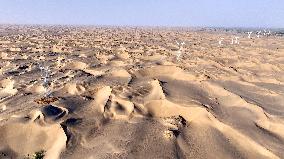
An aerial drone photo taken on July 18, 2025 shows the Tarim Desert Highway traversing through the Taklimakan Desert in northwest China's Xinjiang Uygur Autonomous Region. The 522-km highway runs across the Taklimakan Desert, the world's second-largest shifting sand desert. Photo by Zhang Keren/Xinhua/ABACAPRESS.COM

  •  
China Completes 750-kV Power Transmission Loop

China Completes 750-kV Power Transmission Loop

- This photo taken on June 25, 2025 shows a section of the 750-kilovolt transmission and transformation project passing through Taklimakan Desert in the Tarim Basin, northwest China's Xinjiang Uygur Autonomous Region. China has finished construction of a 4,197-km extra-high voltage power transmission loop around the Tarim Basin, home to the country's largest desert, marking a major infrastructure milestone in southern Xinjiang Uygur Autonomous Region. The final section of the 750-kilovolt (kV) loop, now the country's largest of its kind, was connected on Sunday, capping a 15-year project involving nine substations and nearly 10,000 steel towers, according to a subsidiary of State Grid Xinjiang Electric Power Co., Ltd., which constructed the project. Photo by Ma Yuan/Xinhua/ABACAPRESS.COM

  •  
Taklamakan Desert Ecological Management

Taklamakan Desert Ecological Management

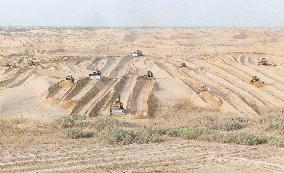
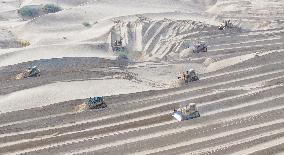
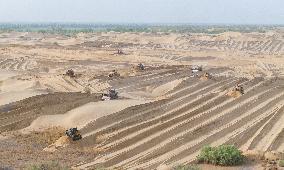
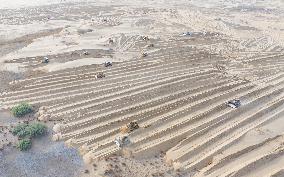
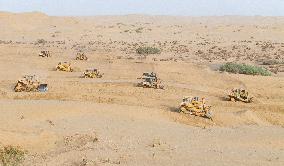
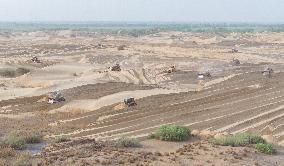
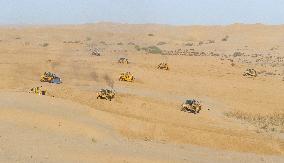
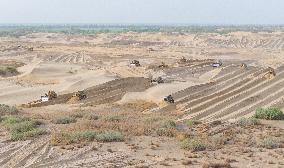
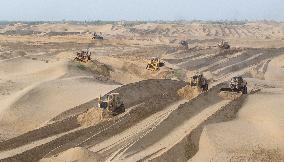
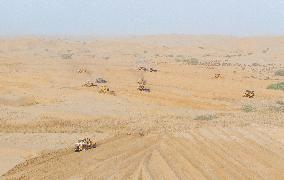
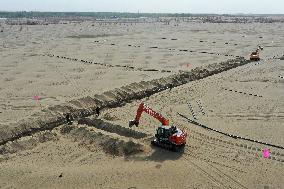
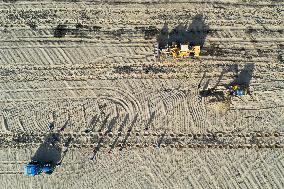
BAZHOU, CHINA - MAY 22, 2025 - Large-scale machinery is leveling sand dunes in the area of the sand prevention and control project on the northern edge of the Taklimakan Desert in Bayingolin Mongolian Autonomous Prefecture, Xinjiang, China on May 22, 2025.

  •  
Taklamakan Desert Ecological Management

Taklamakan Desert Ecological Management

BAZHOU, CHINA - MAY 22, 2025 - Large-scale machinery is leveling sand dunes in the area of the sand prevention and control project on the northern edge of the Taklimakan Desert in Bayingolin Mongolian Autonomous Prefecture, Xinjiang, China on May 22, 2025.

  •  
Taklamakan Desert Ecological Management

Taklamakan Desert Ecological Management

BAZHOU, CHINA - MAY 22, 2025 - Large-scale machinery is leveling sand dunes in the area of the sand prevention and control project on the northern edge of the Taklimakan Desert in Bayingolin Mongolian Autonomous Prefecture, Xinjiang, China on May 22, 2025.

  •  
Taklamakan Desert Ecological Management

Taklamakan Desert Ecological Management

BAZHOU, CHINA - MAY 22, 2025 - Large-scale machinery is leveling sand dunes in the area of the sand prevention and control project on the northern edge of the Taklimakan Desert in Bayingolin Mongolian Autonomous Prefecture, Xinjiang, China on May 22, 2025.

  •  
Taklamakan Desert Ecological Management

Taklamakan Desert Ecological Management

BAZHOU, CHINA - MAY 22, 2025 - Large-scale machinery is leveling sand dunes in the area of the sand prevention and control project on the northern edge of the Taklimakan Desert in Bayingolin Mongolian Autonomous Prefecture, Xinjiang, China on May 22, 2025.

  •  
Taklamakan Desert Ecological Management

Taklamakan Desert Ecological Management

BAZHOU, CHINA - MAY 22, 2025 - Large-scale machinery is leveling sand dunes in the area of the sand prevention and control project on the northern edge of the Taklimakan Desert in Bayingolin Mongolian Autonomous Prefecture, Xinjiang, China on May 22, 2025.

  •  
Taklamakan Desert Ecological Management

Taklamakan Desert Ecological Management

BAZHOU, CHINA - MAY 22, 2025 - Large-scale machinery is leveling sand dunes in the area of the sand prevention and control project on the northern edge of the Taklimakan Desert in Bayingolin Mongolian Autonomous Prefecture, Xinjiang, China on May 22, 2025.

  •  
Taklamakan Desert Ecological Management

Taklamakan Desert Ecological Management

BAZHOU, CHINA - MAY 22, 2025 - Large-scale machinery is leveling sand dunes in the area of the sand prevention and control project on the northern edge of the Taklimakan Desert in Bayingolin Mongolian Autonomous Prefecture, Xinjiang, China on May 22, 2025.

  •  
Taklamakan Desert Ecological Management

Taklamakan Desert Ecological Management

BAZHOU, CHINA - MAY 22, 2025 - Large-scale machinery is leveling sand dunes in the area of the sand prevention and control project on the northern edge of the Taklimakan Desert in Bayingolin Mongolian Autonomous Prefecture, Xinjiang, China on May 22, 2025.

  •  
Taklamakan Desert Ecological Management

Taklamakan Desert Ecological Management

BAZHOU, CHINA - MAY 22, 2025 - Large-scale machinery is leveling sand dunes in the area of the sand prevention and control project on the northern edge of the Taklimakan Desert in Bayingolin Mongolian Autonomous Prefecture, Xinjiang, China on May 22, 2025.

  •  
Taklamakan Desert Ecological Management

Taklamakan Desert Ecological Management

BAZHOU, CHINA - MAY 22, 2025 - Large-scale machinery is leveling sand dunes in the area of the sand prevention and control project on the northern edge of the Taklimakan Desert in Bayingolin Mongolian Autonomous Prefecture, Xinjiang, China on May 22, 2025.

  •  
Taklimakan Desert Control Afforestation - China

Taklimakan Desert Control Afforestation - China

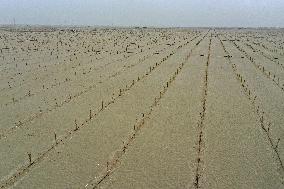
An aerial drone photo taken on April 8, 2025 shows people planting coix at a sand industry experimental base in Yutian County of Hotan Prefecture, northwest China's Xinjiang Uygur Autonomous Region. The Taklimakan Desert in northwest China's Xinjiang Uygur Autonomous Region covers 337,600 square kilometers and its circumference measures 3,046 kilometers, making it the largest desert in China and the second-largest drifting desert in the world. Thanks to decades-long sand prevention and control efforts, the Taklimakan Desert was completely encircled with a sand-blocking green belt on Nov. 28, 2024. In 2025, Xinjiang aims to afforest a land area of about 796,000 hectares, including 562,666 hectares for frontline control in the Taklimakan Desert. These afforestations form a part of the Three-North Shelterbelt Forest Program, the world's largest afforestation program, which tackles desertification in northwest, north and northeast China. Meanwhile, Xinjiang will further widen the sand-blocking green belt and enha

  •  
Taklimakan Desert Control Afforestation - China

Taklimakan Desert Control Afforestation - China

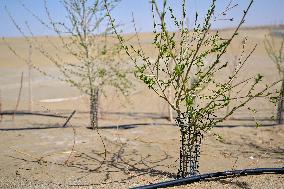
An aerial drone photo taken on April 7, 2025 shows oleaster saplings in Hotan County of Hotan Prefecture, northwest China's Xinjiang Uygur Autonomous Region. The Taklimakan Desert in northwest China's Xinjiang Uygur Autonomous Region covers 337,600 square kilometers and its circumference measures 3,046 kilometers, making it the largest desert in China and the second-largest drifting desert in the world. Thanks to decades-long sand prevention and control efforts, the Taklimakan Desert was completely encircled with a sand-blocking green belt on Nov. 28, 2024. In 2025, Xinjiang aims to afforest a land area of about 796,000 hectares, including 562,666 hectares for frontline control in the Taklimakan Desert. These afforestations form a part of the Three-North Shelterbelt Forest Program, the world's largest afforestation program, which tackles desertification in northwest, north and northeast China. Meanwhile, Xinjiang will further widen the sand-blocking green belt and enhance desert-locking efforts to achieve sus

  •  
Taklimakan Desert Control Afforestation - China

Taklimakan Desert Control Afforestation - China

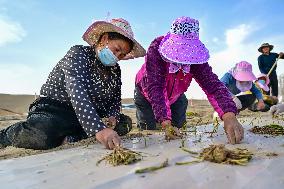
Staff members plant onions in sandy land at a sand-control experimental station in Minfeng County of Hotan Prefecture, northwest China's Xinjiang Uygur Autonomous Region on April 8, 2025. The Taklimakan Desert in northwest China's Xinjiang Uygur Autonomous Region covers 337,600 square kilometers and its circumference measures 3,046 kilometers, making it the largest desert in China and the second-largest drifting desert in the world. Thanks to decades-long sand prevention and control efforts, the Taklimakan Desert was completely encircled with a sand-blocking green belt on Nov. 28, 2024. In 2025, Xinjiang aims to afforest a land area of about 796,000 hectares, including 562,666 hectares for frontline control in the Taklimakan Desert. These afforestations form a part of the Three-North Shelterbelt Forest Program, the world's largest afforestation program, which tackles desertification in northwest, north and northeast China. Meanwhile, Xinjiang will further widen the sand-blocking green belt and enhance desert-

  •  
Taklimakan Desert Control Afforestation - China

Taklimakan Desert Control Afforestation - China

An aerial drone photo taken on April 8, 2025 shows staff members embedding water pipelines in Minfeng County of Hotan Prefecture, northwest China's Xinjiang Uygur Autonomous Region. The Taklimakan Desert in northwest China's Xinjiang Uygur Autonomous Region covers 337,600 square kilometers and its circumference measures 3,046 kilometers, making it the largest desert in China and the second-largest drifting desert in the world. Thanks to decades-long sand prevention and control efforts, the Taklimakan Desert was completely encircled with a sand-blocking green belt on Nov. 28, 2024. In 2025, Xinjiang aims to afforest a land area of about 796,000 hectares, including 562,666 hectares for frontline control in the Taklimakan Desert. These afforestations form a part of the Three-North Shelterbelt Forest Program, the world's largest afforestation program, which tackles desertification in northwest, north and northeast China. Meanwhile, Xinjiang will further widen the sand-blocking green belt and enhance desert-lockin

  •  
Taklimakan Desert Control Afforestation - China

Taklimakan Desert Control Afforestation - China

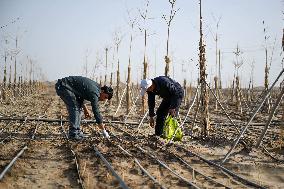
An aerial drone photo taken on April 9, 2025 shows staff members planting seedlings at a sand-control base in Qiemo County, the Mongolian Autonomous Prefecture of Bayingolin, northwest China's Xinjiang Uygur Autonomous Region. The Taklimakan Desert in northwest China's Xinjiang Uygur Autonomous Region covers 337,600 square kilometers and its circumference measures 3,046 kilometers, making it the largest desert in China and the second-largest drifting desert in the world. Thanks to decades-long sand prevention and control efforts, the Taklimakan Desert was completely encircled with a sand-blocking green belt on Nov. 28, 2024. In 2025, Xinjiang aims to afforest a land area of about 796,000 hectares, including 562,666 hectares for frontline control in the Taklimakan Desert. These afforestations form a part of the Three-North Shelterbelt Forest Program, the world's largest afforestation program, which tackles desertification in northwest, north and northeast China. Meanwhile, Xinjiang will further widen the sand-

  •  
Taklimakan Desert Control Afforestation - China

Taklimakan Desert Control Afforestation - China

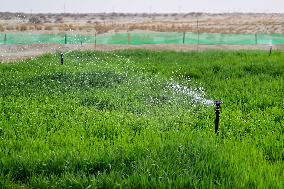
This photo taken on April 13, 2025 shows a wheat field irrigated by desalinated water in Xayar County, Aksu Prefecture, northwest China's Xinjiang Uygur Autonomous Region. The Taklimakan Desert in northwest China's Xinjiang Uygur Autonomous Region covers 337,600 square kilometers and its circumference measures 3,046 kilometers, making it the largest desert in China and the second-largest drifting desert in the world. Thanks to decades-long sand prevention and control efforts, the Taklimakan Desert was completely encircled with a sand-blocking green belt on Nov. 28, 2024. In 2025, Xinjiang aims to afforest a land area of about 796,000 hectares, including 562,666 hectares for frontline control in the Taklimakan Desert. These afforestations form a part of the Three-North Shelterbelt Forest Program, the world's largest afforestation program, which tackles desertification in northwest, north and northeast China. Meanwhile, Xinjiang will further widen the sand-blocking green belt and enhance desert-locking efforts

  •  
Taklimakan Desert Control Afforestation - China

Taklimakan Desert Control Afforestation - China

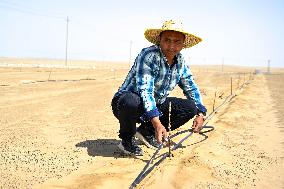
A villager arranges a drip irrigation pipe at a desert-control model zone in Yutian County of Hotan Prefecture, northwest China's Xinjiang Uygur Autonomous Region, April 8, 2025. The Taklimakan Desert in northwest China's Xinjiang Uygur Autonomous Region covers 337,600 square kilometers and its circumference measures 3,046 kilometers, making it the largest desert in China and the second-largest drifting desert in the world. Thanks to decades-long sand prevention and control efforts, the Taklimakan Desert was completely encircled with a sand-blocking green belt on Nov. 28, 2024. In 2025, Xinjiang aims to afforest a land area of about 796,000 hectares, including 562,666 hectares for frontline control in the Taklimakan Desert. These afforestations form a part of the Three-North Shelterbelt Forest Program, the world's largest afforestation program, which tackles desertification in northwest, north and northeast China. Meanwhile, Xinjiang will further widen the sand-blocking green belt and enhance desert-locking e

  •  
Taklimakan Desert Control Afforestation - China

Taklimakan Desert Control Afforestation - China

A villager plants coix at a sand industry experimental base in Yutian County of Hotan Prefecture, northwest China's Xinjiang Uygur Autonomous Region on April 8, 2025. The Taklimakan Desert in northwest China's Xinjiang Uygur Autonomous Region covers 337,600 square kilometers and its circumference measures 3,046 kilometers, making it the largest desert in China and the second-largest drifting desert in the world. Thanks to decades-long sand prevention and control efforts, the Taklimakan Desert was completely encircled with a sand-blocking green belt on Nov. 28, 2024. In 2025, Xinjiang aims to afforest a land area of about 796,000 hectares, including 562,666 hectares for frontline control in the Taklimakan Desert. These afforestations form a part of the Three-North Shelterbelt Forest Program, the world's largest afforestation program, which tackles desertification in northwest, north and northeast China. Meanwhile, Xinjiang will further widen the sand-blocking green belt and enhance desert-locking efforts to ac

  •  
Taklimakan Desert Control Afforestation - China

Taklimakan Desert Control Afforestation - China

Protective nets are attached to seedlings to prevent animals from eating them at a sand-control base in Qiemo County, the Mongolian Autonomous Prefecture of Bayingolin, northwest China's Xinjiang Uygur Autonomous Region, April 9, 2025. The Taklimakan Desert in northwest China's Xinjiang Uygur Autonomous Region covers 337,600 square kilometers and its circumference measures 3,046 kilometers, making it the largest desert in China and the second-largest drifting desert in the world. Thanks to decades-long sand prevention and control efforts, the Taklimakan Desert was completely encircled with a sand-blocking green belt on Nov. 28, 2024. In 2025, Xinjiang aims to afforest a land area of about 796,000 hectares, including 562,666 hectares for frontline control in the Taklimakan Desert. These afforestations form a part of the Three-North Shelterbelt Forest Program, the world's largest afforestation program, which tackles desertification in northwest, north and northeast China. Meanwhile, Xinjiang will further widen

  •  
Taklimakan Desert Control Afforestation - China

Taklimakan Desert Control Afforestation - China

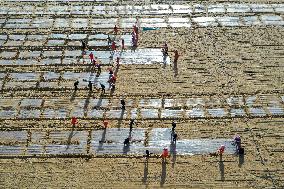
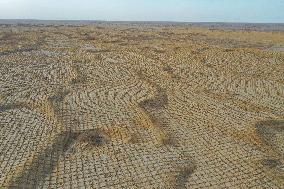
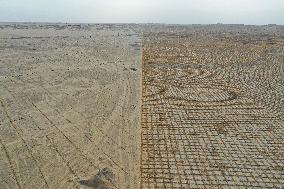
An aerial drone photo taken on April 8, 2025 shows checkerboard sand barriers in Minfeng County of Hotan Prefecture, northwest China's Xinjiang Uygur Autonomous Region. The Taklimakan Desert in northwest China's Xinjiang Uygur Autonomous Region covers 337,600 square kilometers and its circumference measures 3,046 kilometers, making it the largest desert in China and the second-largest drifting desert in the world. Thanks to decades-long sand prevention and control efforts, the Taklimakan Desert was completely encircled with a sand-blocking green belt on Nov. 28, 2024. In 2025, Xinjiang aims to afforest a land area of about 796,000 hectares, including 562,666 hectares for frontline control in the Taklimakan Desert. These afforestations form a part of the Three-North Shelterbelt Forest Program, the world's largest afforestation program, which tackles desertification in northwest, north and northeast China. Meanwhile, Xinjiang will further widen the sand-blocking green belt and enhance desert-locking efforts to

  •  
Taklimakan Desert Control Afforestation - China

Taklimakan Desert Control Afforestation - China

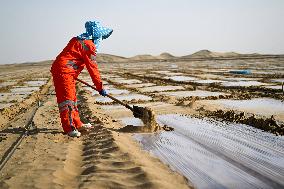
People arrange drip irrigation pipes at a sand-control experimental base in Yutian County of Hotan Prefecture, northwest China's Xinjiang Uygur Autonomous Region, April 8, 2025. The Taklimakan Desert in northwest China's Xinjiang Uygur Autonomous Region covers 337,600 square kilometers and its circumference measures 3,046 kilometers, making it the largest desert in China and the second-largest drifting desert in the world. Thanks to decades-long sand prevention and control efforts, the Taklimakan Desert was completely encircled with a sand-blocking green belt on Nov. 28, 2024. In 2025, Xinjiang aims to afforest a land area of about 796,000 hectares, including 562,666 hectares for frontline control in the Taklimakan Desert. These afforestations form a part of the Three-North Shelterbelt Forest Program, the world's largest afforestation program, which tackles desertification in northwest, north and northeast China. Meanwhile, Xinjiang will further widen the sand-blocking green belt and enhance desert-locking ef

  •  
Taklimakan Desert Control Afforestation - China

Taklimakan Desert Control Afforestation - China

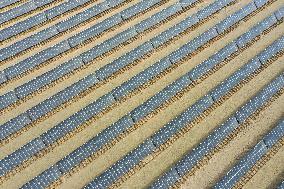
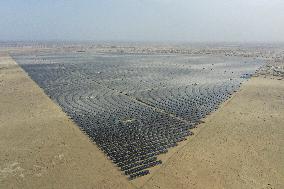
An aerial drone photo taken on April 13, 2025 shows a photovoltaic power project in Xayar County, Aksu Prefecture, northwest China's Xinjiang Uygur Autonomous Region. The Taklimakan Desert in northwest China's Xinjiang Uygur Autonomous Region covers 337,600 square kilometers and its circumference measures 3,046 kilometers, making it the largest desert in China and the second-largest drifting desert in the world. Thanks to decades-long sand prevention and control efforts, the Taklimakan Desert was completely encircled with a sand-blocking green belt on Nov. 28, 2024. In 2025, Xinjiang aims to afforest a land area of about 796,000 hectares, including 562,666 hectares for frontline control in the Taklimakan Desert. These afforestations form a part of the Three-North Shelterbelt Forest Program, the world's largest afforestation program, which tackles desertification in northwest, north and northeast China. Meanwhile, Xinjiang will further widen the sand-blocking green belt and enhance desert-locking efforts to ac

  •  
Taklimakan Desert Control Afforestation - China

Taklimakan Desert Control Afforestation - China

An aerial drone photo taken on April 8, 2025 shows checkerboard sand barriers at a sand-control zone in Minfeng County of Hotan Prefecture, northwest China's Xinjiang Uygur Autonomous Region. The Taklimakan Desert in northwest China's Xinjiang Uygur Autonomous Region covers 337,600 square kilometers and its circumference measures 3,046 kilometers, making it the largest desert in China and the second-largest drifting desert in the world. Thanks to decades-long sand prevention and control efforts, the Taklimakan Desert was completely encircled with a sand-blocking green belt on Nov. 28, 2024. In 2025, Xinjiang aims to afforest a land area of about 796,000 hectares, including 562,666 hectares for frontline control in the Taklimakan Desert. These afforestations form a part of the Three-North Shelterbelt Forest Program, the world's largest afforestation program, which tackles desertification in northwest, north and northeast China. Meanwhile, Xinjiang will further widen the sand-blocking green belt and enhance des

  •  
Taklimakan Desert Control Afforestation - China

Taklimakan Desert Control Afforestation - China

An aerial drone photo taken on April 11, 2025 shows a forest park in Hejing County, the Mongolian Autonomous Prefecture of Bayingolin, northwest China's Xinjiang Uygur Autonomous Region. The Taklimakan Desert in northwest China's Xinjiang Uygur Autonomous Region covers 337,600 square kilometers and its circumference measures 3,046 kilometers, making it the largest desert in China and the second-largest drifting desert in the world. Thanks to decades-long sand prevention and control efforts, the Taklimakan Desert was completely encircled with a sand-blocking green belt on Nov. 28, 2024. In 2025, Xinjiang aims to afforest a land area of about 796,000 hectares, including 562,666 hectares for frontline control in the Taklimakan Desert. These afforestations form a part of the Three-North Shelterbelt Forest Program, the world's largest afforestation program, which tackles desertification in northwest, north and northeast China. Meanwhile, Xinjiang will further widen the sand-blocking green belt and enhance desert-l

  •  
Taklimakan Desert Control Afforestation - China

Taklimakan Desert Control Afforestation - China

An aerial drone photo taken on April 13, 2025 shows a photovoltaic power project in Xayar County, Aksu Prefecture, northwest China's Xinjiang Uygur Autonomous Region. The Taklimakan Desert in northwest China's Xinjiang Uygur Autonomous Region covers 337,600 square kilometers and its circumference measures 3,046 kilometers, making it the largest desert in China and the second-largest drifting desert in the world. Thanks to decades-long sand prevention and control efforts, the Taklimakan Desert was completely encircled with a sand-blocking green belt on Nov. 28, 2024. In 2025, Xinjiang aims to afforest a land area of about 796,000 hectares, including 562,666 hectares for frontline control in the Taklimakan Desert. These afforestations form a part of the Three-North Shelterbelt Forest Program, the world's largest afforestation program, which tackles desertification in northwest, north and northeast China. Meanwhile, Xinjiang will further widen the sand-blocking green belt and enhance desert-locking efforts to ac

  •  
Taklimakan Desert Control Afforestation - China

Taklimakan Desert Control Afforestation - China

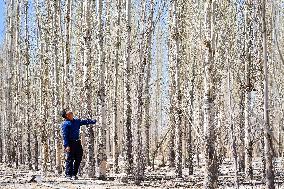
Fu Guoxi checks the trees at a green belt built by his father Fu Zhizhou in Hejing County, the Mongolian Autonomous Prefecture of Bayingolin, northwest China's Xinjiang Uygur Autonomous Region, April 11, 2025. Over the past four decades, Fu Zhizhou had planted more than 800,000 trees and his son Fu Guoxi took over the cause after his father passed away in 2024. The Taklimakan Desert in northwest China's Xinjiang Uygur Autonomous Region covers 337,600 square kilometers and its circumference measures 3,046 kilometers, making it the largest desert in China and the second-largest drifting desert in the world. Thanks to decades-long sand prevention and control efforts, the Taklimakan Desert was completely encircled with a sand-blocking green belt on Nov. 28, 2024. In 2025, Xinjiang aims to afforest a land area of about 796,000 hectares, including 562,666 hectares for frontline control in the Taklimakan Desert. These afforestations form a part of the Three-North Shelterbelt Forest Program, the world's largest affor

  •  
Taklimakan Desert Control Afforestation - China

Taklimakan Desert Control Afforestation - China

An aerial drone photo taken on April 12, 2025 shows a grassland in Baicheng County, Aksu Prefecture, northwest China's Xinjiang Uygur Autonomous Region. The Taklimakan Desert in northwest China's Xinjiang Uygur Autonomous Region covers 337,600 square kilometers and its circumference measures 3,046 kilometers, making it the largest desert in China and the second-largest drifting desert in the world. Thanks to decades-long sand prevention and control efforts, the Taklimakan Desert was completely encircled with a sand-blocking green belt on Nov. 28, 2024. In 2025, Xinjiang aims to afforest a land area of about 796,000 hectares, including 562,666 hectares for frontline control in the Taklimakan Desert. These afforestations form a part of the Three-North Shelterbelt Forest Program, the world's largest afforestation program, which tackles desertification in northwest, north and northeast China. Meanwhile, Xinjiang will further widen the sand-blocking green belt and enhance desert-locking efforts to achieve sustaina

  •  
China Completes Drilling Of Asia's Deepest Vertical Well - Aksu

China Completes Drilling Of Asia's Deepest Vertical Well - Aksu

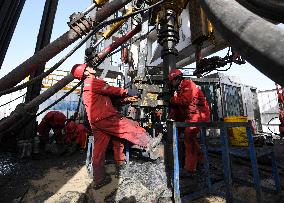
Staff members work at "Shenditake 1," an ultra-deep borehole, in the hinterland of the Taklimakan Desert in the Tarim Basin, northwest China's Xinjiang Uygur Autonomous Region, February 19, 2025. China National Petroleum Corporation announced Thursday that it has completed the drilling of the deepest vertical well in Asia, as a borehole reached a depth of 10,910 meters in China's northwestern desert on February 20, 2025 in Aksu, China. Photo by Hu Huhu/Xinhua/ABACAPRESS.COM

  •  
China Completes Drilling Of Asia's Deepest Vertical Well - Aksu

China Completes Drilling Of Asia's Deepest Vertical Well - Aksu

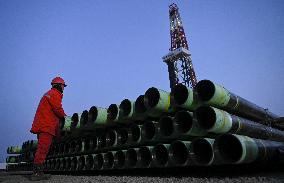
A staff member checks the casing pipes at the drilling site of "Shenditake 1," an ultra-deep borehole, in the hinterland of the Taklimakan Desert in the Tarim Basin, northwest China's Xinjiang Uygur Autonomous Region. China National Petroleum Corporation announced Thursday that it has completed the drilling of the deepest vertical well in Asia, as a borehole reached a depth of 10,910 meters in China's northwestern desert on February 20, 2025 in Aksu, China. Photo by Hu Huhu/Xinhua/ABACAPRESS.COM

  •  
China Completes Drilling Of Asia's Deepest Vertical Well - Aksu

China Completes Drilling Of Asia's Deepest Vertical Well - Aksu

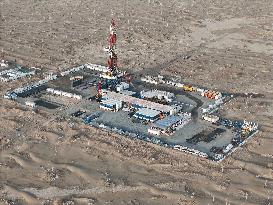
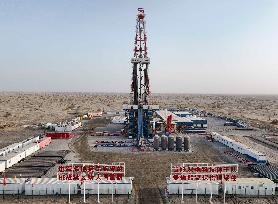
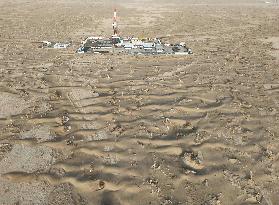
An aerial drone photo taken on February 20, 2025 shows a view of the "Shenditake 1," an ultra-deep borehole, in the hinterland of the Taklimakan Desert in the Tarim Basin, northwest China's Xinjiang Uygur Autonomous Region. China National Petroleum Corporation announced Thursday that it has completed the drilling of the deepest vertical well in Asia, as a borehole reached a depth of 10,910 meters in China's northwestern desert on February 20, 2025 in Aksu, China. Photo by Hu Huhu/Xinhua/ABACAPRESS.COM

  •  
China Completes Drilling Of Asia's Deepest Vertical Well - Aksu

China Completes Drilling Of Asia's Deepest Vertical Well - Aksu

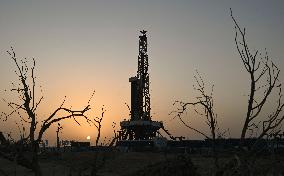
An aerial drone photo taken on February 18, 2025 shows a view of the "Shenditake 1," an ultra-deep borehole, at sunset in the hinterland of the Taklimakan Desert in the Tarim Basin, northwest China's Xinjiang Uygur Autonomous Region. China National Petroleum Corporation announced Thursday that it has completed the drilling of the deepest vertical well in Asia, as a borehole reached a depth of 10,910 meters in China's northwestern desert on February 20, 2025 in Aksu, China. Photo by Hu Huhu/Xinhua/ABACAPRESS.COM

  •  
China Completes Drilling Of Asia's Deepest Vertical Well - Aksu

China Completes Drilling Of Asia's Deepest Vertical Well - Aksu

An aerial drone photo taken on February 20, 2025 shows a view of the "Shenditake 1," an ultra-deep borehole, in the hinterland of the Taklimakan Desert in the Tarim Basin, northwest China's Xinjiang Uygur Autonomous Region. China National Petroleum Corporation announced Thursday that it has completed the drilling of the deepest vertical well in Asia, as a borehole reached a depth of 10,910 meters in China's northwestern desert on February 20, 2025 in Aksu, China. Photo by Hu Huhu/Xinhua/ABACAPRESS.COM

  •  
China Completes Drilling Of Asia's Deepest Vertical Well - Aksu

China Completes Drilling Of Asia's Deepest Vertical Well - Aksu

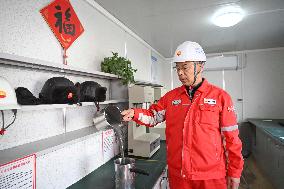
Yin Da, a senior expert of the Tarim Oilfield, shows the ultra-high-temperature drilling fluid used in the drilling of "Shenditake 1," an ultra-deep borehole, in the hinterland of the Taklimakan Desert in the Tarim Basin, northwest China's Xinjiang Uygur Autonomous Region, February 19, 2025. China National Petroleum Corporation announced Thursday that it has completed the drilling of the deepest vertical well in Asia, as a borehole reached a depth of 10,910 meters in China's northwestern desert on February 20, 2025 in Aksu, China. Photo by Hu Huhu/Xinhua/ABACAPRESS.COM

  •  
China Completes Drilling Of Asia's Deepest Vertical Well - Aksu

China Completes Drilling Of Asia's Deepest Vertical Well - Aksu

A staff member works at "Shenditake 1," an ultra-deep borehole, in the hinterland of the Taklimakan Desert in the Tarim Basin, northwest China's Xinjiang Uygur Autonomous Region, February 19, 2025. China National Petroleum Corporation announced Thursday that it has completed the drilling of the deepest vertical well in Asia, as a borehole reached a depth of 10,910 meters in China's northwestern desert on February 20, 2025 in Aksu, China. Photo by Hu Huhu/Xinhua/ABACAPRESS.COM

  •  
China Completes Drilling Of Asia's Deepest Vertical Well - Aksu

China Completes Drilling Of Asia's Deepest Vertical Well - Aksu

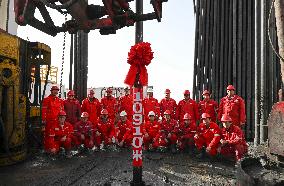
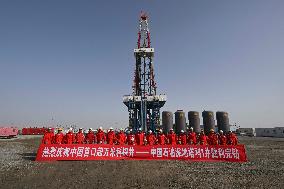
Staff members pose for a group photo as they celebrate the completion of the drilling of "Shenditake 1," an ultra-deep borehole reaching 10,910 meters, in the hinterland of the Taklimakan Desert in the Tarim Basin, northwest China's Xinjiang Uygur Autonomous Region. China National Petroleum Corporation announced Thursday that it has completed the drilling of the deepest vertical well in Asia, as a borehole reached a depth of 10,910 meters in China's northwestern desert on February 20, 2025 in Aksu, China. Photo by Hu Huhu/Xinhua/ABACAPRESS.COM

  •  
China Completes Drilling Of Asia's Deepest Vertical Well - Aksu

China Completes Drilling Of Asia's Deepest Vertical Well - Aksu

An aerial drone photo taken on February 20, 2025 shows a view of the "Shenditake 1," an ultra-deep borehole, in the hinterland of the Taklimakan Desert in the Tarim Basin, northwest China's Xinjiang Uygur Autonomous Region. China National Petroleum Corporation announced Thursday that it has completed the drilling of the deepest vertical well in Asia, as a borehole reached a depth of 10,910 meters in China's northwestern desert on February 20, 2025 in Aksu, China. Photo by Hu Huhu/Xinhua/ABACAPRESS.COM

  •  
China Completes Drilling Of Asia's Deepest Vertical Well - Aksu

China Completes Drilling Of Asia's Deepest Vertical Well - Aksu

(250220) -- BEIJING, February 20, 2025 (Xinhua) -- Staff members pose for a group photo as they celebrate the completion of the drilling of "Shenditake 1," an ultra-deep borehole reaching 10,910 meters, in the hinterland of the Taklimakan Desert in the Tarim Basin, northwest China's Xinjiang Uygur Autonomous Region. China National Petroleum Corporation announced Thursday that it has completed the drilling of the deepest vertical well in Asia, as a borehole reached a depth of 10,910 meters in China's northwestern desert on February 20, 2025 in Aksu, China. Photo by Hu Huhu/Xinhua/ABACAPRESS.COM

  •  
Snowfall in Xinjiang

Snowfall in Xinjiang

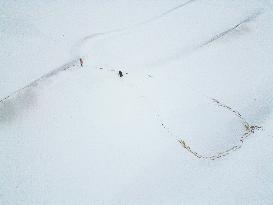
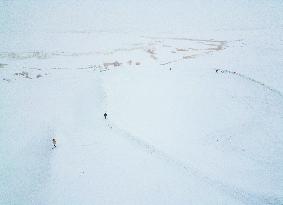
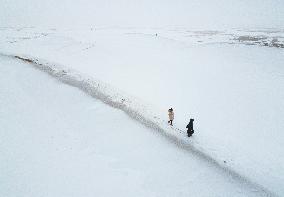
Tourists play in the scenic area of Luobren village on the edge of the Taklimakan Desert in Weili county, Northwest China's Xinjiang Uygur Autonomous region, Jan. 10, 2025.

  •  
Snowfall in Xinjiang

Snowfall in Xinjiang

Tourists play in the scenic area of Luobren village on the edge of the Taklimakan Desert in Weili county, Northwest China's Xinjiang Uygur Autonomous region, Jan. 10, 2025.

  •  
Snowfall in Xinjiang

Snowfall in Xinjiang

Tourists play in the scenic area of Luobren village on the edge of the Taklimakan Desert in Weili county, Northwest China's Xinjiang Uygur Autonomous region, Jan. 10, 2025.

  •  
China Fortifies Green Great Wall To Contain Desert

China Fortifies Green Great Wall To Contain Desert

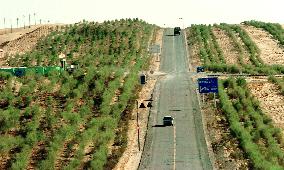
This photo shows green belts along the Taklimakan Desert highway in northwest China's Xinjiang Uygur Autonomous Region, Sept. 16, 2005. (Xinhua/Shadati)

  • Main
  • Top
  • Editorial
  • Creative
  • About Us
  • About ILG
  • Terms of use
  • Company
  • BEHIND
  • Price List
  • Single Plan
  • Monthly Plan
  • Services
  • Shooting
  • Rights Clearance
  • Support
  • FAQ
  • How To Buy
  • Contact Us
  • Become a Partner

© KYODO NEWS IMAGES INC

All Rights Reserved.

  • Editorial
  • Olympics
  • News
  • Sports
  • Japan
  • Tech
  • Royal
  • Disaster
  • NorthKorea
  • Old Japan
  • SNS
  • Creative
  • Food
  • Japan
  • Landscape
  • Animal
  • Popular
  • #Ukraine
  • #Thailand
  • #coronavirus
  • #N. Korea
  • #China
  • #Russia
  • #Ukraine
  • #Thailand
  • #coronavirus
  • #N. Korea
  • #China
  • #Russia
  • Food
  • Japan
  • Landscape
  • Animal
  • Olympics
  • News
  • Sports
  • Japan
  • Tech
  • Royal
  • Disaster
  • NorthKorea
  • Old Japan
  • SNS