•  
PFW - Dior Street Style

PFW - Dior Street Style

Street style, Tish Weinstock arriving at Dior Spring Summer 2026 ready-to-wear show, held at Jardin des Tuileries, Paris, France, on October 1st, 2025. Photo by Marie-Paola Bertrand-Hillion/ABACAPRESS.COM

  •  
Tie-Dye Technique Of Bai Ethnic Group - Chin

Tie-Dye Technique Of Bai Ethnic Group - Chin

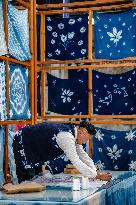
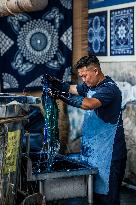
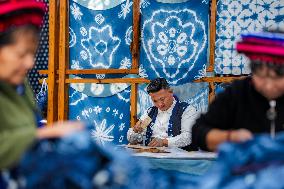
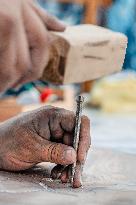
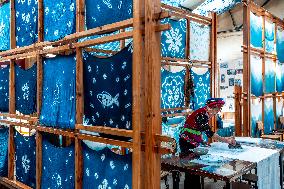
Duan Yuan, an inheritor of the tie-dye technique of Bai ethnic group, makes tie-dye designs in a dyehouse in Zhoucheng Village of Dali Bai Autonomous Prefecture, southwest China's Yunnan Province, November 21, 2025. Known as the hometown of the tie-dye technique of Bai ethnic group, Zhoucheng Village hosts over 200 households engaging in tie-dye businesses, with the number of employees exceeding 4,000. As a traditional folk technique of the Bai ethnic group, tie-dye boasts a history spanning over a thousand years and was included in the first batch of China's national intangible cultural heritage list in 2006. Tying and dyeing are the core steps in the process of making indigo tie-dye products. Artisans use needles and threads to create various patterns on the fabric, which are then dyed with plant-based dyes, resulting in blue backgrounds adorned with vivid white patterns. Photo by Hu Chao/Xinhua/ABACAPRESS.COM

  •  
Tie-Dye Technique Of Bai Ethnic Group - Chin

Tie-Dye Technique Of Bai Ethnic Group - Chin

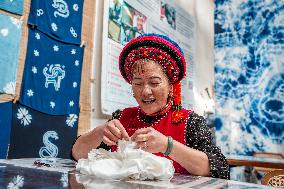
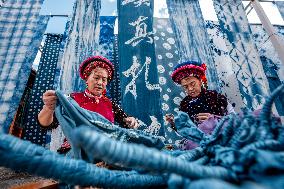
Duan Yinmei, an inheritor of the tie-dye technique of Bai ethnic group, creates knots on fabrics in a dyehouse in Zhoucheng Village of Dali Bai Autonomous Prefecture, southwest China's Yunnan Province, November 21, 2025. Known as the hometown of the tie-dye technique of Bai ethnic group, Zhoucheng Village hosts over 200 households engaging in tie-dye businesses, with the number of employees exceeding 4,000. As a traditional folk technique of the Bai ethnic group, tie-dye boasts a history spanning over a thousand years and was included in the first batch of China's national intangible cultural heritage list in 2006. Tying and dyeing are the core steps in the process of making indigo tie-dye products. Artisans use needles and threads to create various patterns on the fabric, which are then dyed with plant-based dyes, resulting in blue backgrounds adorned with vivid white patterns. Photo by Hu Chao/Xinhua/ABACAPRESS.COM

  •  
Tie-Dye Technique Of Bai Ethnic Group - Chin

Tie-Dye Technique Of Bai Ethnic Group - Chin

A woman experiences the tie-dye technique of Bai ethnic group in a dyehouse in Zhoucheng Village of Dali Bai Autonomous Prefecture, southwest China's Yunnan Province, November 21, 2025. Known as the hometown of the tie-dye technique of Bai ethnic group, Zhoucheng Village hosts over 200 households engaging in tie-dye businesses, with the number of employees exceeding 4,000. As a traditional folk technique of the Bai ethnic group, tie-dye boasts a history spanning over a thousand years and was included in the first batch of China's national intangible cultural heritage list in 2006. Tying and dyeing are the core steps in the process of making indigo tie-dye products. Artisans use needles and threads to create various patterns on the fabric, which are then dyed with plant-based dyes, resulting in blue backgrounds adorned with vivid white patterns. Photo by Hu Chao/Xinhua/ABACAPRESS.COM

  •  
Tie-Dye Technique Of Bai Ethnic Group - Chin

Tie-Dye Technique Of Bai Ethnic Group - Chin

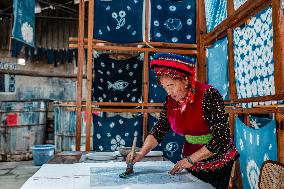
Duan Yinmei, an inheritor of the tie-dye technique of Bai ethnic group, dyes patterns on fabrics in a dyehouse in Zhoucheng Village of Dali Bai Autonomous Prefecture, southwest China's Yunnan Province, November 21, 2025. Known as the hometown of the tie-dye technique of Bai ethnic group, Zhoucheng Village hosts over 200 households engaging in tie-dye businesses, with the number of employees exceeding 4,000. As a traditional folk technique of the Bai ethnic group, tie-dye boasts a history spanning over a thousand years and was included in the first batch of China's national intangible cultural heritage list in 2006. Tying and dyeing are the core steps in the process of making indigo tie-dye products. Artisans use needles and threads to create various patterns on the fabric, which are then dyed with plant-based dyes, resulting in blue backgrounds adorned with vivid white patterns. Photo by Hu Chao/Xinhua/ABACAPRESS.COM

  •  
Tie-Dye Technique Of Bai Ethnic Group - Chin

Tie-Dye Technique Of Bai Ethnic Group - Chin

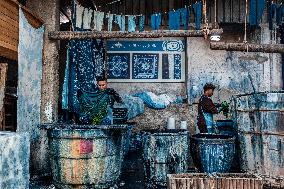
Duan Yuan, an inheritor of the tie-dye technique of Bai ethnic group, rinses dyed fabrics in a dyehouse in Zhoucheng Village of Dali Bai Autonomous Prefecture, southwest China's Yunnan Province, November 21, 2025. Known as the hometown of the tie-dye technique of Bai ethnic group, Zhoucheng Village hosts over 200 households engaging in tie-dye businesses, with the number of employees exceeding 4,000. As a traditional folk technique of the Bai ethnic group, tie-dye boasts a history spanning over a thousand years and was included in the first batch of China's national intangible cultural heritage list in 2006. Tying and dyeing are the core steps in the process of making indigo tie-dye products. Artisans use needles and threads to create various patterns on the fabric, which are then dyed with plant-based dyes, resulting in blue backgrounds adorned with vivid white patterns. Photo by Hu Chao/Xinhua/ABACAPRESS.COM

  •  
Tie-Dye Technique Of Bai Ethnic Group - Chin

Tie-Dye Technique Of Bai Ethnic Group - Chin

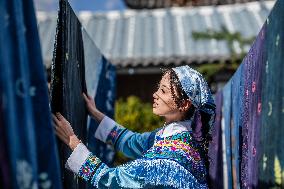
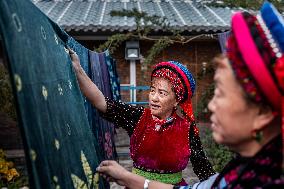
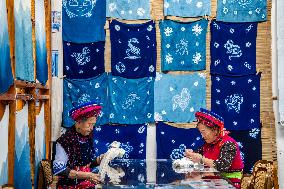
Duan Yinmei (L), an inheritor of the tie-dye technique of Bai ethnic group, and handicraftsman Duan Lilan dry tie-dye fabrics in a dyehouse in Zhoucheng Village of Dali Bai Autonomous Prefecture, southwest China's Yunnan Province, November 21, 2025. Known as the hometown of the tie-dye technique of Bai ethnic group, Zhoucheng Village hosts over 200 households engaging in tie-dye businesses, with the number of employees exceeding 4,000. As a traditional folk technique of the Bai ethnic group, tie-dye boasts a history spanning over a thousand years and was included in the first batch of China's national intangible cultural heritage list in 2006. Tying and dyeing are the core steps in the process of making indigo tie-dye products. Artisans use needles and threads to create various patterns on the fabric, which are then dyed with plant-based dyes, resulting in blue backgrounds adorned with vivid white patterns. Photo by Hu Chao/Xinhua/ABACAPRESS.COM

  •  
Tie-Dye Technique Of Bai Ethnic Group - Chin

Tie-Dye Technique Of Bai Ethnic Group - Chin

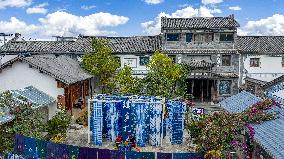
An aerial drone photo shows a scene at a dyehouse in Zhoucheng Village of Dali Bai Autonomous Prefecture, southwest China's Yunnan Province, November 21, 2025. Known as the hometown of the tie-dye technique of Bai ethnic group, Zhoucheng Village hosts over 200 households engaging in tie-dye businesses, with the number of employees exceeding 4,000. As a traditional folk technique of the Bai ethnic group, tie-dye boasts a history spanning over a thousand years and was included in the first batch of China's national intangible cultural heritage list in 2006. Tying and dyeing are the core steps in the process of making indigo tie-dye products. Artisans use needles and threads to create various patterns on the fabric, which are then dyed with plant-based dyes, resulting in blue backgrounds adorned with vivid white patterns. Photo by Hu Chao/Xinhua/ABACAPRESS.COM

  •  
Tie-Dye Technique Of Bai Ethnic Group - Chin

Tie-Dye Technique Of Bai Ethnic Group - Chin

Duan Yinmei (L), an inheritor of the tie-dye technique of Bai ethnic group, and handicraftsman Duan Lilan untie knots on fabrics in a dyehouse in Zhoucheng Village of Dali Bai Autonomous Prefecture, southwest China's Yunnan Province, November 21, 2025. Known as the hometown of the tie-dye technique of Bai ethnic group, Zhoucheng Village hosts over 200 households engaging in tie-dye businesses, with the number of employees exceeding 4,000. As a traditional folk technique of the Bai ethnic group, tie-dye boasts a history spanning over a thousand years and was included in the first batch of China's national intangible cultural heritage list in 2006. Tying and dyeing are the core steps in the process of making indigo tie-dye products. Artisans use needles and threads to create various patterns on the fabric, which are then dyed with plant-based dyes, resulting in blue backgrounds adorned with vivid white patterns. Photo by Hu Chao/Xinhua/ABACAPRESS.COM

  •  
Tie-Dye Technique Of Bai Ethnic Group - Chin

Tie-Dye Technique Of Bai Ethnic Group - Chin

Duan Yinmei (L), an inheritor of the tie-dye technique of Bai ethnic group, and handicraftsman Duan Lilan untie knots on fabrics in a dyehouse in Zhoucheng Village of Dali Bai Autonomous Prefecture, southwest China's Yunnan Province, November 21, 2025. Known as the hometown of the tie-dye technique of Bai ethnic group, Zhoucheng Village hosts over 200 households engaging in tie-dye businesses, with the number of employees exceeding 4,000. As a traditional folk technique of the Bai ethnic group, tie-dye boasts a history spanning over a thousand years and was included in the first batch of China's national intangible cultural heritage list in 2006. Tying and dyeing are the core steps in the process of making indigo tie-dye products. Artisans use needles and threads to create various patterns on the fabric, which are then dyed with plant-based dyes, resulting in blue backgrounds adorned with vivid white patterns. Photo by Hu Chao/Xinhua/ABACAPRESS.COM

  •  
Tie-Dye Technique Of Bai Ethnic Group - Chin

Tie-Dye Technique Of Bai Ethnic Group - Chin

Duan Yuan (L), an inheritor of the tie-dye technique of Bai ethnic group, dyes fabrics in a dyehouse in Zhoucheng Village of Dali Bai Autonomous Prefecture, southwest China's Yunnan Province, November 21, 2025. Known as the hometown of the tie-dye technique of Bai ethnic group, Zhoucheng Village hosts over 200 households engaging in tie-dye businesses, with the number of employees exceeding 4,000. As a traditional folk technique of the Bai ethnic group, tie-dye boasts a history spanning over a thousand years and was included in the first batch of China's national intangible cultural heritage list in 2006. Tying and dyeing are the core steps in the process of making indigo tie-dye products. Artisans use needles and threads to create various patterns on the fabric, which are then dyed with plant-based dyes, resulting in blue backgrounds adorned with vivid white patterns. Photo by Hu Chao/Xinhua/ABACAPRESS.COM

  •  
Tie-Dye Technique Of Bai Ethnic Group - Chin

Tie-Dye Technique Of Bai Ethnic Group - Chin

Duan Yuan, an inheritor of the tie-dye technique of Bai ethnic group, makes tie-dye designs in a dyehouse in Zhoucheng Village of Dali Bai Autonomous Prefecture, southwest China's Yunnan Province, November 21, 2025. Known as the hometown of the tie-dye technique of Bai ethnic group, Zhoucheng Village hosts over 200 households engaging in tie-dye businesses, with the number of employees exceeding 4,000. As a traditional folk technique of the Bai ethnic group, tie-dye boasts a history spanning over a thousand years and was included in the first batch of China's national intangible cultural heritage list in 2006. Tying and dyeing are the core steps in the process of making indigo tie-dye products. Artisans use needles and threads to create various patterns on the fabric, which are then dyed with plant-based dyes, resulting in blue backgrounds adorned with vivid white patterns. Photo by Hu Chao/Xinhua/ABACAPRESS.COM

  •  
Tie-Dye Technique Of Bai Ethnic Group - Chin

Tie-Dye Technique Of Bai Ethnic Group - Chin

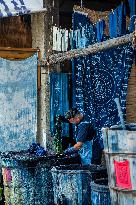
Duan Yuan, an inheritor of the tie-dye technique of Bai ethnic group, dyes fabrics in a dyehouse in Zhoucheng Village of Dali Bai Autonomous Prefecture, southwest China's Yunnan Province, November 21, 2025. Known as the hometown of the tie-dye technique of Bai ethnic group, Zhoucheng Village hosts over 200 households engaging in tie-dye businesses, with the number of employees exceeding 4,000. As a traditional folk technique of the Bai ethnic group, tie-dye boasts a history spanning over a thousand years and was included in the first batch of China's national intangible cultural heritage list in 2006. Tying and dyeing are the core steps in the process of making indigo tie-dye products. Artisans use needles and threads to create various patterns on the fabric, which are then dyed with plant-based dyes, resulting in blue backgrounds adorned with vivid white patterns. Photo by Hu Chao/Xinhua/ABACAPRESS.COM

  •  
Tie-Dye Technique Of Bai Ethnic Group - Chin

Tie-Dye Technique Of Bai Ethnic Group - Chin

Duan Yuan, an inheritor of the tie-dye technique of Bai ethnic group, dyes fabrics in a dyehouse in Zhoucheng Village of Dali Bai Autonomous Prefecture, southwest China's Yunnan Province, November 21, 2025. Known as the hometown of the tie-dye technique of Bai ethnic group, Zhoucheng Village hosts over 200 households engaging in tie-dye businesses, with the number of employees exceeding 4,000. As a traditional folk technique of the Bai ethnic group, tie-dye boasts a history spanning over a thousand years and was included in the first batch of China's national intangible cultural heritage list in 2006. Tying and dyeing are the core steps in the process of making indigo tie-dye products. Artisans use needles and threads to create various patterns on the fabric, which are then dyed with plant-based dyes, resulting in blue backgrounds adorned with vivid white patterns. Photo by Hu Chao/Xinhua/ABACAPRESS.COM

  •  
Tie-Dye Technique Of Bai Ethnic Group - Chin

Tie-Dye Technique Of Bai Ethnic Group - Chin

Duan Yuan, an inheritor of the tie-dye technique of Bai ethnic group, makes tie-dye designs in a dyehouse in Zhoucheng Village of Dali Bai Autonomous Prefecture, southwest China's Yunnan Province, November 21, 2025. Known as the hometown of the tie-dye technique of Bai ethnic group, Zhoucheng Village hosts over 200 households engaging in tie-dye businesses, with the number of employees exceeding 4,000. As a traditional folk technique of the Bai ethnic group, tie-dye boasts a history spanning over a thousand years and was included in the first batch of China's national intangible cultural heritage list in 2006. Tying and dyeing are the core steps in the process of making indigo tie-dye products. Artisans use needles and threads to create various patterns on the fabric, which are then dyed with plant-based dyes, resulting in blue backgrounds adorned with vivid white patterns. Photo by Hu Chao/Xinhua/ABACAPRESS.COM

  •  
Tie-Dye Technique Of Bai Ethnic Group - Chin

Tie-Dye Technique Of Bai Ethnic Group - Chin

Duan Yinmei, an inheritor of the tie-dye technique of Bai ethnic group, unties knots on fabrics in a dyehouse in Zhoucheng Village of Dali Bai Autonomous Prefecture, southwest China's Yunnan Province, November 21, 2025. Known as the hometown of the tie-dye technique of Bai ethnic group, Zhoucheng Village hosts over 200 households engaging in tie-dye businesses, with the number of employees exceeding 4,000. As a traditional folk technique of the Bai ethnic group, tie-dye boasts a history spanning over a thousand years and was included in the first batch of China's national intangible cultural heritage list in 2006. Tying and dyeing are the core steps in the process of making indigo tie-dye products. Artisans use needles and threads to create various patterns on the fabric, which are then dyed with plant-based dyes, resulting in blue backgrounds adorned with vivid white patterns. Photo by Hu Chao/Xinhua/ABACAPRESS.COM

  •  
Tie-Dye Technique Of Bai Ethnic Group - Chin

Tie-Dye Technique Of Bai Ethnic Group - Chin

Duan Yinmei, an inheritor of the tie-dye technique of Bai ethnic group, dyes patterns on fabrics in a dyehouse in Zhoucheng Village of Dali Bai Autonomous Prefecture, southwest China's Yunnan Province, November 21, 2025. Known as the hometown of the tie-dye technique of Bai ethnic group, Zhoucheng Village hosts over 200 households engaging in tie-dye businesses, with the number of employees exceeding 4,000. As a traditional folk technique of the Bai ethnic group, tie-dye boasts a history spanning over a thousand years and was included in the first batch of China's national intangible cultural heritage list in 2006. Tying and dyeing are the core steps in the process of making indigo tie-dye products. Artisans use needles and threads to create various patterns on the fabric, which are then dyed with plant-based dyes, resulting in blue backgrounds adorned with vivid white patterns. Photo by Hu Chao/Xinhua/ABACAPRESS.COM

  •  
Tie-Dye Technique Of Bai Ethnic Group - Chin

Tie-Dye Technique Of Bai Ethnic Group - Chin

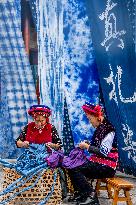
Duan Yinmei (R), an inheritor of the tie-dye technique of Bai ethnic group, and handicraftsman Duan Lilan create knots on fabrics in a dyehouse in Zhoucheng Village of Dali Bai Autonomous Prefecture, southwest China's Yunnan Province, November 21, 2025. Known as the hometown of the tie-dye technique of Bai ethnic group, Zhoucheng Village hosts over 200 households engaging in tie-dye businesses, with the number of employees exceeding 4,000. As a traditional folk technique of the Bai ethnic group, tie-dye boasts a history spanning over a thousand years and was included in the first batch of China's national intangible cultural heritage list in 2006. Tying and dyeing are the core steps in the process of making indigo tie-dye products. Artisans use needles and threads to create various patterns on the fabric, which are then dyed with plant-based dyes, resulting in blue backgrounds adorned with vivid white patterns. Photo by Hu Chao/Xinhua/ABACAPRESS.COM

  •  
PFW - Mugler Street Style

PFW - Mugler Street Style

Street style, arriving at Mugler Spring Summer 2026 ready-to-wear show, held at Garage Amelot, Paris, France, on October 2nd, 2025. Photo by Marie-Paola Bertrand-Hillion/ABACAPRESS.COM

  •  
PFW - Mugler Street Style

PFW - Mugler Street Style

Street style, arriving at Mugler Spring Summer 2026 ready-to-wear show, held at Garage Amelot, Paris, France, on October 2nd, 2025. Photo by Marie-Paola Bertrand-Hillion/ABACAPRESS.COM

  •  
PFW - Mugler Street Style

PFW - Mugler Street Style

Street style, arriving at Mugler Spring Summer 2026 ready-to-wear show, held at Garage Amelot, Paris, France, on October 2nd, 2025. Photo by Marie-Paola Bertrand-Hillion/ABACAPRESS.COM

  •  
PFW - Akris Street Style

PFW - Akris Street Style

Street style, Karen Blanchard arriving at Akris Spring Summer 2025 show, held at College des Bernardins, Paris, France, on September 29th, 2024. Photo by Marie-Paola Bertrand-Hillion/ABACAPRESS.COM

  •  
PFW - Rabanne Street Syle

PFW - Rabanne Street Syle

Street style, Nina Urgell Cloquell arriving at Rabanne Spring Summer 2025 show, held at Palais de Tokyo, Paris, France, on September 25, 2024. Photo by Marie-Paola Bertrand-Hillion/ABACAPRESS.COM

  •  
(Int'l Exchange)CHINA-HUBEI-FRANCE-TEENAGER-SUMMER CAMP (CN)

(Int'l Exchange)CHINA-HUBEI-FRANCE-TEENAGER-SUMMER CAMP (CN)

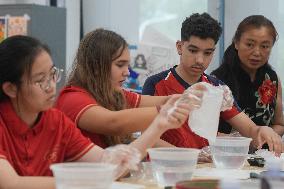
(240726) -- WUHAN, July 26, 2024 Photo by Xinhua/ABACAPRESS.COM) -- Teenagers from China and France experience tie-dye at ISA Wuhan School in Wuhan, central China's Hubei Province, July 26, 2024. During the 11-day China-France teenagers' summer camp, 20 French teenagers aged 12 to 15 experienced Chinese traditional culture and carried out rich sport activities to enhance cultural exchange and mutual understandings. Photo by Xinhua/ABACAPRESS.COM/Du Zixuan)

  •  
#CHINA-SUMMER VACATION-ACTIVITIES (CN)

#CHINA-SUMMER VACATION-ACTIVITIES (CN)

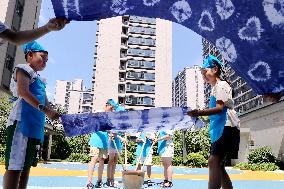
(240719) -- BEIJING, July 19, 2024 Photo by Xinhua/ABACAPRESS.COM) -- Children experience tie-dye in Deqing County of Huzhou, east China's Zhejiang Province, July 19, 2024. (Photo by Xie Shangguo/Xinhua/ABACAPRESS.COM

  •  
PFW - Street Style

PFW - Street Style

Street style, Sririta Jensen Narongdej arriving at Zuhair Murad Fall Winter 2024-2025 Haute Couture show, held at Hotel Rothschild, Paris, France, on June 26th, 2024. Photo by Marie-Paola Bertrand-Hillion/ABACAPRESS.COM

  •  
PFW - Street Style

PFW - Street Style

Street style, Sririta Jensen Narongdej arriving at Zuhair Murad Fall Winter 2024-2025 Haute Couture show, held at Hotel Rothschild, Paris, France, on June 26th, 2024. Photo by Marie-Paola Bertrand-Hillion/ABACAPRESS.COM

  •  
Dali Tie-dye

Dali Tie-dye

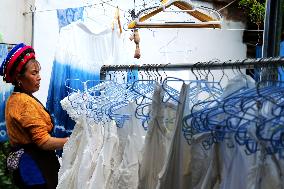
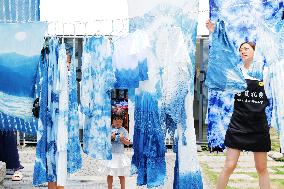
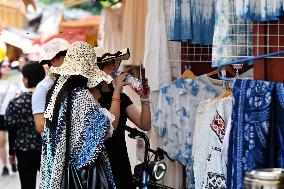
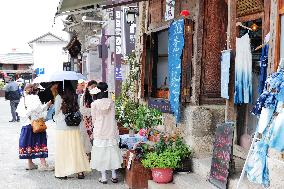
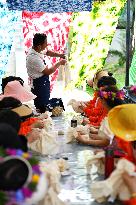
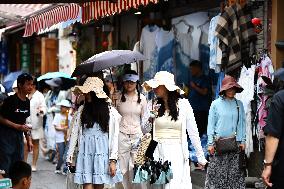
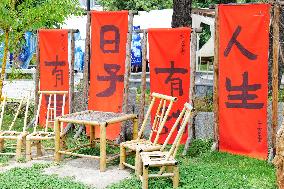
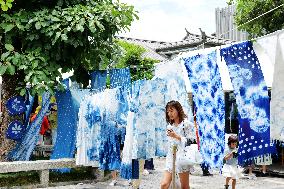
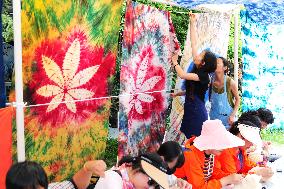
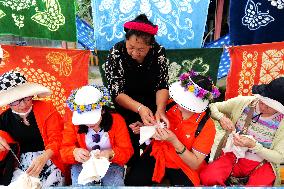
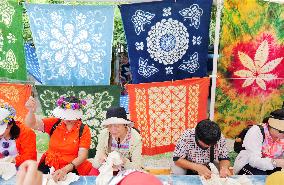
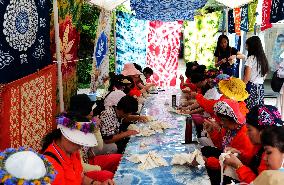
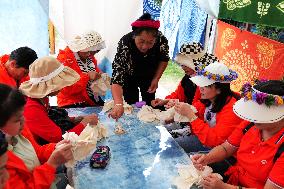
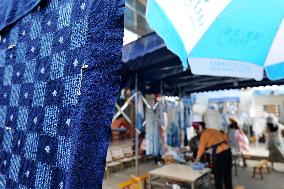
DALI, CHINA - JUNE 22, 2024 - Visitors experience Dali tie-dye with ethnic and regional characteristics in Dali, Yunnan province, China, June 22, 2024.

  •  
Dali Tie-dye

Dali Tie-dye

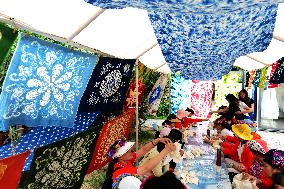
DALI, CHINA - JUNE 22, 2024 - Visitors experience Dali tie-dye with ethnic and regional characteristics in Dali, Yunnan province, China, June 22, 2024.

  •  
Dali Tie-dye

Dali Tie-dye

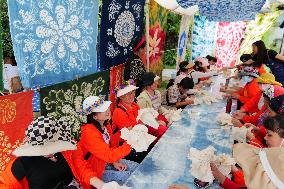
DALI, CHINA - JUNE 22, 2024 - Visitors experience Dali tie-dye with ethnic and regional characteristics in Dali, Yunnan province, China, June 22, 2024.

  •  
Dali Tie-dye

Dali Tie-dye

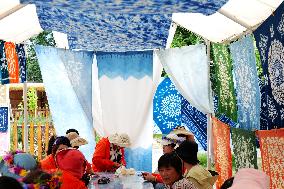
DALI, CHINA - JUNE 22, 2024 - Visitors experience Dali tie-dye with ethnic and regional characteristics in Dali, Yunnan province, China, June 22, 2024.

  •  
Dali Tie-dye

Dali Tie-dye

DALI, CHINA - JUNE 22, 2024 - Visitors experience Dali tie-dye with ethnic and regional characteristics in Dali, Yunnan province, China, June 22, 2024.

  •  
Dali Tie-dye

Dali Tie-dye

DALI, CHINA - JUNE 22, 2024 - Visitors experience Dali tie-dye with ethnic and regional characteristics in Dali, Yunnan province, China, June 22, 2024.

  •  
Dali Tie-dye

Dali Tie-dye

DALI, CHINA - JUNE 22, 2024 - Visitors experience Dali tie-dye with ethnic and regional characteristics in Dali, Yunnan province, China, June 22, 2024.

  •  
Dali Tie-dye

Dali Tie-dye

DALI, CHINA - JUNE 22, 2024 - Visitors experience Dali tie-dye with ethnic and regional characteristics in Dali, Yunnan province, China, June 22, 2024.

  •  
Dali Tie-dye

Dali Tie-dye

DALI, CHINA - JUNE 22, 2024 - Visitors experience Dali tie-dye with ethnic and regional characteristics in Dali, Yunnan province, China, June 22, 2024.

  •  
Dali Tie-dye

Dali Tie-dye

DALI, CHINA - JUNE 22, 2024 - Visitors experience Dali tie-dye with ethnic and regional characteristics in Dali, Yunnan province, China, June 22, 2024.

  •  
Dali Tie-dye

Dali Tie-dye

DALI, CHINA - JUNE 22, 2024 - Visitors experience Dali tie-dye with ethnic and regional characteristics in Dali, Yunnan province, China, June 22, 2024.

  •  
Dali Tie-dye

Dali Tie-dye

DALI, CHINA - JUNE 22, 2024 - Visitors experience Dali tie-dye with ethnic and regional characteristics in Dali, Yunnan province, China, June 22, 2024.

  •  
Dali Tie-dye

Dali Tie-dye

DALI, CHINA - JUNE 22, 2024 - Visitors experience Dali tie-dye with ethnic and regional characteristics in Dali, Yunnan province, China, June 22, 2024.

  •  
Dali Tie-dye

Dali Tie-dye

DALI, CHINA - JUNE 22, 2024 - Visitors experience Dali tie-dye with ethnic and regional characteristics in Dali, Yunnan province, China, June 22, 2024.

  •  
Dali Tie-dye

Dali Tie-dye

DALI, CHINA - JUNE 22, 2024 - Visitors experience Dali tie-dye with ethnic and regional characteristics in Dali, Yunnan province, China, June 22, 2024.

  •  
Dali Tie-dye

Dali Tie-dye

DALI, CHINA - JUNE 22, 2024 - Visitors experience Dali tie-dye with ethnic and regional characteristics in Dali, Yunnan province, China, June 22, 2024.

  •  
Dali Tie-dye

Dali Tie-dye

DALI, CHINA - JUNE 22, 2024 - Visitors experience Dali tie-dye with ethnic and regional characteristics in Dali, Yunnan province, China, June 22, 2024.

  •  
Dali Tie-dye

Dali Tie-dye

DALI, CHINA - JUNE 22, 2024 - Visitors experience Dali tie-dye with ethnic and regional characteristics in Dali, Yunnan province, China, June 22, 2024.

  •  
CHINA-HUBEI-YOUNG AMERICANS-CHINESE CULTURE-EXCHANGE TOUR (CN)

CHINA-HUBEI-YOUNG AMERICANS-CHINESE CULTURE-EXCHANGE TOUR (CN)

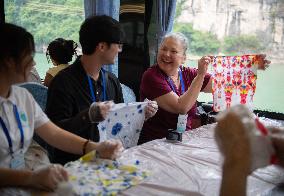
(240613) -- WUHAN, June 13, 2024 Photo by Xinhua/ABACAPRESS.COM) -- Participants taking part in a China-U.S. youth exchange program experience tie-dye on board an electric tourist ship in Yichang, central China's Hubei Province, June 11, 2024. A group of young Americans and Chinese people has completed an adventurous summer journey in central China's Hubei Province, immersing themselves in the ancient traditions and modernity of Chinese culture over an action-packed week. From June 6 to 12, over 40 participants from universities, enterprises and social organizations took part in a China-U.S. youth exchange program, aiming to bridge the gap between young people from both countries through shared experiences and cultural immersion. TO GO WITH "Across China: Young Americans soak up history, culture on central China exchange tour" Photo by Xinhua/ABACAPRESS.COM/Du Zixuan)

  •  
CHINA-HUBEI-YOUNG AMERICANS-CHINESE CULTURE-EXCHANGE TOUR (CN)

CHINA-HUBEI-YOUNG AMERICANS-CHINESE CULTURE-EXCHANGE TOUR (CN)

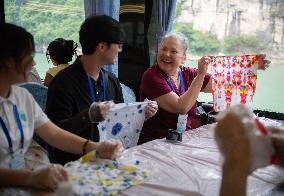
(240613) -- WUHAN, June 13, 2024 (Xinhua) -- Participants taking part in a China-U.S. youth exchange program experience tie-dye on board an electric tourist ship in Yichang, central China's Hubei Province, June 11, 2024. A group of young Americans and Chinese people has completed an adventurous summer journey in central China's Hubei Province, immersing themselves in the ancient traditions and modernity of Chinese culture over an action-packed week. From June 6 to 12, over 40 participants from universities, enterprises and social organizations took part in a China-U.S. youth exchange program, aiming to bridge the gap between young people from both countries through shared experiences and cultural immersion. TO GO WITH "Across China: Young Americans soak up history, culture on central China exchange tour" (Xinhua/Du Zixuan)

  •  

UN Chinese Language Day celebrated in Tunisia

STORY: UN Chinese Language Day celebrated in Tunisia SHOOTING TIME: April 17, 2024 DATELINE: April 18, 2024 LENGTH: 00:02:21 LOCATION: Tunis CATEGORY: CULTURE SHOTLIST: 1. various of Tunisian students participating in a quiz challenge on Chinese culture 2. various of Tunisian students experiencing calligraphy, inscription rubbing and tie-dye 3. various of participants taking a group photo STORYLINE: Tunisia on Wednesday celebrated this year's United Nations Chinese Language Day, which falls on April 20, by holding a cultural event in its capital city. The celebration was held in the Confucius Institute at Carthage University, where participants queued up to experience Chinese calligraphy, inscription rubbing and tie-dye, or take a quiz on Chinese culture. The event attracted Chinese culture enthusiasts, interested locals, and students studying the Chinese language at Carthage University. This provided a chance for Tunisians to gain a deeper understanding of the Asian country. Duan Shuk, a Tunis

  •  
TUNISIA-TUNIS-UN CHINESE LANGUAGE DAY

TUNISIA-TUNIS-UN CHINESE LANGUAGE DAY

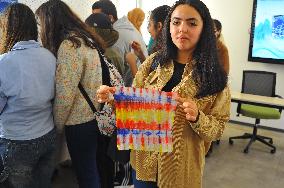
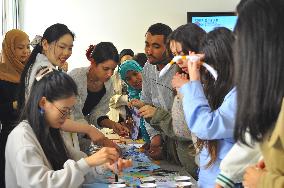
(240417) -- TUNIS, April 17, 2024 (Xinhua) -- A student shows her tie-dye work in the Confucius Institute at Carthage University in Tunis, Tunisia, on April 17, 2024. Tunisia on Wednesday celebrated this year's United Nations Chinese Language Day, which falls on April 20, by holding a cultural event here in the capital city. (Photo by Adel Ezzine/Xinhua)

  •  
TUNISIA-TUNIS-UN CHINESE LANGUAGE DAY

TUNISIA-TUNIS-UN CHINESE LANGUAGE DAY

(240417) -- TUNIS, April 17, 2024 (Xinhua) -- Students learn tie-dye techniques in the Confucius Institute at Carthage University in Tunis, Tunisia, on April 17, 2024. Tunisia on Wednesday celebrated this year's United Nations Chinese Language Day, which falls on April 20, by holding a cultural event here in the capital city. (Photo by Adel Ezzine/Xinhua)

  • Main
  • Top
  • Editorial
  • Creative
  • About Us
  • About ILG
  • Terms of use
  • Company
  • BEHIND
  • Price List
  • Single Plan
  • Monthly Plan
  • Services
  • Shooting
  • Rights Clearance
  • Support
  • FAQ
  • How To Buy
  • Contact Us
  • Become a Partner

© KYODO NEWS IMAGES INC

All Rights Reserved.

  • Editorial
  • Olympics
  • News
  • Sports
  • Japan
  • Tech
  • Royal
  • Disaster
  • NorthKorea
  • Old Japan
  • SNS
  • Creative
  • Food
  • Japan
  • Landscape
  • Animal
  • Popular
  • #Ukraine
  • #China
  • #coronavirus
  • #N. Korea
  • #Thailand
  • #Russia
  • #Ukraine
  • #China
  • #coronavirus
  • #N. Korea
  • #Thailand
  • #Russia
  • Food
  • Japan
  • Landscape
  • Animal
  • Olympics
  • News
  • Sports
  • Japan
  • Tech
  • Royal
  • Disaster
  • NorthKorea
  • Old Japan
  • SNS