•  
Nuke regulator inspects decommissioned Tokai power plant

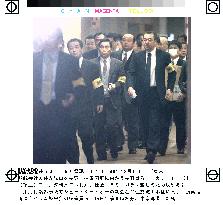
Nuke regulator inspects decommissioned Tokai power plant

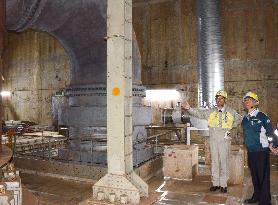
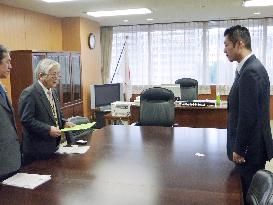
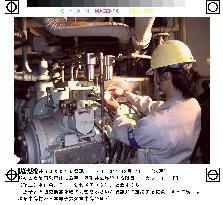
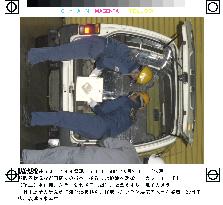
MITO, Japan - Satoru Tanaka (R), a commissioner of the Nuclear Regulation Authority, inspects a facility at Japan Atomic Power Co.'s nuclear power plant in Tokaimura, Ibaraki Prefecture, northeast of Tokyo, on Oct. 21, 2014. The Tokai plant is the first commercial nuclear reactor to be decommissioned in Japan.

  •  
Nuke regulator inspects decommissioned Tokai power plant

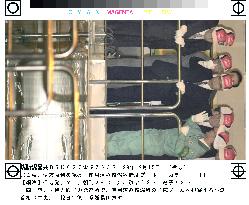
Nuke regulator inspects decommissioned Tokai power plant

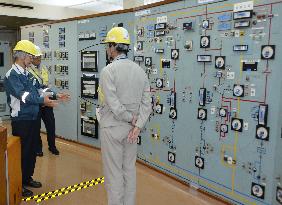
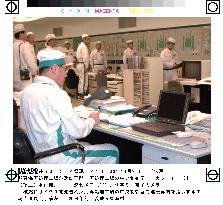
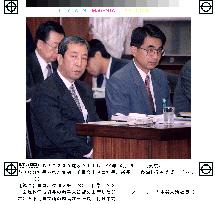
MITO, Japan - Satoru Tanaka (L), a commissioner of the Nuclear Regulation Authority, inspects a central control room at Japan Atomic Power Co.'s Tokai nuclear power plant in Tokaimura, Ibaraki Prefecture, northeast of Tokyo, on Oct. 21, 2014. The Tokai plant is the first commercial nuclear reactor to be decommissioned in Japan.

  •  
Japan Atomic Power explains moves on Tokai No. 2 plant

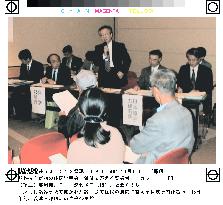
Japan Atomic Power explains moves on Tokai No. 2 plant

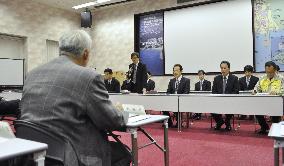
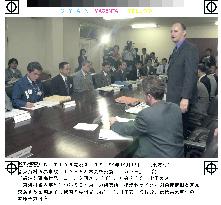
MITO, Japan - Japan Atomic Power Co. holds a meeting in Tokaimura, Ibaraki Prefecture on March 17, 2014 to explain to nearby municipal governments about its application with the Nuclear Regulation Authority for a safety review of the Tokai No. 2 Power Station.

  •  
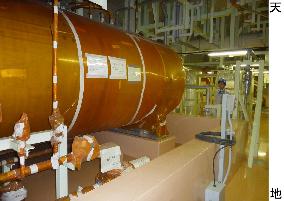
Radiation leak at Ibaraki laboratory

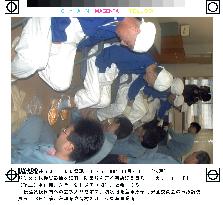
Radiation leak at Ibaraki laboratory

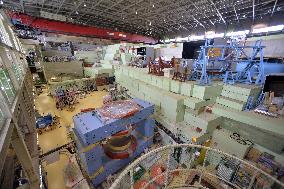
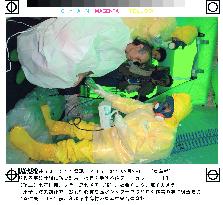
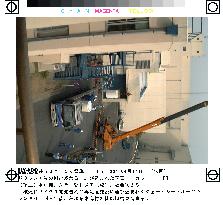
TOKAIMURA, Japan - Photo shows the inside of a nuclear physics laboratory of the Japan Atomic Energy Agency in Tokaimura, Ibaraki Prefecture, on May 25, 2013, where radioactive substances were released into the atmosphere outside the controlled area two days earlier. The JAEA said May 25 six people were confirmed to have been exposed to radiation and a quick checkup suggested possible exposure of 24 others.

  •  
Radiation leak at Ibaraki laboratory

Radiation leak at Ibaraki laboratory

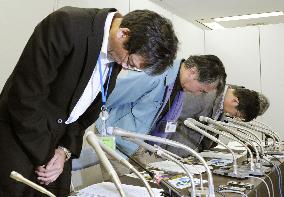
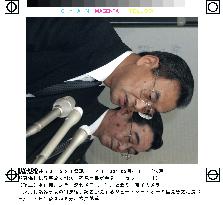
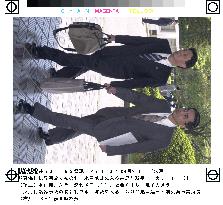
TOKYO, Japan - Officials from the Japan Atomic Energy Agency bow in apology during a press conference in Tokyo on May 25, 2013, after radioactive substances were leaked at one of the agency's nuclear physics laboratories in Tokaimura, Ibaraki Prefecture two days earlier.

  •  
Radiation leak at Ibaraki laboratory

Radiation leak at Ibaraki laboratory

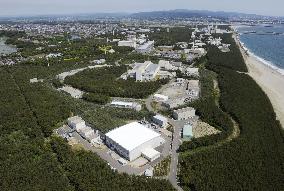
TOKAIMURA, Japan - Photo taken from a Kyodo News helicopter on May 25, 2013, shows a nuclear physics laboratory (front) of the Japan Atomic Energy Agency in Tokaimura, Ibaraki Prefecture, where radioactive substances were released into the atmosphere outside the controlled area two days earlier. The JAEA said May 25 six people were confirmed to have been exposed to radiation and a quick checkup suggested possible exposure of 24 others.

  •  
IAEA-sponsored training session

IAEA-sponsored training session

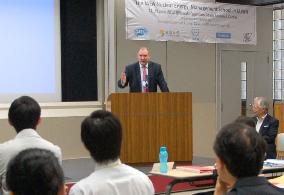
MITO, Japan - International Atomic Energy Agency Deputy Director General Alexander Bychkov speaks during a ceremony to mark the opening of a training session for nuclear engineers and researchers in Tokaimura, Ibaraki Prefecture, northeast of Tokyo on June 11, 2012.

  •  
Monju reactor's lab unused

Monju reactor's lab unused

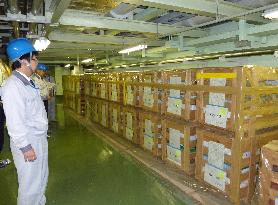
TOKYO, Japan - Photo taken on Nov. 11, 2011, shows the inside of a laboratory affiliated with the Monju prototype fast-breeder reactor, in Tokaimura, Ibaraki Prefecture. The lab, designed to develop new nuclear fuel recycling technology, has been unused since its construction was suspended in 2000 following several accidents, prompting the Board of Audit of Japan to call on Nov. 14, 2011, for the operator of the Monju reactor to find a use for it. Some 83 billion yen has already been spent on it.

  •  
Monju reactor's lab unused

Monju reactor's lab unused

TOKYO, Japan - Photo taken on Nov. 11, 2011, shows the inside of a laboratory affiliated with the Monju prototype fast-breeder reactor, in Tokaimura, Ibaraki Prefecture. The lab, designed to develop new nuclear fuel recycling technology, has been unused since its construction was suspended in 2000 following several accidents, prompting the Board of Audit of Japan to call on Nov. 14, 2011, for the operator of the Monju reactor to find a use for it. Some 83 billion yen has already been spent on it.

  •  
Tokaimura mayor calls for scrapping nuclear plant

Tokaimura mayor calls for scrapping nuclear plant

TOKYO, Japan - Tatsuya Murakami (2nd from L), mayor of the village of Tokaimura, Ibaraki Prefecture, on Oct. 11, 2011 in Tokyo conveys a request to nuclear disaster minister Goshi Hosono (R) that the Tokai No. 2 nuclear power station in the village be decommissioned. The head of Tokaimura said during a meeting with Hosono that the plant does not meet location requirements because one million people live within a 30-kilometer radius.

  •  
Tsunami drill at Tokaimura

Tsunami drill at Tokaimura

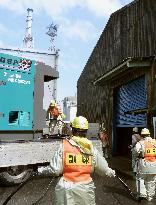
MITO, Japan - Employees of Japan Atomic Power Co. connect a cable to a power supply vehicle during a disaster drill held under the assumption that all power sources had been lost due to a tsunami at the Tokai No. 2 Power Station (seen in the background), a nuclear power plant, in the village of Tokaimura, Ibaraki Prefecture, on April 19, 2011.

  •  
JCO, 6 employees found guilty over fatal nuke accident

JCO, 6 employees found guilty over fatal nuke accident

MITO, Japan - Tomoyuki Inami (L), president of JCO Co., speaks at a press conference at the Mito District Court on March 3 after the local court found the company and six of its employees guilty of neglect leading to the deaths of two JCO workers in Japan's worst nuclear accident at its plant in Tokaimura, Ibaraki Prefecture, in 1999.

  •  
(1)Demolition starts on Japan's 1st commercial nuke reactor

(1)Demolition starts on Japan's 1st commercial nuke reactor

MITO, Japan - A worker locks the valves of the pipes between the nuclear reactor and heat exchangers at Japan Atomic Power Co.'s Tokai Power Station in the village of Tokaimura in Ibaraki Prefecture, on Dec. 4, 2001 in preparation for the demolition of Japan's first commercial nuclear reactor built in 1966. The 92.7 billion yen plan for dismantling and decommissioning the reactor is slated for completion in fiscal 2017.

  •  
Drill marks 2nd anniversary of Tokaimura nuclear accident

Drill marks 2nd anniversary of Tokaimura nuclear accident

MITO, Japan - A resident in the village of Tokaimura, Ibaraki Prefecture, receives a radiation check on Sept. 29 during a nuclear disaster drill conducted by the Ibaraki prefectural government. The drill was held a day ahead of the second anniversary of Japan's worst nuclear accident in the village.

  •  
6 JCO officials plead guilty to negligence charges

6 JCO officials plead guilty to negligence charges

MITO, Japan - Kenzo Koshijima (R), the former head of JCO Co.'s uranium processing plant in Tokaimura, enters the Mito District Court in Mito, Ibaraki Prefecture, on April 23. Koshijima and five other JCO employees pleaded guilty to charges of negligence resulting in death in Japan's worst nuclear accident in 1999 during the first hearing of their cases. Two of the workers -- Hisashi Ouchi, 35, and Masato Shinohara, 40 -- died from radiation sickness in December 1999 and April last year, respectively.

  •  
Ship departs Fukushima for Aomori with spent nuclear fuel

Ship departs Fukushima for Aomori with spent nuclear fuel

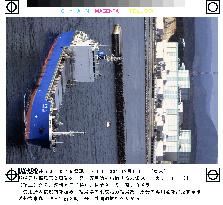
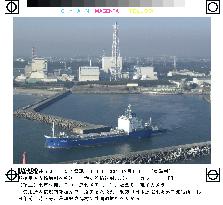
TOMIOKA, Japan - The 4,913-ton Rokuei Maru, carrying 13 tons of spent nuclear fuel, leaves a port in Fukushima Prefecture on Dec. 18 to deliver its cargo to a reprocessing plant in Aomori Prefecture. The ship originated from Tokaimura, Ibaraki Prefecture, and was loaded with spend nuclear fuel from Tokyo Electric Power Co.'s Fukushima No. 2 plant. It is scheduled to arrive Dec. 19 in Mutsuogawara port in the village of Rokkasho, Aomori Prefecture.

  •  
Spent nuclear fuel leaves Tokaimura for Rokkasho

Spent nuclear fuel leaves Tokaimura for Rokkasho

TOKAIMURA, Japan - The 4,913-ton Rokuei Maru, carrying 11 tons of spent nuclear fuel, departs from a port at Tokaiura, Ibaraki Prefecture, on Dec. 16 for the village of Rokkasho in Aomori Prefecture, marking Japan's first transport of such fuel after villagers agreed to its reprocessing. The cargo ship is transporting the fuel from the Tokai No. 2 reactor run by Japan Atomic Power Co. in Tokaimura, and is scheduled to arrive Tuesday in Rokkasho.

  •  
Shipment of nuclear fuel gets underway

Shipment of nuclear fuel gets underway

TOKAIMURA, Japan - The first full-scale shipment of spent nuclear fuel to a reprocessing plant in Aomori Prefecture gets underway Dec. 15 with the loading on a cargo ship of about 11 tons of spent fuel from a nuclear power plant in Tokaimura, Ibaraki Prefecture.

  •  
Tokaimura nuclear fuel reprocessing plant reopens

Tokaimura nuclear fuel reprocessing plant reopens

MITO, Japan - Photo shows the chief of a nuclear fuel reprocessing plant in Tokaimura, Ibaraki Prefecture, giving instructions to its employees on Nov. 20. The plant, which was closed after a fire and explosion in March 1997, resumed operations earlier in the day. Workers at the plant of the state-run Japan Nuclear Cycle Development Institute began reprocessing uranium solution taken from a fuel plant of JCO Co., also in Tokaimura.

  •  
Ibaraki to reopen nuclear fuel reprocessing plant

Ibaraki to reopen nuclear fuel reprocessing plant

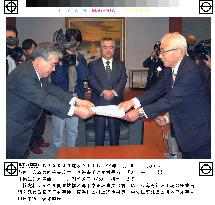
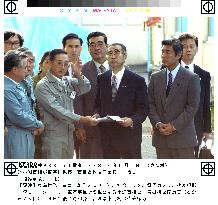
MITO, Japan - Tokaimura Mayor Tatsuya Murakami (L) delivers notification Nov. 10 to Yasumasa Togo (R), head of the state-run Japan Nuclear Cycle Development Institute which operates a nuclear fuel reprocessing plant in the Ibaraki Prefecture village, allowing it to reopen the plant. The plant has been closed since a fire and explosion accident in March 1997, which exposed 37 workers to high levels of radiation. Ibaraki Gov. Masaru Hashimoto (C) looks on.

  •  
Hearing on new nuclear plant faces protest

Hearing on new nuclear plant faces protest

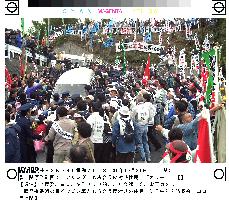
YAMAGUCHI, Japan - Residents opposing a Chugoku Electric Power Co. plan to build a nuclear power plant in Kaminoseki, Yamaguchi Prefecture, stop a van carrying supporters of the plan Oct. 31 before the central government held first public hearing on the plan in the town. The hearing is the first of its kind since Japan's worst-ever nuclear accident occurred at a uranium-processing plant run by JCO Co. in Tokaimura, Ibaraki Prefecture in September last year.

  •  
Civic group members march in memory of Tokaimura victims

Civic group members march in memory of Tokaimura victims

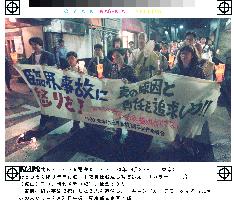
TOKYO, Japan - Antinuclear civic group members march in Tokyo on Sept. 30 in memory of two workers who died after Japan's worst nuclear accident in Tokaimura, Ibaraki Prefecture, a year ago. On Sept. 30, 1999, an explosion occurred following a nuclear fission chain reaction at a uranium-processing plant run by JCO Co. in Tokaimura, 120 kilometers northeast of Tokyo. Two plant workers died months later.

  •  
Tokaimura stages drill on anniversary of nuclear accident

Tokaimura stages drill on anniversary of nuclear accident

TOKAIMURA, Japan - A rescue worker practices measuring radiation exposure on workers and residents of Tokaimura, Ibaraki Prefecture, on Sept. 30 during a nuclear disaster drill. The event took place on the first anniversary of Japan's worst nuclear power accident in the village, which claimed two lives. About 800 people took part.

  •  
Coffin of 2nd nuclear accident victim at hospital

Coffin of 2nd nuclear accident victim at hospital

TOKYO, Japan - A coffin carrying Masato Shinohara, the second victim of Japan's worst nuclear accident, is moved out of the University of Tokyo Hospital on April 27. Shinohara, 40, died at the hospital after being exposed to a massive dose of radiation in the accident, which occurred in Tokaimura, Ibaraki Prefecture, last September.

  •  
Remaining uranium solution transported from Tokaimura plant

Remaining uranium solution transported from Tokaimura plant

MITO, Japan - An operation to transport uranium solution remaining at the site of Japan's worst nuclear accident in Tokaimura, Ibaraki Prefecture, to a nearby nuclear fuel reprocessing plant is completed on April 14. The last four stainless steel containers (C) are carried on a truck from the conversion building at the uranium processing plant operated by JCO Co. to the reprocessing plant of Japan Nuclear Cycle Development Institute, also in the village of Tokaimura.

  •  
JCO's president Kitani answers reporters

JCO's president Kitani answers reporters

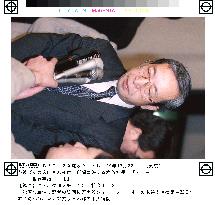
TOKYO, Japan - Hiroharu Kitani, president of JCO Co., answers reporters' questions at the University of Tokyo Hospital on Dec. 22 after JCO worker Hisashi Ouchi died the previous day after suffering massive radiation exposure in Japan's worst nuclear accident in late September. Ouchi's death came 83 days after the accident at the JCO uranium processing plant in Tokaimura, Ibaraki Prefecture.

  •  
Ouchi's body brought out of hospital

Ouchi's body brought out of hospital

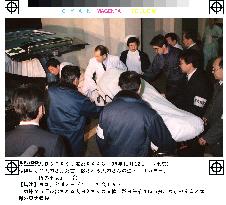
TOKYO, Japan - The body of Hisashi Ouchi, the JCO Co. worker who died Dec. 21, 83 days after an accident at a uranium processing plant in Tokaimura, Ibaraki Prefecture, is brought out of the University of Tokyo Hospital on Dec. 22. Ouchi was exposed to a massive dose of radiation in the late September accident, Japan's worst nuclear disaster.

  •  
Nuclear accident victim in critical condition

Nuclear accident victim in critical condition

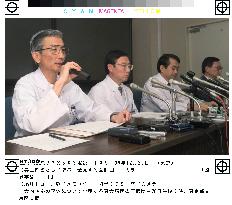
TOKYO, Japan - A group of doctors at the University of Tokyo Hospital brief reporters Dec. 20 on the condition of Hisashi Ouchi, who was exposed to radiation while at work in a conversion building at JCO Co.'s uranium processing plant in Tokaimura, Ibaraki Prefecture, on Sept. 30. Doctors said 35-year-old Ouchi is in an extremely critical condition and is continuing to deteriorate.

  •  
JCO parent's offices raided over nuclear accident

JCO parent's offices raided over nuclear accident

TOKYO, Japan - Police investigators on Dec. 16 enter the Tokyo head office of Sumitomo Metal Mining Co., the parent company of JCO Co., on suspicion that Sumitomo officials committed professional negligence and violated a law on nuclear facilities in connection with Japan's worst-ever nuclear accident. The Sept. 30 radiation leak in Tokaimura, Ibaraki Prefecture, occurred at a plant operated by JCO.

  •  
Obuchi visits Ehime nuclear plant to assure safety

Obuchi visits Ehime nuclear plant to assure safety

IKATA, Japan - Prime Minister Keizo Obuchi (C) visits the Ikata nuclear power plant in Ehime Prefecture on Dec. 12 to assure the safety of nuclear power plants despite the nation's worst nuclear accident at Tokaimura, Ibaraki Prefecture, in September. He saw a pool containing spent nuclear fuel at the Ikata plant's No. 3 reactor and other facilities.

  •  
Tokaimura plant's conversion building inspected

Tokaimura plant's conversion building inspected

TOKAIMURA, Japan - Members from the Nuclear Safety Commission's investigative committee, wearing protective clothing, on Nov. 23 inspect the JCO Co. uranium fuel processing plant in Tokaimura, Ibaraki Prefecture, the site of Japan's worst nuclear accident in late September.

  •  
Residents briefed on Tokaimura nuclear accident

Residents briefed on Tokaimura nuclear accident

NAKA, Japan - Japanese Science and Technology Agency officials respond Nov. 13 to questions by residents near the site of Japan's worst nuclear accident in Tokaimura, Ibaraki Prefecture. The question-and-answer session was held at a public hall in Naka near Tokaimura. The Sept. 30 nuclear accident involving a nuclear fission chain reaction irradiated at least 69 people.

  •  
Uranium solution collected from Tokaimura plant

Uranium solution collected from Tokaimura plant

TOKAIMURA, Japan, - Uranium solution samples collected from a nuclear fuel processing plant in Tokaimura, the scene of Japan's worst nuclear accident last month, are carried to the Japan Atomic Energy Research Institute Oct. 20 for analysis.

  •  
JCO's president attends lower house meeting

JCO's president attends lower house meeting

TOKYO, Japan - JCO Co. President Hiroharu Kitani (L) and Kenzo Koshijima (R), head of the company's uranium processing plant in Tokaimura, Ibaraki Prefecture, on Oct. 19 attend as witnesses a science and technology committee meeting in the House of Representatives on Japan's worst nuclear accident at the plant on Sept. 30.

  •  
IAEA team visits Japanese radioactive institute

IAEA team visits Japanese radioactive institute

CHIBA, Japan - A team of experts from the International Atomic Energy Agency (IAEA) visits Oct. 16 the National Institute of Radiological Sciences in Chiba, east of Tokyo, where three Japanese workers are admitted after being heavily exposed to radiation at the country's worst nuclear accident Sept. 30 at Tokaimura, Ibaraki Prefecture.

  •  
IAEA team examines radiation near nuclear plant

IAEA team examines radiation near nuclear plant

TOKAIMURA, Japan - Experts from the International Atomic Energy Agency on Oct. 15 check radiation at a parking lot in Tokaimura, Ibaraki Prefecture, northeast of Tokyo, near the JCO Co. plant where Japan's worst-ever nuclear accident occurred Sept. 30.

  •  
IAEA experts offer views on Tokaimura accident

IAEA experts offer views on Tokaimura accident

TOKAIMURA, Japan - Three experts (right front) from the International Atomic Energy Agency exchange views on the Sept. 30 Tokaimura nuclear accident with officials of the Japan Atomic Energy Research Institute (JAERI) and the Japan Nuclear Cycle Development Institute at JAERI's office on Oct. 15.

  •  
17,000 residents checked for radiation in Tokaimura

17,000 residents checked for radiation in Tokaimura

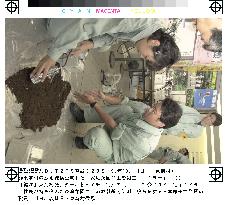
TOKAIMURA, Japan - The last set of radiation checks is conducted on about 17,000 residents in the village of Tokaimura, about 120 kilometers northeast of Tokyo, and their possessions on Oct. 11, following Japan's Sept. 30 worst nuclear accident. The photo shows radiation checks of home-farming soil.

  •  
U.S. radiation expert consults with Japanese doctors

U.S. radiation expert consults with Japanese doctors

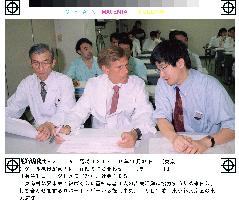
TOKYO, Japan - Robert Gale (center), a U.S. expert on treatment of victims of radiation exposure, discuss with two Japanese doctors Oct. 2 at the University of Tokyo Hospital. They are discussing how to treat three Japanese workers exposed to radiation last week at a nuclear-processing plant in Tokaimura, Ibaraki Prefecture.

  •  
Cartoon depicts Japan's worst nuclear accident

Cartoon depicts Japan's worst nuclear accident

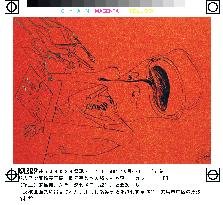
HIROSHIMA, Japan - About 270 cartoons and illustrations from 35 countries including the United States and Russia are contributed to an antinuclear cartoon exhibition, which opened Oct. 9 in the western Japan city of Hiroshima for a 12-day session. A cartoon, submitted by a Japanese cartoonist Keiichi Makino, depicts a Sept. 30 nuclear accident at a uranium reprocessing plant in Tokaimura, some 120 kilometers northeast of Tokyo.

  •  
U.S. expert arrives to help treat nuke accident victims

U.S. expert arrives to help treat nuke accident victims

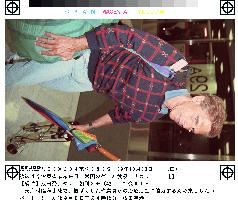
NARITA, Japan - Robert Gale, a 53-year-old professor at the University of California, Los Angeles, arrives at Narita airport on Oct. 8 to cooperate with Japanese doctors in treating three workers who were seriously injured in Japan's worst nuclear accident at Tokaimura on Sept. 30.

  •  
Greenpeace briefs press on nuclear accident

Greenpeace briefs press on nuclear accident

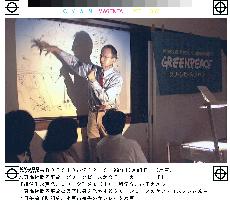
MITO, Japan - Jan Rispens of Greenpeace International shows reporters in Mito, Ibaraki Prefecture on Oct. 7 the environmental group's analysis of the nuclear accident that occurred Sept. 30 at a uranium-processing company in Tokaimura in the same prefecture.

  •  
Obuchi samples melon during Tokaimura visit

Obuchi samples melon during Tokaimura visit

TOKAIMURA, Japan - Prime Minister Keizo Obuchi samples melon produced in Tokaimura during an inspection tour of the village Oct. 6 to demonstrate the product is not contaminated by radiation.

  •  
Obuchi inspects nuclear fuel factory

Obuchi inspects nuclear fuel factory

TOKAIMURA, Japan - Prime Minister Keizo Obuchi (C) inspects the nuclear fuel processing factory of JCO Co. in Tokaimura, Ibaraki Prefecture, on Oct. 6. Standing to his right is Hirofumi Nakasone, chief of the Science and Technology Agency.

  •  
Obuchi visits Tokaimura

Obuchi visits Tokaimura

TOKAIMURA, Japan - Villagers and Tokaimura municipal officials watch as Prime Minister Keizo Obuchi (C) inspects eggplants during his visit to Tokaimura on Oct. 6. Obuchi earlier said his government will make efforts to revamp legal measures to deal with nuclear disasters, including submitting a new bill to parliament.

  •  
Police raid JCO facilities over radiation leak

Police raid JCO facilities over radiation leak

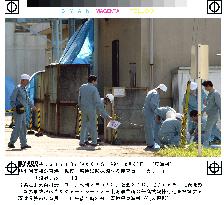
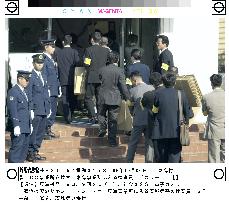
TOKAIMURA, Japan - Police search the nuclear fuel processing factory in Tokaimura, Ibaraki Prefecture, of JOC Co. on Oct. 6 in connection with Japan's worst-ever nuclear accident Sept. 30. The search came ahead of Prime Minister Keizo Obuchi's arrival at the plant there.

  •  
Police raid JCO office over nuclear accident

Police raid JCO office over nuclear accident

MITO, Japan - Police prepare to raid JCO Co.'s nuclear fuel processing factory in Tokaimura, Ibaraki Prefecture, on Oct. 6, after Japan's worst nuclear accident occurred there Sept. 30. Tokyo-based JCO, a wholly owned subsidiary of Sumitomo Metal Mining Co., is suspected of professional negligence and violation of nuclear power plant regulations in the production of highly enriched uranium fuel.

  •  
Workers used buckets at Tokaimura plant for 7-8 years

Workers used buckets at Tokaimura plant for 7-8 years

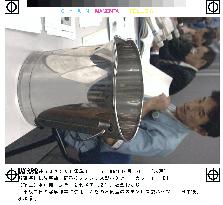
MITO, Japan - The photo shows a stainless steel bucket identical to the ones used for mixing a uranium solution at a uranium processing plant in Tokaimura, Ibaraki Prefecture, where Japan's worst-ever nuclear accident took place on Sept. 30. Plant officials, exhibiting the bucket at a press conference at the prefecture government office on Oct. 5, admitted such buckets were used in violation of safety regulations for 7-8 years.

  •  
Ibaraki gov. calls for Obuchi to boost nuclear safety

Ibaraki gov. calls for Obuchi to boost nuclear safety

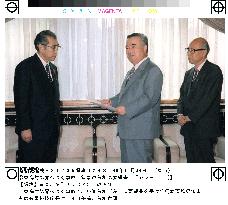
TOKYO, Japan - Masaru Hashimoto (C), governor of Ibaraki Prefecture, submits to Prime Minster Keizo Obuchi (L) on Oct. 4 a letter calling for the government to step up nuclear safety in the wake of the Sept. 30 nuclear accident at a uranium-processing plant in Tokaimura in the prefecture. Science and Technology Agency chief Akito Arima (R) looks on.

  •  
Civic group holds protest meeting against nuclear policy

Civic group holds protest meeting against nuclear policy

MITO, Japan - An antinuclear civic group holds a meeting in Mito, Ibaraki Prefecture, on Oct. 3 to protest the government's nuclear policy in the wake of the Sept. 30 radiation leakage at a uranium processing plant in Tokaimura in the prefecture.

  • Main
  • Top
  • Editorial
  • Creative
  • About Us
  • About ILG
  • Terms of use
  • Company
  • BEHIND
  • Price List
  • Single Plan
  • Monthly Plan
  • Services
  • Shooting
  • Rights Clearance
  • Support
  • FAQ
  • How To Buy
  • Contact Us
  • Become a Partner

© KYODO NEWS IMAGES INC

All Rights Reserved.

  • Editorial
  • Olympics
  • News
  • Sports
  • Japan
  • Tech
  • Royal
  • Disaster
  • NorthKorea
  • Old Japan
  • SNS
  • Creative
  • Food
  • Japan
  • Landscape
  • Animal
  • Popular
  • #Ukraine
  • #Russia
  • #coronavirus
  • #N. Korea
  • #China
  • #Thailand
  • #Ukraine
  • #Russia
  • #coronavirus
  • #N. Korea
  • #China
  • #Thailand
  • Food
  • Japan
  • Landscape
  • Animal
  • Olympics
  • News
  • Sports
  • Japan
  • Tech
  • Royal
  • Disaster
  • NorthKorea
  • Old Japan
  • SNS