•  
Burang Gutu Eve Celebration - Xizang

Burang Gutu Eve Celebration - Xizang

This photo taken on Dec. 18, 2025 shows "Gutu" cooked at Jamyang Drolma's home in Khorchak Village, Burang County of Ngari Prefecture, southwest China's Xizang Autonomous Region. Two days ahead of the Tibetan New Year is the traditional "Gutu Eve" for families to have a feast of "gutu", a traditional soup dish made of flour, at home. "Gu" in Tibetan means nine, which is a lucky number. "Tu" means "pasta." Nine different fillings like wool, charcoal and chili are placed inside the dough drops, and each of these fillings has a meaning. While in Burang, "Gutu" is a sort of porridge with nine ingredients and also a distinctive dish on the dinner table of the "Gutu Eve." In Khorchak Village of Burang County, Jamyang Drolma's family is bustling with New Year preparations at home. A pot of "Gutu" steams on the stove, while the "chema," a two-tier rectangular wooden box containing roasted barley and fried wheat grain, is placed to pray for harvest in the next year. This year, the family rejoiced over a bumper harvest

  •  
Burang Gutu Eve Celebration - Xizang

Burang Gutu Eve Celebration - Xizang

Local residents in Tibetan costumes celebrate the "Gutu Eve" in Khorchak Village, Burang County of Ngari Prefecture, southwest China's Xizang Autonomous Region, Dec. 18, 2025. Two days ahead of the Tibetan New Year is the traditional "Gutu Eve" for families to have a feast of "gutu", a traditional soup dish made of flour, at home. "Gu" in Tibetan means nine, which is a lucky number. "Tu" means "pasta." Nine different fillings like wool, charcoal and chili are placed inside the dough drops, and each of these fillings has a meaning. While in Burang, "Gutu" is a sort of porridge with nine ingredients and also a distinctive dish on the dinner table of the "Gutu Eve." In Khorchak Village of Burang County, Jamyang Drolma's family is bustling with New Year preparations at home. A pot of "Gutu" steams on the stove, while the "chema," a two-tier rectangular wooden box containing roasted barley and fried wheat grain, is placed to pray for harvest in the next year. This year, the family rejoiced over a bumper harvest of

  •  
Burang Gutu Eve Celebration - Xizang

Burang Gutu Eve Celebration - Xizang

A resident shows a note denoting wishes and expectations for the New Year on the "Gutu Eve" in Khorchak Village, Burang County of Ngari Prefecture, southwest China's Xizang Autonomous Region, Dec. 18, 2025. Two days ahead of the Tibetan New Year is the traditional "Gutu Eve" for families to have a feast of "gutu", a traditional soup dish made of flour, at home. "Gu" in Tibetan means nine, which is a lucky number. "Tu" means "pasta." Nine different fillings like wool, charcoal and chili are placed inside the dough drops, and each of these fillings has a meaning. While in Burang, "Gutu" is a sort of porridge with nine ingredients and also a distinctive dish on the dinner table of the "Gutu Eve." In Khorchak Village of Burang County, Jamyang Drolma's family is bustling with New Year preparations at home. A pot of "Gutu" steams on the stove, while the "chema," a two-tier rectangular wooden box containing roasted barley and fried wheat grain, is placed to pray for harvest in the next year. This year, the family re

  •  
Burang Gutu Eve Celebration - Xizang

Burang Gutu Eve Celebration - Xizang

Local residents celebrate the "Gutu Eve" in Khorchak Village, Burang County of Ngari Prefecture, southwest China's Xizang Autonomous Region, Dec. 18, 2025. Two days ahead of the Tibetan New Year is the traditional "Gutu Eve" for families to have a feast of "gutu", a traditional soup dish made of flour, at home. "Gu" in Tibetan means nine, which is a lucky number. "Tu" means "pasta." Nine different fillings like wool, charcoal and chili are placed inside the dough drops, and each of these fillings has a meaning. While in Burang, "Gutu" is a sort of porridge with nine ingredients and also a distinctive dish on the dinner table of the "Gutu Eve." In Khorchak Village of Burang County, Jamyang Drolma's family is bustling with New Year preparations at home. A pot of "Gutu" steams on the stove, while the "chema," a two-tier rectangular wooden box containing roasted barley and fried wheat grain, is placed to pray for harvest in the next year. This year, the family rejoiced over a bumper harvest of highland barley and

  •  
Burang Gutu Eve Celebration - Xizang

Burang Gutu Eve Celebration - Xizang

Jamyang Drolma prepares "chema" at home in Khorchak Village, Burang County of Ngari Prefecture, southwest China's Xizang Autonomous Region, Dec. 18, 2025. Two days ahead of the Tibetan New Year is the traditional "Gutu Eve" for families to have a feast of "gutu", a traditional soup dish made of flour, at home. "Gu" in Tibetan means nine, which is a lucky number. "Tu" means "pasta." Nine different fillings like wool, charcoal and chili are placed inside the dough drops, and each of these fillings has a meaning. While in Burang, "Gutu" is a sort of porridge with nine ingredients and also a distinctive dish on the dinner table of the "Gutu Eve." In Khorchak Village of Burang County, Jamyang Drolma's family is bustling with New Year preparations at home. A pot of "Gutu" steams on the stove, while the "chema," a two-tier rectangular wooden box containing roasted barley and fried wheat grain, is placed to pray for harvest in the next year. This year, the family rejoiced over a bumper harvest of highland barley and

  •  
Burang Gutu Eve Celebration - Xizang

Burang Gutu Eve Celebration - Xizang

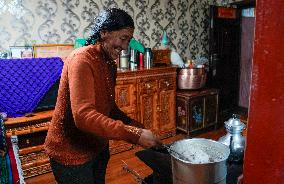
Jamyang Drolma's mother cooks "Gutu" at their home in Khorchak Village, Burang County of Ngari Prefecture, southwest China's Xizang Autonomous Region, Dec. 18, 2025. Two days ahead of the Tibetan New Year is the traditional "Gutu Eve" for families to have a feast of "gutu", a traditional soup dish made of flour, at home. "Gu" in Tibetan means nine, which is a lucky number. "Tu" means "pasta." Nine different fillings like wool, charcoal and chili are placed inside the dough drops, and each of these fillings has a meaning. While in Burang, "Gutu" is a sort of porridge with nine ingredients and also a distinctive dish on the dinner table of the "Gutu Eve." In Khorchak Village of Burang County, Jamyang Drolma's family is bustling with New Year preparations at home. A pot of "Gutu" steams on the stove, while the "chema," a two-tier rectangular wooden box containing roasted barley and fried wheat grain, is placed to pray for harvest in the next year. This year, the family rejoiced over a bumper harvest of highland

  •  
Burang Gutu Eve Celebration - Xizang

Burang Gutu Eve Celebration - Xizang

Jamyang Drolma (2nd L) poses for a group photo with her family in Khorchak Village, Burang County of Ngari Prefecture, southwest China's Xizang Autonomous Region, Dec. 18, 2025. Two days ahead of the Tibetan New Year is the traditional "Gutu Eve" for families to have a feast of "gutu", a traditional soup dish made of flour, at home. "Gu" in Tibetan means nine, which is a lucky number. "Tu" means "pasta." Nine different fillings like wool, charcoal and chili are placed inside the dough drops, and each of these fillings has a meaning. While in Burang, "Gutu" is a sort of porridge with nine ingredients and also a distinctive dish on the dinner table of the "Gutu Eve." In Khorchak Village of Burang County, Jamyang Drolma's family is bustling with New Year preparations at home. A pot of "Gutu" steams on the stove, while the "chema," a two-tier rectangular wooden box containing roasted barley and fried wheat grain, is placed to pray for harvest in the next year. This year, the family rejoiced over a bumper harvest

  •  
Burang Gutu Eve Celebration - Xizang

Burang Gutu Eve Celebration - Xizang

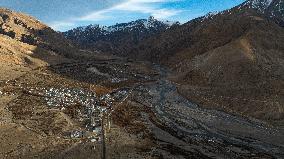
An aerial drone photo taken on Dec. 18, 2025 shows a view of Khorchak Village in Burang County of Ngari Prefecture, southwest China's Xizang Autonomous Region. Two days ahead of the Tibetan New Year is the traditional "Gutu Eve" for families to have a feast of "gutu", a traditional soup dish made of flour, at home. "Gu" in Tibetan means nine, which is a lucky number. "Tu" means "pasta." Nine different fillings like wool, charcoal and chili are placed inside the dough drops, and each of these fillings has a meaning. While in Burang, "Gutu" is a sort of porridge with nine ingredients and also a distinctive dish on the dinner table of the "Gutu Eve." In Khorchak Village of Burang County, Jamyang Drolma's family is bustling with New Year preparations at home. A pot of "Gutu" steams on the stove, while the "chema," a two-tier rectangular wooden box containing roasted barley and fried wheat grain, is placed to pray for harvest in the next year. This year, the family rejoiced over a bumper harvest of highland barley

  •  
Burang Gutu Eve Celebration - Xizang

Burang Gutu Eve Celebration - Xizang

An aerial drone photo taken on Dec. 18, 2025 shows a view of Khorchak Village in Burang County of Ngari Prefecture, southwest China's Xizang Autonomous Region. Two days ahead of the Tibetan New Year is the traditional "Gutu Eve" for families to have a feast of "gutu", a traditional soup dish made of flour, at home. "Gu" in Tibetan means nine, which is a lucky number. "Tu" means "pasta." Nine different fillings like wool, charcoal and chili are placed inside the dough drops, and each of these fillings has a meaning. While in Burang, "Gutu" is a sort of porridge with nine ingredients and also a distinctive dish on the dinner table of the "Gutu Eve." In Khorchak Village of Burang County, Jamyang Drolma's family is bustling with New Year preparations at home. A pot of "Gutu" steams on the stove, while the "chema," a two-tier rectangular wooden box containing roasted barley and fried wheat grain, is placed to pray for harvest in the next year. This year, the family rejoiced over a bumper harvest of highland barley

  •  
Changtang National Nature Reserve - China

Changtang National Nature Reserve - China

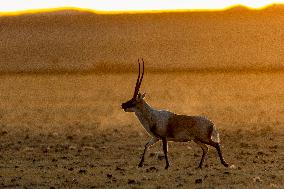
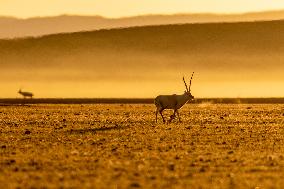
This photo taken on Dec. 4, 2025 shows a Tibetan antelope pictured at the Changtang National Nature Reserve, southwest China's Xizang Autonomous Region. Located in the northern part of Xizang with an average altitude exceeding 4,500 meters, the Changtang National Nature Reserve is home to over 30 kinds of wild animals listed on China's national-level protection catalogue, including Tibetan antelopes and wild yaks. (Xinhua/Jiang Fan) /ABACAPRESS.COM

  •  
Changtang National Nature Reserve - China

Changtang National Nature Reserve - China

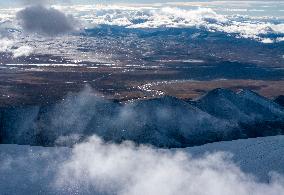
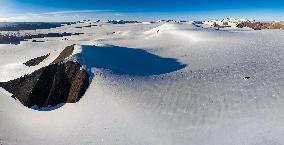
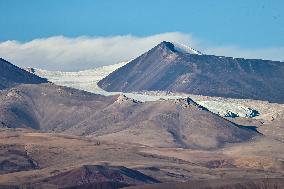
An aerial drone photo taken at the Purog Kangri Glacier on Sept. 11, 2024 shows the scenery of the Changtang National Nature Reserve, southwest China's Xizang Autonomous Region. Located in the northern part of Xizang with an average altitude exceeding 4,500 meters, the Changtang National Nature Reserve is home to over 30 kinds of wild animals listed on China's national-level protection catalogue, including Tibetan antelopes and wild yaks. (Xinhua/Jiang Fan) /ABACAPRESS.COM

  •  
Changtang National Nature Reserve - China

Changtang National Nature Reserve - China

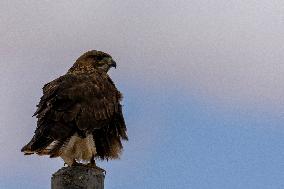
This photo taken on June 6, 2025 shows an upland buzzard pictured at the Changtang National Nature Reserve, southwest China's Xizang Autonomous Region. Located in the northern part of Xizang with an average altitude exceeding 4,500 meters, the Changtang National Nature Reserve is home to over 30 kinds of wild animals listed on China's national-level protection catalogue, including Tibetan antelopes and wild yaks. (Xinhua/Jiang Fan) /ABACAPRESS.COM

  •  
Changtang National Nature Reserve - China

Changtang National Nature Reserve - China

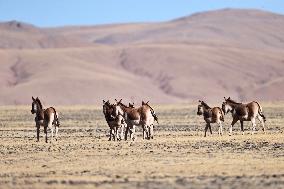
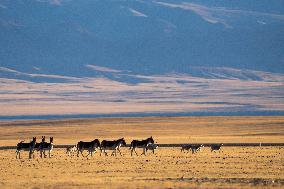
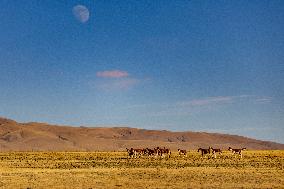
This photo taken on Dec. 1, 2025 shows kiangs (Equus kiang) pictured at the Changtang National Nature Reserve, southwest China's Xizang Autonomous Region. Located in the northern part of Xizang with an average altitude exceeding 4,500 meters, the Changtang National Nature Reserve is home to over 30 kinds of wild animals listed on China's national-level protection catalogue, including Tibetan antelopes and wild yaks. (Xinhua/Guo Yu) /ABACAPRESS.COM

  •  
Changtang National Nature Reserve - China

Changtang National Nature Reserve - China

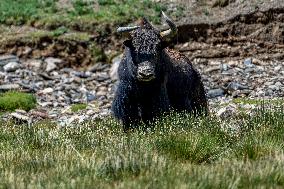
This photo taken on July 16, 2025 shows a wild yak pictured at the Changtang National Nature Reserve, southwest China's Xizang Autonomous Region. Located in the northern part of Xizang with an average altitude exceeding 4,500 meters, the Changtang National Nature Reserve is home to over 30 kinds of wild animals listed on China's national-level protection catalogue, including Tibetan antelopes and wild yaks. (Xinhua/Jiang Fan) /ABACAPRESS.COM

  •  
Changtang National Nature Reserve - China

Changtang National Nature Reserve - China

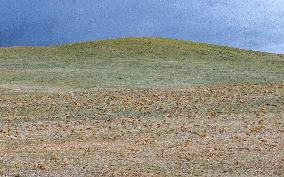
A drone photo taken on July 14, 2025 shows Tibetan antelopes pictured at the Changtang National Nature Reserve, southwest China's Xizang Autonomous Region. Located in the northern part of Xizang with an average altitude exceeding 4,500 meters, the Changtang National Nature Reserve is home to over 30 kinds of wild animals listed on China's national-level protection catalogue, including Tibetan antelopes and wild yaks. (Xinhua/Jiang Fan) /ABACAPRESS.COM

  •  
Changtang National Nature Reserve - China

Changtang National Nature Reserve - China

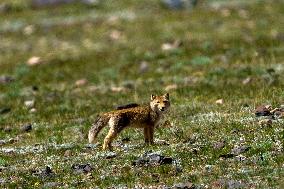
This photo taken on July 16, 2025 shows a Tibetan fox pictured at the Changtang National Nature Reserve, southwest China's Xizang Autonomous Region. Located in the northern part of Xizang with an average altitude exceeding 4,500 meters, the Changtang National Nature Reserve is home to over 30 kinds of wild animals listed on China's national-level protection catalogue, including Tibetan antelopes and wild yaks. (Xinhua/Jiang Fan) /ABACAPRESS.COM

  •  
Changtang National Nature Reserve - China

Changtang National Nature Reserve - China

This photo taken on Dec. 3, 2025 shows kiangs (Equus kiang) pictured at the Changtang National Nature Reserve, southwest China's Xizang Autonomous Region. Located in the northern part of Xizang with an average altitude exceeding 4,500 meters, the Changtang National Nature Reserve is home to over 30 kinds of wild animals listed on China's national-level protection catalogue, including Tibetan antelopes and wild yaks. (Xinhua/Guo Yu) /ABACAPRESS.COM

  •  
Changtang National Nature Reserve - China

Changtang National Nature Reserve - China

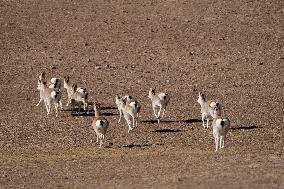
This photo taken on Dec. 2, 2025 shows Tibetan gazelles pictured at the Changtang National Nature Reserve, southwest China's Xizang Autonomous Region. Located in the northern part of Xizang with an average altitude exceeding 4,500 meters, the Changtang National Nature Reserve is home to over 30 kinds of wild animals listed on China's national-level protection catalogue, including Tibetan antelopes and wild yaks. (Xinhua/Guo Yu) /ABACAPRESS.COM

  •  
Changtang National Nature Reserve - China

Changtang National Nature Reserve - China

An aerial drone photo taken on Sept. 30, 2024 shows the scenery of the Purog Kangri Glacier at the Changtang National Nature Reserve, southwest China's Xizang Autonomous Region. Located in the northern part of Xizang with an average altitude exceeding 4,500 meters, the Changtang National Nature Reserve is home to over 30 kinds of wild animals listed on China's national-level protection catalogue, including Tibetan antelopes and wild yaks. (Xinhua/Jiang Fan) /ABACAPRESS.COM

  •  
Changtang National Nature Reserve - China

Changtang National Nature Reserve - China

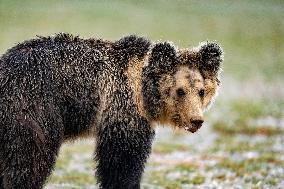
This photo taken on July 16, 2025 shows a brown bear pictured at the Changtang National Nature Reserve, southwest China's Xizang Autonomous Region. Located in the northern part of Xizang with an average altitude exceeding 4,500 meters, the Changtang National Nature Reserve is home to over 30 kinds of wild animals listed on China's national-level protection catalogue, including Tibetan antelopes and wild yaks. (Xinhua/Jiang Fan) /ABACAPRESS.COM

  •  
Changtang National Nature Reserve - China

Changtang National Nature Reserve - China

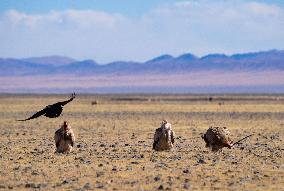
This photo taken on Dec. 4, 2025 shows Himalayan vultures pictured at the Changtang National Nature Reserve, southwest China's Xizang Autonomous Region. Located in the northern part of Xizang with an average altitude exceeding 4,500 meters, the Changtang National Nature Reserve is home to over 30 kinds of wild animals listed on China's national-level protection catalogue, including Tibetan antelopes and wild yaks. (Xinhua/Guo Yu) /ABACAPRESS.COM

  •  
Changtang National Nature Reserve - China

Changtang National Nature Reserve - China

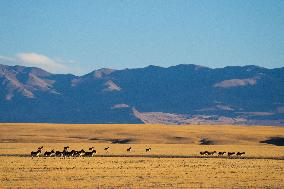
This photo taken on Dec. 3, 2025 shows kiangs (Equus kiang) and Tibetan antelopes pictured at the Changtang National Nature Reserve, southwest China's Xizang Autonomous Region. Located in the northern part of Xizang with an average altitude exceeding 4,500 meters, the Changtang National Nature Reserve is home to over 30 kinds of wild animals listed on China's national-level protection catalogue, including Tibetan antelopes and wild yaks. (Xinhua/Guo Yu) /ABACAPRESS.COM

  •  
Changtang National Nature Reserve - China

Changtang National Nature Reserve - China

This photo taken on Dec. 1, 2025 shows kiangs (Equus kiang) pictured at the Changtang National Nature Reserve, southwest China's Xizang Autonomous Region. Located in the northern part of Xizang with an average altitude exceeding 4,500 meters, the Changtang National Nature Reserve is home to over 30 kinds of wild animals listed on China's national-level protection catalogue, including Tibetan antelopes and wild yaks. (Xinhua/Jiang Fan) /ABACAPRESS.COM

  •  
Changtang National Nature Reserve - China

Changtang National Nature Reserve - China

This photo taken on Dec. 4, 2025 shows a Tibetan antelope pictured at the Changtang National Nature Reserve, southwest China's Xizang Autonomous Region. Located in the northern part of Xizang with an average altitude exceeding 4,500 meters, the Changtang National Nature Reserve is home to over 30 kinds of wild animals listed on China's national-level protection catalogue, including Tibetan antelopes and wild yaks. (Xinhua/Jiang Fan) /ABACAPRESS.COM

  •  
Changtang National Nature Reserve - China

Changtang National Nature Reserve - China

This photo taken on Nov. 30, 2025 shows kiangs (Equus kiang) pictured at the Changtang National Nature Reserve, southwest China's Xizang Autonomous Region. Located in the northern part of Xizang with an average altitude exceeding 4,500 meters, the Changtang National Nature Reserve is home to over 30 kinds of wild animals listed on China's national-level protection catalogue, including Tibetan antelopes and wild yaks. (Xinhua/Guo Yu) /ABACAPRESS.COM

  •  
Changtang National Nature Reserve - China

Changtang National Nature Reserve - China

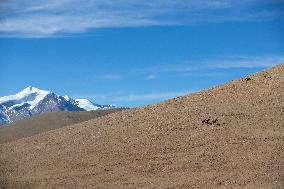
This photo taken on Dec. 1, 2025 shows the scenery of the Changtang National Nature Reserve, southwest China's Xizang Autonomous Region. Located in the northern part of Xizang with an average altitude exceeding 4,500 meters, the Changtang National Nature Reserve is home to over 30 kinds of wild animals listed on China's national-level protection catalogue, including Tibetan antelopes and wild yaks. (Xinhua/Guo Yu) /ABACAPRESS.COM

  •  
Changtang National Nature Reserve - China

Changtang National Nature Reserve - China

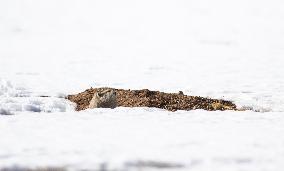
This photo taken on Nov. 30, 2025 shows a pika pictured at the Changtang National Nature Reserve, southwest China's Xizang Autonomous Region. Located in the northern part of Xizang with an average altitude exceeding 4,500 meters, the Changtang National Nature Reserve is home to over 30 kinds of wild animals listed on China's national-level protection catalogue, including Tibetan antelopes and wild yaks. (Xinhua/Guo Yu) /ABACAPRESS.COM

  •  
Tibetan Antelopes at Changtang National Nature Reserve - China

Tibetan Antelopes at Changtang National Nature Reserve - China

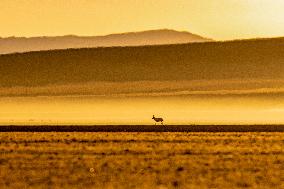
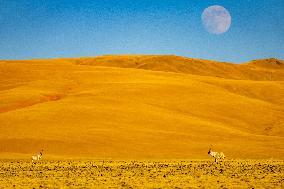
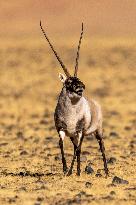
A Tibetan antelope is pictured at the Changtang National Nature Reserve in southwest China's Xizang Autonomous Region, Nov. 30, 2025. Winter is the mating season for Tibetan antelopes, which enjoy first-class state protection in China, and are mostly found in the Xizang Autonomous Region, Qinghai Province and the Xinjiang Uygur Autonomous Region. Photo by Xinhua/Jiang Fan/ABACAPRESS.COM

  •  
Tibetan Antelopes at Changtang National Nature Reserve - China

Tibetan Antelopes at Changtang National Nature Reserve - China

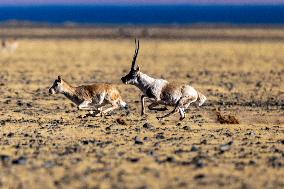
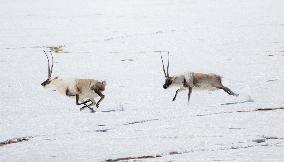
A male Tibetan antelope chases a female one at the Changtang National Nature Reserve in southwest China's Xizang Autonomous Region, December 3, 2025. Winter is the mating season for Tibetan antelopes, which enjoy first-class state protection in China, and are mostly found in the Xizang Autonomous Region, Qinghai Province and the Xinjiang Uygur Autonomous Region. Photo by Xinhua/Jiang Fan/ABACAPRESS.COM

  •  
Tibetan Antelopes at Changtang National Nature Reserve - China

Tibetan Antelopes at Changtang National Nature Reserve - China

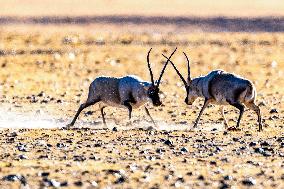
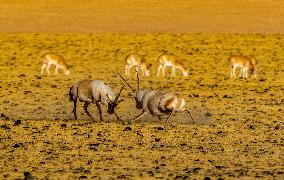
Two male Tibetan antelopes fight for mating at the Changtang National Nature Reserve in southwest China's Xizang Autonomous Region, December 3, 2025. Winter is the mating season for Tibetan antelopes, which enjoy first-class state protection in China, and are mostly found in the Xizang Autonomous Region, Qinghai Province and the Xinjiang Uygur Autonomous Region. Photo by Xinhua/Jiang Fan/ABACAPRESS.COM

  •  
Tibetan Antelopes at Changtang National Nature Reserve - China

Tibetan Antelopes at Changtang National Nature Reserve - China

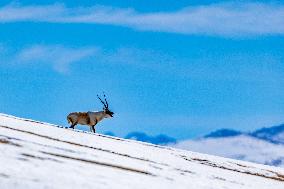
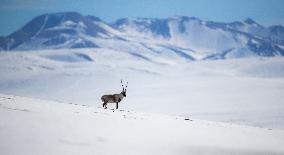
A Tibetan antelope is pictured at the Changtang National Nature Reserve in southwest China's Xizang Autonomous Region, December 4, 2025. Winter is the mating season for Tibetan antelopes, which enjoy first-class state protection in China, and are mostly found in the Xizang Autonomous Region, Qinghai Province and the Xinjiang Uygur Autonomous Region. Photo by Xinhua/Jiang Fan/ABACAPRESS.COM

  •  
Tibetan Antelopes at Changtang National Nature Reserve - China

Tibetan Antelopes at Changtang National Nature Reserve - China

A Tibetan antelope is pictured at the Changtang National Nature Reserve in southwest China's Xizang Autonomous Region, December 4, 2025. Winter is the mating season for Tibetan antelopes, which enjoy first-class state protection in China, and are mostly found in the Xizang Autonomous Region, Qinghai Province and the Xinjiang Uygur Autonomous Region. Photo by Xinhua/Jiang Fan/ABACAPRESS.COM

  •  
Tibetan Antelopes at Changtang National Nature Reserve - China

Tibetan Antelopes at Changtang National Nature Reserve - China

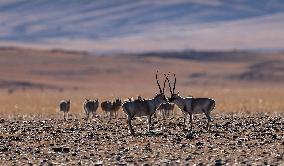
Tibetan antelopes are pictured at the Changtang National Nature Reserve in southwest China's Xizang Autonomous Region, December 3, 2025. Winter is the mating season for Tibetan antelopes, which enjoy first-class state protection in China, and are mostly found in the Xizang Autonomous Region, Qinghai Province and the Xinjiang Uygur Autonomous Region. Photo by Xinhua/Jiang Fan/ABACAPRESS.COM

  •  
Tibetan Antelopes at Changtang National Nature Reserve - China

Tibetan Antelopes at Changtang National Nature Reserve - China

A Tibetan antelope is pictured at the Changtang National Nature Reserve in southwest China's Xizang Autonomous Region, December 3, 2025. Winter is the mating season for Tibetan antelopes, which enjoy first-class state protection in China, and are mostly found in the Xizang Autonomous Region, Qinghai Province and the Xinjiang Uygur Autonomous Region. Photo by Xinhua/Jiang Fan/ABACAPRESS.COM

  •  
Tibetan Antelopes at Changtang National Nature Reserve - China

Tibetan Antelopes at Changtang National Nature Reserve - China

A Tibetan antelope is pictured at the Changtang National Nature Reserve in southwest China's Xizang Autonomous Region, Nov. 30, 2025. Winter is the mating season for Tibetan antelopes, which enjoy first-class state protection in China, and are mostly found in the Xizang Autonomous Region, Qinghai Province and the Xinjiang Uygur Autonomous Region. Photo by Xinhua/Jiang Fan/ABACAPRESS.COM

  •  
Tibetan Antelopes at Changtang National Nature Reserve - China

Tibetan Antelopes at Changtang National Nature Reserve - China

Two male Tibetan antelopes fight for mating at the Changtang National Nature Reserve in southwest China's Xizang Autonomous Region, December 3, 2025. Winter is the mating season for Tibetan antelopes, which enjoy first-class state protection in China, and are mostly found in the Xizang Autonomous Region, Qinghai Province and the Xinjiang Uygur Autonomous Region. Photo by Xinhua/Jiang Fan/ABACAPRESS.COM

  •  
Tibetan Antelopes at Changtang National Nature Reserve - China

Tibetan Antelopes at Changtang National Nature Reserve - China

A Tibetan antelope is pictured at the Changtang National Nature Reserve in southwest China's Xizang Autonomous Region, December 4, 2025. Winter is the mating season for Tibetan antelopes, which enjoy first-class state protection in China, and are mostly found in the Xizang Autonomous Region, Qinghai Province and the Xinjiang Uygur Autonomous Region. Photo by Xinhua/Guo Yu/ABACAPRESS.COM

  •  
Tibetan Antelopes at Changtang National Nature Reserve - China

Tibetan Antelopes at Changtang National Nature Reserve - China

Two male Tibetan antelopes confront before a fight at the Changtang National Nature Reserve in southwest China's Xizang Autonomous Region, December 4, 2025. Winter is the mating season for Tibetan antelopes, which enjoy first-class state protection in China, and are mostly found in the Xizang Autonomous Region, Qinghai Province and the Xinjiang Uygur Autonomous Region. Photo by Xinhua/Jiang Fan/ABACAPRESS.COM

  •  
Tibetan Antelopes at Changtang National Nature Reserve - China

Tibetan Antelopes at Changtang National Nature Reserve - China

Tibetan antelopes gallop at the Changtang National Nature Reserve in southwest China's Xizang Autonomous Region, Nov. 30, 2025. Winter is the mating season for Tibetan antelopes, which enjoy first-class state protection in China, and are mostly found in the Xizang Autonomous Region, Qinghai Province and the Xinjiang Uygur Autonomous Region. Photo by Xinhua/Guo Yu/ABACAPRESS.COM

  •  
Tibetan Antelopes at Changtang National Nature Reserve - China

Tibetan Antelopes at Changtang National Nature Reserve - China

Two male Tibetan antelopes confront before a fight at the Changtang National Nature Reserve in southwest China's Xizang Autonomous Region, December 1, 2025. Winter is the mating season for Tibetan antelopes, which enjoy first-class state protection in China, and are mostly found in the Xizang Autonomous Region, Qinghai Province and the Xinjiang Uygur Autonomous Region. Photo by Xinhua/Guo Yu/ABACAPRESS.COM

  •  
Yomari Punhi Festival - Nepal

Yomari Punhi Festival - Nepal

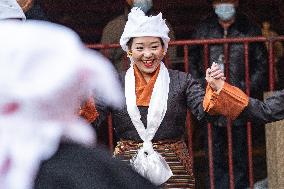
People dance Guozhuang, a traditional Tibetan square dance, at Jokhang Temple in Lhasa, southwest China's Xizang Autonomous Region, December 4, 2025. Xizang marked the annual Fairy's Day, also known as the "Women's Festival," on Thursday, the 15th day of the tenth month in the Tibetan calendar. Photo by Xinhua/Tenzin Nyida/ABACAPRESS.COM

  •  
World Highest Dam Shuangjiangkou Hydropower Station Construction

World Highest Dam Shuangjiangkou Hydropower Station Construction

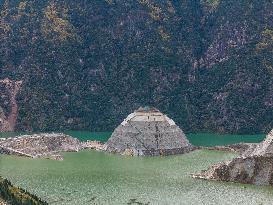
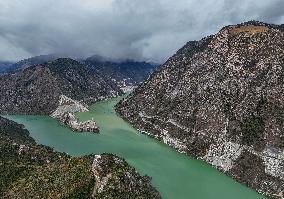
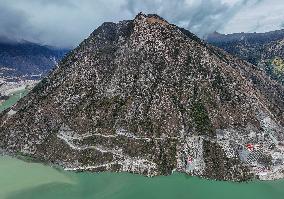
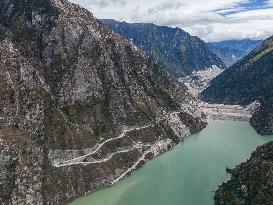
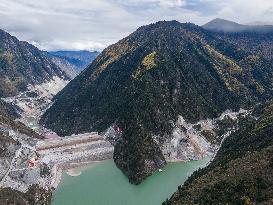
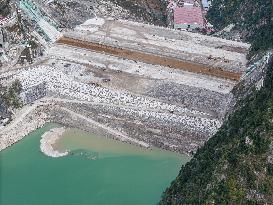
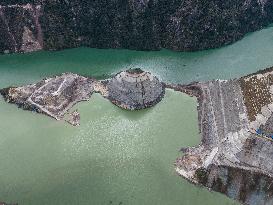
ABA, CHINA - OCTOBER 29, 2025 - Aerial view of the construction area of the Shuangjiangkou Hydropower Station, the world's highest dam, at the junction of Maerkang City and Jinchuan County in Aba Tibetan and Qiang Autonomous Prefecture, Sichuan Province, China on October 29, 2025.

  •  
World Highest Dam Shuangjiangkou Hydropower Station Construction

World Highest Dam Shuangjiangkou Hydropower Station Construction

ABA, CHINA - OCTOBER 29, 2025 - Aerial view of the construction area of the Shuangjiangkou Hydropower Station, the world's highest dam, at the junction of Maerkang City and Jinchuan County in Aba Tibetan and Qiang Autonomous Prefecture, Sichuan Province, China on October 29, 2025.

  •  
World Highest Dam Shuangjiangkou Hydropower Station Construction

World Highest Dam Shuangjiangkou Hydropower Station Construction

ABA, CHINA - OCTOBER 29, 2025 - Aerial view of the construction area of the Shuangjiangkou Hydropower Station, the world's highest dam, at the junction of Maerkang City and Jinchuan County in Aba Tibetan and Qiang Autonomous Prefecture, Sichuan Province, China on October 29, 2025.

  •  
World Highest Dam Shuangjiangkou Hydropower Station Construction

World Highest Dam Shuangjiangkou Hydropower Station Construction

ABA, CHINA - OCTOBER 29, 2025 - Aerial view of the construction area of the Shuangjiangkou Hydropower Station, the world's highest dam, at the junction of Maerkang City and Jinchuan County in Aba Tibetan and Qiang Autonomous Prefecture, Sichuan Province, China on October 29, 2025.

  •  
World Highest Dam Shuangjiangkou Hydropower Station Construction

World Highest Dam Shuangjiangkou Hydropower Station Construction

ABA, CHINA - OCTOBER 29, 2025 - Aerial view of the construction area of the Shuangjiangkou Hydropower Station, the world's highest dam, at the junction of Maerkang City and Jinchuan County in Aba Tibetan and Qiang Autonomous Prefecture, Sichuan Province, China on October 29, 2025.

  •  
World Highest Dam Shuangjiangkou Hydropower Station Construction

World Highest Dam Shuangjiangkou Hydropower Station Construction

ABA, CHINA - OCTOBER 29, 2025 - Aerial view of the construction area of the Shuangjiangkou Hydropower Station, the world's highest dam, at the junction of Maerkang City and Jinchuan County in Aba Tibetan and Qiang Autonomous Prefecture, Sichuan Province, China on October 29, 2025.

  •  
World Highest Dam Shuangjiangkou Hydropower Station Construction

World Highest Dam Shuangjiangkou Hydropower Station Construction

ABA, CHINA - OCTOBER 29, 2025 - Aerial view of the construction area of the Shuangjiangkou Hydropower Station, the world's highest dam, at the junction of Maerkang City and Jinchuan County in Aba Tibetan and Qiang Autonomous Prefecture, Sichuan Province, China on October 29, 2025.

  •  
World Highest Dam Shuangjiangkou Hydropower Station Construction

World Highest Dam Shuangjiangkou Hydropower Station Construction

ABA, CHINA - OCTOBER 29, 2025 - Aerial view of the construction area of the Shuangjiangkou Hydropower Station, the world's highest dam, at the junction of Maerkang City and Jinchuan County in Aba Tibetan and Qiang Autonomous Prefecture, Sichuan Province, China on October 29, 2025.

  •  
World Highest Dam Shuangjiangkou Hydropower Station Construction

World Highest Dam Shuangjiangkou Hydropower Station Construction

ABA, CHINA - OCTOBER 29, 2025 - Aerial view of the construction area of the Shuangjiangkou Hydropower Station, the world's highest dam, at the junction of Maerkang City and Jinchuan County in Aba Tibetan and Qiang Autonomous Prefecture, Sichuan Province, China on October 29, 2025.

  • Main
  • Top
  • Editorial
  • Creative
  • About Us
  • About ILG
  • Terms of use
  • Company
  • BEHIND
  • Price List
  • Single Plan
  • Monthly Plan
  • Services
  • Shooting
  • Rights Clearance
  • Support
  • FAQ
  • How To Buy
  • Contact Us
  • Become a Partner

© KYODO NEWS IMAGES INC

All Rights Reserved.

  • Editorial
  • Olympics
  • News
  • Sports
  • Japan
  • Tech
  • Royal
  • Disaster
  • NorthKorea
  • Old Japan
  • SNS
  • Creative
  • Food
  • Japan
  • Landscape
  • Animal
  • Popular
  • #Ukraine
  • #Russia
  • #coronavirus
  • #N. Korea
  • #Thailand
  • #China
  • #Ukraine
  • #Russia
  • #coronavirus
  • #N. Korea
  • #Thailand
  • #China
  • Food
  • Japan
  • Landscape
  • Animal
  • Olympics
  • News
  • Sports
  • Japan
  • Tech
  • Royal
  • Disaster
  • NorthKorea
  • Old Japan
  • SNS