•  

Jurassic Quest Exhibition Held in Texas

STORY: Jurassic Quest exhibition held in Texas DATELINE: June 12, 2023 LENGTH: 00:01:45 LOCATION: DALLAS, U.S. CATEGORY: ENTERTAINMENT SHOTLIST: 1. exhibition's entrance 2. various of dinosaur models and audiences in the exhibition STORYLINE: From June 9 to 11, 2023, Dallas, Texas hosted the Jurassic Quest Dinosaur Exhibition, the largest interactive dinosaur experience in North America. The exhibition featured life-sized dinosaur models that spanned 165 million years of history, from the Triassic to the Cretaceous periods. Visitors could walk among the realistic dinosaurs and learn about their habits, habitats, and evolution. The dinosaur models were made with exquisite craftsmanship and attention to detail, matching the proportions and appearances of their ancient counterparts. They also had sound and lighting effects that made them seem alive and ready to roar. The exhibition was a thrilling adventure for children, who could not only see the dinosaurs up close, but also ride on some of them and intera

  •  
CHINA-SICHUAN-GEOLOGICAL EXPERT-WU XICHUN (CN)

CHINA-SICHUAN-GEOLOGICAL EXPERT-WU XICHUN (CN)

(230320) -- CHENGDU, March 20, 2023 (Xinhua) -- Wu Xichun arranges files with his wife Li Peihua at home in Chengdu, southwest China's Sichuan Province, March 7, 2023. Wu Xichun is a professor at the College of Energy of the Chengdu University of Technology and an expert in geology. In the early 1970s, while conducting a geological mapping survey in the northwestern part of Sichuan Province, Wu unexpectedly discovered a reef group formed by Triassic siliceous hexactinellid sponges. Since then, he has devoted himself to the study on sponge reefs for nearly five decades. In order to study foreign literature, Wu mastered English, Russian, and German, and taught himself Latin, Greek, and Old French. He spent years conducting tens of times of on-site investigations at the discovery area to obtain more accurate research results and brought back dozens of pounds of fossils by himself. To clarify the reproduction and migration of hexactinellid sponges, Wu also brought the fossils abroad for more in-depth compar

  •  
CHINA-SICHUAN-GEOLOGICAL EXPERT-WU XICHUN (CN)

CHINA-SICHUAN-GEOLOGICAL EXPERT-WU XICHUN (CN)

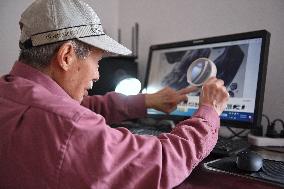
(230320) -- CHENGDU, March 20, 2023 (Xinhua) -- Wu Xichun observes a photo of sponge fossil at home in Chengdu, southwest China's Sichuan Province, March 7, 2023. Wu Xichun is a professor at the College of Energy of the Chengdu University of Technology and an expert in geology. In the early 1970s, while conducting a geological mapping survey in the northwestern part of Sichuan Province, Wu unexpectedly discovered a reef group formed by Triassic siliceous hexactinellid sponges. Since then, he has devoted himself to the study on sponge reefs for nearly five decades. In order to study foreign literature, Wu mastered English, Russian, and German, and taught himself Latin, Greek, and Old French. He spent years conducting tens of times of on-site investigations at the discovery area to obtain more accurate research results and brought back dozens of pounds of fossils by himself. To clarify the reproduction and migration of hexactinellid sponges, Wu also brought the fossils abroad for more in-depth comparison

  •  
CHINA-SICHUAN-GEOLOGICAL EXPERT-WU XICHUN (CN)

CHINA-SICHUAN-GEOLOGICAL EXPERT-WU XICHUN (CN)

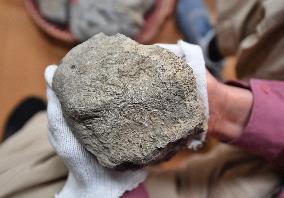
(230320) -- CHENGDU, March 20, 2023 (Xinhua) -- This photo taken on March 7, 2023 shows a fossil of Triassic siliceous sponge collected by Wu Xichun. Wu Xichun is a professor at the College of Energy of the Chengdu University of Technology and an expert in geology. In the early 1970s, while conducting a geological mapping survey in the northwestern part of Sichuan Province, Wu unexpectedly discovered a reef group formed by Triassic siliceous hexactinellid sponges. Since then, he has devoted himself to the study on sponge reefs for nearly five decades. In order to study foreign literature, Wu mastered English, Russian, and German, and taught himself Latin, Greek, and Old French. He spent years conducting tens of times of on-site investigations at the discovery area to obtain more accurate research results and brought back dozens of pounds of fossils by himself. To clarify the reproduction and migration of hexactinellid sponges, Wu also brought the fossils abroad for more in-depth comparison studies. Wu

  •  
CHINA-SICHUAN-GEOLOGICAL EXPERT-WU XICHUN (CN)

CHINA-SICHUAN-GEOLOGICAL EXPERT-WU XICHUN (CN)

(230320) -- CHENGDU, March 20, 2023 (Xinhua) -- This photo taken on March 7, 2023 shows a fossil of Triassic siliceous sponge collected by Wu Xichun. Wu Xichun is a professor at the College of Energy of the Chengdu University of Technology and an expert in geology. In the early 1970s, while conducting a geological mapping survey in the northwestern part of Sichuan Province, Wu unexpectedly discovered a reef group formed by Triassic siliceous hexactinellid sponges. Since then, he has devoted himself to the study on sponge reefs for nearly five decades. In order to study foreign literature, Wu mastered English, Russian, and German, and taught himself Latin, Greek, and Old French. He spent years conducting tens of times of on-site investigations at the discovery area to obtain more accurate research results and brought back dozens of pounds of fossils by himself. To clarify the reproduction and migration of hexactinellid sponges, Wu also brought the fossils abroad for more in-depth comparison studies. Wu

  •  
CHINA-SICHUAN-GEOLOGICAL EXPERT-WU XICHUN (CN)

CHINA-SICHUAN-GEOLOGICAL EXPERT-WU XICHUN (CN)

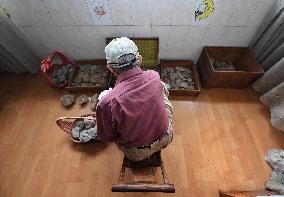
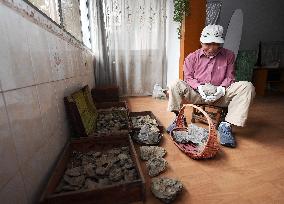
(230320) -- CHENGDU, March 20, 2023 (Xinhua) -- Wu Xichun arranges his fossil collection at home in Chengdu, southwest China's Sichuan Province, March 7, 2023. Wu Xichun is a professor at the College of Energy of the Chengdu University of Technology and an expert in geology. In the early 1970s, while conducting a geological mapping survey in the northwestern part of Sichuan Province, Wu unexpectedly discovered a reef group formed by Triassic siliceous hexactinellid sponges. Since then, he has devoted himself to the study on sponge reefs for nearly five decades. In order to study foreign literature, Wu mastered English, Russian, and German, and taught himself Latin, Greek, and Old French. He spent years conducting tens of times of on-site investigations at the discovery area to obtain more accurate research results and brought back dozens of pounds of fossils by himself. To clarify the reproduction and migration of hexactinellid sponges, Wu also brought the fossils abroad for more in-depth comparison stu

  •  
CHINA-SICHUAN-GEOLOGICAL EXPERT-WU XICHUN (CN)

CHINA-SICHUAN-GEOLOGICAL EXPERT-WU XICHUN (CN)

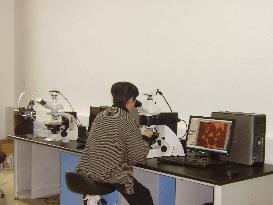
(230320) -- CHENGDU, March 20, 2023 (Xinhua) -- This file photo taken in 2011 shows Wu Xichun observing a slice of a fossil sponge with a microscope at the laboratory. Wu Xichun is a professor at the College of Energy of the Chengdu University of Technology and an expert in geology. In the early 1970s, while conducting a geological mapping survey in the northwestern part of Sichuan Province, Wu unexpectedly discovered a reef group formed by Triassic siliceous hexactinellid sponges. Since then, he has devoted himself to the study on sponge reefs for nearly five decades. In order to study foreign literature, Wu mastered English, Russian, and German, and taught himself Latin, Greek, and Old French. He spent years conducting tens of times of on-site investigations at the discovery area to obtain more accurate research results and brought back dozens of pounds of fossils by himself. To clarify the reproduction and migration of hexactinellid sponges, Wu also brought the fossils abroad for more in-depth compar

  •  
CHINA-SICHUAN-GEOLOGICAL EXPERT-WU XICHUN (CN)

CHINA-SICHUAN-GEOLOGICAL EXPERT-WU XICHUN (CN)

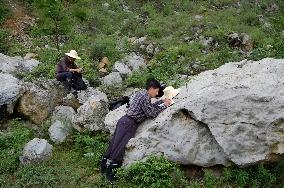
(230320) -- CHENGDU, March 20, 2023 (Xinhua) -- This file photo taken in 2008 shows Wu Xichun (R) conducting field research in the northwestern part of Sichuan Province, southwest China. Wu Xichun is a professor at the College of Energy of the Chengdu University of Technology and an expert in geology. In the early 1970s, while conducting a geological mapping survey in the northwestern part of Sichuan Province, Wu unexpectedly discovered a reef group formed by Triassic siliceous hexactinellid sponges. Since then, he has devoted himself to the study on sponge reefs for nearly five decades. In order to study foreign literature, Wu mastered English, Russian, and German, and taught himself Latin, Greek, and Old French. He spent years conducting tens of times of on-site investigations at the discovery area to obtain more accurate research results and brought back dozens of pounds of fossils by himself. To clarify the reproduction and migration of hexactinellid sponges, Wu also brought the fossils abroad for m

  •  
CHINA-SICHUAN-GEOLOGICAL EXPERT-WU XICHUN (CN)

CHINA-SICHUAN-GEOLOGICAL EXPERT-WU XICHUN (CN)

(230320) -- CHENGDU, March 20, 2023 (Xinhua) -- Wu Xichun looks through a book at home in Chengdu, southwest China's Sichuan Province, March 7, 2023. Wu Xichun is a professor at the College of Energy of the Chengdu University of Technology and an expert in geology. In the early 1970s, while conducting a geological mapping survey in the northwestern part of Sichuan Province, Wu unexpectedly discovered a reef group formed by Triassic siliceous hexactinellid sponges. Since then, he has devoted himself to the study on sponge reefs for nearly five decades. In order to study foreign literature, Wu mastered English, Russian, and German, and taught himself Latin, Greek, and Old French. He spent years conducting tens of times of on-site investigations at the discovery area to obtain more accurate research results and brought back dozens of pounds of fossils by himself. To clarify the reproduction and migration of hexactinellid sponges, Wu also brought the fossils abroad for more in-depth comparison studies. Wu

  •  
CHINA-SICHUAN-GEOLOGICAL EXPERT-WU XICHUN (CN)

CHINA-SICHUAN-GEOLOGICAL EXPERT-WU XICHUN (CN)

(230320) -- CHENGDU, March 20, 2023 (Xinhua) -- Wu Xichun arranges files at home in Chengdu, southwest China's Sichuan Province, March 7, 2023. Wu Xichun is a professor at the College of Energy of the Chengdu University of Technology and an expert in geology. In the early 1970s, while conducting a geological mapping survey in the northwestern part of Sichuan Province, Wu unexpectedly discovered a reef group formed by Triassic siliceous hexactinellid sponges. Since then, he has devoted himself to the study on sponge reefs for nearly five decades. In order to study foreign literature, Wu mastered English, Russian, and German, and taught himself Latin, Greek, and Old French. He spent years conducting tens of times of on-site investigations at the discovery area to obtain more accurate research results and brought back dozens of pounds of fossils by himself. To clarify the reproduction and migration of hexactinellid sponges, Wu also brought the fossils abroad for more in-depth comparison studies. Wu's res

  •  
CHINA-SICHUAN-GEOLOGICAL EXPERT-WU XICHUN (CN)

CHINA-SICHUAN-GEOLOGICAL EXPERT-WU XICHUN (CN)

(230320) -- CHENGDU, March 20, 2023 (Xinhua) -- Wu Xichun looks through a book at home in Chengdu, southwest China's Sichuan Province, March 7, 2023. Wu Xichun is a professor at the College of Energy of the Chengdu University of Technology and an expert in geology. In the early 1970s, while conducting a geological mapping survey in the northwestern part of Sichuan Province, Wu unexpectedly discovered a reef group formed by Triassic siliceous hexactinellid sponges. Since then, he has devoted himself to the study on sponge reefs for nearly five decades. In order to study foreign literature, Wu mastered English, Russian, and German, and taught himself Latin, Greek, and Old French. He spent years conducting tens of times of on-site investigations at the discovery area to obtain more accurate research results and brought back dozens of pounds of fossils by himself. To clarify the reproduction and migration of hexactinellid sponges, Wu also brought the fossils abroad for more in-depth comparison studies. Wu

  •  
CHINA-SICHUAN-GEOLOGICAL EXPERT-WU XICHUN (CN)

CHINA-SICHUAN-GEOLOGICAL EXPERT-WU XICHUN (CN)

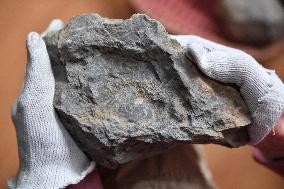
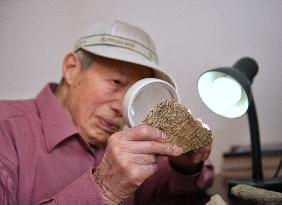
(230320) -- CHENGDU, March 20, 2023 (Xinhua) -- Wu Xichun observes a fossil fragment of Triassic siliceous sponge at home in Chengdu, southwest China's Sichuan Province, March 7, 2023. Wu Xichun is a professor at the College of Energy of the Chengdu University of Technology and an expert in geology. In the early 1970s, while conducting a geological mapping survey in the northwestern part of Sichuan Province, Wu unexpectedly discovered a reef group formed by Triassic siliceous hexactinellid sponges. Since then, he has devoted himself to the study on sponge reefs for nearly five decades. In order to study foreign literature, Wu mastered English, Russian, and German, and taught himself Latin, Greek, and Old French. He spent years conducting tens of times of on-site investigations at the discovery area to obtain more accurate research results and brought back dozens of pounds of fossils by himself. To clarify the reproduction and migration of hexactinellid sponges, Wu also brought the fossils abroad for mor

  •  
CHINA-SICHUAN-GEOLOGICAL EXPERT-WU XICHUN (CN)

CHINA-SICHUAN-GEOLOGICAL EXPERT-WU XICHUN (CN)

(230320) -- CHENGDU, March 20, 2023 (Xinhua) -- This file photo taken in 1974 shows Wu Xichun (C) conducting field research in the northwestern part of Sichuan Province, southwest China. Wu Xichun is a professor at the College of Energy of the Chengdu University of Technology and an expert in geology. In the early 1970s, while conducting a geological mapping survey in the northwestern part of Sichuan Province, Wu unexpectedly discovered a reef group formed by Triassic siliceous hexactinellid sponges. Since then, he has devoted himself to the study on sponge reefs for nearly five decades. In order to study foreign literature, Wu mastered English, Russian, and German, and taught himself Latin, Greek, and Old French. He spent years conducting tens of times of on-site investigations at the discovery area to obtain more accurate research results and brought back dozens of pounds of fossils by himself. To clarify the reproduction and migration of hexactinellid sponges, Wu also brought the fossils abroad for m

  •  
CHINA-SICHUAN-GEOLOGICAL EXPERT-WU XICHUN (CN)

CHINA-SICHUAN-GEOLOGICAL EXPERT-WU XICHUN (CN)

(230320) -- CHENGDU, March 20, 2023 (Xinhua) -- Wu Xichun observes a fossil slice of siliceous hexactinellid sponge at home in Chengdu, southwest China's Sichuan Province, March 7, 2023. Wu Xichun is a professor at the College of Energy of the Chengdu University of Technology and an expert in geology. In the early 1970s, while conducting a geological mapping survey in the northwestern part of Sichuan Province, Wu unexpectedly discovered a reef group formed by Triassic siliceous hexactinellid sponges. Since then, he has devoted himself to the study on sponge reefs for nearly five decades. In order to study foreign literature, Wu mastered English, Russian, and German, and taught himself Latin, Greek, and Old French. He spent years conducting tens of times of on-site investigations at the discovery area to obtain more accurate research results and brought back dozens of pounds of fossils by himself. To clarify the reproduction and migration of hexactinellid sponges, Wu also brought the fossils abroad for m

  •  
CHINA-SICHUAN-GEOLOGICAL EXPERT-WU XICHUN (CN)

CHINA-SICHUAN-GEOLOGICAL EXPERT-WU XICHUN (CN)

(230320) -- CHENGDU, March 20, 2023 (Xinhua) -- Wu Xichun arranges his fossil collection at home in Chengdu, southwest China's Sichuan Province, March 7, 2023. Wu Xichun is a professor at the College of Energy of the Chengdu University of Technology and an expert in geology. In the early 1970s, while conducting a geological mapping survey in the northwestern part of Sichuan Province, Wu unexpectedly discovered a reef group formed by Triassic siliceous hexactinellid sponges. Since then, he has devoted himself to the study on sponge reefs for nearly five decades. In order to study foreign literature, Wu mastered English, Russian, and German, and taught himself Latin, Greek, and Old French. He spent years conducting tens of times of on-site investigations at the discovery area to obtain more accurate research results and brought back dozens of pounds of fossils by himself. To clarify the reproduction and migration of hexactinellid sponges, Wu also brought the fossils abroad for more in-depth comparison stu

  •  
CHINA-SICHUAN-GEOLOGICAL EXPERT-WU XICHUN (CN)

CHINA-SICHUAN-GEOLOGICAL EXPERT-WU XICHUN (CN)

(230320) -- CHENGDU, March 20, 2023 (Xinhua) -- Wu Xichun (L) and his wife Li Peihua walks in the campus of Chengdu University of Technology in Chengdu, southwest China's Sichuan Province, Feb. 27, 2023. Wu Xichun is a professor at the College of Energy of the Chengdu University of Technology and an expert in geology. In the early 1970s, while conducting a geological mapping survey in the northwestern part of Sichuan Province, Wu unexpectedly discovered a reef group formed by Triassic siliceous hexactinellid sponges. Since then, he has devoted himself to the study on sponge reefs for nearly five decades. In order to study foreign literature, Wu mastered English, Russian, and German, and taught himself Latin, Greek, and Old French. He spent years conducting tens of times of on-site investigations at the discovery area to obtain more accurate research results and brought back dozens of pounds of fossils by himself. To clarify the reproduction and migration of hexactinellid sponges, Wu also brought the fos

  •  
CHINA-SICHUAN-GEOLOGICAL EXPERT-WU XICHUN (CN)

CHINA-SICHUAN-GEOLOGICAL EXPERT-WU XICHUN (CN)

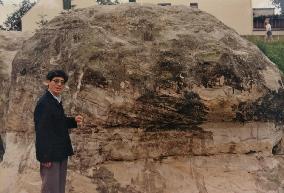
(230320) -- CHENGDU, March 20, 2023 (Xinhua) -- This file photo taken in 1987 shows Wu Xichun investigating a Jurassic siliceous sponge reef group in Germany. Wu Xichun is a professor at the College of Energy of the Chengdu University of Technology and an expert in geology. In the early 1970s, while conducting a geological mapping survey in the northwestern part of Sichuan Province, Wu unexpectedly discovered a reef group formed by Triassic siliceous hexactinellid sponges. Since then, he has devoted himself to the study on sponge reefs for nearly five decades. In order to study foreign literature, Wu mastered English, Russian, and German, and taught himself Latin, Greek, and Old French. He spent years conducting tens of times of on-site investigations at the discovery area to obtain more accurate research results and brought back dozens of pounds of fossils by himself. To clarify the reproduction and migration of hexactinellid sponges, Wu also brought the fossils abroad for more in-depth comparison stud

  •  
CHINA-MARINE REPTILE-NEW SPECIES-PACHYPLEUROSAUR-DISCOVERY (CN)

CHINA-MARINE REPTILE-NEW SPECIES-PACHYPLEUROSAUR-DISCOVERY (CN)

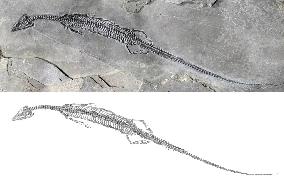
(220511) -- BEIJING, May 11, 2022 (Xinhua) -- This undated photo shows the fossil specimen and sketch of Honghesaurus, a new species of marine reptiles known as a pachypleurosaur. Chinese scientists have discovered a fossil of a new species of marine reptiles known as a pachypleurosaur, dating back 244 million years, with the longest tail ever seen for its kind, indicating it may have been an exceptional swimmer. The pachypleurosaurs were a group of small to medium-sized, lizard-like marine reptiles from the early to middle Triassic Period, and the new species has been named Honghesaurus after the discovery site Honghe Hani and Yi Autonomous Prefecture. (Chinese Academy of Sciences/Handout via Xinhua)

  •  

Marine reptile fossil dating back 250 million years found in south China

STORY: Marine reptile fossil dating back 250 million years found in south China DATELINE: April 17, 2022 LENGTH: 00:01:26 LOCATION: BAISE, China CATEGORY: SOCIETY/ECOLOGY SHOTLIST: 1. various of fossil sites 2. SOUNDBITE (Chinese): LU YIJUN, Official with Zhebao Town, Guangxi STORYLINE: Researchers have discovered the partial skeleton of a previously unknown marine reptile recognizable as an ichthyosauromorph, which lived approximately 250 million years ago, according to the China University of Geosciences (Wuhan). The fossil, which dates back to the Lower Triassic, was unearthed in Baise City, south China's Guangxi Zhuang Autonomous Region, and was named "Baisesaurus robustus" by the research team involved in its discovery. Based on three-month restoration work, the researchers believe the reptile was about 3 meters long -- much larger than any Early Triassic ichthyosauriforms that have been found in China. The Baisesaurus robustus would have resembled a dolphin, according to images created throu

  •  

Aerial Video A Incense Stick In Enshi Grand Canyon

Aerial video of a incense stick in Enshi Grand Canyon is a rare single Triassic limestone pillar on earth. Enshi City, Hubei Province, China, October 21, 2020.

  •  

Aerial Video A Incense Stick In Enshi Grand Canyon

Aerial video of a incense stick in Enshi Grand Canyon is a rare single Triassic limestone pillar on earth. Enshi City, Hubei Province, China, October 21, 2020.

  • Main
  • Top
  • Editorial
  • Creative
  • About Us
  • About ILG
  • Terms of use
  • Company
  • BEHIND
  • Price List
  • Single Plan
  • Monthly Plan
  • Services
  • Shooting
  • Rights Clearance
  • Support
  • FAQ
  • How To Buy
  • Contact Us
  • Become a Partner

© KYODO NEWS IMAGES INC

All Rights Reserved.

  • Editorial
  • Olympics
  • News
  • Sports
  • Japan
  • Tech
  • Royal
  • Disaster
  • NorthKorea
  • Old Japan
  • SNS
  • Creative
  • Food
  • Japan
  • Landscape
  • Animal
  • Popular
  • #Ukraine
  • #Thailand
  • #coronavirus
  • #N. Korea
  • #China
  • #Russia
  • #Ukraine
  • #Thailand
  • #coronavirus
  • #N. Korea
  • #China
  • #Russia
  • Food
  • Japan
  • Landscape
  • Animal
  • Olympics
  • News
  • Sports
  • Japan
  • Tech
  • Royal
  • Disaster
  • NorthKorea
  • Old Japan
  • SNS