•  
Japan imperial family's trip to Fukushima

Japan imperial family's trip to Fukushima

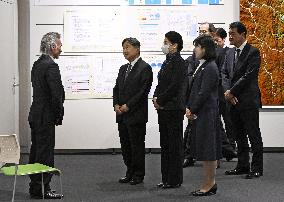
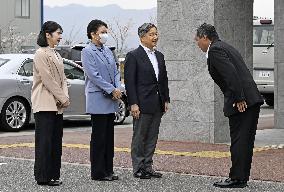
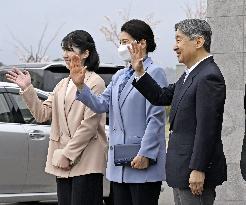
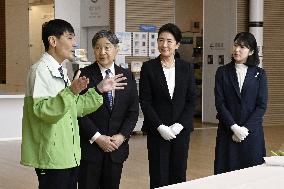
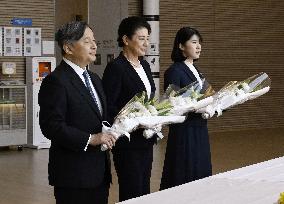
(Facing camera, from L) Japan's Emperor Naruhito, Empress Masako and their daughter Princess Aiko talk with a person affected by the Great East Japan Earthquake at a memorial museum in Futaba, a town in Fukushima Prefecture that co-hosts the crippled Fukushima Daiichi nuclear power plant, on April 6, 2026. Fifteen years after the earthquake, tsunami and nuclear disasters that struck northeastern Japan in March 2011, they are visiting the prefecture to see the recovery efforts firsthand.

  •  
Japan imperial family's trip to Fukushima

Japan imperial family's trip to Fukushima

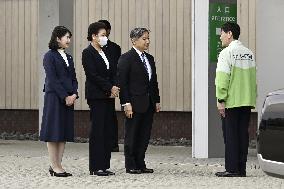
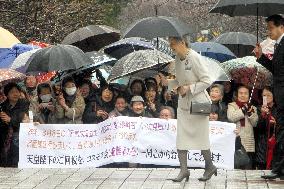
Japan's Emperor Naruhito, Empress Masako and their daughter Princess Aiko arrive at a memorial museum in Futaba, a town in Fukushima Prefecture that co-hosts the crippled Fukushima Daiichi nuclear power plant, on April 6, 2026. Fifteen years after the earthquake, tsunami and nuclear disasters that struck northeastern Japan in March 2011, they are visiting the prefecture to see the recovery efforts firsthand.

  •  
Japan imperial family's trip to Fukushima

Japan imperial family's trip to Fukushima

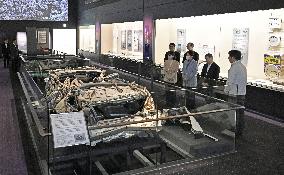
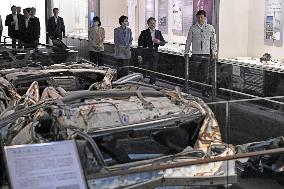
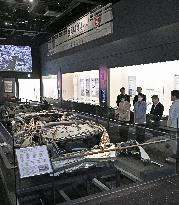
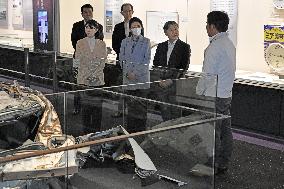
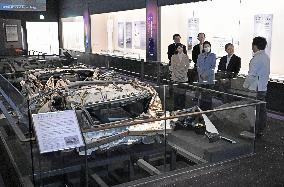
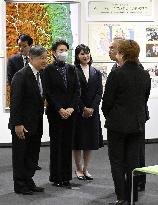
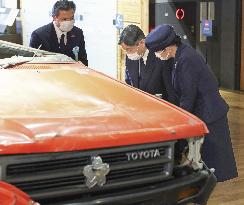
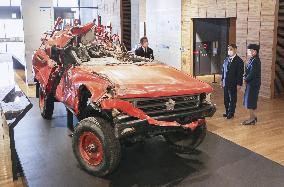
Japan's Emperor Naruhito (2nd from R), Empress Masako and their daughter Princess Aiko visit the Historical Archive Museum of Tomioka in Tomioka, Fukushima Prefecture, on April 7, 2026. The imperial family is visiting Fukushima Prefecture to observe the recovery efforts after a massive earthquake and tsunami struck the region in March 2011, triggering a nuclear accident at the Fukushima Daiichi power plant. Seen in the front is a police car wrecked in the tsunami.

  •  
Japan imperial family's trip to Fukushima

Japan imperial family's trip to Fukushima

Japan's Emperor Naruhito (2nd from R), Empress Masako and their daughter Princess Aiko visit the Historical Archive Museum of Tomioka in Tomioka, Fukushima Prefecture, on April 7, 2026. The imperial family is visiting Fukushima Prefecture to observe the recovery efforts after a massive earthquake and tsunami struck the region in March 2011, triggering a nuclear accident at the Fukushima Daiichi power plant. Seen in the front is a police car wrecked in the tsunami.

  •  
Japan imperial family's trip to Fukushima

Japan imperial family's trip to Fukushima

Japan's Emperor Naruhito (2nd from R), Empress Masako and their daughter Princess Aiko visit the Historical Archive Museum of Tomioka in Tomioka, Fukushima Prefecture, on April 7, 2026. The imperial family is visiting Fukushima Prefecture to observe the recovery efforts after a massive earthquake and tsunami struck the region in March 2011, triggering a nuclear accident at the Fukushima Daiichi power plant. Seen in the front is a police car wrecked in the tsunami.

  •  
Japan imperial family's trip to Fukushima

Japan imperial family's trip to Fukushima

Japan's Emperor Naruhito (2nd from R), Empress Masako and their daughter Princess Aiko visit the Historical Archive Museum of Tomioka in Tomioka, Fukushima Prefecture, on April 7, 2026. The imperial family is visiting Fukushima Prefecture to observe the recovery efforts after a massive earthquake and tsunami struck the region in March 2011, triggering a nuclear accident at the Fukushima Daiichi power plant.

  •  
Japan imperial family's trip to Fukushima

Japan imperial family's trip to Fukushima

Japan's Emperor Naruhito (2nd from R), Empress Masako and their daughter Princess Aiko visit the Historical Archive Museum of Tomioka in Tomioka, Fukushima Prefecture, on April 7, 2026. The imperial family is visiting Fukushima Prefecture to observe the recovery efforts after a massive earthquake and tsunami struck the region in March 2011, triggering a nuclear accident at the Fukushima Daiichi power plant.

  •  
Japan imperial family's trip to Fukushima

Japan imperial family's trip to Fukushima

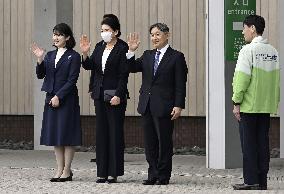
Japan's Emperor Naruhito (2nd from R), Empress Masako and their daughter Princess Aiko arrive at the Historical Archive Museum of Tomioka in Tomioka, Fukushima Prefecture, on April 7, 2026. The imperial family is visiting Fukushima Prefecture to observe recovery efforts after a massive earthquake and tsunami struck the region in March 2011, triggering a nuclear accident at the Fukushima Daiichi power plant.

  •  
Japan imperial family's trip to Fukushima

Japan imperial family's trip to Fukushima

(From R) Japan's Emperor Naruhito, Empress Masako and their daughter Princess Aiko wave to well-wishers after arriving at the Historical Archive Museum of Tomioka in Tomioka, Fukushima Prefecture, on April 7, 2026. The imperial family is visiting Fukushima Prefecture to observe recovery efforts after a massive earthquake and tsunami struck the region in March 2011, triggering a nuclear accident at the Fukushima Daiichi power plant.

  •  
Japan imperial family's trip to Fukushima

Japan imperial family's trip to Fukushima

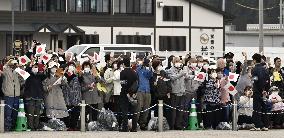
People wave to Japan's Emperor Naruhito, Empress Masako and their daughter Princess Aiko upon their arrival at the Great East Japan Earthquake and Nuclear Disaster Memorial Museum in Futaba, a Fukushima Prefecture town that co-hosts the crippled Fukushima Daiichi nuclear power plant, on April 6, 2026. Fifteen years after the earthquake, tsunami and nuclear disasters that struck northeastern Japan in March 2011, they are visiting the prefecture to see the recovery efforts firsthand.

  •  
Japan imperial family's trip to Fukushima

Japan imperial family's trip to Fukushima

Japan's Emperor Naruhito (L), Empress Masako (2nd from L) and their daughter Princess Aiko (3rd from L) talk with people affected by the Great East Japan Earthquake at a memorial museum in Futaba, a town in Fukushima Prefecture that co-hosts the crippled Fukushima Daiichi nuclear power plant, on April 6, 2026. Fifteen years after the earthquake, tsunami and nuclear disasters that struck northeastern Japan in March 2011, they are visiting the prefecture to see the recovery efforts firsthand.

  •  
Japan imperial family's trip to Fukushima

Japan imperial family's trip to Fukushima

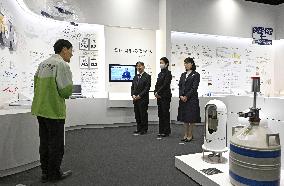
Japan's Emperor Naruhito, Empress Masako (C) and their daughter Princess Aiko bow at the Great East Japan Earthquake and Nuclear Disaster Memorial Museum in Futaba, a Fukushima Prefecture town that co-hosts the crippled Fukushima Daiichi nuclear power plant, on April 6, 2026. Fifteen years after the earthquake, tsunami and nuclear disasters that struck northeastern Japan in March 2011, they are visiting the prefecture to see the recovery efforts firsthand.

  •  
Japan imperial family's trip to Fukushima

Japan imperial family's trip to Fukushima

Japan's Emperor Naruhito (3rd from L), Empress Masako (2nd from L) and their daughter Princess Aiko arrive at the Great East Japan Earthquake and Nuclear Disaster Memorial Museum in Futaba, a Fukushima Prefecture town that co-hosts the crippled Fukushima Daiichi nuclear power plant, on April 6, 2026. Fifteen years after the earthquake, tsunami and nuclear disasters that struck northeastern Japan in March 2011, they are visiting the prefecture to see the recovery efforts firsthand.

  •  
Japan imperial family's trip to Fukushima

Japan imperial family's trip to Fukushima

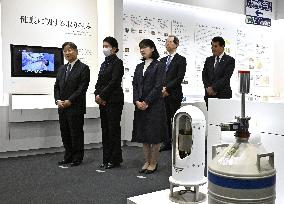
Japan's Emperor Naruhito (2nd from L), Empress Masako (2nd from R) and their daughter Princess Aiko visit the Great East Japan Earthquake and Nuclear Disaster Memorial Museum in Futaba, a Fukushima Prefecture town that co-hosts the crippled Fukushima Daiichi nuclear power plant, on April 6, 2026. Fifteen years after the earthquake, tsunami and nuclear disasters that struck northeastern Japan in March 2011, they are visiting the prefecture to see the recovery efforts firsthand.

  •  
Japan imperial family's trip to Fukushima

Japan imperial family's trip to Fukushima

Japan's Emperor Naruhito (2nd from L), Empress Masako (2nd from R) and their daughter Princess Aiko visit the Great East Japan Earthquake and Nuclear Disaster Memorial Museum in Futaba, a Fukushima Prefecture town that co-hosts the crippled Fukushima Daiichi nuclear power plant, on April 6, 2026. Fifteen years after the earthquake, tsunami and nuclear disasters that struck northeastern Japan in March 2011, they are visiting the prefecture to see the recovery efforts firsthand.

  •  
Japan imperial family's trip to Fukushima

Japan imperial family's trip to Fukushima

Japan's Emperor Naruhito (back, L), Empress Masako (back, C) and their daughter Princess Aiko visit the Great East Japan Earthquake and Nuclear Disaster Memorial Museum in Futaba, a Fukushima Prefecture town that co-hosts the crippled Fukushima Daiichi nuclear power plant, on April 6, 2026. Fifteen years after the earthquake, tsunami and nuclear disasters that struck northeastern Japan in March 2011, they are visiting the prefecture to see the recovery efforts firsthand.

  •  
Japan imperial family's trip to Fukushima

Japan imperial family's trip to Fukushima

Japan's Emperor Naruhito (front, L), Empress Masako (front, C) and their daughter Princess Aiko visit the Great East Japan Earthquake and Nuclear Disaster Memorial Museum in Futaba, a Fukushima Prefecture town that co-hosts the crippled Fukushima Daiichi nuclear power plant, on April 6, 2026. Fifteen years after the earthquake, tsunami and nuclear disasters that struck northeastern Japan in March 2011, they are visiting the prefecture to see the recovery efforts firsthand.

  •  
Japan imperial family's trip to Fukushima

Japan imperial family's trip to Fukushima

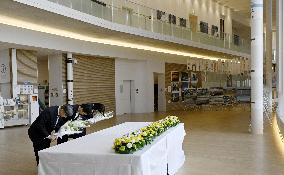
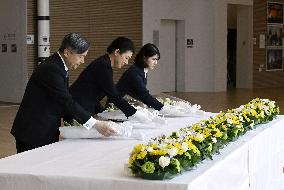
Japan's Emperor Naruhito, Empress Masako (C) and their daughter Princess Aiko lay flowers at the Great East Japan Earthquake and Nuclear Disaster Memorial Museum in Futaba, a Fukushima Prefecture town that co-hosts the crippled Fukushima Daiichi nuclear power plant, on April 6, 2026. Fifteen years after the earthquake, tsunami and nuclear disasters that struck northeastern Japan in March 2011, they are visiting the prefecture to see the recovery efforts firsthand.

  •  
Japan imperial family's trip to Fukushima

Japan imperial family's trip to Fukushima

Japan's Emperor Naruhito, Empress Masako (C) and their daughter Princess Aiko lay flowers at the Great East Japan Earthquake and Nuclear Disaster Memorial Museum in Futaba, a Fukushima Prefecture town that co-hosts the crippled Fukushima Daiichi nuclear power plant, on April 6, 2026. Fifteen years after the earthquake, tsunami and nuclear disasters that struck northeastern Japan in March 2011, they are visiting the prefecture to see the recovery efforts firsthand.

  •  
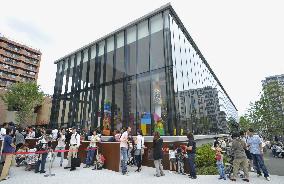
Shark Museum

Shark Museum

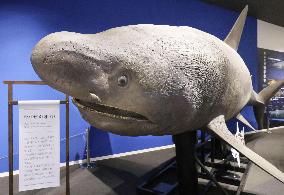
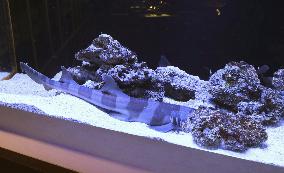
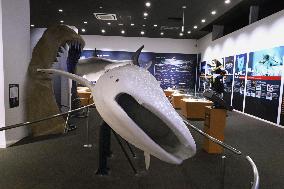
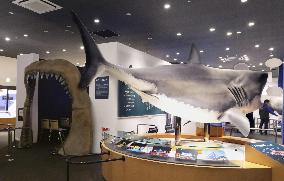
Photo taken on March 26, 2024, shows Shark Museum in Kesennuma, Miyagi Prefecture, after the facility, severely damaged by the March 2011 quake and tsunami, was recently renewed.

  •  
Shark Museum

Shark Museum

Photo taken on March 26, 2024, shows Shark Museum in Kesennuma, Miyagi Prefecture, after the facility, severely damaged by the March 2011 quake and tsunami, was recently renewed.

  •  
Shark Museum

Shark Museum

Photo taken on March 26, 2024, shows Shark Museum in Kesennuma, Miyagi Prefecture, after the facility, severely damaged by the March 2011 quake and tsunami, was recently renewed.

  •  
Shark Museum

Shark Museum

Photo taken on March 26, 2024, shows Shark Museum in Kesennuma, Miyagi Prefecture, after the facility, severely damaged by the March 2011 quake and tsunami, was recently renewed.

  •  
Japanese emperor, empress in tsunami-hit city

Japanese emperor, empress in tsunami-hit city

Japanese Emperor Naruhito (2nd from R) and Empress Masako visit a tsunami memorial museum in Rikuzentakata in Iwate Prefecture, northeastern Japan, on June 3, 2023. (Pool photo)

  •  
Japanese emperor, empress in tsunami-hit city

Japanese emperor, empress in tsunami-hit city

Japanese Emperor Naruhito and Empress Masako visit a tsunami memorial museum in the city of Rikuzentakata in Iwate Prefecture, northeastern Japan, on June 3, 2023. (Pool photo)

  •  
German Environment Minister Lemke in Japan

German Environment Minister Lemke in Japan

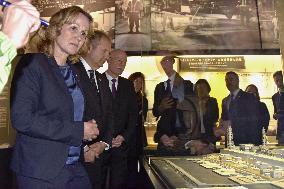
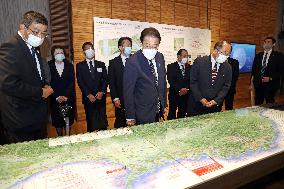
Germany's Environment Minister Steffi Lemke (L) sees the model of the Fukushima Daiichi nuclear power plant, which was crippled in a massive 2011 earthquake and tsunami, at the Great East Japan Earthquake and Nuclear Disaster Memorial Museum in Futaba, Fukushima Prefecture in northeastern Japan, on April 13, 2023.

  •  
Visitors see tsunami-damaged inkstones at Austrian museum

Visitors see tsunami-damaged inkstones at Austrian museum

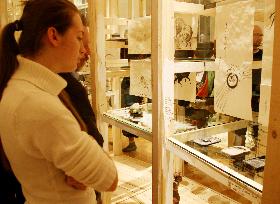
VIENNA, Austria - Visitors look at inkstones damaged by the 2011 tsunami in northeastern Japan at the Austrian Museum of Applied Arts in Vienna on Feb. 25, 2014. The Ogatsu inkstones, traditional artifacts of the Ogatsu area in Ishinomaki, Miyagi Prefecture, were donated to the museum.

  •  
Inkstones damaged by 2011 tsunami displayed at Austrian museum

Inkstones damaged by 2011 tsunami displayed at Austrian museum

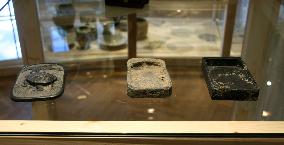
VIENNA, Austria - Inkstones and a cover that were damaged by the 2011 tsunami in northeastern Japan are displayed at the Austrian Museum of Applied Arts in Vienna on Feb. 14, 2014. The Ogatsu inkstones, traditional artifacts of the Ogatsu area in Ishinomaki, Miyagi Prefecture, were donated to the museum.

  •  
Museum curators set up permanent disaster exhibit

Museum curators set up permanent disaster exhibit

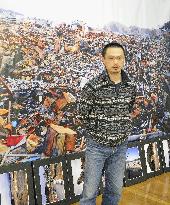
SENDAI, Japan - Curator Hiroyasu Yamauchi stands in front of photos at the Rias Ark Museum of Art in Kesennuma, Miyagi Prefecture on March 3, 2013, showing the devastating damage of the March 2011 earthquake and tsunami disaster.

  •  
Tsunami museum in Aceh

Tsunami museum in Aceh

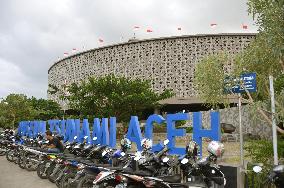
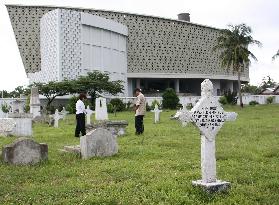
BANDA ACEH, Indonesia - A December 2012 photo shows Tsunami Museum in Banda Aceh, Indonesia, commemorating the 2004 Indian Ocean tsunami.

  •  
Tsunami museum in Aceh

Tsunami museum in Aceh

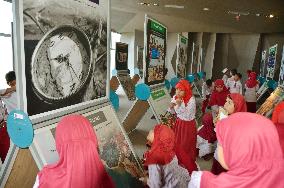
BANDA ACEH, Indonesia - A December 2012 photo shows local students visiting Tsunami Museum in Banda Aceh, Indonesia, commemorating the 2004 Indian Ocean tsunami.

  •  
"Manga" museum reopens after tsunami

"Manga" museum reopens after tsunami

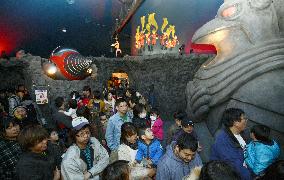
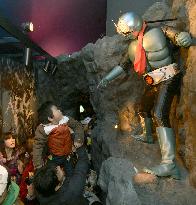
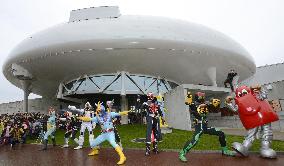
ISHINOMAKI, Japan - Ishinomori Mangattan Museum, a museum featuring the Masked Rider series and other works of the late cartoonist Shotaro Ishinomori, reopens in Ishinomaki, Miyagi Prefecture, on Nov. 17, 2012, after closing for about 20 months since the March 2011 Great East Japan Earthquake and subsequent tsunami.

  •  
"Manga" museum reopens after tsunami

"Manga" museum reopens after tsunami

ISHINOMAKI, Japan - Ishinomori Mangattan Museum, a museum featuring the Masked Rider series and other works of the late cartoonist Shotaro Ishinomori, reopens in Ishinomaki, Miyagi Prefecture, on Nov. 17, 2012, after closing for about 20 months since the March 2011 Great East Japan Earthquake and subsequent tsunami.

  •  
"Manga" museum reopens after tsunami

"Manga" museum reopens after tsunami

ISHINOMAKI, Japan - Ishinomori Mangattan Museum, a museum featuring the Masked Rider series and other works of the late cartoonist Shotaro Ishinomori, reopens in Ishinomaki, Miyagi Prefecture, on Nov. 17, 2012, after closing for about 20 months since the March 2011 Great East Japan Earthquake and subsequent tsunami.

  •  
Int'l manga comics conference in Tottori

Int'l manga comics conference in Tottori

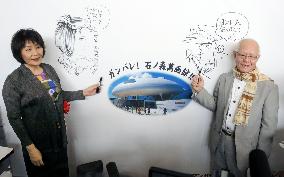
YONAGO, Japan - During the opening day of the 13th International Comic Artist Conference in Yonago, Tottori Prefecture, Japanese manga artists Tetsuya Chiba (R) and Machiko Satonaka stand in front of their messages celebrating the reopening on Nov. 17 of the Ishinomaki Mangattan Museum in Miyagi Prefecture. The museum, featuring the works of Shotaro Ishinomori, was damaged by 2011's powerful earthquake and tsunami in northeastern Japan.

  •  
Memorial event in U.S.

Memorial event in U.S.

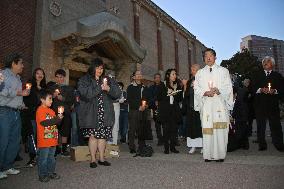
LOS ANGELES, United States - People holding candles mourn for the victims of the March 2011 magnitude 9.0 earthquake and massive tsunami in Japan at a plaza in front of the Japanese American National Museum in Los Angeles, California, on March 11, 2012.

  •  
Empress Michiko visits museum

Empress Michiko visits museum

TOKYO, Japan - Japanese Empress Michiko arrives at a museum in Tokyo's Itabashi Ward to see a picture book exhibit on March 9, 2012, with people (crouching) who have evacuated from areas affected by the March 11 earthquake and tsunami greeting her. (Pool photo)

  •  
U.S. envoy in Yamagata

U.S. envoy in Yamagata

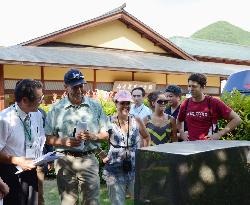
YAMAGATA, Japan - U.S. Ambassador to Japan John Roos (2nd from L) looks at the writing on a monument contributed by former U.S. Ambassador to Japan Edwin Reischauer at Yamadera Basho Museum, a museum for Japanese haiku master Matsuo Basho, in Yamagata, northeastern Japan, on July 24, 2011, with his family. Roos said he would like to let people around the world know that Japan is safe as the country has suffered a significant drop in foreign tourists following the March 11 earthquake and tsunami.

  •  
Anpanman museum opens in Sendai

Anpanman museum opens in Sendai

SENDAI, Japan - Visitors line up waiting for the opening of the Sendai Anpanman Children's Museum & Mall in Sendai, northeastern Japan, on July 22, 2011. The opening was delayed by three months as the area was hit by the March quake and tsunami.

  •  
Crown prince at photo exhibit

Crown prince at photo exhibit

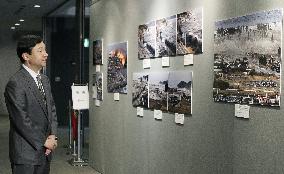
YOKOHAMA, Japan - Japanese Crown Prince Naruhito views news photos of the devastation caused by the March 11, 2011, earthquake and tsunami in northeastern Japan on display at the Japan Newspaper Museum in Yokohama on May 20, 2011. (Pool photo by Kyodo News)

  •  
Handwritten newspaper from Ishinomaki exhibited

Handwritten newspaper from Ishinomaki exhibited

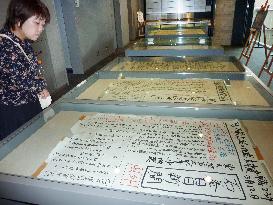
YOKOHAMA, Japan - A woman reads a handwritten newspaper issued shortly after the March 11 earthquake and tsunami disaster by the Ishinomaki Hibi Shimbun, a daily in Ishinomaki, Miyagi Prefecture, exhibited at the Japan Newspaper Museum in Yokohama on May 14, 2011. The paper had been exhibited at the Newseum, a museum in Washington, and is being provided to the museum in Yokohama on loan.

  •  
Carp streamers in disaster area

Carp streamers in disaster area

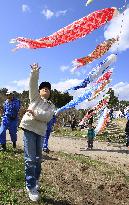
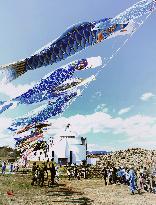
YAMADA, Japan - A boy tries to reach up as 200 carp streamers fly over the premises of the Science Museum of Whale and Sea in the town of Yamada, Iwate Prefecture. The museum suffered major damage in the March 11 quake and tsunami. The 200 streamers are among the 200 donated from the Shizuoka prefectural government and another 100 from people from across Japan. Putting up carp streamers outside homes is a tradition around Children's Day on May 5 in Japan.

  •  
Carp streamers in disaster area

Carp streamers in disaster area

YAMADA, Japan - A total of 200 carp streamers fly over the premises of the Science Museum of Whale and Sea in the town of Yamada, Iwate Prefecture. The museum suffered major damage in the March 11 quake and tsunami. The 200 streamers are among the 200 donated from the Shizuoka prefectural government and another 100 from people from across Japan. Putting up carp streamers outside homes is a tradition around Children's Day on May 5 in Japan.

  •  
Cleaning tsunami-hit museum

Cleaning tsunami-hit museum

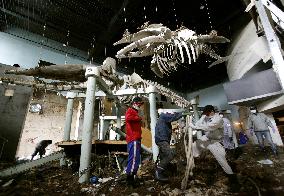
YAMADA, Japan - Volunteer workers clean mud and debris at the Science Museum of Whale and Sea, which was devastated by the March 11 earthquake and tsunami, in the town of Yamada, Iwate Prefecture, on April 21, 2011.

  •  
Landmarks blacked out to save energy

Landmarks blacked out to save energy

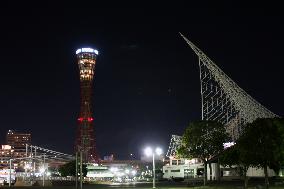
KOBE, Japan - Kobe Port Tower (L) and Kobe Maritime Museum (R) in Hyogo Prefecture, western Japan, turn off illuminations on March 13, 2011, to save electricity amid power shortages in Japan following earthquake and tsunami disasters in northeastern and eastern Japan.

  •  
Controversial, costly Aceh tsunami museum neglected

Controversial, costly Aceh tsunami museum neglected

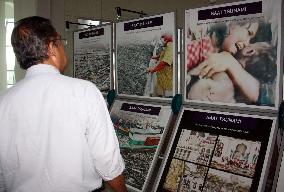
BANDA ACEH, Indonesia - The photo taken Dec. 5, 2009 shows some post-tsunami pictures kept at the Aceh Tsunami Museum in the Aceh provincial capital Banda Aceh, Indonesia. Controversial since its costly construction, the museum is now neglected.

  •  
Controversial, costly Aceh tsunami museum neglected

Controversial, costly Aceh tsunami museum neglected

BANDA ACEH, Indonesia - The photo taken on Dec. 5, 2009 shows a back view of the Aceh Tsunami Museum, which looks like a ship, in the Aceh Provincial capital Banda Aceh. Controversial since its costly construction, the museum is now neglected.

  •  
11th anniversary of 2011 Great East Japan Earthquake

11th anniversary of 2011 Great East Japan Earthquake

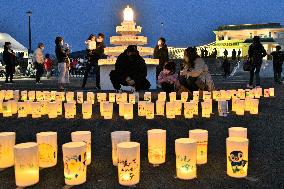
Candles are lit during a memorial event at Iwaki 3.11 Memorial and Revitalization Museum in the Fukushima Prefecture city of Iwaki, northeastern Japan, on March 11, 2022, the 11th anniversary of the earthquake-tsunami disaster.

  •  
Japan PM Kishida visits place hit by 2011 tsunami

Japan PM Kishida visits place hit by 2011 tsunami

Japanese Prime Minister Fumio Kishida (C) visits the Iwate Tsunami Memorial Museum on Oct. 16, 2021, in Rikuzentakata, Iwate Prefecture, one of the places most severely devastated by a massive tsunami in March 2011. (Pool photo)

  •  
Museum on March 2011 disaster in Fukushima town

Museum on March 2011 disaster in Fukushima town

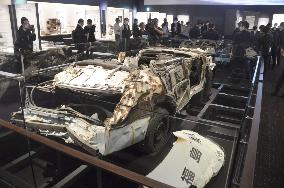
Photo taken July 11, 2021, shows a police car washed away in the March 2011 earthquake-triggered tsunami on display at the just opened Tomioka Archive Museum in the Fukushima Prefecture town of Tomioka, northeastern Japan.

  • Main
  • Top
  • Editorial
  • Creative
  • About Us
  • About ILG
  • Terms of use
  • Company
  • BEHIND
  • Price List
  • Single Plan
  • Monthly Plan
  • Services
  • Shooting
  • Rights Clearance
  • Support
  • FAQ
  • How To Buy
  • Contact Us
  • Become a Partner

© KYODO NEWS IMAGES INC

All Rights Reserved.

  • Editorial
  • Olympics
  • News
  • Sports
  • Japan
  • Tech
  • Royal
  • Disaster
  • NorthKorea
  • Old Japan
  • SNS
  • Creative
  • Food
  • Japan
  • Landscape
  • Animal
  • Popular
  • #Ukraine
  • #China
  • #coronavirus
  • #N. Korea
  • #Russia
  • #Thailand
  • #Ukraine
  • #China
  • #coronavirus
  • #N. Korea
  • #Russia
  • #Thailand
  • Food
  • Japan
  • Landscape
  • Animal
  • Olympics
  • News
  • Sports
  • Japan
  • Tech
  • Royal
  • Disaster
  • NorthKorea
  • Old Japan
  • SNS