•  
Season's first yellowtail auction

Season's first yellowtail auction

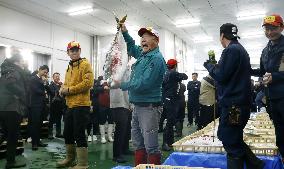
The season's first auction of winter yellowtails is held at a fish market in Kanazawa in the central Japan prefecture of Ishikawa on Dec. 2, 2025. A fish weighing 14.5 kilogram was auctioned off for a record-tying 4 million yen ($25,700).

  •  
Tie-Dye Technique Of Bai Ethnic Group - Chin

Tie-Dye Technique Of Bai Ethnic Group - Chin

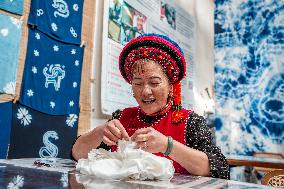
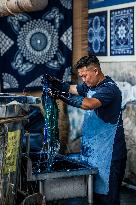
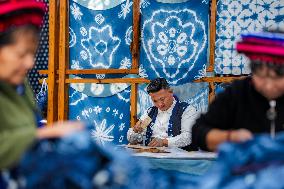
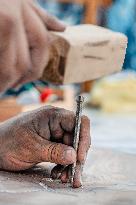
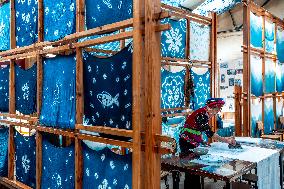
Duan Yuan, an inheritor of the tie-dye technique of Bai ethnic group, makes tie-dye designs in a dyehouse in Zhoucheng Village of Dali Bai Autonomous Prefecture, southwest China's Yunnan Province, November 21, 2025. Known as the hometown of the tie-dye technique of Bai ethnic group, Zhoucheng Village hosts over 200 households engaging in tie-dye businesses, with the number of employees exceeding 4,000. As a traditional folk technique of the Bai ethnic group, tie-dye boasts a history spanning over a thousand years and was included in the first batch of China's national intangible cultural heritage list in 2006. Tying and dyeing are the core steps in the process of making indigo tie-dye products. Artisans use needles and threads to create various patterns on the fabric, which are then dyed with plant-based dyes, resulting in blue backgrounds adorned with vivid white patterns. Photo by Hu Chao/Xinhua/ABACAPRESS.COM

  •  
Tie-Dye Technique Of Bai Ethnic Group - Chin

Tie-Dye Technique Of Bai Ethnic Group - Chin

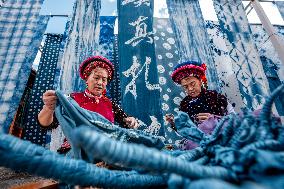
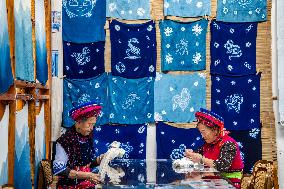
Duan Yinmei, an inheritor of the tie-dye technique of Bai ethnic group, creates knots on fabrics in a dyehouse in Zhoucheng Village of Dali Bai Autonomous Prefecture, southwest China's Yunnan Province, November 21, 2025. Known as the hometown of the tie-dye technique of Bai ethnic group, Zhoucheng Village hosts over 200 households engaging in tie-dye businesses, with the number of employees exceeding 4,000. As a traditional folk technique of the Bai ethnic group, tie-dye boasts a history spanning over a thousand years and was included in the first batch of China's national intangible cultural heritage list in 2006. Tying and dyeing are the core steps in the process of making indigo tie-dye products. Artisans use needles and threads to create various patterns on the fabric, which are then dyed with plant-based dyes, resulting in blue backgrounds adorned with vivid white patterns. Photo by Hu Chao/Xinhua/ABACAPRESS.COM

  •  
Tie-Dye Technique Of Bai Ethnic Group - Chin

Tie-Dye Technique Of Bai Ethnic Group - Chin

A woman experiences the tie-dye technique of Bai ethnic group in a dyehouse in Zhoucheng Village of Dali Bai Autonomous Prefecture, southwest China's Yunnan Province, November 21, 2025. Known as the hometown of the tie-dye technique of Bai ethnic group, Zhoucheng Village hosts over 200 households engaging in tie-dye businesses, with the number of employees exceeding 4,000. As a traditional folk technique of the Bai ethnic group, tie-dye boasts a history spanning over a thousand years and was included in the first batch of China's national intangible cultural heritage list in 2006. Tying and dyeing are the core steps in the process of making indigo tie-dye products. Artisans use needles and threads to create various patterns on the fabric, which are then dyed with plant-based dyes, resulting in blue backgrounds adorned with vivid white patterns. Photo by Hu Chao/Xinhua/ABACAPRESS.COM

  •  
Tie-Dye Technique Of Bai Ethnic Group - Chin

Tie-Dye Technique Of Bai Ethnic Group - Chin

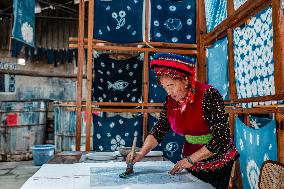
Duan Yinmei, an inheritor of the tie-dye technique of Bai ethnic group, dyes patterns on fabrics in a dyehouse in Zhoucheng Village of Dali Bai Autonomous Prefecture, southwest China's Yunnan Province, November 21, 2025. Known as the hometown of the tie-dye technique of Bai ethnic group, Zhoucheng Village hosts over 200 households engaging in tie-dye businesses, with the number of employees exceeding 4,000. As a traditional folk technique of the Bai ethnic group, tie-dye boasts a history spanning over a thousand years and was included in the first batch of China's national intangible cultural heritage list in 2006. Tying and dyeing are the core steps in the process of making indigo tie-dye products. Artisans use needles and threads to create various patterns on the fabric, which are then dyed with plant-based dyes, resulting in blue backgrounds adorned with vivid white patterns. Photo by Hu Chao/Xinhua/ABACAPRESS.COM

  •  
Tie-Dye Technique Of Bai Ethnic Group - Chin

Tie-Dye Technique Of Bai Ethnic Group - Chin

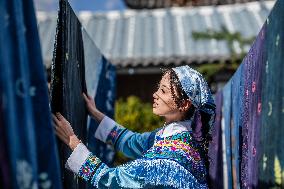
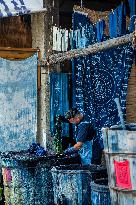
Duan Yuan, an inheritor of the tie-dye technique of Bai ethnic group, rinses dyed fabrics in a dyehouse in Zhoucheng Village of Dali Bai Autonomous Prefecture, southwest China's Yunnan Province, November 21, 2025. Known as the hometown of the tie-dye technique of Bai ethnic group, Zhoucheng Village hosts over 200 households engaging in tie-dye businesses, with the number of employees exceeding 4,000. As a traditional folk technique of the Bai ethnic group, tie-dye boasts a history spanning over a thousand years and was included in the first batch of China's national intangible cultural heritage list in 2006. Tying and dyeing are the core steps in the process of making indigo tie-dye products. Artisans use needles and threads to create various patterns on the fabric, which are then dyed with plant-based dyes, resulting in blue backgrounds adorned with vivid white patterns. Photo by Hu Chao/Xinhua/ABACAPRESS.COM

  •  
Tie-Dye Technique Of Bai Ethnic Group - Chin

Tie-Dye Technique Of Bai Ethnic Group - Chin

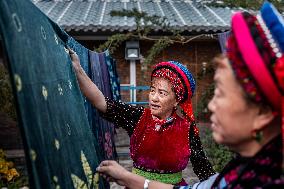
Duan Yinmei (L), an inheritor of the tie-dye technique of Bai ethnic group, and handicraftsman Duan Lilan dry tie-dye fabrics in a dyehouse in Zhoucheng Village of Dali Bai Autonomous Prefecture, southwest China's Yunnan Province, November 21, 2025. Known as the hometown of the tie-dye technique of Bai ethnic group, Zhoucheng Village hosts over 200 households engaging in tie-dye businesses, with the number of employees exceeding 4,000. As a traditional folk technique of the Bai ethnic group, tie-dye boasts a history spanning over a thousand years and was included in the first batch of China's national intangible cultural heritage list in 2006. Tying and dyeing are the core steps in the process of making indigo tie-dye products. Artisans use needles and threads to create various patterns on the fabric, which are then dyed with plant-based dyes, resulting in blue backgrounds adorned with vivid white patterns. Photo by Hu Chao/Xinhua/ABACAPRESS.COM

  •  
Tie-Dye Technique Of Bai Ethnic Group - Chin

Tie-Dye Technique Of Bai Ethnic Group - Chin

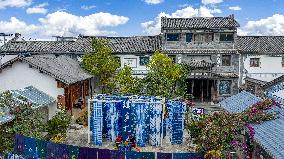
An aerial drone photo shows a scene at a dyehouse in Zhoucheng Village of Dali Bai Autonomous Prefecture, southwest China's Yunnan Province, November 21, 2025. Known as the hometown of the tie-dye technique of Bai ethnic group, Zhoucheng Village hosts over 200 households engaging in tie-dye businesses, with the number of employees exceeding 4,000. As a traditional folk technique of the Bai ethnic group, tie-dye boasts a history spanning over a thousand years and was included in the first batch of China's national intangible cultural heritage list in 2006. Tying and dyeing are the core steps in the process of making indigo tie-dye products. Artisans use needles and threads to create various patterns on the fabric, which are then dyed with plant-based dyes, resulting in blue backgrounds adorned with vivid white patterns. Photo by Hu Chao/Xinhua/ABACAPRESS.COM

  •  
Tie-Dye Technique Of Bai Ethnic Group - Chin

Tie-Dye Technique Of Bai Ethnic Group - Chin

Duan Yinmei (L), an inheritor of the tie-dye technique of Bai ethnic group, and handicraftsman Duan Lilan untie knots on fabrics in a dyehouse in Zhoucheng Village of Dali Bai Autonomous Prefecture, southwest China's Yunnan Province, November 21, 2025. Known as the hometown of the tie-dye technique of Bai ethnic group, Zhoucheng Village hosts over 200 households engaging in tie-dye businesses, with the number of employees exceeding 4,000. As a traditional folk technique of the Bai ethnic group, tie-dye boasts a history spanning over a thousand years and was included in the first batch of China's national intangible cultural heritage list in 2006. Tying and dyeing are the core steps in the process of making indigo tie-dye products. Artisans use needles and threads to create various patterns on the fabric, which are then dyed with plant-based dyes, resulting in blue backgrounds adorned with vivid white patterns. Photo by Hu Chao/Xinhua/ABACAPRESS.COM

  •  
Tie-Dye Technique Of Bai Ethnic Group - Chin

Tie-Dye Technique Of Bai Ethnic Group - Chin

Duan Yinmei (L), an inheritor of the tie-dye technique of Bai ethnic group, and handicraftsman Duan Lilan untie knots on fabrics in a dyehouse in Zhoucheng Village of Dali Bai Autonomous Prefecture, southwest China's Yunnan Province, November 21, 2025. Known as the hometown of the tie-dye technique of Bai ethnic group, Zhoucheng Village hosts over 200 households engaging in tie-dye businesses, with the number of employees exceeding 4,000. As a traditional folk technique of the Bai ethnic group, tie-dye boasts a history spanning over a thousand years and was included in the first batch of China's national intangible cultural heritage list in 2006. Tying and dyeing are the core steps in the process of making indigo tie-dye products. Artisans use needles and threads to create various patterns on the fabric, which are then dyed with plant-based dyes, resulting in blue backgrounds adorned with vivid white patterns. Photo by Hu Chao/Xinhua/ABACAPRESS.COM

  •  
Tie-Dye Technique Of Bai Ethnic Group - Chin

Tie-Dye Technique Of Bai Ethnic Group - Chin

Duan Yuan (L), an inheritor of the tie-dye technique of Bai ethnic group, dyes fabrics in a dyehouse in Zhoucheng Village of Dali Bai Autonomous Prefecture, southwest China's Yunnan Province, November 21, 2025. Known as the hometown of the tie-dye technique of Bai ethnic group, Zhoucheng Village hosts over 200 households engaging in tie-dye businesses, with the number of employees exceeding 4,000. As a traditional folk technique of the Bai ethnic group, tie-dye boasts a history spanning over a thousand years and was included in the first batch of China's national intangible cultural heritage list in 2006. Tying and dyeing are the core steps in the process of making indigo tie-dye products. Artisans use needles and threads to create various patterns on the fabric, which are then dyed with plant-based dyes, resulting in blue backgrounds adorned with vivid white patterns. Photo by Hu Chao/Xinhua/ABACAPRESS.COM

  •  
Tie-Dye Technique Of Bai Ethnic Group - Chin

Tie-Dye Technique Of Bai Ethnic Group - Chin

Duan Yuan, an inheritor of the tie-dye technique of Bai ethnic group, makes tie-dye designs in a dyehouse in Zhoucheng Village of Dali Bai Autonomous Prefecture, southwest China's Yunnan Province, November 21, 2025. Known as the hometown of the tie-dye technique of Bai ethnic group, Zhoucheng Village hosts over 200 households engaging in tie-dye businesses, with the number of employees exceeding 4,000. As a traditional folk technique of the Bai ethnic group, tie-dye boasts a history spanning over a thousand years and was included in the first batch of China's national intangible cultural heritage list in 2006. Tying and dyeing are the core steps in the process of making indigo tie-dye products. Artisans use needles and threads to create various patterns on the fabric, which are then dyed with plant-based dyes, resulting in blue backgrounds adorned with vivid white patterns. Photo by Hu Chao/Xinhua/ABACAPRESS.COM

  •  
Tie-Dye Technique Of Bai Ethnic Group - Chin

Tie-Dye Technique Of Bai Ethnic Group - Chin

Duan Yuan, an inheritor of the tie-dye technique of Bai ethnic group, dyes fabrics in a dyehouse in Zhoucheng Village of Dali Bai Autonomous Prefecture, southwest China's Yunnan Province, November 21, 2025. Known as the hometown of the tie-dye technique of Bai ethnic group, Zhoucheng Village hosts over 200 households engaging in tie-dye businesses, with the number of employees exceeding 4,000. As a traditional folk technique of the Bai ethnic group, tie-dye boasts a history spanning over a thousand years and was included in the first batch of China's national intangible cultural heritage list in 2006. Tying and dyeing are the core steps in the process of making indigo tie-dye products. Artisans use needles and threads to create various patterns on the fabric, which are then dyed with plant-based dyes, resulting in blue backgrounds adorned with vivid white patterns. Photo by Hu Chao/Xinhua/ABACAPRESS.COM

  •  
Tie-Dye Technique Of Bai Ethnic Group - Chin

Tie-Dye Technique Of Bai Ethnic Group - Chin

Duan Yuan, an inheritor of the tie-dye technique of Bai ethnic group, dyes fabrics in a dyehouse in Zhoucheng Village of Dali Bai Autonomous Prefecture, southwest China's Yunnan Province, November 21, 2025. Known as the hometown of the tie-dye technique of Bai ethnic group, Zhoucheng Village hosts over 200 households engaging in tie-dye businesses, with the number of employees exceeding 4,000. As a traditional folk technique of the Bai ethnic group, tie-dye boasts a history spanning over a thousand years and was included in the first batch of China's national intangible cultural heritage list in 2006. Tying and dyeing are the core steps in the process of making indigo tie-dye products. Artisans use needles and threads to create various patterns on the fabric, which are then dyed with plant-based dyes, resulting in blue backgrounds adorned with vivid white patterns. Photo by Hu Chao/Xinhua/ABACAPRESS.COM

  •  
Tie-Dye Technique Of Bai Ethnic Group - Chin

Tie-Dye Technique Of Bai Ethnic Group - Chin

Duan Yuan, an inheritor of the tie-dye technique of Bai ethnic group, makes tie-dye designs in a dyehouse in Zhoucheng Village of Dali Bai Autonomous Prefecture, southwest China's Yunnan Province, November 21, 2025. Known as the hometown of the tie-dye technique of Bai ethnic group, Zhoucheng Village hosts over 200 households engaging in tie-dye businesses, with the number of employees exceeding 4,000. As a traditional folk technique of the Bai ethnic group, tie-dye boasts a history spanning over a thousand years and was included in the first batch of China's national intangible cultural heritage list in 2006. Tying and dyeing are the core steps in the process of making indigo tie-dye products. Artisans use needles and threads to create various patterns on the fabric, which are then dyed with plant-based dyes, resulting in blue backgrounds adorned with vivid white patterns. Photo by Hu Chao/Xinhua/ABACAPRESS.COM

  •  
Tie-Dye Technique Of Bai Ethnic Group - Chin

Tie-Dye Technique Of Bai Ethnic Group - Chin

Duan Yinmei, an inheritor of the tie-dye technique of Bai ethnic group, unties knots on fabrics in a dyehouse in Zhoucheng Village of Dali Bai Autonomous Prefecture, southwest China's Yunnan Province, November 21, 2025. Known as the hometown of the tie-dye technique of Bai ethnic group, Zhoucheng Village hosts over 200 households engaging in tie-dye businesses, with the number of employees exceeding 4,000. As a traditional folk technique of the Bai ethnic group, tie-dye boasts a history spanning over a thousand years and was included in the first batch of China's national intangible cultural heritage list in 2006. Tying and dyeing are the core steps in the process of making indigo tie-dye products. Artisans use needles and threads to create various patterns on the fabric, which are then dyed with plant-based dyes, resulting in blue backgrounds adorned with vivid white patterns. Photo by Hu Chao/Xinhua/ABACAPRESS.COM

  •  
Tie-Dye Technique Of Bai Ethnic Group - Chin

Tie-Dye Technique Of Bai Ethnic Group - Chin

Duan Yinmei, an inheritor of the tie-dye technique of Bai ethnic group, dyes patterns on fabrics in a dyehouse in Zhoucheng Village of Dali Bai Autonomous Prefecture, southwest China's Yunnan Province, November 21, 2025. Known as the hometown of the tie-dye technique of Bai ethnic group, Zhoucheng Village hosts over 200 households engaging in tie-dye businesses, with the number of employees exceeding 4,000. As a traditional folk technique of the Bai ethnic group, tie-dye boasts a history spanning over a thousand years and was included in the first batch of China's national intangible cultural heritage list in 2006. Tying and dyeing are the core steps in the process of making indigo tie-dye products. Artisans use needles and threads to create various patterns on the fabric, which are then dyed with plant-based dyes, resulting in blue backgrounds adorned with vivid white patterns. Photo by Hu Chao/Xinhua/ABACAPRESS.COM

  •  
Tie-Dye Technique Of Bai Ethnic Group - Chin

Tie-Dye Technique Of Bai Ethnic Group - Chin

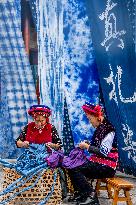
Duan Yinmei (R), an inheritor of the tie-dye technique of Bai ethnic group, and handicraftsman Duan Lilan create knots on fabrics in a dyehouse in Zhoucheng Village of Dali Bai Autonomous Prefecture, southwest China's Yunnan Province, November 21, 2025. Known as the hometown of the tie-dye technique of Bai ethnic group, Zhoucheng Village hosts over 200 households engaging in tie-dye businesses, with the number of employees exceeding 4,000. As a traditional folk technique of the Bai ethnic group, tie-dye boasts a history spanning over a thousand years and was included in the first batch of China's national intangible cultural heritage list in 2006. Tying and dyeing are the core steps in the process of making indigo tie-dye products. Artisans use needles and threads to create various patterns on the fabric, which are then dyed with plant-based dyes, resulting in blue backgrounds adorned with vivid white patterns. Photo by Hu Chao/Xinhua/ABACAPRESS.COM

  •  
Baseball: Division Series between Cubs and Brewers

Baseball: Division Series between Cubs and Brewers

Shota Imanaga of the Chicago Cubs is pictured after allowing a game-tying three-run home run to Andrew Vaughn of the Milwaukee Brewers during the first inning of Game 2 of the Division Series at American Family Field in Milwaukee, Wisconsin, on Oct. 6, 2025.

  •  
Baseball: Mets vs. Dodgers

Baseball: Mets vs. Dodgers

Los Angeles Dodgers designated hitter Shohei Ohtani (L) hugs pitcher Roki Sasaki from behind after Max Muncy hit a game-tying solo home run in the ninth inning of a baseball game against the New York Mets on June 3, 2025.

  •  
Icehockey, bronze medal game

Icehockey, bronze medal game

Finland's Nelli Laitinen (9), Elisa Holopainen (10) and Michelle Karvinen celebrate the game-tying 3-3 goal by Holopainen during the IIHF Women's Ice Hockey World Championship bronze medal match between Finland and Czechia in Ceske Budejovice, Czechia, on April 20, 2025. LEHTIKUVA / EMMI KORHONEN - FINLAND OUT. NO THIRD PARTY SALES. (Credit:Emmi Korhonen/Lehtikuva/Kyodo News Images)

  •  
Icehockey, bronze medal game

Icehockey, bronze medal game

Finland's Elisa Holopainen (10) celebrates her game-tying 3-3 goal during the IIHF Women's Ice Hockey World Championship bronze medal match between Finland and Czechia in Ceske Budejovice, Czechia, on April 20, 2025. LEHTIKUVA / EMMI KORHONEN - FINLAND OUT. NO THIRD PARTY SALES. (Credit:Emmi Korhonen/Lehtikuva/Kyodo News Images)

  •  
Icehockey, semifinals

Icehockey, semifinals

Canada's Erin Ambrose (23) celebrates her game-tying 1-1 goal during the IIHF Women's Ice Hockey World Championship semifinal match between Canada and Finland in Ceske Budejovice, Czechia, on April 19, 2025. LEHTIKUVA / EMMI KORHONEN - FINLAND OUT. NO THIRD PARTY SALES. (Credit:Emmi Korhonen/Lehtikuva/Kyodo News Images)

  •  
Nanning Pumped Storage Power Station Construction

Nanning Pumped Storage Power Station Construction

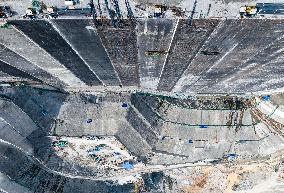
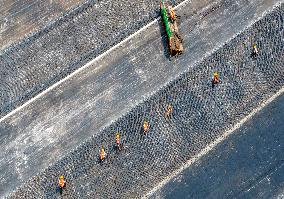
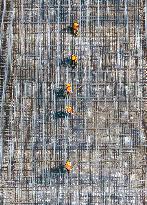
NANNING, CHINA - APRIL 15, 2025 - Aerial photo taken on April 15, 2025 shows builders tying steel bars to the dam panel of the Upper Reservoir project of Nanning pumped storage Power Station in Nanning, Guangxi province, China.

  •  
Nanning Pumped Storage Power Station Construction

Nanning Pumped Storage Power Station Construction

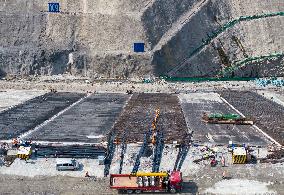
NANNING, CHINA - APRIL 15, 2025 - Aerial photo taken on April 15, 2025 shows builders tying steel bars to the dam panel of the Upper Reservoir project of Nanning pumped storage Power Station in Nanning, Guangxi province, China.

  •  
Nanning Pumped Storage Power Station Construction

Nanning Pumped Storage Power Station Construction

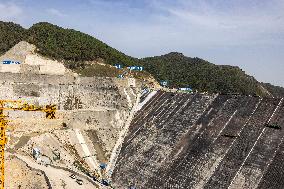
NANNING, CHINA - APRIL 15, 2025 - Aerial photo taken on April 15, 2025 shows builders tying steel bars to the dam panel of the Upper Reservoir project of Nanning pumped storage Power Station in Nanning, Guangxi province, China.

  •  
Nanning Pumped Storage Power Station Construction

Nanning Pumped Storage Power Station Construction

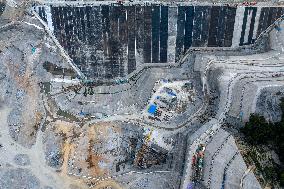
NANNING, CHINA - APRIL 15, 2025 - Aerial photo taken on April 15, 2025 shows builders tying steel bars to the dam panel of the Upper Reservoir project of Nanning pumped storage Power Station in Nanning, Guangxi province, China.

  •  
Nanning Pumped Storage Power Station Construction

Nanning Pumped Storage Power Station Construction

NANNING, CHINA - APRIL 15, 2025 - Aerial photo taken on April 15, 2025 shows builders tying steel bars to the dam panel of the Upper Reservoir project of Nanning pumped storage Power Station in Nanning, Guangxi province, China.

  •  
Nanning Pumped Storage Power Station Construction

Nanning Pumped Storage Power Station Construction

NANNING, CHINA - APRIL 15, 2025 - Aerial photo taken on April 15, 2025 shows builders tying steel bars to the dam panel of the Upper Reservoir project of Nanning pumped storage Power Station in Nanning, Guangxi province, China.

  •  
Nanning Pumped Storage Power Station Construction

Nanning Pumped Storage Power Station Construction

NANNING, CHINA - APRIL 15, 2025 - Aerial photo taken on April 15, 2025 shows builders tying steel bars to the dam panel of the Upper Reservoir project of Nanning pumped storage Power Station in Nanning, Guangxi province, China.

  •  
Nanning Pumped Storage Power Station Construction

Nanning Pumped Storage Power Station Construction

NANNING, CHINA - APRIL 15, 2025 - Aerial photo taken on April 15, 2025 shows builders tying steel bars to the dam panel of the Upper Reservoir project of Nanning pumped storage Power Station in Nanning, Guangxi province, China.

  •  
Princess Leonor's Voyage on The Elcano - Spain

Princess Leonor's Voyage on The Elcano - Spain

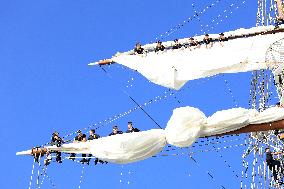
Princess Leonor, together with her fellow midshipmen in a sail-tying exercise, on the Navy training ship 'Juan Sebastián Elcano', on January 31, 2025. After completing her voyage from Cadiz to the Canary Islands, Leonor will make her next stop in Brazil on February 14. This will be one of the eight countries where they plan to stop during the next five months of her training as a midshipman. Photo by Lorena Sopena/Europa Press/ABACAPRESS.COM

  •  
Princess Leonor's Voyage on The Elcano - Spain

Princess Leonor's Voyage on The Elcano - Spain

Princess Leonor, together with her fellow midshipmen in a sail-tying exercise, on the Navy training ship 'Juan Sebastián Elcano', on January 31, 2025. After completing her voyage from Cadiz to the Canary Islands, Leonor will make her next stop in Brazil on February 14. This will be one of the eight countries where they plan to stop during the next five months of her training as a midshipman. Photo by Lorena Sopena/Europa Press/ABACAPRESS.COM

  •  
Dance of the Voladores of Cuetzalan - Mexico

Dance of the Voladores of Cuetzalan - Mexico

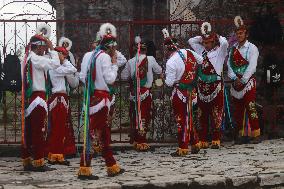
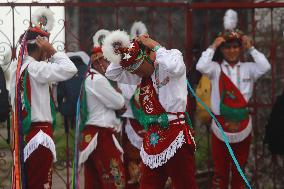
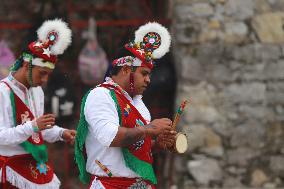
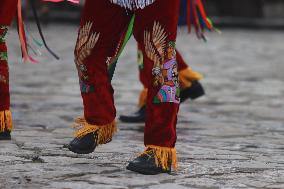
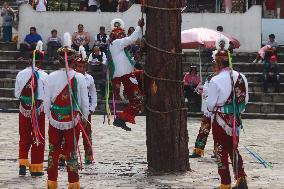
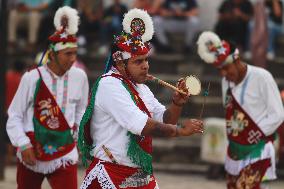
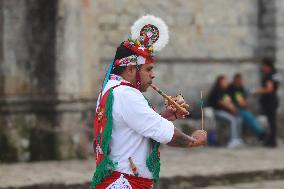
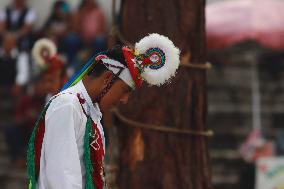
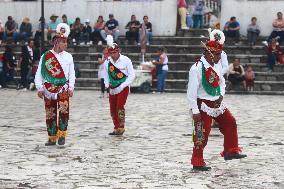
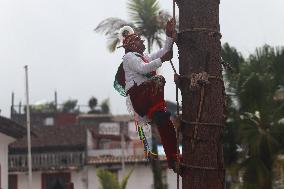
Voladores of Cuetzalan during the pre-Hispanic ritual ceremony which consists of tying their feet with ropes and throwing themselves into the void from a trunk with a height of 52 meters. Voladores de Cuetzalan are a group of dancers who perform the dance of the Voladores, a pre-Hispanic dance originating of the Sierra Norte de Puebla. United Nations Educational, Scientific and Cultural Organization (UNESCO), declared it Intangible Cultural Heritage in 2009 the Voladores of Cuetzalan. on November 2, 2024 in Cuetzalan, Puebla. Photo by Carlos Santiago/Eyepix Group/ABACAPRESS.COM

  •  
Dance of the Voladores of Cuetzalan - Mexico

Dance of the Voladores of Cuetzalan - Mexico

Voladores of Cuetzalan during the pre-Hispanic ritual ceremony which consists of tying their feet with ropes and throwing themselves into the void from a trunk with a height of 52 meters. Voladores de Cuetzalan are a group of dancers who perform the dance of the Voladores, a pre-Hispanic dance originating of the Sierra Norte de Puebla. United Nations Educational, Scientific and Cultural Organization (UNESCO), declared it Intangible Cultural Heritage in 2009 the Voladores of Cuetzalan. on November 2, 2024 in Cuetzalan, Puebla. Photo by Carlos Santiago/Eyepix Group/ABACAPRESS.COM

  •  
Dance of the Voladores of Cuetzalan - Mexico

Dance of the Voladores of Cuetzalan - Mexico

Voladores of Cuetzalan during the pre-Hispanic ritual ceremony which consists of tying their feet with ropes and throwing themselves into the void from a trunk with a height of 52 meters. Voladores de Cuetzalan are a group of dancers who perform the dance of the Voladores, a pre-Hispanic dance originating of the Sierra Norte de Puebla. United Nations Educational, Scientific and Cultural Organization (UNESCO), declared it Intangible Cultural Heritage in 2009 the Voladores of Cuetzalan. on November 2, 2024 in Cuetzalan, Puebla. Photo by Carlos Santiago/Eyepix Group/ABACAPRESS.COM

  •  
Dance of the Voladores of Cuetzalan - Mexico

Dance of the Voladores of Cuetzalan - Mexico

Voladores of Cuetzalan during the pre-Hispanic ritual ceremony which consists of tying their feet with ropes and throwing themselves into the void from a trunk with a height of 52 meters. Voladores de Cuetzalan are a group of dancers who perform the dance of the Voladores, a pre-Hispanic dance originating of the Sierra Norte de Puebla. United Nations Educational, Scientific and Cultural Organization (UNESCO), declared it Intangible Cultural Heritage in 2009 the Voladores of Cuetzalan. on November 2, 2024 in Cuetzalan, Puebla. Photo by Carlos Santiago/Eyepix Group/ABACAPRESS.COM

  •  
Dance of the Voladores of Cuetzalan - Mexico

Dance of the Voladores of Cuetzalan - Mexico

Voladores of Cuetzalan during the pre-Hispanic ritual ceremony which consists of tying their feet with ropes and throwing themselves into the void from a trunk with a height of 52 meters. Voladores de Cuetzalan are a group of dancers who perform the dance of the Voladores, a pre-Hispanic dance originating of the Sierra Norte de Puebla. United Nations Educational, Scientific and Cultural Organization (UNESCO), declared it Intangible Cultural Heritage in 2009 the Voladores of Cuetzalan. on November 2, 2024 in Cuetzalan, Puebla. Photo by Carlos Santiago/Eyepix Group/ABACAPRESS.COM

  •  
Dance of the Voladores of Cuetzalan - Mexico

Dance of the Voladores of Cuetzalan - Mexico

Voladores of Cuetzalan during the pre-Hispanic ritual ceremony which consists of tying their feet with ropes and throwing themselves into the void from a trunk with a height of 52 meters. Voladores de Cuetzalan are a group of dancers who perform the dance of the Voladores, a pre-Hispanic dance originating of the Sierra Norte de Puebla. United Nations Educational, Scientific and Cultural Organization (UNESCO), declared it Intangible Cultural Heritage in 2009 the Voladores of Cuetzalan. on November 2, 2024 in Cuetzalan, Puebla. Photo by Carlos Santiago/Eyepix Group/ABACAPRESS.COM

  •  
Dance of the Voladores of Cuetzalan - Mexico

Dance of the Voladores of Cuetzalan - Mexico

Voladores of Cuetzalan during the pre-Hispanic ritual ceremony which consists of tying their feet with ropes and throwing themselves into the void from a trunk with a height of 52 meters. Voladores de Cuetzalan are a group of dancers who perform the dance of the Voladores, a pre-Hispanic dance originating of the Sierra Norte de Puebla. United Nations Educational, Scientific and Cultural Organization (UNESCO), declared it Intangible Cultural Heritage in 2009 the Voladores of Cuetzalan. on November 2, 2024 in Cuetzalan, Puebla. Photo by Carlos Santiago/Eyepix Group/ABACAPRESS.COM

  •  
Dance of the Voladores of Cuetzalan - Mexico

Dance of the Voladores of Cuetzalan - Mexico

Voladores of Cuetzalan during the pre-Hispanic ritual ceremony which consists of tying their feet with ropes and throwing themselves into the void from a trunk with a height of 52 meters. Voladores de Cuetzalan are a group of dancers who perform the dance of the Voladores, a pre-Hispanic dance originating of the Sierra Norte de Puebla. United Nations Educational, Scientific and Cultural Organization (UNESCO), declared it Intangible Cultural Heritage in 2009 the Voladores of Cuetzalan. on November 2, 2024 in Cuetzalan, Puebla. Photo by Carlos Santiago/Eyepix Group/ABACAPRESS.COM

  •  
Dance of the Voladores of Cuetzalan - Mexico

Dance of the Voladores of Cuetzalan - Mexico

Voladores of Cuetzalan during the pre-Hispanic ritual ceremony which consists of tying their feet with ropes and throwing themselves into the void from a trunk with a height of 52 meters. Voladores de Cuetzalan are a group of dancers who perform the dance of the Voladores, a pre-Hispanic dance originating of the Sierra Norte de Puebla. United Nations Educational, Scientific and Cultural Organization (UNESCO), declared it Intangible Cultural Heritage in 2009 the Voladores of Cuetzalan. on November 2, 2024 in Cuetzalan, Puebla. Photo by Carlos Santiago/Eyepix Group/ABACAPRESS.COM

  •  
Dance of the Voladores of Cuetzalan - Mexico

Dance of the Voladores of Cuetzalan - Mexico

Voladores of Cuetzalan during the pre-Hispanic ritual ceremony which consists of tying their feet with ropes and throwing themselves into the void from a trunk with a height of 52 meters. Voladores de Cuetzalan are a group of dancers who perform the dance of the Voladores, a pre-Hispanic dance originating of the Sierra Norte de Puebla. United Nations Educational, Scientific and Cultural Organization (UNESCO), declared it Intangible Cultural Heritage in 2009 the Voladores of Cuetzalan. on November 2, 2024 in Cuetzalan, Puebla. Photo by Carlos Santiago/Eyepix Group/ABACAPRESS.COM

  •  
Dance of the Voladores of Cuetzalan - Mexico

Dance of the Voladores of Cuetzalan - Mexico

Voladores of Cuetzalan during the pre-Hispanic ritual ceremony which consists of tying their feet with ropes and throwing themselves into the void from a trunk with a height of 52 meters. Voladores de Cuetzalan are a group of dancers who perform the dance of the Voladores, a pre-Hispanic dance originating of the Sierra Norte de Puebla. United Nations Educational, Scientific and Cultural Organization (UNESCO), declared it Intangible Cultural Heritage in 2009 the Voladores of Cuetzalan. on November 2, 2024 in Cuetzalan, Puebla. Photo by Carlos Santiago/Eyepix Group/ABACAPRESS.COM

  •  
Dance of the Voladores of Cuetzalan - Mexico

Dance of the Voladores of Cuetzalan - Mexico

Voladores of Cuetzalan during the pre-Hispanic ritual ceremony which consists of tying their feet with ropes and throwing themselves into the void from a trunk with a height of 52 meters. Voladores de Cuetzalan are a group of dancers who perform the dance of the Voladores, a pre-Hispanic dance originating of the Sierra Norte de Puebla. United Nations Educational, Scientific and Cultural Organization (UNESCO), declared it Intangible Cultural Heritage in 2009 the Voladores of Cuetzalan. on November 2, 2024 in Cuetzalan, Puebla. Photo by Carlos Santiago/Eyepix Group/ABACAPRESS.COM

  •  
Dance of the Voladores of Cuetzalan - Mexico

Dance of the Voladores of Cuetzalan - Mexico

Voladores of Cuetzalan during the pre-Hispanic ritual ceremony which consists of tying their feet with ropes and throwing themselves into the void from a trunk with a height of 52 meters. Voladores de Cuetzalan are a group of dancers who perform the dance of the Voladores, a pre-Hispanic dance originating of the Sierra Norte de Puebla. United Nations Educational, Scientific and Cultural Organization (UNESCO), declared it Intangible Cultural Heritage in 2009 the Voladores of Cuetzalan. on November 2, 2024 in Cuetzalan, Puebla. Photo by Carlos Santiago/Eyepix Group/ABACAPRESS.COM

  •  
Dance of the Voladores of Cuetzalan - Mexico

Dance of the Voladores of Cuetzalan - Mexico

Voladores of Cuetzalan during the pre-Hispanic ritual ceremony which consists of tying their feet with ropes and throwing themselves into the void from a trunk with a height of 52 meters. Voladores de Cuetzalan are a group of dancers who perform the dance of the Voladores, a pre-Hispanic dance originating of the Sierra Norte de Puebla. United Nations Educational, Scientific and Cultural Organization (UNESCO), declared it Intangible Cultural Heritage in 2009 the Voladores of Cuetzalan. on November 2, 2024 in Cuetzalan, Puebla. Photo by Carlos Santiago/Eyepix Group/ABACAPRESS.COM

  •  
Illustration Of A Bike Park - Annecy

Illustration Of A Bike Park - Annecy

Illustration of a bicycle / bike park where people can keep their bikes safe by tying them up in Annecy on November 1, 2024. Photo by Alexis Jumeau/ABACAPRESS.COM

  •  
Illustration Of A Bike Park - Annecy

Illustration Of A Bike Park - Annecy

Illustration of a bicycle / bike park where people can keep their bikes safe by tying them up in Annecy on November 1, 2024. Photo by Alexis Jumeau/ABACAPRESS.COM

  •  
Illustration Of A Bike Park - Annecy

Illustration Of A Bike Park - Annecy

Illustration of a bicycle / bike park where people can keep their bikes safe by tying them up in Annecy on November 1, 2024. Photo by Alexis Jumeau/ABACAPRESS.COM

  • Main
  • Top
  • Editorial
  • Creative
  • About Us
  • About ILG
  • Terms of use
  • Company
  • BEHIND
  • Price List
  • Single Plan
  • Monthly Plan
  • Services
  • Shooting
  • Rights Clearance
  • Support
  • FAQ
  • How To Buy
  • Contact Us
  • Become a Partner

© KYODO NEWS IMAGES INC

All Rights Reserved.

  • Editorial
  • Olympics
  • News
  • Sports
  • Japan
  • Tech
  • Royal
  • Disaster
  • NorthKorea
  • Old Japan
  • SNS
  • Creative
  • Food
  • Japan
  • Landscape
  • Animal
  • Popular
  • #Ukraine
  • #Russia
  • #coronavirus
  • #N. Korea
  • #China
  • #Thailand
  • #Ukraine
  • #Russia
  • #coronavirus
  • #N. Korea
  • #China
  • #Thailand
  • Food
  • Japan
  • Landscape
  • Animal
  • Olympics
  • News
  • Sports
  • Japan
  • Tech
  • Royal
  • Disaster
  • NorthKorea
  • Old Japan
  • SNS