•  

Spain: 2026 La Patum Completa Draws Crowds to Berga Despite Downpour

Thousands gathered in Berga, in the Catalonia region of Spain, on Thursday, June 4, for La Patum Completa. The centuries-old annual festival, declared a UNESCO Intangible Cultural Heritage of Humanity, was held in full despite heavy rain.

  •  
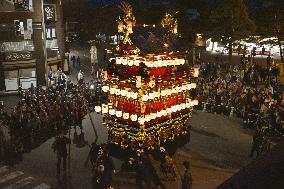
Takayama Spring Festival in central Japan

Takayama Spring Festival in central Japan

A float is paraded in Takayama in the central Japan prefecture of Gifu on April 14, 2026, the first day of the two-day annual Spring Takayama Festival that was added to UNESCO's Intangible Cultural Heritage list in 2016.

  •  
Takayama Spring Festival in central Japan

Takayama Spring Festival in central Japan

Floats are paraded in Takayama in the central Japan prefecture of Gifu on April 14, 2026, the first day of the two-day annual Spring Takayama Festival that was added to UNESCO's Intangible Cultural Heritage list in 2016.

  •  
Giant float festival in southwestern Japan

Giant float festival in southwestern Japan

A giant float takes part in the Karatsu Kunchi festival, designated as an UNESCO Intangible Cultural Heritage asset, in Karatsu, Saga Prefecture, southwestern Japan, on Nov. 3, 2025.

  •  
Giant float festival in southwestern Japan

Giant float festival in southwestern Japan

A giant float takes part in the Karatsu Kunchi festival, designated as an UNESCO Intangible Cultural Heritage asset, in Karatsu, Saga Prefecture, southwestern Japan, on Nov. 3, 2025.

  •  
Giant float festival in southwestern Japan

Giant float festival in southwestern Japan

A giant float takes part in the Karatsu Kunchi festival, designated as an UNESCO Intangible Cultural Heritage asset, in Karatsu, Saga Prefecture, southwestern Japan, on Nov. 3, 2025.

  •  
Giant float festival in southwestern Japan

Giant float festival in southwestern Japan

People watch giant floats during the Karatsu Kunchi festival, designated as a UNESCO Intangible Cultural Heritage asset, in Karatsu, Saga Prefecture, southwestern Japan, on Nov. 3, 2025.

  •  
Giant float festival in southwestern Japan

Giant float festival in southwestern Japan

People watch giant floats during the Karatsu Kunchi festival, designated as a UNESCO Intangible Cultural Heritage asset, in Karatsu, Saga Prefecture, southwestern Japan, on Nov. 3, 2025.

  •  
Indian Kalbeliya Gypsy Dancers Performs - India

Indian Kalbeliya Gypsy Dancers Performs - India

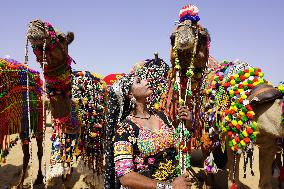
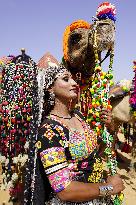
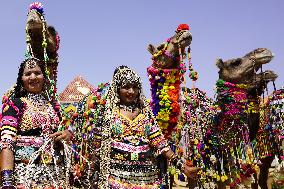
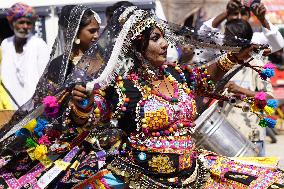
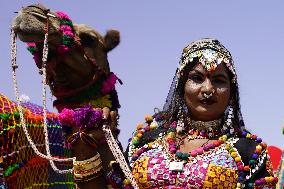
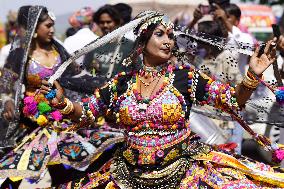
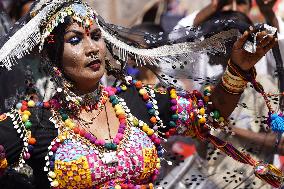
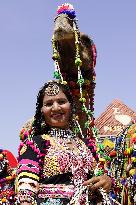
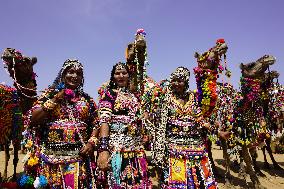
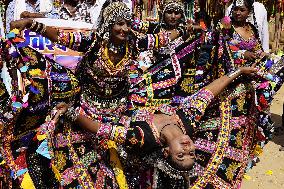
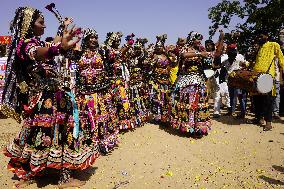
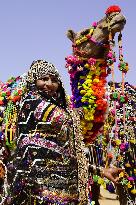
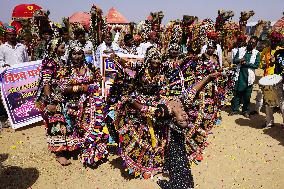
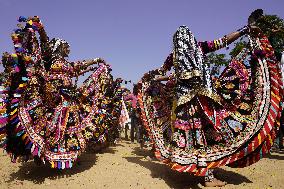
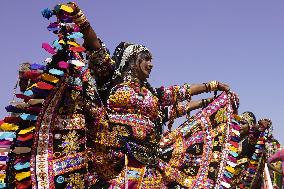
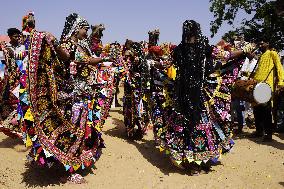
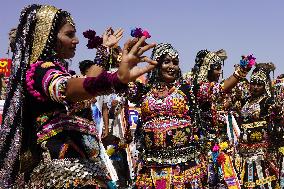
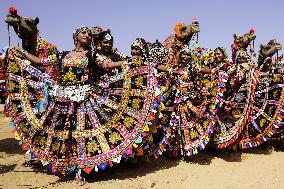
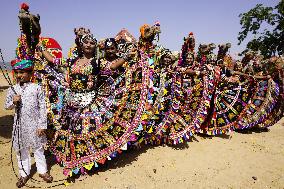
Indian Kalbeliya gypsy dancers Performs during the "World Tourism Day" celebration at the Desert of Pushkar, Rajasthan, India on September 27, 2025. Kalbeliya refers to both a nomadic community of traditional snake-catchers in Rajasthan, India, and a vibrant folk dance performed by this community, also known as the "Snake Charmer Dance" or "Sapera Dance". The dance, which features serpentine movements, traditional instruments like the pungi (snake charmer's pipe), and colorful attire, is a significant part of the Kalbelia tribe's oral history and cultural heritage, recognized by UNESCO as an Intangible Cultural Heritage. Photo by ABACAPRESS.COM

  •  
Indian Kalbeliya Gypsy Dancers Performs - India

Indian Kalbeliya Gypsy Dancers Performs - India

Indian Kalbeliya gypsy dancers Performs during the "World Tourism Day" celebration at the Desert of Pushkar, Rajasthan, India on September 27, 2025. Kalbeliya refers to both a nomadic community of traditional snake-catchers in Rajasthan, India, and a vibrant folk dance performed by this community, also known as the "Snake Charmer Dance" or "Sapera Dance". The dance, which features serpentine movements, traditional instruments like the pungi (snake charmer's pipe), and colorful attire, is a significant part of the Kalbelia tribe's oral history and cultural heritage, recognized by UNESCO as an Intangible Cultural Heritage. Photo by ABACAPRESS.COM

  •  
Indian Kalbeliya Gypsy Dancers Performs - India

Indian Kalbeliya Gypsy Dancers Performs - India

Indian Kalbeliya gypsy dancers Performs during the "World Tourism Day" celebration at the Desert of Pushkar, Rajasthan, India on September 27, 2025. Kalbeliya refers to both a nomadic community of traditional snake-catchers in Rajasthan, India, and a vibrant folk dance performed by this community, also known as the "Snake Charmer Dance" or "Sapera Dance". The dance, which features serpentine movements, traditional instruments like the pungi (snake charmer's pipe), and colorful attire, is a significant part of the Kalbelia tribe's oral history and cultural heritage, recognized by UNESCO as an Intangible Cultural Heritage. Photo by ABACAPRESS.COM

  •  
Indian Kalbeliya Gypsy Dancers Performs - India

Indian Kalbeliya Gypsy Dancers Performs - India

Indian Kalbeliya gypsy dancers Performs during the "World Tourism Day" celebration at the Desert of Pushkar, Rajasthan, India on September 27, 2025. Kalbeliya refers to both a nomadic community of traditional snake-catchers in Rajasthan, India, and a vibrant folk dance performed by this community, also known as the "Snake Charmer Dance" or "Sapera Dance". The dance, which features serpentine movements, traditional instruments like the pungi (snake charmer's pipe), and colorful attire, is a significant part of the Kalbelia tribe's oral history and cultural heritage, recognized by UNESCO as an Intangible Cultural Heritage. Photo by ABACAPRESS.COM

  •  
Indian Kalbeliya Gypsy Dancers Performs - India

Indian Kalbeliya Gypsy Dancers Performs - India

Indian Kalbeliya gypsy dancers Performs during the "World Tourism Day" celebration at the Desert of Pushkar, Rajasthan, India on September 27, 2025. Kalbeliya refers to both a nomadic community of traditional snake-catchers in Rajasthan, India, and a vibrant folk dance performed by this community, also known as the "Snake Charmer Dance" or "Sapera Dance". The dance, which features serpentine movements, traditional instruments like the pungi (snake charmer's pipe), and colorful attire, is a significant part of the Kalbelia tribe's oral history and cultural heritage, recognized by UNESCO as an Intangible Cultural Heritage. Photo by ABACAPRESS.COM

  •  
Indian Kalbeliya Gypsy Dancers Performs - India

Indian Kalbeliya Gypsy Dancers Performs - India

Indian Kalbeliya gypsy dancers Performs during the "World Tourism Day" celebration at the Desert of Pushkar, Rajasthan, India on September 27, 2025. Kalbeliya refers to both a nomadic community of traditional snake-catchers in Rajasthan, India, and a vibrant folk dance performed by this community, also known as the "Snake Charmer Dance" or "Sapera Dance". The dance, which features serpentine movements, traditional instruments like the pungi (snake charmer's pipe), and colorful attire, is a significant part of the Kalbelia tribe's oral history and cultural heritage, recognized by UNESCO as an Intangible Cultural Heritage. Photo by ABACAPRESS.COM

  •  
Indian Kalbeliya Gypsy Dancers Performs - India

Indian Kalbeliya Gypsy Dancers Performs - India

Indian Kalbeliya gypsy dancers Performs during the "World Tourism Day" celebration at the Desert of Pushkar, Rajasthan, India on September 27, 2025. Kalbeliya refers to both a nomadic community of traditional snake-catchers in Rajasthan, India, and a vibrant folk dance performed by this community, also known as the "Snake Charmer Dance" or "Sapera Dance". The dance, which features serpentine movements, traditional instruments like the pungi (snake charmer's pipe), and colorful attire, is a significant part of the Kalbelia tribe's oral history and cultural heritage, recognized by UNESCO as an Intangible Cultural Heritage. Photo by ABACAPRESS.COM

  •  
Indian Kalbeliya Gypsy Dancers Performs - India

Indian Kalbeliya Gypsy Dancers Performs - India

Indian Kalbeliya gypsy dancers Performs during the "World Tourism Day" celebration at the Desert of Pushkar, Rajasthan, India on September 27, 2025. Kalbeliya refers to both a nomadic community of traditional snake-catchers in Rajasthan, India, and a vibrant folk dance performed by this community, also known as the "Snake Charmer Dance" or "Sapera Dance". The dance, which features serpentine movements, traditional instruments like the pungi (snake charmer's pipe), and colorful attire, is a significant part of the Kalbelia tribe's oral history and cultural heritage, recognized by UNESCO as an Intangible Cultural Heritage. Photo by ABACAPRESS.COM

  •  
Indian Kalbeliya Gypsy Dancers Performs - India

Indian Kalbeliya Gypsy Dancers Performs - India

Indian Kalbeliya gypsy dancers Performs during the "World Tourism Day" celebration at the Desert of Pushkar, Rajasthan, India on September 27, 2025. Kalbeliya refers to both a nomadic community of traditional snake-catchers in Rajasthan, India, and a vibrant folk dance performed by this community, also known as the "Snake Charmer Dance" or "Sapera Dance". The dance, which features serpentine movements, traditional instruments like the pungi (snake charmer's pipe), and colorful attire, is a significant part of the Kalbelia tribe's oral history and cultural heritage, recognized by UNESCO as an Intangible Cultural Heritage. Photo by ABACAPRESS.COM

  •  
Indian Kalbeliya Gypsy Dancers Performs - India

Indian Kalbeliya Gypsy Dancers Performs - India

Indian Kalbeliya gypsy dancers Performs during the "World Tourism Day" celebration at the Desert of Pushkar, Rajasthan, India on September 27, 2025. Kalbeliya refers to both a nomadic community of traditional snake-catchers in Rajasthan, India, and a vibrant folk dance performed by this community, also known as the "Snake Charmer Dance" or "Sapera Dance". The dance, which features serpentine movements, traditional instruments like the pungi (snake charmer's pipe), and colorful attire, is a significant part of the Kalbelia tribe's oral history and cultural heritage, recognized by UNESCO as an Intangible Cultural Heritage. Photo by ABACAPRESS.COM

  •  
Indian Kalbeliya Gypsy Dancers Performs - India

Indian Kalbeliya Gypsy Dancers Performs - India

Indian Kalbeliya gypsy dancers Performs during the "World Tourism Day" celebration at the Desert of Pushkar, Rajasthan, India on September 27, 2025. Kalbeliya refers to both a nomadic community of traditional snake-catchers in Rajasthan, India, and a vibrant folk dance performed by this community, also known as the "Snake Charmer Dance" or "Sapera Dance". The dance, which features serpentine movements, traditional instruments like the pungi (snake charmer's pipe), and colorful attire, is a significant part of the Kalbelia tribe's oral history and cultural heritage, recognized by UNESCO as an Intangible Cultural Heritage. Photo by ABACAPRESS.COM

  •  
Indian Kalbeliya Gypsy Dancers Performs - India

Indian Kalbeliya Gypsy Dancers Performs - India

Indian Kalbeliya gypsy dancers Performs during the "World Tourism Day" celebration at the Desert of Pushkar, Rajasthan, India on September 27, 2025. Kalbeliya refers to both a nomadic community of traditional snake-catchers in Rajasthan, India, and a vibrant folk dance performed by this community, also known as the "Snake Charmer Dance" or "Sapera Dance". The dance, which features serpentine movements, traditional instruments like the pungi (snake charmer's pipe), and colorful attire, is a significant part of the Kalbelia tribe's oral history and cultural heritage, recognized by UNESCO as an Intangible Cultural Heritage. Photo by ABACAPRESS.COM

  •  
Indian Kalbeliya Gypsy Dancers Performs - India

Indian Kalbeliya Gypsy Dancers Performs - India

Indian Kalbeliya gypsy dancers Performs during the "World Tourism Day" celebration at the Desert of Pushkar, Rajasthan, India on September 27, 2025. Kalbeliya refers to both a nomadic community of traditional snake-catchers in Rajasthan, India, and a vibrant folk dance performed by this community, also known as the "Snake Charmer Dance" or "Sapera Dance". The dance, which features serpentine movements, traditional instruments like the pungi (snake charmer's pipe), and colorful attire, is a significant part of the Kalbelia tribe's oral history and cultural heritage, recognized by UNESCO as an Intangible Cultural Heritage. Photo by ABACAPRESS.COM

  •  
Indian Kalbeliya Gypsy Dancers Performs - India

Indian Kalbeliya Gypsy Dancers Performs - India

Indian Kalbeliya gypsy dancers Performs during the "World Tourism Day" celebration at the Desert of Pushkar, Rajasthan, India on September 27, 2025. Kalbeliya refers to both a nomadic community of traditional snake-catchers in Rajasthan, India, and a vibrant folk dance performed by this community, also known as the "Snake Charmer Dance" or "Sapera Dance". The dance, which features serpentine movements, traditional instruments like the pungi (snake charmer's pipe), and colorful attire, is a significant part of the Kalbelia tribe's oral history and cultural heritage, recognized by UNESCO as an Intangible Cultural Heritage. Photo by ABACAPRESS.COM

  •  
Indian Kalbeliya Gypsy Dancers Performs - India

Indian Kalbeliya Gypsy Dancers Performs - India

Indian Kalbeliya gypsy dancers Performs during the "World Tourism Day" celebration at the Desert of Pushkar, Rajasthan, India on September 27, 2025. Kalbeliya refers to both a nomadic community of traditional snake-catchers in Rajasthan, India, and a vibrant folk dance performed by this community, also known as the "Snake Charmer Dance" or "Sapera Dance". The dance, which features serpentine movements, traditional instruments like the pungi (snake charmer's pipe), and colorful attire, is a significant part of the Kalbelia tribe's oral history and cultural heritage, recognized by UNESCO as an Intangible Cultural Heritage. Photo by ABACAPRESS.COM

  •  
Indian Kalbeliya Gypsy Dancers Performs - India

Indian Kalbeliya Gypsy Dancers Performs - India

Indian Kalbeliya gypsy dancers Performs during the "World Tourism Day" celebration at the Desert of Pushkar, Rajasthan, India on September 27, 2025. Kalbeliya refers to both a nomadic community of traditional snake-catchers in Rajasthan, India, and a vibrant folk dance performed by this community, also known as the "Snake Charmer Dance" or "Sapera Dance". The dance, which features serpentine movements, traditional instruments like the pungi (snake charmer's pipe), and colorful attire, is a significant part of the Kalbelia tribe's oral history and cultural heritage, recognized by UNESCO as an Intangible Cultural Heritage. Photo by ABACAPRESS.COM

  •  
Indian Kalbeliya Gypsy Dancers Performs - India

Indian Kalbeliya Gypsy Dancers Performs - India

Indian Kalbeliya gypsy dancers Performs during the "World Tourism Day" celebration at the Desert of Pushkar, Rajasthan, India on September 27, 2025. Kalbeliya refers to both a nomadic community of traditional snake-catchers in Rajasthan, India, and a vibrant folk dance performed by this community, also known as the "Snake Charmer Dance" or "Sapera Dance". The dance, which features serpentine movements, traditional instruments like the pungi (snake charmer's pipe), and colorful attire, is a significant part of the Kalbelia tribe's oral history and cultural heritage, recognized by UNESCO as an Intangible Cultural Heritage. Photo by ABACAPRESS.COM

  •  
Indian Kalbeliya Gypsy Dancers Performs - India

Indian Kalbeliya Gypsy Dancers Performs - India

Indian Kalbeliya gypsy dancers Performs during the "World Tourism Day" celebration at the Desert of Pushkar, Rajasthan, India on September 27, 2025. Kalbeliya refers to both a nomadic community of traditional snake-catchers in Rajasthan, India, and a vibrant folk dance performed by this community, also known as the "Snake Charmer Dance" or "Sapera Dance". The dance, which features serpentine movements, traditional instruments like the pungi (snake charmer's pipe), and colorful attire, is a significant part of the Kalbelia tribe's oral history and cultural heritage, recognized by UNESCO as an Intangible Cultural Heritage. Photo by ABACAPRESS.COM

  •  
World Tourism Day Celebration - India

World Tourism Day Celebration - India

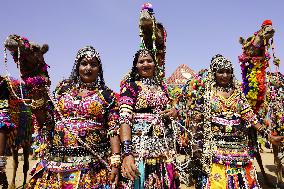
Indian Kalbeliya gypsy dancers Performs during the "World Tourism Day" celebration at the Desert of Pushkar, Rajasthan, India on September 27, 2025. Kalbeliya refers to both a nomadic community of traditional snake-catchers in Rajasthan, India, and a vibrant folk dance performed by this community, also known as the "Snake Charmer Dance" or "Sapera Dance". The dance, which features serpentine movements, traditional instruments like the pungi (snake charmer's pipe), and colorful attire, is a significant part of the Kalbelia tribe's oral history and cultural heritage, recognized by UNESCO as an Intangible Cultural Heritage. Photo by Himanshu Sharma/ABACAPRESS.COM

  •  
World Tourism Day Celebration - India

World Tourism Day Celebration - India

Indian Kalbeliya gypsy dancers Performs during the "World Tourism Day" celebration at the Desert of Pushkar, Rajasthan, India on September 27, 2025. Kalbeliya refers to both a nomadic community of traditional snake-catchers in Rajasthan, India, and a vibrant folk dance performed by this community, also known as the "Snake Charmer Dance" or "Sapera Dance". The dance, which features serpentine movements, traditional instruments like the pungi (snake charmer's pipe), and colorful attire, is a significant part of the Kalbelia tribe's oral history and cultural heritage, recognized by UNESCO as an Intangible Cultural Heritage. Photo by Himanshu Sharma/ABACAPRESS.COM

  •  
Festival in northeastern Japan

Festival in northeastern Japan

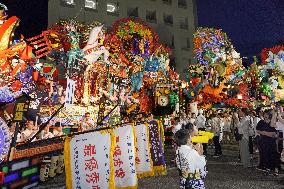
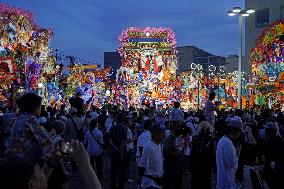
Decorated floats are lined up in Hachinohe in Aomori Prefecture, northeastern Japan, on July 31, 2025, as the annual Hachinohe Sansha Taisai festival kicks off. The floats, each 11 meters high and 8 meters wide, will be paraded for three days starting the following day as part of the five-day festival, which dates back around 300 years and, in 2016, was inscribed on UNESCO's Intangible Cultural Heritage list.

  •  
Festival in northeastern Japan

Festival in northeastern Japan

Decorated floats are lined up in Hachinohe in Aomori Prefecture, northeastern Japan, on July 31, 2025, as the annual Hachinohe Sansha Taisai festival kicks off. The floats, each 11 meters high and 8 meters wide, will be paraded for three days starting the following day as part of the five-day festival, which dates back around 300 years and, in 2016, was inscribed on UNESCO's Intangible Cultural Heritage list.

  •  
Festival in northeastern Japan

Festival in northeastern Japan

Decorated floats are lined up in Hachinohe in Aomori Prefecture, northeastern Japan, on July 31, 2025, as the annual Hachinohe Sansha Taisai festival kicks off. The floats, each 11 meters high and 8 meters wide, will be paraded for three days starting the following day as part of the five-day festival, which dates back around 300 years and, in 2016, was inscribed on UNESCO's Intangible Cultural Heritage list.

  •  
Festival in northeastern Japan

Festival in northeastern Japan

Decorated floats are lined up in Hachinohe in Aomori Prefecture, northeastern Japan, on July 31, 2025, as the annual Hachinohe Sansha Taisai festival kicks off. The floats, each 11 meters high and 8 meters wide, will be paraded for three days starting the following day as part of the five-day festival, which dates back around 300 years and, in 2016, was inscribed on UNESCO's Intangible Cultural Heritage list.

  •  

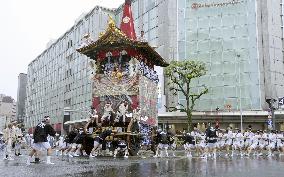
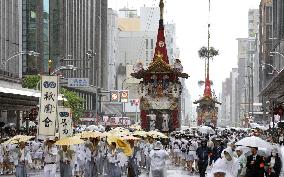
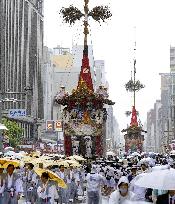
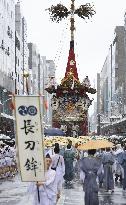
"Yamahoko" parade in Kyoto's Gion Festival

KYOTO, Japan, July 17 Kyodo - A parade of decorated "yamahoko" floats takes place on a street during the Gion Festival in Kyoto, western Japan, on July 17, 2025. The parade of 23 floats is inscribed on UNESCO's Intangible Cultural Heritage list. (Kyodo)

  •  
"Yamahoko" parade in Kyoto's Gion Festival

"Yamahoko" parade in Kyoto's Gion Festival

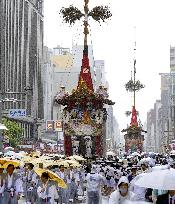
A parade of decorated "yamahoko" floats takes place on a street during the Gion Festival in Kyoto, western Japan, on July 17, 2025. The parade of 23 floats is inscribed on UNESCO's Intangible Cultural Heritage list.

  •  
"Yamahoko" parade in Kyoto's Gion Festival

"Yamahoko" parade in Kyoto's Gion Festival

A decorated "yamahoko" float is pulled around for a "tsuji-mawashi" corner turn during a parade of 23 floats, a highlight of the Gion Festival in Kyoto, western Japan, on July 17, 2025. The parade is inscribed on UNESCO's Intangible Cultural Heritage list.

  •  
"Yamahoko" parade in Kyoto's Gion Festival

"Yamahoko" parade in Kyoto's Gion Festival

A parade of decorated "yamahoko" floats takes place on a street during the Gion Festival in Kyoto, western Japan, on July 17, 2025. The parade of 23 floats is inscribed on UNESCO's Intangible Cultural Heritage list.

  •  
"Yamahoko" parade in Kyoto's Gion Festival

"Yamahoko" parade in Kyoto's Gion Festival

Decorated "yamahoko" floats parade down a street during the Gion Festival in Kyoto, western Japan, on July 17, 2025. The parade of 23 floats is inscribed on UNESCO's Intangible Cultural Heritage list.

  •  
"Yamahoko" parade in Kyoto's Gion Festival

"Yamahoko" parade in Kyoto's Gion Festival

A parade of decorated "yamahoko" floats takes place on a street during the Gion Festival in Kyoto, western Japan, on July 17, 2025. The parade of 23 floats is inscribed on UNESCO's Intangible Cultural Heritage list.

  •  
Indonesian Batik Textile Production - Jakarta

Indonesian Batik Textile Production - Jakarta

A costumer selects Indonesian batik clothes at Beringharjo Traditional Market in Yogyakarta, Indonesia, on May 18, 2025. Indonesian batik, the nation's traditional cloth, was inscripted as a Masterpiece of Oral and Intangible Heritage of Humanity by the United Nations Educational, Scientific and Cultural Organization (UNESCO) on Oct. 2, 2009. Photo by Agung Supriyanto/Xinhua/ABACAPRESS.COM

  •  
Indonesian Batik Textile Production - Jakarta

Indonesian Batik Textile Production - Jakarta

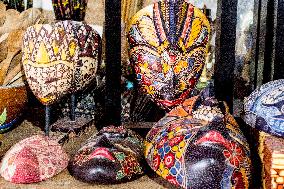
This photo taken on May 19, 2025 shows wooden mask handicrafts with batik motif displayed at a workshop in Krebet village, Bantul regency, Yogyakarta, Indonesia. Indonesian batik, the nation's traditional cloth, was inscripted as a Masterpiece of Oral and Intangible Heritage of Humanity by the United Nations Educational, Scientific and Cultural Organization (UNESCO) on Oct. 2, 2009. Photo by Agung Supriyanto/Xinhua/ABACAPRESS.COM

  •  
Indonesian Batik Textile Production - Jakarta

Indonesian Batik Textile Production - Jakarta

This photo taken with a mobile phone shows people watching Indonesian batik exhibits in Museum of Textile in Jakarta, Indonesia, on May 18, 2025. Indonesian batik, the nation's traditional cloth, was inscripted as a Masterpiece of Oral and Intangible Heritage of Humanity by the United Nations Educational, Scientific and Cultural Organization (UNESCO) on Oct. 2, 2009. Photo by Xu Qin/Xinhua/ABACAPRESS.COM

  •  
Indonesian Batik Textile Production - Jakarta

Indonesian Batik Textile Production - Jakarta

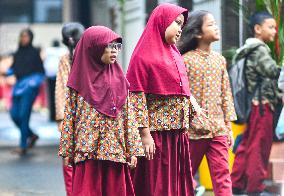
Children wearing Indonesian batik walk on campus during an event of "Batik Friday" in Bandung, West Java, Indonesia, on May 16, 2025. Indonesian batik, the nation's traditional cloth, was inscripted as a Masterpiece of Oral and Intangible Heritage of Humanity by the United Nations Educational, Scientific and Cultural Organization (UNESCO) on Oct. 2, 2009. Photo by Septianjar Muharam/Xinhua/ABACAPRESS.COM

  •  
Indonesian Batik Textile Production - Jakarta

Indonesian Batik Textile Production - Jakarta

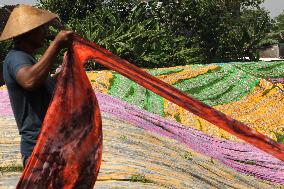
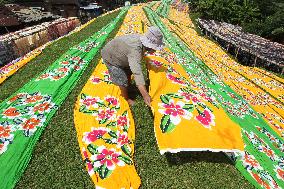
A worker dries Indonesian batik cloth at a batik workshop in Krajan village, Sukoharjo Regency, Central Java, Indonesia, on May 17, 2025. Indonesian batik, the nation's traditional cloth, was inscripted as a Masterpiece of Oral and Intangible Heritage of Humanity by the United Nations Educational, Scientific and Cultural Organization (UNESCO) on Oct. 2, 2009. Photo by Bram Selo/Xinhua/ABACAPRESS.COM

  •  
Indonesian Batik Textile Production - Jakarta

Indonesian Batik Textile Production - Jakarta

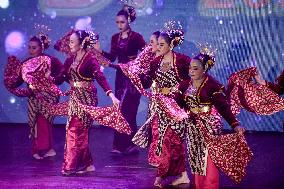
Dancers wearing Indonesian batik perform traditional dance during a dance festival event in Jakarta, Indonesia, on May 11, 2025. Indonesian batik, the nation's traditional cloth, was inscripted as a Masterpiece of Oral and Intangible Heritage of Humanity by the United Nations Educational, Scientific and Cultural Organization (UNESCO) on Oct. 2, 2009. Photo by Agung Kuncahya B./Xinhua/ABACAPRESS.COM

  •  
Indonesian Batik Textile Production - Jakarta

Indonesian Batik Textile Production - Jakarta

A worker dries Indonesian batik cloth at a batik workshop in Krajan village, Sukoharjo Regency, Central Java, Indonesia, on May 17, 2025. Indonesian batik, the nation's traditional cloth, was inscripted as a Masterpiece of Oral and Intangible Heritage of Humanity by the United Nations Educational, Scientific and Cultural Organization (UNESCO) on Oct. 2, 2009. Photo by Bram Selo/Xinhua/ABACAPRESS.COM

  •  
Indonesian Batik Textile Production - Jakarta

Indonesian Batik Textile Production - Jakarta

A worker dries Indonesian batik cloth at a batik workshop in Krajan village, Sukoharjo Regency, Central Java, Indonesia, on May 17, 2025. Indonesian batik, the nation's traditional cloth, was inscripted as a Masterpiece of Oral and Intangible Heritage of Humanity by the United Nations Educational, Scientific and Cultural Organization (UNESCO) on Oct. 2, 2009. Photo by Bram Selo/Xinhua/ABACAPRESS.COM

  •  

[Breaking News]Tapestry at World Exhibition in Osaka

OSAKA, Japan, April 18 Kyodo - Video taken on April 18, 2025, shows a huge tapestry inspired by Japanese anime director Hayao Miyazaki's "Princess Mononoke" on display at France's pavilion for the 2025 World Exhibition in Osaka, western Japan. The craftwork, 5 meters high and 4.6 meters wide, was woven in 2022 in France's Aubusson where tapestry is on the UNESCO Intangible Cultural Heritage list. (Kyodo)

  •  
Tapestry at World Exhibition in Osaka

Tapestry at World Exhibition in Osaka

Photo taken on April 18, 2025, shows a huge tapestry inspired by Japanese anime director Hayao Miyazaki's "Princess Mononoke" on display at France's pavilion for the 2025 World Exhibition in Osaka, western Japan. The craftwork, 5 meters high and 4.6 meters wide, was woven in 2022 in France's Aubusson where tapestry is on the UNESCO Intangible Cultural Heritage list.

  •  
Tapestry at World Exhibition in Osaka

Tapestry at World Exhibition in Osaka

Photo taken on April 18, 2025, shows a huge tapestry inspired by Japanese anime director Hayao Miyazaki's "Princess Mononoke" on display at France's pavilion for the 2025 World Exhibition in Osaka, western Japan. The craftwork, 5 meters high and 4.6 meters wide, was woven in 2022 in France's Aubusson where tapestry is on the UNESCO Intangible Cultural Heritage list.

  •  
Tapestry at World Exhibition in Osaka

Tapestry at World Exhibition in Osaka

Photo taken on April 18, 2025, shows a huge tapestry inspired by Japanese anime director Hayao Miyazaki's "Princess Mononoke" on display at France's pavilion for the 2025 World Exhibition in Osaka, western Japan. The craftwork, 5 meters high and 4.6 meters wide, was woven in 2022 in France's Aubusson where tapestry is on the UNESCO Intangible Cultural Heritage list.

  • Main
  • Top
  • Editorial
  • Creative
  • About Us
  • About ILG
  • Terms of use
  • Company
  • BEHIND
  • Price List
  • Single Plan
  • Monthly Plan
  • Services
  • Shooting
  • Rights Clearance
  • Support
  • FAQ
  • How To Buy
  • Contact Us
  • Become a Partner

© KYODO NEWS IMAGES INC

All Rights Reserved.

  • Editorial
  • Olympics
  • News
  • Sports
  • Japan
  • Tech
  • Royal
  • Disaster
  • NorthKorea
  • Old Japan
  • SNS

  • Creative
  • Food
  • Japan
  • Landscape
  • Animal
  • Popular
  • #Ukraine
  • #Russia
  • #coronavirus
  • #N. Korea
  • #China
  • #Thailand
  • #Ukraine
  • #Russia
  • #coronavirus
  • #N. Korea
  • #China
  • #Thailand
  • Food
  • Japan
  • Landscape
  • Animal
  • Olympics
  • News
  • Sports
  • Japan
  • Tech
  • Royal
  • Disaster
  • NorthKorea
  • Old Japan
  • SNS