•  
Iraqi Deminer Loses Legs Clearing Mines - Iraq

Iraqi Deminer Loses Legs Clearing Mines - Iraq

A landmine uncovered by Hoshyar Ali remains partially buried in rocky soil in Halabja, Iraq, on November 20, 2025. He has been clearing landmines for over four decades, a task he began after the Iran-Iraq war when thousands of mines were planted along the border. Despite losing both legs and several family members to explosions, he continues to volunteer in mine removal. Locals call him “man of the mines,” and he is building a museum in his village to display defused explosives for future generations. Photo by Showan Sulaiman/Middle East Images/ABACAPRESS.COM

  •  

UK: Storm Floris Slams Scotland With Strong Winds, Travel and Power Disrupted

Storm Floris swept through Scotland, Northern Ireland, Wales, and northern England on Monday, August 4, bringing unseasonably strong winds of up to 90 mph. In Scotland, the storm toppled trees, damaged rail lines, and cut power to tens of thousands of homes. Crews and helicopters worked to clear debris and restore services, but disruption continues. An amber warning was in place, and the government urged people to stay safe and avoid travel.

  •  
Exclusive - Illustration - The Cathedral of Notre Dame - Paris

Exclusive - Illustration - The Cathedral of Notre Dame - Paris

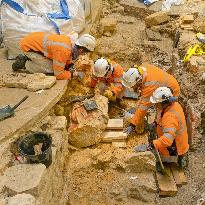
FRANCE. PARIS (75) NOTRE DAME DE PARIS WORKSITE: PREVENTIVE EXCAVATIONS, LED BY INRAP FROM 2 FEBRUARY TO 8 APRIL 2022, AT THE TRANSEPT CROSSING. THE ARCHAEOLOGISTS UNCOVERED POLYCHROME SCULPTURAL ELEMENTS OF THE MEDIEVAL JUBE (BUILT AROUND 1230 AND DESTROYED UNDER THE REIGN OF LOUIS XIV) IN AN EXCEPTIONAL STATE OF PRESERVATION. ONCE THEY HAD BEEN CLEARED AND CLEANED, THE BLOCKS WERE LIFTED VIA THE REMOVABLE ROOF BY THE SITE'S LARGE TOWER CRANE. Photo by Stephane Compoint/Only Paris/ABACAPRESS.COM

  •  
Spectacular Frescoed Villa Uncovered in Pompeii - Italy

Spectacular Frescoed Villa Uncovered in Pompeii - Italy

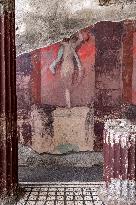
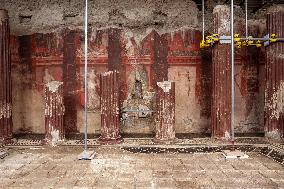
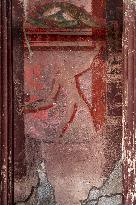
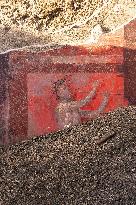
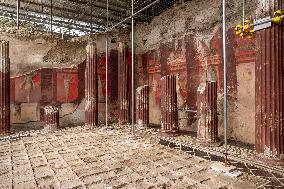
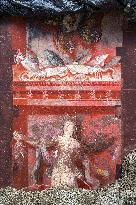
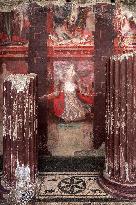
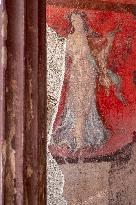
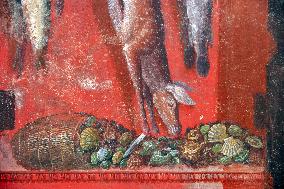
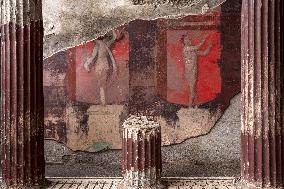
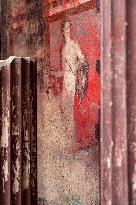
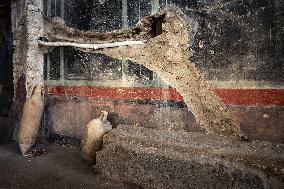
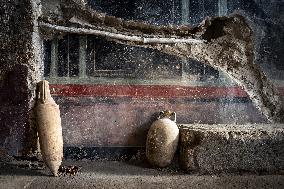
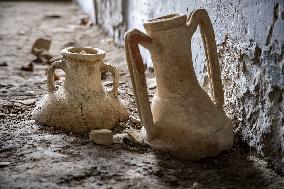
A spectacular frescoed Villa resembling the famous 'Villa of the Mysteries' was uncovered at Pompeii archaeological site, Italy on February 2025. The newly found residence has a large banquet hall frescoed with a cycle of paintings depicting initiation into the Dionysian Mysteries. The fresco, dating to 40-30 BC, presents vivid imagery of Dionysian followers in states of ritualistic ecstasy, dancing and hunting, resembling the frescoes of the nearby famous Villa of the Mysteries which were uncovered 100 years ago. The frescoed walls have still vibrant colors: on a Pompeian red background, full figures emerge, very similar to those of the famous Villa of the Mysteries, albeit in a different style. It was a sumptuous environment where it is not difficult to imagine lavish receptions where guests, reclining on triclinia, ate, drank, and watched small performances. Excavated in recent weeks in the central area of Pompeii, the new room shows this frieze at almost life size, or a 'megalography', just as in the Vill

  •  
Spectacular Frescoed Villa Uncovered in Pompeii - Italy

Spectacular Frescoed Villa Uncovered in Pompeii - Italy

A spectacular frescoed Villa resembling the famous 'Villa of the Mysteries' was uncovered at Pompeii archaeological site, Italy on February 2025. The newly found residence has a large banquet hall frescoed with a cycle of paintings depicting initiation into the Dionysian Mysteries. The fresco, dating to 40-30 BC, presents vivid imagery of Dionysian followers in states of ritualistic ecstasy, dancing and hunting, resembling the frescoes of the nearby famous Villa of the Mysteries which were uncovered 100 years ago. The frescoed walls have still vibrant colors: on a Pompeian red background, full figures emerge, very similar to those of the famous Villa of the Mysteries, albeit in a different style. It was a sumptuous environment where it is not difficult to imagine lavish receptions where guests, reclining on triclinia, ate, drank, and watched small performances. Excavated in recent weeks in the central area of Pompeii, the new room shows this frieze at almost life size, or a 'megalography', just as in the Vill

  •  
Spectacular Frescoed Villa Uncovered in Pompeii - Italy

Spectacular Frescoed Villa Uncovered in Pompeii - Italy

A spectacular frescoed Villa resembling the famous 'Villa of the Mysteries' was uncovered at Pompeii archaeological site, Italy on February 2025. The newly found residence has a large banquet hall frescoed with a cycle of paintings depicting initiation into the Dionysian Mysteries. The fresco, dating to 40-30 BC, presents vivid imagery of Dionysian followers in states of ritualistic ecstasy, dancing and hunting, resembling the frescoes of the nearby famous Villa of the Mysteries which were uncovered 100 years ago. The frescoed walls have still vibrant colors: on a Pompeian red background, full figures emerge, very similar to those of the famous Villa of the Mysteries, albeit in a different style. It was a sumptuous environment where it is not difficult to imagine lavish receptions where guests, reclining on triclinia, ate, drank, and watched small performances. Excavated in recent weeks in the central area of Pompeii, the new room shows this frieze at almost life size, or a 'megalography', just as in the Vill

  •  
Spectacular Frescoed Villa Uncovered in Pompeii - Italy

Spectacular Frescoed Villa Uncovered in Pompeii - Italy

A spectacular frescoed Villa resembling the famous 'Villa of the Mysteries' was uncovered at Pompeii archaeological site, Italy on February 2025. The newly found residence has a large banquet hall frescoed with a cycle of paintings depicting initiation into the Dionysian Mysteries. The fresco, dating to 40-30 BC, presents vivid imagery of Dionysian followers in states of ritualistic ecstasy, dancing and hunting, resembling the frescoes of the nearby famous Villa of the Mysteries which were uncovered 100 years ago. The frescoed walls have still vibrant colors: on a Pompeian red background, full figures emerge, very similar to those of the famous Villa of the Mysteries, albeit in a different style. It was a sumptuous environment where it is not difficult to imagine lavish receptions where guests, reclining on triclinia, ate, drank, and watched small performances. Excavated in recent weeks in the central area of Pompeii, the new room shows this frieze at almost life size, or a 'megalography', just as in the Vill

  •  
Spectacular Frescoed Villa Uncovered in Pompeii - Italy

Spectacular Frescoed Villa Uncovered in Pompeii - Italy

A spectacular frescoed Villa resembling the famous 'Villa of the Mysteries' was uncovered at Pompeii archaeological site, Italy on February 2025. The newly found residence has a large banquet hall frescoed with a cycle of paintings depicting initiation into the Dionysian Mysteries. The fresco, dating to 40-30 BC, presents vivid imagery of Dionysian followers in states of ritualistic ecstasy, dancing and hunting, resembling the frescoes of the nearby famous Villa of the Mysteries which were uncovered 100 years ago. The frescoed walls have still vibrant colors: on a Pompeian red background, full figures emerge, very similar to those of the famous Villa of the Mysteries, albeit in a different style. It was a sumptuous environment where it is not difficult to imagine lavish receptions where guests, reclining on triclinia, ate, drank, and watched small performances. Excavated in recent weeks in the central area of Pompeii, the new room shows this frieze at almost life size, or a 'megalography', just as in the Vill

  •  
Spectacular Frescoed Villa Uncovered in Pompeii - Italy

Spectacular Frescoed Villa Uncovered in Pompeii - Italy

A spectacular frescoed Villa resembling the famous 'Villa of the Mysteries' was uncovered at Pompeii archaeological site, Italy on February 2025. The newly found residence has a large banquet hall frescoed with a cycle of paintings depicting initiation into the Dionysian Mysteries. The fresco, dating to 40-30 BC, presents vivid imagery of Dionysian followers in states of ritualistic ecstasy, dancing and hunting, resembling the frescoes of the nearby famous Villa of the Mysteries which were uncovered 100 years ago. The frescoed walls have still vibrant colors: on a Pompeian red background, full figures emerge, very similar to those of the famous Villa of the Mysteries, albeit in a different style. It was a sumptuous environment where it is not difficult to imagine lavish receptions where guests, reclining on triclinia, ate, drank, and watched small performances. Excavated in recent weeks in the central area of Pompeii, the new room shows this frieze at almost life size, or a 'megalography', just as in the Vill

  •  
Spectacular Frescoed Villa Uncovered in Pompeii - Italy

Spectacular Frescoed Villa Uncovered in Pompeii - Italy

A spectacular frescoed Villa resembling the famous 'Villa of the Mysteries' was uncovered at Pompeii archaeological site, Italy on February 2025. The newly found residence has a large banquet hall frescoed with a cycle of paintings depicting initiation into the Dionysian Mysteries. The fresco, dating to 40-30 BC, presents vivid imagery of Dionysian followers in states of ritualistic ecstasy, dancing and hunting, resembling the frescoes of the nearby famous Villa of the Mysteries which were uncovered 100 years ago. The frescoed walls have still vibrant colors: on a Pompeian red background, full figures emerge, very similar to those of the famous Villa of the Mysteries, albeit in a different style. It was a sumptuous environment where it is not difficult to imagine lavish receptions where guests, reclining on triclinia, ate, drank, and watched small performances. Excavated in recent weeks in the central area of Pompeii, the new room shows this frieze at almost life size, or a 'megalography', just as in the Vill

  •  
Spectacular Frescoed Villa Uncovered in Pompeii - Italy

Spectacular Frescoed Villa Uncovered in Pompeii - Italy

A spectacular frescoed Villa resembling the famous 'Villa of the Mysteries' was uncovered at Pompeii archaeological site, Italy on February 2025. The newly found residence has a large banquet hall frescoed with a cycle of paintings depicting initiation into the Dionysian Mysteries. The fresco, dating to 40-30 BC, presents vivid imagery of Dionysian followers in states of ritualistic ecstasy, dancing and hunting, resembling the frescoes of the nearby famous Villa of the Mysteries which were uncovered 100 years ago. The frescoed walls have still vibrant colors: on a Pompeian red background, full figures emerge, very similar to those of the famous Villa of the Mysteries, albeit in a different style. It was a sumptuous environment where it is not difficult to imagine lavish receptions where guests, reclining on triclinia, ate, drank, and watched small performances. Excavated in recent weeks in the central area of Pompeii, the new room shows this frieze at almost life size, or a 'megalography', just as in the Vill

  •  
Spectacular Frescoed Villa Uncovered in Pompeii - Italy

Spectacular Frescoed Villa Uncovered in Pompeii - Italy

A spectacular frescoed Villa resembling the famous 'Villa of the Mysteries' was uncovered at Pompeii archaeological site, Italy on February 2025. The newly found residence has a large banquet hall frescoed with a cycle of paintings depicting initiation into the Dionysian Mysteries. The fresco, dating to 40-30 BC, presents vivid imagery of Dionysian followers in states of ritualistic ecstasy, dancing and hunting, resembling the frescoes of the nearby famous Villa of the Mysteries which were uncovered 100 years ago. The frescoed walls have still vibrant colors: on a Pompeian red background, full figures emerge, very similar to those of the famous Villa of the Mysteries, albeit in a different style. It was a sumptuous environment where it is not difficult to imagine lavish receptions where guests, reclining on triclinia, ate, drank, and watched small performances. Excavated in recent weeks in the central area of Pompeii, the new room shows this frieze at almost life size, or a 'megalography', just as in the Vill

  •  
Spectacular Frescoed Villa Uncovered in Pompeii - Italy

Spectacular Frescoed Villa Uncovered in Pompeii - Italy

A spectacular frescoed Villa resembling the famous 'Villa of the Mysteries' was uncovered at Pompeii archaeological site, Italy on February 2025. The newly found residence has a large banquet hall frescoed with a cycle of paintings depicting initiation into the Dionysian Mysteries. The fresco, dating to 40-30 BC, presents vivid imagery of Dionysian followers in states of ritualistic ecstasy, dancing and hunting, resembling the frescoes of the nearby famous Villa of the Mysteries which were uncovered 100 years ago. The frescoed walls have still vibrant colors: on a Pompeian red background, full figures emerge, very similar to those of the famous Villa of the Mysteries, albeit in a different style. It was a sumptuous environment where it is not difficult to imagine lavish receptions where guests, reclining on triclinia, ate, drank, and watched small performances. Excavated in recent weeks in the central area of Pompeii, the new room shows this frieze at almost life size, or a 'megalography', just as in the Vill

  •  
Spectacular Frescoed Villa Uncovered in Pompeii - Italy

Spectacular Frescoed Villa Uncovered in Pompeii - Italy

A spectacular frescoed Villa resembling the famous 'Villa of the Mysteries' was uncovered at Pompeii archaeological site, Italy on February 2025. The newly found residence has a large banquet hall frescoed with a cycle of paintings depicting initiation into the Dionysian Mysteries. The fresco, dating to 40-30 BC, presents vivid imagery of Dionysian followers in states of ritualistic ecstasy, dancing and hunting, resembling the frescoes of the nearby famous Villa of the Mysteries which were uncovered 100 years ago. The frescoed walls have still vibrant colors: on a Pompeian red background, full figures emerge, very similar to those of the famous Villa of the Mysteries, albeit in a different style. It was a sumptuous environment where it is not difficult to imagine lavish receptions where guests, reclining on triclinia, ate, drank, and watched small performances. Excavated in recent weeks in the central area of Pompeii, the new room shows this frieze at almost life size, or a 'megalography', just as in the Vill

  •  
Spectacular Frescoed Villa Uncovered in Pompeii - Italy

Spectacular Frescoed Villa Uncovered in Pompeii - Italy

A spectacular frescoed Villa resembling the famous 'Villa of the Mysteries' was uncovered at Pompeii archaeological site, Italy on February 2025. The newly found residence has a large banquet hall frescoed with a cycle of paintings depicting initiation into the Dionysian Mysteries. The fresco, dating to 40-30 BC, presents vivid imagery of Dionysian followers in states of ritualistic ecstasy, dancing and hunting, resembling the frescoes of the nearby famous Villa of the Mysteries which were uncovered 100 years ago. The frescoed walls have still vibrant colors: on a Pompeian red background, full figures emerge, very similar to those of the famous Villa of the Mysteries, albeit in a different style. It was a sumptuous environment where it is not difficult to imagine lavish receptions where guests, reclining on triclinia, ate, drank, and watched small performances. Excavated in recent weeks in the central area of Pompeii, the new room shows this frieze at almost life size, or a 'megalography', just as in the Vill

  •  
Spectacular Frescoed Villa Uncovered in Pompeii - Italy

Spectacular Frescoed Villa Uncovered in Pompeii - Italy

A spectacular frescoed Villa resembling the famous 'Villa of the Mysteries' was uncovered at Pompeii archaeological site, Italy on February 2025. The newly found residence has a large banquet hall frescoed with a cycle of paintings depicting initiation into the Dionysian Mysteries. The fresco, dating to 40-30 BC, presents vivid imagery of Dionysian followers in states of ritualistic ecstasy, dancing and hunting, resembling the frescoes of the nearby famous Villa of the Mysteries which were uncovered 100 years ago. The frescoed walls have still vibrant colors: on a Pompeian red background, full figures emerge, very similar to those of the famous Villa of the Mysteries, albeit in a different style. It was a sumptuous environment where it is not difficult to imagine lavish receptions where guests, reclining on triclinia, ate, drank, and watched small performances. Excavated in recent weeks in the central area of Pompeii, the new room shows this frieze at almost life size, or a 'megalography', just as in the Vill

  •  
Spectacular Frescoed Villa Uncovered in Pompeii - Italy

Spectacular Frescoed Villa Uncovered in Pompeii - Italy

A spectacular frescoed Villa resembling the famous 'Villa of the Mysteries' was uncovered at Pompeii archaeological site, Italy on February 2025. The newly found residence has a large banquet hall frescoed with a cycle of paintings depicting initiation into the Dionysian Mysteries. The fresco, dating to 40-30 BC, presents vivid imagery of Dionysian followers in states of ritualistic ecstasy, dancing and hunting, resembling the frescoes of the nearby famous Villa of the Mysteries which were uncovered 100 years ago. The frescoed walls have still vibrant colors: on a Pompeian red background, full figures emerge, very similar to those of the famous Villa of the Mysteries, albeit in a different style. It was a sumptuous environment where it is not difficult to imagine lavish receptions where guests, reclining on triclinia, ate, drank, and watched small performances. Excavated in recent weeks in the central area of Pompeii, the new room shows this frieze at almost life size, or a 'megalography', just as in the Vill

  •  
Spectacular Frescoed Villa Uncovered in Pompeii - Italy

Spectacular Frescoed Villa Uncovered in Pompeii - Italy

A spectacular frescoed Villa resembling the famous 'Villa of the Mysteries' was uncovered at Pompeii archaeological site, Italy on February 2025. The newly found residence has a large banquet hall frescoed with a cycle of paintings depicting initiation into the Dionysian Mysteries. The fresco, dating to 40-30 BC, presents vivid imagery of Dionysian followers in states of ritualistic ecstasy, dancing and hunting, resembling the frescoes of the nearby famous Villa of the Mysteries which were uncovered 100 years ago. The frescoed walls have still vibrant colors: on a Pompeian red background, full figures emerge, very similar to those of the famous Villa of the Mysteries, albeit in a different style. It was a sumptuous environment where it is not difficult to imagine lavish receptions where guests, reclining on triclinia, ate, drank, and watched small performances. Excavated in recent weeks in the central area of Pompeii, the new room shows this frieze at almost life size, or a 'megalography', just as in the Vill

  •  
Spectacular Frescoed Villa Uncovered in Pompeii - Italy

Spectacular Frescoed Villa Uncovered in Pompeii - Italy

A spectacular frescoed Villa resembling the famous 'Villa of the Mysteries' was uncovered at Pompeii archaeological site, Italy on February 2025. The newly found residence has a large banquet hall frescoed with a cycle of paintings depicting initiation into the Dionysian Mysteries. The fresco, dating to 40-30 BC, presents vivid imagery of Dionysian followers in states of ritualistic ecstasy, dancing and hunting, resembling the frescoes of the nearby famous Villa of the Mysteries which were uncovered 100 years ago. The frescoed walls have still vibrant colors: on a Pompeian red background, full figures emerge, very similar to those of the famous Villa of the Mysteries, albeit in a different style. It was a sumptuous environment where it is not difficult to imagine lavish receptions where guests, reclining on triclinia, ate, drank, and watched small performances. Excavated in recent weeks in the central area of Pompeii, the new room shows this frieze at almost life size, or a 'megalography', just as in the Vill

  •  
Spectacular Frescoed Villa Uncovered in Pompeii - Italy

Spectacular Frescoed Villa Uncovered in Pompeii - Italy

A spectacular frescoed Villa resembling the famous 'Villa of the Mysteries' was uncovered at Pompeii archaeological site, Italy on February 2025. The newly found residence has a large banquet hall frescoed with a cycle of paintings depicting initiation into the Dionysian Mysteries. The fresco, dating to 40-30 BC, presents vivid imagery of Dionysian followers in states of ritualistic ecstasy, dancing and hunting, resembling the frescoes of the nearby famous Villa of the Mysteries which were uncovered 100 years ago. The frescoed walls have still vibrant colors: on a Pompeian red background, full figures emerge, very similar to those of the famous Villa of the Mysteries, albeit in a different style. It was a sumptuous environment where it is not difficult to imagine lavish receptions where guests, reclining on triclinia, ate, drank, and watched small performances. Excavated in recent weeks in the central area of Pompeii, the new room shows this frieze at almost life size, or a 'megalography', just as in the Vill

  •  
Biggest Ever Private Bathhouse Found - Pompeii

Biggest Ever Private Bathhouse Found - Pompeii

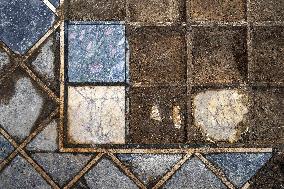
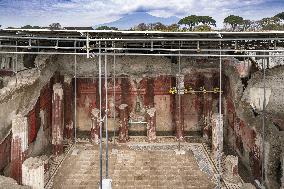
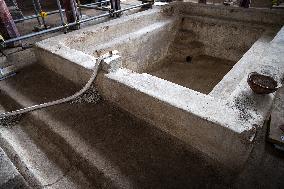
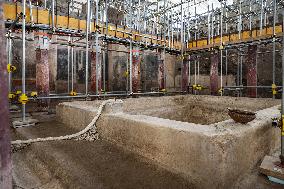
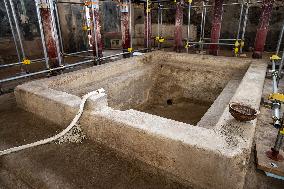
A large thermal bath complex has been uncovered on January 2025 at the ancient Roman city of Pompeii, Italy, buried by 79 AD eruption of Mount Vesuvius. Pictured: The frigidarium (cold). The private bathhouse built 2,000 years ago, is decorated with sumptuous mosaics and equipped with a series of hot, warm and cold rooms in the manner of a spa.The find was made during excavations of a domus, a private town house, in block (insula) 10 of the Regio IX area of Pompeii. The complex, which is connected to a banquet hall, is one of the largest and most sophisticated thermal baths found at a Pompeian domus. The baths, composed of a calidarium, tepidarium, frigidarium (hot, warm and cold room) and changing room (apodyterium), could accommodate up to thirty people judging by the benches present in the latter room. The archaeologists said the cold room is very impressive, composed of a peristyle, or a porticoed courtyard measuring 10 x 10 meters, at the center of which is a large pool. The members of the ruling class o

  •  
Biggest Ever Private Bathhouse Found - Pompeii

Biggest Ever Private Bathhouse Found - Pompeii

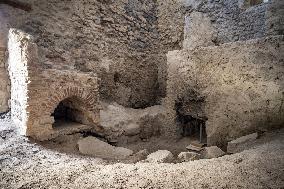
A large thermal bath complex has been uncovered on January 2025 at the ancient Roman city of Pompeii, Italy, buried by 79 AD eruption of Mount Vesuvius. Pictured: The praefurnium (the room and the furnace that ensured the heating of the hot or warm premises of the thermae). The private bathhouse built 2,000 years ago, is decorated with sumptuous mosaics and equipped with a series of hot, warm and cold rooms in the manner of a spa. The find was made during excavations of a domus, a private town house, in block (insula) 10 of the Regio IX area of Pompeii. The complex, which is connected to a banquet hall, is one of the largest and most sophisticated thermal baths found at a Pompeian domus. The baths, composed of a calidarium, tepidarium, frigidarium (hot, warm and cold room) and changing room (apodyterium), could accommodate up to thirty people judging by the benches present in the latter room. The archaeologists said the cold room is very impressive, composed of a peristyle, or a porticoed courtyard measuring

  •  
Biggest Ever Private Bathhouse Found - Pompeii

Biggest Ever Private Bathhouse Found - Pompeii

A large thermal bath complex has been uncovered on January 2025 at the ancient Roman city of Pompeii, Italy, buried by 79 AD eruption of Mount Vesuvius. Pictured: The frigidarium (cold). The private bathhouse built 2,000 years ago, is decorated with sumptuous mosaics and equipped with a series of hot, warm and cold rooms in the manner of a spa.The find was made during excavations of a domus, a private town house, in block (insula) 10 of the Regio IX area of Pompeii. The complex, which is connected to a banquet hall, is one of the largest and most sophisticated thermal baths found at a Pompeian domus. The baths, composed of a calidarium, tepidarium, frigidarium (hot, warm and cold room) and changing room (apodyterium), could accommodate up to thirty people judging by the benches present in the latter room. The archaeologists said the cold room is very impressive, composed of a peristyle, or a porticoed courtyard measuring 10 x 10 meters, at the center of which is a large pool. The members of the ruling class o

  •  
Biggest Ever Private Bathhouse Found - Pompeii

Biggest Ever Private Bathhouse Found - Pompeii

A large thermal bath complex has been uncovered on January 2025 at the ancient Roman city of Pompeii, Italy, buried by 79 AD eruption of Mount Vesuvius. Pictured: The frigidarium (cold). The private bathhouse built 2,000 years ago, is decorated with sumptuous mosaics and equipped with a series of hot, warm and cold rooms in the manner of a spa.The find was made during excavations of a domus, a private town house, in block (insula) 10 of the Regio IX area of Pompeii. The complex, which is connected to a banquet hall, is one of the largest and most sophisticated thermal baths found at a Pompeian domus. The baths, composed of a calidarium, tepidarium, frigidarium (hot, warm and cold room) and changing room (apodyterium), could accommodate up to thirty people judging by the benches present in the latter room. The archaeologists said the cold room is very impressive, composed of a peristyle, or a porticoed courtyard measuring 10 x 10 meters, at the center of which is a large pool. The members of the ruling class o

  •  
Biggest Ever Private Bathhouse Found - Pompeii

Biggest Ever Private Bathhouse Found - Pompeii

A large thermal bath complex has been uncovered on January 2025 at the ancient Roman city of Pompeii, Italy, buried by 79 AD eruption of Mount Vesuvius. Pictured: The frigidarium (cold). The private bathhouse built 2,000 years ago, is decorated with sumptuous mosaics and equipped with a series of hot, warm and cold rooms in the manner of a spa.The find was made during excavations of a domus, a private town house, in block (insula) 10 of the Regio IX area of Pompeii. The complex, which is connected to a banquet hall, is one of the largest and most sophisticated thermal baths found at a Pompeian domus. The baths, composed of a calidarium, tepidarium, frigidarium (hot, warm and cold room) and changing room (apodyterium), could accommodate up to thirty people judging by the benches present in the latter room. The archaeologists said the cold room is very impressive, composed of a peristyle, or a porticoed courtyard measuring 10 x 10 meters, at the center of which is a large pool. The members of the ruling class o

  •  
Biggest Ever Private Bathhouse Found - Pompeii

Biggest Ever Private Bathhouse Found - Pompeii

A large thermal bath complex has been uncovered on January 2025 at the ancient Roman city of Pompeii, Italy, buried by 79 AD eruption of Mount Vesuvius. Pictured: The frigidarium (cold). The private bathhouse built 2,000 years ago, is decorated with sumptuous mosaics and equipped with a series of hot, warm and cold rooms in the manner of a spa.The find was made during excavations of a domus, a private town house, in block (insula) 10 of the Regio IX area of Pompeii. The complex, which is connected to a banquet hall, is one of the largest and most sophisticated thermal baths found at a Pompeian domus. The baths, composed of a calidarium, tepidarium, frigidarium (hot, warm and cold room) and changing room (apodyterium), could accommodate up to thirty people judging by the benches present in the latter room. The archaeologists said the cold room is very impressive, composed of a peristyle, or a porticoed courtyard measuring 10 x 10 meters, at the center of which is a large pool. The members of the ruling class o

  •  
Biggest Ever Private Bathhouse Found - Pompeii

Biggest Ever Private Bathhouse Found - Pompeii

A large thermal bath complex has been uncovered on January 2025 at the ancient Roman city of Pompeii, Italy, buried by 79 AD eruption of Mount Vesuvius. Pictured: The frigidarium (cold). The private bathhouse built 2,000 years ago, is decorated with sumptuous mosaics and equipped with a series of hot, warm and cold rooms in the manner of a spa.The find was made during excavations of a domus, a private town house, in block (insula) 10 of the Regio IX area of Pompeii. The complex, which is connected to a banquet hall, is one of the largest and most sophisticated thermal baths found at a Pompeian domus. The baths, composed of a calidarium, tepidarium, frigidarium (hot, warm and cold room) and changing room (apodyterium), could accommodate up to thirty people judging by the benches present in the latter room. The archaeologists said the cold room is very impressive, composed of a peristyle, or a porticoed courtyard measuring 10 x 10 meters, at the center of which is a large pool. The members of the ruling class o

  •  
Biggest Ever Private Bathhouse Found - Pompeii

Biggest Ever Private Bathhouse Found - Pompeii

A large thermal bath complex has been uncovered on January 2025 at the ancient Roman city of Pompeii, Italy, buried by 79 AD eruption of Mount Vesuvius. Pictured: The frigidarium (cold). The private bathhouse built 2,000 years ago, is decorated with sumptuous mosaics and equipped with a series of hot, warm and cold rooms in the manner of a spa.The find was made during excavations of a domus, a private town house, in block (insula) 10 of the Regio IX area of Pompeii. The complex, which is connected to a banquet hall, is one of the largest and most sophisticated thermal baths found at a Pompeian domus. The baths, composed of a calidarium, tepidarium, frigidarium (hot, warm and cold room) and changing room (apodyterium), could accommodate up to thirty people judging by the benches present in the latter room. The archaeologists said the cold room is very impressive, composed of a peristyle, or a porticoed courtyard measuring 10 x 10 meters, at the center of which is a large pool. The members of the ruling class o

  •  
Biggest Ever Private Bathhouse Found - Pompeii

Biggest Ever Private Bathhouse Found - Pompeii

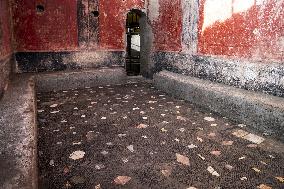
A large thermal bath complex has been uncovered on January 2025 at the ancient Roman city of Pompeii, Italy, buried by 79 AD eruption of Mount Vesuvius. Pictured: The apodyterium (the changing room). The private bathhouse built 2,000 years ago, is decorated with sumptuous mosaics and equipped with a series of hot, warm and cold rooms in the manner of a spa.The find was made during excavations of a domus, a private town house, in block (insula) 10 of the Regio IX area of Pompeii. The complex, which is connected to a banquet hall, is one of the largest and most sophisticated thermal baths found at a Pompeian domus. The baths, composed of a calidarium, tepidarium, frigidarium (hot, warm and cold room) and changing room (apodyterium), could accommodate up to thirty people judging by the benches present in the latter room. The archaeologists said the cold room is very impressive, composed of a peristyle, or a porticoed courtyard measuring 10 x 10 meters, at the center of which is a large pool. The members of the r

  •  
Mass Grave Found Near Damascus - Syria

Mass Grave Found Near Damascus - Syria

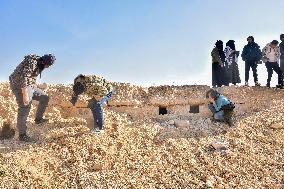
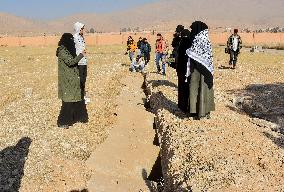
A group of people examines a trench in a field where a mass grave is uncovered in the Baghdad Bridge area of Damascus, Syria, on December 18, 2024. The remains are believed to belong to civilians killed by the ousted regime of Bashar al-Assad. Photo by Fadel Itani/Middle East Images/ABACAPRESS.COM

  •  
Mass Grave Found Near Damascus - Syria

Mass Grave Found Near Damascus - Syria

A group of people examines a trench in a field where a mass grave is uncovered in the Baghdad Bridge area of Damascus, Syria, on December 18, 2024. The remains are believed to belong to civilians killed by the ousted regime of Bashar al-Assad. Photo by Fadel Itani/Middle East Images/ABACAPRESS.COM

  •  
Mass Grave Found Near Damascus - Syria

Mass Grave Found Near Damascus - Syria

A group of people examines a trench in a field where a mass grave is uncovered in the Baghdad Bridge area of Damascus, Syria, on December 18, 2024. The remains are believed to belong to civilians killed by the ousted regime of Bashar al-Assad. Photo by Fadel Itani/Middle East Images/ABACAPRESS.COM

  •  
Tiny House With Erotic Frescoes Uncovered - Pompeii

Tiny House With Erotic Frescoes Uncovered - Pompeii

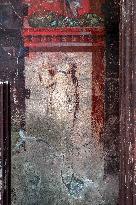
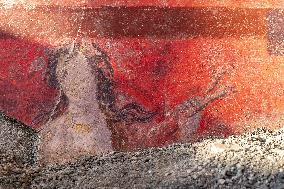
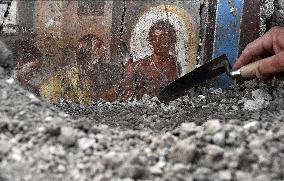
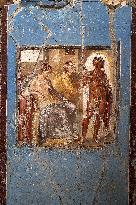
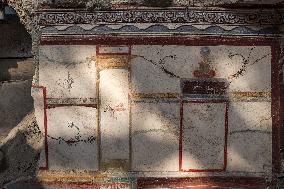
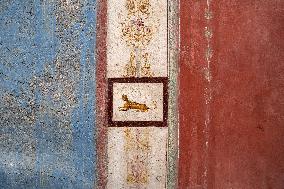
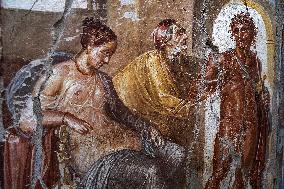
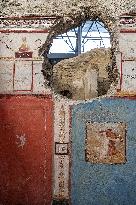
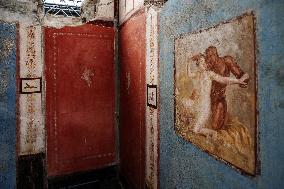
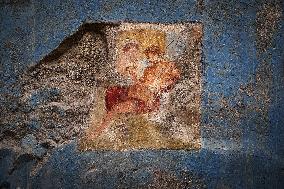
Fresco with the myth of Phaedra and Hippolytus uncovered by Archaeologists in a richly decorated small house with finely preserved erotic frescoes of mythological scenes in the ancient Roman city of Pompeii, Italy on October 2024. The vividly coloured wall paintings include one depicting a sexual encounter between a satyr and a nymph on a bed and another one of Phaedra, mythological queen, and her stepson Hippolytus. Phaedra, Cretan princess and wife of Theseus, fell in love with her stepson Hippolytus through the work of Aphrodite, who avenged the young man’s disdain for her. Hippolytus rejected Phaedra, and she, scorned, falsely accused him of trying to rape her. Another fresco features gods presumed to be Venus and Adonis. Experts say the exquisitely decorated abode, called the House of Phaedra after the mythological queen , sheds light on the changing architectural styles in the first century AD but is also further proof that the residents of Pompeii had an appetite for sensual art. Despite its small size

  •  
Tiny House With Erotic Frescoes Uncovered - Pompeii

Tiny House With Erotic Frescoes Uncovered - Pompeii

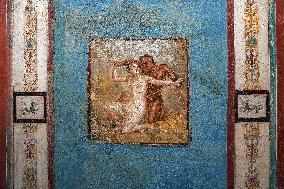
Archaeologists have uncovered a fresco depicting a sexual encounter between a satyr and a nymph on a bed in a richly decorated small house with finely preserved erotic frescoes of mythological scenes in the ancient Roman city of Pompeii, Italy on October 2024. The vividly coloured wall paintings include another one of Phaedra, mythological queen, and her stepson Hippolytus. Phaedra, Cretan princess and wife of Theseus, fell in love with her stepson Hippolytus through the work of Aphrodite, who avenged the young man’s disdain for her. Hippolytus rejected Phaedra, and she, scorned, falsely accused him of trying to rape her. Another fresco features gods presumed to be Venus and Adonis. Experts say the exquisitely decorated abode, called the House of Phaedra after the mythological queen , sheds light on the changing architectural styles in the first century AD but is also further proof that the residents of Pompeii had an appetite for sensual art. Despite its small size, the dwelling ‘strikes us for the high leve

  •  
Tiny House With Erotic Frescoes Uncovered - Pompeii

Tiny House With Erotic Frescoes Uncovered - Pompeii

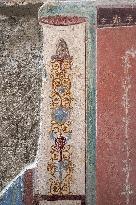
Archaeologists have uncovered a richly decorated small house with finely preserved erotic frescoes of mythological scenes in the ancient Roman city of Pompeii, Italy on October 2024. The vividly coloured wall paintings include one depicting a sexual encounter between a satyr and a nymph on a bed and another one of Phaedra, mythological queen, and her stepson Hippolytus. Phaedra, Cretan princess and wife of Theseus, fell in love with her stepson Hippolytus through the work of Aphrodite, who avenged the young man’s disdain for her. Hippolytus rejected Phaedra, and she, scorned, falsely accused him of trying to rape her. Another fresco features gods presumed to be Venus and Adonis. Experts say the exquisitely decorated abode, called the House of Phaedra after the mythological queen , sheds light on the changing architectural styles in the first century AD but is also further proof that the residents of Pompeii had an appetite for sensual art. Despite its small size, the dwelling ‘strikes us for the high level of

  •  
Tiny House With Erotic Frescoes Uncovered - Pompeii

Tiny House With Erotic Frescoes Uncovered - Pompeii

Fresco with the myth of Phaedra and Hippolytus uncovered by Archaeologists in a richly decorated small house with finely preserved erotic frescoes of mythological scenes in the ancient Roman city of Pompeii, Italy on October 2024. The vividly coloured wall paintings include one depicting a sexual encounter between a satyr and a nymph on a bed and another one of Phaedra, mythological queen, and her stepson Hippolytus. Phaedra, Cretan princess and wife of Theseus, fell in love with her stepson Hippolytus through the work of Aphrodite, who avenged the young man’s disdain for her. Hippolytus rejected Phaedra, and she, scorned, falsely accused him of trying to rape her. Another fresco features gods presumed to be Venus and Adonis. Experts say the exquisitely decorated abode, called the House of Phaedra after the mythological queen , sheds light on the changing architectural styles in the first century AD but is also further proof that the residents of Pompeii had an appetite for sensual art. Despite its small size

  •  
Tiny House With Erotic Frescoes Uncovered - Pompeii

Tiny House With Erotic Frescoes Uncovered - Pompeii

Archaeologists have uncovered a fresco featuring gods presumed to be Venus and Adonis in a richly decorated small house with finely preserved erotic frescoes of mythological scenes in the ancient Roman city of Pompeii, Italy on October 2024. The vividly coloured wall paintings include one depicting a sexual encounter between a satyr and a nymph on a bed and another one of Phaedra, mythological queen, and her stepson Hippolytus. Phaedra, Cretan princess and wife of Theseus, fell in love with her stepson Hippolytus through the work of Aphrodite, who avenged the young man’s disdain for her. Hippolytus rejected Phaedra, and she, scorned, falsely accused him of trying to rape her. Another fresco features gods presumed to be Venus and Adonis. Experts say the exquisitely decorated abode, called the House of Phaedra after the mythological queen , sheds light on the changing architectural styles in the first century AD but is also further proof that the residents of Pompeii had an appetite for sensual art. Despite its

  •  
Tiny House With Erotic Frescoes Uncovered - Pompeii

Tiny House With Erotic Frescoes Uncovered - Pompeii

Archaeologists have uncovered a richly decorated small house with finely preserved erotic frescoes of mythological scenes in the ancient Roman city of Pompeii, Italy on October 2024. The vividly coloured wall paintings include one depicting a sexual encounter between a satyr and a nymph on a bed and another one of Phaedra, mythological queen, and her stepson Hippolytus. Phaedra, Cretan princess and wife of Theseus, fell in love with her stepson Hippolytus through the work of Aphrodite, who avenged the young man’s disdain for her. Hippolytus rejected Phaedra, and she, scorned, falsely accused him of trying to rape her. Another fresco features gods presumed to be Venus and Adonis. Experts say the exquisitely decorated abode, called the House of Phaedra after the mythological queen , sheds light on the changing architectural styles in the first century AD but is also further proof that the residents of Pompeii had an appetite for sensual art. Despite its small size, the dwelling ‘strikes us for the high level of

  •  
Tiny House With Erotic Frescoes Uncovered - Pompeii

Tiny House With Erotic Frescoes Uncovered - Pompeii

Archaeologists have uncovered a richly decorated small house with finely preserved erotic frescoes of mythological scenes in the ancient Roman city of Pompeii, Italy on October 2024. The vividly coloured wall paintings include one depicting a sexual encounter between a satyr and a nymph on a bed and another one of Phaedra, mythological queen, and her stepson Hippolytus. Phaedra, Cretan princess and wife of Theseus, fell in love with her stepson Hippolytus through the work of Aphrodite, who avenged the young man’s disdain for her. Hippolytus rejected Phaedra, and she, scorned, falsely accused him of trying to rape her. Another fresco features gods presumed to be Venus and Adonis. Experts say the exquisitely decorated abode, called the House of Phaedra after the mythological queen , sheds light on the changing architectural styles in the first century AD but is also further proof that the residents of Pompeii had an appetite for sensual art. Despite its small size, the dwelling ‘strikes us for the high level of

  •  
Tiny House With Erotic Frescoes Uncovered - Pompeii

Tiny House With Erotic Frescoes Uncovered - Pompeii

Fresco with the myth of Phaedra and Hippolytus uncovered by Archaeologists in a richly decorated small house with finely preserved erotic frescoes of mythological scenes in the ancient Roman city of Pompeii, Italy on October 2024. The vividly coloured wall paintings include one depicting a sexual encounter between a satyr and a nymph on a bed and another one of Phaedra, mythological queen, and her stepson Hippolytus. Phaedra, Cretan princess and wife of Theseus, fell in love with her stepson Hippolytus through the work of Aphrodite, who avenged the young man’s disdain for her. Hippolytus rejected Phaedra, and she, scorned, falsely accused him of trying to rape her. Another fresco features gods presumed to be Venus and Adonis. Experts say the exquisitely decorated abode, called the House of Phaedra after the mythological queen , sheds light on the changing architectural styles in the first century AD but is also further proof that the residents of Pompeii had an appetite for sensual art. Despite its small size

  •  
Tiny House With Erotic Frescoes Uncovered - Pompeii

Tiny House With Erotic Frescoes Uncovered - Pompeii

Archaeologists have uncovered a fresco depicting a sexual encounter between a satyr and a nymph on a bed in a richly decorated small house with finely preserved erotic frescoes of mythological scenes in the ancient Roman city of Pompeii, Italy on October 2024. The vividly coloured wall paintings include another one of Phaedra, mythological queen, and her stepson Hippolytus. Phaedra, Cretan princess and wife of Theseus, fell in love with her stepson Hippolytus through the work of Aphrodite, who avenged the young man’s disdain for her. Hippolytus rejected Phaedra, and she, scorned, falsely accused him of trying to rape her. Another fresco features gods presumed to be Venus and Adonis. Experts say the exquisitely decorated abode, called the House of Phaedra after the mythological queen , sheds light on the changing architectural styles in the first century AD but is also further proof that the residents of Pompeii had an appetite for sensual art. Despite its small size, the dwelling ‘strikes us for the high leve

  •  
Tiny House With Erotic Frescoes Uncovered - Pompeii

Tiny House With Erotic Frescoes Uncovered - Pompeii

Archaeologists have uncovered a fresco depicting a sexual encounter between a satyr and a nymph on a bed in a richly decorated small house with finely preserved erotic frescoes of mythological scenes in the ancient Roman city of Pompeii, Italy on October 2024. The vividly coloured wall paintings include another one of Phaedra, mythological queen, and her stepson Hippolytus. Phaedra, Cretan princess and wife of Theseus, fell in love with her stepson Hippolytus through the work of Aphrodite, who avenged the young man’s disdain for her. Hippolytus rejected Phaedra, and she, scorned, falsely accused him of trying to rape her. Another fresco features gods presumed to be Venus and Adonis. Experts say the exquisitely decorated abode, called the House of Phaedra after the mythological queen , sheds light on the changing architectural styles in the first century AD but is also further proof that the residents of Pompeii had an appetite for sensual art. Despite its small size, the dwelling ‘strikes us for the high leve

  •  
Archaeologists Discover New Bones - Waterloo

Archaeologists Discover New Bones - Waterloo

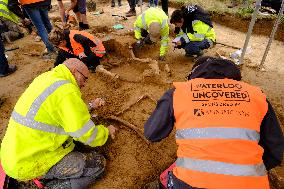
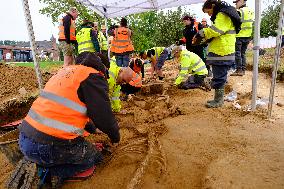
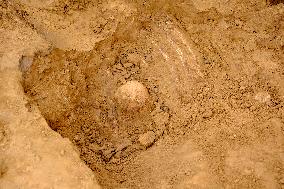
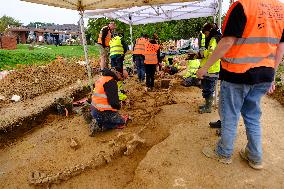
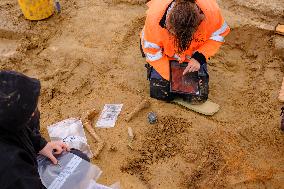
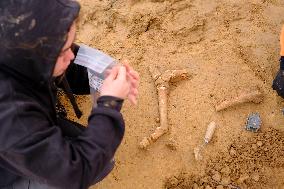
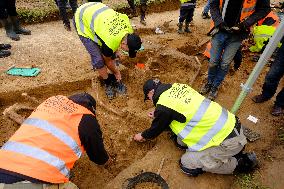
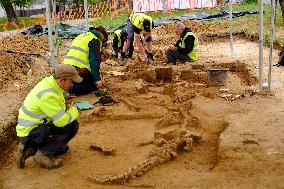
Archaeologists are discovering new bones at Mont-Saint-Jean farm, which served as a field hospital for British troops on 18 June 1815. Archaeologists and volunteers from ‘Waterloo Uncovered’ are searching for human and animal remains and artefacts to find answers about how the soldiers were treated during and after the battle. The archaeological digs on the site of the Battle of Waterloo should provide answers to what happened to the skeletons of thousands of soldiers who died at the Battle of Waterloo in 1815. Excavations by teams of archaeologists, veterans and volunteers, Waterloo Uncovered association. Waterloo, Belgium, 10 September 2024. Photo by Monasse T/ANDBZ/ABACAPRESS.COM

  •  
Archaeologists Discover New Bones - Waterloo

Archaeologists Discover New Bones - Waterloo

Archaeologists are discovering new bones at Mont-Saint-Jean farm, which served as a field hospital for British troops on 18 June 1815. Archaeologists and volunteers from ‘Waterloo Uncovered’ are searching for human and animal remains and artefacts to find answers about how the soldiers were treated during and after the battle. The archaeological digs on the site of the Battle of Waterloo should provide answers to what happened to the skeletons of thousands of soldiers who died at the Battle of Waterloo in 1815. Excavations by teams of archaeologists, veterans and volunteers, Waterloo Uncovered association. Waterloo, Belgium, 10 September 2024. Photo by Monasse T/ANDBZ/ABACAPRESS.COM

  •  
Archaeologists Discover New Bones - Waterloo

Archaeologists Discover New Bones - Waterloo

Archaeologists are discovering new bones at Mont-Saint-Jean farm, which served as a field hospital for British troops on 18 June 1815. Archaeologists and volunteers from ‘Waterloo Uncovered’ are searching for human and animal remains and artefacts to find answers about how the soldiers were treated during and after the battle. The archaeological digs on the site of the Battle of Waterloo should provide answers to what happened to the skeletons of thousands of soldiers who died at the Battle of Waterloo in 1815. Excavations by teams of archaeologists, veterans and volunteers, Waterloo Uncovered association. Waterloo, Belgium, 10 September 2024. Photo by Monasse T/ANDBZ/ABACAPRESS.COM

  •  
Archaeologists Discover New Bones - Waterloo

Archaeologists Discover New Bones - Waterloo

Archaeologists are discovering new bones at Mont-Saint-Jean farm, which served as a field hospital for British troops on 18 June 1815. Archaeologists and volunteers from ‘Waterloo Uncovered’ are searching for human and animal remains and artefacts to find answers about how the soldiers were treated during and after the battle. The archaeological digs on the site of the Battle of Waterloo should provide answers to what happened to the skeletons of thousands of soldiers who died at the Battle of Waterloo in 1815. Excavations by teams of archaeologists, veterans and volunteers, Waterloo Uncovered association. Waterloo, Belgium, 10 September 2024. Photo by Monasse T/ANDBZ/ABACAPRESS.COM

  •  
Archaeologists Discover New Bones - Waterloo

Archaeologists Discover New Bones - Waterloo

Archaeologists are discovering new bones at Mont-Saint-Jean farm, which served as a field hospital for British troops on 18 June 1815. Archaeologists and volunteers from ‘Waterloo Uncovered’ are searching for human and animal remains and artefacts to find answers about how the soldiers were treated during and after the battle. The archaeological digs on the site of the Battle of Waterloo should provide answers to what happened to the skeletons of thousands of soldiers who died at the Battle of Waterloo in 1815. Excavations by teams of archaeologists, veterans and volunteers, Waterloo Uncovered association. Waterloo, Belgium, 10 September 2024. Photo by Monasse T/ANDBZ/ABACAPRESS.COM

  •  
Archaeologists Discover New Bones - Waterloo

Archaeologists Discover New Bones - Waterloo

Archaeologists are discovering new bones at Mont-Saint-Jean farm, which served as a field hospital for British troops on 18 June 1815. Archaeologists and volunteers from ‘Waterloo Uncovered’ are searching for human and animal remains and artefacts to find answers about how the soldiers were treated during and after the battle. The archaeological digs on the site of the Battle of Waterloo should provide answers to what happened to the skeletons of thousands of soldiers who died at the Battle of Waterloo in 1815. Excavations by teams of archaeologists, veterans and volunteers, Waterloo Uncovered association. Waterloo, Belgium, 10 September 2024. Photo by Monasse T/ANDBZ/ABACAPRESS.COM

  •  
Archaeologists Discover New Bones - Waterloo

Archaeologists Discover New Bones - Waterloo

Archaeologists are discovering new bones at Mont-Saint-Jean farm, which served as a field hospital for British troops on 18 June 1815. Archaeologists and volunteers from ‘Waterloo Uncovered’ are searching for human and animal remains and artefacts to find answers about how the soldiers were treated during and after the battle. The archaeological digs on the site of the Battle of Waterloo should provide answers to what happened to the skeletons of thousands of soldiers who died at the Battle of Waterloo in 1815. Excavations by teams of archaeologists, veterans and volunteers, Waterloo Uncovered association. Waterloo, Belgium, 10 September 2024. Photo by Monasse T/ANDBZ/ABACAPRESS.COM

  •  
Archaeologists Discover New Bones - Waterloo

Archaeologists Discover New Bones - Waterloo

Archaeologists are discovering new bones at Mont-Saint-Jean farm, which served as a field hospital for British troops on 18 June 1815. Archaeologists and volunteers from ‘Waterloo Uncovered’ are searching for human and animal remains and artefacts to find answers about how the soldiers were treated during and after the battle. The archaeological digs on the site of the Battle of Waterloo should provide answers to what happened to the skeletons of thousands of soldiers who died at the Battle of Waterloo in 1815. Excavations by teams of archaeologists, veterans and volunteers, Waterloo Uncovered association. Waterloo, Belgium, 10 September 2024. Photo by Monasse T/ANDBZ/ABACAPRESS.COM

  • Main
  • Top
  • Editorial
  • Creative
  • About Us
  • About ILG
  • Terms of use
  • Company
  • BEHIND
  • Price List
  • Single Plan
  • Monthly Plan
  • Services
  • Shooting
  • Rights Clearance
  • Support
  • FAQ
  • How To Buy
  • Contact Us
  • Become a Partner

© KYODO NEWS IMAGES INC

All Rights Reserved.

  • Editorial
  • Olympics
  • News
  • Sports
  • Japan
  • Tech
  • Royal
  • Disaster
  • NorthKorea
  • Old Japan
  • SNS
  • Creative
  • Food
  • Japan
  • Landscape
  • Animal
  • Popular
  • #Ukraine
  • #China
  • #coronavirus
  • #N. Korea
  • #Thailand
  • #Russia
  • #Ukraine
  • #China
  • #coronavirus
  • #N. Korea
  • #Thailand
  • #Russia
  • Food
  • Japan
  • Landscape
  • Animal
  • Olympics
  • News
  • Sports
  • Japan
  • Tech
  • Royal
  • Disaster
  • NorthKorea
  • Old Japan
  • SNS