•  
Cargo Containers At Longtan Area of Nanjing Port - China

Cargo Containers At Longtan Area of Nanjing Port - China

An aerial drone photo taken on Nov. 12, 2025 shows the Longtan area of Nanjing Port under Jiangsu Port Group in Nanjing, east China's Jiangsu Province. Bolstered by dynamic new growth drivers, the Chinese economy has demonstrated significant resilience and vitality despite increasing headwinds as it enters the final quarter of 2025, staying on track to achieve its full-year development goals. A set of key indicators released Friday by the National Bureau of Statistics (NBS) reflected continued economic momentum. The country's industrial output for the first 10 months posted a steady 6.1 percent year-on-year increase, with the services production index up 5.7 percent. (Photo by Yang Suping/Xinhua/ABACAPRESS.COM)

  •  
Cargo Containers At Longtan Area of Nanjing Port - China

Cargo Containers At Longtan Area of Nanjing Port - China

An aerial drone photo taken on Nov. 14, 2025 shows the Longtan area of Nanjing Port under Jiangsu Port Group in Nanjing, east China's Jiangsu Province. Bolstered by dynamic new growth drivers, the Chinese economy has demonstrated significant resilience and vitality despite increasing headwinds as it enters the final quarter of 2025, staying on track to achieve its full-year development goals. A set of key indicators released Friday by the National Bureau of Statistics (NBS) reflected continued economic momentum. The country's industrial output for the first 10 months posted a steady 6.1 percent year-on-year increase, with the services production index up 5.7 percent. (Photo by Fang Dongxu/Xinhua/ABACAPRESS.COM)

  •  
Cargo Containers At Longtan Area of Nanjing Port - China

Cargo Containers At Longtan Area of Nanjing Port - China

An aerial drone photo taken on Nov. 14, 2025 shows vessels moored at a container terminal in Jingtang area of Tangshan Port in Tangshan City, north China's Hebei Province. Bolstered by dynamic new growth drivers, the Chinese economy has demonstrated significant resilience and vitality despite increasing headwinds as it enters the final quarter of 2025, staying on track to achieve its full-year development goals. A set of key indicators released Friday by the National Bureau of Statistics (NBS) reflected continued economic momentum. The country's industrial output for the first 10 months posted a steady 6.1 percent year-on-year increase, with the services production index up 5.7 percent. (Photo by Liu Mancang/Xinhua/ABACAPRESS.COM)

  •  
Golf: Tokai Classic

Golf: Tokai Classic

Sora Kamiya of Japan poses with the victor's trophy after winning the Sumitomo Life Vitality Ladies Tokai Classic golf tournament at Shin Minami Aichi Country Club in Mihama, Aichi Prefecture, central Japan, on Sept. 21, 2025.

  •  
Golf: Tokai Classic

Golf: Tokai Classic

Sora Kamiya of Japan hits a shot on the ninth hole during the final round of the Sumitomo Life Vitality Ladies Tokai Classic golf tournament at Shin Minami Aichi Country Club in Mihama, Aichi Prefecture, central Japan, on Sept. 21, 2025.

  •  
Golf: Tokai Classic

Golf: Tokai Classic

Sora Kamiya of Japan makes a birdie putt on the ninth hole during the final round of the Sumitomo Life Vitality Ladies Tokai Classic golf tournament at Shin Minami Aichi Country Club in Mihama, Aichi Prefecture, central Japan, on Sept. 21, 2025.

  •  
Golf: Tokai Classic

Golf: Tokai Classic

Sora Kamiya of Japan makes a birdie putt on the ninth hole during the final round of the Sumitomo Life Vitality Ladies Tokai Classic golf tournament at Shin Minami Aichi Country Club in Mihama, Aichi Prefecture, central Japan, on Sept. 21, 2025.

  •  
Golf: Tokai Classic

Golf: Tokai Classic

Sora Kamiya of Japan celebrates after making a winning putt during the final round of the Sumitomo Life Vitality Ladies Tokai Classic golf tournament at Shin Minami Aichi Country Club in Mihama, Aichi Prefecture, central Japan, on Sept. 21, 2025.

  •  
Golf: Tokai Classic

Golf: Tokai Classic

Sora Kamiya of Japan celebrates after winning the Sumitomo Life Vitality Ladies Tokai Classic golf tournament at Shin Minami Aichi Country Club in Mihama, Aichi Prefecture, central Japan, on Sept. 21, 2025.

  •  
Fujian Fortified Manors - China

Fujian Fortified Manors - China

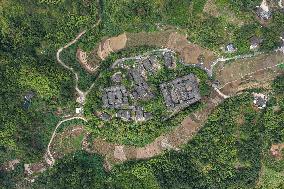
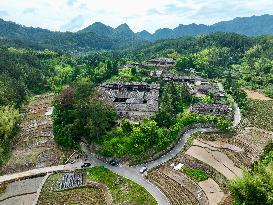
An aerial drone photo taken on May 20, 2025 shows Zhutou Manor in Yongtai County, southeast China's Fujian Province. Nestled in the Daiyun Mountain like scattered pearls, over 2,000 fortified manors in Yongtai County trace their origins to the Tang Dynasty 618-907 AD), flourishing later during the Ming 1368-1644) and Qing 1644-1911) eras. Today, increasing numbers of ancient manors and villages are being protected and revitalized. As historical heritage integrates with contemporary life and cultural landscapes merge with humanistic values, these age-old structures are radiating renewed vitality. Photo by Zhang Keren/Xinhua/ABACAPRESS.COM

  •  
Fujian Fortified Manors - China

Fujian Fortified Manors - China

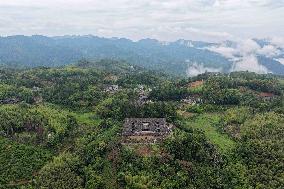
An aerial drone photo taken on May 20, 2025 shows Beishan Manor in Yongtai County, southeast China's Fujian Province. Nestled in the Daiyun Mountain like scattered pearls, over 2,000 fortified manors in Yongtai County trace their origins to the Tang Dynasty 618-907 AD), flourishing later during the Ming 1368-1644) and Qing 1644-1911) eras. Today, increasing numbers of ancient manors and villages are being protected and revitalized. As historical heritage integrates with contemporary life and cultural landscapes merge with humanistic values, these age-old structures are radiating renewed vitality. Photo by Zhang Keren/Xinhua/ABACAPRESS.COM

  •  
Fujian Fortified Manors - China

Fujian Fortified Manors - China

A resident spreads out unhusked rice to dry in Zhutou Manor in Yongtai County, southeast China's Fujian Province, on Octobre 2, 2023. Nestled in the Daiyun Mountain like scattered pearls, over 2,000 fortified manors in Yongtai County trace their origins to the Tang Dynasty 618-907 AD), flourishing later during the Ming 1368-1644) and Qing 1644-1911) eras. Today, increasing numbers of ancient manors and villages are being protected and revitalized. As historical heritage integrates with contemporary life and cultural landscapes merge with humanistic values, these age-old structures are radiating renewed vitality. Photo by Jiang Kehong/Xinhua/ABACAPRESS.COM

  •  
Fujian Fortified Manors - China

Fujian Fortified Manors - China

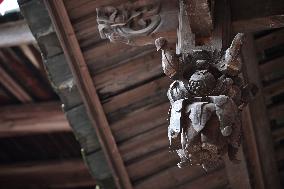
This photo taken on May 20, 2025 shows timber structural elements of a fortified manor in Yongtai County, southeast China's Fujian Province. Nestled in the Daiyun Mountain like scattered pearls, over 2,000 fortified manors in Yongtai County trace their origins to the Tang Dynasty 618-907 AD), flourishing later during the Ming 1368-1644) and Qing 1644-1911) eras. Today, increasing numbers of ancient manors and villages are being protected and revitalized. As historical heritage integrates with contemporary life and cultural landscapes merge with humanistic values, these age-old structures are radiating renewed vitality. Photo by Wang Zecong/Xinhua/ABACAPRESS.COM

  •  
Fujian Fortified Manors - China

Fujian Fortified Manors - China

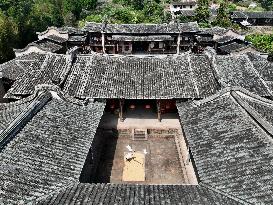
An aerial drone photo taken on May 20, 2025 shows Hecheng Manor in Yongtai County, southeast China's Fujian Province. Nestled in the Daiyun Mountain like scattered pearls, over 2,000 fortified manors in Yongtai County trace their origins to the Tang Dynasty 618-907 AD), flourishing later during the Ming 1368-1644) and Qing 1644-1911) eras. Today, increasing numbers of ancient manors and villages are being protected and revitalized. As historical heritage integrates with contemporary life and cultural landscapes merge with humanistic values, these age-old structures are radiating renewed vitality. Photo by Zhang Keren/Xinhua/ABACAPRESS.COM

  •  
Fujian Fortified Manors - China

Fujian Fortified Manors - China

An aerial drone photo taken on May 20, 2025 shows Hecheng Manor in Yongtai County, southeast China's Fujian Province. Nestled in the Daiyun Mountain like scattered pearls, over 2,000 fortified manors in Yongtai County trace their origins to the Tang Dynasty 618-907 AD), flourishing later during the Ming 1368-1644) and Qing 1644-1911) eras. Today, increasing numbers of ancient manors and villages are being protected and revitalized. As historical heritage integrates with contemporary life and cultural landscapes merge with humanistic values, these age-old structures are radiating renewed vitality. Photo by Wang Zecong/Xinhua/ABACAPRESS.COM

  •  
Fujian Fortified Manors - China

Fujian Fortified Manors - China

An aerial photo taken on May 20, 2025 shows Hecheng Manor in Yongtai County, southeast China's Fujian Province. Nestled in the Daiyun Mountain like scattered pearls, over 2,000 fortified manors in Yongtai County trace their origins to the Tang Dynasty 618-907 AD), flourishing later during the Ming 1368-1644) and Qing 1644-1911) eras. Today, increasing numbers of ancient manors and villages are being protected and revitalized. As historical heritage integrates with contemporary life and cultural landscapes merge with humanistic values, these age-old structures are radiating renewed vitality. Photo by Jiang Kehong/Xinhua/ABACAPRESS.COM

  •  
Fujian Fortified Manors - China

Fujian Fortified Manors - China

An aerial photo taken on May 20, 2025 shows Zhutou Manor in Yongtai County, southeast China's Fujian Province. Nestled in the Daiyun Mountain like scattered pearls, over 2,000 fortified manors in Yongtai County trace their origins to the Tang Dynasty 618-907 AD), flourishing later during the Ming 1368-1644) and Qing 1644-1911) eras. Today, increasing numbers of ancient manors and villages are being protected and revitalized. As historical heritage integrates with contemporary life and cultural landscapes merge with humanistic values, these age-old structures are radiating renewed vitality. Photo by Jiang Kehong/Xinhua/ABACAPRESS.COM

  •  
Guidong Pottery Making - China

Guidong Pottery Making - China

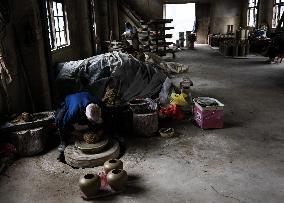
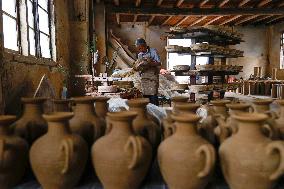
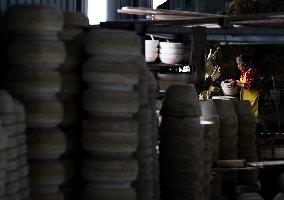
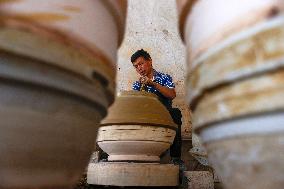
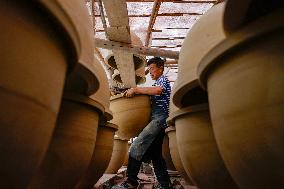
Fang Liangsheng, a pottery artisan, makes a piece of pottery in Pule Town, Guidong County, central China's Hunan Province, June 17, 2025. Pule Town boasts a rich history of pottery production. Artisans in the town follow the traditional clay pottery production technique and develop a series of new products, bringing new vitality to the crafts. Photo by Lan Hongguang/Xinhua/ABACAPRESS.COM

  •  
Guidong Pottery Making - China

Guidong Pottery Making - China

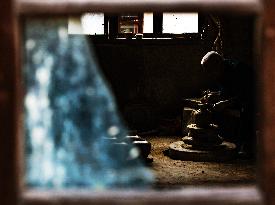
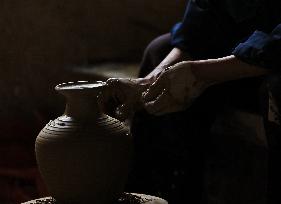
A pottery maker makes a piece of pottery in Pule Town, Guidong County, central China's Hunan Province, June 17, 2025. Pule Town boasts a rich history of pottery production. Artisans in the town follow the traditional clay pottery production technique and develop a series of new products, bringing new vitality to the crafts. Photo by Guo Liliang/Xinhua/ABACAPRESS.COM

  •  
Guidong Pottery Making - China

Guidong Pottery Making - China

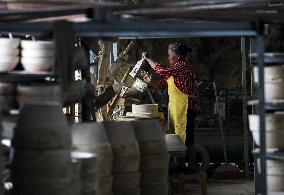
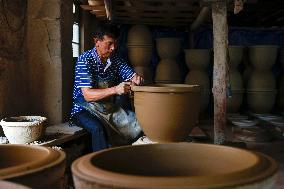
Deng Zhaochai, a pottery artisan, makes a piece of pottery in Pule Town, Guidong County, central China's Hunan Province, June 17, 2025. Pule Town boasts a rich history of pottery production. Artisans in the town follow the traditional clay pottery production technique and develop a series of new products, bringing new vitality to the crafts. Photo by Lan Hongguang/Xinhua/ABACAPRESS.COM

  •  
Guidong Pottery Making - China

Guidong Pottery Making - China

Deng Zhaochai, a pottery artisan, makes a piece of pottery in Pule Town, Guidong County, central China's Hunan Province, June 17, 2025. Pule Town boasts a rich history of pottery production. Artisans in the town follow the traditional clay pottery production technique and develop a series of new products, bringing new vitality to the crafts. Photo by Lan Hongguang/Xinhua/ABACAPRESS.COM

  •  
Guidong Pottery Making - China

Guidong Pottery Making - China

Deng Zhaochai, a pottery artisan, makes a piece of pottery in Pule Town, Guidong County, central China's Hunan Province, June 17, 2025. Pule Town boasts a rich history of pottery production. Artisans in the town follow the traditional clay pottery production technique and develop a series of new products, bringing new vitality to the crafts. Photo by Lan Hongguang/Xinhua/ABACAPRESS.COM

  •  
Guidong Pottery Making - China

Guidong Pottery Making - China

Fang Liangsheng, a pottery artisan, makes a piece of pottery in Pule Town, Guidong County, central China's Hunan Province, June 17, 2025. Pule Town boasts a rich history of pottery production. Artisans in the town follow the traditional clay pottery production technique and develop a series of new products, bringing new vitality to the crafts. Photo by Lan Hongguang/Xinhua/ABACAPRESS.COM

  •  
Guidong Pottery Making - China

Guidong Pottery Making - China

Fang Jianfei, a pottery artisan, makes a piece of pottery in Pule Town, Guidong County, central China's Hunan Province, June 17, 2025. Pule Town boasts a rich history of pottery production. Artisans in the town follow the traditional clay pottery production technique and develop a series of new products, bringing new vitality to the crafts. Photo by Guo Liliang/Xinhua/ABACAPRESS.COM

  •  
Guidong Pottery Making - China

Guidong Pottery Making - China

Fang Liangsheng, a pottery artisan, makes a piece of pottery in Pule Town, Guidong County, central China's Hunan Province, June 17, 2025. Pule Town boasts a rich history of pottery production. Artisans in the town follow the traditional clay pottery production technique and develop a series of new products, bringing new vitality to the crafts. Photo by Lan Hongguang/Xinhua/ABACAPRESS.COM

  •  
Guidong Pottery Making - China

Guidong Pottery Making - China

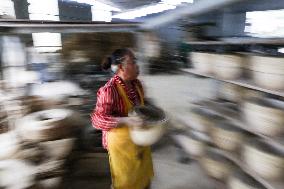
Fang Jianfei, a pottery artisan, carries a piece of pottery in Pule Town, Guidong County, central China's Hunan Province, June 17, 2025. Pule Town boasts a rich history of pottery production. Artisans in the town follow the traditional clay pottery production technique and develop a series of new products, bringing new vitality to the crafts. Photo by Guo Liliang/Xinhua/ABACAPRESS.COM

  •  
Guidong Pottery Making - China

Guidong Pottery Making - China

Fang Liangsheng, a pottery artisan, makes a piece of pottery in Pule Town, Guidong County, central China's Hunan Province, June 17, 2025. Pule Town boasts a rich history of pottery production. Artisans in the town follow the traditional clay pottery production technique and develop a series of new products, bringing new vitality to the crafts. Photo by Lan Hongguang/Xinhua/ABACAPRESS.COM

  •  
Guidong Pottery Making - China

Guidong Pottery Making - China

Fang Liangsheng, a pottery artisan, makes a piece of pottery in Pule Town, Guidong County, central China's Hunan Province, June 17, 2025. Pule Town boasts a rich history of pottery production. Artisans in the town follow the traditional clay pottery production technique and develop a series of new products, bringing new vitality to the crafts. Photo by Lan Hongguang/Xinhua/ABACAPRESS.COM

  •  
Guidong Pottery Making - China

Guidong Pottery Making - China

Fang Liangsheng, a pottery artisan, makes a piece of pottery in Pule Town, Guidong County, central China's Hunan Province, June 17, 2025. Pule Town boasts a rich history of pottery production. Artisans in the town follow the traditional clay pottery production technique and develop a series of new products, bringing new vitality to the crafts. Photo by Lan Hongguang/Xinhua/ABACAPRESS.COM

  •  
Guidong Pottery Making - China

Guidong Pottery Making - China

Fang Jianfei, a pottery artisan, makes a piece of pottery in Pule Town, Guidong County, central China's Hunan Province, June 17, 2025. Pule Town boasts a rich history of pottery production. Artisans in the town follow the traditional clay pottery production technique and develop a series of new products, bringing new vitality to the crafts. Photo by Guo Liliang/Xinhua/ABACAPRESS.COM

  •  
Guidong Pottery Making - China

Guidong Pottery Making - China

Fang Liangsheng, a pottery artisan, makes a piece of pottery in Pule Town, Guidong County, central China's Hunan Province, June 17, 2025. Pule Town boasts a rich history of pottery production. Artisans in the town follow the traditional clay pottery production technique and develop a series of new products, bringing new vitality to the crafts. Photo by Lan Hongguang/Xinhua/ABACAPRESS.COM

  •  
Shehuo Parade - China

Shehuo Parade - China

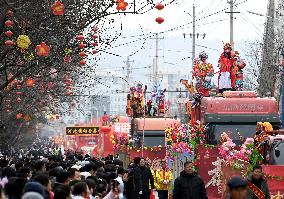
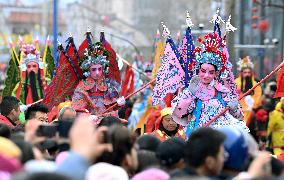
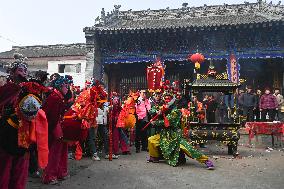
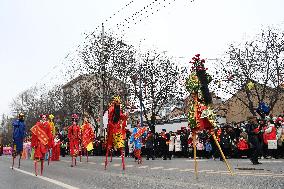
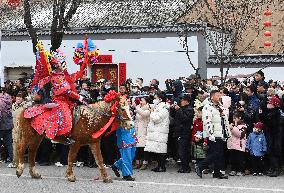
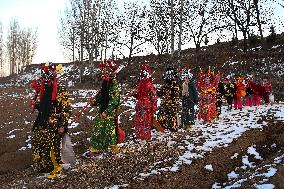
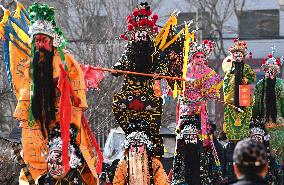
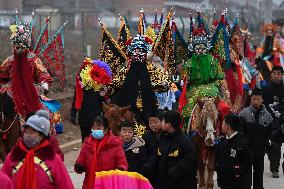
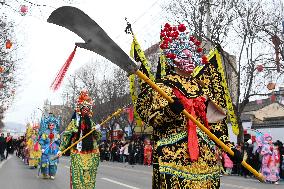
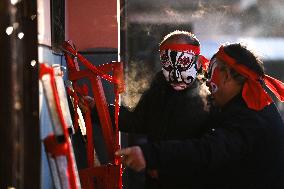
Performers attend a Shehuo parade celebrating the Lantern Festival in Longxian County of Baoji City, northwest China's Shaanxi Province, February 12, 2025. Longxian County, referred to as Long Zhou in the old days, is well-known for the local Shehuo parade featuring authentic and inclusive performance and simple yet exquisite facial make-up. The Shehuo parade, a time-honored performance enjoying widespread popularity in rural areas across China, originated from ancient sacrificial activities to pray for a good harvest about 2,000 years ago. Later on, as dancing and singing performances were absorbed into the parade, it gradually evolved into a folk custom staged during the Spring Festival and Lantern Festival, believed to remove bad luck and bring a fresh start in the new year. The Shehuo folk performance in Baoji made it onto the list of China's national intangible cultural heritage in 2006. And the local Shehuo performance in Longxian County has continued to glow with vitality in inheritance and innovation

  •  
Shehuo Parade - China

Shehuo Parade - China

Performers attend a Shehuo parade celebrating the Lantern Festival in Longxian County of Baoji City, northwest China's Shaanxi Province, February 12, 2025. Longxian County, referred to as Long Zhou in the old days, is well-known for the local Shehuo parade featuring authentic and inclusive performance and simple yet exquisite facial make-up. The Shehuo parade, a time-honored performance enjoying widespread popularity in rural areas across China, originated from ancient sacrificial activities to pray for a good harvest about 2,000 years ago. Later on, as dancing and singing performances were absorbed into the parade, it gradually evolved into a folk custom staged during the Spring Festival and Lantern Festival, believed to remove bad luck and bring a fresh start in the new year. The Shehuo folk performance in Baoji made it onto the list of China's national intangible cultural heritage in 2006. And the local Shehuo performance in Longxian County has continued to glow with vitality in inheritance and innovation

  •  
Shehuo Parade - China

Shehuo Parade - China

Performers attend a Shehuo parade in Sanliying Village in Longxian County of Baoji City, northwest China's Shaanxi Province, February 9, 2025. Longxian County, referred to as Long Zhou in the old days, is well-known for the local Shehuo parade featuring authentic and inclusive performance and simple yet exquisite facial make-up. The Shehuo parade, a time-honored performance enjoying widespread popularity in rural areas across China, originated from ancient sacrificial activities to pray for a good harvest about 2,000 years ago. Later on, as dancing and singing performances were absorbed into the parade, it gradually evolved into a folk custom staged during the Spring Festival and Lantern Festival, believed to remove bad luck and bring a fresh start in the new year. The Shehuo folk performance in Baoji made it onto the list of China's national intangible cultural heritage in 2006. And the local Shehuo performance in Longxian County has continued to glow with vitality in inheritance and innovation in recent yea

  •  
Shehuo Parade - China

Shehuo Parade - China

Performers attend a Shehuo parade celebrating the Lantern Festival in Longxian County of Baoji City, northwest China's Shaanxi Province, February 12, 2025. Longxian County, referred to as Long Zhou in the old days, is well-known for the local Shehuo parade featuring authentic and inclusive performance and simple yet exquisite facial make-up. The Shehuo parade, a time-honored performance enjoying widespread popularity in rural areas across China, originated from ancient sacrificial activities to pray for a good harvest about 2,000 years ago. Later on, as dancing and singing performances were absorbed into the parade, it gradually evolved into a folk custom staged during the Spring Festival and Lantern Festival, believed to remove bad luck and bring a fresh start in the new year. The Shehuo folk performance in Baoji made it onto the list of China's national intangible cultural heritage in 2006. And the local Shehuo performance in Longxian County has continued to glow with vitality in inheritance and innovation

  •  
Shehuo Parade - China

Shehuo Parade - China

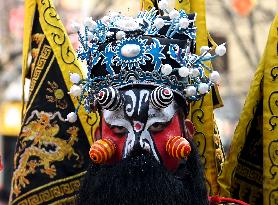
A performer attends a Shehuo parade in Longxian County of Baoji City, northwest China's Shaanxi Province, February 9, 2025. Longxian County, referred to as Long Zhou in the old days, is well-known for the local Shehuo parade featuring authentic and inclusive performance and simple yet exquisite facial make-up. The Shehuo parade, a time-honored performance enjoying widespread popularity in rural areas across China, originated from ancient sacrificial activities to pray for a good harvest about 2,000 years ago. Later on, as dancing and singing performances were absorbed into the parade, it gradually evolved into a folk custom staged during the Spring Festival and Lantern Festival, believed to remove bad luck and bring a fresh start in the new year. The Shehuo folk performance in Baoji made it onto the list of China's national intangible cultural heritage in 2006. And the local Shehuo performance in Longxian County has continued to glow with vitality in inheritance and innovation in recent years. Photo by Xinhua

  •  
Shehuo Parade - China

Shehuo Parade - China

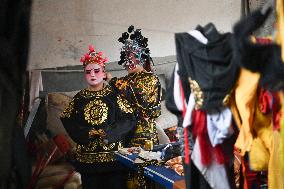
Performers select props for a Shehuo parade in Beiguan Village of Longxian County, Baoji City, northwest China's Shaanxi Province, February 10, 2025. Longxian County, referred to as Long Zhou in the old days, is well-known for the local Shehuo parade featuring authentic and inclusive performance and simple yet exquisite facial make-up. The Shehuo parade, a time-honored performance enjoying widespread popularity in rural areas across China, originated from ancient sacrificial activities to pray for a good harvest about 2,000 years ago. Later on, as dancing and singing performances were absorbed into the parade, it gradually evolved into a folk custom staged during the Spring Festival and Lantern Festival, believed to remove bad luck and bring a fresh start in the new year. The Shehuo folk performance in Baoji made it onto the list of China's national intangible cultural heritage in 2006. And the local Shehuo performance in Longxian County has continued to glow with vitality in inheritance and innovation in rec

  •  
Shehuo Parade - China

Shehuo Parade - China

People watch a Shehuo parade celebrating the Lantern Festival in Longxian County of Baoji City, northwest China's Shaanxi Province, February 12, 2025. Longxian County, referred to as Long Zhou in the old days, is well-known for the local Shehuo parade featuring authentic and inclusive performance and simple yet exquisite facial make-up. The Shehuo parade, a time-honored performance enjoying widespread popularity in rural areas across China, originated from ancient sacrificial activities to pray for a good harvest about 2,000 years ago. Later on, as dancing and singing performances were absorbed into the parade, it gradually evolved into a folk custom staged during the Spring Festival and Lantern Festival, believed to remove bad luck and bring a fresh start in the new year. The Shehuo folk performance in Baoji made it onto the list of China's national intangible cultural heritage in 2006. And the local Shehuo performance in Longxian County has continued to glow with vitality in inheritance and innovation in re

  •  
Shehuo Parade - China

Shehuo Parade - China

Performers attend a Shehuo parade in Longxian County of Baoji City, northwest China's Shaanxi Province, February 9, 2025. Longxian County, referred to as Long Zhou in the old days, is well-known for the local Shehuo parade featuring authentic and inclusive performance and simple yet exquisite facial make-up. The Shehuo parade, a time-honored performance enjoying widespread popularity in rural areas across China, originated from ancient sacrificial activities to pray for a good harvest about 2,000 years ago. Later on, as dancing and singing performances were absorbed into the parade, it gradually evolved into a folk custom staged during the Spring Festival and Lantern Festival, believed to remove bad luck and bring a fresh start in the new year. The Shehuo folk performance in Baoji made it onto the list of China's national intangible cultural heritage in 2006. And the local Shehuo performance in Longxian County has continued to glow with vitality in inheritance and innovation in recent years. Photo by Xinhua/Z

  •  
Shehuo Parade - China

Shehuo Parade - China

Performers rehearse a Shehuo parade in Longxian County of Baoji City, northwest China's Shaanxi Province, February 10, 2025. Longxian County, referred to as Long Zhou in the old days, is well-known for the local Shehuo parade featuring authentic and inclusive performance and simple yet exquisite facial make-up. The Shehuo parade, a time-honored performance enjoying widespread popularity in rural areas across China, originated from ancient sacrificial activities to pray for a good harvest about 2,000 years ago. Later on, as dancing and singing performances were absorbed into the parade, it gradually evolved into a folk custom staged during the Spring Festival and Lantern Festival, believed to remove bad luck and bring a fresh start in the new year. The Shehuo folk performance in Baoji made it onto the list of China's national intangible cultural heritage in 2006. And the local Shehuo performance in Longxian County has continued to glow with vitality in inheritance and innovation in recent years. Photo by Xinhu

  •  
Shehuo Parade - China

Shehuo Parade - China

Performers attend a Shehuo parade in Longxian County of Baoji City, northwest China's Shaanxi Province, February 11, 2025. Longxian County, referred to as Long Zhou in the old days, is well-known for the local Shehuo parade featuring authentic and inclusive performance and simple yet exquisite facial make-up. The Shehuo parade, a time-honored performance enjoying widespread popularity in rural areas across China, originated from ancient sacrificial activities to pray for a good harvest about 2,000 years ago. Later on, as dancing and singing performances were absorbed into the parade, it gradually evolved into a folk custom staged during the Spring Festival and Lantern Festival, believed to remove bad luck and bring a fresh start in the new year. The Shehuo folk performance in Baoji made it onto the list of China's national intangible cultural heritage in 2006. And the local Shehuo performance in Longxian County has continued to glow with vitality in inheritance and innovation in recent years. Photo by Xinhua/

  •  
Shehuo Parade - China

Shehuo Parade - China

Performers attend a Shehuo parade celebrating the Lantern Festival in Longxian County of Baoji City, northwest China's Shaanxi Province, February 12, 2025. Longxian County, referred to as Long Zhou in the old days, is well-known for the local Shehuo parade featuring authentic and inclusive performance and simple yet exquisite facial make-up. The Shehuo parade, a time-honored performance enjoying widespread popularity in rural areas across China, originated from ancient sacrificial activities to pray for a good harvest about 2,000 years ago. Later on, as dancing and singing performances were absorbed into the parade, it gradually evolved into a folk custom staged during the Spring Festival and Lantern Festival, believed to remove bad luck and bring a fresh start in the new year. The Shehuo folk performance in Baoji made it onto the list of China's national intangible cultural heritage in 2006. And the local Shehuo performance in Longxian County has continued to glow with vitality in inheritance and innovation

  •  
Shehuo Parade - China

Shehuo Parade - China

A young performer helps his teammate arrange costumes in Liuqu Village of Longxian County, Baoji City, northwest China's Shaanxi Province, February 9, 2025. Longxian County, referred to as Long Zhou in the old days, is well-known for the local Shehuo parade featuring authentic and inclusive performance and simple yet exquisite facial make-up. The Shehuo parade, a time-honored performance enjoying widespread popularity in rural areas across China, originated from ancient sacrificial activities to pray for a good harvest about 2,000 years ago. Later on, as dancing and singing performances were absorbed into the parade, it gradually evolved into a folk custom staged during the Spring Festival and Lantern Festival, believed to remove bad luck and bring a fresh start in the new year. The Shehuo folk performance in Baoji made it onto the list of China's national intangible cultural heritage in 2006. And the local Shehuo performance in Longxian County has continued to glow with vitality in inheritance and innovation

  •  
Yunnan Coffee Plantation - China

Yunnan Coffee Plantation - China

He Shasha (L), owner of a shop selling coffee products produced in the Qiao'an coffee plantation, introduces a product to a customer at her shop in a coffee theme street in the Dai-Lahu-Va Autonomous County of Menglian, Pu'er City of southwest China's Yunnan Province, on October 30, 2024. Pu'er City is the largest coffee-producing area in China. Through the layout of the whole industrial chain, coffee plantations play a significant role and inject new vitality into the high-quality development of local coffee industry. Photo by Chen Xinbo/Xinhua/ABACAPRESS.COM

  •  
Yunnan Coffee Plantation - China

Yunnan Coffee Plantation - China

Staff member Lai Yijun packs roasted coffee beans at the Qiao'an coffee plantation in the Dai-Lahu-Va Autonomous County of Menglian, Pu'er City of southwest China's Yunnan Province, on October 30, 2024. Pu'er City is the largest coffee-producing area in China. Through the layout of the whole industrial chain, coffee plantations play a significant role and inject new vitality into the high-quality development of local coffee industry. Photo by Chen Xinbo/Xinhua/ABACAPRESS.COM

  •  
Yunnan Coffee Plantation - China

Yunnan Coffee Plantation - China

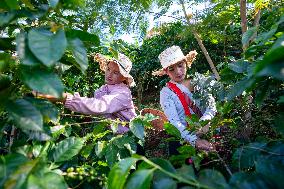
Farmers pick fresh coffee fruit at the Qiao'an coffee plantation in the Dai-Lahu-Va Autonomous County of Menglian, Pu'er City of southwest China's Yunnan Province, on October 30, 2024. Pu'er City is the largest coffee-producing area in China. Through the layout of the whole industrial chain, coffee plantations play a significant role and inject new vitality into the high-quality development of local coffee industry. Photo by Chen Xinbo/Xinhua/ABACAPRESS.COM

  •  
Yunnan Coffee Plantation - China

Yunnan Coffee Plantation - China

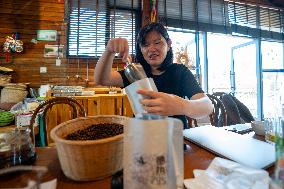
Staff member Lai Yijun (L) instructs a visitor to make pour-over coffee at the Qiao'an coffee plantation in the Dai-Lahu-Va Autonomous County of Menglian, Pu'er City of southwest China's Yunnan Province, on October 30, 2024. Pu'er City is the largest coffee-producing area in China. Through the layout of the whole industrial chain, coffee plantations play a significant role and inject new vitality into the high-quality development of local coffee industry. Photo by Chen Xinbo/Xinhua/ABACAPRESS.COM

  •  
Yunnan Coffee Plantation - China

Yunnan Coffee Plantation - China

Tourists take a walk at the Qiao'an coffee plantation in the Dai-Lahu-Va Autonomous County of Menglian, Pu'er City of southwest China's Yunnan Province, on October 30, 2024. Pu'er City is the largest coffee-producing area in China. Through the layout of the whole industrial chain, coffee plantations play a significant role and inject new vitality into the high-quality development of local coffee industry. Photo by Chen Xinbo/Xinhua/ABACAPRESS.COM

  •  
Yunnan Coffee Plantation - China

Yunnan Coffee Plantation - China

A farmer flips fresh coffee fruit at the Qiao'an coffee plantation in the Dai-Lahu-Va Autonomous County of Menglian, Pu'er City of southwest China's Yunnan Province, on October 30, 2024. Pu'er City is the largest coffee-producing area in China. Through the layout of the whole industrial chain, coffee plantations play a significant role and inject new vitality into the high-quality development of local coffee industry. Photo by Chen Xinbo/Xinhua/ABACAPRESS.COM

  •  
Yunnan Coffee Plantation - China

Yunnan Coffee Plantation - China

An aerial drone photo taken on Oct. 30, 2024 shows a view of the Qiao'an coffee plantation in the Dai-Lahu-Va Autonomous County of Menglian, Pu'er City of southwest China's Yunnan Province. Pu'er City is the largest coffee-producing area in China. Through the layout of the whole industrial chain, coffee plantations play a significant role and inject new vitality into the high-quality development of local coffee industry. Photo by Chen Xinbo/Xinhua/ABACAPRESS.COM

  • Main
  • Top
  • Editorial
  • Creative
  • About Us
  • About ILG
  • Terms of use
  • Company
  • BEHIND
  • Price List
  • Single Plan
  • Monthly Plan
  • Services
  • Shooting
  • Rights Clearance
  • Support
  • FAQ
  • How To Buy
  • Contact Us
  • Become a Partner

© KYODO NEWS IMAGES INC

All Rights Reserved.

  • Editorial
  • Olympics
  • News
  • Sports
  • Japan
  • Tech
  • Royal
  • Disaster
  • NorthKorea
  • Old Japan
  • SNS
  • Creative
  • Food
  • Japan
  • Landscape
  • Animal
  • Popular
  • #Ukraine
  • #China
  • #coronavirus
  • #N. Korea
  • #Russia
  • #Thailand
  • #Ukraine
  • #China
  • #coronavirus
  • #N. Korea
  • #Russia
  • #Thailand
  • Food
  • Japan
  • Landscape
  • Animal
  • Olympics
  • News
  • Sports
  • Japan
  • Tech
  • Royal
  • Disaster
  • NorthKorea
  • Old Japan
  • SNS