•  

Philippines: Typhoon Kalmaegi Triggers Severe Flooding, Displacing Thousands 4

At least 140 people have died and 127 remain missing after Typhoon Kalmaegi struck the Philippines, with the central province of Cebu suffering the worst damage from floods and mudslides. Homes were destroyed and streets were left buried in debris, forcing thousands of residents to evacuate. In Cebu, floodwaters rose to roof level in some areas. A state of calamity has been declared in Cebu to speed up emergency response as rescue operations continue.

  •  
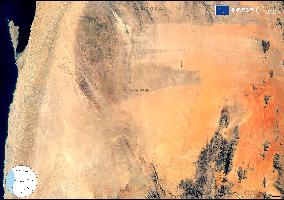
Satellite views of Iona National Park - Angola

Satellite views of Iona National Park - Angola

Handout photo dated on July 3, 2025 shows Situated in the south-western corner of Angola, the Iona National Park marks the northernmost reach of the Namib Desert, believed to be the oldest desert on Earth. Spanning 15,150 km², Iona forms part of one of the world’s largest transfrontier conservation areas, linking with the Skeleton Coast National Park and the Namib Partial Reserve to cover nearly 50,000 km². Public initiatives to restore the Iona National Park are underway, focusing on conservation, community engagement, and species reintroduction. These activities are transforming the park into a model of sustainable coexistence between people and nature. Photo by European Union, Copernicus Sentinel-2 imagery via ABACAPRESS.COM

  •  
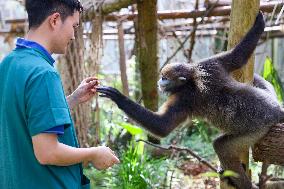
Snub-Nosed Monkey - China

Snub-Nosed Monkey - China

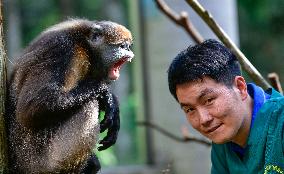
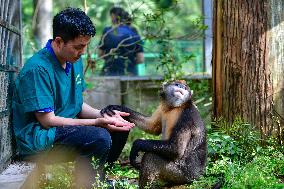
A keeper interacts with a Guizhou snub-nosed monkey in a Guizhou snub-nosed monkey research center of Mount Fanjing National Nature Reserve in southwest China's Guizhou Province, April 15, 2025. The rare Guizhou snub-nosed monkey, or Guizhou golden monkey, exclusively nestled within the expanse of Mount Fanjing, a UNESCO World Natural Heritage Site, is under top-level protection in China and is listed as a "critically endangered" species by the International Union for Conservation of Nature. Among the three species of golden snub-nosed monkeys endemic to China, the Guizhou snub-nosed monkey is the one with the smallest population, the narrowest habitat and the least ecological information. At present, there are nine captive Guizhou snub-nosed monkeys at the Guizhou snub-nosed monkey research center of Mount Fanjing National Nature Reserve, according to data from the reserve administration. Photo by Ou Dongqu/Xinhua/ABACAPRESS.COM

  •  
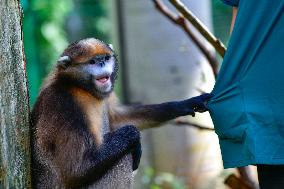
Snub-Nosed Monkey - China

Snub-Nosed Monkey - China

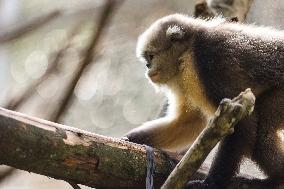
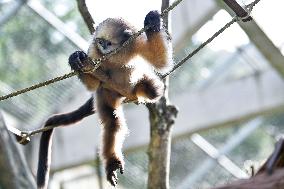
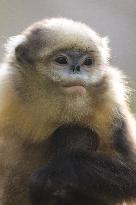
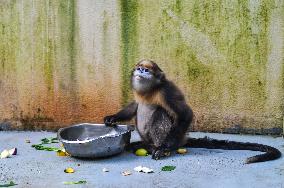
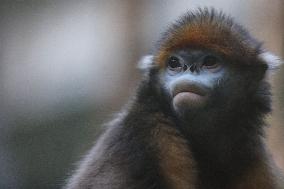
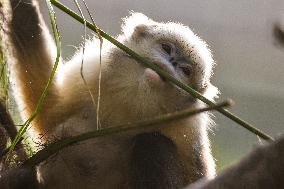
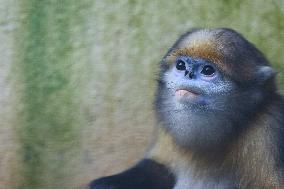
A Guizhou snub-nosed monkey is seen in a Guizhou snub-nosed monkey research center of Mount Fanjing National Nature Reserve in southwest China's Guizhou Province, April 15, 2025. The rare Guizhou snub-nosed monkey, or Guizhou golden monkey, exclusively nestled within the expanse of Mount Fanjing, a UNESCO World Natural Heritage Site, is under top-level protection in China and is listed as a "critically endangered" species by the International Union for Conservation of Nature. Among the three species of golden snub-nosed monkeys endemic to China, the Guizhou snub-nosed monkey is the one with the smallest population, the narrowest habitat and the least ecological information. At present, there are nine captive Guizhou snub-nosed monkeys at the Guizhou snub-nosed monkey research center of Mount Fanjing National Nature Reserve, according to data from the reserve administration. Photo by Xinhua/Yang Wenbin/ABACAPRESS.COM

  •  
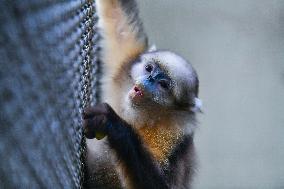
Snub-Nosed Monkey - China

Snub-Nosed Monkey - China

A Guizhou snub-nosed monkey is seen in a Guizhou snub-nosed monkey research center of Mount Fanjing National Nature Reserve in southwest China's Guizhou Province, April 15, 2025. The rare Guizhou snub-nosed monkey, or Guizhou golden monkey, exclusively nestled within the expanse of Mount Fanjing, a UNESCO World Natural Heritage Site, is under top-level protection in China and is listed as a "critically endangered" species by the International Union for Conservation of Nature. Among the three species of golden snub-nosed monkeys endemic to China, the Guizhou snub-nosed monkey is the one with the smallest population, the narrowest habitat and the least ecological information. At present, there are nine captive Guizhou snub-nosed monkeys at the Guizhou snub-nosed monkey research center of Mount Fanjing National Nature Reserve, according to data from the reserve administration. Photo by Xinhua/Yang Wenbin/ABACAPRESS.COM

  •  
Snub-Nosed Monkey - China

Snub-Nosed Monkey - China

A Guizhou snub-nosed monkey is seen in a Guizhou snub-nosed monkey research center of Mount Fanjing National Nature Reserve in southwest China's Guizhou Province, April 15, 2025. The rare Guizhou snub-nosed monkey, or Guizhou golden monkey, exclusively nestled within the expanse of Mount Fanjing, a UNESCO World Natural Heritage Site, is under top-level protection in China and is listed as a "critically endangered" species by the International Union for Conservation of Nature. Among the three species of golden snub-nosed monkeys endemic to China, the Guizhou snub-nosed monkey is the one with the smallest population, the narrowest habitat and the least ecological information. At present, there are nine captive Guizhou snub-nosed monkeys at the Guizhou snub-nosed monkey research center of Mount Fanjing National Nature Reserve, according to data from the reserve administration. Photo by Ou Dongqu/Xinhua/ABACAPRESS.COM

  •  
Snub-Nosed Monkey - China

Snub-Nosed Monkey - China

A Guizhou snub-nosed monkey is seen in a Guizhou snub-nosed monkey research center of Mount Fanjing National Nature Reserve in southwest China's Guizhou Province, April 15, 2025. The rare Guizhou snub-nosed monkey, or Guizhou golden monkey, exclusively nestled within the expanse of Mount Fanjing, a UNESCO World Natural Heritage Site, is under top-level protection in China and is listed as a "critically endangered" species by the International Union for Conservation of Nature. Among the three species of golden snub-nosed monkeys endemic to China, the Guizhou snub-nosed monkey is the one with the smallest population, the narrowest habitat and the least ecological information. At present, there are nine captive Guizhou snub-nosed monkeys at the Guizhou snub-nosed monkey research center of Mount Fanjing National Nature Reserve, according to data from the reserve administration. Photo by Xinhua/Yang Wenbin/ABACAPRESS.COM

  •  
Snub-Nosed Monkey - China

Snub-Nosed Monkey - China

A Guizhou snub-nosed monkey is seen in a Guizhou snub-nosed monkey research center of Mount Fanjing National Nature Reserve in southwest China's Guizhou Province, April 15, 2025. The rare Guizhou snub-nosed monkey, or Guizhou golden monkey, exclusively nestled within the expanse of Mount Fanjing, a UNESCO World Natural Heritage Site, is under top-level protection in China and is listed as a "critically endangered" species by the International Union for Conservation of Nature. Among the three species of golden snub-nosed monkeys endemic to China, the Guizhou snub-nosed monkey is the one with the smallest population, the narrowest habitat and the least ecological information. At present, there are nine captive Guizhou snub-nosed monkeys at the Guizhou snub-nosed monkey research center of Mount Fanjing National Nature Reserve, according to data from the reserve administration. Photo by Ou Dongqu/Xinhua/ABACAPRESS.COM

  •  
Snub-Nosed Monkey - China

Snub-Nosed Monkey - China

A keeper interacts with a Guizhou snub-nosed monkey in a Guizhou snub-nosed monkey research center of Mount Fanjing National Nature Reserve in southwest China's Guizhou Province, April 15, 2025. The rare Guizhou snub-nosed monkey, or Guizhou golden monkey, exclusively nestled within the expanse of Mount Fanjing, a UNESCO World Natural Heritage Site, is under top-level protection in China and is listed as a "critically endangered" species by the International Union for Conservation of Nature. Among the three species of golden snub-nosed monkeys endemic to China, the Guizhou snub-nosed monkey is the one with the smallest population, the narrowest habitat and the least ecological information. At present, there are nine captive Guizhou snub-nosed monkeys at the Guizhou snub-nosed monkey research center of Mount Fanjing National Nature Reserve, according to data from the reserve administration. Photo by Xinhua/Yang Wenbin/ABACAPRESS.COM

  •  
Snub-Nosed Monkey - China

Snub-Nosed Monkey - China

A Guizhou snub-nosed monkey is seen in a Guizhou snub-nosed monkey research center of Mount Fanjing National Nature Reserve in southwest China's Guizhou Province, April 15, 2025. The rare Guizhou snub-nosed monkey, or Guizhou golden monkey, exclusively nestled within the expanse of Mount Fanjing, a UNESCO World Natural Heritage Site, is under top-level protection in China and is listed as a "critically endangered" species by the International Union for Conservation of Nature. Among the three species of golden snub-nosed monkeys endemic to China, the Guizhou snub-nosed monkey is the one with the smallest population, the narrowest habitat and the least ecological information. At present, there are nine captive Guizhou snub-nosed monkeys at the Guizhou snub-nosed monkey research center of Mount Fanjing National Nature Reserve, according to data from the reserve administration. Photo by Xinhua/Yang Wenbin/ABACAPRESS.COM

  •  
Snub-Nosed Monkey - China

Snub-Nosed Monkey - China

A keeper interacts with a Guizhou snub-nosed monkey in a Guizhou snub-nosed monkey research center of Mount Fanjing National Nature Reserve in southwest China's Guizhou Province, April 15, 2025. The rare Guizhou snub-nosed monkey, or Guizhou golden monkey, exclusively nestled within the expanse of Mount Fanjing, a UNESCO World Natural Heritage Site, is under top-level protection in China and is listed as a "critically endangered" species by the International Union for Conservation of Nature. Among the three species of golden snub-nosed monkeys endemic to China, the Guizhou snub-nosed monkey is the one with the smallest population, the narrowest habitat and the least ecological information. At present, there are nine captive Guizhou snub-nosed monkeys at the Guizhou snub-nosed monkey research center of Mount Fanjing National Nature Reserve, according to data from the reserve administration. Photo by Xinhua/Yang Wenbin/ABACAPRESS.COM

  •  
Snub-Nosed Monkey - China

Snub-Nosed Monkey - China

A Guizhou snub-nosed monkey is seen in a Guizhou snub-nosed monkey research center of Mount Fanjing National Nature Reserve in southwest China's Guizhou Province, April 15, 2025. The rare Guizhou snub-nosed monkey, or Guizhou golden monkey, exclusively nestled within the expanse of Mount Fanjing, a UNESCO World Natural Heritage Site, is under top-level protection in China and is listed as a "critically endangered" species by the International Union for Conservation of Nature. Among the three species of golden snub-nosed monkeys endemic to China, the Guizhou snub-nosed monkey is the one with the smallest population, the narrowest habitat and the least ecological information. At present, there are nine captive Guizhou snub-nosed monkeys at the Guizhou snub-nosed monkey research center of Mount Fanjing National Nature Reserve, according to data from the reserve administration. Photo by Ou Dongqu/Xinhua/ABACAPRESS.COM

  •  
Snub-Nosed Monkey - China

Snub-Nosed Monkey - China

A Guizhou snub-nosed monkey is seen in a Guizhou snub-nosed monkey research center of Mount Fanjing National Nature Reserve in southwest China's Guizhou Province, April 15, 2025. The rare Guizhou snub-nosed monkey, or Guizhou golden monkey, exclusively nestled within the expanse of Mount Fanjing, a UNESCO World Natural Heritage Site, is under top-level protection in China and is listed as a "critically endangered" species by the International Union for Conservation of Nature. Among the three species of golden snub-nosed monkeys endemic to China, the Guizhou snub-nosed monkey is the one with the smallest population, the narrowest habitat and the least ecological information. At present, there are nine captive Guizhou snub-nosed monkeys at the Guizhou snub-nosed monkey research center of Mount Fanjing National Nature Reserve, according to data from the reserve administration. Photo by Ou Dongqu/Xinhua/ABACAPRESS.COM

  •  
Snub-Nosed Monkey - China

Snub-Nosed Monkey - China

A Guizhou snub-nosed monkey is seen in a Guizhou snub-nosed monkey research center of Mount Fanjing National Nature Reserve in southwest China's Guizhou Province, April 15, 2025. The rare Guizhou snub-nosed monkey, or Guizhou golden monkey, exclusively nestled within the expanse of Mount Fanjing, a UNESCO World Natural Heritage Site, is under top-level protection in China and is listed as a "critically endangered" species by the International Union for Conservation of Nature. Among the three species of golden snub-nosed monkeys endemic to China, the Guizhou snub-nosed monkey is the one with the smallest population, the narrowest habitat and the least ecological information. At present, there are nine captive Guizhou snub-nosed monkeys at the Guizhou snub-nosed monkey research center of Mount Fanjing National Nature Reserve, according to data from the reserve administration. Photo by Ou Dongqu/Xinhua/ABACAPRESS.COM

  •  
A Quokka At Featherdale Wildlife Park - Sydney

A Quokka At Featherdale Wildlife Park - Sydney

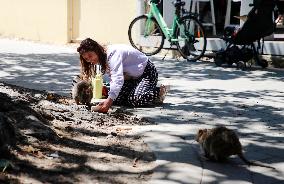
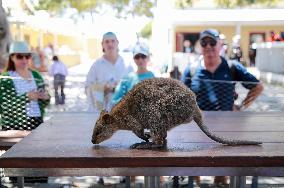
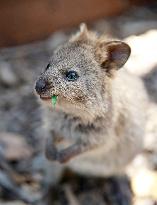
Visitors take photos of a quokka and her baby on the Rottnest Island in Australia, Oct. 25, 2024. Often called "the happiest animal in the world", Quokkas are a small marsupial related to Kangaroos. They have grey-brown fur and small, rounded ears, feeding on fresh, young grasses, leaves and succulents, as well as plant roots. The quokka's range is a small area of southwestern Australia. They inhabit some smaller islands off the coast of Western Australia, particularly Rottnest Island just off Perth. Quokkas there have become very accustomed to humans. The species is listed as vulnerable on the IUCN (The International Union for Conservation of Nature) Red List of threatened species due to habitat loss, climatic factors and predation by feral animals (cats and foxes). Photo by Ma Ping/Xinhua/ABACAPRESS.COM

  •  
A Quokka At Featherdale Wildlife Park - Sydney

A Quokka At Featherdale Wildlife Park - Sydney

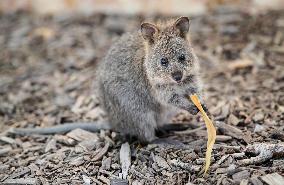
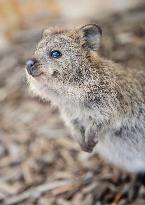
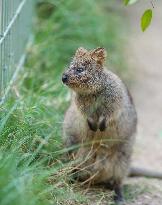
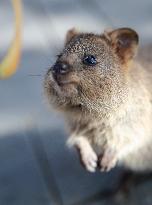
A quokka is seen on the Rottnest Island in Australia, Oct. 25, 2024. Often called "the happiest animal in the world", Quokkas are a small marsupial related to Kangaroos. They have grey-brown fur and small, rounded ears, feeding on fresh, young grasses, leaves and succulents, as well as plant roots. The quokka's range is a small area of southwestern Australia. They inhabit some smaller islands off the coast of Western Australia, particularly Rottnest Island just off Perth. Quokkas there have become very accustomed to humans. The species is listed as vulnerable on the IUCN (The International Union for Conservation of Nature) Red List of threatened species due to habitat loss, climatic factors and predation by feral animals (cats and foxes). Photo by Ma Ping/Xinhua/ABACAPRESS.COM

  •  
A Quokka At Featherdale Wildlife Park - Sydney

A Quokka At Featherdale Wildlife Park - Sydney

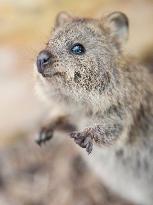
A quokka is seen on the Rottnest Island in Australia, Oct. 25, 2024. Often called "the happiest animal in the world", Quokkas are a small marsupial related to Kangaroos. They have grey-brown fur and small, rounded ears, feeding on fresh, young grasses, leaves and succulents, as well as plant roots. The quokka's range is a small area of southwestern Australia. They inhabit some smaller islands off the coast of Western Australia, particularly Rottnest Island just off Perth. Quokkas there have become very accustomed to humans. The species is listed as vulnerable on the IUCN (The International Union for Conservation of Nature) Red List of threatened species due to habitat loss, climatic factors and predation by feral animals (cats and foxes). Photo by Ma Ping/Xinhua/ABACAPRESS.COM

  •  
A Quokka At Featherdale Wildlife Park - Sydney

A Quokka At Featherdale Wildlife Park - Sydney

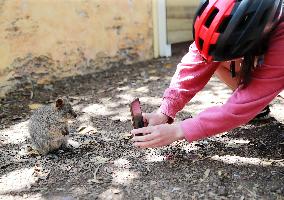
A visitor takes photo of a quokka on the Rottnest Island in Australia, Oct. 25, 2024. Often called "the happiest animal in the world", Quokkas are a small marsupial related to Kangaroos. They have grey-brown fur and small, rounded ears, feeding on fresh, young grasses, leaves and succulents, as well as plant roots. The quokka's range is a small area of southwestern Australia. They inhabit some smaller islands off the coast of Western Australia, particularly Rottnest Island just off Perth. Quokkas there have become very accustomed to humans. The species is listed as vulnerable on the IUCN (The International Union for Conservation of Nature) Red List of threatened species due to habitat loss, climatic factors and predation by feral animals (cats and foxes). Photo by Ma Ping/Xinhua/ABACAPRESS.COM

  •  
A Quokka At Featherdale Wildlife Park - Sydney

A Quokka At Featherdale Wildlife Park - Sydney

A visitor poses for a selfie with a quokka on the Rottnest Island in Australia, Oct. 25, 2024. Often called "the happiest animal in the world", Quokkas are a small marsupial related to Kangaroos. They have grey-brown fur and small, rounded ears, feeding on fresh, young grasses, leaves and succulents, as well as plant roots. The quokka's range is a small area of southwestern Australia. They inhabit some smaller islands off the coast of Western Australia, particularly Rottnest Island just off Perth. Quokkas there have become very accustomed to humans. The species is listed as vulnerable on the IUCN (The International Union for Conservation of Nature) Red List of threatened species due to habitat loss, climatic factors and predation by feral animals (cats and foxes). Photo by Ma Ping/Xinhua/ABACAPRESS.COM

  •  
A Quokka At Featherdale Wildlife Park - Sydney

A Quokka At Featherdale Wildlife Park - Sydney

A quokka is seen on the Rottnest Island in Australia, Oct. 25, 2024. Often called "the happiest animal in the world", Quokkas are a small marsupial related to Kangaroos. They have grey-brown fur and small, rounded ears, feeding on fresh, young grasses, leaves and succulents, as well as plant roots. The quokka's range is a small area of southwestern Australia. They inhabit some smaller islands off the coast of Western Australia, particularly Rottnest Island just off Perth. Quokkas there have become very accustomed to humans. The species is listed as vulnerable on the IUCN (The International Union for Conservation of Nature) Red List of threatened species due to habitat loss, climatic factors and predation by feral animals (cats and foxes). Photo by Ma Ping/Xinhua/ABACAPRESS.COM

  •  
A Quokka At Featherdale Wildlife Park - Sydney

A Quokka At Featherdale Wildlife Park - Sydney

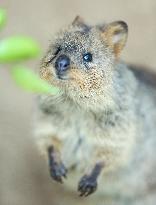
A quokka is seen in the Featherdale Sydney Wildlife Park in Sydney, Australia, Oct. 4, 2024. Often called "the happiest animal in the world", Quokkas are a small marsupial related to Kangaroos. They have grey-brown fur and small, rounded ears, feeding on fresh, young grasses, leaves and succulents, as well as plant roots. The quokka's range is a small area of southwestern Australia. They inhabit some smaller islands off the coast of Western Australia, particularly Rottnest Island just off Perth. Quokkas there have become very accustomed to humans. The species is listed as vulnerable on the IUCN (The International Union for Conservation of Nature) Red List of threatened species due to habitat loss, climatic factors and predation by feral animals (cats and foxes). Photo by Ma Ping/Xinhua/ABACAPRESS.COM

  •  
A Quokka At Featherdale Wildlife Park - Sydney

A Quokka At Featherdale Wildlife Park - Sydney

A quokka is seen on the Rottnest Island in Australia, Oct. 25, 2024. Often called "the happiest animal in the world", Quokkas are a small marsupial related to Kangaroos. They have grey-brown fur and small, rounded ears, feeding on fresh, young grasses, leaves and succulents, as well as plant roots. The quokka's range is a small area of southwestern Australia. They inhabit some smaller islands off the coast of Western Australia, particularly Rottnest Island just off Perth. Quokkas there have become very accustomed to humans. The species is listed as vulnerable on the IUCN (The International Union for Conservation of Nature) Red List of threatened species due to habitat loss, climatic factors and predation by feral animals (cats and foxes). Photo by Ma Ping/Xinhua/ABACAPRESS.COM

  •  
A Quokka At Featherdale Wildlife Park - Sydney

A Quokka At Featherdale Wildlife Park - Sydney

A quokka is seen on the Rottnest Island in Australia, Oct. 25, 2024. Often called "the happiest animal in the world", Quokkas are a small marsupial related to Kangaroos. They have grey-brown fur and small, rounded ears, feeding on fresh, young grasses, leaves and succulents, as well as plant roots. The quokka's range is a small area of southwestern Australia. They inhabit some smaller islands off the coast of Western Australia, particularly Rottnest Island just off Perth. Quokkas there have become very accustomed to humans. The species is listed as vulnerable on the IUCN (The International Union for Conservation of Nature) Red List of threatened species due to habitat loss, climatic factors and predation by feral animals (cats and foxes). Photo by Ma Ping/Xinhua/ABACAPRESS.COM

  •  
A Quokka At Featherdale Wildlife Park - Sydney

A Quokka At Featherdale Wildlife Park - Sydney

A quokka is seen on the Rottnest Island in Australia, Oct. 25, 2024. Often called "the happiest animal in the world", Quokkas are a small marsupial related to Kangaroos. They have grey-brown fur and small, rounded ears, feeding on fresh, young grasses, leaves and succulents, as well as plant roots. The quokka's range is a small area of southwestern Australia. They inhabit some smaller islands off the coast of Western Australia, particularly Rottnest Island just off Perth. Quokkas there have become very accustomed to humans. The species is listed as vulnerable on the IUCN (The International Union for Conservation of Nature) Red List of threatened species due to habitat loss, climatic factors and predation by feral animals (cats and foxes). Photo by Ma Ping/Xinhua/ABACAPRESS.COM

  •  
A Quokka At Featherdale Wildlife Park - Sydney

A Quokka At Featherdale Wildlife Park - Sydney

A quokka is seen in the Featherdale Sydney Wildlife Park in Sydney, Australia, Oct. 4, 2024. Often called "the happiest animal in the world", Quokkas are a small marsupial related to Kangaroos. They have grey-brown fur and small, rounded ears, feeding on fresh, young grasses, leaves and succulents, as well as plant roots. The quokka's range is a small area of southwestern Australia. They inhabit some smaller islands off the coast of Western Australia, particularly Rottnest Island just off Perth. Quokkas there have become very accustomed to humans. The species is listed as vulnerable on the IUCN (The International Union for Conservation of Nature) Red List of threatened species due to habitat loss, climatic factors and predation by feral animals (cats and foxes). Photo by Ma Ping/Xinhua/ABACAPRESS.COM

  •  
ChineseToday | Guardians of endangered trees in SW China

ChineseToday | Guardians of endangered trees in SW China

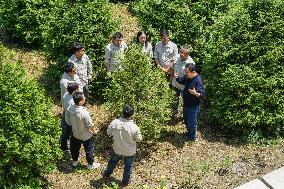
(240811) -- CHONGQING, Aug. 11, 2024 Photo by Xinhua/ABACAPRESS.COM) -- Staff members of the Thuja sutchuenensis research base of Xuebaoshan national nature reserve discuss the breeding technique with Guo Quanshui (1st R), expert from Chinese Academy of Forestry, at the research base in Kaizhou District of southwest China's Chongqing, April 26, 2024. Wild Thuja sutchuenensis is an endangered species of gymnosperm endemic to China and under national first-class protection. In 1998, the International Union for Conservation of Nature declared Thuja sutchuenensis extinct, but the species was rediscovered in Chengkou County in 1999. At present, the number of wild adult Thuja sutchuenensis plants in the world is less than 10,000, and they are only distributed in the areas of Daba Mountains including Kaizhou District and Chengkou County of Chongqing. In order to protect this endangered species, Yang Quan from Chongqing Xuebaoshan national nature reserve led a team to carry out the investigation and study of wild Thu

  •  
ChineseToday | Guardians of endangered trees in SW China

ChineseToday | Guardians of endangered trees in SW China

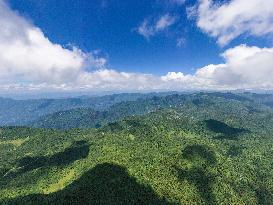
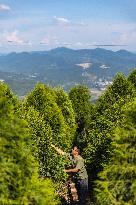
(240811) -- CHONGQING, Aug. 11, 2024 Photo by Xinhua/ABACAPRESS.COM) -- An aerial drone photo taken on Aug. 8, 2024 shows a view of Xuebaoshan national nature reserve in Kaizhou District of southwest China's Chongqing. Wild Thuja sutchuenensis is an endangered species of gymnosperm endemic to China and under national first-class protection. In 1998, the International Union for Conservation of Nature declared Thuja sutchuenensis extinct, but the species was rediscovered in Chengkou County in 1999. At present, the number of wild adult Thuja sutchuenensis plants in the world is less than 10,000, and they are only distributed in the areas of Daba Mountains including Kaizhou District and Chengkou County of Chongqing. In order to protect this endangered species, Yang Quan from Chongqing Xuebaoshan national nature reserve led a team to carry out the investigation and study of wild Thuja sutchuenensis communities, hoping to expand its population. Through years of efforts, the research team chose to take cuttings as a

  •  
ChineseToday | Guardians of endangered trees in SW China

ChineseToday | Guardians of endangered trees in SW China

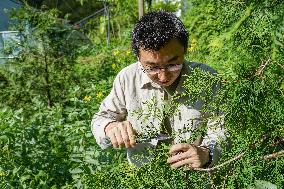
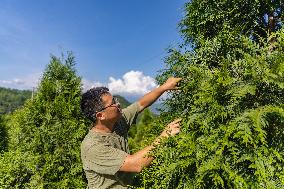
(240811) -- CHONGQING, Aug. 11, 2024 Photo by Xinhua/ABACAPRESS.COM) -- A staff member of the Thuja sutchuenensis research base of Xuebaoshan national nature reserve takes a cutting of Thuja sutchuenensis plant at the research base in Kaizhou District of southwest China's Chongqing, April 26, 2024. Wild Thuja sutchuenensis is an endangered species of gymnosperm endemic to China and under national first-class protection. In 1998, the International Union for Conservation of Nature declared Thuja sutchuenensis extinct, but the species was rediscovered in Chengkou County in 1999. At present, the number of wild adult Thuja sutchuenensis plants in the world is less than 10,000, and they are only distributed in the areas of Daba Mountains including Kaizhou District and Chengkou County of Chongqing. In order to protect this endangered species, Yang Quan from Chongqing Xuebaoshan national nature reserve led a team to carry out the investigation and study of wild Thuja sutchuenensis communities, hoping to expand its po

  •  
ChineseToday | Guardians of endangered trees in SW China

ChineseToday | Guardians of endangered trees in SW China

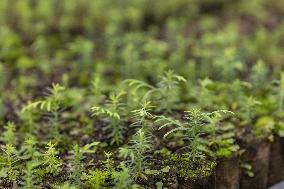
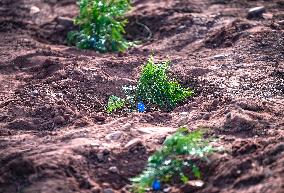
(240811) -- CHONGQING, Aug. 11, 2024 Photo by Xinhua/ABACAPRESS.COM) -- Thuja sutchuenensis seedlings are seen at the Thuja sutchuenensis research base of Xuebaoshan national nature reserve in Kaizhou District of southwest China's Chongqing, Aug. 7, 2024. Wild Thuja sutchuenensis is an endangered species of gymnosperm endemic to China and under national first-class protection. In 1998, the International Union for Conservation of Nature declared Thuja sutchuenensis extinct, but the species was rediscovered in Chengkou County in 1999. At present, the number of wild adult Thuja sutchuenensis plants in the world is less than 10,000, and they are only distributed in the areas of Daba Mountains including Kaizhou District and Chengkou County of Chongqing. In order to protect this endangered species, Yang Quan from Chongqing Xuebaoshan national nature reserve led a team to carry out the investigation and study of wild Thuja sutchuenensis communities, hoping to expand its population. Through years of efforts, the rese

  •  
ChineseToday | Guardians of endangered trees in SW China

ChineseToday | Guardians of endangered trees in SW China

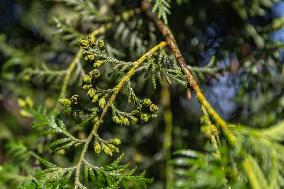
(240811) -- CHONGQING, Aug. 11, 2024 Photo by Xinhua/ABACAPRESS.COM) -- Seeds of Thuja sutchuenensis plants are seen at the Thuja sutchuenensis research base of Xuebaoshan national nature reserve in Kaizhou District of southwest China's Chongqing, Aug. 7, 2024. Wild Thuja sutchuenensis is an endangered species of gymnosperm endemic to China and under national first-class protection. In 1998, the International Union for Conservation of Nature declared Thuja sutchuenensis extinct, but the species was rediscovered in Chengkou County in 1999. At present, the number of wild adult Thuja sutchuenensis plants in the world is less than 10,000, and they are only distributed in the areas of Daba Mountains including Kaizhou District and Chengkou County of Chongqing. In order to protect this endangered species, Yang Quan from Chongqing Xuebaoshan national nature reserve led a team to carry out the investigation and study of wild Thuja sutchuenensis communities, hoping to expand its population. Through years of efforts, th

  •  
ChineseToday | Guardians of endangered trees in SW China

ChineseToday | Guardians of endangered trees in SW China

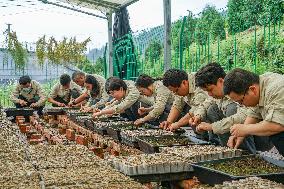
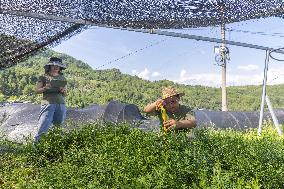
(240811) -- CHONGQING, Aug. 11, 2024 Photo by Xinhua/ABACAPRESS.COM) -- Staff members of the Thuja sutchuenensis research base of Xuebaoshan national nature reserve remove the weeds among Thuja sutchuenensis seedlings at the research base in Kaizhou District of southwest China's Chongqing, Aug. 7, 2024. Wild Thuja sutchuenensis is an endangered species of gymnosperm endemic to China and under national first-class protection. In 1998, the International Union for Conservation of Nature declared Thuja sutchuenensis extinct, but the species was rediscovered in Chengkou County in 1999. At present, the number of wild adult Thuja sutchuenensis plants in the world is less than 10,000, and they are only distributed in the areas of Daba Mountains including Kaizhou District and Chengkou County of Chongqing. In order to protect this endangered species, Yang Quan from Chongqing Xuebaoshan national nature reserve led a team to carry out the investigation and study of wild Thuja sutchuenensis communities, hoping to expand i

  •  
ChineseToday | Guardians of endangered trees in SW China

ChineseToday | Guardians of endangered trees in SW China

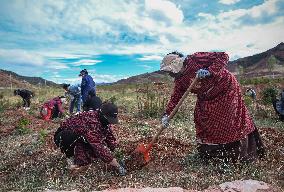
(240811) -- CHONGQING, Aug. 11, 2024 Photo by Xinhua/ABACAPRESS.COM) -- Workers transplant Thuja sutchuenensis seedlings at a forestry base in Mangkam County, Qamdo, southwest China's Xizang Autonomous Region, June 5, 2024. Wild Thuja sutchuenensis is an endangered species of gymnosperm endemic to China and under national first-class protection. In 1998, the International Union for Conservation of Nature declared Thuja sutchuenensis extinct, but the species was rediscovered in Chengkou County in 1999. At present, the number of wild adult Thuja sutchuenensis plants in the world is less than 10,000, and they are only distributed in the areas of Daba Mountains including Kaizhou District and Chengkou County of Chongqing. In order to protect this endangered species, Yang Quan from Chongqing Xuebaoshan national nature reserve led a team to carry out the investigation and study of wild Thuja sutchuenensis communities, hoping to expand its population. Through years of efforts, the research team chose to take cuttings

  •  
ChineseToday | Guardians of endangered trees in SW China

ChineseToday | Guardians of endangered trees in SW China

(240811) -- CHONGQING, Aug. 11, 2024 Photo by Xinhua/ABACAPRESS.COM) -- A staff member of the Thuja sutchuenensis research base of Xuebaoshan national nature reserve measures the length of the root of a Thuja sutchuenensis seedling at the research base in Kaizhou District of southwest China's Chongqing, Aug. 7, 2024. Wild Thuja sutchuenensis is an endangered species of gymnosperm endemic to China and under national first-class protection. In 1998, the International Union for Conservation of Nature declared Thuja sutchuenensis extinct, but the species was rediscovered in Chengkou County in 1999. At present, the number of wild adult Thuja sutchuenensis plants in the world is less than 10,000, and they are only distributed in the areas of Daba Mountains including Kaizhou District and Chengkou County of Chongqing. In order to protect this endangered species, Yang Quan from Chongqing Xuebaoshan national nature reserve led a team to carry out the investigation and study of wild Thuja sutchuenensis communities, hopi

  •  
ChineseToday | Guardians of endangered trees in SW China

ChineseToday | Guardians of endangered trees in SW China

(240811) -- CHONGQING, Aug. 11, 2024 Photo by Xinhua/ABACAPRESS.COM) -- Staff members of the Thuja sutchuenensis research base of Xuebaoshan national nature reserve transplant Thuja sutchuenensis seedlings at the research base in Kaizhou District of southwest China's Chongqing, April 26, 2024. Wild Thuja sutchuenensis is an endangered species of gymnosperm endemic to China and under national first-class protection. In 1998, the International Union for Conservation of Nature declared Thuja sutchuenensis extinct, but the species was rediscovered in Chengkou County in 1999. At present, the number of wild adult Thuja sutchuenensis plants in the world is less than 10,000, and they are only distributed in the areas of Daba Mountains including Kaizhou District and Chengkou County of Chongqing. In order to protect this endangered species, Yang Quan from Chongqing Xuebaoshan national nature reserve led a team to carry out the investigation and study of wild Thuja sutchuenensis communities, hoping to expand its populat

  •  
ChineseToday | Guardians of endangered trees in SW China

ChineseToday | Guardians of endangered trees in SW China

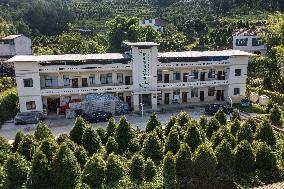
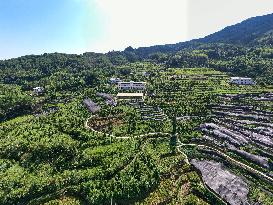
(240811) -- CHONGQING, Aug. 11, 2024 Photo by Xinhua/ABACAPRESS.COM) -- An aerial drone photo taken on Aug. 7, 2024 shows a view of the Thuja sutchuenensis research base of Xuebaoshan national nature reserve in Kaizhou District of southwest China's Chongqing. Wild Thuja sutchuenensis is an endangered species of gymnosperm endemic to China and under national first-class protection. In 1998, the International Union for Conservation of Nature declared Thuja sutchuenensis extinct, but the species was rediscovered in Chengkou County in 1999. At present, the number of wild adult Thuja sutchuenensis plants in the world is less than 10,000, and they are only distributed in the areas of Daba Mountains including Kaizhou District and Chengkou County of Chongqing. In order to protect this endangered species, Yang Quan from Chongqing Xuebaoshan national nature reserve led a team to carry out the investigation and study of wild Thuja sutchuenensis communities, hoping to expand its population. Through years of efforts, the

  •  
ChineseToday | Guardians of endangered trees in SW China

ChineseToday | Guardians of endangered trees in SW China

(240811) -- CHONGQING, Aug. 11, 2024 Photo by Xinhua/ABACAPRESS.COM) -- An aerial drone photo taken on Aug. 7, 2024 shows a view of the Thuja sutchuenensis research base of Xuebaoshan national nature reserve in Kaizhou District of southwest China's Chongqing. Wild Thuja sutchuenensis is an endangered species of gymnosperm endemic to China and under national first-class protection. In 1998, the International Union for Conservation of Nature declared Thuja sutchuenensis extinct, but the species was rediscovered in Chengkou County in 1999. At present, the number of wild adult Thuja sutchuenensis plants in the world is less than 10,000, and they are only distributed in the areas of Daba Mountains including Kaizhou District and Chengkou County of Chongqing. In order to protect this endangered species, Yang Quan from Chongqing Xuebaoshan national nature reserve led a team to carry out the investigation and study of wild Thuja sutchuenensis communities, hoping to expand its population. Through years of efforts, the

  •  
ChineseToday | Guardians of endangered trees in SW China

ChineseToday | Guardians of endangered trees in SW China

(240811) -- CHONGQING, Aug. 11, 2024 Photo by Xinhua/ABACAPRESS.COM) -- Staff members of the Thuja sutchuenensis research base of Xuebaoshan national nature reserve monitor the growth condition of Thuja sutchuenensis seedlings at the research base in Kaizhou District of southwest China's Chongqing, Aug. 7, 2024. Wild Thuja sutchuenensis is an endangered species of gymnosperm endemic to China and under national first-class protection. In 1998, the International Union for Conservation of Nature declared Thuja sutchuenensis extinct, but the species was rediscovered in Chengkou County in 1999. At present, the number of wild adult Thuja sutchuenensis plants in the world is less than 10,000, and they are only distributed in the areas of Daba Mountains including Kaizhou District and Chengkou County of Chongqing. In order to protect this endangered species, Yang Quan from Chongqing Xuebaoshan national nature reserve led a team to carry out the investigation and study of wild Thuja sutchuenensis communities, hoping to

  •  
ChineseToday | Guardians of endangered trees in SW China

ChineseToday | Guardians of endangered trees in SW China

(240811) -- CHONGQING, Aug. 11, 2024 Photo by Xinhua/ABACAPRESS.COM) -- Transplanted thuja sutchuenensis seedlings are seen at a forestry base in Mangkam County, Qamdo, southwest China's Xizang Autonomous Region, June 5, 2024. Wild Thuja sutchuenensis is an endangered species of gymnosperm endemic to China and under national first-class protection. In 1998, the International Union for Conservation of Nature declared Thuja sutchuenensis extinct, but the species was rediscovered in Chengkou County in 1999. At present, the number of wild adult Thuja sutchuenensis plants in the world is less than 10,000, and they are only distributed in the areas of Daba Mountains including Kaizhou District and Chengkou County of Chongqing. In order to protect this endangered species, Yang Quan from Chongqing Xuebaoshan national nature reserve led a team to carry out the investigation and study of wild Thuja sutchuenensis communities, hoping to expand its population. Through years of efforts, the research team chose to take cutti

  •  
ChineseToday | Guardians of endangered trees in SW China

ChineseToday | Guardians of endangered trees in SW China

(240811) -- CHONGQING, Aug. 11, 2024 Photo by Xinhua/ABACAPRESS.COM) -- A staff member of the Thuja sutchuenensis research base of Xuebaoshan national nature reserve checks the condition of Thuja sutchuenensis seeds at the research base in Kaizhou District of southwest China's Chongqing, Aug. 7, 2024. Wild Thuja sutchuenensis is an endangered species of gymnosperm endemic to China and under national first-class protection. In 1998, the International Union for Conservation of Nature declared Thuja sutchuenensis extinct, but the species was rediscovered in Chengkou County in 1999. At present, the number of wild adult Thuja sutchuenensis plants in the world is less than 10,000, and they are only distributed in the areas of Daba Mountains including Kaizhou District and Chengkou County of Chongqing. In order to protect this endangered species, Yang Quan from Chongqing Xuebaoshan national nature reserve led a team to carry out the investigation and study of wild Thuja sutchuenensis communities, hoping to expand its

  •  
ChineseToday | Guardians of endangered trees in SW China

ChineseToday | Guardians of endangered trees in SW China

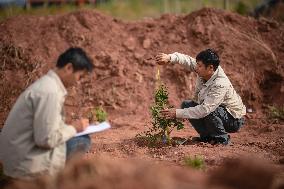
(240811) -- CHONGQING, Aug. 11, 2024 Photo by Xinhua/ABACAPRESS.COM) -- Staff members of the Thuja sutchuenensis research base of Xuebaoshan national nature reserve take records of Thuja sutchuenensis seedlings after transplantation at a forestry base in Mangkam County, Qamdo, southwest China's Xizang Autonomous Region, June 5, 2024. Wild Thuja sutchuenensis is an endangered species of gymnosperm endemic to China and under national first-class protection. In 1998, the International Union for Conservation of Nature declared Thuja sutchuenensis extinct, but the species was rediscovered in Chengkou County in 1999. At present, the number of wild adult Thuja sutchuenensis plants in the world is less than 10,000, and they are only distributed in the areas of Daba Mountains including Kaizhou District and Chengkou County of Chongqing. In order to protect this endangered species, Yang Quan from Chongqing Xuebaoshan national nature reserve led a team to carry out the investigation and study of wild Thuja sutchuenensis

  •  
ChineseToday | Guardians of endangered trees in SW China

ChineseToday | Guardians of endangered trees in SW China

(240811) -- CHONGQING, Aug. 11, 2024 Photo by Xinhua/ABACAPRESS.COM) -- A staff member of the Thuja sutchuenensis research base of Xuebaoshan national nature reserve checks the condition of Thuja sutchuenensis seeds at the research base in Kaizhou District of southwest China's Chongqing, Aug. 7, 2024. Wild Thuja sutchuenensis is an endangered species of gymnosperm endemic to China and under national first-class protection. In 1998, the International Union for Conservation of Nature declared Thuja sutchuenensis extinct, but the species was rediscovered in Chengkou County in 1999. At present, the number of wild adult Thuja sutchuenensis plants in the world is less than 10,000, and they are only distributed in the areas of Daba Mountains including Kaizhou District and Chengkou County of Chongqing. In order to protect this endangered species, Yang Quan from Chongqing Xuebaoshan national nature reserve led a team to carry out the investigation and study of wild Thuja sutchuenensis communities, hoping to expand its

  •  

US: Multiple Arrested At Pro-Palestine Protest Outside NYU Stern School Of Business

Hundreds of pro-Palestinian demonstrators, including students and faculty members, rallied outside the New York University Stern School of Business on Monday, April 22. As the protest intensified, multiple protesters were taken into custody.

  •  
CHINA-HAINAN-HAINAN GIBBONS-RANGER (CN)

CHINA-HAINAN-HAINAN GIBBONS-RANGER (CN)

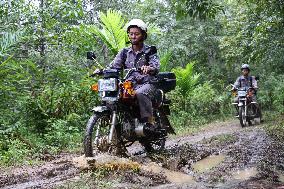
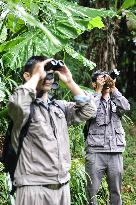
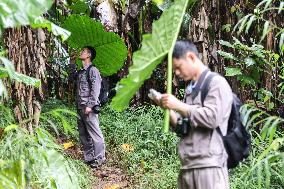
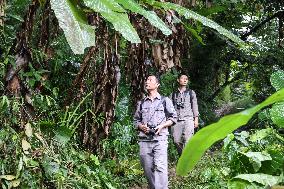
(231025) -- HAIKOU, Oct. 25, 2023 (Xinhua) -- Li Wenyong views photos at home in Baisha Li Autonomous County, south China's Hainan Province, Oct. 18, 2023. Li Wenyong is a forest ranger at Hainan Tropical Rainforest National Park on the south China island province. He lives in Miao Village of Qingsong Township, which is under the jurisdiction of Baisha Li Autonomous County, and the nearest village to the park's Bawangling area. This is the heart of Hainan gibbon country. The black-crested apes can only be found in Hainan, and as they rarely set foot on the ground, only in rainforest trees over 10 meters high. As the world's rarest primate, Hainan gibbons are currently classed as critically endangered by the International Union for Conservation of Nature. In addition to patrolling the mountains, Li is also responsible for monitoring the gibbons. Using the sounds and calls made by the forest's Hainan gibbon residents, Li observes the species; scribbling notes and snapping pictures. Over the past 13 ye

  •  
CHINA-HAINAN-HAINAN GIBBONS-RANGER (CN)

CHINA-HAINAN-HAINAN GIBBONS-RANGER (CN)

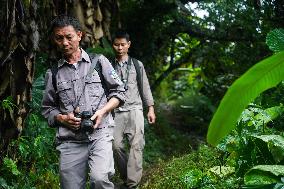
(231025) -- HAIKOU, Oct. 25, 2023 (Xinhua) -- Li Wenyong (L) and his colleague patrol the Bawangling area of Hainan Tropical Rainforest National Park, south China's Hainan Province, Oct. 18, 2023. Li Wenyong is a forest ranger at Hainan Tropical Rainforest National Park on the south China island province. He lives in Miao Village of Qingsong Township, which is under the jurisdiction of Baisha Li Autonomous County, and the nearest village to the park's Bawangling area. This is the heart of Hainan gibbon country. The black-crested apes can only be found in Hainan, and as they rarely set foot on the ground, only in rainforest trees over 10 meters high. As the world's rarest primate, Hainan gibbons are currently classed as critically endangered by the International Union for Conservation of Nature. In addition to patrolling the mountains, Li is also responsible for monitoring the gibbons. Using the sounds and calls made by the forest's Hainan gibbon residents, Li observes the species; scribbling notes and

  •  
CHINA-HAINAN-HAINAN GIBBONS-RANGER (CN)

CHINA-HAINAN-HAINAN GIBBONS-RANGER (CN)

(231025) -- HAIKOU, Oct. 25, 2023 (Xinhua) -- Li Wenyong checks an infrared camera at home in Baisha Li Autonomous County, south China's Hainan Province, Oct. 18, 2023. Li Wenyong is a forest ranger at Hainan Tropical Rainforest National Park on the south China island province. He lives in Miao Village of Qingsong Township, which is under the jurisdiction of Baisha Li Autonomous County, and the nearest village to the park's Bawangling area. This is the heart of Hainan gibbon country. The black-crested apes can only be found in Hainan, and as they rarely set foot on the ground, only in rainforest trees over 10 meters high. As the world's rarest primate, Hainan gibbons are currently classed as critically endangered by the International Union for Conservation of Nature. In addition to patrolling the mountains, Li is also responsible for monitoring the gibbons. Using the sounds and calls made by the forest's Hainan gibbon residents, Li observes the species; scribbling notes and snapping pictures. Over t

  •  
CHINA-HAINAN-HAINAN GIBBONS-RANGER (CN)

CHINA-HAINAN-HAINAN GIBBONS-RANGER (CN)

(231025) -- HAIKOU, Oct. 25, 2023 (Xinhua) -- Li Wenyong (L) and his colleague patrol the Bawangling area of Hainan Tropical Rainforest National Park, south China's Hainan Province, Oct. 18, 2023. Li Wenyong is a forest ranger at Hainan Tropical Rainforest National Park on the south China island province. He lives in Miao Village of Qingsong Township, which is under the jurisdiction of Baisha Li Autonomous County, and the nearest village to the park's Bawangling area. This is the heart of Hainan gibbon country. The black-crested apes can only be found in Hainan, and as they rarely set foot on the ground, only in rainforest trees over 10 meters high. As the world's rarest primate, Hainan gibbons are currently classed as critically endangered by the International Union for Conservation of Nature. In addition to patrolling the mountains, Li is also responsible for monitoring the gibbons. Using the sounds and calls made by the forest's Hainan gibbon residents, Li observes the species; scribbling notes and

  •  
CHINA-HAINAN-HAINAN GIBBONS-RANGER (CN)

CHINA-HAINAN-HAINAN GIBBONS-RANGER (CN)

(231025) -- HAIKOU, Oct. 25, 2023 (Xinhua) -- Li Wenyong (L) and his colleague take shelter from rain in the Bawangling area of Hainan Tropical Rainforest National Park, south China's Hainan Province, Oct. 18, 2023. Li Wenyong is a forest ranger at Hainan Tropical Rainforest National Park on the south China island province. He lives in Miao Village of Qingsong Township, which is under the jurisdiction of Baisha Li Autonomous County, and the nearest village to the park's Bawangling area. This is the heart of Hainan gibbon country. The black-crested apes can only be found in Hainan, and as they rarely set foot on the ground, only in rainforest trees over 10 meters high. As the world's rarest primate, Hainan gibbons are currently classed as critically endangered by the International Union for Conservation of Nature. In addition to patrolling the mountains, Li is also responsible for monitoring the gibbons. Using the sounds and calls made by the forest's Hainan gibbon residents, Li observes the species; s

  •  
CHINA-HAINAN-HAINAN GIBBONS-RANGER (CN)

CHINA-HAINAN-HAINAN GIBBONS-RANGER (CN)

(231025) -- HAIKOU, Oct. 25, 2023 (Xinhua) -- Li Wenyong (L) and his colleague patrol the Bawangling area of Hainan Tropical Rainforest National Park, south China's Hainan Province, Oct. 18, 2023. Li Wenyong is a forest ranger at Hainan Tropical Rainforest National Park on the south China island province. He lives in Miao Village of Qingsong Township, which is under the jurisdiction of Baisha Li Autonomous County, and the nearest village to the park's Bawangling area. This is the heart of Hainan gibbon country. The black-crested apes can only be found in Hainan, and as they rarely set foot on the ground, only in rainforest trees over 10 meters high. As the world's rarest primate, Hainan gibbons are currently classed as critically endangered by the International Union for Conservation of Nature. In addition to patrolling the mountains, Li is also responsible for monitoring the gibbons. Using the sounds and calls made by the forest's Hainan gibbon residents, Li observes the species; scribbling notes and

  •  
CHINA-HAINAN-HAINAN GIBBONS-RANGER (CN)

CHINA-HAINAN-HAINAN GIBBONS-RANGER (CN)

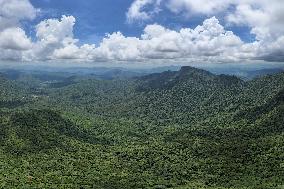
(231025) -- HAIKOU, Oct. 25, 2023 (Xinhua) -- This aerial photo taken on June 29, 2022 shows the Bawangling area of Hainan Tropical Rainforest National Park, south China's Hainan Province. Li Wenyong is a forest ranger at Hainan Tropical Rainforest National Park on the south China island province. He lives in Miao Village of Qingsong Township, which is under the jurisdiction of Baisha Li Autonomous County, and the nearest village to the park's Bawangling area. This is the heart of Hainan gibbon country. The black-crested apes can only be found in Hainan, and as they rarely set foot on the ground, only in rainforest trees over 10 meters high. As the world's rarest primate, Hainan gibbons are currently classed as critically endangered by the International Union for Conservation of Nature. In addition to patrolling the mountains, Li is also responsible for monitoring the gibbons. Using the sounds and calls made by the forest's Hainan gibbon residents, Li observes the species; scribbling notes and snappin

  •  
CHINA-HAINAN-HAINAN GIBBONS-RANGER (CN)

CHINA-HAINAN-HAINAN GIBBONS-RANGER (CN)

(231025) -- HAIKOU, Oct. 25, 2023 (Xinhua) -- Li Wenyong (L) and his colleague patrol the Bawangling area of Hainan Tropical Rainforest National Park, south China's Hainan Province, Oct. 18, 2023. Li Wenyong is a forest ranger at Hainan Tropical Rainforest National Park on the south China island province. He lives in Miao Village of Qingsong Township, which is under the jurisdiction of Baisha Li Autonomous County, and the nearest village to the park's Bawangling area. This is the heart of Hainan gibbon country. The black-crested apes can only be found in Hainan, and as they rarely set foot on the ground, only in rainforest trees over 10 meters high. As the world's rarest primate, Hainan gibbons are currently classed as critically endangered by the International Union for Conservation of Nature. In addition to patrolling the mountains, Li is also responsible for monitoring the gibbons. Using the sounds and calls made by the forest's Hainan gibbon residents, Li observes the species; scribbling notes and

  • Main
  • Top
  • Editorial
  • Creative
  • About Us
  • About ILG
  • Terms of use
  • Company
  • BEHIND
  • Price List
  • Single Plan
  • Monthly Plan
  • Services
  • Shooting
  • Rights Clearance
  • Support
  • FAQ
  • How To Buy
  • Contact Us
  • Become a Partner

© KYODO NEWS IMAGES INC

All Rights Reserved.

  • Editorial
  • Olympics
  • News
  • Sports
  • Japan
  • Tech
  • Royal
  • Disaster
  • NorthKorea
  • Old Japan
  • SNS
  • Creative
  • Food
  • Japan
  • Landscape
  • Animal
  • Popular
  • #Ukraine
  • #Thailand
  • #coronavirus
  • #N. Korea
  • #Russia
  • #China
  • #Ukraine
  • #Thailand
  • #coronavirus
  • #N. Korea
  • #Russia
  • #China
  • Food
  • Japan
  • Landscape
  • Animal
  • Olympics
  • News
  • Sports
  • Japan
  • Tech
  • Royal
  • Disaster
  • NorthKorea
  • Old Japan
  • SNS