•  
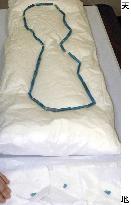
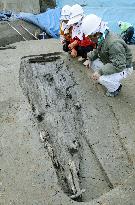
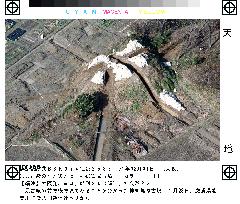
Stone-coffin grave from Yayoi period found in Nagasaki Pref.

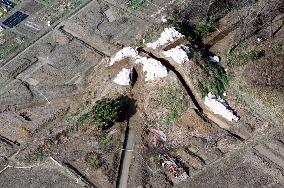
Stone-coffin grave from Yayoi period found in Nagasaki Pref.

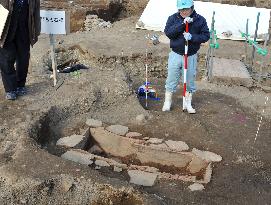
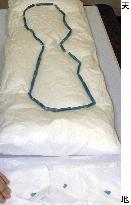
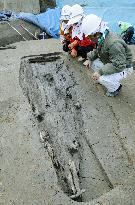
NAGASAKI, Japan - The Nagasaki prefectural board of education shows on Feb. 4, 2014 a stone-coffin grave from around the second century during the latter Yayoi period that was found in Omura, Nagasaki Prefecture. The box-shaped coffin, discovered at the Takematsu ruins in the southwestern Japan city, has traces of being colored with red pigment.

  •  
Emperor, empress visit National Museum of Japanese History

Emperor, empress visit National Museum of Japanese History

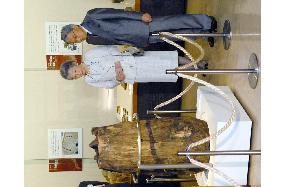
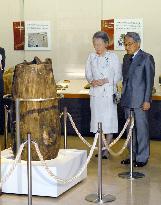
TOKYO, Japan - Emperor Akihito and Empress Michiko visit the National Museum of Japanese History in Sakura, Chiba Prefecture on Aug. 22 to view a special exhibition of artifacts from the Yayoi Period. (Pool photo)

  •  
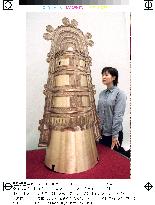
Large pillar from Yayoi era at Karako-Kagi site shown for 1st time

Large pillar from Yayoi era at Karako-Kagi site shown for 1st time

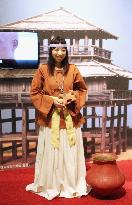
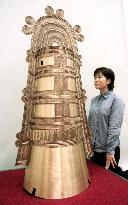
NARA, Japan - A woman on Oct. 24, 2014, points at a reconstructed model of a building from the Yayoi period (about 300 BC - AD 300) to show part of a large pillar excavated at the Karako-Kagi site in the town of Tawaramoto, Nara Prefecture in western Japan. The first public exhibition of the pillar, one of the largest found from that era, began on Oct. 25.

  •  
Exhibition on Yayoi culture in Chiba Pref.

Exhibition on Yayoi culture in Chiba Pref.

CHIBA, Japan - A woman wears a garment of the Yayoi period at the try-on section of the exhibition "What is Yayoi Culture?" at the National Museum of Japanese History in Sakura, Chiba Prefecture, on July 14, 2014. The exhibition runs from July 15 to Sept. 15.

  •  
Nara researcher finds oldest weights in Japan

Nara researcher finds oldest weights in Japan

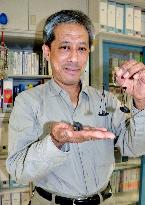
NARA, Japan - Photo taken June 14, 2013 shows Susumu Morimoto, an archeologist and researcher at the Nara National Research Institute for Cultural Properties in Nara City, who has discovered that what had been believed to be grinding stones from the first half of the Yayoi period, about 2,400 years ago, were actually weights for scales.

  •  
Museum curator breaks 2,200-year-old glass accessory

Museum curator breaks 2,200-year-old glass accessory

OTSU, Japan - This photo shows a broken antique glass accessory estimated to be 2,200 years old, with pieces of fractured glass (front). A museum curator accidentally dropped and broke the item, designated by the government as an important cultural asset and believed to date back to the mid-Yayoi period.

  •  
Japan's oldest boat-shaped wooden coffin excavated in Nagoya

Japan's oldest boat-shaped wooden coffin excavated in Nagoya

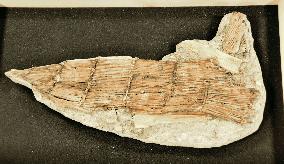
NAGOYA, Japan - Photo taken Feb. 21 shows part of what is believed to be Japan's oldest boat-shaped coffin which was excavated in the Hiratecho ruins in Nagoya's Kita Ward. The city's Board of Education said the coffin is believed to be made some 2,000 years ago, or in the latter period of the mid-Yayoi Era. The 2.8-meter-long, 80-centimeter-wide ''boat'' is placed with its bow facing northwest. Hisao Suzuki, who heads the board's cultural assets conservation section, said it is presumed that the bow faced the sunset as ancient people thought the coffin was a vehicle to take the deceased person to the afterlife.

  •  
One of the oldest rectangular tombs found in western Japan

One of the oldest rectangular tombs found in western Japan

NOTOGAWA, Japan - An ancient tomb in the town of Notogawa in Shiga Prefecture, western Japan, is one of the oldest burial mounds in the country with a square rear and rectangular frontage, dating from the early 3rd century, researchers said Feb. 1. The Notogawa Town Education Board, which has been excavating the tomb since December, said it has discovered at the Jingo-Kameyama Tomb site earthenware believed to date from the Yayoi period (300 BC to AD 300).

  •  
Biggest ancient 'dotaku' bell restored

Biggest ancient 'dotaku' bell restored

What is claimed to be the biggest ancient 'dotaku' bronze bell in Japan is put on display at a museum in Yasu, Shiga Prefecture, neighboring Nara and Kyoto on Thursday Oct. 1. The bell, weighing 55 kilograms, with 135 centimeters in height, has been restored based on original bronze pieces unearthed in 1881. Dotaku, made in the Yayoi Period (300 BC- AD 300), are believed to be musical instruments or ceremonial implements. So far, more than 400 of these bells have been discovered in Japan. They usually range from 10 to 130 centimeters in height.

  •  
Carp farming may have started in Yayoi period: fossil study

Carp farming may have started in Yayoi period: fossil study

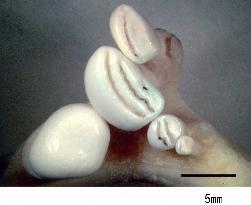
OTSU, Japan - Fossils of a young carp's teeth unearthed at the Asahi archeological site, a moat settlement site from about 400 B.C. to 400 A.D. in Aichi Prefecture. A study of the fossils indicates that people in the Yayoi period may have engaged in carp farming for winter storage, researchers say. (Photo courtesy of Shiga Prefectural Lake Biwa Museum.) (Kyodo)

  •  
Museum curator breaks 2,200-year-old glass accessory

Museum curator breaks 2,200-year-old glass accessory

OTSU, Japan - This photo shows a broken antique glass accessory estimated to be 2,200 years old, with pieces of fractured glass (front). A museum curator accidentally dropped and broke the item, designated by the government as an important cultural asset and believed to date back to the mid-Yayoi period. (Kyodo)

  •  
Biggest ancient 'dotaku' bell restored

Biggest ancient 'dotaku' bell restored

What is claimed to be the biggest ancient 'dotaku' bronze bell in Japan is put on display at a museum in Yasu, Shiga Prefecture, neighboring Nara and Kyoto on Thursday Oct. 1. The bell, weighing 55 kilograms, with 135 centimeters in height, has been restored based on original bronze pieces unearthed in 1881. Dotaku, made in the Yayoi Period (300 BC- AD 300), are believed to be musical instruments or ceremonial implements. So far, more than 400 of these bells have been discovered in Japan. They usually range from 10 to 130 centimeters in height.

  •  
Brain of Yayoi person displayed at museum in Tottori

Brain of Yayoi person displayed at museum in Tottori

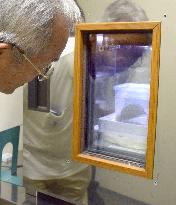
The brain of a person in the Yayoi period (about 300 BC to 300 AD) is on display at the Tottori Prefectural Museum in the city of Tottori, Japan, on Aug. 6, 2015. (Kyodo) ==Kyodo

  •  
Ritual bronze bell discoverer points at location

Ritual bronze bell discoverer points at location

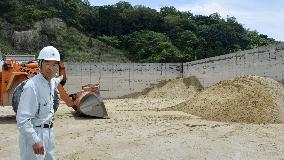
Toru Nishida, deputy plant manager of stone processing firm Matsumoto Sangyo Inc., points at the sand mound where seven ritual bronze bells from the Yayoi period (around the third century B.C. to third century A.D.) have been discovered lately, in Minamiawaji, Hyogo Prefecture, western Japan, on May 19, 2015. (Kyodo) ==Kyodo

  •  
Yayoi period bronze bells found on Awaji Island

Yayoi period bronze bells found on Awaji Island

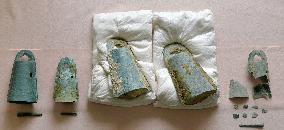
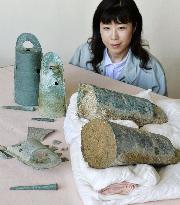
Ritual bronze bells from the Yayoi period (around the third century B.C. to third century A.D.) recently found in Minamiawaji, Hyogo Prefecture, western Japan, are shown on May 19, 2015. The third and fourth bells from the left each contain a smaller bell inside, while the second bell from the left had been found inside the bell in the left corner. (Kyodo) ==Kyodo

  •  
Yayoi period bronze bells found on Awaji Island

Yayoi period bronze bells found on Awaji Island

Ritual bronze bells from the Yayoi period (around the third century B.C. to third century A.D.) recently found in Minamiawaji, Hyogo Prefecture, western Japan, are shown on May 19, 2015. Two bells on the right both contain a smaller bell inside, while the second bell from the left had been found inside the bell in the left corner. (Kyodo) ==Kyodo

  •  
Pattern like letter "king" found on Yayoi period bronze bell

Pattern like letter "king" found on Yayoi period bronze bell

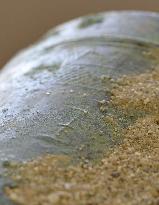
A pattern that looks like the kanji character representing "king" is seen on one of the ritual bronze bells from the Yayoi period (around the third century B.C. to third century A.D.) recently found in Minamiawaji, Hyogo Prefecture, western Japan, on May 19, 2015. (Kyodo) ==Kyodo

  •  
Emperor, empress visit National Museum of Japanese History

Emperor, empress visit National Museum of Japanese History

TOKYO, Japan - Emperor Akihito and Empress Michiko visit the National Museum of Japanese History in Sakura, Chiba Prefecture on Aug. 22 to view a special exhibition of artifacts from the Yayoi Period. (Pool photo) (Kyodo)

  •  
Japan's oldest boat-shaped wooden coffin excavated in Nagoya

Japan's oldest boat-shaped wooden coffin excavated in Nagoya

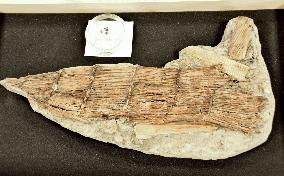
NAGOYA, Japan - Photo taken Feb. 21 shows part of what is believed to be Japan's oldest boat-shaped coffin which was excavated in the Hiratecho ruins in Nagoya's Kita Ward. The city's Board of Education said the coffin is believed to be made some 2,000 years ago, or in the latter period of the mid-Yayoi Era. The 2.8-meter-long, 80-centimeter-wide ''boat'' is placed with its bow facing northwest. Hisao Suzuki, who heads the board's cultural assets conservation section, said it is presumed that the bow faced the sunset as ancient people thought the coffin was a vehicle to take the deceased person to the afterlife. (Kyodo)

  •  
Weeding a rice field at Aso Valley

Weeding a rice field at Aso Valley

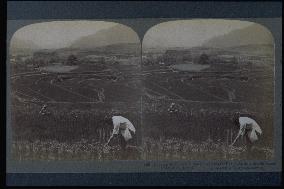
The caldera area of Aso has been used to grow rice since the Yayoi Period. According to myth, the deity of the volcano, Takeiwawatatsunomikoto, built the first rice paddy here. The photograph captures the Asodani area with the central crater located on the north side of Aso Gogaku (the five mountains of Aso) as viewed from the east. The area is commonly referred to as Aso no Senmaida ( Thousand fields of Aso ) with many narrow rice paddies one after another. At present, the farmed area has been redesigned in an arrangement of square rice paddies.==Date:1904, Place:Kumamoto, Photo:Underwood, (Credit:Nagasaki University Library/Kyodo News Images) [Cabinet Number97‐3‐0]

  •  
Bronze ring during Yayoi period

Bronze ring during Yayoi period

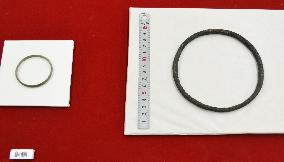
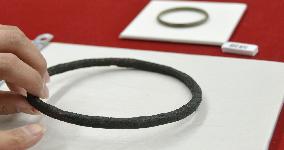
Photo taken on May 16, 2019, shows a bronze ring (R) discovered at an archaeological site in Ritto in Shiga Prefecture, western Japan. The ring, excavated from ruins dating back to Japan's Yayoi period between 300 BC and 300 AD, is believed to have been used as a balance weight. (Kyodo) ==Kyodo

  •  
Bronze ring during Yayoi period

Bronze ring during Yayoi period

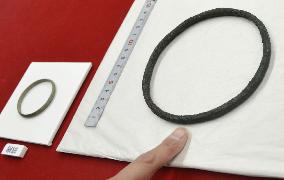
Photo taken on May 16, 2019, shows a bronze ring (front) discovered at an archaeological site in Ritto in Shiga Prefecture, western Japan. The ring, excavated from ruins dating back to Japan's Yayoi period between 300 BC and 300 AD, is believed to have been used as a balance weight. (Kyodo) ==Kyodo

  •  
Bronze ring during Yayoi period

Bronze ring during Yayoi period

Photo taken on May 16, 2019, shows a bronze ring (R) discovered at an archaeological site in Ritto in Shiga Prefecture, western Japan. The ring, excavated from ruins dating back to Japan's Yayoi period between 300 BC and 300 AD, is believed to have been used as a balance weight. (Kyodo) ==Kyodo

  •  
Fishing trap found in archeological site in Japan

Fishing trap found in archeological site in Japan

Photo taken April 4, 2019, shows a fishing trap used during Japan's Yayoi period to catch eels, excavated from an archeological site in Tottori, western Japan, dating back to AD 100. (Kyodo) ==Kyodo

  •  
Fishing trap found in archeological site in Japan

Fishing trap found in archeological site in Japan

Photo taken April 4, 2019, shows a fishing trap used during Japan's Yayoi period to catch eels, excavated from an archeological site in Tottori, western Japan, dating back to AD 100. Seen in the container are eel bones found at the same site. (Kyodo) ==Kyodo

  •  
One of the oldest rectangular tombs found in western Japan

One of the oldest rectangular tombs found in western Japan

NOTOGAWA, Japan - An ancient tomb in the town of Notogawa in Shiga Prefecture, western Japan, is one of the oldest burial mounds in the country with a square rear and rectangular frontage, dating from the early 3rd century, researchers said Feb. 1. The Notogawa Town Education Board, which has been excavating the tomb since December, said it has discovered at the Jingo-Kameyama Tomb site earthenware believed to date from the Yayoi period (300 BC to AD 300).

  • Main
  • Top
  • Editorial
  • Creative
  • About Us
  • About ILG
  • Terms of use
  • Company
  • BEHIND
  • Price List
  • Single Plan
  • Monthly Plan
  • Services
  • Shooting
  • Rights Clearance
  • Support
  • FAQ
  • How To Buy
  • Contact Us
  • Become a Partner

© KYODO NEWS IMAGES INC

All Rights Reserved.

  • Editorial
  • Olympics
  • News
  • Sports
  • Japan
  • Tech
  • Royal
  • Disaster
  • NorthKorea
  • Old Japan
  • SNS
  • Creative
  • Food
  • Japan
  • Landscape
  • Animal
  • Popular
  • #Ukraine
  • #Russia
  • #coronavirus
  • #N. Korea
  • #China
  • #Thailand
  • #Ukraine
  • #Russia
  • #coronavirus
  • #N. Korea
  • #China
  • #Thailand
  • Food
  • Japan
  • Landscape
  • Animal
  • Olympics
  • News
  • Sports
  • Japan
  • Tech
  • Royal
  • Disaster
  • NorthKorea
  • Old Japan
  • SNS