•  
SOUTH KOREA-YEONGDONG-NO GUN RI

SOUTH KOREA-YEONGDONG-NO GUN RI

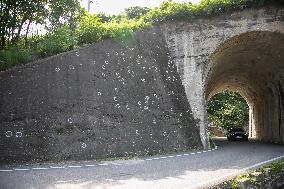
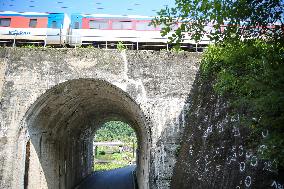
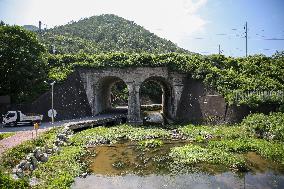
(220729) -- CHUNGCHEONGBUK-DO, July 29, 2022 (Xinhua) -- A railway bridge where the No Gun Ri massacre took place is pockmarked with bullet holes highlighted by white lines in Yeongdong County in Chungcheongbuk-do, South Korea, on July 28, 2022. The No Gun Ri massacre, one of the deadliest assaults the U.S. army had committed during the Korean War, had been buried deep in history, until The Associated Press uncovered the horrible tragedy in 1999. After the outbreak of the war, U.S. troops soon suffered setbacks while forces of the Democratic People's Republic of Korea (DPRK) were marching forward. On July 26, 1950, out of the fear that the DPRK guerrilla troops might disguise themselves as refugees, U.S. commanders ordered units retreating through South Korea to shoot civilians. A throng of refugees, many of them women and children, were killed in an air attack and by small- and heavy-weapons fire of the U.S. 7th Cavalry Regiment at a railroad bridge near the village of No Gun Ri in central South Korea,

  •  
SOUTH KOREA-YEONGDONG-NO GUN RI

SOUTH KOREA-YEONGDONG-NO GUN RI

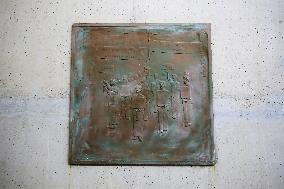
(220729) -- CHUNGCHEONGBUK-DO, July 29, 2022 (Xinhua) -- A copperplate etching showing people demanding an apology and compensation from the United States is seen in Yeongdong County in Chungcheongbuk-do, South Korea, on July 28, 2022. The No Gun Ri massacre, one of the deadliest assaults the U.S. army had committed during the Korean War, had been buried deep in history, until The Associated Press uncovered the horrible tragedy in 1999. After the outbreak of the war, U.S. troops soon suffered setbacks while forces of the Democratic People's Republic of Korea (DPRK) were marching forward. On July 26, 1950, out of the fear that the DPRK guerrilla troops might disguise themselves as refugees, U.S. commanders ordered units retreating through South Korea to shoot civilians. A throng of refugees, many of them women and children, were killed in an air attack and by small- and heavy-weapons fire of the U.S. 7th Cavalry Regiment at a railroad bridge near the village of No Gun Ri in central South Korea, said the

  •  
SOUTH KOREA-YEONGDONG-NO GUN RI

SOUTH KOREA-YEONGDONG-NO GUN RI

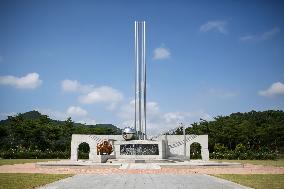
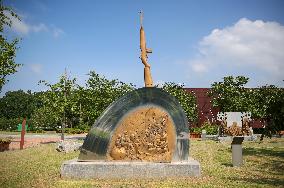
(220729) -- CHUNGCHEONGBUK-DO, July 29, 2022 (Xinhua) -- A memorial tower to commemorate the No Gun Ri massacre is seen in Yeongdong County in Chungcheongbuk-do, South Korea, on July 28, 2022. The No Gun Ri massacre, one of the deadliest assaults the U.S. army had committed during the Korean War, had been buried deep in history, until The Associated Press uncovered the horrible tragedy in 1999. After the outbreak of the war, U.S. troops soon suffered setbacks while forces of the Democratic People's Republic of Korea (DPRK) were marching forward. On July 26, 1950, out of the fear that the DPRK guerrilla troops might disguise themselves as refugees, U.S. commanders ordered units retreating through South Korea to shoot civilians. A throng of refugees, many of them women and children, were killed in an air attack and by small- and heavy-weapons fire of the U.S. 7th Cavalry Regiment at a railroad bridge near the village of No Gun Ri in central South Korea, said the AP report. Some 400 refugees were killed

  •  
SOUTH KOREA-YEONGDONG-NO GUN RI

SOUTH KOREA-YEONGDONG-NO GUN RI

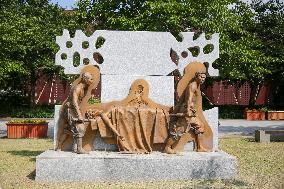
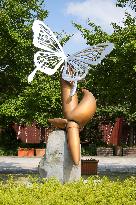
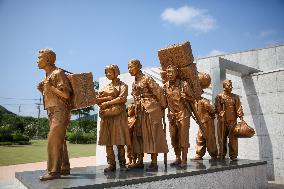
(220729) -- CHUNGCHEONGBUK-DO, July 29, 2022 (Xinhua) -- A statue is seen at the No Gun Ri Peace Park in Yeongdong County in Chungcheongbuk-do, South Korea, on July 28, 2022. The No Gun Ri massacre, one of the deadliest assaults the U.S. army had committed during the Korean War, had been buried deep in history, until The Associated Press uncovered the horrible tragedy in 1999. After the outbreak of the war, U.S. troops soon suffered setbacks while forces of the Democratic People's Republic of Korea (DPRK) were marching forward. On July 26, 1950, out of the fear that the DPRK guerrilla troops might disguise themselves as refugees, U.S. commanders ordered units retreating through South Korea to shoot civilians. A throng of refugees, many of them women and children, were killed in an air attack and by small- and heavy-weapons fire of the U.S. 7th Cavalry Regiment at a railroad bridge near the village of No Gun Ri in central South Korea, said the AP report. Some 400 refugees were killed in the massacre,

  •  
SOUTH KOREA-YEONGDONG-NO GUN RI

SOUTH KOREA-YEONGDONG-NO GUN RI

(220729) -- CHUNGCHEONGBUK-DO, July 29, 2022 (Xinhua) -- A statue is seen at the No Gun Ri Peace Park in Yeongdong County in Chungcheongbuk-do, South Korea, on July 28, 2022. The No Gun Ri massacre, one of the deadliest assaults the U.S. army had committed during the Korean War, had been buried deep in history, until The Associated Press uncovered the horrible tragedy in 1999. After the outbreak of the war, U.S. troops soon suffered setbacks while forces of the Democratic People's Republic of Korea (DPRK) were marching forward. On July 26, 1950, out of the fear that the DPRK guerrilla troops might disguise themselves as refugees, U.S. commanders ordered units retreating through South Korea to shoot civilians. A throng of refugees, many of them women and children, were killed in an air attack and by small- and heavy-weapons fire of the U.S. 7th Cavalry Regiment at a railroad bridge near the village of No Gun Ri in central South Korea, said the AP report. Some 400 refugees were killed in the massacre,

  •  
SOUTH KOREA-YEONGDONG-NO GUN RI

SOUTH KOREA-YEONGDONG-NO GUN RI

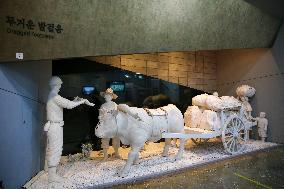
(220729) -- CHUNGCHEONGBUK-DO, July 29, 2022 (Xinhua) -- An exhibition area is seen at the No Gun Ri Peace Memorial in Yeongdong County in Chungcheongbuk-do, South Korea, on July 28, 2022. The No Gun Ri massacre, one of the deadliest assaults the U.S. army had committed during the Korean War, had been buried deep in history, until The Associated Press uncovered the horrible tragedy in 1999. After the outbreak of the war, U.S. troops soon suffered setbacks while forces of the Democratic People's Republic of Korea (DPRK) were marching forward. On July 26, 1950, out of the fear that the DPRK guerrilla troops might disguise themselves as refugees, U.S. commanders ordered units retreating through South Korea to shoot civilians. A throng of refugees, many of them women and children, were killed in an air attack and by small- and heavy-weapons fire of the U.S. 7th Cavalry Regiment at a railroad bridge near the village of No Gun Ri in central South Korea, said the AP report. Some 400 refugees were killed in

  •  
SOUTH KOREA-YEONGDONG-NO GUN RI

SOUTH KOREA-YEONGDONG-NO GUN RI

(220729) -- CHUNGCHEONGBUK-DO, July 29, 2022 (Xinhua) -- A train runs on a railway bridge with white lines marking the bullet holes left during the No Gun Ri massacre in Yeongdong County in Chungcheongbuk-do, South Korea, on July 28, 2022. The No Gun Ri massacre, one of the deadliest assaults the U.S. army had committed during the Korean War, had been buried deep in history, until The Associated Press uncovered the horrible tragedy in 1999. After the outbreak of the war, U.S. troops soon suffered setbacks while forces of the Democratic People's Republic of Korea (DPRK) were marching forward. On July 26, 1950, out of the fear that the DPRK guerrilla troops might disguise themselves as refugees, U.S. commanders ordered units retreating through South Korea to shoot civilians. A throng of refugees, many of them women and children, were killed in an air attack and by small- and heavy-weapons fire of the U.S. 7th Cavalry Regiment at a railroad bridge near the village of No Gun Ri in central South Korea, said

  •  
SOUTH KOREA-YEONGDONG-NO GUN RI

SOUTH KOREA-YEONGDONG-NO GUN RI

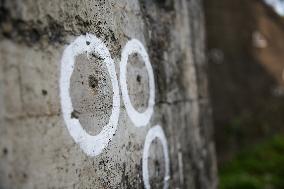
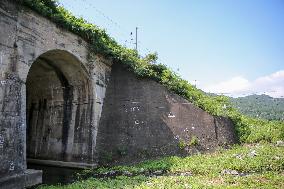
(220729) -- CHUNGCHEONGBUK-DO, July 29, 2022 (Xinhua) -- Bullet holes left during the No Gun Ri massacre are seen in Yeongdong County in Chungcheongbuk-do, South Korea, on July 28, 2022. The No Gun Ri massacre, one of the deadliest assaults the U.S. army had committed during the Korean War, had been buried deep in history, until The Associated Press uncovered the horrible tragedy in 1999. After the outbreak of the war, U.S. troops soon suffered setbacks while forces of the Democratic People's Republic of Korea (DPRK) were marching forward. On July 26, 1950, out of the fear that the DPRK guerrilla troops might disguise themselves as refugees, U.S. commanders ordered units retreating through South Korea to shoot civilians. A throng of refugees, many of them women and children, were killed in an air attack and by small- and heavy-weapons fire of the U.S. 7th Cavalry Regiment at a railroad bridge near the village of No Gun Ri in central South Korea, said the AP report. Some 400 refugees were killed in th

  •  
SOUTH KOREA-YEONGDONG-NO GUN RI

SOUTH KOREA-YEONGDONG-NO GUN RI

(220729) -- CHUNGCHEONGBUK-DO, July 29, 2022 (Xinhua) -- A railway bridge where the No Gun Ri massacre took place is pockmarked with bullet holes highlighted by white lines in Yeongdong County in Chungcheongbuk-do, South Korea, on July 28, 2022. The No Gun Ri massacre, one of the deadliest assaults the U.S. army had committed during the Korean War, had been buried deep in history, until The Associated Press uncovered the horrible tragedy in 1999. After the outbreak of the war, U.S. troops soon suffered setbacks while forces of the Democratic People's Republic of Korea (DPRK) were marching forward. On July 26, 1950, out of the fear that the DPRK guerrilla troops might disguise themselves as refugees, U.S. commanders ordered units retreating through South Korea to shoot civilians. A throng of refugees, many of them women and children, were killed in an air attack and by small- and heavy-weapons fire of the U.S. 7th Cavalry Regiment at a railroad bridge near the village of No Gun Ri in central South Korea,

  •  
SOUTH KOREA-YEONGDONG-NO GUN RI

SOUTH KOREA-YEONGDONG-NO GUN RI

(220729) -- CHUNGCHEONGBUK-DO, July 29, 2022 (Xinhua) -- A railway bridge where the No Gun Ri massacre took place is pockmarked with bullet holes highlighted by white lines in Yeongdong County in Chungcheongbuk-do, South Korea, on July 28, 2022. The No Gun Ri massacre, one of the deadliest assaults the U.S. army had committed during the Korean War, had been buried deep in history, until The Associated Press uncovered the horrible tragedy in 1999. After the outbreak of the war, U.S. troops soon suffered setbacks while forces of the Democratic People's Republic of Korea (DPRK) were marching forward. On July 26, 1950, out of the fear that the DPRK guerrilla troops might disguise themselves as refugees, U.S. commanders ordered units retreating through South Korea to shoot civilians. A throng of refugees, many of them women and children, were killed in an air attack and by small- and heavy-weapons fire of the U.S. 7th Cavalry Regiment at a railroad bridge near the village of No Gun Ri in central South Korea,

  •  
SOUTH KOREA-YEONGDONG-NO GUN RI

SOUTH KOREA-YEONGDONG-NO GUN RI

(220729) -- CHUNGCHEONGBUK-DO, July 29, 2022 (Xinhua) -- A statue is seen at the No Gun Ri Peace Park in Yeongdong County in Chungcheongbuk-do, South Korea, on July 28, 2022. The No Gun Ri massacre, one of the deadliest assaults the U.S. army had committed during the Korean War, had been buried deep in history, until The Associated Press uncovered the horrible tragedy in 1999. After the outbreak of the war, U.S. troops soon suffered setbacks while forces of the Democratic People's Republic of Korea (DPRK) were marching forward. On July 26, 1950, out of the fear that the DPRK guerrilla troops might disguise themselves as refugees, U.S. commanders ordered units retreating through South Korea to shoot civilians. A throng of refugees, many of them women and children, were killed in an air attack and by small- and heavy-weapons fire of the U.S. 7th Cavalry Regiment at a railroad bridge near the village of No Gun Ri in central South Korea, said the AP report. Some 400 refugees were killed in the massacre,

  •  
SOUTH KOREA-YEONGDONG-NO GUN RI

SOUTH KOREA-YEONGDONG-NO GUN RI

(220729) -- CHUNGCHEONGBUK-DO, July 29, 2022 (Xinhua) -- A statue to commemorate the No Gun Ri massacre is seen in Yeongdong County in Chungcheongbuk-do, South Korea, on July 28, 2022. The No Gun Ri massacre, one of the deadliest assaults the U.S. army had committed during the Korean War, had been buried deep in history, until The Associated Press uncovered the horrible tragedy in 1999. After the outbreak of the war, U.S. troops soon suffered setbacks while forces of the Democratic People's Republic of Korea (DPRK) were marching forward. On July 26, 1950, out of the fear that the DPRK guerrilla troops might disguise themselves as refugees, U.S. commanders ordered units retreating through South Korea to shoot civilians. A throng of refugees, many of them women and children, were killed in an air attack and by small- and heavy-weapons fire of the U.S. 7th Cavalry Regiment at a railroad bridge near the village of No Gun Ri in central South Korea, said the AP report. Some 400 refugees were killed in the

  • Main
  • Top
  • Editorial
  • Creative
  • About Us
  • About ILG
  • Terms of use
  • Company
  • BEHIND
  • Price List
  • Single Plan
  • Monthly Plan
  • Services
  • Shooting
  • Rights Clearance
  • Support
  • FAQ
  • How To Buy
  • Contact Us
  • Become a Partner

© KYODO NEWS IMAGES INC

All Rights Reserved.

  • Editorial
  • Olympics
  • News
  • Sports
  • Japan
  • Tech
  • Royal
  • Disaster
  • NorthKorea
  • Old Japan
  • SNS
  • Creative
  • Food
  • Japan
  • Landscape
  • Animal
  • Popular
  • #Ukraine
  • #Thailand
  • #coronavirus
  • #N. Korea
  • #Russia
  • #China
  • #Ukraine
  • #Thailand
  • #coronavirus
  • #N. Korea
  • #Russia
  • #China
  • Food
  • Japan
  • Landscape
  • Animal
  • Olympics
  • News
  • Sports
  • Japan
  • Tech
  • Royal
  • Disaster
  • NorthKorea
  • Old Japan
  • SNS