•  
CHINA-BEIJING-CENTRAL AXIS-LISTED UNESCO WORLD HERITAGE (CN)

CHINA-BEIJING-CENTRAL AXIS-LISTED UNESCO WORLD HERITAGE (CN)

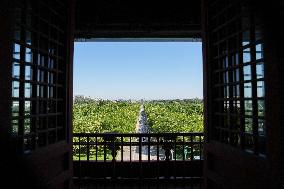
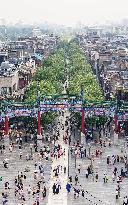
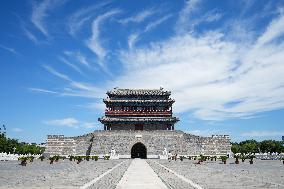
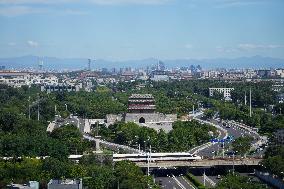
(240727) -- BEIJING, July 27, 2024 Photo by Xinhua/ABACAPRESS.COM) -- This photo taken from Yongdingmen Gate shows a view of the Beijing Central Axis in Beijing, capital of China, on July 18, 2024. The United Nations Educational, Scientific and Cultural Organization (UNESCO) on Saturday announced the inclusion of the Beijing Central Axis: A Building Ensemble Exhibiting the Ideal Order of the Chinese Capital, into its world heritage list. So far, China has a total of 59 World Heritage Sites. Beijing Central Axis, initially established in the 13th century and formed in the 16th century, runs through the old city of Beijing from north to south. It has become the longest urban axis in the world today, spanning 7.8 kilometers. The heritage area of the Beijing Central Axis covers 589 hectares, with a buffer zone of 4,542 hectares. Its location, layout, urban form, and design reflect the ancient Chinese tradition of urban planning, serving as an important emblem that highlights the distinctive characteristics of Chi

  •  
CHINA-BEIJING-CENTRAL AXIS-LISTED UNESCO WORLD HERITAGE (CN)

CHINA-BEIJING-CENTRAL AXIS-LISTED UNESCO WORLD HERITAGE (CN)

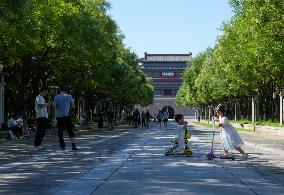
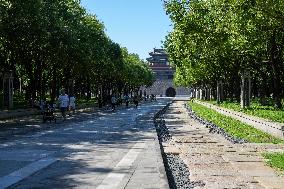
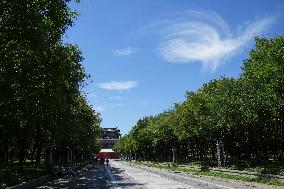
(240727) -- BEIJING, July 27, 2024 Photo by Xinhua/ABACAPRESS.COM) -- Citizens enjoy leisure time at Yongdingmen Park in Beijing, capital of China, July 17, 2024. The United Nations Educational, Scientific and Cultural Organization (UNESCO) on Saturday announced the inclusion of the Beijing Central Axis: A Building Ensemble Exhibiting the Ideal Order of the Chinese Capital, into its world heritage list. So far, China has a total of 59 World Heritage Sites. Beijing Central Axis, initially established in the 13th century and formed in the 16th century, runs through the old city of Beijing from north to south. It has become the longest urban axis in the world today, spanning 7.8 kilometers. The heritage area of the Beijing Central Axis covers 589 hectares, with a buffer zone of 4,542 hectares. Its location, layout, urban form, and design reflect the ancient Chinese tradition of urban planning, serving as an important emblem that highlights the distinctive characteristics of Chinese civilization. Photo by Xinhua/

  •  
CHINA-BEIJING-CENTRAL AXIS-LISTED UNESCO WORLD HERITAGE (CN)

CHINA-BEIJING-CENTRAL AXIS-LISTED UNESCO WORLD HERITAGE (CN)

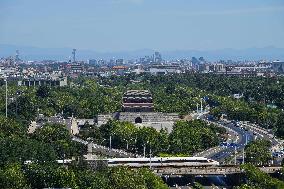
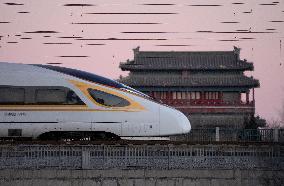
(240727) -- BEIJING, July 27, 2024 Photo by Xinhua/ABACAPRESS.COM) -- A bullet train runs past Yongdingmen Gate in Beijing, capital of China, July 18, 2024. The United Nations Educational, Scientific and Cultural Organization (UNESCO) on Saturday announced the inclusion of the Beijing Central Axis: A Building Ensemble Exhibiting the Ideal Order of the Chinese Capital, into its world heritage list. So far, China has a total of 59 World Heritage Sites. Beijing Central Axis, initially established in the 13th century and formed in the 16th century, runs through the old city of Beijing from north to south. It has become the longest urban axis in the world today, spanning 7.8 kilometers. The heritage area of the Beijing Central Axis covers 589 hectares, with a buffer zone of 4,542 hectares. Its location, layout, urban form, and design reflect the ancient Chinese tradition of urban planning, serving as an important emblem that highlights the distinctive characteristics of Chinese civilization. Photo by Xinhua/ABACAP

  •  
CHINA-BEIJING-CENTRAL AXIS-LISTED UNESCO WORLD HERITAGE (CN)

CHINA-BEIJING-CENTRAL AXIS-LISTED UNESCO WORLD HERITAGE (CN)

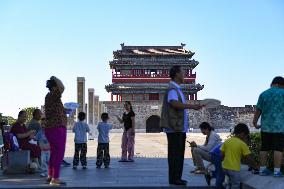
(240727) -- BEIJING, July 27, 2024 Photo by Xinhua/ABACAPRESS.COM) -- Tourists visit Yongdingmen Park in Beijing, capital of China, July 18, 2024. The United Nations Educational, Scientific and Cultural Organization (UNESCO) on Saturday announced the inclusion of the Beijing Central Axis: A Building Ensemble Exhibiting the Ideal Order of the Chinese Capital, into its world heritage list. So far, China has a total of 59 World Heritage Sites. Beijing Central Axis, initially established in the 13th century and formed in the 16th century, runs through the old city of Beijing from north to south. It has become the longest urban axis in the world today, spanning 7.8 kilometers. The heritage area of the Beijing Central Axis covers 589 hectares, with a buffer zone of 4,542 hectares. Its location, layout, urban form, and design reflect the ancient Chinese tradition of urban planning, serving as an important emblem that highlights the distinctive characteristics of Chinese civilization. Photo by Xinhua/ABACAPRESS.COM/J

  •  
CHINA-BEIJING-CENTRAL AXIS-LISTED UNESCO WORLD HERITAGE (CN)

CHINA-BEIJING-CENTRAL AXIS-LISTED UNESCO WORLD HERITAGE (CN)

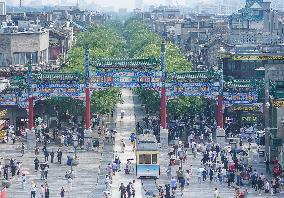
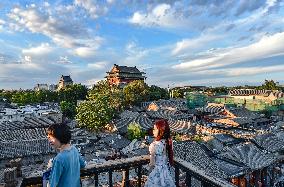
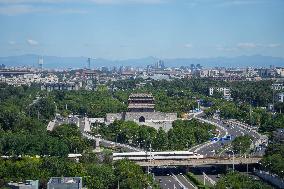
(240727) -- BEIJING, July 27, 2024 Photo by Xinhua/ABACAPRESS.COM) -- This photo taken on July 21, 2024 shows Qianmen Street and Yongdingmen Gate in the distance seen from the Zhengyangmen Gate arrow tower in Beijing, capital of China. The United Nations Educational, Scientific and Cultural Organization (UNESCO) on Saturday announced the inclusion of the Beijing Central Axis: A Building Ensemble Exhibiting the Ideal Order of the Chinese Capital, into its world heritage list. So far, China has a total of 59 World Heritage Sites. Beijing Central Axis, initially established in the 13th century and formed in the 16th century, runs through the old city of Beijing from north to south. It has become the longest urban axis in the world today, spanning 7.8 kilometers. The heritage area of the Beijing Central Axis covers 589 hectares, with a buffer zone of 4,542 hectares. Its location, layout, urban form, and design reflect the ancient Chinese tradition of urban planning, serving as an important emblem that highlights

  •  
CHINA-BEIJING-CENTRAL AXIS-LISTED UNESCO WORLD HERITAGE (CN)

CHINA-BEIJING-CENTRAL AXIS-LISTED UNESCO WORLD HERITAGE (CN)

(240727) -- BEIJING, July 27, 2024 Photo by Xinhua/ABACAPRESS.COM) -- This photo taken on July 21, 2024 shows Qianmen Street and Yongdingmen Gate in the distance seen from the Zhengyangmen Gate arrow tower in Beijing, capital of China. The United Nations Educational, Scientific and Cultural Organization (UNESCO) on Saturday announced the inclusion of the Beijing Central Axis: A Building Ensemble Exhibiting the Ideal Order of the Chinese Capital, into its world heritage list. So far, China has a total of 59 World Heritage Sites. Beijing Central Axis, initially established in the 13th century and formed in the 16th century, runs through the old city of Beijing from north to south. It has become the longest urban axis in the world today, spanning 7.8 kilometers. The heritage area of the Beijing Central Axis covers 589 hectares, with a buffer zone of 4,542 hectares. Its location, layout, urban form, and design reflect the ancient Chinese tradition of urban planning, serving as an important emblem that highlights

  •  
(Focus)CHINA-BEIJING-CENTRAL AXIS-LISTED UNESCO WORLD HERITAGE (CN)

(Focus)CHINA-BEIJING-CENTRAL AXIS-LISTED UNESCO WORLD HERITAGE (CN)

(240727) -- BEIJING, July 27, 2024 Photo by Xinhua/ABACAPRESS.COM) -- A section of ancient pavement (R) is pictured at the Yongdingmen Park in Beijing, capital of China, on July 18, 2024. The United Nations Educational, Scientific and Cultural Organization (UNESCO) on Saturday announced the inclusion of the Beijing Central Axis: A Building Ensemble Exhibiting the Ideal Order of the Chinese Capital, into its world heritage list. Photo by Xinhua/ABACAPRESS.COM/Ju Huanzong)

  •  
CHINA-BEIJING-SNOW SCENERY (CN)

CHINA-BEIJING-SNOW SCENERY (CN)

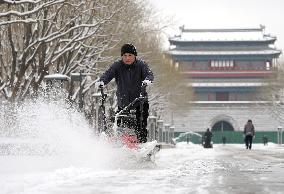
(231211) -- BEIJING, Dec. 11, 2023 (Xinhua) -- A worker removes snow with a machine at Yongdingmen Park in Beijing, capital of China, Dec. 11, 2023. (Xinhua/Li He)

  •  
CHINA-BEIJING-SNOW SCENERY (CN)

CHINA-BEIJING-SNOW SCENERY (CN)

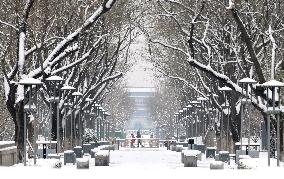
(231211) -- BEIJING, Dec. 11, 2023 (Xinhua) -- This photo taken on Dec. 11, 2023 shows the snow scenery of the Yongdingmen Park in Beijing, capital of China. (Xinhua/Li He)

  •  
CHINA-BEIJING-SNOW SCENERY (CN)

CHINA-BEIJING-SNOW SCENERY (CN)

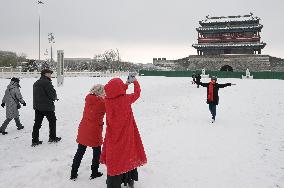
(231211) -- BEIJING, Dec. 11, 2023 (Xinhua) -- A woman poses for a photo amid snow at the Yongdingmen square in Beijing, capital of China, Dec. 11, 2023. (Xinhua/Li He)

  •  
CHINA-BEIJING-CULTURE-CENTRAL AXIS (CN)

CHINA-BEIJING-CULTURE-CENTRAL AXIS (CN)

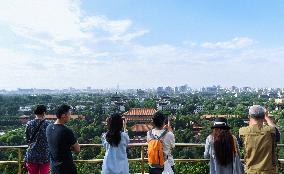
(230613) -- BEIJING, June 13, 2023 (Xinhua) -- People take photos in Jingshan Park near the Forbidden City in Beijing, capital of China, June 8, 2023. First created in the Yuan Dynasty (1271-1368), the Beijing Central Axis, or Zhongzhouxian, stretches 7.8 kilometers between the Yongding Gate (Yongdingmen) in the south of the city and the Drum Tower and Bell Tower in the north. Most of the major old-city buildings of Beijing sit along this axis. Fourteen historical places along the axis, including Qianmen, the Forbidden City, Jingshan Park, the Drum and Bell Towers, and Tian'anmen Square have been identified as the key heritage sites. (Xinhua/Ju Huanzong)

  •  
CHINA-BEIJING-CULTURE-CENTRAL AXIS (CN)

CHINA-BEIJING-CULTURE-CENTRAL AXIS (CN)

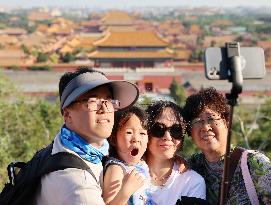
(230613) -- BEIJING, June 13, 2023 (Xinhua) -- People take selfies in Jingshan Park near the Forbidden City in Beijing, capital of China, June 6, 2023. First created in the Yuan Dynasty (1271-1368), the Beijing Central Axis, or Zhongzhouxian, stretches 7.8 kilometers between the Yongding Gate (Yongdingmen) in the south of the city and the Drum Tower and Bell Tower in the north. Most of the major old-city buildings of Beijing sit along this axis. Fourteen historical places along the axis, including Qianmen, the Forbidden City, Jingshan Park, the Drum and Bell Towers, and Tian'anmen Square have been identified as the key heritage sites. (Xinhua/Zhang Chenlin)

  •  
CHINA-BEIJING-CULTURE-CENTRAL AXIS (CN)

CHINA-BEIJING-CULTURE-CENTRAL AXIS (CN)

(230613) -- BEIJING, June 13, 2023 (Xinhua) -- People play Xiangqi, or Chinese chess, by Shichahai Lake in central Beijing, capital of China, June 10, 2023. First created in the Yuan Dynasty (1271-1368), the Beijing Central Axis, or Zhongzhouxian, stretches 7.8 kilometers between the Yongding Gate (Yongdingmen) in the south of the city and the Drum Tower and Bell Tower in the north. Most of the major old-city buildings of Beijing sit along this axis. Fourteen historical places along the axis, including Qianmen, the Forbidden City, Jingshan Park, the Drum and Bell Towers, and Tian'anmen Square have been identified as the key heritage sites. (Xinhua/Chen Zhonghao)

  •  
CHINA-BEIJING-CULTURE-CENTRAL AXIS (CN)

CHINA-BEIJING-CULTURE-CENTRAL AXIS (CN)

(230613) -- BEIJING, June 13, 2023 (Xinhua) -- Children have fun at a square between the Drum Tower and the Bell Tower in Beijing, capital of China, June 9, 2023. First created in the Yuan Dynasty (1271-1368), the Beijing Central Axis, or Zhongzhouxian, stretches 7.8 kilometers between the Yongding Gate (Yongdingmen) in the south of the city and the Drum Tower and Bell Tower in the north. Most of the major old-city buildings of Beijing sit along this axis. Fourteen historical places along the axis, including Qianmen, the Forbidden City, Jingshan Park, the Drum and Bell Towers, and Tian'anmen Square have been identified as the key heritage sites. (Xinhua/Ju Huanzong)

  •  
CHINA-BEIJING-CULTURE-CENTRAL AXIS (CN)

CHINA-BEIJING-CULTURE-CENTRAL AXIS (CN)

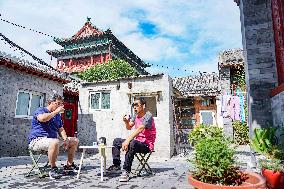
(230613) -- BEIJING, June 13, 2023 (Xinhua) -- Locals enjoy tea at their courtyard in a hutong near the Drum Tower and Bell Tower in Beijing, capital of China, June 12, 2023. First created in the Yuan Dynasty (1271-1368), the Beijing Central Axis, or Zhongzhouxian, stretches 7.8 kilometers between the Yongding Gate (Yongdingmen) in the south of the city and the Drum Tower and Bell Tower in the north. Most of the major old-city buildings of Beijing sit along this axis. Fourteen historical places along the axis, including Qianmen, the Forbidden City, Jingshan Park, the Drum and Bell Towers, and Tian'anmen Square have been identified as the key heritage sites. (Xinhua/Chen Zhonghao)

  •  
CHINA-BEIJING-CULTURE-CENTRAL AXIS (CN)

CHINA-BEIJING-CULTURE-CENTRAL AXIS (CN)

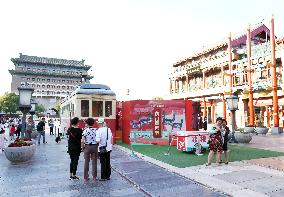
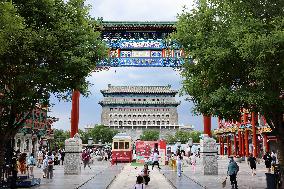
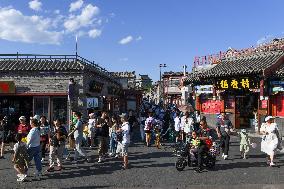
(230613) -- BEIJING, June 13, 2023 (Xinhua) -- People visit Qianmen Street in central Beijing, capital of China, June 6, 2023. First created in the Yuan Dynasty (1271-1368), the Beijing Central Axis, or Zhongzhouxian, stretches 7.8 kilometers between the Yongding Gate (Yongdingmen) in the south of the city and the Drum Tower and Bell Tower in the north. Most of the major old-city buildings of Beijing sit along this axis. Fourteen historical places along the axis, including Qianmen, the Forbidden City, Jingshan Park, the Drum and Bell Towers, and Tian'anmen Square have been identified as the key heritage sites. (Xinhua/Ren Chao)

  •  
CHINA-BEIJING-CULTURE-CENTRAL AXIS (CN)

CHINA-BEIJING-CULTURE-CENTRAL AXIS (CN)

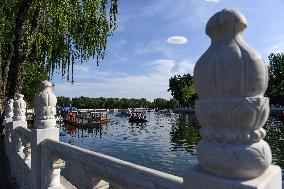
(230613) -- BEIJING, June 13, 2023 (Xinhua) -- Tourists visit the Shichahai Lake Park in central Beijing, capital of China, June 9, 2023. First created in the Yuan Dynasty (1271-1368), the Beijing Central Axis, or Zhongzhouxian, stretches 7.8 kilometers between the Yongding Gate (Yongdingmen) in the south of the city and the Drum Tower and Bell Tower in the north. Most of the major old-city buildings of Beijing sit along this axis. Fourteen historical places along the axis, including Qianmen, the Forbidden City, Jingshan Park, the Drum and Bell Towers, and Tian'anmen Square have been identified as the key heritage sites. (Xinhua/Ju Huanzong)

  •  
CHINA-BEIJING-CULTURE-CENTRAL AXIS (CN)

CHINA-BEIJING-CULTURE-CENTRAL AXIS (CN)

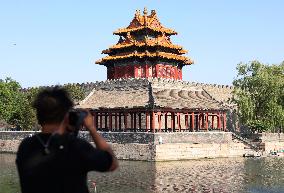
(230613) -- BEIJING, June 13, 2023 (Xinhua) -- A man takes photos of a turret of the Forbidden City in Beijing, capital of China, June 6, 2023. First created in the Yuan Dynasty (1271-1368), the Beijing Central Axis, or Zhongzhouxian, stretches 7.8 kilometers between the Yongding Gate (Yongdingmen) in the south of the city and the Drum Tower and Bell Tower in the north. Most of the major old-city buildings of Beijing sit along this axis. Fourteen historical places along the axis, including Qianmen, the Forbidden City, Jingshan Park, the Drum and Bell Towers, and Tian'anmen Square have been identified as the key heritage sites. (Xinhua/Zhang Chenlin)

  •  
CHINA-BEIJING-CULTURE-CENTRAL AXIS (CN)

CHINA-BEIJING-CULTURE-CENTRAL AXIS (CN)

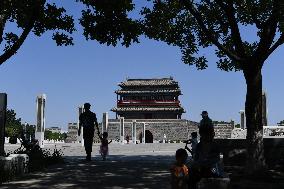
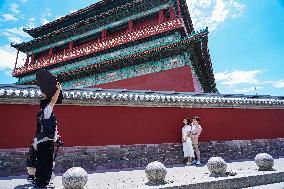
(230613) -- BEIJING, June 13, 2023 (Xinhua) -- People have fun in front of the Yongding Gate in south Beijing, capital of China, June 6, 2023. First created in the Yuan Dynasty (1271-1368), the Beijing Central Axis, or Zhongzhouxian, stretches 7.8 kilometers between the Yongding Gate (Yongdingmen) in the south of the city and the Drum Tower and Bell Tower in the north. Most of the major old-city buildings of Beijing sit along this axis. Fourteen historical places along the axis, including Qianmen, the Forbidden City, Jingshan Park, the Drum and Bell Towers, and Tian'anmen Square have been identified as the key heritage sites. (Xinhua/Ju Huanzong)

  •  
CHINA-BEIJING-CULTURE-CENTRAL AXIS (CN)

CHINA-BEIJING-CULTURE-CENTRAL AXIS (CN)

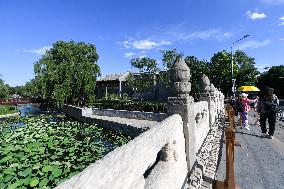
(230613) -- BEIJING, June 13, 2023 (Xinhua) -- Visitors are seen on the Wanning Bridge, which was built in Yuan Dynasty (1271-1368) in 1285, in Beijing, capital of China, June 9, 2023. First created in the Yuan Dynasty (1271-1368), the Beijing Central Axis, or Zhongzhouxian, stretches 7.8 kilometers between the Yongding Gate (Yongdingmen) in the south of the city and the Drum Tower and Bell Tower in the north. Most of the major old-city buildings of Beijing sit along this axis. Fourteen historical places along the axis, including Qianmen, the Forbidden City, Jingshan Park, the Drum and Bell Towers, and Tian'anmen Square have been identified as the key heritage sites. (Xinhua/Ju Huanzong)

  •  
CHINA-BEIJING-CULTURE-CENTRAL AXIS (CN)

CHINA-BEIJING-CULTURE-CENTRAL AXIS (CN)

(230613) -- BEIJING, June 13, 2023 (Xinhua) -- People visit Qianmen Street in central Beijing, capital of China, June 11, 2023. First created in the Yuan Dynasty (1271-1368), the Beijing Central Axis, or Zhongzhouxian, stretches 7.8 kilometers between the Yongding Gate (Yongdingmen) in the south of the city and the Drum Tower and Bell Tower in the north. Most of the major old-city buildings of Beijing sit along this axis. Fourteen historical places along the axis, including Qianmen, the Forbidden City, Jingshan Park, the Drum and Bell Towers, and Tian'anmen Square have been identified as the key heritage sites. (Xinhua/Zhang Chenlin)

  •  
CHINA-BEIJING-CULTURE-CENTRAL AXIS (CN)

CHINA-BEIJING-CULTURE-CENTRAL AXIS (CN)

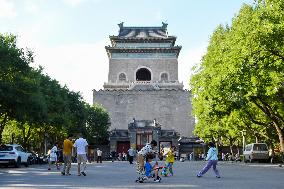
(230613) -- BEIJING, June 13, 2023 (Xinhua) -- People pose for photos in front of the Drum Tower in Beijing, capital of China, June 9, 2023. First created in the Yuan Dynasty (1271-1368), the Beijing Central Axis, or Zhongzhouxian, stretches 7.8 kilometers between the Yongding Gate (Yongdingmen) in the south of the city and the Drum Tower and Bell Tower in the north. Most of the major old-city buildings of Beijing sit along this axis. Fourteen historical places along the axis, including Qianmen, the Forbidden City, Jingshan Park, the Drum and Bell Towers, and Tian'anmen Square have been identified as the key heritage sites. (Xinhua/Ju Huanzong)

  •  
CHINA-BEIJING-CULTURE-CENTRAL AXIS (CN)

CHINA-BEIJING-CULTURE-CENTRAL AXIS (CN)

(230613) -- BEIJING, June 13, 2023 (Xinhua) -- People look out of the windows of a coffee shop near Shichahai Lake in central Beijing, capital of China, June 10, 2023. First created in the Yuan Dynasty (1271-1368), the Beijing Central Axis, or Zhongzhouxian, stretches 7.8 kilometers between the Yongding Gate (Yongdingmen) in the south of the city and the Drum Tower and Bell Tower in the north. Most of the major old-city buildings of Beijing sit along this axis. Fourteen historical places along the axis, including Qianmen, the Forbidden City, Jingshan Park, the Drum and Bell Towers, and Tian'anmen Square have been identified as the key heritage sites. (Xinhua/Chen Zhonghao)

  •  
CHINA-BEIJING-CULTURE-CENTRAL AXIS (CN)

CHINA-BEIJING-CULTURE-CENTRAL AXIS (CN)

(230613) -- BEIJING, June 13, 2023 (Xinhua) -- People pose for photos by the Drum Tower in Beijing, capital of China, June 11, 2023. First created in the Yuan Dynasty (1271-1368), the Beijing Central Axis, or Zhongzhouxian, stretches 7.8 kilometers between the Yongding Gate (Yongdingmen) in the south of the city and the Drum Tower and Bell Tower in the north. Most of the major old-city buildings of Beijing sit along this axis. Fourteen historical places along the axis, including Qianmen, the Forbidden City, Jingshan Park, the Drum and Bell Towers, and Tian'anmen Square have been identified as the key heritage sites. (Xinhua/Chen Zhonghao)

  •  
CHINA-BEIJING-CULTURE-CENTRAL AXIS (CN)

CHINA-BEIJING-CULTURE-CENTRAL AXIS (CN)

(230613) -- BEIJING, June 13, 2023 (Xinhua) -- This photo taken on June 10, 2023 shows Shichahai Lake at sunset in central Beijing, capital of China. First created in the Yuan Dynasty (1271-1368), the Beijing Central Axis, or Zhongzhouxian, stretches 7.8 kilometers between the Yongding Gate (Yongdingmen) in the south of the city and the Drum Tower and Bell Tower in the north. Most of the major old-city buildings of Beijing sit along this axis. Fourteen historical places along the axis, including Qianmen, the Forbidden City, Jingshan Park, the Drum and Bell Towers, and Tian'anmen Square have been identified as the key heritage sites. (Xinhua/Chen Zhonghao)

  •  
CHINA-BEIJING-CULTURE-CENTRAL AXIS (CN)

CHINA-BEIJING-CULTURE-CENTRAL AXIS (CN)

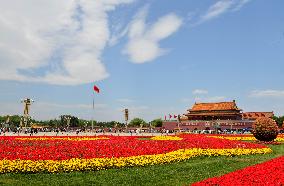
(230613) -- BEIJING, June 13, 2023 (Xinhua) -- People visit the Tian'anmen Square in Beijing, capital of China, June 8, 2023. First created in the Yuan Dynasty (1271-1368), the Beijing Central Axis, or Zhongzhouxian, stretches 7.8 kilometers between the Yongding Gate (Yongdingmen) in the south of the city and the Drum Tower and Bell Tower in the north. Most of the major old-city buildings of Beijing sit along this axis. Fourteen historical places along the axis, including Qianmen, the Forbidden City, Jingshan Park, the Drum and Bell Towers, and Tian'anmen Square have been identified as the key heritage sites. (Xinhua/Ren Chao)

  •  
CHINA-BEIJING-CULTURE-CENTRAL AXIS (CN)

CHINA-BEIJING-CULTURE-CENTRAL AXIS (CN)

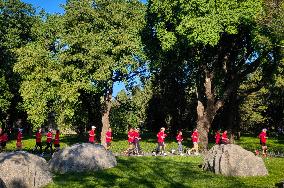
(230613) -- BEIJING, June 13, 2023 (Xinhua) -- This photo taken with a mobile phone shows people jogging in Tiantan (Temple of Heaven) Park in Beijing, capital of China, June 3, 2023. First created in the Yuan Dynasty (1271-1368), the Beijing Central Axis, or Zhongzhouxian, stretches 7.8 kilometers between the Yongding Gate (Yongdingmen) in the south of the city and the Drum Tower and Bell Tower in the north. Most of the major old-city buildings of Beijing sit along this axis. Fourteen historical places along the axis, including Qianmen, the Forbidden City, Jingshan Park, the Drum and Bell Towers, and Tian'anmen Square have been identified as the key heritage sites. (Xinhua/Ju Huanzong)

  •  
CHINA-BEIJING-CULTURE-CENTRAL AXIS (CN)

CHINA-BEIJING-CULTURE-CENTRAL AXIS (CN)

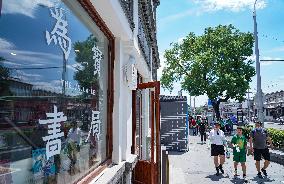
(230613) -- BEIJING, June 13, 2023 (Xinhua) -- People walk past a bookstore established in a historic building on Di'anmenwai Street in Beijing, capital of China, June 11, 2023. First created in the Yuan Dynasty (1271-1368), the Beijing Central Axis, or Zhongzhouxian, stretches 7.8 kilometers between the Yongding Gate (Yongdingmen) in the south of the city and the Drum Tower and Bell Tower in the north. Most of the major old-city buildings of Beijing sit along this axis. Fourteen historical places along the axis, including Qianmen, the Forbidden City, Jingshan Park, the Drum and Bell Towers, and Tian'anmen Square have been identified as the key heritage sites. (Xinhua/Chen Zhonghao)

  •  
CHINA-BEIJING-CULTURE-CENTRAL AXIS (CN)

CHINA-BEIJING-CULTURE-CENTRAL AXIS (CN)

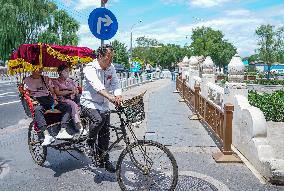
(230613) -- BEIJING, June 13, 2023 (Xinhua) -- Visitors take a rickshaw ride passing the Wanning Bridge built in Yuan Dynasty (1271-1368) in Beijing, capital of China, June 11, 2023. First created in the Yuan Dynasty (1271-1368), the Beijing Central Axis, or Zhongzhouxian, stretches 7.8 kilometers between the Yongding Gate (Yongdingmen) in the south of the city and the Drum Tower and Bell Tower in the north. Most of the major old-city buildings of Beijing sit along this axis. Fourteen historical places along the axis, including Qianmen, the Forbidden City, Jingshan Park, the Drum and Bell Towers, and Tian'anmen Square have been identified as the key heritage sites. (Xinhua/Chen Zhonghao)

  •  
CHINA-BEIJING-CULTURE-CENTRAL AXIS (CN)

CHINA-BEIJING-CULTURE-CENTRAL AXIS (CN)

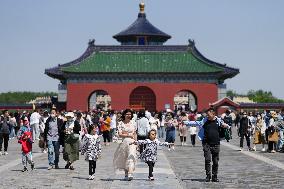
(230613) -- BEIJING, June 13, 2023 (Xinhua) -- People visit Tiantan (Temple of Heaven) Park in Beijing, capital of China, April 29, 2023. First created in the Yuan Dynasty (1271-1368), the Beijing Central Axis, or Zhongzhouxian, stretches 7.8 kilometers between the Yongding Gate (Yongdingmen) in the south of the city and the Drum Tower and Bell Tower in the north. Most of the major old-city buildings of Beijing sit along this axis. Fourteen historical places along the axis, including Qianmen, the Forbidden City, Jingshan Park, the Drum and Bell Towers, and Tian'anmen Square have been identified as the key heritage sites. (Xinhua/Ju Huanzong)

  •  
CHINA-BEIJING-CULTURE-CENTRAL AXIS (CN)

CHINA-BEIJING-CULTURE-CENTRAL AXIS (CN)

(230613) -- BEIJING, June 13, 2023 (Xinhua) -- Tourists visit a commercial street near Shichahai Lake in central Beijing, capital of China, June 9, 2023. First created in the Yuan Dynasty (1271-1368), the Beijing Central Axis, or Zhongzhouxian, stretches 7.8 kilometers between the Yongding Gate (Yongdingmen) in the south of the city and the Drum Tower and Bell Tower in the north. Most of the major old-city buildings of Beijing sit along this axis. Fourteen historical places along the axis, including Qianmen, the Forbidden City, Jingshan Park, the Drum and Bell Towers, and Tian'anmen Square have been identified as the key heritage sites. (Xinhua/Ju Huanzong)

  •  
CHINA-BEIJING-CULTURE-CENTRAL AXIS (CN)

CHINA-BEIJING-CULTURE-CENTRAL AXIS (CN)

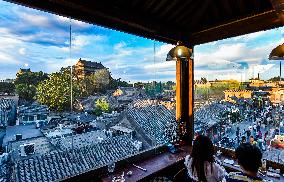
(230613) -- BEIJING, June 13, 2023 (Xinhua) -- People look over the terrace of a coffee shop near Shichahai Lake in central Beijing, capital of China, June 10, 2023. First created in the Yuan Dynasty (1271-1368), the Beijing Central Axis, or Zhongzhouxian, stretches 7.8 kilometers between the Yongding Gate (Yongdingmen) in the south of the city and the Drum Tower and Bell Tower in the north. Most of the major old-city buildings of Beijing sit along this axis. Fourteen historical places along the axis, including Qianmen, the Forbidden City, Jingshan Park, the Drum and Bell Towers, and Tian'anmen Square have been identified as the key heritage sites. (Xinhua/Chen Zhonghao)

  •  
CHINA-BEIJING-CULTURE-CENTRAL AXIS (CN)

CHINA-BEIJING-CULTURE-CENTRAL AXIS (CN)

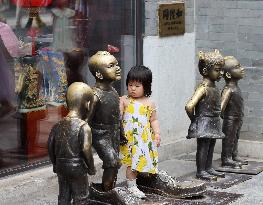
(230613) -- BEIJING, June 13, 2023 (Xinhua) -- A young girl has fun with some bronze statues in Qianmen Street in central Beijing, capital of China, June 11, 2023. First created in the Yuan Dynasty (1271-1368), the Beijing Central Axis, or Zhongzhouxian, stretches 7.8 kilometers between the Yongding Gate (Yongdingmen) in the south of the city and the Drum Tower and Bell Tower in the north. Most of the major old-city buildings of Beijing sit along this axis. Fourteen historical places along the axis, including Qianmen, the Forbidden City, Jingshan Park, the Drum and Bell Towers, and Tian'anmen Square have been identified as the key heritage sites. (Xinhua/Zhang Chenlin)

  •  
CHINA-BEIJING-CULTURE-CENTRAL AXIS (CN)

CHINA-BEIJING-CULTURE-CENTRAL AXIS (CN)

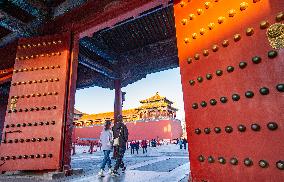
(230613) -- BEIJING, June 13, 2023 (Xinhua) -- People walk through a gate in the Forbidden City in Beijing, capital of China, March 27, 2023. First created in the Yuan Dynasty (1271-1368), the Beijing Central Axis, or Zhongzhouxian, stretches 7.8 kilometers between the Yongding Gate (Yongdingmen) in the south of the city and the Drum Tower and Bell Tower in the north. Most of the major old-city buildings of Beijing sit along this axis. Fourteen historical places along the axis, including Qianmen, the Forbidden City, Jingshan Park, the Drum and Bell Towers, and Tian'anmen Square have been identified as the key heritage sites. (Xinhua/Chen Zhonghao)

  •  
CHINA-BEIJING-CULTURE-CENTRAL AXIS (CN)

CHINA-BEIJING-CULTURE-CENTRAL AXIS (CN)

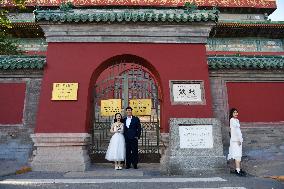
(230613) -- BEIJING, June 13, 2023 (Xinhua) -- A boy has fun in the Yongdingmen Park in south Beijing, capital of China, June 6, 2023. First created in the Yuan Dynasty (1271-1368), the Beijing Central Axis, or Zhongzhouxian, stretches 7.8 kilometers between the Yongding Gate (Yongdingmen) in the south of the city and the Drum Tower and Bell Tower in the north. Most of the major old-city buildings of Beijing sit along this axis. Fourteen historical places along the axis, including Qianmen, the Forbidden City, Jingshan Park, the Drum and Bell Towers, and Tian'anmen Square have been identified as the key heritage sites. (Xinhua/Ju Huanzong)

  •  
XINHUA-PICTURES OF THE YEAR 2022-CHINA NEWS

XINHUA-PICTURES OF THE YEAR 2022-CHINA NEWS

(230109) -- BEIJING, Jan. 9, 2023 (Xinhua) -- A bullet train passes by the Yongdingmen Gate in Beijing, capital of China, Jan. 17, 2022. The 2022 Spring Festival travel rush began on the same day. (Xinhua/Xing Guangli)

  •  
CHINA-BEIJING-LUNAR ECLIPSE (CN)

CHINA-BEIJING-LUNAR ECLIPSE (CN)

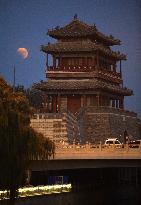
(221108) -- BEIJING, Nov. 8, 2022 (Xinhua) -- The moon is seen during a total lunar eclipse at the Yongdingmen (Gate of Perpetual Peace) in Beijing, capital of China, Nov. 8, 2022. (Xinhua/Lu Zhe)

  •  
CHINA-BEIJING-CENTRAL AXIS (CN)

CHINA-BEIJING-CENTRAL AXIS (CN)

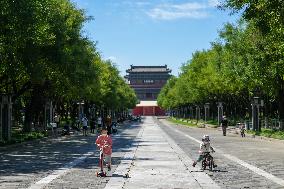
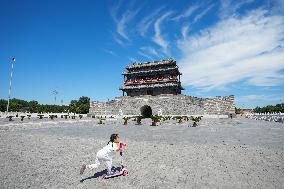
(221005) -- BEIJING, Oct. 5, 2022 (Xinhua) -- Two children play at the scenic area of south central axis in Yongdingmen Park in Beijing, capital of China, Aug. 16, 2022. Chinese authorities have planned to recommend the Beijing Central Axis as China's 2024 world cultural heritage application project, according to the National Cultural Heritage Administration. The Beijing Central Axis is 7.8 kilometers long, starting from the Yongding Gate in the south of the city and ending with the Drum Tower and Bell Tower in the north. Most of the major old-city buildings of Beijing are along this axis. The central axis is the backbone of old Beijing, representing the highest achievement in the planning, design and construction of an ancient capital of Eastern civilization. The axis was extended in 2003 as the city prepared for the 2008 Olympic Games. Beijing authorities' general plan states that the current axis extension stretches to the Yanshan Mountain Range to the north and Beijing Daxing International Airport in the

  •  
CHINA-BEIJING-CENTRAL AXIS (CN)

CHINA-BEIJING-CENTRAL AXIS (CN)

(221005) -- BEIJING, Oct. 5, 2022 (Xinhua) -- Photo taken on Aug. 16, 2022 shows a train running past Yongdingmen Gate in Beijing, capital of China. Chinese authorities have planned to recommend the Beijing Central Axis as China's 2024 world cultural heritage application project, according to the National Cultural Heritage Administration. The Beijing Central Axis is 7.8 kilometers long, starting from the Yongding Gate in the south of the city and ending with the Drum Tower and Bell Tower in the north. Most of the major old-city buildings of Beijing are along this axis. The central axis is the backbone of old Beijing, representing the highest achievement in the planning, design and construction of an ancient capital of Eastern civilization. The axis was extended in 2003 as the city prepared for the 2008 Olympic Games. Beijing authorities' general plan states that the current axis extension stretches to the Yanshan Mountain Range to the north and Beijing Daxing International Airport in the south. (Xinhua/Ju Hu

  •  
CHINA-BEIJING-CENTRAL AXIS (CN)

CHINA-BEIJING-CENTRAL AXIS (CN)

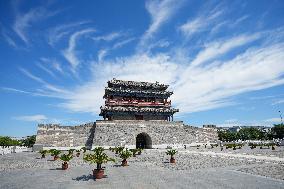
(221005) -- BEIJING, Oct. 5, 2022 (Xinhua) -- People visit the Yongdingmen Gate in Beijing, capital of China, Aug. 16, 2022. Chinese authorities have planned to recommend the Beijing Central Axis as China's 2024 world cultural heritage application project, according to the National Cultural Heritage Administration. The Beijing Central Axis is 7.8 kilometers long, starting from the Yongding Gate in the south of the city and ending with the Drum Tower and Bell Tower in the north. Most of the major old-city buildings of Beijing are along this axis. The central axis is the backbone of old Beijing, representing the highest achievement in the planning, design and construction of an ancient capital of Eastern civilization. The axis was extended in 2003 as the city prepared for the 2008 Olympic Games. Beijing authorities' general plan states that the current axis extension stretches to the Yanshan Mountain Range to the north and Beijing Daxing International Airport in the south. (Xinhua/Ju Huanzong)

  •  
CHINA-BEIJING-SCENERY (CN)

CHINA-BEIJING-SCENERY (CN)

(220816) -- BEIJING, Aug. 16, 2022 (Xinhua) -- Visitors tour the Yongdingmen park in Beijing, capital of China, Aug. 16, 2022. (Xinhua/Ju Huanzong)

  •  
CHINA-BEIJING-SCENERY (CN)

CHINA-BEIJING-SCENERY (CN)

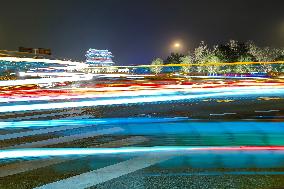
(220816) -- BEIJING, Aug. 16, 2022 (Xinhua) -- Photo taken on Aug. 16, 2022 shows the scene of Yongdingmen (Gate of Perpetual Peace) in Beijing, capital of China. (Xinhua/Ju Huanzong)

  •  
CHINA-BEIJING-SCENERY (CN)

CHINA-BEIJING-SCENERY (CN)

(220816) -- BEIJING, Aug. 16, 2022 (Xinhua) -- A bullet train passes by the Yongdingmen (Gate of Perpetual Peace) in Beijing, capital of China, Aug. 16, 2022. (Xinhua/Ju Huanzong)

  •  
CHINA-BEIJING-SCENERY (CN)

CHINA-BEIJING-SCENERY (CN)

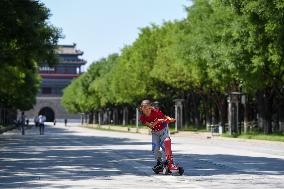
(220816) -- BEIJING, Aug. 16, 2022 (Xinhua) -- A child has fun at the Yongdingmen park in Beijing, capital of China, Aug. 16, 2022. (Xinhua/Ju Huanzong)

  •  
(BeijingCandid)CHINA-BEIJING-ARCHITECTURE (CN)

(BeijingCandid)CHINA-BEIJING-ARCHITECTURE (CN)

(220321) -- BEIJING, March 21, 2022 (Xinhua) -- Photo taken with a mobile phone shows the Yongdingmen in Beijing, capital of China, March 12, 2022. (Xinhua/Meng Tao)

  •  
CHINA-SPRING FESTIVAL-TRAVEL RUSH (CN)

CHINA-SPRING FESTIVAL-TRAVEL RUSH (CN)

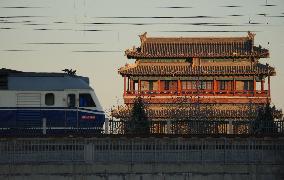
(220117) -- BEIJING, Jan. 17, 2022 (Xinhua) -- A raillway locomotive passes by the Yongdingmen (Gate of Perpetual Peace) in Beijing, capital of China, Jan. 17, 2022. The number of railway passenger trips during China's upcoming Spring Festival travel rush is expected to jump 28.5 percent from the holiday season last year, industry data shows. The 2022 Spring Festival travel rush will last from Jan. 17 to Feb. 25. During the 40-day travel season, also known as chunyun, many Chinese people will travel to meet their families for the Chinese Lunar New Year, or Spring Festival, which will fall on Feb. 1, 2022. (Xinhua/Xing Guangli)

  •  
CHINA-SPRING FESTIVAL-TRAVEL RUSH (CN)

CHINA-SPRING FESTIVAL-TRAVEL RUSH (CN)

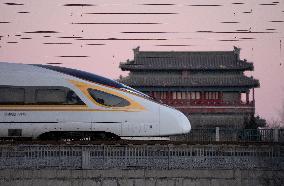
(220117) -- BEIJING, Jan. 17, 2022 (Xinhua) -- A bullet train passes by the Yongdingmen (Gate of Perpetual Peace) in Beijing, capital of China, Jan. 17, 2022. The number of railway passenger trips during China's upcoming Spring Festival travel rush is expected to jump 28.5 percent from the holiday season last year, industry data shows. The 2022 Spring Festival travel rush will last from Jan. 17 to Feb. 25. During the 40-day travel season, also known as chunyun, many Chinese people will travel to meet their families for the Chinese Lunar New Year, or Spring Festival, which will fall on Feb. 1, 2022. (Xinhua/Xing Guangli)

  • Main
  • Top
  • Editorial
  • Creative
  • About Us
  • About ILG
  • Terms of use
  • Company
  • BEHIND
  • Price List
  • Single Plan
  • Monthly Plan
  • Services
  • Shooting
  • Rights Clearance
  • Support
  • FAQ
  • How To Buy
  • Contact Us
  • Become a Partner

© KYODO NEWS IMAGES INC

All Rights Reserved.

  • Editorial
  • Olympics
  • News
  • Sports
  • Japan
  • Tech
  • Royal
  • Disaster
  • NorthKorea
  • Old Japan
  • SNS
  • Creative
  • Food
  • Japan
  • Landscape
  • Animal
  • Popular
  • #Ukraine
  • #Thailand
  • #coronavirus
  • #N. Korea
  • #China
  • #Russia
  • #Ukraine
  • #Thailand
  • #coronavirus
  • #N. Korea
  • #China
  • #Russia
  • Food
  • Japan
  • Landscape
  • Animal
  • Olympics
  • News
  • Sports
  • Japan
  • Tech
  • Royal
  • Disaster
  • NorthKorea
  • Old Japan
  • SNS