•  
Mingsha Mountain Crescent Spring Scenic Spot - China

Mingsha Mountain Crescent Spring Scenic Spot - China

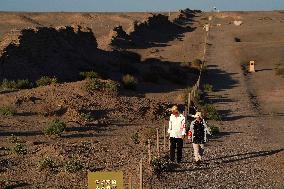
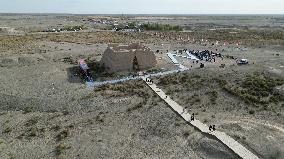
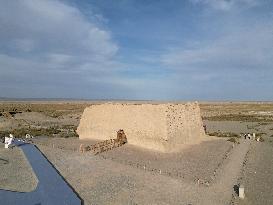
Rangers patrol along the Great Wall at the site of Yumen Pass in Dunhuang, northwest China's Gansu Province, July 16, 2024. Around 2,000 years ago, Dunhuang was a key hub on the ancient Silk Road. Chinese silk and tea passed through this gateway en route to other countries, while agricultural products such as grapes, carrots and pomegranates made their way into China. Known for its breathtaking landscapes and historical significance, Dunhuang holds a treasure trove of ancient Buddhist relics and art. In recent years, Dunhuang has leveraged its cultural tourism resources and vigorously attracted visitors and scholars from around the world who are keen to delve into its historical significance and witness its modern cultural revival. Once served for thousands of years as a meeting point of the East and the West along the ancient Silk Road, Dunhuang has now revived to embrace new development. Photo by Xinhua/Ma Ning/ABACAPRESS.COM

  •  
CHINA-GANSU-YUMEN-GREEN POWER (CN)

CHINA-GANSU-YUMEN-GREEN POWER (CN)

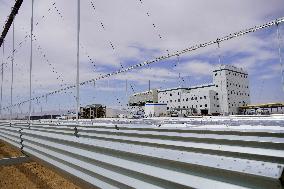
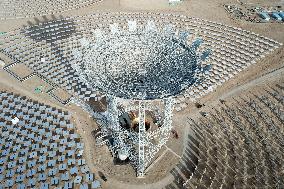
(240716) -- LANZHOU, July 16, 2024 Photo by Xinhua/ABACAPRESS.COM) -- This photo taken on July 1, 2024 shows a concentrated solar thermal project in Yumen City, northwest China's Gansu Province. TO GO WITH "Across China: NW China's resource-depleted city revitalized by green power" Photo by Xinhua/ABACAPRESS.COM/Cao Peixian)

  •  
XINHUA PHOTOS OF THE DAY

XINHUA PHOTOS OF THE DAY

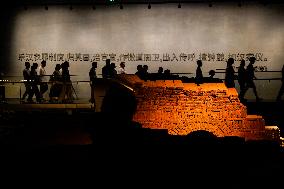
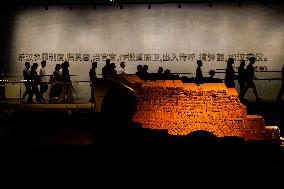
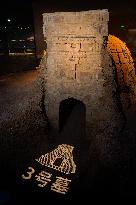
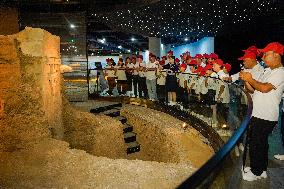
(240716) -- BEIJING, July 16, 2024 Photo by Xinhua/ABACAPRESS.COM) -- People visit the Wei and Jin Dynasties Ancient Tombs Site Museum in Kuqa City, northwest China's Xinjiang Uygur Autonomous Region, July 15, 2024. An underground museum of the Wei and Jin dynasties (220-420) ancient tombs opened on Monday in Kuqa County, an area that previously belonged to the ancient Qiuci State. The Qiuci State, which commenced in the second century BC and existed for more than 1,000 years, was one of the 36 states in the Western Regions, a term used in the Han Dynasty (206 BC-220 AD) for areas west of the Yumen Pass, including present Xinjiang and parts of Central Asia. This in-situ museum with an exhibition space of 5,000 square meters was built to protect 15 brick tomb chambers discovered in 2007 during the construction of the Youyi Road underground pass. The discovery was one of China's top ten new archaeological discoveries that year. The tomb complex was built in consistence with the Han Dynasty style brick-chambered

  •  
Wei And Jin Dynasties Ancient Tombs Site Museum - Kuqa City

Wei And Jin Dynasties Ancient Tombs Site Museum - Kuqa City

This photo taken on July 15, 2024. An underground museum of the Wei and Jin dynasties (220-420) ancient tombs opened on Monday in Kuqa County, an area that previously belonged to the ancient Qiuci State. The Qiuci State, which commenced in the second century BC and existed for more than 1,000 years, was one of the 36 states in the Western Regions, a term used in the Han Dynasty (206 BC-220 AD) for areas west of the Yumen Pass, including present Xinjiang and parts of Central Asia. This in-situ museum with an exhibition space of 5,000 square meters was built to protect 15 brick tomb chambers discovered in 2007 during the construction of the Youyi Road underground pass. The discovery was one of China's top ten new archaeological discoveries that year. The tomb complex was built in consistence with the Han Dynasty style brick-chambered tombs found in the central China region and along the Hexi Corridor, stretching over a distance of nearly 1,000 kilometers in northwest China's Gansu Province, which is home to fiv

  •  
Wei And Jin Dynasties Ancient Tombs Site Museum - Kuqa City

Wei And Jin Dynasties Ancient Tombs Site Museum - Kuqa City

Visitors wear VR sets for exhibitions at the Wei and Jin Dynasties Ancient Tombs Site Museum in Kuqa City, northwest China's Xinjiang Uygur Autonomous Region, July 15, 2024. An underground museum of the Wei and Jin dynasties (220-420) ancient tombs opened on Monday in Kuqa County, an area that previously belonged to the ancient Qiuci State. The Qiuci State, which commenced in the second century BC and existed for more than 1,000 years, was one of the 36 states in the Western Regions, a term used in the Han Dynasty (206 BC-220 AD) for areas west of the Yumen Pass, including present Xinjiang and parts of Central Asia. This in-situ museum with an exhibition space of 5,000 square meters was built to protect 15 brick tomb chambers discovered in 2007 during the construction of the Youyi Road underground pass. The discovery was one of China's top ten new archaeological discoveries that year. The tomb complex was built in consistence with the Han Dynasty style brick-chambered tombs found in the central China region a

  •  
Wei And Jin Dynasties Ancient Tombs Site Museum - Kuqa City

Wei And Jin Dynasties Ancient Tombs Site Museum - Kuqa City

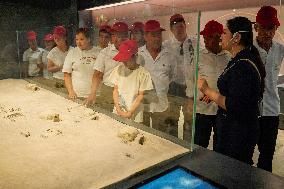
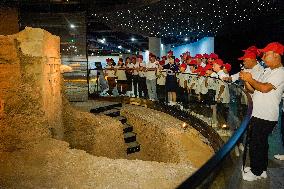
People visit the Wei and Jin Dynasties Ancient Tombs Site Museum in Kuqa City, northwest China's Xinjiang Uygur Autonomous Region, July 15, 2024. An underground museum of the Wei and Jin dynasties (220-420) ancient tombs opened on Monday in Kuqa County, an area that previously belonged to the ancient Qiuci State. The Qiuci State, which commenced in the second century BC and existed for more than 1,000 years, was one of the 36 states in the Western Regions, a term used in the Han Dynasty (206 BC-220 AD) for areas west of the Yumen Pass, including present Xinjiang and parts of Central Asia. This in-situ museum with an exhibition space of 5,000 square meters was built to protect 15 brick tomb chambers discovered in 2007 during the construction of the Youyi Road underground pass. The discovery was one of China's top ten new archaeological discoveries that year. The tomb complex was built in consistence with the Han Dynasty style brick-chambered tombs found in the central China region and along the Hexi Corridor,

  •  
Wei And Jin Dynasties Ancient Tombs Site Museum - Kuqa City

Wei And Jin Dynasties Ancient Tombs Site Museum - Kuqa City

This photo taken on July 15, 2024. An underground museum of the Wei and Jin dynasties (220-420) ancient tombs opened on Monday in Kuqa County, an area that previously belonged to the ancient Qiuci State. The Qiuci State, which commenced in the second century BC and existed for more than 1,000 years, was one of the 36 states in the Western Regions, a term used in the Han Dynasty (206 BC-220 AD) for areas west of the Yumen Pass, including present Xinjiang and parts of Central Asia. This in-situ museum with an exhibition space of 5,000 square meters was built to protect 15 brick tomb chambers discovered in 2007 during the construction of the Youyi Road underground pass. The discovery was one of China's top ten new archaeological discoveries that year. The tomb complex was built in consistence with the Han Dynasty style brick-chambered tombs found in the central China region and along the Hexi Corridor, stretching over a distance of nearly 1,000 kilometers in northwest China's Gansu Province, which is home to fiv

  •  
Wei And Jin Dynasties Ancient Tombs Site Museum - Kuqa City

Wei And Jin Dynasties Ancient Tombs Site Museum - Kuqa City

People visit the Wei and Jin Dynasties Ancient Tombs Site Museum in Kuqa City, northwest China's Xinjiang Uygur Autonomous Region, July 15, 2024. An underground museum of the Wei and Jin dynasties (220-420) ancient tombs opened on Monday in Kuqa County, an area that previously belonged to the ancient Qiuci State. The Qiuci State, which commenced in the second century BC and existed for more than 1,000 years, was one of the 36 states in the Western Regions, a term used in the Han Dynasty (206 BC-220 AD) for areas west of the Yumen Pass, including present Xinjiang and parts of Central Asia. This in-situ museum with an exhibition space of 5,000 square meters was built to protect 15 brick tomb chambers discovered in 2007 during the construction of the Youyi Road underground pass. The discovery was one of China's top ten new archaeological discoveries that year. The tomb complex was built in consistence with the Han Dynasty style brick-chambered tombs found in the central China region and along the Hexi Corridor,

  •  
Wei And Jin Dynasties Ancient Tombs Site Museum - Kuqa City

Wei And Jin Dynasties Ancient Tombs Site Museum - Kuqa City

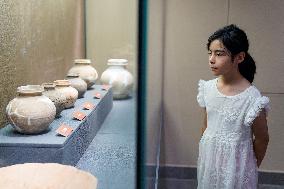
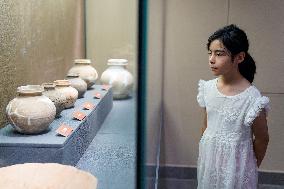
Potteries are exhibited at the Wei and Jin Dynasties Ancient Tombs Site Museum in Kuqa City, northwest China's Xinjiang Uygur Autonomous Region, July 15, 2024. An underground museum of the Wei and Jin dynasties (220-420) ancient tombs opened on Monday in Kuqa County, an area that previously belonged to the ancient Qiuci State. The Qiuci State, which commenced in the second century BC and existed for more than 1,000 years, was one of the 36 states in the Western Regions, a term used in the Han Dynasty (206 BC-220 AD) for areas west of the Yumen Pass, including present Xinjiang and parts of Central Asia. This in-situ museum with an exhibition space of 5,000 square meters was built to protect 15 brick tomb chambers discovered in 2007 during the construction of the Youyi Road underground pass. The discovery was one of China's top ten new archaeological discoveries that year. The tomb complex was built in consistence with the Han Dynasty style brick-chambered tombs found in the central China region and along the H

  •  
Wei And Jin Dynasties Ancient Tombs Site Museum - Kuqa City

Wei And Jin Dynasties Ancient Tombs Site Museum - Kuqa City

People visit the Wei and Jin Dynasties Ancient Tombs Site Museum in Kuqa City, northwest China's Xinjiang Uygur Autonomous Region, July 15, 2024. An underground museum of the Wei and Jin dynasties (220-420) ancient tombs opened on Monday in Kuqa County, an area that previously belonged to the ancient Qiuci State. The Qiuci State, which commenced in the second century BC and existed for more than 1,000 years, was one of the 36 states in the Western Regions, a term used in the Han Dynasty (206 BC-220 AD) for areas west of the Yumen Pass, including present Xinjiang and parts of Central Asia. This in-situ museum with an exhibition space of 5,000 square meters was built to protect 15 brick tomb chambers discovered in 2007 during the construction of the Youyi Road underground pass. The discovery was one of China's top ten new archaeological discoveries that year. The tomb complex was built in consistence with the Han Dynasty style brick-chambered tombs found in the central China region and along the Hexi Corridor,

  •  
Wei And Jin Dynasties Ancient Tombs Site Museum - Kuqa City

Wei And Jin Dynasties Ancient Tombs Site Museum - Kuqa City

This photo taken on July 15, 2024. An underground museum of the Wei and Jin dynasties (220-420) ancient tombs opened on Monday in Kuqa County, an area that previously belonged to the ancient Qiuci State. The Qiuci State, which commenced in the second century BC and existed for more than 1,000 years, was one of the 36 states in the Western Regions, a term used in the Han Dynasty (206 BC-220 AD) for areas west of the Yumen Pass, including present Xinjiang and parts of Central Asia. This in-situ museum with an exhibition space of 5,000 square meters was built to protect 15 brick tomb chambers discovered in 2007 during the construction of the Youyi Road underground pass. The discovery was one of China's top ten new archaeological discoveries that year. The tomb complex was built in consistence with the Han Dynasty style brick-chambered tombs found in the central China region and along the Hexi Corridor, stretching over a distance of nearly 1,000 kilometers in northwest China's Gansu Province, which is home to fiv

  •  
Wei And Jin Dynasties Ancient Tombs Site Museum - Kuqa City

Wei And Jin Dynasties Ancient Tombs Site Museum - Kuqa City

People visit the Wei and Jin Dynasties Ancient Tombs Site Museum in Kuqa City, northwest China's Xinjiang Uygur Autonomous Region, July 15, 2024. An underground museum of the Wei and Jin dynasties (220-420) ancient tombs opened on Monday in Kuqa County, an area that previously belonged to the ancient Qiuci State. The Qiuci State, which commenced in the second century BC and existed for more than 1,000 years, was one of the 36 states in the Western Regions, a term used in the Han Dynasty (206 BC-220 AD) for areas west of the Yumen Pass, including present Xinjiang and parts of Central Asia. This in-situ museum with an exhibition space of 5,000 square meters was built to protect 15 brick tomb chambers discovered in 2007 during the construction of the Youyi Road underground pass. The discovery was one of China's top ten new archaeological discoveries that year. The tomb complex was built in consistence with the Han Dynasty style brick-chambered tombs found in the central China region and along the Hexi Corridor,

  •  
Wei And Jin Dynasties Ancient Tombs Site Museum - Kuqa City

Wei And Jin Dynasties Ancient Tombs Site Museum - Kuqa City

People visit the Wei and Jin Dynasties Ancient Tombs Site Museum in Kuqa City, northwest China's Xinjiang Uygur Autonomous Region, July 15, 2024. An underground museum of the Wei and Jin dynasties (220-420) ancient tombs opened on Monday in Kuqa County, an area that previously belonged to the ancient Qiuci State. The Qiuci State, which commenced in the second century BC and existed for more than 1,000 years, was one of the 36 states in the Western Regions, a term used in the Han Dynasty (206 BC-220 AD) for areas west of the Yumen Pass, including present Xinjiang and parts of Central Asia. This in-situ museum with an exhibition space of 5,000 square meters was built to protect 15 brick tomb chambers discovered in 2007 during the construction of the Youyi Road underground pass. The discovery was one of China's top ten new archaeological discoveries that year. The tomb complex was built in consistence with the Han Dynasty style brick-chambered tombs found in the central China region and along the Hexi Corridor,

  •  
Wei And Jin Dynasties Ancient Tombs Site Museum - Kuqa City

Wei And Jin Dynasties Ancient Tombs Site Museum - Kuqa City

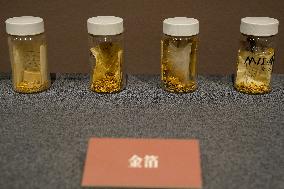
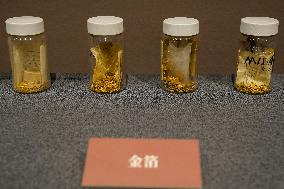
Gold foils are exhibited at the Wei and Jin Dynasties Ancient Tombs Site Museum in Kuqa City, northwest China's Xinjiang Uygur Autonomous Region, July 15, 2024. An underground museum of the Wei and Jin dynasties (220-420) ancient tombs opened on Monday in Kuqa County, an area that previously belonged to the ancient Qiuci State. The Qiuci State, which commenced in the second century BC and existed for more than 1,000 years, was one of the 36 states in the Western Regions, a term used in the Han Dynasty (206 BC-220 AD) for areas west of the Yumen Pass, including present Xinjiang and parts of Central Asia. This in-situ museum with an exhibition space of 5,000 square meters was built to protect 15 brick tomb chambers discovered in 2007 during the construction of the Youyi Road underground pass. The discovery was one of China's top ten new archaeological discoveries that year. The tomb complex was built in consistence with the Han Dynasty style brick-chambered tombs found in the central China region and along the

  •  
Wei And Jin Dynasties Ancient Tombs Site Museum - Kuqa City

Wei And Jin Dynasties Ancient Tombs Site Museum - Kuqa City

People visit the Wei and Jin Dynasties Ancient Tombs Site Museum in Kuqa City, northwest China's Xinjiang Uygur Autonomous Region, July 15, 2024. An underground museum of the Wei and Jin dynasties (220-420) ancient tombs opened on Monday in Kuqa County, an area that previously belonged to the ancient Qiuci State. The Qiuci State, which commenced in the second century BC and existed for more than 1,000 years, was one of the 36 states in the Western Regions, a term used in the Han Dynasty (206 BC-220 AD) for areas west of the Yumen Pass, including present Xinjiang and parts of Central Asia. This in-situ museum with an exhibition space of 5,000 square meters was built to protect 15 brick tomb chambers discovered in 2007 during the construction of the Youyi Road underground pass. The discovery was one of China's top ten new archaeological discoveries that year. The tomb complex was built in consistence with the Han Dynasty style brick-chambered tombs found in the central China region and along the Hexi Corridor,

  •  
Wei And Jin Dynasties Ancient Tombs Site Museum - Kuqa City

Wei And Jin Dynasties Ancient Tombs Site Museum - Kuqa City

People visit the Wei and Jin Dynasties Ancient Tombs Site Museum in Kuqa City, northwest China's Xinjiang Uygur Autonomous Region, July 15, 2024. An underground museum of the Wei and Jin dynasties (220-420) ancient tombs opened on Monday in Kuqa County, an area that previously belonged to the ancient Qiuci State. The Qiuci State, which commenced in the second century BC and existed for more than 1,000 years, was one of the 36 states in the Western Regions, a term used in the Han Dynasty (206 BC-220 AD) for areas west of the Yumen Pass, including present Xinjiang and parts of Central Asia. This in-situ museum with an exhibition space of 5,000 square meters was built to protect 15 brick tomb chambers discovered in 2007 during the construction of the Youyi Road underground pass. The discovery was one of China's top ten new archaeological discoveries that year. The tomb complex was built in consistence with the Han Dynasty style brick-chambered tombs found in the central China region and along the Hexi Corridor,

  •  
Wei And Jin Dynasties Ancient Tombs Site Museum - Kuqa City

Wei And Jin Dynasties Ancient Tombs Site Museum - Kuqa City

A visitor views exhibits at the Wei and Jin Dynasties Ancient Tombs Site Museum in Kuqa City, northwest China's Xinjiang Uygur Autonomous Region, July 15, 2024. An underground museum of the Wei and Jin dynasties (220-420) ancient tombs opened on Monday in Kuqa County, an area that previously belonged to the ancient Qiuci State. The Qiuci State, which commenced in the second century BC and existed for more than 1,000 years, was one of the 36 states in the Western Regions, a term used in the Han Dynasty (206 BC-220 AD) for areas west of the Yumen Pass, including present Xinjiang and parts of Central Asia. This in-situ museum with an exhibition space of 5,000 square meters was built to protect 15 brick tomb chambers discovered in 2007 during the construction of the Youyi Road underground pass. The discovery was one of China's top ten new archaeological discoveries that year. The tomb complex was built in consistence with the Han Dynasty style brick-chambered tombs found in the central China region and along the

  •  
Wei And Jin Dynasties Ancient Tombs Site Museum - Kuqa City

Wei And Jin Dynasties Ancient Tombs Site Museum - Kuqa City

Exhibits powered by digital technologies are pictured at the Wei and Jin Dynasties Ancient Tombs Site Museum in Kuqa City, northwest China's Xinjiang Uygur Autonomous Region, July 15, 2024. An underground museum of the Wei and Jin dynasties (220-420) ancient tombs opened on Monday in Kuqa County, an area that previously belonged to the ancient Qiuci State. The Qiuci State, which commenced in the second century BC and existed for more than 1,000 years, was one of the 36 states in the Western Regions, a term used in the Han Dynasty (206 BC-220 AD) for areas west of the Yumen Pass, including present Xinjiang and parts of Central Asia. This in-situ museum with an exhibition space of 5,000 square meters was built to protect 15 brick tomb chambers discovered in 2007 during the construction of the Youyi Road underground pass. The discovery was one of China's top ten new archaeological discoveries that year. The tomb complex was built in consistence with the Han Dynasty style brick-chambered tombs found in the centra

  •  
CHINA-XINJIANG-KUQA-TOMBS SITE MUSEUM-OPEN (CN)

CHINA-XINJIANG-KUQA-TOMBS SITE MUSEUM-OPEN (CN)

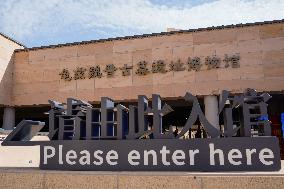
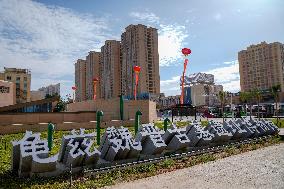
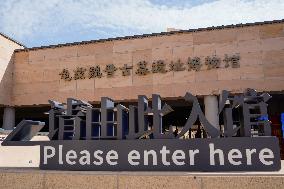
(240715) -- KUQA, July 15, 2024 Photo by Xinhua/ABACAPRESS.COM) -- This photo taken on July 15, 2024 shows an exterior view of the Wei and Jin Dynasties Ancient Tombs Site Museum in Kuqa City, northwest China's Xinjiang Uygur Autonomous Region. An underground museum of the Wei and Jin dynasties (220-420) ancient tombs opened on Monday in Kuqa County, an area that previously belonged to the ancient Qiuci State. The Qiuci State, which commenced in the second century BC and existed for more than 1,000 years, was one of the 36 states in the Western Regions, a term used in the Han Dynasty (206 BC-220 AD) for areas west of the Yumen Pass, including present Xinjiang and parts of Central Asia. This in-situ museum with an exhibition space of 5,000 square meters was built to protect 15 brick tomb chambers discovered in 2007 during the construction of the Youyi Road underground pass. The discovery was one of China's top ten new archaeological discoveries that year. The tomb complex was built in consistence with the Han

  •  
CHINA-XINJIANG-KUQA-TOMBS SITE MUSEUM-OPEN (CN)

CHINA-XINJIANG-KUQA-TOMBS SITE MUSEUM-OPEN (CN)

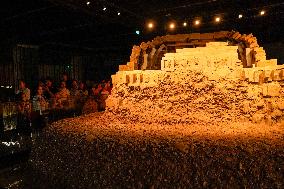
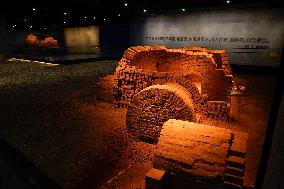
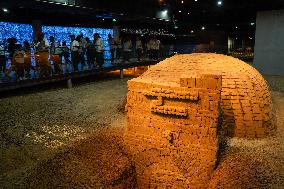
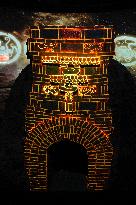
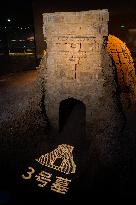
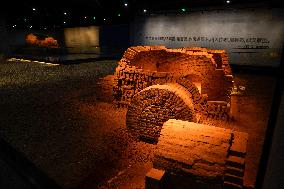
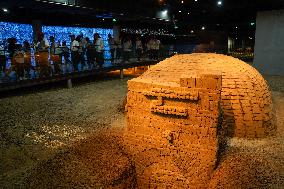
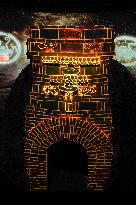
(240715) -- KUQA, July 15, 2024 Photo by Xinhua/ABACAPRESS.COM) -- This photo taken on July 15, 2024 shows a tomb exhibited at the Wei and Jin Dynasties Ancient Tombs Site Museum in Kuqa City, northwest China's Xinjiang Uygur Autonomous Region. An underground museum of the Wei and Jin dynasties (220-420) ancient tombs opened on Monday in Kuqa County, an area that previously belonged to the ancient Qiuci State. The Qiuci State, which commenced in the second century BC and existed for more than 1,000 years, was one of the 36 states in the Western Regions, a term used in the Han Dynasty (206 BC-220 AD) for areas west of the Yumen Pass, including present Xinjiang and parts of Central Asia. This in-situ museum with an exhibition space of 5,000 square meters was built to protect 15 brick tomb chambers discovered in 2007 during the construction of the Youyi Road underground pass. The discovery was one of China's top ten new archaeological discoveries that year. The tomb complex was built in consistence with the Han

  •  
CHINA-XINJIANG-KUQA-TOMBS SITE MUSEUM-OPEN (CN)

CHINA-XINJIANG-KUQA-TOMBS SITE MUSEUM-OPEN (CN)

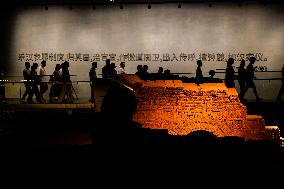
(240715) -- KUQA, July 15, 2024 Photo by Xinhua/ABACAPRESS.COM) -- People visit the Wei and Jin Dynasties Ancient Tombs Site Museum in Kuqa City, northwest China's Xinjiang Uygur Autonomous Region, July 15, 2024. An underground museum of the Wei and Jin dynasties (220-420) ancient tombs opened on Monday in Kuqa County, an area that previously belonged to the ancient Qiuci State. The Qiuci State, which commenced in the second century BC and existed for more than 1,000 years, was one of the 36 states in the Western Regions, a term used in the Han Dynasty (206 BC-220 AD) for areas west of the Yumen Pass, including present Xinjiang and parts of Central Asia. This in-situ museum with an exhibition space of 5,000 square meters was built to protect 15 brick tomb chambers discovered in 2007 during the construction of the Youyi Road underground pass. The discovery was one of China's top ten new archaeological discoveries that year. The tomb complex was built in consistence with the Han Dynasty style brick-chambered to

  •  
CHINA-XINJIANG-KUQA-TOMBS SITE MUSEUM-OPEN (CN)

CHINA-XINJIANG-KUQA-TOMBS SITE MUSEUM-OPEN (CN)

(240715) -- KUQA, July 15, 2024 Photo by Xinhua/ABACAPRESS.COM) -- People visit the Wei and Jin Dynasties Ancient Tombs Site Museum in Kuqa City, northwest China's Xinjiang Uygur Autonomous Region, July 15, 2024. An underground museum of the Wei and Jin dynasties (220-420) ancient tombs opened on Monday in Kuqa County, an area that previously belonged to the ancient Qiuci State. The Qiuci State, which commenced in the second century BC and existed for more than 1,000 years, was one of the 36 states in the Western Regions, a term used in the Han Dynasty (206 BC-220 AD) for areas west of the Yumen Pass, including present Xinjiang and parts of Central Asia. This in-situ museum with an exhibition space of 5,000 square meters was built to protect 15 brick tomb chambers discovered in 2007 during the construction of the Youyi Road underground pass. The discovery was one of China's top ten new archaeological discoveries that year. The tomb complex was built in consistence with the Han Dynasty style brick-chambered to

  •  
CHINA-XINJIANG-KUQA-TOMBS SITE MUSEUM-OPEN (CN)

CHINA-XINJIANG-KUQA-TOMBS SITE MUSEUM-OPEN (CN)

(240715) -- KUQA, July 15, 2024 Photo by Xinhua/ABACAPRESS.COM) -- This photo taken on July 15, 2024 shows an exterior view of the Wei and Jin Dynasties Ancient Tombs Site Museum in Kuqa City, northwest China's Xinjiang Uygur Autonomous Region. An underground museum of the Wei and Jin dynasties (220-420) ancient tombs opened on Monday in Kuqa County, an area that previously belonged to the ancient Qiuci State. The Qiuci State, which commenced in the second century BC and existed for more than 1,000 years, was one of the 36 states in the Western Regions, a term used in the Han Dynasty (206 BC-220 AD) for areas west of the Yumen Pass, including present Xinjiang and parts of Central Asia. This in-situ museum with an exhibition space of 5,000 square meters was built to protect 15 brick tomb chambers discovered in 2007 during the construction of the Youyi Road underground pass. The discovery was one of China's top ten new archaeological discoveries that year. The tomb complex was built in consistence with the Han

  •  
CHINA-XINJIANG-KUQA-TOMBS SITE MUSEUM-OPEN (CN)

CHINA-XINJIANG-KUQA-TOMBS SITE MUSEUM-OPEN (CN)

(240715) -- KUQA, July 15, 2024 Photo by Xinhua/ABACAPRESS.COM) -- People visit the Wei and Jin Dynasties Ancient Tombs Site Museum in Kuqa City, northwest China's Xinjiang Uygur Autonomous Region, July 15, 2024. An underground museum of the Wei and Jin dynasties (220-420) ancient tombs opened on Monday in Kuqa County, an area that previously belonged to the ancient Qiuci State. The Qiuci State, which commenced in the second century BC and existed for more than 1,000 years, was one of the 36 states in the Western Regions, a term used in the Han Dynasty (206 BC-220 AD) for areas west of the Yumen Pass, including present Xinjiang and parts of Central Asia. This in-situ museum with an exhibition space of 5,000 square meters was built to protect 15 brick tomb chambers discovered in 2007 during the construction of the Youyi Road underground pass. The discovery was one of China's top ten new archaeological discoveries that year. The tomb complex was built in consistence with the Han Dynasty style brick-chambered to

  •  
CHINA-XINJIANG-KUQA-TOMBS SITE MUSEUM-OPEN (CN)

CHINA-XINJIANG-KUQA-TOMBS SITE MUSEUM-OPEN (CN)

(240715) -- KUQA, July 15, 2024 Photo by Xinhua/ABACAPRESS.COM) -- Potteries are exhibited at the Wei and Jin Dynasties Ancient Tombs Site Museum in Kuqa City, northwest China's Xinjiang Uygur Autonomous Region, July 15, 2024. An underground museum of the Wei and Jin dynasties (220-420) ancient tombs opened on Monday in Kuqa County, an area that previously belonged to the ancient Qiuci State. The Qiuci State, which commenced in the second century BC and existed for more than 1,000 years, was one of the 36 states in the Western Regions, a term used in the Han Dynasty (206 BC-220 AD) for areas west of the Yumen Pass, including present Xinjiang and parts of Central Asia. This in-situ museum with an exhibition space of 5,000 square meters was built to protect 15 brick tomb chambers discovered in 2007 during the construction of the Youyi Road underground pass. The discovery was one of China's top ten new archaeological discoveries that year. The tomb complex was built in consistence with the Han Dynasty style bric

  •  
CHINA-XINJIANG-KUQA-TOMBS SITE MUSEUM-OPEN (CN)

CHINA-XINJIANG-KUQA-TOMBS SITE MUSEUM-OPEN (CN)

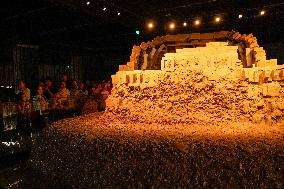
(240715) -- KUQA, July 15, 2024 Photo by Xinhua/ABACAPRESS.COM) -- This photo taken on July 15, 2024 shows an interior view of the Wei and Jin Dynasties Ancient Tombs Site Museum in Kuqa City, northwest China's Xinjiang Uygur Autonomous Region. An underground museum of the Wei and Jin dynasties (220-420) ancient tombs opened on Monday in Kuqa County, an area that previously belonged to the ancient Qiuci State. The Qiuci State, which commenced in the second century BC and existed for more than 1,000 years, was one of the 36 states in the Western Regions, a term used in the Han Dynasty (206 BC-220 AD) for areas west of the Yumen Pass, including present Xinjiang and parts of Central Asia. This in-situ museum with an exhibition space of 5,000 square meters was built to protect 15 brick tomb chambers discovered in 2007 during the construction of the Youyi Road underground pass. The discovery was one of China's top ten new archaeological discoveries that year. The tomb complex was built in consistence with the Han

  •  
CHINA-XINJIANG-KUQA-TOMBS SITE MUSEUM-OPEN (CN)

CHINA-XINJIANG-KUQA-TOMBS SITE MUSEUM-OPEN (CN)

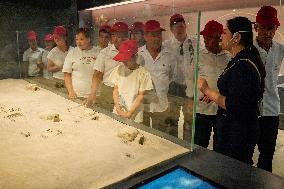
(240715) -- KUQA, July 15, 2024 Photo by Xinhua/ABACAPRESS.COM) -- People visit the Wei and Jin Dynasties Ancient Tombs Site Museum in Kuqa City, northwest China's Xinjiang Uygur Autonomous Region, July 15, 2024. An underground museum of the Wei and Jin dynasties (220-420) ancient tombs opened on Monday in Kuqa County, an area that previously belonged to the ancient Qiuci State. The Qiuci State, which commenced in the second century BC and existed for more than 1,000 years, was one of the 36 states in the Western Regions, a term used in the Han Dynasty (206 BC-220 AD) for areas west of the Yumen Pass, including present Xinjiang and parts of Central Asia. This in-situ museum with an exhibition space of 5,000 square meters was built to protect 15 brick tomb chambers discovered in 2007 during the construction of the Youyi Road underground pass. The discovery was one of China's top ten new archaeological discoveries that year. The tomb complex was built in consistence with the Han Dynasty style brick-chambered to

  •  
CHINA-XINJIANG-KUQA-TOMBS SITE MUSEUM-OPEN (CN)

CHINA-XINJIANG-KUQA-TOMBS SITE MUSEUM-OPEN (CN)

(240715) -- KUQA, July 15, 2024 Photo by Xinhua/ABACAPRESS.COM) -- People visit the Wei and Jin Dynasties Ancient Tombs Site Museum in Kuqa City, northwest China's Xinjiang Uygur Autonomous Region, July 15, 2024. An underground museum of the Wei and Jin dynasties (220-420) ancient tombs opened on Monday in Kuqa County, an area that previously belonged to the ancient Qiuci State. The Qiuci State, which commenced in the second century BC and existed for more than 1,000 years, was one of the 36 states in the Western Regions, a term used in the Han Dynasty (206 BC-220 AD) for areas west of the Yumen Pass, including present Xinjiang and parts of Central Asia. This in-situ museum with an exhibition space of 5,000 square meters was built to protect 15 brick tomb chambers discovered in 2007 during the construction of the Youyi Road underground pass. The discovery was one of China's top ten new archaeological discoveries that year. The tomb complex was built in consistence with the Han Dynasty style brick-chambered to

  •  
CHINA-XINJIANG-KUQA-TOMBS SITE MUSEUM-OPEN (CN)

CHINA-XINJIANG-KUQA-TOMBS SITE MUSEUM-OPEN (CN)

(240715) -- KUQA, July 15, 2024 Photo by Xinhua/ABACAPRESS.COM) -- Visitors wear VR sets for exhibitions at the Wei and Jin Dynasties Ancient Tombs Site Museum in Kuqa City, northwest China's Xinjiang Uygur Autonomous Region, July 15, 2024. An underground museum of the Wei and Jin dynasties (220-420) ancient tombs opened on Monday in Kuqa County, an area that previously belonged to the ancient Qiuci State. The Qiuci State, which commenced in the second century BC and existed for more than 1,000 years, was one of the 36 states in the Western Regions, a term used in the Han Dynasty (206 BC-220 AD) for areas west of the Yumen Pass, including present Xinjiang and parts of Central Asia. This in-situ museum with an exhibition space of 5,000 square meters was built to protect 15 brick tomb chambers discovered in 2007 during the construction of the Youyi Road underground pass. The discovery was one of China's top ten new archaeological discoveries that year. The tomb complex was built in consistence with the Han Dyna

  •  
CHINA-XINJIANG-KUQA-TOMBS SITE MUSEUM-OPEN (CN)

CHINA-XINJIANG-KUQA-TOMBS SITE MUSEUM-OPEN (CN)

(240715) -- KUQA, July 15, 2024 Photo by Xinhua/ABACAPRESS.COM) -- Gold foils are exhibited at the Wei and Jin Dynasties Ancient Tombs Site Museum in Kuqa City, northwest China's Xinjiang Uygur Autonomous Region, July 15, 2024. An underground museum of the Wei and Jin dynasties (220-420) ancient tombs opened on Monday in Kuqa County, an area that previously belonged to the ancient Qiuci State. The Qiuci State, which commenced in the second century BC and existed for more than 1,000 years, was one of the 36 states in the Western Regions, a term used in the Han Dynasty (206 BC-220 AD) for areas west of the Yumen Pass, including present Xinjiang and parts of Central Asia. This in-situ museum with an exhibition space of 5,000 square meters was built to protect 15 brick tomb chambers discovered in 2007 during the construction of the Youyi Road underground pass. The discovery was one of China's top ten new archaeological discoveries that year. The tomb complex was built in consistence with the Han Dynasty style bri

  •  
CHINA-XINJIANG-KUQA-TOMBS SITE MUSEUM-OPEN (CN)

CHINA-XINJIANG-KUQA-TOMBS SITE MUSEUM-OPEN (CN)

(240715) -- KUQA, July 15, 2024 Photo by Xinhua/ABACAPRESS.COM) -- People visit the Wei and Jin Dynasties Ancient Tombs Site Museum in Kuqa City, northwest China's Xinjiang Uygur Autonomous Region, July 15, 2024. An underground museum of the Wei and Jin dynasties (220-420) ancient tombs opened on Monday in Kuqa County, an area that previously belonged to the ancient Qiuci State. The Qiuci State, which commenced in the second century BC and existed for more than 1,000 years, was one of the 36 states in the Western Regions, a term used in the Han Dynasty (206 BC-220 AD) for areas west of the Yumen Pass, including present Xinjiang and parts of Central Asia. This in-situ museum with an exhibition space of 5,000 square meters was built to protect 15 brick tomb chambers discovered in 2007 during the construction of the Youyi Road underground pass. The discovery was one of China's top ten new archaeological discoveries that year. The tomb complex was built in consistence with the Han Dynasty style brick-chambered to

  •  
CHINA-XINJIANG-KUQA-TOMBS SITE MUSEUM-OPEN (CN)

CHINA-XINJIANG-KUQA-TOMBS SITE MUSEUM-OPEN (CN)

(240715) -- KUQA, July 15, 2024 Photo by Xinhua/ABACAPRESS.COM) -- People visit the Wei and Jin Dynasties Ancient Tombs Site Museum in Kuqa City, northwest China's Xinjiang Uygur Autonomous Region, July 15, 2024. An underground museum of the Wei and Jin dynasties (220-420) ancient tombs opened on Monday in Kuqa County, an area that previously belonged to the ancient Qiuci State. The Qiuci State, which commenced in the second century BC and existed for more than 1,000 years, was one of the 36 states in the Western Regions, a term used in the Han Dynasty (206 BC-220 AD) for areas west of the Yumen Pass, including present Xinjiang and parts of Central Asia. This in-situ museum with an exhibition space of 5,000 square meters was built to protect 15 brick tomb chambers discovered in 2007 during the construction of the Youyi Road underground pass. The discovery was one of China's top ten new archaeological discoveries that year. The tomb complex was built in consistence with the Han Dynasty style brick-chambered to

  •  
CHINA-XINJIANG-KUQA-TOMBS SITE MUSEUM-OPEN (CN)

CHINA-XINJIANG-KUQA-TOMBS SITE MUSEUM-OPEN (CN)

(240715) -- KUQA, July 15, 2024 Photo by Xinhua/ABACAPRESS.COM) -- A visitor views exhibits at the Wei and Jin Dynasties Ancient Tombs Site Museum in Kuqa City, northwest China's Xinjiang Uygur Autonomous Region, July 15, 2024. An underground museum of the Wei and Jin dynasties (220-420) ancient tombs opened on Monday in Kuqa County, an area that previously belonged to the ancient Qiuci State. The Qiuci State, which commenced in the second century BC and existed for more than 1,000 years, was one of the 36 states in the Western Regions, a term used in the Han Dynasty (206 BC-220 AD) for areas west of the Yumen Pass, including present Xinjiang and parts of Central Asia. This in-situ museum with an exhibition space of 5,000 square meters was built to protect 15 brick tomb chambers discovered in 2007 during the construction of the Youyi Road underground pass. The discovery was one of China's top ten new archaeological discoveries that year. The tomb complex was built in consistence with the Han Dynasty style bri

  •  
CHINA-XINJIANG-KUQA-TOMBS SITE MUSEUM-OPEN (CN)

CHINA-XINJIANG-KUQA-TOMBS SITE MUSEUM-OPEN (CN)

(240715) -- KUQA, July 15, 2024 Photo by Xinhua/ABACAPRESS.COM) -- Exhibits powered by digital technologies are pictured at the Wei and Jin Dynasties Ancient Tombs Site Museum in Kuqa City, northwest China's Xinjiang Uygur Autonomous Region, July 15, 2024. An underground museum of the Wei and Jin dynasties (220-420) ancient tombs opened on Monday in Kuqa County, an area that previously belonged to the ancient Qiuci State. The Qiuci State, which commenced in the second century BC and existed for more than 1,000 years, was one of the 36 states in the Western Regions, a term used in the Han Dynasty (206 BC-220 AD) for areas west of the Yumen Pass, including present Xinjiang and parts of Central Asia. This in-situ museum with an exhibition space of 5,000 square meters was built to protect 15 brick tomb chambers discovered in 2007 during the construction of the Youyi Road underground pass. The discovery was one of China's top ten new archaeological discoveries that year. The tomb complex was built in consistence w

  •  
(SkyEye) CHINA-KAZAKHSTAN-KYRGYZSTAN-SILK ROAD

(SkyEye) CHINA-KAZAKHSTAN-KYRGYZSTAN-SILK ROAD

(231017) -- BEIJING, Oct. 17, 2023 (Xinhua) -- This aerial photo taken on Oct. 15, 2023 shows the site of Yumen Pass in Dunhuang, northwest China's Gansu Province. About 2,000 years ago, in the Western Han Dynasty (202 B.C.- A.D. 25), a Chinese envoy named Zhang Qian began his expedition to the Western Regions and opened a trade route that later became the Silk Road. In 2014, a joint application by China, Kazakhstan, and Kyrgyzstan led to the recognition of "the Silk Roads: the Routes Network of Chang'an-Tianshan Corridor" as a UNESCO World Heritage Site. Spanning thousands of miles and thousands of years, the ancient Silk Road was not only a route for trade and barter, but also a route for exchanges between civilizations, making a significant contribution to the development and progress of human society. (Xinhua/Zhang Zhimin)

  •  
(SkyEye) CHINA-KAZAKHSTAN-KYRGYZSTAN-SILK ROAD

(SkyEye) CHINA-KAZAKHSTAN-KYRGYZSTAN-SILK ROAD

(231017) -- BEIJING, Oct. 17, 2023 (Xinhua) -- This aerial photo taken on Oct. 15, 2023 shows the site of Yumen Pass in Dunhuang, northwest China's Gansu Province. About 2,000 years ago, in the Western Han Dynasty (202 B.C.- A.D. 25), a Chinese envoy named Zhang Qian began his expedition to the Western Regions and opened a trade route that later became the Silk Road. In 2014, a joint application by China, Kazakhstan, and Kyrgyzstan led to the recognition of "the Silk Roads: the Routes Network of Chang'an-Tianshan Corridor" as a UNESCO World Heritage Site. Spanning thousands of miles and thousands of years, the ancient Silk Road was not only a route for trade and barter, but also a route for exchanges between civilizations, making a significant contribution to the development and progress of human society. (Xinhua/Zhang Zhimin)

  •  

New UHV power project starts construction in NW China

STORY: New UHV power project starts construction in NW China DATELINE: March 17, 2023 LENGTH: 00:01:05 LOCATION: LANZHOU, China CATEGORY: ECONOMY SHOTLIST: 1. various of the construction site 2. various of new energy projects in Gansu Province STORYLINE: Construction work on an 800-kilovolt ultra-high voltage (UHV) direct current power transmission project began Thursday in northwest China's Gansu Province. According to the State Grid Corporation of China (State Grid), the project will be operational by 2025. The transmission line, which will run through five provinces, starts from the city of Qingyang in Gansu Province and ends in Tai'an City in east China's Shandong Province, stretching 926 kilometers in total. With a total investment of 20.2 billion yuan (about 2.9 billion U.S. dollars), the project is expected to deliver more than 36 billion kWh of electricity to Shandong every year upon completion. On the same day, the Yumen pumped-storage hydropower station started construction. It will be equippe

  •  
Xinhua Headlines: From backwater to clean energy base, China's Gansu accelerates green development

Xinhua Headlines: From backwater to clean energy base, China's Gansu accelerates green development

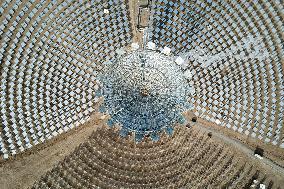
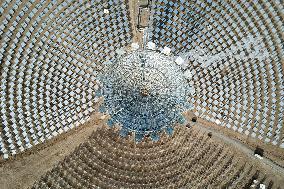
(220831) -- LANZHOU, Aug. 31, 2022 (Xinhua) -- Aerial photo taken on Dec. 8, 2021 shows a molten salt solar thermal power plant in Yumen City, northwest China's Gansu Province. (Xinhua/Fan Peishen)

  •  
Xinhua Headlines: From backwater to clean energy base, China's Gansu accelerates green development

Xinhua Headlines: From backwater to clean energy base, China's Gansu accelerates green development

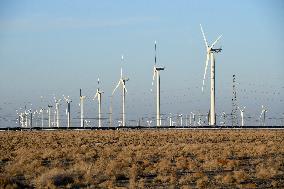
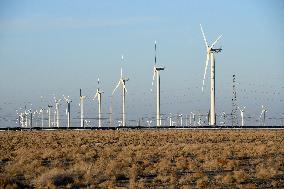
(220831) -- LANZHOU, Aug. 31, 2022 (Xinhua) -- Photo taken on Dec. 8, 2021 shows wind turbines at Changma wind farm in Yumen City, northwest China's Gansu Province. (Xinhua/Fan Peishen)

  •  
Xinhua Headlines: From food security to carbon goals, "two sessions" demonstrate China's steady steps toward modernization

Xinhua Headlines: From food security to carbon goals, "two sessions" demonstrate China's steady steps toward modernization

(220311) -- BEIJING, March 11, 2022 (Xinhua) -- Photo taken on Dec. 8, 2021 shows wind turbines at Changma wind farm in Yumen City, northwest China's Gansu Province. (Xinhua/Fan Peishen)

  •  
Xinhua Headlines: High-quality development paves China's path toward modernization

Xinhua Headlines: High-quality development paves China's path toward modernization

(220306) -- BEIJING, March 6, 2022 (Xinhua) -- Aerial photo taken on Dec. 8, 2021 shows a molten-salt solar thermal power plant in Yumen City, northwest China's Gansu Province. (Xinhua/Fan Peishen)

  •  
WORLD ECONOMIC FORUM-CHINESE SOLUTIONS

WORLD ECONOMIC FORUM-CHINESE SOLUTIONS

(220117) -- BEIJING, Jan. 17, 2022 (Xinhua) -- Aerial photo taken on Dec. 8, 2021 shows a molten-salt solar thermal power plant in Yumen City, northwest China's Gansu Province. TO GO WITH XINHUA HEADLINES OF JAN. 17, 2022 (Xinhua/Fan Peishen)

  • Main
  • Top
  • Editorial
  • Creative
  • About Us
  • About ILG
  • Terms of use
  • Company
  • BEHIND
  • Price List
  • Single Plan
  • Monthly Plan
  • Services
  • Shooting
  • Rights Clearance
  • Support
  • FAQ
  • How To Buy
  • Contact Us
  • Become a Partner

© KYODO NEWS IMAGES INC

All Rights Reserved.

  • Editorial
  • Olympics
  • News
  • Sports
  • Japan
  • Tech
  • Royal
  • Disaster
  • NorthKorea
  • Old Japan
  • SNS
  • Creative
  • Food
  • Japan
  • Landscape
  • Animal
  • Popular
  • #Ukraine
  • #China
  • #coronavirus
  • #N. Korea
  • #Russia
  • #Thailand
  • #Ukraine
  • #China
  • #coronavirus
  • #N. Korea
  • #Russia
  • #Thailand
  • Food
  • Japan
  • Landscape
  • Animal
  • Olympics
  • News
  • Sports
  • Japan
  • Tech
  • Royal
  • Disaster
  • NorthKorea
  • Old Japan
  • SNS