•  
XINHUA PHOTOS OF THE DAY

XINHUA PHOTOS OF THE DAY

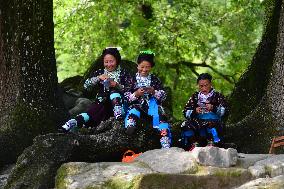
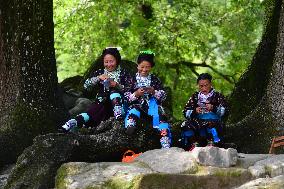
(240428) -- BEIJING, April 28, 2024 (Xinhua) -- Liang Zuying (1st L) makes embroidery in Wuying Village of Rongshui Miao Autonomous County, south China's Guangxi Zhuang Autonomous Region, Oct. 18, 2019. Liang Zuying, 48, hails from Wuying Village, a Miao ethnic-minority hamlet that is hidden deep in the towering mountains straddling Guangxi and Guizhou. In the past, the impassable mountains and rugged landscape rendered locals extremely poor. Due to their traditional views and poor family conditions, many parents did not send their daughters to school. Liang and many other women in the village received little education and could neither read nor speak Mandarin, a major impediment that isolated them from the outside world. From March 2020, local authorities initiated a training program in Wuying Village to teach ethnic women Mandarin, in a bid to remove language barriers between them and people beyond the village, while improving their communication and vocational skills. So far, more than 1,000 Mandarin

  •  
(EnchantingGuangxi) CHINA-GUANGXI-ETHNIC WOMAN (CN)

(EnchantingGuangxi) CHINA-GUANGXI-ETHNIC WOMAN (CN)

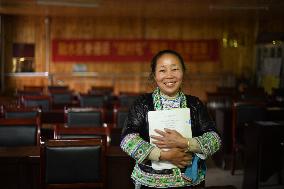
(240427) -- LIUZHOU, April 27, 2024 (Xinhua) -- Liang Zuying poses for a photo in Wuying Village of Rongshui Miao Autonomous County, south China's Guangxi Zhuang Autonomous Region, April 25, 2023. Liang Zuying, 48, hails from Wuying Village, a Miao ethnic-minority hamlet that is hidden deep in the towering mountains straddling Guangxi and Guizhou. In the past, the impassable mountains and rugged landscape rendered locals extremely poor. Due to their traditional views and poor family conditions, many parents did not send their daughters to school. Liang and many other women in the village received little education and could neither read nor speak Mandarin, a major impediment that isolated them from the outside world. From March 2020, local authorities initiated a training program in Wuying Village to teach ethnic women Mandarin, in a bid to remove language barriers between them and people beyond the village, while improving their communication and vocational skills. So far, more than 1,000 Mandarin train

  •  
(EnchantingGuangxi) CHINA-GUANGXI-ETHNIC WOMAN (CN)

(EnchantingGuangxi) CHINA-GUANGXI-ETHNIC WOMAN (CN)

(240427) -- LIUZHOU, April 27, 2024 (Xinhua) -- Liang Zuying (1st L) makes embroidery in Wuying Village of Rongshui Miao Autonomous County, south China's Guangxi Zhuang Autonomous Region, Oct. 18, 2019. Liang Zuying, 48, hails from Wuying Village, a Miao ethnic-minority hamlet that is hidden deep in the towering mountains straddling Guangxi and Guizhou. In the past, the impassable mountains and rugged landscape rendered locals extremely poor. Due to their traditional views and poor family conditions, many parents did not send their daughters to school. Liang and many other women in the village received little education and could neither read nor speak Mandarin, a major impediment that isolated them from the outside world. From March 2020, local authorities initiated a training program in Wuying Village to teach ethnic women Mandarin, in a bid to remove language barriers between them and people beyond the village, while improving their communication and vocational skills. So far, more than 1,000 Mandarin

  •  
(EnchantingGuangxi) CHINA-GUANGXI-ETHNIC WOMAN (CN)

(EnchantingGuangxi) CHINA-GUANGXI-ETHNIC WOMAN (CN)

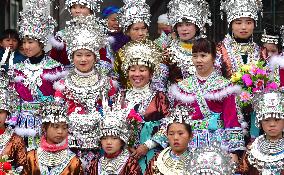
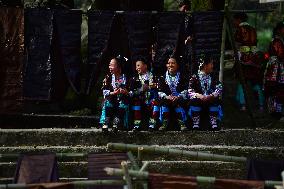
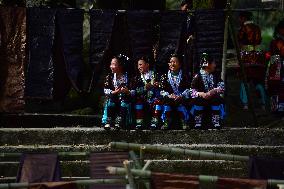
(240427) -- LIUZHOU, April 27, 2024 (Xinhua) -- Liang Zuying (3rd L, 2nd row) in ethnic Miao costume watches a performance in Wuying Village of Rongshui Miao Autonomous County, south China's Guangxi Zhuang Autonomous Region, Jan. 17, 2018. Liang Zuying, 48, hails from Wuying Village, a Miao ethnic-minority hamlet that is hidden deep in the towering mountains straddling Guangxi and Guizhou. In the past, the impassable mountains and rugged landscape rendered locals extremely poor. Due to their traditional views and poor family conditions, many parents did not send their daughters to school. Liang and many other women in the village received little education and could neither read nor speak Mandarin, a major impediment that isolated them from the outside world. From March 2020, local authorities initiated a training program in Wuying Village to teach ethnic women Mandarin, in a bid to remove language barriers between them and people beyond the village, while improving their communication and vocational ski

  •  
(EnchantingGuangxi) CHINA-GUANGXI-ETHNIC WOMAN (CN)

(EnchantingGuangxi) CHINA-GUANGXI-ETHNIC WOMAN (CN)

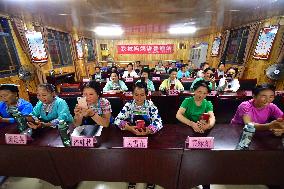
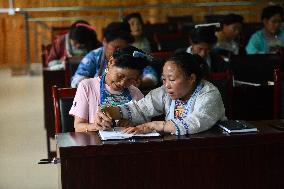
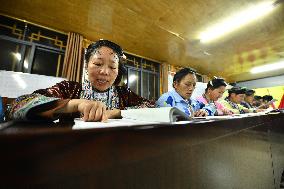
(240427) -- LIUZHOU, April 27, 2024 (Xinhua) -- Liang Zuying (2nd L, front row) attends a night class in Wuying Village of Rongshui Miao Autonomous County, south China's Guangxi Zhuang Autonomous Region, Aug. 11, 2020. Liang Zuying, 48, hails from Wuying Village, a Miao ethnic-minority hamlet that is hidden deep in the towering mountains straddling Guangxi and Guizhou. In the past, the impassable mountains and rugged landscape rendered locals extremely poor. Due to their traditional views and poor family conditions, many parents did not send their daughters to school. Liang and many other women in the village received little education and could neither read nor speak Mandarin, a major impediment that isolated them from the outside world. From March 2020, local authorities initiated a training program in Wuying Village to teach ethnic women Mandarin, in a bid to remove language barriers between them and people beyond the village, while improving their communication and vocational skills. So far, more tha

  •  
(EnchantingGuangxi) CHINA-GUANGXI-ETHNIC WOMAN (CN)

(EnchantingGuangxi) CHINA-GUANGXI-ETHNIC WOMAN (CN)

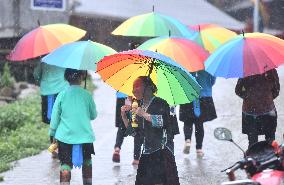
(240427) -- LIUZHOU, April 27, 2024 (Xinhua) -- Liang Zuying is pictured after class on the way home in Wuying Village of Rongshui Miao Autonomous County, south China's Guangxi Zhuang Autonomous Region, June 6, 2020. Liang Zuying, 48, hails from Wuying Village, a Miao ethnic-minority hamlet that is hidden deep in the towering mountains straddling Guangxi and Guizhou. In the past, the impassable mountains and rugged landscape rendered locals extremely poor. Due to their traditional views and poor family conditions, many parents did not send their daughters to school. Liang and many other women in the village received little education and could neither read nor speak Mandarin, a major impediment that isolated them from the outside world. From March 2020, local authorities initiated a training program in Wuying Village to teach ethnic women Mandarin, in a bid to remove language barriers between them and people beyond the village, while improving their communication and vocational skills. So far, more than

  •  
(EnchantingGuangxi) CHINA-GUANGXI-ETHNIC WOMAN (CN)

(EnchantingGuangxi) CHINA-GUANGXI-ETHNIC WOMAN (CN)

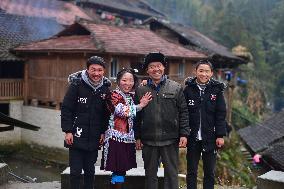
(240427) -- LIUZHOU, April 27, 2024 (Xinhua) -- Liang Zuying and her family pose for a photo in Wuying Village of Rongshui Miao Autonomous County, south China's Guangxi Zhuang Autonomous Region, Feb. 13, 2019. Liang Zuying, 48, hails from Wuying Village, a Miao ethnic-minority hamlet that is hidden deep in the towering mountains straddling Guangxi and Guizhou. In the past, the impassable mountains and rugged landscape rendered locals extremely poor. Due to their traditional views and poor family conditions, many parents did not send their daughters to school. Liang and many other women in the village received little education and could neither read nor speak Mandarin, a major impediment that isolated them from the outside world. From March 2020, local authorities initiated a training program in Wuying Village to teach ethnic women Mandarin, in a bid to remove language barriers between them and people beyond the village, while improving their communication and vocational skills. So far, more than 1,000 M

  •  
(EnchantingGuangxi) CHINA-GUANGXI-ETHNIC WOMAN (CN)

(EnchantingGuangxi) CHINA-GUANGXI-ETHNIC WOMAN (CN)

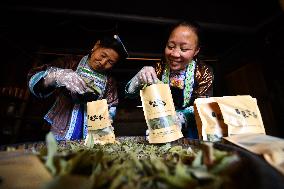
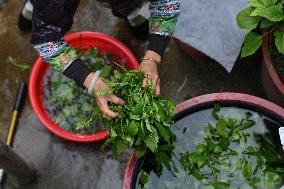
(240427) -- LIUZHOU, April 27, 2024 (Xinhua) -- Liang Zuying (R) and her mother pack tea leaves in Wuying Village of Rongshui Miao Autonomous County, south China's Guangxi Zhuang Autonomous Region, Oct. 14, 2022. Liang Zuying, 48, hails from Wuying Village, a Miao ethnic-minority hamlet that is hidden deep in the towering mountains straddling Guangxi and Guizhou. In the past, the impassable mountains and rugged landscape rendered locals extremely poor. Due to their traditional views and poor family conditions, many parents did not send their daughters to school. Liang and many other women in the village received little education and could neither read nor speak Mandarin, a major impediment that isolated them from the outside world. From March 2020, local authorities initiated a training program in Wuying Village to teach ethnic women Mandarin, in a bid to remove language barriers between them and people beyond the village, while improving their communication and vocational skills. So far, more than 1,00

  •  
(EnchantingGuangxi) CHINA-GUANGXI-ETHNIC WOMAN (CN)

(EnchantingGuangxi) CHINA-GUANGXI-ETHNIC WOMAN (CN)

(240427) -- LIUZHOU, April 27, 2024 (Xinhua) -- Liang Zuying (R) and her mother attend a class in Wuying Village of Rongshui Miao Autonomous County, south China's Guangxi Zhuang Autonomous Region, June 8, 2020. Liang Zuying, 48, hails from Wuying Village, a Miao ethnic-minority hamlet that is hidden deep in the towering mountains straddling Guangxi and Guizhou. In the past, the impassable mountains and rugged landscape rendered locals extremely poor. Due to their traditional views and poor family conditions, many parents did not send their daughters to school. Liang and many other women in the village received little education and could neither read nor speak Mandarin, a major impediment that isolated them from the outside world. From March 2020, local authorities initiated a training program in Wuying Village to teach ethnic women Mandarin, in a bid to remove language barriers between them and people beyond the village, while improving their communication and vocational skills. So far, more than 1,000

  •  
(EnchantingGuangxi) CHINA-GUANGXI-ETHNIC WOMAN (CN)

(EnchantingGuangxi) CHINA-GUANGXI-ETHNIC WOMAN (CN)

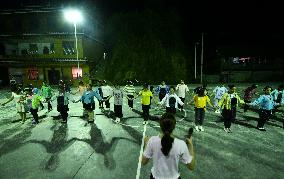
(240427) -- LIUZHOU, April 27, 2024 (Xinhua) -- Liang Zuying (4th L, front row) practices a dance at a night school in Wuying Village of Rongshui Miao Autonomous County, south China's Guangxi Zhuang Autonomous Region, Aug. 15, 2020. Liang Zuying, 48, hails from Wuying Village, a Miao ethnic-minority hamlet that is hidden deep in the towering mountains straddling Guangxi and Guizhou. In the past, the impassable mountains and rugged landscape rendered locals extremely poor. Due to their traditional views and poor family conditions, many parents did not send their daughters to school. Liang and many other women in the village received little education and could neither read nor speak Mandarin, a major impediment that isolated them from the outside world. From March 2020, local authorities initiated a training program in Wuying Village to teach ethnic women Mandarin, in a bid to remove language barriers between them and people beyond the village, while improving their communication and vocational skills. So

  •  
(EnchantingGuangxi) CHINA-GUANGXI-ETHNIC WOMAN (CN)

(EnchantingGuangxi) CHINA-GUANGXI-ETHNIC WOMAN (CN)

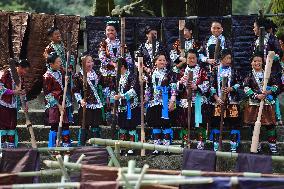
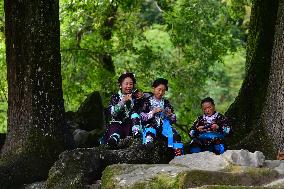
(240427) -- LIUZHOU, April 27, 2024 (Xinhua) -- Liang Zuying (1st L) and other villagers display Miao ethnic costumes in Wuying Village of Rongshui Miao Autonomous County, south China's Guangxi Zhuang Autonomous Region, Oct. 25, 2020. Liang Zuying, 48, hails from Wuying Village, a Miao ethnic-minority hamlet that is hidden deep in the towering mountains straddling Guangxi and Guizhou. In the past, the impassable mountains and rugged landscape rendered locals extremely poor. Due to their traditional views and poor family conditions, many parents did not send their daughters to school. Liang and many other women in the village received little education and could neither read nor speak Mandarin, a major impediment that isolated them from the outside world. From March 2020, local authorities initiated a training program in Wuying Village to teach ethnic women Mandarin, in a bid to remove language barriers between them and people beyond the village, while improving their communication and vocational skills.

  •  
(EnchantingGuangxi) CHINA-GUANGXI-ETHNIC WOMAN (CN)

(EnchantingGuangxi) CHINA-GUANGXI-ETHNIC WOMAN (CN)

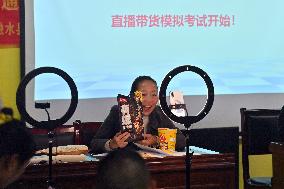
(240427) -- LIUZHOU, April 27, 2024 (Xinhua) -- Liang Zuying learns to sell products via livestreaming in Wuying Village of Rongshui Miao Autonomous County, south China's Guangxi Zhuang Autonomous Region, March 24, 2023. Liang Zuying, 48, hails from Wuying Village, a Miao ethnic-minority hamlet that is hidden deep in the towering mountains straddling Guangxi and Guizhou. In the past, the impassable mountains and rugged landscape rendered locals extremely poor. Due to their traditional views and poor family conditions, many parents did not send their daughters to school. Liang and many other women in the village received little education and could neither read nor speak Mandarin, a major impediment that isolated them from the outside world. From March 2020, local authorities initiated a training program in Wuying Village to teach ethnic women Mandarin, in a bid to remove language barriers between them and people beyond the village, while improving their communication and vocational skills. So far, more t

  •  
(EnchantingGuangxi) CHINA-GUANGXI-ETHNIC WOMAN (CN)

(EnchantingGuangxi) CHINA-GUANGXI-ETHNIC WOMAN (CN)

(240427) -- LIUZHOU, April 27, 2024 (Xinhua) -- Liang Zuying (1st L) attends a night class in Wuying Village of Rongshui Miao Autonomous County, south China's Guangxi Zhuang Autonomous Region, April 26, 2024. Liang Zuying, 48, hails from Wuying Village, a Miao ethnic-minority hamlet that is hidden deep in the towering mountains straddling Guangxi and Guizhou. In the past, the impassable mountains and rugged landscape rendered locals extremely poor. Due to their traditional views and poor family conditions, many parents did not send their daughters to school. Liang and many other women in the village received little education and could neither read nor speak Mandarin, a major impediment that isolated them from the outside world. From March 2020, local authorities initiated a training program in Wuying Village to teach ethnic women Mandarin, in a bid to remove language barriers between them and people beyond the village, while improving their communication and vocational skills. So far, more than 1,000 Ma

  •  
(EnchantingGuangxi)CHINA-GUANGXI-MIAO ETHNIC GROUP-TRADITIONAL COSTUME (CN)

(EnchantingGuangxi)CHINA-GUANGXI-MIAO ETHNIC GROUP-TRADITIONAL COSTUME (CN)

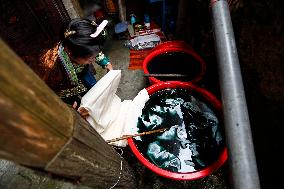
(230903) -- RONGSHUI, Sept. 3, 2023 (Xinhua) -- Liang Zuying dyes the white cloth in Wuying Village on the border between south China's Guangxi Zhuang Autonomous Region and southwest China's Guizhou Province, on Aug. 31, 2023. Wuying Village is a Miao ethnic group hamlet that nestles snugly in the towering mountains stretching across the border between Guangxi and Guizhou. "Liang Bu", named for its glistening appearance, is a kind of traditional hand-made cloth of Miao ethnic group. Women of Miao ethnic group in Wuying plant woad in spring and harvest it in fall. They soak woad in water for days before mixing it with materials such as lime, to make the dye for "Liang Bu". It usually takes months to make a piece of "Liang Bu" after repeated process of dip-dyeing, drying, pounding, applying egg white and steaming. The cloth gradually becomes glistening owing to tens of thousands of poundings by villagers with traditional wooden hammers. After cutting, sewing, embroidery and ironing, a set of glossy "Lia

  •  
(EnchantingGuangxi)CHINA-GUANGXI-MIAO ETHNIC GROUP-TRADITIONAL COSTUME (CN)

(EnchantingGuangxi)CHINA-GUANGXI-MIAO ETHNIC GROUP-TRADITIONAL COSTUME (CN)

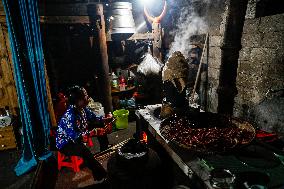
(230903) -- RONGSHUI, Sept. 3, 2023 (Xinhua) -- Liang Zuying steams the cloth in Wuying Village on the border between south China's Guangxi Zhuang Autonomous Region and southwest China's Guizhou Province, on Aug. 30, 2023. Wuying Village is a Miao ethnic group hamlet that nestles snugly in the towering mountains stretching across the border between Guangxi and Guizhou. "Liang Bu", named for its glistening appearance, is a kind of traditional hand-made cloth of Miao ethnic group. Women of Miao ethnic group in Wuying plant woad in spring and harvest it in fall. They soak woad in water for days before mixing it with materials such as lime, to make the dye for "Liang Bu". It usually takes months to make a piece of "Liang Bu" after repeated process of dip-dyeing, drying, pounding, applying egg white and steaming. The cloth gradually becomes glistening owing to tens of thousands of poundings by villagers with traditional wooden hammers. After cutting, sewing, embroidery and ironing, a set of glossy "Liang B

  •  
(EnchantingGuangxi)CHINA-GUANGXI-MIAO ETHNIC GROUP-TRADITIONAL COSTUME (CN)

(EnchantingGuangxi)CHINA-GUANGXI-MIAO ETHNIC GROUP-TRADITIONAL COSTUME (CN)

(230903) -- RONGSHUI, Sept. 3, 2023 (Xinhua) -- Liang Zuying (3rd L, front) displays "Liang Bu" and traditional costumes with other locals during a "Liang Bu" cultural festival in Wuying Village on the border between south China's Guangxi Zhuang Autonomous Region and southwest China's Guizhou Province, on Oct. 25, 2020. Wuying Village is a Miao ethnic group hamlet that nestles snugly in the towering mountains stretching across the border between Guangxi and Guizhou. "Liang Bu", named for its glistening appearance, is a kind of traditional hand-made cloth of Miao ethnic group. Women of Miao ethnic group in Wuying plant woad in spring and harvest it in fall. They soak woad in water for days before mixing it with materials such as lime, to make the dye for "Liang Bu". It usually takes months to make a piece of "Liang Bu" after repeated process of dip-dyeing, drying, pounding, applying egg white and steaming. The cloth gradually becomes glistening owing to tens of thousands of poundings by villagers with

  •  
(EnchantingGuangxi)CHINA-GUANGXI-MIAO ETHNIC GROUP-TRADITIONAL COSTUME (CN)

(EnchantingGuangxi)CHINA-GUANGXI-MIAO ETHNIC GROUP-TRADITIONAL COSTUME (CN)

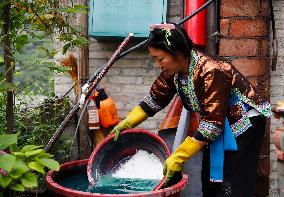
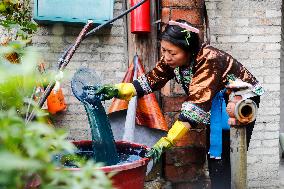
(230903) -- RONGSHUI, Sept. 3, 2023 (Xinhua) -- Liang Zuying adds lime into the water with woad soaked to make the dye in Wuying Village on the border between south China's Guangxi Zhuang Autonomous Region and southwest China's Guizhou Province, on Aug. 31, 2023. Wuying Village is a Miao ethnic group hamlet that nestles snugly in the towering mountains stretching across the border between Guangxi and Guizhou. "Liang Bu", named for its glistening appearance, is a kind of traditional hand-made cloth of Miao ethnic group. Women of Miao ethnic group in Wuying plant woad in spring and harvest it in fall. They soak woad in water for days before mixing it with materials such as lime, to make the dye for "Liang Bu". It usually takes months to make a piece of "Liang Bu" after repeated process of dip-dyeing, drying, pounding, applying egg white and steaming. The cloth gradually becomes glistening owing to tens of thousands of poundings by villagers with traditional wooden hammers. After cutting, sewing, embroid

  •  
(EnchantingGuangxi)CHINA-GUANGXI-MIAO ETHNIC GROUP-TRADITIONAL COSTUME (CN)

(EnchantingGuangxi)CHINA-GUANGXI-MIAO ETHNIC GROUP-TRADITIONAL COSTUME (CN)

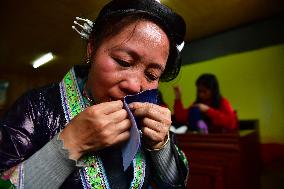
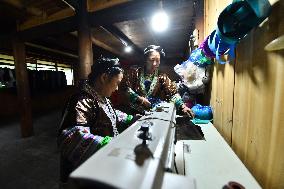
(230903) -- RONGSHUI, Sept. 3, 2023 (Xinhua) -- Liang Zuying makes embroidery in Wuying Village on the border between south China's Guangxi Zhuang Autonomous Region and southwest China's Guizhou Province, on Oct. 19, 2019. Wuying Village is a Miao ethnic group hamlet that nestles snugly in the towering mountains stretching across the border between Guangxi and Guizhou. "Liang Bu", named for its glistening appearance, is a kind of traditional hand-made cloth of Miao ethnic group. Women of Miao ethnic group in Wuying plant woad in spring and harvest it in fall. They soak woad in water for days before mixing it with materials such as lime, to make the dye for "Liang Bu". It usually takes months to make a piece of "Liang Bu" after repeated process of dip-dyeing, drying, pounding, applying egg white and steaming. The cloth gradually becomes glistening owing to tens of thousands of poundings by villagers with traditional wooden hammers. After cutting, sewing, embroidery and ironing, a set of glossy "Liang B

  •  
(EnchantingGuangxi)CHINA-GUANGXI-MIAO ETHNIC GROUP-TRADITIONAL COSTUME (CN)

(EnchantingGuangxi)CHINA-GUANGXI-MIAO ETHNIC GROUP-TRADITIONAL COSTUME (CN)

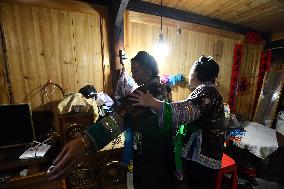
(230903) -- RONGSHUI, Sept. 3, 2023 (Xinhua) -- Wu Meiqiu (R) takes Liang Zuying's measurement for making "Liang Bu" costumes in Wuying Village on the border between south China's Guangxi Zhuang Autonomous Region and southwest China's Guizhou Province, on Aug. 31, 2023. Wuying Village is a Miao ethnic group hamlet that nestles snugly in the towering mountains stretching across the border between Guangxi and Guizhou. "Liang Bu", named for its glistening appearance, is a kind of traditional hand-made cloth of Miao ethnic group. Women of Miao ethnic group in Wuying plant woad in spring and harvest it in fall. They soak woad in water for days before mixing it with materials such as lime, to make the dye for "Liang Bu". It usually takes months to make a piece of "Liang Bu" after repeated process of dip-dyeing, drying, pounding, applying egg white and steaming. The cloth gradually becomes glistening owing to tens of thousands of poundings by villagers with traditional wooden hammers. After cutting, sewing,

  •  
(EnchantingGuangxi)CHINA-GUANGXI-MIAO ETHNIC GROUP-TRADITIONAL COSTUME (CN)

(EnchantingGuangxi)CHINA-GUANGXI-MIAO ETHNIC GROUP-TRADITIONAL COSTUME (CN)

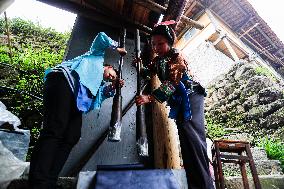
(230903) -- RONGSHUI, Sept. 3, 2023 (Xinhua) -- Liang Zuying (R) pounds the cloth with the traditional "Liang Bu" hammer in Wuying Village on the border between south China's Guangxi Zhuang Autonomous Region and southwest China's Guizhou Province, on Aug. 31, 2023. Wuying Village is a Miao ethnic group hamlet that nestles snugly in the towering mountains stretching across the border between Guangxi and Guizhou. "Liang Bu", named for its glistening appearance, is a kind of traditional hand-made cloth of Miao ethnic group. Women of Miao ethnic group in Wuying plant woad in spring and harvest it in fall. They soak woad in water for days before mixing it with materials such as lime, to make the dye for "Liang Bu". It usually takes months to make a piece of "Liang Bu" after repeated process of dip-dyeing, drying, pounding, applying egg white and steaming. The cloth gradually becomes glistening owing to tens of thousands of poundings by villagers with traditional wooden hammers. After cutting, sewing, embro

  •  
(EnchantingGuangxi)CHINA-GUANGXI-MIAO ETHNIC GROUP-TRADITIONAL COSTUME (CN)

(EnchantingGuangxi)CHINA-GUANGXI-MIAO ETHNIC GROUP-TRADITIONAL COSTUME (CN)

(230903) -- RONGSHUI, Sept. 3, 2023 (Xinhua) -- Liang Zuying (R) and Wu Meiqiu sew "Liang Bu" costumes in Wuying Village on the border between south China's Guangxi Zhuang Autonomous Region and southwest China's Guizhou Province, on Aug. 31, 2023. Wuying Village is a Miao ethnic group hamlet that nestles snugly in the towering mountains stretching across the border between Guangxi and Guizhou. "Liang Bu", named for its glistening appearance, is a kind of traditional hand-made cloth of Miao ethnic group. Women of Miao ethnic group in Wuying plant woad in spring and harvest it in fall. They soak woad in water for days before mixing it with materials such as lime, to make the dye for "Liang Bu". It usually takes months to make a piece of "Liang Bu" after repeated process of dip-dyeing, drying, pounding, applying egg white and steaming. The cloth gradually becomes glistening owing to tens of thousands of poundings by villagers with traditional wooden hammers. After cutting, sewing, embroidery and ironing,

  •  
(EnchantingGuangxi)CHINA-GUANGXI-MIAO ETHNIC GROUP-TRADITIONAL COSTUME (CN)

(EnchantingGuangxi)CHINA-GUANGXI-MIAO ETHNIC GROUP-TRADITIONAL COSTUME (CN)

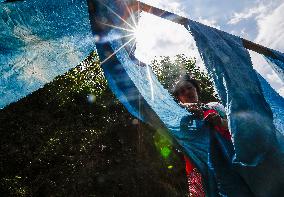
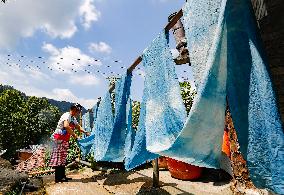
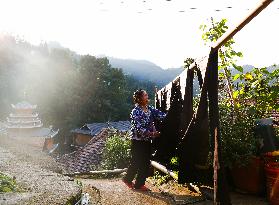
(230903) -- RONGSHUI, Sept. 3, 2023 (Xinhua) -- Liang Zuying dries the cloth after dip-dyeing in Wuying Village on the border between south China's Guangxi Zhuang Autonomous Region and southwest China's Guizhou Province, on Aug. 31, 2023. Wuying Village is a Miao ethnic group hamlet that nestles snugly in the towering mountains stretching across the border between Guangxi and Guizhou. "Liang Bu", named for its glistening appearance, is a kind of traditional hand-made cloth of Miao ethnic group. Women of Miao ethnic group in Wuying plant woad in spring and harvest it in fall. They soak woad in water for days before mixing it with materials such as lime, to make the dye for "Liang Bu". It usually takes months to make a piece of "Liang Bu" after repeated process of dip-dyeing, drying, pounding, applying egg white and steaming. The cloth gradually becomes glistening owing to tens of thousands of poundings by villagers with traditional wooden hammers. After cutting, sewing, embroidery and ironing, a set of

  •  
(EnchantingGuangxi)CHINA-GUANGXI-MIAO ETHNIC GROUP-TRADITIONAL COSTUME (CN)

(EnchantingGuangxi)CHINA-GUANGXI-MIAO ETHNIC GROUP-TRADITIONAL COSTUME (CN)

(230903) -- RONGSHUI, Sept. 3, 2023 (Xinhua) -- Liang Zuying dries the cloth after dip-dyeing in Wuying Village on the border between south China's Guangxi Zhuang Autonomous Region and southwest China's Guizhou Province, on Aug. 31, 2023. Wuying Village is a Miao ethnic group hamlet that nestles snugly in the towering mountains stretching across the border between Guangxi and Guizhou. "Liang Bu", named for its glistening appearance, is a kind of traditional hand-made cloth of Miao ethnic group. Women of Miao ethnic group in Wuying plant woad in spring and harvest it in fall. They soak woad in water for days before mixing it with materials such as lime, to make the dye for "Liang Bu". It usually takes months to make a piece of "Liang Bu" after repeated process of dip-dyeing, drying, pounding, applying egg white and steaming. The cloth gradually becomes glistening owing to tens of thousands of poundings by villagers with traditional wooden hammers. After cutting, sewing, embroidery and ironing, a set of

  •  
(EnchantingGuangxi)CHINA-GUANGXI-MIAO ETHNIC GROUP-TRADITIONAL COSTUME (CN)

(EnchantingGuangxi)CHINA-GUANGXI-MIAO ETHNIC GROUP-TRADITIONAL COSTUME (CN)

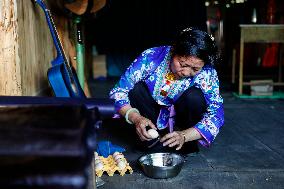
(230903) -- RONGSHUI, Sept. 3, 2023 (Xinhua) -- Liang Zuying takes egg white for applying on the cloth in Wuying Village on the border between south China's Guangxi Zhuang Autonomous Region and southwest China's Guizhou Province, on Aug. 30, 2023. Wuying Village is a Miao ethnic group hamlet that nestles snugly in the towering mountains stretching across the border between Guangxi and Guizhou. "Liang Bu", named for its glistening appearance, is a kind of traditional hand-made cloth of Miao ethnic group. Women of Miao ethnic group in Wuying plant woad in spring and harvest it in fall. They soak woad in water for days before mixing it with materials such as lime, to make the dye for "Liang Bu". It usually takes months to make a piece of "Liang Bu" after repeated process of dip-dyeing, drying, pounding, applying egg white and steaming. The cloth gradually becomes glistening owing to tens of thousands of poundings by villagers with traditional wooden hammers. After cutting, sewing, embroidery and ironing,

  •  
(EnchantingGuangxi)CHINA-GUANGXI-MIAO ETHNIC GROUP-TRADITIONAL COSTUME (CN)

(EnchantingGuangxi)CHINA-GUANGXI-MIAO ETHNIC GROUP-TRADITIONAL COSTUME (CN)

(230903) -- RONGSHUI, Sept. 3, 2023 (Xinhua) -- Liang Zuying (1st L) displays "Liang Bu" and traditional costumes with other locals during a "Liang Bu" cultural festival in Wuying Village on the border between south China's Guangxi Zhuang Autonomous Region and southwest China's Guizhou Province, on Oct. 25, 2020. Wuying Village is a Miao ethnic group hamlet that nestles snugly in the towering mountains stretching across the border between Guangxi and Guizhou. "Liang Bu", named for its glistening appearance, is a kind of traditional hand-made cloth of Miao ethnic group. Women of Miao ethnic group in Wuying plant woad in spring and harvest it in fall. They soak woad in water for days before mixing it with materials such as lime, to make the dye for "Liang Bu". It usually takes months to make a piece of "Liang Bu" after repeated process of dip-dyeing, drying, pounding, applying egg white and steaming. The cloth gradually becomes glistening owing to tens of thousands of poundings by villagers with traditi

  •  
(EnchantingGuangxi)CHINA-GUANGXI-MIAO ETHNIC GROUP-TRADITIONAL COSTUME (CN)

(EnchantingGuangxi)CHINA-GUANGXI-MIAO ETHNIC GROUP-TRADITIONAL COSTUME (CN)

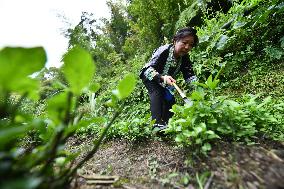
(230903) -- RONGSHUI, Sept. 3, 2023 (Xinhua) -- Liang Zuying harvests the woad on a mountain in Wuying Village on the border between south China's Guangxi Zhuang Autonomous Region and southwest China's Guizhou Province, on Aug. 29, 2023. Wuying Village is a Miao ethnic group hamlet that nestles snugly in the towering mountains stretching across the border between Guangxi and Guizhou. "Liang Bu", named for its glistening appearance, is a kind of traditional hand-made cloth of Miao ethnic group. Women of Miao ethnic group in Wuying plant woad in spring and harvest it in fall. They soak woad in water for days before mixing it with materials such as lime, to make the dye for "Liang Bu". It usually takes months to make a piece of "Liang Bu" after repeated process of dip-dyeing, drying, pounding, applying egg white and steaming. The cloth gradually becomes glistening owing to tens of thousands of poundings by villagers with traditional wooden hammers. After cutting, sewing, embroidery and ironing, a set of

  •  
(EnchantingGuangxi)CHINA-GUANGXI-MIAO ETHNIC GROUP-TRADITIONAL COSTUME (CN)

(EnchantingGuangxi)CHINA-GUANGXI-MIAO ETHNIC GROUP-TRADITIONAL COSTUME (CN)

(230903) -- RONGSHUI, Sept. 3, 2023 (Xinhua) -- Liang Zuying adds lime into the water with woad soaked to make the dye in Wuying Village on the border between south China's Guangxi Zhuang Autonomous Region and southwest China's Guizhou Province, on Aug. 31, 2023. Wuying Village is a Miao ethnic group hamlet that nestles snugly in the towering mountains stretching across the border between Guangxi and Guizhou. "Liang Bu", named for its glistening appearance, is a kind of traditional hand-made cloth of Miao ethnic group. Women of Miao ethnic group in Wuying plant woad in spring and harvest it in fall. They soak woad in water for days before mixing it with materials such as lime, to make the dye for "Liang Bu". It usually takes months to make a piece of "Liang Bu" after repeated process of dip-dyeing, drying, pounding, applying egg white and steaming. The cloth gradually becomes glistening owing to tens of thousands of poundings by villagers with traditional wooden hammers. After cutting, sewing, embroid

  •  
(EnchantingGuangxi)CHINA-GUANGXI-MIAO ETHNIC GROUP-TRADITIONAL COSTUME (CN)

(EnchantingGuangxi)CHINA-GUANGXI-MIAO ETHNIC GROUP-TRADITIONAL COSTUME (CN)

(230903) -- RONGSHUI, Sept. 3, 2023 (Xinhua) -- Liang Zuying dries the unfinished "Liang Bu" in Wuying Village on the border between south China's Guangxi Zhuang Autonomous Region and southwest China's Guizhou Province, on Aug. 30, 2023. Wuying Village is a Miao ethnic group hamlet that nestles snugly in the towering mountains stretching across the border between Guangxi and Guizhou. "Liang Bu", named for its glistening appearance, is a kind of traditional hand-made cloth of Miao ethnic group. Women of Miao ethnic group in Wuying plant woad in spring and harvest it in fall. They soak woad in water for days before mixing it with materials such as lime, to make the dye for "Liang Bu". It usually takes months to make a piece of "Liang Bu" after repeated process of dip-dyeing, drying, pounding, applying egg white and steaming. The cloth gradually becomes glistening owing to tens of thousands of poundings by villagers with traditional wooden hammers. After cutting, sewing, embroidery and ironing, a set of

  •  
(EnchantingGuangxi)CHINA-GUANGXI-MIAO ETHNIC GROUP-TRADITIONAL COSTUME (CN)

(EnchantingGuangxi)CHINA-GUANGXI-MIAO ETHNIC GROUP-TRADITIONAL COSTUME (CN)

(230903) -- RONGSHUI, Sept. 3, 2023 (Xinhua) -- Liang Zuying soaks the newly harvested woad in water in Wuying Village on the border between south China's Guangxi Zhuang Autonomous Region and southwest China's Guizhou Province, on Aug. 29, 2023. Wuying Village is a Miao ethnic group hamlet that nestles snugly in the towering mountains stretching across the border between Guangxi and Guizhou. "Liang Bu", named for its glistening appearance, is a kind of traditional hand-made cloth of Miao ethnic group. Women of Miao ethnic group in Wuying plant woad in spring and harvest it in fall. They soak woad in water for days before mixing it with materials such as lime, to make the dye for "Liang Bu". It usually takes months to make a piece of "Liang Bu" after repeated process of dip-dyeing, drying, pounding, applying egg white and steaming. The cloth gradually becomes glistening owing to tens of thousands of poundings by villagers with traditional wooden hammers. After cutting, sewing, embroidery and ironing, a

  •  
(EnchantingGuangxi)CHINA-GUANGXI-MIAO ETHNIC GROUP-TRADITIONAL COSTUME (CN)

(EnchantingGuangxi)CHINA-GUANGXI-MIAO ETHNIC GROUP-TRADITIONAL COSTUME (CN)

(230903) -- RONGSHUI, Sept. 3, 2023 (Xinhua) -- Liang Zuying (1st L) makes embroidery in Wuying Village on the border between south China's Guangxi Zhuang Autonomous Region and southwest China's Guizhou Province, on Oct. 18, 2019. Wuying Village is a Miao ethnic group hamlet that nestles snugly in the towering mountains stretching across the border between Guangxi and Guizhou. "Liang Bu", named for its glistening appearance, is a kind of traditional hand-made cloth of Miao ethnic group. Women of Miao ethnic group in Wuying plant woad in spring and harvest it in fall. They soak woad in water for days before mixing it with materials such as lime, to make the dye for "Liang Bu". It usually takes months to make a piece of "Liang Bu" after repeated process of dip-dyeing, drying, pounding, applying egg white and steaming. The cloth gradually becomes glistening owing to tens of thousands of poundings by villagers with traditional wooden hammers. After cutting, sewing, embroidery and ironing, a set of glossy

  •  

National lawmaker dedicated to promoting Miao embroidery and creating jobs

STORY: National lawmaker dedicated to promoting Miao embroidery and creating jobs DATELINE: Feb. 26, 2021 LENGTH: 00:01:15 LOCATION: GUIYANG, China CATEGORY: CULTURE/ECONOMY SHOTLIST: various of Wei ZuyingSOUNDBITE 1 (Chinese) WEI ZUYING, National lawmakerSOUNDBITE 2 (Chinese) WEI ZUYING, National lawmakervarious of workers STORYLINE: Wei Zuying is an inheritor of Miao embroidery in Congjiang County of Qiandongnan Miao and Dong Autonomous Prefecture in southwest China's Guizhou Province. In 2011, she returned home after working in the southern Guangdong Province for 10 years. In 2014, she started a cooperative specialized in Miao embroidery. Wei, who learned embroidery at the age of six, has been dedicated to promoting Miao embroidery and creating jobs, to improve local economy and livelihood. SOUNDBITE 1 (Chinese) WEI ZUYING, National lawmaker "Since I was elected as a deputy to the National People's Congress (China's top legislature) in 2018, my proposals have focused on the issues of the inheritan

  •  

GLOBALink | National lawmaker dedicated to promoting Miao embroidery and creating jobs

Wei Zuying is an inheritor of Miao embroidery in Congjiang County of Qiandongnan Miao and Dong Autonomous Prefecture in southwest China's Guizhou Province. In 2011, she returned home after working in the southern Guangdong Province for 10 years. In 2014, she started a cooperative specialized in Miao embroidery. Wei, who learned embroidery at the age of six, has been dedicated to promoting Miao embroidery and creating jobs, to improve local economy and livelihood. Produced by Xinhua Global Service

  •  
CHINA-GUANGXI-WUYING VILLAGE-RURAL DEVELOPMENT (CN)

CHINA-GUANGXI-WUYING VILLAGE-RURAL DEVELOPMENT (CN)

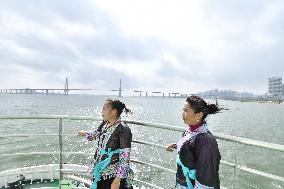
(211230) -- RONGSHUI, Dec. 30, 2021 (Xinhua) -- Villagers Liang Zuying (L) and Wu Meifu of Wuying Village view scenery on a boat in the sea near Lianjiang City, south China's Guangdong Province, Nov. 4, 2021. Wuying Village is a Miao ethnic-minority hamlet that nestles snugly in the towering mountains stretching across the border between Guangxi and Guizhou. Locals have suffered from the area's barren lands, harsh natural environment and inconvenient transportation for years. The people of Wuying shook off poverty in 2020. In 2021, with the "pairing assistance" for rural vitalization from Lianjiang City of south China's Guangdong Province, local authorities have sped up efforts in promoting its all-round development in economy, education, culture and ethnic unity. (Photo by Qin Tianyang/Xinhua)

  • Main
  • Top
  • Editorial
  • Creative
  • About Us
  • About ILG
  • Terms of use
  • Company
  • BEHIND
  • Price List
  • Single Plan
  • Monthly Plan
  • Services
  • Shooting
  • Rights Clearance
  • Support
  • FAQ
  • How To Buy
  • Contact Us
  • Become a Partner

© KYODO NEWS IMAGES INC

All Rights Reserved.

  • Editorial
  • Olympics
  • News
  • Sports
  • Japan
  • Tech
  • Royal
  • Disaster
  • NorthKorea
  • Old Japan
  • SNS
  • Creative
  • Food
  • Japan
  • Landscape
  • Animal
  • Popular
  • #Ukraine
  • #Russia
  • #coronavirus
  • #N. Korea
  • #China
  • #Thailand
  • #Ukraine
  • #Russia
  • #coronavirus
  • #N. Korea
  • #China
  • #Thailand
  • Food
  • Japan
  • Landscape
  • Animal
  • Olympics
  • News
  • Sports
  • Japan
  • Tech
  • Royal
  • Disaster
  • NorthKorea
  • Old Japan
  • SNS