•  
Milan Cortina 2026 Olympic Torch Relay Inauguration Ceremony - Rome

Milan Cortina 2026 Olympic Torch Relay Inauguration Ceremony - Rome

Andrea abode, Georgia Meloni, Ignazio La Russa, Laura e Sergio Mattarella. At the Quirinale Palace, President Sergio Mattarella and Prime Minister Giorgia Meloni inaugurated the Milan Cortina 2026 Olympic Torch Relay, officially launching the countdown to Italy's Winter Games. The ceremony highlighted tradition, national pride, and the global meaning of the Olympic flame in Rome, Italy on December 5, 2025. Photo by Marco Iacobucci/IPA/ABACAPRESS.COM

  •  
GIOCHI OLIMPICI - Olimpiadi Invernali Milano-Cortina 2026 - Olympic Torch Relay Inauguration Ceremony

GIOCHI OLIMPICI - Olimpiadi Invernali Milano-Cortina 2026 - Olympic Torch Relay Inauguration Ceremony

Rome, Italy - December 5, 2025: Andrea abode, Georgia Meloni, Ignazio La Russa, Laura e Sergio Mattarella. At the Quirinale Palace, President Sergio Mattarella and Prime Minister Giorgia Meloni inaugurated the Milan Cortina 2026 Olympic Torch Relay, officially launching the countdown to Italy's Winter Games. The ceremony highlighted tradition, national pride, and the global meaning of the Olympic flame.

  •  
GIOCHI OLIMPICI - Olimpiadi Invernali Milano-Cortina 2026 - Olympic Torch Relay Inauguration Ceremony

GIOCHI OLIMPICI - Olimpiadi Invernali Milano-Cortina 2026 - Olympic Torch Relay Inauguration Ceremony

Rome, Italy - December 5, 2025: Andrea abode, Georgia Meloni, Ignazio La Russa, Laura e Sergio Mattarella. At the Quirinale Palace, President Sergio Mattarella and Prime Minister Giorgia Meloni inaugurated the Milan Cortina 2026 Olympic Torch Relay, officially launching the countdown to Italy's Winter Games. The ceremony highlighted tradition, national pride, and the global meaning of the Olympic flame.

  •  
Tiny House With Erotic Frescoes Uncovered - Pompeii

Tiny House With Erotic Frescoes Uncovered - Pompeii

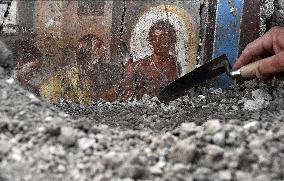
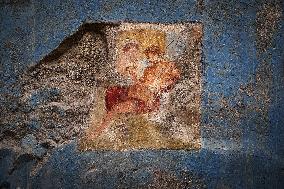
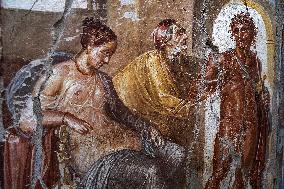
Fresco with the myth of Phaedra and Hippolytus uncovered by Archaeologists in a richly decorated small house with finely preserved erotic frescoes of mythological scenes in the ancient Roman city of Pompeii, Italy on October 2024. The vividly coloured wall paintings include one depicting a sexual encounter between a satyr and a nymph on a bed and another one of Phaedra, mythological queen, and her stepson Hippolytus. Phaedra, Cretan princess and wife of Theseus, fell in love with her stepson Hippolytus through the work of Aphrodite, who avenged the young man’s disdain for her. Hippolytus rejected Phaedra, and she, scorned, falsely accused him of trying to rape her. Another fresco features gods presumed to be Venus and Adonis. Experts say the exquisitely decorated abode, called the House of Phaedra after the mythological queen , sheds light on the changing architectural styles in the first century AD but is also further proof that the residents of Pompeii had an appetite for sensual art. Despite its small size

  •  
Tiny House With Erotic Frescoes Uncovered - Pompeii

Tiny House With Erotic Frescoes Uncovered - Pompeii

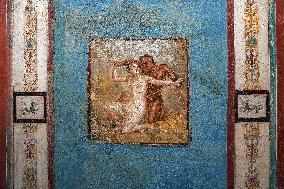
Archaeologists have uncovered a fresco depicting a sexual encounter between a satyr and a nymph on a bed in a richly decorated small house with finely preserved erotic frescoes of mythological scenes in the ancient Roman city of Pompeii, Italy on October 2024. The vividly coloured wall paintings include another one of Phaedra, mythological queen, and her stepson Hippolytus. Phaedra, Cretan princess and wife of Theseus, fell in love with her stepson Hippolytus through the work of Aphrodite, who avenged the young man’s disdain for her. Hippolytus rejected Phaedra, and she, scorned, falsely accused him of trying to rape her. Another fresco features gods presumed to be Venus and Adonis. Experts say the exquisitely decorated abode, called the House of Phaedra after the mythological queen , sheds light on the changing architectural styles in the first century AD but is also further proof that the residents of Pompeii had an appetite for sensual art. Despite its small size, the dwelling ‘strikes us for the high leve

  •  
Tiny House With Erotic Frescoes Uncovered - Pompeii

Tiny House With Erotic Frescoes Uncovered - Pompeii

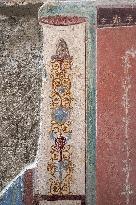
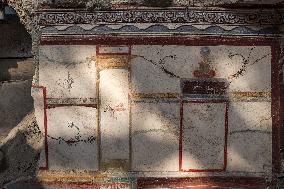
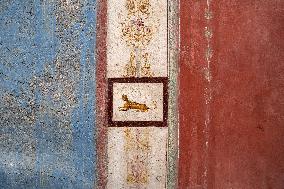
Archaeologists have uncovered a richly decorated small house with finely preserved erotic frescoes of mythological scenes in the ancient Roman city of Pompeii, Italy on October 2024. The vividly coloured wall paintings include one depicting a sexual encounter between a satyr and a nymph on a bed and another one of Phaedra, mythological queen, and her stepson Hippolytus. Phaedra, Cretan princess and wife of Theseus, fell in love with her stepson Hippolytus through the work of Aphrodite, who avenged the young man’s disdain for her. Hippolytus rejected Phaedra, and she, scorned, falsely accused him of trying to rape her. Another fresco features gods presumed to be Venus and Adonis. Experts say the exquisitely decorated abode, called the House of Phaedra after the mythological queen , sheds light on the changing architectural styles in the first century AD but is also further proof that the residents of Pompeii had an appetite for sensual art. Despite its small size, the dwelling ‘strikes us for the high level of

  •  
Tiny House With Erotic Frescoes Uncovered - Pompeii

Tiny House With Erotic Frescoes Uncovered - Pompeii

Fresco with the myth of Phaedra and Hippolytus uncovered by Archaeologists in a richly decorated small house with finely preserved erotic frescoes of mythological scenes in the ancient Roman city of Pompeii, Italy on October 2024. The vividly coloured wall paintings include one depicting a sexual encounter between a satyr and a nymph on a bed and another one of Phaedra, mythological queen, and her stepson Hippolytus. Phaedra, Cretan princess and wife of Theseus, fell in love with her stepson Hippolytus through the work of Aphrodite, who avenged the young man’s disdain for her. Hippolytus rejected Phaedra, and she, scorned, falsely accused him of trying to rape her. Another fresco features gods presumed to be Venus and Adonis. Experts say the exquisitely decorated abode, called the House of Phaedra after the mythological queen , sheds light on the changing architectural styles in the first century AD but is also further proof that the residents of Pompeii had an appetite for sensual art. Despite its small size

  •  
Tiny House With Erotic Frescoes Uncovered - Pompeii

Tiny House With Erotic Frescoes Uncovered - Pompeii

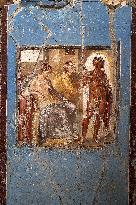
Archaeologists have uncovered a fresco featuring gods presumed to be Venus and Adonis in a richly decorated small house with finely preserved erotic frescoes of mythological scenes in the ancient Roman city of Pompeii, Italy on October 2024. The vividly coloured wall paintings include one depicting a sexual encounter between a satyr and a nymph on a bed and another one of Phaedra, mythological queen, and her stepson Hippolytus. Phaedra, Cretan princess and wife of Theseus, fell in love with her stepson Hippolytus through the work of Aphrodite, who avenged the young man’s disdain for her. Hippolytus rejected Phaedra, and she, scorned, falsely accused him of trying to rape her. Another fresco features gods presumed to be Venus and Adonis. Experts say the exquisitely decorated abode, called the House of Phaedra after the mythological queen , sheds light on the changing architectural styles in the first century AD but is also further proof that the residents of Pompeii had an appetite for sensual art. Despite its

  •  
Tiny House With Erotic Frescoes Uncovered - Pompeii

Tiny House With Erotic Frescoes Uncovered - Pompeii

Archaeologists have uncovered a richly decorated small house with finely preserved erotic frescoes of mythological scenes in the ancient Roman city of Pompeii, Italy on October 2024. The vividly coloured wall paintings include one depicting a sexual encounter between a satyr and a nymph on a bed and another one of Phaedra, mythological queen, and her stepson Hippolytus. Phaedra, Cretan princess and wife of Theseus, fell in love with her stepson Hippolytus through the work of Aphrodite, who avenged the young man’s disdain for her. Hippolytus rejected Phaedra, and she, scorned, falsely accused him of trying to rape her. Another fresco features gods presumed to be Venus and Adonis. Experts say the exquisitely decorated abode, called the House of Phaedra after the mythological queen , sheds light on the changing architectural styles in the first century AD but is also further proof that the residents of Pompeii had an appetite for sensual art. Despite its small size, the dwelling ‘strikes us for the high level of

  •  
Tiny House With Erotic Frescoes Uncovered - Pompeii

Tiny House With Erotic Frescoes Uncovered - Pompeii

Archaeologists have uncovered a richly decorated small house with finely preserved erotic frescoes of mythological scenes in the ancient Roman city of Pompeii, Italy on October 2024. The vividly coloured wall paintings include one depicting a sexual encounter between a satyr and a nymph on a bed and another one of Phaedra, mythological queen, and her stepson Hippolytus. Phaedra, Cretan princess and wife of Theseus, fell in love with her stepson Hippolytus through the work of Aphrodite, who avenged the young man’s disdain for her. Hippolytus rejected Phaedra, and she, scorned, falsely accused him of trying to rape her. Another fresco features gods presumed to be Venus and Adonis. Experts say the exquisitely decorated abode, called the House of Phaedra after the mythological queen , sheds light on the changing architectural styles in the first century AD but is also further proof that the residents of Pompeii had an appetite for sensual art. Despite its small size, the dwelling ‘strikes us for the high level of

  •  
Tiny House With Erotic Frescoes Uncovered - Pompeii

Tiny House With Erotic Frescoes Uncovered - Pompeii

Fresco with the myth of Phaedra and Hippolytus uncovered by Archaeologists in a richly decorated small house with finely preserved erotic frescoes of mythological scenes in the ancient Roman city of Pompeii, Italy on October 2024. The vividly coloured wall paintings include one depicting a sexual encounter between a satyr and a nymph on a bed and another one of Phaedra, mythological queen, and her stepson Hippolytus. Phaedra, Cretan princess and wife of Theseus, fell in love with her stepson Hippolytus through the work of Aphrodite, who avenged the young man’s disdain for her. Hippolytus rejected Phaedra, and she, scorned, falsely accused him of trying to rape her. Another fresco features gods presumed to be Venus and Adonis. Experts say the exquisitely decorated abode, called the House of Phaedra after the mythological queen , sheds light on the changing architectural styles in the first century AD but is also further proof that the residents of Pompeii had an appetite for sensual art. Despite its small size

  •  
Tiny House With Erotic Frescoes Uncovered - Pompeii

Tiny House With Erotic Frescoes Uncovered - Pompeii

Archaeologists have uncovered a fresco depicting a sexual encounter between a satyr and a nymph on a bed in a richly decorated small house with finely preserved erotic frescoes of mythological scenes in the ancient Roman city of Pompeii, Italy on October 2024. The vividly coloured wall paintings include another one of Phaedra, mythological queen, and her stepson Hippolytus. Phaedra, Cretan princess and wife of Theseus, fell in love with her stepson Hippolytus through the work of Aphrodite, who avenged the young man’s disdain for her. Hippolytus rejected Phaedra, and she, scorned, falsely accused him of trying to rape her. Another fresco features gods presumed to be Venus and Adonis. Experts say the exquisitely decorated abode, called the House of Phaedra after the mythological queen , sheds light on the changing architectural styles in the first century AD but is also further proof that the residents of Pompeii had an appetite for sensual art. Despite its small size, the dwelling ‘strikes us for the high leve

  •  
Tiny House With Erotic Frescoes Uncovered - Pompeii

Tiny House With Erotic Frescoes Uncovered - Pompeii

Archaeologists have uncovered a fresco depicting a sexual encounter between a satyr and a nymph on a bed in a richly decorated small house with finely preserved erotic frescoes of mythological scenes in the ancient Roman city of Pompeii, Italy on October 2024. The vividly coloured wall paintings include another one of Phaedra, mythological queen, and her stepson Hippolytus. Phaedra, Cretan princess and wife of Theseus, fell in love with her stepson Hippolytus through the work of Aphrodite, who avenged the young man’s disdain for her. Hippolytus rejected Phaedra, and she, scorned, falsely accused him of trying to rape her. Another fresco features gods presumed to be Venus and Adonis. Experts say the exquisitely decorated abode, called the House of Phaedra after the mythological queen , sheds light on the changing architectural styles in the first century AD but is also further proof that the residents of Pompeii had an appetite for sensual art. Despite its small size, the dwelling ‘strikes us for the high leve

  •  
(InXizang)CHINA-XIZANG-FORMER SERF-NEW LIFE-LOZANG GONPO(CN)

(InXizang)CHINA-XIZANG-FORMER SERF-NEW LIFE-LOZANG GONPO(CN)

(240403) -- LHASA, April 3, 2024 (Xinhua) -- Lozang Gonpo and his wife Tsering Palmo flip through old photos in Lhasa, southwest China's Xizang Autonomous Region, March 27, 2024. Lozang Gonpo was born in 1949. His childhood memories are fraught with tales of poverty, scarcity, and hardship. Hailing from a family of shoemakers, Lozang Gonpo's upbringing was characterized by early mornings spent learning the craft alongside his parents and grandparents. "In those days, our humble abode, barely 30 square meters, served as shelter for our family of seven," he recalls. "With four children in the house, we shared a single bed and just one blanket, while clothes were washed and worn tirelessly." The burden of a grain tax, amounting to 70 kilograms per person annually, loomed heavily over their heads. "If we had grain, we paid with grain; if not, we resorted to selling shoes to meet our obligations," Lozang Gonpo explains. Following the democratic reform in Xizang in 1959, Lozang Gonpo was finally able to st

  •  
(InXizang)CHINA-XIZANG-FORMER SERF-NEW LIFE-LOZANG GONPO(CN)

(InXizang)CHINA-XIZANG-FORMER SERF-NEW LIFE-LOZANG GONPO(CN)

(240403) -- LHASA, April 3, 2024 (Xinhua) -- Lozang Gonpo waters plants at home in Lhasa, southwest China's Xizang Autonomous Region, March 27, 2024. Lozang Gonpo was born in 1949. His childhood memories are fraught with tales of poverty, scarcity, and hardship. Hailing from a family of shoemakers, Lozang Gonpo's upbringing was characterized by early mornings spent learning the craft alongside his parents and grandparents. "In those days, our humble abode, barely 30 square meters, served as shelter for our family of seven," he recalls. "With four children in the house, we shared a single bed and just one blanket, while clothes were washed and worn tirelessly." The burden of a grain tax, amounting to 70 kilograms per person annually, loomed heavily over their heads. "If we had grain, we paid with grain; if not, we resorted to selling shoes to meet our obligations," Lozang Gonpo explains. Following the democratic reform in Xizang in 1959, Lozang Gonpo was finally able to start a brand new life. At the

  •  
(InXizang)CHINA-XIZANG-FORMER SERF-NEW LIFE-LOZANG GONPO(CN)

(InXizang)CHINA-XIZANG-FORMER SERF-NEW LIFE-LOZANG GONPO(CN)

(240403) -- LHASA, April 3, 2024 (Xinhua) -- Lozang Gonpo (C) poses for photos with his family in front of his house in Lhasa, southwest China's Xizang Autonomous Region, March 27, 2024. Lozang Gonpo was born in 1949. His childhood memories are fraught with tales of poverty, scarcity, and hardship. Hailing from a family of shoemakers, Lozang Gonpo's upbringing was characterized by early mornings spent learning the craft alongside his parents and grandparents. "In those days, our humble abode, barely 30 square meters, served as shelter for our family of seven," he recalls. "With four children in the house, we shared a single bed and just one blanket, while clothes were washed and worn tirelessly." The burden of a grain tax, amounting to 70 kilograms per person annually, loomed heavily over their heads. "If we had grain, we paid with grain; if not, we resorted to selling shoes to meet our obligations," Lozang Gonpo explains. Following the democratic reform in Xizang in 1959, Lozang Gonpo was finally ab

  •  
(InXizang)CHINA-XIZANG-FORMER SERF-NEW LIFE-LOZANG GONPO(CN)

(InXizang)CHINA-XIZANG-FORMER SERF-NEW LIFE-LOZANG GONPO(CN)

(240403) -- LHASA, April 3, 2024 (Xinhua) -- This photo taken on March 27, 2024 shows a portrait of Lozang Gonpo, in Lhasa, southwest China's Xizang Autonomous Region. Lozang Gonpo was born in 1949. His childhood memories are fraught with tales of poverty, scarcity, and hardship. Hailing from a family of shoemakers, Lozang Gonpo's upbringing was characterized by early mornings spent learning the craft alongside his parents and grandparents. "In those days, our humble abode, barely 30 square meters, served as shelter for our family of seven," he recalls. "With four children in the house, we shared a single bed and just one blanket, while clothes were washed and worn tirelessly." The burden of a grain tax, amounting to 70 kilograms per person annually, loomed heavily over their heads. "If we had grain, we paid with grain; if not, we resorted to selling shoes to meet our obligations," Lozang Gonpo explains. Following the democratic reform in Xizang in 1959, Lozang Gonpo was finally able to start a brand

  •  
(InXizang)CHINA-XIZANG-FORMER SERF-NEW LIFE-LOZANG GONPO(CN)

(InXizang)CHINA-XIZANG-FORMER SERF-NEW LIFE-LOZANG GONPO(CN)

(240403) -- LHASA, April 3, 2024 (Xinhua) -- Lozang Gonpo is seen on his way home in Lhasa, southwest China's Xizang Autonomous Region, March 27, 2024. Lozang Gonpo was born in 1949. His childhood memories are fraught with tales of poverty, scarcity, and hardship. Hailing from a family of shoemakers, Lozang Gonpo's upbringing was characterized by early mornings spent learning the craft alongside his parents and grandparents. "In those days, our humble abode, barely 30 square meters, served as shelter for our family of seven," he recalls. "With four children in the house, we shared a single bed and just one blanket, while clothes were washed and worn tirelessly." The burden of a grain tax, amounting to 70 kilograms per person annually, loomed heavily over their heads. "If we had grain, we paid with grain; if not, we resorted to selling shoes to meet our obligations," Lozang Gonpo explains. Following the democratic reform in Xizang in 1959, Lozang Gonpo was finally able to start a brand new life. At th

  •  
(InXizang)CHINA-XIZANG-FORMER SERF-NEW LIFE-LOZANG GONPO(CN)

(InXizang)CHINA-XIZANG-FORMER SERF-NEW LIFE-LOZANG GONPO(CN)

(240403) -- LHASA, April 3, 2024 (Xinhua) -- Lozang Gonpo's daughter-in-law Yangjen serves tea to him at home in Lhasa, southwest China's Xizang Autonomous Region, March 27, 2024. Lozang Gonpo was born in 1949. His childhood memories are fraught with tales of poverty, scarcity, and hardship. Hailing from a family of shoemakers, Lozang Gonpo's upbringing was characterized by early mornings spent learning the craft alongside his parents and grandparents. "In those days, our humble abode, barely 30 square meters, served as shelter for our family of seven," he recalls. "With four children in the house, we shared a single bed and just one blanket, while clothes were washed and worn tirelessly." The burden of a grain tax, amounting to 70 kilograms per person annually, loomed heavily over their heads. "If we had grain, we paid with grain; if not, we resorted to selling shoes to meet our obligations," Lozang Gonpo explains. Following the democratic reform in Xizang in 1959, Lozang Gonpo was finally able to s

  •  

India's Santiniketan on UNESCO World Heritage List

STORY: India's Santiniketan on UNESCO World Heritage List DATELINE: Sept. 19, 2023 LENGTH: 00:01:06 LOCATION: New Delhi CATEGORY: CULTURE SHOTLIST: 1. various of India gate 2. various of Santiniketan STORYLINE: India's Santiniketan, a town where Nobel laureate Rabindranath Tagore built the central university Visva-Bharati over a century ago, has been inscribed on UNESCO's World Heritage List, officials said. The world body made the announcement on Sunday. The decision to include Santiniketan in the list was taken during the 45th session of the World Heritage Committee currently underway in Saudi Arabia. Santiniketan was established in 1901 by Maharshi Debendranath Tagore, father of Rabindranath Tagore in the Birbhum district of West Bengal. Santiniketan, which means "abode of peace," was a residential school and center for art based on ancient Indian traditions and a vision of the unity of humanity transcending religious and cultural boundaries. "A 'world university' was established at Santiniketan in

  •  
(SP)ITALY-FROSINONE-FOOTBALL-SERIE A-FROSINONE VS NAPOLI

(SP)ITALY-FROSINONE-FOOTBALL-SERIE A-FROSINONE VS NAPOLI

(230820) -- FROSINONE, Aug. 20, 2023 (Xinhua) -- Frosinone's Abode Harroui scores the penalty kick during a Serie A football match between Napoli and Frosinone in Frosinone, Italy, on Aug. 19, 2023. (Photo by Augusto Casasoli/Xinhua)

  •  

A visit to Karen Blixen Museum in Kenya

STORY: A visit to Karen Blixen Museum in Kenya DATELINE: May 17, 2022 LENGTH: 00:03:07 LOCATION: Nairobi CATEGORY: CULTURE SHOTLIST: 1. various of Karen Blixen museum 2. SOUNDBITE 1 (English): RODAH LANGE, Curator at Karen Blixen Museum 3. SOUNDBITE 2 (English): RODAH LANGE, Curator at Karen Blixen Museum 4. SOUNDBITE 3 (English): RODAH LANGE, Curator at Karen Blixen Museum STORYLINE: Nestled in one of the most picturesque neighborhood of Nairobi, the Karen Blixen Museum offers a glimpse into Kenya's colonial history, the journey towards self-rule and the collective aspirations of its many ethnic groups. Karen Blixen, the author of "Out of Africa" autobiography, which later became an Oscar award-winning movie by the same title, wrote the affection she had for her abode at the foot of Ngong hills, located on the northern edges of the Kenyan capital Nairobi. Blixen returned to her native Denmark in 1931 from where she pursued her interests including writing and painting till her demise in 1962 at the age o

  •  
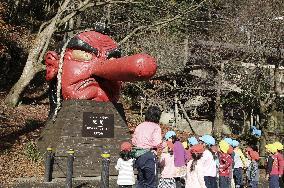
Tengu legendary creature in Japan

Tengu legendary creature in Japan

Photo taken Dec. 20, 2019, shows a statue of the head of Tengu, a creature from Japanese folklore, in front of Eizan Railway's Kurama Station in Kyoto. Children gathered for a photography event before the removal of the aging statue, a symbol of the area located near the legendary abode of the creatures on Mt. Kurama. A new statue has already been installed there. (Kyodo) ==Kyodo

  •  
Tengu legendary creature in Japan

Tengu legendary creature in Japan

Photo taken Dec. 20, 2019, shows a statue of the head of Tengu, a creature from Japanese folklore, in front of Eizan Railway's Kurama Station in Kyoto. Children gathered for a photography event before the removal of the aging statue, a symbol of the area located near the legendary abode of the creatures on Mt. Kurama. A new statue has already been installed there. (Kyodo) ==Kyodo

  • Main
  • Top
  • Editorial
  • Creative
  • About Us
  • About ILG
  • Terms of use
  • Company
  • BEHIND
  • Price List
  • Single Plan
  • Monthly Plan
  • Services
  • Shooting
  • Rights Clearance
  • Support
  • FAQ
  • How To Buy
  • Contact Us
  • Become a Partner

© KYODO NEWS IMAGES INC

All Rights Reserved.

  • Editorial
  • Olympics
  • News
  • Sports
  • Japan
  • Tech
  • Royal
  • Disaster
  • NorthKorea
  • Old Japan
  • SNS
  • Creative
  • Food
  • Japan
  • Landscape
  • Animal
  • Popular
  • #Ukraine
  • #China
  • #coronavirus
  • #N. Korea
  • #Thailand
  • #Russia
  • #Ukraine
  • #China
  • #coronavirus
  • #N. Korea
  • #Thailand
  • #Russia
  • Food
  • Japan
  • Landscape
  • Animal
  • Olympics
  • News
  • Sports
  • Japan
  • Tech
  • Royal
  • Disaster
  • NorthKorea
  • Old Japan
  • SNS