•  
Lake-jumping religious ritual

Lake-jumping religious ritual

A Buddhist monk jumps into Lake Biwa from a height of about 7 meters in the Shiga Prefecture city of Omihachiman, western Japan, on Aug. 1, 2025, as he completes 100 days of mountain training. The traditional ritual at Isaki-ji temple dates back about 1,300 years.

  •  
Lake-jumping religious ritual

Lake-jumping religious ritual

A Buddhist monk jumps into Lake Biwa from a height of about 7 meters in the Shiga Prefecture city of Omihachiman, western Japan, on Aug. 1, 2025, as he completes 100 days of mountain training. The traditional ritual at Isaki-ji temple dates back about 1,300 years.

  •  
Lake-jumping religious ritual

Lake-jumping religious ritual

A Buddhist monk jumps into Lake Biwa from a height of about 7 meters in the Shiga Prefecture city of Omihachiman, western Japan, on Aug. 1, 2025, as he completes 100 days of mountain training. The traditional ritual at Isaki-ji temple dates back about 1,300 years.

  •  
Nomadic Life in Inner Mongolia's Horqin Grassland - China

Nomadic Life in Inner Mongolia's Horqin Grassland - China

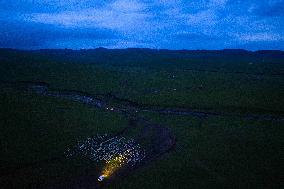
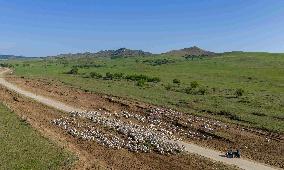
An aerial drone photo taken on June 14, 2025 shows herdsmen driving the livestock at night on the way to the summer campsite on Ar Horqin Grassland, Chifeng City of north China's Inner Mongolia Autonomous Region. Saintsogt, 55, a herdsman in Bayin-undur of Ar Horqin Banner, north China's Inner Mongolia Autonomous Region, is busy with the annual summer migration covering a distance of about 100 kilometers. For the past four decades, he has completed the migration every year. Saintsogt's pasture is a part of the Ar Horqin Grassland Nomadic System, which was listed as one of the Globally Important Agricultural Heritage Systems (GIAHS) sites by the United Nations Food and Agriculture Organization (FAO) on May 20, 2022. Herders here still keep the traditional nomadic customs today. "The travel time has been shortened to three days from eight," Saintsogt said. "The rain makes pasture grow better, and the livestock have enough forage." This year, herders from more than 1,200 households and 128,000 livestock in Bayin

  •  
Nomadic Life in Inner Mongolia's Horqin Grassland - China

Nomadic Life in Inner Mongolia's Horqin Grassland - China

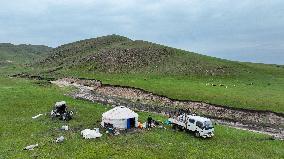
An aerial drone photo taken on June 15, 2025 shows a Mongolian yurt of Saintsogt at his summer campsite on Ar Horqin Grassland, Chifeng City of north China's Inner Mongolia Autonomous Region. Saintsogt, 55, a herdsman in Bayin-undur of Ar Horqin Banner, north China's Inner Mongolia Autonomous Region, is busy with the annual summer migration covering a distance of about 100 kilometers. For the past four decades, he has completed the migration every year. Saintsogt's pasture is a part of the Ar Horqin Grassland Nomadic System, which was listed as one of the Globally Important Agricultural Heritage Systems (GIAHS) sites by the United Nations Food and Agriculture Organization (FAO) on May 20, 2022. Herders here still keep the traditional nomadic customs today. "The travel time has been shortened to three days from eight," Saintsogt said. "The rain makes pasture grow better, and the livestock have enough forage." This year, herders from more than 1,200 households and 128,000 livestock in Bayin-undur joined the mig

  •  
Nomadic Life in Inner Mongolia's Horqin Grassland - China

Nomadic Life in Inner Mongolia's Horqin Grassland - China

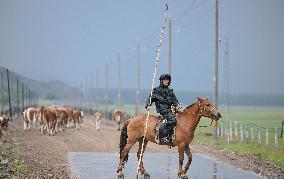
Saintsogt's son (2nd R) drives sheep in rain on his way to the summer campsite on Ar Horqin Grassland, Chifeng City of north China's Inner Mongolia Autonomous Region, June 13, 2025. Saintsogt, 55, a herdsman in Bayin-undur of Ar Horqin Banner, north China's Inner Mongolia Autonomous Region, is busy with the annual summer migration covering a distance of about 100 kilometers. For the past four decades, he has completed the migration every year. Saintsogt's pasture is a part of the Ar Horqin Grassland Nomadic System, which was listed as one of the Globally Important Agricultural Heritage Systems (GIAHS) sites by the United Nations Food and Agriculture Organization (FAO) on May 20, 2022. Herders here still keep the traditional nomadic customs today. "The travel time has been shortened to three days from eight," Saintsogt said. "The rain makes pasture grow better, and the livestock have enough forage." This year, herders from more than 1,200 households and 128,000 livestock in Bayin-undur joined the migration. Ph

  •  
Nomadic Life in Inner Mongolia's Horqin Grassland - China

Nomadic Life in Inner Mongolia's Horqin Grassland - China

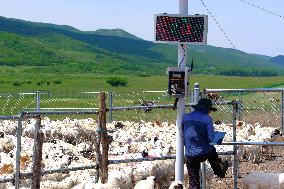
A staff member of Gogodtai Han Ul national nature reserve counts the livestock entering the nature reserve in north China's Inner Mongolia Autonomous Region, June 14, 2025. Saintsogt, 55, a herdsman in Bayin-undur of Ar Horqin Banner, north China's Inner Mongolia Autonomous Region, is busy with the annual summer migration covering a distance of about 100 kilometers. For the past four decades, he has completed the migration every year. Saintsogt's pasture is a part of the Ar Horqin Grassland Nomadic System, which was listed as one of the Globally Important Agricultural Heritage Systems (GIAHS) sites by the United Nations Food and Agriculture Organization (FAO) on May 20, 2022. Herders here still keep the traditional nomadic customs today. "The travel time has been shortened to three days from eight," Saintsogt said. "The rain makes pasture grow better, and the livestock have enough forage." This year, herders from more than 1,200 households and 128,000 livestock in Bayin-undur joined the migration. Photo by Ma

  •  
Nomadic Life in Inner Mongolia's Horqin Grassland - China

Nomadic Life in Inner Mongolia's Horqin Grassland - China

Saintsogt's son seeks for a sick sheep after arriving at the summer campsite on Ar Horqin Grassland, Chifeng City of north China's Inner Mongolia Autonomous Region, June 15, 2025. Saintsogt, 55, a herdsman in Bayin-undur of Ar Horqin Banner, north China's Inner Mongolia Autonomous Region, is busy with the annual summer migration covering a distance of about 100 kilometers. For the past four decades, he has completed the migration every year. Saintsogt's pasture is a part of the Ar Horqin Grassland Nomadic System, which was listed as one of the Globally Important Agricultural Heritage Systems (GIAHS) sites by the United Nations Food and Agriculture Organization (FAO) on May 20, 2022. Herders here still keep the traditional nomadic customs today. "The travel time has been shortened to three days from eight," Saintsogt said. "The rain makes pasture grow better, and the livestock have enough forage." This year, herders from more than 1,200 households and 128,000 livestock in Bayin-undur joined the migration. Phot

  •  
Nomadic Life in Inner Mongolia's Horqin Grassland - China

Nomadic Life in Inner Mongolia's Horqin Grassland - China

Saintsogt's wife arranges bedding at home before departing for the summer campsite on Ar Horqin Grassland, Chifeng City of north China's Inner Mongolia Autonomous Region, June 13, 2025. Saintsogt, 55, a herdsman in Bayin-undur of Ar Horqin Banner, north China's Inner Mongolia Autonomous Region, is busy with the annual summer migration covering a distance of about 100 kilometers. For the past four decades, he has completed the migration every year. Saintsogt's pasture is a part of the Ar Horqin Grassland Nomadic System, which was listed as one of the Globally Important Agricultural Heritage Systems (GIAHS) sites by the United Nations Food and Agriculture Organization (FAO) on May 20, 2022. Herders here still keep the traditional nomadic customs today. "The travel time has been shortened to three days from eight," Saintsogt said. "The rain makes pasture grow better, and the livestock have enough forage." This year, herders from more than 1,200 households and 128,000 livestock in Bayin-undur joined the migration

  •  
Nomadic Life in Inner Mongolia's Horqin Grassland - China

Nomadic Life in Inner Mongolia's Horqin Grassland - China

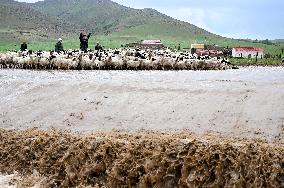
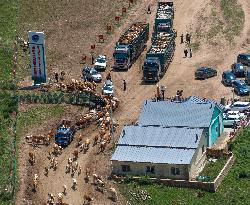
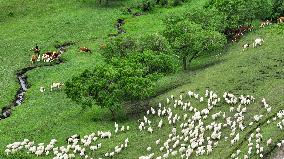
An aerial drone photo taken on June 14, 2025 shows herders waiting for entering the Gogodtai Han Ul national nature reserve in north China's Inner Mongolia Autonomous Region. Saintsogt, 55, a herdsman in Bayin-undur of Ar Horqin Banner, north China's Inner Mongolia Autonomous Region, is busy with the annual summer migration covering a distance of about 100 kilometers. For the past four decades, he has completed the migration every year. Saintsogt's pasture is a part of the Ar Horqin Grassland Nomadic System, which was listed as one of the Globally Important Agricultural Heritage Systems (GIAHS) sites by the United Nations Food and Agriculture Organization (FAO) on May 20, 2022. Herders here still keep the traditional nomadic customs today. "The travel time has been shortened to three days from eight," Saintsogt said. "The rain makes pasture grow better, and the livestock have enough forage." This year, herders from more than 1,200 households and 128,000 livestock in Bayin-undur joined the migration. Photo by

  •  
Nomadic Life in Inner Mongolia's Horqin Grassland - China

Nomadic Life in Inner Mongolia's Horqin Grassland - China

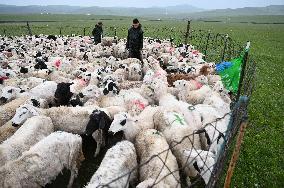
Saintsogt gathers the livestock at the winter campsite before departing for the summer campsite on Ar Horqin Grassland, Chifeng City of north China's Inner Mongolia Autonomous Region, June 13, 2025. Saintsogt, 55, a herdsman in Bayin-undur of Ar Horqin Banner, north China's Inner Mongolia Autonomous Region, is busy with the annual summer migration covering a distance of about 100 kilometers. For the past four decades, he has completed the migration every year. Saintsogt's pasture is a part of the Ar Horqin Grassland Nomadic System, which was listed as one of the Globally Important Agricultural Heritage Systems (GIAHS) sites by the United Nations Food and Agriculture Organization (FAO) on May 20, 2022. Herders here still keep the traditional nomadic customs today. "The travel time has been shortened to three days from eight," Saintsogt said. "The rain makes pasture grow better, and the livestock have enough forage." This year, herders from more than 1,200 households and 128,000 livestock in Bayin-undur joined

  •  
Nomadic Life in Inner Mongolia's Horqin Grassland - China

Nomadic Life in Inner Mongolia's Horqin Grassland - China

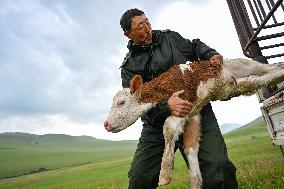
Saintsogt takes a newly born calf off the truck after arriving at the summer campsite on Ar Horqin Grassland, Chifeng City of north China's Inner Mongolia Autonomous Region, June 15, 2025. Saintsogt, 55, a herdsman in Bayin-undur of Ar Horqin Banner, north China's Inner Mongolia Autonomous Region, is busy with the annual summer migration covering a distance of about 100 kilometers. For the past four decades, he has completed the migration every year. Saintsogt's pasture is a part of the Ar Horqin Grassland Nomadic System, which was listed as one of the Globally Important Agricultural Heritage Systems (GIAHS) sites by the United Nations Food and Agriculture Organization (FAO) on May 20, 2022. Herders here still keep the traditional nomadic customs today. "The travel time has been shortened to three days from eight," Saintsogt said. "The rain makes pasture grow better, and the livestock have enough forage." This year, herders from more than 1,200 households and 128,000 livestock in Bayin-undur joined the migrat

  •  
Nomadic Life in Inner Mongolia's Horqin Grassland - China

Nomadic Life in Inner Mongolia's Horqin Grassland - China

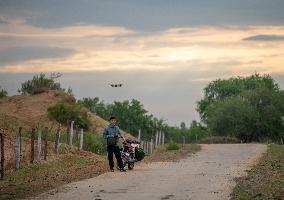
Saintsogt's son operates a drone to check the number of the livestock on Ar Horqin Grassland, Chifeng City of north China's Inner Mongolia Autonomous Region, June 13, 2025. Saintsogt, 55, a herdsman in Bayin-undur of Ar Horqin Banner, north China's Inner Mongolia Autonomous Region, is busy with the annual summer migration covering a distance of about 100 kilometers. For the past four decades, he has completed the migration every year. Saintsogt's pasture is a part of the Ar Horqin Grassland Nomadic System, which was listed as one of the Globally Important Agricultural Heritage Systems (GIAHS) sites by the United Nations Food and Agriculture Organization (FAO) on May 20, 2022. Herders here still keep the traditional nomadic customs today. "The travel time has been shortened to three days from eight," Saintsogt said. "The rain makes pasture grow better, and the livestock have enough forage." This year, herders from more than 1,200 households and 128,000 livestock in Bayin-undur joined the migration. Photo by Ma

  •  
Nomadic Life in Inner Mongolia's Horqin Grassland - China

Nomadic Life in Inner Mongolia's Horqin Grassland - China

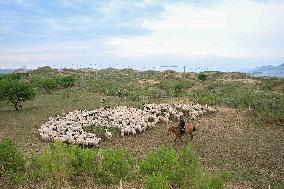
An aerial drone photo taken on June 14, 2025 shows Saintsogt driving the livestock on his way to the summer campsite on Ar Horqin Grassland, Chifeng City of north China's Inner Mongolia Autonomous Region. Saintsogt, 55, a herdsman in Bayin-undur of Ar Horqin Banner, north China's Inner Mongolia Autonomous Region, is busy with the annual summer migration covering a distance of about 100 kilometers. For the past four decades, he has completed the migration every year. Saintsogt's pasture is a part of the Ar Horqin Grassland Nomadic System, which was listed as one of the Globally Important Agricultural Heritage Systems (GIAHS) sites by the United Nations Food and Agriculture Organization (FAO) on May 20, 2022. Herders here still keep the traditional nomadic customs today. "The travel time has been shortened to three days from eight," Saintsogt said. "The rain makes pasture grow better, and the livestock have enough forage." This year, herders from more than 1,200 households and 128,000 livestock in Bayin-undur j

  •  
Nomadic Life in Inner Mongolia's Horqin Grassland - China

Nomadic Life in Inner Mongolia's Horqin Grassland - China

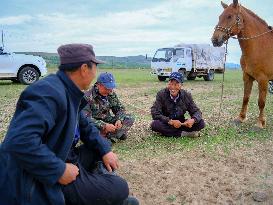
Saintsogt (R) talks with other herdsmen on their way to the summer campsite on Ar Horqin Grassland, Chifeng City of north China's Inner Mongolia Autonomous Region, June 13, 2025. Saintsogt, 55, a herdsman in Bayin-undur of Ar Horqin Banner, north China's Inner Mongolia Autonomous Region, is busy with the annual summer migration covering a distance of about 100 kilometers. For the past four decades, he has completed the migration every year. Saintsogt's pasture is a part of the Ar Horqin Grassland Nomadic System, which was listed as one of the Globally Important Agricultural Heritage Systems (GIAHS) sites by the United Nations Food and Agriculture Organization (FAO) on May 20, 2022. Herders here still keep the traditional nomadic customs today. "The travel time has been shortened to three days from eight," Saintsogt said. "The rain makes pasture grow better, and the livestock have enough forage." This year, herders from more than 1,200 households and 128,000 livestock in Bayin-undur joined the migration. Photo

  •  
Nomadic Life in Inner Mongolia's Horqin Grassland - China

Nomadic Life in Inner Mongolia's Horqin Grassland - China

Saintsogt gathers the livestock at their winter campsite before departing for the summer campsite on Ar Horqin Grassland, Chifeng City of north China's Inner Mongolia Autonomous Region, June 13, 2025. Saintsogt, 55, a herdsman in Bayin-undur of Ar Horqin Banner, north China's Inner Mongolia Autonomous Region, is busy with the annual summer migration covering a distance of about 100 kilometers. For the past four decades, he has completed the migration every year. Saintsogt's pasture is a part of the Ar Horqin Grassland Nomadic System, which was listed as one of the Globally Important Agricultural Heritage Systems (GIAHS) sites by the United Nations Food and Agriculture Organization (FAO) on May 20, 2022. Herders here still keep the traditional nomadic customs today. "The travel time has been shortened to three days from eight," Saintsogt said. "The rain makes pasture grow better, and the livestock have enough forage." This year, herders from more than 1,200 households and 128,000 livestock in Bayin-undur joine

  •  
Nomadic Life in Inner Mongolia's Horqin Grassland - China

Nomadic Life in Inner Mongolia's Horqin Grassland - China

An aerial drone photo shows Saintsogt's son (L) riding a motorcycle to drive the livestock on his way to the summer campsite on Ar Horqin Grassland, Chifeng City of north China's Inner Mongolia Autonomous Region, June 14, 2025. Saintsogt, 55, a herdsman in Bayin-undur of Ar Horqin Banner, north China's Inner Mongolia Autonomous Region, is busy with the annual summer migration covering a distance of about 100 kilometers. For the past four decades, he has completed the migration every year. Saintsogt's pasture is a part of the Ar Horqin Grassland Nomadic System, which was listed as one of the Globally Important Agricultural Heritage Systems (GIAHS) sites by the United Nations Food and Agriculture Organization (FAO) on May 20, 2022. Herders here still keep the traditional nomadic customs today. "The travel time has been shortened to three days from eight," Saintsogt said. "The rain makes pasture grow better, and the livestock have enough forage." This year, herders from more than 1,200 households and 128,000 liv

  •  
Nomadic Life in Inner Mongolia's Horqin Grassland - China

Nomadic Life in Inner Mongolia's Horqin Grassland - China

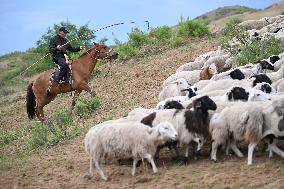
Saintsogt drives cattle in the rain on his way to the summer campsite on Ar Horqin Grassland, Chifeng City of north China's Inner Mongolia Autonomous Region, June 13, 2025. Saintsogt, 55, a herdsman in Bayin-undur of Ar Horqin Banner, north China's Inner Mongolia Autonomous Region, is busy with the annual summer migration covering a distance of about 100 kilometers. For the past four decades, he has completed the migration every year. Saintsogt's pasture is a part of the Ar Horqin Grassland Nomadic System, which was listed as one of the Globally Important Agricultural Heritage Systems (GIAHS) sites by the United Nations Food and Agriculture Organization (FAO) on May 20, 2022. Herders here still keep the traditional nomadic customs today. "The travel time has been shortened to three days from eight," Saintsogt said. "The rain makes pasture grow better, and the livestock have enough forage." This year, herders from more than 1,200 households and 128,000 livestock in Bayin-undur joined the migration. Photo by Be

  •  
Nomadic Life in Inner Mongolia's Horqin Grassland - China

Nomadic Life in Inner Mongolia's Horqin Grassland - China

Saintsogt hugs a newly born calf on his way to the summer campsite on Ar Horqin Grassland, Chifeng City of north China's Inner Mongolia Autonomous Region, June 14, 2025. Saintsogt, 55, a herdsman in Bayin-undur of Ar Horqin Banner, north China's Inner Mongolia Autonomous Region, is busy with the annual summer migration covering a distance of about 100 kilometers. For the past four decades, he has completed the migration every year. Saintsogt's pasture is a part of the Ar Horqin Grassland Nomadic System, which was listed as one of the Globally Important Agricultural Heritage Systems (GIAHS) sites by the United Nations Food and Agriculture Organization (FAO) on May 20, 2022. Herders here still keep the traditional nomadic customs today. "The travel time has been shortened to three days from eight," Saintsogt said. "The rain makes pasture grow better, and the livestock have enough forage." This year, herders from more than 1,200 households and 128,000 livestock in Bayin-undur joined the migration. Photo by Bei H

  •  
Nomadic Life in Inner Mongolia's Horqin Grassland - China

Nomadic Life in Inner Mongolia's Horqin Grassland - China

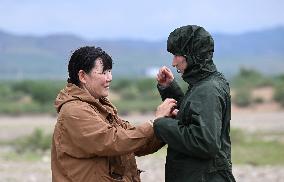
Saintsogt's wife (L) helps her son to wear a raincoat on their way to the summer campsite on Ar Horqin Grassland, Chifeng City of north China's Inner Mongolia Autonomous Region, June 13, 2025. Saintsogt, 55, a herdsman in Bayin-undur of Ar Horqin Banner, north China's Inner Mongolia Autonomous Region, is busy with the annual summer migration covering a distance of about 100 kilometers. For the past four decades, he has completed the migration every year. Saintsogt's pasture is a part of the Ar Horqin Grassland Nomadic System, which was listed as one of the Globally Important Agricultural Heritage Systems (GIAHS) sites by the United Nations Food and Agriculture Organization (FAO) on May 20, 2022. Herders here still keep the traditional nomadic customs today. "The travel time has been shortened to three days from eight," Saintsogt said. "The rain makes pasture grow better, and the livestock have enough forage." This year, herders from more than 1,200 households and 128,000 livestock in Bayin-undur joined the mi

  •  
Nomadic Life in Inner Mongolia's Horqin Grassland - China

Nomadic Life in Inner Mongolia's Horqin Grassland - China

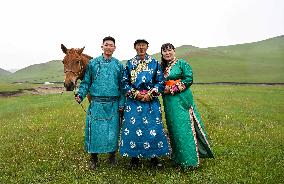
Saintsogt (C), his wife (R) and son pose for a group photo at their summer campsite on Ar Horqin Grassland, Chifeng City of north China's Inner Mongolia Autonomous Region, June 15, 2025. Saintsogt, 55, a herdsman in Bayin-undur of Ar Horqin Banner, north China's Inner Mongolia Autonomous Region, is busy with the annual summer migration covering a distance of about 100 kilometers. For the past four decades, he has completed the migration every year. Saintsogt's pasture is a part of the Ar Horqin Grassland Nomadic System, which was listed as one of the Globally Important Agricultural Heritage Systems (GIAHS) sites by the United Nations Food and Agriculture Organization (FAO) on May 20, 2022. Herders here still keep the traditional nomadic customs today. "The travel time has been shortened to three days from eight," Saintsogt said. "The rain makes pasture grow better, and the livestock have enough forage." This year, herders from more than 1,200 households and 128,000 livestock in Bayin-undur joined the migratio

  •  
CHINA-BEIJING-SHEN YIQIN-PARIS OLYMPICS-PREPARATION-INSPECTION (CN)

CHINA-BEIJING-SHEN YIQIN-PARIS OLYMPICS-PREPARATION-INSPECTION (CN)

(240417) -- BEIJING, April 17, 2024 (Xinhua) -- Chinese State Councilor Shen Yiqin learns about Chinese teams' Olympic preparations and holds talks with representatives of athletes, coaches, and staff in Beijing, capital of China, April 17, 2024. With 100 days out to the opening of the Olympic Games in Paris, Shen made an inspection on preparations for the Games in Beijing. (Xinhua/Yin Bogu)

  •  

UN chief calls for humanitarian cease-fire in Gaza 100 days into conflict

STORY: UN chief calls for humanitarian cease-fire in Gaza 100 days into conflict SHOOTING DATE: Jan. 15, 2024 DATELINE: Jan. 16, 2024 LENGTH: 00:02:04 LOCATION: UN headquarters CATEGORY: POLITICS SHOTLIST: 1. various of UN Secretary-General Antonio Guterres walking to podium 2. SOUNDBITE 1 (English): ANTONIO GUTERRES, UN Secretary-General 3. various of journalists 4. SOUNDBITE 2 (English): ANTONIO GUTERRES, UN Secretary-General 5. SOUNDBITE 3 (English): ANTONIO GUTERRES, UN Secretary-General 6. various of Guterres leaving STORYLINE: UN Secretary-General Antonio Guterres on Monday again called for an immediate humanitarian cease-fire in Gaza as the conflict turns 100 days. SOUNDBITE 1 (English): ANTONIO GUTERRES, UN Secretary-General "I have outlined concerns about a wide range of issues: the unprecedented level of civilian casualties and catastrophic humanitarian conditions in Gaza; the fate of the hostages; the tensions that are spilling (over) across the region. There is one solution to help address all

  •  

Humanitarian crisis worsens in Gaza as Israel-Hamas conflict reaches 100-day mark

STORY: Humanitarian crisis worsens in Gaza as Israel-Hamas conflict reaches 100-day mark SHOOTING TIME: Jan. 14, 2024 DATELINE: Jan. 15, 2024 LENGTH: 00:01:03 LOCATION: GAZA, Palestine/Jerusalem CATEGORY: POLITICS/MILITARY SHOTLIST: 1. STANDUP 1 (English): OHOOD AL-JAGHOUB, Xinhua reporter in Ramallah 2. STANDUP 2 (English): ZHANG TIANLANG, Xinhua correspondent in Jerusalem STORYLINE: The Israel-Hamas conflict has ravaged the Gaza Strip for 100 days, killing over 23,000 people there, according to data from Hamas-run government media office. The coastal enclave is suffering from a worsening humanitarian crisis. STANDUP 1 (English): OHOOD AL-JAGHOUB, Xinhua reporter in Ramallah "Half of the buildings in Gaza have been destroyed or damaged. Around seventy percent of schools have been destroyed. Fifteen out of thirty-six hospitals in Gaza are still functioning. About 1.9 million Palestinians are internally displaced, and over half a million of them are facing catastrophic hunger and starvation." STANDUP 2 (

  •  

Egyptian trucks carrying aid waiting at Rafah crossing to enter besieged Gaza

STORY: Egyptian trucks carrying aid waiting at Rafah crossing to enter besieged Gaza SHOOTING TIME: Oct. 31, 2023 DATELINE: Nov. 1, 2023 LENGTH: 00:01:04 LOCATION: RAFAH, Egypt CATEGORY: SOCIETY SHOTLIST: 1. various of trucks carrying relief aid waiting at the Egyptian side of the Rafah crossing STORYLINE: Hundreds of trucks carrying relief aid have waited for days at the Egyptian side of the Rafah crossing to enter the Gaza Strip, home to 2.3 million Palestinians who have been deprived of fuel, food, water and medical supplies for nearly three weeks under Israeli blockades. Although the number of aid-laden trucks entering Gaza has increased in recent days, the amount still falls short of the 100 truckloads of goods needed daily, according to Egyptian authorities and the United Nations (UN). Since the first convoy of humanitarian aid through Rafah on Oct. 21, two weeks after the outbreak of the Israel-Hamas conflict, about 250 trucks carrying tons of supplies have entered the Palestinian territory,

  •  
Quake Death Toll Nears 3000 - Morocco

Quake Death Toll Nears 3000 - Morocco

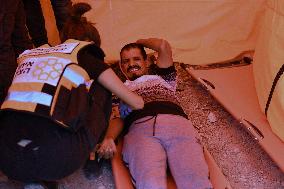
A man is attended to by emergency services sent by Israel on September 14, 2023, in Imi N'Tala, Marrakech-Safi region, Morocco. In this village, which no longer exists after the earthquake, there were 67 houses where 378 inhabitants lived, of whom about 100 are dead or missing. Imi N'Tala is located in the province hardest hit by the earthquake of magnitude 6.8 on the Richter scale, which shook the High Atlas area of Morocco on September 8, and has so far left about thirty aftershocks exceeding magnitude 3, according to the Euro-Mediterranean Seismological Center (CSEM), which has detected less seismic activity in recent days. More than 2,950 people have died and 5,600 have been injured as a result of the earthquake. The United Nations estimates that 300,000 people were affected by the 6.8 magnitude quake. Photo by Fernando Sanchez/Europa Press/ABACAPRESS.COM

  •  
Quake Death Toll Nears 3000 - Morocco

Quake Death Toll Nears 3000 - Morocco

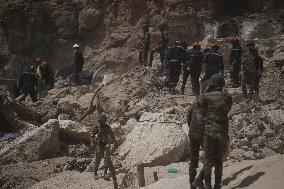
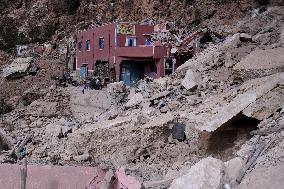
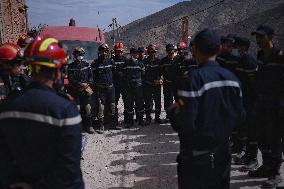
Firefighters continue to search for survivors in the village that disappeared on 14 September 2023 in Imi N'Tala, in the Marrakech-Safi region of Morocco. In this village, which no longer exists after the earthquake, there were 67 houses where 378 inhabitants lived, of which about 100 are dead or missing. Imi N'Tala is located in the province hardest hit by the earthquake of magnitude 6.8 on the Richter scale, which shook the High Atlas area of Morocco on September 8, and has so far left about thirty aftershocks exceeding magnitude 3, according to the Euro-Mediterranean Seismological Center (CSEM), which has detected less seismic activity in recent days. More than 2,950 people have died and 5,600 have been injured as a result of the earthquake. The United Nations estimates that 300,000 people were affected by the 6.8 magnitude quake. Photo by Fernando Sanchez/Europa Press/ABACAPRESS.COM

  •  
Quake Death Toll Nears 3000 - Morocco

Quake Death Toll Nears 3000 - Morocco

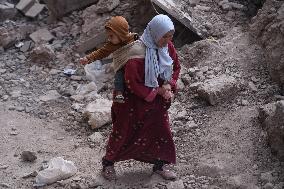
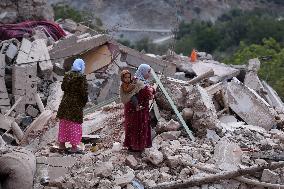
A woman with her son searches through the rubble of the missing village, on September 14, 2023, in Imi N'Tala, Marrakech-Safi region (Morocco). In this village, which no longer exists after the earthquake, there were 67 houses where 378 inhabitants lived, of whom about 100 are dead or missing. Imi N'Tala is located in the province hardest hit by the earthquake of magnitude 6.8 on the Richter scale, which shook the High Atlas area of Morocco on September 8, and has so far left about thirty aftershocks exceeding magnitude 3, according to the Euro-Mediterranean Seismological Center (CSEM), which has detected less seismic activity in recent days. More than 2,950 people have died and 5,600 have been injured as a result of the earthquake. The United Nations estimates that 300,000 people were affected by the 6.8 magnitude quake. Photo by Fernando Sanchez/Europa Press/ABACAPRESS.COM

  •  
Quake Death Toll Nears 3000 - Morocco

Quake Death Toll Nears 3000 - Morocco

A man searches through the rubble of the missing village on September 14, 2023, in Imi N'Tala, Marrakech-Safi region, Morocco. In this village, which no longer exists after the earthquake, there were 67 houses where 378 inhabitants lived, of which about 100 are dead or missing. Imi N'Tala is located in the province hardest hit by the earthquake of magnitude 6.8 on the Richter scale, which shook the High Atlas area of Morocco on September 8, and has so far left about thirty aftershocks exceeding magnitude 3, according to the Euro-Mediterranean Seismological Center (CSEM), which has detected less seismic activity in recent days. More than 2,950 people have died and 5,600 have been injured as a result of the earthquake. The United Nations estimates that 300,000 people were affected by the 6.8 magnitude quake. Photo by Fernando Sanchez/Europa Press/ABACAPRESS.COM

  •  
Quake Death Toll Nears 3000 - Morocco

Quake Death Toll Nears 3000 - Morocco

One of the few buildings still standing in the village that disappeared on September 14, 2023, in Imi N'Tala, Marrakech-Safi region (Morocco). In this village, which no longer exists after the earthquake, there were 67 houses where 378 inhabitants lived, of which about 100 are dead or missing. Imi N'Tala is located in the province hardest hit by the earthquake of magnitude 6.8 on the Richter scale, which shook the High Atlas area of Morocco on September 8, and has so far left about thirty aftershocks exceeding magnitude 3, according to the Euro-Mediterranean Seismological Center (CSEM), which has detected less seismic activity in recent days. More than 2,950 people have died and 5,600 have been injured as a result of the earthquake. The United Nations estimates that 300,000 people were affected by the 6.8 magnitude quake. Photo by Fernando Sanchez/Europa Press/ABACAPRESS.COM

  •  
Quake Death Toll Nears 3000 - Morocco

Quake Death Toll Nears 3000 - Morocco

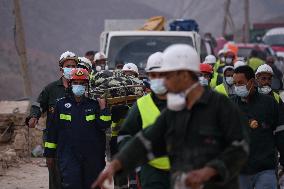
Moroccan firefighters recover the body of a woman in the missing village of Imi N'Tala, Marrakech-Safi region, Morocco, on September 14, 2023. In this village, which no longer exists after the earthquake, there were 67 houses where 378 inhabitants lived, of which about 100 are dead or missing. Imi N'Tala is located in the province hardest hit by the earthquake of magnitude 6.8 on the Richter scale, which shook the High Atlas area of Morocco on September 8, and has so far left about thirty aftershocks exceeding magnitude 3, according to the Euro-Mediterranean Seismological Center (CSEM), which has detected less seismic activity in recent days. More than 2,950 people have died and 5,600 have been injured as a result of the earthquake. The United Nations estimates that 300,000 people were affected by the 6.8 magnitude quake. Photo by Fernando Sanchez/Europa Press/ABACAPRESS.COM

  •  
Quake Death Toll Nears 3000 - Morocco

Quake Death Toll Nears 3000 - Morocco

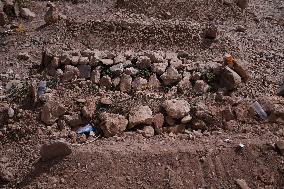
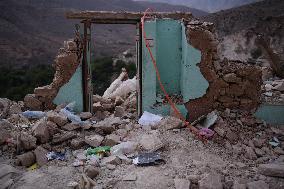
A grave in the missing village of Imi N'Tala, 14 September 2023, Marrakech-Safi region (Morocco). In this village, which no longer exists after the earthquake, there were 67 houses where 378 inhabitants lived, of which about 100 are dead or missing. Imi N'Tala is located in the province hardest hit by the earthquake of magnitude 6.8 on the Richter scale, which shook the High Atlas area of Morocco on September 8, and has so far left about thirty aftershocks exceeding magnitude 3, according to the Euro-Mediterranean Seismological Center (CSEM), which has detected less seismic activity in recent days. More than 2,950 people have died and 5,600 have been injured as a result of the earthquake. The United Nations estimates that 300,000 people have been affected by the 6.8 magnitude quake. Photo by Fernando Sanchez/Europa Press/ABACAPRESS.COM

  •  
Quake Death Toll Nears 3000 - Morocco

Quake Death Toll Nears 3000 - Morocco

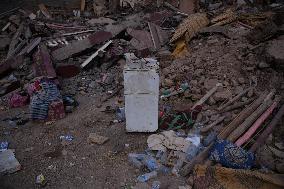
A refrigerator seen in the rubble of the missing village of Imi N'Tala, September 14, 2023, Marrakech-Safi region (Morocco). In this village, which no longer exists after the earthquake, there were 67 houses where 378 inhabitants lived, of whom about 100 are dead or missing. Imi N'Tala is located in the province hardest hit by the earthquake of magnitude 6.8 on the Richter scale, which shook the High Atlas area of Morocco on September 8, and has so far left about thirty aftershocks exceeding magnitude 3, according to the Euro-Mediterranean Seismological Center (CSEM), which has detected less seismic activity in recent days. More than 2,950 people have died and 5,600 have been injured as a result of the earthquake. The United Nations estimates that 300,000 people have been affected by the 6.8 magnitude quake. Photo by Fernando Sanchez/Europa Press/ABACAPRESS.COM

  •  
Quake Death Toll Nears 3000 - Morocco

Quake Death Toll Nears 3000 - Morocco

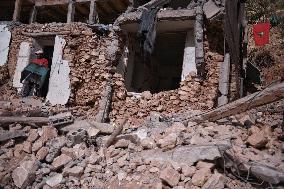
Entrance of a destroyed house in the missing village of Imi N'Tala, September 14, 2023, Marrakech-Safi region (Morocco). In this village, which no longer exists after the earthquake, there were 67 houses where 378 inhabitants lived, of which about 100 are dead or missing. Imi N'Tala is located in the province hardest hit by the earthquake of magnitude 6.8 on the Richter scale, which shook the High Atlas area of Morocco on September 8, and has so far left about thirty aftershocks exceeding magnitude 3, according to the Euro-Mediterranean Seismological Center (CSEM), which has detected less seismic activity in recent days. More than 2,950 people have died and 5,600 have been injured as a result of the earthquake. The United Nations estimates that 300,000 people have been affected by the 6.8 magnitude quake. Photo by Fernando Sanchez/Europa Press/ABACAPRESS.COM

  •  
Quake Death Toll Nears 3000 - Morocco

Quake Death Toll Nears 3000 - Morocco

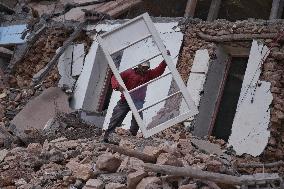
A man retrieves a glass door from the rubble of a village that disappeared on September 14, 2023, in Imi N'Tala, in the Marrakech-Safi region of Morocco. In this village, which no longer exists after the earthquake, there were 67 houses where 378 inhabitants lived, of whom about 100 are dead or missing. Imi N'Tala is located in the province hardest hit by the earthquake of magnitude 6.8 on the Richter scale, which shook the High Atlas area of Morocco on September 8, and has so far left about thirty aftershocks exceeding magnitude 3, according to the Euro-Mediterranean Seismological Center (CSEM), which has detected less seismic activity in recent days. More than 2,950 people have died and 5,600 have been injured as a result of the earthquake. The United Nations estimates that 300,000 people have been affected by the 6.8 magnitude quake. Photo by Fernando Sanchez/Europa Press/ABACAPRESS.COM

  •  
Quake Death Toll Nears 3000 - Morocco

Quake Death Toll Nears 3000 - Morocco

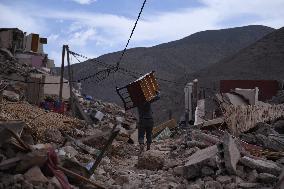
A man retrieves belongings from the rubble of a village that disappeared on September 14, 2023, in Imi N'Tala, in the Marrakech-Safi region of Morocco. In this village, which no longer exists after the earthquake, there were 67 houses where 378 inhabitants lived, of whom about 100 are dead or missing. Imi N'Tala is located in the province hardest hit by the earthquake of magnitude 6.8 on the Richter scale, which shook the High Atlas area of Morocco on September 8, and has so far left about thirty aftershocks exceeding magnitude 3, according to the Euro-Mediterranean Seismological Center (CSEM), which has detected less seismic activity in recent days. More than 2,950 people have died and 5,600 have been injured as a result of the earthquake. The United Nations estimates that 300,000 people have been affected by the 6.8 magnitude quake. Photo by Fernando Sanchez/Europa Press/ABACAPRESS.COM

  •  
Quake Death Toll Nears 3000 - Morocco

Quake Death Toll Nears 3000 - Morocco

A man retrieves belongings from the rubble of a village that disappeared on September 14, 2023, in Imi N'Tala, in the Marrakech-Safi region of Morocco. In this village, which no longer exists after the earthquake, there were 67 houses where 378 inhabitants lived, of whom about 100 are dead or missing. Imi N'Tala is located in the province hardest hit by the earthquake of magnitude 6.8 on the Richter scale, which shook the High Atlas area of Morocco on September 8, and has so far left about thirty aftershocks exceeding magnitude 3, according to the Euro-Mediterranean Seismological Center (CSEM), which has detected less seismic activity in recent days. More than 2,950 people have died and 5,600 have been injured as a result of the earthquake. The United Nations estimates that 300,000 people have been affected by the 6.8 magnitude quake. Photo by Fernando Sanchez/Europa Press/ABACAPRESS.COM

  •  
Quake Death Toll Nears 3000 - Morocco

Quake Death Toll Nears 3000 - Morocco

Women search through the rubble of a village that disappeared on September 14, 2023, in Imi N'Tala, in the Marrakech-Safi region of Morocco. In this village, which no longer exists after the earthquake, there were 67 houses where 378 inhabitants lived, of whom about 100 are dead or missing. Imi N'Tala is located in the province hardest hit by the earthquake of magnitude 6.8 on the Richter scale, which shook the High Atlas area of Morocco on September 8, and has so far left about thirty aftershocks exceeding magnitude 3, according to the Euro-Mediterranean Seismological Center (CSEM), which has detected less seismic activity in recent days. More than 2,950 people have died and 5,600 have been injured as a result of the earthquake. The United Nations estimates that 300,000 people have been affected by the 6.8 magnitude quake. Photo by Fernando Sanchez/Europa Press/ABACAPRESS.COM

  •  
Countdown To The Hangzhou Asian Games

Countdown To The Hangzhou Asian Games

HANGZHOU, CHINA JUNE 13, 2023 - A primary school student takes part in the "Asian Games Ring" game at Hangzhou West Lake District in Hangzhou, Zhejiang province, China, June 13, 2023. As the 100 days countdown to the Hangzhou Asian Games is approaching, people will learn about the Hangzhou Asian Games by participating in a variety of game activities related to the Asian Games, such as the Asian Games Multi-star, Asian Games darts, fun golf, football and kickball, so as to enhance the participation of citizens in the Asian Games and jointly create a good atmosphere for the whole people to welcome the Asian Games.

  •  
Countdown To The Hangzhou Asian Games

Countdown To The Hangzhou Asian Games

HANGZHOU, CHINA JUNE 13, 2023 - Primary school students play "fun golf" at the Hangzhou West Lake District in Hangzhou, East China's Zhejiang province, June 13, 2023. As the 100 days countdown to the Hangzhou Asian Games is approaching, people will learn about the Hangzhou Asian Games by participating in a variety of game activities related to the Asian Games, such as the Asian Games Multi-star, Asian Games darts, fun golf, football and kickball, so as to enhance the participation of citizens in the Asian Games and jointly create a good atmosphere for the whole people to welcome the Asian Games.

  •  
Countdown To The Hangzhou Asian Games

Countdown To The Hangzhou Asian Games

HANGZHOU, CHINA JUNE 13, 2023 - A primary school student takes part in the "Asian Games Basketball" game at Xihu District in Hangzhou, Zhejiang province, China, June 13, 2023. As the 100 days countdown to the Hangzhou Asian Games is approaching, people will learn about the Hangzhou Asian Games by participating in a variety of game activities related to the Asian Games, such as the Asian Games Multi-star, Asian Games darts, fun golf, football and kickball, so as to enhance the participation of citizens in the Asian Games and jointly create a good atmosphere for the whole people to welcome the Asian Games.

  •  
Countdown To The Hangzhou Asian Games

Countdown To The Hangzhou Asian Games

HANGZHOU, CHINA JUNE 13, 2023 - A child plays a soccer game in the West Lake district of Hangzhou, East China's Zhejiang province, June 13, 2023. As the 100 days countdown to the Hangzhou Asian Games is approaching, people will learn about the Hangzhou Asian Games by participating in a variety of game activities related to the Asian Games, such as the Asian Games Multi-star, Asian Games darts, fun golf, football and kickball, so as to enhance the participation of citizens in the Asian Games and jointly create a good atmosphere for the whole people to welcome the Asian Games.

  •  
Countdown To The Hangzhou Asian Games

Countdown To The Hangzhou Asian Games

HANGZHOU, CHINA JUNE 13, 2023 - Children participate in the blind box event of the "Asian Games" in Hangzhou West Lake District, East China's Zhejiang province, June 13, 2023. As the 100 days countdown to the Hangzhou Asian Games is approaching, people will learn about the Hangzhou Asian Games by participating in a variety of game activities related to the Asian Games, such as the Asian Games Multi-star, Asian Games darts, fun golf, football and kickball, so as to enhance the participation of citizens in the Asian Games and jointly create a good atmosphere for the whole people to welcome the Asian Games.

  •  
Countdown To The Hangzhou Asian Games

Countdown To The Hangzhou Asian Games

HANGZHOU, CHINA JUNE 13, 2023 - A primary school student takes part in the "darts" game during the Asian Games at Hangzhou West Lake District in Hangzhou, Zhejiang province, China, June 13, 2023. As the 100 days countdown to the Hangzhou Asian Games is approaching, people will learn about the Hangzhou Asian Games by participating in a variety of game activities related to the Asian Games, such as the Asian Games Multi-star, Asian Games darts, fun golf, football and kickball, so as to enhance the participation of citizens in the Asian Games and jointly create a good atmosphere for the whole people to welcome the Asian Games.

  •  
CHINA-TIBET-XIGAZE-BORDER DEFENSE TEAM (CN)

CHINA-TIBET-XIGAZE-BORDER DEFENSE TEAM (CN)

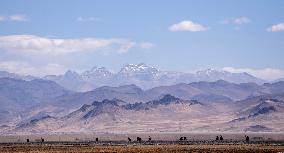
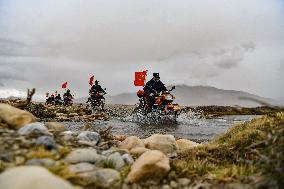
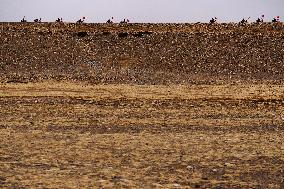
(230605) -- LHASA, June 5, 2023 (Xinhua) -- Members of the border defense team patrol on motorcycles in Changgo Township of Xigaze City, southwest China's Tibet Autonomous Region, June 2, 2023. Changgo Township, with an average elevation of over 5,000 meters, is a border township adjacent to Nepal with a 105-kilometer borderline. In 2003, the border defense team established by Changgo's police station consisted of only 15 members. In October, 2005, Changgo Township suffered a severe snow disaster. In the face of danger, the border defense team spontaneously formed a "disaster relief task force" and worked tirelessly for three days and nights to clear over ten kilometers of snow-covered roads. They successfully rescued 152 stranded individuals and more than 15,000 livestock, saving the affected population from direct economic losses of over 4.2 million yuan (about 591,780 U.S. dollars). In 2008, the border defense team expanded and received over 100 applicants for 20 available positions. Currently, the team

  •  
CHINA-TIBET-XIGAZE-BORDER DEFENSE TEAM (CN)

CHINA-TIBET-XIGAZE-BORDER DEFENSE TEAM (CN)

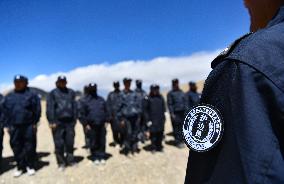
(230605) -- LHASA, June 5, 2023 (Xinhua) -- Members of the border defense team prepare to patrol at the No. 33 boundary marker in Changgo Township of Xigaze City, southwest China's Tibet Autonomous Region, June 2, 2023. Changgo Township, with an average elevation of over 5,000 meters, is a border township adjacent to Nepal with a 105-kilometer borderline. In 2003, the border defense team established by Changgo's police station consisted of only 15 members. In October, 2005, Changgo Township suffered a severe snow disaster. In the face of danger, the border defense team spontaneously formed a "disaster relief task force" and worked tirelessly for three days and nights to clear over ten kilometers of snow-covered roads. They successfully rescued 152 stranded individuals and more than 15,000 livestock, saving the affected population from direct economic losses of over 4.2 million yuan (about 591,780 U.S. dollars). In 2008, the border defense team expanded and received over 100 applicants for 20 available posit

  •  
CHINA-TIBET-XIGAZE-BORDER DEFENSE TEAM (CN)

CHINA-TIBET-XIGAZE-BORDER DEFENSE TEAM (CN)

(230605) -- LHASA, June 5, 2023 (Xinhua) -- Members of the border defense team patrol on motorcycles in Changgo Township of Xigaze City, southwest China's Tibet Autonomous Region, June 2, 2023. Changgo Township, with an average elevation of over 5,000 meters, is a border township adjacent to Nepal with a 105-kilometer borderline. In 2003, the border defense team established by Changgo's police station consisted of only 15 members. In October, 2005, Changgo Township suffered a severe snow disaster. In the face of danger, the border defense team spontaneously formed a "disaster relief task force" and worked tirelessly for three days and nights to clear over ten kilometers of snow-covered roads. They successfully rescued 152 stranded individuals and more than 15,000 livestock, saving the affected population from direct economic losses of over 4.2 million yuan (about 591,780 U.S. dollars). In 2008, the border defense team expanded and received over 100 applicants for 20 available positions. Currently, the team

  •  
CHINA-TIBET-XIGAZE-BORDER DEFENSE TEAM (CN)

CHINA-TIBET-XIGAZE-BORDER DEFENSE TEAM (CN)

(230605) -- LHASA, June 5, 2023 (Xinhua) -- Members of the border defense team patrol on motorcycles in Changgo Township of Xigaze City, southwest China's Tibet Autonomous Region, June 2, 2023. Changgo Township, with an average elevation of over 5,000 meters, is a border township adjacent to Nepal with a 105-kilometer borderline. In 2003, the border defense team established by Changgo's police station consisted of only 15 members. In October, 2005, Changgo Township suffered a severe snow disaster. In the face of danger, the border defense team spontaneously formed a "disaster relief task force" and worked tirelessly for three days and nights to clear over ten kilometers of snow-covered roads. They successfully rescued 152 stranded individuals and more than 15,000 livestock, saving the affected population from direct economic losses of over 4.2 million yuan (about 591,780 U.S. dollars). In 2008, the border defense team expanded and received over 100 applicants for 20 available positions. Currently, the team

  •  
CHINA-TIBET-XIGAZE-BORDER DEFENSE TEAM (CN)

CHINA-TIBET-XIGAZE-BORDER DEFENSE TEAM (CN)

(230605) -- LHASA, June 5, 2023 (Xinhua) -- Members of the border defense team patrol on motorcycles in Changgo Township of Xigaze City, southwest China's Tibet Autonomous Region, June 2, 2023. Changgo Township, with an average elevation of over 5,000 meters, is a border township adjacent to Nepal with a 105-kilometer borderline. In 2003, the border defense team established by Changgo's police station consisted of only 15 members. In October, 2005, Changgo Township suffered a severe snow disaster. In the face of danger, the border defense team spontaneously formed a "disaster relief task force" and worked tirelessly for three days and nights to clear over ten kilometers of snow-covered roads. They successfully rescued 152 stranded individuals and more than 15,000 livestock, saving the affected population from direct economic losses of over 4.2 million yuan (about 591,780 U.S. dollars). In 2008, the border defense team expanded and received over 100 applicants for 20 available positions. Currently, the team

  •  
CHINA-TIBET-XIGAZE-BORDER DEFENSE TEAM (CN)

CHINA-TIBET-XIGAZE-BORDER DEFENSE TEAM (CN)

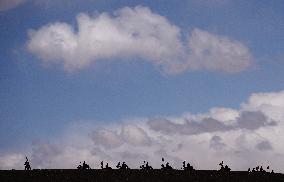
(230605) -- LHASA, June 5, 2023 (Xinhua) -- Members of the border defense team patrol on motorcycles in Changgo Township of Xigaze City, southwest China's Tibet Autonomous Region, June 2, 2023. Changgo Township, with an average elevation of over 5,000 meters, is a border township adjacent to Nepal with a 105-kilometer borderline. In 2003, the border defense team established by Changgo's police station consisted of only 15 members. In October, 2005, Changgo Township suffered a severe snow disaster. In the face of danger, the border defense team spontaneously formed a "disaster relief task force" and worked tirelessly for three days and nights to clear over ten kilometers of snow-covered roads. They successfully rescued 152 stranded individuals and more than 15,000 livestock, saving the affected population from direct economic losses of over 4.2 million yuan (about 591,780 U.S. dollars). In 2008, the border defense team expanded and received over 100 applicants for 20 available positions. Currently, the team

  • Main
  • Top
  • Editorial
  • Creative
  • About Us
  • About ILG
  • Terms of use
  • Company
  • BEHIND
  • Price List
  • Single Plan
  • Monthly Plan
  • Services
  • Shooting
  • Rights Clearance
  • Support
  • FAQ
  • How To Buy
  • Contact Us
  • Become a Partner

© KYODO NEWS IMAGES INC

All Rights Reserved.

  • Editorial
  • Olympics
  • News
  • Sports
  • Japan
  • Tech
  • Royal
  • Disaster
  • NorthKorea
  • Old Japan
  • SNS

  • Creative
  • Food
  • Japan
  • Landscape
  • Animal
  • Popular
  • #Ukraine
  • #China
  • #coronavirus
  • #N. Korea
  • #Thailand
  • #Russia
  • #Ukraine
  • #China
  • #coronavirus
  • #N. Korea
  • #Thailand
  • #Russia
  • Food
  • Japan
  • Landscape
  • Animal
  • Olympics
  • News
  • Sports
  • Japan
  • Tech
  • Royal
  • Disaster
  • NorthKorea
  • Old Japan
  • SNS