•  

Driverless sanitation vehicles to be put into use in China's Guangdong

STORY: Driverless sanitation vehicles to be put into use in China's Guangdong SHOOTING TIME: June 18, 2024 DATELINE: June 19, 2024 LENGTH: 00:00:15 LOCATION: GUANGZHOU, China CATEGORY: SOCIETY/TECHNOLOGY SHOTLIST: 1. various of the driverless sanitation vehicles STORYLINE: Eleven intelligent, driverless sanitation vehicles will be officially put into use in Dongguan, south China's Guangdong Province. The vehicles can cover an operating area of about 860,000 square meters, with a cleaning speed of 5-8 kilometers per hour. They can work continuously for 5-6 hours, with no-dead-corner garbage sweeping, automatic avoidance of roadblocks, and automatic parking. Xinhua News Agency correspondents reporting from Guangzhou, China. (XHTV)

  •  
CHINA-XINJIANG-ALTUN MOUNTAINS-TIBETAN ANTELOPE-MATING SEASON (CN)

CHINA-XINJIANG-ALTUN MOUNTAINS-TIBETAN ANTELOPE-MATING SEASON (CN)

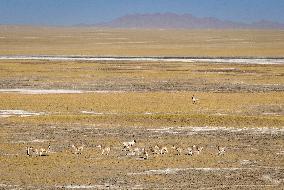
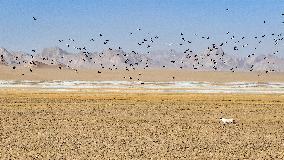
(231229) -- URUMQI, Dec. 29, 2023 (Xinhua) -- This aerial photo taken on Dec. 19, 2023 shows a male Tibetan antelop staying with a herd of female ones, while another male Tibetan antelop staring from afar, at the Altun Mountains National Nature Reserve in northwest China's Xinjiang Uygur Autonomous Region. Winter is the mating season for Tibetan antelopes living at the Altun Mountains National Nature Reserve. The mating season is the only time of year when male antelopes are seen together with the female ones. Nestled deep in the eastern Kunlun Mountains, the Altun Mountains National Nature Reserve boasts a distinctive plateau desert ecosystem. With the average altitude reaching around 4,500 meters, the reserve covers a total area of about 45,000 square kilometers. Widely recognized as a "plateau gene bank," the reserve is an important habitat for about 65,000 Tibetan antelopes on the freezing and oxygen-deprived plateau. (Xinhua/Li Xiang)

  •  
CHINA-XINJIANG-ALTUN MOUNTAINS-TIBETAN ANTELOPE-MATING SEASON (CN)

CHINA-XINJIANG-ALTUN MOUNTAINS-TIBETAN ANTELOPE-MATING SEASON (CN)

(231229) -- URUMQI, Dec. 29, 2023 (Xinhua) -- This photo taken on Dec. 19, 2023 shows Tibetan antelopes galloping on grassland at the Altun Mountains National Nature Reserve in northwest China's Xinjiang Uygur Autonomous Region. Winter is the mating season for Tibetan antelopes living at the Altun Mountains National Nature Reserve. The mating season is the only time of year when male antelopes are seen together with the female ones. Nestled deep in the eastern Kunlun Mountains, the Altun Mountains National Nature Reserve boasts a distinctive plateau desert ecosystem. With the average altitude reaching around 4,500 meters, the reserve covers a total area of about 45,000 square kilometers. Widely recognized as a "plateau gene bank," the reserve is an important habitat for about 65,000 Tibetan antelopes on the freezing and oxygen-deprived plateau. (Xinhua/Li Xiang)

  •  
CHINA-XINJIANG-ALTUN MOUNTAINS-TIBETAN ANTELOPE-MATING SEASON (CN)

CHINA-XINJIANG-ALTUN MOUNTAINS-TIBETAN ANTELOPE-MATING SEASON (CN)

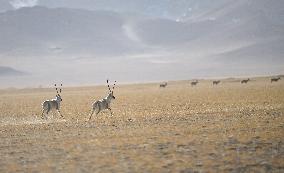
(231229) -- URUMQI, Dec. 29, 2023 (Xinhua) -- This photo taken on Dec. 19, 2023 shows two male Tibetan antelopes chasing female ones at the Altun Mountains National Nature Reserve in northwest China's Xinjiang Uygur Autonomous Region. Winter is the mating season for Tibetan antelopes living at the Altun Mountains National Nature Reserve. The mating season is the only time of year when male antelopes are seen together with the female ones. Nestled deep in the eastern Kunlun Mountains, the Altun Mountains National Nature Reserve boasts a distinctive plateau desert ecosystem. With the average altitude reaching around 4,500 meters, the reserve covers a total area of about 45,000 square kilometers. Widely recognized as a "plateau gene bank," the reserve is an important habitat for about 65,000 Tibetan antelopes on the freezing and oxygen-deprived plateau. (Xinhua/Li Xiang)

  •  
CHINA-XINJIANG-ALTUN MOUNTAINS-TIBETAN ANTELOPE-MATING SEASON (CN)

CHINA-XINJIANG-ALTUN MOUNTAINS-TIBETAN ANTELOPE-MATING SEASON (CN)

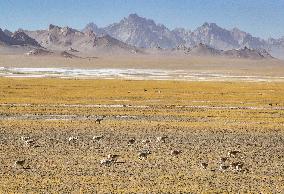
(231229) -- URUMQI, Dec. 29, 2023 (Xinhua) -- This aerial photo taken on Dec. 19, 2023 shows Tibetan antelopes foraging on grassland at the Altun Mountains National Nature Reserve in northwest China's Xinjiang Uygur Autonomous Region. Winter is the mating season for Tibetan antelopes living at the Altun Mountains National Nature Reserve. The mating season is the only time of year when male antelopes are seen together with the female ones. Nestled deep in the eastern Kunlun Mountains, the Altun Mountains National Nature Reserve boasts a distinctive plateau desert ecosystem. With the average altitude reaching around 4,500 meters, the reserve covers a total area of about 45,000 square kilometers. Widely recognized as a "plateau gene bank," the reserve is an important habitat for about 65,000 Tibetan antelopes on the freezing and oxygen-deprived plateau. (Xinhua/Li Xiang)

  •  
CHINA-XINJIANG-ALTUN MOUNTAINS-TIBETAN ANTELOPE-MATING SEASON (CN)

CHINA-XINJIANG-ALTUN MOUNTAINS-TIBETAN ANTELOPE-MATING SEASON (CN)

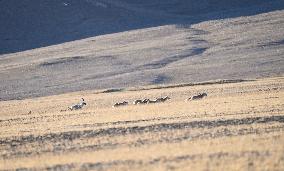
(231229) -- URUMQI, Dec. 29, 2023 (Xinhua) -- This aerial photo taken on Dec. 19, 2023 shows a male Tibetan antelope at the Altun Mountains National Nature Reserve in northwest China's Xinjiang Uygur Autonomous Region. Winter is the mating season for Tibetan antelopes living at the Altun Mountains National Nature Reserve. The mating season is the only time of year when male antelopes are seen together with the female ones. Nestled deep in the eastern Kunlun Mountains, the Altun Mountains National Nature Reserve boasts a distinctive plateau desert ecosystem. With the average altitude reaching around 4,500 meters, the reserve covers a total area of about 45,000 square kilometers. Widely recognized as a "plateau gene bank," the reserve is an important habitat for about 65,000 Tibetan antelopes on the freezing and oxygen-deprived plateau. (Xinhua/Li Xiang)

  •  
CHINA-HEBEI-XIONG'AN-BAIYANGDIAN LAKE (CN)

CHINA-HEBEI-XIONG'AN-BAIYANGDIAN LAKE (CN)

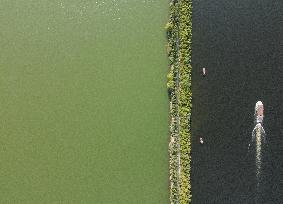
(230720) -- XIONG'AN, July 20, 2023 (Xinhua) -- This aerial photo taken on July 19, 2023 shows tourists visiting Baiyangdian Lake by boat in Xiong'an New Area, north China's Hebei Province. The Baiyangdian Lake, the largest wetland ecosystem in northern China, is located in Xiong'an. After the establishment of the new area, the water quality in Baiyangdian has improved from below Level V, the lowest of China's five-tier water assessment system, to Level III. The area of Baiyangdian has been restored from about 170 square kilometers to about 290 square kilometers, and the water level in the lake area has remained stable at about 7.2 meters. (Xinhua/Hao Jianwei)

  •  
CHINA-HEBEI-XIONG'AN-BAIYANGDIAN LAKE (CN)

CHINA-HEBEI-XIONG'AN-BAIYANGDIAN LAKE (CN)

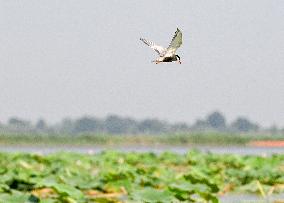
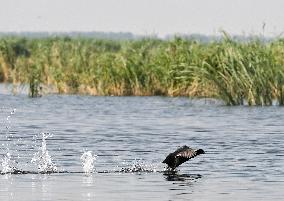
(230720) -- XIONG'AN, July 20, 2023 (Xinhua) -- A bird flies over Baiyangdian Lake in Xiong'an New Area, north China's Hebei Province, July 19, 2023. The Baiyangdian Lake, the largest wetland ecosystem in northern China, is located in Xiong'an. After the establishment of the new area, the water quality in Baiyangdian has improved from below Level V, the lowest of China's five-tier water assessment system, to Level III. The area of Baiyangdian has been restored from about 170 square kilometers to about 290 square kilometers, and the water level in the lake area has remained stable at about 7.2 meters. (Xinhua/Hao Jianwei)

  •  
CHINA-HEBEI-XIONG'AN-BAIYANGDIAN LAKE (CN)

CHINA-HEBEI-XIONG'AN-BAIYANGDIAN LAKE (CN)

(230720) -- XIONG'AN, July 20, 2023 (Xinhua) -- A bird is pictured at Baiyangdian Lake in Xiong'an New Area, north China's Hebei Province, July 19, 2023. The Baiyangdian Lake, the largest wetland ecosystem in northern China, is located in Xiong'an. After the establishment of the new area, the water quality in Baiyangdian has improved from below Level V, the lowest of China's five-tier water assessment system, to Level III. The area of Baiyangdian has been restored from about 170 square kilometers to about 290 square kilometers, and the water level in the lake area has remained stable at about 7.2 meters. (Xinhua/Hao Jianwei)

  •  
CHINA-HEBEI-XIONG'AN-BAIYANGDIAN LAKE (CN)

CHINA-HEBEI-XIONG'AN-BAIYANGDIAN LAKE (CN)

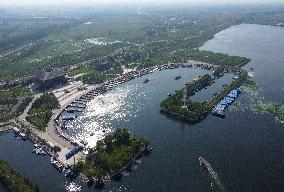
(230720) -- XIONG'AN, July 20, 2023 (Xinhua) -- This aerial photo taken on July 19, 2023 shows a tourist dock of Baiyangdian Lake in Xiong'an New Area, north China's Hebei Province. The Baiyangdian Lake, the largest wetland ecosystem in northern China, is located in Xiong'an. After the establishment of the new area, the water quality in Baiyangdian has improved from below Level V, the lowest of China's five-tier water assessment system, to Level III. The area of Baiyangdian has been restored from about 170 square kilometers to about 290 square kilometers, and the water level in the lake area has remained stable at about 7.2 meters. (Xinhua/Hao Jianwei)

  •  
CHINA-HEBEI-XIONG'AN-BAIYANGDIAN LAKE (CN)

CHINA-HEBEI-XIONG'AN-BAIYANGDIAN LAKE (CN)

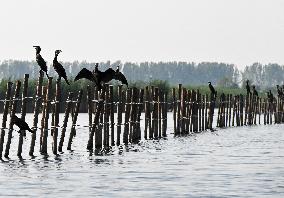
(230720) -- XIONG'AN, July 20, 2023 (Xinhua) -- Birds are pictured at Baiyangdian Lake in Xiong'an New Area, north China's Hebei Province, July 19, 2023. The Baiyangdian Lake, the largest wetland ecosystem in northern China, is located in Xiong'an. After the establishment of the new area, the water quality in Baiyangdian has improved from below Level V, the lowest of China's five-tier water assessment system, to Level III. The area of Baiyangdian has been restored from about 170 square kilometers to about 290 square kilometers, and the water level in the lake area has remained stable at about 7.2 meters. (Xinhua/Hao Jianwei)

  •  
CHINA-HEBEI-XIONG'AN-BAIYANGDIAN LAKE (CN)

CHINA-HEBEI-XIONG'AN-BAIYANGDIAN LAKE (CN)

(230720) -- XIONG'AN, July 20, 2023 (Xinhua) -- A bird flies over Baiyangdian Lake in Xiong'an New Area, north China's Hebei Province, July 19, 2023. The Baiyangdian Lake, the largest wetland ecosystem in northern China, is located in Xiong'an. After the establishment of the new area, the water quality in Baiyangdian has improved from below Level V, the lowest of China's five-tier water assessment system, to Level III. The area of Baiyangdian has been restored from about 170 square kilometers to about 290 square kilometers, and the water level in the lake area has remained stable at about 7.2 meters. (Xinhua/Gao Junfeng)

  •  
CHINA-HEBEI-XIONG'AN-BAIYANGDIAN LAKE (CN)

CHINA-HEBEI-XIONG'AN-BAIYANGDIAN LAKE (CN)

(230720) -- XIONG'AN, July 20, 2023 (Xinhua) -- A bird flies over Baiyangdian Lake in Xiong'an New Area, north China's Hebei Province, July 19, 2023. The Baiyangdian Lake, the largest wetland ecosystem in northern China, is located in Xiong'an. After the establishment of the new area, the water quality in Baiyangdian has improved from below Level V, the lowest of China's five-tier water assessment system, to Level III. The area of Baiyangdian has been restored from about 170 square kilometers to about 290 square kilometers, and the water level in the lake area has remained stable at about 7.2 meters. (Xinhua/Hao Jianwei)

  •  
CHINA-HEBEI-XIONG'AN-BAIYANGDIAN LAKE (CN)

CHINA-HEBEI-XIONG'AN-BAIYANGDIAN LAKE (CN)

(230720) -- XIONG'AN, July 20, 2023 (Xinhua) -- This aerial photo taken on July 19, 2023 shows the tourist dock of Baiyangdian Lake in Xiong'an New Area, north China's Hebei Province. The Baiyangdian Lake, the largest wetland ecosystem in northern China, is located in Xiong'an. After the establishment of the new area, the water quality in Baiyangdian has improved from below Level V, the lowest of China's five-tier water assessment system, to Level III. The area of Baiyangdian has been restored from about 170 square kilometers to about 290 square kilometers, and the water level in the lake area has remained stable at about 7.2 meters. (Xinhua/Hao Jianwei)

  •  
CHINA-HEBEI-XIONG'AN-BAIYANGDIAN LAKE (CN)

CHINA-HEBEI-XIONG'AN-BAIYANGDIAN LAKE (CN)

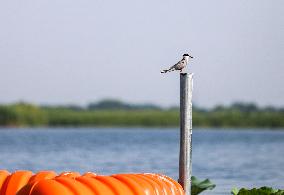
(230720) -- XIONG'AN, July 20, 2023 (Xinhua) -- A bird perches on a metal pole at Baiyangdian Lake in Xiong'an New Area, north China's Hebei Province, July 19, 2023. The Baiyangdian Lake, the largest wetland ecosystem in northern China, is located in Xiong'an. After the establishment of the new area, the water quality in Baiyangdian has improved from below Level V, the lowest of China's five-tier water assessment system, to Level III. The area of Baiyangdian has been restored from about 170 square kilometers to about 290 square kilometers, and the water level in the lake area has remained stable at about 7.2 meters. (Xinhua/Gao Junfeng)

  •  
CHINA-HEBEI-XIONG'AN-BAIYANGDIAN LAKE (CN)

CHINA-HEBEI-XIONG'AN-BAIYANGDIAN LAKE (CN)

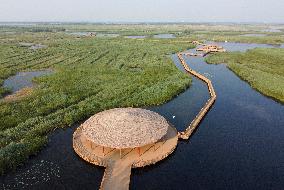
(230720) -- XIONG'AN, July 20, 2023 (Xinhua) -- This aerial photo taken on July 19, 2023 shows a wooden plank road at Baiyangdian Lake in Xiong'an New Area, north China's Hebei Province. The Baiyangdian Lake, the largest wetland ecosystem in northern China, is located in Xiong'an. After the establishment of the new area, the water quality in Baiyangdian has improved from below Level V, the lowest of China's five-tier water assessment system, to Level III. The area of Baiyangdian has been restored from about 170 square kilometers to about 290 square kilometers, and the water level in the lake area has remained stable at about 7.2 meters. (Xinhua/Hao Jianwei)

  •  
CHINA-HEBEI-XIONG'AN-BAIYANGDIAN LAKE (CN)

CHINA-HEBEI-XIONG'AN-BAIYANGDIAN LAKE (CN)

(230720) -- XIONG'AN, July 20, 2023 (Xinhua) -- A bird is pictured at Baiyangdian Lake in Xiong'an New Area, north China's Hebei Province, July 19, 2023. The Baiyangdian Lake, the largest wetland ecosystem in northern China, is located in Xiong'an. After the establishment of the new area, the water quality in Baiyangdian has improved from below Level V, the lowest of China's five-tier water assessment system, to Level III. The area of Baiyangdian has been restored from about 170 square kilometers to about 290 square kilometers, and the water level in the lake area has remained stable at about 7.2 meters. (Xinhua/Hao Jianwei)

  •  
Gov't to buy land around damaged Fukushima plant for waste storage

Gov't to buy land around damaged Fukushima plant for waste storage

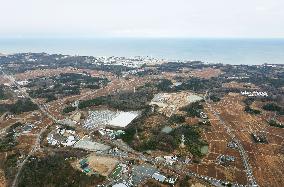
TOKYO, Japan - This aerial photo taken by a Kyodo News helicopter on Dec. 14, 2013, shows a coastal area in the town of Okuma, Fukushima Prefecture, around the severely damaged Fukushima nuclear plant. The government plans to acquire about 19 square kilometers of land chiefly around the plant to build facilities for the long-term storage of radioactive and other waste piling up in the decontamination process.

  •  
Gov't to buy land around damaged Fukushima plant for waste storage

Gov't to buy land around damaged Fukushima plant for waste storage

FUKUSHIMA, Japan - Environment Minister Nobuteru Ishihara (L, standing) speaks at a meeting with Fukushima Gov. Yuhei Sato (3rd from R) and four other local town mayors in Fukushima on Dec. 14, 2013. Ishihara asked the local leaders to accept a government plan to acquire about 19 square kilometers of land around the damaged Fukushima nuclear plant and to build facilities for the long-term storage of radioactive and other waste there.

  • Main
  • Top
  • Editorial
  • Creative
  • About Us
  • About ILG
  • Terms of use
  • Company
  • BEHIND
  • Price List
  • Single Plan
  • Monthly Plan
  • Services
  • Shooting
  • Rights Clearance
  • Support
  • FAQ
  • How To Buy
  • Contact Us
  • Become a Partner

© KYODO NEWS IMAGES INC

All Rights Reserved.

  • Editorial
  • Olympics
  • News
  • Sports
  • Japan
  • Tech
  • Royal
  • Disaster
  • NorthKorea
  • Old Japan
  • SNS
  • Creative
  • Food
  • Japan
  • Landscape
  • Animal
  • Popular
  • #Ukraine
  • #Thailand
  • #coronavirus
  • #N. Korea
  • #Russia
  • #China
  • #Ukraine
  • #Thailand
  • #coronavirus
  • #N. Korea
  • #Russia
  • #China
  • Food
  • Japan
  • Landscape
  • Animal
  • Olympics
  • News
  • Sports
  • Japan
  • Tech
  • Royal
  • Disaster
  • NorthKorea
  • Old Japan
  • SNS