•  
2nd anniv. of Noto Peninsula quake

2nd anniv. of Noto Peninsula quake

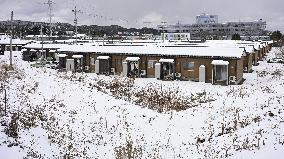
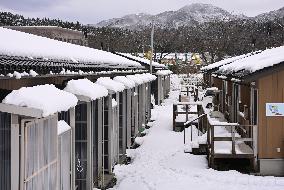
Photo shows snow-covered temporary housing in Wajima, Ishikawa Prefecture, on Jan. 2, 2026, about two years after a powerful earthquake hit central Japan's Noto Peninsula area on Jan. 1, 2024.

  •  
2nd anniv. of Noto Peninsula quake

2nd anniv. of Noto Peninsula quake

Photo shows snow-covered temporary housing in Wajima, Ishikawa Prefecture, on Jan. 2, 2026, about two years after a powerful earthquake hit central Japan's Noto Peninsula area on Jan. 1, 2024.

  •  
Hubble Seeks Clusters in Lost Galaxy

Hubble Seeks Clusters in Lost Galaxy

Handout Photo shows NASA/ESA Hubble Space Telescope image features the spiral galaxy NGC 4535, which is situated about 50 million light-years away in the constellation Virgo (the Maiden). Through a small telescope, this galaxy appears extremely faint, giving it the nickname ‘Lost Galaxy’. With a mirror spanning nearly eight feet (2.4 meters) across and its location above Earth’s light-obscuring atmosphere, Hubble can easily observe dim galaxies like NGC 4535 and pick out features like its massive spiral arms and central bar of stars. This image features NGC 4535’s young star clusters, which dot the galaxy’s spiral arms. Glowing-pink clouds surround many of these bright-blue star groupings. These clouds, called H II (‘H-two’) regions, are a sign that the galaxy is home to especially young, hot, and massive stars that blaze with high-energy radiation. Such massive stars shake up their surroundings by heating their birth clouds with powerful stellar winds, eventually exploding as supernovae. The image incorporat

  •  
Red Spider Nebula

Red Spider Nebula

Handout photo dated on October 26, 2025 shows Red Spider Nebula. Using its Near-InfraRed Camera (NIRCam), NASA’s James Webb Space Telescope captured never-before-seen details of the Red Spider Nebula, a planetary nebula, in this image released on Oct. 26, 2025. NIRCam is Webb’s primary near-infrared imager, providing high-resolution imaging and spectroscopy for a wide variety of investigations. Webb’s new view of the Red Spider Nebula reveals for the first time the full extent of the nebula’s outstretched lobes, which form the ‘legs’ of the spider. These lobes, shown in blue, are traced by light emitted from H2 molecules, which contain two hydrogen atoms bonded together. Stretching over the entirety of NIRCam’s field of view, these lobes are shown to be closed, bubble-like structures that each extend about 3 light-years. Outflowing gas from the center of the nebula has inflated these massive bubbles over thousands of years. Photo by ESA/Webb, NASA & CSA, J. H. Kastner (Rochester Institute of Technolo via ABAC

  •  
Hubble Seeks Clusters in ‘Lost Galaxy’

Hubble Seeks Clusters in ‘Lost Galaxy’

NASA/ESA Hubble Space Telescope image features the spiral galaxy NGC 4535, which is situated about 50 million light-years away in the constellation Virgo (the Maiden). Through a small telescope, this galaxy appears extremely faint, giving it the nickname ‘Lost Galaxy’. With a mirror spanning nearly eight feet (2.4 meters) across and its location above Earth’s light-obscuring atmosphere, Hubble can easily observe dim galaxies like NGC 4535 and pick out features like its massive spiral arms and central bar of stars. This image features NGC 4535’s young star clusters, which dot the galaxy’s spiral arms. Glowing-pink clouds surround many of these bright-blue star groupings. These clouds, called H II (‘H-two’) regions, are a sign that the galaxy is home to especially young, hot, and massive stars that blaze with high-energy radiation. Such massive stars shake up their surroundings by heating their birth clouds with powerful stellar winds, eventually exploding as supernovae. The image incorporates data from an obse

  •  
Tree-felling rite in central Japan

Tree-felling rite in central Japan

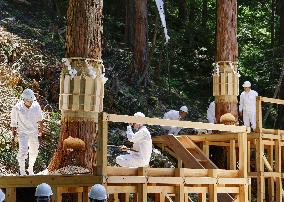
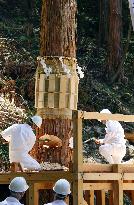
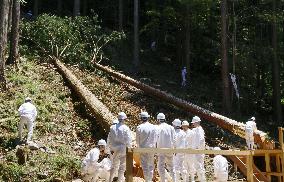
Woodcutters take part in a tree-felling rite in Nakatsugawa, Gifu Prefecture, on June 5, 2025, as part of rites for the "Shikinen Sengu" shrine building reconstruction every 20 years at Ise Jingu shrine in Ise in Mie Prefecture, in central Japan. Two Japanese cypress trees being cut will be transported to the Shinto shrine on June 9-10 for the 63rd "Shikinen Sengu" with a history of about 1,300 years, starting in 2033.

  •  
Tree-felling rite in central Japan

Tree-felling rite in central Japan

Woodcutters take part in a tree-felling rite in Nakatsugawa, Gifu Prefecture, on June 5, 2025, as part of rites for the "Shikinen Sengu" shrine building reconstruction every 20 years at Ise Jingu shrine in Ise in Mie Prefecture, in central Japan. Two Japanese cypress trees being cut will be transported to the Shinto shrine on June 9-10 for the 63rd "Shikinen Sengu" with a history of about 1,300 years, starting in 2033.

  •  
Tree-felling rite in central Japan

Tree-felling rite in central Japan

Woodcutters take part in a tree-felling rite in Nakatsugawa, Gifu Prefecture, on June 5, 2025, as part of rites for the "Shikinen Sengu" shrine building reconstruction every 20 years at Ise Jingu shrine in Ise in Mie Prefecture, in central Japan. Two Japanese cypress trees being cut will be transported to the Shinto shrine on June 9-10 for the 63rd "Shikinen Sengu" with a history of about 1,300 years, starting in 2033.

  •  
Tree-felling rite in central Japan

Tree-felling rite in central Japan

Woodcutters take part in a tree-felling rite in Nakatsugawa, Gifu Prefecture, on June 5, 2025, as part of rites for the "Shikinen Sengu" shrine building reconstruction every 20 years at Ise Jingu shrine in Ise in Mie Prefecture, in central Japan. Two Japanese cypress trees being cut will be transported to the Shinto shrine on June 9-10 for the 63rd "Shikinen Sengu" with a history of about 1,300 years, starting in 2033.

  •  
Pope Francis Dies Aged 88

Pope Francis Dies Aged 88

File photo - File photo - Pope Francis visited Pope Emeritus Benedict XVI at his residence, the former Convent Mater Ecclesiae, in the Vatican on June 30, 2015 to greet him and wish him a pleasant stay in Castel Gandolfo in the Roman hills. Emeritus Pope Benedict XVI is leaving the Vatican for his first sojourn since retiring. He's escaping an impending heat wave by heading to the papal summer residence at Castel Gandolfo. The meeting lasted about half and hour. Pope Emeritus Benedict will remain in Castel Gandolfo for the next two weeks. He is scheduled to return  on July 14.  - Former Pope Benedict XVI has died at his Vatican residence, aged 95, almost a decade after he stood down because of ailing health. He led the Catholic Church for less than eight years until, in 2013, he became the first Pope to resign since Gregory XII in 1415. -- Pope Francis died on Easter Monday, April 21, 2025, at the age of 88 at his residence in the Vatican's Casa Santa Marta. Photo by ABACAPRESS.COM

  •  
Saqqara Necropolis Ancien Tomb - Egypt

Saqqara Necropolis Ancien Tomb - Egypt

This image shows two sides of a statue unearthed at a tomb of an Egyptian prince in Saqqara necropolis, south of Cairo, Egypt. An Egyptian archaeological mission has discovered a tomb dating back more than 4,000 years at the Saqqara necropolis south of Cairo, the Ministry of Tourism and Antiquities said in a statement on Friday. The tomb is believed to belong to Prince Waserif-Re, son of King Userkaf, the founder of Egypt's Fifth Dynasty, which dates back more than 4,400 years. Little was previously known about the prince. Photo by Egyptian Ministry of Tourism and Antiquities/Handout via Xinhua/ABACAPRESS.COM

  •  
Puerta del Sol Clock Dismantled After 30 Years - Madrid

Puerta del Sol Clock Dismantled After 30 Years - Madrid

Watchmaker Jesús López-Terradas works on the disassembly of the Puerta del Sol clock, on March 19, 2025, in Madrid (Spain). The Puerta del Sol clock is stopped and completely disassembled for the first time in 30 years to renew its internal machinery. The process will take about two weeks. Madrid, Spain on March 19, 2025. Photo by A. Perez Meca/Europa Press/ABACAPRESS.COM

  •  
Puerta del Sol Clock Dismantled After 30 Years - Madrid

Puerta del Sol Clock Dismantled After 30 Years - Madrid

Watchmaker Jesús López-Terradas works on the disassembly of the Puerta del Sol clock, on March 19, 2025, in Madrid (Spain). The Puerta del Sol clock is stopped and completely disassembled for the first time in 30 years to renew its internal machinery. The process will take about two weeks. Madrid, Spain on March 19, 2025. Photo by A. Perez Meca/Europa Press/ABACAPRESS.COM

  •  
Puerta del Sol Clock Dismantled After 30 Years - Madrid

Puerta del Sol Clock Dismantled After 30 Years - Madrid

Dismantling of the Puerta del Sol clock, on March 19, 2025, in Madrid (Spain). The Puerta del Sol clock is stopped and completely dismantled for the first time in 30 years to renew its internal machinery. The process will take about two weeks. Madrid, Spain on March 19, 2025. Photo by A. Perez Meca/Europa Press/ABACAPRESS.COM

  •  
Puerta del Sol Clock Dismantled After 30 Years - Madrid

Puerta del Sol Clock Dismantled After 30 Years - Madrid

Watchmaker Jesús López-Terradas works on the disassembly of the Puerta del Sol clock, on March 19, 2025, in Madrid (Spain). The Puerta del Sol clock is stopped and completely disassembled for the first time in 30 years to renew its internal machinery. The process will take about two weeks. Madrid, Spain on March 19, 2025. Photo by A. Perez Meca/Europa Press/ABACAPRESS.COM

  •  
Puerta del Sol Clock Dismantled After 30 Years - Madrid

Puerta del Sol Clock Dismantled After 30 Years - Madrid

Watchmaker Jesús López-Terradas works on the disassembly of the Puerta del Sol clock, on March 19, 2025, in Madrid (Spain). The Puerta del Sol clock is stopped and completely disassembled for the first time in 30 years to renew its internal machinery. The process will take about two weeks. Madrid, Spain on March 19, 2025. Photo by A. Perez Meca/Europa Press/ABACAPRESS.COM

  •  
Puerta del Sol Clock Dismantled After 30 Years - Madrid

Puerta del Sol Clock Dismantled After 30 Years - Madrid

Watchmaker Jesús López-Terradas works on the disassembly of the Puerta del Sol clock, on March 19, 2025, in Madrid (Spain). The Puerta del Sol clock is stopped and completely disassembled for the first time in 30 years to renew its internal machinery. The process will take about two weeks. Madrid, Spain on March 19, 2025. Photo by A. Perez Meca/Europa Press/ABACAPRESS.COM

  •  
Puerta del Sol Clock Dismantled After 30 Years - Madrid

Puerta del Sol Clock Dismantled After 30 Years - Madrid

Watchmaker Jesús López-Terradas works on the disassembly of the Puerta del Sol clock, on March 19, 2025, in Madrid (Spain). The Puerta del Sol clock is stopped and completely disassembled for the first time in 30 years to renew its internal machinery. The process will take about two weeks. Madrid, Spain on March 19, 2025. Photo by A. Perez Meca/Europa Press/ABACAPRESS.COM

  •  
Puerta del Sol Clock Dismantled After 30 Years - Madrid

Puerta del Sol Clock Dismantled After 30 Years - Madrid

Dismantling of the Puerta del Sol clock, on March 19, 2025, in Madrid (Spain). The Puerta del Sol clock is stopped and completely dismantled for the first time in 30 years to renew its internal machinery. The process will take about two weeks. Madrid, Spain on March 19, 2025. Photo by A. Perez Meca/Europa Press/ABACAPRESS.COM

  •  
Puerta del Sol Clock Dismantled After 30 Years - Madrid

Puerta del Sol Clock Dismantled After 30 Years - Madrid

Dismantling of the Puerta del Sol clock, on March 19, 2025, in Madrid (Spain). The Puerta del Sol clock is stopped and completely dismantled for the first time in 30 years to renew its internal machinery. The process will take about two weeks. Madrid, Spain on March 19, 2025. Photo by A. Perez Meca/Europa Press/ABACAPRESS.COM

  •  
Afghan Women Honey Farming

Afghan Women Honey Farming

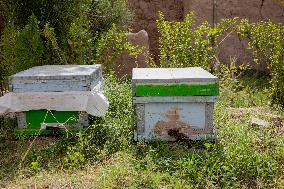
Two beehive boxes sit on a grassy patch in Afghanistan on August 17, 2024. These hives are part of the apiary managed by Afghanistan’s first female beekeeper, who has been producing honey for about 10 years. Photo by Middle East Images/ABACAPRESS.COM

  •  
BOJ lifts rate to 17-year high of 0.5%

BOJ lifts rate to 17-year high of 0.5%

Bank of Japan Governor Kazuo Ueda attends a press conference at the central bank's headquarters in Tokyo on Jan. 24, 2025, following the BOJ's decision to raise its key interest rate from 0.25 percent to 0.5 percent, its highest level in about 17 years, on the second day of its two-day policy-setting meeting.

  •  
BOJ lifts rate to 17-year high of 0.5%

BOJ lifts rate to 17-year high of 0.5%

Bank of Japan Governor Kazuo Ueda attends a press conference at the central bank's headquarters in Tokyo on Jan. 24, 2025, following the BOJ's decision to raise its key interest rate from 0.25 percent to 0.5 percent, its highest level in about 17 years, on the second day of its two-day policy-setting meeting.

  •  
BOJ lifts rate to 17-year high of 0.5%

BOJ lifts rate to 17-year high of 0.5%

Bank of Japan Governor Kazuo Ueda attends a press conference at the central bank's headquarters in Tokyo on Jan. 24, 2025, following the BOJ's decision to raise its key interest rate from 0.25 percent to 0.5 percent, its highest level in about 17 years, on the second day of its two-day policy-setting meeting.

  •  
BOJ lifts rate to 17-year high of 0.5%

BOJ lifts rate to 17-year high of 0.5%

Bank of Japan Governor Kazuo Ueda attends a press conference at the central bank's headquarters in Tokyo on Jan. 24, 2025, following the BOJ's decision to raise its key interest rate from 0.25 percent to 0.5 percent, its highest level in about 17 years, on the second day of its two-day policy-setting meeting.

  •  
Damage from Hurricane Milton - FL

Damage from Hurricane Milton - FL

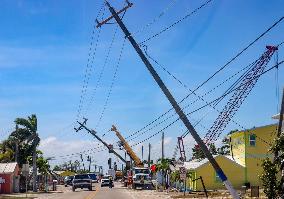
NO FILM, NO VIDEO, NO TV, NO DOCUMENTARY - Vehicles navigate the damage as access to Matlacha, Florida, is reduced to a one-lane bridge. Two years ago, Hurricane Ian gave little Matlacha, a colorful artist colony in southwest Florida, a formidable blow. Hurricane Milton just about finished it off. About 12 hours after Milton blew though, power lines were down, homes were damaged and residents were trying to remove debris on October 10, 2024. Photo by Carl Juste/Miami Herald/TNS/ABACAPRESS.COM

  •  
Crab Farming - China

Crab Farming - China

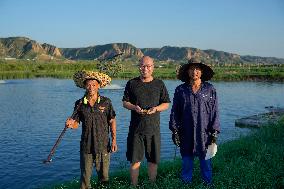
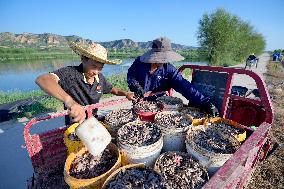
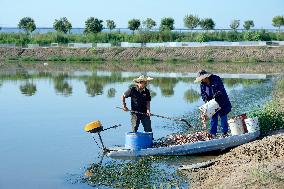
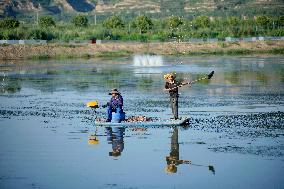
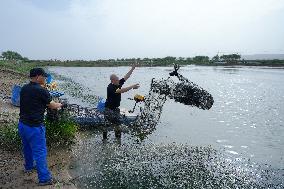
Li Nan (C) and farmers stand by a crab pond in Xuegong Village, Linyi County, north China's Shanxi Province, Aug. 13, 2024. Located on the bank of the Yellow River, Xuegong Village boasts over 333.3 hectares of Yellow River tidal flats and nearly 333.3 hectares of barren ditches. In recent years, the local community has integrated these lands to develop specialized aquaculture. The Yellow River tidal flats with lush aquatic plants provide excellent conditions for crab growth. 39-year-old Li Nan returned home to start a crab farming business four years ago. Farming crabs was not easy. In the first two years of his venture, due to immature aquaculture techniques, the survival rate of the crabs in his ponds was only about 30%. Through continuous exploration, the survival rate of the crabs he farmed increased significantly. After several years of dedicated research, Li Nan has now become a well-known "crab farming expert" in the area, and his crab ponds have expanded to 33.35 hectares. Villagers frequently come t

  •  
Crab Farming - China

Crab Farming - China

Li Nan introduces crabs via livestreaming by a crab pond in Xuegong Village, Linyi County, north China's Shanxi Province, Aug. 13, 2024. Located on the bank of the Yellow River, Xuegong Village boasts over 333.3 hectares of Yellow River tidal flats and nearly 333.3 hectares of barren ditches. In recent years, the local community has integrated these lands to develop specialized aquaculture. The Yellow River tidal flats with lush aquatic plants provide excellent conditions for crab growth. 39-year-old Li Nan returned home to start a crab farming business four years ago. Farming crabs was not easy. In the first two years of his venture, due to immature aquaculture techniques, the survival rate of the crabs in his ponds was only about 30%. Through continuous exploration, the survival rate of the crabs he farmed increased significantly. After several years of dedicated research, Li Nan has now become a well-known "crab farming expert" in the area, and his crab ponds have expanded to 33.35 hectares. Villagers freq

  •  
Crab Farming - China

Crab Farming - China

Farmers prepare crabs fodder by a crab pond in Xuegong Village, Linyi County, north China's Shanxi Province, Aug. 13, 2024. Located on the bank of the Yellow River, Xuegong Village boasts over 333.3 hectares of Yellow River tidal flats and nearly 333.3 hectares of barren ditches. In recent years, the local community has integrated these lands to develop specialized aquaculture. The Yellow River tidal flats with lush aquatic plants provide excellent conditions for crab growth. 39-year-old Li Nan returned home to start a crab farming business four years ago. Farming crabs was not easy. In the first two years of his venture, due to immature aquaculture techniques, the survival rate of the crabs in his ponds was only about 30%. Through continuous exploration, the survival rate of the crabs he farmed increased significantly. After several years of dedicated research, Li Nan has now become a well-known "crab farming expert" in the area, and his crab ponds have expanded to 33.35 hectares. Villagers frequently come t

  •  
Crab Farming - China

Crab Farming - China

Farmers prepare to feed crabs in a crab pond in Xuegong Village, Linyi County, north China's Shanxi Province, Aug. 13, 2024. Located on the bank of the Yellow River, Xuegong Village boasts over 333.3 hectares of Yellow River tidal flats and nearly 333.3 hectares of barren ditches. In recent years, the local community has integrated these lands to develop specialized aquaculture. The Yellow River tidal flats with lush aquatic plants provide excellent conditions for crab growth. 39-year-old Li Nan returned home to start a crab farming business four years ago. Farming crabs was not easy. In the first two years of his venture, due to immature aquaculture techniques, the survival rate of the crabs in his ponds was only about 30%. Through continuous exploration, the survival rate of the crabs he farmed increased significantly. After several years of dedicated research, Li Nan has now become a well-known "crab farming expert" in the area, and his crab ponds have expanded to 33.35 hectares. Villagers frequently come

  •  
Crab Farming - China

Crab Farming - China

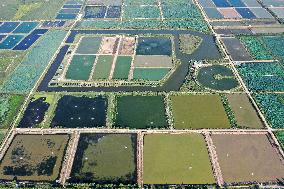
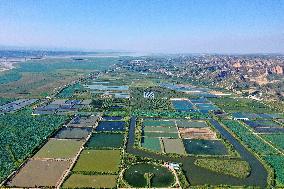
An aerial drone photo shows crab ponds in Xuegong Village, Linyi County, north China's Shanxi Province, Aug. 13, 2024. Located on the bank of the Yellow River, Xuegong Village boasts over 333.3 hectares of Yellow River tidal flats and nearly 333.3 hectares of barren ditches. In recent years, the local community has integrated these lands to develop specialized aquaculture. The Yellow River tidal flats with lush aquatic plants provide excellent conditions for crab growth. 39-year-old Li Nan returned home to start a crab farming business four years ago. Farming crabs was not easy. In the first two years of his venture, due to immature aquaculture techniques, the survival rate of the crabs in his ponds was only about 30%. Through continuous exploration, the survival rate of the crabs he farmed increased significantly. After several years of dedicated research, Li Nan has now become a well-known "crab farming expert" in the area, and his crab ponds have expanded to 33.35 hectares. Villagers frequently come to him

  •  
Crab Farming - China

Crab Farming - China

Staff members invited by Li Nan make a short video introducing crabs by a crab pond in Xuegong Village, Linyi County, north China's Shanxi Province, Aug. 10, 2024. Located on the bank of the Yellow River, Xuegong Village boasts over 333.3 hectares of Yellow River tidal flats and nearly 333.3 hectares of barren ditches. In recent years, the local community has integrated these lands to develop specialized aquaculture. The Yellow River tidal flats with lush aquatic plants provide excellent conditions for crab growth. 39-year-old Li Nan returned home to start a crab farming business four years ago. Farming crabs was not easy. In the first two years of his venture, due to immature aquaculture techniques, the survival rate of the crabs in his ponds was only about 30%. Through continuous exploration, the survival rate of the crabs he farmed increased significantly. After several years of dedicated research, Li Nan has now become a well-known "crab farming expert" in the area, and his crab ponds have expanded to 33.

  •  
Crab Farming - China

Crab Farming - China

An aerial drone photo shows crab ponds in Xuegong Village, Linyi County, north China's Shanxi Province, Aug. 13, 2024. Located on the bank of the Yellow River, Xuegong Village boasts over 333.3 hectares of Yellow River tidal flats and nearly 333.3 hectares of barren ditches. In recent years, the local community has integrated these lands to develop specialized aquaculture. The Yellow River tidal flats with lush aquatic plants provide excellent conditions for crab growth. 39-year-old Li Nan returned home to start a crab farming business four years ago. Farming crabs was not easy. In the first two years of his venture, due to immature aquaculture techniques, the survival rate of the crabs in his ponds was only about 30%. Through continuous exploration, the survival rate of the crabs he farmed increased significantly. After several years of dedicated research, Li Nan has now become a well-known "crab farming expert" in the area, and his crab ponds have expanded to 33.35 hectares. Villagers frequently come to him

  •  
Crab Farming - China

Crab Farming - China

Farmers feed crabs in a crab pond in Xuegong Village, Linyi County, north China's Shanxi Province, Aug. 13, 2024. Located on the bank of the Yellow River, Xuegong Village boasts over 333.3 hectares of Yellow River tidal flats and nearly 333.3 hectares of barren ditches. In recent years, the local community has integrated these lands to develop specialized aquaculture. The Yellow River tidal flats with lush aquatic plants provide excellent conditions for crab growth. 39-year-old Li Nan returned home to start a crab farming business four years ago. Farming crabs was not easy. In the first two years of his venture, due to immature aquaculture techniques, the survival rate of the crabs in his ponds was only about 30%. Through continuous exploration, the survival rate of the crabs he farmed increased significantly. After several years of dedicated research, Li Nan has now become a well-known "crab farming expert" in the area, and his crab ponds have expanded to 33.35 hectares. Villagers frequently come to him for

  •  
Crab Farming - China

Crab Farming - China

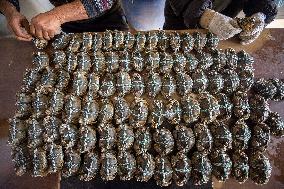
Farmers tie crabs in Xuegong Village, Linyi County, north China's Shanxi Province, Nov. 23, 2021. Located on the bank of the Yellow River, Xuegong Village boasts over 333.3 hectares of Yellow River tidal flats and nearly 333.3 hectares of barren ditches. In recent years, the local community has integrated these lands to develop specialized aquaculture. The Yellow River tidal flats with lush aquatic plants provide excellent conditions for crab growth. 39-year-old Li Nan returned home to start a crab farming business four years ago. Farming crabs was not easy. In the first two years of his venture, due to immature aquaculture techniques, the survival rate of the crabs in his ponds was only about 30%. Through continuous exploration, the survival rate of the crabs he farmed increased significantly. After several years of dedicated research, Li Nan has now become a well-known "crab farming expert" in the area, and his crab ponds have expanded to 33.35 hectares. Villagers frequently come to him for advice. Li Nan i

  •  
Crab Farming - China

Crab Farming - China

Li Nan (R) and a farmer catch crabs in Xuegong Village, Linyi County, north China's Shanxi Province, Aug. 10, 2024. Located on the bank of the Yellow River, Xuegong Village boasts over 333.3 hectares of Yellow River tidal flats and nearly 333.3 hectares of barren ditches. In recent years, the local community has integrated these lands to develop specialized aquaculture. The Yellow River tidal flats with lush aquatic plants provide excellent conditions for crab growth. 39-year-old Li Nan returned home to start a crab farming business four years ago. Farming crabs was not easy. In the first two years of his venture, due to immature aquaculture techniques, the survival rate of the crabs in his ponds was only about 30%. Through continuous exploration, the survival rate of the crabs he farmed increased significantly. After several years of dedicated research, Li Nan has now become a well-known "crab farming expert" in the area, and his crab ponds have expanded to 33.35 hectares. Villagers frequently come to him fo

  •  
Crab Farming - China

Crab Farming - China

A drone photo shows farmers feeding crabs in a crab pond in Xuegong Village, Linyi County, north China's Shanxi Province, Aug. 10, 2024. Located on the bank of the Yellow River, Xuegong Village boasts over 333.3 hectares of Yellow River tidal flats and nearly 333.3 hectares of barren ditches. In recent years, the local community has integrated these lands to develop specialized aquaculture. The Yellow River tidal flats with lush aquatic plants provide excellent conditions for crab growth. 39-year-old Li Nan returned home to start a crab farming business four years ago. Farming crabs was not easy. In the first two years of his venture, due to immature aquaculture techniques, the survival rate of the crabs in his ponds was only about 30%. Through continuous exploration, the survival rate of the crabs he farmed increased significantly. After several years of dedicated research, Li Nan has now become a well-known "crab farming expert" in the area, and his crab ponds have expanded to 33.35 hectares. Villagers freq

  •  

Türkiye's startup ecosystem gains steam, eyes global market

STORY: Türkiye's startup ecosystem gains steam, eyes global market SHOOTING TIME: June 12, 2024 DATELINE: June 13, 2024 LENGTH: 00:02:49 LOCATION: Ankara CATEGORY: ECONOMY SHOTLIST: 1. various of startups in the technopark of the Middle East Technical University (METU) 2. SOUNDBITE 1 (Turkish): FIRAT ERCIS, CEO of Ankara-based startup Software Kingdom 3. various of startups in the technopark of the Middle East Technical University (METU) 4. SOUNDBITE 2 (Turkish): UMUT EFILOGLU, Co-founder of Ankara-based startup Gamegine 5. various of startups in the technopark of the Middle East Technical University (METU) STORYLINE: From gaming to fintech innovators, Türkiye's startups thrived in recent years in a fast-developing investment ecosystem, bolstering the nation's ambition to become a hub of entrepreneurship. Based inside the technopark of the Middle East Technical University (METU) in the capital city of Ankara, founders of two gaming software companies expressed optimism about the future of Turkish startups

  •  
XINHUA PHOTOS OF THE DAY

XINHUA PHOTOS OF THE DAY

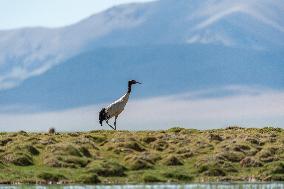
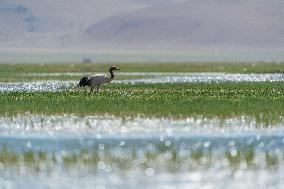
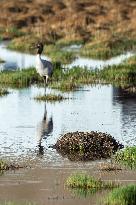
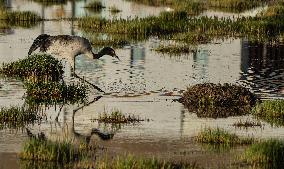
(240610) -- BEIJING, June 10, 2024 Photo by Xinhua/ABACAPRESS.COM) -- A black-necked crane is seen at a wetland in Xainza County of Nagqu City, southwest China's Xizang Autonomous Region, June 8, 2024. The black-necked crane, a species under first-class state protection in China, mainly inhabits plateau meadows and marshes at an altitude of 2,500 to 5,000 meters. Every year around the time of June, pairs of black-necked cranes migrate to Xainza County to build nests and hatch eggs on grass piers surrounded by water. Black-necked cranes usually lay one or two eggs in every nest, and the incubation period is about 30 days. In recent years, Xizang has continuously strengthened the protection of the habitat of black-necked cranes, and their living environment has been effectively improved. The dotted wetlands in Xainza County have attracted a large number of black-necked cranes to breed their offspring. Photo by Xinhua/ABACAPRESS.COM/Tenzing Nima Qadhup)

  •  
XINHUA PHOTOS OF THE DAY

XINHUA PHOTOS OF THE DAY

(240610) -- BEIJING, June 10, 2024 (Xinhua) -- A black-necked crane is seen at a wetland in Xainza County of Nagqu City, southwest China's Xizang Autonomous Region, June 8, 2024. The black-necked crane, a species under first-class state protection in China, mainly inhabits plateau meadows and marshes at an altitude of 2,500 to 5,000 meters. Every year around the time of June, pairs of black-necked cranes migrate to Xainza County to build nests and hatch eggs on grass piers surrounded by water. Black-necked cranes usually lay one or two eggs in every nest, and the incubation period is about 30 days. In recent years, Xizang has continuously strengthened the protection of the habitat of black-necked cranes, and their living environment has been effectively improved. The dotted wetlands in Xainza County have attracted a large number of black-necked cranes to breed their offspring. (Xinhua/Tenzing Nima Qadhup)

  •  
(InXizang)CHINA-XIZANG-XAINZA-BLACK-NECKED CRANES (CN)

(InXizang)CHINA-XIZANG-XAINZA-BLACK-NECKED CRANES (CN)

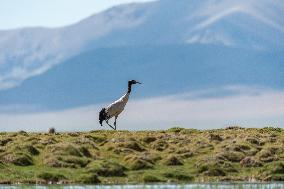
(240609) -- LHASA, June 9, 2024 Photo by Xinhua/ABACAPRESS.COM) -- A black-necked crane is seen at a wetland in Xainza County of Nagqu City, southwest China's Xizang Autonomous Region, June 8, 2024. The black-necked crane, a species under first-class state protection in China, mainly inhabits plateau meadows and marshes at an altitude of 2,500 to 5,000 meters. Every year around the time of June, pairs of black-necked cranes migrate to Xainza County to build nests and hatch eggs on grass piers surrounded by water. Black-necked cranes usually lay one or two eggs in every nest, and the incubation period is about 30 days. In recent years, Xizang has continuously strengthened the protection of the habitat of black-necked cranes, and their living environment has been effectively improved. The dotted wetlands in Xainza County have attracted a large number of black-necked cranes to breed their offspring. Photo by Xinhua/ABACAPRESS.COM/Tenzing Nima Qadhup)

  •  
(InXizang)CHINA-XIZANG-XAINZA-BLACK-NECKED CRANES (CN)

(InXizang)CHINA-XIZANG-XAINZA-BLACK-NECKED CRANES (CN)

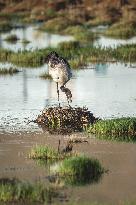
(240609) -- LHASA, June 9, 2024 Photo by Xinhua/ABACAPRESS.COM) -- Eggs of black-necked crane are seen at a wetland in Xainza County of Nagqu City, southwest China's Xizang Autonomous Region, June 7, 2024. The black-necked crane, a species under first-class state protection in China, mainly inhabits plateau meadows and marshes at an altitude of 2,500 to 5,000 meters. Every year around the time of June, pairs of black-necked cranes migrate to Xainza County to build nests and hatch eggs on grass piers surrounded by water. Black-necked cranes usually lay one or two eggs in every nest, and the incubation period is about 30 days. In recent years, Xizang has continuously strengthened the protection of the habitat of black-necked cranes, and their living environment has been effectively improved. The dotted wetlands in Xainza County have attracted a large number of black-necked cranes to breed their offspring. Photo by Xinhua/ABACAPRESS.COM/Jigme Dorje)

  •  
(InXizang)CHINA-XIZANG-XAINZA-BLACK-NECKED CRANES (CN)

(InXizang)CHINA-XIZANG-XAINZA-BLACK-NECKED CRANES (CN)

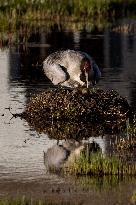
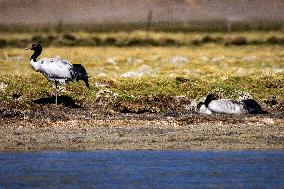
(240609) -- LHASA, June 9, 2024 Photo by Xinhua/ABACAPRESS.COM) -- A black-necked crane watches over the eggs at a wetland in Xainza County of Nagqu City, southwest China's Xizang Autonomous Region, June 7, 2024. The black-necked crane, a species under first-class state protection in China, mainly inhabits plateau meadows and marshes at an altitude of 2,500 to 5,000 meters. Every year around the time of June, pairs of black-necked cranes migrate to Xainza County to build nests and hatch eggs on grass piers surrounded by water. Black-necked cranes usually lay one or two eggs in every nest, and the incubation period is about 30 days. In recent years, Xizang has continuously strengthened the protection of the habitat of black-necked cranes, and their living environment has been effectively improved. The dotted wetlands in Xainza County have attracted a large number of black-necked cranes to breed their offspring. Photo by Xinhua/ABACAPRESS.COM/Tenzing Nima Qadhup)

  •  
(InXizang)CHINA-XIZANG-XAINZA-BLACK-NECKED CRANES (CN)

(InXizang)CHINA-XIZANG-XAINZA-BLACK-NECKED CRANES (CN)

(240609) -- LHASA, June 9, 2024 Photo by Xinhua/ABACAPRESS.COM) -- A black-necked crane hatches eggs at a wetland in Xainza County of Nagqu City, southwest China's Xizang Autonomous Region, June 7, 2024. The black-necked crane, a species under first-class state protection in China, mainly inhabits plateau meadows and marshes at an altitude of 2,500 to 5,000 meters. Every year around the time of June, pairs of black-necked cranes migrate to Xainza County to build nests and hatch eggs on grass piers surrounded by water. Black-necked cranes usually lay one or two eggs in every nest, and the incubation period is about 30 days. In recent years, Xizang has continuously strengthened the protection of the habitat of black-necked cranes, and their living environment has been effectively improved. The dotted wetlands in Xainza County have attracted a large number of black-necked cranes to breed their offspring. Photo by Xinhua/ABACAPRESS.COM/Jiang Fan)

  •  
(InXizang)CHINA-XIZANG-XAINZA-BLACK-NECKED CRANES (CN)

(InXizang)CHINA-XIZANG-XAINZA-BLACK-NECKED CRANES (CN)

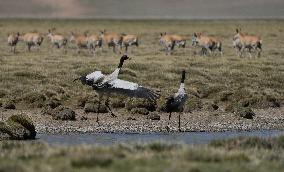
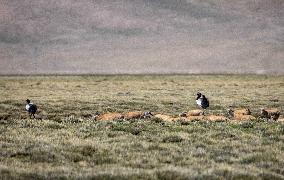
(240609) -- LHASA, June 9, 2024 Photo by Xinhua/ABACAPRESS.COM) -- Black-necked cranes search for food with Tibetan antelopes at a wetland in Xainza County of Nagqu City, southwest China's Xizang Autonomous Region, June 8, 2024. The black-necked crane, a species under first-class state protection in China, mainly inhabits plateau meadows and marshes at an altitude of 2,500 to 5,000 meters. Every year around the time of June, pairs of black-necked cranes migrate to Xainza County to build nests and hatch eggs on grass piers surrounded by water. Black-necked cranes usually lay one or two eggs in every nest, and the incubation period is about 30 days. In recent years, Xizang has continuously strengthened the protection of the habitat of black-necked cranes, and their living environment has been effectively improved. The dotted wetlands in Xainza County have attracted a large number of black-necked cranes to breed their offspring. Photo by Xinhua/ABACAPRESS.COM/Jigme Dorje)

  •  
(InXizang)CHINA-XIZANG-XAINZA-BLACK-NECKED CRANES (CN)

(InXizang)CHINA-XIZANG-XAINZA-BLACK-NECKED CRANES (CN)

(240609) -- LHASA, June 9, 2024 Photo by Xinhua/ABACAPRESS.COM) -- A black-necked crane watches over the eggs at a wetland in Xainza County of Nagqu City, southwest China's Xizang Autonomous Region, June 7, 2024. The black-necked crane, a species under first-class state protection in China, mainly inhabits plateau meadows and marshes at an altitude of 2,500 to 5,000 meters. Every year around the time of June, pairs of black-necked cranes migrate to Xainza County to build nests and hatch eggs on grass piers surrounded by water. Black-necked cranes usually lay one or two eggs in every nest, and the incubation period is about 30 days. In recent years, Xizang has continuously strengthened the protection of the habitat of black-necked cranes, and their living environment has been effectively improved. The dotted wetlands in Xainza County have attracted a large number of black-necked cranes to breed their offspring. Photo by Xinhua/ABACAPRESS.COM/Tenzing Nima Qadhup)

  •  
(InXizang)CHINA-XIZANG-XAINZA-BLACK-NECKED CRANES (CN)

(InXizang)CHINA-XIZANG-XAINZA-BLACK-NECKED CRANES (CN)

(240609) -- LHASA, June 9, 2024 Photo by Xinhua/ABACAPRESS.COM) -- Black-necked cranes are seen at a wetland in Xainza County of Nagqu City, southwest China's Xizang Autonomous Region, June 7, 2024. The black-necked crane, a species under first-class state protection in China, mainly inhabits plateau meadows and marshes at an altitude of 2,500 to 5,000 meters. Every year around the time of June, pairs of black-necked cranes migrate to Xainza County to build nests and hatch eggs on grass piers surrounded by water. Black-necked cranes usually lay one or two eggs in every nest, and the incubation period is about 30 days. In recent years, Xizang has continuously strengthened the protection of the habitat of black-necked cranes, and their living environment has been effectively improved. The dotted wetlands in Xainza County have attracted a large number of black-necked cranes to breed their offspring. Photo by Xinhua/ABACAPRESS.COM/Jiang Fan)

  •  
(InXizang)CHINA-XIZANG-XAINZA-BLACK-NECKED CRANES (CN)

(InXizang)CHINA-XIZANG-XAINZA-BLACK-NECKED CRANES (CN)

(240609) -- LHASA, June 9, 2024 Photo by Xinhua/ABACAPRESS.COM) -- Black-necked cranes search for food with Tibetan antelopes at a wetland in Xainza County of Nagqu City, southwest China's Xizang Autonomous Region, June 8, 2024. The black-necked crane, a species under first-class state protection in China, mainly inhabits plateau meadows and marshes at an altitude of 2,500 to 5,000 meters. Every year around the time of June, pairs of black-necked cranes migrate to Xainza County to build nests and hatch eggs on grass piers surrounded by water. Black-necked cranes usually lay one or two eggs in every nest, and the incubation period is about 30 days. In recent years, Xizang has continuously strengthened the protection of the habitat of black-necked cranes, and their living environment has been effectively improved. The dotted wetlands in Xainza County have attracted a large number of black-necked cranes to breed their offspring. Photo by Xinhua/ABACAPRESS.COM/Jiang Fan)

  •  
(InXizang)CHINA-XIZANG-XAINZA-BLACK-NECKED CRANES (CN)

(InXizang)CHINA-XIZANG-XAINZA-BLACK-NECKED CRANES (CN)

(240609) -- LHASA, June 9, 2024 Photo by Xinhua/ABACAPRESS.COM) -- A drone photo taken on June 8, 2024 shows a black-necked crane searching for food at a wetland in Xainza County of Nagqu City, southwest China's Xizang Autonomous Region. The black-necked crane, a species under first-class state protection in China, mainly inhabits plateau meadows and marshes at an altitude of 2,500 to 5,000 meters. Every year around the time of June, pairs of black-necked cranes migrate to Xainza County to build nests and hatch eggs on grass piers surrounded by water. Black-necked cranes usually lay one or two eggs in every nest, and the incubation period is about 30 days. In recent years, Xizang has continuously strengthened the protection of the habitat of black-necked cranes, and their living environment has been effectively improved. The dotted wetlands in Xainza County have attracted a large number of black-necked cranes to breed their offspring. Photo by Xinhua/ABACAPRESS.COM/Jiang Fan)

  •  
(InXizang)CHINA-XIZANG-XAINZA-BLACK-NECKED CRANES (CN)

(InXizang)CHINA-XIZANG-XAINZA-BLACK-NECKED CRANES (CN)

(240609) -- LHASA, June 9, 2024 Photo by Xinhua/ABACAPRESS.COM) -- A black-necked crane watches over the eggs at a wetland in Xainza County of Nagqu City, southwest China's Xizang Autonomous Region, June 7, 2024. The black-necked crane, a species under first-class state protection in China, mainly inhabits plateau meadows and marshes at an altitude of 2,500 to 5,000 meters. Every year around the time of June, pairs of black-necked cranes migrate to Xainza County to build nests and hatch eggs on grass piers surrounded by water. Black-necked cranes usually lay one or two eggs in every nest, and the incubation period is about 30 days. In recent years, Xizang has continuously strengthened the protection of the habitat of black-necked cranes, and their living environment has been effectively improved. The dotted wetlands in Xainza County have attracted a large number of black-necked cranes to breed their offspring. Photo by Xinhua/ABACAPRESS.COM/Jigme Dorje)

  • Main
  • Top
  • Editorial
  • Creative
  • About Us
  • About ILG
  • Terms of use
  • Company
  • BEHIND
  • Price List
  • Single Plan
  • Monthly Plan
  • Services
  • Shooting
  • Rights Clearance
  • Support
  • FAQ
  • How To Buy
  • Contact Us
  • Become a Partner

© KYODO NEWS IMAGES INC

All Rights Reserved.

  • Editorial
  • Olympics
  • News
  • Sports
  • Japan
  • Tech
  • Royal
  • Disaster
  • NorthKorea
  • Old Japan
  • SNS
  • Creative
  • Food
  • Japan
  • Landscape
  • Animal
  • Popular
  • #Ukraine
  • #Russia
  • #coronavirus
  • #N. Korea
  • #Thailand
  • #China
  • #Ukraine
  • #Russia
  • #coronavirus
  • #N. Korea
  • #Thailand
  • #China
  • Food
  • Japan
  • Landscape
  • Animal
  • Olympics
  • News
  • Sports
  • Japan
  • Tech
  • Royal
  • Disaster
  • NorthKorea
  • Old Japan
  • SNS