•  
Giant Panda Reintroduction - China

Giant Panda Reintroduction - China

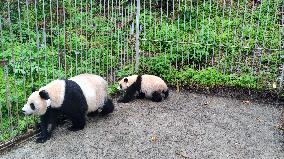
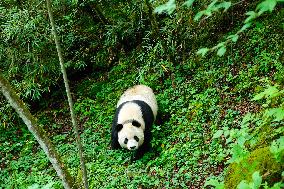
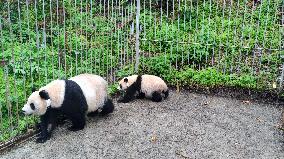
WOLONG, June 29, 2024 -- This file photo taken on Sept. 16, 2014 shows giant panda cub Hua Jiao (L), the world's first giant panda cub with both captive and wild parents, and her mother Cao Cao in the wild training fields. In recent years, China has made significant progress in panda conservation through a series of measures, including forest and wildlife protection as well as the construction of giant panda national parks. The wild giant panda population in China has grown from about 1,100 in the 1980s to nearly 1,900. Giant panda reintroduction refers to releasing captive-bred giant pandas to their historical distribution areas to live and reproduce after acclimatization training so as to rebuild the wild population of the species. China Conservation and Research Center for the Giant Panda (CCRCGP) started a reintroduction program in 2003. It has reintroduced eleven pandas into the wild, nine of which survived. In the future, the center will continue to train more individual panda cubs using the mother-cub

  •  
Giant Panda Reintroduction - China

Giant Panda Reintroduction - China

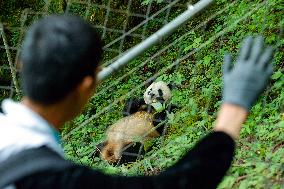
WOLONG, June 29, 2024 -- This file photo taken on Nov. 20, 2010 shows staff members dressed up in giant panda costumes holding a giant panda cub into a bamboo basket at the second-phase giant panda wild training fields of Hetaoping panda base in Wolong, southwest China's Sichuan Province. In recent years, China has made significant progress in panda conservation through a series of measures, including forest and wildlife protection as well as the construction of giant panda national parks. The wild giant panda population in China has grown from about 1,100 in the 1980s to nearly 1,900. Giant panda reintroduction refers to releasing captive-bred giant pandas to their historical distribution areas to live and reproduce after acclimatization training so as to rebuild the wild population of the species. China Conservation and Research Center for the Giant Panda (CCRCGP) started a reintroduction program in 2003. It has reintroduced eleven pandas into the wild, nine of which survived. In the future, the center will

  •  
Giant Panda Reintroduction - China

Giant Panda Reintroduction - China

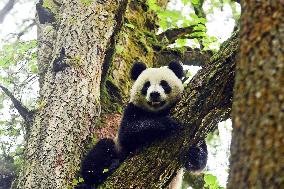
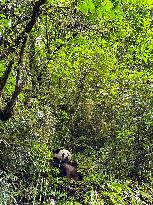
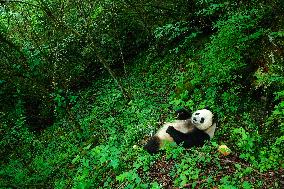
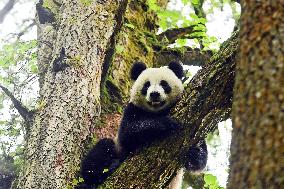
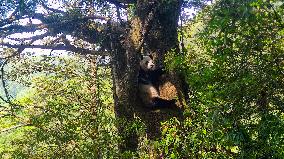
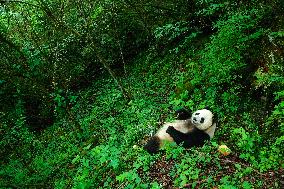
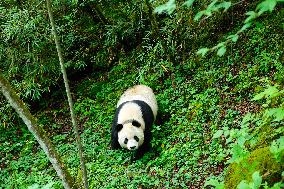
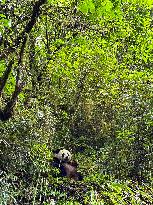
WOLONG, June 29, 2024 -- This file photo taken on June 4, 2020 shows a giant panda resting on a tree during wild training at Tiantai Mountain in Wolong National Nature Reserve in southwest China's Sichuan Province. In recent years, China has made significant progress in panda conservation through a series of measures, including forest and wildlife protection as well as the construction of giant panda national parks. The wild giant panda population in China has grown from about 1,100 in the 1980s to nearly 1,900. Giant panda reintroduction refers to releasing captive-bred giant pandas to their historical distribution areas to live and reproduce after acclimatization training so as to rebuild the wild population of the species. China Conservation and Research Center for the Giant Panda (CCRCGP) started a reintroduction program in 2003. It has reintroduced eleven pandas into the wild, nine of which survived. In the future, the center will continue to train more individual panda cubs using the mother-cub process

  •  
Giant Panda Reintroduction - China

Giant Panda Reintroduction - China

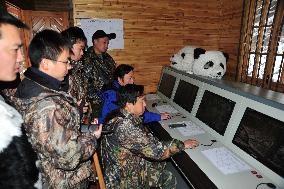
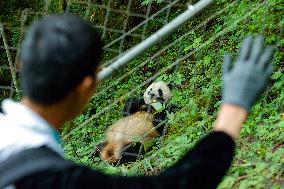
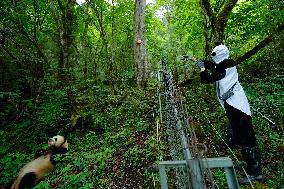
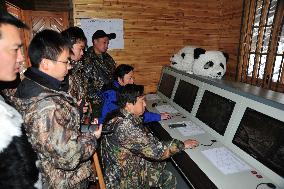
WOLONG, June 29, 2024 -- This file photo taken on Nov. 20, 2010 shows staff members monitoring the giant panda wild training fields of Hetaoping panda base in Wolong, southwest China's Sichuan Province. In recent years, China has made significant progress in panda conservation through a series of measures, including forest and wildlife protection as well as the construction of giant panda national parks. The wild giant panda population in China has grown from about 1,100 in the 1980s to nearly 1,900. Giant panda reintroduction refers to releasing captive-bred giant pandas to their historical distribution areas to live and reproduce after acclimatization training so as to rebuild the wild population of the species. China Conservation and Research Center for the Giant Panda (CCRCGP) started a reintroduction program in 2003. It has reintroduced eleven pandas into the wild, nine of which survived. In the future, the center will continue to train more individual panda cubs using the mother-cub process before relea

  •  
Giant Panda Reintroduction - China

Giant Panda Reintroduction - China

WOLONG, June 29, 2024 -- Staff member Mu Shijie prepares to patrol the giant panda wild training fields of Tiantai Mountain in Wolong National Nature Reserve in southwest China's Sichuan Province, June 24, 2024. In recent years, China has made significant progress in panda conservation through a series of measures, including forest and wildlife protection as well as the construction of giant panda national parks. The wild giant panda population in China has grown from about 1,100 in the 1980s to nearly 1,900. Giant panda reintroduction refers to releasing captive-bred giant pandas to their historical distribution areas to live and reproduce after acclimatization training so as to rebuild the wild population of the species. China Conservation and Research Center for the Giant Panda (CCRCGP) started a reintroduction program in 2003. It has reintroduced eleven pandas into the wild, nine of which survived. In the future, the center will continue to train more individual panda cubs using the mother-cub process bef

  •  
Giant Panda Reintroduction - China

Giant Panda Reintroduction - China

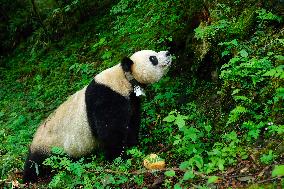
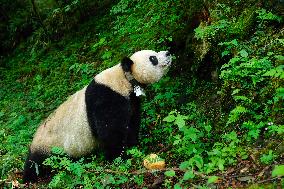
WOLONG, June 29, 2024 -- Giant panda Xian Xian has food at the second-phase giant panda wild training fields of Tiantai Mountain in Wolong National Nature Reserve in southwest China's Sichuan Province, June 24, 2024. In recent years, China has made significant progress in panda conservation through a series of measures, including forest and wildlife protection as well as the construction of giant panda national parks. The wild giant panda population in China has grown from about 1,100 in the 1980s to nearly 1,900. Giant panda reintroduction refers to releasing captive-bred giant pandas to their historical distribution areas to live and reproduce after acclimatization training so as to rebuild the wild population of the species. China Conservation and Research Center for the Giant Panda (CCRCGP) started a reintroduction program in 2003. It has reintroduced eleven pandas into the wild, nine of which survived. In the future, the center will continue to train more individual panda cubs using the mother-cub proces

  •  
Giant Panda Reintroduction - China

Giant Panda Reintroduction - China

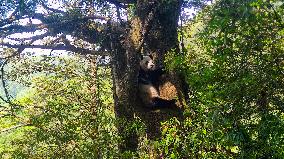
WOLONG, June 29, 2024 -- Giant panda Hui Hui is seen on a tree at the second-phase giant panda wild training fields of Tiantai Mountain in Wolong National Nature Reserve in southwest China's Sichuan Province, May 22, 2024. In recent years, China has made significant progress in panda conservation through a series of measures, including forest and wildlife protection as well as the construction of giant panda national parks. The wild giant panda population in China has grown from about 1,100 in the 1980s to nearly 1,900. Giant panda reintroduction refers to releasing captive-bred giant pandas to their historical distribution areas to live and reproduce after acclimatization training so as to rebuild the wild population of the species. China Conservation and Research Center for the Giant Panda (CCRCGP) started a reintroduction program in 2003. It has reintroduced eleven pandas into the wild, nine of which survived. In the future, the center will continue to train more individual panda cubs using the mother-cub

  •  
Giant Panda Reintroduction - China

Giant Panda Reintroduction - China

WOLONG, June 29, 2024 -- Giant panda Hui Hui and her cub are seen at the wild training fields of Tiantai Mountain in Wolong National Nature Reserve in southwest China's Sichuan Province, June 1, 2024. In recent years, China has made significant progress in panda conservation through a series of measures, including forest and wildlife protection as well as the construction of giant panda national parks. The wild giant panda population in China has grown from about 1,100 in the 1980s to nearly 1,900. Giant panda reintroduction refers to releasing captive-bred giant pandas to their historical distribution areas to live and reproduce after acclimatization training so as to rebuild the wild population of the species. China Conservation and Research Center for the Giant Panda (CCRCGP) started a reintroduction program in 2003. It has reintroduced eleven pandas into the wild, nine of which survived. In the future, the center will continue to train more individual panda cubs using the mother-cub process before releasi

  •  
Giant Panda Reintroduction - China

Giant Panda Reintroduction - China

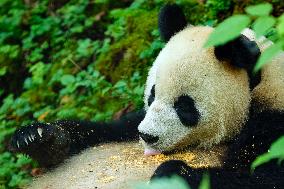
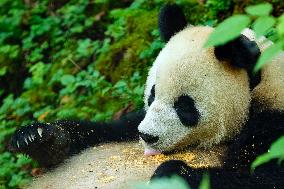
WOLONG, June 29, 2024 -- Giant panda Tian Tian has carrots at the second-phase giant panda wild training fields of Tiantai Mountain in Wolong National Nature Reserve in southwest China's Sichuan Province, May 29, 2024. In recent years, China has made significant progress in panda conservation through a series of measures, including forest and wildlife protection as well as the construction of giant panda national parks. The wild giant panda population in China has grown from about 1,100 in the 1980s to nearly 1,900. Giant panda reintroduction refers to releasing captive-bred giant pandas to their historical distribution areas to live and reproduce after acclimatization training so as to rebuild the wild population of the species. China Conservation and Research Center for the Giant Panda (CCRCGP) started a reintroduction program in 2003. It has reintroduced eleven pandas into the wild, nine of which survived. In the future, the center will continue to train more individual panda cubs using the mother-cub proc

  •  
Giant Panda Reintroduction - China

Giant Panda Reintroduction - China

WOLONG, June 29, 2024 -- Giant panda Xian Xian has food at the second-phase giant panda wild training fields of Tiantai Mountain in Wolong National Nature Reserve in southwest China's Sichuan Province, June 24, 2024. In recent years, China has made significant progress in panda conservation through a series of measures, including forest and wildlife protection as well as the construction of giant panda national parks. The wild giant panda population in China has grown from about 1,100 in the 1980s to nearly 1,900. Giant panda reintroduction refers to releasing captive-bred giant pandas to their historical distribution areas to live and reproduce after acclimatization training so as to rebuild the wild population of the species. China Conservation and Research Center for the Giant Panda (CCRCGP) started a reintroduction program in 2003. It has reintroduced eleven pandas into the wild, nine of which survived. In the future, the center will continue to train more individual panda cubs using the mother-cub proces

  •  
Giant Panda Reintroduction - China

Giant Panda Reintroduction - China

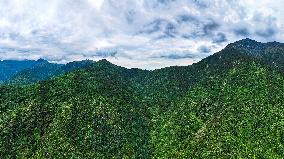
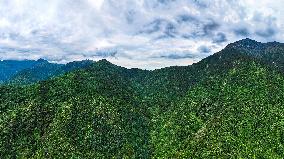
WOLONG, June 29, 2024 -- An aerial drone photo taken on June 24, 2024 shows a view of giant panda wild training fields of Tiantai Mountain in Wolong National Nature Reserve in southwest China's Sichuan Province, June 24, 2024. In recent years, China has made significant progress in panda conservation through a series of measures, including forest and wildlife protection as well as the construction of giant panda national parks. The wild giant panda population in China has grown from about 1,100 in the 1980s to nearly 1,900. Giant panda reintroduction refers to releasing captive-bred giant pandas to their historical distribution areas to live and reproduce after acclimatization training so as to rebuild the wild population of the species. China Conservation and Research Center for the Giant Panda (CCRCGP) started a reintroduction program in 2003. It has reintroduced eleven pandas into the wild, nine of which survived. In the future, the center will continue to train more individual panda cubs using the mother-

  •  
Giant Panda Reintroduction - China

Giant Panda Reintroduction - China

WOLONG, June 29, 2024 -- Staff member Mu Shijie is pictured on the way to the second-phase giant panda wild training fields of Tiantai Mountain in Wolong National Nature Reserve in southwest China's Sichuan Province, June 24, 2024. In recent years, China has made significant progress in panda conservation through a series of measures, including forest and wildlife protection as well as the construction of giant panda national parks. The wild giant panda population in China has grown from about 1,100 in the 1980s to nearly 1,900. Giant panda reintroduction refers to releasing captive-bred giant pandas to their historical distribution areas to live and reproduce after acclimatization training so as to rebuild the wild population of the species. China Conservation and Research Center for the Giant Panda (CCRCGP) started a reintroduction program in 2003. It has reintroduced eleven pandas into the wild, nine of which survived. In the future, the center will continue to train more individual panda cubs using the mo

  •  
Giant Panda Reintroduction - China

Giant Panda Reintroduction - China

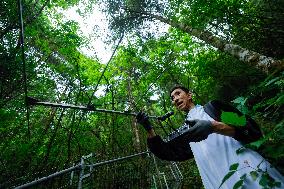
WOLONG, June 29, 2024 -- Staff member Mu Shijie looks for giant panda cubs while patrolling the second-phase giant panda wild training fields of Tiantai Mountain in Wolong National Nature Reserve in southwest China's Sichuan Province, June 24, 2024. In recent years, China has made significant progress in panda conservation through a series of measures, including forest and wildlife protection as well as the construction of giant panda national parks. The wild giant panda population in China has grown from about 1,100 in the 1980s to nearly 1,900. Giant panda reintroduction refers to releasing captive-bred giant pandas to their historical distribution areas to live and reproduce after acclimatization training so as to rebuild the wild population of the species. China Conservation and Research Center for the Giant Panda (CCRCGP) started a reintroduction program in 2003. It has reintroduced eleven pandas into the wild, nine of which survived. In the future, the center will continue to train more individual panda

  •  
Giant Panda Reintroduction - China

Giant Panda Reintroduction - China

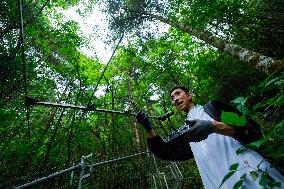
WOLONG, June 29, 2024 -- Staff member Mu Shijie uses a radio positioning device to trace giant panda Xian Xian while calling out her name at Tiantai Mountain in Wolong National Nature Reserve in southwest China's Sichuan Province, June 24, 2024. In recent years, China has made significant progress in panda conservation through a series of measures, including forest and wildlife protection as well as the construction of giant panda national parks. The wild giant panda population in China has grown from about 1,100 in the 1980s to nearly 1,900. Giant panda reintroduction refers to releasing captive-bred giant pandas to their historical distribution areas to live and reproduce after acclimatization training so as to rebuild the wild population of the species. China Conservation and Research Center for the Giant Panda (CCRCGP) started a reintroduction program in 2003. It has reintroduced eleven pandas into the wild, nine of which survived. In the future, the center will continue to train more individual panda cub

  •  
Giant Panda Reintroduction - China

Giant Panda Reintroduction - China

WOLONG, June 29, 2024 -- Staff member Mu Shijie uses a DIY bamboo leaf whislte to call giant panda Hui Hui out for foraging at the second-phase giant panda wild training fields of Tiantai Mountain in Wolong National Nature Reserve in southwest China's Sichuan Province, June 24, 2024. In recent years, China has made significant progress in panda conservation through a series of measures, including forest and wildlife protection as well as the construction of giant panda national parks. The wild giant panda population in China has grown from about 1,100 in the 1980s to nearly 1,900. Giant panda reintroduction refers to releasing captive-bred giant pandas to their historical distribution areas to live and reproduce after acclimatization training so as to rebuild the wild population of the species. China Conservation and Research Center for the Giant Panda (CCRCGP) started a reintroduction program in 2003. It has reintroduced eleven pandas into the wild, nine of which survived. In the future, the center will cont

  •  
Giant Panda Reintroduction - China

Giant Panda Reintroduction - China

WOLONG, June 29, 2024 -- Giant panda Xian Xian is pictured at the second-phase giant panda wild training fields of Tiantai Mountain in Wolong National Nature Reserve in southwest China's Sichuan Province, June 24, 2024. In recent years, China has made significant progress in panda conservation through a series of measures, including forest and wildlife protection as well as the construction of giant panda national parks. The wild giant panda population in China has grown from about 1,100 in the 1980s to nearly 1,900. Giant panda reintroduction refers to releasing captive-bred giant pandas to their historical distribution areas to live and reproduce after acclimatization training so as to rebuild the wild population of the species. China Conservation and Research Center for the Giant Panda (CCRCGP) started a reintroduction program in 2003. It has reintroduced eleven pandas into the wild, nine of which survived. In the future, the center will continue to train more individual panda cubs using the mother-cub pro

  •  
Giant Panda Reintroduction - China

Giant Panda Reintroduction - China

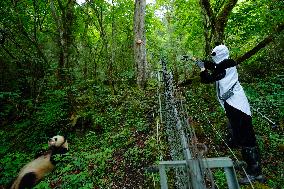
WOLONG, June 29, 2024 -- Staff member Mu Shijie, dressed up in a panda costume, feeds giant panda Xian Xian at the second-phase giant panda wild training fields of Tiantai Mountain in Wolong National Nature Reserve in southwest China's Sichuan Province, June 24, 2024. In recent years, China has made significant progress in panda conservation through a series of measures, including forest and wildlife protection as well as the construction of giant panda national parks. The wild giant panda population in China has grown from about 1,100 in the 1980s to nearly 1,900. Giant panda reintroduction refers to releasing captive-bred giant pandas to their historical distribution areas to live and reproduce after acclimatization training so as to rebuild the wild population of the species. China Conservation and Research Center for the Giant Panda (CCRCGP) started a reintroduction program in 2003. It has reintroduced eleven pandas into the wild, nine of which survived. In the future, the center will continue to train mo

  •  
Giant Panda Reintroduction - China

Giant Panda Reintroduction - China

WOLONG, June 29, 2024 -- Giant panda Xian Xian has food at the second-phase giant panda wild training fields of Tiantai Mountain in Wolong National Nature Reserve in southwest China's Sichuan Province, June 24, 2024. In recent years, China has made significant progress in panda conservation through a series of measures, including forest and wildlife protection as well as the construction of giant panda national parks. The wild giant panda population in China has grown from about 1,100 in the 1980s to nearly 1,900. Giant panda reintroduction refers to releasing captive-bred giant pandas to their historical distribution areas to live and reproduce after acclimatization training so as to rebuild the wild population of the species. China Conservation and Research Center for the Giant Panda (CCRCGP) started a reintroduction program in 2003. It has reintroduced eleven pandas into the wild, nine of which survived. In the future, the center will continue to train more individual panda cubs using the mother-cub proces

  •  
Giant Panda Reintroduction - China

Giant Panda Reintroduction - China

WOLONG, June 29, 2024 -- Giant panda Xian Xian comes out of the bamboo forest upon hearing the foraging call made by staff member Mu Shijie at the second-phase giant panda wild training fields of Tiantai Mountain in Wolong National Nature Reserve in southwest China's Sichuan Province, June 24, 2024. In recent years, China has made significant progress in panda conservation through a series of measures, including forest and wildlife protection as well as the construction of giant panda national parks. The wild giant panda population in China has grown from about 1,100 in the 1980s to nearly 1,900. Giant panda reintroduction refers to releasing captive-bred giant pandas to their historical distribution areas to live and reproduce after acclimatization training so as to rebuild the wild population of the species. China Conservation and Research Center for the Giant Panda (CCRCGP) started a reintroduction program in 2003. It has reintroduced eleven pandas into the wild, nine of which survived. In the future, the

  •  
Giant Panda Reintroduction - China

Giant Panda Reintroduction - China

WOLONG, June 29, 2024 -- Staff member Mu Shijie records videos of giant panda Xian Xian outside the second-phase giant panda wild training fields of Tiantai Mountain in Wolong National Nature Reserve in southwest China's Sichuan Province, June 24, 2024. In recent years, China has made significant progress in panda conservation through a series of measures, including forest and wildlife protection as well as the construction of giant panda national parks. The wild giant panda population in China has grown from about 1,100 in the 1980s to nearly 1,900. Giant panda reintroduction refers to releasing captive-bred giant pandas to their historical distribution areas to live and reproduce after acclimatization training so as to rebuild the wild population of the species. China Conservation and Research Center for the Giant Panda (CCRCGP) started a reintroduction program in 2003. It has reintroduced eleven pandas into the wild, nine of which survived. In the future, the center will continue to train more individual p

  •  
Giant Panda Reintroduction - China

Giant Panda Reintroduction - China

WOLONG, June 29, 2024 -- Staff member Mu Shijie waves goodbye to giant panda Xian Xian after feeding her at the second-phase giant panda wild training fields of Tiantai Mountain in Wolong National Nature Reserve in southwest China's Sichuan Province, June 24, 2024. In recent years, China has made significant progress in panda conservation through a series of measures, including forest and wildlife protection as well as the construction of giant panda national parks. The wild giant panda population in China has grown from about 1,100 in the 1980s to nearly 1,900. Giant panda reintroduction refers to releasing captive-bred giant pandas to their historical distribution areas to live and reproduce after acclimatization training so as to rebuild the wild population of the species. China Conservation and Research Center for the Giant Panda (CCRCGP) started a reintroduction program in 2003. It has reintroduced eleven pandas into the wild, nine of which survived. In the future, the center will continue to train more

  •  
(FOCUS)CHINA-SICHUAN-GIANT PANDA-REINTRODUCTION (CN)

(FOCUS)CHINA-SICHUAN-GIANT PANDA-REINTRODUCTION (CN)

(240629) -- WOLONG, June 29, 2024 Photo by Xinhua/ABACAPRESS.COM) -- Staff member Mu Shijie looks for giant panda cubs while patrolling the second-phase giant panda wild training fields of Tiantai Mountain in Wolong National Nature Reserve in southwest China's Sichuan Province, June 24, 2024. In recent years, China has made significant progress in panda conservation through a series of measures, including forest and wildlife protection as well as the construction of giant panda national parks. The wild giant panda population in China has grown from about 1,100 in the 1980s to nearly 1,900. Giant panda reintroduction refers to releasing captive-bred giant pandas to their historical distribution areas to live and reproduce after acclimatization training so as to rebuild the wild population of the species. China Conservation and Research Center for the Giant Panda (CCRCGP) started a reintroduction program in 2003. It has reintroduced eleven pandas into the wild, nine of which survived. In the future, the center

  •  
(FOCUS)CHINA-SICHUAN-GIANT PANDA-REINTRODUCTION (CN)

(FOCUS)CHINA-SICHUAN-GIANT PANDA-REINTRODUCTION (CN)

(240629) -- WOLONG, June 29, 2024 Photo by Xinhua/ABACAPRESS.COM) -- Giant panda Xian Xian has food at the second-phase giant panda wild training fields of Tiantai Mountain in Wolong National Nature Reserve in southwest China's Sichuan Province, June 24, 2024. In recent years, China has made significant progress in panda conservation through a series of measures, including forest and wildlife protection as well as the construction of giant panda national parks. The wild giant panda population in China has grown from about 1,100 in the 1980s to nearly 1,900. Giant panda reintroduction refers to releasing captive-bred giant pandas to their historical distribution areas to live and reproduce after acclimatization training so as to rebuild the wild population of the species. China Conservation and Research Center for the Giant Panda (CCRCGP) started a reintroduction program in 2003. It has reintroduced eleven pandas into the wild, nine of which survived. In the future, the center will continue to train more indiv

  •  
(FOCUS)CHINA-SICHUAN-GIANT PANDA-REINTRODUCTION (CN)

(FOCUS)CHINA-SICHUAN-GIANT PANDA-REINTRODUCTION (CN)

(240629) -- WOLONG, June 29, 2024 Photo by Xinhua/ABACAPRESS.COM) -- This file photo taken on June 4, 2020 shows a giant panda resting on a tree during wild training at Tiantai Mountain in Wolong National Nature Reserve in southwest China's Sichuan Province. In recent years, China has made significant progress in panda conservation through a series of measures, including forest and wildlife protection as well as the construction of giant panda national parks. The wild giant panda population in China has grown from about 1,100 in the 1980s to nearly 1,900. Giant panda reintroduction refers to releasing captive-bred giant pandas to their historical distribution areas to live and reproduce after acclimatization training so as to rebuild the wild population of the species. China Conservation and Research Center for the Giant Panda (CCRCGP) started a reintroduction program in 2003. It has reintroduced eleven pandas into the wild, nine of which survived. In the future, the center will continue to train more individ

  •  
(FOCUS)CHINA-SICHUAN-GIANT PANDA-REINTRODUCTION (CN)

(FOCUS)CHINA-SICHUAN-GIANT PANDA-REINTRODUCTION (CN)

(240629) -- WOLONG, June 29, 2024 Photo by Xinhua/ABACAPRESS.COM) -- Staff member Mu Shijie waves goodbye to giant panda Xian Xian after feeding her at the second-phase giant panda wild training fields of Tiantai Mountain in Wolong National Nature Reserve in southwest China's Sichuan Province, June 24, 2024. In recent years, China has made significant progress in panda conservation through a series of measures, including forest and wildlife protection as well as the construction of giant panda national parks. The wild giant panda population in China has grown from about 1,100 in the 1980s to nearly 1,900. Giant panda reintroduction refers to releasing captive-bred giant pandas to their historical distribution areas to live and reproduce after acclimatization training so as to rebuild the wild population of the species. China Conservation and Research Center for the Giant Panda (CCRCGP) started a reintroduction program in 2003. It has reintroduced eleven pandas into the wild, nine of which survived. In the fut

  •  
(FOCUS)CHINA-SICHUAN-GIANT PANDA-REINTRODUCTION (CN)

(FOCUS)CHINA-SICHUAN-GIANT PANDA-REINTRODUCTION (CN)

(240629) -- WOLONG, June 29, 2024 Photo by Xinhua/ABACAPRESS.COM) -- Staff member Mu Shijie uses a DIY bamboo leaf whislte to call giant panda Hui Hui out for foraging at the second-phase giant panda wild training fields of Tiantai Mountain in Wolong National Nature Reserve in southwest China's Sichuan Province, June 24, 2024. In recent years, China has made significant progress in panda conservation through a series of measures, including forest and wildlife protection as well as the construction of giant panda national parks. The wild giant panda population in China has grown from about 1,100 in the 1980s to nearly 1,900. Giant panda reintroduction refers to releasing captive-bred giant pandas to their historical distribution areas to live and reproduce after acclimatization training so as to rebuild the wild population of the species. China Conservation and Research Center for the Giant Panda (CCRCGP) started a reintroduction program in 2003. It has reintroduced eleven pandas into the wild, nine of which s

  •  
(FOCUS)CHINA-SICHUAN-GIANT PANDA-REINTRODUCTION (CN)

(FOCUS)CHINA-SICHUAN-GIANT PANDA-REINTRODUCTION (CN)

(240629) -- WOLONG, June 29, 2024 Photo by Xinhua/ABACAPRESS.COM) -- This file photo taken on Nov. 20, 2010 shows staff members dressed up in giant panda costumes holding a giant panda cub into a bamboo basket at the second-phase giant panda wild training fields of Hetaoping panda base in Wolong, southwest China's Sichuan Province. In recent years, China has made significant progress in panda conservation through a series of measures, including forest and wildlife protection as well as the construction of giant panda national parks. The wild giant panda population in China has grown from about 1,100 in the 1980s to nearly 1,900. Giant panda reintroduction refers to releasing captive-bred giant pandas to their historical distribution areas to live and reproduce after acclimatization training so as to rebuild the wild population of the species. China Conservation and Research Center for the Giant Panda (CCRCGP) started a reintroduction program in 2003. It has reintroduced eleven pandas into the wild, nine of wh

  •  
(FOCUS)CHINA-SICHUAN-GIANT PANDA-REINTRODUCTION (CN)

(FOCUS)CHINA-SICHUAN-GIANT PANDA-REINTRODUCTION (CN)

(240629) -- WOLONG, June 29, 2024 Photo by Xinhua/ABACAPRESS.COM) -- Giant panda Xian Xian is pictured at the second-phase giant panda wild training fields of Tiantai Mountain in Wolong National Nature Reserve in southwest China's Sichuan Province, June 24, 2024. In recent years, China has made significant progress in panda conservation through a series of measures, including forest and wildlife protection as well as the construction of giant panda national parks. The wild giant panda population in China has grown from about 1,100 in the 1980s to nearly 1,900. Giant panda reintroduction refers to releasing captive-bred giant pandas to their historical distribution areas to live and reproduce after acclimatization training so as to rebuild the wild population of the species. China Conservation and Research Center for the Giant Panda (CCRCGP) started a reintroduction program in 2003. It has reintroduced eleven pandas into the wild, nine of which survived. In the future, the center will continue to train more in

  •  
(FOCUS)CHINA-SICHUAN-GIANT PANDA-REINTRODUCTION (CN)

(FOCUS)CHINA-SICHUAN-GIANT PANDA-REINTRODUCTION (CN)

(240629) -- WOLONG, June 29, 2024 Photo by Xinhua/ABACAPRESS.COM) -- Giant panda Hui Hui is seen on a tree at the second-phase giant panda wild training fields of Tiantai Mountain in Wolong National Nature Reserve in southwest China's Sichuan Province, May 22, 2024. In recent years, China has made significant progress in panda conservation through a series of measures, including forest and wildlife protection as well as the construction of giant panda national parks. The wild giant panda population in China has grown from about 1,100 in the 1980s to nearly 1,900. Giant panda reintroduction refers to releasing captive-bred giant pandas to their historical distribution areas to live and reproduce after acclimatization training so as to rebuild the wild population of the species. China Conservation and Research Center for the Giant Panda (CCRCGP) started a reintroduction program in 2003. It has reintroduced eleven pandas into the wild, nine of which survived. In the future, the center will continue to train more

  •  
(FOCUS)CHINA-SICHUAN-GIANT PANDA-REINTRODUCTION (CN)

(FOCUS)CHINA-SICHUAN-GIANT PANDA-REINTRODUCTION (CN)

(240629) -- WOLONG, June 29, 2024 Photo by Xinhua/ABACAPRESS.COM) -- Staff member Mu Shijie is pictured on the way to the second-phase giant panda wild training fields of Tiantai Mountain in Wolong National Nature Reserve in southwest China's Sichuan Province, June 24, 2024. In recent years, China has made significant progress in panda conservation through a series of measures, including forest and wildlife protection as well as the construction of giant panda national parks. The wild giant panda population in China has grown from about 1,100 in the 1980s to nearly 1,900. Giant panda reintroduction refers to releasing captive-bred giant pandas to their historical distribution areas to live and reproduce after acclimatization training so as to rebuild the wild population of the species. China Conservation and Research Center for the Giant Panda (CCRCGP) started a reintroduction program in 2003. It has reintroduced eleven pandas into the wild, nine of which survived. In the future, the center will continue to t

  •  
(FOCUS)CHINA-SICHUAN-GIANT PANDA-REINTRODUCTION (CN)

(FOCUS)CHINA-SICHUAN-GIANT PANDA-REINTRODUCTION (CN)

(240629) -- WOLONG, June 29, 2024 Photo by Xinhua/ABACAPRESS.COM) -- Giant panda Xian Xian has food at the second-phase giant panda wild training fields of Tiantai Mountain in Wolong National Nature Reserve in southwest China's Sichuan Province, June 24, 2024. In recent years, China has made significant progress in panda conservation through a series of measures, including forest and wildlife protection as well as the construction of giant panda national parks. The wild giant panda population in China has grown from about 1,100 in the 1980s to nearly 1,900. Giant panda reintroduction refers to releasing captive-bred giant pandas to their historical distribution areas to live and reproduce after acclimatization training so as to rebuild the wild population of the species. China Conservation and Research Center for the Giant Panda (CCRCGP) started a reintroduction program in 2003. It has reintroduced eleven pandas into the wild, nine of which survived. In the future, the center will continue to train more indiv

  •  
(FOCUS)CHINA-SICHUAN-GIANT PANDA-REINTRODUCTION (CN)

(FOCUS)CHINA-SICHUAN-GIANT PANDA-REINTRODUCTION (CN)

(240629) -- WOLONG, June 29, 2024 Photo by Xinhua/ABACAPRESS.COM) -- This file photo taken on Sept. 16, 2014 shows giant panda cub Hua Jiao (L), the world's first giant panda cub with both captive and wild parents, and her mother Cao Cao in the wild training fields. In recent years, China has made significant progress in panda conservation through a series of measures, including forest and wildlife protection as well as the construction of giant panda national parks. The wild giant panda population in China has grown from about 1,100 in the 1980s to nearly 1,900. Giant panda reintroduction refers to releasing captive-bred giant pandas to their historical distribution areas to live and reproduce after acclimatization training so as to rebuild the wild population of the species. China Conservation and Research Center for the Giant Panda (CCRCGP) started a reintroduction program in 2003. It has reintroduced eleven pandas into the wild, nine of which survived. In the future, the center will continue to train more

  •  
(FOCUS)CHINA-SICHUAN-GIANT PANDA-REINTRODUCTION (CN)

(FOCUS)CHINA-SICHUAN-GIANT PANDA-REINTRODUCTION (CN)

(240629) -- WOLONG, June 29, 2024 Photo by Xinhua/ABACAPRESS.COM) -- Staff member Mu Shijie, dressed up in a panda costume, feeds giant panda Xian Xian at the second-phase giant panda wild training fields of Tiantai Mountain in Wolong National Nature Reserve in southwest China's Sichuan Province, June 24, 2024. In recent years, China has made significant progress in panda conservation through a series of measures, including forest and wildlife protection as well as the construction of giant panda national parks. The wild giant panda population in China has grown from about 1,100 in the 1980s to nearly 1,900. Giant panda reintroduction refers to releasing captive-bred giant pandas to their historical distribution areas to live and reproduce after acclimatization training so as to rebuild the wild population of the species. China Conservation and Research Center for the Giant Panda (CCRCGP) started a reintroduction program in 2003. It has reintroduced eleven pandas into the wild, nine of which survived. In the

  •  
(FOCUS)CHINA-SICHUAN-GIANT PANDA-REINTRODUCTION (CN)

(FOCUS)CHINA-SICHUAN-GIANT PANDA-REINTRODUCTION (CN)

(240629) -- WOLONG, June 29, 2024 Photo by Xinhua/ABACAPRESS.COM) -- Giant panda Hui Hui and her cub are seen at the wild training fields of Tiantai Mountain in Wolong National Nature Reserve in southwest China's Sichuan Province, June 1, 2024. In recent years, China has made significant progress in panda conservation through a series of measures, including forest and wildlife protection as well as the construction of giant panda national parks. The wild giant panda population in China has grown from about 1,100 in the 1980s to nearly 1,900. Giant panda reintroduction refers to releasing captive-bred giant pandas to their historical distribution areas to live and reproduce after acclimatization training so as to rebuild the wild population of the species. China Conservation and Research Center for the Giant Panda (CCRCGP) started a reintroduction program in 2003. It has reintroduced eleven pandas into the wild, nine of which survived. In the future, the center will continue to train more individual panda cubs

  •  
(FOCUS)CHINA-SICHUAN-GIANT PANDA-REINTRODUCTION (CN)

(FOCUS)CHINA-SICHUAN-GIANT PANDA-REINTRODUCTION (CN)

(240629) -- WOLONG, June 29, 2024 Photo by Xinhua/ABACAPRESS.COM) -- Staff member Mu Shijie records videos of giant panda Xian Xian outside the second-phase giant panda wild training fields of Tiantai Mountain in Wolong National Nature Reserve in southwest China's Sichuan Province, June 24, 2024. In recent years, China has made significant progress in panda conservation through a series of measures, including forest and wildlife protection as well as the construction of giant panda national parks. The wild giant panda population in China has grown from about 1,100 in the 1980s to nearly 1,900. Giant panda reintroduction refers to releasing captive-bred giant pandas to their historical distribution areas to live and reproduce after acclimatization training so as to rebuild the wild population of the species. China Conservation and Research Center for the Giant Panda (CCRCGP) started a reintroduction program in 2003. It has reintroduced eleven pandas into the wild, nine of which survived. In the future, the cen

  •  
(FOCUS)CHINA-SICHUAN-GIANT PANDA-REINTRODUCTION (CN)

(FOCUS)CHINA-SICHUAN-GIANT PANDA-REINTRODUCTION (CN)

(240629) -- WOLONG, June 29, 2024 Photo by Xinhua/ABACAPRESS.COM) -- Giant panda Tian Tian has carrots at the second-phase giant panda wild training fields of Tiantai Mountain in Wolong National Nature Reserve in southwest China's Sichuan Province, May 29, 2024. In recent years, China has made significant progress in panda conservation through a series of measures, including forest and wildlife protection as well as the construction of giant panda national parks. The wild giant panda population in China has grown from about 1,100 in the 1980s to nearly 1,900. Giant panda reintroduction refers to releasing captive-bred giant pandas to their historical distribution areas to live and reproduce after acclimatization training so as to rebuild the wild population of the species. China Conservation and Research Center for the Giant Panda (CCRCGP) started a reintroduction program in 2003. It has reintroduced eleven pandas into the wild, nine of which survived. In the future, the center will continue to train more ind

  •  
(FOCUS)CHINA-SICHUAN-GIANT PANDA-REINTRODUCTION (CN)

(FOCUS)CHINA-SICHUAN-GIANT PANDA-REINTRODUCTION (CN)

(240629) -- WOLONG, June 29, 2024 Photo by Xinhua/ABACAPRESS.COM) -- Giant panda Xian Xian has food at the second-phase giant panda wild training fields of Tiantai Mountain in Wolong National Nature Reserve in southwest China's Sichuan Province, June 24, 2024. In recent years, China has made significant progress in panda conservation through a series of measures, including forest and wildlife protection as well as the construction of giant panda national parks. The wild giant panda population in China has grown from about 1,100 in the 1980s to nearly 1,900. Giant panda reintroduction refers to releasing captive-bred giant pandas to their historical distribution areas to live and reproduce after acclimatization training so as to rebuild the wild population of the species. China Conservation and Research Center for the Giant Panda (CCRCGP) started a reintroduction program in 2003. It has reintroduced eleven pandas into the wild, nine of which survived. In the future, the center will continue to train more indiv

  •  
(FOCUS)CHINA-SICHUAN-GIANT PANDA-REINTRODUCTION (CN)

(FOCUS)CHINA-SICHUAN-GIANT PANDA-REINTRODUCTION (CN)

(240629) -- WOLONG, June 29, 2024 Photo by Xinhua/ABACAPRESS.COM) -- Staff member Mu Shijie prepares to patrol the giant panda wild training fields of Tiantai Mountain in Wolong National Nature Reserve in southwest China's Sichuan Province, June 24, 2024. In recent years, China has made significant progress in panda conservation through a series of measures, including forest and wildlife protection as well as the construction of giant panda national parks. The wild giant panda population in China has grown from about 1,100 in the 1980s to nearly 1,900. Giant panda reintroduction refers to releasing captive-bred giant pandas to their historical distribution areas to live and reproduce after acclimatization training so as to rebuild the wild population of the species. China Conservation and Research Center for the Giant Panda (CCRCGP) started a reintroduction program in 2003. It has reintroduced eleven pandas into the wild, nine of which survived. In the future, the center will continue to train more individual

  •  
(FOCUS)CHINA-SICHUAN-GIANT PANDA-REINTRODUCTION (CN)

(FOCUS)CHINA-SICHUAN-GIANT PANDA-REINTRODUCTION (CN)

(240629) -- WOLONG, June 29, 2024 Photo by Xinhua/ABACAPRESS.COM) -- This file photo taken on Nov. 20, 2010 shows staff members monitoring the giant panda wild training fields of Hetaoping panda base in Wolong, southwest China's Sichuan Province. In recent years, China has made significant progress in panda conservation through a series of measures, including forest and wildlife protection as well as the construction of giant panda national parks. The wild giant panda population in China has grown from about 1,100 in the 1980s to nearly 1,900. Giant panda reintroduction refers to releasing captive-bred giant pandas to their historical distribution areas to live and reproduce after acclimatization training so as to rebuild the wild population of the species. China Conservation and Research Center for the Giant Panda (CCRCGP) started a reintroduction program in 2003. It has reintroduced eleven pandas into the wild, nine of which survived. In the future, the center will continue to train more individual panda cu

  •  
(FOCUS)CHINA-SICHUAN-GIANT PANDA-REINTRODUCTION (CN)

(FOCUS)CHINA-SICHUAN-GIANT PANDA-REINTRODUCTION (CN)

(240629) -- WOLONG, June 29, 2024 Photo by Xinhua/ABACAPRESS.COM) -- Giant panda Xian Xian comes out of the bamboo forest upon hearing the foraging call made by staff member Mu Shijie at the second-phase giant panda wild training fields of Tiantai Mountain in Wolong National Nature Reserve in southwest China's Sichuan Province, June 24, 2024. In recent years, China has made significant progress in panda conservation through a series of measures, including forest and wildlife protection as well as the construction of giant panda national parks. The wild giant panda population in China has grown from about 1,100 in the 1980s to nearly 1,900. Giant panda reintroduction refers to releasing captive-bred giant pandas to their historical distribution areas to live and reproduce after acclimatization training so as to rebuild the wild population of the species. China Conservation and Research Center for the Giant Panda (CCRCGP) started a reintroduction program in 2003. It has reintroduced eleven pandas into the wild,

  •  
(FOCUS)CHINA-SICHUAN-GIANT PANDA-REINTRODUCTION (CN)

(FOCUS)CHINA-SICHUAN-GIANT PANDA-REINTRODUCTION (CN)

(240629) -- WOLONG, June 29, 2024 Photo by Xinhua/ABACAPRESS.COM) -- An aerial drone photo taken on June 24, 2024 shows a view of giant panda wild training fields of Tiantai Mountain in Wolong National Nature Reserve in southwest China's Sichuan Province, June 24, 2024. In recent years, China has made significant progress in panda conservation through a series of measures, including forest and wildlife protection as well as the construction of giant panda national parks. The wild giant panda population in China has grown from about 1,100 in the 1980s to nearly 1,900. Giant panda reintroduction refers to releasing captive-bred giant pandas to their historical distribution areas to live and reproduce after acclimatization training so as to rebuild the wild population of the species. China Conservation and Research Center for the Giant Panda (CCRCGP) started a reintroduction program in 2003. It has reintroduced eleven pandas into the wild, nine of which survived. In the future, the center will continue to train

  •  
(FOCUS)CHINA-SICHUAN-GIANT PANDA-REINTRODUCTION (CN)

(FOCUS)CHINA-SICHUAN-GIANT PANDA-REINTRODUCTION (CN)

(240629) -- WOLONG, June 29, 2024 Photo by Xinhua/ABACAPRESS.COM) -- Staff member Mu Shijie uses a radio positioning device to trace giant panda Xian Xian while calling out her name at Tiantai Mountain in Wolong National Nature Reserve in southwest China's Sichuan Province, June 24, 2024. In recent years, China has made significant progress in panda conservation through a series of measures, including forest and wildlife protection as well as the construction of giant panda national parks. The wild giant panda population in China has grown from about 1,100 in the 1980s to nearly 1,900. Giant panda reintroduction refers to releasing captive-bred giant pandas to their historical distribution areas to live and reproduce after acclimatization training so as to rebuild the wild population of the species. China Conservation and Research Center for the Giant Panda (CCRCGP) started a reintroduction program in 2003. It has reintroduced eleven pandas into the wild, nine of which survived. In the future, the center will

  •  
Thuret Garden - Antibes

Thuret Garden - Antibes

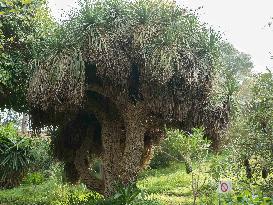
The Jardin botanique de la Villa Thuret, Thuret Garden is a renowned botanical garden located on the grounds of the Villa Thuret, 90, chemin Raymond, Antibes Juan-les-Pins, Alpes-Maritimes, Provence-Alpes-Côte d'Azur, France. Created in 1857, by Gustave Thuret (1810-1875) and managed by INRAE ââsince 1964, the Villa Thuret, owned by the State, is a scientific laboratory and a botanical garden-arboretum for the introduction and acclimatization of exotic plant species. The site is managed by the UEVT (Villa Thuret Experimental Unit), itself attached to the EFPA (Ecology of Forests, Grasslands and Aquatic Environments Department of INRA). The scientific mission of the unit relates to the introduction of plants from the Mediterranean climate and their cultivation to ensure their phenotyping; this mission is designated by the generic term of acclimatization. (Credit:Fourmy Mario/ABACA/Kyodo News Images)

  •  
Thuret Garden - Antibes

Thuret Garden - Antibes

The Jardin botanique de la Villa Thuret, Thuret Garden is a renowned botanical garden located on the grounds of the Villa Thuret, 90, chemin Raymond, Antibes Juan-les-Pins, Alpes-Maritimes, Provence-Alpes-Côte d'Azur, France. Created in 1857, by Gustave Thuret (1810-1875) and managed by INRAE ââsince 1964, the Villa Thuret, owned by the State, is a scientific laboratory and a botanical garden-arboretum for the introduction and acclimatization of exotic plant species. The site is managed by the UEVT (Villa Thuret Experimental Unit), itself attached to the EFPA (Ecology of Forests, Grasslands and Aquatic Environments Department of INRA). The scientific mission of the unit relates to the introduction of plants from the Mediterranean climate and their cultivation to ensure their phenotyping; this mission is designated by the generic term of acclimatization. (Credit:Fourmy Mario/ABACA/Kyodo News Images)

  • Main
  • Top
  • Editorial
  • Creative
  • About Us
  • About ILG
  • Terms of use
  • Company
  • BEHIND
  • Price List
  • Single Plan
  • Monthly Plan
  • Services
  • Shooting
  • Rights Clearance
  • Support
  • FAQ
  • How To Buy
  • Contact Us
  • Become a Partner

© KYODO NEWS IMAGES INC

All Rights Reserved.

  • Editorial
  • Olympics
  • News
  • Sports
  • Japan
  • Tech
  • Royal
  • Disaster
  • NorthKorea
  • Old Japan
  • SNS
  • Creative
  • Food
  • Japan
  • Landscape
  • Animal
  • Popular
  • #Ukraine
  • #Russia
  • #coronavirus
  • #N. Korea
  • #China
  • #Thailand
  • #Ukraine
  • #Russia
  • #coronavirus
  • #N. Korea
  • #China
  • #Thailand
  • Food
  • Japan
  • Landscape
  • Animal
  • Olympics
  • News
  • Sports
  • Japan
  • Tech
  • Royal
  • Disaster
  • NorthKorea
  • Old Japan
  • SNS