•  
Tie-Dye Technique Of Bai Ethnic Group - Chin

Tie-Dye Technique Of Bai Ethnic Group - Chin

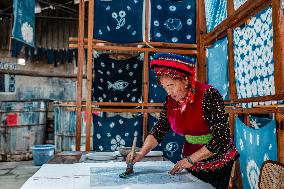
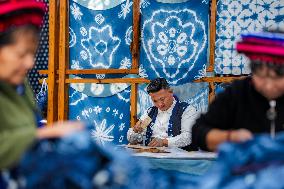
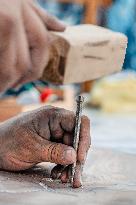
Duan Yuan, an inheritor of the tie-dye technique of Bai ethnic group, makes tie-dye designs in a dyehouse in Zhoucheng Village of Dali Bai Autonomous Prefecture, southwest China's Yunnan Province, November 21, 2025. Known as the hometown of the tie-dye technique of Bai ethnic group, Zhoucheng Village hosts over 200 households engaging in tie-dye businesses, with the number of employees exceeding 4,000. As a traditional folk technique of the Bai ethnic group, tie-dye boasts a history spanning over a thousand years and was included in the first batch of China's national intangible cultural heritage list in 2006. Tying and dyeing are the core steps in the process of making indigo tie-dye products. Artisans use needles and threads to create various patterns on the fabric, which are then dyed with plant-based dyes, resulting in blue backgrounds adorned with vivid white patterns. Photo by Hu Chao/Xinhua/ABACAPRESS.COM

  •  
Tie-Dye Technique Of Bai Ethnic Group - Chin

Tie-Dye Technique Of Bai Ethnic Group - Chin

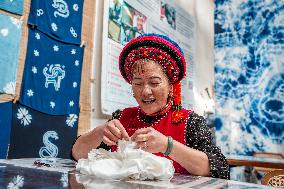
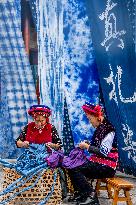
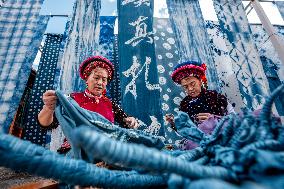
Duan Yinmei, an inheritor of the tie-dye technique of Bai ethnic group, creates knots on fabrics in a dyehouse in Zhoucheng Village of Dali Bai Autonomous Prefecture, southwest China's Yunnan Province, November 21, 2025. Known as the hometown of the tie-dye technique of Bai ethnic group, Zhoucheng Village hosts over 200 households engaging in tie-dye businesses, with the number of employees exceeding 4,000. As a traditional folk technique of the Bai ethnic group, tie-dye boasts a history spanning over a thousand years and was included in the first batch of China's national intangible cultural heritage list in 2006. Tying and dyeing are the core steps in the process of making indigo tie-dye products. Artisans use needles and threads to create various patterns on the fabric, which are then dyed with plant-based dyes, resulting in blue backgrounds adorned with vivid white patterns. Photo by Hu Chao/Xinhua/ABACAPRESS.COM

  •  
Tie-Dye Technique Of Bai Ethnic Group - Chin

Tie-Dye Technique Of Bai Ethnic Group - Chin

A woman experiences the tie-dye technique of Bai ethnic group in a dyehouse in Zhoucheng Village of Dali Bai Autonomous Prefecture, southwest China's Yunnan Province, November 21, 2025. Known as the hometown of the tie-dye technique of Bai ethnic group, Zhoucheng Village hosts over 200 households engaging in tie-dye businesses, with the number of employees exceeding 4,000. As a traditional folk technique of the Bai ethnic group, tie-dye boasts a history spanning over a thousand years and was included in the first batch of China's national intangible cultural heritage list in 2006. Tying and dyeing are the core steps in the process of making indigo tie-dye products. Artisans use needles and threads to create various patterns on the fabric, which are then dyed with plant-based dyes, resulting in blue backgrounds adorned with vivid white patterns. Photo by Hu Chao/Xinhua/ABACAPRESS.COM

  •  
Tie-Dye Technique Of Bai Ethnic Group - Chin

Tie-Dye Technique Of Bai Ethnic Group - Chin

Duan Yinmei, an inheritor of the tie-dye technique of Bai ethnic group, dyes patterns on fabrics in a dyehouse in Zhoucheng Village of Dali Bai Autonomous Prefecture, southwest China's Yunnan Province, November 21, 2025. Known as the hometown of the tie-dye technique of Bai ethnic group, Zhoucheng Village hosts over 200 households engaging in tie-dye businesses, with the number of employees exceeding 4,000. As a traditional folk technique of the Bai ethnic group, tie-dye boasts a history spanning over a thousand years and was included in the first batch of China's national intangible cultural heritage list in 2006. Tying and dyeing are the core steps in the process of making indigo tie-dye products. Artisans use needles and threads to create various patterns on the fabric, which are then dyed with plant-based dyes, resulting in blue backgrounds adorned with vivid white patterns. Photo by Hu Chao/Xinhua/ABACAPRESS.COM

  •  
Tie-Dye Technique Of Bai Ethnic Group - Chin

Tie-Dye Technique Of Bai Ethnic Group - Chin

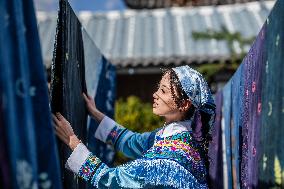
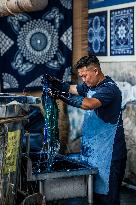
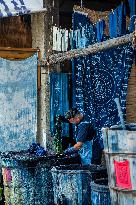
Duan Yuan, an inheritor of the tie-dye technique of Bai ethnic group, rinses dyed fabrics in a dyehouse in Zhoucheng Village of Dali Bai Autonomous Prefecture, southwest China's Yunnan Province, November 21, 2025. Known as the hometown of the tie-dye technique of Bai ethnic group, Zhoucheng Village hosts over 200 households engaging in tie-dye businesses, with the number of employees exceeding 4,000. As a traditional folk technique of the Bai ethnic group, tie-dye boasts a history spanning over a thousand years and was included in the first batch of China's national intangible cultural heritage list in 2006. Tying and dyeing are the core steps in the process of making indigo tie-dye products. Artisans use needles and threads to create various patterns on the fabric, which are then dyed with plant-based dyes, resulting in blue backgrounds adorned with vivid white patterns. Photo by Hu Chao/Xinhua/ABACAPRESS.COM

  •  
Tie-Dye Technique Of Bai Ethnic Group - Chin

Tie-Dye Technique Of Bai Ethnic Group - Chin

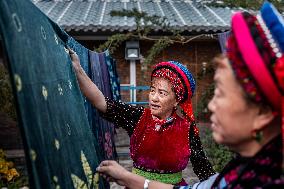
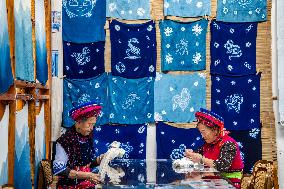
Duan Yinmei (L), an inheritor of the tie-dye technique of Bai ethnic group, and handicraftsman Duan Lilan dry tie-dye fabrics in a dyehouse in Zhoucheng Village of Dali Bai Autonomous Prefecture, southwest China's Yunnan Province, November 21, 2025. Known as the hometown of the tie-dye technique of Bai ethnic group, Zhoucheng Village hosts over 200 households engaging in tie-dye businesses, with the number of employees exceeding 4,000. As a traditional folk technique of the Bai ethnic group, tie-dye boasts a history spanning over a thousand years and was included in the first batch of China's national intangible cultural heritage list in 2006. Tying and dyeing are the core steps in the process of making indigo tie-dye products. Artisans use needles and threads to create various patterns on the fabric, which are then dyed with plant-based dyes, resulting in blue backgrounds adorned with vivid white patterns. Photo by Hu Chao/Xinhua/ABACAPRESS.COM

  •  
Tie-Dye Technique Of Bai Ethnic Group - Chin

Tie-Dye Technique Of Bai Ethnic Group - Chin

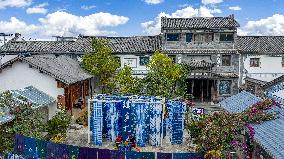
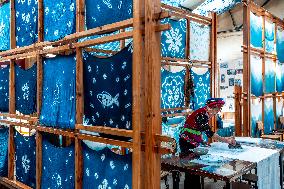
An aerial drone photo shows a scene at a dyehouse in Zhoucheng Village of Dali Bai Autonomous Prefecture, southwest China's Yunnan Province, November 21, 2025. Known as the hometown of the tie-dye technique of Bai ethnic group, Zhoucheng Village hosts over 200 households engaging in tie-dye businesses, with the number of employees exceeding 4,000. As a traditional folk technique of the Bai ethnic group, tie-dye boasts a history spanning over a thousand years and was included in the first batch of China's national intangible cultural heritage list in 2006. Tying and dyeing are the core steps in the process of making indigo tie-dye products. Artisans use needles and threads to create various patterns on the fabric, which are then dyed with plant-based dyes, resulting in blue backgrounds adorned with vivid white patterns. Photo by Hu Chao/Xinhua/ABACAPRESS.COM

  •  
Tie-Dye Technique Of Bai Ethnic Group - Chin

Tie-Dye Technique Of Bai Ethnic Group - Chin

Duan Yinmei (L), an inheritor of the tie-dye technique of Bai ethnic group, and handicraftsman Duan Lilan untie knots on fabrics in a dyehouse in Zhoucheng Village of Dali Bai Autonomous Prefecture, southwest China's Yunnan Province, November 21, 2025. Known as the hometown of the tie-dye technique of Bai ethnic group, Zhoucheng Village hosts over 200 households engaging in tie-dye businesses, with the number of employees exceeding 4,000. As a traditional folk technique of the Bai ethnic group, tie-dye boasts a history spanning over a thousand years and was included in the first batch of China's national intangible cultural heritage list in 2006. Tying and dyeing are the core steps in the process of making indigo tie-dye products. Artisans use needles and threads to create various patterns on the fabric, which are then dyed with plant-based dyes, resulting in blue backgrounds adorned with vivid white patterns. Photo by Hu Chao/Xinhua/ABACAPRESS.COM

  •  
Tie-Dye Technique Of Bai Ethnic Group - Chin

Tie-Dye Technique Of Bai Ethnic Group - Chin

Duan Yinmei (L), an inheritor of the tie-dye technique of Bai ethnic group, and handicraftsman Duan Lilan untie knots on fabrics in a dyehouse in Zhoucheng Village of Dali Bai Autonomous Prefecture, southwest China's Yunnan Province, November 21, 2025. Known as the hometown of the tie-dye technique of Bai ethnic group, Zhoucheng Village hosts over 200 households engaging in tie-dye businesses, with the number of employees exceeding 4,000. As a traditional folk technique of the Bai ethnic group, tie-dye boasts a history spanning over a thousand years and was included in the first batch of China's national intangible cultural heritage list in 2006. Tying and dyeing are the core steps in the process of making indigo tie-dye products. Artisans use needles and threads to create various patterns on the fabric, which are then dyed with plant-based dyes, resulting in blue backgrounds adorned with vivid white patterns. Photo by Hu Chao/Xinhua/ABACAPRESS.COM

  •  
Tie-Dye Technique Of Bai Ethnic Group - Chin

Tie-Dye Technique Of Bai Ethnic Group - Chin

Duan Yuan (L), an inheritor of the tie-dye technique of Bai ethnic group, dyes fabrics in a dyehouse in Zhoucheng Village of Dali Bai Autonomous Prefecture, southwest China's Yunnan Province, November 21, 2025. Known as the hometown of the tie-dye technique of Bai ethnic group, Zhoucheng Village hosts over 200 households engaging in tie-dye businesses, with the number of employees exceeding 4,000. As a traditional folk technique of the Bai ethnic group, tie-dye boasts a history spanning over a thousand years and was included in the first batch of China's national intangible cultural heritage list in 2006. Tying and dyeing are the core steps in the process of making indigo tie-dye products. Artisans use needles and threads to create various patterns on the fabric, which are then dyed with plant-based dyes, resulting in blue backgrounds adorned with vivid white patterns. Photo by Hu Chao/Xinhua/ABACAPRESS.COM

  •  
Tie-Dye Technique Of Bai Ethnic Group - Chin

Tie-Dye Technique Of Bai Ethnic Group - Chin

Duan Yuan, an inheritor of the tie-dye technique of Bai ethnic group, makes tie-dye designs in a dyehouse in Zhoucheng Village of Dali Bai Autonomous Prefecture, southwest China's Yunnan Province, November 21, 2025. Known as the hometown of the tie-dye technique of Bai ethnic group, Zhoucheng Village hosts over 200 households engaging in tie-dye businesses, with the number of employees exceeding 4,000. As a traditional folk technique of the Bai ethnic group, tie-dye boasts a history spanning over a thousand years and was included in the first batch of China's national intangible cultural heritage list in 2006. Tying and dyeing are the core steps in the process of making indigo tie-dye products. Artisans use needles and threads to create various patterns on the fabric, which are then dyed with plant-based dyes, resulting in blue backgrounds adorned with vivid white patterns. Photo by Hu Chao/Xinhua/ABACAPRESS.COM

  •  
Tie-Dye Technique Of Bai Ethnic Group - Chin

Tie-Dye Technique Of Bai Ethnic Group - Chin

Duan Yuan, an inheritor of the tie-dye technique of Bai ethnic group, dyes fabrics in a dyehouse in Zhoucheng Village of Dali Bai Autonomous Prefecture, southwest China's Yunnan Province, November 21, 2025. Known as the hometown of the tie-dye technique of Bai ethnic group, Zhoucheng Village hosts over 200 households engaging in tie-dye businesses, with the number of employees exceeding 4,000. As a traditional folk technique of the Bai ethnic group, tie-dye boasts a history spanning over a thousand years and was included in the first batch of China's national intangible cultural heritage list in 2006. Tying and dyeing are the core steps in the process of making indigo tie-dye products. Artisans use needles and threads to create various patterns on the fabric, which are then dyed with plant-based dyes, resulting in blue backgrounds adorned with vivid white patterns. Photo by Hu Chao/Xinhua/ABACAPRESS.COM

  •  
Tie-Dye Technique Of Bai Ethnic Group - Chin

Tie-Dye Technique Of Bai Ethnic Group - Chin

Duan Yuan, an inheritor of the tie-dye technique of Bai ethnic group, dyes fabrics in a dyehouse in Zhoucheng Village of Dali Bai Autonomous Prefecture, southwest China's Yunnan Province, November 21, 2025. Known as the hometown of the tie-dye technique of Bai ethnic group, Zhoucheng Village hosts over 200 households engaging in tie-dye businesses, with the number of employees exceeding 4,000. As a traditional folk technique of the Bai ethnic group, tie-dye boasts a history spanning over a thousand years and was included in the first batch of China's national intangible cultural heritage list in 2006. Tying and dyeing are the core steps in the process of making indigo tie-dye products. Artisans use needles and threads to create various patterns on the fabric, which are then dyed with plant-based dyes, resulting in blue backgrounds adorned with vivid white patterns. Photo by Hu Chao/Xinhua/ABACAPRESS.COM

  •  
Tie-Dye Technique Of Bai Ethnic Group - Chin

Tie-Dye Technique Of Bai Ethnic Group - Chin

Duan Yuan, an inheritor of the tie-dye technique of Bai ethnic group, makes tie-dye designs in a dyehouse in Zhoucheng Village of Dali Bai Autonomous Prefecture, southwest China's Yunnan Province, November 21, 2025. Known as the hometown of the tie-dye technique of Bai ethnic group, Zhoucheng Village hosts over 200 households engaging in tie-dye businesses, with the number of employees exceeding 4,000. As a traditional folk technique of the Bai ethnic group, tie-dye boasts a history spanning over a thousand years and was included in the first batch of China's national intangible cultural heritage list in 2006. Tying and dyeing are the core steps in the process of making indigo tie-dye products. Artisans use needles and threads to create various patterns on the fabric, which are then dyed with plant-based dyes, resulting in blue backgrounds adorned with vivid white patterns. Photo by Hu Chao/Xinhua/ABACAPRESS.COM

  •  
Tie-Dye Technique Of Bai Ethnic Group - Chin

Tie-Dye Technique Of Bai Ethnic Group - Chin

Duan Yinmei, an inheritor of the tie-dye technique of Bai ethnic group, unties knots on fabrics in a dyehouse in Zhoucheng Village of Dali Bai Autonomous Prefecture, southwest China's Yunnan Province, November 21, 2025. Known as the hometown of the tie-dye technique of Bai ethnic group, Zhoucheng Village hosts over 200 households engaging in tie-dye businesses, with the number of employees exceeding 4,000. As a traditional folk technique of the Bai ethnic group, tie-dye boasts a history spanning over a thousand years and was included in the first batch of China's national intangible cultural heritage list in 2006. Tying and dyeing are the core steps in the process of making indigo tie-dye products. Artisans use needles and threads to create various patterns on the fabric, which are then dyed with plant-based dyes, resulting in blue backgrounds adorned with vivid white patterns. Photo by Hu Chao/Xinhua/ABACAPRESS.COM

  •  
Tie-Dye Technique Of Bai Ethnic Group - Chin

Tie-Dye Technique Of Bai Ethnic Group - Chin

Duan Yinmei, an inheritor of the tie-dye technique of Bai ethnic group, dyes patterns on fabrics in a dyehouse in Zhoucheng Village of Dali Bai Autonomous Prefecture, southwest China's Yunnan Province, November 21, 2025. Known as the hometown of the tie-dye technique of Bai ethnic group, Zhoucheng Village hosts over 200 households engaging in tie-dye businesses, with the number of employees exceeding 4,000. As a traditional folk technique of the Bai ethnic group, tie-dye boasts a history spanning over a thousand years and was included in the first batch of China's national intangible cultural heritage list in 2006. Tying and dyeing are the core steps in the process of making indigo tie-dye products. Artisans use needles and threads to create various patterns on the fabric, which are then dyed with plant-based dyes, resulting in blue backgrounds adorned with vivid white patterns. Photo by Hu Chao/Xinhua/ABACAPRESS.COM

  •  
Tie-Dye Technique Of Bai Ethnic Group - Chin

Tie-Dye Technique Of Bai Ethnic Group - Chin

Duan Yinmei (R), an inheritor of the tie-dye technique of Bai ethnic group, and handicraftsman Duan Lilan create knots on fabrics in a dyehouse in Zhoucheng Village of Dali Bai Autonomous Prefecture, southwest China's Yunnan Province, November 21, 2025. Known as the hometown of the tie-dye technique of Bai ethnic group, Zhoucheng Village hosts over 200 households engaging in tie-dye businesses, with the number of employees exceeding 4,000. As a traditional folk technique of the Bai ethnic group, tie-dye boasts a history spanning over a thousand years and was included in the first batch of China's national intangible cultural heritage list in 2006. Tying and dyeing are the core steps in the process of making indigo tie-dye products. Artisans use needles and threads to create various patterns on the fabric, which are then dyed with plant-based dyes, resulting in blue backgrounds adorned with vivid white patterns. Photo by Hu Chao/Xinhua/ABACAPRESS.COM

  •  
Guwahati Nuns Mark Solemn Day - India

Guwahati Nuns Mark Solemn Day - India

Relatives gather around graves adorned with flowers and candles in Guwahati, India, on November 2, 2025. Millions of Christians worldwide observe All Souls’ Day to pray for the souls of deceased loved ones. Photo by Hafiz Ahmed/Middle East Images/ABACAPRESS.COM

  •  
Guwahati Nuns Mark Solemn Day - India

Guwahati Nuns Mark Solemn Day - India

Relatives gather around graves adorned with flowers and candles in Guwahati, India, on November 2, 2025. Millions of Christians worldwide observe All Souls’ Day to pray for the souls of deceased loved ones. Photo by Hafiz Ahmed/Middle East Images/ABACAPRESS.COM

  •  
Sheikh ul Alam Posthumous Ceremony - India

Sheikh ul Alam Posthumous Ceremony - India

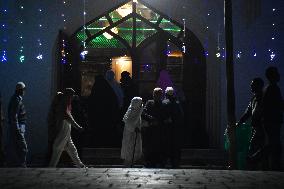
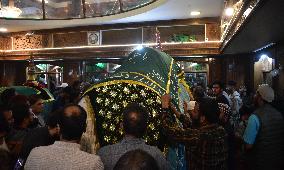
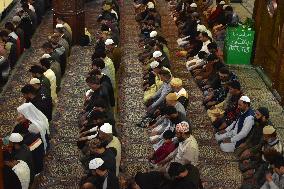
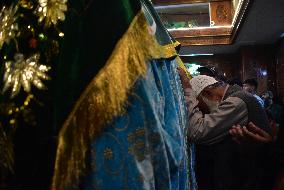
Devotees gather at Charar-e-Sharief to take part in the Poshakbandi ceremony, where the grave of Sheikh-ul-Alam is adorned with a new cloth. Sheikh ul Alam, also known as Nund Rishi, was a 14th-century Kashmiri Sufi saint and poet who preached peace, simplicity, and harmony between religions. He is the founder of the Rishi order and is regarded as the patron saint of Kashmir. on October 18, 2025 in Srinagar, India. Photo by Danish Showkat/ Eyepix Group/ABACAPRESS.COM

  •  
Sheikh ul Alam Posthumous Ceremony - India

Sheikh ul Alam Posthumous Ceremony - India

Devotees gather at Charar-e-Sharief to take part in the Poshakbandi ceremony, where the grave of Sheikh-ul-Alam is adorned with a new cloth. Sheikh ul Alam, also known as Nund Rishi, was a 14th-century Kashmiri Sufi saint and poet who preached peace, simplicity, and harmony between religions. He is the founder of the Rishi order and is regarded as the patron saint of Kashmir. on October 18, 2025 in Srinagar, India. Photo by Danish Showkat/ Eyepix Group/ABACAPRESS.COM

  •  
Sheikh ul Alam Posthumous Ceremony - India

Sheikh ul Alam Posthumous Ceremony - India

Devotees gather at Charar-e-Sharief to take part in the Poshakbandi ceremony, where the grave of Sheikh-ul-Alam is adorned with a new cloth. Sheikh ul Alam, also known as Nund Rishi, was a 14th-century Kashmiri Sufi saint and poet who preached peace, simplicity, and harmony between religions. He is the founder of the Rishi order and is regarded as the patron saint of Kashmir. on October 18, 2025 in Srinagar, India. Photo by Danish Showkat/ Eyepix Group/ABACAPRESS.COM

  •  
Sheikh ul Alam Posthumous Ceremony - India

Sheikh ul Alam Posthumous Ceremony - India

Devotees gather at Charar-e-Sharief to take part in the Poshakbandi ceremony, where the grave of Sheikh-ul-Alam is adorned with a new cloth. Sheikh ul Alam, also known as Nund Rishi, was a 14th-century Kashmiri Sufi saint and poet who preached peace, simplicity, and harmony between religions. He is the founder of the Rishi order and is regarded as the patron saint of Kashmir. on October 18, 2025 in Srinagar, India. Photo by Danish Showkat/ Eyepix Group/ABACAPRESS.COM

  •  
Sheikh ul Alam Posthumous Ceremony - India

Sheikh ul Alam Posthumous Ceremony - India

Devotees gather at Charar-e-Sharief to take part in the Poshakbandi ceremony, where the grave of Sheikh-ul-Alam is adorned with a new cloth. Sheikh ul Alam, also known as Nund Rishi, was a 14th-century Kashmiri Sufi saint and poet who preached peace, simplicity, and harmony between religions. He is the founder of the Rishi order and is regarded as the patron saint of Kashmir. on October 18, 2025 in Srinagar, India. Photo by Danish Showkat/ Eyepix Group/ABACAPRESS.COM

  •  
Sheikh ul Alam Posthumous Ceremony - India

Sheikh ul Alam Posthumous Ceremony - India

Devotees gather at Charar-e-Sharief to take part in the Poshakbandi ceremony, where the grave of Sheikh-ul-Alam is adorned with a new cloth. Sheikh ul Alam, also known as Nund Rishi, was a 14th-century Kashmiri Sufi saint and poet who preached peace, simplicity, and harmony between religions. He is the founder of the Rishi order and is regarded as the patron saint of Kashmir. on October 18, 2025 in Srinagar, India. Photo by Danish Showkat/ Eyepix Group/ABACAPRESS.COM

  •  
Sheikh ul Alam Posthumous Ceremony - India

Sheikh ul Alam Posthumous Ceremony - India

Devotees gather at Charar-e-Sharief to take part in the Poshakbandi ceremony, where the grave of Sheikh-ul-Alam is adorned with a new cloth. Sheikh ul Alam, also known as Nund Rishi, was a 14th-century Kashmiri Sufi saint and poet who preached peace, simplicity, and harmony between religions. He is the founder of the Rishi order and is regarded as the patron saint of Kashmir. on October 18, 2025 in Srinagar, India. Photo by Danish Showkat/ Eyepix Group/ABACAPRESS.COM

  •  
Sheikh ul Alam Posthumous Ceremony - India

Sheikh ul Alam Posthumous Ceremony - India

Devotees gather at Charar-e-Sharief to take part in the Poshakbandi ceremony, where the grave of Sheikh-ul-Alam is adorned with a new cloth. Sheikh ul Alam, also known as Nund Rishi, was a 14th-century Kashmiri Sufi saint and poet who preached peace, simplicity, and harmony between religions. He is the founder of the Rishi order and is regarded as the patron saint of Kashmir. on October 18, 2025 in Srinagar, India. Photo by Danish Showkat/ Eyepix Group/ABACAPRESS.COM

  •  
Sheikh ul Alam Posthumous Ceremony - India

Sheikh ul Alam Posthumous Ceremony - India

Devotees gather at Charar-e-Sharief to take part in the Poshakbandi ceremony, where the grave of Sheikh-ul-Alam is adorned with a new cloth. Sheikh ul Alam, also known as Nund Rishi, was a 14th-century Kashmiri Sufi saint and poet who preached peace, simplicity, and harmony between religions. He is the founder of the Rishi order and is regarded as the patron saint of Kashmir. on October 18, 2025 in Srinagar, India. Photo by Danish Showkat/ Eyepix Group/ABACAPRESS.COM

  •  
Sheikh ul Alam Posthumous Ceremony - India

Sheikh ul Alam Posthumous Ceremony - India

Devotees gather at Charar-e-Sharief to take part in the Poshakbandi ceremony, where the grave of Sheikh-ul-Alam is adorned with a new cloth. Sheikh ul Alam, also known as Nund Rishi, was a 14th-century Kashmiri Sufi saint and poet who preached peace, simplicity, and harmony between religions. He is the founder of the Rishi order and is regarded as the patron saint of Kashmir. on October 18, 2025 in Srinagar, India. Photo by Danish Showkat/ Eyepix Group/ABACAPRESS.COM

  •  
Sheikh ul Alam Posthumous Ceremony - India

Sheikh ul Alam Posthumous Ceremony - India

Devotees gather at Charar-e-Sharief to take part in the Poshakbandi ceremony, where the grave of Sheikh-ul-Alam is adorned with a new cloth. Sheikh ul Alam, also known as Nund Rishi, was a 14th-century Kashmiri Sufi saint and poet who preached peace, simplicity, and harmony between religions. He is the founder of the Rishi order and is regarded as the patron saint of Kashmir. on October 18, 2025 in Srinagar, India. Photo by Danish Showkat/ Eyepix Group/ABACAPRESS.COM

  •  
Sheikh ul Alam Posthumous Ceremony - India

Sheikh ul Alam Posthumous Ceremony - India

Devotees gather at Charar-e-Sharief to take part in the Poshakbandi ceremony, where the grave of Sheikh-ul-Alam is adorned with a new cloth. Sheikh ul Alam, also known as Nund Rishi, was a 14th-century Kashmiri Sufi saint and poet who preached peace, simplicity, and harmony between religions. He is the founder of the Rishi order and is regarded as the patron saint of Kashmir. on October 18, 2025 in Srinagar, India. Photo by Danish Showkat/ Eyepix Group/ABACAPRESS.COM

  •  
Sheikh ul Alam Posthumous Ceremony - India

Sheikh ul Alam Posthumous Ceremony - India

Devotees gather at Charar-e-Sharief to take part in the Poshakbandi ceremony, where the grave of Sheikh-ul-Alam is adorned with a new cloth. Sheikh ul Alam, also known as Nund Rishi, was a 14th-century Kashmiri Sufi saint and poet who preached peace, simplicity, and harmony between religions. He is the founder of the Rishi order and is regarded as the patron saint of Kashmir. on October 18, 2025 in Srinagar, India. Photo by Danish Showkat/ Eyepix Group/ABACAPRESS.COM

  •  
Sheikh ul Alam Posthumous Ceremony - India

Sheikh ul Alam Posthumous Ceremony - India

Devotees gather at Charar-e-Sharief to take part in the Poshakbandi ceremony, where the grave of Sheikh-ul-Alam is adorned with a new cloth. Sheikh ul Alam, also known as Nund Rishi, was a 14th-century Kashmiri Sufi saint and poet who preached peace, simplicity, and harmony between religions. He is the founder of the Rishi order and is regarded as the patron saint of Kashmir. on October 18, 2025 in Srinagar, India. Photo by Danish Showkat/ Eyepix Group/ABACAPRESS.COM

  •  
Xinjiang Tekes Wedding - China

Xinjiang Tekes Wedding - China

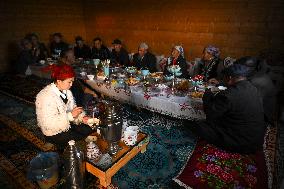
Relatives of the groom Bukehan Yelszi are treated at the bride's home in Karadala Township of Tekes County, northwest China's Xinjiang Uygur Autonomous Region, Oct. 10, 2025. A blue sky, white clouds, vast grassland, horses and automobiles set a poetic and picturesque wedding scene for the newlyweds Kumusi Yesdawulti and Bukehan Yelszi. For the couple, having fallen in love a year ago, a traditional wedding ceremony was at the top of their to-do list. Without a hair out of place, Kumusi, dressed head to toe in traditional costume and adorned in a red veil, married her better half Bukehan, describing the wedding as a dream realized. Throughout the wedding festivities, the couple's loved ones congregated to join in the celebration. Some of them played traditional musical instruments, such as dombra, and performed inspiring festive dances, while others lent their hands to prepare local specialties, including naan bread and baursak. A modern outdoor wedding ensued at dusk in a forest park, where the couple shared

  •  
Xinjiang Tekes Wedding - China

Xinjiang Tekes Wedding - China

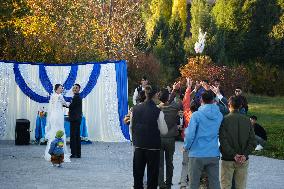
The newlyweds Kumusi Yesdawulti and Bukehan Yelszi attend an outdoor wedding at a forest park in Tekes County, northwest China's Xinjiang Uygur Autonomous Region, Oct. 11, 2025. A blue sky, white clouds, vast grassland, horses and automobiles set a poetic and picturesque wedding scene for the newlyweds Kumusi Yesdawulti and Bukehan Yelszi. For the couple, having fallen in love a year ago, a traditional wedding ceremony was at the top of their to-do list. Without a hair out of place, Kumusi, dressed head to toe in traditional costume and adorned in a red veil, married her better half Bukehan, describing the wedding as a dream realized. Throughout the wedding festivities, the couple's loved ones congregated to join in the celebration. Some of them played traditional musical instruments, such as dombra, and performed inspiring festive dances, while others lent their hands to prepare local specialties, including naan bread and baursak. A modern outdoor wedding ensued at dusk in a forest park, where the couple sha

  •  
Xinjiang Tekes Wedding - China

Xinjiang Tekes Wedding - China

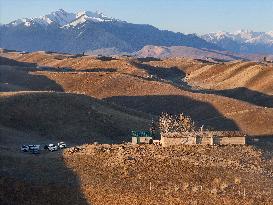
An aerial drone photo shows the home of the bride Kumusi Yesdawulti in Karadala Township of Tekes County, northwest China's Xinjiang Uygur Autonomous Region, Oct. 11, 2025. A blue sky, white clouds, vast grassland, horses and automobiles set a poetic and picturesque wedding scene for the newlyweds Kumusi Yesdawulti and Bukehan Yelszi. For the couple, having fallen in love a year ago, a traditional wedding ceremony was at the top of their to-do list. Without a hair out of place, Kumusi, dressed head to toe in traditional costume and adorned in a red veil, married her better half Bukehan, describing the wedding as a dream realized. Throughout the wedding festivities, the couple's loved ones congregated to join in the celebration. Some of them played traditional musical instruments, such as dombra, and performed inspiring festive dances, while others lent their hands to prepare local specialties, including naan bread and baursak. A modern outdoor wedding ensued at dusk in a forest park, where the couple shared c

  •  
Xinjiang Tekes Wedding - China

Xinjiang Tekes Wedding - China

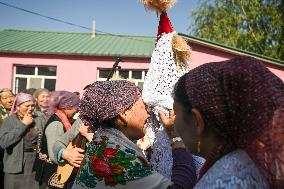
Villagers welcome Kumusi Yesdawulti, the bride in a wedding procession, at the groom Bukehan Yelszi's home in Karadala Township of Tekes County, northwest China's Xinjiang Uygur Autonomous Region, Oct. 11, 2025. A blue sky, white clouds, vast grassland, horses and automobiles set a poetic and picturesque wedding scene for the newlyweds Kumusi Yesdawulti and Bukehan Yelszi. For the couple, having fallen in love a year ago, a traditional wedding ceremony was at the top of their to-do list. Without a hair out of place, Kumusi, dressed head to toe in traditional costume and adorned in a red veil, married her better half Bukehan, describing the wedding as a dream realized. Throughout the wedding festivities, the couple's loved ones congregated to join in the celebration. Some of them played traditional musical instruments, such as dombra, and performed inspiring festive dances, while others lent their hands to prepare local specialties, including naan bread and baursak. A modern outdoor wedding ensued at dusk in a

  •  
Xinjiang Tekes Wedding - China

Xinjiang Tekes Wedding - China

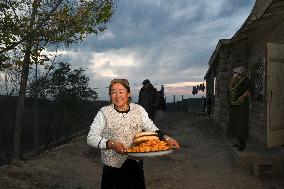
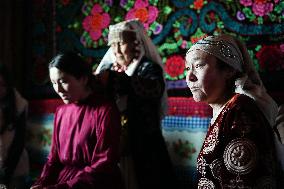
Mother of the bride Kumusi Yesdawulti serves the groom's relatives naan bread and baursak at home in Karadala Township of Tekes County, northwest China's Xinjiang Uygur Autonomous Region, Oct. 10, 2025. A blue sky, white clouds, vast grassland, horses and automobiles set a poetic and picturesque wedding scene for the newlyweds Kumusi Yesdawulti and Bukehan Yelszi. For the couple, having fallen in love a year ago, a traditional wedding ceremony was at the top of their to-do list. Without a hair out of place, Kumusi, dressed head to toe in traditional costume and adorned in a red veil, married her better half Bukehan, describing the wedding as a dream realized. Throughout the wedding festivities, the couple's loved ones congregated to join in the celebration. Some of them played traditional musical instruments, such as dombra, and performed inspiring festive dances, while others lent their hands to prepare local specialties, including naan bread and baursak. A modern outdoor wedding ensued at dusk in a forest p

  •  
Xinjiang Tekes Wedding - China

Xinjiang Tekes Wedding - China

The newlyweds Kumusi Yesdawulti and Bukehan Yelszi walk hand in hand during an outdoor wedding at a forest park in Tekes County, northwest China's Xinjiang Uygur Autonomous Region, Oct. 11, 2025. A blue sky, white clouds, vast grassland, horses and automobiles set a poetic and picturesque wedding scene for the newlyweds Kumusi Yesdawulti and Bukehan Yelszi. For the couple, having fallen in love a year ago, a traditional wedding ceremony was at the top of their to-do list. Without a hair out of place, Kumusi, dressed head to toe in traditional costume and adorned in a red veil, married her better half Bukehan, describing the wedding as a dream realized. Throughout the wedding festivities, the couple's loved ones congregated to join in the celebration. Some of them played traditional musical instruments, such as dombra, and performed inspiring festive dances, while others lent their hands to prepare local specialties, including naan bread and baursak. A modern outdoor wedding ensued at dusk in a forest park, wh

  •  
Xinjiang Tekes Wedding - China

Xinjiang Tekes Wedding - China

The newlyweds Kumusi Yesdawulti and Bukehan Yelszi play a game with their relatives and friends at a forest park in Tekes County, northwest China's Xinjiang Uygur Autonomous Region, Oct. 11, 2025. A blue sky, white clouds, vast grassland, horses and automobiles set a poetic and picturesque wedding scene for the newlyweds Kumusi Yesdawulti and Bukehan Yelszi. For the couple, having fallen in love a year ago, a traditional wedding ceremony was at the top of their to-do list. Without a hair out of place, Kumusi, dressed head to toe in traditional costume and adorned in a red veil, married her better half Bukehan, describing the wedding as a dream realized. Throughout the wedding festivities, the couple's loved ones congregated to join in the celebration. Some of them played traditional musical instruments, such as dombra, and performed inspiring festive dances, while others lent their hands to prepare local specialties, including naan bread and baursak. A modern outdoor wedding ensued at dusk in a forest park, w

  •  
Xinjiang Tekes Wedding - China

Xinjiang Tekes Wedding - China

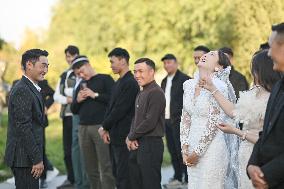
The newlyweds Kumusi Yesdawulti and Bukehan Yelszi celebrate with their relatives and friends at a forest park in Tekes County, northwest China's Xinjiang Uygur Autonomous Region, Oct. 11, 2025. A blue sky, white clouds, vast grassland, horses and automobiles set a poetic and picturesque wedding scene for the newlyweds Kumusi Yesdawulti and Bukehan Yelszi. For the couple, having fallen in love a year ago, a traditional wedding ceremony was at the top of their to-do list. Without a hair out of place, Kumusi, dressed head to toe in traditional costume and adorned in a red veil, married her better half Bukehan, describing the wedding as a dream realized. Throughout the wedding festivities, the couple's loved ones congregated to join in the celebration. Some of them played traditional musical instruments, such as dombra, and performed inspiring festive dances, while others lent their hands to prepare local specialties, including naan bread and baursak. A modern outdoor wedding ensued at dusk in a forest park, whe

  •  
Xinjiang Tekes Wedding - China

Xinjiang Tekes Wedding - China

An aerial drone photo shows a vehicle procession heading to the home of the groom Bukehan Yelszi in Karadala Township of Tekes County, northwest China's Xinjiang Uygur Autonomous Region, Oct. 11, 2025. A blue sky, white clouds, vast grassland, horses and automobiles set a poetic and picturesque wedding scene for the newlyweds Kumusi Yesdawulti and Bukehan Yelszi. For the couple, having fallen in love a year ago, a traditional wedding ceremony was at the top of their to-do list. Without a hair out of place, Kumusi, dressed head to toe in traditional costume and adorned in a red veil, married her better half Bukehan, describing the wedding as a dream realized. Throughout the wedding festivities, the couple's loved ones congregated to join in the celebration. Some of them played traditional musical instruments, such as dombra, and performed inspiring festive dances, while others lent their hands to prepare local specialties, including naan bread and baursak. A modern outdoor wedding ensued at dusk in a forest pa

  •  
Xinjiang Tekes Wedding - China

Xinjiang Tekes Wedding - China

Mother of the bride Kumusi Yesdawulti (1st R) sheds tears to see her daughter off in Karadala Township of Tekes County, northwest China's Xinjiang Uygur Autonomous Region, Oct. 11, 2025. A blue sky, white clouds, vast grassland, horses and automobiles set a poetic and picturesque wedding scene for the newlyweds Kumusi Yesdawulti and Bukehan Yelszi. For the couple, having fallen in love a year ago, a traditional wedding ceremony was at the top of their to-do list. Without a hair out of place, Kumusi, dressed head to toe in traditional costume and adorned in a red veil, married her better half Bukehan, describing the wedding as a dream realized. Throughout the wedding festivities, the couple's loved ones congregated to join in the celebration. Some of them played traditional musical instruments, such as dombra, and performed inspiring festive dances, while others lent their hands to prepare local specialties, including naan bread and baursak. A modern outdoor wedding ensued at dusk in a forest park, where the c

  •  
Xinjiang Tekes Wedding - China

Xinjiang Tekes Wedding - China

A relative of the groom Bukehan Yelszi expresses blessings to the bride Kumusi Yesdawulti in Karadala Township of Tekes County, northwest China's Xinjiang Uygur Autonomous Region, Oct. 11, 2025. A blue sky, white clouds, vast grassland, horses and automobiles set a poetic and picturesque wedding scene for the newlyweds Kumusi Yesdawulti and Bukehan Yelszi. For the couple, having fallen in love a year ago, a traditional wedding ceremony was at the top of their to-do list. Without a hair out of place, Kumusi, dressed head to toe in traditional costume and adorned in a red veil, married her better half Bukehan, describing the wedding as a dream realized. Throughout the wedding festivities, the couple's loved ones congregated to join in the celebration. Some of them played traditional musical instruments, such as dombra, and performed inspiring festive dances, while others lent their hands to prepare local specialties, including naan bread and baursak. A modern outdoor wedding ensued at dusk in a forest park, whe

  •  
Xinjiang Tekes Wedding - China

Xinjiang Tekes Wedding - China

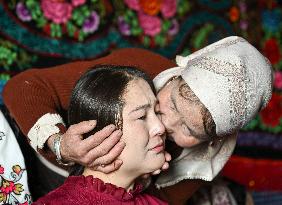
A relative of the bride Kumusi Yesdawulti kisses her cheek as a see-off in Karadala Township of Tekes County, northwest China's Xinjiang Uygur Autonomous Region, Oct. 11, 2025. A blue sky, white clouds, vast grassland, horses and automobiles set a poetic and picturesque wedding scene for the newlyweds Kumusi Yesdawulti and Bukehan Yelszi. For the couple, having fallen in love a year ago, a traditional wedding ceremony was at the top of their to-do list. Without a hair out of place, Kumusi, dressed head to toe in traditional costume and adorned in a red veil, married her better half Bukehan, describing the wedding as a dream realized. Throughout the wedding festivities, the couple's loved ones congregated to join in the celebration. Some of them played traditional musical instruments, such as dombra, and performed inspiring festive dances, while others lent their hands to prepare local specialties, including naan bread and baursak. A modern outdoor wedding ensued at dusk in a forest park, where the couple shar

  •  
Xinjiang Tekes Wedding - China

Xinjiang Tekes Wedding - China

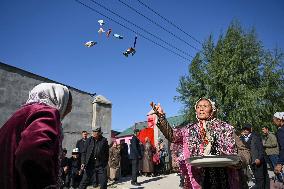
Kumusi Yesdawulti, the bride, heads to the groom's home in a wedding procession in Karadala Township of Tekes County, northwest China's Xinjiang Uygur Autonomous Region, Oct. 11, 2025. A blue sky, white clouds, vast grassland, horses and automobiles set a poetic and picturesque wedding scene for the newlyweds Kumusi Yesdawulti and Bukehan Yelszi. For the couple, having fallen in love a year ago, a traditional wedding ceremony was at the top of their to-do list. Without a hair out of place, Kumusi, dressed head to toe in traditional costume and adorned in a red veil, married her better half Bukehan, describing the wedding as a dream realized. Throughout the wedding festivities, the couple's loved ones congregated to join in the celebration. Some of them played traditional musical instruments, such as dombra, and performed inspiring festive dances, while others lent their hands to prepare local specialties, including naan bread and baursak. A modern outdoor wedding ensued at dusk in a forest park, where the cou

  •  
Xinjiang Tekes Wedding - China

Xinjiang Tekes Wedding - China

Kumusi Yesdawulti, the bride, rides a horse heading to a wedding procession in Karadala Township of Tekes County, northwest China's Xinjiang Uygur Autonomous Region, Oct. 11, 2025. A blue sky, white clouds, vast grassland, horses and automobiles set a poetic and picturesque wedding scene for the newlyweds Kumusi Yesdawulti and Bukehan Yelszi. For the couple, having fallen in love a year ago, a traditional wedding ceremony was at the top of their to-do list. Without a hair out of place, Kumusi, dressed head to toe in traditional costume and adorned in a red veil, married her better half Bukehan, describing the wedding as a dream realized. Throughout the wedding festivities, the couple's loved ones congregated to join in the celebration. Some of them played traditional musical instruments, such as dombra, and performed inspiring festive dances, while others lent their hands to prepare local specialties, including naan bread and baursak. A modern outdoor wedding ensued at dusk in a forest park, where the couple

  •  
Xinjiang Tekes Wedding - China

Xinjiang Tekes Wedding - China

Kumusi Yesdawulti, the bride, rides a horse before leaving her home in Karadala Township of Tekes County, northwest China's Xinjiang Uygur Autonomous Region, Oct. 11, 2025. A blue sky, white clouds, vast grassland, horses and automobiles set a poetic and picturesque wedding scene for the newlyweds Kumusi Yesdawulti and Bukehan Yelszi. For the couple, having fallen in love a year ago, a traditional wedding ceremony was at the top of their to-do list. Without a hair out of place, Kumusi, dressed head to toe in traditional costume and adorned in a red veil, married her better half Bukehan, describing the wedding as a dream realized. Throughout the wedding festivities, the couple's loved ones congregated to join in the celebration. Some of them played traditional musical instruments, such as dombra, and performed inspiring festive dances, while others lent their hands to prepare local specialties, including naan bread and baursak. A modern outdoor wedding ensued at dusk in a forest park, where the couple shared c

  •  
Xinjiang Tekes Wedding - China

Xinjiang Tekes Wedding - China

A villager plays the ethnic musical instrument dombra beside the bride Kumusi Yesdawulti in Karadala Township of Tekes County, northwest China's Xinjiang Uygur Autonomous Region, Oct. 11, 2025. A blue sky, white clouds, vast grassland, horses and automobiles set a poetic and picturesque wedding scene for the newlyweds Kumusi Yesdawulti and Bukehan Yelszi. For the couple, having fallen in love a year ago, a traditional wedding ceremony was at the top of their to-do list. Without a hair out of place, Kumusi, dressed head to toe in traditional costume and adorned in a red veil, married her better half Bukehan, describing the wedding as a dream realized. Throughout the wedding festivities, the couple's loved ones congregated to join in the celebration. Some of them played traditional musical instruments, such as dombra, and performed inspiring festive dances, while others lent their hands to prepare local specialties, including naan bread and baursak. A modern outdoor wedding ensued at dusk in a forest park, wher

  •  
Illustration - Paris

Illustration - Paris

FRANCE. PARIS (75) (2TH DISTRICT) LE CAIRE SQUARE : "EGYPTIAN" HOUSE WHOSE FACADE IS ADORNED WITH 3 SCULPTED HEADS OF THE GODDESS HATHOR. DETAIL OF THE FACADE: ONE OF THE HEADS OF THE GODDESS HATHOR Photo by Jean Francois Rollinger/Only Paris/ABACAPRESS.COM

  • Main
  • Top
  • Editorial
  • Creative
  • About Us
  • About ILG
  • Terms of use
  • Company
  • BEHIND
  • Price List
  • Single Plan
  • Monthly Plan
  • Services
  • Shooting
  • Rights Clearance
  • Support
  • FAQ
  • How To Buy
  • Contact Us
  • Become a Partner

© KYODO NEWS IMAGES INC

All Rights Reserved.

  • Editorial
  • Olympics
  • News
  • Sports
  • Japan
  • Tech
  • Royal
  • Disaster
  • NorthKorea
  • Old Japan
  • SNS
  • Creative
  • Food
  • Japan
  • Landscape
  • Animal
  • Popular
  • #Ukraine
  • #China
  • #coronavirus
  • #N. Korea
  • #Thailand
  • #Russia
  • #Ukraine
  • #China
  • #coronavirus
  • #N. Korea
  • #Thailand
  • #Russia
  • Food
  • Japan
  • Landscape
  • Animal
  • Olympics
  • News
  • Sports
  • Japan
  • Tech
  • Royal
  • Disaster
  • NorthKorea
  • Old Japan
  • SNS