•  

China: Live Fish Found Trapped Inside Solid Block of Ice in Zhejiang

A Chinese resident in Zhejiang discovered a small fish still alive inside a thick block of ice on Monday, January 5. Although completely encased in the frozen water, the fish's body continued to twitch and quiver as if struggling to survive.

  •  
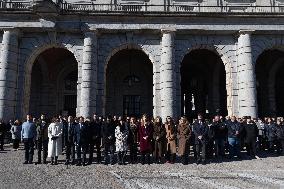
Ministries Call for Minute s Silence for Adamuz Victims - Madrid

Ministries Call for Minute s Silence for Adamuz Victims - Madrid

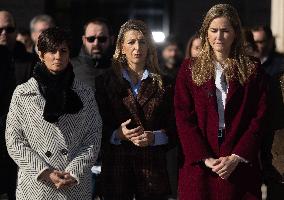
The Minister of Housing and Urban Agenda, Isabel Rodríguez; the Second Vice-President and Minister of Labour and Social Economy, Yolanda Díaz, and the Third Vice-President and Minister for Ecological Transition and the Demographic Challenge, Sara Aagesen, during the minute's silence called by the Ministries of Transport and Sustainable Mobility, Housing, Labour, and Ecological Transition and the Demographic Challenge in honour of the victims of the train accident in Adamuz, on 19 January 2026, in Madrid (Spain). The derailment of an Iryo train on Sunday caused a collision with an Alvia convoy, resulting in 39 deaths and more than 150 injured, according to provisional figures. The causes of the incident are still under investigation, although the transport minister said it was a "tremendously strange" accident. The President of the Government will travel to the scene of the accident on Monday, and later on Tuesday, the King and Queen of Spain will go to Córdoba to show their solidarity with those affected. Pho

  •  
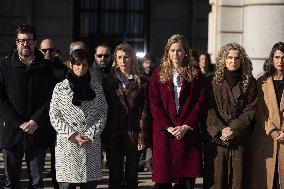
Ministries Call for Minute s Silence for Adamuz Victims - Madrid

Ministries Call for Minute s Silence for Adamuz Victims - Madrid

(2I-2D) The Minister of Housing and Urban Agenda, Isabel Rodríguez; the Second Vice-President and Minister of Employment and Social Economy, Yolanda Díaz, and the Third Vice-President and Minister for Ecological Transition and the Demographic Challenge, Sara Aagesen, during the minute's silence called by the Ministries of Transport and Sustainable Mobility, Housing, Employment, and Ecological Transition and the Demographic Challenge in honour of the victims of the train accident in Adamuz, on 19 January 2026, in Madrid (Spain). The derailment of an Iryo train on Sunday caused a collision with an Alvia convoy, resulting in 39 deaths and more than 150 injured, according to provisional figures. The causes of the incident are still under investigation, although the transport minister said it was a "tremendously strange" accident. The President of the Government will travel to the scene of the accident on Monday, and later on Tuesday, the King and Queen of Spain will go to Córdoba to show their solidarity with tho

  •  
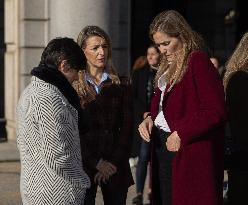
Ministries Call for Minute s Silence for Adamuz Victims - Madrid

Ministries Call for Minute s Silence for Adamuz Victims - Madrid

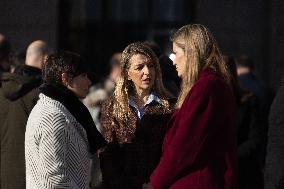
(L-R) The Minister for Housing and the Urban Agenda, Isabel Rodríguez; the Second Vice-President and Minister for Employment and the Social Economy, Yolanda Díaz, and the Third Vice-President and Minister for Ecological Transition and the Demographic Challenge, Sara Aagesen, during the minute's silence called by the Ministries of Transport and Sustainable Mobility, Housing, Employment, and Ecological Transition and the Demographic Challenge in honour of the victims of the train accident in Adamuz, 19 January 2026, in Madrid (Spain). The derailment of an Iryo train on Sunday caused a collision with an Alvia convoy, resulting in 39 deaths and more than 150 injured, according to provisional figures. The causes of the incident are still under investigation, although the transport minister said it was a "tremendously strange" accident. The President of the Government will travel to the scene of the accident on Monday, and later on Tuesday, the King and Queen of Spain will go to Córdoba to show their solidarity wit

  •  
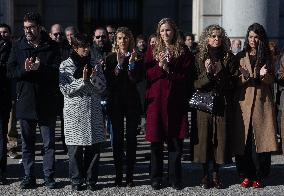
Ministries Call for Minute s Silence for Adamuz Victims - Madrid

Ministries Call for Minute s Silence for Adamuz Victims - Madrid

(2I-3D) The Minister of Housing and Urban Agenda, Isabel Rodríguez; the Second Vice-President and Minister of Labour and Social Economy, Yolanda Díaz, and the Third Vice-President and Minister for Ecological Transition and the Demographic Challenge, Sara Aagesen, during the minute's silence called by the Ministries of Transport and Sustainable Mobility, Housing, Labour, and Ecological Transition and the Demographic Challenge in honour of the victims of the train accident in Adamuz, 19 January 2026, in Madrid (Spain). The derailment of an Iryo train on Sunday caused a collision with an Alvia convoy, resulting in 39 deaths and more than 150 injured, according to provisional figures. The causes of the incident are still under investigation, although the transport minister said it was a "tremendously strange" accident. The President of the Government will travel to the scene of the accident on Monday, and later on Tuesday, the King and Queen of Spain will go to Córdoba to show their solidarity with those affected

  •  
Ministries Call for Minute s Silence for Adamuz Victims - Madrid

Ministries Call for Minute s Silence for Adamuz Victims - Madrid

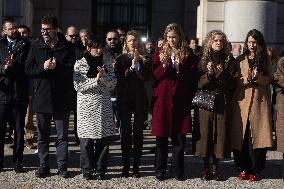
(L-R) The Minister for Housing and the Urban Agenda, Isabel Rodríguez; the Second Vice-President and Minister for Employment and the Social Economy, Yolanda Díaz, and the Third Vice-President and Minister for Ecological Transition and the Demographic Challenge, Sara Aagesen, during the minute's silence called by the Ministries of Transport and Sustainable Mobility, Housing, Employment, and Ecological Transition and the Demographic Challenge in honour of the victims of the train accident in Adamuz, 19 January 2026, in Madrid (Spain). The derailment of an Iryo train on Sunday caused a collision with an Alvia convoy, resulting in 39 deaths and more than 150 injured, according to provisional figures. The causes of the incident are still under investigation, although the transport minister said it was a "tremendously strange" accident. The President of the Government will travel to the scene of the accident on Monday, and later on Tuesday, the King and Queen of Spain will go to Córdoba to show their solidarity wit

  •  
Ministries Call for Minute s Silence for Adamuz Victims - Madrid

Ministries Call for Minute s Silence for Adamuz Victims - Madrid

(L-R) The Minister for Housing and the Urban Agenda, Isabel Rodríguez; the Second Vice-President and Minister for Employment and the Social Economy, Yolanda Díaz, and the Third Vice-President and Minister for Ecological Transition and the Demographic Challenge, Sara Aagesen, during the minute's silence called by the Ministries of Transport and Sustainable Mobility, Housing, Employment, and Ecological Transition and the Demographic Challenge in honour of the victims of the train accident in Adamuz, 19 January 2026, in Madrid (Spain). The derailment of an Iryo train on Sunday caused a collision with an Alvia convoy, resulting in 39 deaths and more than 150 injured, according to provisional figures. The causes of the incident are still under investigation, although the transport minister said it was a "tremendously strange" accident. The President of the Government will travel to the scene of the accident on Monday, and later on Tuesday, the King and Queen of Spain will go to Córdoba to show their solidarity wit

  •  
Ministries Call for Minute s Silence for Adamuz Victims - Madrid

Ministries Call for Minute s Silence for Adamuz Victims - Madrid

(2I-3D) The Minister of Housing and Urban Agenda, Isabel Rodríguez; the Second Vice-President and Minister of Labour and Social Economy, Yolanda Díaz, and the Third Vice-President and Minister for Ecological Transition and the Demographic Challenge, Sara Aagesen, during the minute's silence called by the Ministries of Transport and Sustainable Mobility, Housing, Labour, and Ecological Transition and the Demographic Challenge in honour of the victims of the train accident in Adamuz, 19 January 2026, in Madrid (Spain). The derailment of an Iryo train on Sunday caused a collision with an Alvia convoy, resulting in 39 deaths and more than 150 injured, according to provisional figures. The causes of the incident are still under investigation, although the transport minister said it was a "tremendously strange" accident. The President of the Government will travel to the scene of the accident on Monday, and later on Tuesday, the King and Queen of Spain will go to Córdoba to show their solidarity with those affected

  •  
Ministries Call for Minute s Silence for Adamuz Victims - Madrid

Ministries Call for Minute s Silence for Adamuz Victims - Madrid

(L-R) The Minister for Housing and the Urban Agenda, Isabel Rodríguez; the Second Vice-President and Minister for Employment and the Social Economy, Yolanda Díaz, and the Third Vice-President and Minister for Ecological Transition and the Demographic Challenge, Sara Aagesen, during the minute's silence called by the Ministries of Transport and Sustainable Mobility, Housing, Employment, and Ecological Transition and the Demographic Challenge in honour of the victims of the train accident in Adamuz, 19 January 2026, in Madrid (Spain). The derailment of an Iryo train on Sunday caused a collision with an Alvia convoy, resulting in 39 deaths and more than 150 injured, according to provisional figures. The causes of the incident are still under investigation, although the transport minister said it was a "tremendously strange" accident. The President of the Government will travel to the scene of the accident on Monday, and later on Tuesday, the King and Queen of Spain will go to Córdoba to show their solidarity wit

  •  
Sanchez Meets Junqueras to Discuss Legislature Future - Madrid

Sanchez Meets Junqueras to Discuss Legislature Future - Madrid

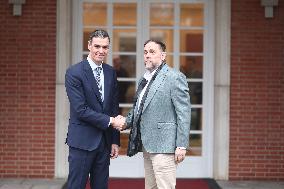
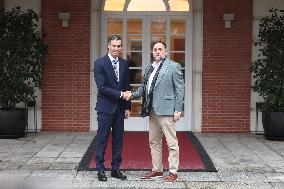
The President of the Government, Pedro Sánchez, receives the President of Esquerra Republicana de Catalunya (ERC), Oriol Junqueras, at the Moncloa Palace, on January 8, 2026, in Madrid (Spain). During their meeting, both will discuss the future of the legislature, although it is not expected that an agreement on financing will come out of this meeting, since Moncloa considers that this meeting is not the framework to close the financing model, despite the fact that ERC has demanded a singular financing for Catalonia. Photo by Eduardo Parra / Europa Press / ABACAPRESS.COM

  •  
Sanchez Meets Junqueras to Discuss Legislature Future - Madrid

Sanchez Meets Junqueras to Discuss Legislature Future - Madrid

The President of the Government, Pedro Sánchez, receives the President of Esquerra Republicana de Catalunya (ERC), Oriol Junqueras, at the Moncloa Palace, on January 8, 2026, in Madrid (Spain). During their meeting, both will discuss the future of the legislature, although it is not expected that an agreement on financing will come out of this meeting, since Moncloa considers that this meeting is not the framework to close the financing model, despite the fact that ERC has demanded a singular financing for Catalonia. Photo by Eduardo Parra / Europa Press / ABACAPRESS.COM

  •  
Lake Urmia Environmental Disaster - Iran

Lake Urmia Environmental Disaster - Iran

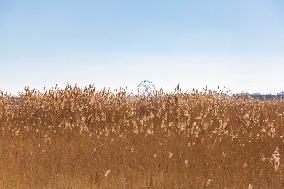
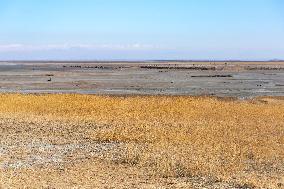
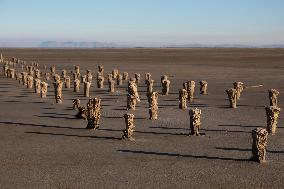
A view shows dry reeds on the dry bed of Lake Urmia in northwestern Iran on December 20, 2025. Lake Urmia, once the largest lake in the Middle East, has dramatically shrunk due to prolonged drought, the damming of rivers feeding the lake, and extensive groundwater extraction in the surrounding area. Although increased rainfall and water diversion briefly helped restore water levels in 2019, renewed drought and administrative mismanagement in the early 2020s reversed the trend, and satellite imagery shows the lake has almost entirely dried up by September 2025. Photo by Morteza Aminoroayayi/Middle East Images/ABACAPRESS.COM

  •  
Lake Urmia Environmental Disaster - Iran

Lake Urmia Environmental Disaster - Iran

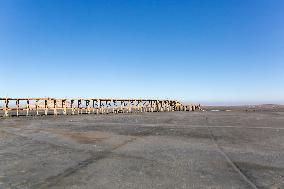
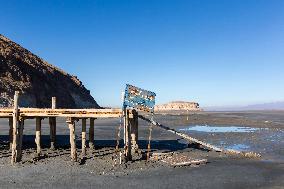
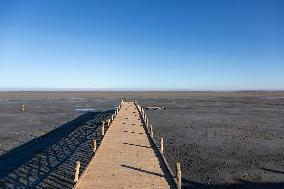
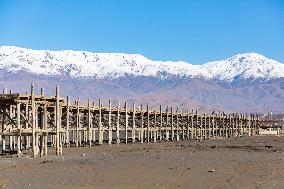
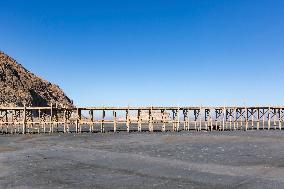
A view shows a wooden pier on the dry bed of Lake Urmia in northwestern Iran on December 20, 2025. Lake Urmia, once the largest lake in the Middle East, has dramatically shrunk due to prolonged drought, the damming of rivers feeding the lake, and extensive groundwater extraction in the surrounding area. Although increased rainfall and water diversion briefly helped restore water levels in 2019, renewed drought and administrative mismanagement in the early 2020s reversed the trend, and satellite imagery shows the lake has almost entirely dried up by September 2025. Photo by Morteza Aminoroayayi/Middle East Images/ABACAPRESS.COM

  •  
Lake Urmia Environmental Disaster - Iran

Lake Urmia Environmental Disaster - Iran

A view shows a wooden pier on the dry bed of Lake Urmia in northwestern Iran on December 20, 2025. Lake Urmia, once the largest lake in the Middle East, has dramatically shrunk due to prolonged drought, the damming of rivers feeding the lake, and extensive groundwater extraction in the surrounding area. Although increased rainfall and water diversion briefly helped restore water levels in 2019, renewed drought and administrative mismanagement in the early 2020s reversed the trend, and satellite imagery shows the lake has almost entirely dried up by September 2025. Photo by Morteza Aminoroayayi/Middle East Images/ABACAPRESS.COM

  •  
Lake Urmia Environmental Disaster - Iran

Lake Urmia Environmental Disaster - Iran

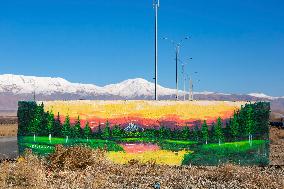
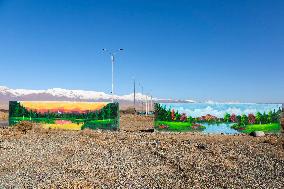
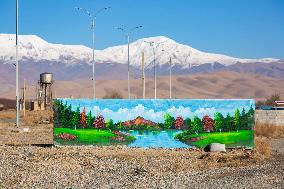
A view shows a mural depicting a landscape painted on a concrete wall near Sharafkhaneh port at Lake Urmia in northwestern Iran on December 19, 2025. Lake Urmia, once the largest lake in the Middle East, has dramatically shrunk due to prolonged drought, the damming of rivers feeding the lake, and extensive groundwater extraction in the surrounding area. Although increased rainfall and water diversion briefly helped restore water levels in 2019, renewed drought and administrative mismanagement in the early 2020s reversed the trend, and satellite imagery shows the lake has almost entirely dried up by September 2025. Photo by Morteza Aminoroayayi/Middle East Images/ABACAPRESS.COM

  •  
Lake Urmia Environmental Disaster - Iran

Lake Urmia Environmental Disaster - Iran

A view shows dry grass and the dry bed of Lake Urmia in northwestern Iran on December 20, 2025. Lake Urmia, once the largest lake in the Middle East, has dramatically shrunk due to prolonged drought, the damming of rivers feeding the lake, and extensive groundwater extraction in the surrounding area. Although increased rainfall and water diversion briefly helped restore water levels in 2019, renewed drought and administrative mismanagement in the early 2020s reversed the trend, and satellite imagery shows the lake has almost entirely dried up by September 2025. Photo by Morteza Aminoroayayi/Middle East Images/ABACAPRESS.COM

  •  
Lake Urmia Environmental Disaster - Iran

Lake Urmia Environmental Disaster - Iran

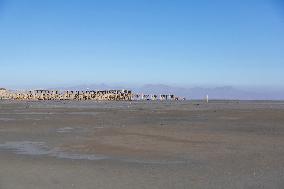
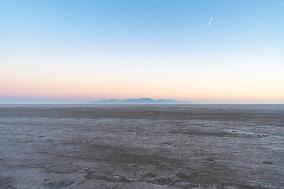
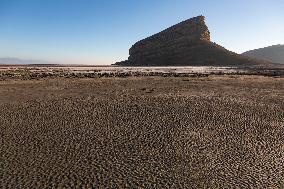
A view shows the dry bed of Lake Urmia in northwestern Iran on December 19, 2025. Lake Urmia, once the largest lake in the Middle East, has dramatically shrunk due to prolonged drought, the damming of rivers feeding the lake, and extensive groundwater extraction in the surrounding area. Although increased rainfall and water diversion briefly helped restore water levels in 2019, renewed drought and administrative mismanagement in the early 2020s reversed the trend, and satellite imagery shows the lake has almost entirely dried up by September 2025. Photo by Morteza Aminoroayayi/Middle East Images/ABACAPRESS.COM

  •  
Lake Urmia Environmental Disaster - Iran

Lake Urmia Environmental Disaster - Iran

A view shows a rusty sign next to a wooden pier on the dry bed of Lake Urmia in northwestern Iran on December 20, 2025. Lake Urmia, once the largest lake in the Middle East, has dramatically shrunk due to prolonged drought, the damming of rivers feeding the lake, and extensive groundwater extraction in the surrounding area. Although increased rainfall and water diversion briefly helped restore water levels in 2019, renewed drought and administrative mismanagement in the early 2020s reversed the trend, and satellite imagery shows the lake has almost entirely dried up by September 2025. Photo by Morteza Aminoroayayi/Middle East Images/ABACAPRESS.COM

  •  
Lake Urmia Environmental Disaster - Iran

Lake Urmia Environmental Disaster - Iran

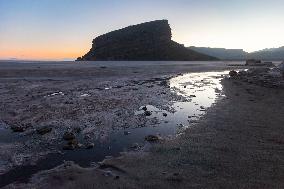
A view shows a shallow stream near a rocky cliff on the bed of Lake Urmia in northwestern Iran on December 19, 2025. Lake Urmia, once the largest lake in the Middle East, has dramatically shrunk due to prolonged drought, the damming of rivers feeding the lake, and extensive groundwater extraction in the surrounding area. Although increased rainfall and water diversion briefly helped restore water levels in 2019, renewed drought and administrative mismanagement in the early 2020s reversed the trend, and satellite imagery shows the lake has almost entirely dried up by September 2025. Photo by Morteza Aminoroayayi/Middle East Images/ABACAPRESS.COM

  •  
Lake Urmia Environmental Disaster - Iran

Lake Urmia Environmental Disaster - Iran

A view shows a wooden pier on the dry bed of Lake Urmia in northwestern Iran on December 20, 2025. Lake Urmia, once the largest lake in the Middle East, has dramatically shrunk due to prolonged drought, the damming of rivers feeding the lake, and extensive groundwater extraction in the surrounding area. Although increased rainfall and water diversion briefly helped restore water levels in 2019, renewed drought and administrative mismanagement in the early 2020s reversed the trend, and satellite imagery shows the lake has almost entirely dried up by September 2025. Photo by Morteza Aminoroayayi/Middle East Images/ABACAPRESS.COM

  •  
Lake Urmia Environmental Disaster - Iran

Lake Urmia Environmental Disaster - Iran

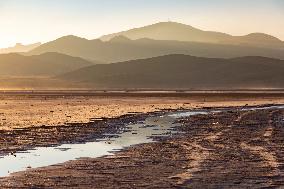
A view shows tire tracks running alongside a shallow stream on the bed of Lake Urmia in northwestern Iran on December 19, 2025. Lake Urmia, once the largest lake in the Middle East, has dramatically shrunk due to prolonged drought, the damming of rivers feeding the lake, and extensive groundwater extraction in the surrounding area. Although increased rainfall and water diversion briefly helped restore water levels in 2019, renewed drought and administrative mismanagement in the early 2020s reversed the trend, and satellite imagery shows the lake has almost entirely dried up by September 2025. Photo by Morteza Aminoroayayi/Middle East Images/ABACAPRESS.COM

  •  
Lake Urmia Environmental Disaster - Iran

Lake Urmia Environmental Disaster - Iran

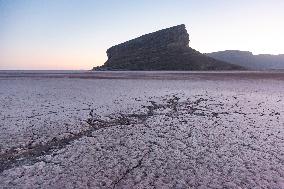
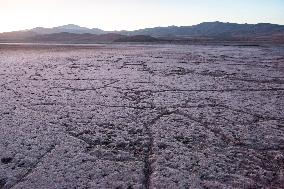
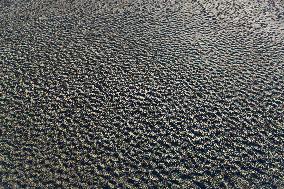
Salt formations cover the cracked surface of the dried bed of Lake Urmia in northwestern Iran on December 19, 2025. Lake Urmia, once the largest lake in the Middle East, has dramatically shrunk due to prolonged drought, the damming of rivers feeding the lake and extensive groundwater extraction in the surrounding area. Although increased rainfall and water diversion briefly helped restore water levels in 2019, renewed drought and administrative mismanagement in the early 2020s reversed the trend, and satellite imagery shows the lake has almost entirely dried up by September 2025. Photo by Morteza Aminoroayayi/Middle East Images/ABACAPRESS.COM

  •  
Lake Urmia Environmental Disaster - Iran

Lake Urmia Environmental Disaster - Iran

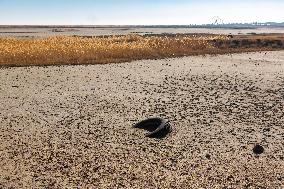
A discarded tire sits near dry reeds on the dry bed of Lake Urmia in northwestern Iran on December 20, 2025. Lake Urmia, once the largest lake in the Middle East, has dramatically shrunk due to prolonged drought, the damming of rivers feeding the lake, and extensive groundwater extraction in the surrounding area. Although increased rainfall and water diversion briefly helped restore water levels in 2019, renewed drought and administrative mismanagement in the early 2020s reversed the trend, and satellite imagery shows the lake has almost entirely dried up by September 2025. Photo by Morteza Aminoroayayi/Middle East Images/ABACAPRESS.COM

  •  
Lake Urmia Environmental Disaster - Iran

Lake Urmia Environmental Disaster - Iran

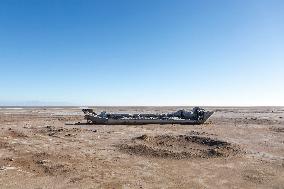
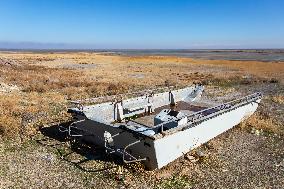
Remnants of a boat sit on the dry bed of Lake Urmia in northwestern Iran on December 19, 2025. Lake Urmia, once the largest lake in the Middle East, has dramatically shrunk due to prolonged drought, the damming of rivers feeding the lake, and extensive groundwater extraction in the surrounding area. Although increased rainfall and water diversion briefly helped restore water levels in 2019, renewed drought and administrative mismanagement in the early 2020s reversed the trend, and satellite imagery shows the lake has almost entirely dried up by September 2025. Photo by Morteza Aminoroayayi/Middle East Images/ABACAPRESS.COM

  •  
Lake Urmia Environmental Disaster - Iran

Lake Urmia Environmental Disaster - Iran

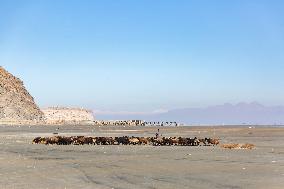
A shepherd guides a flock of sheep on the dry bed of Lake Urmia in northwestern Iran on December 20, 2025. Lake Urmia, once the largest lake in the Middle East, has dramatically shrunk due to prolonged drought, the damming of rivers feeding the lake, and extensive groundwater extraction in the surrounding area. Although increased rainfall and water diversion briefly helped restore water levels in 2019, renewed drought and administrative mismanagement in the early 2020s reversed the trend, and satellite imagery shows the lake has almost entirely dried up by September 2025. Photo by Morteza Aminoroayayi/Middle East Images/ABACAPRESS.COM

  •  
Lake Urmia Environmental Disaster - Iran

Lake Urmia Environmental Disaster - Iran

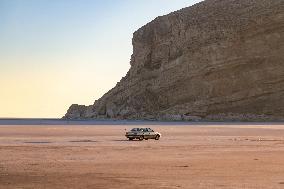
A car drives near a rocky cliff on the dry bed of Lake Urmia in northwestern Iran on December 19, 2025. Lake Urmia, once the largest lake in the Middle East, has dramatically shrunk due to prolonged drought, the damming of rivers feeding the lake, and extensive groundwater extraction in the surrounding area. Although increased rainfall and water diversion briefly helped restore water levels in 2019, renewed drought and administrative mismanagement in the early 2020s reversed the trend, and satellite imagery shows the lake has almost entirely dried up by September 2025. Photo by Morteza Aminoroayayi/Middle East Images/ABACAPRESS.COM

  •  
Lake Urmia Environmental Disaster - Iran

Lake Urmia Environmental Disaster - Iran

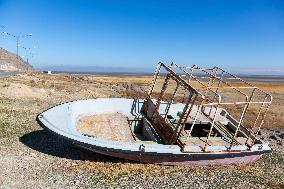
A rusty boat sits next to a road near Lake Urmia in northwestern Iran on December 20, 2025. Lake Urmia, once the largest lake in the Middle East, has dramatically shrunk due to prolonged drought, the damming of rivers feeding the lake, and extensive groundwater extraction in the surrounding area. Although increased rainfall and water diversion briefly helped restore water levels in 2019, renewed drought and administrative mismanagement in the early 2020s reversed the trend, and satellite imagery shows the lake has almost entirely dried up by September 2025. Photo by Morteza Aminoroayayi/Middle East Images/ABACAPRESS.COM

  •  
Lake Urmia Environmental Disaster - Iran

Lake Urmia Environmental Disaster - Iran

A view shows a wooden pier on the dry bed of Lake Urmia in northwestern Iran on December 19, 2025. Lake Urmia, once the largest lake in the Middle East, has dramatically shrunk due to prolonged drought, the damming of rivers feeding the lake, and extensive groundwater extraction in the surrounding area. Although increased rainfall and water diversion briefly helped restore water levels in 2019, renewed drought and administrative mismanagement in the early 2020s reversed the trend, and satellite imagery shows the lake has almost entirely dried up by September 2025. Photo by Morteza Aminoroayayi/Middle East Images/ABACAPRESS.COM

  •  
Lake Urmia Environmental Disaster - Iran

Lake Urmia Environmental Disaster - Iran

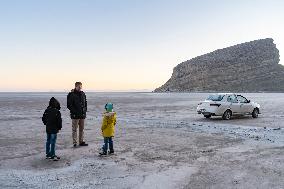
A man and two children stand near a car and a rocky cliff on the dry bed of Lake Urmia in northwestern Iran on December 19, 2025. Lake Urmia, once the largest lake in the Middle East, has dramatically shrunk due to prolonged drought, the damming of rivers feeding the lake, and extensive groundwater extraction in the surrounding area. Although increased rainfall and water diversion briefly helped restore water levels in 2019, renewed drought and administrative mismanagement in the early 2020s reversed the trend, and satellite imagery shows the lake has almost entirely dried up by September 2025. Photo by Morteza Aminoroayayi/Middle East Images/ABACAPRESS.COM

  •  
Lake Urmia Environmental Disaster - Iran

Lake Urmia Environmental Disaster - Iran

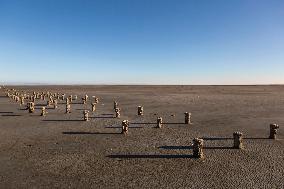
A view shows rows of wooden posts protruding from the dry bed of Lake Urmia in northwestern Iran on December 20, 2025. Lake Urmia, once the largest lake in the Middle East, has dramatically shrunk due to prolonged drought, the damming of rivers feeding the lake, and extensive groundwater extraction in the surrounding area. Although increased rainfall and water diversion briefly helped restore water levels in 2019, renewed drought and administrative mismanagement in the early 2020s reversed the trend, and satellite imagery shows the lake has almost entirely dried up by September 2025. Photo by Morteza Aminoroayayi/Middle East Images/ABACAPRESS.COM

  •  
Lake Urmia Environmental Disaster - Iran

Lake Urmia Environmental Disaster - Iran

A view shows murals depicting nature scenes painted on concrete walls near Sharafkhaneh port at Lake Urmia in northwestern Iran on December 19, 2025. Lake Urmia, once the largest lake in the Middle East, has dramatically shrunk due to prolonged drought, the damming of rivers feeding the lake, and extensive groundwater extraction in the surrounding area. Although increased rainfall and water diversion briefly helped restore water levels in 2019, renewed drought and administrative mismanagement in the early 2020s reversed the trend, and satellite imagery shows the lake has almost entirely dried up by September 2025. Photo by Morteza Aminoroayayi/Middle East Images/ABACAPRESS.COM

  •  
Lake Urmia Environmental Disaster - Iran

Lake Urmia Environmental Disaster - Iran

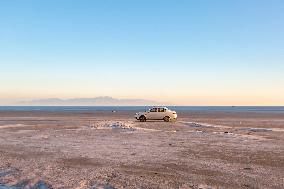
A view shows the dry bed of Lake Urmia in northwestern Iran on December 19, 2025. Lake Urmia, once the largest lake in the Middle East, has dramatically shrunk due to prolonged drought, the damming of rivers feeding the lake, and extensive groundwater extraction in the surrounding area. Although increased rainfall and water diversion briefly helped restore water levels in 2019, renewed drought and administrative mismanagement in the early 2020s reversed the trend, and satellite imagery shows the lake has almost entirely dried up by September 2025. Photo by Morteza Aminoroayayi/Middle East Images/ABACAPRESS.COM

  •  
Lake Urmia Environmental Disaster - Iran

Lake Urmia Environmental Disaster - Iran

A view shows a wooden pier on the dry bed of Lake Urmia in northwestern Iran on December 20, 2025. Lake Urmia, once the largest lake in the Middle East, has dramatically shrunk due to prolonged drought, the damming of rivers feeding the lake, and extensive groundwater extraction in the surrounding area. Although increased rainfall and water diversion briefly helped restore water levels in 2019, renewed drought and administrative mismanagement in the early 2020s reversed the trend, and satellite imagery shows the lake has almost entirely dried up by September 2025. Photo by Morteza Aminoroayayi/Middle East Images/ABACAPRESS.COM

  •  
Lake Urmia Environmental Disaster - Iran

Lake Urmia Environmental Disaster - Iran

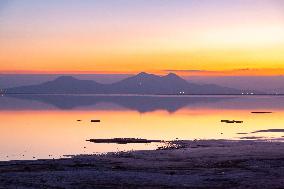
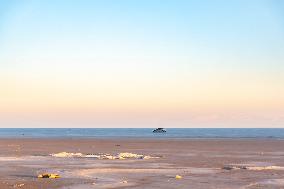
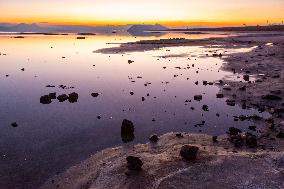
A view shows reflections on the surface of Lake Urmia in northwestern Iran on December 18, 2025. Lake Urmia, once the largest lake in the Middle East, has dramatically shrunk due to prolonged drought, the damming of rivers feeding the lake, and extensive groundwater extraction in the surrounding area. Although increased rainfall and water diversion briefly helped restore water levels in 2019, renewed drought and administrative mismanagement in the early 2020s reversed the trend, and satellite imagery shows the lake has almost entirely dried up by September 2025. Photo by Morteza Aminoroayayi/Middle East Images/ABACAPRESS.COM

  •  
Lake Urmia Environmental Disaster - Iran

Lake Urmia Environmental Disaster - Iran

A car drives on the dry bed of Lake Urmia in northwestern Iran on December 19, 2025. Lake Urmia, once the largest lake in the Middle East, has dramatically shrunk due to prolonged drought, the damming of rivers feeding the lake, and extensive groundwater extraction in the surrounding area. Although increased rainfall and water diversion briefly helped restore water levels in 2019, renewed drought and administrative mismanagement in the early 2020s reversed the trend, and satellite imagery shows the lake has almost entirely dried up by September 2025. Photo by Morteza Aminoroayayi/Middle East Images/ABACAPRESS.COM

  •  
Lake Urmia Environmental Disaster - Iran

Lake Urmia Environmental Disaster - Iran

A view shows a mural depicting a landscape painted on a concrete wall near Sharafkhaneh port at Lake Urmia in northwestern Iran on December 19, 2025. Lake Urmia, once the largest lake in the Middle East, has dramatically shrunk due to prolonged drought, the damming of rivers feeding the lake, and extensive groundwater extraction in the surrounding area. Although increased rainfall and water diversion briefly helped restore water levels in 2019, renewed drought and administrative mismanagement in the early 2020s reversed the trend, and satellite imagery shows the lake has almost entirely dried up by September 2025. Photo by Morteza Aminoroayayi/Middle East Images/ABACAPRESS.COM

  •  
Lake Urmia Environmental Disaster - Iran

Lake Urmia Environmental Disaster - Iran

A view shows rows of wooden posts protruding from the dry bed of Lake Urmia in northwestern Iran on December 20, 2025. Lake Urmia, once the largest lake in the Middle East, has dramatically shrunk due to prolonged drought, the damming of rivers feeding the lake, and extensive groundwater extraction in the surrounding area. Although increased rainfall and water diversion briefly helped restore water levels in 2019, renewed drought and administrative mismanagement in the early 2020s reversed the trend, and satellite imagery shows the lake has almost entirely dried up by September 2025. Photo by Morteza Aminoroayayi/Middle East Images/ABACAPRESS.COM

  •  
Lake Urmia Environmental Disaster - Iran

Lake Urmia Environmental Disaster - Iran

Salt formations cover the cracked surface of the dried bed of Lake Urmia in northwestern Iran on December 19, 2025. Lake Urmia, once the largest lake in the Middle East, has dramatically shrunk due to prolonged drought, the damming of rivers feeding the lake and extensive groundwater extraction in the surrounding area. Although increased rainfall and water diversion briefly helped restore water levels in 2019, renewed drought and administrative mismanagement in the early 2020s reversed the trend, and satellite imagery shows the lake has almost entirely dried up by September 2025. Photo by Morteza Aminoroayayi/Middle East Images/ABACAPRESS.COM

  •  
Lake Urmia Environmental Disaster - Iran

Lake Urmia Environmental Disaster - Iran

Remains of a boat sits near the dry bed of Lake Urmia in northwestern Iran on December 20, 2025. Lake Urmia, once the largest lake in the Middle East, has dramatically shrunk due to prolonged drought, the damming of rivers feeding the lake, and extensive groundwater extraction in the surrounding area. Although increased rainfall and water diversion briefly helped restore water levels in 2019, renewed drought and administrative mismanagement in the early 2020s reversed the trend, and satellite imagery shows the lake has almost entirely dried up by September 2025. Photo by Morteza Aminoroayayi/Middle East Images/ABACAPRESS.COM

  •  
Lake Urmia Environmental Disaster - Iran

Lake Urmia Environmental Disaster - Iran

A car drives on the dry bed of Lake Urmia in northwestern Iran on December 19, 2025. Lake Urmia, once the largest lake in the Middle East, has dramatically shrunk due to prolonged drought, the damming of rivers feeding the lake, and extensive groundwater extraction in the surrounding area. Although increased rainfall and water diversion briefly helped restore water levels in 2019, renewed drought and administrative mismanagement in the early 2020s reversed the trend, and satellite imagery shows the lake has almost entirely dried up by September 2025. Photo by Morteza Aminoroayayi/Middle East Images/ABACAPRESS.COM

  •  
Lake Urmia Environmental Disaster - Iran

Lake Urmia Environmental Disaster - Iran

A view shows the dry bed of Lake Urmia in northwestern Iran on December 19, 2025. Lake Urmia, once the largest lake in the Middle East, has dramatically shrunk due to prolonged drought, the damming of rivers feeding the lake, and extensive groundwater extraction in the surrounding area. Although increased rainfall and water diversion briefly helped restore water levels in 2019, renewed drought and administrative mismanagement in the early 2020s reversed the trend, and satellite imagery shows the lake has almost entirely dried up by September 2025. Photo by Morteza Aminoroayayi/Middle East Images/ABACAPRESS.COM

  •  
Lake Urmia Environmental Disaster - Iran

Lake Urmia Environmental Disaster - Iran

A view shows scattered rocks and shallow water in parts of Lake Urmia in northwestern Iran on December 18, 2025. Lake Urmia, once the largest lake in the Middle East, has dramatically shrunk due to prolonged drought, the damming of rivers feeding the lake, and extensive groundwater extraction in the surrounding area. Although increased rainfall and water diversion briefly helped restore water levels in 2019, renewed drought and administrative mismanagement in the early 2020s reversed the trend, and satellite imagery shows the lake has almost entirely dried up by September 2025. Photo by Morteza Aminoroayayi/Middle East Images/ABACAPRESS.COM

  •  
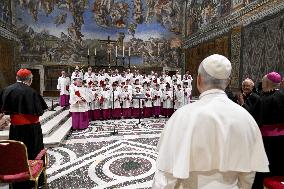
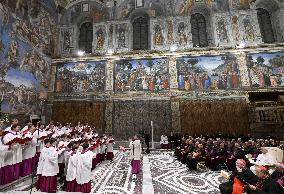
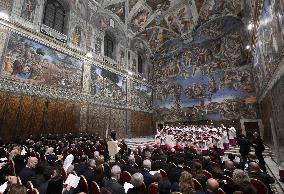
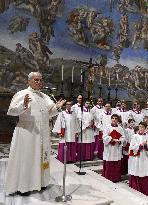
Pope Leo XIV At A Concert In The Sistine Chapel - Vatican

Pope Leo XIV At A Concert In The Sistine Chapel - Vatican

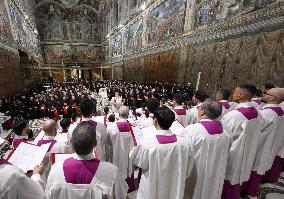
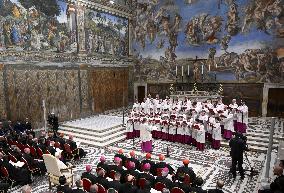
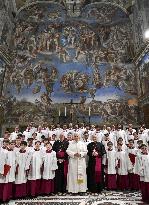
Pope Leo XIV attends the Christmas Concert of the Pontifical Sistine Chapel Choir beneath Michelangelo’s frescoes in the Sistine chapel, Vatican on January 3, 2026. The Sistine Chapel Choir is the Pope's personal choir. Although it was established in the late 15th century, its roots go back to the 4th century. Photo by (EV) Simone Risoluti/ Vatican Media /ABACAPRESS.COM

  •  
Pope Leo XIV At A Concert In The Sistine Chapel - Vatican

Pope Leo XIV At A Concert In The Sistine Chapel - Vatican

Pope Leo XIV attends the Christmas Concert of the Pontifical Sistine Chapel Choir beneath Michelangelo’s frescoes in the Sistine chapel, Vatican on January 3, 2026. The Sistine Chapel Choir is the Pope's personal choir. Although it was established in the late 15th century, its roots go back to the 4th century. Photo by (EV) Simone Risoluti/ Vatican Media /ABACAPRESS.COM

  •  
Pope Leo XIV At A Concert In The Sistine Chapel - Vatican

Pope Leo XIV At A Concert In The Sistine Chapel - Vatican

Pope Leo XIV attends the Christmas Concert of the Pontifical Sistine Chapel Choir beneath Michelangelo’s frescoes in the Sistine chapel, Vatican on January 3, 2026. The Sistine Chapel Choir is the Pope's personal choir. Although it was established in the late 15th century, its roots go back to the 4th century. Photo by (EV) Simone Risoluti/ Vatican Media /ABACAPRESS.COM

  •  
Pope Leo XIV At A Concert In The Sistine Chapel - Vatican

Pope Leo XIV At A Concert In The Sistine Chapel - Vatican

Pope Leo XIV attends the Christmas Concert of the Pontifical Sistine Chapel Choir beneath Michelangelo’s frescoes in the Sistine chapel, Vatican on January 3, 2026. The Sistine Chapel Choir is the Pope's personal choir. Although it was established in the late 15th century, its roots go back to the 4th century. Photo by (EV) Simone Risoluti/ Vatican Media /ABACAPRESS.COM

  •  
Pope Leo XIV At A Concert In The Sistine Chapel - Vatican

Pope Leo XIV At A Concert In The Sistine Chapel - Vatican

Pope Leo XIV attends the Christmas Concert of the Pontifical Sistine Chapel Choir beneath Michelangelo’s frescoes in the Sistine chapel, Vatican on January 3, 2026. The Sistine Chapel Choir is the Pope's personal choir. Although it was established in the late 15th century, its roots go back to the 4th century. Photo by (EV) Simone Risoluti/ Vatican Media /ABACAPRESS.COM

  •  
Pope Leo XIV At A Concert In The Sistine Chapel - Vatican

Pope Leo XIV At A Concert In The Sistine Chapel - Vatican

Pope Leo XIV attends the Christmas Concert of the Pontifical Sistine Chapel Choir beneath Michelangelo’s frescoes in the Sistine chapel, Vatican on January 3, 2026. The Sistine Chapel Choir is the Pope's personal choir. Although it was established in the late 15th century, its roots go back to the 4th century. Photo by (EV) Simone Risoluti/ Vatican Media /ABACAPRESS.COM

  •  
Pope Leo XIV At A Concert In The Sistine Chapel - Vatican

Pope Leo XIV At A Concert In The Sistine Chapel - Vatican

Pope Leo XIV attends the Christmas Concert of the Pontifical Sistine Chapel Choir beneath Michelangelo’s frescoes in the Sistine chapel, Vatican on January 3, 2026. The Sistine Chapel Choir is the Pope's personal choir. Although it was established in the late 15th century, its roots go back to the 4th century. Photo by (EV) Mario Tomassetti/ Vatican Media /ABACAPRESS.COM

  •  
Pope Leo XIV At A Concert In The Sistine Chapel - Vatican

Pope Leo XIV At A Concert In The Sistine Chapel - Vatican

Pope Leo XIV attends the Christmas Concert of the Pontifical Sistine Chapel Choir beneath Michelangelo’s frescoes in the Sistine chapel, Vatican on January 3, 2026. The Sistine Chapel Choir is the Pope's personal choir. Although it was established in the late 15th century, its roots go back to the 4th century. Photo by (EV) Simone Risoluti/ Vatican Media /ABACAPRESS.COM

  • Main
  • Top
  • Editorial
  • Creative
  • About Us
  • About ILG
  • Terms of use
  • Company
  • BEHIND
  • Price List
  • Single Plan
  • Monthly Plan
  • Services
  • Shooting
  • Rights Clearance
  • Support
  • FAQ
  • How To Buy
  • Contact Us
  • Become a Partner

© KYODO NEWS IMAGES INC

All Rights Reserved.

  • Editorial
  • Olympics
  • News
  • Sports
  • Japan
  • Tech
  • Royal
  • Disaster
  • NorthKorea
  • Old Japan
  • SNS
  • Creative
  • Food
  • Japan
  • Landscape
  • Animal
  • Popular
  • #Ukraine
  • #Thailand
  • #coronavirus
  • #N. Korea
  • #Russia
  • #China
  • #Ukraine
  • #Thailand
  • #coronavirus
  • #N. Korea
  • #Russia
  • #China
  • Food
  • Japan
  • Landscape
  • Animal
  • Olympics
  • News
  • Sports
  • Japan
  • Tech
  • Royal
  • Disaster
  • NorthKorea
  • Old Japan
  • SNS