•  
World's Giant Glaciers Could Disappear By 2050 - Antarctica

World's Giant Glaciers Could Disappear By 2050 - Antarctica

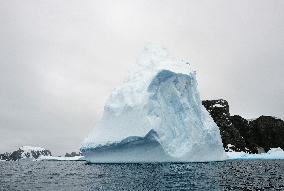
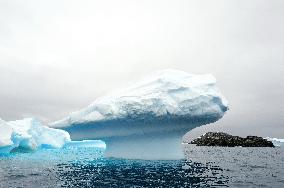
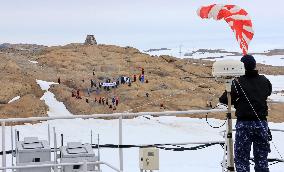
An iceberg is seen near the coast of Spert Island in Antarctica, Dec. 16, 2025. Photo by Yang Shu/Xinhua/ABACAPRESS.COM

  •  
World's Giant Glaciers Could Disappear By 2050 - Antarctica

World's Giant Glaciers Could Disappear By 2050 - Antarctica

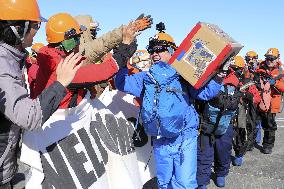
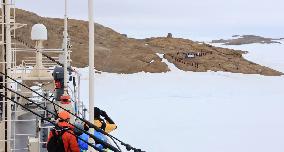
People take photos of an iceberg near the coast of Spert Island in Antarctica, Dec. 16, 2025. Photo by Yang Shu/Xinhua/ABACAPRESS.COM

  •  
World's Giant Glaciers Could Disappear By 2050 - Antarctica

World's Giant Glaciers Could Disappear By 2050 - Antarctica

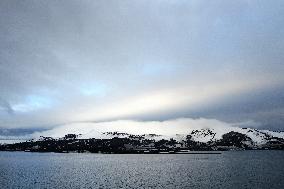
This photo shows a view of Deception Island in Antarctica, Dec. 16, 2025. Photo by Yang Shu/Xinhua/ABACAPRESS.COM

  •  
World's Giant Glaciers Could Disappear By 2050 - Antarctica

World's Giant Glaciers Could Disappear By 2050 - Antarctica

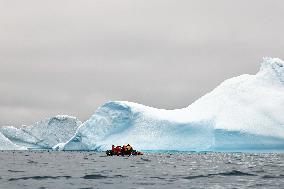
An iceberg is seen near the coast of Spert Island in Antarctica, Dec. 16, 2025. Photo by Yang Shu/Xinhua/ABACAPRESS.COM

  •  
Illustration Antarctica Views

Illustration Antarctica Views

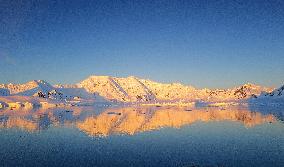
This photo shows a view of Damoy Point in Antarctica in the late evening of Dec. 14, 2025. Photo by Yang Shu/Xinhua/ABACAPRESS.COM

  •  
Illustration Antarctica Views

Illustration Antarctica Views

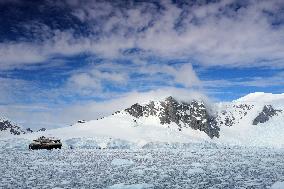
This photo shows a view of Orne Harbour in Antarctica, Dec. 15, 2025. Photo by Yang Shu/Xinhua/ABACAPRESS.COM

  •  
Illustration Antarctica Views

Illustration Antarctica Views

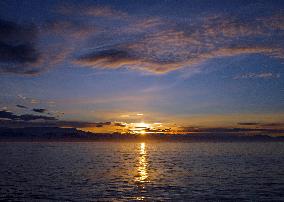
This photo taken on Dec. 14, 2025 shows the sunrise scenery in Peltier Channel, Antarctica. Photo by Yang Shu/Xinhua/ABACAPRESS.COM

  •  
Illustration Antarctica Views

Illustration Antarctica Views

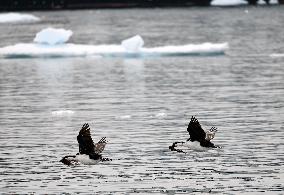
Two Antarctic shags are seen in Antarctica, Dec. 13, 2025. Photo by Yang Shu/Xinhua/ABACAPRESS.COM

  •  
Illustration Antarctica Views

Illustration Antarctica Views

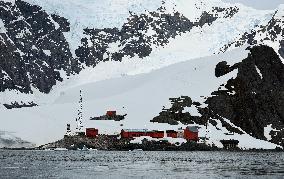
This photo taken on Dec. 13, 2025 shows a view of Almirante Brown Antarctic Base in Antarctica. Photo by Yang Shu/Xinhua/ABACAPRESS.COM

  •  
Illustration Antarctica Views

Illustration Antarctica Views

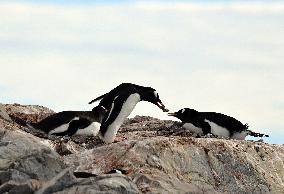
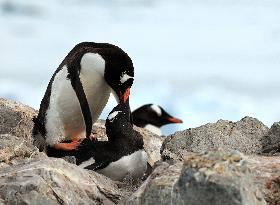
A gentoo penguin carries a stone to reinforce its nest on Petermann Island, Antarctica, Dec. 12, 2025. Photo by Yang Shu/Xinhua/ABACAPRESS.COM

  •  
Illustration Antarctica Views

Illustration Antarctica Views

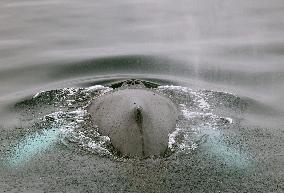
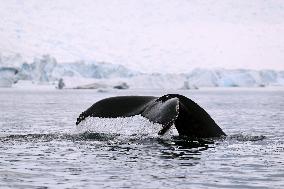
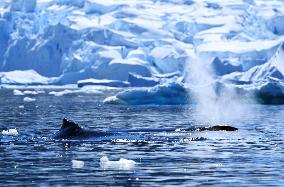
A humpback whale is seen in Damoy Point, Antarctica, Dec. 15, 2025. Photo by Yang Shu/Xinhua/ABACAPRESS.COM

  •  
Illustration Antarctica Views

Illustration Antarctica Views

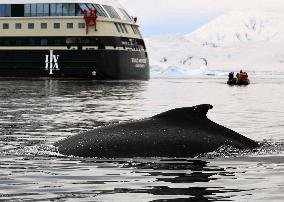
A humpback whale is seen with a cruise ship in the background in Antarctica, Dec. 13, 2025. Photo by Yang Shu/Xinhua/ABACAPRESS.COM

  •  
Illustration Antarctica Views

Illustration Antarctica Views

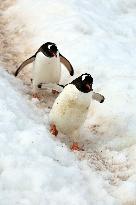
A gentoo penguin is seen on Petermann Island, Antarctica, Dec. 12, 2025. Photo by Yang Shu/Xinhua/ABACAPRESS.COM

  •  
Illustration Antarctica Views

Illustration Antarctica Views

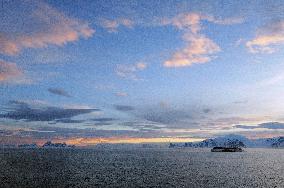
A cruise ship sails in Peltier Channel in Antarctica in the early hours of Dec. 14, 2025. Photo by Yang Shu/Xinhua/ABACAPRESS.COM

  •  
Illustration Antarctica Views

Illustration Antarctica Views

A humpback whale is seen near Almirante Brown Antarctic Base in Antarctica, Dec. 13, 2025. Photo by Yang Shu/Xinhua/ABACAPRESS.COM

  •  
Summer Animals - Antarctica

Summer Animals - Antarctica

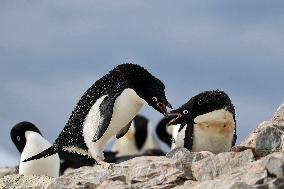
Penguins are seen on Petermann Island in Antarctica, on December 12, 2025. The Antarctic ice and snow melt in large quantities during the height of summer, when the weather is relatively mild and the days are long. It is not only the high season for penguins to mate and hatch their chicks, but also the best time for whale watching. Photo by Yang Shu/Xinhua/ABACAPRESS.COM

  •  
Summer Animals - Antarctica

Summer Animals - Antarctica

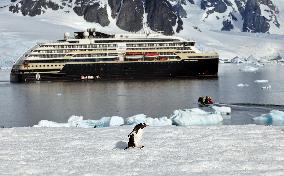
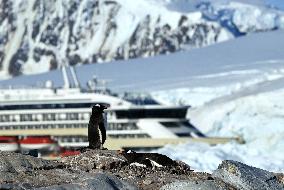
Penguins are seen with a cruise ship in the background in Antarctica, on December 14, 2025. The Antarctic ice and snow melt in large quantities during the height of summer, when the weather is relatively mild and the days are long. It is not only the high season for penguins to mate and hatch their chicks, but also the best time for whale watching. Photo by Yang Shu/Xinhua/ABACAPRESS.COM

  •  
Summer Animals - Antarctica

Summer Animals - Antarctica

Penguins are seen on Petermann Island in Antarctica, on December 12, 2025. The Antarctic ice and snow melt in large quantities during the height of summer, when the weather is relatively mild and the days are long. It is not only the high season for penguins to mate and hatch their chicks, but also the best time for whale watching. Photo by Yang Shu/Xinhua/ABACAPRESS.COM

  •  
Summer Animals - Antarctica

Summer Animals - Antarctica

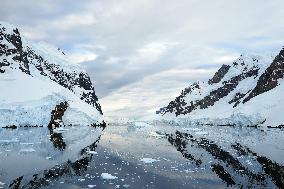
This photo taken on on December 12, 2025 shows the Lemaire Channel in Antarctica. The Antarctic ice and snow melt in large quantities during the height of summer, when the weather is relatively mild and the days are long. It is not only the high season for penguins to mate and hatch their chicks, but also the best time for whale watching. Photo by Yang Shu/Xinhua/ABACAPRESS.COM

  •  
Summer Animals - Antarctica

Summer Animals - Antarctica

Penguins are seen on Petermann Island in Antarctica, on December 12, 2025. The Antarctic ice and snow melt in large quantities during the height of summer, when the weather is relatively mild and the days are long. It is not only the high season for penguins to mate and hatch their chicks, but also the best time for whale watching. Photo by Yang Shu/Xinhua/ABACAPRESS.COM

  •  
Summer Animals - Antarctica

Summer Animals - Antarctica

Penguins are seen on Petermann Island in Antarctica, on December 12, 2025. The Antarctic ice and snow melt in large quantities during the height of summer, when the weather is relatively mild and the days are long. It is not only the high season for penguins to mate and hatch their chicks, but also the best time for whale watching. Photo by Yang Shu/Xinhua/ABACAPRESS.COM

  •  
Summer Animals - Antarctica

Summer Animals - Antarctica

Whales are seen in Penola Strait in Antarctica, on December 12, 2025. The Antarctic ice and snow melt in large quantities during the height of summer, when the weather is relatively mild and the days are long. It is not only the high season for penguins to mate and hatch their chicks, but also the best time for whale watching. Photo by Yang Shu/Xinhua/ABACAPRESS.COM

  •  
Satellite View of Graham Land - Antarctica

Satellite View of Graham Land - Antarctica

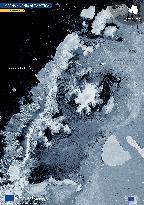
Handout Satellite views dated on November 21, 2025, shows Graham Land. Graham Land, the northernmost stretch of the Antarctic Peninsula, is one of the most rapidly warming regions on Earth. Its mountainous spine and outlet glaciers drain into the Weddell Sea, forming an important transition zone between grounded ice, floating shelves, and open water. This dynamic landscape supports rich marine ecosystems, including krill-dependent species such as seals, penguins, and seabirds, and plays an important role in global ocean circulation and climate regulation. This Copernicus Sentinel-1 image, acquired on 21 November 2025, shows the contrasting textures of grounded ice, fragmented sea ice, and dark, open ocean, revealing key glaciological features in radar backscatter. Copernicus data is essential to climate science. A recent study published in Nature used Copernicus Sentinel-1 and Sentinel-2 data to analyse glacier dynamics in Graham Land, Antarctica. Photo by European Union, Copernicus Sentinel-1 imagery via ABA

  •  
First images From Copernicus Sentinel-5A

First images From Copernicus Sentinel-5A

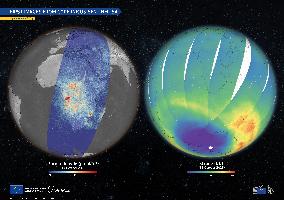
Handout photo dated October 13, 2025 shows Copernicus Sentinel-5A has delivered its first images after its launch on 13 August 2025, marking a significant milestone in the monitoring of air quality from space. The Sentinel-5 mission provides observations of key air pollutants, essential climate variables, and stratospheric ozone, which is the protective layer shielding life on Earth from harmful ultraviolet radiation. This visualisation, created with Sentinel-5A data acquired on 13 October 2025, shows atmospheric concentrations of two trace gases: ozone (O₃) and formaldehyde (HCHO). The image on the left presents the formaldehyde vertical column density. Elevated concentrations along the northwestern coast of Angola are linked to emissions from wildfires, while increased levels over the Central African Republic stem from a combination of fire activity and biogenic emissions. The image on the right shows a global map of ozone. The hole in stratospheric ozone above Antarctica is clearly visible, with column den

  •  
Copernicus Sentinel-1D Launches Into Orbit - French Guiana

Copernicus Sentinel-1D Launches Into Orbit - French Guiana

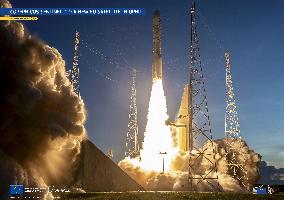
Handout photo dated on November 4, 2025 shows Copernicus Sentinel-1D was successfully launched on 4 November 2025 at 22:02 CET (21:02 UTC) aboard an Ariane 6 rocket from the European Spaceport in Kourou, French Guiana. The satellite was released into orbit 34 minutes after launch, and the first signal was received at 23:22 CET by the Troll ground station in Antarctica. At the heart of Copernicus Sentinel-1 is the C-SAR (C-band Synthetic Aperture Radar) instrument, operating at 5.405 GHz. It provides high-resolution imaging of the Earth's surface regardless of weather conditions, day or night. The radar supports four operational modes: Strip Map (5 × 5 m resolution, 80 km swath), Interferometric Wide Swath (5 × 20 m resolution, 250 km swath), Extra Wide Swath (20 × 40 m resolution, 400 km swath), and Wave mode for ocean monitoring. A key feature of Sentinel-1D, also present on Sentinel-1C, is the integration of the Automatic Identification System (AIS), which enables detection and tracking of ship signals in c

  •  
Illustration - Patagonie

Illustration - Patagonie

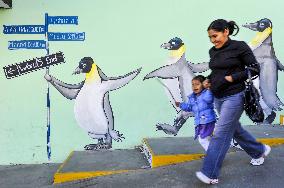
ARGENTINA. TIERRA DEL FUEGO. USHUAIA. PENGUINS (PINGUINOS) HAVE BECOME THE SYMBOL OF THE CITY SINCE IT BEGAN WELCOMING CRUISE SHIPS BOUND FOR ANTARCTICA. Photo by Antoine Lorgnier/Only World/ABACAPRESS.COM

  •  
Illustration - Patagonie

Illustration - Patagonie

ARGENTINA. TIERRA DEL FUEGO. USHUAIA. PENGUINS (PINGUINOS) HAVE BECOME THE SYMBOL OF THE CITY SINCE IT BEGAN WELCOMING CRUISE SHIPS BOUND FOR ANTARCTICA. Photo by Antoine Lorgnier/Only World/ABACAPRESS.COM

  •  
Illustration - Patagonie

Illustration - Patagonie

ARGENTINA. TIERRA DEL FUEGO. USHUAIA. THE PINGUINS (PINNGUINOS) ARE THE EMBLEM OF THE TOWN SINCE USHUAIA IS A STOP FOR THE CRUISE SHIPS GOING TO ANTARCTICA. Photo by Antoine Lorgnier/Only World/ABACAPRESS.COM

  •  
Erebus Expedition

Erebus Expedition

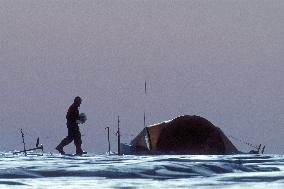
ANTARCTICA - REGION OF THE EREBUS VOLCANO - EREBUS EXPEDITION - CAMP N? 4: TO STRENGTHEN IT AND PROTECT ITSELF FROM THE VIOLENT GUSTS OF WIND, FREQUENT IN ANTARCTICA, JEAN LOUIS ETIENNE REINFORCES HIS IGLOO TENT BY SURROUNDING IT WITH BLOCKS OF ICE. Photo by Stephane Compoint/Only World/ABACAPRESS.COM

  •  
Erebus Expedition

Erebus Expedition

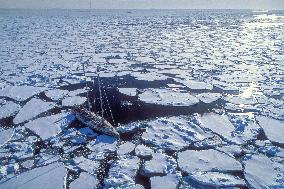
ARCHIVES (WINTER 1993/1994) ANTARCTICA - ROSS SEA REGION - EREBUS EXPEDITION LED BY JEAN LOUIS ETIENNE. THE SAILING SHIP ANTARCTICA ATTEMPTS TO MAKE ITS WAY TO ROSS ISLAND THROUGH THE PACK ICE SURROUNDING THE ANTARCTIC CONTINENT. IN THE ICE, ROUTE CHOICES ARE MADE FROM THE CROW'S NEST, 27 METRES ABOVE THE WATER, WHERE THE PILOT IS IN CONSTANT RADIO CONTACT WITH THE HELMSMAN. Photo by Stephane Compoint/Only World/ABACAPRESS.COM

  •  
Erebus Expedition

Erebus Expedition

ARCHIVES (WINTER 1993/1994) ANTARCTICA - ROSS SEA REGION - EREBUS EXPEDITION LED BY JEAN LOUIS ETIENNE. PORTRAIT OF THE EXPEDITION LEADER. Photo by Stephane Compoint/Only World/ABACAPRESS.COM

  •  
Erebus Expedition

Erebus Expedition

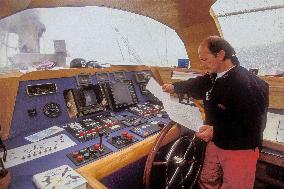
ARCHIVES (WINTER 1993/1994) ANTARCTICA - ROSS SEA REGION - EREBUS EXPEDITION LED BY JEAN ETIENNE: EVERY DAY, INFORMATION IS EXCHANGED BETWEEN JEAN-LOUIS ETIENNE AND FRANCE: LOGBOOK, METEOROLOGICAL AND NAVIGATION DATA, QUESTIONS FROM STUDENTS AND JOURNALISTS, EMAILS, ETC. Photo by Stephane Compoint/Only World/ABACAPRESS.COM

  •  
Erebus Expedition

Erebus Expedition

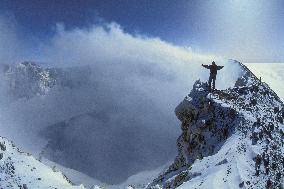
ANTARCTICA - REGION OF THE EREBUS VOLCANO - EREBUS EXPEDITION - WEDNESDAY FEBRUARY 2, 1994: JEAN LOUIS ETIENNE AND HIS TEAM REACH THE EDGES OF THE CRATER, AT THE HIGHEST POINT OF THE EREBUS VOLCANO, AT 3794 METERS ABOVE SEA LEVEL. Photo by Stephane Compoint/Only World/ABACAPRESS.COM

  •  
Illustration - Surtourisme

Illustration - Surtourisme

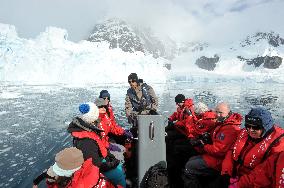
ANTARCTICA. WHEN THE SEA PERMITS, ZODIAC TRIPS ARE ORGANISED FOR THE PASSANGERS OF THE CRUISE SHIP L'AUSTRAL (COMPAGNIE DU PONANT). Photo by Antoine Lorgnier/Only World/ABACAPRESS.COM

  •  
Glacial forces at the edge of Antarctica

Glacial forces at the edge of Antarctica

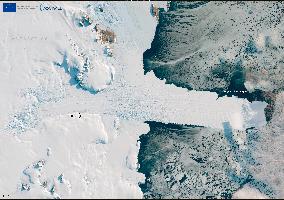
Handout photo show Copernicus Sentinel-2 image, acquired on 17 March 2025, shows the flow of the David Glacier as it feeds into the Drygalski Ice Tongue in East Antarctica. Stretching 90 km into the Ross Sea, the ice tongue is one of the largest floating ice extensions in Antarctica. The linear structure of the ice tongue reveals its dynamic forward movement over time, shaped by internal flow and ocean interaction. Ice tongues like this change in size and shape over time, reshaped by calving events, waves and storms. Copernicus delivers key data for tracking glacier dynamics and calving events in remote areas. Regular monitoring supports climate research, helping scientists assess how Antarctic ice loss contributes to global sea-level rise. Drygalski Ice Tongue, Antartica on March 17, 2025. Photo by European Union, Copernicus Sentinel-2 imagery via ABACAPRESS.COM

  •  
World Exposition in Osaka

World Exposition in Osaka

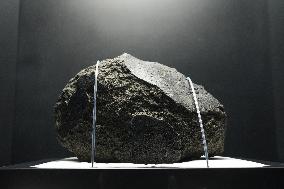
A "Mars rock," discovered by a Japanese research team in Antarctica in 2000, is on display at the Japan Pavilion at the World Exposition in Osaka on April 14, 2025.

  •  
World Exposition in Osaka

World Exposition in Osaka

A "Mars rock," discovered by a Japanese research team in Antarctica in 2000, is on display at the Japan Pavilion at the World Exposition in Osaka on April 14, 2025.

  •  
Icebreaker Shirase arrives in Australian port city

Icebreaker Shirase arrives in Australian port city

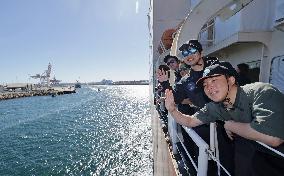
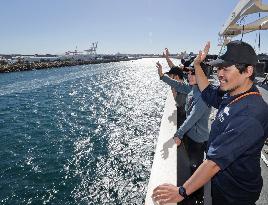
The Japanese icebreaker Shirase, carrying members of Antarctic research expeditions, is set to arrive in Fremantle, Australia, on Feb. 23, 2025, after completing a mission in Antarctica. The teams will fly out of the Australian port city on Feb. 24 to return to Japan. (Photo taken by accompanied journalist)

  •  
Icebreaker Shirase arrives in Australian port city

Icebreaker Shirase arrives in Australian port city

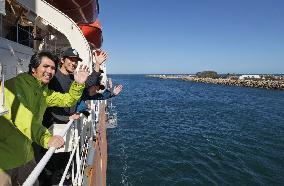
The Japanese icebreaker Shirase, carrying members of Antarctic research expeditions, is set to arrive in Fremantle, Australia, on Feb. 23, 2025, after completing a mission in Antarctica. The teams will fly out of the Australian port city on Feb. 24 to return to Japan. (Photo taken by accompanied journalist)

  •  
Icebreaker Shirase arrives in Australian port city

Icebreaker Shirase arrives in Australian port city

The Japanese icebreaker Shirase, carrying members of Antarctic research expeditions, is set to arrive in Fremantle, Australia, on Feb. 23, 2025, after completing a mission in Antarctica. The teams will fly out of the Australian port city on Feb. 24 to return to Japan. (Photo taken by accompanied journalist)

  •  
Aurora in Antarctica

Aurora in Antarctica

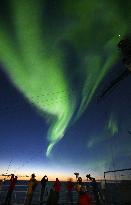
An aurora is observed by the crew of the Japanese icebreaker Shirase in Antarctica in February of 2025. (Photo taken by accompanied journalist)

  •  
Aurora in Antarctica

Aurora in Antarctica

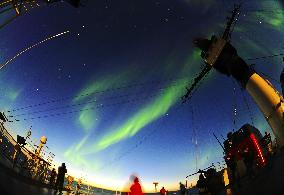
An aurora is observed by the crew of the Japanese icebreaker Shirase in Antarctica in early February of 2025. (Photo taken by accompanied journalist)

  •  
Japanese Antarctic observation teams hold change-over ceremony

Japanese Antarctic observation teams hold change-over ceremony

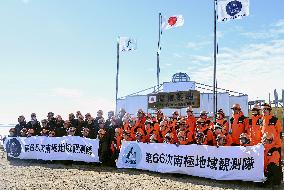
Members of the 65th Japanese Antarctic observation team (L) and those of the 66th team take a commemorative photo at Syowa Station, a permanent Japanese research station in Antarctica, on Feb. 1, 2025, as the two teams hold a change-over ceremony marking the start of yearlong management of the station, founded in 1957, under the 66th team. (Pool photo) (Photo by accompanying journalist)

  •  
Japanese Antarctic observation teams hold change-over ceremony

Japanese Antarctic observation teams hold change-over ceremony

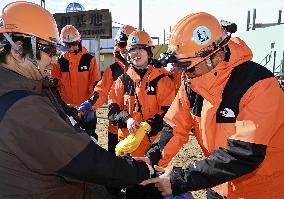
A member of the 65th Japanese Antarctic observation team (L) and one from the 66th team shake hands at Syowa Station, a permanent Japanese research station in Antarctica, on Feb. 1, 2025, as the two teams hold a change-over ceremony marking the start of yearlong management of the station, founded in 1957, under the 66th team. (Pool photo) (Photo by accompanying journalist)

  •  
Shirase icebreaker in Antarctic Sea

Shirase icebreaker in Antarctic Sea

Photo taken Dec. 31, 2024, shows the Japanese icebreaker Shirase off Japan's Syowa Station in Antarctica.

  •  
Shirase icebreaker in Antarctic Sea

Shirase icebreaker in Antarctic Sea

Photo taken Dec. 31, 2024, shows the Japanese icebreaker Shirase off Japan's Syowa Station in Antarctica.

  •  
China's 41st Antarctic Expedition

China's 41st Antarctic Expedition

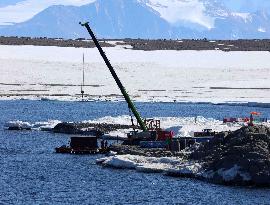
Supplies to be transported to China's Qinling Station are unloaded from a barge in Antarctica on Dec. 28, 2024. Chinese research icebreaker Xuelong 2, or Snow Dragon 2, and cargo vessel Yong Sheng, which are on China's 41st Antarctic expedition, arrived at China's Qinling Station in Antarctica on Dec. 25 and carried out unloading operations. Photo by Huang Taoming/Xinhua/ABACAPRESS.COM

  •  
China's 41st Antarctic Expedition

China's 41st Antarctic Expedition

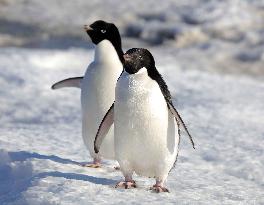
This photo taken on Dec. 27, 2024 shows penguins near China's Qinling Station in Antarctica. Chinese research icebreaker Xuelong 2, or Snow Dragon 2, and cargo vessel Yong Sheng, which are on China's 41st Antarctic expedition, arrived at China's Qinling Station in Antarctica on Dec. 25 and carried out unloading operations. Photo by Huang Taoming/Xinhua/ABACAPRESS.COM

  •  
China's 41st Antarctic Expedition

China's 41st Antarctic Expedition

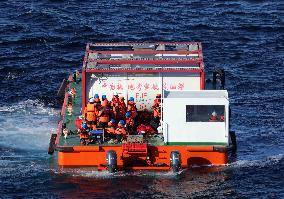
Members of China's 41st Antarctic expedition team are pictured on a barge while transporting supplies to China's Qinling Station in Antarctica on Dec. 25, 2024. Chinese research icebreaker Xuelong 2, or Snow Dragon 2, and cargo vessel Yong Sheng, which are on China's 41st Antarctic expedition, arrived at China's Qinling Station in Antarctica on Dec. 25 and carried out unloading operations. Photo by Huang Taoming/Xinhua/ABACAPRESS.COM

  •  
China's 41st Antarctic Expedition

China's 41st Antarctic Expedition

This photo taken on Dec. 25, 2024 shows a view of the mountains near China's Qinling Station in Antarctica. Chinese research icebreaker Xuelong 2, or Snow Dragon 2, and cargo vessel Yong Sheng, which are on China's 41st Antarctic expedition, arrived at China's Qinling Station in Antarctica on Dec. 25 and carried out unloading operations. Photo by Huang Taoming/Xinhua/ABACAPRESS.COM

  • Main
  • Top
  • Editorial
  • Creative
  • About Us
  • About ILG
  • Terms of use
  • Company
  • BEHIND
  • Price List
  • Single Plan
  • Monthly Plan
  • Services
  • Shooting
  • Rights Clearance
  • Support
  • FAQ
  • How To Buy
  • Contact Us
  • Become a Partner

© KYODO NEWS IMAGES INC

All Rights Reserved.

  • Editorial
  • Olympics
  • News
  • Sports
  • Japan
  • Tech
  • Royal
  • Disaster
  • NorthKorea
  • Old Japan
  • SNS

  • Creative
  • Food
  • Japan
  • Landscape
  • Animal
  • Popular
  • #Ukraine
  • #Thailand
  • #coronavirus
  • #N. Korea
  • #China
  • #Russia
  • #Ukraine
  • #Thailand
  • #coronavirus
  • #N. Korea
  • #China
  • #Russia
  • Food
  • Japan
  • Landscape
  • Animal
  • Olympics
  • News
  • Sports
  • Japan
  • Tech
  • Royal
  • Disaster
  • NorthKorea
  • Old Japan
  • SNS