•  
Spherical Radio Telescope - China

Spherical Radio Telescope - China

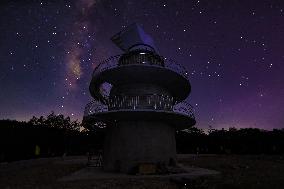
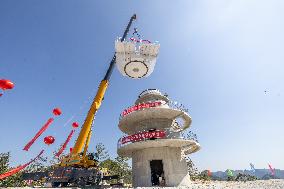
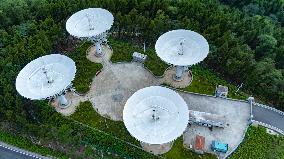
This photo taken on September 25, 2024 shows the newly installed first test prototype of the Core Array of China's Five-hundred-meter Aperture Spherical Radio Telescope under the starry sky in southwest China's Guizhou Province. Wednesday marks the eighth anniversary of the launch of China's Five-hundred-meter Aperture Spherical Radio Telescope (FAST). On the same day, the construction of the Core Array of FAST started, highlighting China's growing potential in global radio astronomy research. As a proposed extension of FAST, the world's largest single-dish radio telescope, the Core Array integrates 24 secondary 40-meter antennas implanted within 5 kilometers of the FAST site. The Chinese-designed array will combine the unprecedented sensitivity of FAST with a high angular resolution, thereby exceeding the capabilities at similar frequencies of next-generation arrays in the world. Photo by Xinhua/Liu Xu/ABACAPRESS.COM

  •  
Spherical Radio Telescope - China

Spherical Radio Telescope - China

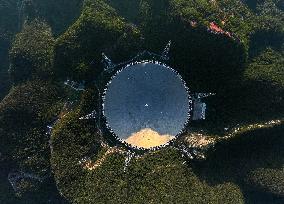
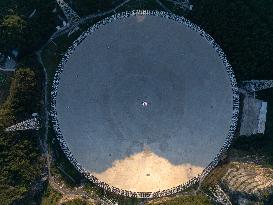
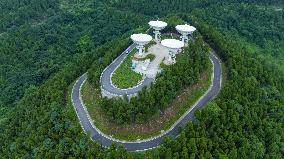
An aerial drone photo taken on September 25, 2024 shows China's Five-hundred-meter Aperture Spherical Radio Telescope (FAST) under maintenance in southwest China's Guizhou Province. Wednesday marks the eighth anniversary of the launch of China's Five-hundred-meter Aperture Spherical Radio Telescope (FAST). On the same day, the construction of the Core Array of FAST started, highlighting China's growing potential in global radio astronomy research. As a proposed extension of FAST, the world's largest single-dish radio telescope, the Core Array integrates 24 secondary 40-meter antennas implanted within 5 kilometers of the FAST site. The Chinese-designed array will combine the unprecedented sensitivity of FAST with a high angular resolution, thereby exceeding the capabilities at similar frequencies of next-generation arrays in the world. Photo by Xinhua/Liu Xu/ABACAPRESS.COM

  •  
Spherical Radio Telescope - China

Spherical Radio Telescope - China

An aerial drone photo taken on September 25, 2024 shows China's Five-hundred-meter Aperture Spherical Radio Telescope (FAST) under maintenance in southwest China's Guizhou Province. Wednesday marks the eighth anniversary of the launch of China's Five-hundred-meter Aperture Spherical Radio Telescope (FAST). On the same day, the construction of the Core Array of FAST started, highlighting China's growing potential in global radio astronomy research. As a proposed extension of FAST, the world's largest single-dish radio telescope, the Core Array integrates 24 secondary 40-meter antennas implanted within 5 kilometers of the FAST site. The Chinese-designed array will combine the unprecedented sensitivity of FAST with a high angular resolution, thereby exceeding the capabilities at similar frequencies of next-generation arrays in the world. Photo by Xinhua/Liu Xu/ABACAPRESS.COM

  •  
Spherical Radio Telescope - China

Spherical Radio Telescope - China

This photo taken on September 25, 2024 shows the newly installed first test prototype of the Core Array of China's Five-hundred-meter Aperture Spherical Radio Telescope under the starry sky in southwest China's Guizhou Province. Wednesday marks the eighth anniversary of the launch of China's Five-hundred-meter Aperture Spherical Radio Telescope (FAST). On the same day, the construction of the Core Array of FAST started, highlighting China's growing potential in global radio astronomy research. As a proposed extension of FAST, the world's largest single-dish radio telescope, the Core Array integrates 24 secondary 40-meter antennas implanted within 5 kilometers of the FAST site. The Chinese-designed array will combine the unprecedented sensitivity of FAST with a high angular resolution, thereby exceeding the capabilities at similar frequencies of next-generation arrays in the world. Photo by Xinhua/Liu Xu/ABACAPRESS.COM

  •  
Spherical Radio Telescope - China

Spherical Radio Telescope - China

This photo taken on September 25, 2024 shows the newly installed first test prototype of the Core Array of China's Five-hundred-meter Aperture Spherical Radio Telescope under the starry sky in southwest China's Guizhou Province. Wednesday marks the eighth anniversary of the launch of China's Five-hundred-meter Aperture Spherical Radio Telescope (FAST). On the same day, the construction of the Core Array of FAST started, highlighting China's growing potential in global radio astronomy research. As a proposed extension of FAST, the world's largest single-dish radio telescope, the Core Array integrates 24 secondary 40-meter antennas implanted within 5 kilometers of the FAST site. The Chinese-designed array will combine the unprecedented sensitivity of FAST with a high angular resolution, thereby exceeding the capabilities at similar frequencies of next-generation arrays in the world. Photo by Xinhua/Liu Xu/ABACAPRESS.COM

  •  
Spherical Radio Telescope - China

Spherical Radio Telescope - China

An aerial drone photo taken on September 25, 2024 shows China's Five-hundred-meter Aperture Spherical Radio Telescope (FAST) under maintenance in southwest China's Guizhou Province. Wednesday marks the eighth anniversary of the launch of China's Five-hundred-meter Aperture Spherical Radio Telescope (FAST). On the same day, the construction of the Core Array of FAST started, highlighting China's growing potential in global radio astronomy research. As a proposed extension of FAST, the world's largest single-dish radio telescope, the Core Array integrates 24 secondary 40-meter antennas implanted within 5 kilometers of the FAST site. The Chinese-designed array will combine the unprecedented sensitivity of FAST with a high angular resolution, thereby exceeding the capabilities at similar frequencies of next-generation arrays in the world. Photo by Xinhua/Liu Xu/ABACAPRESS.COM

  •  
Spherical Radio Telescope - China

Spherical Radio Telescope - China

An aerial drone photo taken on September 25, 2024 shows China's Five-hundred-meter Aperture Spherical Radio Telescope (FAST) under maintenance in southwest China's Guizhou Province. Wednesday marks the eighth anniversary of the launch of China's Five-hundred-meter Aperture Spherical Radio Telescope (FAST). On the same day, the construction of the Core Array of FAST started, highlighting China's growing potential in global radio astronomy research. As a proposed extension of FAST, the world's largest single-dish radio telescope, the Core Array integrates 24 secondary 40-meter antennas implanted within 5 kilometers of the FAST site. The Chinese-designed array will combine the unprecedented sensitivity of FAST with a high angular resolution, thereby exceeding the capabilities at similar frequencies of next-generation arrays in the world. Photo by Xinhua/Liu Xu/ABACAPRESS.COM

  •  
Spherical Radio Telescope - China

Spherical Radio Telescope - China

An aerial drone photo taken on September 25, 2024 shows China's Five-hundred-meter Aperture Spherical Radio Telescope (FAST) under maintenance in southwest China's Guizhou Province. Wednesday marks the eighth anniversary of the launch of China's Five-hundred-meter Aperture Spherical Radio Telescope (FAST). On the same day, the construction of the Core Array of FAST started, highlighting China's growing potential in global radio astronomy research. As a proposed extension of FAST, the world's largest single-dish radio telescope, the Core Array integrates 24 secondary 40-meter antennas implanted within 5 kilometers of the FAST site. The Chinese-designed array will combine the unprecedented sensitivity of FAST with a high angular resolution, thereby exceeding the capabilities at similar frequencies of next-generation arrays in the world. Photo by Xinhua/Liu Xu/ABACAPRESS.COM

  •  
Spherical Radio Telescope - China

Spherical Radio Telescope - China

An aerial drone photo taken on September 25, 2024 shows China's Five-hundred-meter Aperture Spherical Radio Telescope (FAST) under maintenance in southwest China's Guizhou Province. Wednesday marks the eighth anniversary of the launch of China's Five-hundred-meter Aperture Spherical Radio Telescope (FAST). On the same day, the construction of the Core Array of FAST started, highlighting China's growing potential in global radio astronomy research. As a proposed extension of FAST, the world's largest single-dish radio telescope, the Core Array integrates 24 secondary 40-meter antennas implanted within 5 kilometers of the FAST site. The Chinese-designed array will combine the unprecedented sensitivity of FAST with a high angular resolution, thereby exceeding the capabilities at similar frequencies of next-generation arrays in the world. Photo by Xinhua/Liu Xu/ABACAPRESS.COM

  •  
Spherical Radio Telescope - China

Spherical Radio Telescope - China

An aerial drone photo taken on September 25, 2024 shows China's Five-hundred-meter Aperture Spherical Radio Telescope (FAST) under maintenance in southwest China's Guizhou Province. Wednesday marks the eighth anniversary of the launch of China's Five-hundred-meter Aperture Spherical Radio Telescope (FAST). On the same day, the construction of the Core Array of FAST started, highlighting China's growing potential in global radio astronomy research. As a proposed extension of FAST, the world's largest single-dish radio telescope, the Core Array integrates 24 secondary 40-meter antennas implanted within 5 kilometers of the FAST site. The Chinese-designed array will combine the unprecedented sensitivity of FAST with a high angular resolution, thereby exceeding the capabilities at similar frequencies of next-generation arrays in the world. Photo by Xinhua/Liu Xu/ABACAPRESS.COM

  •  
500m Aperture Spherical Radio Telescope Construction - China

500m Aperture Spherical Radio Telescope Construction - China

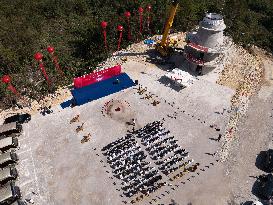
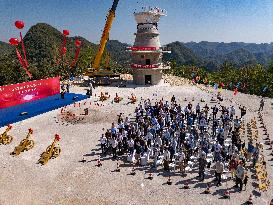
An aerial drone photo taken on September 25, 2024 shows the groundbreaking ceremony for the construction of the Core Array of China's Five-hundred-meter Aperture Spherical Radio Telescope (FAST) in southwest China's Guizhou Province. The construction of the Core Array of China's Five-hundred-meter Aperture Spherical Radio Telescope (FAST) started Wednesday, highlighting China's growing potential in global radio astronomy research. As a proposed extension of FAST, the Core Array integrates 24 secondary 40-meter antennas implanted within 5 kilometers of the FAST site, said Jiang Peng, deputy director of the National Astronomical Observatories under the Chinese Academy of Sciences. The Chinese-designed array will combine the unprecedented sensitivity of FAST with a high angular resolution, thereby exceeding the capabilities at similar frequencies of next-generation arrays in the world. The FAST Core Array is estimated to be completed and put into operation in 2027. (Photo by Liu Xu/Xinhua/ABACAPRESS.COM

  •  
500m Aperture Spherical Radio Telescope Construction - China

500m Aperture Spherical Radio Telescope Construction - China

This undated simulated diagram shows the Core Array of China's Five-hundred-meter Aperture Spherical Radio Telescope (FAST) upon completion in southwest China's Guizhou Province. The construction of the Core Array of China's Five-hundred-meter Aperture Spherical Radio Telescope (FAST) started Wednesday, highlighting China's growing potential in global radio astronomy research. As a proposed extension of FAST, the Core Array integrates 24 secondary 40-meter antennas implanted within 5 kilometers of the FAST site, said Jiang Peng, deputy director of the National Astronomical Observatories under the Chinese Academy of Sciences. The Chinese-designed array will combine the unprecedented sensitivity of FAST with a high angular resolution, thereby exceeding the capabilities at similar frequencies of next-generation arrays in the world. The FAST Core Array is estimated to be completed and put into operation in 2027. Photo by Xinhua/ABACAPRESS.COM

  •  
500m Aperture Spherical Radio Telescope Construction - China

500m Aperture Spherical Radio Telescope Construction - China

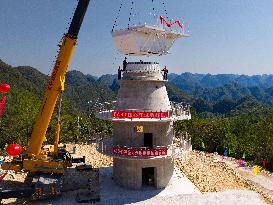
This photo taken on September 25, 2024 shows the first test prototype of the Core Array of China's Five-hundred-meter Aperture Spherical Radio Telescope (FAST) being installed in southwest China's Guizhou Province. The construction of the Core Array of China's Five-hundred-meter Aperture Spherical Radio Telescope (FAST) started Wednesday, highlighting China's growing potential in global radio astronomy research. As a proposed extension of FAST, the Core Array integrates 24 secondary 40-meter antennas implanted within 5 kilometers of the FAST site, said Jiang Peng, deputy director of the National Astronomical Observatories under the Chinese Academy of Sciences. The Chinese-designed array will combine the unprecedented sensitivity of FAST with a high angular resolution, thereby exceeding the capabilities at similar frequencies of next-generation arrays in the world. The FAST Core Array is estimated to be completed and put into operation in 2027. Photo by Ou Dongqu/Xinhua/ABACAPRESS.COM

  •  
500m Aperture Spherical Radio Telescope Construction - China

500m Aperture Spherical Radio Telescope Construction - China

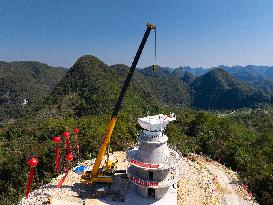
An aerial drone photo taken on September 25, 2024 shows the first test prototype of the Core Array of China's Five-hundred-meter Aperture Spherical Radio Telescope (FAST) being installed in southwest China's Guizhou Province. The construction of the Core Array of China's Five-hundred-meter Aperture Spherical Radio Telescope (FAST) started Wednesday, highlighting China's growing potential in global radio astronomy research. As a proposed extension of FAST, the Core Array integrates 24 secondary 40-meter antennas implanted within 5 kilometers of the FAST site, said Jiang Peng, deputy director of the National Astronomical Observatories under the Chinese Academy of Sciences. The Chinese-designed array will combine the unprecedented sensitivity of FAST with a high angular resolution, thereby exceeding the capabilities at similar frequencies of next-generation arrays in the world. The FAST Core Array is estimated to be completed and put into operation in 2027. (Photo by Liu Xu/Xinhua/ABACAPRESS.COM

  •  
500m Aperture Spherical Radio Telescope Construction - China

500m Aperture Spherical Radio Telescope Construction - China

An aerial drone photo taken on September 25, 2024 shows the newly installed first test prototype (up, R) of the Core Array of China's Five-hundred-meter Aperture Spherical Radio Telescope (FAST) and the FAST (up, L) in southwest China's Guizhou Province. The construction of the Core Array of China's Five-hundred-meter Aperture Spherical Radio Telescope (FAST) started Wednesday, highlighting China's growing potential in global radio astronomy research. As a proposed extension of FAST, the Core Array integrates 24 secondary 40-meter antennas implanted within 5 kilometers of the FAST site, said Jiang Peng, deputy director of the National Astronomical Observatories under the Chinese Academy of Sciences. The Chinese-designed array will combine the unprecedented sensitivity of FAST with a high angular resolution, thereby exceeding the capabilities at similar frequencies of next-generation arrays in the world. The FAST Core Array is estimated to be completed and put into operation in 2027. (Photo by Liu Xu/Xinhua/AB

  •  
500m Aperture Spherical Radio Telescope Construction - China

500m Aperture Spherical Radio Telescope Construction - China

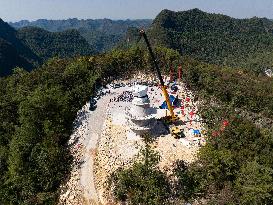
An aerial panoramic photo taken on September 25, 2024 shows the first test prototype of the Core Array of China's Five-hundred-meter Aperture Spherical Radio Telescope (FAST) being installed in southwest China's Guizhou Province. The construction of the Core Array of China's Five-hundred-meter Aperture Spherical Radio Telescope (FAST) started Wednesday, highlighting China's growing potential in global radio astronomy research. As a proposed extension of FAST, the Core Array integrates 24 secondary 40-meter antennas implanted within 5 kilometers of the FAST site, said Jiang Peng, deputy director of the National Astronomical Observatories under the Chinese Academy of Sciences. The Chinese-designed array will combine the unprecedented sensitivity of FAST with a high angular resolution, thereby exceeding the capabilities at similar frequencies of next-generation arrays in the world. The FAST Core Array is estimated to be completed and put into operation in 2027. Photo by Ou Dongqu/Xinhua/ABACAPRESS.COM

  •  
500m Aperture Spherical Radio Telescope Construction - China

500m Aperture Spherical Radio Telescope Construction - China

An aerial drone photo taken on September 25, 2024 shows the first test prototype of the Core Array of China's Five-hundred-meter Aperture Spherical Radio Telescope (FAST) being installed in southwest China's Guizhou Province. The construction of the Core Array of China's Five-hundred-meter Aperture Spherical Radio Telescope (FAST) started Wednesday, highlighting China's growing potential in global radio astronomy research. As a proposed extension of FAST, the Core Array integrates 24 secondary 40-meter antennas implanted within 5 kilometers of the FAST site, said Jiang Peng, deputy director of the National Astronomical Observatories under the Chinese Academy of Sciences. The Chinese-designed array will combine the unprecedented sensitivity of FAST with a high angular resolution, thereby exceeding the capabilities at similar frequencies of next-generation arrays in the world. The FAST Core Array is estimated to be completed and put into operation in 2027. Photo by Ou Dongqu/Xinhua/ABACAPRESS.COM

  •  
500m Aperture Spherical Radio Telescope Construction - China

500m Aperture Spherical Radio Telescope Construction - China

An aerial drone photo taken on September 25, 2024 shows the first test prototype of the Core Array of China's Five-hundred-meter Aperture Spherical Radio Telescope (FAST) being installed in southwest China's Guizhou Province. The construction of the Core Array of China's Five-hundred-meter Aperture Spherical Radio Telescope (FAST) started Wednesday, highlighting China's growing potential in global radio astronomy research. As a proposed extension of FAST, the Core Array integrates 24 secondary 40-meter antennas implanted within 5 kilometers of the FAST site, said Jiang Peng, deputy director of the National Astronomical Observatories under the Chinese Academy of Sciences. The Chinese-designed array will combine the unprecedented sensitivity of FAST with a high angular resolution, thereby exceeding the capabilities at similar frequencies of next-generation arrays in the world. The FAST Core Array is estimated to be completed and put into operation in 2027. (Photo by Liu Xu/Xinhua/ABACAPRESS.COM

  •  
500m Aperture Spherical Radio Telescope Construction - China

500m Aperture Spherical Radio Telescope Construction - China

An aerial drone photo taken on September 25, 2024 shows the groundbreaking ceremony for the construction of the Core Array of China's Five-hundred-meter Aperture Spherical Radio Telescope (FAST) in southwest China's Guizhou Province. The construction of the Core Array of China's Five-hundred-meter Aperture Spherical Radio Telescope (FAST) started Wednesday, highlighting China's growing potential in global radio astronomy research. As a proposed extension of FAST, the Core Array integrates 24 secondary 40-meter antennas implanted within 5 kilometers of the FAST site, said Jiang Peng, deputy director of the National Astronomical Observatories under the Chinese Academy of Sciences. The Chinese-designed array will combine the unprecedented sensitivity of FAST with a high angular resolution, thereby exceeding the capabilities at similar frequencies of next-generation arrays in the world. The FAST Core Array is estimated to be completed and put into operation in 2027. (Photo by Liu Xu/Xinhua/ABACAPRESS.COM

  •  
500m Aperture Spherical Radio Telescope Construction - China

500m Aperture Spherical Radio Telescope Construction - China

An aerial drone photo taken on September 25, 2024 shows China's Five-hundred-meter Aperture Spherical Radio Telescope (FAST) under maintenance in southwest China's Guizhou Province. The construction of the Core Array of China's Five-hundred-meter Aperture Spherical Radio Telescope (FAST) started Wednesday, highlighting China's growing potential in global radio astronomy research. As a proposed extension of FAST, the Core Array integrates 24 secondary 40-meter antennas implanted within 5 kilometers of the FAST site, said Jiang Peng, deputy director of the National Astronomical Observatories under the Chinese Academy of Sciences. The Chinese-designed array will combine the unprecedented sensitivity of FAST with a high angular resolution, thereby exceeding the capabilities at similar frequencies of next-generation arrays in the world. The FAST Core Array is estimated to be completed and put into operation in 2027. (Photo by Liu Xu/Xinhua/ABACAPRESS.COM

  •  
500m Aperture Spherical Radio Telescope Construction - China

500m Aperture Spherical Radio Telescope Construction - China

An aerial drone photo taken on September 25, 2024 shows the first test prototype of the Core Array of China's Five-hundred-meter Aperture Spherical Radio Telescope (FAST) being installed in southwest China's Guizhou Province. The construction of the Core Array of China's Five-hundred-meter Aperture Spherical Radio Telescope (FAST) started Wednesday, highlighting China's growing potential in global radio astronomy research. As a proposed extension of FAST, the Core Array integrates 24 secondary 40-meter antennas implanted within 5 kilometers of the FAST site, said Jiang Peng, deputy director of the National Astronomical Observatories under the Chinese Academy of Sciences. The Chinese-designed array will combine the unprecedented sensitivity of FAST with a high angular resolution, thereby exceeding the capabilities at similar frequencies of next-generation arrays in the world. The FAST Core Array is estimated to be completed and put into operation in 2027. (Photo by Liu Xu/Xinhua/ABACAPRESS.COM

  •  
500m Aperture Spherical Radio Telescope Construction - China

500m Aperture Spherical Radio Telescope Construction - China

An aerial drone photo taken on September 25, 2024 shows China's Five-hundred-meter Aperture Spherical Radio Telescope (FAST) under maintenance in southwest China's Guizhou Province. The construction of the Core Array of China's Five-hundred-meter Aperture Spherical Radio Telescope (FAST) started Wednesday, highlighting China's growing potential in global radio astronomy research. As a proposed extension of FAST, the Core Array integrates 24 secondary 40-meter antennas implanted within 5 kilometers of the FAST site, said Jiang Peng, deputy director of the National Astronomical Observatories under the Chinese Academy of Sciences. The Chinese-designed array will combine the unprecedented sensitivity of FAST with a high angular resolution, thereby exceeding the capabilities at similar frequencies of next-generation arrays in the world. The FAST Core Array is estimated to be completed and put into operation in 2027. (Photo by Liu Xu/Xinhua/ABACAPRESS.COM

  •  
500m Aperture Spherical Radio Telescope Construction - China

500m Aperture Spherical Radio Telescope Construction - China

A drone photo taken on September 25, 2024 shows the first test prototype of the Core Array of China's Five-hundred-meter Aperture Spherical Radio Telescope (FAST) being installed in southwest China's Guizhou Province. The construction of the Core Array of China's Five-hundred-meter Aperture Spherical Radio Telescope (FAST) started Wednesday, highlighting China's growing potential in global radio astronomy research. As a proposed extension of FAST, the Core Array integrates 24 secondary 40-meter antennas implanted within 5 kilometers of the FAST site, said Jiang Peng, deputy director of the National Astronomical Observatories under the Chinese Academy of Sciences. The Chinese-designed array will combine the unprecedented sensitivity of FAST with a high angular resolution, thereby exceeding the capabilities at similar frequencies of next-generation arrays in the world. The FAST Core Array is estimated to be completed and put into operation in 2027. (Photo by Liu Xu/Xinhua/ABACAPRESS.COM

  •  
500m Aperture Spherical Radio Telescope Construction - China

500m Aperture Spherical Radio Telescope Construction - China

A drone photo taken on September 24, 2024 shows the first test prototype of the Core Array of China's Five-hundred-meter Aperture Spherical Radio Telescope (FAST) waiting to be installed in southwest China's Guizhou Province. The construction of the Core Array of China's Five-hundred-meter Aperture Spherical Radio Telescope (FAST) started Wednesday, highlighting China's growing potential in global radio astronomy research. As a proposed extension of FAST, the Core Array integrates 24 secondary 40-meter antennas implanted within 5 kilometers of the FAST site, said Jiang Peng, deputy director of the National Astronomical Observatories under the Chinese Academy of Sciences. The Chinese-designed array will combine the unprecedented sensitivity of FAST with a high angular resolution, thereby exceeding the capabilities at similar frequencies of next-generation arrays in the world. The FAST Core Array is estimated to be completed and put into operation in 2027. (Photo by Liu Xu/Xinhua/ABACAPRESS.COM

  •  
China Compound Eye Project (Phase I) in Chongqing

China Compound Eye Project (Phase I) in Chongqing

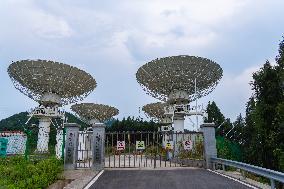
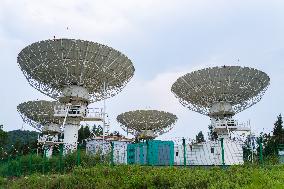
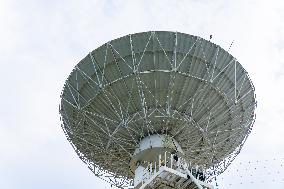
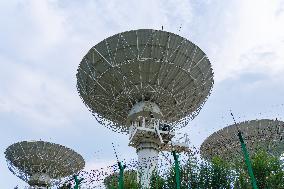
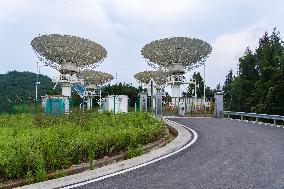
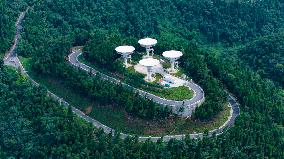
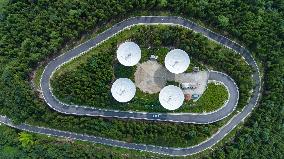
CHONGQING, CHINA - JULY 13, 2024 - China Compound Eye Project (Phase I) in Liangjiang New Area in Chongqing, China, July 13, 2024. "China Compound Eye" is a deep space detection radar planned by Chongqing Innovation Center of Beijing Institute of Technology in Chongqing, which can realize the observation of asteroids and Earth-like planets hundreds of millions of kilometers away. The "China Compound Eye" is a distributed radar consisting of 25 to 36 small antennas, each with a diameter of 25 meters, and one large antenna.

  •  
China Compound Eye Project (Phase I) in Chongqing

China Compound Eye Project (Phase I) in Chongqing

CHONGQING, CHINA - JULY 13, 2024 - China Compound Eye Project (Phase I) in Liangjiang New Area in Chongqing, China, July 13, 2024. "China Compound Eye" is a deep space detection radar planned by Chongqing Innovation Center of Beijing Institute of Technology in Chongqing, which can realize the observation of asteroids and Earth-like planets hundreds of millions of kilometers away. The "China Compound Eye" is a distributed radar consisting of 25 to 36 small antennas, each with a diameter of 25 meters, and one large antenna.

  •  
China Compound Eye Project (Phase I) in Chongqing

China Compound Eye Project (Phase I) in Chongqing

CHONGQING, CHINA - JULY 13, 2024 - China Compound Eye Project (Phase I) in Liangjiang New Area in Chongqing, China, July 13, 2024. "China Compound Eye" is a deep space detection radar planned by Chongqing Innovation Center of Beijing Institute of Technology in Chongqing, which can realize the observation of asteroids and Earth-like planets hundreds of millions of kilometers away. The "China Compound Eye" is a distributed radar consisting of 25 to 36 small antennas, each with a diameter of 25 meters, and one large antenna.

  •  
China Compound Eye Project (Phase I) in Chongqing

China Compound Eye Project (Phase I) in Chongqing

CHONGQING, CHINA - JULY 13, 2024 - China Compound Eye Project (Phase I) in Liangjiang New Area in Chongqing, China, July 13, 2024. "China Compound Eye" is a deep space detection radar planned by Chongqing Innovation Center of Beijing Institute of Technology in Chongqing, which can realize the observation of asteroids and Earth-like planets hundreds of millions of kilometers away. The "China Compound Eye" is a distributed radar consisting of 25 to 36 small antennas, each with a diameter of 25 meters, and one large antenna.

  •  
China Compound Eye Project (Phase I) in Chongqing

China Compound Eye Project (Phase I) in Chongqing

CHONGQING, CHINA - JULY 13, 2024 - China Compound Eye Project (Phase I) in Liangjiang New Area in Chongqing, China, July 13, 2024. "China Compound Eye" is a deep space detection radar planned by Chongqing Innovation Center of Beijing Institute of Technology in Chongqing, which can realize the observation of asteroids and Earth-like planets hundreds of millions of kilometers away. The "China Compound Eye" is a distributed radar consisting of 25 to 36 small antennas, each with a diameter of 25 meters, and one large antenna.

  •  
China Compound Eye Project (Phase I) in Chongqing

China Compound Eye Project (Phase I) in Chongqing

CHONGQING, CHINA - JULY 13, 2024 - China Compound Eye Project (Phase I) in Liangjiang New Area in Chongqing, China, July 13, 2024. "China Compound Eye" is a deep space detection radar planned by Chongqing Innovation Center of Beijing Institute of Technology in Chongqing, which can realize the observation of asteroids and Earth-like planets hundreds of millions of kilometers away. The "China Compound Eye" is a distributed radar consisting of 25 to 36 small antennas, each with a diameter of 25 meters, and one large antenna.

  •  
China Compound Eye Project (Phase I) in Chongqing

China Compound Eye Project (Phase I) in Chongqing

CHONGQING, CHINA - JULY 13, 2024 - China Compound Eye Project (Phase I) in Liangjiang New Area in Chongqing, China, July 13, 2024. "China Compound Eye" is a deep space detection radar planned by Chongqing Innovation Center of Beijing Institute of Technology in Chongqing, which can realize the observation of asteroids and Earth-like planets hundreds of millions of kilometers away. The "China Compound Eye" is a distributed radar consisting of 25 to 36 small antennas, each with a diameter of 25 meters, and one large antenna.

  •  
China Compound Eye Project (Phase I) in Chongqing

China Compound Eye Project (Phase I) in Chongqing

CHONGQING, CHINA - JULY 13, 2024 - China Compound Eye Project (Phase I) in Liangjiang New Area in Chongqing, China, July 13, 2024. "China Compound Eye" is a deep space detection radar planned by Chongqing Innovation Center of Beijing Institute of Technology in Chongqing, which can realize the observation of asteroids and Earth-like planets hundreds of millions of kilometers away. The "China Compound Eye" is a distributed radar consisting of 25 to 36 small antennas, each with a diameter of 25 meters, and one large antenna.

  •  
China Compound Eye Project (Phase I) in Chongqing

China Compound Eye Project (Phase I) in Chongqing

CHONGQING, CHINA - JULY 13, 2024 - China Compound Eye Project (Phase I) in Liangjiang New Area in Chongqing, China, July 13, 2024. "China Compound Eye" is a deep space detection radar planned by Chongqing Innovation Center of Beijing Institute of Technology in Chongqing, which can realize the observation of asteroids and Earth-like planets hundreds of millions of kilometers away. The "China Compound Eye" is a distributed radar consisting of 25 to 36 small antennas, each with a diameter of 25 meters, and one large antenna.

  •  
China Compound Eye Project (Phase I) in Chongqing

China Compound Eye Project (Phase I) in Chongqing

CHONGQING, CHINA - JULY 13, 2024 - China Compound Eye Project (Phase I) in Liangjiang New Area in Chongqing, China, July 13, 2024. "China Compound Eye" is a deep space detection radar planned by Chongqing Innovation Center of Beijing Institute of Technology in Chongqing, which can realize the observation of asteroids and Earth-like planets hundreds of millions of kilometers away. The "China Compound Eye" is a distributed radar consisting of 25 to 36 small antennas, each with a diameter of 25 meters, and one large antenna.

  •  
China Compound Eye Project (Phase I) in Chongqing

China Compound Eye Project (Phase I) in Chongqing

CHONGQING, CHINA - JULY 13, 2024 - China Compound Eye Project (Phase I) in Liangjiang New Area in Chongqing, China, July 13, 2024. "China Compound Eye" is a deep space detection radar planned by Chongqing Innovation Center of Beijing Institute of Technology in Chongqing, which can realize the observation of asteroids and Earth-like planets hundreds of millions of kilometers away. The "China Compound Eye" is a distributed radar consisting of 25 to 36 small antennas, each with a diameter of 25 meters, and one large antenna.

  •  
China Compound Eye Project (Phase I) in Chongqing

China Compound Eye Project (Phase I) in Chongqing

CHONGQING, CHINA - JULY 13, 2024 - China Compound Eye Project (Phase I) in Liangjiang New Area in Chongqing, China, July 13, 2024. "China Compound Eye" is a deep space detection radar planned by Chongqing Innovation Center of Beijing Institute of Technology in Chongqing, which can realize the observation of asteroids and Earth-like planets hundreds of millions of kilometers away. The "China Compound Eye" is a distributed radar consisting of 25 to 36 small antennas, each with a diameter of 25 meters, and one large antenna.

  •  
China Compound Eye Project (Phase I) in Chongqing

China Compound Eye Project (Phase I) in Chongqing

CHONGQING, CHINA - JULY 13, 2024 - China Compound Eye Project (Phase I) in Liangjiang New Area in Chongqing, China, July 13, 2024. "China Compound Eye" is a deep space detection radar planned by Chongqing Innovation Center of Beijing Institute of Technology in Chongqing, which can realize the observation of asteroids and Earth-like planets hundreds of millions of kilometers away. The "China Compound Eye" is a distributed radar consisting of 25 to 36 small antennas, each with a diameter of 25 meters, and one large antenna.

  •  
China Compound Eye Project (Phase I) in Chongqing

China Compound Eye Project (Phase I) in Chongqing

CHONGQING, CHINA - JULY 13, 2024 - China Compound Eye Project (Phase I) in Liangjiang New Area in Chongqing, China, July 13, 2024. "China Compound Eye" is a deep space detection radar planned by Chongqing Innovation Center of Beijing Institute of Technology in Chongqing, which can realize the observation of asteroids and Earth-like planets hundreds of millions of kilometers away. The "China Compound Eye" is a distributed radar consisting of 25 to 36 small antennas, each with a diameter of 25 meters, and one large antenna.

  •  
China Compound Eye Project (Phase I) in Chongqing

China Compound Eye Project (Phase I) in Chongqing

CHONGQING, CHINA - JULY 13, 2024 - China Compound Eye Project (Phase I) in Liangjiang New Area in Chongqing, China, July 13, 2024. "China Compound Eye" is a deep space detection radar planned by Chongqing Innovation Center of Beijing Institute of Technology in Chongqing, which can realize the observation of asteroids and Earth-like planets hundreds of millions of kilometers away. The "China Compound Eye" is a distributed radar consisting of 25 to 36 small antennas, each with a diameter of 25 meters, and one large antenna.

  •  
China Compound Eye Project (Phase I) in Chongqing

China Compound Eye Project (Phase I) in Chongqing

CHONGQING, CHINA - JULY 13, 2024 - China Compound Eye Project (Phase I) in Liangjiang New Area in Chongqing, China, July 13, 2024. "China Compound Eye" is a deep space detection radar planned by Chongqing Innovation Center of Beijing Institute of Technology in Chongqing, which can realize the observation of asteroids and Earth-like planets hundreds of millions of kilometers away. The "China Compound Eye" is a distributed radar consisting of 25 to 36 small antennas, each with a diameter of 25 meters, and one large antenna.

  •  
China Compound Eye Project (Phase I) in Chongqing

China Compound Eye Project (Phase I) in Chongqing

CHONGQING, CHINA - JULY 13, 2024 - China Compound Eye Project (Phase I) in Liangjiang New Area in Chongqing, China, July 13, 2024. "China Compound Eye" is a deep space detection radar planned by Chongqing Innovation Center of Beijing Institute of Technology in Chongqing, which can realize the observation of asteroids and Earth-like planets hundreds of millions of kilometers away. The "China Compound Eye" is a distributed radar consisting of 25 to 36 small antennas, each with a diameter of 25 meters, and one large antenna.

  •  
China Compound Eye Project (Phase I) in Chongqing

China Compound Eye Project (Phase I) in Chongqing

CHONGQING, CHINA - JULY 13, 2024 - China Compound Eye Project (Phase I) in Liangjiang New Area in Chongqing, China, July 13, 2024. "China Compound Eye" is a deep space detection radar planned by Chongqing Innovation Center of Beijing Institute of Technology in Chongqing, which can realize the observation of asteroids and Earth-like planets hundreds of millions of kilometers away. The "China Compound Eye" is a distributed radar consisting of 25 to 36 small antennas, each with a diameter of 25 meters, and one large antenna.

  •  

Russia launches Progress MS-26 cargo spaceship into orbit

STORY: Russia launches Progress MS-26 cargo spaceship into orbit SHOOTING TIME: Feb. 15, 2024 DATELINE: Feb. 16, 2024 LENGTH: 00:01:32 LOCATION: Moscow CATEGORY: SCIENCE/TECHNOLOGY SHOTLIST: 1. various of the Progress MS-26 cargo spaceship (source: Roscosmos) STORYLINE: A Russian Soyuz-2.1a rocket carrying the Progress MS-26 cargo spaceship blasted off from the Baikonur Cosmodrome in Kazakhstan and reached the designated orbit as planned, the Russian space corporation Roscosmos said on Thursday. Roscosmos said that the MS-26 lifted off at 06:25 Moscow time (0325 GMT), reached its designated orbit, separated from the third stage of the rocket, and deployed its antennas and solar panels in a normal mode. The docking of the Progress MS-26 to the Zvezda service module of the Russian segment of the International Space Station (ISS) is scheduled for Saturday at 09:12 Moscow time (0612 GMT). The cargo ship will deliver 2,518 kg of supplies to the station. Among the cargo, there are consumables for a new scient

  •  
RELAY Communications Satellite

RELAY Communications Satellite

The RELAY communications satellite shown in a December 11, 1962 photo released by NASA. The 172-pound spacecraft eight sided prism is 33 inches high and 29 inches in diameter at tis broad end. The exterior composed of eight honeycomb aluminum panels studded with 8,215 solar cells. The communications satellite prime function will be used for technical experiments although public demonstrations of television, telephone calls, teletype photo facsimile, and high speed data will be transmitted. The 18-inch long wideband communications antenna points toward the Earth while Relay travels through space. Three of the four telemetry antennas are shown extending from the broad end. Mounted on the center panel are special solar cells and diodes which will be tested for radiation damage. Relay 1 was launched atop a Delta B rocket on December 13, 1962, from LC-17A at Cape Canaveral Air Force Station. Credit: NASA via CNP

  •  

Russia launches cargo ship to int'l space station

STORY: Russia launches cargo ship to int'l space station DATELINE: Feb. 10, 2023 LENGTH: 00:01:53 LOCATION: Moscow CATEGORY: SCIENCE SHOTLIST: 1. various of the launch and animation (Source: Roscosmos) STORYLINE: Russia successfully launched the Progress MS-22 cargo spacecraft to the International Space Station (ISS) on Thursday, Russia's state space corporation Roscosmos said. The Soyuz-2.1a carrier rocket blasted off from the Baikonur cosmodrome in Kazakhstan at 9:15 a.m. Moscow time (0615 GMT), Roscosmos said in a press release. The spacecraft separated from the third stage of the rocket, and its antennas and solar panels opened normally. The ship is scheduled to dock to the ISS on Saturday. The Progress MS-22 will deliver over 2.5 tons of cargo to the ISS, namely 720 kg of fuel, 420 liters of drinking water, 40 kg of nitrogen and 1,354 kg of various equipment and materials. Xinhua News Agency correspondents reporting from Moscow. (XHTV)

  •  
Japanese astronomers at Alma radio telescope

Japanese astronomers at Alma radio telescope

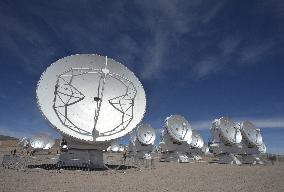
ATACAMA PLATEAU, Chile - Photo taken at dusk on March 15, 2013, shows some of the Alma telescope antennas set up on the Atacama Plateau, Chile, against the backdrop of the Licancabur volcano on the border with Bolivia. The telescope was built at an altitude of around 5,000 meters on the Atacama Plateau to explore cosmic mysteries.

  •  
Japanese astronomers at Alma radio telescope

Japanese astronomers at Alma radio telescope

ATACAMA PLATEAU, Chile - Researchers and other people concerned pose for photos in front of one of the dish antennas of the Alma telescope, during an opening ceremony on March 13, 2013. The telescope was built at an altitude of around 5,000 meters on the Atacama Plateau in Chile to explore cosmic mysteries.

  •  
Japanese astronomers at Alma radio telescope

Japanese astronomers at Alma radio telescope

ATACAMA PLATEAU, Chile - Shinya Komugi (L), a researcher at the National Astronomical Observatory of Japan, talks with colleagues on March 12, 2013, in an operation center located at an altitude of 2,900 meters, where they remotely control the antennas of the Alma telescope. The telescope was built at an altitude of around 5,000 meters on the Atacama Plateau in Chile to explore cosmic mysteries.

  •  
Alma radio telescope

Alma radio telescope

ATACAMA PLATEAU, Chile - Reporters are shown the parabolic antennas of the Alma radio telescope on an Andean plateau in northern Chile on March 12, 2013, ahead of the inauguration of the telescope the next day. The facility can capture radio waves from outer space with 66 antennas working in synchrony.

  •  
Alma radio telescope

Alma radio telescope

ATACAMA PLATEAU, Chile - Reporters are shown the parabolic antennas of the Alma radio telescope on an Andean plateau in northern Chile on March 12, 2013, ahead of the inauguration of the telescope the next day. The facility can capture radio waves from outer space with 66 antennas working in synchrony.

  • Main
  • Top
  • Editorial
  • Creative
  • About Us
  • About ILG
  • Terms of use
  • Company
  • BEHIND
  • Price List
  • Single Plan
  • Monthly Plan
  • Services
  • Shooting
  • Rights Clearance
  • Support
  • FAQ
  • How To Buy
  • Contact Us
  • Become a Partner

© KYODO NEWS IMAGES INC

All Rights Reserved.

  • Editorial
  • Olympics
  • News
  • Sports
  • Japan
  • Tech
  • Royal
  • Disaster
  • NorthKorea
  • Old Japan
  • SNS

  • Creative
  • Food
  • Japan
  • Landscape
  • Animal
  • Popular
  • #Ukraine
  • #Thailand
  • #coronavirus
  • #N. Korea
  • #Russia
  • #China
  • #Ukraine
  • #Thailand
  • #coronavirus
  • #N. Korea
  • #Russia
  • #China
  • Food
  • Japan
  • Landscape
  • Animal
  • Olympics
  • News
  • Sports
  • Japan
  • Tech
  • Royal
  • Disaster
  • NorthKorea
  • Old Japan
  • SNS