•  

China launches new relay satellite for Earth-Moon communications

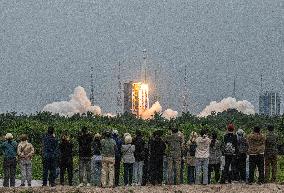
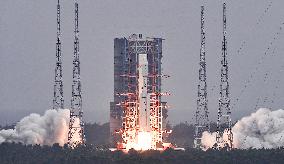
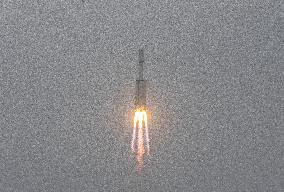
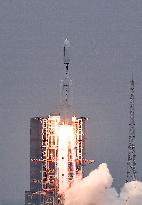
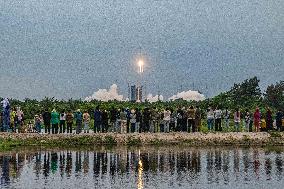
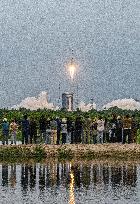
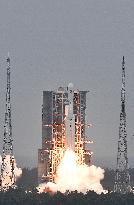
STORY: China launches new relay satellite for Earth-Moon communications SHOOTING TIME: March 20, 2024 DATELINE: March 20, 2024 LENGTH: 0:00:44 LOCATION: WENCHANG, China CATEGORY: SCIENCE SHOTLIST: 1. various of the launch of a new relay satellite STORYLINE: China launched a new relay satellite on Wednesday to provide Earth-Moon communications services. This marks a key step for the country's future lunar exploration missions such as retrieving samples from the far side of the moon. A Long March-8 rocket, carrying the satellite dubbed Queqiao-2, or magpie bridge-2, soared into the sky at 8:31 a.m. from the Wenchang Space Launch Site in south China's Hainan Province. After 24 minutes of flight, the satellite separated from the rocket, and entered the planned Earth-Moon transfer orbit with the perigee at 200 kilometers and the apogee at 420,000 kilometers. The satellite's solar panels and communications antennae were unfolded, according to the China National Space Administration. Xinhua News Agency

  •  
(EyesOnSci)CHINA-HAINAN-RELAY SATELLITE QUEQIAO-2-LAUNCH (CN)

(EyesOnSci)CHINA-HAINAN-RELAY SATELLITE QUEQIAO-2-LAUNCH (CN)

(240320) -- WENCHANG, March 20, 2024 (Xinhua) -- A Long March-8 rocket, carrying the relay satellite Queqiao-2 for Earth-Moon communications, blasts off at the Wenchang Space Launch Center in south China's Hainan Province, March 20, 2024. After 24 minutes of flight, the satellite separated from the rocket, and entered the planned Earth-Moon transfer orbit with the perigee at 200 kilometers and the apogee at 420,000 kilometers. The satellite's solar panels and communications antennae were unfolded, according to the China National Space Administration. (Xinhua/Pu Xiaoxu)

  •  
(EyesOnSci)CHINA-HAINAN-RELAY SATELLITE QUEQIAO-2-LAUNCH (CN)

(EyesOnSci)CHINA-HAINAN-RELAY SATELLITE QUEQIAO-2-LAUNCH (CN)

(240320) -- WENCHANG, March 20, 2024 (Xinhua) -- A Long March-8 rocket, carrying the relay satellite Queqiao-2 for Earth-Moon communications, blasts off at the Wenchang Space Launch Center in south China's Hainan Province, March 20, 2024. After 24 minutes of flight, the satellite separated from the rocket, and entered the planned Earth-Moon transfer orbit with the perigee at 200 kilometers and the apogee at 420,000 kilometers. The satellite's solar panels and communications antennae were unfolded, according to the China National Space Administration. (Xinhua/Yang Guanyu)

  •  
(EyesOnSci)CHINA-HAINAN-RELAY SATELLITE QUEQIAO-2-LAUNCH (CN)

(EyesOnSci)CHINA-HAINAN-RELAY SATELLITE QUEQIAO-2-LAUNCH (CN)

(240320) -- WENCHANG, March 20, 2024 (Xinhua) -- A Long March-8 rocket, carrying the relay satellite Queqiao-2 for Earth-Moon communications, blasts off at the Wenchang Space Launch Center in south China's Hainan Province, March 20, 2024. After 24 minutes of flight, the satellite separated from the rocket, and entered the planned Earth-Moon transfer orbit with the perigee at 200 kilometers and the apogee at 420,000 kilometers. The satellite's solar panels and communications antennae were unfolded, according to the China National Space Administration. (Xinhua/Pu Xiaoxu)

  •  
(EyesOnSci)CHINA-HAINAN-RELAY SATELLITE QUEQIAO-2-LAUNCH (CN)

(EyesOnSci)CHINA-HAINAN-RELAY SATELLITE QUEQIAO-2-LAUNCH (CN)

(240320) -- WENCHANG, March 20, 2024 (Xinhua) -- A Long March-8 rocket, carrying the relay satellite Queqiao-2 for Earth-Moon communications, blasts off at the Wenchang Space Launch Center in south China's Hainan Province, March 20, 2024. After 24 minutes of flight, the satellite separated from the rocket, and entered the planned Earth-Moon transfer orbit with the perigee at 200 kilometers and the apogee at 420,000 kilometers. The satellite's solar panels and communications antennae were unfolded, according to the China National Space Administration. (Xinhua/Yang Guanyu)

  •  
(EyesOnSci)CHINA-HAINAN-RELAY SATELLITE QUEQIAO-2-LAUNCH (CN)

(EyesOnSci)CHINA-HAINAN-RELAY SATELLITE QUEQIAO-2-LAUNCH (CN)

(240320) -- WENCHANG, March 20, 2024 (Xinhua) -- A Long March-8 rocket, carrying the relay satellite Queqiao-2 for Earth-Moon communications, blasts off at the Wenchang Space Launch Center in south China's Hainan Province, March 20, 2024. After 24 minutes of flight, the satellite separated from the rocket, and entered the planned Earth-Moon transfer orbit with the perigee at 200 kilometers and the apogee at 420,000 kilometers. The satellite's solar panels and communications antennae were unfolded, according to the China National Space Administration. (Xinhua/Pu Xiaoxu)

  •  
(EyesOnSci)CHINA-HAINAN-RELAY SATELLITE QUEQIAO-2-LAUNCH (CN)

(EyesOnSci)CHINA-HAINAN-RELAY SATELLITE QUEQIAO-2-LAUNCH (CN)

(240320) -- WENCHANG, March 20, 2024 (Xinhua) -- A Long March-8 rocket, carrying the relay satellite Queqiao-2 for Earth-Moon communications, blasts off at the Wenchang Space Launch Center in south China's Hainan Province, March 20, 2024. After 24 minutes of flight, the satellite separated from the rocket, and entered the planned Earth-Moon transfer orbit with the perigee at 200 kilometers and the apogee at 420,000 kilometers. The satellite's solar panels and communications antennae were unfolded, according to the China National Space Administration. (Xinhua/Pu Xiaoxu)

  •  
(EyesOnSci)CHINA-HAINAN-RELAY SATELLITE QUEQIAO-2-LAUNCH (CN)

(EyesOnSci)CHINA-HAINAN-RELAY SATELLITE QUEQIAO-2-LAUNCH (CN)

(240320) -- WENCHANG, March 20, 2024 (Xinhua) -- A Long March-8 rocket, carrying the relay satellite Queqiao-2 for Earth-Moon communications, blasts off at the Wenchang Space Launch Center in south China's Hainan Province, March 20, 2024. After 24 minutes of flight, the satellite separated from the rocket, and entered the planned Earth-Moon transfer orbit with the perigee at 200 kilometers and the apogee at 420,000 kilometers. The satellite's solar panels and communications antennae were unfolded, according to the China National Space Administration. (Xinhua/Yang Guanyu)

  •  
William Shatner Goes To Space On Blue Origin Rocket

William Shatner Goes To Space On Blue Origin Rocket

Handout photo dated October 13, 2021 of the crew of NS-18 at apogee. Hollywood actor William Shatner has become the oldest person to go to space as he blasted off aboard the Blue Origin sub-orbital capsule. The 90-year-old, who played Captain James T Kirk in the Star Trek films and TV series, took off from the Texas desert with three other individuals. Mr Shatner's trip on the rocket system - developed by Amazon.com founder Jeff Bezos - lasted about 10 minutes. Photo by Blue Origin via ABACAPRESS.COM

  •  
William Shatner Goes To Space On Blue Origin Rocket

William Shatner Goes To Space On Blue Origin Rocket

Handout photo dated October 13, 2021 of the crew of NS-18 at apogee. Hollywood actor William Shatner has become the oldest person to go to space as he blasted off aboard the Blue Origin sub-orbital capsule. The 90-year-old, who played Captain James T Kirk in the Star Trek films and TV series, took off from the Texas desert with three other individuals. Mr Shatner's trip on the rocket system - developed by Amazon.com founder Jeff Bezos - lasted about 10 minutes. Photo by Blue Origin via ABACAPRESS.COM

  • Main
  • Top
  • Editorial
  • Creative
  • About Us
  • About ILG
  • Terms of use
  • Company
  • BEHIND
  • Price List
  • Single Plan
  • Monthly Plan
  • Services
  • Shooting
  • Rights Clearance
  • Support
  • FAQ
  • How To Buy
  • Contact Us
  • Become a Partner

© KYODO NEWS IMAGES INC

All Rights Reserved.

  • Editorial
  • Olympics
  • News
  • Sports
  • Japan
  • Tech
  • Royal
  • Disaster
  • NorthKorea
  • Old Japan
  • SNS
  • Creative
  • Food
  • Japan
  • Landscape
  • Animal
  • Popular
  • #Ukraine
  • #Russia
  • #coronavirus
  • #N. Korea
  • #China
  • #Thailand
  • #Ukraine
  • #Russia
  • #coronavirus
  • #N. Korea
  • #China
  • #Thailand
  • Food
  • Japan
  • Landscape
  • Animal
  • Olympics
  • News
  • Sports
  • Japan
  • Tech
  • Royal
  • Disaster
  • NorthKorea
  • Old Japan
  • SNS