•  
(InXizang)CHINA-XIZANG-FORMER SERF-NEW LIFE-PADMA (CN)

(InXizang)CHINA-XIZANG-FORMER SERF-NEW LIFE-PADMA (CN)

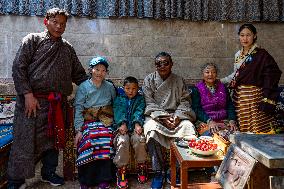
(240401) -- LHASA, April 1, 2024 (Xinhua) -- Padma (4th L) poses for a photo with his family at his residence in Shannan, southwest China's Xizang Autonomous Region, March 27, 2024. Padma was born into a herdsman family in 1942 in Xainza County in Nagqu City, southwest China's Xizang Autonomous Region. During his childhood, his family was obliged to herd over 1,000 sheep for aristocrats, only receiving meager sustenance in return. In March 1959, people in Xizang launched the democratic reform that ended the region's feudal serfdom. This pivotal moment allowed Padma to pursue a better life for himself and his community. Padma established a new settlement with his companions by the Garco Lake in the 1970s, and was awarded the title of "national model worker" in 1989. Padma now resides in the comfort of a two-story dwelling at the relocation site in Shannan City. (Xinhua/Jiang Fan)

  •  
(InXizang)CHINA-XIZANG-FORMER SERF-NEW LIFE-PADMA (CN)

(InXizang)CHINA-XIZANG-FORMER SERF-NEW LIFE-PADMA (CN)

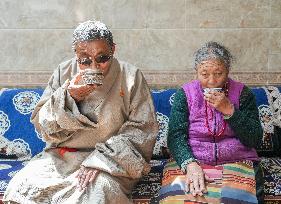
(240401) -- LHASA, April 1, 2024 (Xinhua) -- Padma and his wife enjoy butter tea at his residence in Shannan, southwest China's Xizang Autonomous Region, March 27, 2024. Padma was born into a herdsman family in 1942 in Xainza County in Nagqu City, southwest China's Xizang Autonomous Region. During his childhood, his family was obliged to herd over 1,000 sheep for aristocrats, only receiving meager sustenance in return. In March 1959, people in Xizang launched the democratic reform that ended the region's feudal serfdom. This pivotal moment allowed Padma to pursue a better life for himself and his community. Padma established a new settlement with his companions by the Garco Lake in the 1970s, and was awarded the title of "national model worker" in 1989. Padma now resides in the comfort of a two-story dwelling at the relocation site in Shannan City. (Xinhua/Ding Ting)

  •  
(InXizang)CHINA-XIZANG-FORMER SERF-NEW LIFE-PADMA (CN)

(InXizang)CHINA-XIZANG-FORMER SERF-NEW LIFE-PADMA (CN)

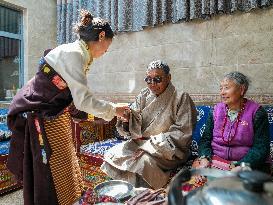
(240401) -- LHASA, April 1, 2024 (Xinhua) -- Padma's granddaughter (L) serves a cup of butter tea to Padma and his wife at his residence in Shannan, southwest China's Xizang Autonomous Region, March 27, 2024. Padma was born into a herdsman family in 1942 in Xainza County in Nagqu City, southwest China's Xizang Autonomous Region. During his childhood, his family was obliged to herd over 1,000 sheep for aristocrats, only receiving meager sustenance in return. In March 1959, people in Xizang launched the democratic reform that ended the region's feudal serfdom. This pivotal moment allowed Padma to pursue a better life for himself and his community. Padma established a new settlement with his companions by the Garco Lake in the 1970s, and was awarded the title of "national model worker" in 1989. Padma now resides in the comfort of a two-story dwelling at the relocation site in Shannan City. (Xinhua/Ding Ting)

  •  
(InXizang)CHINA-XIZANG-FORMER SERF-NEW LIFE-PADMA (CN)

(InXizang)CHINA-XIZANG-FORMER SERF-NEW LIFE-PADMA (CN)

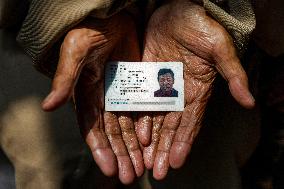
(240401) -- LHASA, April 1, 2024 (Xinhua) -- Padma presents his ID card in Shannan, southwest China's Xizang Autonomous Region, March 27, 2024. Padma was born into a herdsman family in 1942 in Xainza County in Nagqu City, southwest China's Xizang Autonomous Region. During his childhood, his family was obliged to herd over 1,000 sheep for aristocrats, only receiving meager sustenance in return. In March 1959, people in Xizang launched the democratic reform that ended the region's feudal serfdom. This pivotal moment allowed Padma to pursue a better life for himself and his community. Padma established a new settlement with his companions by the Garco Lake in the 1970s, and was awarded the title of "national model worker" in 1989. Padma now resides in the comfort of a two-story dwelling at the relocation site in Shannan City. (Xinhua/Jiang Fan)

  •  
(InXizang)CHINA-XIZANG-FORMER SERF-NEW LIFE-PADMA (CN)

(InXizang)CHINA-XIZANG-FORMER SERF-NEW LIFE-PADMA (CN)

(240401) -- LHASA, April 1, 2024 (Xinhua) -- Padma is pictured in Shannan, southwest China's Xizang Autonomous Region, March 27, 2024. Padma was born into a herdsman family in 1942 in Xainza County in Nagqu City, southwest China's Xizang Autonomous Region. During his childhood, his family was obliged to herd over 1,000 sheep for aristocrats, only receiving meager sustenance in return. In March 1959, people in Xizang launched the democratic reform that ended the region's feudal serfdom. This pivotal moment allowed Padma to pursue a better life for himself and his community. Padma established a new settlement with his companions by the Garco Lake in the 1970s, and was awarded the title of "national model worker" in 1989. Padma now resides in the comfort of a two-story dwelling at the relocation site in Shannan City. (Xinhua/Jiang Fan)

  •  
(InXizang)CHINA-XIZANG-FORMER SERF-NEW LIFE-PADMA (CN)

(InXizang)CHINA-XIZANG-FORMER SERF-NEW LIFE-PADMA (CN)

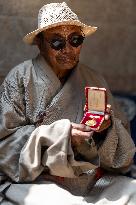
(240401) -- LHASA, April 1, 2024 (Xinhua) -- Padma presents the "national model worker" medal in Shannan, southwest China's Xizang Autonomous Region, March 27, 2024. Padma was born into a herdsman family in 1942 in Xainza County in Nagqu City, southwest China's Xizang Autonomous Region. During his childhood, his family was obliged to herd over 1,000 sheep for aristocrats, only receiving meager sustenance in return. In March 1959, people in Xizang launched the democratic reform that ended the region's feudal serfdom. This pivotal moment allowed Padma to pursue a better life for himself and his community. Padma established a new settlement with his companions by the Garco Lake in the 1970s, and was awarded the title of "national model worker" in 1989. Padma now resides in the comfort of a two-story dwelling at the relocation site in Shannan City. (Xinhua/Jiang Fan)

  •  
Japanese Princess Aiko at historical experience hall

Japanese Princess Aiko at historical experience hall

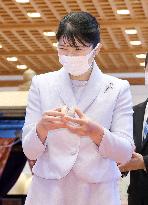
Japanese Princess Aiko picks up seashells while watching local children experience a traditional shell-matching game once played by aristocrats at the Itsukinomiya Hall for Historical Experience in Meiwa in the central Japan prefecture of Mie on March 27, 2024. (Pool photo)

  •  

Outdoor poetry party in Kyoto

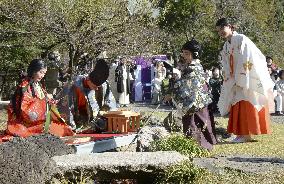
People dressed in traditional attire take part in "Kyokusui no En," a reenactment of the Heian aristocrats' poetry party, in a garden at the Kitano Tenmangu shrine in the western Japan city of Kyoto on Nov. 3, 2023. (Kyodo)

  •  
Outdoor poetry party in Kyoto

Outdoor poetry party in Kyoto

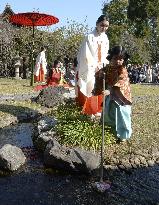
A sake cup is sent flowing down a stream in a garden during Kyokusui no En, a reenactment of the Heian aristocrats' poetry party, at the Kitano Tenmangu shrine in the western Japan city of Kyoto on Nov. 3, 2023.

  •  
Outdoor poetry party in Kyoto

Outdoor poetry party in Kyoto

People dressed in traditional attire take part in "Kyokusui no En," a reenactment of the Heian aristocrats' poetry party, in a garden at the Kitano Tenmangu shrine in the western Japan city of Kyoto on Nov. 3, 2023.

  •  
Ancient New Year 'Kemari' ball game reenacted in Kyoto

Ancient New Year 'Kemari' ball game reenacted in Kyoto

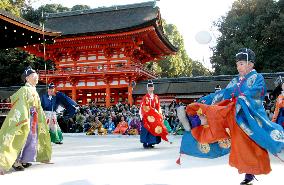
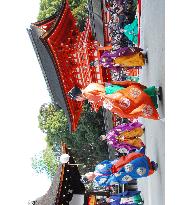
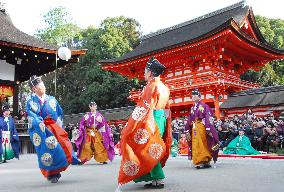
KYOTO, Japan - Members of the Kemari Preservation Society dressed in court costume play the ancient ball game in the courtyard of Shimogamo Shrine in Kyoto on Jan. 4, 2010, during the traditional ''First Kemari of the Year'' festival. Introduced from China, Kemari, played with a ball made of deer leather, was popular among aristocrats during Japan's Heian era (794-1192).

  •  
Ancient New Year 'Kemari' ball game reenacted in Kyoto

Ancient New Year 'Kemari' ball game reenacted in Kyoto

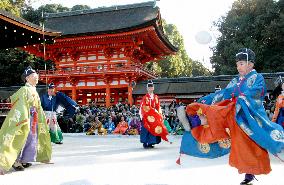
KYOTO, Japan - Dressed in ancient court costume, members of the Kemari Preservation Society in Kyoto play a ''Kemari'' ball game in the courtyard of Shimogamo Shrine in Kyoto on Jan. 4 in the traditional ''First Kemari of the Year'' festival. First introduced from China, Kemari, a game with a ball made of deer leather, was popular among aristocrats in Japan's Heian era (circa 794-1185 A.D.). The team that keeps the ball in the air with the largest number of kicks wins the game.

  •  
Gothic & Lolita fashion

Gothic & Lolita fashion

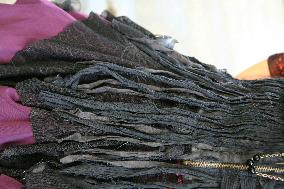
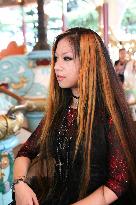
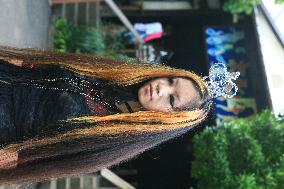
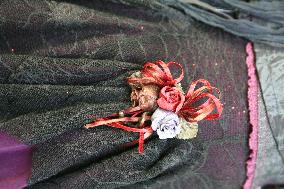
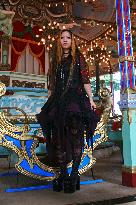
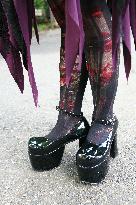
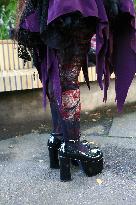
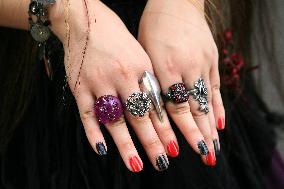
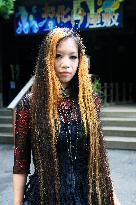
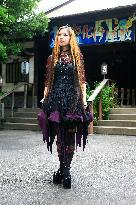
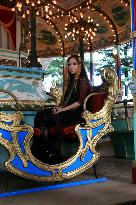
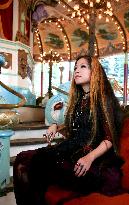
Gothic Lolita Fashion PRANOIA. Gothic Lolita Fashion reminiscent of European aristocrats from the 15th to 19th centuries. This style has cuteness and dark, mysterious elements. In particular, it spread widely among the visual kei band MALICE MIZER and its fans who like this style in the late 90's, and became popular with magazines such as "KERA" (first published in 1998) and "Gothic & Lolita Bible". August 30, 2008, Nerima, Tokyo, Japan.(Credit:style-arena.jp/Kyodo News Images)

  •  
Gothic & Lolita fashion

Gothic & Lolita fashion

Gothic Lolita Fashion PRANOIA. Gothic Lolita Fashion reminiscent of European aristocrats from the 15th to 19th centuries. This style has cuteness and dark, mysterious elements. In particular, it spread widely among the visual kei band MALICE MIZER and its fans who like this style in the late 90's, and became popular with magazines such as "KERA" (first published in 1998) and "Gothic & Lolita Bible". August 30, 2008, Nerima, Tokyo, Japan.(Credit:style-arena.jp/Kyodo News Images)

  •  
Gothic & Lolita fashion

Gothic & Lolita fashion

Gothic Lolita Fashion PRANOIA. Gothic Lolita Fashion reminiscent of European aristocrats from the 15th to 19th centuries. This style has cuteness and dark, mysterious elements. In particular, it spread widely among the visual kei band MALICE MIZER and its fans who like this style in the late 90's, and became popular with magazines such as "KERA" (first published in 1998) and "Gothic & Lolita Bible". August 30, 2008, Nerima, Tokyo, Japan.(Credit:style-arena.jp/Kyodo News Images)

  •  
Gothic & Lolita fashion

Gothic & Lolita fashion

Gothic Lolita Fashion PRANOIA. Gothic Lolita Fashion reminiscent of European aristocrats from the 15th to 19th centuries. This style has cuteness and dark, mysterious elements. In particular, it spread widely among the visual kei band MALICE MIZER and its fans who like this style in the late 90's, and became popular with magazines such as "KERA" (first published in 1998) and "Gothic & Lolita Bible". August 30, 2008, Nerima, Tokyo, Japan.(Credit:style-arena.jp/Kyodo News Images)

  •  
Gothic & Lolita fashion

Gothic & Lolita fashion

Gothic Lolita Fashion PRANOIA. Gothic Lolita Fashion reminiscent of European aristocrats from the 15th to 19th centuries. This style has cuteness and dark, mysterious elements. In particular, it spread widely among the visual kei band MALICE MIZER and its fans who like this style in the late 90's, and became popular with magazines such as "KERA" (first published in 1998) and "Gothic & Lolita Bible". August 30, 2008, Nerima, Tokyo, Japan.(Credit:style-arena.jp/Kyodo News Images)

  •  
Gothic & Lolita fashion

Gothic & Lolita fashion

Gothic Lolita Fashion PRANOIA. Gothic Lolita Fashion reminiscent of European aristocrats from the 15th to 19th centuries. This style has cuteness and dark, mysterious elements. In particular, it spread widely among the visual kei band MALICE MIZER and its fans who like this style in the late 90's, and became popular with magazines such as "KERA" (first published in 1998) and "Gothic & Lolita Bible". August 30, 2008, Nerima, Tokyo, Japan.(Credit:style-arena.jp/Kyodo News Images)

  •  
Gothic & Lolita fashion

Gothic & Lolita fashion

Gothic Lolita Fashion PRANOIA. Gothic Lolita Fashion reminiscent of European aristocrats from the 15th to 19th centuries. This style has cuteness and dark, mysterious elements. In particular, it spread widely among the visual kei band MALICE MIZER and its fans who like this style in the late 90's, and became popular with magazines such as "KERA" (first published in 1998) and "Gothic & Lolita Bible". August 30, 2008, Nerima, Tokyo, Japan.(Credit:style-arena.jp/Kyodo News Images)

  •  
Gothic & Lolita fashion

Gothic & Lolita fashion

Gothic Lolita Fashion PRANOIA. Gothic Lolita Fashion reminiscent of European aristocrats from the 15th to 19th centuries. This style has cuteness and dark, mysterious elements. In particular, it spread widely among the visual kei band MALICE MIZER and its fans who like this style in the late 90's, and became popular with magazines such as "KERA" (first published in 1998) and "Gothic & Lolita Bible". August 30, 2008, Nerima, Tokyo, Japan.(Credit:style-arena.jp/Kyodo News Images)

  •  
Gothic & Lolita fashion

Gothic & Lolita fashion

Gothic Lolita Fashion PRANOIA. Gothic Lolita Fashion reminiscent of European aristocrats from the 15th to 19th centuries. This style has cuteness and dark, mysterious elements. In particular, it spread widely among the visual kei band MALICE MIZER and its fans who like this style in the late 90's, and became popular with magazines such as "KERA" (first published in 1998) and "Gothic & Lolita Bible". August 30, 2008, Nerima, Tokyo, Japan.(Credit:style-arena.jp/Kyodo News Images)

  •  
Gothic & Lolita fashion

Gothic & Lolita fashion

Gothic Lolita Fashion PRANOIA. Gothic Lolita Fashion reminiscent of European aristocrats from the 15th to 19th centuries. This style has cuteness and dark, mysterious elements. In particular, it spread widely among the visual kei band MALICE MIZER and its fans who like this style in the late 90's, and became popular with magazines such as "KERA" (first published in 1998) and "Gothic & Lolita Bible". August 30, 2008, Nerima, Tokyo, Japan.(Credit:style-arena.jp/Kyodo News Images)

  •  
Gothic & Lolita fashion

Gothic & Lolita fashion

Gothic Lolita Fashion PRANOIA. Gothic Lolita Fashion reminiscent of European aristocrats from the 15th to 19th centuries. This style has cuteness and dark, mysterious elements. In particular, it spread widely among the visual kei band MALICE MIZER and its fans who like this style in the late 90's, and became popular with magazines such as "KERA" (first published in 1998) and "Gothic & Lolita Bible". August 30, 2008, Nerima, Tokyo, Japan.(Credit:style-arena.jp/Kyodo News Images)

  •  
Gothic & Lolita fashion

Gothic & Lolita fashion

Gothic Lolita Fashion PRANOIA. Gothic Lolita Fashion reminiscent of European aristocrats from the 15th to 19th centuries. This style has cuteness and dark, mysterious elements. In particular, it spread widely among the visual kei band MALICE MIZER and its fans who like this style in the late 90's, and became popular with magazines such as "KERA" (first published in 1998) and "Gothic & Lolita Bible". August 30, 2008, Nerima, Tokyo, Japan.(Credit:style-arena.jp/Kyodo News Images)

  •  
Gothic & Lolita fashion

Gothic & Lolita fashion

Gothic Lolita Fashion PRANOIA. Gothic Lolita Fashion reminiscent of European aristocrats from the 15th to 19th centuries. This style has cuteness and dark, mysterious elements. In particular, it spread widely among the visual kei band MALICE MIZER and its fans who like this style in the late 90's, and became popular with magazines such as "KERA" (first published in 1998) and "Gothic & Lolita Bible". August 30, 2008, Nerima, Tokyo, Japan.(Credit:style-arena.jp/Kyodo News Images)

  •  
Gothic & Lolita fashion

Gothic & Lolita fashion

Gothic Lolita Fashion PRANOIA. Gothic Lolita Fashion reminiscent of European aristocrats from the 15th to 19th centuries. This style has cuteness and dark, mysterious elements. In particular, it spread widely among the visual kei band MALICE MIZER and its fans who like this style in the late 90's, and became popular with magazines such as "KERA" (first published in 1998) and "Gothic & Lolita Bible". August 30, 2008, Nerima, Tokyo, Japan.(Credit:style-arena.jp/Kyodo News Images)

  •  
LADY CHATTERLEY

LADY CHATTERLEY

LADY CHATTERLEY [BEL / FR 2006] [L-R] MARINA HANDS as Lady Chatterley, JEAN-LOUIS COULL'OCH as Parkin LADY CHATTERLEY [BEL / FR 2006] [L-R] MARINA HANDS as Lady Chatterley, JEAN-LOUIS COULL'OCH as Parkin Date: 2006

  •  
Ancient New Year 'Kemari' ball game reenacted in Kyoto

Ancient New Year 'Kemari' ball game reenacted in Kyoto

KYOTO, Japan - Dressed in ancient court costume, members of the Kemari Preservation Society in Kyoto play a ''Kemari'' ball game in the courtyard of Shimogamo Shrine in Kyoto on Jan. 4 in the traditional ''First Kemari of the Year'' festival. First introduced from China, Kemari, a game with a ball made of deer leather, was popular among aristocrats in Japan's Heian era (circa 794-1185 A.D.). The team that keeps the ball in the air with the largest number of kicks wins the game. (Kyodo)

  •  
Ancient New Year 'Kemari' ball game reenacted in Kyoto

Ancient New Year 'Kemari' ball game reenacted in Kyoto

KYOTO, Japan - Members of the Kemari Preservation Society dressed in court costume play the ancient ball game in the courtyard of Shimogamo Shrine in Kyoto on Jan. 4, 2010, during the traditional ''First Kemari of the Year'' festival. Introduced from China, Kemari, played with a ball made of deer leather, was popular among aristocrats during Japan's Heian era (794-1192). (Kyodo)

  • Main
  • Top
  • Editorial
  • Creative
  • About Us
  • About ILG
  • Terms of use
  • Company
  • BEHIND
  • Price List
  • Single Plan
  • Monthly Plan
  • Services
  • Shooting
  • Rights Clearance
  • Support
  • FAQ
  • How To Buy
  • Contact Us
  • Become a Partner

© KYODO NEWS IMAGES INC

All Rights Reserved.

  • Editorial
  • Olympics
  • News
  • Sports
  • Japan
  • Tech
  • Royal
  • Disaster
  • NorthKorea
  • Old Japan
  • SNS
  • Creative
  • Food
  • Japan
  • Landscape
  • Animal
  • Popular
  • #Ukraine
  • #China
  • #coronavirus
  • #N. Korea
  • #Russia
  • #Thailand
  • #Ukraine
  • #China
  • #coronavirus
  • #N. Korea
  • #Russia
  • #Thailand
  • Food
  • Japan
  • Landscape
  • Animal
  • Olympics
  • News
  • Sports
  • Japan
  • Tech
  • Royal
  • Disaster
  • NorthKorea
  • Old Japan
  • SNS