•  
Miguel Mejia the Artisan Behind Twenty Years Crafting the Black and Whites Carnival - Carnaval de Negros y Blancos 2026

Miguel Mejia the Artisan Behind Twenty Years Crafting the Black and Whites Carnival - Carnaval de Negros y Blancos 2026

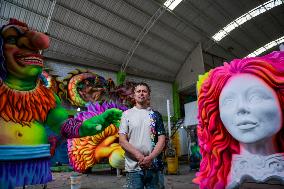
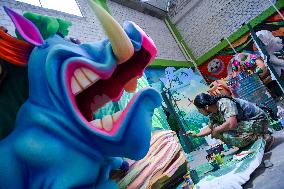
Master artisan Miguel Mejia works on the float “Encanto”, set to parade on January 6, 2026, during the Multicolor Border Carnival in Ipiales, Colombia on January 2, 2026. His work involves the design and construction of the float, an artisanal process that combines creativity, technical skill, and collective labor. this year, Mejia marks 20 consecutive years of participation in the carnival, establishing himself as one of the artisans contributing to the continuity and development of this cultural tradition. He is supported by a team responsible for painting, modeling, and other tasks to prepare the float for the main parade. Photo by: Camilo Erasso/Long Visual Press/ABACAPRESS.COM

  •  
Miguel Mejia the Artisan Behind Twenty Years Crafting the Black and Whites Carnival - Carnaval de Negros y Blancos 2026

Miguel Mejia the Artisan Behind Twenty Years Crafting the Black and Whites Carnival - Carnaval de Negros y Blancos 2026

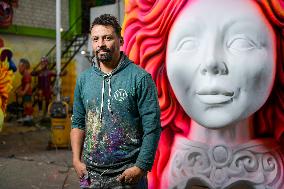
Master artisan Miguel Mejia works on the float “Encanto”, set to parade on January 6, 2026, during the Multicolor Border Carnival in Ipiales, Colombia on January 2, 2026. His work involves the design and construction of the float, an artisanal process that combines creativity, technical skill, and collective labor. this year, Mejia marks 20 consecutive years of participation in the carnival, establishing himself as one of the artisans contributing to the continuity and development of this cultural tradition. He is supported by a team responsible for painting, modeling, and other tasks to prepare the float for the main parade. Photo by: Camilo Erasso/Long Visual Press/ABACAPRESS.COM

  •  
Miguel Mejia the Artisan Behind Twenty Years Crafting the Black and Whites Carnival - Carnaval de Negros y Blancos 2026

Miguel Mejia the Artisan Behind Twenty Years Crafting the Black and Whites Carnival - Carnaval de Negros y Blancos 2026

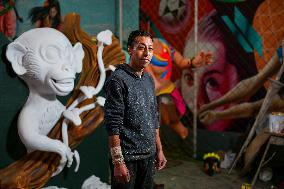
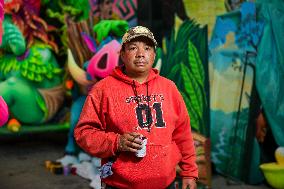
Master artisan Daniela Salazar works on the float “Encanto”, set to parade on January 6, 2026, during the Multicolor Border Carnival in Ipiales, Colombia on January 2, 2026. Her work involves the painting and construction of the float, an artisanal process that combines creativity, technical skill, and collective labor. this year, Miguel Mejia and his team marks 20 consecutive years of participation in the carnival, establishing himself as one of the artisans contributing to the continuity and development of this cultural tradition. He is supported by a team responsible for painting, modeling, and other tasks to prepare the float for the main parade. Photo by: Camilo Erasso/Long Visual Press/ABACAPRESS.COM

  •  
Miguel Mejia the Artisan Behind Twenty Years Crafting the Black and Whites Carnival - Carnaval de Negros y Blancos 2026

Miguel Mejia the Artisan Behind Twenty Years Crafting the Black and Whites Carnival - Carnaval de Negros y Blancos 2026

Master artisan Andres de la Cruz works on the float “Encanto”, set to parade on January 6, 2026, during the Multicolor Border Carnival in Ipiales, Colombia on January 2, 2026. His work involves the painting and construction of the float, an artisanal process that combines creativity, technical skill, and collective labor. this year, Miguel Mejia and his team marks 20 consecutive years of participation in the carnival, establishing himself as one of the artisans contributing to the continuity and development of this cultural tradition. He is supported by a team responsible for painting, modeling, and other tasks to prepare the float for the main parade. Photo by: Camilo Erasso/Long Visual Press/ABACAPRESS.COM

  •  
Miguel Mejia the Artisan Behind Twenty Years Crafting the Black and Whites Carnival - Carnaval de Negros y Blancos 2026

Miguel Mejia the Artisan Behind Twenty Years Crafting the Black and Whites Carnival - Carnaval de Negros y Blancos 2026

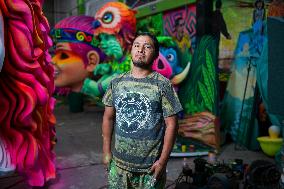
Master artisan Alvaro Cordoba works on the float “Encanto”, set to parade on January 6, 2026, during the Multicolor Border Carnival in Ipiales, Colombia on January 2, 2026. his work involves the painting of the float, an artisanal process that combines creativity, technical skill, and collective labor. this year, Miguel Mejia and his team marks 20 consecutive years of participation in the carnival, establishing himself as one of the artisans contributing to the continuity and development of this cultural tradition. He is supported by a team responsible for painting, modeling, and other tasks to prepare the float for the main parade. Photo by: Camilo Erasso/Long Visual Press/ABACAPRESS.COM

  •  
Miguel Mejia the Artisan Behind Twenty Years Crafting the Black and Whites Carnival - Carnaval de Negros y Blancos 2026

Miguel Mejia the Artisan Behind Twenty Years Crafting the Black and Whites Carnival - Carnaval de Negros y Blancos 2026

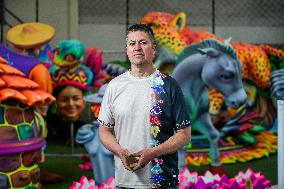
Master artisan Miguel Mejia works on the float “Encanto”, set to parade on January 6, 2026, during the Multicolor Border Carnival in Ipiales, Colombia on January 2, 2026. His work involves the design and construction of the float, an artisanal process that combines creativity, technical skill, and collective labor. this year, Mejia marks 20 consecutive years of participation in the carnival, establishing himself as one of the artisans contributing to the continuity and development of this cultural tradition. He is supported by a team responsible for painting, modeling, and other tasks to prepare the float for the main parade. Photo by: Camilo Erasso/Long Visual Press/ABACAPRESS.COM

  •  
Miguel Mejia the Artisan Behind Twenty Years Crafting the Black and Whites Carnival - Carnaval de Negros y Blancos 2026

Miguel Mejia the Artisan Behind Twenty Years Crafting the Black and Whites Carnival - Carnaval de Negros y Blancos 2026

Master artisan Alvaro Cordoba works on the float “Encanto”, set to parade on January 6, 2026, during the Multicolor Border Carnival in Ipiales, Colombia on January 2, 2026. his work involves the painting of the float, an artisanal process that combines creativity, technical skill, and collective labor. this year, Miguel Mejia and his team marks 20 consecutive years of participation in the carnival, establishing himself as one of the artisans contributing to the continuity and development of this cultural tradition. He is supported by a team responsible for painting, modeling, and other tasks to prepare the float for the main parade. Photo by: Camilo Erasso/Long Visual Press/ABACAPRESS.COM

  •  
Miguel Mejia the Artisan Behind Twenty Years Crafting the Black and Whites Carnival - Carnaval de Negros y Blancos 2026

Miguel Mejia the Artisan Behind Twenty Years Crafting the Black and Whites Carnival - Carnaval de Negros y Blancos 2026

Master artisan Arnold Reales works on the float “Encanto”, set to parade on January 6, 2026, during the Multicolor Border Carnival in Ipiales, Colombia on January 2, 2026. his work involves the painting of the float, an artisanal process that combines creativity, technical skill, and collective labor. this year, Miguel Mejia and his team marks 20 consecutive years of participation in the carnival, establishing himself as one of the artisans contributing to the continuity and development of this cultural tradition. He is supported by a team responsible for painting, modeling, and other tasks to prepare the float for the main parade. Photo by: Camilo Erasso/Long Visual Press/ABACAPRESS.COM

  •  
Miguel Mejia the Artisan Behind Twenty Years Crafting the Black and Whites Carnival - Carnaval de Negros y Blancos 2026

Miguel Mejia the Artisan Behind Twenty Years Crafting the Black and Whites Carnival - Carnaval de Negros y Blancos 2026

Master artisan Arnold Reales works on the float “Encanto”, set to parade on January 6, 2026, during the Multicolor Border Carnival in Ipiales, Colombia on January 2, 2026. his work involves the painting of the float, an artisanal process that combines creativity, technical skill, and collective labor. this year, Miguel Mejia and his team marks 20 consecutive years of participation in the carnival, establishing himself as one of the artisans contributing to the continuity and development of this cultural tradition. He is supported by a team responsible for painting, modeling, and other tasks to prepare the float for the main parade. Photo by: Camilo Erasso/Long Visual Press/ABACAPRESS.COM

  •  
Miguel Mejia the Artisan Behind Twenty Years Crafting the Black and Whites Carnival - Carnaval de Negros y Blancos 2026

Miguel Mejia the Artisan Behind Twenty Years Crafting the Black and Whites Carnival - Carnaval de Negros y Blancos 2026

Master artisan Andres Ceballos works on the float “Encanto”, set to parade on January 6, 2026, during the Multicolor Border Carnival in Ipiales, Colombia on January 2, 2026. his work involves the painting of the float, an artisanal process that combines creativity, technical skill, and collective labor. this year, Miguel Mejia and his team marks 20 consecutive years of participation in the carnival, establishing himself as one of the artisans contributing to the continuity and development of this cultural tradition. He is supported by a team responsible for painting, modeling, and other tasks to prepare the float for the main parade. Photo by: Camilo Erasso/Long Visual Press/ABACAPRESS.COM

  •  
Gourd Painting

Gourd Painting

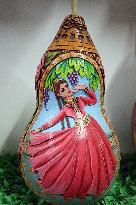
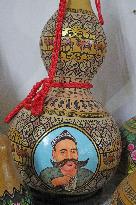
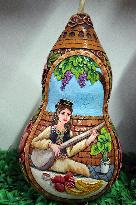
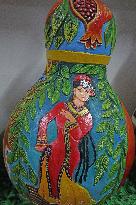
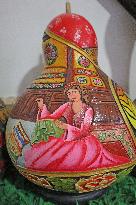
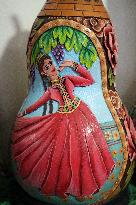
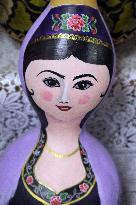
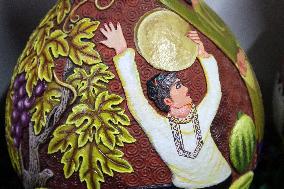
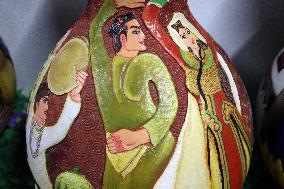
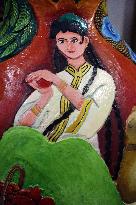
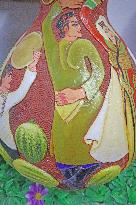
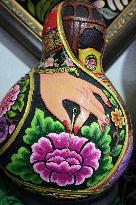
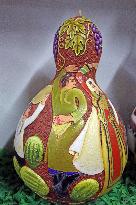
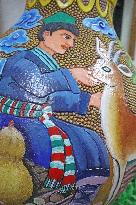
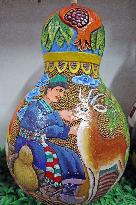
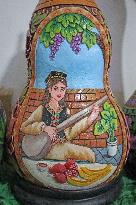
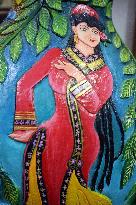
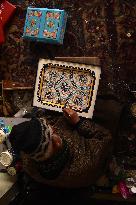
Gourd painting meticulously crafted by artisans using gourds as carriers in Hami, Xinjiang, China on December 28, 2025.

  •  
Gourd Painting

Gourd Painting

Gourd painting meticulously crafted by artisans using gourds as carriers in Hami, Xinjiang, China on December 28, 2025.

  •  
Gourd Painting

Gourd Painting

Gourd painting meticulously crafted by artisans using gourds as carriers in Hami, Xinjiang, China on December 28, 2025.

  •  
Gourd Painting

Gourd Painting

Gourd painting meticulously crafted by artisans using gourds as carriers in Hami, Xinjiang, China on December 28, 2025.

  •  
Gourd Painting

Gourd Painting

Gourd painting meticulously crafted by artisans using gourds as carriers in Hami, Xinjiang, China on December 28, 2025.

  •  
Gourd Painting

Gourd Painting

Gourd painting meticulously crafted by artisans using gourds as carriers in Hami, Xinjiang, China on December 28, 2025.

  •  
Gourd Painting

Gourd Painting

Gourd painting meticulously crafted by artisans using gourds as carriers in Hami, Xinjiang, China on December 28, 2025.

  •  
Gourd Painting

Gourd Painting

Gourd painting meticulously crafted by artisans using gourds as carriers in Hami, Xinjiang, China on December 28, 2025.

  •  
Gourd Painting

Gourd Painting

Gourd painting meticulously crafted by artisans using gourds as carriers in Hami, Xinjiang, China on December 28, 2025.

  •  
Gourd Painting

Gourd Painting

Gourd painting meticulously crafted by artisans using gourds as carriers in Hami, Xinjiang, China on December 28, 2025.

  •  
Gourd Painting

Gourd Painting

Gourd painting meticulously crafted by artisans using gourds as carriers in Hami, Xinjiang, China on December 28, 2025.

  •  
Gourd Painting

Gourd Painting

Gourd painting meticulously crafted by artisans using gourds as carriers in Hami, Xinjiang, China on December 28, 2025.

  •  
Gourd Painting

Gourd Painting

Gourd painting meticulously crafted by artisans using gourds as carriers in Hami, Xinjiang, China on December 28, 2025.

  •  
Gourd Painting

Gourd Painting

Gourd painting meticulously crafted by artisans using gourds as carriers in Hami, Xinjiang, China on December 28, 2025.

  •  
Gourd Painting

Gourd Painting

Gourd painting meticulously crafted by artisans using gourds as carriers in Hami, Xinjiang, China on December 28, 2025.

  •  
Gourd Painting

Gourd Painting

Gourd painting meticulously crafted by artisans using gourds as carriers in Hami, Xinjiang, China on December 28, 2025.

  •  
Gourd Painting

Gourd Painting

Gourd painting meticulously crafted by artisans using gourds as carriers in Hami, Xinjiang, China on December 28, 2025.

  •  
Gourd Painting

Gourd Painting

Gourd painting meticulously crafted by artisans using gourds as carriers in Hami, Xinjiang, China on December 28, 2025.

  •  
Gourd Painting

Gourd Painting

Gourd painting meticulously crafted by artisans using gourds as carriers in Hami, Xinjiang, China on December 28, 2025.

  •  
Gourd Painting

Gourd Painting

Gourd painting meticulously crafted by artisans using gourds as carriers in Hami, Xinjiang, China on December 28, 2025.

  •  
38th Sun Island International Snow Sculpture Art Expo - Harbin

38th Sun Island International Snow Sculpture Art Expo - Harbin

Artisans work on a snow sculpture at the 38th Sun Island International Snow Sculpture Art Expo in Harbin, northeast China's Heilongjiang Province, Dec. 27, 2025. The 38th Sun Island International Snow Sculpture Art Expo opened here for trial on Saturday, with an exhibition area of 1.5 million square meters and a snow-using volume of 120,000 cubic meters. Photo by Zhang Tao /Xinhua/ABACAPRESS.COM

  •  
38th Sun Island International Snow Sculpture Art Expo - Harbin

38th Sun Island International Snow Sculpture Art Expo - Harbin

Artisans work on a snow sculpture at the venue of the 38th Sun Island International Snow Sculpture Art Expo in Harbin, northeast China's Heilongjiang Province, Dec. 26, 2025. The 38th Sun Island International Snow Sculpture Art Expo opened here for trial on Saturday, with an exhibition area of 1.5 million square meters and a snow-using volume of 120,000 cubic meters. Photo by Wang Song /Xinhua/ABACAPRESS.COM

  •  
Production of Paper Mache Christmas Ornaments - India

Production of Paper Mache Christmas Ornaments - India

On December 18,2025 papier-mâché artists in Srinagar ,Jammu and Kashmir create Christmas decorations as the holiday season approaches. However, the industry faces fresh hurdles after the US increases import duties. Artisans fear that the higher tariffs will decrease demand for their products, particularly Christmas ornaments, which make up a large part of exports. Kashmir’s papier-mâché items are sent to markets in the US, Europe, Australia, and the UAE. Exporters warn that these higher costs could harm both sales and the livelihoods of local artisans.(Photo by Danish Showkat/Eyepix group)

  •  
Tie-Dye Technique Of Bai Ethnic Group - Chin

Tie-Dye Technique Of Bai Ethnic Group - Chin

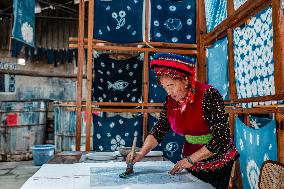
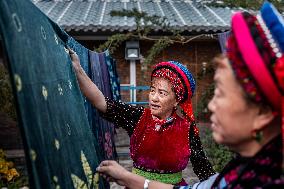
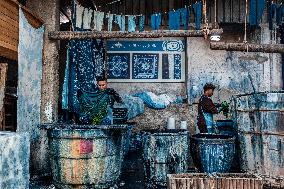
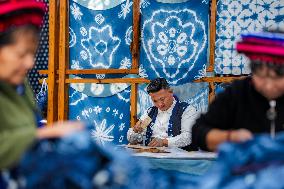
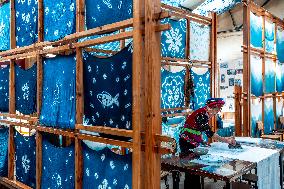
Duan Yuan, an inheritor of the tie-dye technique of Bai ethnic group, makes tie-dye designs in a dyehouse in Zhoucheng Village of Dali Bai Autonomous Prefecture, southwest China's Yunnan Province, November 21, 2025. Known as the hometown of the tie-dye technique of Bai ethnic group, Zhoucheng Village hosts over 200 households engaging in tie-dye businesses, with the number of employees exceeding 4,000. As a traditional folk technique of the Bai ethnic group, tie-dye boasts a history spanning over a thousand years and was included in the first batch of China's national intangible cultural heritage list in 2006. Tying and dyeing are the core steps in the process of making indigo tie-dye products. Artisans use needles and threads to create various patterns on the fabric, which are then dyed with plant-based dyes, resulting in blue backgrounds adorned with vivid white patterns. Photo by Hu Chao/Xinhua/ABACAPRESS.COM

  •  
Tie-Dye Technique Of Bai Ethnic Group - Chin

Tie-Dye Technique Of Bai Ethnic Group - Chin

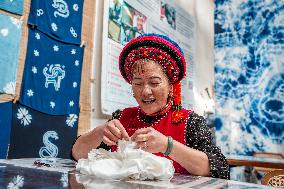
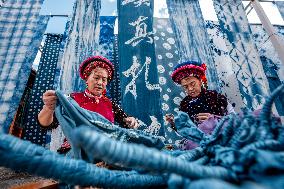
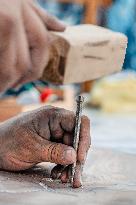
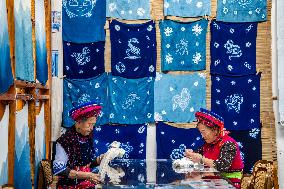
Duan Yinmei, an inheritor of the tie-dye technique of Bai ethnic group, creates knots on fabrics in a dyehouse in Zhoucheng Village of Dali Bai Autonomous Prefecture, southwest China's Yunnan Province, November 21, 2025. Known as the hometown of the tie-dye technique of Bai ethnic group, Zhoucheng Village hosts over 200 households engaging in tie-dye businesses, with the number of employees exceeding 4,000. As a traditional folk technique of the Bai ethnic group, tie-dye boasts a history spanning over a thousand years and was included in the first batch of China's national intangible cultural heritage list in 2006. Tying and dyeing are the core steps in the process of making indigo tie-dye products. Artisans use needles and threads to create various patterns on the fabric, which are then dyed with plant-based dyes, resulting in blue backgrounds adorned with vivid white patterns. Photo by Hu Chao/Xinhua/ABACAPRESS.COM

  •  
Tie-Dye Technique Of Bai Ethnic Group - Chin

Tie-Dye Technique Of Bai Ethnic Group - Chin

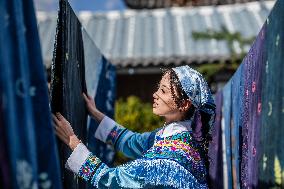
A woman experiences the tie-dye technique of Bai ethnic group in a dyehouse in Zhoucheng Village of Dali Bai Autonomous Prefecture, southwest China's Yunnan Province, November 21, 2025. Known as the hometown of the tie-dye technique of Bai ethnic group, Zhoucheng Village hosts over 200 households engaging in tie-dye businesses, with the number of employees exceeding 4,000. As a traditional folk technique of the Bai ethnic group, tie-dye boasts a history spanning over a thousand years and was included in the first batch of China's national intangible cultural heritage list in 2006. Tying and dyeing are the core steps in the process of making indigo tie-dye products. Artisans use needles and threads to create various patterns on the fabric, which are then dyed with plant-based dyes, resulting in blue backgrounds adorned with vivid white patterns. Photo by Hu Chao/Xinhua/ABACAPRESS.COM

  •  
Tie-Dye Technique Of Bai Ethnic Group - Chin

Tie-Dye Technique Of Bai Ethnic Group - Chin

Duan Yinmei, an inheritor of the tie-dye technique of Bai ethnic group, dyes patterns on fabrics in a dyehouse in Zhoucheng Village of Dali Bai Autonomous Prefecture, southwest China's Yunnan Province, November 21, 2025. Known as the hometown of the tie-dye technique of Bai ethnic group, Zhoucheng Village hosts over 200 households engaging in tie-dye businesses, with the number of employees exceeding 4,000. As a traditional folk technique of the Bai ethnic group, tie-dye boasts a history spanning over a thousand years and was included in the first batch of China's national intangible cultural heritage list in 2006. Tying and dyeing are the core steps in the process of making indigo tie-dye products. Artisans use needles and threads to create various patterns on the fabric, which are then dyed with plant-based dyes, resulting in blue backgrounds adorned with vivid white patterns. Photo by Hu Chao/Xinhua/ABACAPRESS.COM

  •  
Tie-Dye Technique Of Bai Ethnic Group - Chin

Tie-Dye Technique Of Bai Ethnic Group - Chin

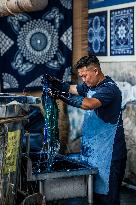
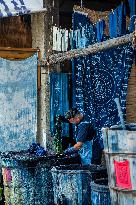
Duan Yuan, an inheritor of the tie-dye technique of Bai ethnic group, rinses dyed fabrics in a dyehouse in Zhoucheng Village of Dali Bai Autonomous Prefecture, southwest China's Yunnan Province, November 21, 2025. Known as the hometown of the tie-dye technique of Bai ethnic group, Zhoucheng Village hosts over 200 households engaging in tie-dye businesses, with the number of employees exceeding 4,000. As a traditional folk technique of the Bai ethnic group, tie-dye boasts a history spanning over a thousand years and was included in the first batch of China's national intangible cultural heritage list in 2006. Tying and dyeing are the core steps in the process of making indigo tie-dye products. Artisans use needles and threads to create various patterns on the fabric, which are then dyed with plant-based dyes, resulting in blue backgrounds adorned with vivid white patterns. Photo by Hu Chao/Xinhua/ABACAPRESS.COM

  •  
Tie-Dye Technique Of Bai Ethnic Group - Chin

Tie-Dye Technique Of Bai Ethnic Group - Chin

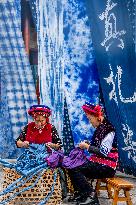
Duan Yinmei (L), an inheritor of the tie-dye technique of Bai ethnic group, and handicraftsman Duan Lilan dry tie-dye fabrics in a dyehouse in Zhoucheng Village of Dali Bai Autonomous Prefecture, southwest China's Yunnan Province, November 21, 2025. Known as the hometown of the tie-dye technique of Bai ethnic group, Zhoucheng Village hosts over 200 households engaging in tie-dye businesses, with the number of employees exceeding 4,000. As a traditional folk technique of the Bai ethnic group, tie-dye boasts a history spanning over a thousand years and was included in the first batch of China's national intangible cultural heritage list in 2006. Tying and dyeing are the core steps in the process of making indigo tie-dye products. Artisans use needles and threads to create various patterns on the fabric, which are then dyed with plant-based dyes, resulting in blue backgrounds adorned with vivid white patterns. Photo by Hu Chao/Xinhua/ABACAPRESS.COM

  •  
Tie-Dye Technique Of Bai Ethnic Group - Chin

Tie-Dye Technique Of Bai Ethnic Group - Chin

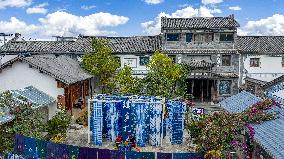
An aerial drone photo shows a scene at a dyehouse in Zhoucheng Village of Dali Bai Autonomous Prefecture, southwest China's Yunnan Province, November 21, 2025. Known as the hometown of the tie-dye technique of Bai ethnic group, Zhoucheng Village hosts over 200 households engaging in tie-dye businesses, with the number of employees exceeding 4,000. As a traditional folk technique of the Bai ethnic group, tie-dye boasts a history spanning over a thousand years and was included in the first batch of China's national intangible cultural heritage list in 2006. Tying and dyeing are the core steps in the process of making indigo tie-dye products. Artisans use needles and threads to create various patterns on the fabric, which are then dyed with plant-based dyes, resulting in blue backgrounds adorned with vivid white patterns. Photo by Hu Chao/Xinhua/ABACAPRESS.COM

  •  
Tie-Dye Technique Of Bai Ethnic Group - Chin

Tie-Dye Technique Of Bai Ethnic Group - Chin

Duan Yinmei (L), an inheritor of the tie-dye technique of Bai ethnic group, and handicraftsman Duan Lilan untie knots on fabrics in a dyehouse in Zhoucheng Village of Dali Bai Autonomous Prefecture, southwest China's Yunnan Province, November 21, 2025. Known as the hometown of the tie-dye technique of Bai ethnic group, Zhoucheng Village hosts over 200 households engaging in tie-dye businesses, with the number of employees exceeding 4,000. As a traditional folk technique of the Bai ethnic group, tie-dye boasts a history spanning over a thousand years and was included in the first batch of China's national intangible cultural heritage list in 2006. Tying and dyeing are the core steps in the process of making indigo tie-dye products. Artisans use needles and threads to create various patterns on the fabric, which are then dyed with plant-based dyes, resulting in blue backgrounds adorned with vivid white patterns. Photo by Hu Chao/Xinhua/ABACAPRESS.COM

  •  
Tie-Dye Technique Of Bai Ethnic Group - Chin

Tie-Dye Technique Of Bai Ethnic Group - Chin

Duan Yinmei (L), an inheritor of the tie-dye technique of Bai ethnic group, and handicraftsman Duan Lilan untie knots on fabrics in a dyehouse in Zhoucheng Village of Dali Bai Autonomous Prefecture, southwest China's Yunnan Province, November 21, 2025. Known as the hometown of the tie-dye technique of Bai ethnic group, Zhoucheng Village hosts over 200 households engaging in tie-dye businesses, with the number of employees exceeding 4,000. As a traditional folk technique of the Bai ethnic group, tie-dye boasts a history spanning over a thousand years and was included in the first batch of China's national intangible cultural heritage list in 2006. Tying and dyeing are the core steps in the process of making indigo tie-dye products. Artisans use needles and threads to create various patterns on the fabric, which are then dyed with plant-based dyes, resulting in blue backgrounds adorned with vivid white patterns. Photo by Hu Chao/Xinhua/ABACAPRESS.COM

  •  
Tie-Dye Technique Of Bai Ethnic Group - Chin

Tie-Dye Technique Of Bai Ethnic Group - Chin

Duan Yuan (L), an inheritor of the tie-dye technique of Bai ethnic group, dyes fabrics in a dyehouse in Zhoucheng Village of Dali Bai Autonomous Prefecture, southwest China's Yunnan Province, November 21, 2025. Known as the hometown of the tie-dye technique of Bai ethnic group, Zhoucheng Village hosts over 200 households engaging in tie-dye businesses, with the number of employees exceeding 4,000. As a traditional folk technique of the Bai ethnic group, tie-dye boasts a history spanning over a thousand years and was included in the first batch of China's national intangible cultural heritage list in 2006. Tying and dyeing are the core steps in the process of making indigo tie-dye products. Artisans use needles and threads to create various patterns on the fabric, which are then dyed with plant-based dyes, resulting in blue backgrounds adorned with vivid white patterns. Photo by Hu Chao/Xinhua/ABACAPRESS.COM

  •  
Tie-Dye Technique Of Bai Ethnic Group - Chin

Tie-Dye Technique Of Bai Ethnic Group - Chin

Duan Yuan, an inheritor of the tie-dye technique of Bai ethnic group, makes tie-dye designs in a dyehouse in Zhoucheng Village of Dali Bai Autonomous Prefecture, southwest China's Yunnan Province, November 21, 2025. Known as the hometown of the tie-dye technique of Bai ethnic group, Zhoucheng Village hosts over 200 households engaging in tie-dye businesses, with the number of employees exceeding 4,000. As a traditional folk technique of the Bai ethnic group, tie-dye boasts a history spanning over a thousand years and was included in the first batch of China's national intangible cultural heritage list in 2006. Tying and dyeing are the core steps in the process of making indigo tie-dye products. Artisans use needles and threads to create various patterns on the fabric, which are then dyed with plant-based dyes, resulting in blue backgrounds adorned with vivid white patterns. Photo by Hu Chao/Xinhua/ABACAPRESS.COM

  •  
Tie-Dye Technique Of Bai Ethnic Group - Chin

Tie-Dye Technique Of Bai Ethnic Group - Chin

Duan Yuan, an inheritor of the tie-dye technique of Bai ethnic group, dyes fabrics in a dyehouse in Zhoucheng Village of Dali Bai Autonomous Prefecture, southwest China's Yunnan Province, November 21, 2025. Known as the hometown of the tie-dye technique of Bai ethnic group, Zhoucheng Village hosts over 200 households engaging in tie-dye businesses, with the number of employees exceeding 4,000. As a traditional folk technique of the Bai ethnic group, tie-dye boasts a history spanning over a thousand years and was included in the first batch of China's national intangible cultural heritage list in 2006. Tying and dyeing are the core steps in the process of making indigo tie-dye products. Artisans use needles and threads to create various patterns on the fabric, which are then dyed with plant-based dyes, resulting in blue backgrounds adorned with vivid white patterns. Photo by Hu Chao/Xinhua/ABACAPRESS.COM

  •  
Tie-Dye Technique Of Bai Ethnic Group - Chin

Tie-Dye Technique Of Bai Ethnic Group - Chin

Duan Yuan, an inheritor of the tie-dye technique of Bai ethnic group, dyes fabrics in a dyehouse in Zhoucheng Village of Dali Bai Autonomous Prefecture, southwest China's Yunnan Province, November 21, 2025. Known as the hometown of the tie-dye technique of Bai ethnic group, Zhoucheng Village hosts over 200 households engaging in tie-dye businesses, with the number of employees exceeding 4,000. As a traditional folk technique of the Bai ethnic group, tie-dye boasts a history spanning over a thousand years and was included in the first batch of China's national intangible cultural heritage list in 2006. Tying and dyeing are the core steps in the process of making indigo tie-dye products. Artisans use needles and threads to create various patterns on the fabric, which are then dyed with plant-based dyes, resulting in blue backgrounds adorned with vivid white patterns. Photo by Hu Chao/Xinhua/ABACAPRESS.COM

  •  
Tie-Dye Technique Of Bai Ethnic Group - Chin

Tie-Dye Technique Of Bai Ethnic Group - Chin

Duan Yuan, an inheritor of the tie-dye technique of Bai ethnic group, makes tie-dye designs in a dyehouse in Zhoucheng Village of Dali Bai Autonomous Prefecture, southwest China's Yunnan Province, November 21, 2025. Known as the hometown of the tie-dye technique of Bai ethnic group, Zhoucheng Village hosts over 200 households engaging in tie-dye businesses, with the number of employees exceeding 4,000. As a traditional folk technique of the Bai ethnic group, tie-dye boasts a history spanning over a thousand years and was included in the first batch of China's national intangible cultural heritage list in 2006. Tying and dyeing are the core steps in the process of making indigo tie-dye products. Artisans use needles and threads to create various patterns on the fabric, which are then dyed with plant-based dyes, resulting in blue backgrounds adorned with vivid white patterns. Photo by Hu Chao/Xinhua/ABACAPRESS.COM

  •  
Tie-Dye Technique Of Bai Ethnic Group - Chin

Tie-Dye Technique Of Bai Ethnic Group - Chin

Duan Yinmei, an inheritor of the tie-dye technique of Bai ethnic group, unties knots on fabrics in a dyehouse in Zhoucheng Village of Dali Bai Autonomous Prefecture, southwest China's Yunnan Province, November 21, 2025. Known as the hometown of the tie-dye technique of Bai ethnic group, Zhoucheng Village hosts over 200 households engaging in tie-dye businesses, with the number of employees exceeding 4,000. As a traditional folk technique of the Bai ethnic group, tie-dye boasts a history spanning over a thousand years and was included in the first batch of China's national intangible cultural heritage list in 2006. Tying and dyeing are the core steps in the process of making indigo tie-dye products. Artisans use needles and threads to create various patterns on the fabric, which are then dyed with plant-based dyes, resulting in blue backgrounds adorned with vivid white patterns. Photo by Hu Chao/Xinhua/ABACAPRESS.COM

  •  
Tie-Dye Technique Of Bai Ethnic Group - Chin

Tie-Dye Technique Of Bai Ethnic Group - Chin

Duan Yinmei, an inheritor of the tie-dye technique of Bai ethnic group, dyes patterns on fabrics in a dyehouse in Zhoucheng Village of Dali Bai Autonomous Prefecture, southwest China's Yunnan Province, November 21, 2025. Known as the hometown of the tie-dye technique of Bai ethnic group, Zhoucheng Village hosts over 200 households engaging in tie-dye businesses, with the number of employees exceeding 4,000. As a traditional folk technique of the Bai ethnic group, tie-dye boasts a history spanning over a thousand years and was included in the first batch of China's national intangible cultural heritage list in 2006. Tying and dyeing are the core steps in the process of making indigo tie-dye products. Artisans use needles and threads to create various patterns on the fabric, which are then dyed with plant-based dyes, resulting in blue backgrounds adorned with vivid white patterns. Photo by Hu Chao/Xinhua/ABACAPRESS.COM

  •  
Tie-Dye Technique Of Bai Ethnic Group - Chin

Tie-Dye Technique Of Bai Ethnic Group - Chin

Duan Yinmei (R), an inheritor of the tie-dye technique of Bai ethnic group, and handicraftsman Duan Lilan create knots on fabrics in a dyehouse in Zhoucheng Village of Dali Bai Autonomous Prefecture, southwest China's Yunnan Province, November 21, 2025. Known as the hometown of the tie-dye technique of Bai ethnic group, Zhoucheng Village hosts over 200 households engaging in tie-dye businesses, with the number of employees exceeding 4,000. As a traditional folk technique of the Bai ethnic group, tie-dye boasts a history spanning over a thousand years and was included in the first batch of China's national intangible cultural heritage list in 2006. Tying and dyeing are the core steps in the process of making indigo tie-dye products. Artisans use needles and threads to create various patterns on the fabric, which are then dyed with plant-based dyes, resulting in blue backgrounds adorned with vivid white patterns. Photo by Hu Chao/Xinhua/ABACAPRESS.COM

  • Main
  • Top
  • Editorial
  • Creative
  • About Us
  • About ILG
  • Terms of use
  • Company
  • BEHIND
  • Price List
  • Single Plan
  • Monthly Plan
  • Services
  • Shooting
  • Rights Clearance
  • Support
  • FAQ
  • How To Buy
  • Contact Us
  • Become a Partner

© KYODO NEWS IMAGES INC

All Rights Reserved.

  • Editorial
  • Olympics
  • News
  • Sports
  • Japan
  • Tech
  • Royal
  • Disaster
  • NorthKorea
  • Old Japan
  • SNS
  • Creative
  • Food
  • Japan
  • Landscape
  • Animal
  • Popular
  • #Ukraine
  • #China
  • #coronavirus
  • #N. Korea
  • #Russia
  • #Thailand
  • #Ukraine
  • #China
  • #coronavirus
  • #N. Korea
  • #Russia
  • #Thailand
  • Food
  • Japan
  • Landscape
  • Animal
  • Olympics
  • News
  • Sports
  • Japan
  • Tech
  • Royal
  • Disaster
  • NorthKorea
  • Old Japan
  • SNS